



Abstract
Employers increasingly commit to embracing diversity, equity and inclusion (DEI) in their workplaces. A key strategy for communicating this commitment is the use of DEI statements in recruitment materials, including job advertisements. However, this practice is ad hoc and is mostly viewed as a matter of compliance or impression management. This paper presents a systematic literature review of 39 studies published between 1994 and 2023 to understand the wider outcomes of using DEI statements as a recruitment marketing strategy. In doing so, it considers both employer and job applicant perspectives to outline goals communicated through DEI statements and environmental influences that drive the adoption of DEI communication. The paper also presents an agenda for future research highlighting critical observations and gaps that contribute to the progress of DEI discussions within recruitment marketing.
Keywords
Introduction
Diversity, equity and inclusion (DEI) are key drivers of organisational performance (Diversity Council Australia, 2023; intel, 2023; International Labour Organization, 2022). In Australia, DEI practices have progressively become a part of Environmental, Social and Governance (ESG) goals with 77% of ASX 200 companies reporting gender diversity statistics (PricewaterhouseCoopers Consulting Australia, 2022). However, as DEI transcends gender to other areas such as disability, older workers and LGBTQIA+ (World Economic Forum, 2023), Australian organisations (like many others) have much work to do within this sphere. This has become imminent as many Australian employees expect organisations to take more proactive actions concerning pay equity, and inclusive hiring practices (Vercoe, 2023). One strategy that is helpful in this regard is the use of DEI statements that demonstrate an organisation’s commitment to DEI within job advertisements (Perrin, 2022).
Despite the expectations around DEI, Australians express a lack of trust in ESG disclosures including DEI claims which is concerning given the significant investments made in these areas (Vercoe, 2023). However, 57% of workers in Australia agree that employers are making efforts to improve DEI in their workplaces (Diversity Council Australia, 2021). This effort might be largely motivated by compliance with federal and state legislations that prescribe minimum standards for meeting an organisation’s obligations under the Universal Declaration of Human Rights (Australian Human Rights Commission, 2014). The Australian Government also introduced a range of economic incentives to encourage businesses to focus on DEI (Wadley, 2023) in light of COVID-19 induced labour shortages (Lee et al., 2023) and disruptions to migration (Mansouri, 2023). Led by the government and employee expectations, this push to actively promote workplace adoption of DEI for recruitment, remains an ad hoc practice, however.
Championed by regulations, the most popular form of DEI within recruitment practices is equal employment opportunity (EEO). EEO protects against the discrimination of vulnerable communities within the workplace (Burgess et al., 2009). Generally, EEO statements are people-focussed and goal-oriented commitments that outline opportunities created for the disadvantaged or underrepresented (Westen, 1985). These are heavily legally motivated (Sutton et al., 1994) as opposed to diversity initiatives that are more organisation-specific and subjective (Burgess et al., 2009). Diversity has now become a vital goal in recruitment (Burgess et al., 2009) with diversity messaging in job advertisements considered a strategy to enhance employer attractiveness (Perrin, 2022). A relatively nascent discussion that builds on diversity is inclusion which is underpinned by a sense of belongingness to a group while maintaining individual uniqueness (Shore et al., 2011). Inclusive messaging in particular has both in-group and out-group reactions that must be dealt with with care (Fleischman et al., 2024). It is these sentiments and the move towards supportive work cultures globally, that encourage DEI practices within the early stages of recruitment.
Considering academic work, existing research primarily focusses on the importance of DEI, with some studies highlighting outcomes of DEI statements in job advertisements (McNab & Johnston, 2002; Puncheva-Michelotti et al., 2018; Williams & Bauer, 1994). Amongst review studies specifically, DEI statements in job advertisements appear either as a sub-discussion with limited information (Mahjoub & Kruyen, 2021) or are framed within a job-specific context (Kung et al., 2020). These reviews advocate for the inclusion of DEI in job advertisements but the outcomes of doing so remain unclear. For example, with the premise that diversity is beneficial to a workplace, the review of job ad research by Mahjoub and Kruyen (2021) proposes diversity messaging as an essential feature of job advertisements but the outcomes reported point only towards organisational attractiveness. A review by Kung et al. (2020) shows that even though diversity practices are in place at the recruitment stage, they may not necessarily translate to recruitment-based outcomes, presenting concerns regarding organisational outcomes of those practices. Further, both these reviews are one-sided, in that, they only report the employer’s perspective. Motivated by empirical research reporting sporadic outcomes and limited information presented in review-based articles, our study set out to provide a comprehensive synthesis of the outcomes of DEI statements in recruitment materials, including job advertisements. Here, we consider the viewpoints of both the employer and job applicant to ensure a holistic representation that is lacking in current reviews.
Adopting a systematic literature review (SLR) of existing research work, this paper aggregates disparate yet widespread evidence on outcomes of DEI statements to provide a research agenda that strengthens its case as a recruitment marketing strategy. With that, this paper aligns itself with the call for marketing-oriented DEI research (Thaichon et al., 2022). Accordingly, we address three research questions in this paper.
RQ1: What are the outcomes of using DEI statements in recruitment materials?
RQ2: What are the goals communicated through DEI statements?
RQ3: What environmental factors drive the use of DEI statements?
The first research question capitalises on the earlier identified limitation of existing review articles in that they do not provide a comprehensive explanation of outcomes of using DEI as a recruitment marketing strategy. The second research question facilitates a further explanation of reasons for including DEI statements in recruitment materials from an internal organisational perspective, which also remains unexplained in extant studies. The third research question extends Shore et al. (2011)’s proposition that contextual factors act as environmental stimuli impacting the adoption of DEI practices. This extended inquiry will help verify the interrelatedness of external environmental changes and DEI-based recruitment practices. These research questions together provide foundational knowledge on perceptual complexities concerning the use of DEI statements as reported in extant literature.
Methodology
This paper first synthesises research work on DEI statements in job advertisements. It then expands to other recruitment materials, such as recruitment brochures and letters, to gain a holistic view of outcomes derived from DEI statements as a recruitment marketing strategy. Specifically, recruitment brochures were viewed as having a similar function to job advertisements in that they serve as a recruitment tool to attract job applicants to a position or organisation (Herriot & Rothwell, 1981).
The review followed the Preferred Reporting Items for Systematic Reviews and Meta-Analyses (PRISMA) guidelines (Tricco et al., 2018) to ensure rigour. A five-step approach recommended by Levac et al. (2010), Colquhoun et al. (2014) and Daudt et al. (2013) was used to operationalise the PRISMA guidelines. This approach involved: (1) framing research questions, (2) identifying relevant studies, (3) selecting studies based on inclusion and exclusion criteria, (4) data extraction and (5) reporting of findings. It is noteworthy that the original approach proposed by Levac et al. (2010) also included an additional step not presented in this paper, where the findings of the review were validated through consultation with relevant stakeholders.
Step 1: Research questions
Viewing recruitment materials, including job advertisements, as recruitment marketing tools that communicate an organisation’s DEI practices to potential employees, this work examines outcomes of DEI statements. Three research questions aligned to this research aim were identified to frame the data collection and analysis: (1) What are the documented outcomes of using DEI statements in recruitment materials? (2) What are the goals communicated through DEI statements? (3) What environmental factors drive the use of DEI statements?
Step 2: Search strategy
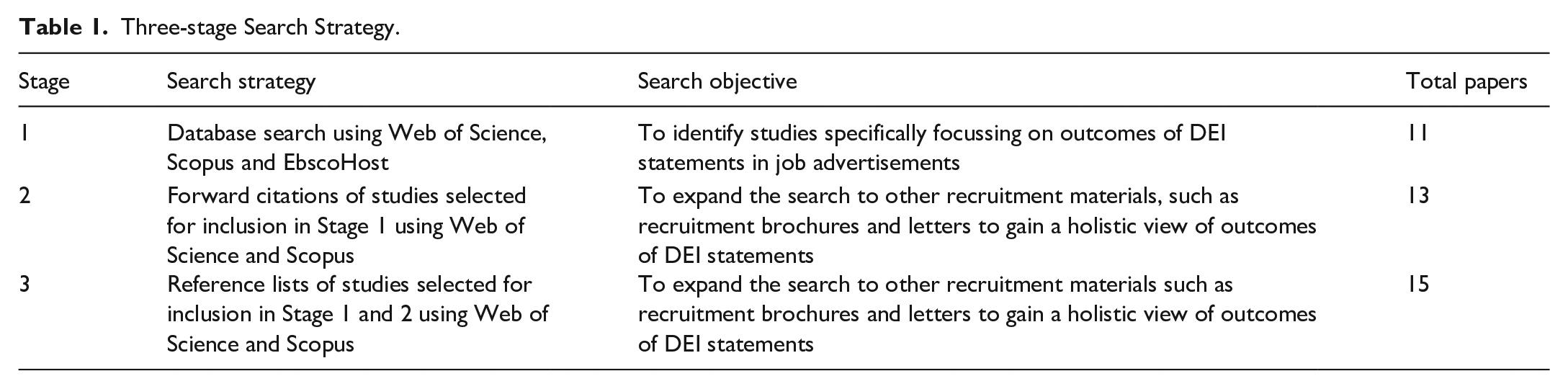
The search was conducted as a three-stage process. Stage 1 included a search for studies that specifically addressed DEI statements, job advertisements and relevant recruitment materials. A title, abstract and keyword search was conducted in Web of Science, Scopus and EbscoHost. For this, the search terms ‘equal employment’ OR ‘equal opportunity’ OR ‘diversity’ OR ‘equity’ OR ‘inclus*’ OR ‘justice’ OR ‘EEO’ OR ‘DEI’ OR ‘EOE’ AND ‘statement’ OR ‘clause’ OR ‘information’ OR ‘section’ OR ‘requirement’ OR ‘advice’ OR ‘notice’ AND ‘advertisement’ AND ‘job’ OR ‘recruit*’ OR ‘employ*’ OR ‘hir*’ were used. No search restriction was set for specific types of DEI considerations, such as race or disability. Stage 2 included a search of the forward citations of the studies selected for inclusion in Stage 1. This was followed by Stage 3, which involved a search of the reference lists of all the studies selected for inclusion in Stages 1 and 2 (Table 1).
Three-stage Search Strategy.
Step 3: Inclusion criteria and study selection
All English language studies that discussed DEI statements and job advertisements were included with no publication date restriction. However, studies that only focussed on DEI commitments on their website and those that only took a linguistic perspective were excluded. Our broader focus was recruitment with a specific interest in written formats of job advertisements. This inclusion criterion excluded visual formats of job advertisements, including videos as recruitment tools. The inclusion further considered an explicit discussion of specific outcomes of DEI statements. Therefore, studies that only provided a conclusion of whether job advertisements included elements of DEI were excluded. All study designs were considered, including reviews. Given the varying use of vocabulary within this space, studies that include EEO, AA and diversity were considered appropriate for this review.
As illustrated in Figure 1, the initial search results returned 789 papers, of which only 16 were deemed eligible for full screening by the two independent reviewers. At the full screening stage, the studies that did not include an explicit discussion on DEI statement outcomes and/or excluded DEI statements in their analysis were excluded resulting in 11 studies being shortlisted for inclusion. Similarly, Stage 2 resulted in 13 studies and Stage 3 in 15 studies. The only difference made to the earlier used ‘inclusion’ and ‘exclusion’ criteria was that in stages 2 and 3, recruitment brochures and letters were also included. Together, the three-stage process of study inclusion resulted in 39 studies for the final review. These studies include journal articles (N = 34), notes (N = 3), book chapters (N = 1) and thesis (N = 1). The recruitment tools used in these studies included job advertisements (N = 24), recruitment brochures and letters (N = 10) and recruitment materials (N = 1). Some studies (N = 4) only mentioned DEI message/description with no specification of the tool used.
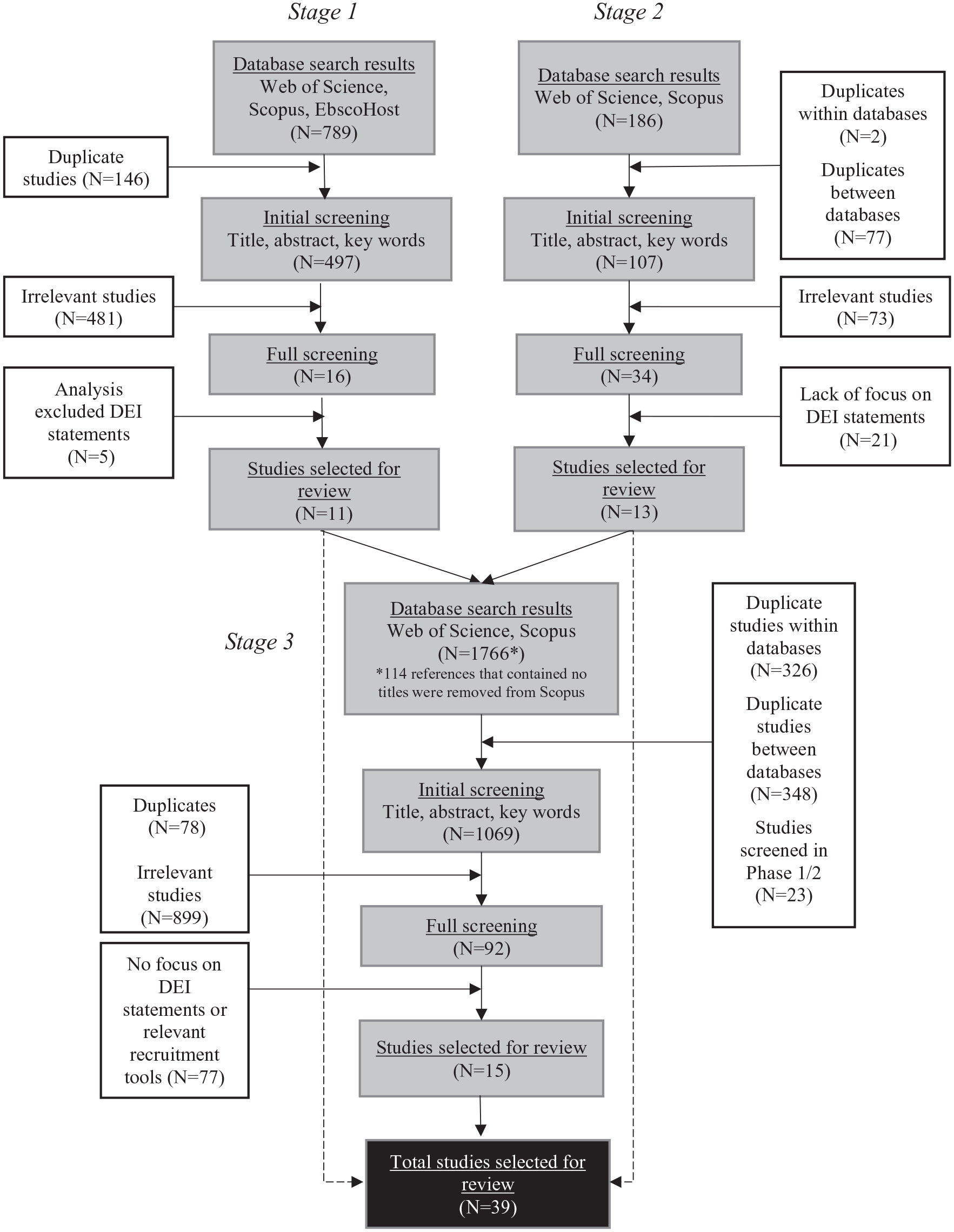
PRISMA flow diagram.
Table 2 presents an initial analysis of the conceptual focus of the selected studies. It is important to note the vocabulary used includes EEO, AA and diversity. Subgroups mentioned within these studies include gender, culture, language, sexual orientation, ethnicity, immigrant status, special-interest groups and, in some cases, minorities and disadvantaged groups as generic groups.
Conceptual Focus of the Selected Studies.
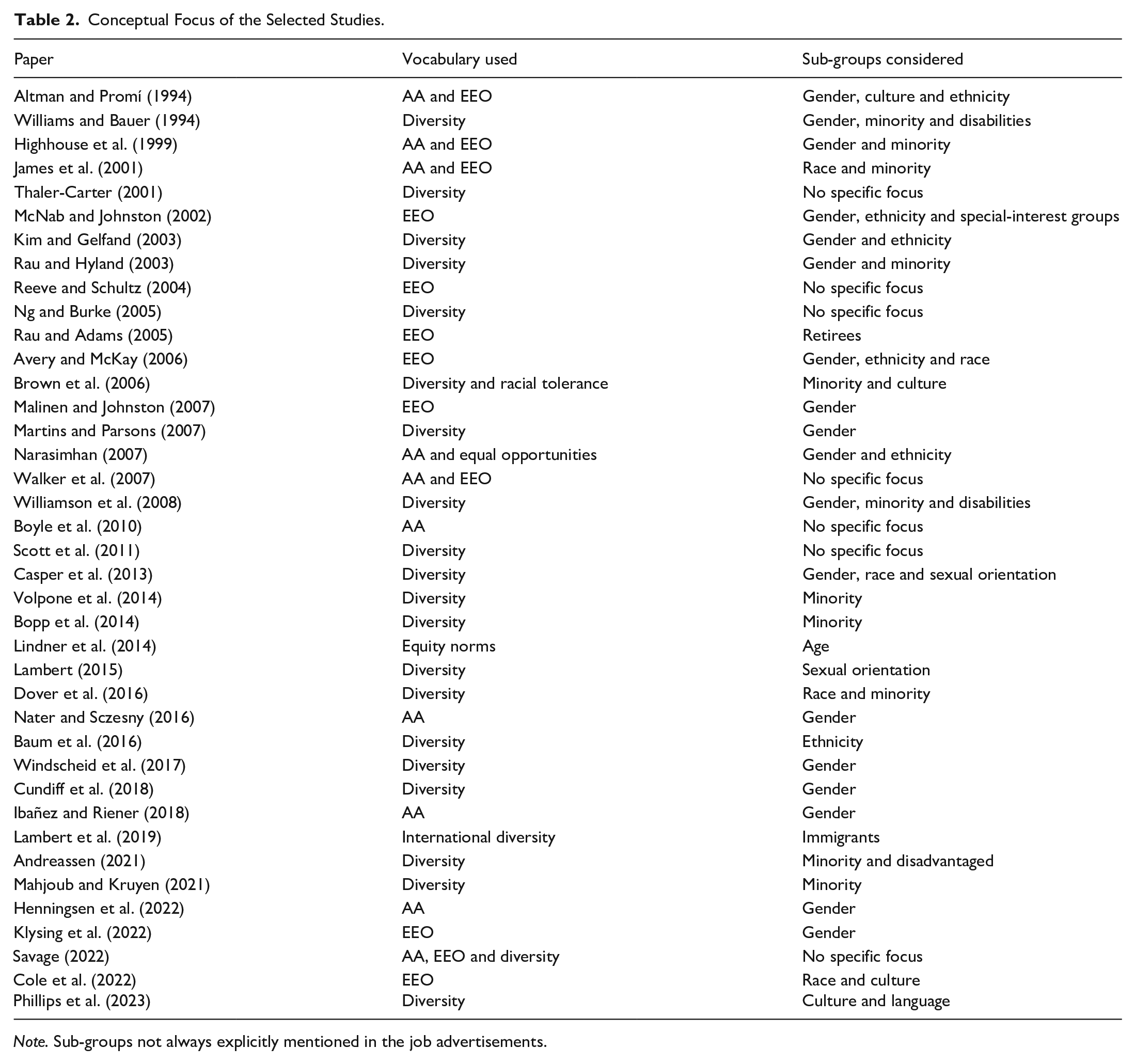
Note. Sub-groups not always explicitly mentioned in the job advertisements.
Prior to data extraction, to evaluate methodological quality, the 36 empirical studies were appraised using the Mixed Methods Appraisal Tool or MMAT (Hong et al., 2018). The MMAT appraisal shows that 20 studies had MMAT scores of 60% or above indicating satisfactory quality, while the others had MMAT scores of 40% or below signaling low quality. Of the remaining studies, two were narrative reviews (Avery & McKay, 2006; Volpone et al., 2014) and one was a scoping review (Mahjoub & Kruyen, 2021).
Step 4: Data extraction and analysis
Data were extracted in line with the research questions. Figure 2 depicts the distribution of the selected studies based on the year of publication. Other than authorship-related data, outcomes, recruitment tools used, type of statement (EE, AA, diversity), reasons for using DEI statements, regulatory impacts, sample DEI statements, methods and sample details were tabulated. This was followed by theme development focussing broadly on DEI statement outcomes, goals and environmental factors.
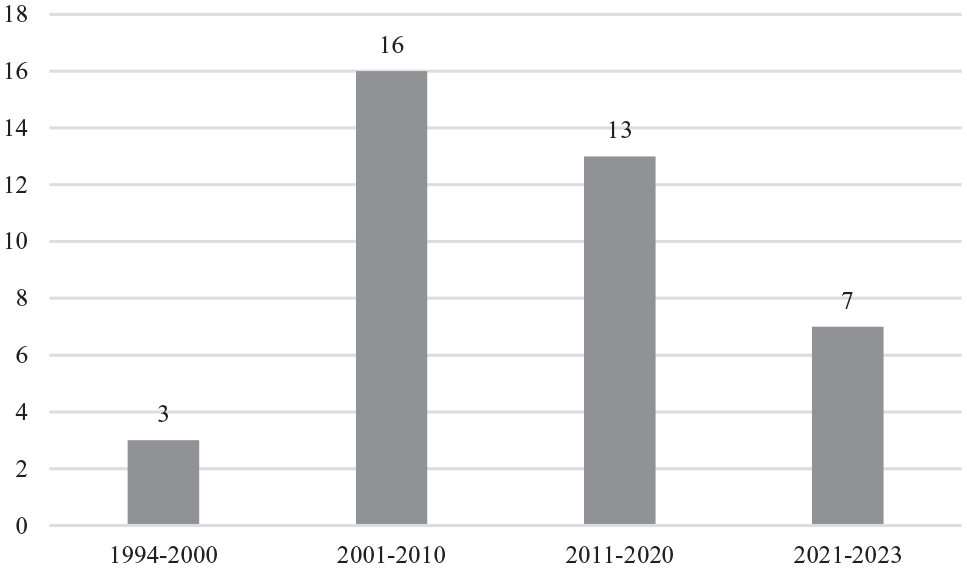
Distribution of studies by year.
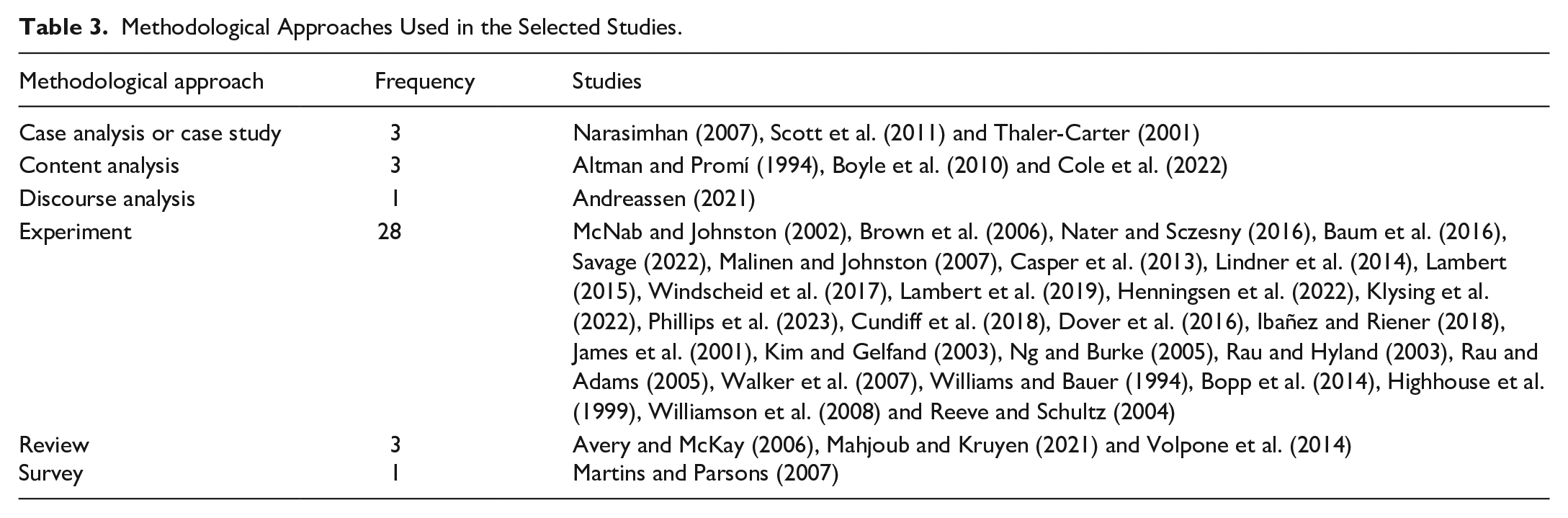
These studies had a diverse range of theoretical and methodological approaches. In terms of theory, they explicitly included psychological or organisational theories such as signalling theory (Cole et al., 2022; Lambert et al., 2019; Reeve & Schultz, 2004; Savage, 2022), person-organisation fit theory (Ng & Burke, 2005; Phillips et al., 2023; Rau & Hyland, 2003), attraction–selection–attrition (ASA) model (Walker et al., 2007), social identity theory (Baum et al., 2016) and self-ascribed fit (Nater & Sczesny, 2016). The application of signalling theory, for example, was to understand how DEI statements act as cues and information for job applicants (Cole et al., 2022; Reeve & Schultz, 2004; Savage, 2022) which remained a common aim in many studies. A few studies took a marketing approach applying the meaning-based model of advertisement experience to understand reader interpretations of recruitment messaging (Phillips et al., 2023; Williamson et al., 2008). The methodological approaches used are set out in Table 3, out of which experiments that used DEI statements to examine respondent reactions remained popular.
Methodological Approaches Used in the Selected Studies.
Findings
RQ1: Documented outcomes of using DEI statements
In this section of the paper, consideration is given to the organisational outcomes of DEI statements in recruitment materials, including job advertisements ranging across recruitment process-related outcomes, organisation-image related outcomes and work-culture related outcomes. Consideration is also given to the benefits DEI statements create for job applicants.
Recruitment process-related outcomes
Findings show that including DEI statements broadens the reach of job advertisements appealing to commonly overlooked audiences. For example, having DEI statements encouraged culturally diverse individuals to apply (Altman & Promí, 1994; Scott et al., 2011; Thaler-Carter, 2001). Such broadening of job applicant cohorts is expected to facilitate the attraction of better candidates as well (McNab & Johnston, 2002; Savage, 2022).
Organisation image-related outcomes
One of the recurring and established themes around organisational outcomes is the improvement of organisation attractiveness because of DEI statements in recruitment materials. Overall, it is posited that the inclusion of descriptive DEI statements generally enhances organisation attractiveness (Dover et al., 2016; Rau & Hyland, 2003; Savage, 2022; Williams & Bauer, 1994) particularly among in-group members (Bopp et al., 2014; Klysing et al., 2022; Martins & Parsons, 2007; Rau & Adams, 2005; Williamson et al., 2008). Specific evidence illustrating this includes females responding more positively to extensive EEO statements (McNab & Johnston, 2002), minority jobseekers responding positively to organisations with diversity statements if the organisation is not from their country of origin (Baum et al., 2016), and high achievers and newcomers to a country being positively attracted to organisations showcasing diversity (Ng & Burke, 2005). In some cases, the inclusion of diversity statements translated to better industry ranking (Cole et al., 2022) and positive attitudes towards the organisation by in-group members (Malinen & Johnston, 2007). However, out-group members may hold other opinions where in one case Whites, found an employer with DEI statements favouring Blacks as being unattractive (James et al., 2001).
Other research took an organisational image lens and presented that DEI statements in job adverts contribute to positive organisation perceptions. This includes service experience perceptions (Cole et al., 2022) and organisational perceptions towards minorities (Highhouse et al., 1999). Such positive image perceptions are a result of value (Avery & McKay, 2006) and work experiential expectations (Lambert et al., 2019) communicated through DEI statements. However, it is racially tolerant individuals (Brown et al., 2006) and in-group members (Avery & McKay, 2006) that viewed the portrayal of strong diversity values in job advertisements favourably.
Work culture-related outcomes
DEI statements in job adverts communicate expectations around the work culture, including social inclusion and equality considerations. This is because EEO and AA statements in job advertisements trigger feelings of inclusion, creating positive perceptions of an organisation’s work culture (Narasimhan, 2007). In terms of equality perceptions, balancing both merit and equity requirements can bring more positive outcomes as it avoids reliance on one over the other (Boyle et al., 2010). However, such person-organisation fit perceptions could be felt only by select individuals. One study reported that it is those individuals with high other-group orientations who tend to do so (Phillips et al., 2023). Interestingly, as an adverse effect of the use of diversity statements in job advertisements, it was reported that they might create feelings of inferiority, invariably creating perceptions of inequality within members of the subgroup (Andreassen, 2021).
Outcomes for job applicants
Discussed more sparsely in the extant literature, some studies provide insights on DEI statement outcomes for job applicants. One such outcome reported is job pursuit intention (Casper et al., 2013; Windscheid et al., 2017). However, studies also indicate that the inclination to apply after viewing a diversity statement may be sub-group specific. For example, studies show that females reported higher intentions to apply when organisations use gender-based affirmations (Ibañez & Riener, 2018; Nater & Sczesny, 2016). Similarly, minorities (Mahjoub & Kruyen, 2021) and individuals with high ethical identities (Kim & Gelfand, 2003) also reported positive job-pursuit intentions. Interestingly, studies report that even recruiters and evaluators have a higher willingness to hire in-group members when DEI-related information is present (Henningsen et al., 2022; Lindner et al., 2014).
Despite the intention of DEI statements to promote inclusion, evidence shows that such statements may create feelings of inferiority within subgroups themselves. For example, job candidates with disabilities may feel inferior and unwelcome at the organisation despite assurances in job adverts (Andreassen, 2021). Conversely, regarding feelings of exclusion among excluded groups, evidence suggests the development of socially desirable attitudes by excluded group members. One study that exemplifies this shows that males respond most favourably to minimal EEO statements (McNab & Johnston, 2002).
Another point of concern is presented in the finding that racially intolerant individuals will likely avoid applying for jobs that communicate strong diversity values in job advertisements (Brown et al., 2006). A similar finding shows that those with strong heterosexist attitudes had lower job pursuit intentions when gay, lesbian, bisexual and transgender (GLBT) diversity was portrayed (Lambert, 2015). Further showcasing out-group sentiments, the presence of DEI statements manifested as creating a concern about being treated unfairly (Cundiff et al., 2018; Dover et al., 2016; Walker et al., 2007). This evidence points towards several negative individual outcomes of DEI statements for in and out-group members.
RQ2: Goals indicated through DEI statements
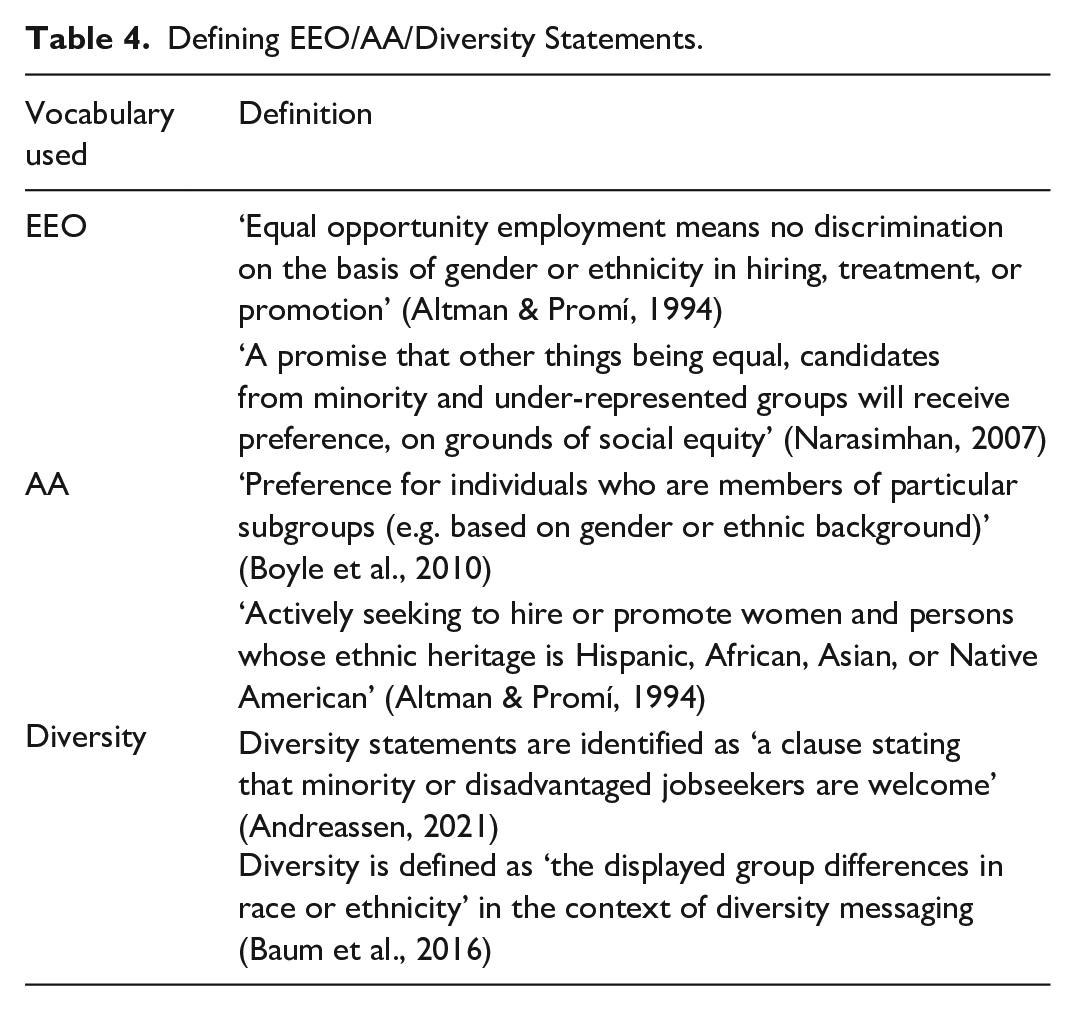
Extant literature employs the terms ‘EEO’, ‘AA’ and ‘diversity’ to identify statements conveying DEI commitments. This review broadly identifies these statements as DEI statements. The defining elements of these concepts highlight the differences between the three. Table 4 outlines definitions of EEO, AA and diversity. These definitions show that EEO statements imply compliance with equal treatment of individuals, while AA statements indicate a preference for hiring specific subgroups. Alternatively, diversity statements express an acknowledgment of differences in individuals. However, a common theme that runs across all three concepts is the active consideration of DEI in recruitment, directing the use of the term DEI statements for this paper.
Defining EEO/AA/Diversity Statements.
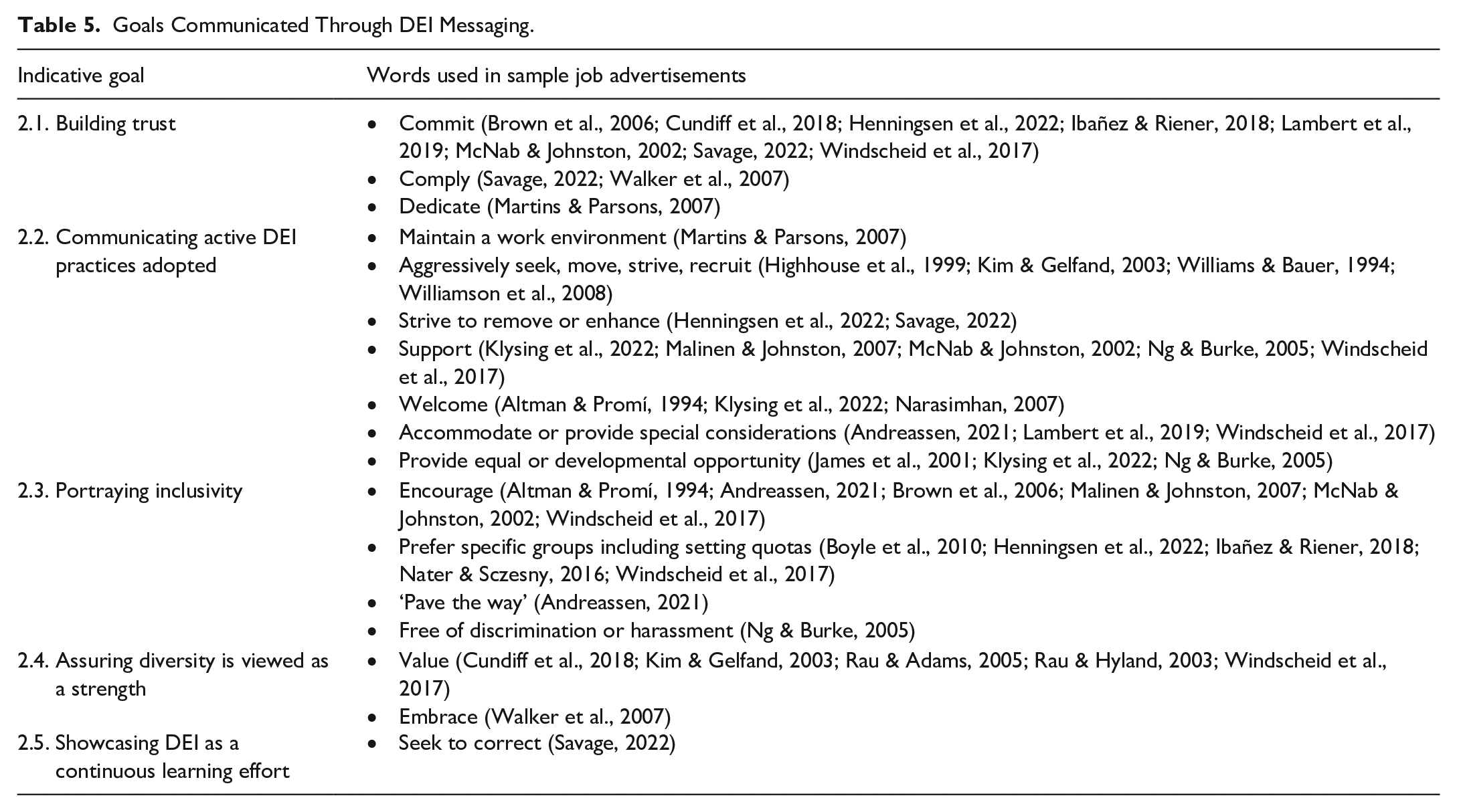
In line with these definitions, an analysis of sample statements used in the selected studies indicated five goals communicated through DEI messaging in recruitment materials, including job advertisements (see Table 5). These goals include building trust, communicating active DEI practices adopted, portraying inclusivity, assuring that diversity is viewed as a strength and showcasing DEI as a continuous learning effort. These goals closely align with the four actions recommended by Ely and Thomas (2020) for organisations considering a meaningful infusion of diversity in their workplaces. The originally recommended actions broadly revolved around trust, active change-driven initiatives against discrimination and subordination, inclusive processes and continuous learning that helps put diversity into practice.
Goals Communicated Through DEI Messaging.
RQ3: Environmental factors that encourage the use of DEI statements
In this section of the paper, consideration is given to the different professional contexts, changing regulations, demographics and knowledge on DEI as environmental factors that encourage the use of DEI statements in job advertisements.
Professional contexts
Table 6 demonstrates the professional contexts featured in the selected studies. A greater focus on the service sector is evident, with higher education and related services gaining prominence. Many studies (N = 17) used a student sample for their data collection with a focus on trainee or junior-level job positions. This indicates a need to expand research work into other job positions and industries, such as manufacturing and retail.
Professional Contexts Used in the Selected Papers.
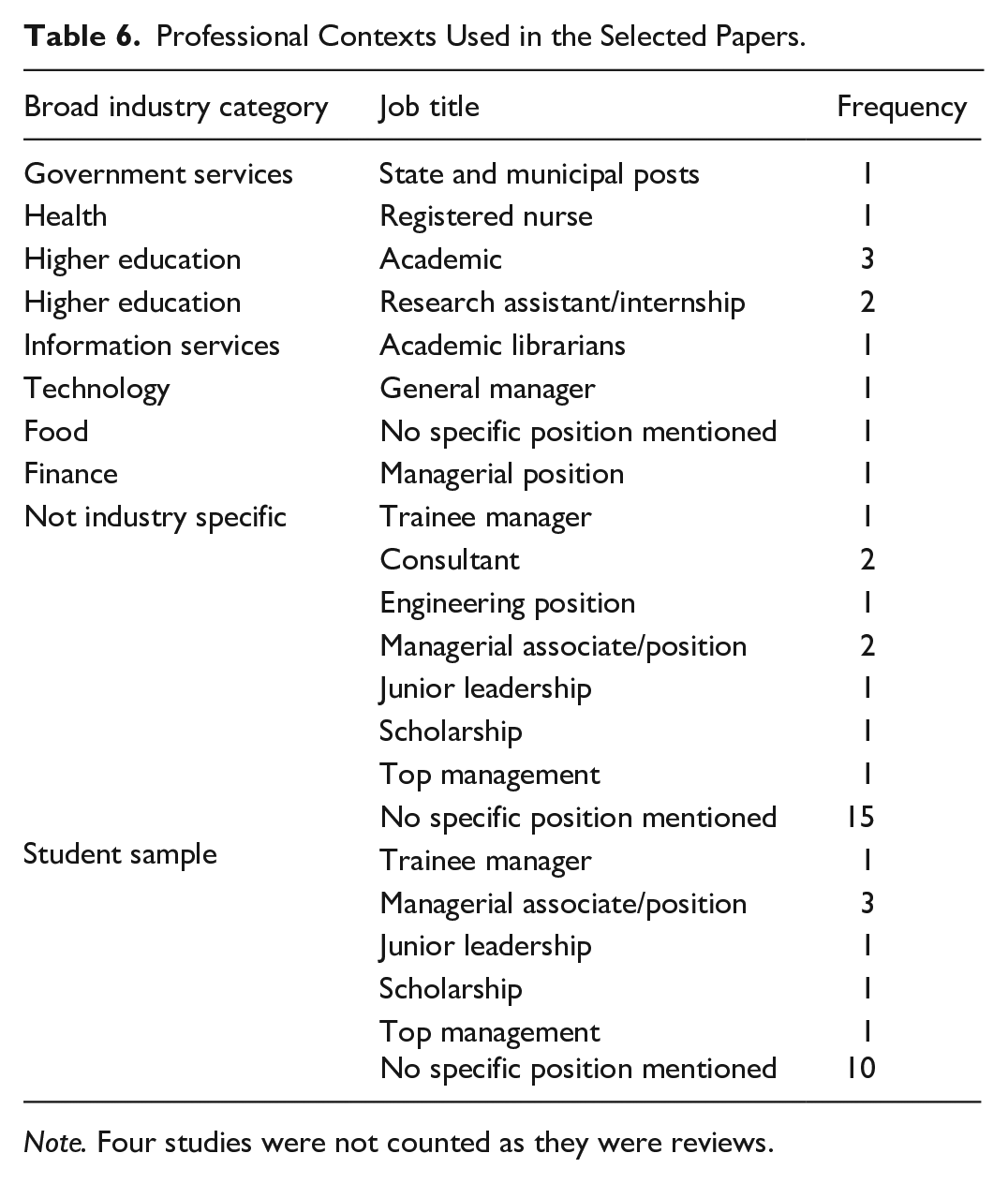
Note. Four studies were not counted as they were reviews.
Changing regulations
Changing regulations that address DEI-based concerns emerge as encouraging organisations to portray their EEO, AA and diversity commitments in recruitment materials. Specifically, the introduction and advancement of anti-discrimination laws that require compliance with equitable recruitment practices emerge as a key contributor (Andreassen, 2021; Cole et al., 2022). Apart from this, professional bodies acknowledging the importance of creating employment opportunities for subgroups such as culturally diverse individuals motivate organisations to actively consider DEI statements (Altman & Promí, 1994; Narasimhan, 2007).
Changing demographics of the larger population
The changing demographic composition of the population and workforce seemingly encourages organisations to mirror those changes among their employees (Baum et al., 2016; Brown et al., 2006; Cole et al., 2022; Thaler-Carter, 2001). For example, given the changes in the racial and cultural composition of the larger population, the US health sector is motivated to recruit a more diverse workforce for better patient service (Cole et al., 2022). A further point of concern was the unequal representation of subgroups, such as gender in specific occupations and leadership positions (Henningsen et al., 2022; Narasimhan, 2007; Nater & Sczesny, 2016) encouraging organisations to consciously consider such inequalities in recruitment activities.
Advancing knowledge on the benefits of using DEI statements as a recruitment marketing strategy
Organisational awareness of the benefits of DEI statements further adds to its active adoption in recruitment materials from a cost-benefit point of view. Such benefits materialise in the form of DEI statements’ ability to appeal to a wider pool of candidates and consequently attract better candidates for a position (Martins & Parsons, 2007; McNab & Johnston, 2002; Savage, 2022) especially given the increasingly competitive job market (Casper et al., 2013). DEI statements’ positive influence on candidate reactions to job adverts (Reeve & Schultz, 2004) further feeds into more positive outlooks for its consideration as a recruitment marketing strategy. Figure 3 summarises the findings of the review for better comprehension.
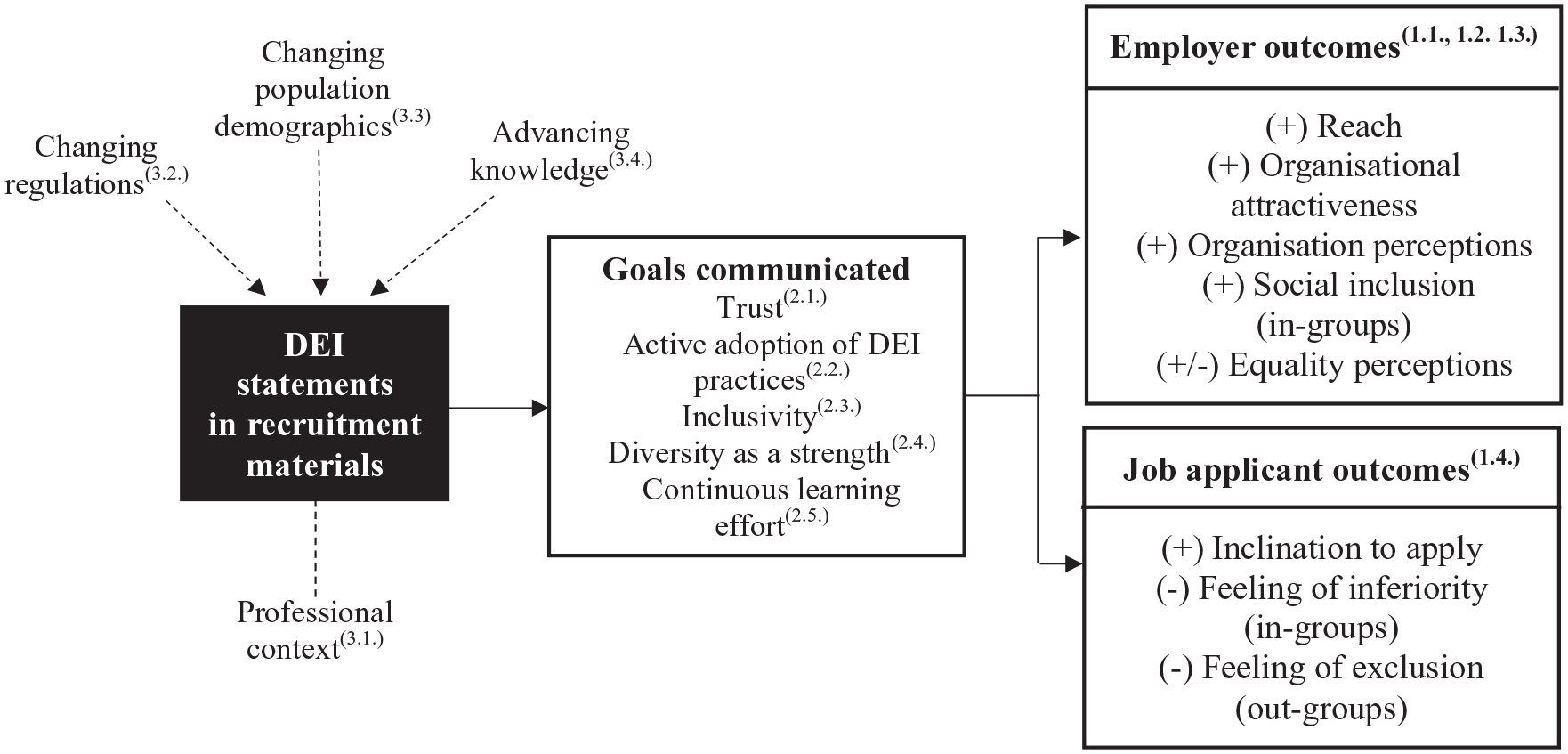
Summary of findings.
Reinforcing the general proposition that DEI statements signal organisational values and policies to job applicants (Cole et al., 2022; Lambert et al., 2019), signalling theory underscores the rationale for the synthesis presented in Figure 3. Signalling theory posits that a signaller holds the ability to fulfill a need of the receiver and chooses to communicate it through an appropriate signal to elicit a favourable reaction (Connelly et al., 2011). In our case, this is reflected through DEI statements being used by employers to signal the availability of equitable and inclusive employment. However, our synthesis indicates potential employer-job applicant outcome conflicts that may occur due to differences in intended signals from the employer and signal interpretation by the job applicant. These differences are indicated by the positive and negative signs in the figure.
Discussion
The 39 studies reviewed in this work comprised varying conceptual applications, aims and methodologies. Together, they offer useful insights into outcomes of DEI statements in recruitment materials, including job advertisements strengthening its position as a recruitment marketing strategy. The following is a discussion on emerging issues that signal a future research agenda for academic work within this space.
A need for an expanded conceptualisation of DEI statements
Influenced by political agenda, EEO emerged as an organisational consideration during the 1980s, while the first discussions date back to the 1960s (Cockburn, 1989). From then to now, the use of EEO statements has evolved to include variations, including AA and diversity statements. While some organisations still use compliance-based traditional EEO messaging that includes a statement outlining their EEO provider status, our review shows that there is a shift to more descriptive statements providing preference and assurance-based communications, particularly in job advertisements (Brown et al., 2006; McNab & Johnston, 2002; Savage, 2022). This change in perspective warrants a broader definition to accommodate the current standing of DEI statements.
In doing so, given the volatile and sensitive nature of DEI, there is a need for informed approaches to drafting DEI statements. For this, DEI statements should be aligned with the broader environment. This is because stakeholders in the broader environment become a controlling mechanism for inequal organisational practices (Andreassen, 2021) and job applicants often get affected by conditions of the broader labour market (Reeve & Schultz, 2004). This is specifically important as some DEI communications may negatively influence job applicant feelings (Andreassen, 2021; Brown et al., 2006; James et al., 2001; Walker et al., 2007) eliciting subjective attitudes towards DEI. In this context, aligning DEI statements to the broader socio-cultural and legal environments may better equip employers to design timely and context-specific communications.
A closer look at exclusion through inclusion
The use of DEI statements in recruitment material is fuelled by employers’ intentions to be inclusive and to re-distribute opportunities (Altman & Promí, 1994; Narasimhan, 2007; Nater & Sczesny, 2016). This discussion extends beyond recruitment, where positive discrimination practices in promotions may disadvantage employee groups, given the flow of benefits to specific groups (Gürtler & Gürtler, 2019). Interestingly, at the point of recruitment, these feelings of exclusion are felt by out-groups and in-groups. For out-groups, this is because of innate characteristics such as racial intolerance (Brown et al., 2006) and racial prejudice (Walker et al., 2007). For in-group members, feelings of inferiority were triggered by such statements (Andreassen, 2021). As such, research work posit that DEI statements should be more affirmative than creating a sense of preference (Boyle et al., 2010). These concerns give rise to critical thought around exclusion through inclusion, which potentially hinders the intended outcomes of DEI statements in recruitment materials, including job advertisements.
A sub area that warrants attention when considering exclusion through inclusion is authenticity and genuineness of DEI messaging. This is because targeted messaging may portray a company’s perceived DEI efforts as less authentic compared to an all-inclusive framing strategy (Cundiff et al., 2018). Even if an all-inclusive strategy is adopted, incidental member exclusion in well-intended EEO statements, may signal a lack of authenticity to DEI (Dover et al., 2020 as cited in Klysing et al., 2022). An example considering ethnicity shows that freedom of expression is linked to authenticity where individuals with strong ethnic identities view organisations to be attractive based on perceived freedom of expression (Kim & Gelfand, 2003). This evidence prompt the study of nuances related to authenticity and genuineness of DEI messaging to strengthen outcomes of using such statements.
The application of new theoretical perspectives
This limited theory application within this area opens opportunities to make theoretical contributions to existing literature. One such proposed contribution is the use of a corporate image lens to explore cognitive and affective image attributes (Dowling, 1988) elicited through DEI statements to deconstruct corporate image formulation within this context. Another application is around psychological theories such as self-concept (Nater & Sczesny, 2016) to understand traits of individuals that respond favourably (and unfavourably) towards DEI statements. Existing research largely focusses on demographic and socio-cultural characteristics such as gender, race and country of origin (Baum et al., 2016; Brown et al., 2006; McNab & Johnston, 2002). Further, a benevolent discrimination perspective would help understand negative outcomes, including feelings of inferiority (Andreassen, 2021) which manifest as unseen consequences of well-intended employer actions (Romani et al., 2019).
Expanding methodological approaches
As previously illustrated in Table 3, in terms of methodological approaches, most studies were experimental in nature. Other approaches, such as content analysis, case study, discourse analysis and reviews, were scarcely used. Given these limited applications, there is potential to expand methodological applications within this space. One window of opportunity lies in longitudinal studies that track job applicant perceptions throughout the recruitment process to assess variations in perceptions of DEI statements. Another would be to explore the fit between DEI communications at the recruitment stage with the organisational culture. Such studies will help clarify if DEI claims in early recruitment stages translate to organisational practice, as literature shows that there are misalignments (Altman & Promí, 1994). For example, research shows that despite the inclusion of DEI statements in job advertisements, those recruited often resemble predecessors (Altman & Promí, 1994). Interestingly, such misalignments could even lead to staff turnover (Brown et al., 2006). This longitudinal approach can be combined with institutional allyship which posits that equality should be embedded in organisational structures and decision-making (Dobele et al., 2022) to ensure DEI efforts persist throughout organisational processes.
Exploring diverse professional contexts
The professional contexts covered in the selected studies are skewed towards a few industries, with higher education and related industries gaining prominence (see Table 6). This indicates a need to expand research work into other industries, such as manufacturing and retail. In terms of positions, junior-level roles are widely considered, given the use of students as a sample. However, with growing attention to concepts such as ethical and inclusive leadership, there are discussions about how leaders contribute to infusing DEI into the organisational culture and gaining employee support (Banks et al., 2021; Kuknor & Bhattacharya, 2022). Such discussions prompt the need to consider how DEI statements are portrayed in more senior-level positions.
Limitations and future research
This paper explored outcomes of DEI statements in recruitment materials, including job advertisements. The SLR demonstrates that influenced by changing regulations, population demographics and advancing knowledge, employers use variations of EEO, AA and diversity statements to communicate their DEI commitments. Such communications yield largely positive employer outcomes, including higher reach, enhanced organisational attractiveness, positive organisation perceptions, social inclusion and better equality perceptions. Therefore, for employers, DEI statements appear to be a useful recruitment marketing strategy. However, when considering job applicant outcomes, other than a positive inclination to apply from in-groups, negative impacts were evident, including feelings of inferiority by in-groups and feelings of exclusion and unfairness by out-groups. This emphasises the sensitive nature of DEI statements directing employers to adopt informed approaches to DEI statement presentation.
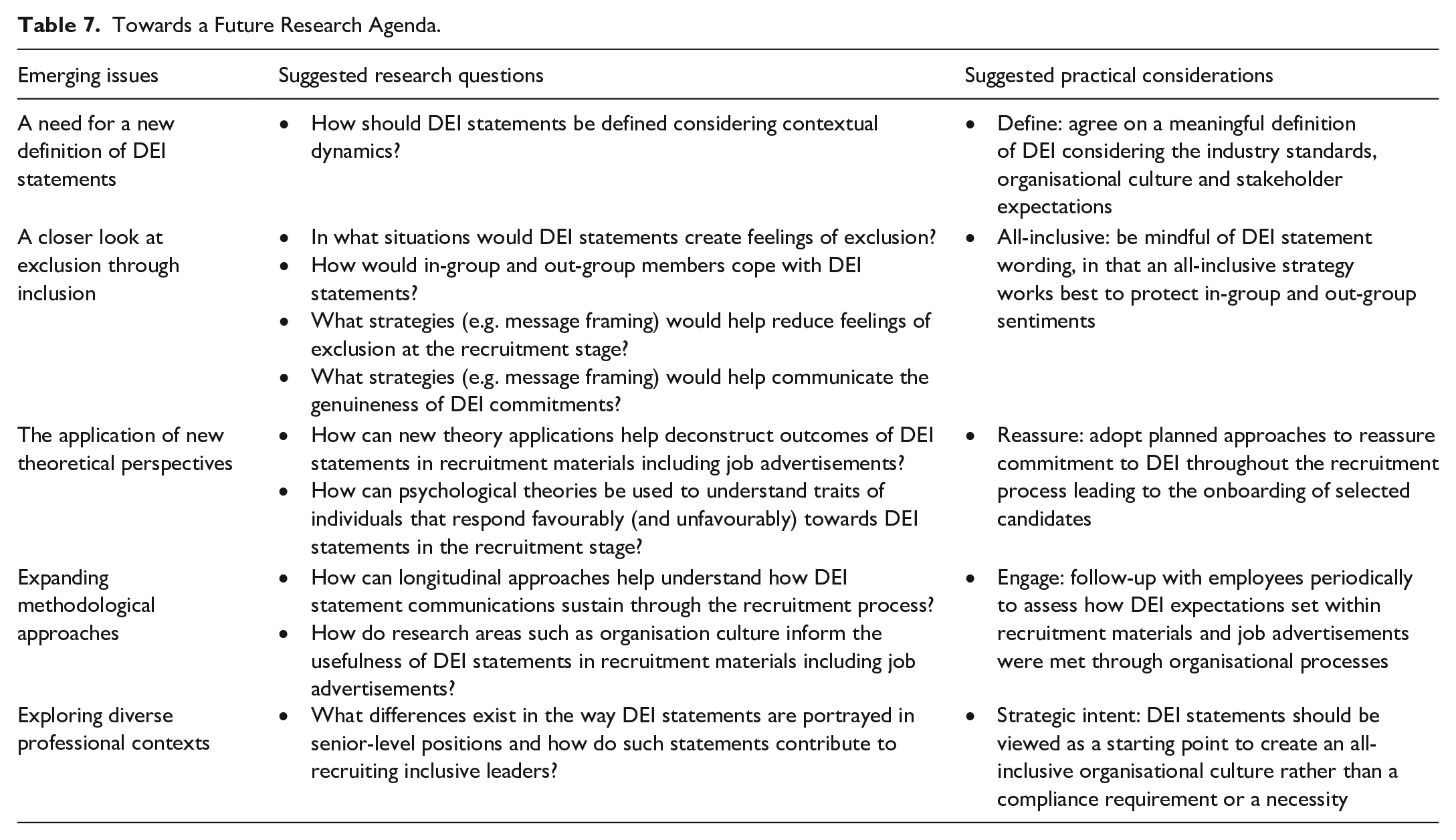
Motivated by these findings and the resulting emerging issues, this work develops nine core research questions that offer a future research agenda and practical considerations for employers (see Table 7). It is anticipated that this agenda would help strengthen the use of DEI statements by validating their contextual applicability, authenticity and theoretical rigour. Practically, this work provides evidence to support the use of DEI statements as a recruitment marketing strategy if communicated in a way that avoids exclusion through inclusion. For this, employers may have to systematically test communication objectives and message framing while ensuring that DEI statements are an authentic representation of their organisational culture to avoid any potential mismatches. Equity concerns is identified as an area marketers can contribute to when achieving sustainability development goals (Bolton, 2022), and thus, from an internal marketing perspective, this paper and its research agenda align with this call for sustainability focussed marketing research.
Towards a Future Research Agenda.
This paper explored outcomes of DEI statements in job advertisements by considering outcomes for employers and job applicants. Given this focus and the application of well-defined inclusion and exclusion criteria, this review is based on only 39 studies. This focus allowed an in-depth discussion through an aggregation of disparate findings on the topic. Further, a conclusive decision of whether DEI statements are effective was out of scope of this paper given the lack of recent empirical evidence.
Footnotes
Author note
The authors have contributed equally to this programme of work and are listed in alphabetical order.
Declaration of conflicting interests
The author(s) declared no potential conflicts of interest with respect to the research, authorship, and/or publication of this article.
Funding
The author(s) disclosed receipt of the following financial support for the research, authorship, and/or publication of this article: This study was undertaken as part of a grant from the Information Linkages and Capacity Building (ILC) programme administered by the Australian Department of Social Services.
