




Abstract
The current research explores the impact of fans’ team identification on their emotional responses towards diversity, equity and inclusion (DEI) initiatives by sporting organisations. Using the theoretical lens of Construal Level Theory (CLT), two experimental studies were conducted in Australia (n = 386) and the US (n = 402) to understand how fans’ level of team identification and the framing of communication by sporting organisations influence their emotional responses. The findings suggest that fans with low levels of team identification are more likely to feel disgust towards abstract reasoning for DEI initiatives and are more likely to abandon their support for the team. In contrast, fans with high levels of team identification were less likely to feel disgust and less likely to abandon their support for the team. These results have important implications for both theory and practice. Theoretical implications of this research suggest that CLT can provide a useful framework for understanding the emotional responses of fans towards DEI initiatives. The findings also support previous research suggesting team identification is an important predictor of fan behaviour. Practical implications of this research suggest that sports marketers and organisations should carefully consider their communication strategies when promoting DEI initiatives.
Keywords
Introduction
Organisations across various sectors are embedding diversity, equity and inclusion (DEI) into their marketing initiatives. DEI in marketing refers to promoting various perspectives and experiences, including those of underrepresented groups, in marketing campaigns and initiatives (Park et al., 2023; Upadhyah & Tuli, 2024). One sector that receives a lot of public exposure regarding DEI marketing activities is the sports sector.
Various sports organisations (e.g. leagues, teams and governing bodies) worldwide are exploring and implementing DEI marketing initiatives. For example, in the US the Black Lives Matter cause became a central social responsibility initiative across the NBA in 2019/2020 season.
Professional sports organisations in other countries have also implemented similar DEI marketing initiatives. In Australia, for instance, Cricket Australia’s ‘Inclusion is Everyone’s Game’ and the National Rugby League’s ‘Rise Above’ features diverse athletes and fans, emphasising the importance of DEI in sports. Generally, these campaigns have resulted in positive feedback from fans and sponsors and helped position some sports organisations as leaders in promoting DEI in sports. However, as many sports organisations have experienced, effectively implementing DEI marketing strategies requires careful strategic consideration and comes with risks if poorly executed (Ferraro et al., 2023, 2024).
There is no shortage of media attention highlighting the challenges associated with the social responsibility of marketing DEI initiatives in sports. For example, in 2010, the English Football Association withdrew a campaign that aimed to reduce homophobia because the organisation felt the game was not ready (Cashmore & Cleland, 2012). Despite a large LGBTQI+ following and being the first professional league to execute a pride campaign, the Women’s National Basketball Association (WBNA) in the US was hesitant to market to this community ‘due to the fear of alienating other fan segments and negative public reaction’ (Mumcu & Lough, 2017, p. 42). In Australia, several DEI marketing initiatives have received recent media scrutiny. In 2022, the Manly Warringah Sea Eagles NRL team upset fans after it was made public that several players refused to wear the team’s pride week jersey because the announcement was not made in consultation with the players (Chammas & Pengilly, 2022). More recently, the ‘Respect Round’ NRL DEI initiative has come under scrutiny as a ‘box-ticking exercise’, rather than a social DEI initiative that genuinely resonates with other stakeholders (Webster, 2023). Again, the conclusion was the game was not ready for a pride round. Accordingly, there are clear implications for sports marketing researchers and practitioners who want to demonstrate genuine intentions and connection to DEI initiatives that form part of an organisation’s social responsibility.
When done genuinely, promoting DEI in sports marketing can be an effective form of social responsibility that is embraced by numerous stakeholders, helping to enhance brand equity and the reputation of the organisation (Ferraro et al., 2023; N. Melton & Cunningham, 2014). Supporting social causes with initiatives like pride week jerseys must strike a balance between altruism and profit-seeking behaviour in the eyes of fans (Joo et al., 2016; Pharr & Lough, 2012) and be seen to be undertaken in ‘goodwill’ (Vance et al., 2023). When the right balance is struck, mutual social and economic objectives can be achieved by positively connecting to causes that current and potential fan segments care about, generating goodwill and loyalty (N. Melton & Cunningham, 2014; Rayne et al., 2019). Sports organisations also enhance the diversity of their fan base (Fink et al., 2002) which increases revenue (G. B. Cunningham & Singer, 2011). Taken collectively, a key consideration for sports marketers is the effective communication of their social objectives and associated activities regarding DEI initiatives (e.g. Pride Week jerseys) to fans. Thus, this study examines how different DEI message framing communication impact sports consumer (fan) identification, emotional response and team abandonment with a sports organisation.
Achieving the purpose of this study is driven by three main aims. First, drawing from construal-level theory we examine the impact of abstract (i.e. general) and concrete (i.e. specific) messaging (Liberman et al., 2007) on the influence of sports consumers’ (fans’) behaviour towards a sports organisation’s DEI initiatives. Doing so provides a theoretical foundation for how sports marketers communicate DEI initiatives effectively. By extension, this complements and offers further theoretical insight towards optimising communication with sports consumers (see E. N. Melton & MacCharles, 2021).
Second, we investigate how different DEI message frames impact sports consumer identification and emotional response to a team they follow. While previous research has focussed on the impact of team performance on levels of team identification (Gray & Wert-Gray, 2012), more recent scholarship has suggested exploring the impact of sports organisations’ CSR initiatives and goodwill (e.g. Vance et al., 2023) on constructs related to fandom and team identification (e.g. Joo et al., 2016). Doing so contributes nuanced insight into how fans with different levels of team identification are impacted by sports organisations’ communication of DEI marketing initiatives, answering the call of Ginder and Byun (2015) who appeal for research assessing consumer responses to corporate DEI-friendly marketing initiatives.
Third, recent sports consumer research posits knowledge gaps regarding consumers’ interpretation of inclusive signals and their associated responses (E. N. Melton & MacCharles, 2021). Thus, this research seeks to understand how consumer responses, such as team abandonment, are influenced by DEI sports marketing activities and associated levels of team identification and emotional responses. With knowledge of consumer responses regarding DEI marketing initiatives and team identification, sports marketers can develop more effective and tailored communication to various types of sports consumers, ensuring the message is embraced as designed.
The collective aims of this research emphasise the significance of authentic and strategic DEI messaging in sports marketing, to foster more meaningful relationships with diverse fan segments. The paper proceeds as follows. Background literature relating to DEI sports marketing initiatives, and messaging in sports marketing is first presented. This is followed by literature supporting the theoretical foundation for the conceptual model and associated hypotheses. A description of Study 1 and Study 2 follows. The findings of the studies are discussed, followed by limitations and future research directions.
Background literature
Limited research examines the impacts of DEI sports marketing initiatives on sports consumers (E. N. Melton & MacCharles, 2021). This is despite a consistent string of worldwide media stories highlighting the challenges and risks of DEI marketing activities across various professional sports organisations. To examine the impact of DEI marketing activities of sports organisations, we first provide some background literature to outline previous research specifically focussed on LGBTQI+ sports marketing and message communication. In doing so, the key constructs and gaps this research seeks to utilise and contribute to emerge.
LGBTQI+ inclusivity and sports marketing
Sports organisations increasingly focus on Diversity, Equity and Inclusion (DEI), particularly supporting the LGBTQI+ community (Storr, 2023). Organisations targeting LGBTQI+ consumers are not new but have increased due to a surge in dialogue related to homosexuality in media, pop culture, advertising and marketing (Ginder & Byun, 2015; Lewis et al., 2024). Over the past two decades, attitudes towards LGBTQI+ individuals have become more inclusive due to social, political and environmental changes (Allison & Knoester, 2021; Magrath, 2020; Smith et al., 2024). Consequently, there has been a shift in perceptions towards LGBTQI+ athletes and inclusivity issues in sports, including in the UK and the US, the contexts of most research (Cashmore & Cleland, 2012; Magrath, 2020).
Initiatives like Pride Week have become common among professional sports organisations (G. Cunningham & Hussain, 2020).
Despite these positive developments, research has shown that anti-LGBTQI+ prejudice associated with sports still exists (Flores et al., 2020). Further, there is a lack of empirical clarity on how LGBTQI+ initiatives impact consumers, providing an opportunity for sports marketing research in areas like team identification and fandom. Research and industry commentary in these areas suggests that traditional hetero-dominated perspectives are shifting, providing market opportunities (Allison & Knoester, 2021; G. Cunningham & Hussain, 2020; Storr, 2023). While there has been progress in promoting inclusivity in sports, there is still a need to understand how to further support these DEI efforts.
LGBTQI+ marketing in sports can be challenging, and sports marketers need to strike a balance in appealing to both heterosexual and LGBTQI+ consumers (Mumcu & Lough, 2017). For example, the WNBA Pride campaign successfully navigated this balance by appealing to the LGBTQI+ consumer without alienating the heterosexual fan base (Mumcu & Lough, 2017). However, Northey et al. (2020) found that some campaigns ultimately appeal to sections of consumers but potentially alienate others, such as politically conservative viewers consuming male-to-male homosexuality in advertising. Therefore, it is important to investigate how LGBTQI+ marketing initiatives that are communicated through various forms of messaging from sports organisations impact sports consumers’ responses.
Messaging and sports marketing
Messaging research has attracted growing attention from sports marketing researchers (e.g. Funk & Pritchard, 2006; Kelly et al., 2018; Kwak & Pradhan, 2020). Table 1 provides a broad-level overview of trends and gaps in messaging and message framing research in sports—including sponsorship (Cobbs et al., 2020), media messages (Havard et al., 2021), commercial messaging (Reese et al., 2015) and charity messaging (Chang & Kwak, 2023) — which provides a canvas to apply theory and extending research.
Overview of Sport Messaging Studies.
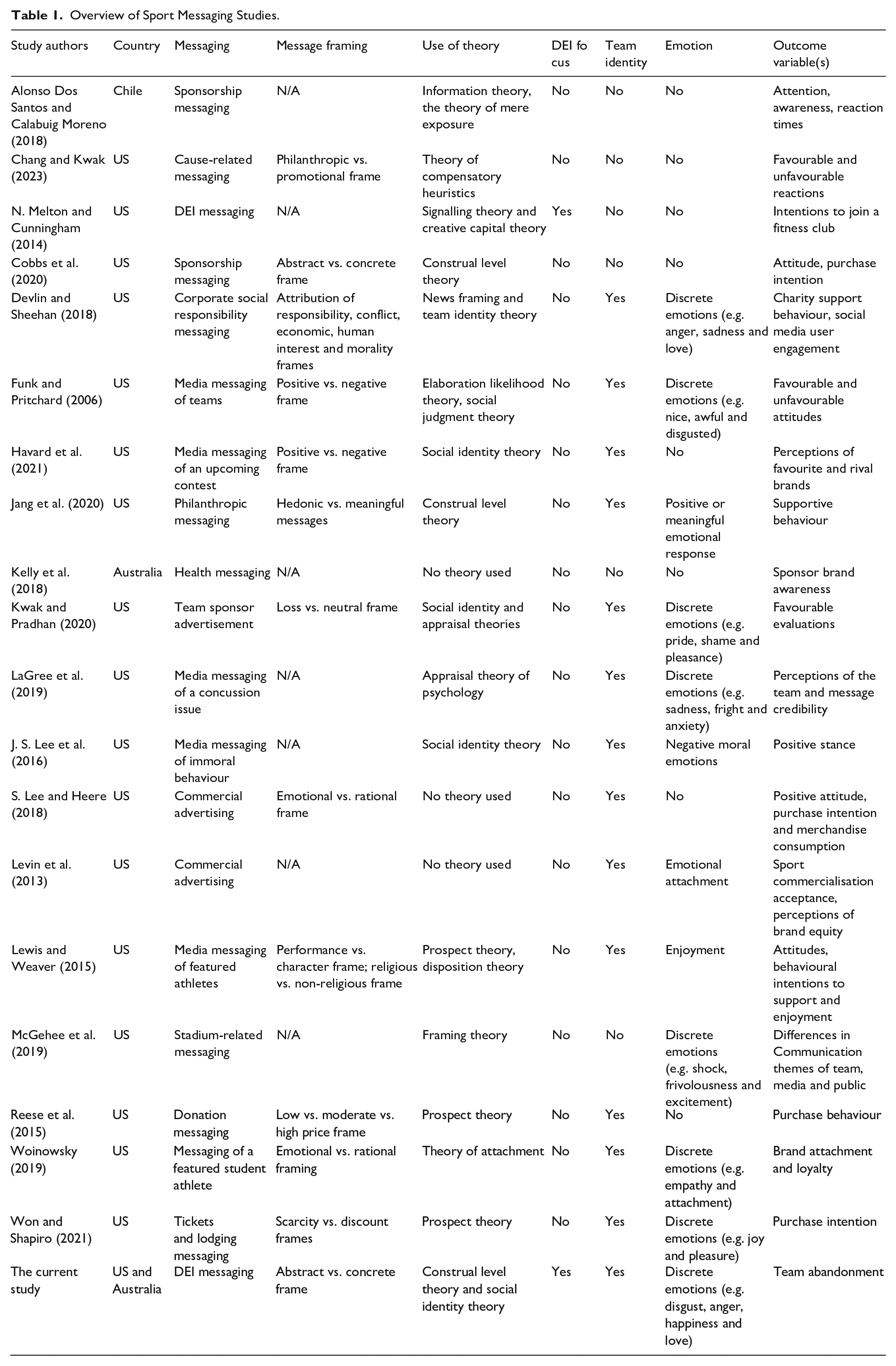
Table 1 shows limited research on DEI messaging by sports organisations in general, as noted in the extant literature (MacCharles & Melton, 2021). N. Melton and Cunningham (2014) offer an exception but did not explore message framing, which would test the effectiveness of different frames (i.e. positive vs. negative, abstract vs. concrete). Previous studies have primarily focussed on positive outcomes such as purchase intention, charity support, brand awareness and brand loyalty, with negative outcomes such as team abandonment under-researched (Cobbs et al., 2020; Devlin & Sheehan, 2018; Jang et al., 2020). Taken together, the existing gaps in the literature highlighted in Table 1, depict apt theoretical opportunities to underpin and extend knowledge of DEI messaging in sports marketing. Specifically, using construal level theory (CLT) as a theoretical foundation to investigate impacts on fans’ team identification, fans’ emotional response and associated behaviour in the form of team abandonment. The following section expands on the fit of these constructs as the theoretical foundation for the current research.
Theoretical foundation and conceptual model development
Given the burgeoning nature of LBGTQI+ DEI initiatives in professional sports organisations worldwide, and the associated media attention and marketing opportunities, there is a need for robust empirical research. While some research has examined broad-level trends associated with LGBTQI+ marketing in sports, specific consumer responses to LGBTQI+ marketing activities remain underexplored (Ferraro et al., 2023; E. N. Melton & MacCharles, 2021). Thus, a logical extension of previous research is understanding the impact of sports organisations’ DEI-focussed messaging on key sports marketing constructs like team identification. Against the sports messaging research backdrop provided in the previous section, this study addresses existing gaps by applying CLT to examine how LGBTQI+ marketing message framing influences fans’ team identification and subsequent emotional and behavioural responses. The conceptual model presented in Figure 1 reflects the associations between these constructs, contributing to generating a more robust empirical understanding of how LGBTQI+ marketing initiatives impact and align with sports consumer behaviour for professional sports organisations. CLT which underpins the conceptual model is provided in the following section.
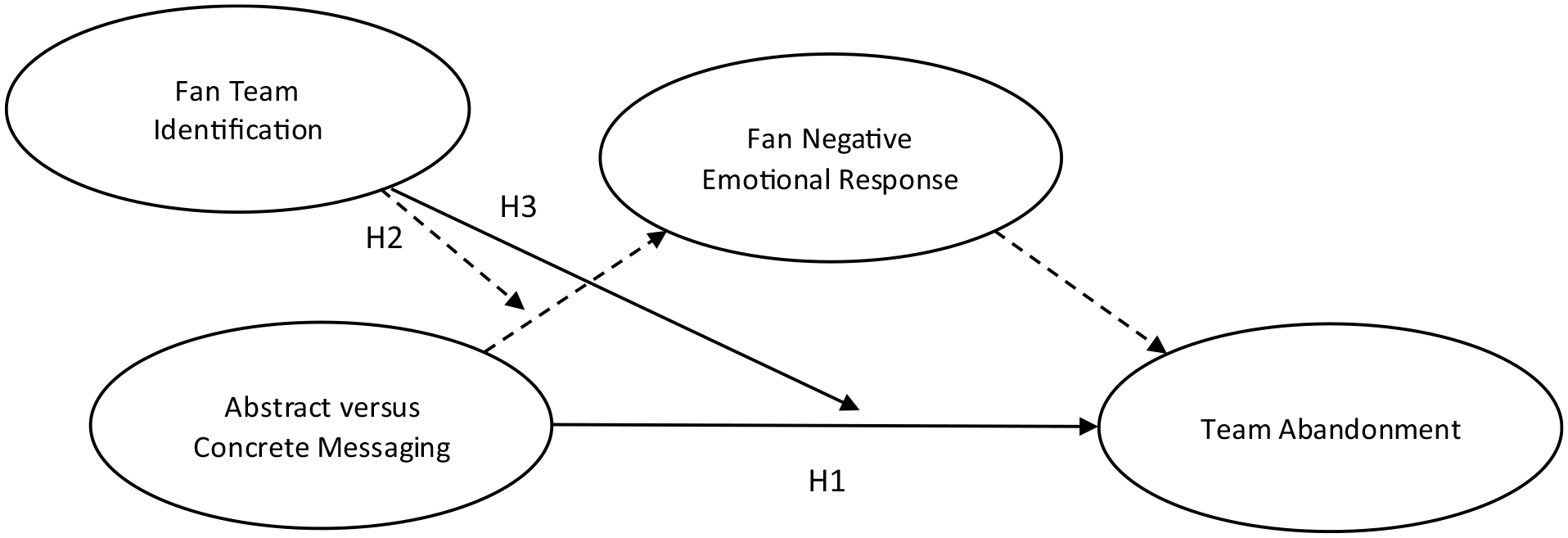
Conceptual model.
Construal level theory as a foundation for framing DEI messages in sports marketing initiatives
Although there is limited evidence in the sports marketing literature regarding message framing and DEI initiatives, a theoretical understanding of which message framing may be more effective can be drawn from construal level theory (CLT). CLT is a psychological theory that explores how people interpret and perceive events and objects based on the distance (time, space or social) between the individual and the stimulus (Trope & Liberman, 2010). CLT suggests individuals interpret stimuli as either abstract (far away from the individual) or concrete (close to the individual). Prior marketing studies indicate that construal level plays a critical role in influencing different types of consumer behaviour, including commercial, pro-environmental and pro-social (e.g. Aknin et al., 2015; Bandyopadhyay et al., 2023; Ryoo et al., 2017). A common view among researchers is that CLT also has implications for the design of marketing messages to influence consumer behaviour (e.g. Adler & Sarstedt, 2021; Septianto & Lee, 2020) – making it an apt theoretical foundation for hypothesising and examining DEI sports marketing message framing. Put simply, this research applies CLT to understand how sports organisations can frame messages to evoke an effective response (i.e. avoid decreases in team identification, and negative emotional and behavioural responses) to DEI marketing initiatives.
Transferring the theoretical underpinnings of CLT to the current research, the message framing of DEI initiatives is operationalised as being abstract (i.e. general/broad) or concrete (i.e. detailed/specific) upon the level of information provided by the sporting team about why such an initiative is being undertaken. Construals are mental representations and have two opposite levels – high (abstract) and low (concrete; Liberman et al., 2007). Low-level construals are concrete and detailed, focussed on a specific notion; high-level construals are abstract and inexplicit, focussed on the big picture (Trope & Liberman, 2010). For instance, sporting organisations may announce why DEI aligns with their values or how they support specific DEI initiatives.
Generally, people prefer concrete over abstract information when a stimulus is perceived as psychologically close according to CLT research (Trope & Liberman, 2010). Empirical studies demonstrate that concrete frames lead to more positive responses by consumers when the stimuli are seen as close (Hasson & Glucksberg, 2006). Based on CLT, sports fans would perceive teams they follow as psychologically close, and fans often identify with their teams and use them to inform their self-perception (Kunkel et al., 2022). Thus, using an incorrect frame may lead to negative responses, such as team abandonment, the dependent variable of this research. Indeed, previous research has suggested that if a sports team continually partake in activities that erode points of attachment and identity with fans, abandonment can result, particularly for less attached fans (Wann & Branscombe, 1990; Wegner et al., 2020). The idea of team abandonment has typically been observed in association with team or player performance. Building on prior research, the current research explores how the framing of DEI messages in sports marketing initiatives impacts team abandonment. Based on previous research, it is theorised that a concrete message frame is less likely to result in negative responses regarding the communication of sports organisations’ DEI marketing initiatives (see Figure 1). Thus, the following is hypothesised:
Team identification and variations in fan responses to DEI
Outside the sports context, prior research using CLT (e.g. Bandyopadhyay et al., 2023; Ryoo et al., 2017) implies the notion that the level of psychological closeness between a fan and their sports team can affect their preference for concrete or abstract framing.
Extending into this research context, as this closeness (i.e. connection to the team) weakens, fans may become less inclined towards concrete information and more towards abstract information, impacting their level of team identification. Team identification includes individuals’ cognitive self-concept, emotion and attachment towards a sports team (Allison & Knoester, 2021; Ngan et al., 2011; Wann & Branscombe, 1990). Team identification is a widely used construct in sports research to understand how various fan segments confirm and reflect on their membership to a sports group in an ongoing manner (Lock & Heere, 2017). Much of the earlier research focusses on how team or player performance (e.g. Gray & Wert-Gray, 2012; Ngan et al., 2011) influences fans’ team identification. For example, highly identified fans are likelier to maintain high self-esteem and satisfaction in their association with the team even when faced with defeat (Gray & Wert-Gray, 2012; Wann & Branscombe, 1990). Recent research has called for and is exploring team identification beyond sports performance indicators and in relation to altruistic and CSR initiatives of sports organisations (Joo et al., 2016; Rayne et al., 2019). For example, Rayne et al. (2019) showed the importance of sports teams forming partnerships to support CSR and the crucial role of designing these initiatives for smooth implementation. While Joo et al. (2016) found that higher levels of team identification impact consumers’ attitudes towards the CRM campaign and the sponsoring sports team. The current research extends this thinking to socially responsible DEI marketing initiatives. That is, the level of a fan’s team identification will likely impact their response to how a sports organisation’s frames messages promoting DEI initiatives. Hence, the following hypothesis is offered.
Negative emotional responses – anger or disgust? – of sports fans to DEI initiatives
As previously discussed, there are a variety of media reports showcasing fans’ emotional responses to sports organisations’ DEI initiatives (see e.g. Chammas & Pengilly, 2022). While previous research discusses emotion concerning team identity (see Table 1), empirical testing of specific emotional responses is lacking. Specifically, the literature lacks empirical evidence regarding what type of discrete negative emotional responses explain fans’ reactions. Understanding how exact negative emotional responses are triggered (or not) is important because, as discrete emotion theory suggests, each basic emotion, has a unique pattern of physiological responses, cognitive appraisal and behavioural responses (Bagozzi et al., 1999). In this research context, fans may abandon their association with that team if a sports team’s DEI marketing initiative message evokes a negative emotional response.
Studies on CSR and LGBTQI+ marketing have shown that negative emotions like anger and disgust may be elicited towards sporting organisations that communicate DEI initiatives and are seen as distinct negative responses (Northey et al., 2020). In the sports research context, Devlin and Sheehan’s (2018) study of news framing of sports CSR campaigns involved fans responding online using a range of Facebook reactions, including ‘angry face’ emoticons. In further evidence negative emotional responses to marketing stimuli, J. S. Lee et al.’s (2016) study of sports fans demonstrated how moral emotions, including anger, disgust and contempt, mediate the effect of athlete endorsers’ immoral behaviour on moral reasoning strategies. CSR literature also supports considerations for anger and disgust in the current study. Romani et al. (2013) demonstrate anger as a key mediator for relationships associated with corporate misconduct. Further, Tuzovic et al. (2022) state that moral emotions, including disgust and anger, mediate the impact of service relationships changing perceptions of betrayal. Support for the emotions of anger and disgust is also present in LGBTQI+ marketing literature. The study by Northey et al. (2020) demonstrated disgust as a key mediating mechanism when considering consumer responses to LGBTQI+ advertising. Further, Bhat et al. (1998) showed that disapproval emotions, including anger and disgust, mediate the impact of homosexual advertising on attitudes to advertisement and brand. Based upon prior literature, the current research, therefore, considers disgust and anger as two discrete emotions that may impact fans’ subsequent behavioural responses (e.g. team abandonment) resulting from the communication of a DEI initiative. Given the support in previous literature, we propose that anger and disgust could act as potential mediators in the relationship between message framing of sport DEI initiatives and behavioural response in the form of team abandonment.
Empirical overview
To test the conceptual model and the hypothesised relationships, the current research conducted two experimental studies. Study 1 comprises a 2 × 1 experiment establishing the effect of abstract versus concrete DEI messaging on fan responses, and how the level of fan team identification moderated this response. Study 1 also sought to identify the discrete negative emotions which explained consumer responses. Study 2 builds on the results of Study 1 by examining the relationships with fans in a different market, the US, to assess whether the relationships and impact of fan team identification would replicate.
Study 1: Australian sport fans
The purpose of Study 1 was to establish the interrelationships between DEI messaging and level of fan team identification, on negative emotional responses and team support. It also sought to identify the discrete negative emotion being triggered by DEI messaging and the level of fans’ team identification.
Design, sample and procedure
Study 1 was a one-factorial, two-level experimental design (DEI messaging: abstract, concrete). A total of 386 Australian team sport fans (47.8% male, Mage = 35.62 years SD = 12.94) were recruited via the survey panel provider Prolific and randomly allocated to one of the two experimental conditions. This sampling approach is consistent with prior experimental research (Cooke et al., 2022; Sands et al., 2020) which sourced participant data from the survey panel provider Prolific. A post hoc power analysis was conducted using G*Power version 3.1.9.4 to assess the sensitivity power analysis. The G*Power output revealed that the sample size could detect an effect size of f = 0.18 at the alpha = .05 and power = 0.95 levels.
At the start of the survey, participants read the ethics information sheet, indicating they could withdraw from the study at any point and that their responses were confidential and anonymous. Participants were then asked to indicate a favourite team sport they followed in an open text box. Code built within the survey then embedded the participants’ reported team in the manipulations and subsequent questions. For instance, if a participant was to express that their favourite team was ‘Cowboys’, the manipulations and questions would place ‘Cowboys’ where appropriate.
Participants were then asked to consider a press release announcing that their favourite sports team would introduce new uniforms/jerseys for their team displaying the players’ numbers in a rainbow. The abstract manipulation provided only detail of the players’ numbers being presented in a rainbow, whereas the concrete manipulation provided an explanation that this change was to be used as a symbol representing diversity and celebrating the LGBTQI+ movement (refer to Appendix 1 for manipulations). This manipulation was specifically used and operationalised due to its external validity as a prominent English Premier League club had used a similar communication approach in their DEI announcement. After participants were exposed to the experimental stimuli, they answered questions relating to how they felt emotionally about the announcement and how likely they would be to support their team in the future, which was randomised to mitigate the potential for common method bias and spill-over effects.
To measure fan team identification, six items (e.g. ‘when someone criticizes [team], it feels like a personal insult’]) adapted from Ngan et al. (2011) were measured on a 5-point Likert scale (strongly disagree-strongly agree; loadings: 0.684–0.846, α = .863). Four items for negative emotions were adapted from Northey et al.’s (2020) study of LGBTQI+ advertising. Specifically, participants were asked ‘thinking of the media release about the [team] how did you feel’ with two items ‘repulsed’ and ‘disgust’ measuring disgust, and ‘angry’ and ‘mad’ being used to measure anger. The emotions items were measured on a 9-point scale (1 = does not describe my feelings, 9 = does describe my feelings). Team abandonment was measured on a three-item scale adapted from Carlson and Donavan (2008; e.g. I would be less likely. . . (1) to attend the [team] games this season, (2) purchase [team] merchandise, (3) watch [team] on TV, loadings: 0.929–0.964, α = .939).
Results
In Study 1, a series of models (three) was used to test the conceptual model and its network of relationships. Consistent with Riedel et al. (2022), a variation of models was used concerning the overall valence of emotion assessed (negative), and the discrete emotions (disgust/anger). This approach extends previous work (e.g. Arsenovic et al., 2023; Khalil et al., 2020) tending to focus on targeted discrete emotions without ruling out competing emotions. Conducting a series of model analyses was done to rule out particular emotions and pinpoint the discrete emotional response that explains the relationships. Further, covariates of gender, sexual orientation, income and education were included within the analysis as they could be confounding of either emotional response to LGBQTI+ inclusivity or team abandonment. All were conducted using PROCESS Macro Model 8 with 10,000 bootstraps.
Model 1
The first model was a single computed measurement of negative emotions (an average score of measures for both anger and disgust). The results demonstrate that abstract (1) as opposed to concrete (2) DEI messaging leads to higher levels of disgust (B = -.62, SE = 0.25, t = 2.41, p = .022). Fan team identification was found to have a non-significant impact on negative emotion (B = -0.16, SE = 0.10, p = .10). The interaction between team identification and DEI messaging was also non-significant (B = 0.10, SE = 0.06, t = 1.50, p = .13). Negative emotions had a significant direct effect on team abandonment (B = 1.18, SE = 0.06, t = 17.52, p = .000). The model produced an R2 of .49 for team abandonment.
Model 2
The results of Model 2 demonstrated that abstract (1) as opposed to concrete (2) messaging leads to a response of anger. The effect of team identification (p = .12) and the interaction of team identification (p = .09) was non-significant. The effect of anger on team abandonment was significant (B = .99, SE = .06, t = 16.65, p = .000). The model produced an R2 of .44 for team abandonment. The effects of fan team identification, the interaction of team identification with DEI messaging being non-significant and the R2 dropping from .44 compared to .49 in Model 1, suggest that disgust, which is tested in the next model, was likely to support the hypotheses.
Model 3
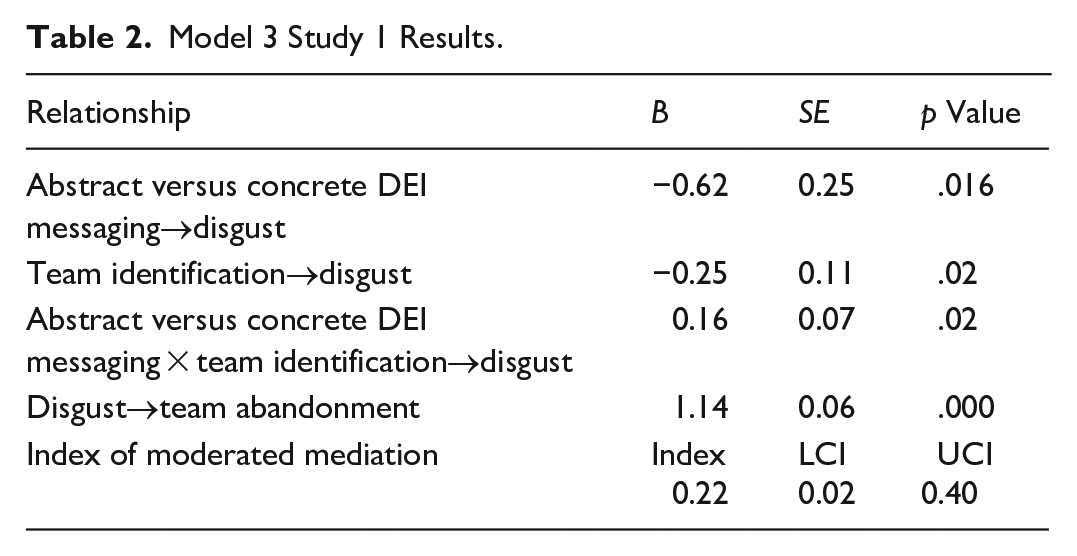
The results in Table 2 show a significant direct effect of abstract versus concrete DEI messaging on disgust (B = -0.62, SE = 0.25, t = 2.41, p = .016), supporting H1 and showing that emotional responses of disgust results when abstract messaging is used and is not likely occur when concrete messaging is used. The results also showed that fan team identification had a significant negative direct effect (B = -0.25, SE = 0.11, t = .2.28, p = .02), suggesting that feelings of disgust decreased as team identification increased.
Model 3 Study 1 Results.
The covariates of gender (B = -0.16, SE = 0.06, t = -2.49, p = .013) and sexual orientation (B = -0.13, SE = 0.05, t = -2.56, p = .010) had a significant direct effect on fans’ feelings of disgust. Specifically, they indicated that males as opposed to females are more likely to respond with higher levels of disgust and that heterosexual fans are more likely to respond with disgust than those who identify as homosexual or bi-sexual.
A significant interaction was found between DEI messaging and fan team identification (B = 0.16, SE = 0.07, t = 2.29, p = .02), see Figure 2. When examining the conditional effects of a spotlight analysis, it was apparent that fans with low levels of team identification (2.00 or below) were significantly more likely to feel disgusted if abstract rather than concrete messaging was used (B = 0.29, SE = 0.13, p = .02). This effect dropped in strength and became non-significant for fans with moderate team identification (B = -0.07, SE = 0.09, t = 0.84, p = .39). Whereas, for fans with high levels of team identification, the direct effect was in the opposite direction towards concrete messaging, but non-significant (B = 0.16, SE = 0.13, t = 1.19, p = .23). The mediator, disgust, displayed a positive and direct effect on team abandonment (B = 1.14, SE = 0.06, t = 18.62, p = .000, R2 = .55).
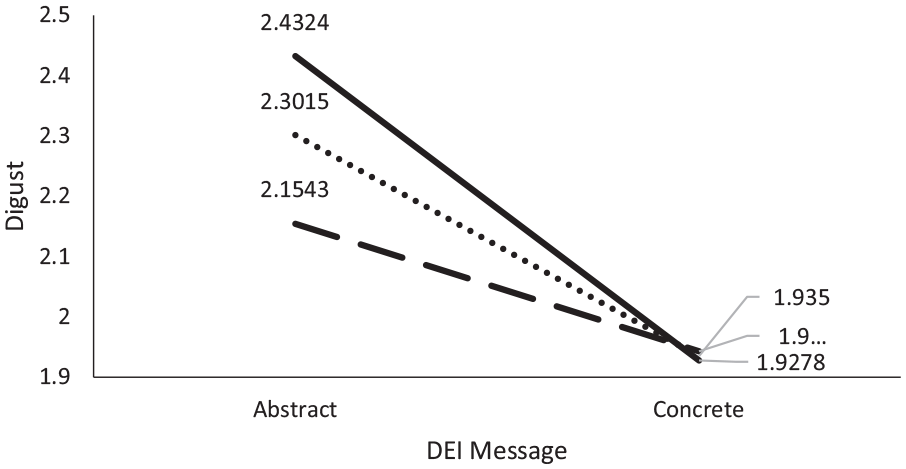
Impact of DEI messaging on disgust by level of team identification.
The index of moderated mediation was significant (index = 0.22, SE = 0.09, LCI = 0.02, UCI = 0.40). The indirect effect of abstract messaging was significant for fans with low team identification (B = -0.37, SE = 0.18, LCI = -0.74, UCI = -0.008), but was non-significant for moderate fans (B = -0.10, SE = 0.11, LCI = -0.34, UCI = 0.12), and high identification fans (B = 0.19, SE = 0.16, LCI = 0.16, UCI = 0.51). These results confirmed disgust as a mediator as well as the moderating role of team identification support H2 and H3.
Study 1 discussion
The findings of the moderated mediation analysis undertaken in Study 1 provided empirical support for using concrete instead of abstract messaging when communicating DEI initiatives in professional team sports to fans, especially when attempting to mitigate negative emotional fan responses. The results of Study 1 also provide important insights regarding what discrete negative emotion best explains fan responses and those that do not.
Specifically, the results suggested that disgust rather than anger provides a superior explanation regarding how fans psychologically process DEI messaging. Further, the results identified that the emotional response of disgust is more likely to occur in fans with lower levels of team identification, and when abstract rather than concrete messaging is used.
Consistent with the literature, the covariates showed that female fans (as opposed to males), and homosexual or bi-sexual (as opposed to heterosexual) fans were less likely to have feelings of disgust. This observation can be explained by prior literature demonstrating that males often have heightened negative responses towards homosexuality and that homosexual consumers have stronger responses to marketing that aligns with their sexual orientation (Eisend & Hermann, 2019).
Study 2: US sport fans
Insights from Study 1 show disgust as a discrete negative emotion which best explains fan responses to DEI messaging. The aim of Study 2 was to confirm these findings in a new sports market – the U.S.
Design, sample and procedure
A total of 402 U.S. consumers (49.4% male, Mage = 35.33 years, SD = 12.12) were recruited through Prolific. Study 2 used the same experimental stimuli and procedure as Study 1. Items for fan team identification (loading range: .61 to .85; α = .85), disgust (loading range: 0.91–0.94; α = .91) and team abandonment (loadings: 0.94–0.95; α = .94) were also consistent with Study 1. The same covariates of sexual orientation, gender, income and employment were also used. A post-hoc power analysis was conducted using G*Power version 3.1.9.4 revealing that the sample could detect an effect size of f = 0.25 at the alpha = .05 and power = 0.96 levels.
Results
To test the hypotheses PROCESS MACRO Model 8 with 10,000 bootstraps was run. Consistent with Study 1, the results demonstrated that abstract (1) as opposed to concrete (2) leads to significantly higher disgust results (B = -0.72, SE = 0.21, t = 2.71, p = .001). Fan team identification resulted in a significant direct effect on disgust (B = -0.29, SE = 0.08, p = .001).
Consistent with Study 2, higher levels of team identification suppressed the likelihood of a disgust response. A significant interaction between team identification and DEI message framing was observed (B = .15, SE = .05, p = .004). Gender significantly impacted disgust (B = -0.30, SE = 0.11, t = 2.58, p = .01) suggesting men (1) are more likely than females (2) to feel disgust when DEI messaging is used. Sexual orientation also significantly impacted disgust (B = -0.09, SE = 0.04, t = 2.30, p = .021), while disgust significantly influenced team abandonment (B = 1.27, SE = 0.08, t = 14.82, p = .000).
The spotlight analysis showed that the effect of DEI messaging on disgust for fans with low team identification was significant when abstract as opposed to concrete messaging was used (B = -0.36, SE = 0.10, t = -3.59, p = .004), this effect nearly halved for fans with moderate team identification whilst remaining significant (B = -0.14, SE = 0.06, t = -0.202, p = .043). The direct effect reversed, becoming non-significant for fans with high levels of team identification (B = 0.03, SE = 0.09, t = 0.38, p = .69). For greater specificity in identifying where the effect of abstract messaging on disgust became non-significant, the Johnson-Neyman technique was used as recommended by Spiller et al. (2013) and similar research (e.g. Fan et al., 2016; Khalil et al., 2020). As shown in Figure 3, the highlighted area with team identification below 3.84 demonstrated abstract messaging has a significant effect on disgust.
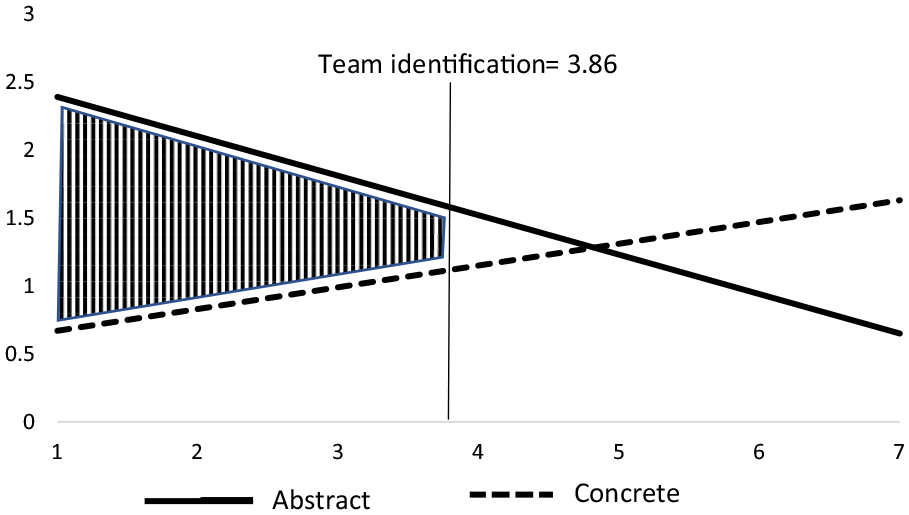
Floodlight analysis.
The index for moderated mediation was significant (index = 0.19, SE = 0.09, LCI = 0.02, UCI = 0.39). The indirect effect of DEI messaging was significant for low identification fans (B = -0.47, SE = 0.19, LCI = -0.86, LCI = -0.10), and dropped in strength while remaining significant for moderate identification fans (B = -0.17, SE = 0.08, LCI = -0.35, UCI = -0.004) while reversing in direction and becoming non-significant for high identification fans (B = 0.04, SE = 0.22, LCI = -0.16, UCI = 0.28). The model produced an R2 of .39 for team abandonment.
Study 2 discussion
Study 2 demonstrated that the results of Study 1 in Australian sports fans could be replicated with US sports fans. Consistent with Study 1, abstract as opposed to concrete DEI messaging was likely to trigger a disgust response, and this was found to be stronger in fans with low team identification. The model produced a moderate explanation of team abandonment as indicated by the R2 suggesting the model and theorising provides a good explanation of fan responses and likely behavioural responses. Conversely, gender and sexual orientation were significant covariates in Study 2. Taken together with Study 1, Study 2 also shows gender and sexual orientation were significant covariates, this highlights an area worthy of further research to determine why and how gender and sexual orientation shape emotional responses to sports DEI initiatives.
General discussion
Across two experimental studies, findings show that abstract as opposed to concrete DEI messaging is likely to lead to a disgust response by sports fans, subsequently leading to an increase in likelihood of team abandonment. Further, the results across both studies show that the negative effect of abstract DEI frames is likely to be stronger for fans with lower levels of team identification. The theoretical and practical implications of these findings are discussed as follows.
Theoretical implications
This study is one of the first to demonstrate how the framing of a sports organisation’s DEI initiatives affects fan responses in sports and marketing (see Table 1). The study contributes to the literature in three ways. First, using the theoretical lens of CLT it bridges the gap between research in sports (e.g. Cobbs et al., 2020) and marketing (e.g. Adler & Sarstedt, 2021; Septianto & Lee, 2020) by empirically examining the intersection of the two domains regarding the promotion of DEI sport marketing initiatives, such as pride activities for the LGBTQI+ community. In doing so, this study provides insights into consumer responses to DEI marketing initiatives by corporate organisations (Ginder & Byun, 2015), particularly those in sports (E. N. Melton & MacCharles, 2021). Findings demonstrate and confirm the applicability of CLT as a theoretical basis for examining how the messaging design and integration of sports marketing communication promoting DEI initiatives impact fan responses. The results of two experimental studies indicate that high levels of abstract construal through DEI messaging are likely to lead to negative responses from fans, such as team abandonment, while the opposite occurs for low levels of construal through concrete DEI messages. This finding supports broad-level CLT research where, in general, consumers tend to connect better with concrete rather than abstract construals (Trope & Liberman, 2010). It also echoes marketing research outside of sports where the theoretical applicability of CLT is influential in the design of marketing messages to influence consumer behaviour (Adler & Sarstedt, 2021) in commercial and social marketing contexts (Aknin et al., 2015; Bandyopadhyay et al., 2023). Concerning sports marketing, given that the self-concept generates a sense of being psychologically close with a team (Kunkel et al., 2022), concrete messaging with detail as to why/how a team is supporting a DEI marketing initiative conveys a stronger interpersonal connection which helps uphold the self-concept associated with the team identity, reflecting research previous findings (e.g. Lock & Heere, 2017).
A second theoretical implication is the moderating role of team identification. This finding contributes to extending an understanding of team identification outside of its relationship with team/player performance (Joo et al., 2016). Specifically, the findings extend theory regarding the association between team identification and consumer (fan) responses to sports team DEI initiatives, as extant research encourages (see E. N. Melton & MacCharles, 2021). The results demonstrate the applicability of CLT as a lens to explore and extend how sports marketing phenomena like team identification may interrelate to specific types of marketing activities. Theoretically, fans with lower levels of team identification are more likely to respond negatively to abstract DEI messages, while fans with higher levels are not. This is due to the construal idea (i.e. LGBTQI+ initiative) being framed as further in proximity to the fan’s perceived closeness to the team. Put simply, if fans are already displaying low levels of team identification and they are exposed to an abstract message about an LBGTQI+ initiative, a multiplying effect occurs, resulting in fans feeling a further disconnect from the team. On the contrary, fans displaying high levels of team identification already feel close to the team, so an abstract framed message about an LGBTQI+ marketing initiative does not dilute their connection to the team. The latter finding provides a broader theoretical consideration demonstrating that the more highly connected consumers are with an entity, the more lenient or less concerned they may be concerning how an organisation frames and communicates social responsibility marketing, like DEI initiatives. These findings reinforce previous research (e.g. Hasson & Glucksberg, 2006; Ryoo et al., 2017) that generally, consumers respond more favourably to concrete message frames.
The findings also contribute to an auxiliary understanding of signalling theory in DEI sports marketing (see N. Melton & Cunningham, 2014; E. N. Melton & MacCharles, 2021). By understanding how segments of fans with differing levels of team identification impact their perceived closeness to a sports organisation (the message source), the correct combination of message frames can be designed to support effective signals (e.g. pride jerseys) in LGBTQI+ marketing activities. A more nuanced understanding of CLT as moderated by team identification can also help avoid well-intentioned signalling efforts from an organisation, that sometimes result in accidental but negative signals (Bass, 2015). Beyond the contextual setting of the study, marketing scholarship can also draw implications from this line of theorising regarding how other forms of identification such as attachment or fandom with sponsors, brands or products alter consumer responses to LGBTQI+ DEI initiatives.
The third theoretical contribution relates to discrete emotions. Namely, the impact of fans’ responses in the form of disgust to abstract message frames promoting sports team DEI and the likelihood of team abandonment. Like the effect on team identification, this reflects prior CLT research (Aknin et al., 2015; Trope & Liberman, 2010) suggesting that concrete, rather than abstract, messaging generally elicits more positive impacts on consumer responses to marketing activities—in this instance, an emotional response. Both spotlight and floodlight analyses provide theoretical support for this finding. While previous research (e.g. Kwak & Pradhan, 2020; LaGree et al., 2019) incorporated discrete emotional constructs in various types of sports messaging research, limited research has done so in combination with CLT or focussing on DEI messages in sports marketing (recall Table 1). The findings extend more theoretical nuance towards understanding the potential negative emotion outcomes and lend theoretical support to Northey et al. (2020), who identified disgust as a discrete emotion in advertisements displaying explicit LGBTQI+ imagery. By extension, this research and that of Northey et al. (2020), provides a fresh theoretical viewpoint that regardless of the medium (e.g. TV ad and press release) an LGBTQI+ message is framed through, disgust appears to be a consistent discrete emotion that certain segments of consumers respond with. More broadly, knowledge of specific concrete emotions, rather than general emotions (positive vs. negative), offers a more acute theoretical foundation for understanding how segments of consumers (i.e. sports fans) will likely respond to DEI messaging and the associated pattern of behavioural response (i.e. team abandonment).
Practical implications
This research offers a basis for some key practical implications relevant to sports marketers and organisations. One implication is the need for sports organisations to tailor LGBTQI+ marketing initiatives based on the segment of fans they are targeting. Sports marketers should, therefore, seek to understand their fan base using team identification as a key segmentation variable, which our multi-pronged spotlight and floodlight analyses support. Both analyses demonstrate that for fan segments exhibiting lower levels of team identification, concrete message frames are most effective in communicating DEI initiatives to mitigate negative responses. By way of a practical example, new/expansion sports organisations with low-medium team identification should use clear and specific (i.e. concrete) messaging for their LGBTQI+ marketing initiatives to avoid team abandonment. In this instance, message frames providing a clear and specific reason for why and how the organisation is activating an LGBTQI+ marketing initiative would help avoid potential team abandonment due to disgust that may be evoked from a more general, vaguely (abstract) framed message. Providing detailed reasons why a sports organisation is activating a DEI marketing initiative gives fans clarity and demonstrates how the sports organisation and DEI initiative are genuinely aligned. Put simply, concrete DEI messages make better sense to all segments of fans, particularly casual followers. This helps avoid tokenism and ‘box ticking’ perceptions associated with vague, abstract DEI communication, often rectified via reactive PR campaigns aiming to provide more concrete detail of the DEI initiative for concerned stakeholders. Concrete frames in DEI message design can help sports organisations develop and transition fans with lower team identification to more loyal, moderate-highly engaged fan segments, which has positive financial implications (N. Melton & Cunningham, 2014; Rayne et al., 2019). This implication offers potential transferability to other key stakeholders like sponsors. It may be prudent for sponsors to consider how specific (concrete) or general (abstract) they frame messages communicating their connection to sports organisations if they want to leverage sponsorship across multiple fan segments.
Knowing how fans react emotionally to LGBTQI+ marketing activities is also a key practical takeaway for sports organisations. Disgust is a crucial emotion that can drive fans away from identifying more deeply with a team. Understanding this can help organisations recover from unintentional and/or poor messaging decisions, design message frames that address negative emotions and communicate DEI initiatives’ support to various fan segments into the future (Joo et al., 2016). As more sports organisations support socially responsible DEI initiatives (Ferraro et al., 2023), understanding how discrete emotions influence fan support and drive team identity is increasingly important concerning various strategic marketing decisions. This implication aligns with previous research (Oakenfull, 2024; Pharr & Lough, 2012; Rayne et al., 2019) suggesting that striking the right balance in DEI communication is paramount.
Lastly, organisations’ level of understanding and resources should be considered from a practical perspective. This would create a more realistic approach to how LGBTQI+ campaigns, along with DEI initiatives more broadly, could be best targeted to segments of fans across certain sports marketing communication platforms (e.g. social media, outdoor advertising and press releases). This would also help avoid ineffective or insensitive campaigns, which evoke negative responses from multiple stakeholders.
Limitations and future research directions
This study has strengths in its experimental design and international comparison, but future research could address opportunities related to the limitations of this research. One area for exploration is the congruency (i.e. fit) of DEI initiatives with the sporting organisation, including the source of communication and the signal of the initiative. One potential way to provide insight into such fruitful areas of research is through the lens of signalling theory (see E. N. Melton & MacCharles, 2021), which could investigate the fit between the signal and source of DEI marketing initiatives (De Jong & van der Meer, 2017). A related area of future inquiry may focus on the source, mode and channel in which DEI sports initiatives are promoted. Prior marketing research has noted the importance of considering athletes as endorsers (Bloxsome et al., 2020) and how visual imagery designs can alter consumer responses (Septianto & Lee, 2020). Future research could bridge this literature with the current study to uncover what athlete characteristics may enhance their suitability in promoting DEI initiatives. Thirdly, the focus of the current study was to understand negative emotional responses and outcomes to DEI initiatives, like team abandonment. In contrast, there is also potential for future research uncovering how and what types of discrete positive emotions such as happiness, love and pride can be elicited through DEI initiatives in sports and how this can contribute to desired sports marketing outcomes and enhance DEI outcomes more broadly in society.
Footnotes
Appendix 1: Press release manipulations
Declaration of conflicting interests
The author(s) declared no potential conflicts of interest with respect to the research, authorship, and/or publication of this article.
Funding
The author(s) received no financial support for the research, authorship, and/or publication of this article.
