



Abstract
The paper presents a novel approach to assess athlete brand identity by introducing the concept of brand congruence, which measures the alignment between an athlete’s intended brand image and consumer perceptions. This study leveraged five case studies involving elite athletes and their brands, with the participation of n = 794 consumers through an online survey. The application of Confirmatory Factor Analysis not only validated the effectiveness of the scale in evaluating athlete brand identity from the consumer perspective but also demonstrated its value in bridging the gap between athlete and consumer opinions. The measurement of athlete brand congruence serves as a crucial tool for gauging the harmony between desired and perceived brand attributes, providing valuable insights into athlete brand performance and specific areas for enhancement. This research contributes to the ongoing exploration of athlete branding and its implications for athletes, marketers, and consumers alike, adding to the broader discourse on this pertinent and relevant topic within today’s sports industry landscape.
Keywords
In the era of social media-driven personal branding for athletes, the significance of aligning athlete brand identity with consumer perceptions is paramount (Geurin, 2017; Kunkel et al., 2019). This alignment underscores the need for athletes to actively manage their online presence, influencing endorsements, salaries, and post-athletic career opportunities (Arai et al., 2014; Geurin-Eagleman & Burch, 2015). Indicatively, in 2023, Instagram boasted nearly 2.5 billion monthly active users. Of this vast user base, 81% actively engaged with the platform to research new products and services (Flynn, 2023). Alongside sporting achievements, athletes are equally, or often even more known for their portrayed personal brand identity and the image perceived by fans and consumers (Pegoraro & Jinnah, 2012). However, despite the increasing visibility of athletes on platforms like Instagram, there is a lack of guidance on effective personal brand development and social media usage (Flynn, 2023; Geurin & McNary, 2020).
While the literature on personal branding in the context of social media is robust (e.g. Green, 2016; Parmentier & Fischer, 2012), studies on athlete brands mainly focus on brand image and consumer perceptions (Lobpries et al., 2017), neglecting the perspective of the athlete themselves and the influence of their own perception with regards to brand building (Linsner et al., 2021). Studies on athletes’ use of social media have mainly applied qualitative case studies and secondary analyses of famous athletes (e.g. Parmentier & Fischer, 2012; Pegoraro & Jinnah, 2012). While these studies built essential knowledge, literature specifically analyzing intended branding strategies from the athlete’s perspective or athlete’s brand identity and their effect remains limited (Linsner et al., 2021; Lobpries et al., 2017).
Addressing this gap, Lobpries et al. (2017) emphasized the importance of comparing athletes’ brand identities with consumers’ perceived brand images. To facilitate the need for a deeper understanding of brand alignment between athletes’ intended, unintended, or unintentional brand messages and their reception by consumers, Linsner et al. (2020) developed the Athlete Brand Identity Scale (ABIdS) for assessing athlete personal brands, which remains untested. They argued that examining message congruence between athletes’ communicated brand messages and consumers’ perceptions is necessary to enhance branding strategies and optimize the effectiveness of social media communication. This analysis provides actionable insights for athletes and their support teams. Practically and managerially, this process also fosters stronger connections with fans and sponsors, contributing to sustained success in the sports industry. Furthermore, it yields multifaceted insights for brand management, which enable the evaluation of communication strategies, assessment of brand authenticity, understanding consumer associations, relevance to target audiences, prediction of impact on purchase intentions, crisis management, and support for long-term brand development (Koll et al., 2010). This comprehensive evaluation ensures athletes’ actions genuinely align with consumer perceptions (Wear et al., 2018), fostering trust, loyalty, and a competitive edge in the market (Mahmoudian et al., 2021). In contrast, athlete brand incongruence, as witnessed in cases like Tiger Woods’ infidelity scandal and Lance Armstrong’s doping confession, can lead to detrimental consequences, including eroding trust and credibility among fans and sponsors, resulting in the loss of endorsements, fan support, and overall reputation.
Hence, the aim of this study is twofold. First, it validates the ABIdS and its practical applicability, and second, it introduces athlete brand congruence as a measure to assess alignment between athlete and consumer perspectives. In striving to expand current knowledge on the consumer perspective of athlete brands, this study ventures into the relatively unexplored territory of athlete brand identity, aiming to answer the pivotal question of “how brand congruence can be effectively measured to evaluate alignment between athlete and consumer perceptions?”. The findings of this study enhance our understanding of brand owner perceptions in athlete branding and reveal the extent to which intended brand messages are effectively communicated and received by consumers. These insights have profound implications for athletes, managers, sponsors, and the broader sports industry. Beyond the impact of social media on individual athletes, athlete branding has the potential to reshape sports marketing, sponsorship strategies, fan engagement, and cultural narratives. Therefore, delving into the intricacies of athlete branding holds significant meaning across various dimensions.
Theoretical framework
Brand identity theory, schema theory, and athlete brand congruence collectively form a robust theoretical framework that underpins the foundation of this paper’s claims and insights. Brand identity theory, rooted in the broader framework of identity theory (Stryker, 1987), serves as the linchpin for understanding the construction and articulation of an athlete’s brand. This theory posits that establishing a distinct brand identity is paramount in the brand building process (Aaker, 1996). It suggests that like conventional brands, athletes can be viewed as brands in themselves and must actively communicate and manage their brand identities (Ghodeswar, 2008). This connection to brand identity theory illuminates the importance of athletes proactively crafting their personal brands, and Labrecque et al. (2011) neatly aligns with contemporary research on athlete personal branding via social media (e.g. Fraser et al., 2016; Geurin, 2017).
Schema theory, on the other hand, plays a pivotal role in understanding how consumers perceive and interact with athlete brands. Schema theory posits that consumers’ brand associations are shaped by their direct experiences, preconceived opinions, and knowledge of the brand’s environment, collectively forming cognitive structures or schemas (Bettman, 1979). While traditionally applied to assess congruence between two objects or events, schema theory in this context is adapted to assess the congruence between the athlete’s brand identity (desired image) and consumers’ perceived image. This novel application allows for the exploration of congruence from a different perspective—evaluating the alignment between athlete driven brand identity and consumer derived brand image. Achieving congruence, the alignment of brand identity and brand image, is instrumental for athlete brands, yielding benefits like heightened loyalty, augmented brand value, stronger emotional bonds, and a dedicated following (Nandan, 2005). Notably, congruence also simplifies consumer processing of brand communications (N. D. Fleck & Quester, 2007).
Athlete brand congruence serves as the bridge that connects brand identity theory and schema theory. It acts as a quantitative measure that evaluates the alignment or congruence between an athlete’s intended brand identity and how consumers perceive that brand. By leveraging the ABIdS, this paper quantifies and assesses the congruence, or lack thereof, between athletes’ branding efforts and consumer perceptions. This lens facilitates a comprehensive examination of the effectiveness of an athlete’s brand identity management and its resonance with consumers. While conventional applications of schema theory often focus on the congruency or incongruency between a schema and external objects or events, the innovative approach applied in this study involves examining how individuals or groups construct schemas from their unique viewpoints and experiences.
In essence, brand identity theory provides the foundation for understanding how athletes create and maintain their personal brands. Schema theory guides the examination of consumer perceptions and associations with these athlete brands. Athlete brand congruence acts as the empirical tool that quantifies the alignment or discordance between these two perspectives, shedding light on the effectiveness of athletes’ branding strategies and the resonance of their brand identities with consumers. Together, these theories offer a comprehensive and systematic approach to exploring athlete brand congruence and its implications.
An illustration of how the theoretical framework would shape athlete management branding is when an athlete who is, for example, known for their exceptional skill in their sport and their charismatic personality. Brand identity theory suggest that the athlete should actively shape their personal brand by emphasizing their key attributes. In this example, using social media and public appearances, the athlete consistently showcases dedication to training and sportsmanship. Hence, the athlete communicates a brand identity that aligns with their values and the image they wish to project. Schema theory explains how the athlete’s fans and followers construct schemas based on their experiences with that athlete. In this example, the athlete’s consistent display of sportsmanship and positive demeanor on and off the field contributes to positive schemes and fans perceive the athlete favorably. Schema congruence takes place when the fan’s mental constructs align with the athletes intended brand identity. Then, athlete brand congruence is used to assess that alignment. High congruence suggests that the athlete branding strategies effectively convey their desired image. This congruence can lead to fan loyalty and potential collaboration with brands that seek to associate with athlete known for their positive influence. Hence, effective athlete brand management hinges on securing congruence between brand identity and the desired image. This not only minimizes branding mishaps but also finetunes targeting, amplifies follower engagement, aligns sponsorships, diversifies revenue streams, and reduces dependence on public funding (Linsner et al., 2020). Despite its critical role, there remains a surprising dearth of research probing congruence between athlete brand identity and image (Lobpries et al., 2017).
Athlete brands in the age of social media
Athletes use social media platforms to develop relationships with fans, gain popularity and build influential brands (Kunkel et al., 2019). Social media offer diverse access points and direct engagement opportunities with large audiences, seemingly without any technological barriers. They have become a popular tool for personal branding (Labrecque et al., 2011), and are important components of successful athlete brand creation (Lebel & Danylchuk, 2014). Social media platforms have changed how conventional brands communicate with consumers and paved the way for personal brands as influencers. Influencers are independent third-party endorsers who shape their audiences’ opinions through social media (Freberg et al., 2011). They have sizable social media followers and are, therefore, a popular market and fan engagement tool used by brand professionals (Ki & Kim, 2019). The objective of brand marketers is to identify influencers that suit their brand, to form sponsorship relationships and take advantage of the influencers’ followers and engagements (Pegoraro & Jinnah, 2012). The success of this marketing strategy relies on the attachment transfer from human brands to the promoted products/brands (Thomson, 2006). According to Smith et al. (2018) the key difference between conventional brand endorsers and influencers is the link to the organization. Influencers are generally seen as independent, whereas endorsers have publicly known relationships with the brand. Therefore, consumers follow social media influencers as a trusted and unbiased source of information on brands and products (Smith et al., 2018). However, there is a fine line between the two terms since influencers, like endorsers, often benefit from collaborations with the companies whose brands or services they promote by receiving sponsorships, such as free products or payment (Stubb et al., 2019). The upside of the development of the online personal branding spectrum is that there are now more opportunities for brand collaborations than ever as they are no longer limited to star athletes. On the downside, audiences may be saturated with a myriad of personal brands to choose from (Khamis et al., 2017). This crowded space makes the development of distinct and noticeable personal brands essential to capture the interest of consumers, increase fan engagement, and attract the attention of companies.
Athletes, akin to other human brands, distinguish themselves in the marketplace by offering functional and emotional experiences to consumers (Williams et al., 2015). While traditionally limited to world class athletes like Michael Jordan, the advent of social media has democratized athlete branding, allowing athletes of all levels to cultivate public images and strong brands (Kunkel et al., 2019). Social media empowers anyone to create unique personas, and it has become pivotal in athlete brand formation (Lebel & Danylchuk, 2014).
Successful athlete brands hinge on stellar athletic performances, media exposure, positive brand image, and associations (Agyemang & Williams, 2013). Athletes wield influence over consumer opinions, affecting purchase decisions, pricing perceptions, and fostering word-of-mouth recommendations (Arai et al., 2013). Given the inherent risks of injuries and performance setbacks, athletes must develop robust brands to weather adversity during their careers, ensuring their continued prominence (Arai et al., 2014; Lunardo et al., 2015). Notably, strong personal brands offer enduring benefits, facilitating career transitions (Su et al., 2020), and postretirement opportunities (Parmentier & Fischer, 2012). Thus, athletes’ future success pivots significantly on their capacity to craft and sustain distinctive personal brands (Hodge & Walker, 2015).
The success of athletes in the contemporary landscape hinges significantly on their capacity to craft and sustain unique personal brands. In this context, “success” encompasses a multifaceted spectrum that encompasses personal, professional, athletic, and financial achievements. Athletes’ success is intrinsically tied to their ability to navigate these various dimensions effectively, leveraging their personal brands to unlock opportunities and accomplishments in each domain (Sotiriadou et al., 2023). Therefore, athletes develop and continuously nurture branding strategies that keep them engaged with their target audience. Each social media post can positively or negatively affect the athlete’s brand instantly and requires careful consideration. It is crucial that any content athletes produce aligns with their desired brand image and creates added value for their followers, which can be measured through fan engagement (Na et al., 2020).
Conceptualizing the athlete brand
Establishing a particular identity and effectively communicating this identity to the public is the most important step of athlete branding (Ghodeswar, 2008). According to Cortsen (2013), an athlete’s brand is formed by the athlete’s on- and off-field values and characteristics; both of which are crucial aspects of athlete brand equity creation (Arai et al., 2013). On-field characteristics are performance related attributes, whereas off-field characteristics relate to the athlete’s lifestyle, engagement with fans and public persona. Hence, a combination of athletic performance components, communication behavior, and character traits shape an athlete’s brand identity (Linsner et al., 2020). There is a lack of research regarding athlete brand building and brand identity creation as most research has focused on consumers instead of enabling evaluations from the athlete perspective (Lobpries et al., 2017). Responding to this lack of research, Linsner et al. (2020) identified items and factors found important for elite athlete branding and developed a scale to measure athlete brand identity. The key difference to existing research and scales is the focus on brand identity and the perspective of the athlete as opposed to brand image (consumer perspective). The construct of athlete brand identity is composed of four dimensions, Athletic Integrity, Athletic Success, Fan Engagement, and Character Traits. Eleven observable indicators that relate to an athlete’s integrity and moral compass form the dimension of Athletic Integrity. Athletic Success is based on nine performance related attributes, whereas Fan Engagement consolidates seven associations with the social media use of athlete brands. Five indicators describing brand personality attributes form the Character Traits dimension of the ABIdS. Even though the ABIdS has common characteristics seen in other brand image measures, such as the Scale of Athlete Brand Image (SABI by Arai et al., 2013), there is a clear shift in focus toward athlete brand features that can be directly influenced and adapted by the athletes themselves (Linsner et al., 2020). The ABIdS offers a novel approach to athlete brand measurement as it is the first scale that allows individualized evaluation of an athlete’s brand that provides clear feedback to the athlete on how the public perceives their brand.
Athlete brand congruence
Multiple theories have been developed to explain and understand the relationship between brand, product, endorser, and consumer by using different terms interchangeably, such as degree-of-fit, match-up, similarity, or congruence (Santos et al., 2019). Past studies investigated relationships between celebrity and brand (N. Fleck et al., 2012), endorser and product (Cunningham & Bright, 2012), celebrity image and consumer ideal self (Choi & Rifon, 2007), brand and product (Aaker & Keller, 1990), as well as sports team and sponsor (Gwinner & Eaton, 1999). Lee et al. (2018) investigated congruence with regards to brand positioning strategies of sports brands. High congruence between what a company intends to deliver, and consumers’ actual perceptions of the brand represents the effectiveness of marketing communication strategies (Lee et al., 2018). There is a consensus in all studies that congruence is a positive element as it assists consumers with processing brand communications (N. D. Fleck & Quester, 2007).
Congruence is also important when it comes to the brands of athletes. The development of new media has given athletes the opportunity to establish their own public brands (Geurin-Eagleman & Burch, 2015). The brand image of an athlete should be reasonably consistent with the developed identity (Arai et al., 2014). Hence, strategic management of athlete brands is essential to ensure congruence with the desired brand image. Greater congruence between athlete brand identity and brand image will assist athletes in their public messaging, reduce consumer and sponsor confusion, and enable athletes to better target their marketing and align with appropriate sponsors (Linsner et al., 2020, 2021). This, in turn, should increase potential streams of revenue and reduce dependence upon public funding. Athlete brand congruence also positively affects associated business partners, such as increased ticket sales or memberships (Geurin-Eagleman & Burch, 2015).
The ability to measure and evaluate an athlete brand is essential for the athletes themselves as well as their teams and sponsors (Hasaan et al., 2018). Hence, understanding the brand message sent by athletes and the way consumers decode this message to form positive or negative images of the athlete brand is important and makes the analysis of brand congruence within athlete branding crucial (Linsner et al., 2021). Despite its importance for developing effective brand communication and strong athlete brands, little is known about the congruence between athlete brand identity and brand image (Lobpries et al., 2017). While focusing on the athlete perspective, the ABIdS also allows identifying consumer perceptions of athletes’ brands which then permits assessment of congruence between the two viewpoints. The comparison between the brand identity athletes is intending to portray and consumers’ brand image perceptions provides valuable insight, which can aid athletes and their managers to identify areas of improvement in messaging and increase effectiveness of branding strategies (Lobpries et al., 2017). For example, the ABIdS allows athletes to pinpoint specific athlete attribute items that require enhancement which permits development of a consistent strategy to establish successful personal brands (Linsner et al., 2020). However, its use to evaluate athlete brand congruence between the two perspectives is yet to be determined.
Methods
Five case studies of Australian elite athletes were identified with assistance from a regional high-performance sports organization, the Queensland Academy of Sport (QAS), which defines elite as the athletes competing in Olympic, Paralympic, World Championships, and Commonwealth Games sports. In collaboration with QAS, we identified athletes who met those criteria, through examining athlete competitive records, national and international rankings, and performance at major events. Then the QAS facilitated connections with athletes and enabled their participation in the study.
The athletes in our study were intentionally selected to represent a diverse range of sports, personal backgrounds, and demographics beyond just sex and age. The athlete sample was composed of two female and three male athletes, ranging in age from 22 to 45 years, who all competed in individual sports. The selected athletes had modest social media followings (i.e. around or less than 10,000 followers on Instagram). The decision to investigate these athletes was deliberate, as the intention of this research was to transparently analyze the drivers of athlete brand identity and brand congruence without having to gauge any spill-over effects of other parties such as a renowned sponsor or the popularity of a sports team. All five elite athletes confirmed the desire to establish themselves as a brand and they agreed to allow their existing athlete brand to be used as target brands for respondents. Athletes fully completed the ABIdS that self-assessed their brand identity attributes through an online survey.
Data from the consumer sample were also collected using the ABIdS via online questionnaire. Each respondent was randomly assigned to one of the five athlete brands. While our initial definition of a modest social media following of athletes was based on Instagram, we expanded our approach to include Facebook users and utilize a crowdsourcing platform to gather responses from consumers. This decision was made to ensure a broader representation of our population of interest, as Facebook has a more diverse user demographic, including individuals who might not be as active on Instagram or other platforms.
The online questionnaire was distributed using targeted Facebook ads and the crowdsourcing platform Prolific. Using Facebook ads to distribute the survey to a targeted audience is a time and cost-effective method to recruit research participants (Gilligan et al., 2014). Prolific is an online platform for subject recruitment that explicitly caters to researchers (Palan & Schitter, 2018). Both alternatives were comparatively inexpensive and allowed data collection in a short time frame. In this investigation, recruitment through Prolific was more efficient than Facebook ads. Although the number of completed responses between the two outlets were similar (Prolific = 375; Facebook = 419), recruitment through Prolific was faster and more effective with a particularly low dropout rate (Prolific = 55; Facebook = 344). As Prolific is a crowdsourcing platform for research studies, users were likely more familiar with academic studies and more prone to complete the survey. Compared to similar platforms such as MTurk, Peer et al. (2017) found that Prolific users were honest and naïve participants and provided higher data quality. In total, 794 participants fully completed the survey (Athlete 1 n = 154; Athlete 2 n = 188; Athlete 3 n = 141; Athlete 4 n = 151; and Athlete 5 n = 160). Screening questions at the beginning of the survey were used to filter out respondents who do not meet certain qualifications (e.g. Have you ever interacted with athletes on social media?), and for each athlete we provided the same type of social media accounts and consistent bios.
Instructions were provided to participants to emphasize the importance of accurate and thoughtful responses. After the surveys were completed, survey completion times were monitored to identify unusually fast or slow responses. A reasonable timeframe for responses was set at 10 to 15 minutes. Extremely fast completions might indicate rushed or inattentive responses, while exceptionally long times might suggest respondents were not engaging with the survey as intended. Tracking whether respondents clicked the supplied familiarity links helped gauge the level of engagement and preparation of respondents. Data validation procedures were employed to identify inconsistent or unreliable responses. This involved checking for patterns of responses that might indicate inaccuracy. Incomplete survey responses, where participants did not answer all the required questions, were identified, and removed.
The average age of the Australian consumer sample was 30 years old, with 428 (53.9%) female and 366 (46.1%) male participants. Most consumers were aware of the existence of athlete brands (663; 83.5%) and 555 (69.9%) participants followed athlete(s) on social media. While subgroup analyses are a valuable tool in research, the uneven sample sizes and the goal of our study focused on the overall sample’s perceptions led us to prioritize a comprehensive analysis rather than subgroup specific assessments. However, we took measures to account for potential demographic influences through statistical controls to enhance the robustness and generalizability of our findings. Specifically, 71.7% of female and 67.8% of male participants followed athlete(s) on social media. Initially, 117 participants (14.7%) were familiar with the athlete they were assigned and of those, 21 participants (17.9%) followed that athlete on social media.
Measures
Athlete brand identity
Athlete and consumer perceptions of the athlete brands were measured using the ABIdS (Linsner et al., 2020). The scale allows comparisons between athlete brand identity and consumers’ perceived image of the athlete brand. It consists of four dimensions and their underlying items: athletic integrity (11 items), athletic success (9 items), fan engagement (7 items), and character traits (5 items; see Table 1). The items were measured using a 0 to 10 rating scale (0 = the athlete brand does not reflect this at all; 10 = the athlete brand absolutely reflects this). Cronbach’s α are reported for each dimension in Table 1 with the range between α = .92 and .95.
Results of the Measurement Model.
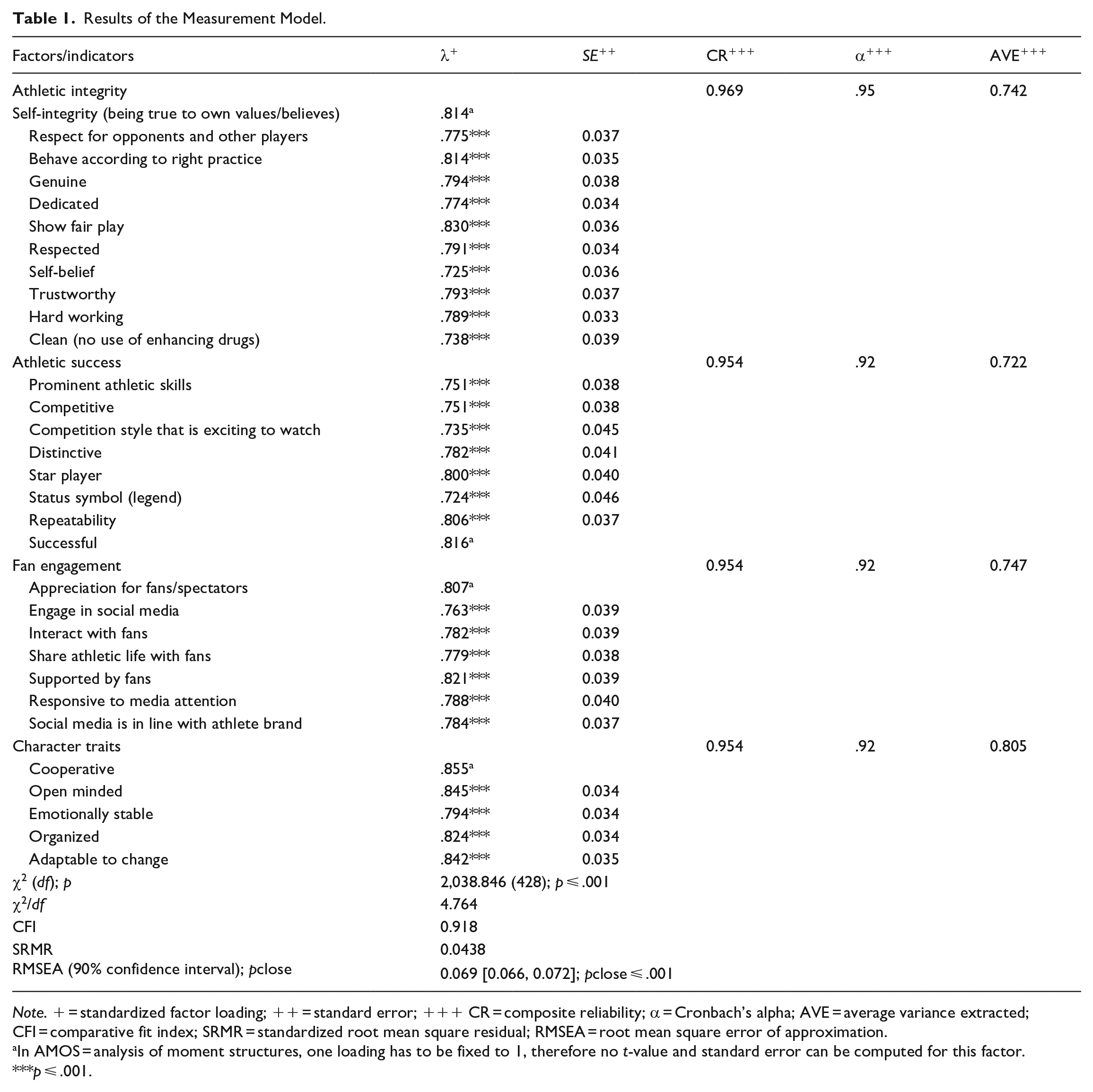
Note. + = standardized factor loading; ++ = standard error; +++ CR = composite reliability; α = Cronbach’s alpha; AVE = average variance extracted; CFI = comparative fit index; SRMR = standardized root mean square residual; RMSEA = root mean square error of approximation.
In AMOS = analysis of moment structures, one loading has to be fixed to 1, therefore no t-value and standard error can be computed for this factor.
p ⩽ .001.
Athlete brand familiarity
Respondents needed to be familiar with the athlete brand to ensure they could offer truthful evaluations. To oppose the expected problem of a low initial familiarity score and ensure respondents were becoming more familiar with athletes, they were provided a one-page biography on the athletes and the link to their latest news (Google). Respondents were asked to also spend time on the athlete’s primary social media accounts. To test familiarity of the athletes to respondents a repeated measures before and after exposure to the athlete’s information was conducted. Athlete brand familiarity was measured using a three-item, seven-point scale with the anchors familiar/unfamiliar, inexperienced/experienced, and knowledgeable/not knowledgeable. Respondents’ scores for two items; familiar/unfamiliar and knowledgeable/not knowledgeable were reverse scored after data was entered to make scoring consistent with the inexperienced/experienced item. Additionally, reverse scoring permitted easier interpretation of data as lower scores represented less familiarity and knowledge of the athletes while higher scores reflected increased familiarity and knowledge of athletes. In prior research, the reliability of this scale achieved a Cronbach’s alpha of α = .85 (Kent & Allen, 1994). Cronbach’s alpha scores revealed in this study were familiarity before exposure to the athlete information α = .79 and familiarity after exposure α = .87. To determine an overall familiarity score for pre and post exposure to the athlete information the three familiarity scores obtained from respondents for both pre, and post exposure were summed and then averaged to produce a mean score. Mean scores for familiarity of respondents to athletes before exposure to the athlete information was reported as M = 1.74 while after exposure M = 4.48. Repeated measures testing confirmed a significant difference between pre and post exposure to the athlete information mean scores for familiarity of athletes F(1, 793) = 1,464.479, p = .001. One-sample t-tests showed respondents prior to exposure to the athlete information were significantly unfamiliar with athletes t(793) = 39.974, p = .001. Conversely, after exposure to the athlete information, respondents were significantly familiar with athletes t(793) = 110.193, p = .001. Hence, respondent exposure to the athletes’ social media accounts and google news links resulted in significant familiarity of athletes enabling further testing to proceed.
Additional measures
Additional measures within the questionnaire sought information that included respondents’ general awareness of athlete brands, prior knowledge of the athlete they were assigned to, as well as demographic questions on age and gender.
Data analysis
Scale test
A two-step approach was used to test the scale by first estimating a measurement model looking at the first-order structure, followed by a second-order model. Confirmatory factor analysis (CFA) assessed the relationships between the 32 observed variables and four latent constructs. Composite reliability (threshold >.6) and convergent validity (threshold >.5) were calculated to identify potential correlations between the latent constructs and to determine whether the observed variables were reliably measuring the proposed latent constructs (Nunnally & Bernstein, 1994). Discriminant validity was evaluated based on the average variance extracted (AVE) of any two constructs and their squared correlation, whereby the AVE of those two constructs is required to be higher than their squared correlation (Fornell & Larcker, 1981). The use of CFA was appropriate given the sample size exceeded n = 200 and each dimension was measured by at least three items (Hair et al., 2010).
Although available literature consents that model fit should be determined by several fit indices with heterogeneous performance characteristics, there are different opinions which procedure best examines model fit (e.g. Brown, 2006; Hu & Bentler, 1999). This study followed Brown’s (2006) recommendations and included exact model fit and normed model fit (chi square divided by degrees of freedom), comparative fit index (CFI), standardized root mean square residual (SRMR), and root mean square error of approximation (RMSEA). The chi square value of the exact model fit should be non-significant to accept the model. However, this value is very sensitive to sample size and therefore a combination of other fit indices is recommended to assess model fit (Brown, 2006). Following this recommendation, the normed model fit (χ2/df) was evaluated as it adjusts for model complexity, with a suggested threshold below 5 (Hair et al., 2010). The CFI value should exceed 0.9 and SRMR values should be close to 0.08 or below (Hu & Bentler, 1999). RMSEA values lower than .05 suggest good model fit. However, values less than .08 are also acceptable demonstrating adequate model fit (Brown, 2006; Hair et al., 2010). Further, the maximum likelihood estimator was employed.
Brand congruence
The brand congruence measure applied within this study is based on Musante et al.’s (1998) concept of image based fit. Musante et al. (1998) analyzed the “fit” (i.e. congruence) between a brand and a sport using a direct fit measure based on the Euclidian Distance (Hallmann & Breuer, 2010). This approach has not yet been employed in the assessment of athlete brands and serves as the congruence measure to evaluate the fit between athlete and consumer perceptions. The brand congruence scores indicate the level of similarity between the consumer perception of the athlete brand and the perception of the athlete. Low brand congruence scores could be evidence of unsuccessful brand management and expose the need for strategical adjustments (Linsner et al., 2020).
This fit measure calculates the absolute differences between athlete and consumer perceptions of the athlete’s brand using all items from the ABIdS. These differences were used to compose the Euclidean Distance for each item. Following Musante et al.’s (1999) research, the fit indices for brand congruence are anchored at one for a perfect fit. The following equation was used to calculate the athlete brand congruence index:
Results
Measurement model
The CFA revealed an acceptable fit and the results confirmed reliability and validity of the estimated model. For all four constructs composite reliability was high (CR > .95), which also applied to the scale reliability (α > .92). Convergent validity was assessed using the AVE, which was higher than 0.7 for all constructs. Tables 1 and 2 provide detailed results.
Correlations of the Constructs in the Final Measurement Model.
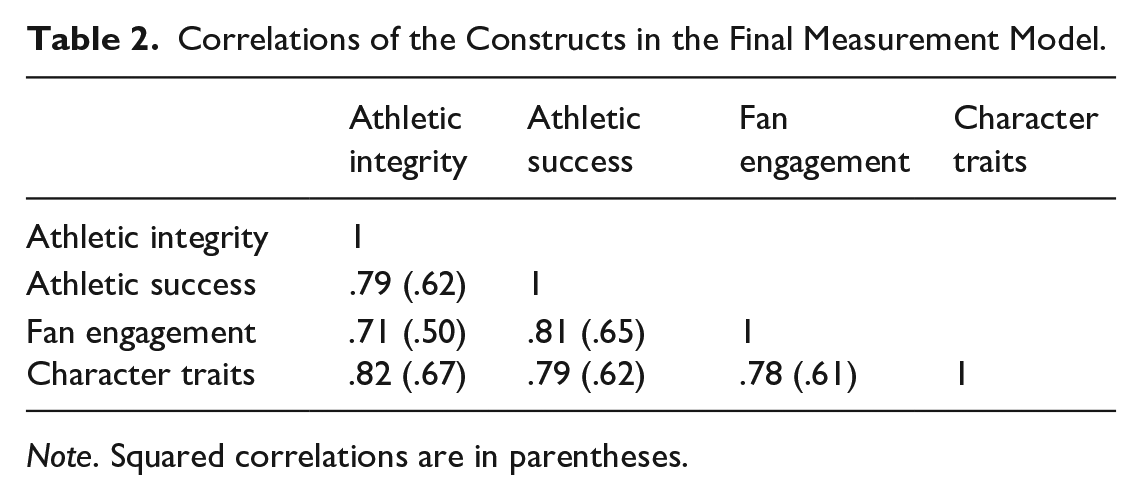
Note. Squared correlations are in parentheses.
The initial measurement model included 32 items representing four dimensions. Re-specifications were investigated to obtain the most psychometrically sound measurement model. Although results of the CFA revealed the overall fit of the model to the data was acceptable, the item well-conditioned body was the only item with a loading less than 0.70 which suggests insufficient variance was extracted from this item (Nunnally & Bernstein, 1994). Hence, this item was removed from the scale. Elimination of this item led to improvements of overall model fit and relevant values (χ2(428) = 2,038.846 at p ⩽ .001, SRMR = 0.044, CFI = 0.918, and RMSEA = 0.069 with a 90% confidence interval of [0.066, 0.072]).
Second-order model
In the next step, a second order was developed to assess the statistical significance of the relationships between the first-order four constructs and athlete brand identity. Results confirmed the first-order factors Athletic Integrity, Athletic Success, Fan Engagement, and Character Traits defined athlete brand identity. The model is displayed in Figure 1 with detailed second-order results reported in Table 3.
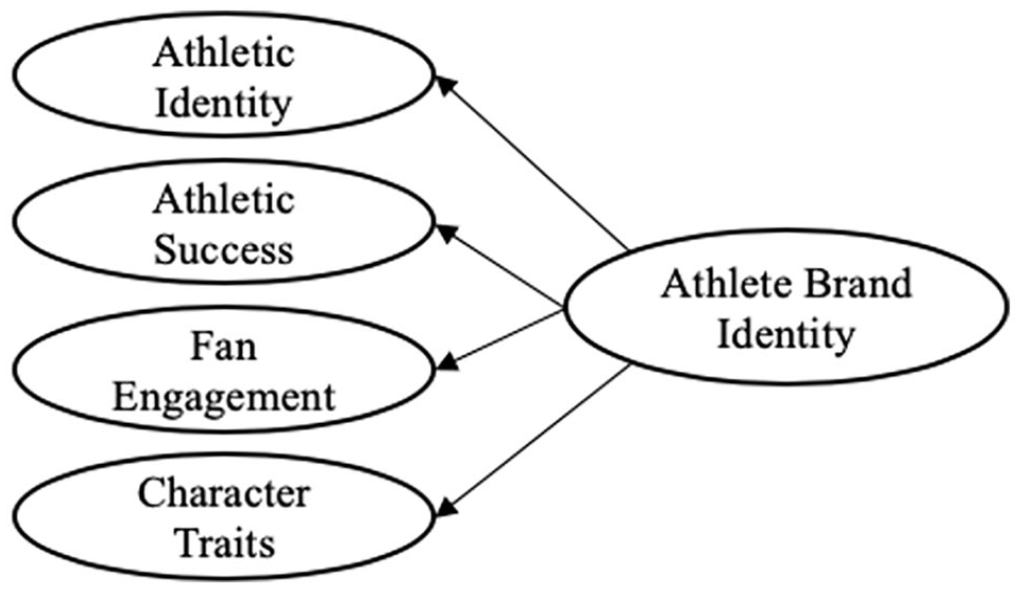
Second-order model estimated including only the latent constructs.
Results of the Second-order Model.
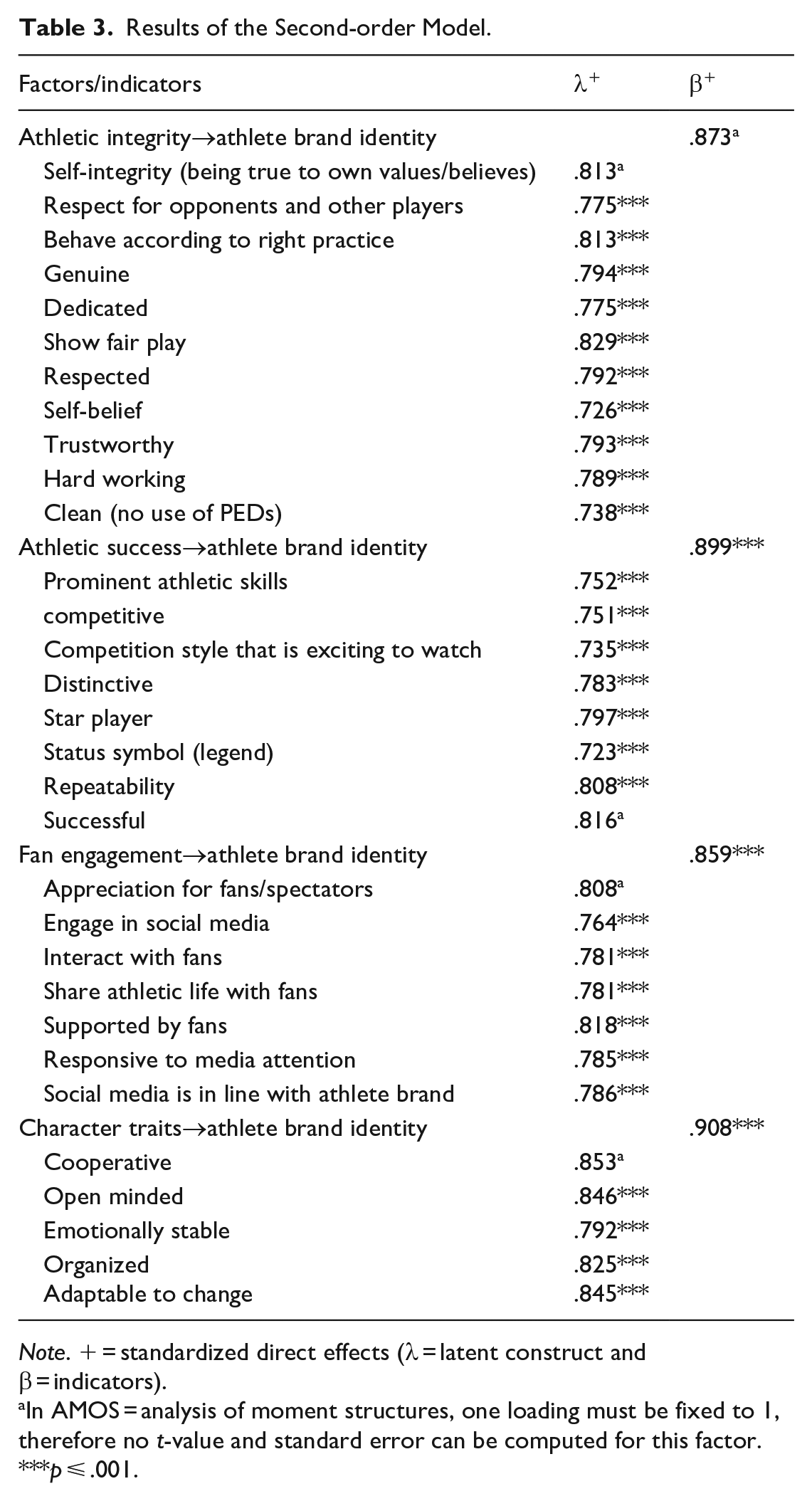
Note. + = standardized direct effects (λ = latent construct and β = indicators).
In AMOS = analysis of moment structures, one loading must be fixed to 1, therefore no t-value and standard error can be computed for this factor.
p ⩽ .001.
The model fit supported the proposed structure and the chi-square goodness of fit test showed the final model fit the data well (χ2(430) = 2,078.604, p ⩽ .001, SRMR = 0.046, CFI = 0.917, RMSEA = 0.070 with a 90% confidence interval of .067–.073).
All paths for the factor loadings were significant at p ⩽ .001 showing the items were significant predictors for their latent constructs. The identity construct was significantly defined by its four dimensions (Athletic Integrity = 0.873; Athletic Success = 0.899; Fan Engagement = 0.859; and Character Traits = 0.908).
Athlete Brand Congruence
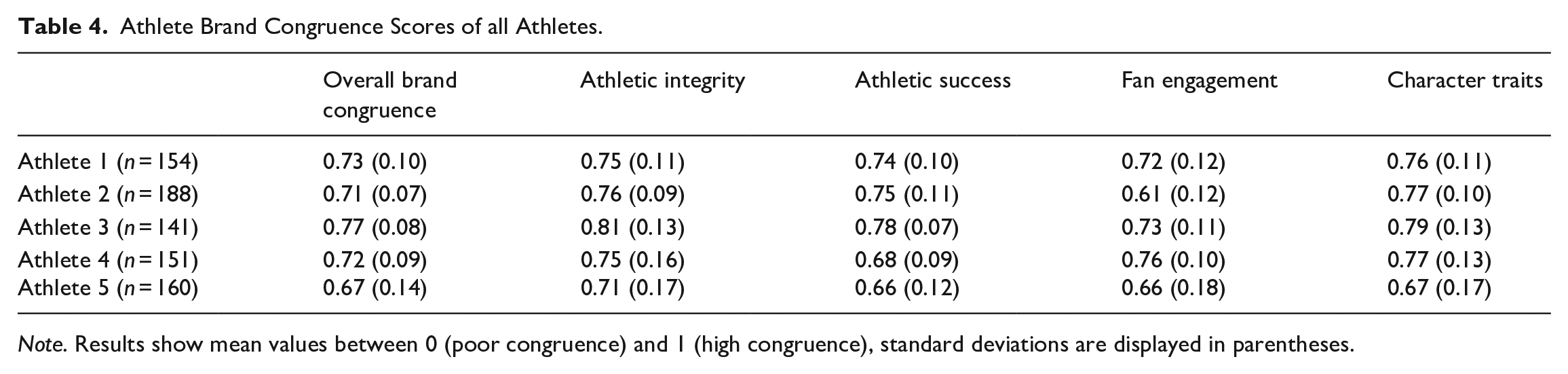
Based on the Euclidian Distance, brand congruence (fit between athlete and consumer perceptions) was calculated for each athlete brand (see Table 4).
Athlete Brand Congruence Scores of all Athletes.
Note. Results show mean values between 0 (poor congruence) and 1 (high congruence), standard deviations are displayed in parentheses.
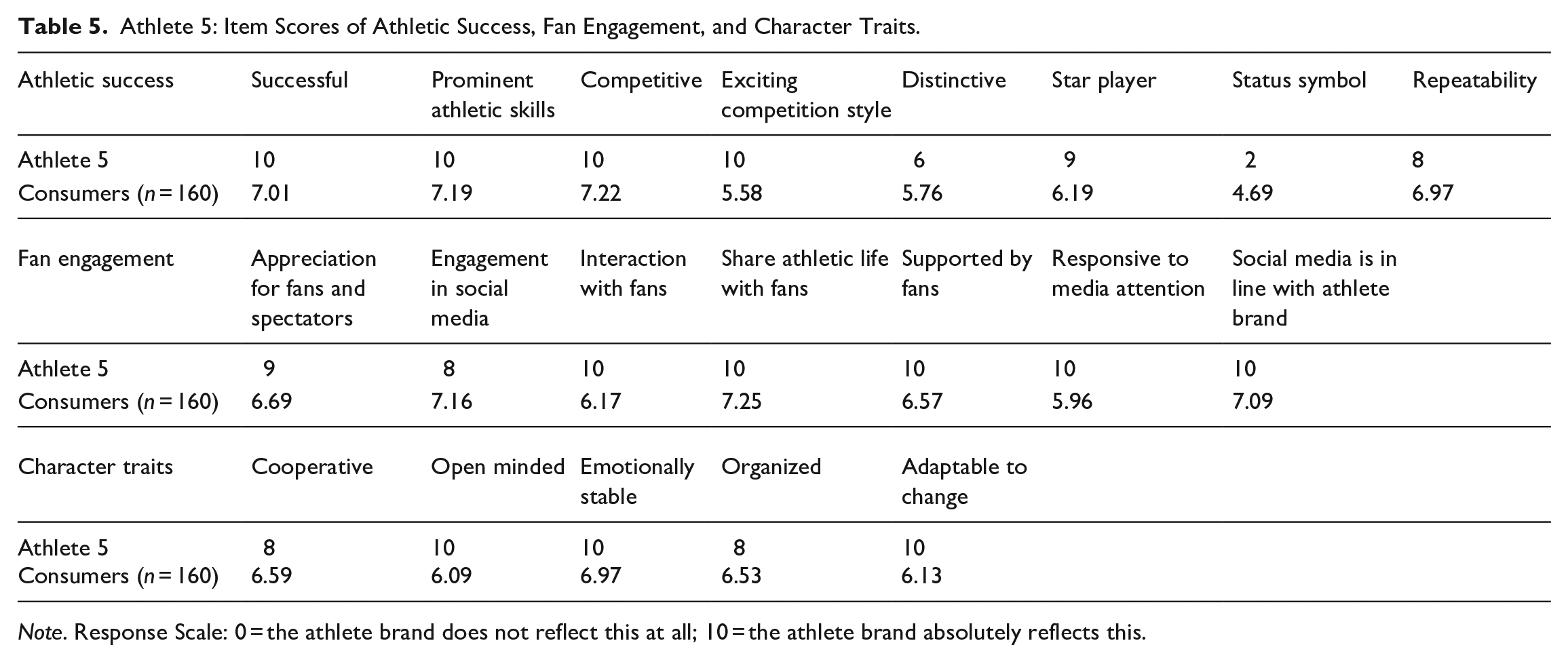
According to Musante et al. (1999), any score above 0.7 indicated high congruence between consumer and athlete responses. Results showed that overall congruence for all brands, except for Athlete 5 (0.67), was high (0.71–0.77). Athlete 3’s brand achieved the highest overall congruence of 0.77 and recorded the highest score across all dimensions (Athletic Integrity = 0.81). The lowest congruence score among dimensions was reported for Athlete 2 (Fan Engagement = 0.61). Thus, disparities existed between athlete and consumer perceptions on that dimension. With respect to overall congruence, Athlete 5’s score (0.67) was the only overall score below the 0.70 threshold that indicates high congruence. Thus, for Athlete 5, high congruence was not achieved. Closer inspection of Table 4 reveals Athlete 5 recorded the lowest congruence across three (Athlete Integrity, Athletic Success, and Character Traits) of the four dimensions. The score of 0.66 for Fan Engagement was second lowest among athletes. Through use of Athlete 5’s scores, practical utility of the scale in combination with the brand congruence measure is demonstrated. Table 5 details the item scores of the three poor performing dimensions for Athlete 5 to illustrate origins of the incongruencies.
Athlete 5: Item Scores of Athletic Success, Fan Engagement, and Character Traits.
Note. Response Scale: 0 = the athlete brand does not reflect this at all; 10 = the athlete brand absolutely reflects this.
This breakdown of results for Athlete 5 highlights substantial differences between athlete and consumer perceptions on the item level of up to 4.42 points (exciting competition style). The athlete has rated themselves relatively highly for most items across the athletic success dimensions (8–10) except for distinctive (6) and status symbol (2). Yet, consumers have consistently rated the athlete lower across items rated highly by the athlete indicating incongruencies between athlete and consumer perceptions.
Discussion
This paper aimed to evaluate the efficacy of the ABIdS in gauging congruence between an athlete’s brand identity and consumers’ perceptions of that brand. The results from the CFA provide strong support for the ABIdS as a reliable tool for assessing athlete brand identity and establishing connections between athlete and consumer viewpoints. Notably, the brand congruence measure emerged as an effective technique for pinpointing incongruities between these perspectives. The successful application of Musante et al.’s (1999) fit measure within this research confirms the strong relationship between the brand identity and brand image of an athlete. Most athlete brands displayed high congruence, indicating that their communicated brand identities aligned closely with consumers’ brand image perceptions, a crucial aspect emphasized by Arai et al. (2013).
However, Athlete 5 stood out with an overall congruence score below the 0.7 threshold, signaling various dimension incongruencies. This finding underscores the necessity for Athlete 5 to adjust their personal branding strategies promptly. The discordance between internal brand awareness and external consumer perceptions points to the need for realignment, as any disparities between the athlete’s perspective and consumer judgments represent branding challenges (Labrecque et al., 2011). Athlete 5 must work toward greater congruence to enhance effective communication with consumers, thus warranting a reevaluation of their brand objectives.
Incongruence in brand identity refers to a misalignment between the image an athlete intends to project and how consumers perceive them. It can arise from athletes’ overestimation or underestimation of their persona, leading to diverse implications for branding strategies. Incongruence in athletes’ brand identities can significantly impact branding strategies in many ways. Overestimation of brand identity, often driven by impression management, can lead to loss of trust and credibility among consumers if perceived as exaggerated (Yoo, 2022). Inconsistencies in endorsements or actions can further dilute brand image and loyalty. To counter this, brands should prioritize authenticity and transparency, encouraging athletes to align their actions genuinely with their brand persona and values. Conversely, underestimation of brand identity might lead to missed opportunities and weak connections with the target audience (Kucharska et al., 2020). Brands should empower athletes to understand their marketable attributes better and develop personalized branding strategies that resonate with core values and strengths (Lou et al., 2022; Na et al., 2020). Crisis management becomes crucial in handling unforeseen behavior or external influences that create incongruence, necessitating vigilant monitoring, transparent communication, and effective action to protect athletes’ brand images.
It is noteworthy that incongruence did not exclusively stem from athletes rating themselves higher on certain attributes than consumers. In some instances, consumers rated athletes more favorably, indicating that incongruence is a bidirectional process. This revelation is pivotal, as it empowers athletes to acknowledge attributes, they might undervalue but are, in fact, significant to consumers. When athletes overestimated their brands relative to consumer ratings, this served as a reality check, spotlighting areas where brand communication wasn’t received as intended. Conversely, when athletes underestimated their brands and consumers rated them more positively, it validated their branding efforts. The ABIdS, coupled with the brand congruence measure, can discern areas for improvement, even amidst high congruence. By evaluating individual item scores, athletes can finetune their branding strategies, enhancing their image and appeal to sponsors. Additionally, these item scores can serve as benchmarks to assess the effectiveness of branding strategies. The ABIdS not only bolsters athletes’ confidence in their brand’s perception but also offers a multifaceted approach to evaluating athlete brands.
Furthermore, the results revealed significant associations between athlete brand identity and the four dimensions outlined in the ABIdS. The only deviation from the original ABIdS was the removal of the item “well-conditioned body” from the Athletic Success dimension. This decision stemmed from the complexity of objectively evaluating such an attribute and the athletes’ varying perspectives on its relevance. Notably, one elite paraplegic athlete, despite achieving remarkable success, scored this item exceptionally low. This suggests that psychological factors may overshadow brand related considerations when evaluating this specific attribute. Thus, its exclusion from the ABIdS was warranted to maintain unbiased results. Overall, the scale demonstrated its utility in assessing athlete brands comprehensively.
Theoretical and managerial implications and future research
This study contributes significantly to the athlete brand research domain by bridging theoretical perspectives and introducing innovative concepts, thereby advancing our understanding of athlete branding. Firstly, the study integrates Goffman’s (1959) self-presentation framework into the athlete branding spectrum, establishing a vital link to Aaker’s (1996) brand identity theory. This connection highlights the pivotal role of conscious brand identity construction in shaping brand image. It underscores that personal brands of athletes are intentionally managed, dynamic, and socially constructed entities, akin to Goffman’s frontstage, which aligns seamlessly with the dynamic nature of athlete personal branding in the social media era. Athlete brands, in various contexts, can evolve into influential forces that shape audience opinions, underscoring the relevance of Goffman and Aaker’s theories. Athletes strategically manage their public personas on social media to craft distinct images for commercial and cultural purposes. This connection is particularly relevant within social media given it has become an essential tool for personal brand management (e.g. Na et al., 2020). The application of schema theory from two different perspectives, rather than solely assessing the difference between two objects, represents a nuanced and expanded use of this cognitive framework. The approach applied in this study involved examining how individuals or groups construct schemas from their unique viewpoints and experiences. By implicitly leveraging schema theory, the study acknowledges that audiences bring pre-existing mental frameworks to interpret and categorize information about athletes, influencing brand perceptions.
Further, this study tests and validates the ABIdS within a real-life scenario by evaluating the brands of five elite athletes and is therewith substantiating the practicality of the scale. In doing so, this study innovatively introduces the concept of brand congruence into the athlete brand research domain. While previous research primarily focused on the consumer perspective of athlete brands, this study recognizes the symbiotic relationship between brand identity and brand image, which plays a pivotal role in establishing powerful athlete brands (Linsner et al., 2020). Notably, this study breaks new ground by simultaneously evaluating athlete and consumer opinions, a novel approach never explored in previous athlete brand research. The lack of prior studies that concurrently examined both internal and external brand perceptions (Lobpries et al., 2017) highlight the novelty of exploring congruence between these two perspectives. This innovative approach adds depth to our understanding of athlete branding dynamics.
A further benefit of this study is its replicability that enables versatile application in the athlete branding spectrum. Even though the ABIdS has been particularly developed for athlete brands, the applied brand congruence measure is not limited to this research field and allows application across multiple disciplines.
This study’s practical implications are multifaceted. It equips stakeholders in athlete branding with valuable tools for brand evaluation, development, and alignment with consumer perceptions. An athlete, for example, uses the ABIdS to assess their brand. In doing so, the scale identifies that the athlete’s philanthropic endeavors receive high scores, aligning with their values. Armed with this insight, the athlete and their support team can strategically focus on philanthropy in the brand communications. The ABIdS, in this case enables the athlete and their support team to enhance their branding strategies, optimize endorsements, and ultimately build stronger, more effective athlete brands in a dynamic and competitive landscape. While the study provides valuable theoretical insights and tools, the direct translation of these tools into outcomes like enhanced branding or optimized endorsements may require further empirical research and application in real-world scenarios.
The ABIdS provides practitioners with a reliable tool to assess athlete brands comprehensively. Consider a case where an athlete manager uses the ABIdS to evaluate a roster of athletes. This scale enables the objective ranking and comparison of athlete brands, either holistically or in specific dimensions. This functionality allows stakeholders to gauge the performance of athlete brands objectively and gain a clearer understanding of the strengths and weaknesses of their brand identities. This information is crucial for targeted interventions and strategic adjustments to enhance brand effectiveness. Furthermore, athlete brand identity, along with its four sub-dimensions, serves as a valuable guideline for athletes seeking to develop and strengthen their personal brands. It provides a structured framework for assessing and improving various facets of athlete brand identity.
The athlete brand congruence measure introduced in this research helps in evaluating the alignment between athlete brand identity and consumer perceptions. It serves as a practical tool to assess the consistency between how athletes perceive their brands and how consumers interpret them. Imagine a sports apparel company that is considering an athlete for endorsement. They can leverage the ABIdS and brand congruence measure to assess the suitability of potential endorsers. In their analyses of consumer perceptions of the athlete’s brand alignment, the measures indicate a strong alignment between the athlete’s identity and consumer expectations. This evaluation helps in making informed decisions about athlete endorsements based on consumer opinions. Similarly, athletes and their teams or athlete managers can allocate resources more effectively by focusing on areas that require improvement, thereby maximizing the impact of branding efforts.
The research findings might face limitations in terms of generalizability due to the exclusive focus on Australian athletes for data collection. This geographical constraint raises concerns about extrapolating the results to a global context. Consequently, the athlete brand image and, consequently, brand congruency observed may differ significantly from those in diverse international samples. To address this potential limitation, we highlight the need for future research to explore and compare cultural variations to ensure broader generalizability.
Besides generalizability, this study has certain limitations and opens avenues for future research. Firstly, the public recognition of the five athletes involved in this study was limited. To validate the ABIdS effectively, a substantial sample size was necessary, but the athletes’ relative anonymity posed a challenge in securing large random samples with high familiarity. To mitigate this, athlete information was provided in the questionnaire to familiarize participants with each athlete before evaluation. The study relied on self-reported data and the inherent challenges of accurately tracking online activity time. Future research could benefit from including athletes with greater public recognition to enhance the significance of brand evaluations. Additionally, diversifying the athlete sample, such as including team sport athletes, could further refine the scale’s psychometric properties.
A longitudinal study tracking athlete brand development over time and across various stages of their sporting careers would provide valuable insights. Furthermore, combining the ABIdS and athlete brand congruence measure with qualitative research methods could yield deeper insights into branding strategies to address any negative developments. To amplify the significance of this study, a future research endeavor could involve conducting an experiment aimed at examining the ramifications of brand incongruence, potentially through manipulation, on unfavorable or negative outcomes. Also, exploring alternative methods of measuring athlete brand familiarity, such as behavioral data or observational studies, which may be less susceptible to recall, and social desirability biases could reveal further detail. Last, while previous research has emphasized the advantages of high congruence (Lee et al., 2018), further investigation into the effects of congruence levels on athlete brands is warranted. Exploring the implications of high and low congruence on athlete brand outcomes would contribute valuable knowledge to the field.
Conclusion
The purpose of this study was to introduce a congruence measure to evaluate the fit between athlete and consumer opinions regarding athlete brands. Using CFA, the model was tested, and the latent constructs of Athletic Identity, Athletic Success, Fan Engagement, and Character Traits were confirmed to be significant determinants of athlete brand identity. Collecting data from athletes and consumers on the same scale enabled the analysis of congruence based on Musante et al.’s (1999) fit measure. The IBIdS and the congruence measure offer an effective method to evaluate and categories the performance of athlete brands. This is also useful for companies looking to investigate the performance of their athlete endorsers/influencers in contrast to consumer opinions as companies may collaborate with athletes to capitalize on their high level of influence. More in depth research is required to investigate and truly understand the synergy between brand identity and brand image of human brands given the opportunities and challenges that come along with the technological developments of new media in the realm of personal branding. Including athlete and consumer perspectives provides athletes and their stakeholders with a better understanding of their brand performance and should remain at the forefront within this research domain.
Footnotes
Acknowledgements
The authors wish to acknowledge the contribution of the Queensland Academy of Sport for their financial support with this project.
Declaration of conflicting interests
The author(s) declared no potential conflicts of interest with respect to the research, authorship, and/or publication of this article.
Funding
The author(s) disclosed receipt of the following financial support for the research, authorship, and/or publication of this article: This study was funded by the Queensland Academy of Sport, QLD, Australia
