




Abstract
The idea of a basic income has produced both staunch advocates and detractors in economic policy debates. This article explores the potential for a basic income to produce more just outcomes for workers in cultural sectors by focusing on a case study of music industries in Melbourne, Australia. We draw on data from a 2020 study of the impact of the COVID-19 pandemic and the associated public health response on the Melbourne music industries to explore how music industry workers experienced loss of income as individualised harms and uncertainties about their roles within the music industry. We argue that Mark Banks’ concept of ‘creative justice’ offers a means of evaluating the utility and limitations of a basic income for achieving more equitable outcomes in music industries.
Introduction
The aftermath of the COVID-19 pandemic has sparked renewed interest in the possible uses of a basic income scheme to support the arts and creative sectors (Caust, 2022). In the context of this specific application of a basic income, both a Universal Basic Income scheme (UBI) provided to all citizens of a jurisdiction and a Basic Income for Artists (BIA) or ‘cultural UBI’ (Doustaly & Roy, 2022) limited to a specific cohort of eligible recipients would have implications for the living conditions of those working in the arts and creative sectors. The more targeted form of a BIA – such as that recently trialled in Ireland (Feldkircher et al., 2023) and similar partial basic income schemes for cultural workers in France and Germany (Doustaly & Roy, 2022, p. 206) – places some conditions on eligibility, such as having worked or working as an artist. However, for artists and creatives, both forms of the policy promise more reliable sources of income support than charitable or competitive grant schemes, which often rely on the will and decision-making of private and/or public entities (i.e. charitable trusts, arts councils, cultural ministries), with their own sets of criteria and funding agendas, and can rarely be used to subsidise an artists’ basic living expenses. While much resistance to the adoption of a basic income policy rests on the common characterisation of poverty as an individual problem, either deserving or undeserving of support (e.g. see Smith-Carrier, 2023), the economic support measures adopted in many countries during the COVID-19 pandemic has renewed interest in broad financial support schemes for addressing equity issues. This is never entirely straightforward however; for example, a recent study of the COVID-19 emergency social security measures pursued in the Australian context noted it both alleviated poverty for some, acting as a temporary form of Basic Income, and coincided with an increase in experience of classed and gendered inequalities (Klien et al., 2023).
In this paper, we draw on a study of music industry workers during the COVID-19 pandemic to assess the possible value and limitations of a basic income scheme for addressing inequality in the cultural and creative industries. Utilising Mark Banks’ (2017) concept of ‘creative justice’, we argue that the basic income debate sheds light on how precarious music careers may reflect uncertainties in how music is used within society more broadly, as well as how the industry individualises systemic harms through the income loss experienced by workers. The design and implementation of a basic income scheme for artists and creatives will need to be guided by a clear ethical framework to realise its social and cultural value.
A basic income for creative justice?
A form of basic income, whether specific to cultural production or a UBI, has been advocated by proponents across the political spectrum (Chobli & Weber, 2020), but the potential for a basic income to contribute to achieving equitable access to creative work and its benefits (or ‘creative justice’) is to date unexplored. Although preliminary and speculative research on the current trial BIA taking place in Ireland has begun to emerge (Feldkircher et al., 2023; Hayes, 2022; O’Brien & Clancy, 2022), beyond this specific case study, work exploring the effect of a basic income for the arts and artists is a fledgling field of research. 1 Interest in basic income, UBI, and BIA globally has been spurred on by a shift in the economic opinion international agencies around the time of the global financial crisis, encouraging policy experimentation and the revival of both politically left-leaning and right-leaning visions of basic income (Cannizzo & Spies-Butcher, 2023). What utility a basic income may have for advancing the cultural sector is still being debated.
Mark Banks’ concept of ‘creative justice’ offers one means to engage with the basic income debate by offering a clear framework to address issues of equity that are relevant to political debates about how to support artistic, cultural, and creative work. For Banks (2017, p. 145), addressing justice in the cultural industries entails: examining how the opportunities and rewards that might be occasioned by [cultural] work are socially distributed… the cultural industries are far from ideal in the ways they allocate and dispense their opportunities and rewards, and that creative injustice — evidenced in patterns of discrimination, misrecognition and inequality — is now an endemic feature. (original emphasis)
Banks offers three concepts to advance creative justice in the cultural industries. The first is ‘objective respect’ (2017, p. 146): the objective qualities of cultural works must be observed, rather than merely the subjective experiences of cultural works. For creative work, that means understanding the objective impact of the creative work itself, its role in social advancement or ills, and its relationship to surrounding social issues. It is therefore not enough to account for consumer preferences for some forms of creative work or normative claims regarding the apparent value of different formats of creative work as being symbolic of the broader value of this work, as these do not fully explain or reflect the ‘objective respect’ outlined by Banks.
The second concept is ‘parity of participation’ (Banks, 2017, p. 149), that is, to strive for ‘social arrangements that permit all (adult) members of society to interact with one another as peers’ (Fraser, in Banks, 2017, p. 149), such as fairer distribution of economic goods, equal recognition of cultural rights, and fair participation in cultural work. The third concept is ‘reduction of harms’ (Banks, 2017, p. 155), that is, ‘reducing the physical and psychological harms and injuries inflicted by cultural work’, which necessitates accounting for the objective effects of cultural work on individuals and social groups. This entails an attention to the conditions of labour of creative workers in order to mitigate or eliminate ‘exploitation (or self-exploitation), overworking, stress, bullying, domination, aggression or violence’ (Banks, 2017, p. 155). Banks’ ‘creative justice’ approach to the study of the cultural and creative industries asks analysts and researchers to look for the value of creative work in its capacity to achieve social justice. Equitable access to cultural production and the means to engage in cultural production are hence central to the value of creative forms of work.
It should be noted that a motivating factor for the articulation of creative justice is the recognition that cultural industries are competitive fields driven by a contest for scarce resources (Banks, 2017, p. 2). Research comparing the experiences of cultural industry workers across the television, music recording, and magazine industries has noted that pay in creative industries is depressed by the presence of a ‘massive reservoir’ of young people, students, and graduates, who are willing to work for free or for minimal monetary compensation (Hesmondhalgh & Baker, 2010, p. 7). The music industries are characterised by a number of different income streams (e.g. music sales, merchandise, live performance, synchronisation, wages) that are distributed among different roles. For example, a musician's performance fee and merchandising may be aligned with their manager's or agent's fee (or commission), but not with a venue's income (which may be derived from hospitality and drinks sales) or venue staff member's (fixed) wages. Consequently, conflict for scarce opportunities and other resources may drive competition within the industry and hamper equitable access to opportunities.
The failure of the music industries to achieve equitable career opportunities and safe working environments has been a persistent theme in peer-reviewed research and grey literature (see Cooper et al., 2017). An independent report into sexual harm, harassment, and discrimination in the Australian music industries, commissioned by the mental health support-focused charity Support Act (2022, p. 10), found that most survey respondents (n = 1271) reported experiencing sexual harassment and bullying at work, with women reporting higher numbers of instances and only 3% of respondents formally reporting such events. Reviewing their own research data and past studies, Gross and Musgrave (2020, pp. 107–108) similarly found that in the UK, ‘abuses of power, from bullying to actual sexual abuse, were a feature of some of the women’s working lives’. Cooper et al. (2017) had found in their Skipping a Beat report that women in Australian music were lagging behind in music awards representation, positions in industry leadership, and on the boards of music peak bodies. Brook et al. (2020, p. 136) have noted that the individual biases, such as harassment and abuse, and structural barriers, such as work role segregation and role stereotyping (Davies, 2019), that impact women exist across the cultural sector and tend to reinforce one another, as shown in their example of bias against mothers: There may be an individual hiring bias that sees a woman as a ‘risky’ investment because she requests flexible working hours. This goes hand in hand with the way freelance work does not offer support for maternity in the same way as more secure contracts of employment. (Brook et al., 2020, p. 136)
The marginalisation of women and gender non-conforming creative workers (including music industry workers) emerges at the intersection of gender-based and class-based forms of systemic inequality. It is also at this intersection that forms of basic income may be considered as useful policy tools towards improving equitable access to music production and creative justice.
Basic income has the potential to ‘revolutionize the world of work by granting unprecedented bargaining power to workers and potential workers’ (Veltman, 2020, p. 138) in the form of a subsistence wage that would allow them to exit from undesirable working circumstances. This has considerable implications for creative, cultural, and other forms of labour where workers have very little bargaining power, no means of collective action, and whose labour is generally perceived as not financially motivated (Harris, 2022; Warren, 2014), the rewards for which are also highly subject to issues of gender and class (Duffy, 2016). Our definition of cultural labour intersects with other forms of labour, such as immaterial and affective labour (Gill & Pratt, 2008). However, it is distinct from these in its specific goal of producing ‘culture’. We refer here to Raymond Williams’ iconic three definitions of culture, specifically his third ‘independent and abstract noun that describes the works and practices of intellectual and especially artistic activity’ (1976, p. 90). Within the context of this paper, cultural –or ‘creative labour’ (Hesmondhalgh & Baker, 2013) as it is otherwise described in the literature – therefore refers to the material production of works of intellectual and artistic activity.
Conditional and direct support for arts and music workers in Australia
The two payments in Australia at present that are most like a basic income scheme – the Family Tax Benefit and age pension – are based on a principle of ‘affluence testing’ (Spies-Butcher, 2016, p. 43), excluding only the wealthy. However, payments that are directed towards assistance for low-income households and workers or the unemployed (i.e., the Australian federal government's JobSeeker payment income support program for those looking for work) are means tested, acting as a conditional payment that does not acknowledge the complexities of different work contracts and, as of the time of writing, are paid at a figure below all commonly used measures of poverty (Phillips, 2021). Australia's contemporary unemployment benefit scheme (JobSeeker) is also far more punitive and conditional than previous iterations of such schemes. For example, the introduction of ‘mutual obligations’ (Harris, 2001) and the ratcheting up of these over a period of years and across multiple governments has placed a greater burden on recipients (Saunders, 2002), increasing the labour and time commitment needed to meet such mutual obligations (see also Select Committee, 2023). Such conditionality further reduces recipients’ capacity to focus on artistic or creative endeavours outside of these mutual obligations. Also, unfortunately and perhaps cruelly, until recently performance auditions and product pitches were not counted towards meeting JobSeeker mutual obligations, 2 demonstrating an inherent bias against work in the creative arts as supposedly not being a ‘real job’ (Thornton-Smith, 2021).
In terms of a BIA generally and music workers specifically, the much more liberal application of unemployment benefits in the 1980s and 1990s are the closest to an Australian example in living memory. Indeed, before the introduction of mutual obligations and other ‘work for the dole’ schemes (Cathcart, 2000), unemployment benefits offered a financial lifeline for many arts and cultural workers, providing them with a form of basic income through which they could subsidise their otherwise ad hoc patterns of work. This era of consistent unemployment payments, or the dole as it was known, came at a time when Generation X were coming of age and beginning to assert themselves on Australia's stages (Castle, 2006). In comedy, theatre, live music, and the performing arts generally, the late 1980s and 1990s were something of a golden era for Australia's performing arts scene, as the dole allowed a generation of young artists a means by which they could focus on their craft without the burden of additional wage labour to subsidise living expenses.
Student allowance payments (or ‘Austudy’ as they are called in Australia) have also played a fundamental role in the capacity for students and young musicians not only to focus on their undergraduate studies, but also to begin developing a creative practice at a pivotal point in their lives. The role of universities and other tertiary education institutions (such as student unions) as default staging grounds for music scenes – complete with their own live music infrastructure such as student halls, amphitheatres, student presses or magazines, rehearsal rooms – has an established history and precedents (Chatterton, 2000, pp. 173–174; Long, 2011). Art schools have previously acted as hotbeds of creative and musical innovation across popular music history (Frith & Horne, 1987), producing many notable and distinctive acts (Roberts, 2019). Most of this flurry of artistic activity is often attributed to stage-of-life factors (Bennett, 1999; Tarrant et al., 2002), but the role of financial assistance in allowing young people the freedom to explore and experiment is not insignificant, and worthy of consideration in any discussion of creative justice and basic income.
Since the winding down of these more generous and largely unconditional unemployment and student benefit schemes, the introduction of mutual obligations, and a move towards a more punitive welfare system in the mid- to late 1990s, the primary form of financial support and professional development opportunities for young musicians and artists in Australia has been provided in the form of competitive grants, distributed by either the Australian Council for the Arts (now called Creative Australia), state governments and industry peak bodies, and/or other local funding agencies (such as charitable organisations and local governments). While grants are designed to be distributed on the basis of merit, they tend to benefit those more educated artists and performers who are able to navigate grant writing systems and application forms, entrenching privilege and a sort of academic exceptionalism among artists who receive such funding. Grants also cannot often be spent as income support, so they are not able to subsidise cost of living expenses for artists (Sakr, 2015, pp. 80–81). Such funding opportunities are also heavily conditional and although they can be leveraged towards scaling up in terms of arts and music workers careers, they do not provide the kind of subsistence wage that might be able to improve musicians or artists bargaining power overall.
In Australia, increasingly punitive welfare and income support schemes and the replacement of these with grants as the primary means of allocating public funding to artists has decreased the time working young people are able to spend on their musical craft, as such time is increasingly taken up by paid casual labour and wage earning to subsidise the cost of living (Sakr, 2015). This has resulted in a musical and broader arts culture dominated by the privileged, and less opportunities for musicians from working-class and lower socio-economic backgrounds as well as writers, actors, and artists more generally (Brook et al., 2022; Tapper, 2022). Such structural socio-economic barriers are further compounded by a lack of social and cultural capital (Warr, 2006). There is a strong argument that basic income would go some way towards ameliorating these issues, creating a more reliable financial base for artists to work from and improving their bargaining position, empowering musicians and performers with the ability to leverage better pay and conditions from performance opportunities.
Methods
In this paper, we explore the impact that the experience of income disruption and loss had on the activities and expectations of music industry workers during the COVID-19 pandemic. The pandemic has been identified as posing a challenge to inclusion and workforce diversity in the cultural economy (Eikhof, 2020). Our paper draws on data from a mixed-methods study, including responses to a survey of 40 open- and closed-ended questions (n = 292) and in-depth interviews (n = 11) (see Strong & Cannizzo, 2020).
This survey was open to anyone who had undertaken paid music-related activities in the 12 months before the Victorian COVID-19 lockdown. The survey gathered data on the immediate impact of the COVID crisis on respondents’ income and their ability to work on music-related activities, participant's experiences of wellbeing, motivation, and future intentions in the industry, data on inclusion in the industry prior to COVID, and finally, how the industry as a whole could be improved post-COVID. Potential interviewees were then invited from among the survey respondents, in order to further probe their experiences and responses to survey questions (see Strong & Cannizzo, 2020 for the interview schedule). These interviewees were purposefully selected to include a mixture of genders, work roles, location of residences, and ages. This purposive sampling strategy was used to achieve the greatest diversity of viewpoints and experiences reported in the survey responses. Interviewees were also self-selected through indicating that they would like to be interviewed through a question at the end of the survey. Interviews were transcribed and de-identified, and both interview transcripts and survey responses were coded using an inductive content analysis technique (Vears & Gillam, 2022) to answer the research question: How has the participation of music industry workers been impacted by COVID-19? This process involves coding all categories that provide some relevant information for answering the research question and then iteratively dividing coding categories into subcategories to create more specific codes.
Quantitative survey data were collected through an online survey instrument, Qualtrics, using a combination of binary-choice and Likert questions on topics ranging from demographic information (age, location of residence, sex registered at birth, gender identity/ies, sexual identity/ies, ancestry/ies, language(s) spoken, functional impairments, caregiver status, and music industry role(s)), work hours (before and during COVID-19, music-related and non-music-related, paid and unpaid), income, desire, and ability to work during COVID-19, skills development, and caring work. We have only reported on survey results that are relevant to each of the qualitative data themes discussed in this paper (see Strong & Cannizzo, 2020 for a full report on quantitative data).
From the qualitative interviews and survey data, three coding categories were developed with significance for exploring the role of a basic income and creative justice in the music industries: (1) income loss and insecurity during COVID-19; (2) career planning; and (3) income support schemes. Each of these categories was defined by the researchers to identify an area of experience for music industry workers that was disrupted during the pandemic and has consequences for the achievement of creative justice in the music industries. Other coding categories were developed but have been omitted here because of their limited utility for the objectives of this paper.
Income loss and insecurity during COVID-19
Consistent with other studies exploring the impact of COVID-19 on music industry workers (Cohen & Ginsborg, 2021; Crosby & McKenzie, 2022; Howard et al., 2021; Musgrave, 2022), our survey found that the income and attitudes associated with the sustainability of working in the music industry during and beyond COVID-19 had come to reflect a loss of income across the sector. When asked what percentage of their income had been derived from music-related activities, we found a discrepancy between the incomes reported before and since the COVID-19 outbreak (Figure 1). While before COVID-19, 153 respondents (52.4%) reported earning the vast majority (‘70% or more’) of their income from their music-related activities, since COVID-19 that figure has dropped to 74 respondents (25.3%). Correspondingly, before COVID-19, only 81 respondents (27.7%) reported that only a small amount of their income (‘less than 30%’) was derived from their music-related work; a figure that increased to 190 respondents (65.1%).
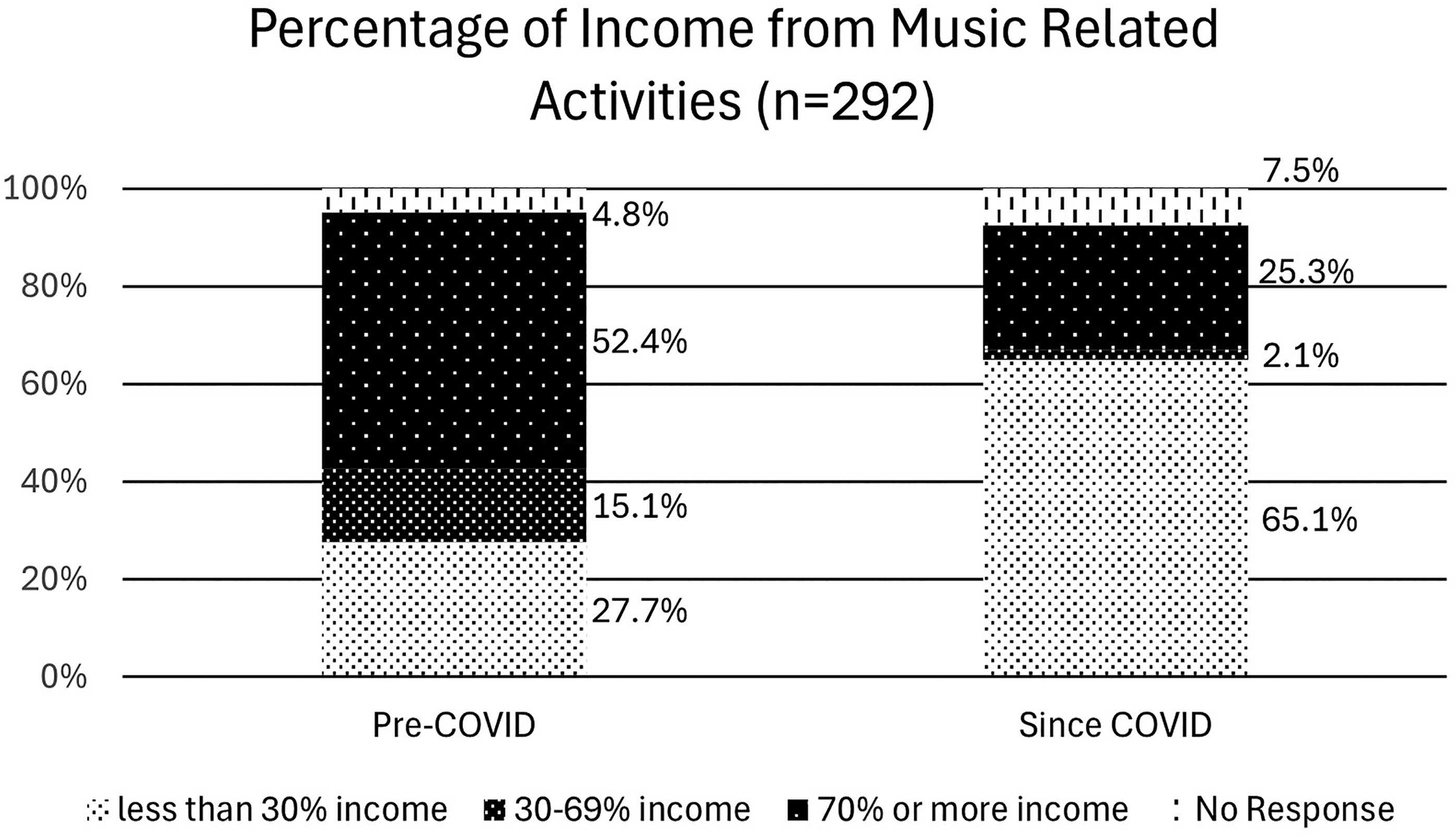
Percentage of income from music-related activities.
However, these figures (i.e. percentage of income from music-related activities) do not capture the whole story of income loss. Of the 292 survey respondents, 221 (75.7%) reported a decrease in their overall income since COVID-19. When those respondents were asked how much their income had decreased, 84 respondents (38%) reported that it had decreased by ‘70% or more’ (Figure 2). A further 48 (21.7%) claimed that it had decreased by a figure between ‘30% and 69%’ and 55 respondents (24.9%) reported that it had only decreased somewhat (‘less than 30%’).
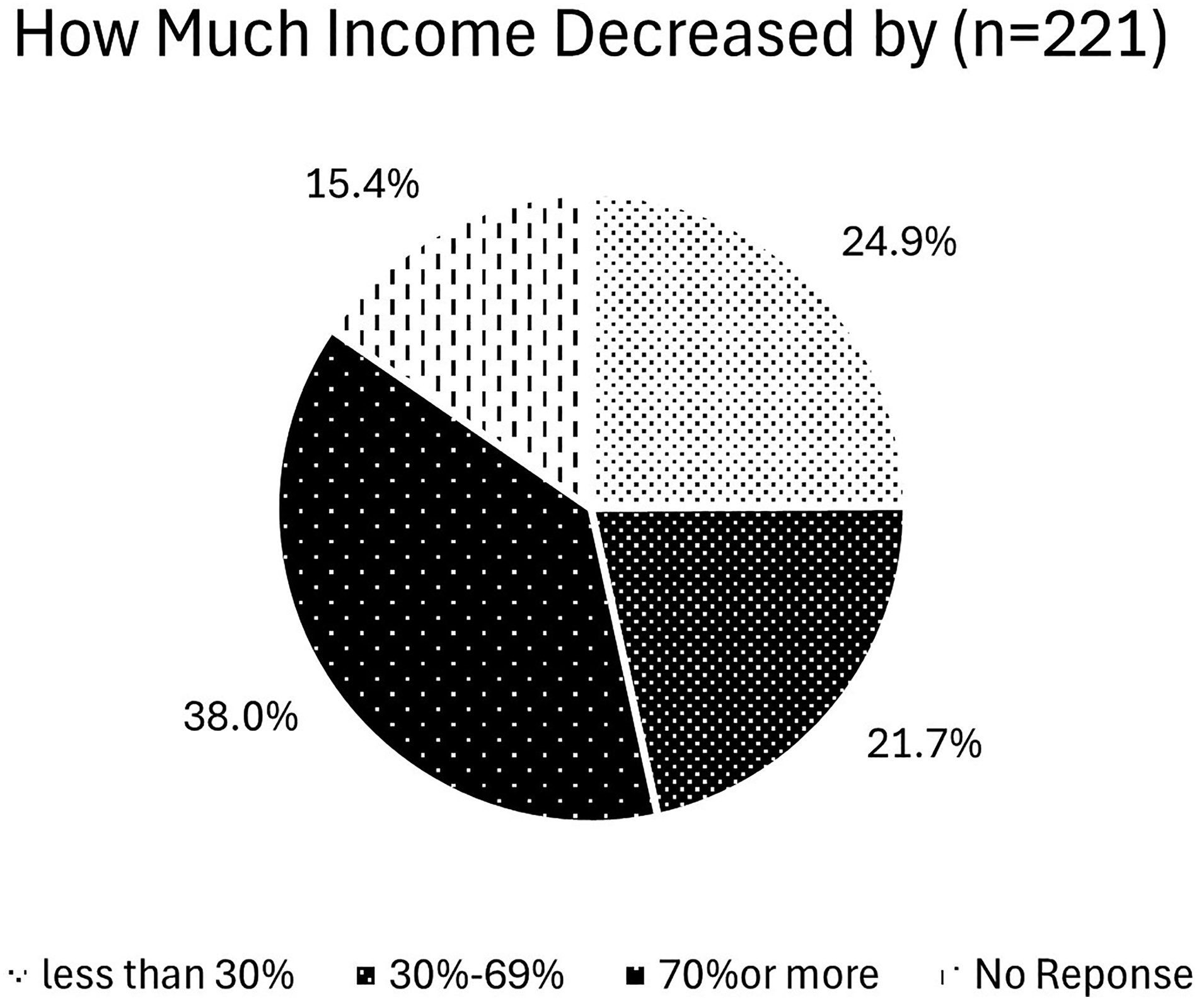
How much income decreased by.
Perhaps unsurprisingly, respondents working in the live music sector were among those losing the most income and losing income from their music-related work. As one booker commented: The venue that I book could no longer run shows therefore everything completely stopped. (Man, 46–55, Booker)
The lockdown order released by the Victorian state government on 23 March 2020 was remarked upon by several participants as a turning point in their planning and expectations for performing paid work in the music sector. Similar to the aforementioned booker, they reported events being indefinitely postponed, shows being cancelled, or venues closing their doors. Indeed, even those who had maintained an income through employment or financial support through the Australian government's wage subsidy schemes were not immunised from the collective experience of anxiety. When asked to rate their agreement with the statement, ‘I have been worried about paying for basics like rent and food’ (n = 233; Figure 3), 133 respondents (57.1%) agreed with the statement, while only 65 respondents (27.9%) disagreed.
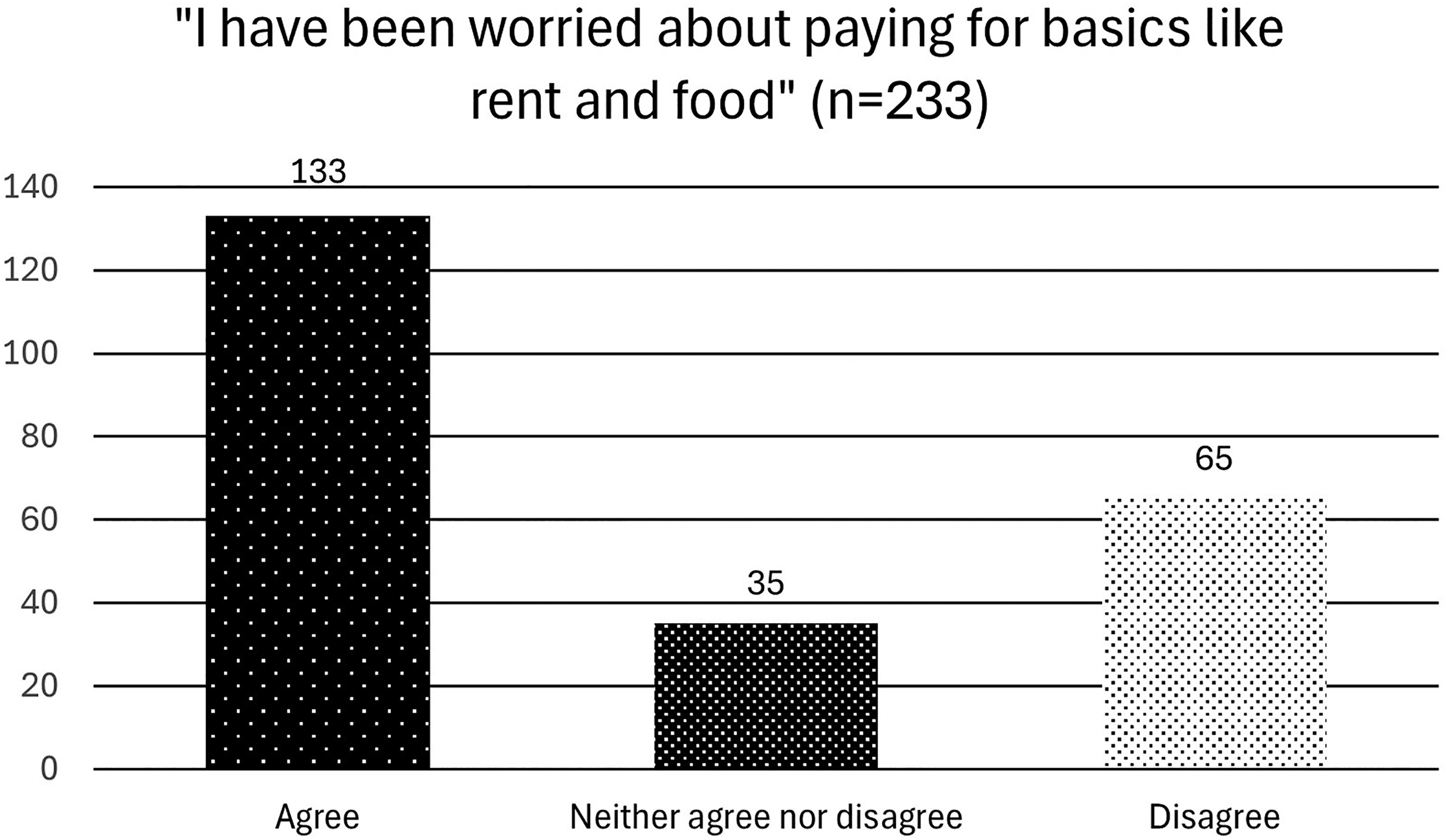
Worry about paying for rent and food.
It is also notable that participants who identified as having a functional impairment or belonging to a minority ethnicity reported differences in changes to their music-related income compared with those not belonging to one of these two groups. As noted in Figures 4 and 5, identifying as a minority ethnicity or as having a functional impairment seemed to increase the likelihood that a person would only be making ‘less than 30%’ of their income from music-related activities since COVID-19. Consequently, it was also less likely that such persons would be making most of their income (‘70% or more’) from music-related activities since COVID-19. Chi-square tests for goodness of fit (with α = .05) were used to assess whether the income percentages reported by those identifying as minority ethnicity or having a functional impairment should be expected based on the figures reported from individuals not within those categories. For individuals identifying as being part of a minority ethnicity, the chi-square test was statistically significant for both pre-COVID, Χ² (3, n = 62) = 12.40, p < .01, and post-COVID scenarios, Χ² (3, n = 62) = 11.36, p < .01, indicating that persons who identified as being part of a minority ethnicity experienced significantly different degrees of income from their music-related activities than others in the survey. As an index of effect size, Cohen's w was 0.45 and 0.43, respectively, which can be considered medium effect sizes. For individuals identifying as having a functional impairment, the chi-square test was statistically significant for both pre-COVID, Χ² (3, n = 43) = 7.82, p < .05, and post-COVID scenarios, Χ² (3, n = 43) = 12.63, p < .01, indicating that persons who identify as having a functional impairment also experienced significantly different degrees of income from their music-related activities than others in the survey. Cohen's w was 0.43 and 0.54, respectively, which can be considered medium and large effect sizes.
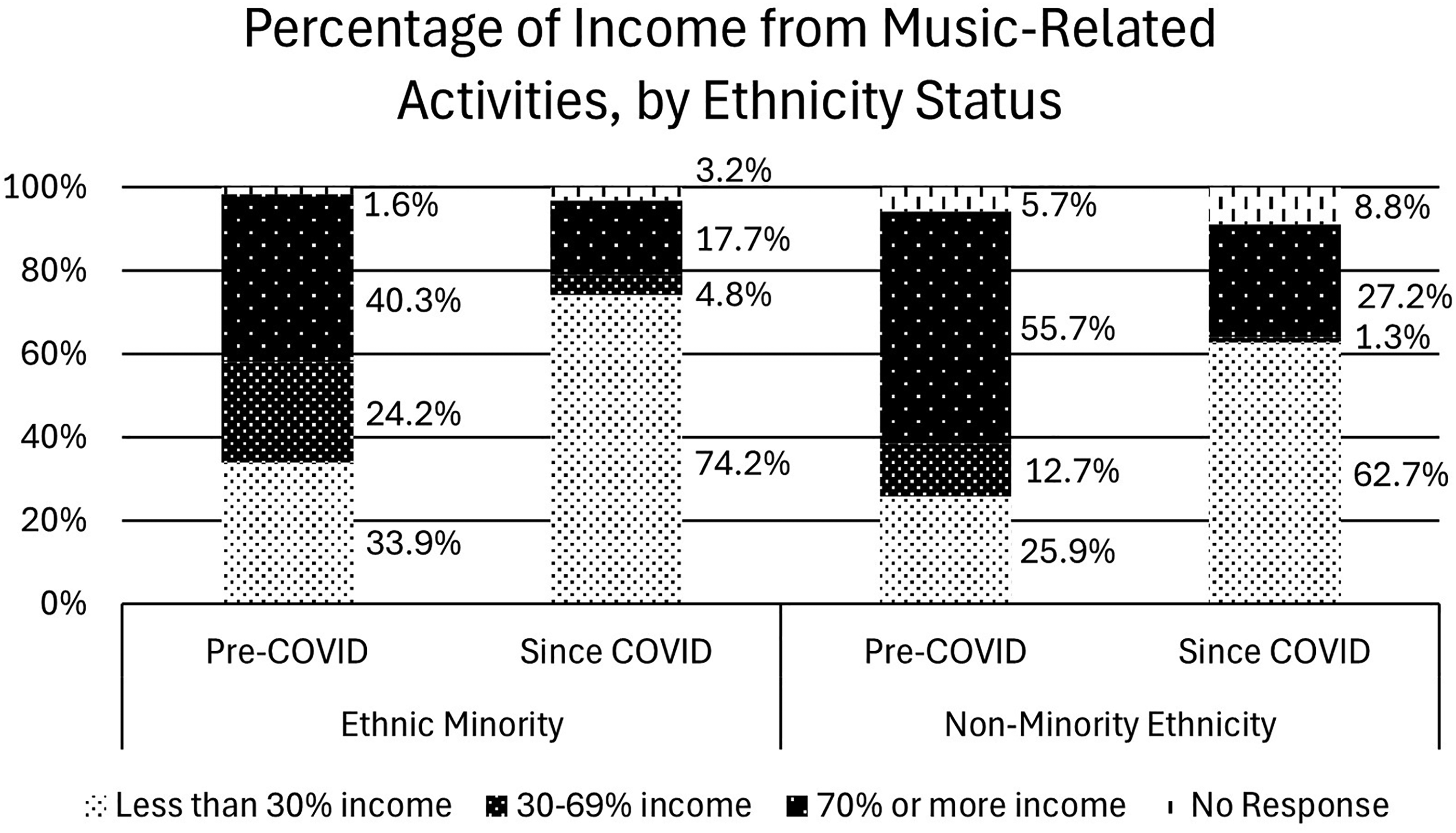
Percentage of income from music-related activities, by ethnicity status.
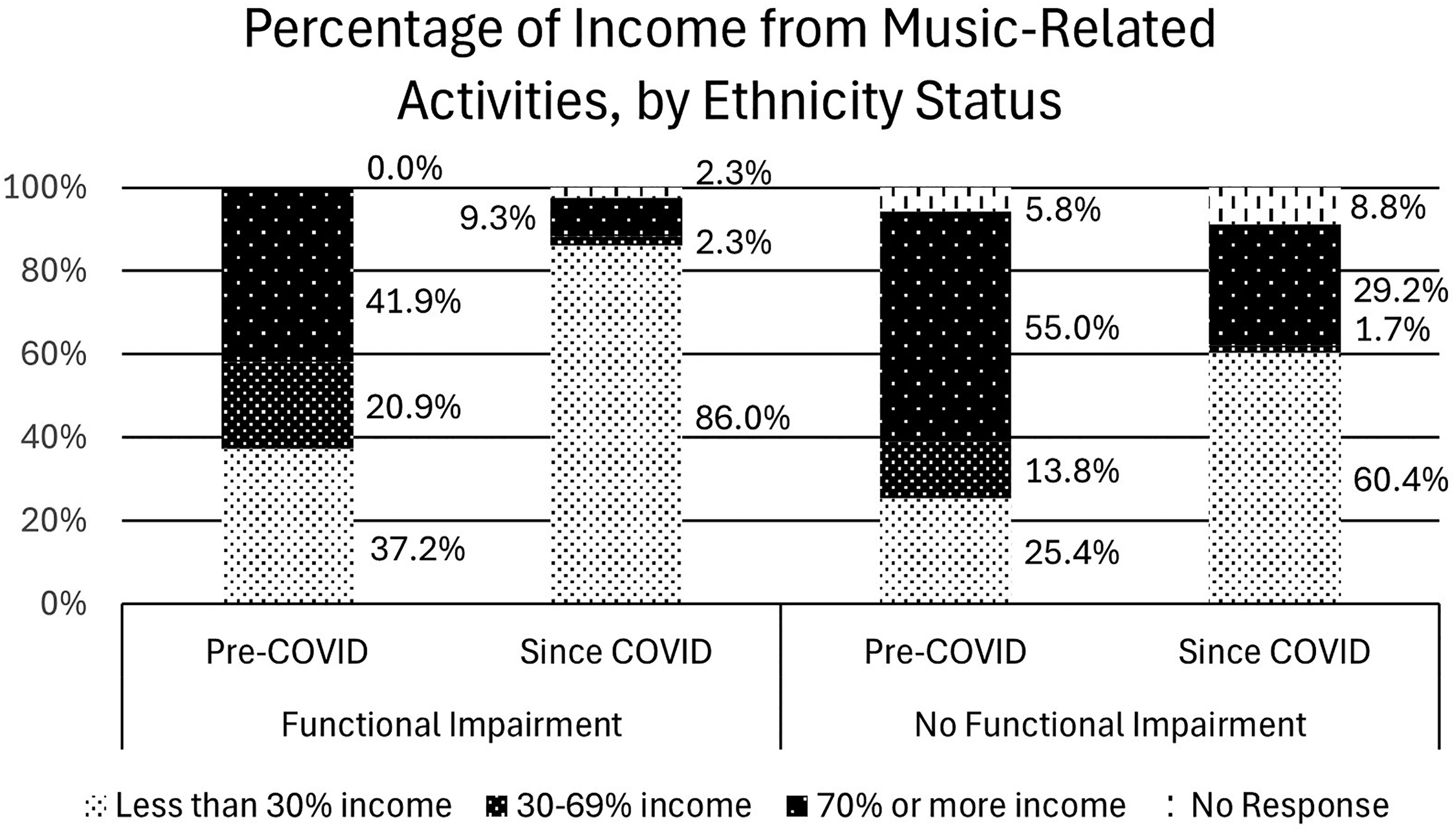
Percentage of income from music-related activities, by functional impairment. N.B. There is a 0.1% rounding error in the ‘since COVID’ bars.
The COVID-19 crisis revealed two effects of income-related insecurity that bear relevance for achieving Banks’ ‘creative justice’. First, income-related insecurity resulted in not just relative loss of income, but also likely material harm to respondents who reported worrying about ‘paying for basics like food and rent’. Second, the parity of participation of music industry workers with functional impairments and who identified as a minority ethnicity was impacted, as these groups were more likely to report, on average, more severe disruptions to their income that was derived from music-related work. This is not to imply that their incomes necessarily decreased more than the population at large, but rather that they were less able to derive income from music-related activities.
Planning for an uncertain future
Aside from income-related insecurity, participants also commonly described uncertainty around their future involvement in the music industries more broadly. A sense of uncertainty about the viability of work in the music industries followed the COVID-19 health crisis. When asked whether they believed their involvement in music would be different after the COVID-19 crisis, over 80% of respondents answered in the affirmative, as noted in Figure 6.
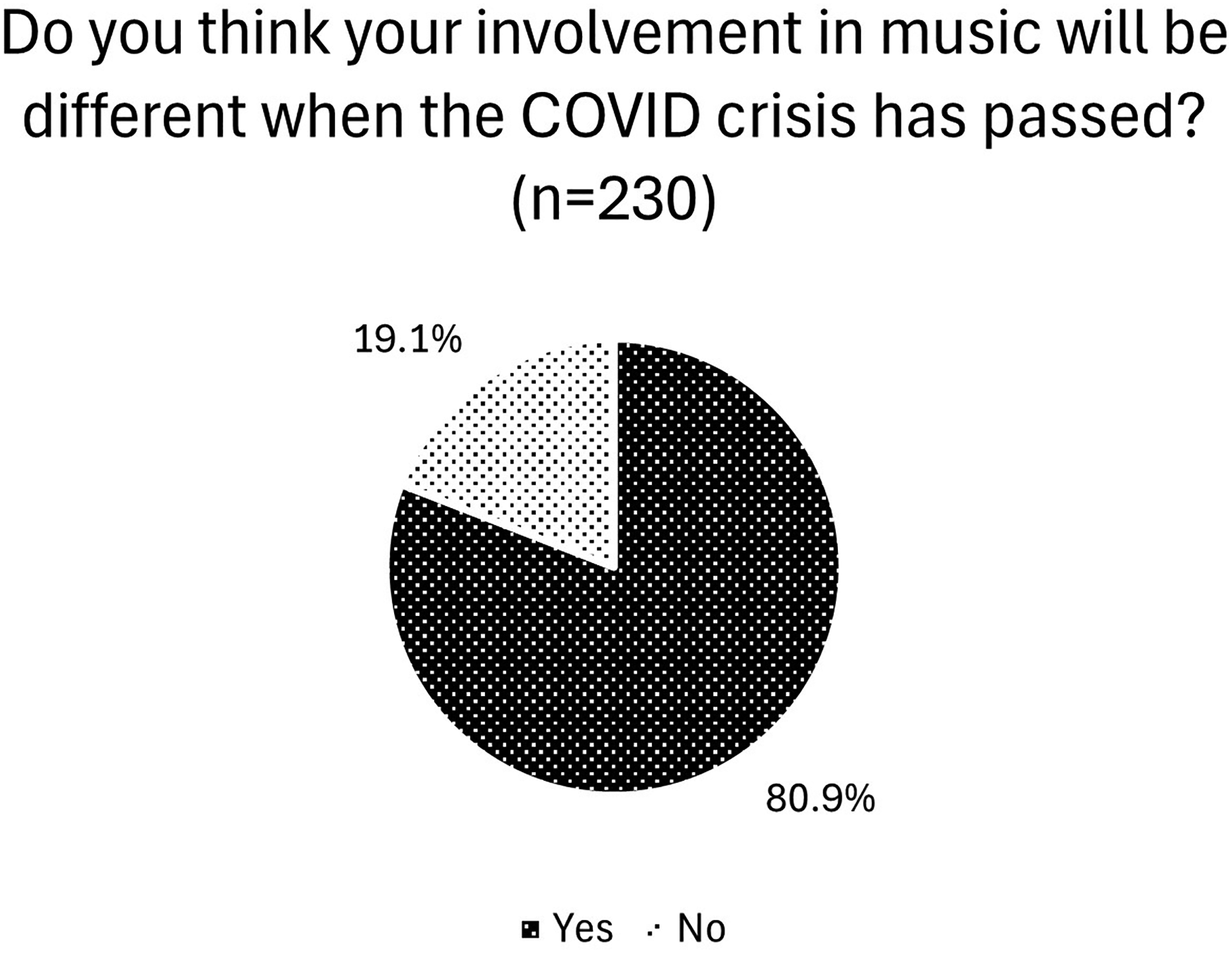
Perceived changed involvement in music.
Elsewhere, we have explored how the Australian government's approach of ‘hibernating’ industries through a combination of business support and wage subsidies has resulted in individualised career planning responses from music industry workers (Cannizzo & Strong, 2022). Planning for an uncertain future from the perspective of the height of the Victorian lockdown period was influenced by the absence of previously taken-for-granted spaces of industry socialisation, such as entertainment venues, community spaces, and live music establishments, and the absence of many of the common economic objectives that created opportunities for music industry workers. The liminal space produced by this absence of norms and routines for work socialisation and cooperation allowed for workers to ponder how the uses of their labour may change. When viewed through the lens of Banks’ ‘objective respect’, uncertainty about the future could be understood to reflect a parallel uncertainty about the future objective uses of music.
For those participants who viewed the uncertainty of their future careers with optimism, the objective uses of their music were described as transforming in a way that was desirable. For example, one DJ commented that she was planning on changing the reasons that she produced music: I am rebranding so my artist perception will change for the better. My music is going to be more focused and my production of songs/my own songs will be made to play out (Woman, 18–25, DJ)
By making songs ‘to [be] play[ed] out’, this DJ was making a conscious decision to address not just the marketability of her work (i.e. ‘rebranding’), but also the social function of her music. Although the artists’ intention here is not equivalent to the actual objective effects that her music may eventually have, it is notable that this participant has emphasised an identified belief that the value of her work is in its use that aligns with Banks’ objective respect. Other participants also noted this connection between marketability and the need to change the aims of their work to suit changing uses. Participants described these changing uses in terms of a new ‘status quo’ that would need to be catered to: There will be more [competition] as there have been a lot of emerging musicians and other talents during this lock-down. This will lead to pursuing the enhancement of my skills and always offering an extra mile to those who express an interest in my product. As well, I am dubious that there will be big gigs with big format bands which leads me to reinventing my product and offer an initiative which can be suitable for the new status quo. (Woman, 26–35, Musician)
Although market discourses were common in participants’ explanations of how their music practice would change, others drew on discourses of community and service. These discourses similarly drew connections between optimistic changes to musical practice and the objective effects that they expected their music to have: I feel more committed than ever to the value and importance of music and the arts for the health and wellbeing of communities and cultural and social vitality. I feel that especially as a folk musician that it's important that all of us have more access and more opportunities to play and engage with live music. (Woman, 46–55, Musician) I believe there will be more focus on live streaming music to open up a new dimension of accessibility for music fans. (Woman, 26–35, Music Coordinator)
Serving communities and creating accessible music not only draws focus to the (intended) objective effects of music, but also places social values at the centre of musical practice. However, not all respondents held an optimistic view of how their music practice might change through the pandemic. A considerable 133 respondents (57.3%) agreed with the statement that ‘I have considered leaving the music industry’, as noted in Figure 7.
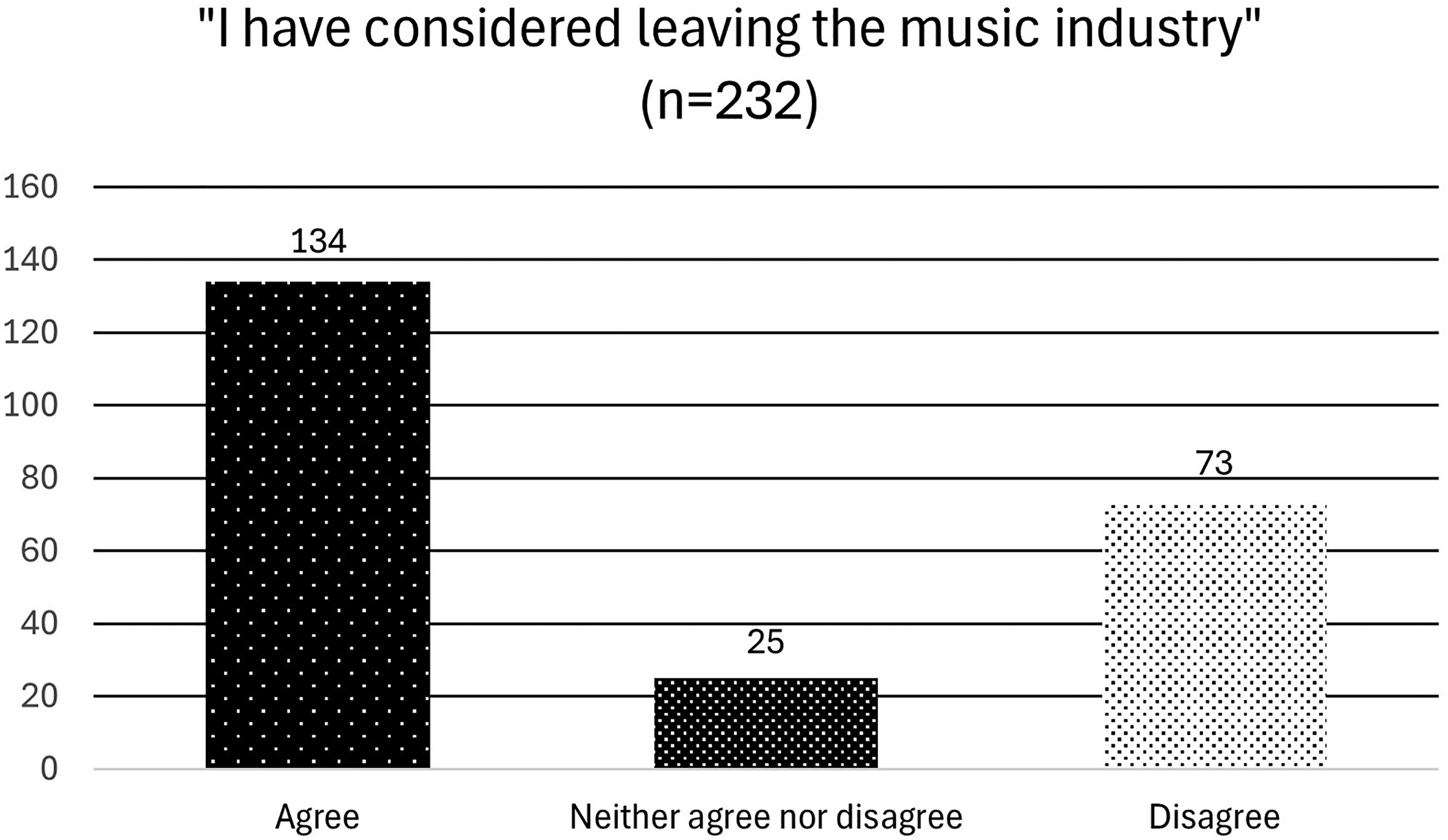
Consideration of leaving the music industry.
Among those participants who had expressed concerns about their future involvement in music, the financial sustainability of their work roles and sense of belonging through work were prominent themes. The following respondent draws close connections between their social role and the financial viability of music industry work: Sadly my optimism has been replaced by cynicism. I have always been critical but balanced by optimism. Now, the cynicism I tried to keep at bay and defend myself from has come to pass. There is NO SAFETY NET FOR ME and neither the music industry or the government seems to recognise me or have a place for me. (Woman, 46–55, Musician; original emphasis)
Whether they were contemplating leaving the sector or re-focusing their efforts towards more financially sustainable work, respondents often described their musical work in terms of their sense of self-identity. Participants who elaborated on this theme more explicitly connected this sense of self to audiences. This was particularly pronounced in live music work, as noted by the following road crewman: It's not big margins that we’re talking about here, but you realistically need 90 percent to almost full house to really warrant doing these shows, … with socially distanced restrictions, we’re going to have at most 50 percent capacity. You know you’re going to be losing before you even open the doors. This industry is not going to come back until we can start packing venues again. Or, the ticket prices go through the roof, and in a recession, who is going to have that money? (Man, 26–35, Road Crew)
These live music workers place the audience (or ‘fan-base’) at the centre of their roles as live music workers, merging the issues of financial viability and social uses of their work around the imagined audiences. To pay ‘objective respect’ (Banks, 2017) to the uses and effects of music in this context requires acknowledgement of the role of music in the economic life of music venues and the use of music practice to orient performance towards those economic objectives. While some musicians and DJs (such as those quoted earlier) might imagine that the purpose of their music production may have changed following the COVID-19 pandemic, there is a stronger likelihood that their music will continue to serve the interests of capital rather than other social interests due to the ways that work in the music industries is inherently exploitative even when it feels socially useful or empowering.
The exclusion of undervalued work in conditional income support schemes
Aside from amplifying income-related insecurity and uncertainty about future career planning, the COVID-19 pandemic and public health response also offered many arts workers access to forms of income support of greater value than their individual incomes before the pandemic (Crosby & McKenzie, 2022). In Australia, access to income support payments was expanded and the monetary value of these payments brought to a level that numerous participants described, tentatively, as ‘liveable’: The COVID Support Payment [‘JobSeeker’] has turned Centrelink into – rather than living in poverty it's actually turned it into a liveable wage. It's very low, but it's enough… When that disappears in a couple of months – a month or two – I’m not looking forward to that. (Non-binary person, 26–35, Lighting Technician)
However, as Crosby and McKenzie (2022) noted in their study, the short-term nature of these income support policies did not have a strong correlation with positive sentiment towards future employment and income opportunities.
Respondents working precarious roles throughout the pandemic, even with government income support, did not generally report expectations of job security or optimism about future work opportunities. Those working in the live music sector, such as road crew, often described the inadequacy of short-term support for sustaining their living circumstances: I got JobSeeker and with the number of cuts and things… the car had to go pretty much straight away, health insurance had to get cut. Anything that I could afford to cut, I cut… We haven't actually been able to come to an agreement with our landlord, because he's ignoring us… and I suspect all he's doing is waiting for the eviction moratorium to end, and then he's going to kick us out, because my roommate and I both worked at the same company… JobSeeker… has just been enough to get me by. (Man, 26–35, Road Crew)
While income support schemes were a valuable form of relief for many workers and employers throughout the pandemic, music industry workers, especially those in the live music sector, often found the limited duration of these schemes inadequate in addressing the expected downturn in the industry. Because the impact of lockdowns, social gathering restrictions, audience timidity towards gathering in crowded spaces, and disruptions to job opportunities were expected to outlast income support, these schemes were viewed more often than not as fleeting relief among respondents.
Overall, while these participants may have accessed temporary personal relief from hustling for music industry work, the income support schemes did not alter their sense of how society regarded their profession and industry. That is, unlike those who had been deemed ‘essential workers’ by the Australian media (Michie & Wong, 2020) – workers whose roles are vital for public safety and life – the music industry was relieved of its role during lockdown. In Banks’ terms, music's social uses (its ‘objective respect’) had been equated with its function as entertainment: a faculty that could be spared in the face of a public health crisis. While access to income support payments may have been a relief to many working in the music industries, it could also be a stark reminder that ‘a living wage’ was always possible, but not forthcoming until a pandemic made it necessary.
Creative justice for music industry workers: the role and limits of a basic income
Viewed through the lens of Banks’ ‘creative justice’, the experience of COVID-19 by music industry workers in Victoria provides insights into two processes through which equity is limited in the sector. The pervasiveness of insecure work throughout the sector entails income-related insecurity for music industry workers, which further impacted the parity of participation in music industry activities through the COVID-19 crisis. Additionally, the uncertainty and impact on future planning as a result of the shutdown of live music led some music industry workers to question their continued involvement in cultural production and to reassess the uses of their work, and hence its social value. Emergency income support measures that were put in place by the federal government provided some relief but did not inspire confidence in the stability of working in the music industries.
In employing ‘creative justice’ to assess the impact of COVID-19 and the potential value of a basic income for music industry workers, we have identified how Banks’ normative framework can help evaluate interventions into the cultural industries. We found that a basic income may serve at least three roles in supporting equity in the music industries:
Improve parity of participation. The COVID-19 pandemic demonstrated that those in precarious work roles, and perhaps those who identify as belonging to a minority ethnicity or live with a functional impairment, were less able to sustain music work through a sectoral crisis. A basic income would hence reduce the impact of financial crises on the parity of participation of music industries workers from diverse backgrounds. Reduce harms caused by insecure work. The pandemic crisis also demonstrated that those working insecure music industry roles were likely to worry about food security and paying rent. A basic income would provide reliable financial support during periods of income disruption. Allow for experimentation in the objective uses of cultural labour. The disruption to ordinary patterns of labour that stemmed from the pandemic demonstrated both a desire to organise work differently and an acknowledgement that this cannot be achieved through equating music activities with entertainment, only worthy of a living wage during times of a public health crisis. A basic income would allow for planning around longer-term social experiments with cultural labour and reflection on the objective uses of that labour.
The short-term financial relief provided by emergency income support was restricted in achieving these goals because it could not offer an ongoing sense of security and was instead experienced by respondents as temporary relief from impending precarity. Music industry workers expected that they would need to re-engage with a sector characterised by harmful and exclusionary practices, and so largely continued to plan for that inevitability. In line with the rationale behind the Irish BIA trail, a basic income could instead provide a ‘more stable social protection mechanism’ (OECD, in Hayes, 2022, p. 13), if implemented with appropriate oversight.
However, as a policy intervention, a UBI scheme also presents challenges for achieving greater creative justice. As Harris (2022) has argued, rather than disrupt the neoliberal social formation and the consistent roll back of the democratic nation-state as regulator against the injustices of the market, a UBI would further entrench and even accelerate this as a policy norm. Or as Hayes (2022, p. 13) argues, a basic income could become a ‘treatment for the symptoms’ of inequality, rather than its root causes. Rather than address social determinants of inequality, such as gendered norms, racialised exploitation, ableism, or classism, a basic income could act as a band-aid for all wounds, potentially replacing other forms of social support, and hence further entrenching individualistic policy solutions. To avoid the reconstitution of basic income – whether as a UBI or BIA – as a form of neoliberal financial governance of cultural work, a framework such as creative justice would need to guide the assessment and implementation of policy.
Our findings have suggested that while calls for the expansion of income support schemes and grants for the creative arts and cultural industries would go some way to redressing the harms produced by insecure working contracts and broader social inequalities, basic income does not comprehensively address sources of inequality in creative industries. Paying objective respect to the social uses of music and attributing such work with its value would require the recognition of the functioning of forms of musical practice beyond its characterisation as entertainment and towards its role in sustaining communities and livelihoods and in fostering social wellbeing. Future research seeking to explore how creative justice could be better achieved would benefit from exploring whether the different objective uses are relevant to this pursuit.
Footnotes
Funding
The authors received no financial support for the research, authorship, and/or publication of this article.
