




Abstract
This article develops a theoretical framework to understand how sexuality can be institutionalised through debates about marriage equality. We first examine 13 Australian sporting organisations concerning their support for marriage equality and sexual minority inclusion before showing they drew cultural capital from supporting episodes of equality exogenous to their organisation, while failing to promote internal inclusion. We use online content analysis alongside the identification of institutional speech acts within policy to analyse results through three conceptual lenses: Ahmed’s institutional diversity work, Ogburn’s cultural lag, and Evan’s organisational lag, from which we propose a hybrid – organisational cultural lag – as a theoretical tool within social movement theory.
Assessing sexual minority inclusion
The 2017 passage of same-sex marriage in Australia marked a cultural shift for sporting organisations (Cunningham, 2012), which Anderson (2005) describes as historically abusive toward sexual minorities, because many of the organisations that govern Australian sport offered public support for marriage equality during this time.
A means of providing an indication of the level of sexual minority inclusion in Australian Sports Organisations (ASOs) comes through the Pride in Sport Index (PSI). The PSI is a joint Australian Human Rights Commission and Australian Sports Commission (ASC) initiative, and a national benchmarking system, to rate the level of lesbian, gay, bisexual, transgender and intersex (LGBTI) inclusion within ASOs. 1 It is open to all National and State Sporting Organisations, community organisations, and individuals can be nominated for the corresponding PSI Awards.
In the inaugural year in 2017, ten organisations (of which eight were ASOs) submitted applications that were awarded a score out of 100. Scores ranged from 3 to 36. In the second-year results, which again featured eight ASOs, scores dramatically improved. For example, the average score increased from 15 to 30, and the highest score rose from 36 to 49. While the raw scores suggest that these ASOs have much work to do on improving their inclusion, it is also worth noting that from 2018, the PSI determined a score of 60 to be of gold standard, 45 for silver and 30 for bronze. Given that 60% is considered the gold standard, it suggests the rubric is not adjudicated upon a plausible 100 score. Moreover, some point-earning categories are not based upon attitudes to or policies regarding LGBTI inclusion, but for presence of out athletes.
The process of measuring inclusion efforts has not gone without criticism (McCormack, 2019). The problem, bifurcated, looks like this. On the one hand, Lusted (2014) suggests a new culture of auditing and measuring diversity indicators might compel an institution to take action, but that compliance might be achieved without cultural change. Tayar (2017) agrees, suggesting that organisations focus more on the perception of being LGBTI inclusive, rather than enacting meaningful inclusive practices. On the other hand, Ahmed (2007) suggests that a tick-box exercise can actually lower institutional inclusion; that a fantasy of inclusion can be created while systemic inequalities are concealed. Related to sport organisations, Magrath and Stott (2018) examine the English Football Association’s anti-homophobia policy and find that institutional statements of support were not followed by relevant policy changes.
Theorising organisational cultural lag
The theoretical framework for this investigation is broadly located within the social movement literature (Tilly, 2004). We draw upon three separate but related theoretical concepts for analysis of how organisations process changing cultural ethos – in this case, on same-sex marriage. The concepts are: (1) Ahmed’s (2006) institutional diversity work; (2) Ogburn’s (1922) theory of cultural lag in language and symbolic interactions; and (3) Evan’s (1966) concept of organisational lag concerning delayed adoption of technological capacities.
Principally, we apply and adapt Ogburn’s (1922) notion that, at times of social change, different parts of culture adjust at different rates. When one part of culture changes rapidly, it can become dissociated from other linked cultural variables. These periods of ‘maladjustment’ occur when variables are dissociated and can often result in social problems, such as happened following the influx of married women into the workforce during the post-Second World War period (Brinkman and Brinkman, 1997), or when the relation between income distribution and social justice is skewed (Brinkman and Brinkman, 2005). Connected with this, as Brinkman and Brinkman (1997: 612) suggest, is the fact that cultural inertia may result from ‘settled social habits promoting institutional inertia in the form of vested interests; conformity due to fear of ostracism; and the past-binding power of tradition’.
Anderson and colleagues (2016) have previously employed a cultural lag model to understand the continued presence of homohysteria in sports settings that are increasingly gay-friendly. They suggest that a gap exists between players and management, principally related to age: as this is highly correlated with attitudes toward sexual and gender minorities (Anderson and Fidler, 2018). Or, as Anderson (2009: 3) suggests, sports are played by players desiring equality but run by ‘hypermasculine, over-conforming, failed male athletes’.
Ahmed’s (2006, 2009, 2012, 2017) analyses of institutional diversity work and race equality are helpful in understanding what institutional policies and public ‘speech acts’ are actually achieving. Through the concept of ‘doing’, Ahmed (2012) explains that there are stark differences (maladjustments) between what an institution says it does (for example in promoting diversity), and what they actually do (through actions or commitment to statements of inclusion). Ahmed conceptualised the gap between policy and practice as ‘institutional catch up’, and claims that organisations may not be committed to the policies that they create (Ahmed, 2017). She cites the need for constant prompting, reminding and pushing as evidence for a lack of institutional commitment to change.
Ahmed contends that diversity workers and practitioners often spend more time writing policy documents than implementing them: the quality of the documentation becomes the measure of an organisation’s diversity efforts. Ahmed (2007) therefore states that individuals end up ‘doing the document rather than doing the doing’, creating an illusion of doing, and presenting an image that the aims of such documents are being implemented and the institution is ‘doing diversity’.
The lack of implementation of policy essentially renders these documents speech acts (Ahmed, 2012), which serve as a form of virtue-signalling (Gugerty, 2009) in that they can refer to the claims made by an institution about what they do or what they believe. Thus, speech acts do not evidence performative change; they instead represent aspirational change.
Speech acts, however, can be, as Ahmed (2012: 117) writes, ‘taken up as if they are performatives’. In this sense, ‘Non-performative institutional speech acts’ refer to policies or words made on behalf of an institution which have no impact; the rhetoric of diversity means the words do not perform (Ahmed, 2006, 2012). For example, a sporting code, through its diversity policy, may state that ‘we believe everyone should have the right to play sport’, and ‘we value diversity’. In this regard, such speech acts are aspirational, but they fail to accomplish that goal: they do not, as it were, commit a person, organisation, or state to an action – they are non-performative performances.
The language used in institutional speech acts is also significant. Institutions that adopt speech acts often employ ‘happy talk’, which refers to positive language and messages being discussed around diversity and the ‘lip service model of diversity’ (Ahmed, 2012). It is for this reason that we refer to speech acts that use terminology such as ‘we welcome everybody’, ‘no problem here’, and ‘we treat everybody the same’ as ‘aspirational speech acts’. In addition, a shift in language from the use of ‘equity’ and ‘equal opportunities’ to diversity and inclusion has also been identified (Ahmed, 2012). Strategically, words such as ‘homophobia’ are often not adopted within speech acts and policy rhetoric as they have the potential to make people feel threatened and alienated. As Ahmed (2009) notes, with racism, homophobia thus becomes something bad that should not be spoken about. However, words such as ‘diversity’ result in fewer actions.
Specifically, Ahmed (2017) argues that the use of terms such as ‘diversity’ can be counterproductive, because they obscure issues and remove the need for action. As noted, efforts to generate transformation can be cited as evidence that the organisation has been transformed – image management and perceptions of change become most important (Ahmed, 2009). However, altered perceptions of an organisation, the appearance of change, stops something from happening. She writes, that the ‘fantasy of inclusion is a technique of exclusion’ (Ahmed, 2017: 112).
Finally, Evan (1966) proposes that organisations are slow to adopt technological change for a variety of reasons. Of these reasons, key to the organisational cultural lag theorising we employ, is what Evan described as administrative innovations. These tend not to be technological in nature but instead, ideas-driven. For example, Damanpour and Evan (1984) suggest that higher performing organisations are less likely to adopt new ideas because they exist as higher profiting organisations. They have achieved financial success via their existing strategies and consumers are comfortable with their offerings. Successful organisations are, therefore, fearful that change may threaten their position of strength. Financial success and market domination are thus inversely related to idea adoption.
It is our contention that ASOs are caught between competing dynamics of desiring to retain profit and consequently being resistant to change, alongside the desire to be seen as positioned within acceptable boundaries of changing cultural norms. The process of cultural change is complicated by a cohort effect in which older people maintain greater antipathy toward same-sex marriage (Redman, 2018). Thus, we contend that Ahmed’s conceptualisation of speech acts, alongside cultural lag and organisational lag theories, helps to explain the position and operation of ASOs surrounding marriage equality.
Methodology
Recent research on the topic of gay men in sport has suggested that sport is an institution in which its actors view cultural topics differently to the administrators of the institutions to which they belong (see Roberts et al., 2017). We therefore determined the intersection of sexual and gender minorities and sport an appropriate context to examine in relation to organisational cultural lag.
Although there has been research on the experiences of LGBTI athletes in Australia (Fletcher, 2014), and a specific focus on young people and physical education (Symons et al., 2014), there is a dearth of research at the organisational level within ASOs around sexual minority inclusion. It is for this reason that we draw upon the PSI to help inform our analysis. The snapshot this index offers into sporting organisations provides the first-ever generalisable glimpse into the status of sport governance and efforts towards the inclusion of LGBTI athletes.
Analysing sexual and gender minorities is not, however, easy to do. We thus delineate that, given the referendum on marriage equality focused on same-sex marriage, we are most specifically talking about gays and lesbians. We also do this in order to avoid generalising results from these populations onto bisexual and transgender athletes, for whom there is little research (Anderson and Travers, 2017), as well as for intersex athletes, for whom there is also very little research (Linghede, 2018). We argue that collapsing these disparate groups homogenises their experiences as one, erasing important and often striking differences between them (Worthen, 2013). For example, bisexual and transgender people have far higher rates of mental illness than gay and lesbian people, and transgender athletes face entirely different institutional barriers than cisgender gay and lesbian athletes (Anderson and Travers, 2017).
In order to examine for sporting institutions’ relationship between speech acts, sporting-lag and performative measures to promote LG inclusion among their stakeholders, we first employed online content analysis.
Sampling/case selection
The 13 sports we selected for analysis were those aligned with the Pride in Sport review document in direct support of inclusion in sport, or those recognised as being the top participation sports in Australia in the case of netball, athletics, touch football, golf and tennis. All of these sports were listed on the Australian Institute of Sport website as current ASOs and therefore are included within its anti-homophobia and inclusion framework for Australian sports. Due to the public nature of websites and open access to them, permission from individual organisations was not obtained to conduct our analysis.
The research was conducted during April through July of 2018 and involved a number of steps that align with the methodological procedures outlined by Kozinets (2010), including: making entrée; data collection and analysis; trustworthy interpretation of the data and conducting ethical research. Data collection focused on archival data, allowing the researcher to explore what is publicly available on the internet rather than having any researcher interaction with the online community (Cleland et al., 2019).
There were two phases to data collection: first, from ASO webpages, and then on the social media site, Twitter, alongside mainstream media coverage. The first stage examined how regulating bodies of sport articulate ‘what they do’ through the inclusion and reporting of policy in digital space. A content analysis of the websites of 13 ASOs was thus conducted first.
Each website was assessed for official communications relating to marriage equality and for the visibility of material and the presence of policies linked to lesbian and gay inclusion, although we recognise that many of these organisations collapse their identification of these communities into LGBT or LGBTI. Content analysis was then conducted in order to examine the presence of policies. Where documents or reference to lesbian and gay inclusion were not visible on ASO website home pages, an online search engine was utilised, adopting a number of search terms (e.g. LGBTI, member protection, anti-discrimination and code of conduct). Where policies were present, they were further analysed for themes concerning the strategies outlined for a particular organisation and their stance toward lesbian and gay rights.
In the second phase of data collection, Twitter was monitored by the research team to record online traffic (tweets) linked to institutional speech acts regarding the same-sex marriage vote during the period September to December 2017 and critical moments linked to such acts; subsequent news stories were further examined in relation to their reporting of the same-sex marriage campaign. A total of 467 tweets were assessed with 32 identified for further analysis. The research team did not interact in these spaces or manipulate the environment but instead became observers in virtual space; viewing the interactions of other users. All tweets or posts, including a screenshot of the comment, the date, the time, the source of the comment, the target or topic of the content, and any other information were copied into a document and combined for analysis.
Data was thematically analysed. Co-verification took place episodically throughout the research processes; results were initially coded by an individual author and subsequently co-verified by the other authors of the article. Codes and themes were discussed in relation to the data collected and primary coding.
In the following section, the content analysis of ASO webpages is presented, followed by an exploration of Twitter posts during the Marriage Equality Campaign and the media narrative surrounding these interactions. Finally, we triangulate our original results with the findings of the PSI, which evaluated portfolio submission for ranking on sexual and gender inclusion by a public interest group among the 11 (initially 10 in 2017) sporting bodies included here.
Results: institutional speech acts
While dissemination of a document does not necessarily do anything, it does raise awareness of the policy area (Ahmed, 2007). Hence, visibility is important. To that effect, the visibility and accessibility of information pertaining directly to lesbian and gay inclusion was poorly presented across all of the ASO webpages. None of the homepages had explicit reference or links to inclusion and diversity more broadly or specifically to lesbian and gay inclusion. Nevertheless, all of the organisations made reference to LGBTI equality across a number of policy documents (see Table 1). Broadly, these documents provided guidance concerning inclusion and diversity, member protection, member conduct and anti-discrimination practices.
National sporting organisations policy review.
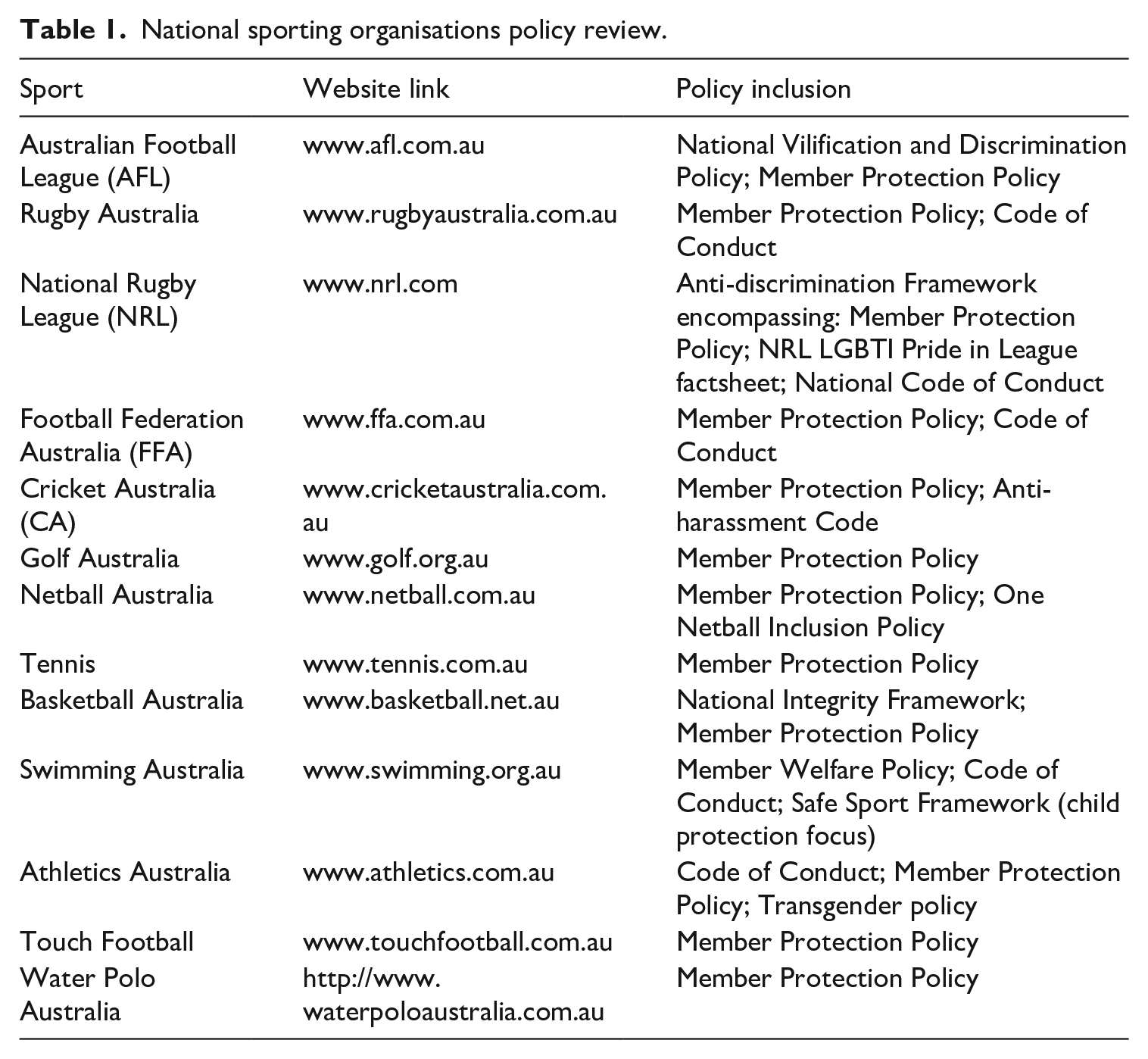
As Table 1 highlights, however, the depth of coverage of anti-discrimination policies varied from the simple adoption of a Member Protection Policy (as with touch football) to the public display of multiple policies (as in the case of the NRL).
Across all ASOs, one document was common, a Member Protection Policy, which outlines the legal obligations that sports are required to meet to prevent and address discrimination or harassment and to protect children from harm and abuse. This finding is unsurprising given that the Australian Institute of Sport stipulates that national sports recognised by the Australian Sport Council must have member protection guidance in place to address issues of harassment, discrimination and child protection.
The Australian Sport Council template can be individualised and therefore tailored to meet the demands of the affiliated member networks. Pertinent to this study, it is recommended by the council that a Member Protection Policy include information concerning anti-discrimination, harassment, sexuality, and gender identity. In the ASC’s guidance, sexual orientation is contained more broadly under anti-discrimination, harassment and vilification. Separate guidance is provided concerning practices linked to gender identity. This information shapes the content included by ASOs and thus guides the policies and/or practices they have in place to support and protect lesbian and gay communities.
All organisations included guidance on discrimination and harassment within their member protection statements. Yet none of the ASOs made direct reference to sexual orientation or provided guidance linked to sexual orientation; this was instead encompassed more broadly within statements concerning discrimination, harassment and vilification. One ASO (water polo) included a definition of sexual orientation. Eleven of the organisations included guidance on gender identity within the Member Protection Policy; swimming and cricket were the only organisations not to include information pertaining to gender identity.
Beyond the presence of a member protection document, the adoption of polices which linked directly or indirectly to lesbian and gay rights varied across organisations, both in title and content. The only organisation to offer guidance directly linked to lesbian and gay rights was the NRL, who, as part of their inclusion framework, created a LGBTI (their identified marker) factsheet in direct support of LGBTI people across all levels. This sport linked closely with a National Vilification and Discrimination Framework highlighting the interrelated nature of the Member Protection Policy and a Code of Conduct for guiding behaviour.
Seven ASOs had in place guidance for a Code of Conduct that indirectly referred to lesbian and gay inclusion through incorporating this in statements concerning respect, integrity and zero tolerance for anti-discrimination. The disparity in documentation observed across organisations points to a lack of consensus and coherence in the adoption of policy across the organisations studied.
It is important to note that a number exercised the use of ‘happy talk’ such as inclusion, instead of homophobia, discrimination, and equality. This catch-all approach has been criticised for erasing specific groups. In Ahmed’s words (2017: 101), ‘the word diversity has become mobile partly as it does less: the words that travel more are the ones that do less [diversity], while the words that travel less do more [racism or homophobia]’.
While the information pertaining directly to lesbian and gay rights was poorly presented, the message across all of the documents was clear: policy and supporting statements from ASOs provided a unified voice championing their values, which should be inclusive for all. Primacy was placed on creating safe organisational spaces, free from abuse, discrimination and harassment for all members. All member protection documents and codes of conduct clearly stipulated that, where members are suspected of breaching a policy or behaving outside of the standards deemed acceptable, a formal complaint procedure would be launched. Allegations would be investigated in line with the specifics of a case and sanctions would significantly vary in line with the nature and severity of infringement made, its impact on others and previous offences (ASC, 2016).
Results: Twitter
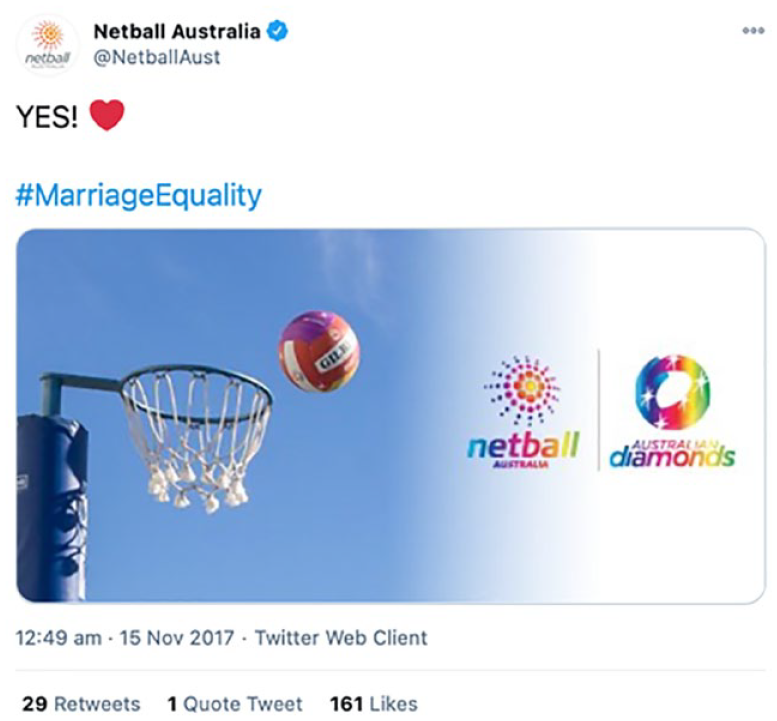
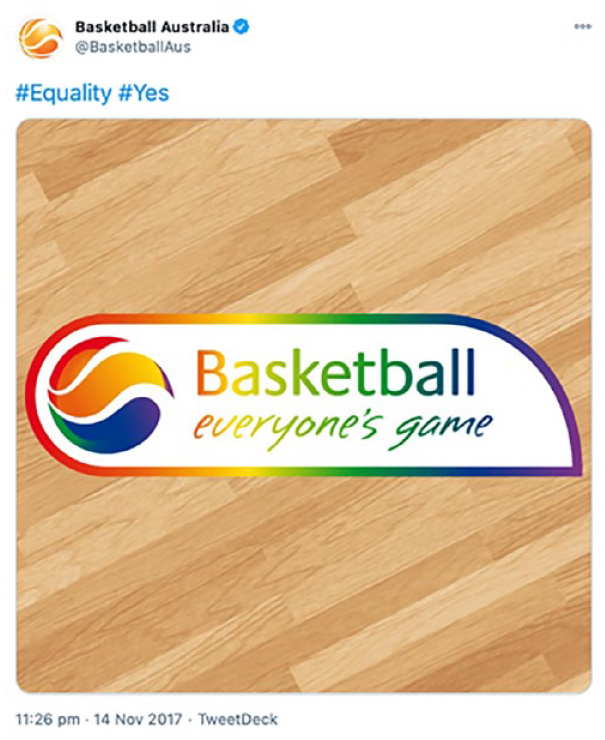
Five organisations took to Twitter around the time the same-sex marriage voting forms were sent on 12 September 2017. Mechanisms to show their support included to ‘rainbow’ their logos or to directly reference marriage equality by including the hashtag #MarriageEquality (Figures 1, 2 and 3).
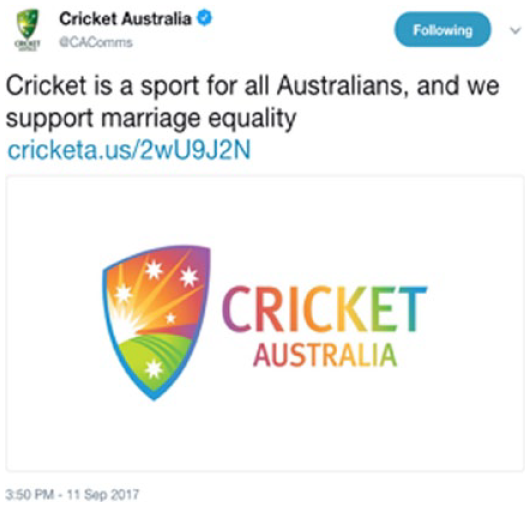
Example of Twitter posts.
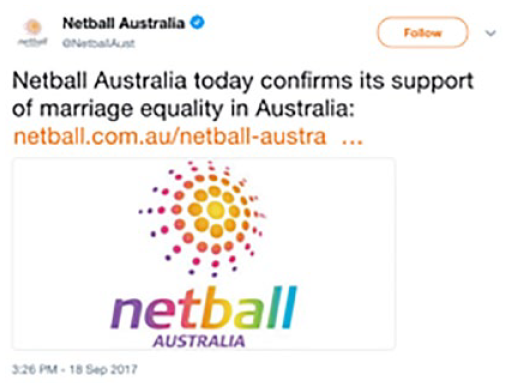
Example of Twitter posts.
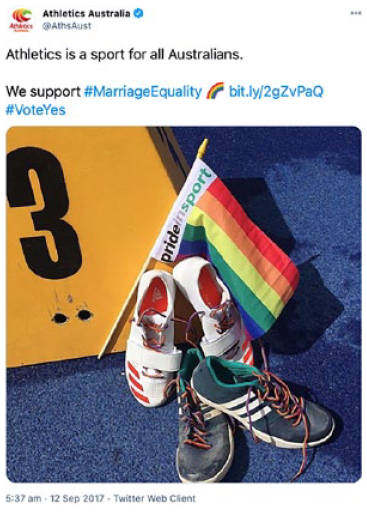
Example of Twitter posts.
FFA, the governing body of association football in Australia, tweeted an image of their CEO and a high-profile footballer, Michelle Heyman alongside the Equality Campaign logo. The tweet was initially sent from the Twitter account of the national women’s team (the Matildas) and then later retweeted from the primary FFA account (which governs the sport generally). Heyman had been the only openly lesbian athlete to represent Australia at the Rio Olympic Games (Figure 4).
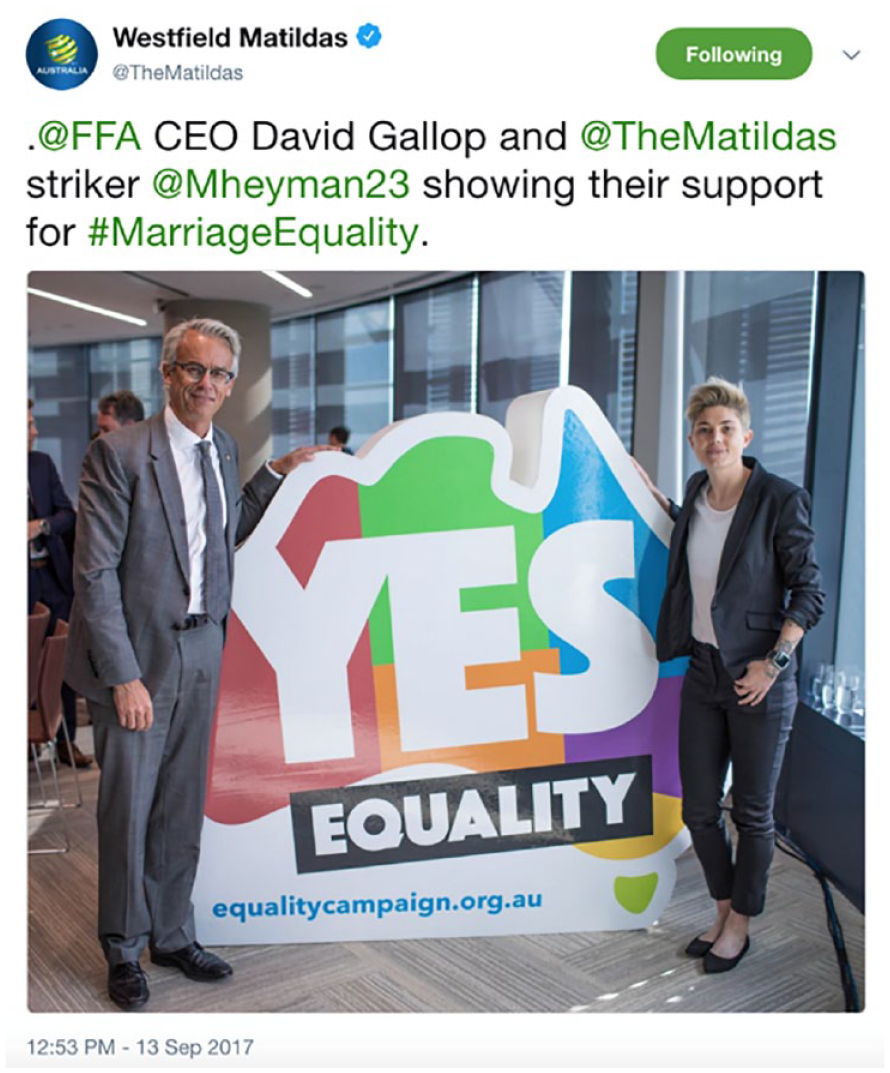
Twitter post from national women’s football team.
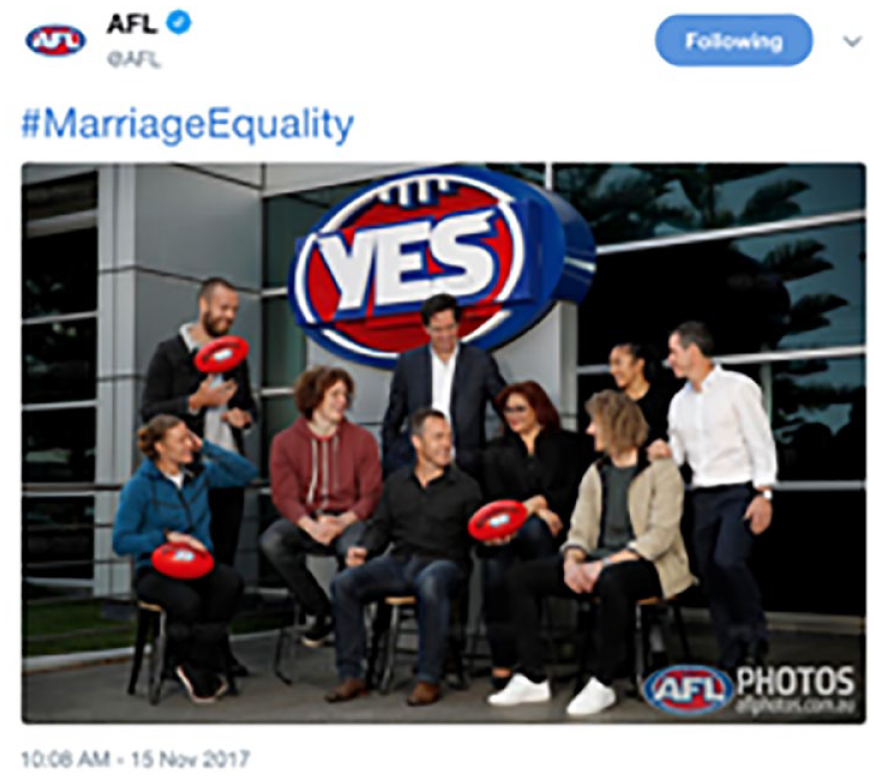
The AFL temporarily customised the text on the logo outside their head office to read YES and tweeted a picture of a happy, smiling mixed-gender group of players, coaches and administrators sitting and standing underneath it (Figure 5). The choice of image for their initial post had been strategically chosen to create a specific effect. As Bury (2015) found in his study on the English Football Association, this image creates the perception of the AFL as a ‘diverse’ organisation that is inclusive towards women and serves as an indicator that they are therefore also ‘doing’ diversity through attempts to include lesbian and gay athletes.
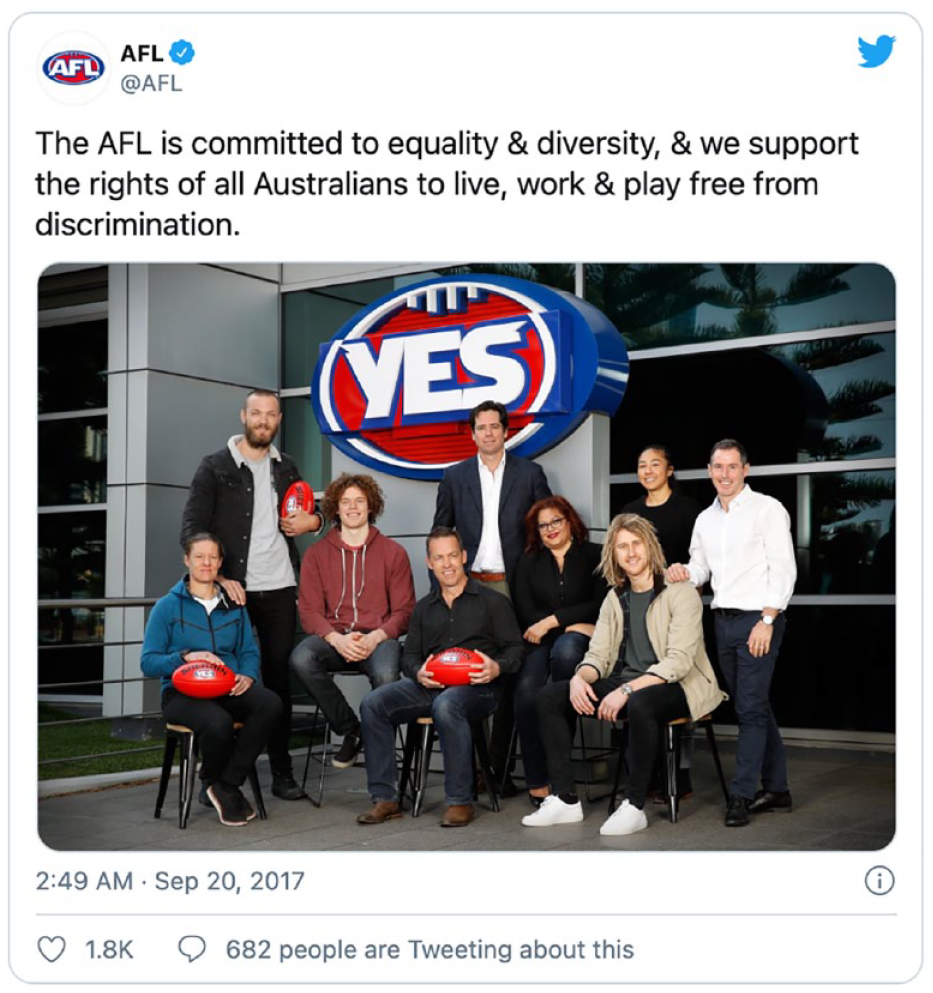
Tweet from AFL.
In a post on their website, the AFL referred to the logo change as ‘an emphatic statement in support of same-sex marriage’ (AFL, 2017: para. 1). However, the logo reverted back to its standard form on the following day, after a bomb scare at the headquarters of the organisation. Their chief executive also stated: the AFL is ‘committed to equality and diversity and we support the rights of all Australians to live, work and play free from discrimination’ (AFL, 2017, para. 5). We view this statement as a clear example of Ahmed’s (2012) happy talk, whereby the AFL employed a generalised statement claiming their support for equality and diversity, reinforcing a collective unity in the use of ‘all Australians’.
The NRL had previously admitted that they had not condemned homophobia strongly enough and had since taken action over subsequent homophobic incidents (Habashy, 2014). Yet they also made use of happy talk when they commented on the marriage equality debate, spurred to do so by an email to the chief executive, Todd Greenberg, from an openly gay former international player. In response, Greenberg stated that:
one of the key pillars of rugby league is inclusiveness – and the game has a duty to back up its policy with action. . . . There is a place for everyone in rugby league. It might be as a junior, as a volunteer, as a match official or as an NRL player. And we need to treat everyone equally both on and off the field and that’s why we will publicly support the same-sex marriage proposal. (Quoted in Webster, 2017b)
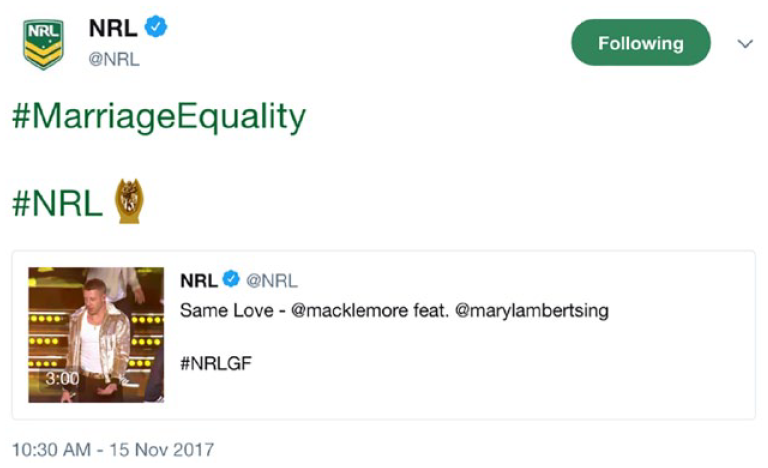
Their most high-profile message of support was their choice of a rap artist, Macklemore, who is known for his powerful and poplar pro-gay marriage song, ‘Same Love’ – associated with the same-sex marriage referendum in Washington State, North America – as their pre-game entertainment at the 2017 Grand Final. However, there was also criticism of this decision. Former Conservative Prime Minister Tony Abbott took to Twitter to voice his opposition (see Figure 6). Further, the Sydney Morning Herald (the best-selling Sydney-based daily newspaper) reported, ‘Tony Abbott has backed a call from same-sex marriage opponents to ban American rapper Macklemore from performing his pro-gay song Same Love at the NRL grand final’ (Koziol, 2017: 1). A former rugby league player also started an online petition, calling on the NRL to ‘Take LGBTIQ politics out of the NRL’ stating that: ‘It will be very difficult to watch the NRL Grand Final with my wife and five young children as the event will be heavily politicised with a LGBTIQ anthem taking centre stage’ (change.org, 2017: para. 3). The petition drew 18,366 signatories. These stances reflect what Brodyn and Ghaziani (2018) term performative progressiveness, whereby progressive attitudes towards sexual minorities occur alongside homonegative actions and day-to-day prejudice.
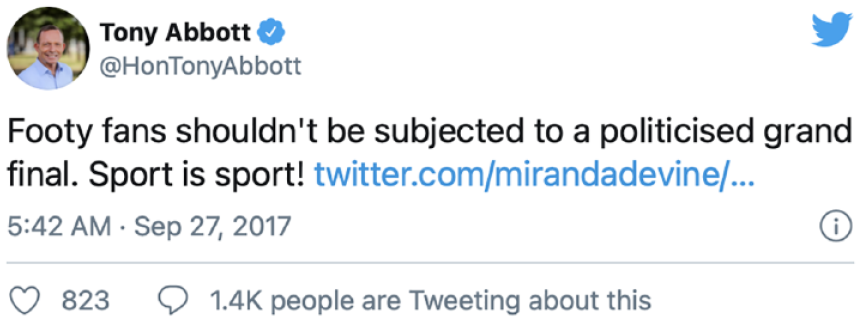
Tweet from Tony Abbott.
The NRL claimed that their decision to invite Macklemore was ‘one of the bravest decisions [they had] made’ (Devine, 2017). Ultimately, the song was included (Figure 7), and Macklemore added a line calling for ‘equality for all’. In addition to the rapper’s performance, the electronic screens in the stadium displayed a number of messages stating, ‘WE STAND FOR INCLUSIVENESS’ (Figure 8) and ‘WE STAND FOR EQUALITY’ underneath the organisation’s logo. These examples of happy talk, of course, are visible signs of an ethos of inclusion. After all, they were made in the face of extreme opposition and Macklemore’s song is explicit in its support for gay men and same-sex marriage. However, the NRL statement of support does not specifically include homosexuality or admonish homophobia.
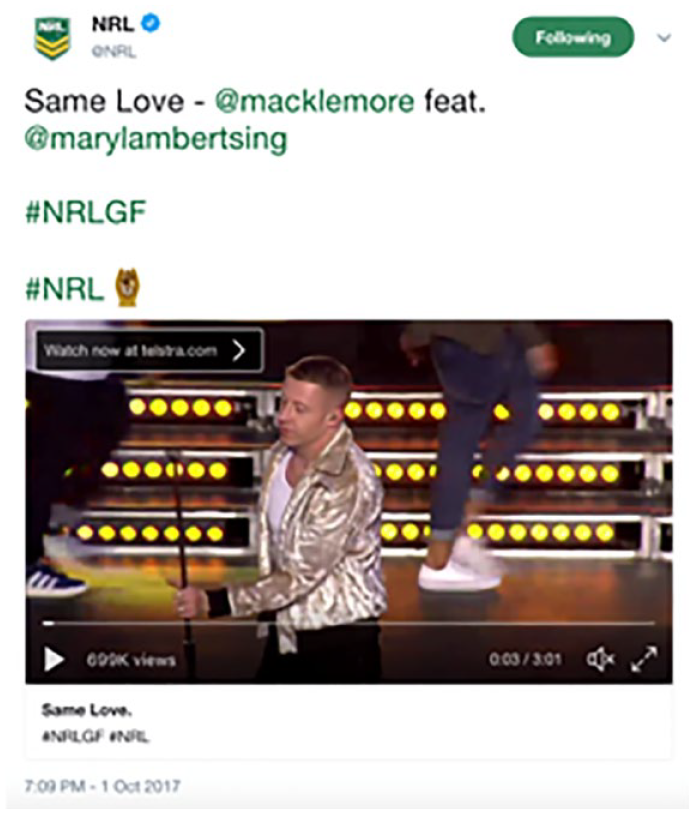
Twitter posts from the NRL.
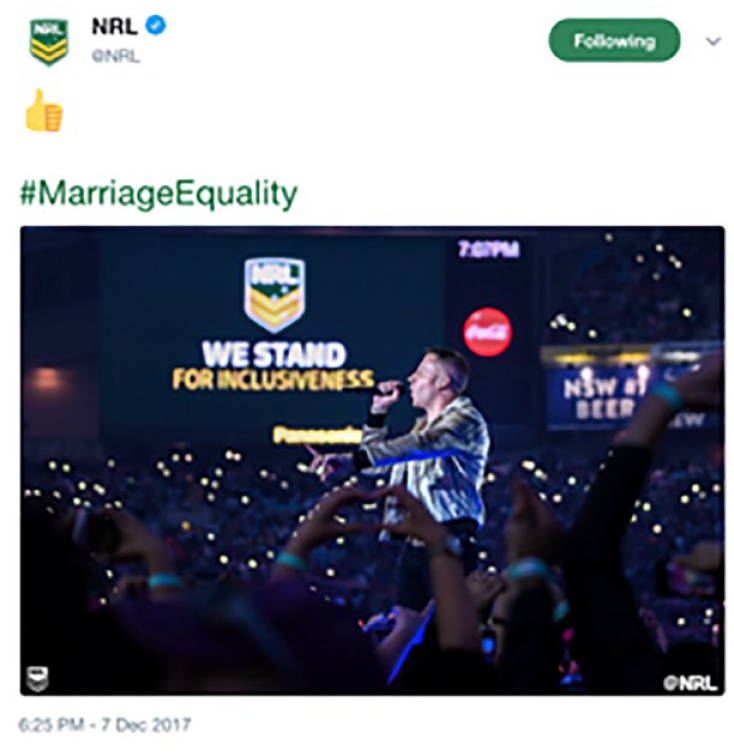
Twitter posts from the NRL.
As also evidenced in Figures 1–3, some organisations released statements reaffirming their support for marriage equality. Cricket Australia (CA) posted a statement on their website announcing, ‘that it had become a signatory to Australian Marriage Equality (AME). CA’s decision, supported by its Board, is in keeping with its vision to be a sport for all Australians.’ AME was a campaign that 37 sporting organisations ‘joined’ to express their support for marriage equality. By doing so, the organisation’s logo was added to the campaign website (Figure 9), they were provided with a template letter to show their support, and they were allowed to use the campaign’s logo on their website. It remains to be seen whether these speech acts will be performative or are just creating the illusion of ‘doing diversity’.
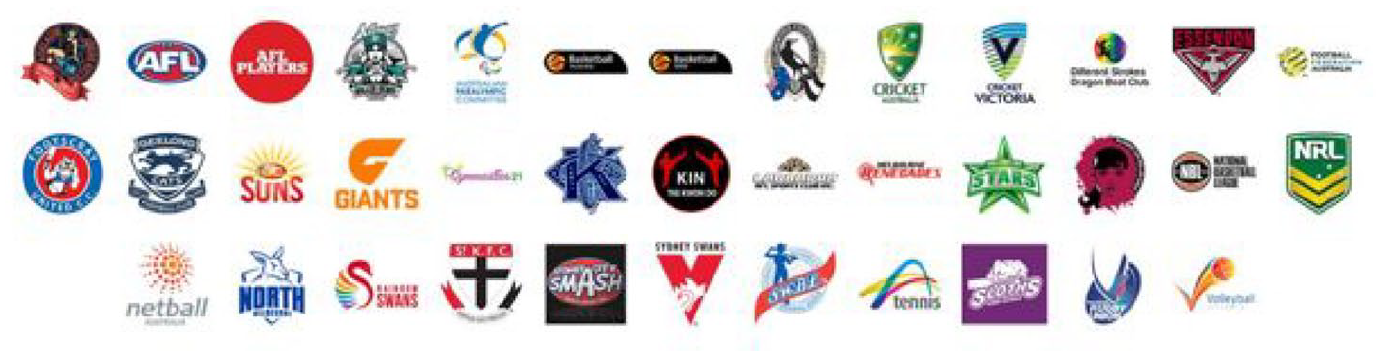
Australian Sporting Organisation logos on the AME website.
Not all organisations endorsed same-sex marriage, however. The Australian Olympic Committee refused to do so, citing fears that they would offend religious groups. In a statement, it claimed that it ‘respects diversity and supports raising awareness of discrimination’ but would not state their position on the vote (Webster, 2017a).
When it was announced on 14 November that Australia had voted in favour of legalising same-sex marriages, six ASOs again used Twitter to reaffirm their support. Rainbow logos were common, the #MarriageEquality hashtag was frequently used, and #Yes featured in many posts (Figures 10 and 11, 13 and 14). Organisations frequently reused or referred to their initial Twitter posts on the topic. The AFL reposted the photo of their (briefly) changed logo (Figure 12). The NRL also retweeted a post containing an image of the singer Macklemore including the #MarriageEquality hashtag and another hashtag referencing the NRL Grand Final (Figure 15) and another referencing the NRL Grand Final. These posts by sporting organisations are again an example of the use of ‘happy talk’, this time to celebrate a policy decision based in the doing – just not their doing.
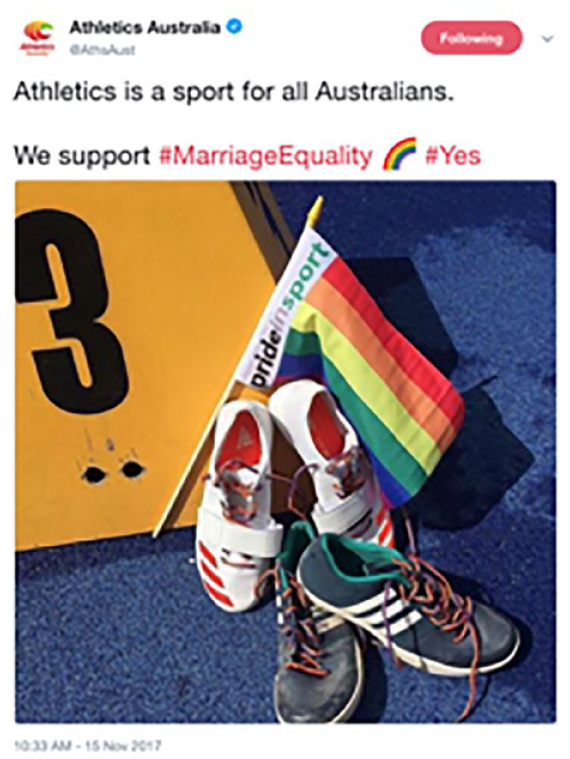
Twitter response to ‘Yes’ vote.
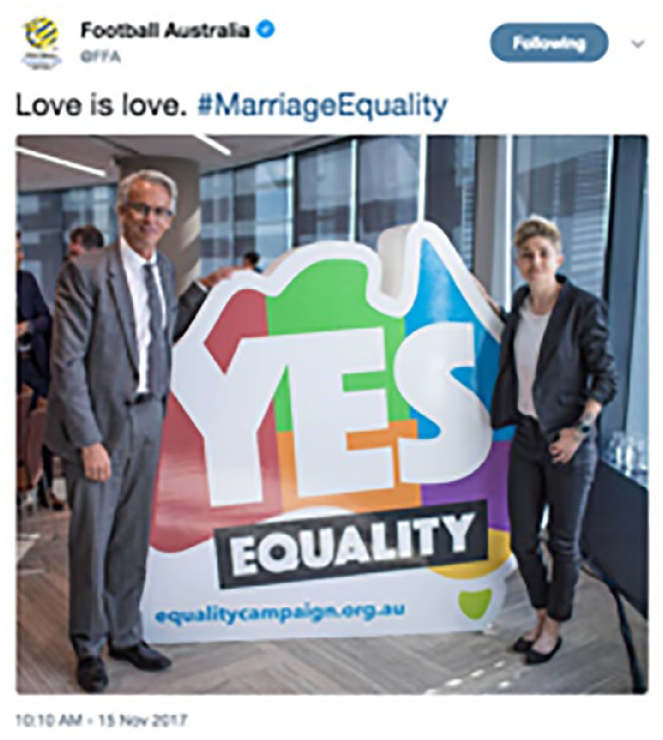
Twitter response to ‘Yes’ vote.
Twitter response to ‘Yes’ vote.
Twitter response to ‘Yes’ vote.
Twitter response to ‘Yes’ vote.
Twitter response to ‘Yes’ vote.
These organisations utilised ‘happy talk’ speech acts to position themselves, broadly, in alignment with support for same-sex marriage equality. Such speech acts were present across Twitter. Here rainbow-themed sport icons, emotive pictorial gestures of equality, and even the hiring of a musician to sing about marriage equality evoke powerful emotions, which likely help progress the macro social movement towards same-sex marriage and broader equality, without necessarily requiring the institution to make unseen, arduous, efforts to promote equality within their own organisations. In this way, ASOs, which have long been pervaded by systemic gender inequalities (McKay et al., 2001) are lagging behind cultural developments and playing ‘institutional catch up’ (Ahmed, 2012) and are yet to minimise the distance between what they say they do and what they actually do. Social media messages may, ‘cement the perception of inclusion’ (Bury, 2015: 218) but they do not lead to actions or change themselves.
Organising bodies of sport have the potential to use social media platforms to promote their values of equality, yet they need to understand that promotion does not equate to actually doing equality. Despite the promise suggested by championing inclusion, through messages supporting marriage equality that sports organisations put forward during the postal vote campaign, a number of commitments to inclusivity – which we detail below – need to occur beyond these actions. Our earlier findings show that the organisations had in place few policies that specifically refer to sexual orientation or gender identity, beyond a generic Member Protection Policy, whereby demographic variables and protected attributes such as race, ethnicity and sex are grouped together under an anti-vilification reference. Griffin (2014: 270) highlights the need for proactive anti-discrimination policies that make specific reference to sexual orientation that ‘include consequences for non-compliance’. The lack of positive action, as opposed to aspirational talk, suggests that the climate within ASOs is, at minimum, tolerant, and perhaps fully inclusive, but that there is a lack of willingness to put their ethos into action.
Results: PSI
Finally, we compare our analysis to the PSI, which examined sporting organisations (featuring eight ASOs) for their actions to promote sexual (and gender) minority equality across five (initially six) measures. The PSI does not disclose the scores received by individual organisations; however, the results broadly corroborate our findings. The 2017 PSI showed that the ASOs included scored very poorly in the sections relating to Policy & Practice and Training (as well as the generic Additional Information section of the index).
Within the Policy & Practice section, although the 2017 PSI shows evidence that some of the organisations had a formal strategy in place that ‘clearly identifies LGBTI [and hence sexual minority] inclusion as an area of focus’ (PSI, 2017: 47) there was little evidence of organisations’ accountability for ‘diversity and inclusion targets’, or of sanctions, remediation and reporting processes specific to sexual minority (or LGBTI) harassment. Significantly, and substantiating our findings, the ASOs scored lowly on both the implementation and communication of policies addressing homophobia subsection. Only one unidentified organisation achieved ‘best practice’ in relation to this area. Organisations were ‘better’ able to show evidence for their support for sexual minority organisations’ wider community engagement.
The 2018 PSI demonstrated a slight upward shift in scores, albeit with an amended scoring system that saw an increased weighting for the Policy & Practice area. Yet for the ASOs involved in 2018, none were awarded more than 30% of the possible marks in the areas of Policy & Practice, Culture & Visibility or Training and Awareness. The scores indicate that there continued to be a lack of either policy to address homophobia or adequate communication and visibility of these policies, as we found. Only one organisation (the NRL) was able to demonstrate ‘best practice’ for having and communicating a formal strategy that specifically identifies LGBTI inclusion as a priority area and within their LGBTI factsheet state ‘The NRL supports Lesbian, Gay, Bisexual, Transgender and Intersex (LGBTI) people and are vocal supporters of eliminating discrimination against LGBTI people both on and off the field’ (NRL, 2017, 1).
Discussion
Sport has traditionally been a conservative institution when it comes to sexual and gender minorities (Anderson, 2011). It has been resistant to change at governance level and has previously been described by Anderson (2005) as a social anchor, preventing the progress of lesbian and gay athletes. Anderson and colleagues (2016) have, however, demonstrated that athletes themselves are as inclusive as non-athletes. In Anderson’s (2014) book, 21st Century Jocks, he even argues that the extreme homophobia of masculinity in the 1980s led to athletes being able to engage in homosocial behaviours in the later 1990s and 2000s. Individuals like David Beckham have thus been at the forefront of reshaping masculinity to be gay-friendly. Despite this, Anderson et al. (2016) have also argued that the administration of their respective organisations is likely not progressive; or at least not likely to be at the forefront of institutional change. This speculation provides us with a natural site to examine how organisations lag in the doing of social movements.
Drawing on Ogburn’s (1922) theory of cultural lag, we used a triangulated approach and online content analysis to examine policies and public speech acts related to the inclusion of sexual and gender minorities in 13 major sporting organising bodies within Australia. Our analysis was aided by the occurrence of a same-sex marriage postal vote, which gave rise to voluminous social media commentary on both sides of the issue (Tuffley and Stantic, 2017). It is then supplemented by examination of these same bodies through their submissions of a portfolio for ranking on sexual and gender minority inclusion by an independent public interest group (ASC, 2017). The actions of ASOs outlined in this article thus serve as a relevant and interesting lens through which to explore inclusion efforts of organisations and responses to cultural change more broadly.
In reflection of the evidence analysed – from the policies, Twitter accounts and PSI ranking – we suggest that mainstream ASOs desire to bask in the capital of the larger social movement episode concerning sexual and gender minorities and increasing cultural equality. We reinforce that while some individual athletes have used their notoriety to retard social progress for these groups, there is no evidence that athletes of team or individual sports have higher rates of antipathy toward gay male athletes than the population at large. Indeed, studies of athletes have shown higher rates of support for same-sex marriage than the culture within which they exist (Roberts et al., 2017).
Given that a number of prominent players spoke out in favour of same-sex marriage (Newman, 2017), this research seems to affirm what studies of gay men and lesbians in sport have been suggesting in recent years (Anderson et al., 2016), that the players are more progressive in their attitudes and actions than the governing bodies for which they play. These findings thus highlight a gap between how these governing bodies wish to be perceived, and what they are actually willing to do.
In order to make sense of these findings, we build on theory to introduce the idea of organisational cultural lag. Influenced by Ogburn’s (1922) notion of cultural lag, Evan’s (1966) concept of organisational lag, and Ahmed’s (2017) ideas on happy talk, we suggest that well-established organisations (such as the ones we looked at) are not likely to progress cultural change. In this case, they appear to have reflected the sentiment of equality once the population itself had passed a threshold of support for marriage equality, while failing to promote sexual minority equality in the domain that the organisation maintains agency. Organisational cultural lag, therefore, persists following cultural changes.
In addition to macro-level dissociations between social variables, lag can be found at a micro, organisational level, with dissociations between areas of an organisation. For example, it is typically the more outward-facing and technology-driven departments that adjust (or respond) to cultural changes ahead of governance and power positions. This suggests that Evan’s (1966) notion of technological lag may not apply for our purposes. This is perhaps an effect of the digital age. However, organisational lag was certainly found in the policy-making departments of the organisations examined. This micro-level lag is evidenced by the disjuncture between the words adopted by ASOs concerning statements of inclusion in the media and a failure to support these statements with tangible action. When institutional speech acts of commitment to and support for the inclusion of lesbian and gay athletes are expressed on behalf of an ASO, these statements, with generic references to ‘equality’ and ‘inclusion’ more broadly, render lesbian and gay identities invisible (Lawley, 2018).
Organisational cultural lag influences such organisations to respond to cultural moments. In the absence of specific policies to support lesbian and gay athletes, sporting institutions are left to make public statements and speech acts ‘showing’ their support for inclusion. This is often done reactively, rather than as part of an institution’s core business and everyday practices. In this regard, writing public statements becomes a substitute for action (Ahmed, 2017).
To be clear, we recognise the theoretical application of our lag theory is truly an application to the managers who make the promotion materials and policies, and not the organisation as a whole. Our theoretical model does not provide an account of the attitudinal disposition of individual managers. Instead, we deduce attitude through our analysis of the documents that emerge from their respective institutions. This is the nature of inductive theory generation.
This study fits with Ahmed’s (2017) argument that policy can be a substitute for action. This is because there are a variety of mechanisms through which organisations could achieve a commitment to lesbian and gay inclusion. Specific anti-homophobia policies or strategies, participation programs encouraging the lesbian and gay communities to play sport, education programs, pride events promoting and celebrating sexual (and gender) diversity, and specific policies pertaining to LGBTI inclusion more widely (for example guidelines on gender identity and elite competition) comprise just a few methods whereby Ahmed’s conceptualisation can be achieved.
Our findings, although critical, suggest positive developments and steps toward inclusive practices within sport. Evidence of lag is evidence of change. For example, a growing number of famous Australian athletes made supportive statements to the media during the marriage campaign, with only a small minority making what can be considered heterosexist, religious or overtly homophobic comments, which were swiftly rebutted by their peers. The existence of support for same-sex marriage by sporting organisations may embolden other athletes to speak in favour of equality.
We also highlight that although index and scoring measurements can help incentivise and encourage organisations to engage in promoting inclusion efforts (Lusted, 2014), it can also lead to resistance. Some evidence of resistance was found within our data, but more important was the finding that the PSI rankings contribute toward a ‘fantasy of inclusion’ (Ahmed, 2017), rather than actual efforts to promote inclusion.
It is also evident that while the submission of an institutional portfolio helps these sporting organisations appear to be inclusive, it can simultaneously serve to conceal inequalities and discrimination. The failure of the PSI to provide full scoring details for each organisation makes it difficult to track the progress of specific ASOs, allowing their impression of inclusion to continue. However, the agreement between our findings and the PSI scores suggests that this instrument may be a useful tool for monitoring the ongoing inclusion efforts of ASOs given that it is difficult either to access these organisations or obtain information from them.
We recognise that our discussion examines the intersection of speech acts in the absence of policy; we equate these speech acts with policy. While we highlight that policy maintains more utility in promoting equality than sentiment, we also recognise that policy is not always implemented as written. In sport, Title IX in America was passed in 1972 to promote women’s sport, and has never been fully implemented (Anderson and White, 2017). In Australia, racial vilification frameworks by organisations such as the AFL have been found to be ineffective (Cleland et al., 2019).
While we are pleased about the shifts that have been made in attitudes towards lesbian and gay rights in Australia more broadly, the purpose of this research was to assess whether the expressions of support for marriage equality and the sexual minority inclusion are reflected in the presence of policies and direct action towards inclusion. Finding that they engage in equality talk through multiple forms of disseminated acts of happy speech, is encouraging.
Our analysis has also identified areas for improvement: matters that would promote the culture of inclusion within the organisation, and not just the external façade. We thus conclude that, in Australia, national governing bodies of sport are not at the forefront in the fight for sexual minority equality, they have instead lagged behind. However, the degree to which sport seems to serve as a social anchor (Anderson, 2005) has, phenomenologically at least, reduced the gap between the public speech acts of sporting homophobia in the 20th century and sporting equality in the first two decades of the 21st century. Hopefully this research will help promote the sexual minority equality social movement.
Footnotes
Funding
The author(s) received no financial support for the research, authorship, and/or publication of this article.
