



Abstract
Indoor soundscapes, increasingly recognized for their impact on well-being, are gaining attention as schools transition from traditional acoustic approaches to a more holistic soundscape approach. This study examines the factors influencing school indoor soundscapes and their integration into the International Organization for Standardization (ISO) 12913-1:2014 conceptual framework for soundscapes. Data were collected through interviews with 20 teachers and two focus groups involving school staff and acoustics experts. Thematic analysis identified three key themes: acoustic factors (e.g. effective hearing and resting), user-related factors (e.g. expectations, experiences, and sensitivities), and school-related factors (e.g. teaching strategies, time schedules, and space use). Findings highlight the importance of balancing noise reduction with the introduction of positive sounds to create restorative environments that support well-being. User factors dominate discussions, reflecting the centrality of individual experiences and needs in shaping school soundscapes. Integrating these factors into the ISO framework provides a structured approach to understanding school soundscapes, emphasizing the interaction between sound sources, context and perceptual responses. This study demonstrates the shift from traditional noise control to soundscape designs in schools, providing insights for indoor environments.
Introduction
The term ‘soundscape’ refers to the acoustic environment as perceived or experienced by individuals in context, as defined by ISO 12913-1:2014. 1 This concept, initially introduced by Schafer 2 and expanded by Truax, 3 underscores the role of human perception and contextual factors in shaping acoustic experiences. It recognizes the subjective and contextual nature of sound perception, incorporating both physical sound sources and human responses to them. This definition highlights the subjective and contextual nature of sound perception, encompassing both the physical characteristics of the acoustic environment and the psychological, social and cultural responses of individuals to those sounds. The soundscape approach thus moves beyond objective noise measurements to consider how sounds are appraised in relation to activities, spatial context and personal expectations. 4 In this framework, concepts such as acoustic comfort, the perceived appropriateness or pleasantness of the auditory environment are shaped not only by measurable parameters (e.g. loudness, reverberation) but also by users’ interpretations and experiences. 5
Individuals typically spend about 90% of their time indoors in developed countries,6,7 yet soundscape research has traditionally focused on outdoor urban environments. Given the significant time spent indoors, assessing indoor soundscapes is equally critical for understanding their impacts on public health. Recent studies indicate a significant shift towards investigating indoor soundscapes, recognizing their importance in various settings such as residential buildings, schools, universities and library facilities.8–11 For instance, Yang and Lü 12 highlight that the keyword ‘indoor soundscape’ has gained prominence in recent literature, indicating a shift in focus from outdoor to indoor contexts. This evolution reflects a growing understanding that soundscapes are not confined to outdoor spaces but are equally relevant indoors, where they can significantly influence occupants’ experiences and behaviours. 13 This shift is crucial as it acknowledges that the acoustic quality of indoor spaces can significantly impact occupants’ health, comfort and productivity. In workplace settings, Kaarlela-Tuomaala et al. 14 conducted a longitudinal study showing that the transition from private offices to open-plan offices negatively affected employees’ concentration, privacy and perceived acoustic comfort. Furthermore, Van den Bosch et al. 15 provided evidence that modifying soundscapes in care settings for individuals with severe intellectual disabilities could reduce challenging behaviours, underlining the importance of sound environment management across diverse contexts.
Another shift is emerging from school acoustics to school soundscape. This shift marks a transition in how we think about the role of sound in educational environments. Traditionally, the field of school acoustics has focused primarily on the physical properties of sound, such as controlling reverberation, minimizing noise transmission and optimizing sound isolation within school buildings.16–19 It moves beyond simply mitigating noise to actively considering how sound, when used intentionally, can improve the school experience.10,20,21 However, school soundscape studies are still relatively few in comparison to research on school acoustics. For example, studies have explored how soundscapes can be designed to enhance learning environments, with findings suggesting that optimizing acoustic conditions can lead to improved educational outcomes. 22 Similarly, the work of Yörükoğlu and Kang 9 has highlighted the importance of understanding the acoustic characteristics of libraries. Hytönen-Ng et al. 23 explored teachers’ perceptions of soundscapes in modern Finnish open learning environments and found that while adjustable classrooms can offer some control over acoustic conditions, challenges related to noise and distraction could persist. In light of these initial studies, to expand the field of school soundscape, it is crucial to identify which factors could influence the soundscape within schools. Such factors need to be studied further in order to gain a deeper understanding of how school soundscapes can be optimized to benefit the educational experience.
To address these gaps in knowledge, this study investigated the key factors influencing school soundscapes through interviews and focus groups with teachers, school staff and acoustics experts. The primary research question in this study is: What are the key factors influencing school soundscapes from the perspectives of school staff and acoustics experts? This research examines the factors that contribute to positive and negative sound perceptions. Additionally, the findings are discussed within the framework of ISO 12913-1:2014, 1 exploring how the identified factors can be integrated into its conceptual model. This approach contextualizes the study's outcomes within a global standard, bridging theoretical insights with practical recommendations to improve school soundscapes.
Methods
This study involved qualitative data collection through interviews and focus groups across two national contexts: Turkey and the United Kingdom. A total of 20 teachers participated in individual interviews, including 10 from schools in Turkey and 10 from schools in the United Kingdom, providing cross-cultural perspectives. Additionally, two focus groups were conducted. The first involved teachers and staff at St Oscar Romero Catholic School, a public secondary school located in Goring-by-Sea, Worthing, United Kingdom. This school serves a mixed socio-economic student population. The second focus group comprised international experts in school acoustics and soundscape design, providing professional insights into educational sound environments.
While exact student–teacher ratios were not recorded for each school, participating schools in the United Kingdom typically followed the national average ratio (approximately 17:1), 24 and schools in Turkey generally aligned with regional norms (around 20:1). 25 All schools involved in the study were public institutions adhering to their respective national education policies and teacher qualification standards.
The decision to adopt a qualitative research approach for this study was driven by the need to deeply explore the subjective experiences, perceptions and insights of teachers and acoustics experts regarding school soundscapes. Unlike quantitative methods, qualitative research is particularly suited for understanding complex, nuanced phenomena 26 such as how individuals experience and interpret their acoustic environment. The interviews were designed to explore teachers’ experiences with their school environments. The focus groups enabled the exploration of shared experiences and diverse perspectives. The group discussions facilitated the identification of common challenges faced in the school soundscape and the development of potential strategies for improvement. Before participating in interviews and focus groups, each participant was provided with detailed information about the study and signed an informed consent form. Ethical approval for the study was obtained from the UCL Bartlett School of Environment, Energy and Resources (BSEER) Research Ethics Committee, which reviewed the study as posing low risk to participants (approval date: 9 August 2022).
Participants
In this study, we engaged with three distinct participant groups for qualitative data collection: (1) teachers, who were individually interviewed (n = 20); (2) school staff, who participated in a focus group at St Oscar Romero Catholic School in the United Kingdom; and (3) acoustics experts, who contributed via a separate focus group discussion.
Twenty teachers currently working in primary and secondary schools participated in semi-structured interviews. These teachers were selected to provide insights based on their direct experiences with the sound environment in their schools. The interviewed teachers were recruited through professional networks and personal contacts, reflecting a convenience sample drawn from two national contexts, Turkey and the United Kingdom. These two countries were included due to the researchers’ academic affiliations and collaborations, which enabled access to participants in both contexts. The inclusion of both settings enriched the data by highlighting the variety of teacher experiences in different institutional and environmental contexts. These participants represented both primary and secondary education and worked in diverse school settings, including urban and suburban environments. While demographic data were not collected (e.g., age, gender), the emphasis was placed on teachers’ lived experiences in teaching environments.
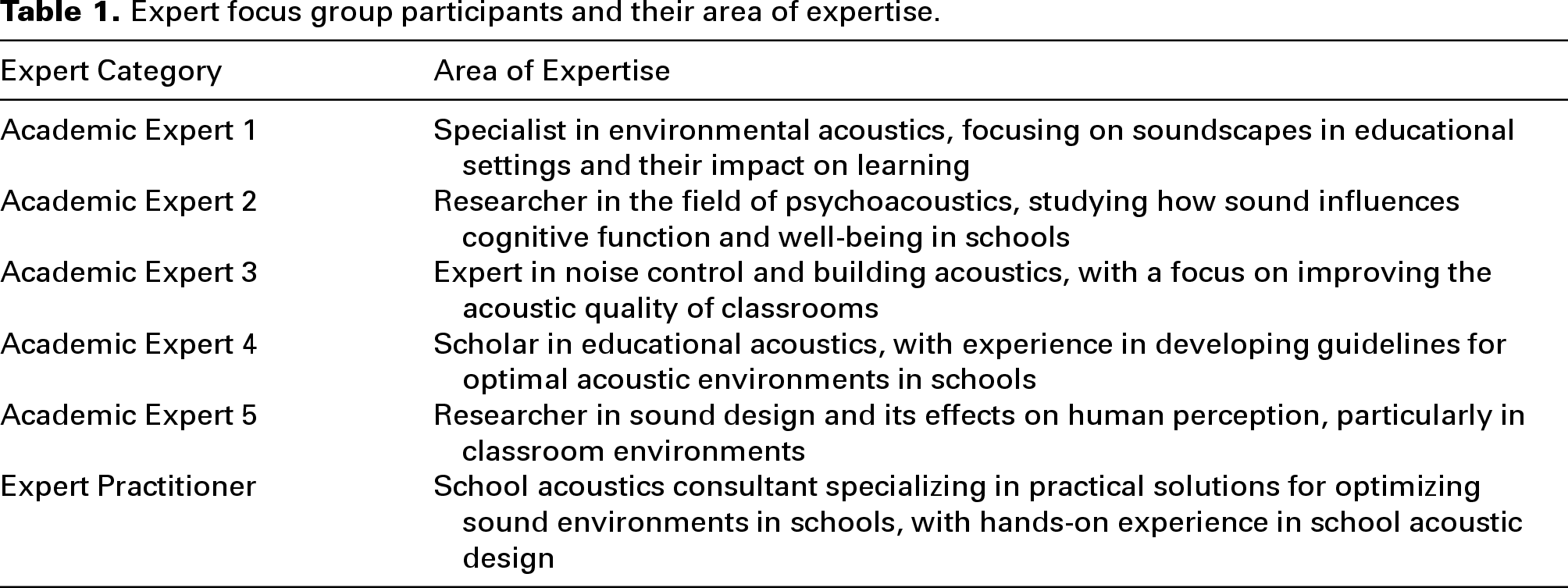
Six school acoustics experts were included in the study to provide professional perspectives on school soundscapes. Amongst them, five were academics specializing in acoustics research, and two were practitioners actively involved in designing or assessing school acoustics. These experts contributed valuable insights into the technical and theoretical aspects of school soundscapes. Their specific areas of expertise are detailed in Table 1. This group consisted of five academics specializing in acoustic research and one practitioner actively involved in designing or evaluating school acoustics.
Expert focus group participants and their area of expertise.
A focus group was conducted with nine staff members working in the same school (secondary school), representing various roles and disciplines. This focus group was conducted at St Oscar Romero Catholic School, a co-educational secondary school in West Sussex, England. This site was selected based on existing collaborations and accessibility, which allowed for an in-depth discussion with staff members familiar with the day-to-day acoustic challenges in their school. Participants included teachers from music, physical education (PE), English, foreign languages, mathematics, history and science, as well as the school librarian and one administrative staff member. This diverse group allowed for the exploration of soundscape perceptions across different professional roles within the school environment.
In this study, a convenience sampling strategy was employed, which is considered appropriate within qualitative research where the primary aim is to explore in-depth perspectives rather than to achieve statistical generalizability. The focus was placed on providing rich, detailed and contextually grounded insights that enable transferability to similar settings, rather than aiming for universal generalization. This distinction between generalizability and transferability has been emphasized in the qualitative research literature.27,28 Although the sample cannot be considered statistically representative, a transparent account of the research context and participant characteristics has been provided to allow readers to assess the relevance and potential transferability of the findings to their own settings
It is important to note that the term ‘teachers’ in this manuscript specifically refers to the 20 individuals (from Turkey and the United Kingdom) who were interviewed individually. In contrast, the term ‘school staff’ refers to participants in the UK-based focus group, which included teachers as well as other staff members such as administrators and support personnel. Although some overlap in professional roles existed, this distinction was maintained to reflect the data collection format (individual interview vs. focus group) and context. The third group, experts, included both academic and professional acousticians. No participants took part in more than one data collection activity, ensuring that each group remained distinct in both composition and analytic treatment.
Data collection
In this study, three data collection methods were applied to be more inclusive. In this section, each data collection method is explained in order.
Interview with teachers.
Incorporating interviews alongside focus groups on a study provides a complementary approach to data collection, enhancing the depth of insights. 29 Focus groups are for capturing dynamic group interactions, generating diverse perspectives and exploring collective viewpoints. 30 However, they may not fully uncover individual experiences. By adding teacher interviews, the study benefits from a detailed exploration of individual perspectives.
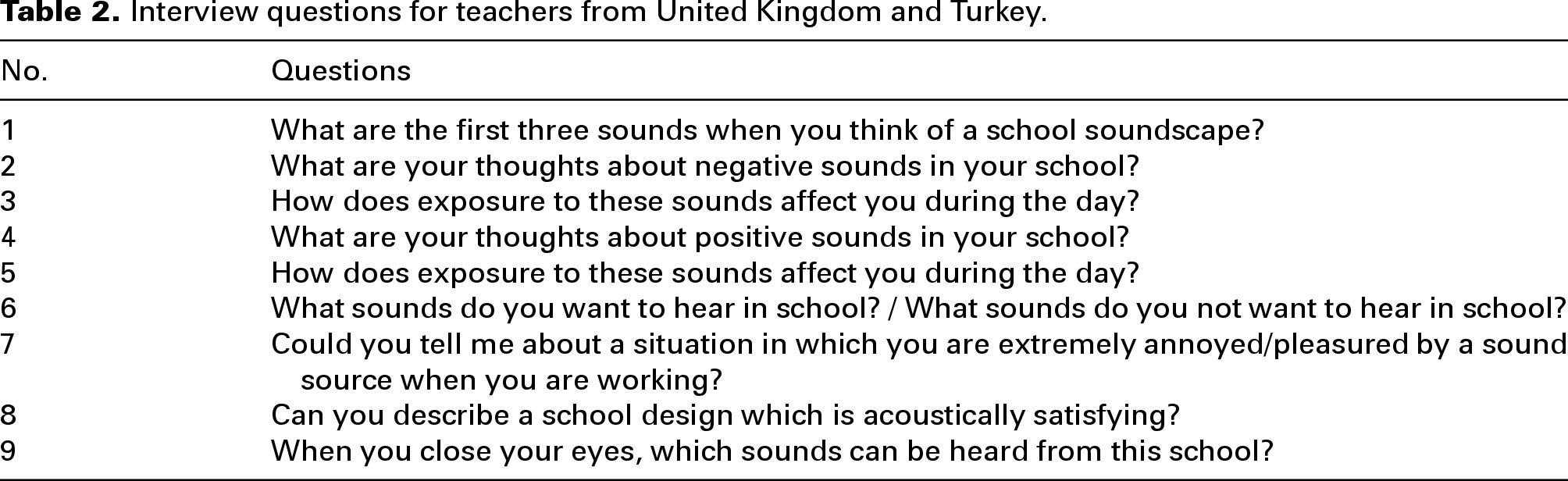
Each interview began with a brief introduction outlining the interview's purpose and lasted between 15 and 30 min. The interviews were conducted individually via phone or Microsoft Teams. The interview questions for teachers were designed to explore their perceptions of school soundscapes and identify the key factors influencing their experiences. Questions 1–6 focus on understanding how teachers perceive specific sound sources in their environment, including both positive and negative sounds, and how these sounds affect them during the day. These questions provide insights into the ‘sound sources’ and ‘perceptual responses’ aspects of the research question. Questions 7 and 9 encourage teachers to share specific examples and describe the auditory characteristics of their school environment, offering context-specific details that reveal how school design and soundscape interact. Question 8 investigates teachers’ conceptualization of an acoustically satisfying school, directly linking soundscapes to physical and operational design factors. Table 2 presents the interview questions.
Interview questions for teachers from United Kingdom and Turkey.
Focus group with acoustic experts.
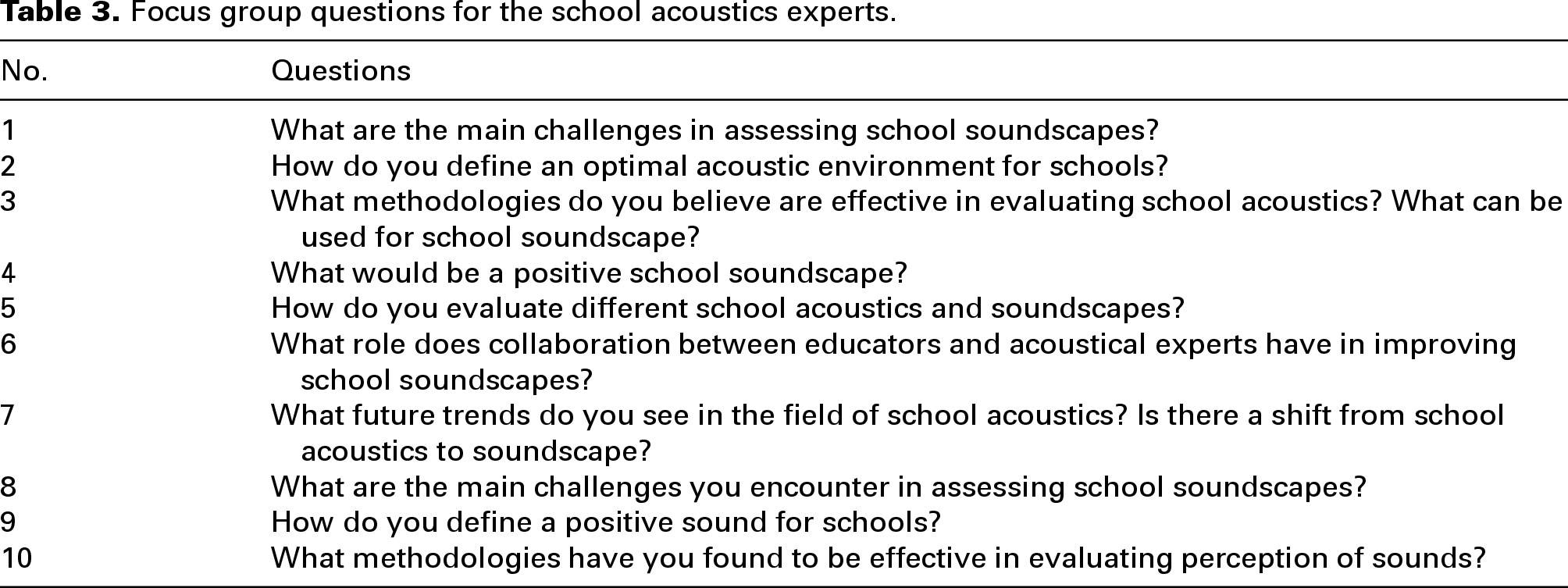
The focus group aimed to facilitate an interactive discussion amongst experts, allowing for the exchange of ideas, experiences and recommendations regarding school soundscape and assessment in educational settings. Prior to the discussion, participants were provided with an overview of the research objectives and the specific topics to be addressed. The expert focus group, which included participants from various parts of the world, was conducted via Microsoft Teams to accommodate the geographic diversity of the experts. The session was structured to encourage open dialogue, with the researcher acting as a facilitator. A series of open-ended questions guided the discussion, prompting experts to share their views on school sound environment. The focus group questions for acoustics experts were structured to draw on their professional knowledge and technical expertise, providing a complementary perspective to the teachers’ experiences. Questions 1, 3, 7 and 10 delve into the methodologies and challenges associated with assessing school soundscapes, addressing the practical and theoretical frameworks that shape these environments. Questions 2, 4, 5 and 9 examine the characteristics of optimal and positive soundscapes, offering a detailed understanding of factors affecting the school soundscape. Question 6 explores the role of collaboration between educators and acoustics experts. Additionally, Question 8 reflects on future trends in the field, examining the evolving focus from traditional acoustics to soundscape perspectives, which aligns with the study's goal of informing the development of better acoustic environments in schools. Table 3 presents the questions posed to the focus group.
Focus group questions for the school acoustics experts.
Focus group with school staff.
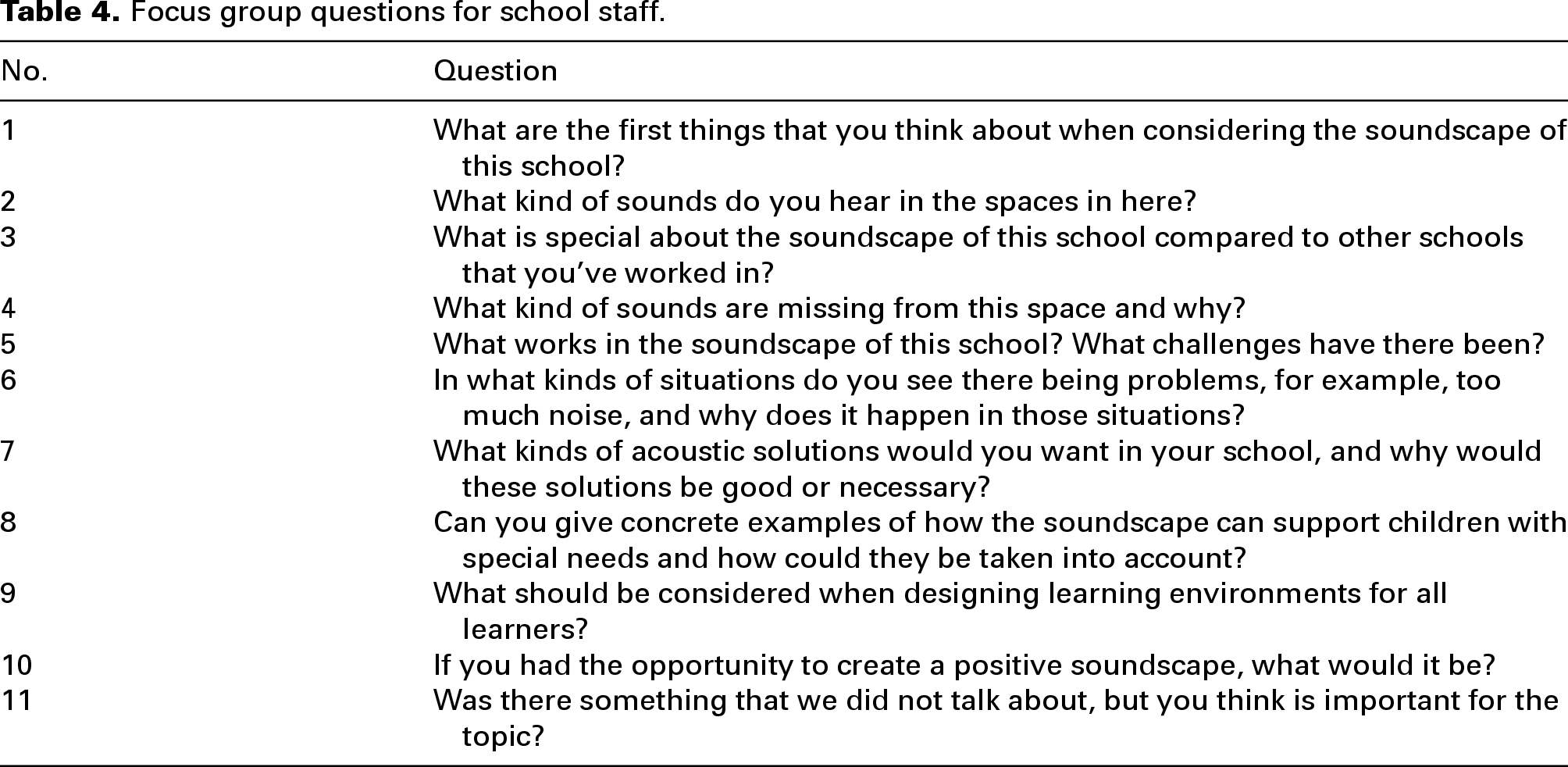
The focus group aimed to gather detailed insights on various aspects of the school's soundscape and its impact on the learning environment. Two researchers were present during the focus group, one leading the discussion while the other took notes. The staff focus group was held in person at a secondary school during a selected free period for the participants. The session took place in an empty classroom, providing a familiar and convenient environment for the participants. The focus group lasted for 1.5 h and it was audio-recorded and transcribed for thorough analysis. The focus group questions for teachers were aimed to gather insights into their perceptions. Questions 1–5 focused on the auditory environment of the school, exploring the specific sounds teachers hear, how these might differ from other schools and what sounds are missing or problematic. Questions 6 and 7 investigated specific challenges, such as noise-related issues and explore potential solutions, linking the goal of understanding key influencing factors. Questions 8–11 emphasized user-centred approaches. The final question provided an open-ended opportunity for teachers to share any additional insights. Table 4 presents related questions.
Focus group questions for school staff.
Analysis
The data collected from teacher interviews, focus groups with school acoustics experts and the staff focus group were analysed using a thematic analysis approach, which allowed for the identification and organization of key patterns and themes across the different datasets. 31 An inductive thematic analysis approach was adopted, allowing codes and themes to emerge directly from the data. All transcripts were treated as a single dataset during coding, enabling cross-comparison and the identification of shared themes across participant groups. This approach was chosen for its flexibility in synthesizing diverse qualitative data and its ability to uncover both shared and unique perspectives amongst participants. Thematic analysis has also become increasingly prevalent in recent soundscape research, particularly in studies exploring expert and user perceptions in complex acoustic environments,32,33 further supporting its suitability for the present study. Initial codes were developed independently by two researchers and then reviewed and discussed to ensure consistency and to minimize bias. Through iterative coding and comparison, broader themes were formed that reflected recurring ideas and experiences across participant groups. The thematic analysis was collaboratively conducted by the first and second authors. Both independently coded a subset of transcripts and then met regularly to compare and reconcile codes. The final coding framework and thematic structure were developed jointly. The third author contributed by reviewing the coding framework, offering critical feedback and helping to validate the interpretation of key themes during regular team discussions.
Throughout the analysis process, a reflexive stance was maintained. As researchers with academic and professional backgrounds in architecture and built environment design, we acknowledge that our interpretation of the data was influenced by our sensitivity to spatial and acoustic qualities of educational environments. This lens helped us to identify certain patterns that might otherwise be overlooked. At the same time, we remained conscious of the need to prioritize participants’ perspectives, ensuring that our interpretations remained grounded in their lived experiences and professional insights.
All transcripts were transcribed verbatim and imported into NVivo qualitative analysis software (QSR International). 34 Using NVivo, codes were generated inductively from the entire dataset. The coding focused on school soundscape factors. This open coding process treated all data as a single dataset, allowing themes to emerge organically across participant groups. Emerging codes were then grouped into broader categories. This approach allowed for a balanced synthesis of practical, experiential and theoretical perspectives. Figure 1 illustrates the progression from initial codes to categories and then to themes, providing insight into how the data were organized and interpreted.
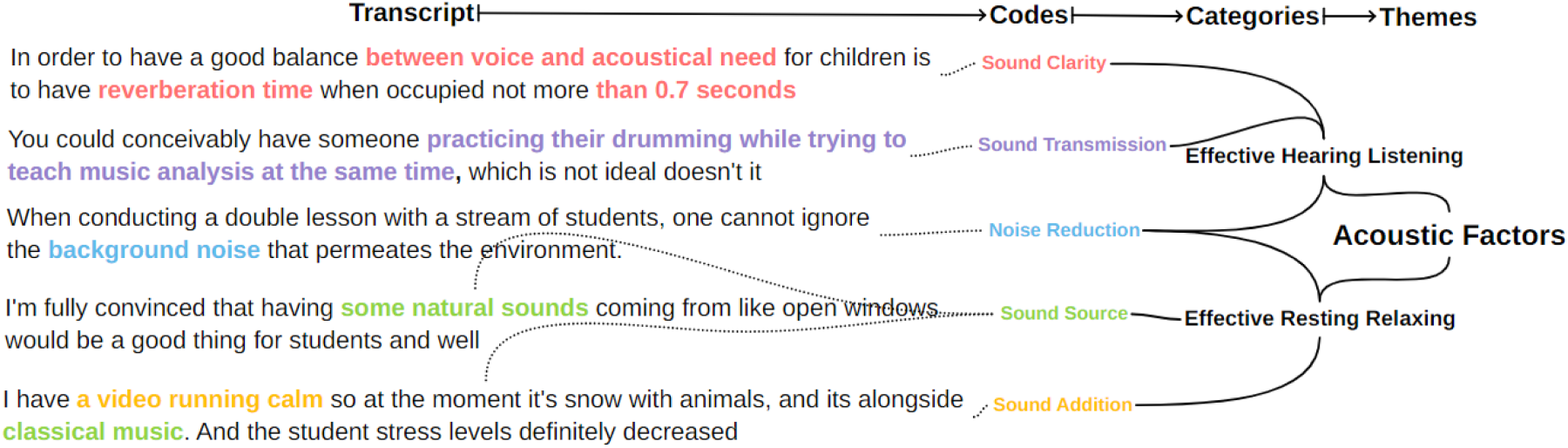
Example of theme creation in thematic analysis.
Results: School soundscape factors
The thematic analysis of the two focus groups and the interviews was conducted jointly by transcribing all sessions and analysing the data as a whole, rather than separately. Codes were generated across both data sets and then grouped into broader categories, which ultimately resulted in three overarching themes with 11 subthemes. Two subthemes related to acoustic factors, namely, (1) effective hearing and listening and (2) effective resting and relaxing. Three subthemes related to users, namely, (1) expectations and experience, (2) special needs and characteristics and (3) behaviour and activities. Four subthemes related to the school itself, namely, (1) teaching strategy, (2) time and schedule, (3) building orientation and (4) space use and density. The most discussed themes were acoustic comfort and users, and the most discussed subthemes were effective hearing and listening and expectation and experience. As one of the aims of the discussions was to find the user's (teacher) perception regarding the school soundscape, it was also discussed in more depth. In this section, we present the findings from three participant groups. The reported categories and themes are shown in detail in Figure 2.
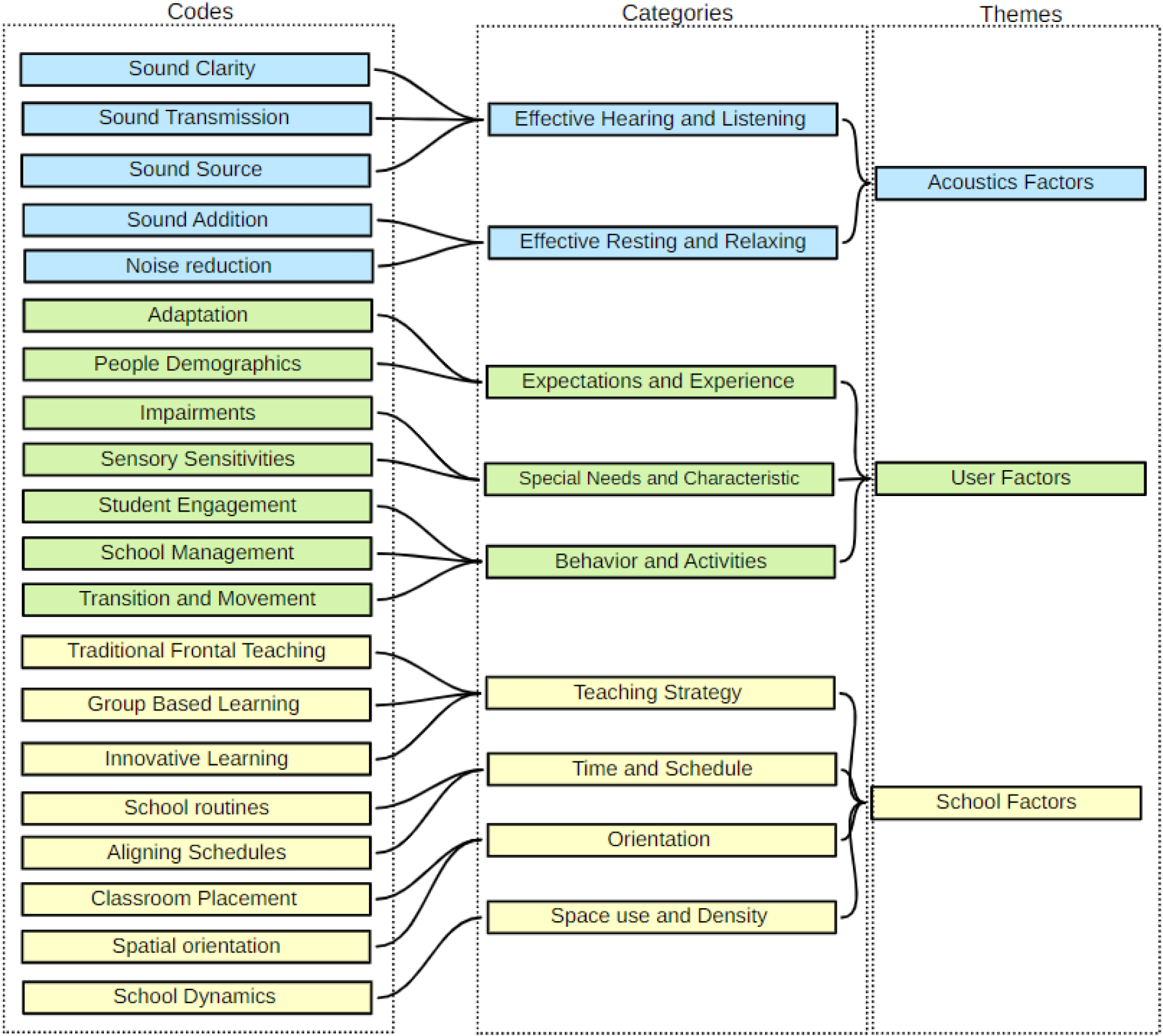
Codes, categories and themes identified in the analysis.
Figure 3 provides a hierarchical visualization of the key themes, categories and codes. It highlights three dominant themes: acoustic factors received less emphasis than user factors and school factors, likely reflecting the participant demographics, with most contributors being users such as teachers and staff. Within acoustic factors, the effective hearing and listening category was significantly more prevalent than effective resting and relaxing, underscoring the prioritization of clear communication and intelligibility, over restorative elements. However, the attention given to effective resting and relaxing indicates that it remains a notable concern. In the school factors, the teaching strategy constitutes more than half of the total references. This suggests that participants frequently discussed the varying acoustic needs associated with learning activities. This likely reflects the critical role that teaching strategies play in shaping the school soundscape.
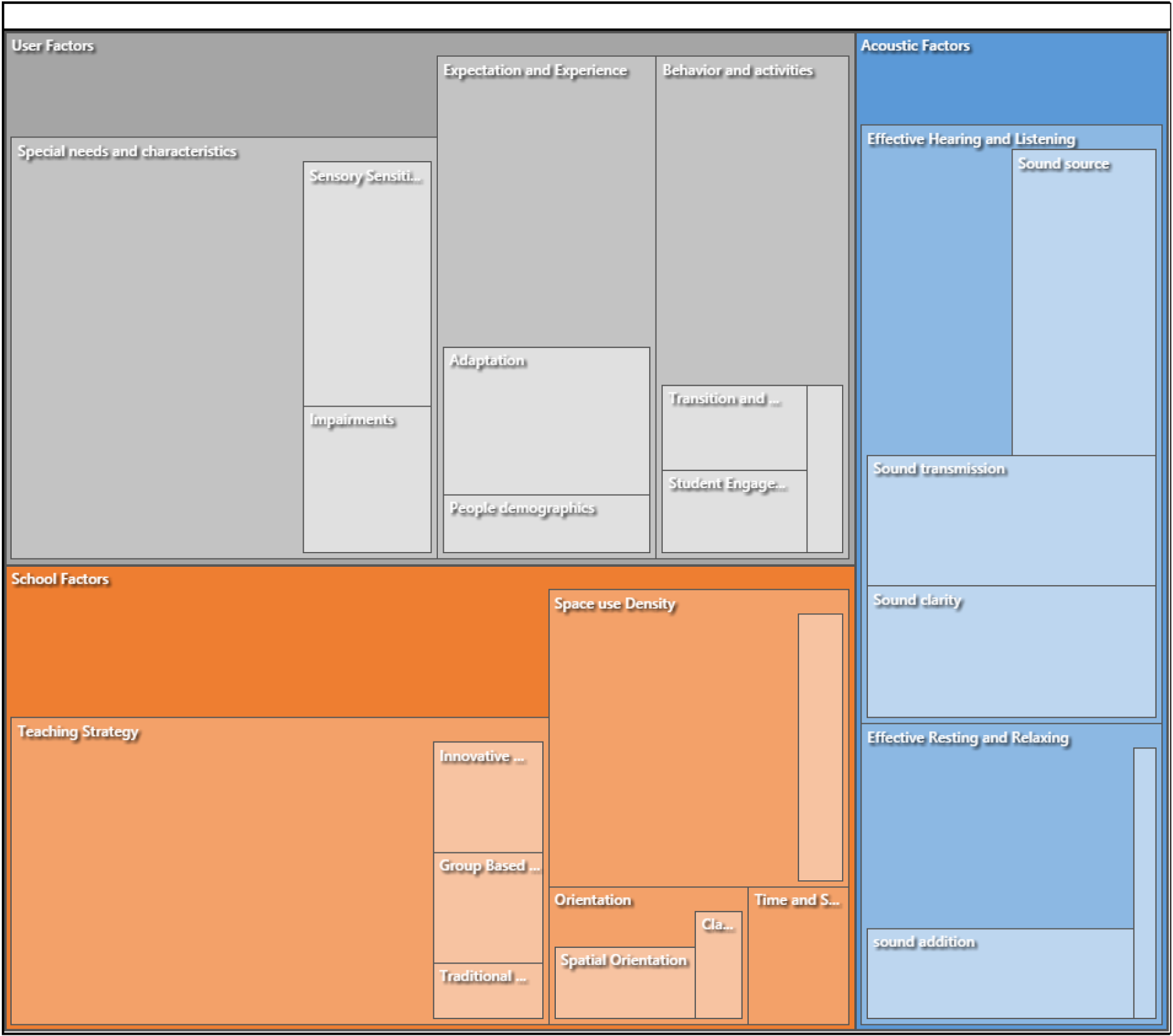
Hierarchical distribution of themes and categories in school soundscape analysis.
Acoustic factors
The initial responses of participants regarding school soundscape covered both positive and negative aspects. Negative sounds were mentioned as being ‘distractive’, ‘annoying’ and giving a ‘feeling of tiredness’. On the positive side, several respondents appreciated the fact that the positive sounds were calming, relaxing and sometimes enjoyable.
Effective hearing and listening.
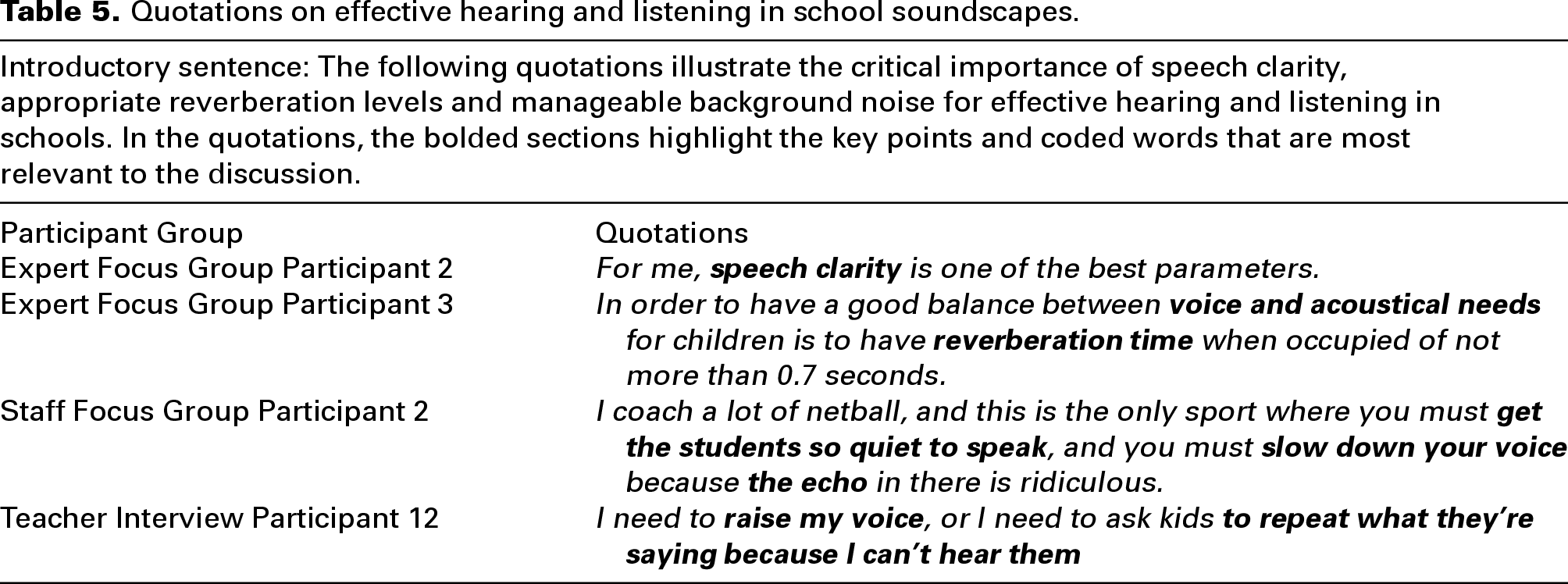
Participants emphasized the importance of clear and intelligible speech within the school environment, particularly when it comes to facilitating effective communication between teachers and students. Additionally, the suggestion to maintain a reverberation time of ‘not more than 0.7 s’ when spaces are occupied indicates an awareness of how sound reflections impact students’ ability to hear and process information accurately. This need for controlled reverberation is echoed by a participant who described challenges in a sports setting. These insights reveal that effective hearing and listening are not only essential for traditional classroom learning but also for physical education and other activities, where excessive reverberation can hinder communication and reduce the quality of instruction. Table 5 shows related quotations on effective hearing and listening.
Quotations on effective hearing and listening in school soundscapes.
Effective resting and relaxing.
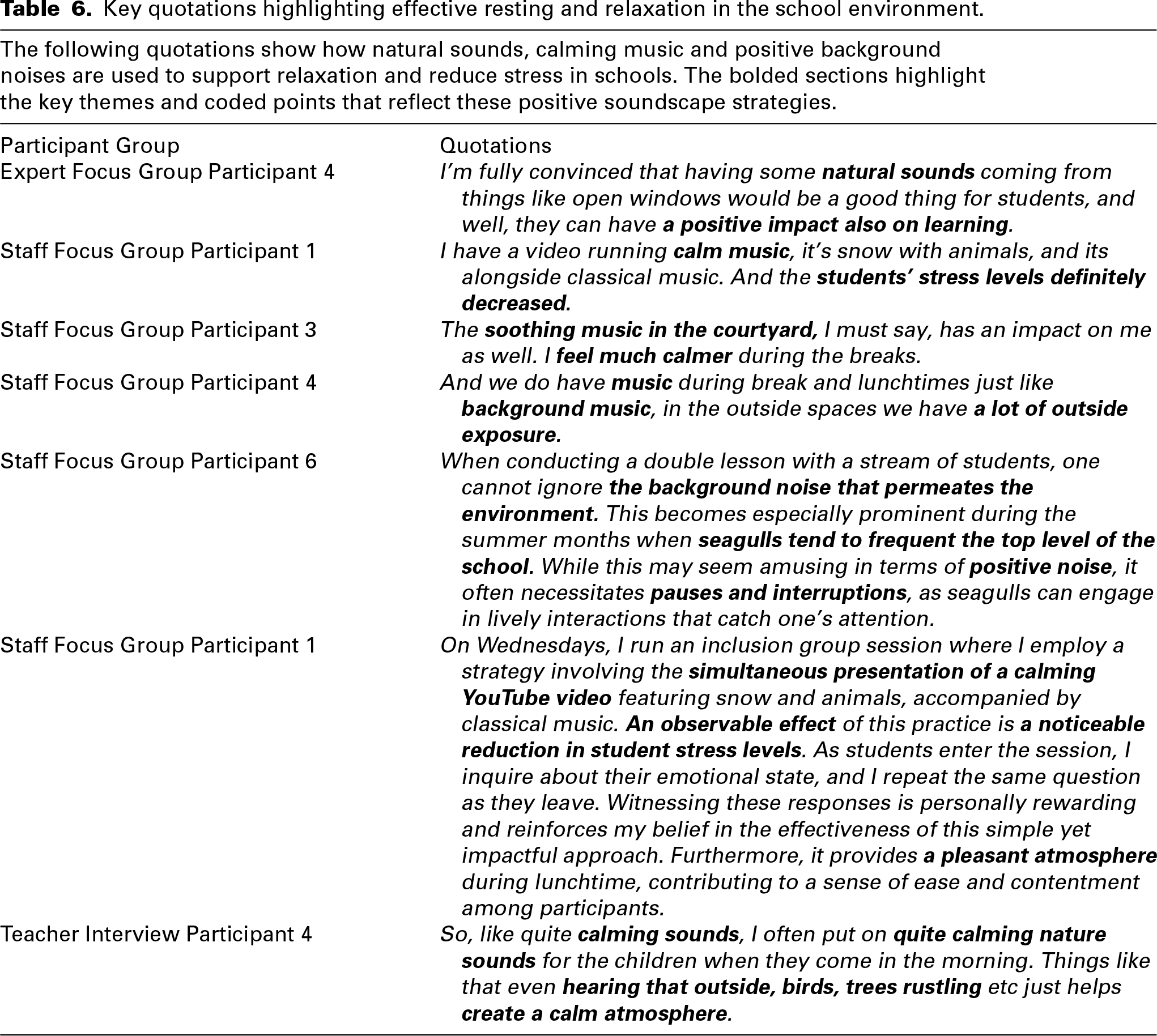
Most of the participants talked about the necessity of the existence of restorative spaces and sounds in schools. The presence of restorative spaces and sounds in schools is crucial for the overall well-being and optimal learning environment of students. At the end of both focus group discussions, the overall idea was that schools are essential for creating an environment that supports students’ well-being, enhances their focus and creativity, and promotes emotional regulation. By incorporating these elements, schools can foster a positive atmosphere that benefits the holistic development of students. Table 6 presents quotes related to the theme of effective resting and relaxation within the school environment.
Key quotations highlighting effective resting and relaxation in the school environment.
User-related factors
The significance of the user's perspective emerged as a prominent theme in the discussions of both focus groups. Notably, the experts primarily leaned towards considering the students’ viewpoint when discussing the soundscape approach. In contrast, the teachers emphasized the importance of sounds not only for the students but also for themselves. This observation highlights the aspect of teachers recognizing the impact of sounds on their own experience in addition to that of the students.
Perception, expectations and experiences.
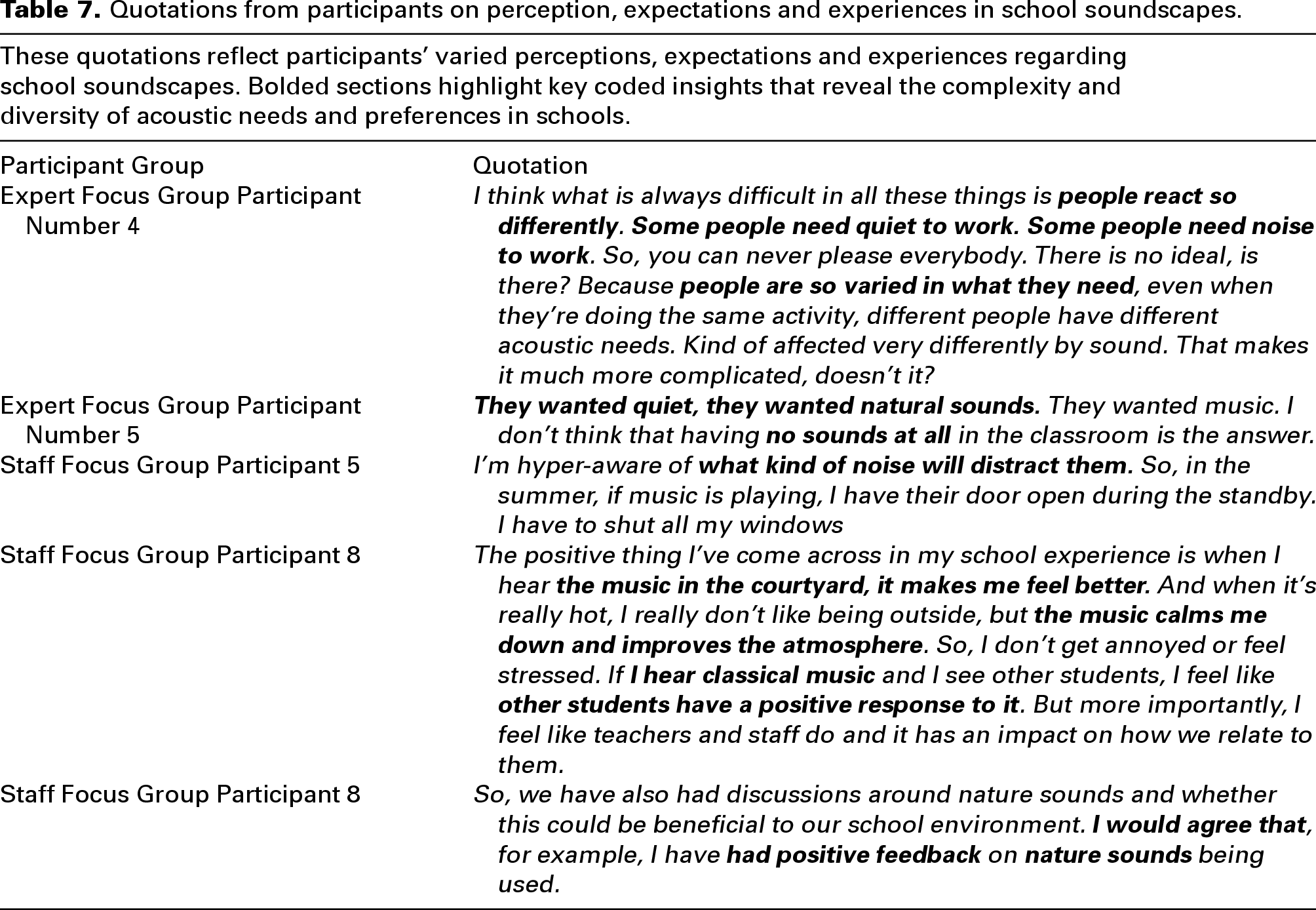
The diverse ways in which individuals respond to sound in educational settings reveal that personal preferences and expectations significantly influence perceptions of a ‘pleasant’ acoustic environment. As one expert observed, people ‘react so differently’ to sound, with some needing quiet to work effectively while others benefit from background sounds. This variability highlights the complexity of meeting acoustic needs, especially in environments like schools, where individuals are ‘kind of affected very differently by sound’. This diversity is further illustrated by differing preferences for quietness, natural sounds or music, suggesting that ‘no sounds at all’ may not be the ideal solution for classrooms. Teachers from the staff group shared personal experiences reflecting how specific sounds can impact the atmosphere and well-being. For example, one teacher noted that music playing in the courtyard during hot weather ‘calms me down and improves the atmosphere, reducing stress and enhancing the environment for both students and staff’. The positive reception to nature sounds also emerged as a recurrent theme, with one teacher mentioning how these sounds received ‘positive feedback’, indicating a collective appreciation for sounds that mimic natural environments. These insights underscore the importance of carefully considering both the type of sounds introduced and the varying expectations individuals bring to the school environment, as each can shape experiences and responses in distinct ways. Table 7 presents key quotations, offering insights into participants’ perceptions, expectations and experiences of school soundscapes.
Expectations regarding the school soundscape can be shaped by previous experiences, cultural influences, and personal preferences. Positive expectations of a quiet, calm and conducive auditory environment can enhance students’ anticipation and readiness for learning. Past experiences with the school soundscape significantly influence how individuals respond to and interact with the acoustic environment.
Quotations from participants on perception, expectations and experiences in school soundscapes.
Special needs and characteristic.
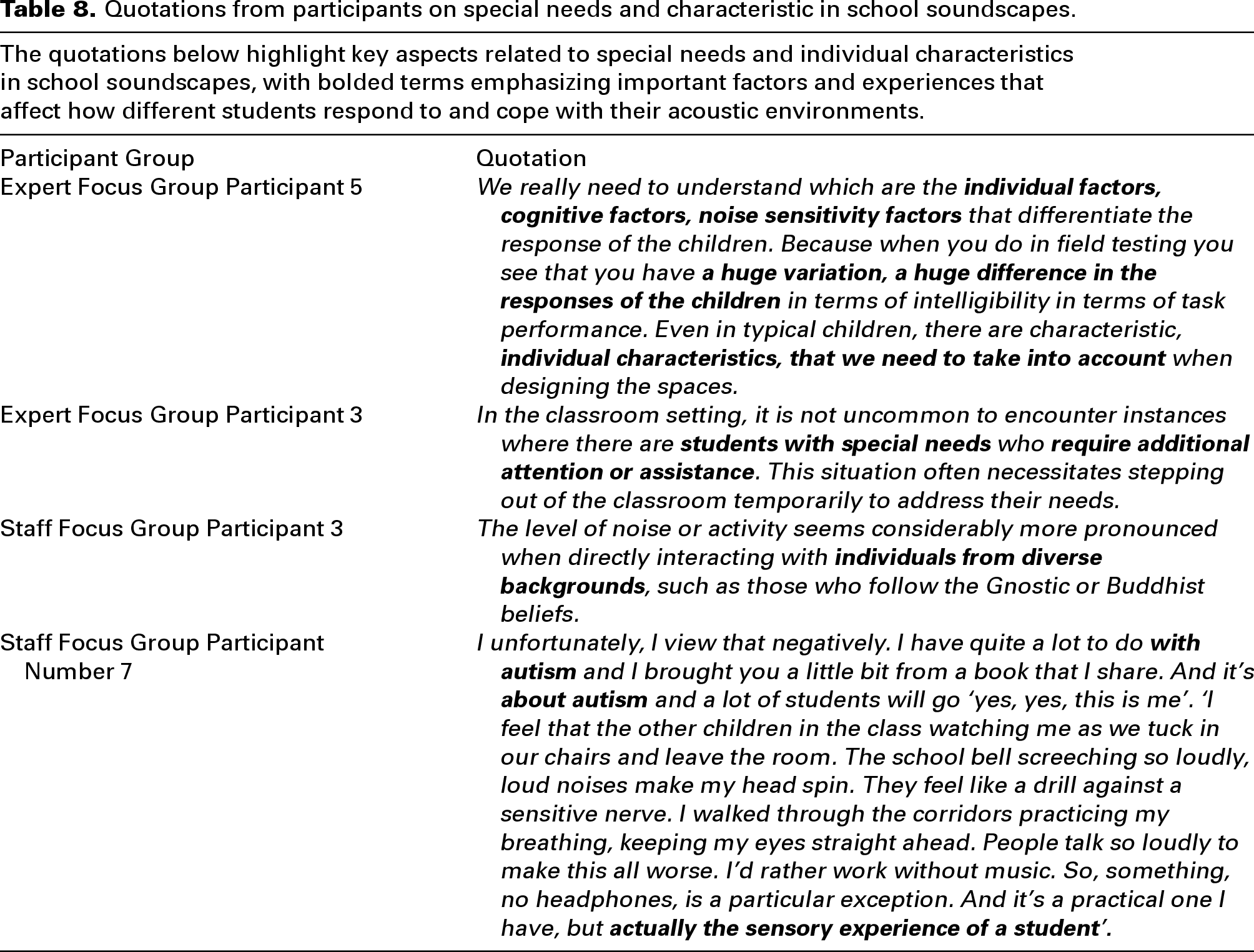
Recognizing and accommodating individual differences in sound sensitivity is essential when designing acoustical environments for schools, especially for students with special needs. As noted by an expert, it is important to consider ‘individual factors, cognitive factors and noise sensitivity’ since these characteristics significantly impact how children respond to sounds, particularly in terms of ‘intelligibility’ and ‘task performance’. Even amongst neurotypical students, varying degrees of noise sensitivity and cognitive traits necessitate thoughtful design to create spaces conducive to learning. For students with special needs, such as those with autism, certain sounds and environmental conditions can be particularly overwhelming. One teacher in staff shared a book section related to a student's experience, where loud noises from the school bell and bustling corridors feel like a ‘drill against a sensitive nerve’, creating a stressful experience that hinders concentration. Additionally, students from diverse cultural or religious backgrounds may experience different levels of discomfort or distraction in noisy environments, as one staff participant observed with children from gnostic or Buddhist backgrounds. These insights highlight the importance of designing spaces that cater to the diverse needs and sensory sensitivities of students, ensuring that all children can feel comfortable and supported in their learning environments. This includes children with normal hearing, those with mild hearing losses, those with hearing aids or assistive devices, those with learning disabilities, those for whom English is a second language, and those with temporary hearing loss due to ear infections. Table 8 provides quotations from participants that shed light on the special needs and characteristics of users in relation to school soundscapes.
Quotations from participants on special needs and characteristic in school soundscapes.
Behaviour and activities.
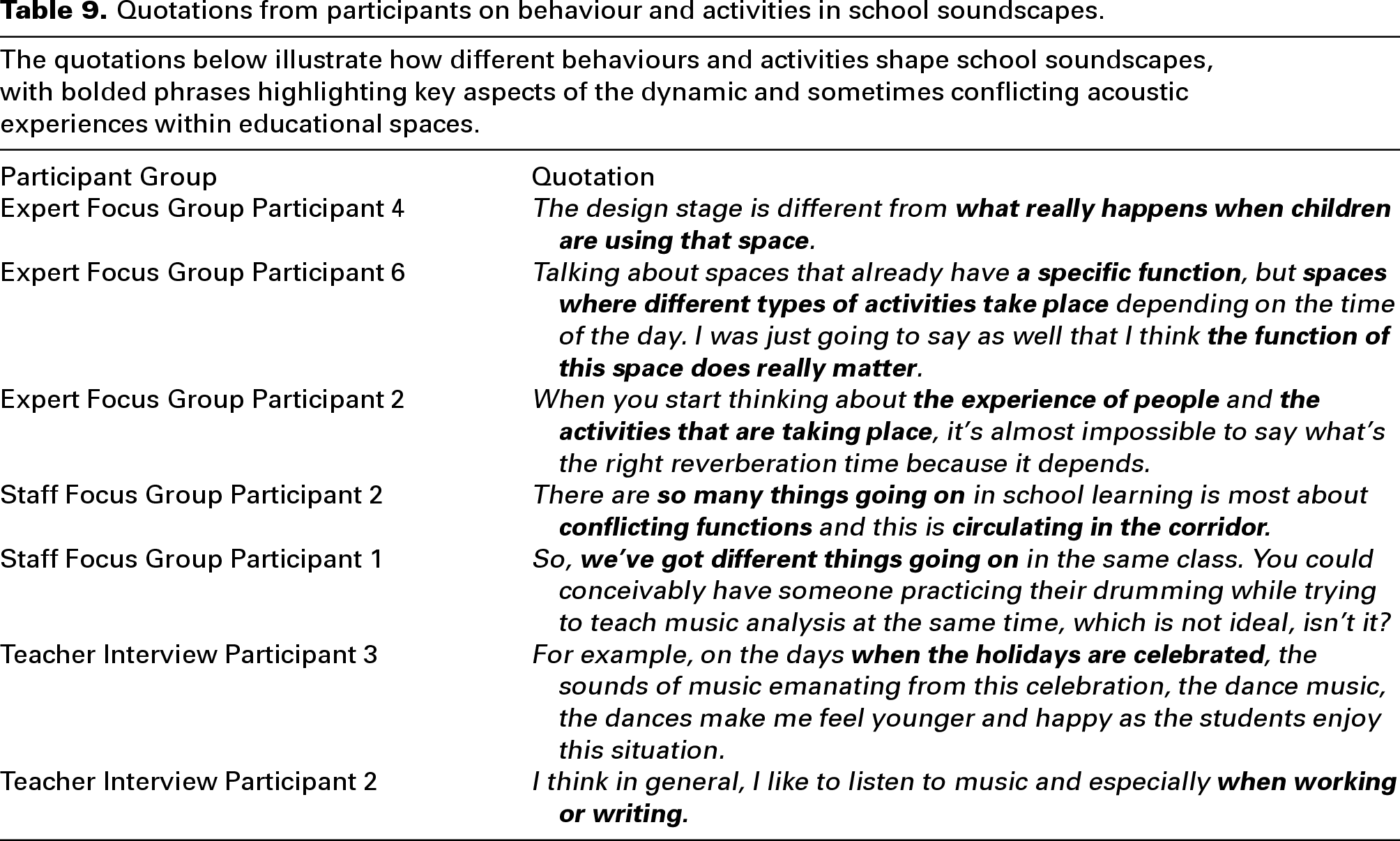
It was useful to point out that acoustic design and regulation sometimes cannot fit the real situations of places. The emphasis was also on tasks within the place, as people’s behaviours can affect the expected acoustic parameters. The variety of activities occurring within school environments creates unique acoustic challenges, as spaces often serve multiple functions throughout the day. Participants from experts highlighted that while spaces may be designed with specific purposes in mind, the way students use these spaces can differ significantly in practice: ‘the design stage is different from what really happens … when children are using that space’. This sentiment underscores the difficulty of establishing a single optimal reverberation time, as it ‘depends’ on the specific activities occurring in the space at any given time. Schools are complex environments where ‘conflicting functions’ frequently coexist, as noted by staff participants. For example, a classroom might simultaneously host a music analysis lesson and a student practising the drums, creating a situation that is ‘not ideal’ acoustically. Similarly, corridors and shared areas serve multiple purposes, such as facilitating circulation while also supporting learning and social interactions, which adds to the acoustic complexity. These insights suggest that school soundscapes must be adaptable, with designs that accommodate the dynamic nature of school activities to enhance comfort and functionality for both students and teachers. Table 9 presents quotations from participants discussing the relationship between behaviour, activities and school soundscapes.
Quotations from participants on behaviour and activities in school soundscapes.
School-related factors
The physical and operational characteristics of school environments play a pivotal role in shaping the soundscape. As noted by participants in experts, different types of spaces, such as classrooms, libraries and shared areas, each require unique acoustic considerations to match their functions. Classrooms, in particular, are challenging due to the range of teaching styles they accommodate. While traditional, ‘frontal teaching’ demands a specific sonic environment to support clarity, modern classrooms also foster group work and collaborative learning, which create vastly different acoustic needs. Teachers, as observed in staff, also influence the soundscape through their teaching strategies and the way they navigate physical spaces, such as adjoining rooms and shared corridors. Furthermore, the open-door policy common in some schools adds another layer of complexity, as sounds from neighbouring rooms and outdoor areas can intrude, impacting students’ ability to concentrate. Unique environmental factors, such as the seaside location mentioned by a staff participant, provide opportunities to incorporate natural sounds like ‘birds chirping’ and ‘rustling leaves’ into the soundscape, enriching students’ sensory experiences and potentially enhancing well-being. This suggests that school soundscapes can be tailored not only to meet functional needs but also to integrate elements of the surrounding natural environment.
Time and schedule.
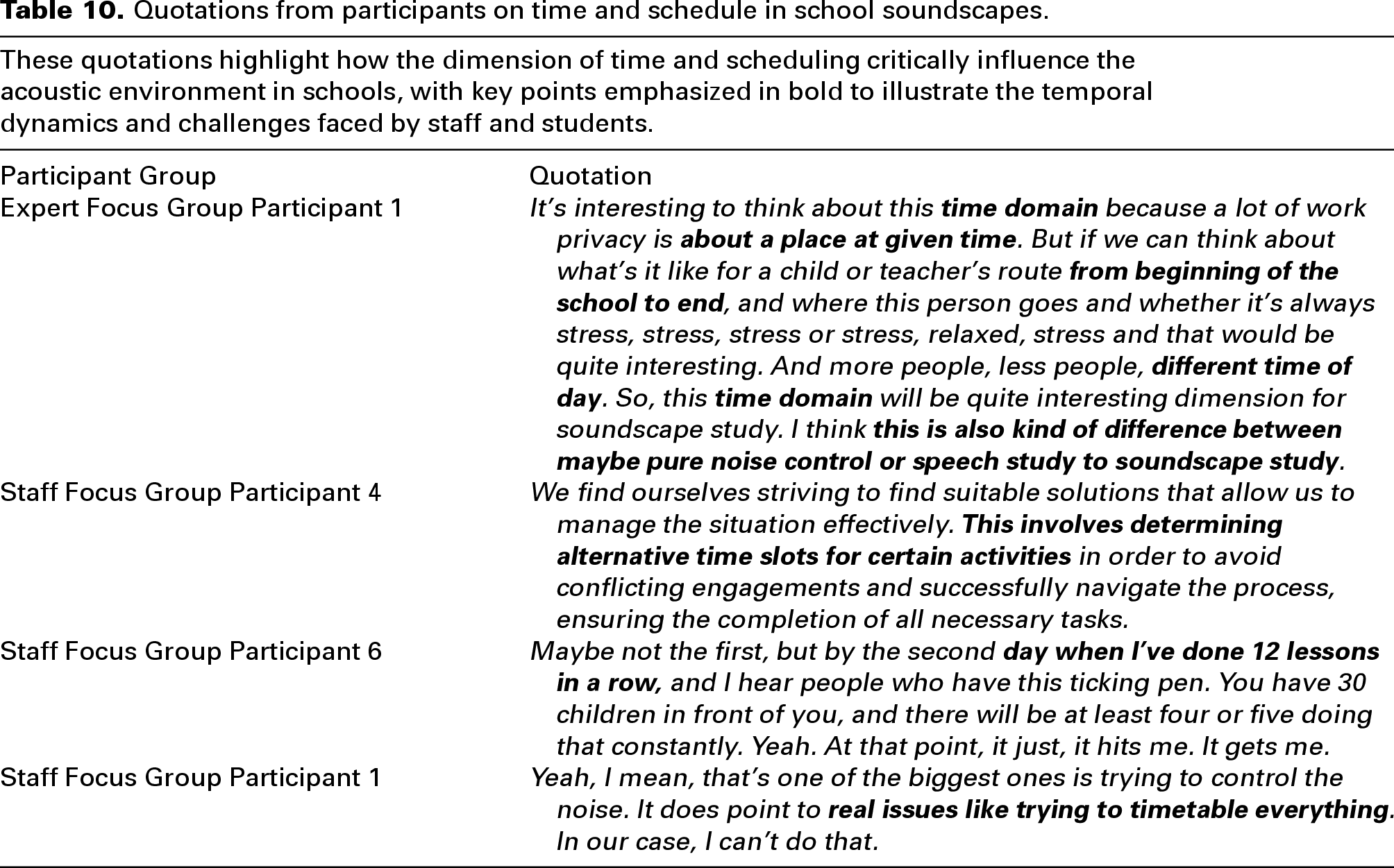
Time and scheduling significantly impact the school soundscape, as different times of the day bring distinct auditory challenges and opportunities. Expert participants highlighted how the ‘time domain’ can shape the soundscape experience, as individuals’ routines involve fluctuating levels of stress and relaxation throughout the day. Understanding how students and teachers move through these cycles could provide valuable insights for a soundscape design that aligns with their daily rhythms. In staff, teachers noted that scheduling is crucial for managing noise levels and avoiding conflicts, especially when multiple activities occur simultaneously, like a drumming practice during a music lesson. Additionally, prolonged exposure to certain sounds, such as the repetitive ticking of a pen or general classroom noise, can become especially grating for teachers who handle long sequences of classes, which may influence their overall fatigue and stress. This suggests that aligning schedules and spaces with the school's acoustic needs is essential for a more balanced and supportive environment. Table 10 presents quotations from participants discussing the influence of time and scheduling on school soundscapes.
Quotations from participants on time and schedule in school soundscapes.
Teaching strategy.
Although teaching strategies are shaped by individual teachers, their implementation and development are closely linked to school-specific factors, including school policies, spatial configurations and organizational norms. These institutional elements strongly influence how teachers can apply, adapt or sustain strategies within their specific school contexts. Therefore, it is appropriate to categorize teaching strategies under school-specific factors, as their practical use is not solely a matter of personal preference but is also shaped by the wider school environment and operational structures.
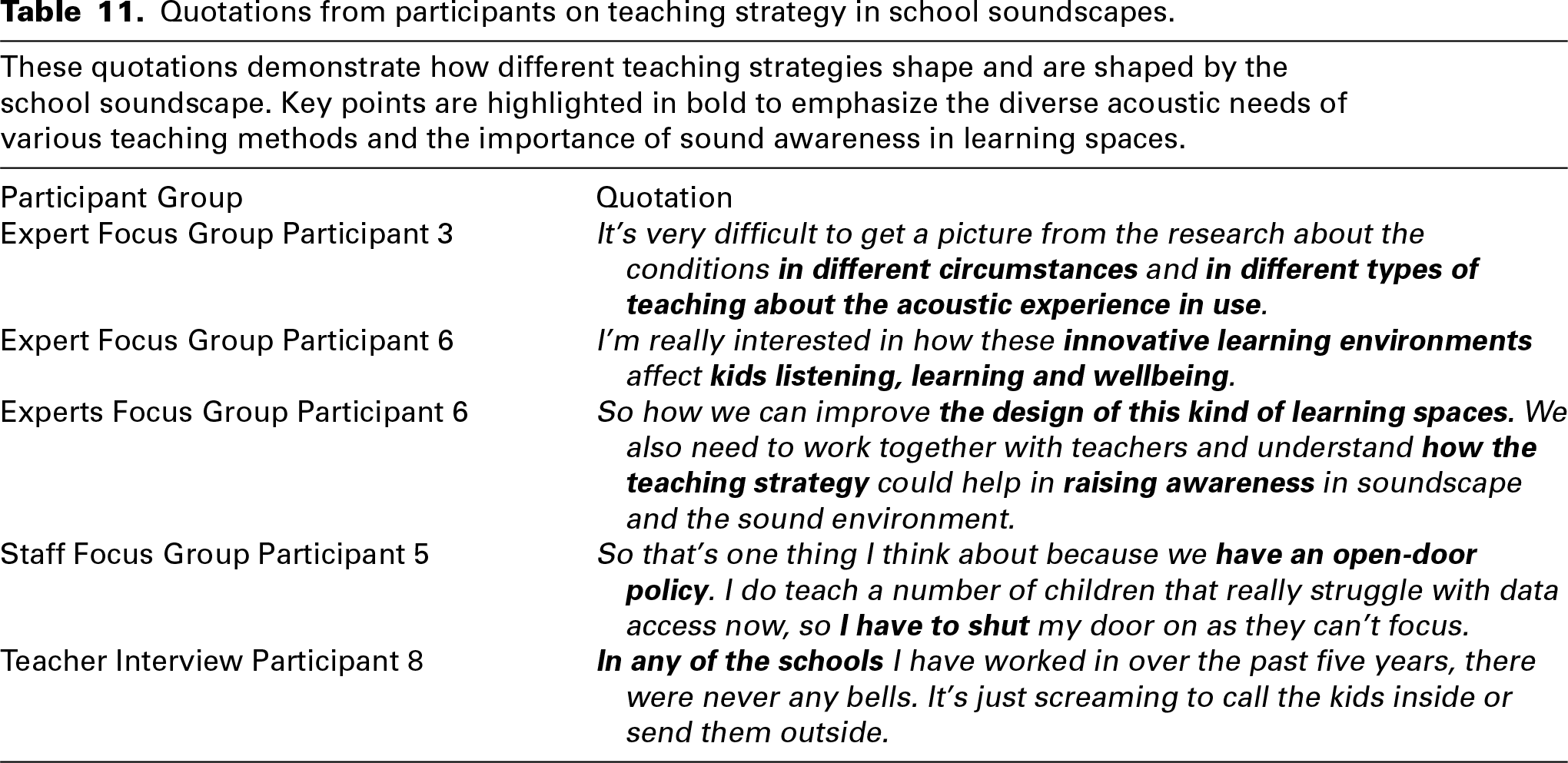
Teaching strategies play a critical role in shaping the acoustic environment in schools. Expert participants discussed the varied acoustic demands associated with different teaching styles and environments, emphasizing the need to consider these factors in soundscape design. The soundscape is not a neutral backdrop; rather, it is actively shaped by pedagogical choices and teaching rhythms. Traditional frontal teaching, for example, requires a different sonic environment compared to group-based learning, which involves more interactive and dynamic soundscapes. Teachers and experts highlighted the importance of fostering awareness of soundscapes in both students and educators, which could potentially enhance the learning experience. Moreover, innovative learning spaces offer new opportunities but also bring challenges in managing how these spaces affect students’ listening and well-being. Open-plan classrooms, shared learning zones and breakout areas are designed to encourage collaboration, but they can easily become acoustically chaotic if sound is not properly controlled. Teachers may find themselves adjusting their teaching methods, not because of pedagogical preference, but in response to the acoustic limitations of these spaces. Some participants expressed concern that when teachers are forced to abandon interactive activities in favour of quieter tasks, the learning experience may become less engaging. This underscores the need for soundscape designs that are adaptable to diverse teaching methods, ultimately supporting both teachers’ instructional goals and students’ engagement. Table 11 includes quotations from participants that explore the relationship between teaching strategies and school soundscapes.
Quotations from participants on teaching strategy in school soundscapes.
Building orientation.
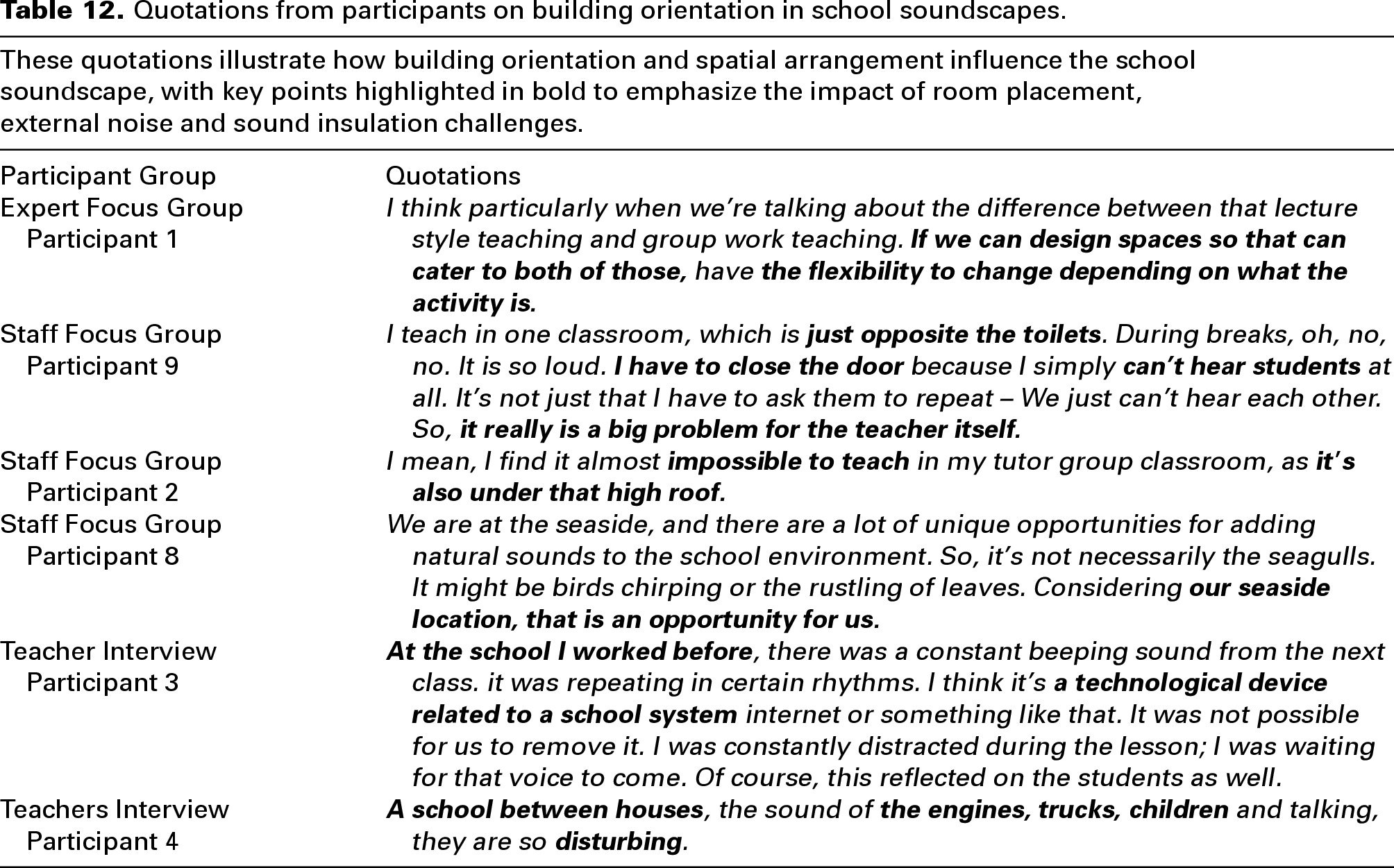
Building orientation focuses on the physical placement of rooms and buildings relative to other spaces or external noise sources. It is about the spatial relationships that passively expose classrooms to noise. The orientation and layout of school buildings significantly influence the quality of the acoustic environment. Experts and staff participants highlighted challenges posed by classroom placement in relation to high-traffic areas, such as bathrooms and the impact of poor sound insulation between rooms. These locations often become hotspots for disruptive noise, particularly during transition times and breaks, when sound levels naturally peak. In these cases, the spatial configuration inadvertently prioritizes movement and access over learning conditions, amplifying the acoustic burden on teachers and students.
The issue extends beyond internal school dynamics. Several participants also emphasized the impact of external noise sources, such as nearby roads, construction sites or service areas like car parks and delivery bays. Classrooms situated near these external noise generators suffer from continuous exposure to traffic sounds, engine noise and general urban disturbances, which can significantly interfere with both teaching and student concentration. This is particularly concerning for schools in dense urban settings where external soundscapes are less controllable.
For instance, teachers reported struggling to hear their students in classrooms located near busy areas, where noise from hallways or adjoining spaces can overpower instructional sounds. Additionally, the versatility of spaces is crucial, as classrooms designed for both lecture-style teaching and group activities should ideally be adaptable to different acoustic needs. These insights underline the importance of considering spatial orientation and flexible design in school buildings to optimize the soundscape and reduce disruptions. Table 12 presents quotations from participants that examine the influence of building orientation on school soundscapes.
Quotations from participants on building orientation in school soundscapes.
Space use and density.
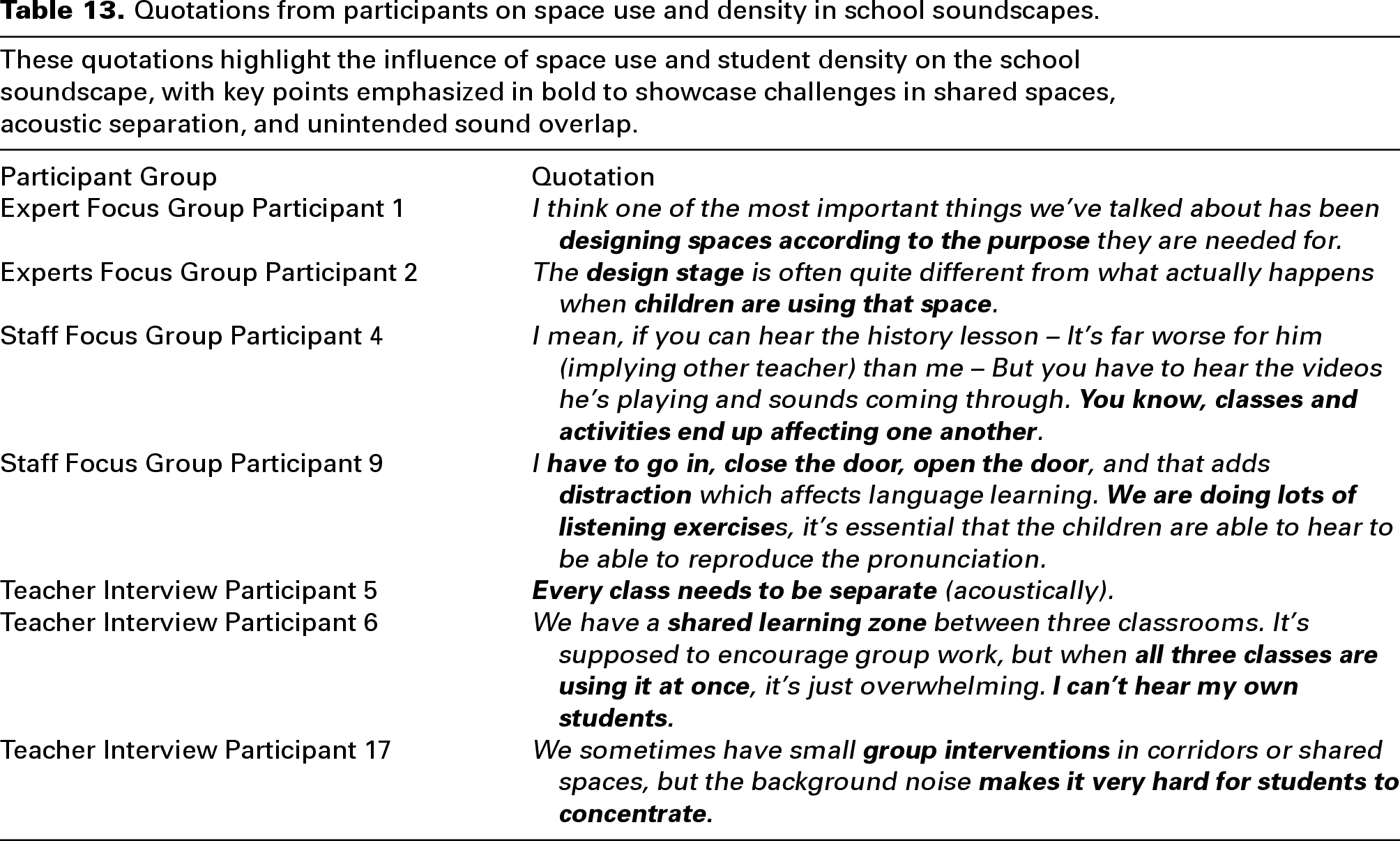
Space use and density focuses on how spaces are used, how crowded they are, and how that real-world usage impacts acoustics, regardless of their initial design. It highlights functional misalignments and the consequences of shared or densely packed spaces. Beyond building orientation, the way school spaces are used and how densely they are occupied also play a critical role in shaping the acoustic experience. The functionality and density of school spaces play a vital role in shaping the soundscape. Participants from both groups emphasized the importance of designing spaces with their intended purposes in mind, noting that actual use often differs from initial design expectations. For instance, classrooms that share walls can inadvertently transmit sounds, such as videos or other activities, which disrupt neighbouring lessons. This situation can be particularly challenging during language or listening exercises, where focus on sound clarity is essential. The need for teachers to open or close doors to manage these acoustic interferences further demonstrates how space use and density influence both teaching effectiveness and student learning experiences. Shared learning zones are often intended to foster collaboration, creativity and active group work. However, as participants noted, when multiple classes simultaneously occupy these shared areas, the sound levels can quickly escalate beyond manageable limits. This leads to situations where teachers struggle to hear their own students, undermining the very purpose of the group activities the spaces were designed to support. Without sufficient acoustic separation or noise management strategies, the potential educational benefits of these open-plan areas may be compromised by auditory overload and reduced speech intelligibility. Similarly, the use of corridors and other informal spaces for small-group interventions illustrates how schools, often constrained by space limitations, adapt areas beyond their original function. While these interventions may provide logistical flexibility, they typically expose students to uncontrolled background noise from surrounding activities. This is particularly problematic for students with hearing sensitivities, those with language processing difficulties or those who require a quieter environment to focus and engage. In such cases, the inclusivity and effectiveness of these learning activities are at risk. This feedback suggests that designing spaces with acoustics as a priority, tailored to real-world classroom dynamics, is crucial for effective learning environments. Table 13 exhibits quotations from participants that explore the relationship between space use and density in school soundscapes.
Quotations from participants on space use and density in school soundscapes.
Discussion
The findings of this study shed light on the dynamics of school soundscapes, providing an opportunity to compare traditional school acoustic approaches with emerging soundscape-oriented perspectives. Traditional school acoustic approaches primarily focus on meeting objective acoustic standards, such as noise level limits, reverberation time and sound insulation. These standards are essential for creating environments conducive to clear communication and minimizing distractions.16–19 However, this approach often adopts a one-size-fits-all perspective, emphasizing noise control without fully accounting for the subjective and contextual experiences of users. There is growing recognition that international standards for learning environments should incorporate soundscape principles, ensuring that user perceptions and needs are considered alongside objective acoustic criteria. 35 As seen in this study, the school soundscape approach considers both the objective and subjective dimensions of sound. It recognizes that schools are dynamic environments where the interplay between sound sources, users’ needs and contextual factors profoundly shapes individual experiences. By incorporating themes such as effective resting and relaxing and expectations and experiences, the school soundscape approach goes beyond noise control to promote positive auditory experiences. This holistic perspective acknowledges the diversity of users’ needs, particularly the importance of restorative sounds like nature and music, which can reduce stress and enhance well-being. This aligns with recent findings showing that students perceive natural and musical sounds as supportive of their well-being, further emphasizing the potential of positive auditory experiences in schools. 36 Furthermore, it emphasizes flexibility in acoustic design to accommodate varied teaching strategies, activities and user preferences, elements often overlooked in traditional acoustic approaches.
An additional layer of insight emerges when considering the differing perspectives between teachers and acoustics experts. While both groups acknowledged the importance of sound in the school context, their focus points diverged in subtle but meaningful ways. Experts tended to prioritize the acoustic environment from the perspective of the students, often emphasizing issues such as speech intelligibility, learning conditions and inclusivity for children with additional needs. In contrast, teachers were more likely to frame their responses through the lens of their own experiences and well-being, frequently mentioning factors such as fatigue, stress and the ability to manage classrooms effectively. Experts often approach soundscapes through an acoustical performance or policy lens, while teachers’ perceptions are deeply tied to the lived, moment-to-moment experience of managing noise and maintaining personal well-being in busy classrooms. It suggests that multi-stakeholder engagement is critical when designing and implementing acoustic interventions in schools.
The prominence of user factors in participants’ discussions highlights the centrality of the human experience in shaping school soundscapes. This tendency may reflect the natural inclination of individuals to prioritize their own perceptions, emotions and behaviours when describing their environments. Personal experiences are often more immediate, relatable and easier to articulate, especially for non-acoustic specialists. Cultural context may also play an important role in shaping perceptions of school soundscapes. 10 Educational systems in countries such as the United Kingdom and Turkey differ in structure, pedagogy and expectations placed on both teachers and students, which in turn may influence how sounds are experienced and interpreted. For example, classroom management styles, class sizes, and attitudes towards noise tolerance can vary between cultures, potentially altering the degree to which certain sounds are perceived as disruptive. In contrast, acoustic factors, such as reverberation time, sound insulation or background noise levels, may be less consciously noticed or more difficult to verbalize without technical knowledge. It is possible that many acoustic issues become so normalized in everyday school life that they fade into the background and are not explicitly identified unless they are particularly disruptive. In interviews, the relatively limited discussion of acoustic factors does not diminish their importance but instead points to a potential gap in awareness, suggesting that improving acoustic literacy amongst school communities could help bring these less visible but impactful aspects to the forefront of school design and management conversations.
This underscores the need for a paradigm shift in school sound research, moving beyond noise control to explore how positive soundscapes can be systematically designed and implemented. Introducing positive sounds, such as natural soundscapes or background music, can indeed enrich the auditory environment and potentially support well-being and concentration. However, if not carefully designed and managed, these sounds might inadvertently contribute to the overall sound level, creating auditory clutter or even new distractions. Furthermore, what is perceived as ‘positive’ may vary significantly between individuals, age groups and contexts, making it difficult to design universally beneficial sound interventions. Future research should investigate the long-term effects of positive sounds on student and teacher well-being, learning outcomes and social interactions. Additionally, studies should examine the contextual factors that influence the perception of positive sounds, such as cultural differences, personal preferences and environmental conditions. By addressing these gaps, researchers can contribute to a more comprehensive understanding of how soundscapes shape educational environments.
The integration of findings with ISO 12913-1 framework
Understanding school soundscapes within a structured framework is critical for developing actionable insights that can improve acoustic environments in educational settings. Schools are dynamic environments where sound plays a pivotal role in influencing teaching, learning and well-being. 20 However, the complexity of school soundscapes, characterized by diverse sound sources, user needs and contextual factors, often makes it challenging to identify and address specific issues effectively. By integrating the findings of this study into the ISO 12913-1:2014 1 conceptual framework, a widely recognized and systematic model for soundscape analysis, these challenges are contextualized within a global standard. This approach enables a more comprehensive understanding and fosters better alignment between research, policy and practice.
Figure 4 demonstrates the integration of key school soundscape factors identified in this study into the ISO 12913-1:2014 1 conceptual framework of soundscape. 37 The ISO framework emphasizes the interplay between sound sources, context and perceptual responses, providing a structured approach to understanding how acoustic environments influence human perception. In this study, the school soundscape factors are categorized into three main domains: acoustic factors, user factors and school-related factors, each contributing to the overall soundscape experience. These domains and their respective subthemes are mapped within the ISO framework in Figure 4.
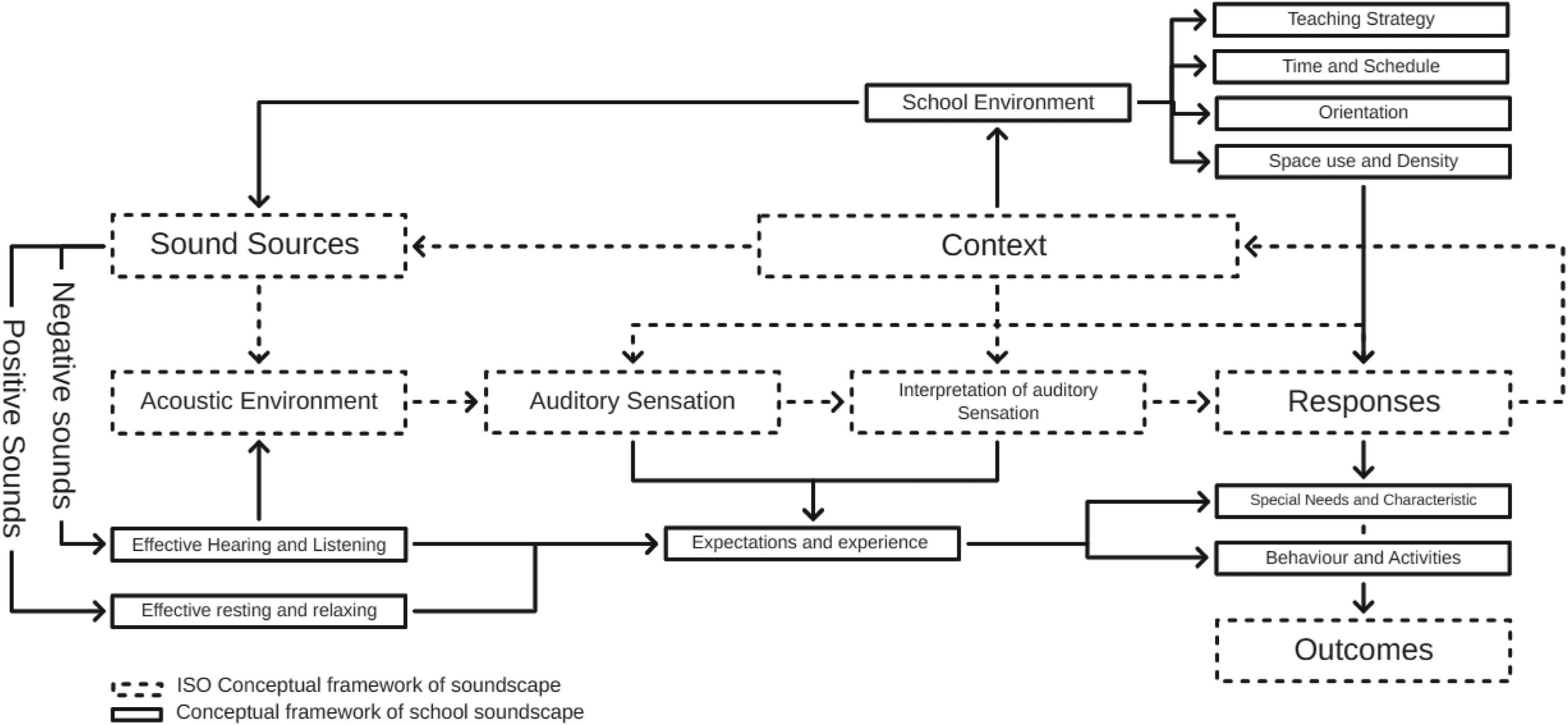
Integration of school soundscape factors into the ISO conceptual framework of soundscape.
The conceptual framework for school soundscapes integrates the ISO conceptual framework of soundscape with school-specific elements to analyse how sound impacts students and teachers in educational environments. It begins with sound sources, distinguishing between positive sounds (e.g. birdsong, music) that enhance relaxation and focus and negative sounds (e.g. noise from traffic or construction) that may disrupt learning. These sounds interact with the acoustic environment, auditory sensation and individual expectations, shaped by the school's physical and contextual factors such as teaching strategies, spatial design and school schedule. Responses to sound include behavioural and emotional reactions, influenced by characteristics like sensory sensitivity and activities in the space. Ultimately, this framework connects soundscapes to outcomes such as well-being, cognitive performance and engagement, emphasizing the importance of designing school environments that balance acoustic conditions to support effective listening, relaxation, and overall satisfaction. This holistic approach underscores the dual role of soundscapes in mitigating noise and leveraging positive auditory experiences in schools.
Limitations
The study relied on qualitative methods, which provide in-depth insights but may not fully capture the broader prevalence or statistical significance of the identified themes. Participants’ perceptions and experiences were context dependent, shaped by their specific school environments and cultural backgrounds, which may influence the transferability of findings to other contexts. Notably, the staff focus group was conducted within a single secondary school, and this limited context should be considered when interpreting the relevance of those particular insights. Future research should address these limitations by incorporating larger, more representative samples and mixed-methods approaches to enhance the robustness and generalizability of findings.
Conclusion
This study explored school soundscapes by examining factors that influence acoustic environments in educational settings, aiming to address the research question. The findings contribute to understanding both the acoustical and contextual elements that shape the perception and experience of soundscapes in schools.
The study identified three themes that influence school soundscapes: acoustic factors, user-related factors and school-related factors. Within these, 11 subthemes emerged, highlighting the complexity of school soundscapes. Acoustic factors, such as effective hearing and listening and effective resting and relaxing, were particularly emphasized, showing the importance of clear speech and restorative environments for both teachers and students. User-related factors revealed the diversity of perceptions, expectations and sensitivities to sound, with particular attention to the needs of students with special characteristics, such as cognitive differences and noise sensitivity. Finally, school-related factors, such as teaching strategies, time and schedule, space use and density, demonstrated how physical design and operational practices impact the acoustic environment. The hierarchy analysis shows that user factors received the most attention, highlighting the participants’ focus on individual needs, sensory sensitivities and behavioural patterns in shaping school soundscapes. Within school factors, the prominence of teaching strategies suggests that participants emphasized the changing acoustic requirements of group work, individual tasks and innovative teaching methods. Although acoustic factors were less discussed overall, the focus on effective hearing and listening underlines their foundational importance in supporting educational activities.
The study discussed the identified school soundscape factors onto the ISO 12913-1:2014 conceptual framework, offering a structured approach to analysing school sound environments. The study emphasizes that school soundscapes are shaped by the dynamic interplay of environmental, user and contextual factors. This integration underscores the potential for enhancing learning environments, supporting user well-being, and improving the overall educational experience through thoughtful soundscape design.
Footnotes
Acknowledgements
The authors would like to express their gratitude to all the participating teachers for their valuable contributions to this study. Special thanks go to St Oscar Romero Catholic School where the focus group was conducted and to the headteacher for their support and cooperation. The authors also extend their sincere appreciation to all the acoustics experts who participated and shared their expertise during the focus group discussions.
Authors’ contributions
All authors contributed to the development of the methodology. HKC conducted data collection and performed the analysis. HKC drafted the manuscript, while FA and JK carried out the revisions. FA and JK provided supervision throughout the study.
Declaration of conflicting interests
The authors declared no potential conflicts of interest with respect to the research, authorship, and/or publication of this article.
Declaration of generative AI and AI-assisted technologies in the writing process
During the preparation of this manuscript, the authors used ChatGPT to enhance the language and readability of the text. After employing this tool, the authors thoroughly reviewed and edited the content to ensure its accuracy and quality, taking full responsibility for the final version of the published article.
Funding
The authors acknowledge receiving financial support for the research of this article from the Turkish Ministry of National Education, Republic of Turkey.
