




Abstract
Information about buildings and the built environment is produced, stored and utilized across both private and public sectors. However, data usability is often limited by its dispersion across multiple locations, managed by different stakeholders and lack of compatibility. Indoor air quality (IAQ) is influenced throughout the building's lifecycle, requiring effective management of diverse information sources to maintain sustainable and healthy indoor environments. This study aimed to develop a conceptual framework for handling complex building information related to IAQ and building occupants. The framework integrates static data on building design and construction with real-time monitoring of changing indoor conditions, as well as information collected from the occupants. Using a daycare centre in Northern Finland as a case study, the framework is illustrated through critical components, including information sources, database systems, common file formats, open-source interfaces, software, sensors and data protection measures. While not developed in full within commercial building information modelling (BIM) software, the framework establishes a scalable proof-of-concept that supports future dynamic BIM integration for healthier and more sustainable indoor environments.
Introduction
The built environment, encompassing buildings, roads, industrial sites and landscaping, has an essential role in supporting societal well-being. In Finland, over 80% of the nation's wealth is embedded in the built environment. 1 Effectively managing this wealth requires evaluating how well it serves people in terms of safety, health and productivity. However, managing information about buildings and infrastructure remains challenging due to data dispersion across various locations and stakeholders, often resulting in incompatibility issues. 2 Efficient data management throughout a building's lifecycle, including both static information and real-time monitoring, is critical for maintaining high-quality indoor environments that support both sustainability and health objectives. 3
Indoor environment quality (IEQ), including factors such as indoor air quality (IAQ), thermal conditions, acoustics and lighting, could significantly impact occupants’ health and well-being. 4 This study focused primarily on IAQ and thermal conditions, while recognizing the importance of other IEQ elements. A building's lifecycle, from raw material extraction to demolition, affects IEQ starting from site selection and extending through design, construction, operation and eventual decommissioning. 5 Consideration of factors such as local climate, soil (e.g. radon levels) and pollutant sources (e.g. transportation, industry and vegetation) is essential from the outset to ensure a healthy indoor environment,6–8 which is also shaped by building structures, materials and heating, ventilation and air conditioning (HVAC) systems. 9
Maintaining optimal IEQ in cold climates presents unique challenges, particularly in controlling humidity levels to prevent moisture-related issues. Seasonal variations in moisture and temperature within building envelopes can lead to mould growth and structural degradation if not carefully managed. Studies have shown that hygrothermal analysis is critical for understanding moisture interactions with building materials under different climate conditions, enabling targeted moisture management strategies that protect long-term building durability and occupant health.10–12
During construction, attention to factors such as workmanship quality and adequate drying times can help minimize emissions from building materials, equipment and furnishings.13,14 Long-term, building operation and maintenance practices substantially influence indoor climate stability and air quality.15,16 Consequently, information gathered from site selection through to end-of-life stages is needed for effectively managing and enhancing IEQ over a building's lifecycle.
The lifecycle of the built environment generates vast amounts of information across the private and public sectors, forming an extensive data pool. Effective information management ensures the accessibility and usability of this data for various purposes and stakeholders, facilitated by regulations and standards. 17 The shift from paper-based to digital systems has enhanced data accessibility and scalability, yet managing complex, multi-source data across systems still presents challenges that require secure storage, robust interfaces and compliance with data security and privacy standards (GDPR, 2016/679). 18
Building information modelling (BIM) has emerged as a valuable tool for integrating multidisciplinary data throughout design, construction and facility management phases. BIM facilitates structured digital representations of buildings, combining 3D models with additional data layers, including schedules, costs and materials.19,20 Standardized formats like Industry Foundation Classes (IFCs) allow for BIM data sharing and collaboration across project stakeholders.21,22 Additionally, sensors deployed during building operation can provide real-time environmental data, which, when integrated into BIM, enables monitoring of building performance. 23
Despite recent advances, existing BIM-IAQ frameworks often remain static, lacking dynamic integration with real-time monitoring and occupant data. Only a few studies have successfully combined environmental sensor data, occupant positioning and hygrothermal simulations into interoperable systems.24,25 To address this gap, this study presents a novel 3D BIM-based framework that integrates traditional ‘static’ building data, hygrothermal simulations, real-time IAQ monitoring, as well as occupant data. The framework includes a space model that defines spatial coordinates (x, y, z) and connects to broader geographic systems, with an added temporal dimension to capture dynamic environmental changes. By utilizing multiple data sources at varying spatial and temporal resolutions, this approach offers insights into how the built environment influences IAQ and occupant health, from the regional and building levels down to individual experiences. The integration of IAQ monitoring, wearable sensor data and simulation results into a unified digital model represents an important step towards more adaptive and intelligent building management systems.
Materials and methods
3D building information modelling framework development and data integration
The dynamic BIM integration was piloted in a daycare centre located in Oulu/Northern Ostrobothnia/Finland. The 3D Building Information Model (BIM) was created using Autodesk Revit software, based on traditional blueprints of the daycare centre. The model included detailed information on furniture arrangements, such as tables and chairs typically used by children and personnel. Situated near the city centre and surrounded by blocks of flats, the daycare's location is linked to local infrastructure and environmental data sources, allowing for spatial analysis of site-specific influences on IAQ and climate (Figure 1).
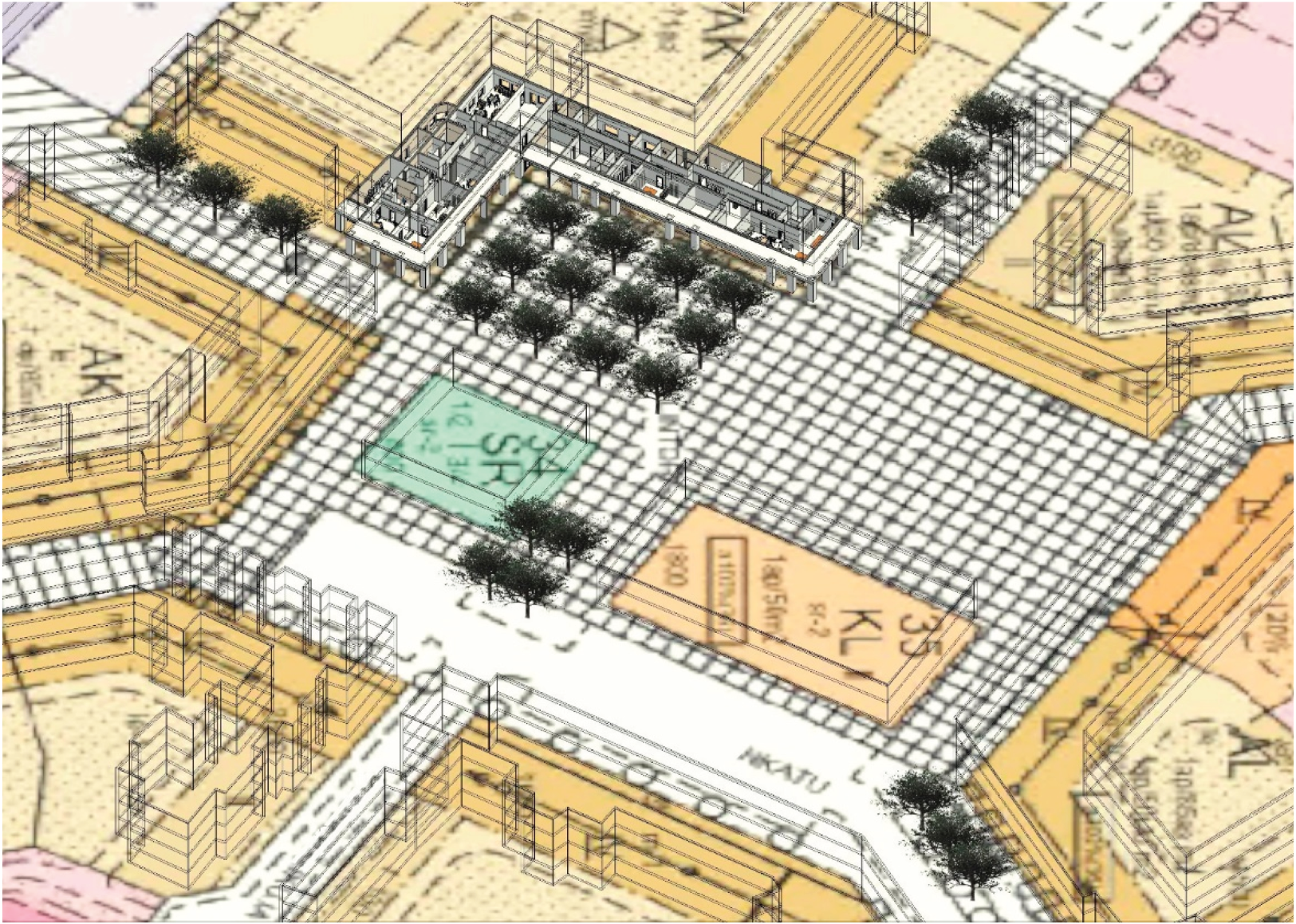
3D BIM model of the daycare centre in the city plan. BIM: building information modelling.
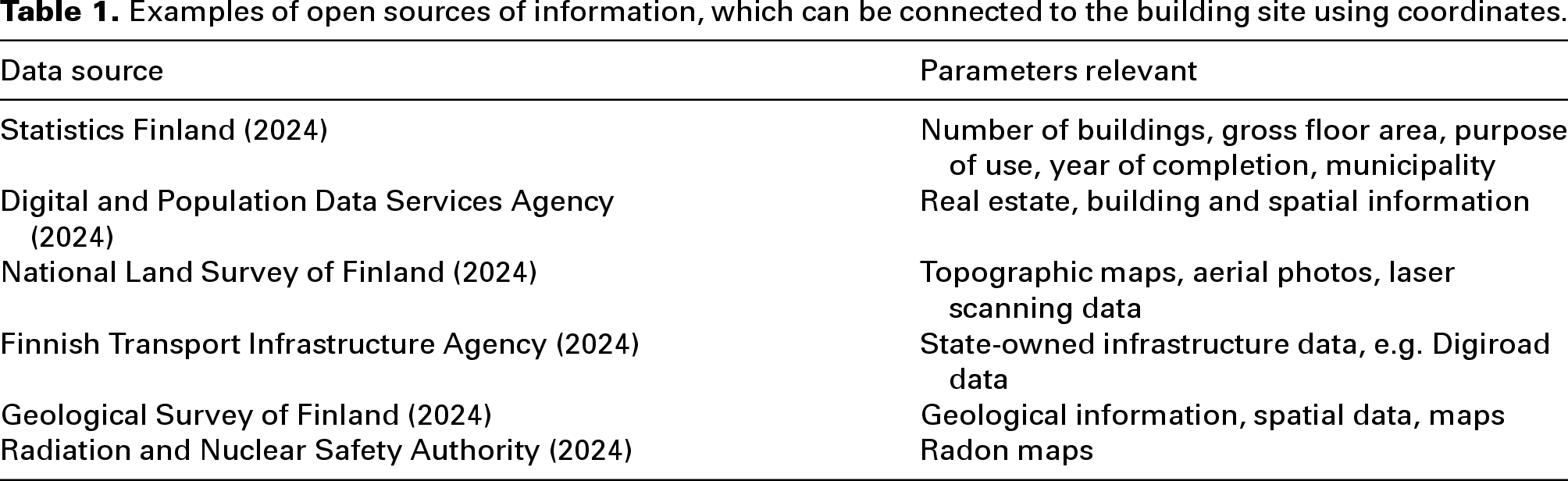
Data sources include open national scale data from Statistics Finland, the National Land Survey of Finland and the Finnish Meteorological Institute, offering information on parameters such as population, topography and weather (Table 1). This integration allowed for the analysis of interactions between the indoor environment and external factors, supporting a holistic view of the building's indoor environment and operational characteristics.
Examples of open sources of information, which can be connected to the building site using coordinates.
Case study setup and modifications
The daycare centre housed 42 children and 10 staff in Wing B and 48 children and 12 staff in Wing C (see Figure 2). Both wings operated on an on-demand ventilation system regulated by CO2 levels, with rates verified against design values. A steam humidifier and a moisture-transferring heat recovery system were installed in Wing C aiming to increase the relative humidity (RH) to 30% during operating hours. Settled dust and HVAC filter samples were collected to study the effect of humidification on the indoor microbiome and the potential transfer of infectious agents. The effects of these modifications are presented elsewhere in detail in a parallel study. 26
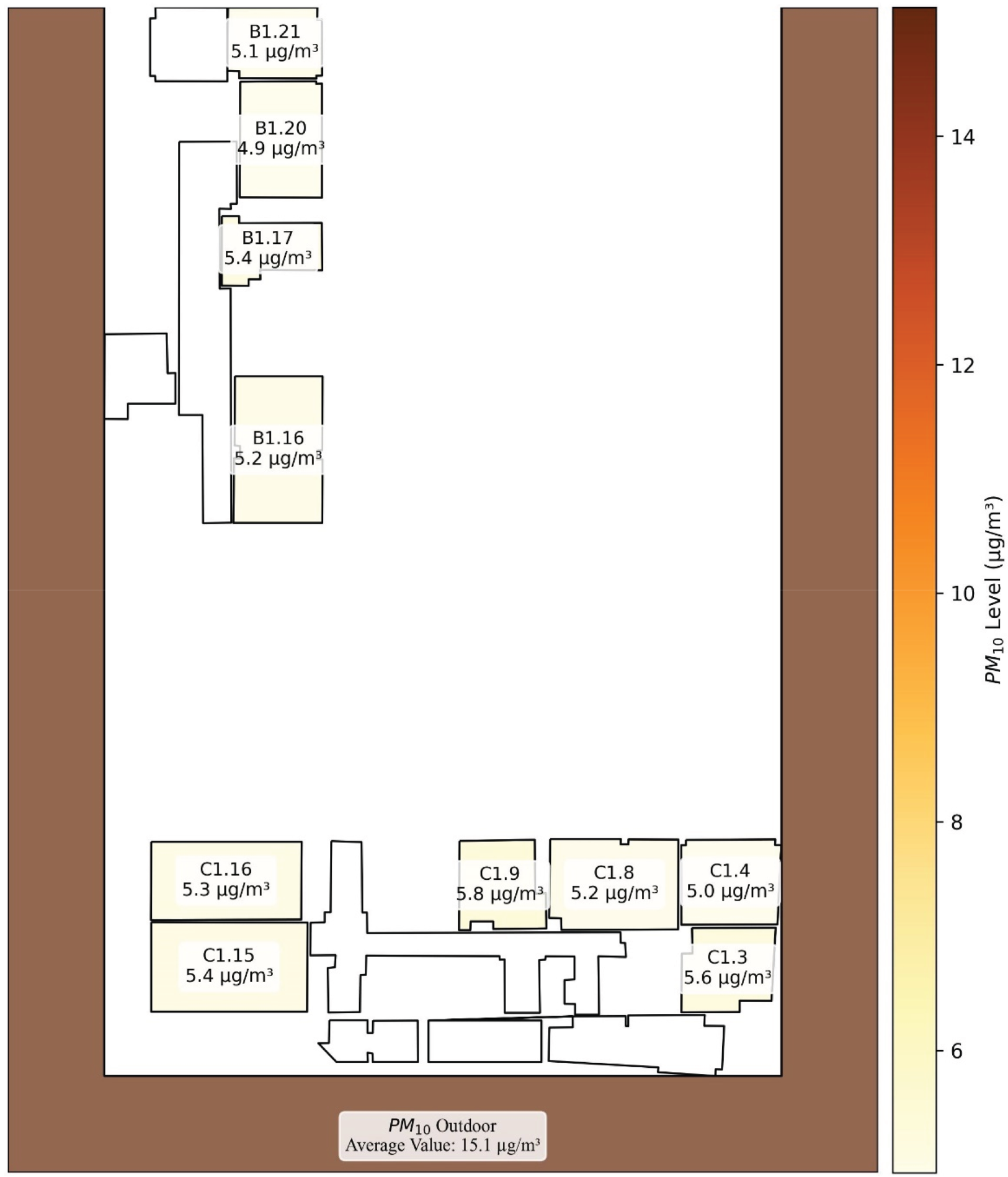
Average PM10 levels in monitored rooms of the daycare centre and corresponding outdoor levels (based on FMI data). PM: particulate matter.
To simulate the BIM environment, spatial coordinates (x, y, z) were used to define measurement zones and occupant positions. Real-time data collected through Internet of Thing (IoT) sensors was processed using Python scripts and structured into tabular form, with timestamps aligned for temporal resolution. These datasets were designed to be interoperable with BIM principles, using structured metadata compatible with IFC standards. The collected data was managed using platform FoxerIoT; data processing, visualization and statistical evaluation were performed using Python libraries.
Environmental monitoring and simulation setup.
To monitor IAQ, multifunction sensors were installed on inner walls, mounted within the typical breathing zone (1.5–1.8 m above floor level), following ANSI/ASHRAE standard 55–2023 27 and ISO 7726:1998 standard. 28 Sensors were placed away from air supply vents and direct solar exposure to avoid measurement bias to measure temperature (T), RH, carbon dioxide (CO2) and particulate matter (PM). Capacitive Micro-Electro-Mechanical Systems sensors were used for RH/T, with an accuracy of ±2% RH and ±0.2°C. CO2 sensors had an accuracy of 50 ppm or 3%, while PM sensors were accurate within ±10 µg/m3 for readings up to 100 µg/m3. Data were sampled at 10 min intervals using an IoT wireless network allowing real-time environmental monitoring. 29 Outdoor conditions, including T, RH and PM, were sourced from the Finnish Meteorological Institute's (www.ilmatieteenlaitos.fi) nearest site, approximately 4.5 km away.
To assess the hygrothermal performance of the building envelope, simulations were conducted using WUFI2D software. These simulations focused on critical areas where moisture accumulation risk was highest, such as intersections between wooden studs and insulation. The envelope layers included gypsum board, vapour barrier, mineral wool, wood and windshield board. Key material properties, such as thermal conductivity (λ), heat capacity (Cp), density (ρ) and water vapour resistance (µ), were sourced from the WUFI database. Hourly data from indoor sensors informed the simulation's indoor boundary conditions, while outdoor conditions were derived from Finnish Meteorological Institute data. The simulation spanned 2 years, with microbial growth risk assessed using a Finnish Mould Growth Model.10,11,30
The hygrothermal simulations were based on site-specific boundary conditions, using hourly indoor measurements and outdoor climate data from the Finnish Meteorological Institute. Material properties were selected from the extensively validated WUFI database. The purpose of the simulation was to compare two realistic indoor conditions, scenarios with and without the operation of a steam humidifier, to assess relative mould growth risk. As the analysis focused on evaluating differences between these two scenarios rather than absolute prediction of hygrothermal performance, additional model calibration was not considered necessary for this case study.
Occupant behaviour monitoring and data integration.
Occupant positioning data were collected from personnel using wireless trackers embedded in wristbands, which also measured heart rate. From children, only spatial positioning was recorded using patch tags. Both the wristbands and patch tags were worn voluntarily by daycare personnel and children, with informed consent obtained. The system had an accuracy of ±1 m and recorded data at a 600-millisecond time resolution, allowing detailed tracking of movements. The indoor positioning system 31 comprised both hardware and software, with anchor and personal trackers mapping raw data to real-time locating services, which aligned the collected data with a detailed map of the daycare centre. All data were stored in an SQL database, ensuring accurate capture and retrieval for spatial and temporal analysis.
Data preprocessing involved converting timestamps from UTC to Finnish local time and filtering to focus on working hours. Positioning data, combined with IAQ sensor readings and hygrothermal simulation data, enabled comprehensive spatial analysis within the daycare, identifying high-density areas and zones with higher cross-contact potential. Python libraries, including geopandas, matplotlib and numpy, were employed to create room-by-room heatmaps, visualizing spatial variations in IAQ metrics such as T, RH, CO2 and PM. Additionally, occupant density and movement patterns aligned with IAQ data identified high-contact zones and provided insights into possible transmission pathways. This integrated approach allowed for the alignment of spatially resolved occupant positioning data and IAQ metrics within the 3D BIM framework, providing an initial step towards a dynamic model.
Health monitoring: Sick leave reports, questionnaires and ethical considerations.
Data on sick leaves, including reasons (e.g. asthma, respiratory infections), were collected from the daycare centre, and pseudonymous identification codes were used to match the absence data with positioning data. In addition, personnel completed standard MM40 questionnaires twice over the study period, covering a 3-month recall period 32 as well as daily symptom diaries over 2–3 weeks. These data are illustrated herein as a part of the conceptual framework.
All health and positioning data were anonymized to ensure confidentiality, with ethical approval obtained from the University of Oulu's Ethics Committee (2022/03) and consent acquired from all participants. Data protection measures, including pseudonymization and secure storage, safeguarded privacy throughout the study.
Results
Indoor air quality and hygrothermal performance
IAQ in the daycare centre is illustrated by continuously monitored PM10 concentrations across different rooms. The indoor PM10 levels were relatively consistent, averaging 5.3 µg/m³ and ranging from 4.9 to 5.8 µg/m³. The highest average concentration was recorded in room C1.19 (5.8 µg/m³) and the lowest concentration was observed in room B1.20 (4.9 µg/m³) (Figure 2). During the same period, the average outdoor PM10 concentration was approximately 15 µg/m³, with potential sources including nearby natural elements, such as the adjacent lake, which may contribute to dust and pollen in the air.
To examine hygrothermal performance of the building envelope, a 2-year simulation was conducted, focusing on critical intersections of materials inside the external wall structure (Figure 3(a)). During colder months, RH in these areas showed significant increases, particularly on the interior side of the vapour barrier, where RH rose by approximately 10–15% due to humidification in Wing C. This localized rise in RH led to higher moisture accumulation, particularly in external wall corners and moisture-sensitive sections. The simulation results (Figure 3(b)) illustrate mould risk potential at a material intersection detail (DET.1), plotted as hourly temperature-humidity conditions. The red points indicate time steps when the simulated RH and temperature conditions exceeded the material-specific threshold for mould growth, as defined by the Finnish Mould Growth Model.10,11,30 In contrast, blue zones represent conditions where mould growth is not expected. The black curve represents the critical RH boundary for mould growth initiation at a given temperature.
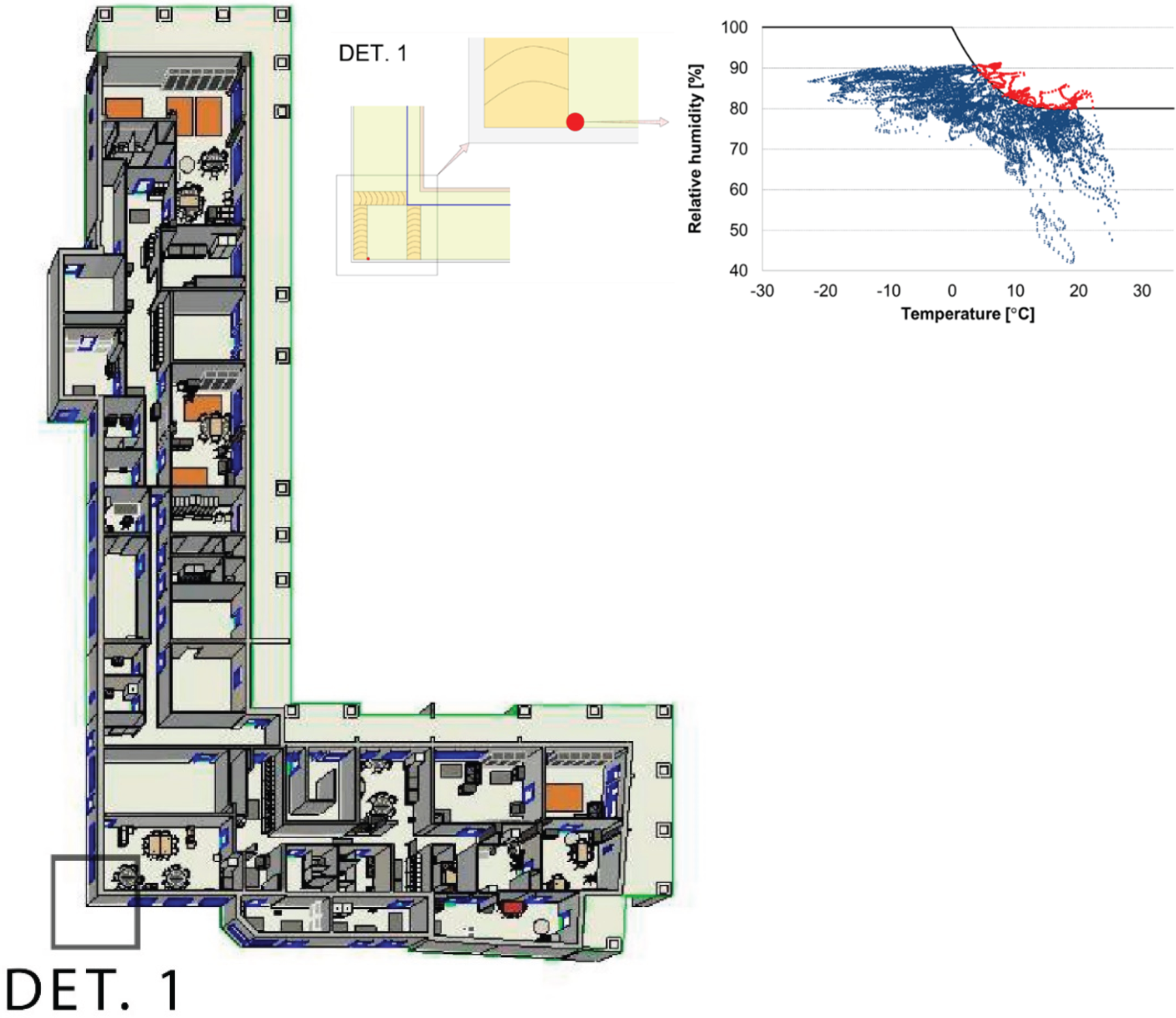
a) 3D BIM model view of the interior side of the daycare centre. b) Hygrothermal simulation results related to the external wall (DET1). BIM: building information modelling.
Occupant behaviour and health perceptions
Occupants’ behaviour was analysed using positioning data collected from wearable trackers, which provided insights into participants’ movement patterns and identified high-density zones (Figure 4(a)), particularly within Wing C, where activities were more frequently concentrated. Participant A16's movement data (Figure 4(b)), for instance, indicated predominant activity within Wing C, with occasional transitions to other areas, emphasizing the significance of shared spaces as zones with increased potential for cross-contact. On 11 April 2022, high occupancy and movement frequency were recorded, allowing for precise identification of areas and times with elevated cross-contact potential (Figure 4).
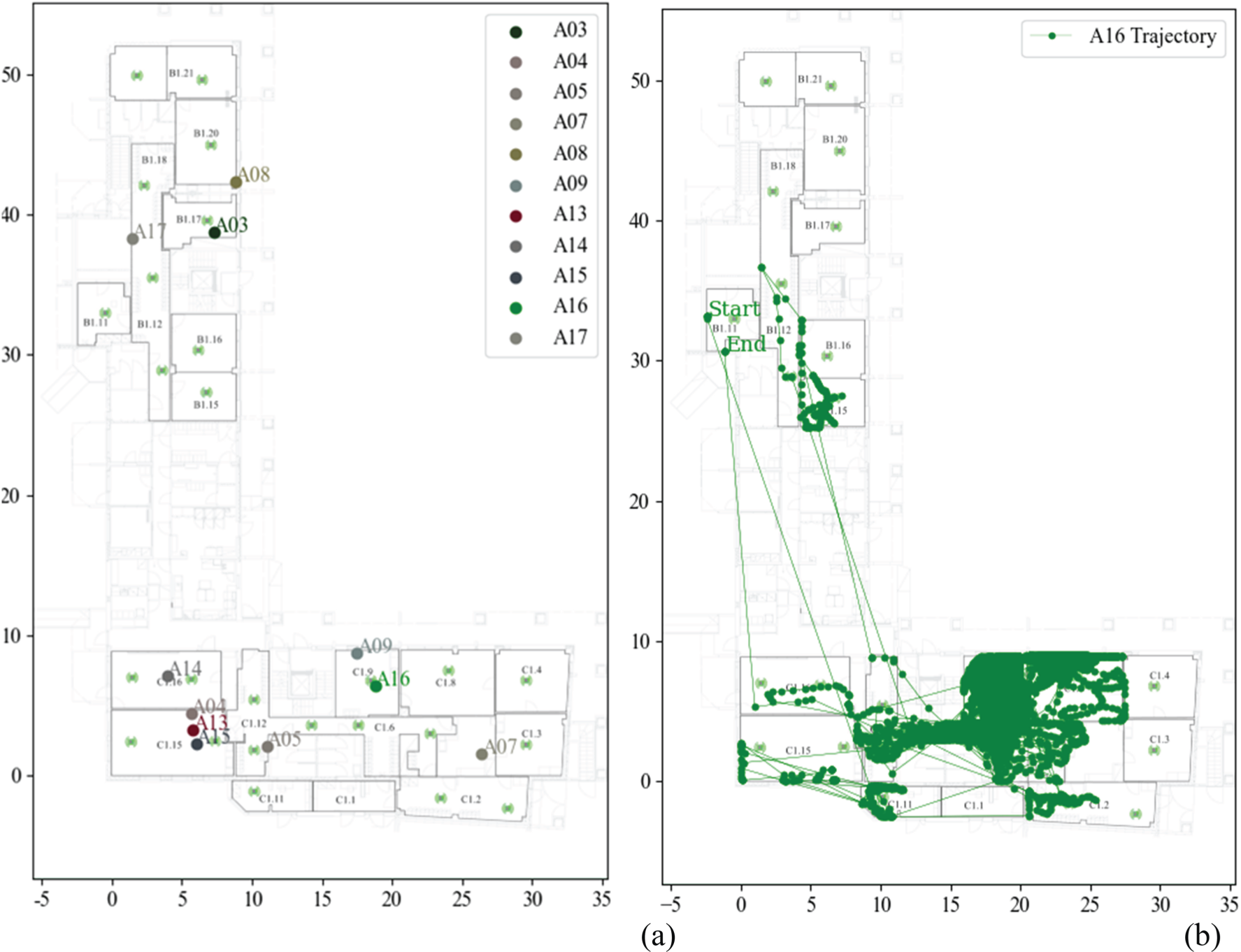
Positioning data from 7 am to 5 pm on 11 April 2022: a) average positioning of 11 individuals over 10 h. b) Trajectory of person A16 based on 10-h positioning data.
During the observation period, there was one confirmed COVID-19 case and two flu cases among daycare occupants. Analysis of the COVID-positive individual's tracked movements from prior days illustrating potential pathways for exposure based on proximity to others. A time series visualization of A16's activity on 11 April 2022 (Figure 5) further revealed intervals of high occupancy and spatial overlap, which may indicate moments of increased cross-contact potential.
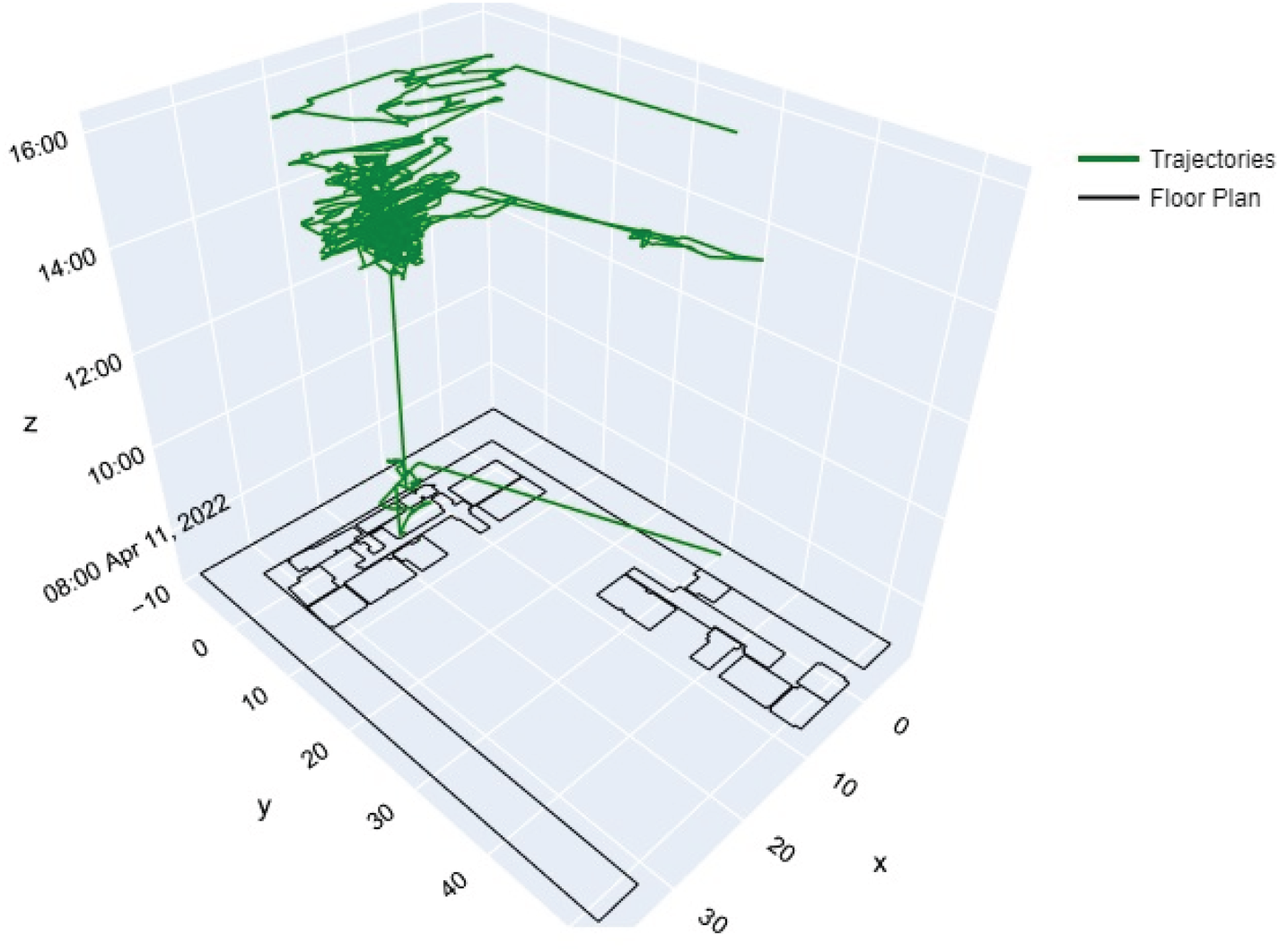
Time series visualization of one person (A16) movement in the daycare on 11 April 2022 (x = X coordinate, y = Y coordinate, z = time).
In addition to tracking movement, personnels’ subjective perceptions of IAQ were collected through questionnaires and daily diaries. Overall, participants reported low levels of disturbance related to IAQ, with average scores of 1.2 for ‘stuffy air’ and 1.0 for ‘dry air’ on a 10-point scale, where 10 represents the highest level of discomfort. Despite these low average scores, variability in responses suggests that some occupants experienced occasional discomfort. Data on comfort perceptions are summarized in Table 2. The wearable wristbands also consistently recorded objective data on movement patterns, illustrating the capability of wearable sensors to capture continuous, real-time occupant data, which may be valuable for future studies linking occupants’ comfort and behaviour with indoor environmental conditions. These results will be reported in a more detailed separate manuscript.
Group-level descriptive statistics of position, questionnaire, and diary data of daycare personnel.

aBased on a 10-point scale, where 10 corresponds with the highest level of disturbance.
Discussion
Indoor air quality, ventilation and hygrothermal performance
IAQ monitoring results reflect the building and HVAC operations capability to protect occupants from external elements, such as ambient particulate pollutants (e.g. dust and pollen from nearby sources). The distinct difference between indoor and outdoor PM10 levels illustrates the effectiveness in maintaining lower pollutant concentrations indoors, even in the presence of external sources.
It is an essential factor for protecting occupant health in environments like daycare centres, where young children are particularly susceptible to air pollutants.33–36 Effective IAQ management serves as a model for similar facilities.
The hygrothermal simulation provided additional insights into the building envelope's performance, particularly regarding seasonal variations in T and RH at material intersections, such as where wooden studs meet insulation. During the winter, RH levels were increased by approximately 10–15% in critical zones, elevating the risk of moisture accumulation and mould growth risk, particularly around external wall corners. This finding aligns with previous studies that point to the heightened mould risk associated with increased indoor RH in cold climates.10,11 Maintaining RH levels below 35% appeared to balance occupants’ comfort with well-functioning structures, especially in spaces like Wing C, where steam humidification was used to mitigate low humidity in winter. 12
Precise moisture simulation and ventilation modelling are effective in controlling moisture-sensitive areas such as material intersections, thereby reducing potential structural issues. 37 In this study, hygrothermal simulations were conducted to compare realistic indoor conditions with and without humidifier use. The simulation used measured indoor and outdoor boundary conditions, and material properties were selected from the WUFI database, which is widely used in building physics applications. As the aim was to evaluate relative differences in mould growth risk, rather than absolute predictive performance, further model calibration was not required.
By integrating detailed hygrothermal modelling into BIM, this framework enables targeted interventions in high-risk zones, supporting occupant comfort and structural resilience, particularly in cold climates where seasonal fluctuations pose unique challenges. Combining real-time IAQ monitoring with simulations offers a strong foundation for maintaining both occupant comfort and structural integrity. While the current hygrothermal assessment relies on one-dimensional simplifications of 2D WUFI simulations, which are widely used and validated for layered wall assemblies, it does not account for three-dimensional spatial humidity dynamics at complex junctions. This limitation may underestimate localized moisture risks in corners, wall-roof intersections or foundation connections. Future studies could benefit from integrating 3D hygrothermal modelling into BIM environments to better evaluate the overall moisture performance of building envelopes. However, such methods currently require significant computational resources and modelling expertise, which limits their practical use in large-scale assessments.
Occupant behaviour, exposure risks and framework implications
Analysis of occupant positioning data identified high-density zones, particularly in Wing C, where movement patterns concentrated, leading to increased potential for cross-contact. These insights are particularly relevant given the recorded cases of COVID-19 and flu within the facility. The data gathered from wearable devices indicates possible transmission pathways, as previous studies have suggested that higher occupant density and prolonged contact within confined spaces increase the likelihood of airborne disease spread. 38
It is somewhat challenging to compare data with different time resolution, such as questionnaire results (e.g. low discomfort scores) with high-resolution sensor data. Occupant health and comfort are usually evaluated over longer periods (e.g. days to years), but concerns about virus transmission have highlighted the need for higher time-resolution data. Hybrid methods could be recommended to align subjective feedback with objective metrics.
By combining occupant movement data with IAQ metrics, the BIM framework enables a nuanced assessment of exposure risks in shared spaces. The high-resolution, continuous data from wearable technology provides an objective alternative to traditional self-reports, uncovering behaviour patterns that may be missed otherwise.39,40 This comprehensive approach positions the BIM framework as a powerful tool for spatial-temporal analysis of IAQ in facilities with dynamic occupancy patterns.
The importance of effective IAQ management in shared, high-occupancy settings like daycare centres is supported by research on school environments, where IAQ and ventilation have shown to significantly impact children's health and comfort. 41 Schools and daycares share common challenges, including high density and vulnerability to pollutants due to occupants’ developing respiratory and immune systems; however, there may be differences in both design and operation of different types of buildings. Also, level of readiness for 3D BIM framework, hardware placement, and collecting IAQ and occupant data may differ case by case, calling for further testing and development. Integrating site-specific considerations within the BIM framework could enhance IAQ management by providing data-driven insights into environmental risks and enabling proactive interventions supporting both occupant health and building resilience.
While the current system used BLE-based positioning with a 600-millisecond resolution and ±1 meter accuracy, future implementations could benefit from UWB-based systems. UWB provides centimetre-level accuracy and higher temporal resolution enabling finer granularity in exposure risk modelling.42,43 However, its use may involve higher hardware cost, increased energy consumption and greater deployment complexity.
Implications of the 3D building information modelling framework
It is important to note that while this study utilizes BIM principles, spatial modelling and a data structure aligned with IFC-based practices, the framework was not developed directly within a commercial BIM software such as Revit or ArchiCAD. While this version of the framework used external tools for data handling, its structure is designed for future integration with BIM software or digital twin platforms. In other words, the focus was on testing real-time environmental and positioning data integration into a conceptual 3D spatial model with temporal tracking capabilities, laying the foundation for future software-based BIM implementations.
Figure 6 presents an overview of the framework, including the interconnected data sources and components that allow for comprehensive monitoring and intervention in dynamic settings, ultimately contributing to the development of more sustainable and responsive indoor environments. The framework integrates diverse data streams, creating a comprehensive system for managing IAQ and occupant health. Structured digital building data from IFC models align with this framework, enabling seamless integration with BIM-based management systems. Such structured and integrative frameworks for handling complex IAQ and occupant data are essential for consistent health and sustainability improvements across building types and scales, as seen in frameworks developed for energy conservation districts. 44
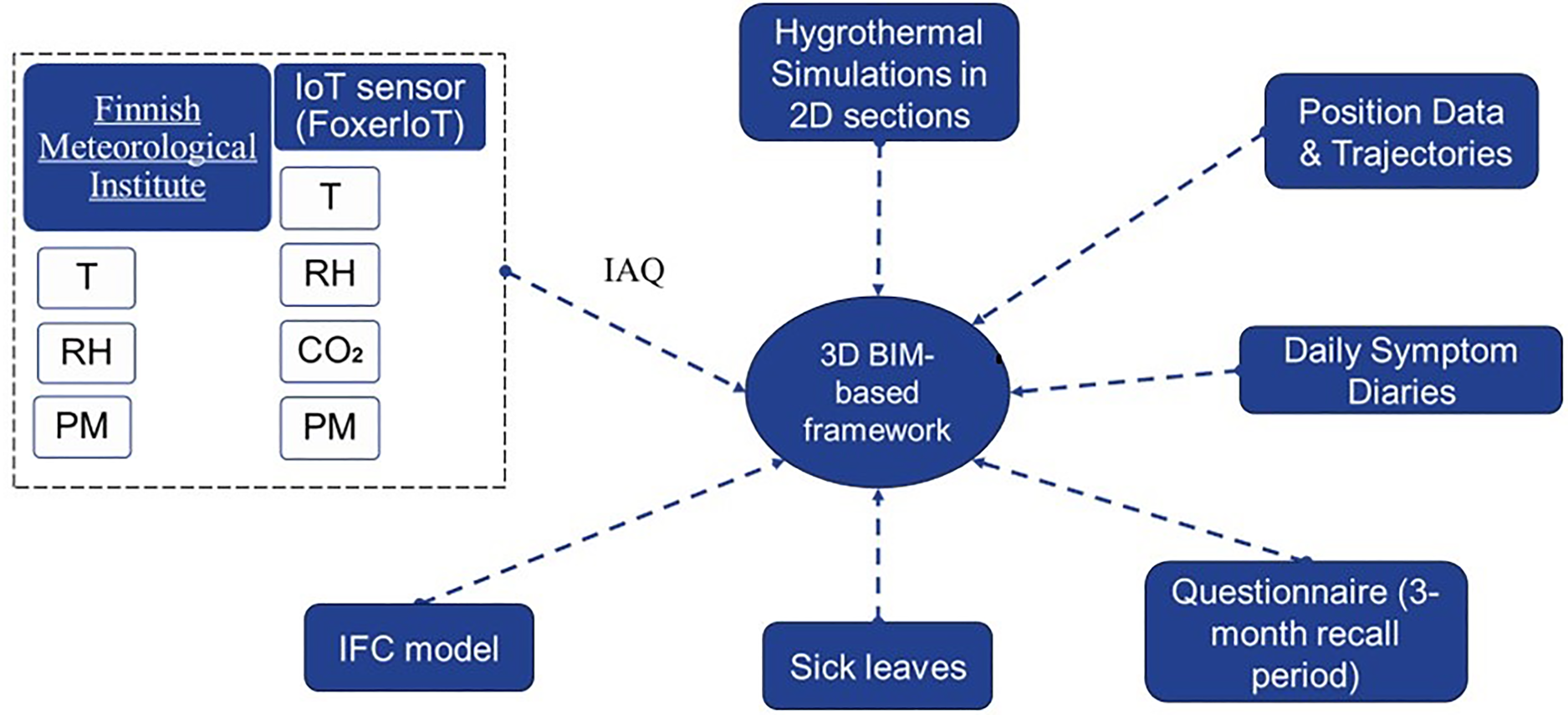
Developing a 3D BIM-based framework for handling complex information – a case study in a Finnish daycare centre. BIM: building information modelling.
The integrated approach transforms BIM from a static repository into an active management tool, supporting real-time environmental monitoring and facility management-enabled BIM principles, where facility managers can dynamically address environmental and spatial factors that may require intervention. Thus, the framework supports long-term building health management, advancing traditional IAQ assessment capabilities and offering future applications in energy management and responsive building operations.25,45–47 Compared to earlier BIM applications (Table 3), this framework demonstrates enhanced integration capabilities by combining real-time IAQ monitoring, occupant data and hygrothermal simulations into a fully digital 3D environment.
Comparison with other BIM-IAQ systems.
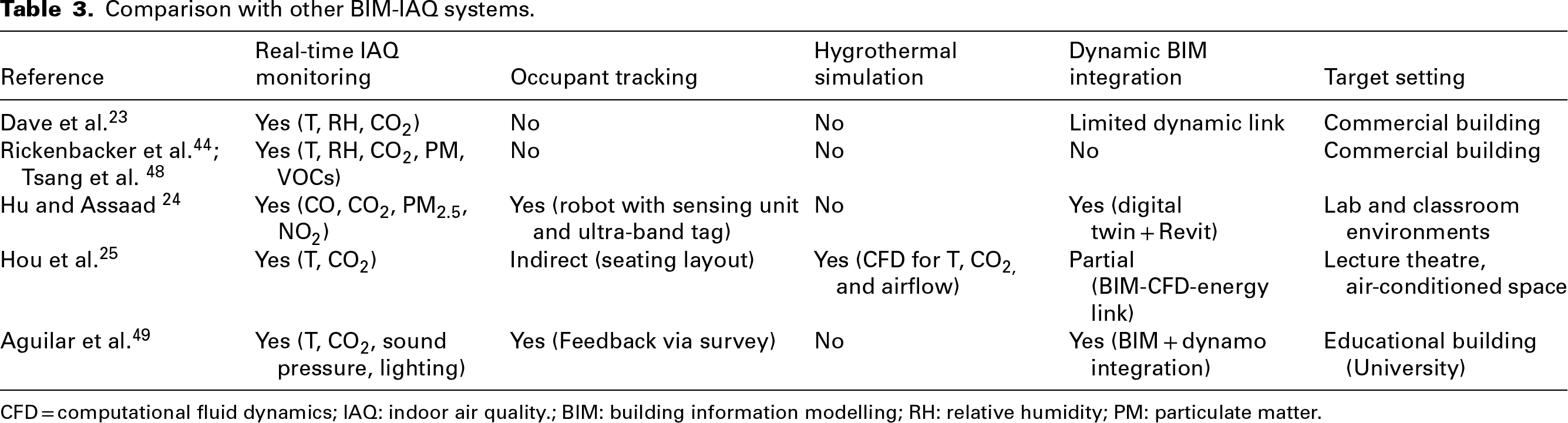
CFD = computational fluid dynamics; IAQ: indoor air quality.; BIM: building information modelling; RH: relative humidity; PM: particulate matter.
In addition to the daycare study, similar data have been collected from an elementary school and an elderly care facility. Whereas the results of these studies will be reported later, our practical experience is that each case presented unique challenges related to sensor deployment and framework scalability, including differences in building layout, the number of sensors and anchors needed, and occupant variability. Occupants’ behaviour as well as sensitivity to IAQ factors vary between children, elementary students and elderly individuals, affecting how data are interpreted. Some buildings lacked existing IFC-compatible floor plans or furniture layouts, requiring additional effort in BIM model generation. Permissions and coordination with city or institutional authorities were needed for sensor installation. Deployment time also varied due to setup, calibration and technical support demands. These factors indicate need of adaptable and modular system design when applying the framework across different building types.
This study establishes a foundation for integrating dynamic monitoring into BIM, demonstrating the feasibility and benefits of adaptable BIM applications in high-occupancy settings. Despite challenges in real-time integration and data alignment, it supports progress toward responsive, health-focused and sustainable building management. Future work should advance real-time BIM integration and ensure interoperability for seamless stakeholder data sharing.
Conclusion
This study presents a 3D BIM-based framework that integrates real-time IAQ, occupant data and hygrothermal data to enhance building performance and occupant health. It supports a shift from static documentation to adaptive, data-driven facility management – especially in high-occupancy and vulnerable settings such as daycares.
Footnotes
Author contributions
HL contributed to conceptualization, methodology, formal analysis, writing – original draft and visualization. TWS contributed to methodology, formal analysis, data curation, writing – original draft and visualization. FF contributed to conceptualization, software (simulation or visualization), methodology, writing – review & editing and supervision. UHS contributed to conceptualization, methodology, resources, writing – original draft, writing – review & editing, supervision, project administration and funding acquisition.
Acknowledgements
The authors extend their gratitude to Pentti Kuurola for his contributions to the investigation and original draft writing, Heikki Kaikkonen for his work on visualization, and Santeri Schroderus for his efforts in some data analysis and writing. The authors wish to thank Educational Consortium OSAO for the outstanding technical assistance related to the Blueiot system installation, as well as the personnel, children and parents of the daycare centre for participating in the study. Their valuable support and collaboration have significantly contributed to the success of this study.
Consent to participate
Written informed consent was obtained from participants prior to their participating in the study, which was entirely voluntary.
Declaration of conflicting interests
The author(s) declared no potential conflicts of interest with respect to the research, authorship, and/or publication of this article.
Ethical considerations
This study was approved by the Ethics Committee of Human Sciences at the University of Oulu which performed an ethical evaluation and issued a positive statement on 01 March 2022.
Funding
The author(s) disclosed receipt of the following financial support for the research, authorship, and/or publication of this article: The work was supported by the Academy of Finland, under Grant 342403.
