




Abstract
Water damage affects both residents and buildings. Issues include moisture, climate impact and repair costs that amount to immense resources. Because of these, immense resources research is important to undertake to reduce and limit the extent and effects of water damage. This study aimed to compile and review the literature on water damage in buildings. Literature distribution, the status, consequences, effects, and strategies and methods for prevention of water damage were assessed by compiling and reviewing literature using quantitative and qualitative methods. Two scientific databases were searched to identify the relevant literature. Key findings of this study are that research conducted on water damage is embedded in the study of building defects and building pathology, and more specific research on water damage is needed depending on different rooms and buildings, the effect of moisture and sustainability. Informed and guided decisions, management and organizational structures have been internationally suggested as a part of the solution to reducing the amount and effect of defects and could have the possibility to reduce the amount and effect of water damage. However, there is a gap in research on water damage consequences, occurrence and costs in Nordic conditions.
Introduction
Water damage in buildings occurs for many reasons. Some examples are flooding, water infiltration through the building envelope, often rainwater and water vapour diffusion into walls and roofs. This paper is limited to water damage occurring indoors from building services systems such as tap water, sewage or heating systems including leaking pipes, connections or valves, as well as inadequate waterproof membranes, and appliances such as dishwashers, refrigerators or freezers in buildings. In Sweden, insurance companies in 2022 reported approximately 90,000 cases of water damage in approximately 6.7 million household and business property insurance.
1
This water damage was due to leakage or freezing in water pipes and connections that arose within the building envelope in residential buildings.2,3 The reported cost in 2022 amounted to 4.9 billion SEK (approximately 434 million Euro) in insurance reimbursements for water damage in homes, dwellings, vacation homes and companies and property insurance, not including the sentimental value of damaged possessions and the unpleasantness of having to handle repairs and insurances issues.
2
Figure 1 illustrates the number of reported cases of insurance companies in Sweden, industry database,
2
between 2012 and 2022. Figure 2 illustrates the reimbursement amount of these insurance cases. The figures show the difference in both the number of reported cases and the reimbursements allocated for each damage category. Of all 17 insurance categories, two of them regard damage related to water in buildings, ‘Water Damage’ and ‘Natural Damage, Water’.
1
The category ‘Water damage’ is such damage from leakage, moisture or freezing of water pipes or other causes unrelated to natural disasters (such as studied in this paper), and ‘Nature Damage, Water’ is damage cases caused by water resulting from heavy rainfall, snowmelt or rising lakes and watercourses, flowing from the surface or through the water supply system into buildings.
1
In terms of reimbursements paid by insurance companies, ‘Water damage’ (as focused upon in this study) represented the largest cost in Sweden in 2022.
1
Number of reported insurance cases in Swedish buildings, 2012–2022.
1
Insurance reimbursement (million SEK) in Swedish buildings, 2012–2022.
1
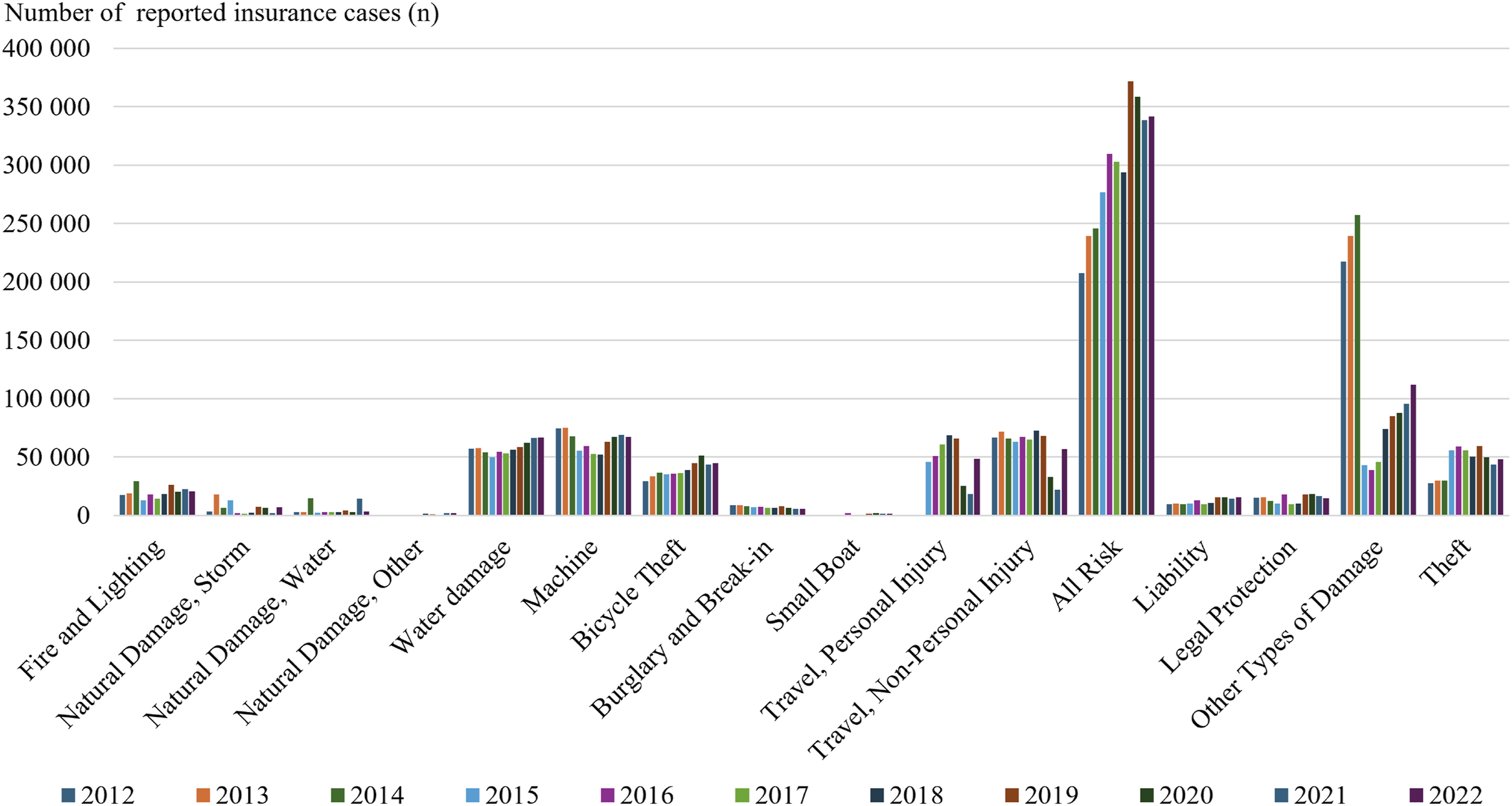
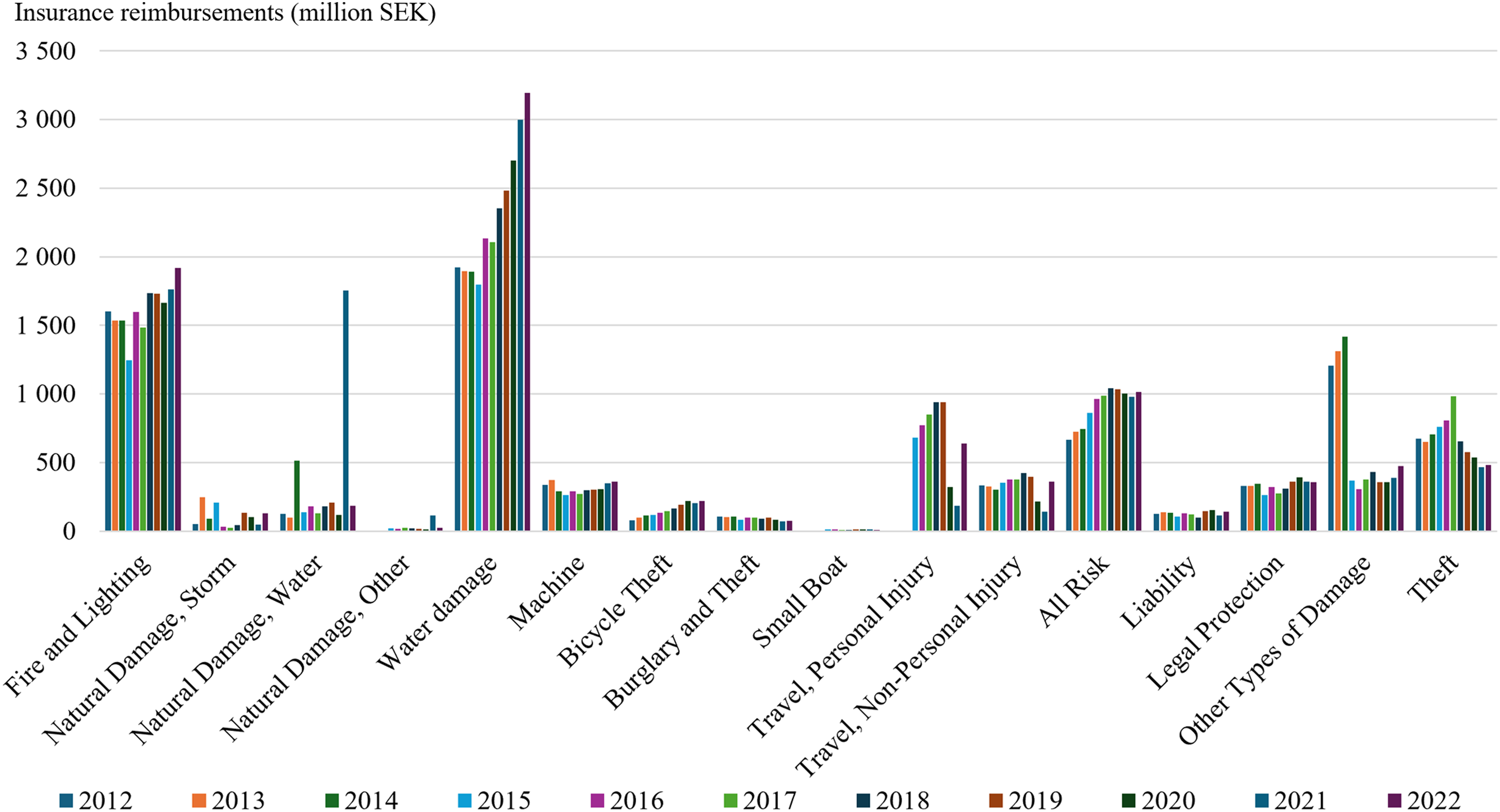
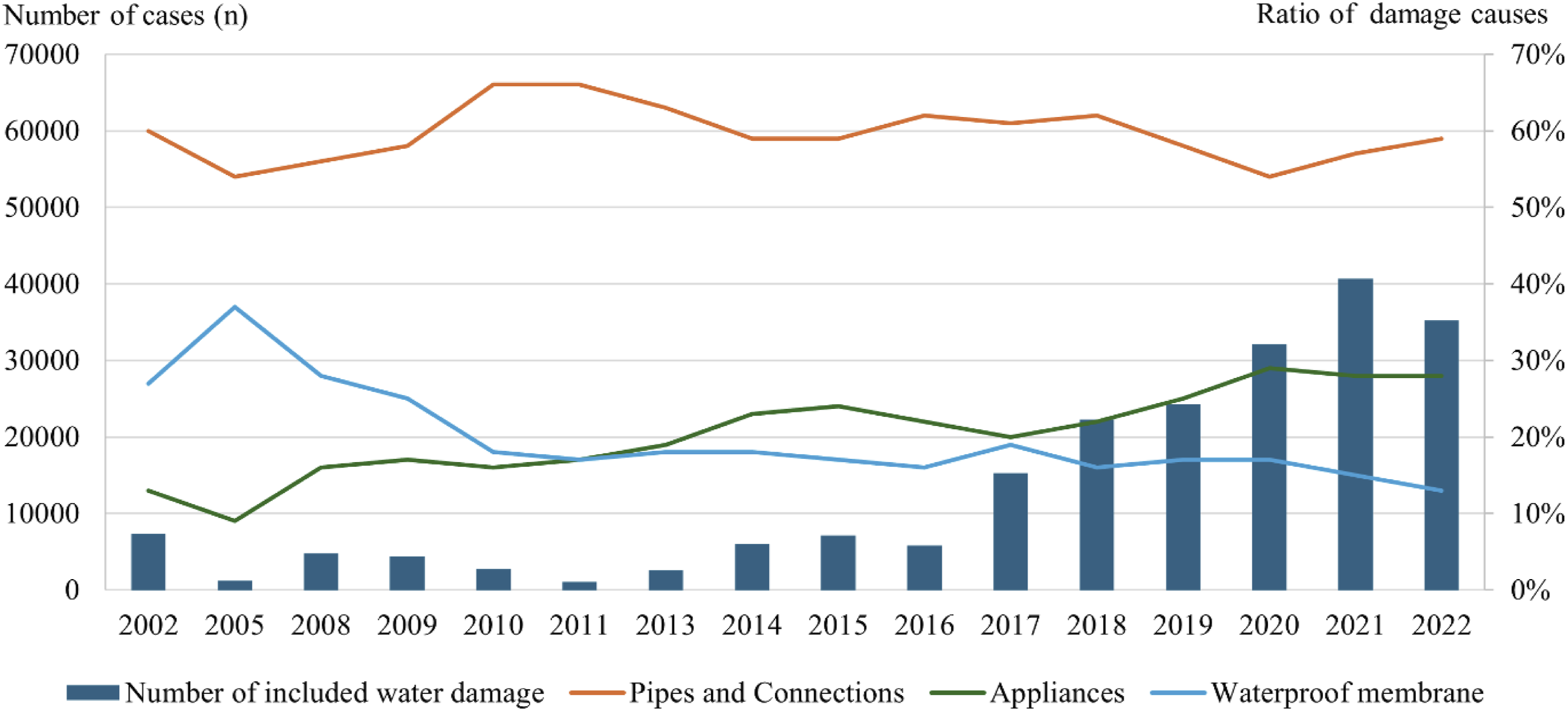
Figure 1 illustrates the reported number of insurance cases, where ‘All risk’ insurance cases constitute the largest category (approximately 38% of the total number of cases). Figure 2 illustrates the amount of insurance reimbursements which highlights that ‘Water Damage’ constitutes the largest category in terms of reimbursement (approximately 27% of the total reimbursements and 43% larger than the second largest, fire and lightning on average). This emphasizes the significance of water damage occurrence and costs on society and why it is important to research this topic to reduce the allocation of resources to the reparation of water damage cases. Approximately 40,000 water damage cases in insured buildings (from the insurance category water damage) in Sweden are annually analysed, where the occurrence and cause of the cases are documented. These statistics, comprised of data from 2002 to 2022, are presented in Figure 3 and divided into three categories of building service system (tap water, sewage or heating systems pipes and connections) and household appliances or waterproof membranes the damage was derived from. In Figure 3, the building services systems such as pipes and connections are the largest contributor to water damage occurrence in Sweden with approximately 60% of the annual cases. However, appliances have been increasing and have contributed to water damage in rooms without waterproof membranes, such as kitchens, which are the rooms where most water damage cases occur in Sweden.
4
Water damage cases in the insurance category water damage evaluated in Sweden between 2002 and 2022 per cause.
4
In Norway and Denmark, corresponding amounts of water damage and costs can be found, indicating that water damage is a problem across Nordic countries.5–7 The number of water damage occurrences and the cost of water damage in residential buildings in Nordic countries is a cause for concern, one that leads to immense resources being used for reparation, renovation and restoration of water-damaged materials and buildings.4,6–9 The similarities in construction and building methods could be a factor, but reports of water damage in buildings can also be found in Europe, Asia and North America, suggesting it is an international challenge.10–14
Moisture in homes from water damage and other sources has been associated with an increased likelihood of respiratory diseases and adverse health effects such as asthma, respiratory infections, allergic reactions and eczema.15,16 Furthermore, discomfort for residents includes economic concerns such as whether the insurance company will cover the economic impact of the water damage. Moreover, the water damage could have consequences for the resident, such as absences from work or school. Environmental and cost concerns are likely to arise in a building where water damage has occurred. These include renovation measures to restore the buildings. A shortened life cycle for a building generates a higher carbon footprint and a waste of water-damaged material. 17 Such consequences contradict the European Union’s and the United Nations’ goals for sustainability and increased efficiency of resources.18,19
The reimbursement cost of water damage has increased yearly in Sweden, from 1.8 billion SEK in 2000 to 4.9 billion SEK in 2022, an increase that, together with the increased efforts to promote sustainability in the built environment to decrease carbon emissions, demonstrates that water damage is an area that warrants more attention. 2 To address the problems and find ways to reduce the occurrences of water damage, the first step to take is a review of the current state, which will allow possible research gaps to be identified. Scientific publications and industry publications address various aspects of the problem, but systematic reviews are lacking and scientific research on water damage in building services systems seems to be limited. Research results, experience and outcomes from this research could also benefit the building industry.
To determine the current knowledge and the research performed in the water damage field, this study aimed to compile and review the literature on water damage in buildings to assess any gaps that exist in the research and determine where further research is needed. This study also aimed to review and assess measures used to reduce water damage in the field (such as methods for reducing water damage in the building sector) and those studied within the research community. Finally, the study aimed to further find research that could support industry and the scientific community in finding new methods and techniques for reducing the impact and consequences of water damage.
Method
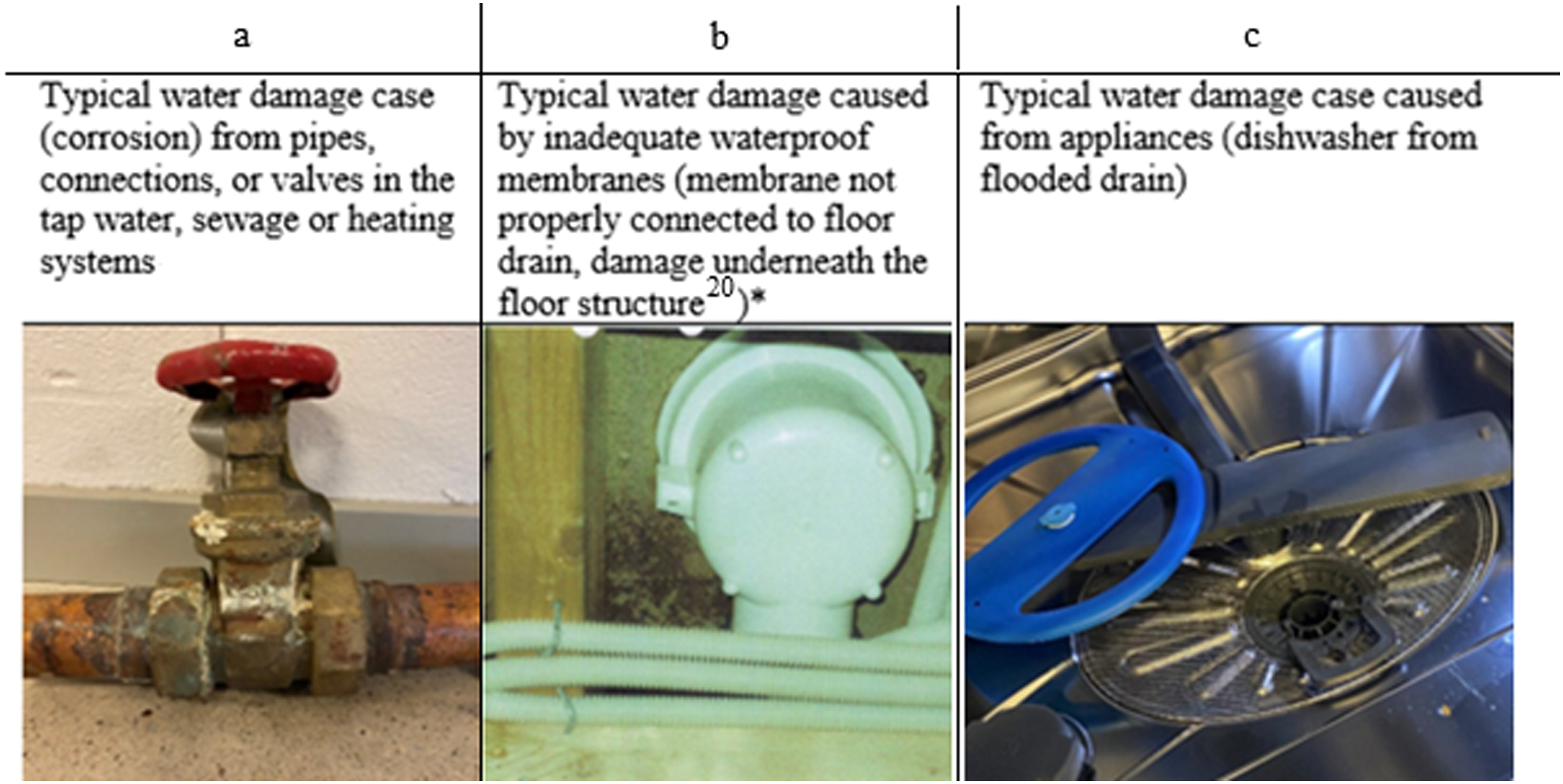
The comprehensive examination of the field was undertaken through a literature review of both the scientific literature and literature from the governing industry organizations, commonly referred to as ‘grey literature’, the term used from here on. This study focused on water damage occurring in buildings due to the immense reimbursement (constitutes the largest category of all) costs that annually are reported (Figure 2). The water damage included in this study originated from building services systems such as leaking pipes, connections or valves in the tap water, sewage or heating systems (see example in Figure 4(a)). In addition, leakage from inadequate waterproof membranes in wet rooms was considered (see example in Figure 4(b)), as was leakage from appliances (see example in Figure 4(c)). Appliances are equipment that use water from the water system or could cause leakage, installed in a room without a drain, for example, dishwashers, refrigerators, freezers, coffee machines or ice machines. Figure 4 shows examples of typical causes and components for water damage occurrence studied in this paper, the same categories as described in Figure 3. Examples of water damage cases studied in this paper. *Picture BKR.
20
The review was conducted using both quantitative and qualitative analyses. To provide a comprehensive view of the research field, a quantitative analysis was conducted to try to identify significant parts in terms of quantitative measures such as the amount of articles being published. This was done to explore which fields and areas have been researched and which fields of research have been performed. However, the quantitative analysis does not reveal anything about the qualitative aspects as specific content, facts, which results and conclusions have been drawn, and methods used. Nor does it reveal what is known and has been established concerning this field or which areas have not been answered yet. A qualitative study/analysis has therefore also been undertaken to complement the quantitative one. Both aimed to contribute to being able to identify any possible research gaps that are valid to study in the future. The papers found in the quantitative part were used in the qualitative section to analyse the field.
Quantitative analysis
The methodology used in the analysis follows the 10 steps of a literature review described by Säfsten and Gustavsson.
21
They are as follows: (1) Specification of the purpose of the literature review. (2) Identification of appropriate keywords. (3) Formulation of criteria for inclusion and exclusion of literature. (4) Selection of search tools and database. (5) Formulation of the search strategy and the performance of searches. (6) Brief analysis of identified literature. (7) In-depth analysis of relevant literature. (8) Extraction of data and creation of an overview. (9) Analysis of results and content. (10) Presentation of results – literature review.
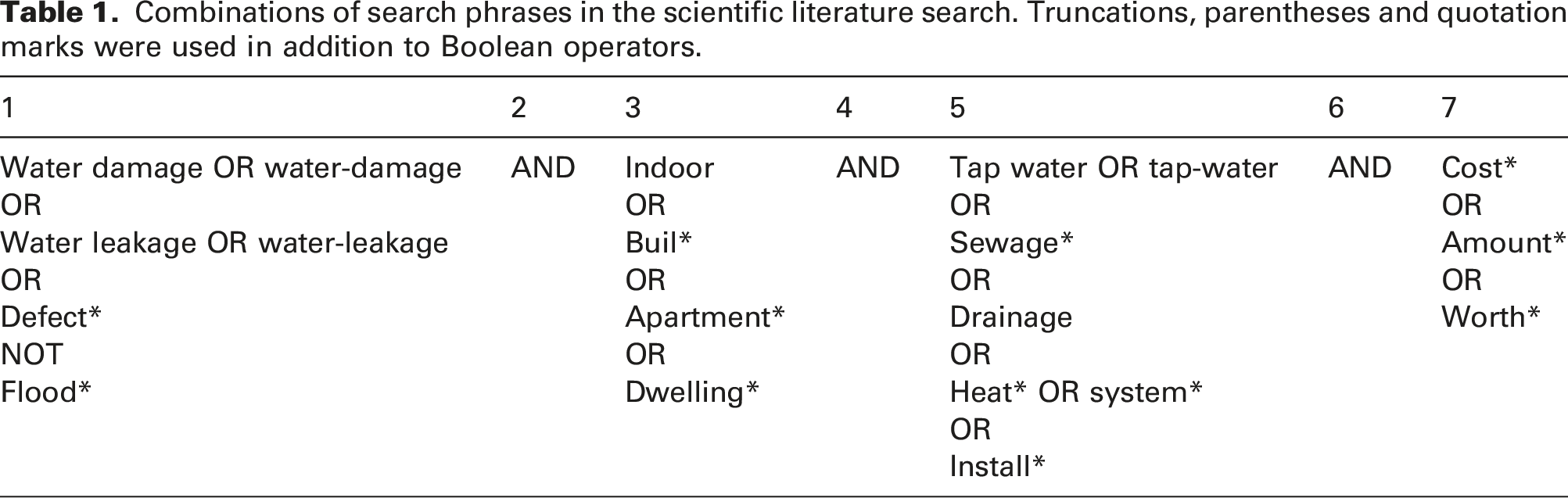
The objective (1) of the study was to search for international and national literature to find different solutions on how the amount and effect of water damage could be reduced. Appropriate keywords were identified (2) by determining the words frequently used in studies of water damage as limited above. These keywords were also used to formulate a coherent search method and a structure between multiple searches. The search was limited to the bibliographic information of title, abstract, keywords and authors. Boolean operators of AND, OR and NOT were used together with truncations and parentheses to limit and specify the searches. Quotation marks were used to limit search results to the exact phrases given, for example, ‘water damage’. An overview of the found literature was produced from their titles, abstracts and keywords, which together with a brief analysis of the identified literature (6) was used to compile the inclusion and exclusion criteria (3). The literature included in the study discussed water damage, its cost and its effect. Studies of the consequences of moisture in the building envelope, as defined by Hagentoft, 22 was also determined to be of interest even if the water did not originate from sources within the building.
The search strategy (5) used for this paper was developed to review literature by scientific information management. The strategy aimed to find scientific databases that included literature and relevant results for the study. The outcome of some preliminary searches conducted before this study determined the requirements for the databases. In this preliminary work, no international water damage-based database was found. Consequently, requirements for the databases used in this study were determined, namely, databases with international and multidisciplinary content that could offer a scientific library with peer-reviewed literature. The scientific databases chosen were Scopus and Web of Science (4). The Web of Science offers, according to Aghaei Chadegani et al., 23 strong coverage of literature that dates back to 1990 written in English. Scopus, in contrast, offers a wider range of journals and literature. 23 This study did not exclude references due to the paper’s publication date, but there was a sifting that determined the technical relevance of the paper, with publications closer to the present time deemed to be more relevant.
A brief analysis of the relevant literature (6) was carried out by analysing and scrutinizing the literature to determine the degree of relevance to the subject and in accordance with the aim of the paper. Papers of greatest relevance could then be analysed in more detail (7) using several key factors. First was whether the found literature was addressing water damage that occurred due to interior circumstances, for example, building service systems such as leaking pipes or connections from tap water, sewage, drainage, heating systems and inadequate waterproof membranes. Another decisive key factor was the building technique used, as different consequences and impacts of water damage would result, such as conditions for mould growth, depending on the materials used. Because of this study’s objective, the climate and the building method were not decisive factors to exclude literature; rather climate and building method were factors in analysing the consequences and different effects of water damage.
The next step of the literature analysis was to extract data and create an overview of the found papers (8), which allowed the analysis of the found literature, also described as the analysis of the results and the contents (9). The literature was analysed by a quantitative method applied to the search results, using metrics from authors, publication field and country, and assessing the ratio between hits and relevant hits. Since the scope of this study was to study water damage in the indoor built environment, a limitation in the fields of engineering and construction building technology were made.
The presentation of the results (10) used several factors to describe the literature. These factors were the number of records found in total and by year of publication, the geographical distribution of the publications, the geographical distribution of the subject areas, literature distribution by methods used and publication type, the fields of science journals, and the found literature published within. In addition, the percentages of hits that were deemed to be relevant and therefore included in this study were also presented.
The relevant references were divided between Europe, South and North America, Asia, Australia and Africa to present the geographical distribution of the literature. Furthermore, four categories of subject areas were defined, with the help of the categories mentioned in the databases, to explain what kind of research was conducted in certain parts of the world. They were construction defect analysis, automation in buildings, quality in construction and moisture analysis. Construction defect analysis included references that discussed or analysed defects within a wider narrative than just water damage, such as defects occurring in the construction or defects occurring due to the design of the building. The studies included were analyses of such defects. Automation in buildings included references that used/discussed methods and strategies using technology to automatically detect or prevent defects. Quality in construction included references that discussed or analysed factors such as quality during the different phases of the building’s life cycle, and quality in terms of management, design, workmanship and building material. Moisture analysis included references that discussed the consequences and effects of moisture in buildings, and how it affects the occupants in terms of indoor air quality, indoor environment and building physics.
The governmental laws and regulations that were studied were the Swedish National Board of Housing, Building and Planning, the U.S. Department of Housing and Urban Development (HUD), and the UK Department for Levelling Up Housing and Communities. The included industry organizations are the National Board of Housing, Building and Planning (Boverket) in Sweden, the Danish Housing and Planning Authority (Bolig- og Planstyrelsen) and the Norwegian Building Authority (Direktoratet for byggkvalitet). The included research organizations and industry organizations are the Research Institutes of Sweden (RISE), SINTEF Norway, Säker Vatten (Safe water installation) and Vattenskadecentrum (Water damage centre). Technical manuscripts, theses and reports from projects were found by direct searches on industry organizations’ webpages or indirectly through recommendations or communication with professionals working in the industry in Sweden, Norway or Denmark.
Qualitative analysis
The qualitative analysis was conducted using three topics. These topics are commonly used in evaluating water damage and were used to structure and to analyse the research field of water damage, allowing comparisons to be made and conclusions drawn. These three topics were chosen for this study to categorize the literature findings and to find what methods are used, what has been studied in the different topics, and what learnings could be learned regarding the different topics. Furthermore, in the analysis the topics were used to analyse the published papers in the field regarding each topic, to highlight where research has been done and what is needed to achieve the goal of decreasing water damage occurrence, cost and effects. - Status determination – Causes and costs for water damage caused by leaking pipes or connections from tap water, sewage, drainage and heating systems and inadequate waterproof membranes in buildings. - Consequences and effects – Factors that can be found in the literature about the consequences and effects of water damages in buildings. - Strategies and methods for prevention of water damage –National and international strategies for approaches, methods and strategies, and technical solutions for preventing water damage in different stages of the building’s lifecycle.
The status determination was carried out by analysing the literature that studied or presented conclusions on the causes of water damage from leaking pipes or connections from tap water, sewage, drainage and heating systems, and inadequate waterproof membranes in buildings. The title, the method used and the origin of the study were considered in light of the common causes found in the literature to determine any gaps in the published research.
The consequences and effects of water damage found in the literature, such as health impact, climate impact and costs were analysed to determine if there were any gaps in the literature and as a part of the determination. Health impact related to water damage is a complex issue, owing to the lack of scientific publications specific to health effects from water damage (within the limitations of this study as previously laid out). Hence, health impacts of water damage were analysed concerning water or moisture in buildings, regardless of the origin of the water.
Strategies and methods for the prevention of water damage were studied with a focus on solutions related to different phases of a building’s life cycle, namely, design, construction and operation. The purpose of this approach was to distinguish the strategies and methods specific to the phase of the building’s life cycle, thereby better capturing the current knowledge. Design phase studies described and/or analysed strategies and methods that could be implemented during the planning/design stage of the building. Construction phase studies described and/or analysed strategies and methods that could be implemented during the construction stage of the building. Solutions in the operation phase described and/or analysed strategies and methods that could be implemented during the operation stage of the building, meaning the time after construction by the occupants/residents or the building managers.
Results
In this section, the results of the quantitative and qualitative analysis are presented and discussed, including the literature distribution, the status determination, strategies and methods for prevention of water damage and the consequences and effects of water damage.
Quantitative analysis
Combinations of search phrases in the scientific literature search. Truncations, parentheses and quotation marks were used in addition to Boolean operators.
Literature distribution
Figures 5 and 6 present the number of records found using the chosen keywords and search method in the Scopus and Web of Science databases by year of publication. It also shows the number of hits that were relevant by year, with the percentage of relevant hits also shown. As can be seen, the number of records was increased. There was also a large increase in the percentage of relevant hits during the years 1997–2005. Furthermore, there was a rise in the number of records for the period 2009–2021, but there was not a corresponding rise in the number of relevant hits during that time. The relevant hits were determined using the 7th step in Säfsten and Gustavsson
21
method with an in-depth analysis of the hits to determine if they were within the scope of this study, for example, water damage from building services systems and building technique. Number of records found and relevant hits in Scopus database. Number of records found and relevant hits in Web of Science (WoS) database.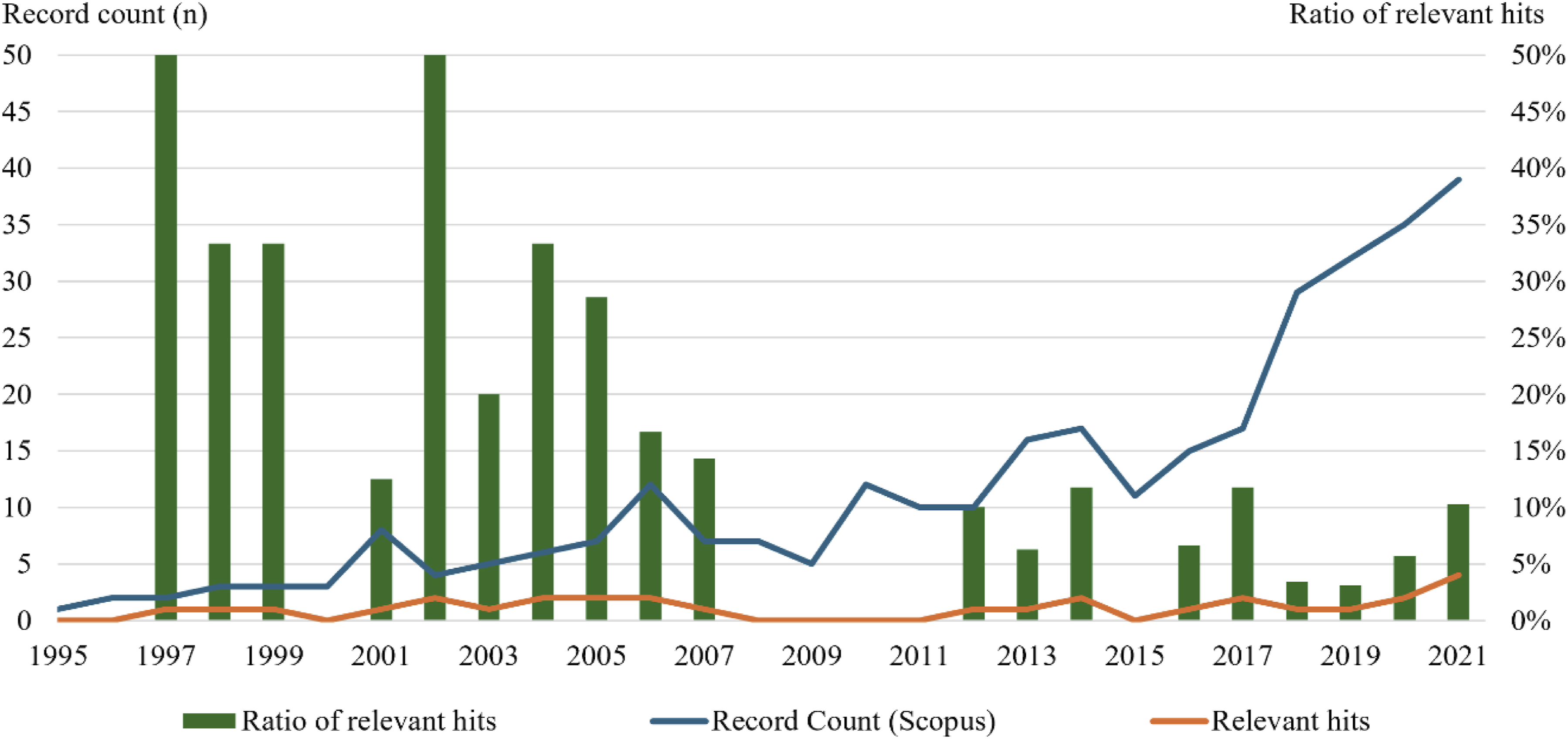
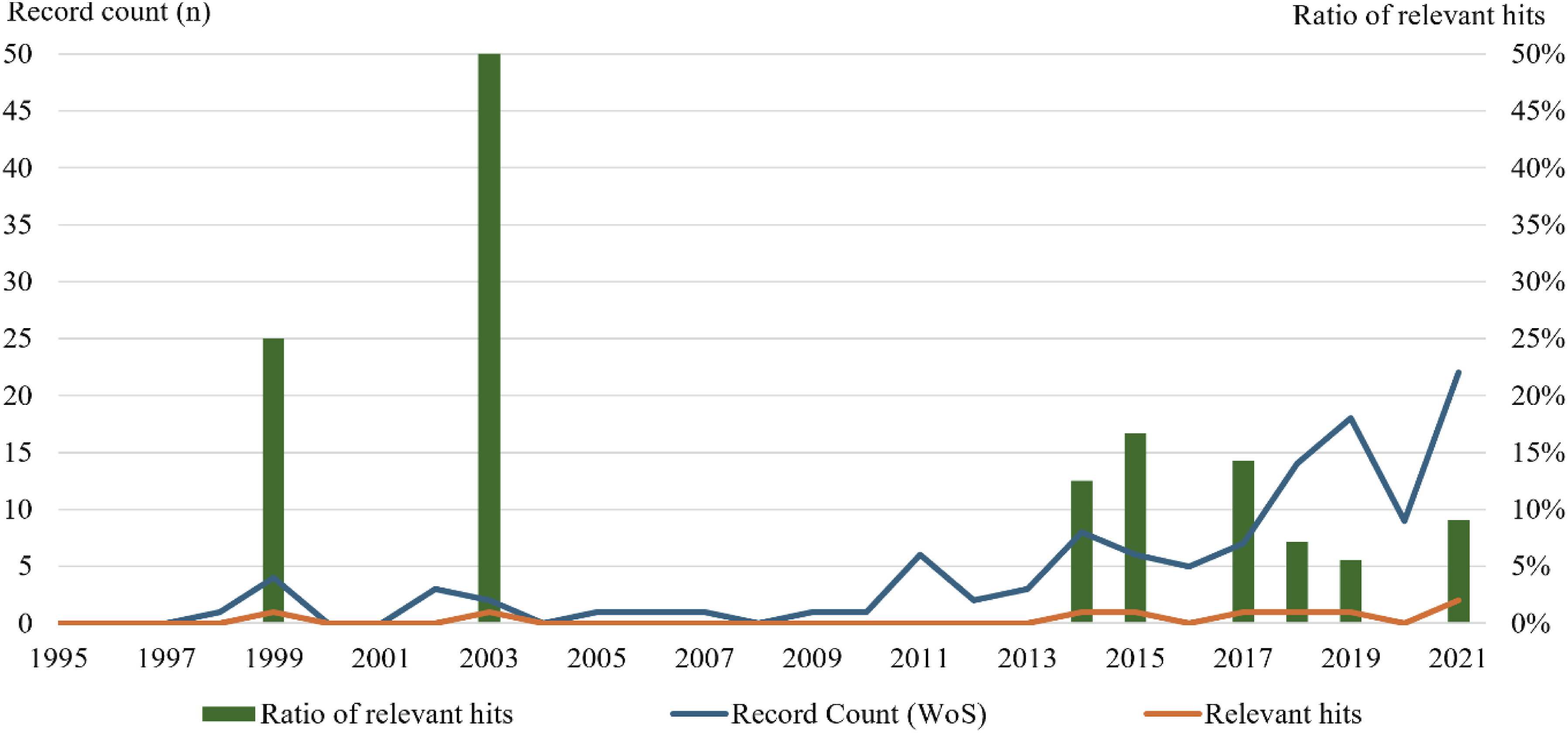
The searches resulted in a total of 451 hits of which 39 were deemed relevant for the study and within the study’s limitations. Scopus resulted in 30 out of 336 and Web of Science resulted in 9 relevant hits out of 115. The rate of relevant to non-relevant hits was from 9% to 7% in the individual databases and 8.6% when combining the search results. Scopus resulted in both more hits and relevant hits for the study. Many of the relevant records were found to be carried out between 1997 and 2007. The keywords that generated the most relevant hits were defect*, build* and cost*, which gave rise to a large number of records that were not relevant to this study, making the sifting to determine relevancy necessary. Figure 7 presents the geographical distribution of relevant hits in terms of the author’s affiliation. Geographical distribution of relevant records found in literature searches.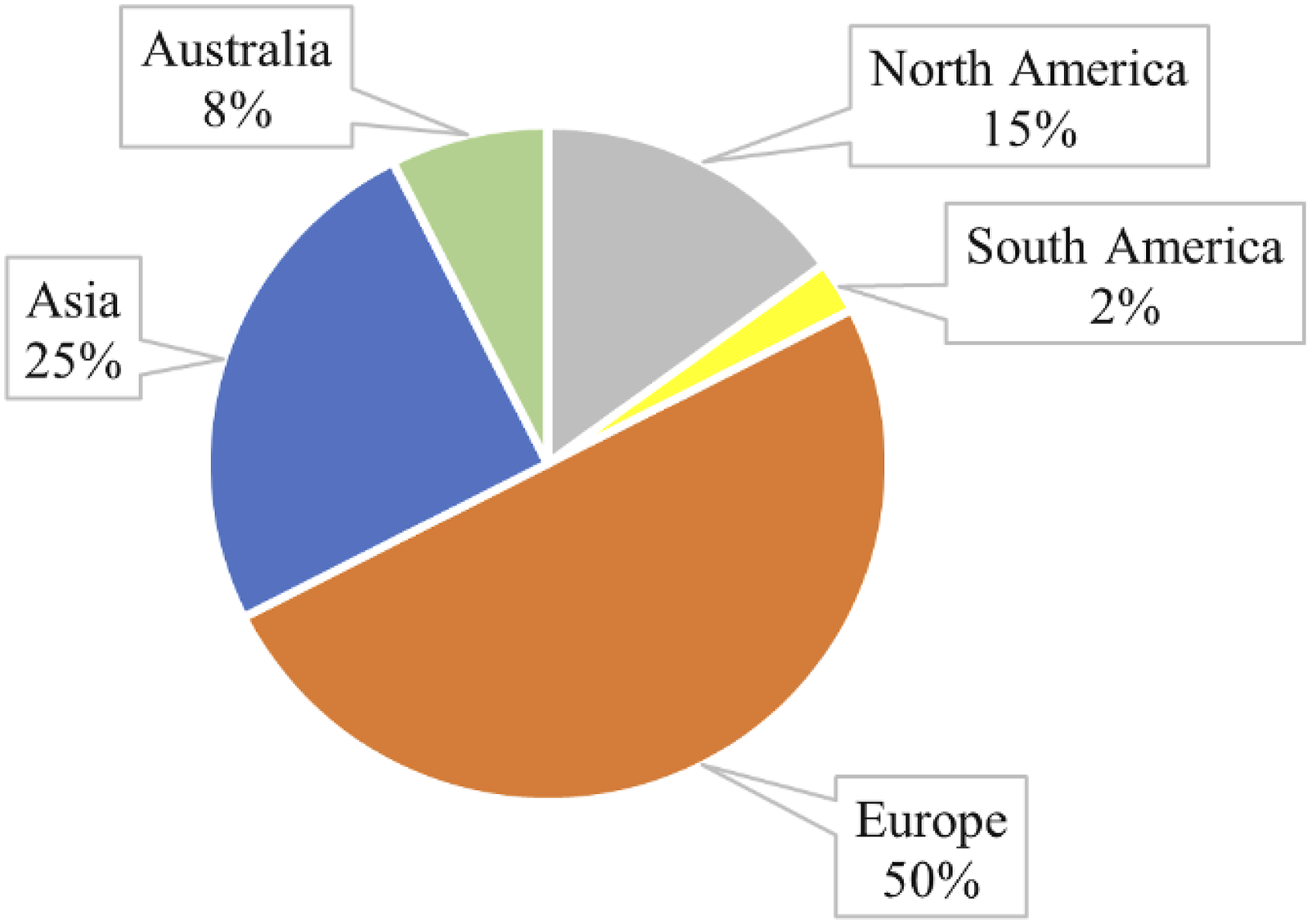
The geographical distribution relative to the subject areas – construction defect analysis, automation in buildings, quality in construction and moisture analysis – is presented in Figure 8, described as 8th and 9th step in Säfsten and Gustavsson
21
method. The geographical distribution of relevant records divided into the subject areas, construction defect analysis, automation in buildings, quality in construction and moisture analysis.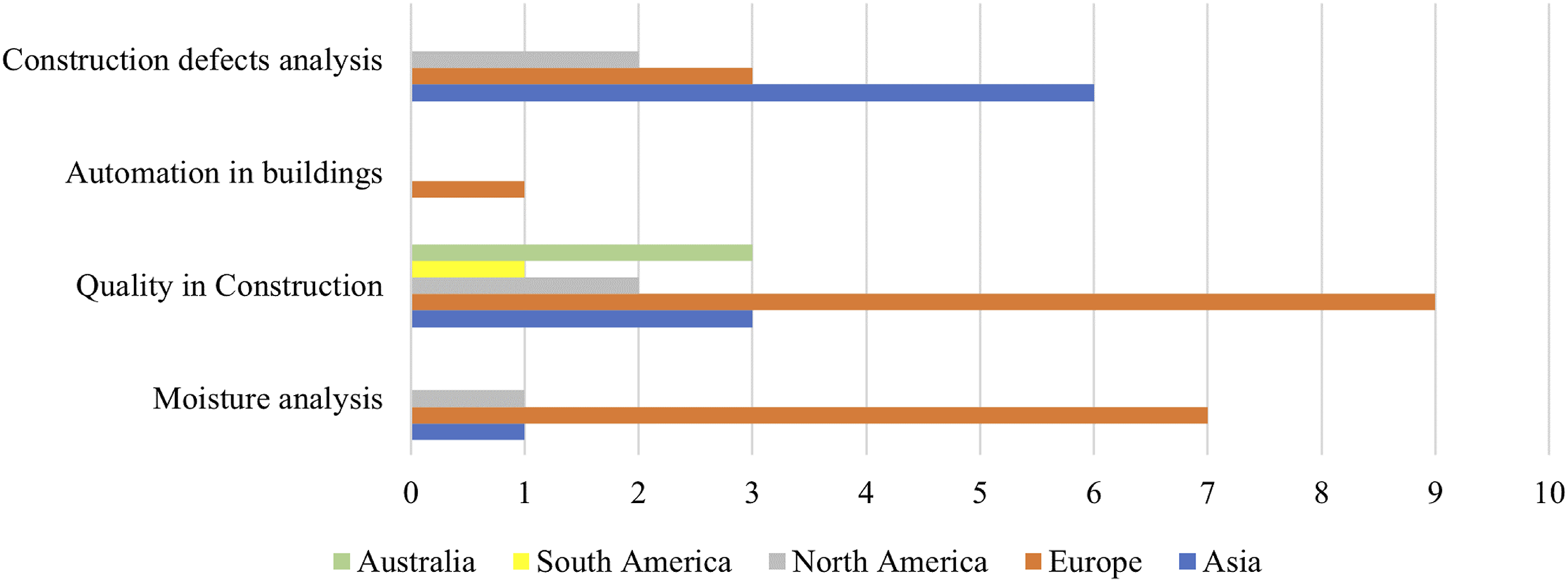
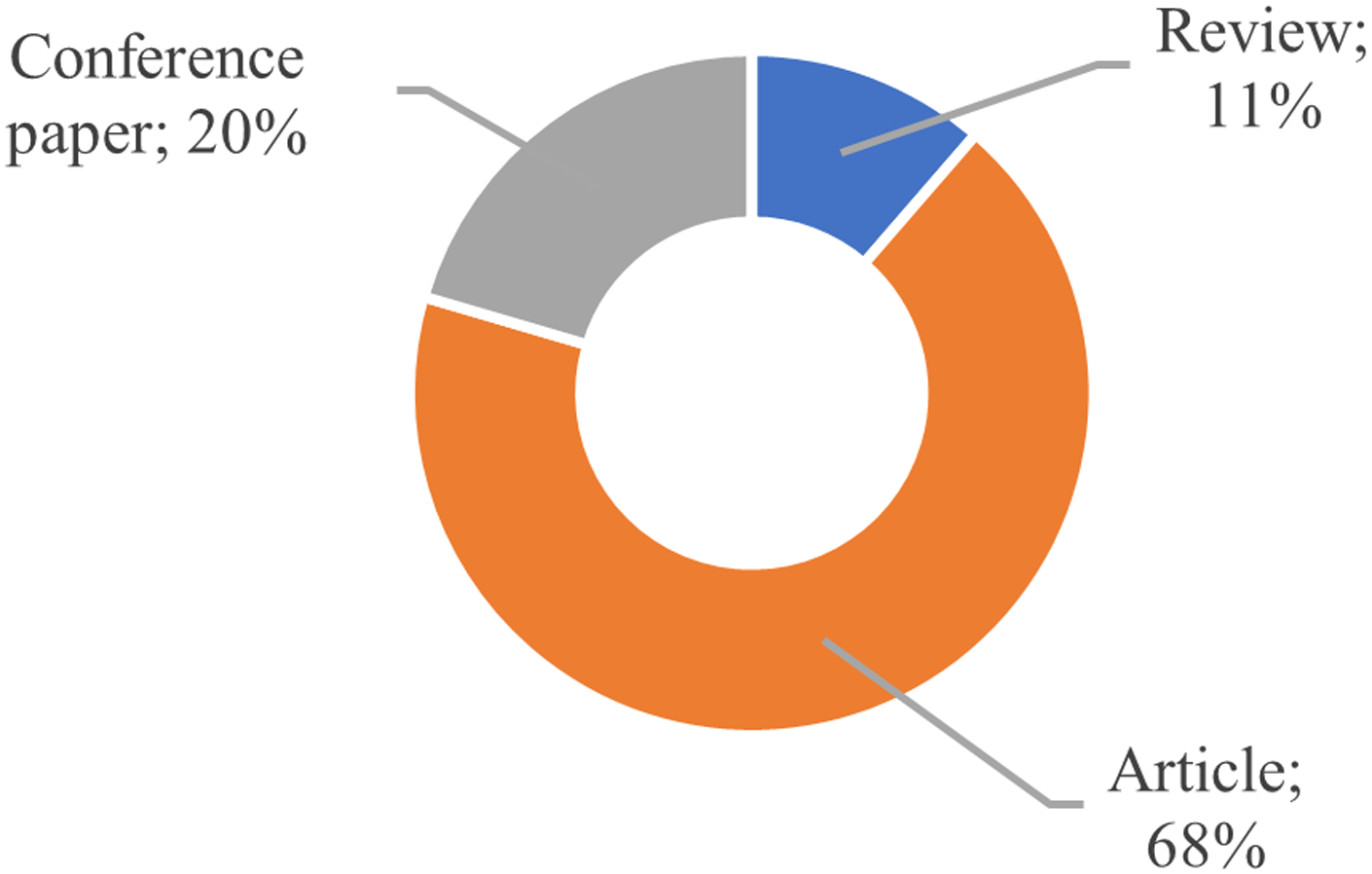
Four methods used for studying water damage in the relevant hits were identified, namely, literature analysis or review, case study, statistical analysis or survey. Figure 9 shows the distribution of these methods across the papers. Three publication types were also identified, namely, conference papers, reviews and articles. Figure 10 shows the percentages represented in the relevant hits. Literature distribution by method used in the relevant records. Literature distribution by publication type of the relevant records.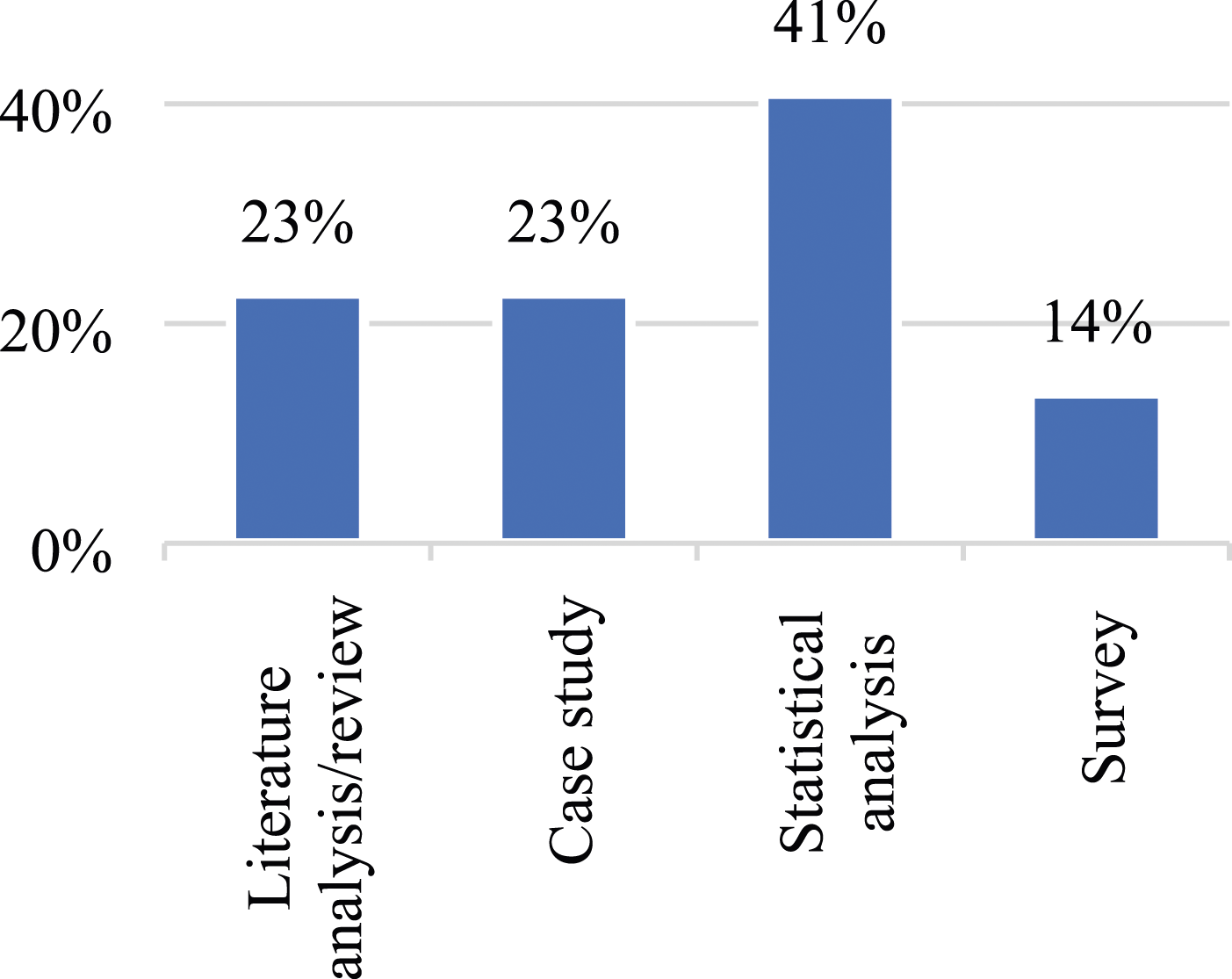
The number of journals and articles in the fields of building physics, sustainable buildings, social building science, architectural engineering, building services and machine learning is presented in Figure 11. The categories in the figure were defined from the databases. Scientific fields represented in the journals and the number of journals and articles in each field of the relevant records.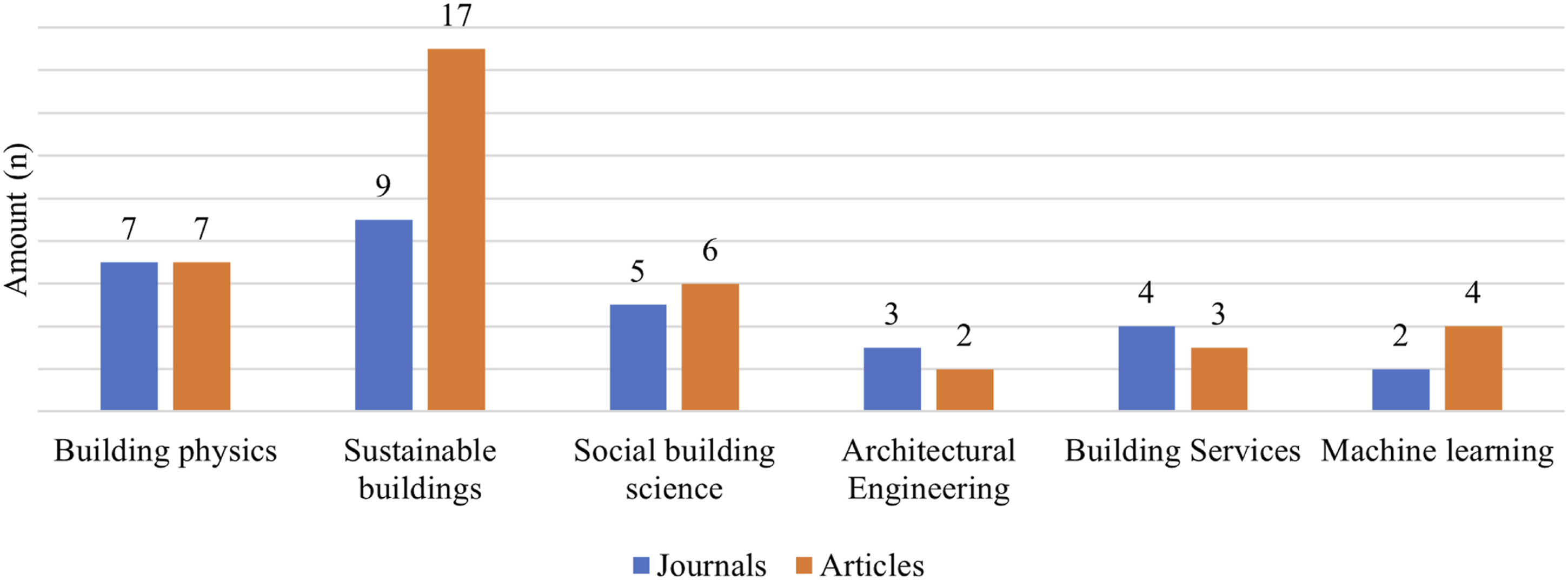
Authors with scientific influence in the field of water damage (presented in no specific order) showing main author/s, number of publications and relevant hits, country of residence and affiliation.
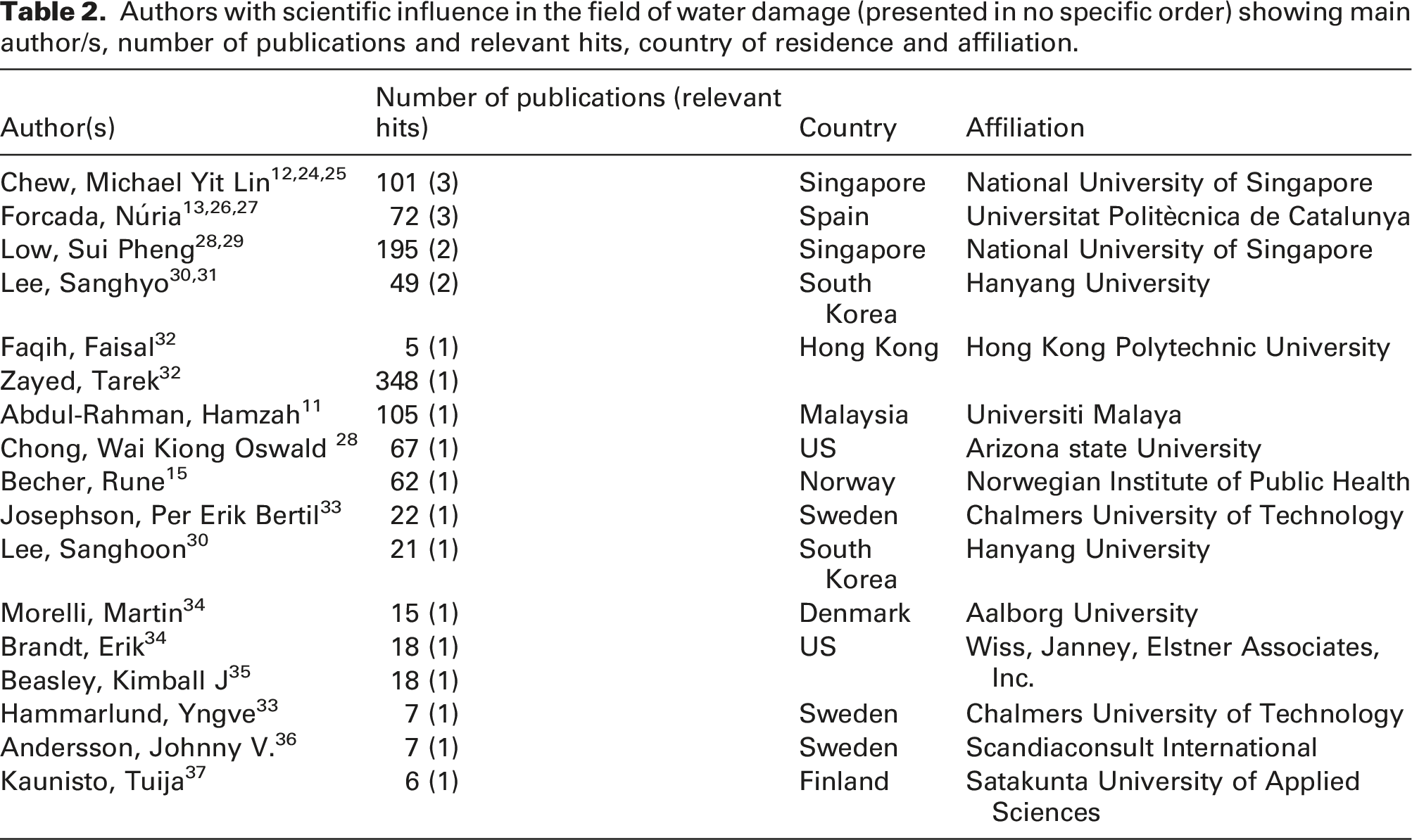
Qualitative analysis
The qualitative analysis was conducted to determine the research done with respect to three topics: status determination, consequences and effects, and strategies and methods for the prevention of water damage in buildings.
Status determination
Studies that examine the causes of water damages showing title, method used and the geographic origin of the study.
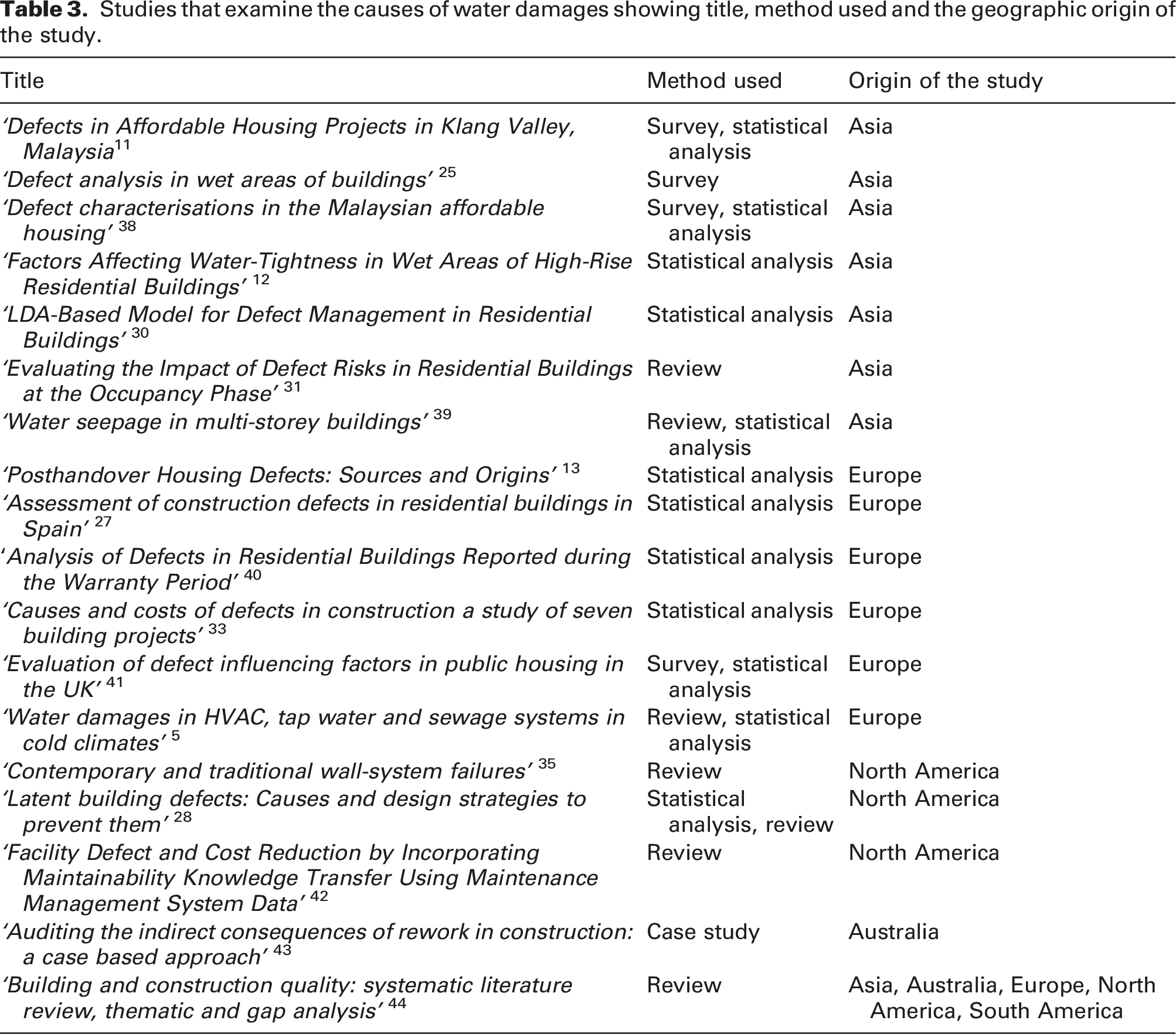
Residential buildings,12,27,31,40,45 and affordable housing,11,38 have been studied throughout the found literature, but defects and water damage in other buildings, such as offices, premises or public buildings have not been studied to the same extent. This gap is likewise found in the grey literature. One example is given by the Swedish statistics on water damage which contains data from dwellings and residential buildings but not from public buildings. 4 In Chew and De Silva’s work, 12 the quality of wet areas was studied, and conclusions were drawn based on what could be improved and what factors caused reduced water tightness in the buildings. Studies on wet rooms and factors causing defects or water damage in wet rooms,12,24,25,28,34 are more common than studies of defects and water damage in other areas of the building, for example, kitchens. Although water damage in kitchens is becoming more commonly reported in the Nordics, 4 there are only a few such studies, and more research should be done in the future.
Causes that are prominent and frequently mentioned are building design and construction quality.11–13,24,25 Abdul-Rahman et al. 11 studied defects in affordable housing projects in Malaysia to identify and determine the causes and develop solutions to avoid defects in other projects. The most common defects identified were leaking water pipes and total failure of water supply systems; others mentioned were cracking concrete walls, faulty doorknobs and concrete walls dampness. Abdul-Rahman et al. 11 suggest that defects are correlated; once the concrete of the external walls has started to crack the pipes within, the walls are likely to leak as well, together with many other problems. The primary causes of the identified defects, according to the authors, are poor workmanship, inferior materials and poor supervision and monitoring routines. Chew 25 emphasizes that with respect to their study, construction quality played the most important role in controlling defects, followed by material performance in tropical environments, design and maintenance practices. The importance of design concerning water damage and leakages was also mentioned in studies of high-rise residential buildings in Singapore.12,24 By assessing maintainability and the factors affecting water tightness the authors underscore the importance of an integrated approach between designers and builders along with those responsible for maintenance and operation. Furthermore, in three studies carried out by Forcada et al.,13,26,27 the influence of building types, sources and origins of construction defects in residential buildings and post-handover housing was assessed. The first study concluded that residents in multifamily buildings, flats or apartments detect more defects than in detached houses even though the gross floor area is smaller in flats. The authors suggest the following reason: ‘The differences in contractors’ and clients’ perceptions of quality notwithstanding, contractors observe end-user needs more accurately in detached houses than in flats’. 26 The second study emphasized that the construction boom of the late 1990s led to a rise of inexperienced workers and that competition within the industry affected the quality of the construction of buildings. The study concluded that there is a strong correlation between post-handover housing defects and workmanship, inspection/checking and responsibility. 13 The third study suggests that a quality management system can prevent and possibly eradicate construction defects. A quality management system in parallel with construction activities to minimize defects would be beneficial both in time and costs. 27 Statistics and data on the occurrence, causes, origins and costs of water damage were not found; these could have provided a comparative determination of different countries’ status concerning water damage.
Consequences and effects
Studies that examine health, climate and building aspects of water damage showing title, method used and the origin of the study.
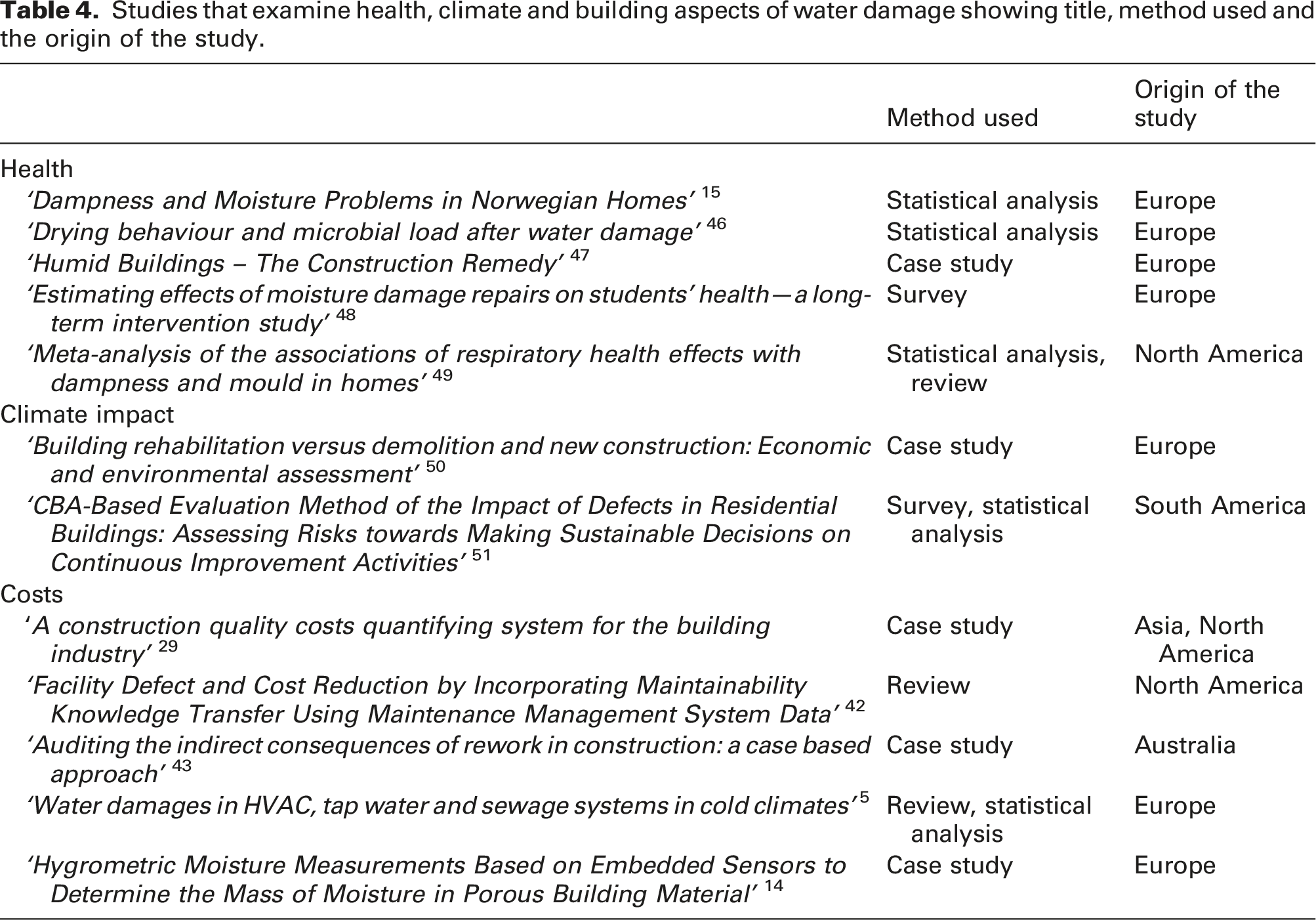
The health aspects of moisture and its effects and consequences have been studied by Becher and Høie, 15 Andersson, 47 Fisk, Lei-Gomez, 49 and Haverinen-Shaughnessy and Pekkanen, 48 amongst others. From these studies and others, it is well known that mould and damp indoor environments are associated with symptoms such as asthma and respiratory diseases 16 and that there is an approximately 30–50% increase in respiratory and asthma-related health issues in homes with dampness and mould. 49 Becher and Høie 15 concluded that crawl spaces, basements, insulated attics, cooling rooms and bathrooms, in that order, are most susceptible to moisture damage, and to prevent moisture damage from a leakage or water damage the damaged material/area must be removed, and the water must be dried out before the damage can be restored. However, although water damage, in most cases, could lead to moisture damage it was not found to be studied as a specific cause or effect. Some examples of questions that arise are (1) How much water must leak from the water damage before it causes a risk of health issues to the occupant? (2) What kind of damage and in which area of the building pose the largest risk to the occupant? (3) Is there a difference in the health impact, and what would it be, depending on the source of the water, for example, sewage and heating water?
Studies that evaluated the climate impact of water damage were those by Alba-Rodríguez, Martínez-Rocamora, 50 and Milion and Alves. 51 They examined various renovation measures and how to make educated decisions in the operation of a building. However, these studies did not directly analyse water damage but rather the effect of the damage. Thus, the grey literature was used to assess the climate impact of water damage. Petrovic et al. 52 studied the carbon impact of the repair of water damage in a Swedish dwelling, which they concluded amounted to emissions of approximately 250–430 kgCO2e, depending on the extent of the damage. 52 Water damage in a bathroom in a Swedish dwelling amounts to emissions of approximately 250–700 kgCO2e, depending on the extent of the damage and the amount of material that needs to be restored. 52 Notwithstanding these estimations, more research is needed to understand the climate impact of water damage in different kinds of buildings – such as dwellings, multifamily buildings and public buildings – and for different building materials – such as wood and concrete. Furthermore, more needs to be known about the climate impact of various causes and origins of water damage to further understand the consequences and effects.
The costs of water damage are commonly studied by defects (in the quality of construction, for instance) and the costs of correcting defects at different stages, such as quality costs, prevention, appraisal and failure costs. 29 Also considered are the correlations between preventative maintenance, corrective maintenance, emergency work 42 and the consequences in terms of cost of rework. 43 The cost of defects for an organization or building project in terms of delays, rework and economic losses are described well in the literature, but the costs of the water damage to the occupants, insurance companies and society, such as sick leave, health costs and uninsured buildings, are not as adequately covered. The costs of water damage in insured buildings, mostly dwellings, are kept track of by statistics or insurance companies for example,2,6,7,53 but a holistic approach, one that covers multiple cost categories in different building types, such as multifamily buildings and premises and offices, is lacking.
Strategies and methods for prevention of water damage
Studies about strategies and methods for the prevention of water damage show strategies are divided into the design, construction and operation phases of the building’s life cycle.
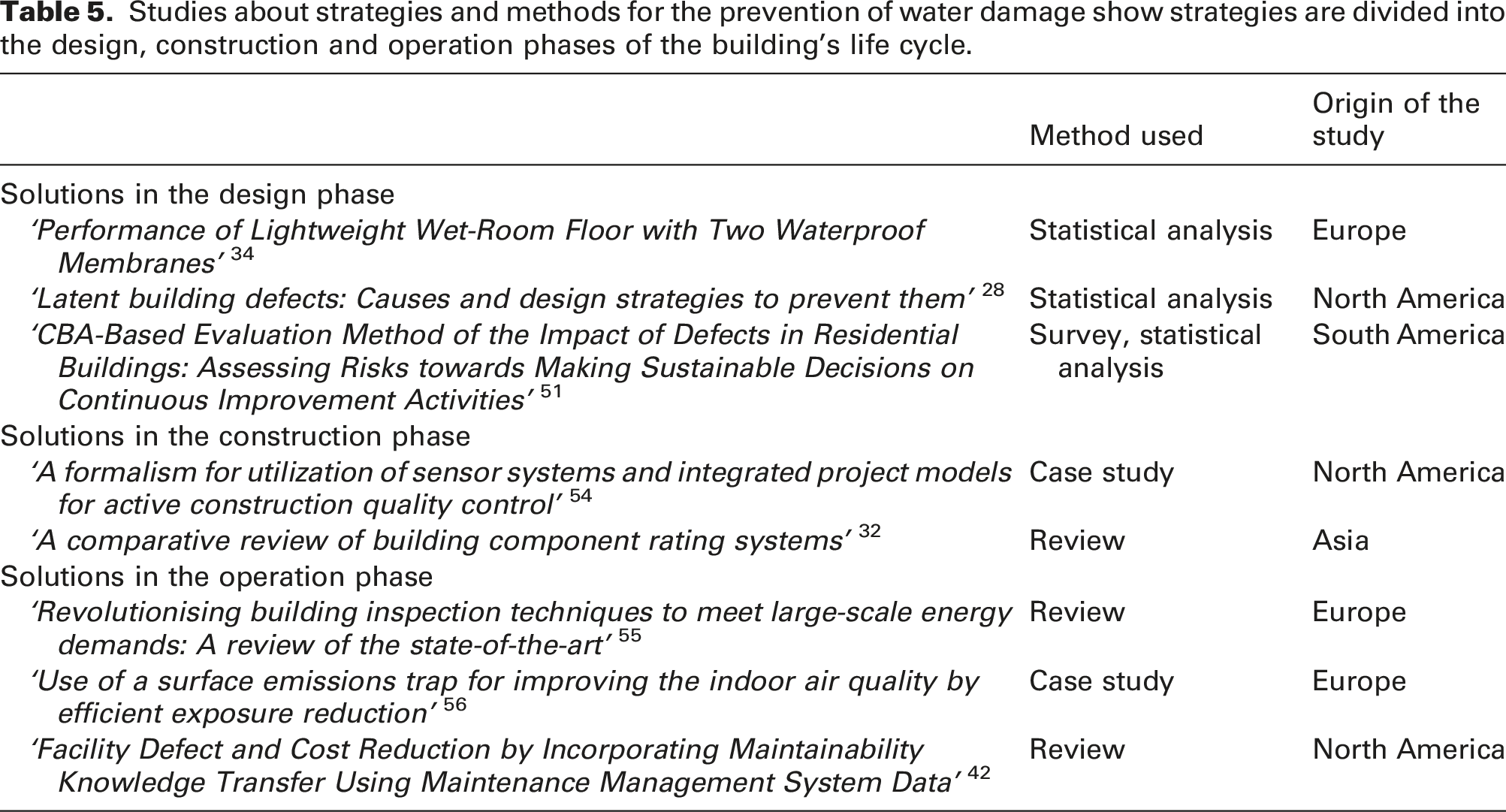
Design phase strategies and methods are the following: additional waterproofing and changing traditional building methods, as described by Morelli and Brandt; 34 moisture trapping zones and leakage-stopping systems to prevent leaks flowing into dry areas, as described by Chong and Low; 28 and methods to support the decision-makers in sustainable choices, described by Milion et al. 51 Current solutions that could be implemented in the construction phase include detecting defects using sensors, and during the construction phase inspection and analysis together with follow-up actions 54 and methods for assessing building components during inspection. 32 In the operation phase, strategies and methods to prevent water damage are mapping the building structure to make water leakages and other defects visible 55 and designing buildings that allow and facilitate maintenance. 42
The strategies and methods for the prevention of water damage focus on decision-makers, inspection and building techniques. Proven and tested solutions for active water damage prevention are fewer, even though some studies were found34,54 that could be implemented in the design and operation phases. Studies of measures that actively stop water from flowing or indicate when leakage occurs, which studied the performance of such measures were not found, even though such measures are available on the market. Studies that discuss wet rooms and ways to limit moisture from reaching moisture-sensitive material in the structure were found. The water damage problem is not limited to wet rooms, however, but can affect all areas in the building. For example, approximately 33% of the water damage in Sweden occurs in the kitchens of which the residents have a large influence. 4
Discussion
This study has demonstrated that water damage in buildings is an international issue. Research on water damage was not found to focus specifically on water damage in buildings but on defects, as a part of the building pathology field, in the built environment, with water damage being one source of many defects. Often, however, water damage-related problems, such as leaking pipes 28 and water leakage, 25 were the most common defects studied or the defect with the highest impact on the results of the study. In total 39 studies were found to be relevant in this review. The periods between 1997 and 2007 and 2017 and 2021 stand out with the earlier period showing a large percentage of relevant hits, but not a large number of records being found. The later period showed a large increase in records but not as high a percentage of relevant records. These findings could indicate that the focus on water damage is continuous throughout the years, but the focus on defects or building pathology has increased in the later period. Research was largely conducted in Europe and Asia, 45% and 30%, respectively. A distinction related to geographical distribution was also noted, namely, that studies conducted in Europe had a stronger emphasis on subjects such as construction quality and moisture analysis while studies conducted in Asia had a stronger emphasis on construction defect analysis. One explanation could be differences in building codes or methods, warm or cold climates and economic incentives.
The amount of water damage and, in particular, the costs of water damage are contributing to inefficient use of resources, both in economic terms and sustainability terms. Economic parameters were studied in construction defects and construction quality. These studies primarily aimed to make the building process more efficient for the building company and to improve the quality of the construction and the design phase. Studies of the economic impact arising from defects or water damage on occupants or residents in the finished building, during its operation phase, were fewer; more studies could be beneficial. It should be noted that this topic was partially covered in the grey literature, for example, in Nordic countries,4,6,7 but additional research could have an impact on reducing the costs of water damage. Furthermore, the articles found in this study were selected to represent the research in the field where they did reveal that the field of water damage was embedded in other research fields, of which sustainability and building physics were the most common. Sustainability in buildings is a major concern, possibly connected to climate goals in place, such as the UN’s 2030 Agenda for sustainable development and the European Union’s goal for reducing energy dependency and greenhouse gas emissions.18,19 Thus, the number of articles and journals related to sustainability is not surprising. Literature that focuses on sustainability related to or directly connected to water damage was not found. A pertinent topic, for example, would be the climate impact of water damage and what measures could be done to reduce the climate impact that water damage brings due to the repair and restoration of the building and additional use of material. There were case studies of construction projects,28,32,44 in which the causes of defects and the costs allocated to them were analysed and suggestions were made in design and construction; similar studies could benefit the field if they were primarily about water damage from leaking pipes, connections or values in the tap water, sewage or heating system, from inadequate waterproof membranes and appliances.
In the operation phase, usually the longest period of a building, it is the residents/occupants or building owner who are responsible for the building and its installations, services and systems. However, in contrast to the designer, constructor and building manager, they typically have less education, experience and knowledge on how to maintain the building and how to prevent damage. Thus, strategies and methods in this phase could have a vast effect, and the fact that the literature on this subject is more sparse than on others indicates a gap that, if filled, could have a large impact on the amount and cost of water damage.
Studies of water damage were often published in building physics and social science, suggesting that the consequences of moisture for both the residents and the building itself have been studied to some extent. Examples of moisture affecting the social aspects of the building have been reported47,49 and examples of water damage affecting the building physics are recorded.25,44 Surprisingly, fields such as building services, machine learning and architectural engineering were not as frequently found in the literature using the search strategy chosen for this study, indicating a gap, as previously mentioned, in the distinction between defects and water damage. More multidisciplinary research, for example, design, architecture and machine learning, could benefit the field of water damage in buildings. Water damage from building services in heating systems and household appliances is not covered by the literature to the same extent as water damage from leaking pipes in the tap water system. The rising trend of water damage from household appliances and in rooms other than wet rooms, as could be seen in Sweden and through the qualitative analysis, emphasizes the importance of research in such fields where architecture, social science, building physics and building services are integrated and where both defects and water damage are considered, such studies were not found in this review.
The qualitative analysis furthermore determined that residential buildings and affordable housing are studied to a greater extent than other buildings, such as offices, schools, preschools and publicly owned buildings. The design of the building and the quality of the construction in the construction phase were the prominent causes of water damage identified. Improved management systems and inspection routines were common solutions proposed. However, studies that emphasize the importance of designing and building to avoid or prevent water damage were few, though some coverage could be found in the grey literature.57,58 Furthermore, it was determined that methods, mostly passive, to prevent water damage have been studied but active methods and solutions that could be installed and added to decrease the risk of water damage have not been studied and evaluated to the same extent. Negative effects on humans living or spending longer periods in buildings with moisture and mould growth have been shown in several studies.15,16,47,49 Thus, studies with a focus on reducing its causes are important to improve factors such as indoor air quality and to reduce the possibility of mould growth in buildings. In addition, such studies could reduce the immense costs that annually are allocated to water damage and contribute to fewer repairs and unnecessary use of resources.
Conclusions
Through quantitative and qualitative analyses this paper can conclude that water damage in building services systems such as leaking pipes, connections or valves in the tap water, sewage or heating system, inadequate waterproof membranes and appliances has been studied to some extent. However, the research is heavily weighted toward the unifying concept of defects within the field of building pathology. In total 39 scientific studies and 16 studies and reports conducted by industry, government or other institutions between 1997 and 2021 were studied to determine the status, consequences, effects and strategies and methods for the prevention of water damage in buildings. The findings of this study are summarized as follows: ⁃ Water damage occurring in buildings is being studied, embedded in the larger field of defects. However, more specific research and statistics are needed to reduce the causes, costs and effects of water damage in all areas of a building. ⁃ Areas not commonly covered with waterproof membranes, such as kitchens, were not found to be studied to a great extent, even though the number of reported damages from appliances in these areas is increasing. ⁃ Informed and guided design, management and organizational structures to reduce defects in the early stage of the building and/or construction phase were found to be part of the suggested solution of reducing the amount, cost and effects of defects, including water damage. These shortcomings were found to be the most studied causes of defects. ⁃ There is a lack of research and statistics on water damage occurring in public buildings, such as schools and multifamily buildings, which are needed for a comprehensive analysis of the entire building stock. ⁃ Sustainability factors, such as emissions and climate impact of the repair caused by water damage in buildings, have not been comprehensively studied in the research identified in this study. Sustainable solutions for water damage could potentially reduce costs for residents, building owners, and management and insurance companies, and reduce the climate impact of the building sector. Even though the topic of sustainability had the most articles published, few were found on emissions and climate impact related to water damage. ⁃ Inclusion of fields such as social science, building physics and building services is needed to fully understand the consequences of water damage to the building, occupants and the indoor air. ⁃ Moisture in homes and its consequences have been studied with little or no regard for the water’s origin. It is important to understand the effects and consequences of mould growth and effects on indoor air quality, but the effects of water from specific sources, such as sewage, heating and hot tap water could have other consequences which are not yet studied. Therefore, there should be further studies on the consequences and effects of water damage from various origins. ⁃ Water damage was found to be an international problem, but different aspects of water damage are emphasized depending on the broader building problems occurring in the different regions of the world, for example, analysis of construction defects, quality in construction and moisture analysis.
Footnotes
Authors' contribution
All authors contributed equally in the preparation of this manuscript.
Declaration of conflicting interests
The author(s) declared no potential conflicts of interest with respect to the research, authorship, and/or publication of this article.
Funding
The author(s) disclosed receipt of the following financial support for the research, authorship, and/or publication of this article: This work was supported by the FORMAS (the Swedish Research Council for Sustainable Development) under Grant 2019-00649. The funding source had no involvement in writing this paper or the study.
