



Abstract
The article explores techniques for mitigating indoor radon in buildings, including soil depressurization, anti-radon coatings and membranes, interior mechanical building pressurization, and natural and forced ventilation procedures. The effectiveness of each technique depends on various factors, such as indoor radon level or building construction type. The region of Alto Minho, Northern Portugal, mostly comprises single-family housing with different structures and materials, and performing an assessment stage is crucial for selecting the appropriate mitigation method. The ageing and declining population in the region suggests that the rehabilitation of existing buildings is more likely than the implementation of new construction. The article also emphasizes the potential impacts of soil depressurization and pressurization on soil geotechnical properties. Anti-radon barriers and mortars have been effectively used in high indoor radon concentration situations and can be combined with natural or forced ventilation procedures and real-time multi-parameter monitoring for improving indoor air quality and energy efficiency of buildings.
Introduction
Radon (Rn) is a naturally occurring radioactive gas that is formed from the decay of uranium and thorium in the Earth’s crust. 1 It is colourless, odourless and tasteless, and is known for being a significant contributor to indoor air pollution. Radon is found in varying concentrations in soil, rocks and water, and can enter buildings through cracks, gaps and other openings in the foundation.2–5
Rn is the second leading cause of lung cancer after smoking. 6 When radon is inhaled, it can damage the DNA in cells lining the lungs, leading to the development of cancer over time.7,8 Radon is particularly concerning because it can accumulate in enclosed spaces, such as homes and buildings, and exposure to high levels of radon over an extended period can significantly increase the risk of lung cancer. 9 It is therefore essential to monitor and mitigate radon levels in indoor environments to protect human health.10,11
The most important current European legislation related to radon monitoring is Directive 2013/59/EURATOM. This directive establishes basic safety standards for protection against the dangers arising from exposure to ionizing radiation, including radon, in all activities involving exposure to such radiation. The directive also sets reference levels for radon concentration in indoor environments and requires EU Member States to establish national action programs to reduce population exposure to radon.
The Directive 2013/59/EURATOM was transposed into Portuguese legislation by the Decree-Law no. 108/2018 of 3 December. This law updates and reinforces the previous legislation regarding protection measures against radon in buildings, establishing the obligations of public entities, employers and building owners in terms of risk assessment, monitoring and mitigation. It also sets the requirements for the evaluation and control of radon exposure in public buildings and dwellings, as well as the guidelines for radon measurement, notification and reporting. According to this decree law, the reference level for radon concentration in indoor air is 300 Bq/m3.
Given this framework, mainly based on studies linking radon indoor exposure with the prevalence of lung cancer, such as those presented by Darby et al., 12 Ettinger et al., 13 Krewski et al., 14 Subramanian and Govindan, 15 Couraud et al., 16 Lemjabbar-Alaoui et al., 17 Alberg et al., 18 Pukkala et al., 19 Gridelli et al. 20 or Lubin and Boice, 21 just to name the most cited ones, the need for implementing measures to mitigate indoor Rn concentration becomes evident. Thus, this study aims to analyze the different methodologies most frequently used to mitigate indoor Rn concentration, applied to the specificities of the Alto Minho region. For this purpose, this study presents the framework of the region concerning the geogenic nature conditions that underlie potentially high indoor Rn concentrations, as well as the characterization of the most frequently used construction types. Finally, an analysis was made of the best practices adjusted to the aforementioned constraints.
Rn potential in the Alto Minho region
Regional location and framework
The Alto Minho region is in the northwest of Portugal, bordering the Spanish region of Galicia to the north and the Atlantic Ocean to the west. The region is characterized by a diverse landscape that includes mountains, hills, valleys and coastal plains. The climate in the Alto Minho region is influenced by the Atlantic Ocean, resulting in mild temperatures and high levels of precipitation throughout the year. The region is also known for its lush vegetation, including dense forests and fertile farmlands. The orography of the region is marked by the Serra de Arga, which dominates the landscape and provides scenic views of the surrounding countryside. The region is also home to several rivers and streams, including the Lima, Minho and Cávado rivers, which flow through the region and provide water for irrigation and hydroelectric power. The population of the Alto Minho region is predominantly rural, with small villages and towns scattered throughout the landscape. The region has a total population of around 245,000 people, with a relatively even distribution across the different municipalities. The region has a slightly ageing population, with a median age of around 45 years. The economy of the Alto Minho region is based on a variety of sectors, including agriculture, forestry, tourism and manufacturing. Agriculture is an important sector, with the region producing a variety of crops, including grapes, corn and vegetables. The forestry sector is also significant, with the region having large areas of forested land. The tourism sector is growing, with the region attracting visitors for its natural beauty, cultural heritage and traditional cuisine. The manufacturing sector is also present, with several small and medium-sized enterprises producing textiles, furniture and other goods. Figure 1 shows the location of the region in the national context and identifies the municipalities that make up the region. Location of the region in the national context and its municipalities.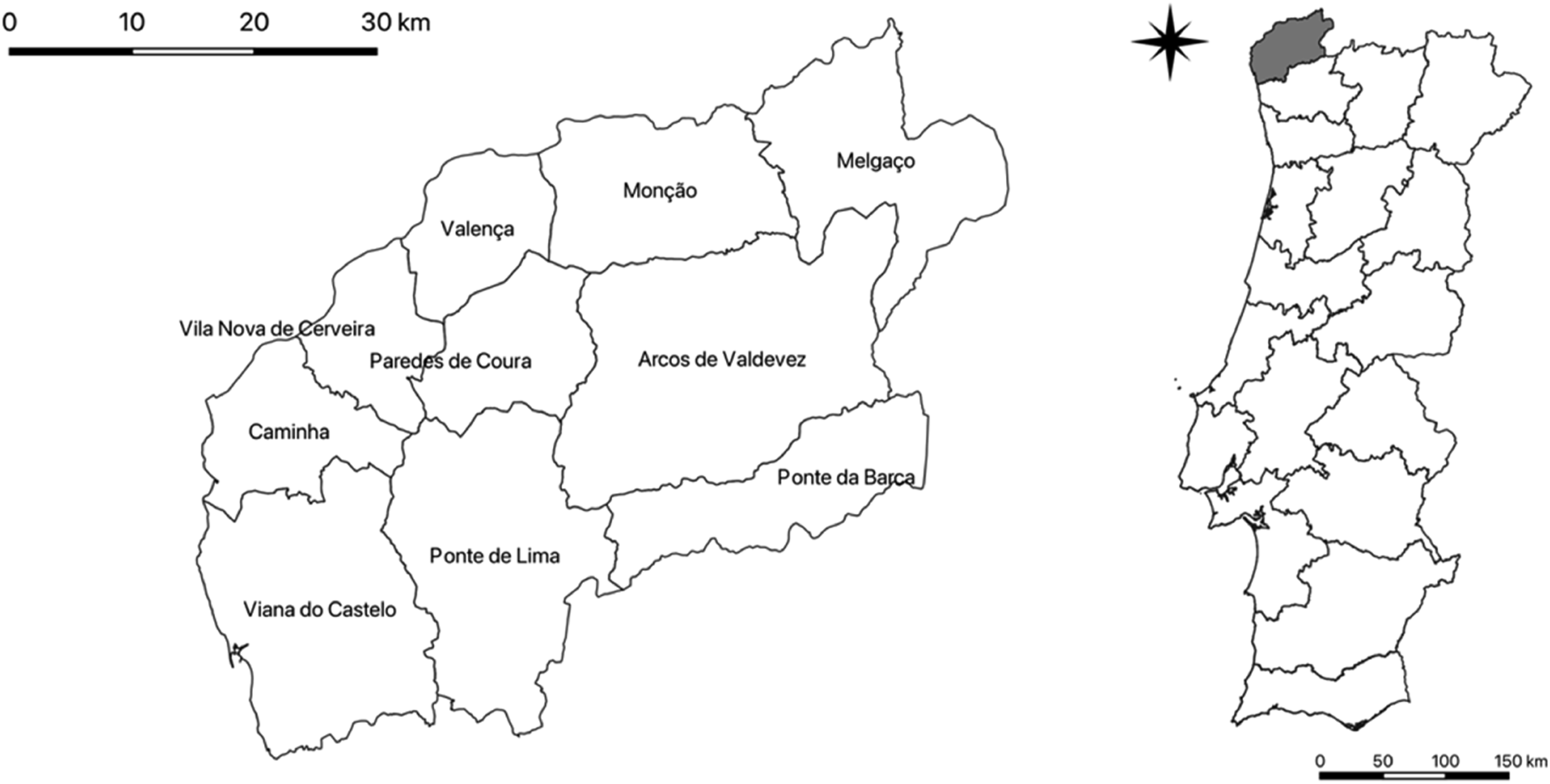
As can be seen in Figure 1, 10 municipalities form the Alto Minho region: • Arcos de Valdevez is a rural municipality with a predominantly ageing population of around 23,000 inhabitants. Agriculture and tourism are the main economic activities, with an emphasis on ecotourism due to the presence of the Peneda-Gerês National Park. • Caminha has a population of around 16,000 inhabitants and is characterized by a strong tourist vocation due to its location on the coast and the Minho River. The municipality also has a significant agricultural sector, particularly in the production of wine and vegetables. • Melgaço is the northernmost municipality in Portugal and has a population of around 9000 inhabitants. The economy is based on agriculture, particularly the production of wine and the cultivation of kiwi fruit. • Monção has a population of around 20,000 inhabitants and is known for its production of the Alvarinho wine. Agriculture is the main economic activity, particularly the cultivation of grapes, kiwi and vegetables. • Paredes de Coura is a rural municipality with a strong cultural identity, particularly in music festivals, with a population of around 9000 inhabitants. Agriculture is the main economic activity, particularly the cultivation of corn, potatoes and vegetables. • Ponte da Barca has a population of around 12,000 inhabitants and is characterized by its historical and cultural heritage, particularly the Romanesque bridge over the Lima River. Agriculture and forestry are the main economic activities, particularly the production of wine and the cultivation of chestnuts. • Ponte de Lima has a population of around 44,000 inhabitants. The municipality is known for its production of wine, as well as tourism and agriculture, particularly the cultivation of kiwi, vegetables and corn. • Valença is a border municipality with a population of around 14,000 inhabitants. The economy is based on commerce and industry, particularly the manufacture of textiles and the production of shoes and leather goods. • Viana do Castelo is the largest municipality in the Alto Minho region, with a population of around 88,000 inhabitants. The economy is based on commerce, industry and services, particularly in the areas of port activity, shipbuilding and tourism. • Vila Nova de Cerveira has a population of around 9000 inhabitants and is known for its arts and cultural events. Agriculture is the main economic activity, particularly the cultivation of corn, grapes and kiwi.
Geological characterization of the region
The geological characterization of the region is based on the information collected from existing cartography, mainly relying on the Geological Map of Portugal (scale 1:200,000) and its explanatory note for Sheet 1, which covers the entire region under study in the present article, published by the Geological Survey of Portugal.
22
Afterwards, as shown in Figure 2, the different geological types were unified based on their geographical continuity and lithological proximity. This approach was taken to facilitate a better understanding of the distribution of lithological structures in the region. Unified cartography of the Alto Minho region.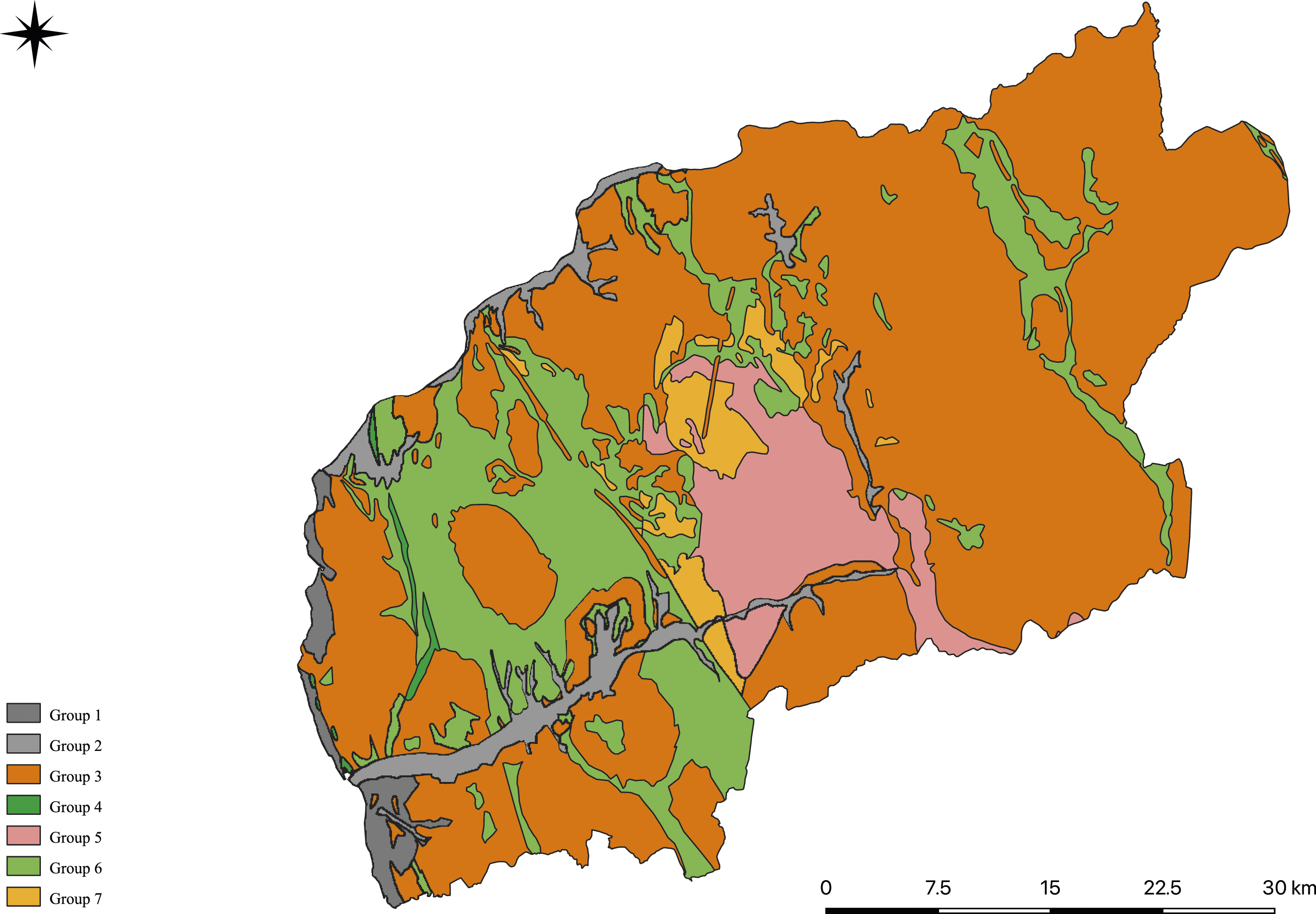
The different geological units in the region can be grouped as follows: • Group 1 refers to a variety of geological deposits found in the region, including those formed by the action of rivers and oceans. Fluvial deposits in the river valley area and marine deposits in the coastal strip are included in this group, as well as deposits that have been covered or uncovered by periglacial solifluction deposits. Additionally, the group includes fossil dune and current dune deposits and current beaches, sand and gravel, which are a result of coastal processes. These deposits have been formed over long periods and provide valuable insights into the history of the region and its geological evolution. • Group 2 is composed of fluvial and estuarine deposits that are no longer current but are still associated with the river channel and are often found alongside current deposits. These deposits may have been formed by the transportation and deposition of sediment by rivers and other water bodies. They can include a variety of sediment types, such as sand, silt and clay, and may contain fossils and other evidence of ancient environments. These deposits are important indicators of the past geological history of the region and can provide valuable information for understanding processes such as erosion, sedimentation and tectonic activity. • Group 3 is a heterogeneous group of geological structures that comprises several rock types commonly found in the region. Amongst them is medium- to coarse-grained, two-mica granite with sparse mega crystals. Sedimentary rocks such as reddish pelites and psammites are also present in this group. Basic and acid volcanic rocks, including basalt and rhyolite, can be observed as well as quartzites, which are highly resistant to weathering and composed mainly of quartz grains. Quartz-phyllites, a fine-grained rock composed of quartz and mica, are also present in Group 3. Coarse-grained, two-mica granite with rare mega crystals is another type of rock found in this group, with larger crystals embedded in a finer-grained matrix. Additionally, Group 3 also includes coarse to medium-grained porphyritic biotitic granite, which has a distinct texture of larger crystals embedded in a finer matrix. Metamorphic rocks such as migmatites, gneisses and nodular granites are also present in this group, having transformed due to intense heat and pressure. Pegmatite veins, which are rich in minerals such as feldspar and mica, and quartz veins, composed mainly of quartz, are also part of this group. Finally, Group 3 includes fine-grained, two-mica granite and ocellated orthogneiss, a distinctive metamorphic rock with a pattern of differently coloured minerals. • Group 4 encompasses a variety of geological structures, such as carbonaceous phyllites alternating with quartz-pelitic matrix. The matrix is composed of a combination of quartz and clay minerals. The group also includes carbonaceous and dark-coloured schists shales, which are sedimentary rocks that contain high levels of carbonaceous material and slate. Carbonaceous and silty shales are also present in Group 4, along with siltstones and shales that contain iron oxide levels. Additionally, pelites and psammites, which are sedimentary rocks composed of clay and sand grains, respectively, are part of this group. Impure, carbonaceous sandstones, which are sedimentary rocks with a high percentage of carbonaceous material and fragmented pellets, are also included in Group 4. Finally, quartzites, a type of metamorphic rock composed of quartz grains, are found in this group. • Group 5 is primarily composed of coarse-grained porphyritic granite, which is rich in biotite and has large crystals embedded in a finer-grained matrix. Pegmatite veins, which are rich in minerals such as feldspar and mica, are also present in this group. Basic rock veins, which contain minerals such as pyroxene and amphibole, can also be found in Group 5. Finally, quartz veins, which are composed of quartz minerals, are present in this group. • Group 6 is a diverse group of geological structures that includes pelites and psammites, which are sedimentary rocks composed of clay minerals and sand grains, respectively. Schists and volcanic rocks are also present in this group, which are metamorphic and igneous rocks, respectively. Black shales, which are composed of clay minerals and organic matter, are also found in this group. Grey quartzites, which are composed mostly of quartz grains and are highly resistant to weathering, are present in Group 6. Black shales with intercalations of amphybolites and lites, which are dark-coloured metamorphic rocks with characteristic mineral compositions, are another type of rock found in this group. Aplite-pegmatitic veins, which are veins rich in minerals such as feldspar and quartz, and pegmatite veins, which are coarse-grained veins with large crystals, are also present in Group 6. Quartz veins, which are composed of quartz, complete the list of rock types in Group 6. • Group 7 is relatively small compared to others in the region and consists of two types of rocks: porphyritic granodiorite and medium- to coarse-grained, two-mica granite with sparse mega crystals. Porphyritic granodiorite is a type of intrusive igneous rock that has a distinctive texture with large crystals embedded in a finer-grained matrix. The biotite mineral is abundant in this rock type, giving it a dark appearance. The mega crystals in this rock type are highly developed and easily visible to the naked eye. The second type of rock found in Group 7 is medium- to coarse-grained, two-mica granite with sparse mega crystals. This rock type is similar to that found in Group 3 but with fewer and smaller mega crystals. The presence of these two types of rock in Group 7 is indicative of the varied geological history of the region.
As it can be seen, the distribution of lithological types in the Alto Minho region is marked by the dominance of Group 3, followed by Group 6, and then Group 5. Group 3 comprises a diverse range of rock types including medium- to coarse-grained two-mica granite, reddish pelites and psammites, basic and acid volcanic rocks, quartzites and coarse-grained two-mica granite, amongst others. Group 6 is composed of pelites and psammites, schists and volcanic rocks, black shales, grey quartzites, and pegmatite and quartz veins. Group 5 includes coarse-grained porphyritic granite, biotitic in nature, as well as various types of veins. Group 4, on the other hand, is the least represented set of lithological types in the region.
The potential for natural radiation occurring in the region
Gamma radiation
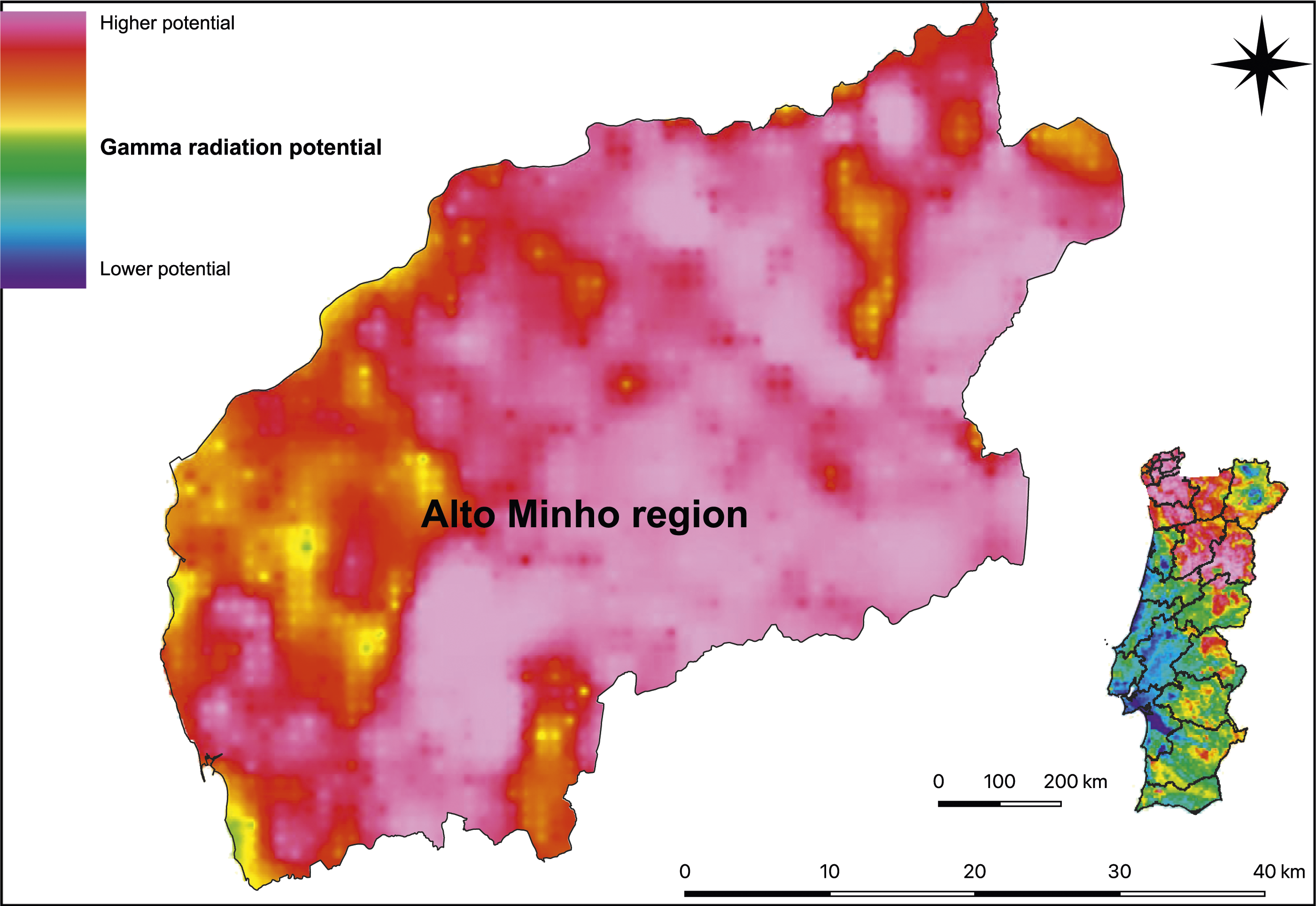
Although gamma radiation is not directly associated with the presence of radon, since it is a form of high-energy electromagnetic radiation emitted by unstable atomic nuclei, the detection of gamma radiation can indicate the presence of radioactive elements that can decay and generate radon.
23
The national radiometric map began to be developed in the 1950s for uranium prospecting and represents the culmination of a work of compiling old natural radioactivity measurements and new surveys, including calibration and harmonization of these data. Mapping the natural radiation of the country supports the prospecting of mineral and geothermal resources, geological mapping and hazard studies. In the case of the Alto Minho region, there is a high probability of the occurrence of high levels of natural radiation, mainly gamma radiation, which is closely associated with the presence of uranium in the abundant granitic rocks in the region. Figure 3 shows the distribution of gamma radiation in the region. Radiometric map of the Alto Minho region (adapted from the radiometric map of Mainland Portugal
70
).
Map of radon susceptibility
According to information available on the Portuguese Environment Agency (APA) website, the first study to assess the concentration of radon inside homes began in Portugal in 1987. This national survey was conducted by the Radiation Protection and Safety Department of the former National Laboratory of Industrial Engineering and Technology. Recently, in 2020, APA and the University of Coimbra partnered to conduct a new national survey, the National Radon Gas Monitoring Campaign. This study focused on geological units with little or no characterization of radon concentrations. The objective of the monitoring campaign was to obtain data for the production of a map indicating susceptibility to radon exposure, following national legislation. 24
According to the Radon Susceptibility Index by Parish of the National Radon Plan, 25 in the Alto Minho region all parishes have a high susceptibility index, except for two parishes in the municipality of Valença, namely, São Pedro da Torre and the Union of Parishes of Valença, Cristelo Covo and Arão, and one parish in the municipality of Vila Nova de Cerveira, specifically the Union of Parishes of Campos and Vila Meã, which have a low susceptibility index.
Predominant types of housing in the region
The traditional stone masonry buildings found in the Alto Minho region are typically constructed using local materials such as granite. These materials are known for their durability and resistance to weathering, making them ideal for use in the region’s often harsh climate. The buildings are typically one or two storeys tall, with thick stone walls and small windows to protect against the wind and rain. It is also very common to have basements that can be partially buried or even completely below ground level, and which serve as storage spaces but also for daily use, such as living rooms or similar purposes. Figure 4 shows some examples of traditional single-family homes common in the Alto Minho region. Traditional-style constructions in the Alto Minho region.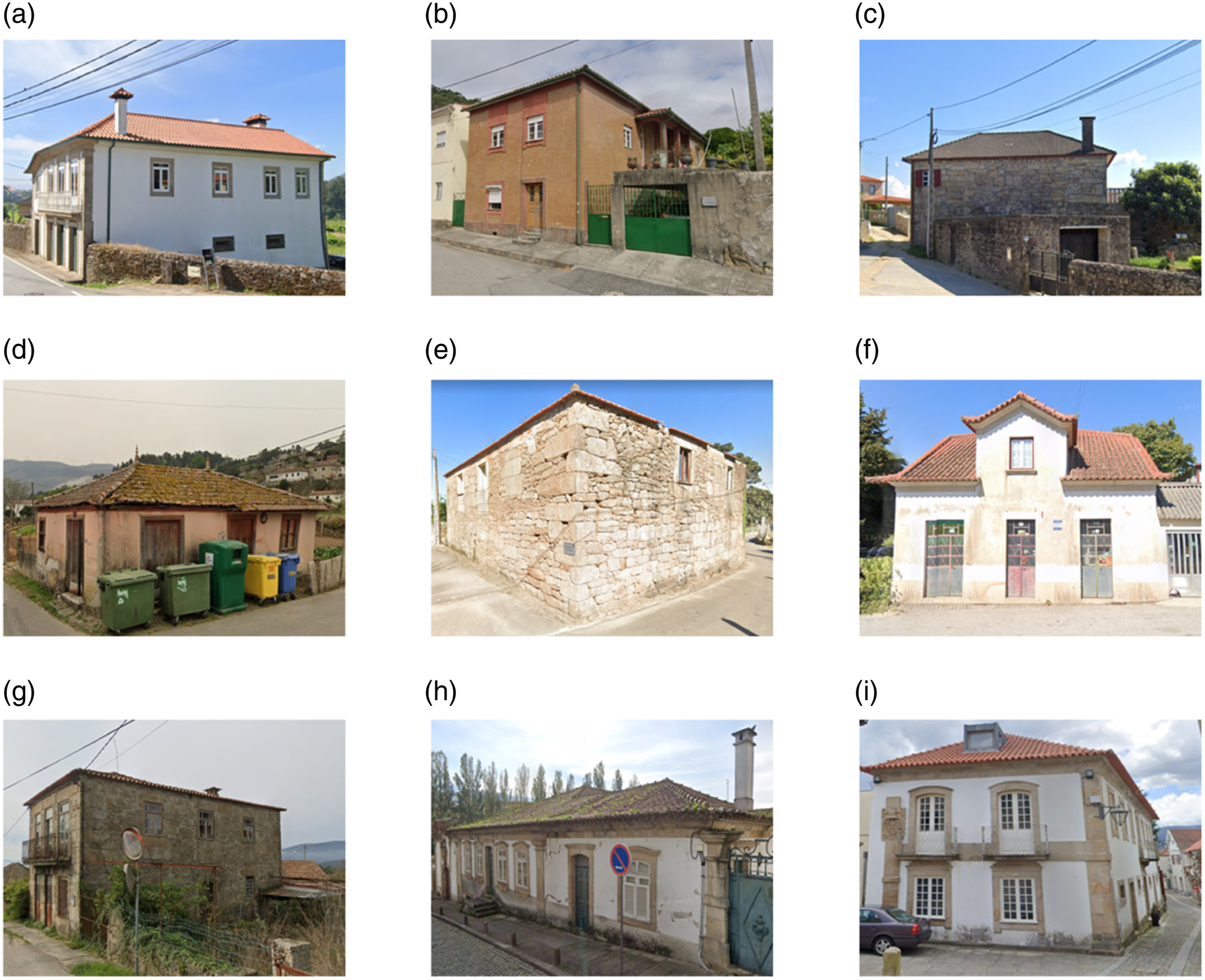
Despite the traditional style of construction, there has been modernization in recent decades in major urban areas such as Viana do Castelo and Ponte de Lima. Some of these new and modern buildings are shown in Figure 5. However, the traditional style remains dominant in the region’s smaller villages and rural areas. The preservation of these traditional buildings is important for the region’s cultural heritage, and efforts are being made to restore and maintain them for future generations. Modern-style constructions in the Alto Minho region.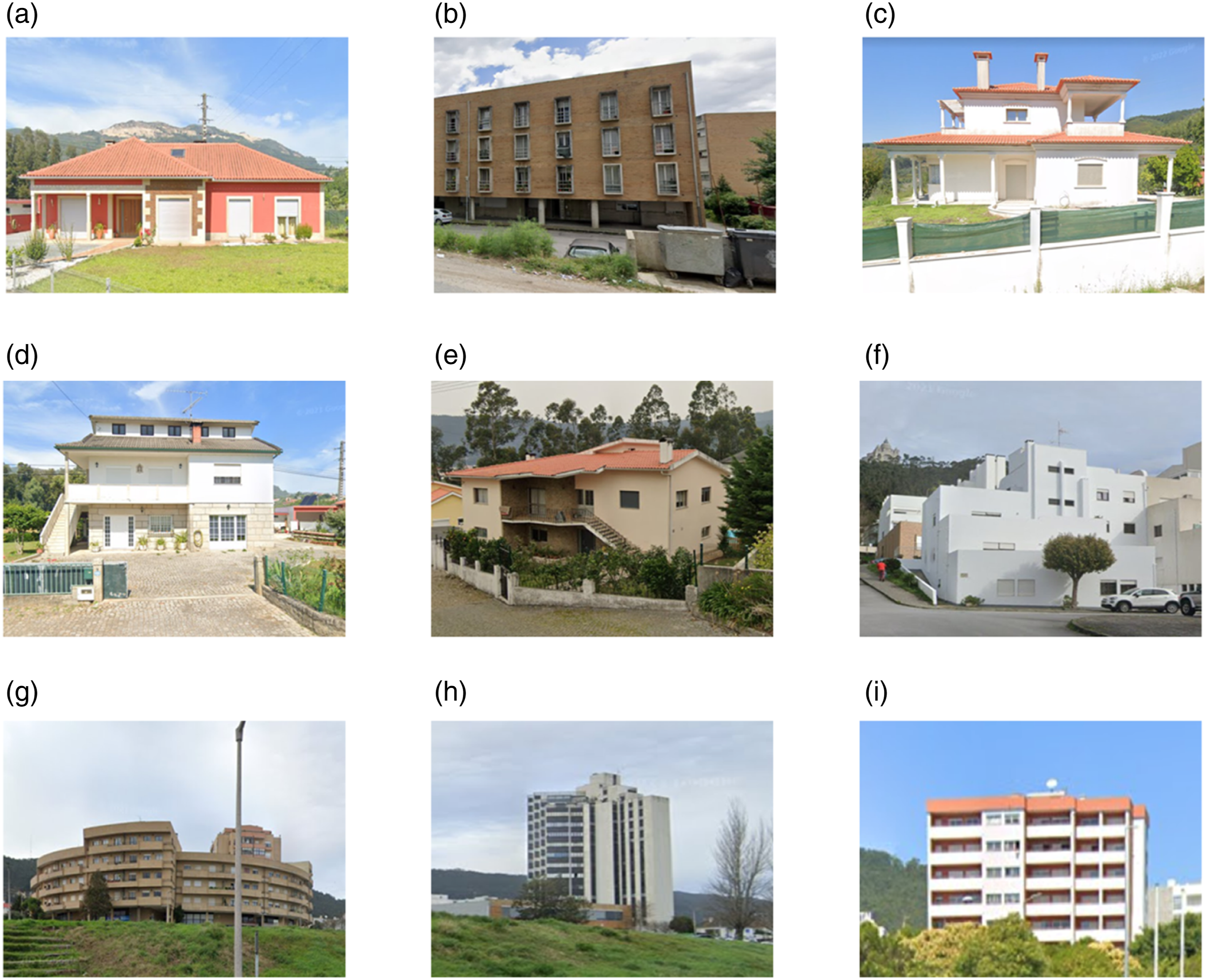
Indoor Rn assessment
Framework
The measurement of radon concentration in indoor environments can be achieved using various types of detectors, including passive detectors and active detectors. 26 Passive detectors are non-powered devices that are generally left in the environment for a specified period to accumulate radon. 27 The alpha track detector is the most commonly used passive detector, comprising a small piece of plastic exposed to radon and its decay products. 28 The decay of radon produces alpha particles that leave tracks in the plastic, which can be counted under a microscope to determine the radon concentration. 29 In contrast, active detectors require a power source and provide real-time measurements of radon concentrations. 30 One example of an active detector is the continuous radon monitor, which uses a detector chamber and pump to continuously sample the air and measure radon concentration. 31 Another type of active detector is the grab sampler, which employs a pump to collect an air sample that is subsequently analyzed in a laboratory to determine the radon concentration. 32 It is important to acknowledge that factors such as temperature, humidity and air circulation can influence the accuracy of radon measurements. 33 Therefore, appropriate measurement protocols must be followed, and consultation with a qualified radon measurement professional is advised to ensure accurate and reliable results. 34
Most frequently used radon detectors
Passive detectors
Passive detectors are commonly used for long-term measurements of radon concentration in indoor environments.
35
They do not require a power source and are relatively easy to use. Passive detectors are relatively inexpensive and easy to use, making them a popular choice for radon measurement.
36
However, they do require a longer measurement period than active detectors, which may not be suitable for situations where real-time measurements are necessary. The main type of passive detectors can be described as follow: • The alpha track detector is the most commonly used type of passive detector.
37
It consists of a small piece of plastic that is exposed to radon and its decay products. The alpha particles emitted by the decay of radon leave tracks in the plastic, which can be counted under a microscope to determine the radon concentration. These detectors are typically left in the environment for several months to accumulate sufficient data for analysis. • Charcoal canisters are another type of passive detector that can be used to measure radon concentration.
38
These detectors consist of a small container filled with activated charcoal that absorbs radon and its decay products. The canisters are left in the environment for a certain period, after which they are sent to a laboratory for analysis. • Electret ion chambers are another type of passive detector that can be used to measure radon concentration.
39
They consist of a small chamber filled with a special gas that becomes ionized when exposed to radon and its decay products. The ionization is measured using a small electric charge, which is proportional to the concentration of radon in the environment. These detectors are typically left in the environment for several months to accumulate sufficient data for analysis. • Solid-state detectors are also commonly used for measuring radon concentration in indoor environments.
40
They use a small piece of material that becomes electrically charged when exposed to radon and its decay products. The charge is then measured using a special device, which can provide an estimate of the radon concentration. These detectors are typically left in the environment for several months to accumulate sufficient data for analysis.
Active detectors
Active detectors require a power source to operate and can provide real-time measurements of radon concentrations.
41
These detectors are typically more expensive than passive detectors but are useful in situations where quick measurements are required or where continuous monitoring is necessary. It is important to note that active detectors can also be affected by environmental factors such as temperature, humidity and air circulation. Therefore, it is important to follow appropriate measurement protocols and consult with a qualified radon measurement professional to ensure accurate and reliable results. The major types of active detectors can be described as follow: • A continuous radon monitor (CRM) is a commonly used equipment, which uses a detector chamber and a pump to continuously sample the air and measure the radon concentration. CRMs can provide real-time data and are often used for short-term and long-term monitoring in homes and workplaces.
42
• A grab sampler is a portable device that uses a pump to collect a sample of air that is then analyzed in a laboratory to determine the radon concentration.
43
Grab samplers are often used for short-term measurements and can provide a more accurate assessment of radon concentrations than passive detectors.
In addition to these two types of active detectors, there are also other specialized devices available for radon measurements, such as the alpha spectrometer, which measures the concentration of radon decay products, and the active carbon detector, which measures both radon and its decay products. 44
IoT systems
There are various types of IoT systems used for monitoring radon concentration, including wireless sensors and smart home automation systems. 45 Wireless sensors are small, battery-operated devices that can be placed in different areas of a building to continuously monitor radon levels and send real-time data to a central hub or cloud-based platform for analysis. 46 These sensors can be equipped with various sensors and technologies, such as Bluetooth, Wi-Fi or Zigbee, to enable wireless communication and data transmission. 47 Smart home automation systems, on the other hand, are more comprehensive systems that integrate radon monitoring with other home automation functions, such as lighting, temperature control and security. 48 These systems can use various sensors and technologies, such as motion detectors and smart thermostats, to monitor and control various aspects of a building’s environment. 49 They can also provide real-time data on radon levels, which can be accessed through a mobile app or web-based dashboard.
IoT systems provide a convenient and efficient way to monitor radon levels in buildings, enabling users to take proactive measures to reduce radon exposure and ensure healthy indoor air quality, and present several advantages for radon monitoring compared to traditional methods:33,45,50,51 • Real-time monitoring: IoT systems can provide continuous, real-time monitoring of radon levels, whereas traditional methods typically involve intermittent measurements over a longer period. • Remote access: IoT systems allow for remote access to radon data, which can be accessed and analyzed from anywhere with an internet connection. Traditional methods often require physical collection and analysis of radon samples. • Alerting capabilities: IoT systems can be programmed to send alerts if radon levels exceed a certain threshold, allowing for quick response to potentially dangerous levels. Traditional methods often require waiting for results to come back from a laboratory. • Cost-effective: IoT systems can be more cost-effective than traditional methods, as they do not require as much manual labour or specialized equipment. • User-friendly: IoT systems can be designed to be user-friendly and easy to operate, allowing for wider adoption and use by individuals and organizations. Traditional methods may require specialized training and equipment, limiting their accessibility.
Diagnosis and mitigation measures
The importance of diagnosis
A thorough diagnosis is very important for the effective implementation of radon mitigation measures. The diagnosis allows for the identification of key sources of radon in an environment and the assessment of radon exposure levels on site. Based on this information, it is possible to determine which radon mitigation technique is most appropriate and effective for the environment at hand. Furthermore, a proper diagnosis can also help identify other routes of radon entry, such as fissures and cracks in the building structure, which can be addressed in conjunction with the selected mitigation technique. Diagnosis is also important in evaluating the effectiveness of already implemented mitigation measures and determining if any additional action is necessary to further reduce radon levels.
There are several guides and manuals available that indicate the most efficient mitigation and remediation measures for different construction typologies,
52
which have been used in the present work as a methodological and technical reference, such as • U.S. Environmental Protection Agency (EPA) – A Citizen’s Guide to Radon: The Guide to Protecting Yourself and Your Family from Radon.
53
• U.S. Environmental Protection Agency (EPA) – Consumer’s Guide to Radon Reduction: How to Fix Your Home.
54
• Portuguese Environment Agency (APA) and National Laboratory for Civil Engineering (LNEC) – Guia para a Mitigação da Admissão de Radão para o Interior de Edifícios Existentes.
55
• Galician Institute of Housing and Land (IGVS) – Radon: Guía de Recomendacións de Mitigación en Vivendas Existentes.
56
• Public Health England – An Analysis of Radon Remediation Methods.
57
• World Health Organization (WHO) – WHO handbook on indoor radon: A public health perspective.
58
• Iowa State University (Department of Agriculture and Biosystems Engineering – ABE) – Radon Reduction Methods: A Homeowners Guide.
59
Mitigation and remediation measures
Ventilation – natural ventilation
Natural ventilation can be used to mitigate indoors.
60
Natural ventilation works by circulating external air into the internal environment, leading the air contaminated by Rn out and replacing it with clean air (Figure 6). Natural ventilation can be implemented in several ways, such as through the opening of windows and doors, cross-ventilation or the use of chimneys. Natural ventilation can be particularly effective in buildings with low internal pressure. This is because natural ventilation is driven by the pressure difference between the internal and external environment. Natural ventilation is particularly efficient in compartments with direct access, for example, through doors and windows, to the exterior and especially when it is possible to maintain openings permanently, allowing constant air circulation. When this is not possible, establishing ventilation protocols for the compartments, with the regular opening of doors and windows, can make this mitigation measure very effective when radon concentrations are not very high, or when a very high radon emanation coefficient from the soil is not observed. Natural ventilation.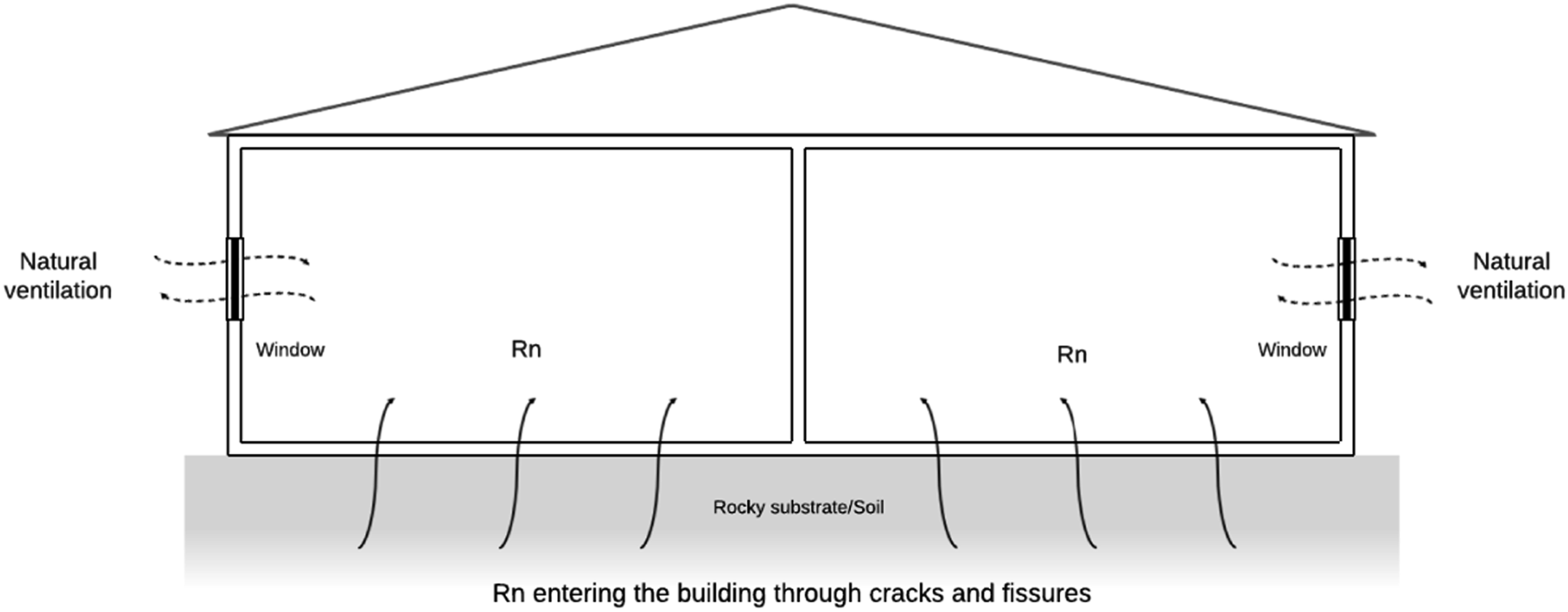
Ventilation – forced ventilation
Forced ventilation is another technique that can be used to mitigate Rn in closed environments. This technique is similar to natural ventilation but uses a mechanical ventilation system to force external air in and contaminated air out. Forced ventilation can be carried out through a controlled mechanical ventilation system (CMVS), which is a system that allows mechanical ventilation to be regulated according to the needs of the environment, ensuring adequate air renewal (Figure 7). Forced ventilation can be particularly effective in buildings with high internal pressure, where the pressure difference between the interior and exterior is significant. It is also a technique that is useful for very large buildings, where there may not be direct access between some compartments and the outside, allowing efficient natural ventilation and for compartments located below ground level. Forced ventilation.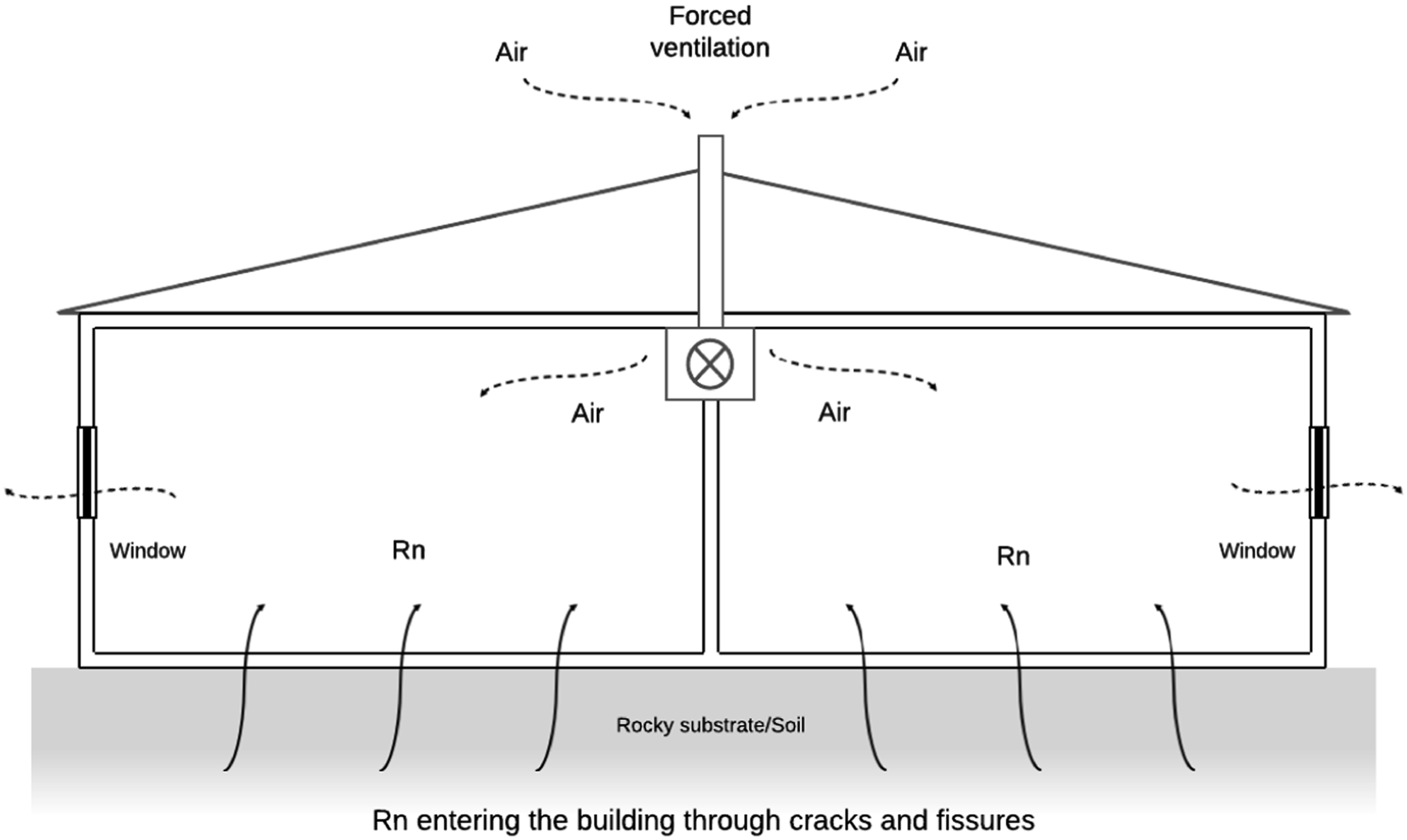
Constructive measures
Sealing of cracks and fissures
Radon mitigation through crack and fissure sealing is a technique that can be used in homes and buildings to reduce the entry of radon from the soil. Radon can penetrate enclosed spaces through cracks, gaps and fissures in the building structure. Crack and fissure sealing involves identifying and sealing these openings to prevent the entry of radon. The technique can be accomplished using a variety of materials such as sealants, polyurethane foam, mortar or other suitable materials depending on the nature and size of the fissures. The technique can be applied to walls, floors and ceilings, as well as spaces between walls and windows. While crack and fissure sealing is an effective radon mitigation technique, it is important to note that it may be limited in its effectiveness if other radon entry routes are present, such as infiltration through soil porosity or openings in ventilation systems. Therefore, it is recommended that crack and fissure sealing be combined with other mitigation techniques to ensure the effective reduction of radon levels in enclosed spaces.
Radon protection barriers
Radon barriers are made of materials that prevent the passage of radon, such as high-density polyethylene (HDPE), which is one of the most common materials. Barriers can be installed either under the ground floor of a house or building during the initial construction phase, creating a protective layer between the soil and the interior, or in a remediation situation, under the floor covering in contact with the soil (Figure 8). Radon barriers are particularly effective in areas where soil radon levels are high. However, it is important to note that radon barriers must be installed correctly to ensure their effectiveness. In addition, other routes of radon entry, such as cracks and fissures in the building structure, should be considered and treated in conjunction with radon barriers for effective mitigation. Radon protection barriers and mortars.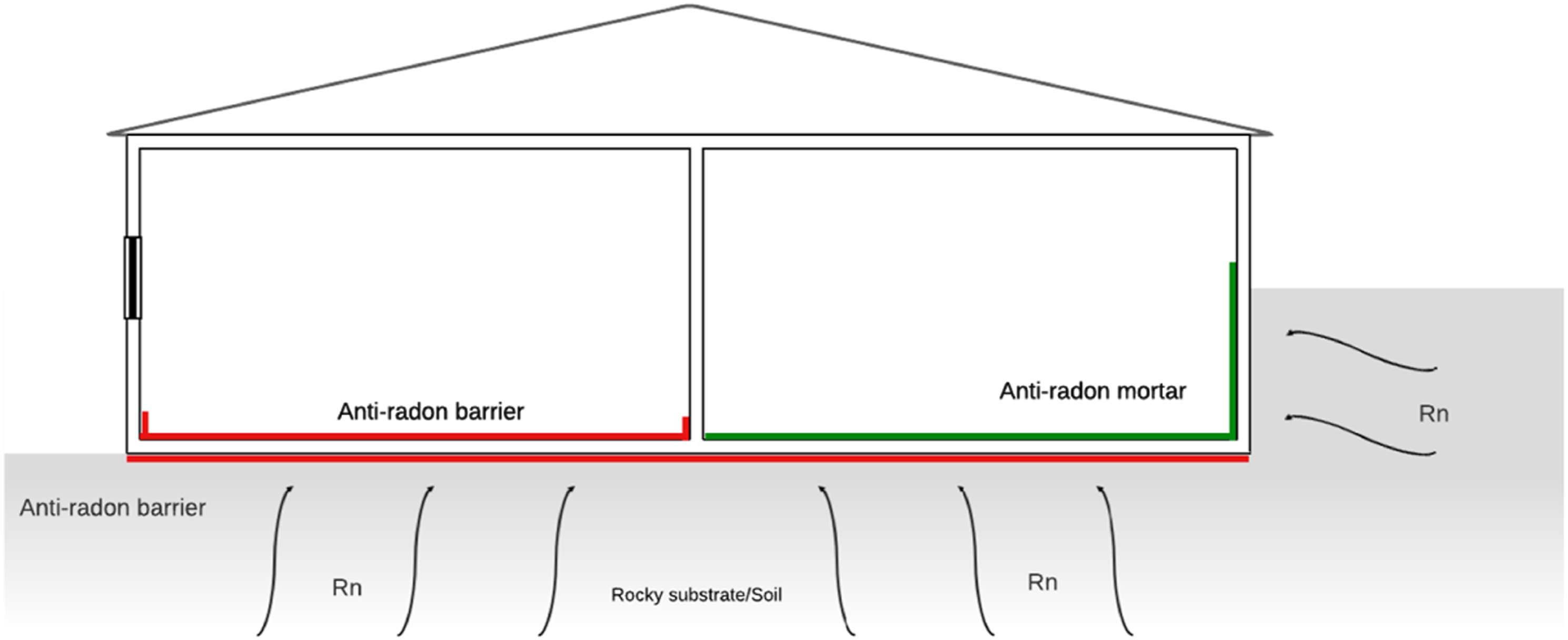
Rn protection mortars
Radon protection mortars are applied to the surfaces of the ground floor and walls to create a physical barrier that prevents the passage of Rn into the indoor environment. Radon protection mortars can be used to seal fissures and cracks in the building structure that could allow the entry of Rn (Figure 8). Radon protection mortars are generally composed of a mixture of cement, aggregates and special additives that reduce the permeability of the material and increase its ability to retain Rn. This technique can be particularly useful in buildings where other mitigation techniques, such as ventilation or crack sealing, are not sufficient to reduce Rn levels. It is important to note that the effectiveness of the radon protection mortar depends on its proper application and the quality of the materials used.
Variation of soil pressure
Natural soil depressurization
Natural soil depressurization is a mitigation technique that uses the pressure difference between the soil and the indoor environment of a building to reduce the entry of radon into closed spaces. The technique works by creating a vacuum zone under the floor slab, using strategically positioned openings and connecting them to a system of pipes that extend to the roof (Figure 9). This vacuum zone allows air contaminated with radon in the soil to be pulled out of the ground and dissipated in the external environment before it can enter the building. This can be an effective technique in areas with high levels of radon in the soil, where other mitigation techniques, such as natural ventilation or sealing of fissures, are not sufficient to reduce radon levels. However, it is important to note that the effectiveness of the technique depends on several factors, including the permeability of the soil and the presence of fissures or cracks in the building structure that may allow radon entry. In addition, natural soil depressurization can result in a decrease in soil moisture, which can affect the stability of the building’s foundation. Therefore, it is important to consult a radon mitigation specialist before implementing this technique. Natural soil depressurization.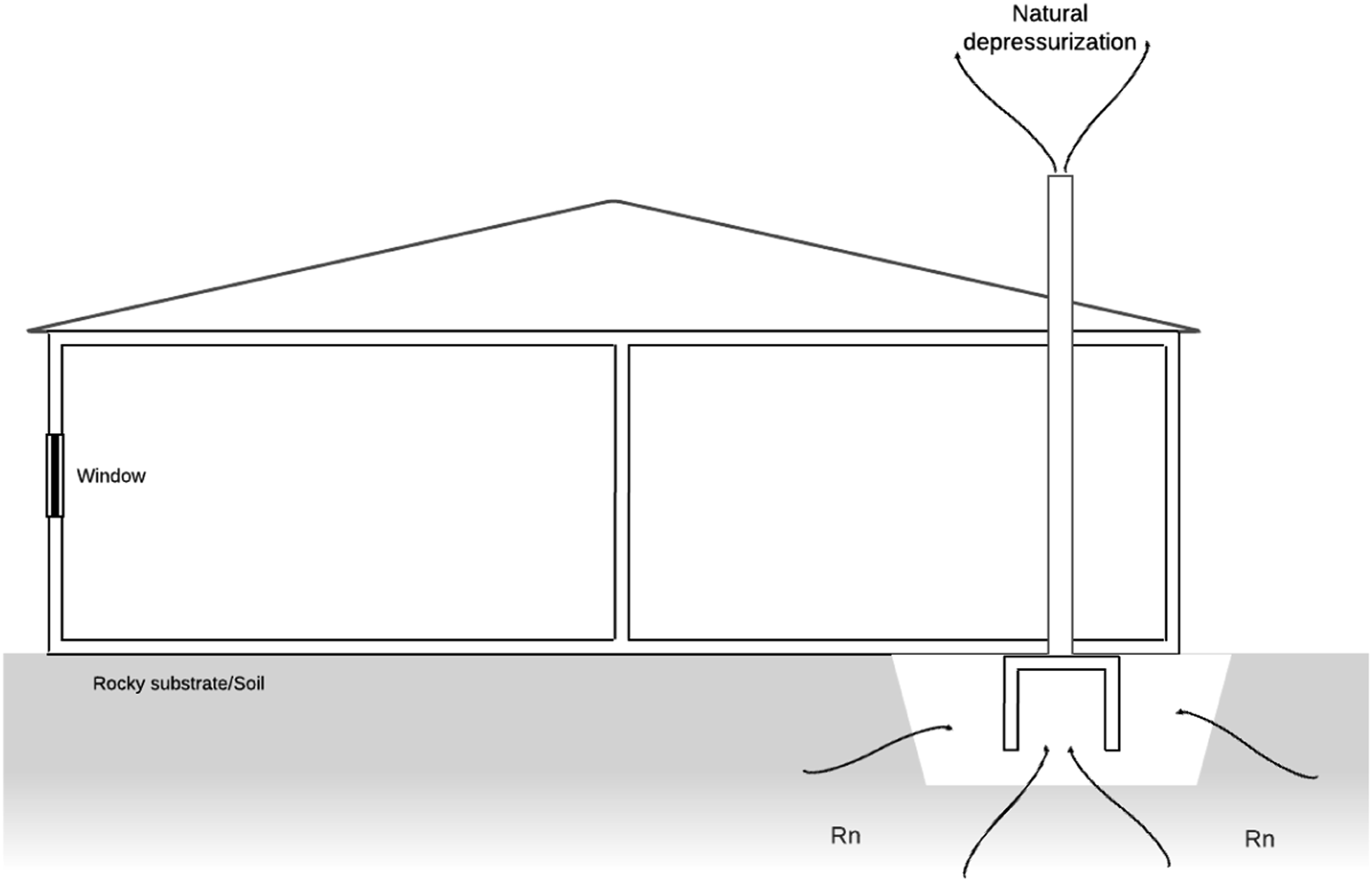
Forced soil depressurization
Forced soil depressurization is a radon mitigation technique that involves creating a vacuum zone under the building slab using a mechanical ventilation system. This ventilation system forces the radon-contaminated air in the soil to be drawn out and dissipated into the external environment before it can enter the building (Figure 10). Forced soil depressurization can be particularly effective in buildings with high internal pressure, where the pressure difference between the inside and outside is significant. The technique can be applied in areas with high levels of radon in the soil, where other mitigation techniques such as natural ventilation or sealing of cracks and fissures are not sufficient to reduce radon levels. However, it is important to note that the effectiveness of the technique depends on various factors, including soil permeability and the presence of cracks or fissures in the building structure that may allow radon entry. Additionally, forced soil depressurization can lead to a decrease in soil moisture, which may affect the stability of the building foundation. Forced soil depressurization.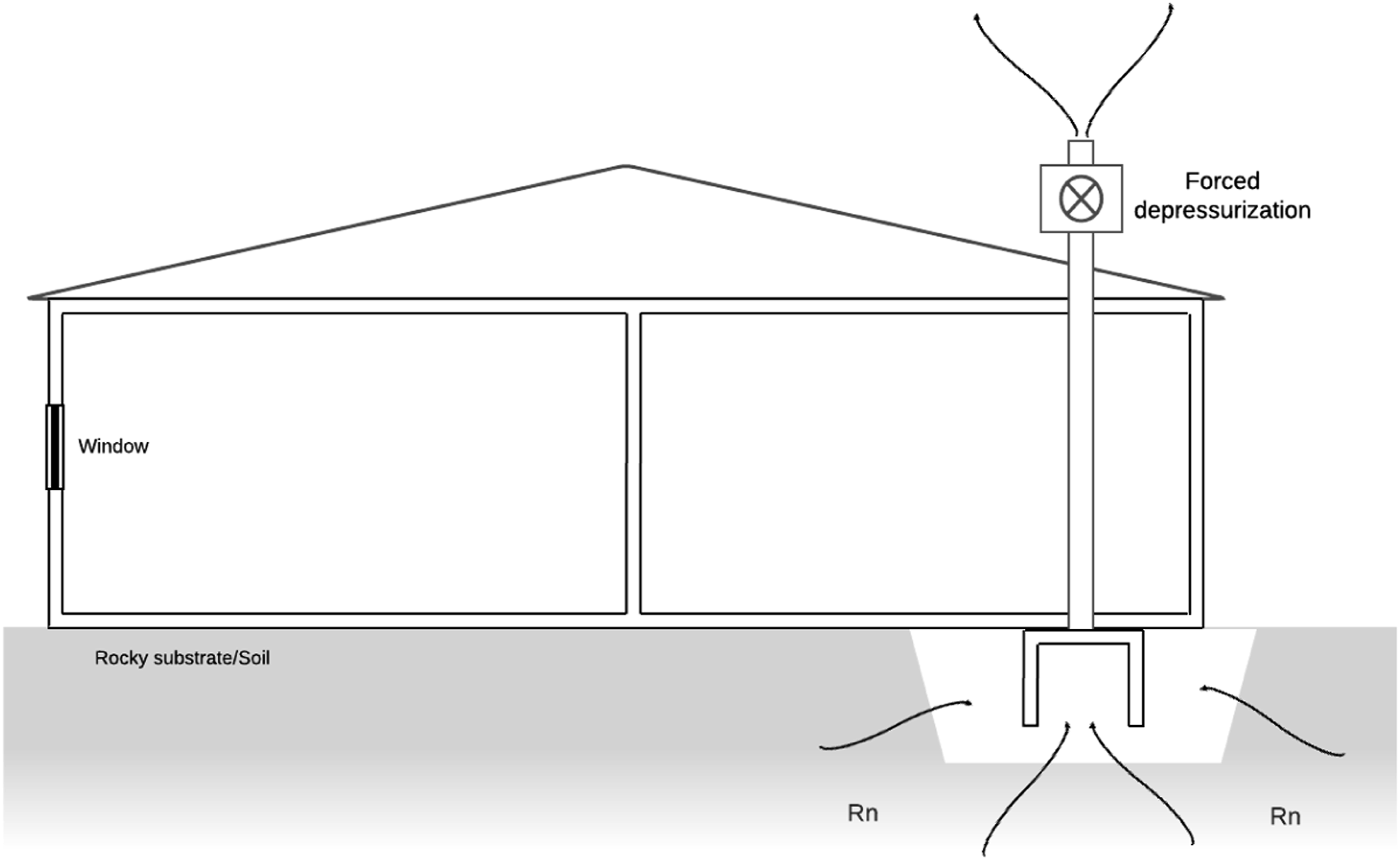
Positive pressurization
Positive pressurization of the soil is a radon mitigation technique that involves the injection of outdoor air under a building’s foundation to create a positive pressure barrier (Figure 11). This barrier prevents radon gas from entering the building through cracks or gaps in the foundation or walls. The technique involves the installation of a fan and pipes that bring outdoor air into the building’s substructure, pressurizing the soil and forcing the radon gas out. Positive pressurization can be an effective method of radon mitigation, particularly in buildings with high levels of radon in the soil. However, the effectiveness of the technique depends on several factors, including the building’s ventilation rate, the size and design of the building, and the type and condition of the foundation. Positive pressurization.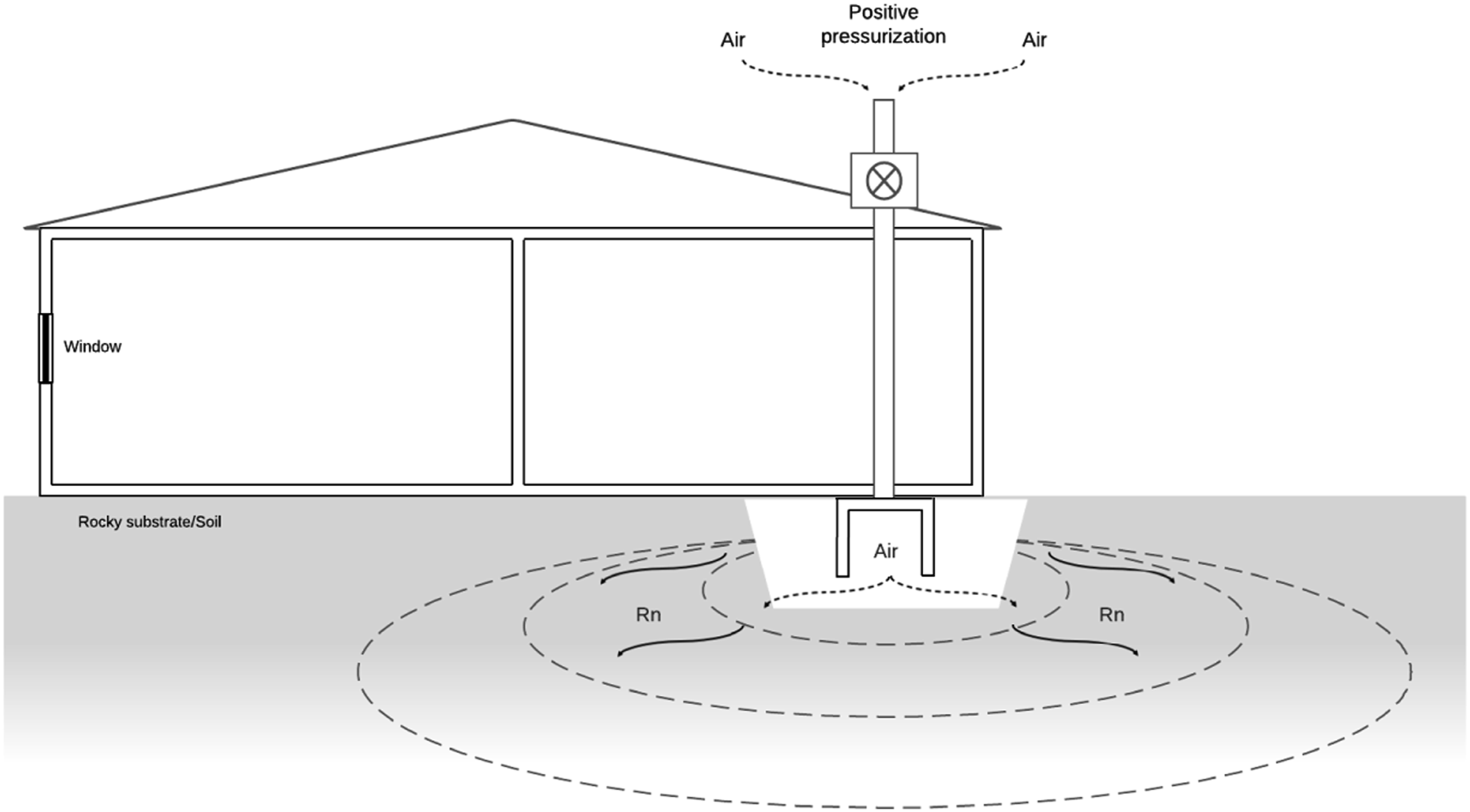
Rn removal from water
To remove radon from water coming from wells and boreholes, aeration or granular activated carbon (GAC) filtration systems can be used. Aeration systems work by introducing air into the water, which causes the radon to be released into the air and removed from the water. GAC filtration systems use activated carbon to absorb the radon from the water. Both methods have their advantages and disadvantages, and the choice of method will depend on various factors, such as the level of radon in the water, the water flow rate and the availability of electricity. Aeration systems are generally more effective in removing radon but can be more expensive and require more maintenance. GAC filtration systems are generally less expensive and require less maintenance but may not be as effective in removing radon.
Post-intervention follow-up measures
After applying radon mitigation measures, it is important to conduct post-mitigation follow-up measurements to ensure that the radon levels have been effectively reduced. The specific measures that should be taken depend on the type of mitigation system that was installed. For example, if a passive system such as a radon-resistant barrier is installed, follow-up measurements should be taken within the first year to ensure that the barrier is functioning properly. If a fan-assisted system is installed, follow-up measurements should be taken within 24 h to ensure that the system is functioning as expected.
In addition to follow-up measurements, it is recommended to conduct periodic radon testing every 2–5 years, as radon levels can fluctuate over time due to changes in the environment or the structure of the building. If testing reveals that radon levels have increased again, additional mitigation measures may need to be taken. It is also important to maintain the mitigation system and conduct regular inspections to ensure that it continues to function properly. Any issues or malfunctions should be addressed immediately to prevent radon from entering the building.
Discussion
As presented in the previous section, there are several possibilities associated with mitigating indoor Rn concentration in buildings. However, the success rate of each of these techniques may vary depending on a set of factors. The first factor that must be taken into consideration is the level of indoor Rn concentration reached within the compartments of the buildings under analysis, since this concentration, together with the occupancy pattern of these spaces, will determine the dose to which occupants may be exposed. Rn concentration is directly associated with geogenic factors, but also with the type of building construction, as this will determine whether Rn can more easily or less easily access the interior of buildings, where it can accumulate. Thus, the choice of mitigation methodology will be directly dependent on the sum of various factors, but in this case, the type of construction assumes a decisive role, as seen in previous sections, as the potential for Rn concentration throughout the region can be considered high, although there may be some differences from one location to another.
There are several international studies addressing the issue of mitigating indoor Rn concentration. For instance, Burghele et al. 61 discussed how Romania tackled residential radon issues through scientific research and new architectural solutions aimed at energy efficiency. The most effective method found was sub-slab depressurization in reducing radon levels, while mechanical supply and exhaust ventilation improved overall indoor air quality. The authors recommend harmonizing energy efficiency programs with public health programs to find the best technologies for compliance with energy saving and indoor environmental quality. Another study presented by Fuente et al. 62 reported on a year-long study on a pilot house with high radon levels to investigate the efficiency of soil depressurization (SD) as a radon mitigation technique. The study achieved radon reductions exceeding 85%, and it was postulated that a fan power of 20 W is sufficient for such reductions in similar dwellings. The study emphasizes the potential of SD for radon mitigation in buildings. In the same line, a study presented by Fuente et al. 63 discussed radon’s impact on public health as the leading cause of lung cancer after smoking. According to the authors, in Ireland, radon exposure is estimated to cause around 300 lung cancers annually. Goggins et al. 64 investigated the performance of a passive opened top-end pipe as an alternative solution for indoor radon mitigation. Results confirmed that the passive opened top-end pipe can be a cost-effective solution for indoor radon concentration mitigation. However, fluctuations in extracted air velocity and negative pressure were observed under natural wind conditions, reducing the effectiveness of the passive pipe. To address this, a novel static ventilator was developed to reduce fluctuation and improve performance.
However, despite a certain tendency towards focusing on soil depressurization systems, both forced and natural, some studies analyze other forms of mitigation. Yarmoshenko et al. 65 evaluated the effectiveness of various radon prevention and mitigation measures in multi-storey buildings under different climatic conditions. The study simulated measures such as controlling the Ra-226 content in building materials, increasing uncontrolled air infiltration, extending controlled ventilation, equipping buildings with mechanical ventilation, increasing air exchange rate in non-living premises and reducing air exchange between living and non-living areas. The study estimated the costs of energy for heating associated with different measures. The conclusion was drawn by achieving an optimized level of radiation protection, a degree of reduction in radon exposure risk and heating cost. On the other hand, Pan et al. 66 developed an anti-radon coating for use in underground engineering applications. The coating was developed using modified polymer emulsions, element materials, pigments and additives. Experimental results demonstrate that the coating with a thickness of 2.0 mm has a radon mitigation efficiency of 95.1%. The coating has low toxicity, excellent water resistance and durability. It dries quickly, has no odour and provides effective radon mitigation in sealed underground environments with 2–3 coats. The study presented by Pol et al. 67 assessed the effectiveness of a radon mitigation technique based on pressurizing the interior of a building. The prototype of the mitigating device was tested under real conditions in a traditional country dwelling characterized by high radon concentration on the coast of Galicia (Spain). Continuous measurement sensors, set in an ionization chamber, were installed to measure the effectiveness of the solution. The results obtained show that pressurizing the living quarters brings about an effective reduction in radon concentration, with a relatively simple building solution. This solution is seen to be especially appropriate when work is undertaken in structures recognized as heritage and is compatible with the principle of minimum intervention, which seems to always be the goal of any mitigation solution, especially when the intervention will occur in existing buildings.
As described earlier, the dominant construction in the region is mostly single-family housing, which can have different structures and building materials, depending on when they were built. Therefore, there is a mixture, including different types of construction within the same dwelling, corresponding to different periods of construction or rehabilitation. On the other hand, in larger urban centres such as Viana do Castelo and Ponte de Lima, the type of building varies a bit compared to the rest of the territory, already showing a more modern construction, where high-rise buildings predominate (at least within the urban centres), but very rarely exceeding four floors in height.
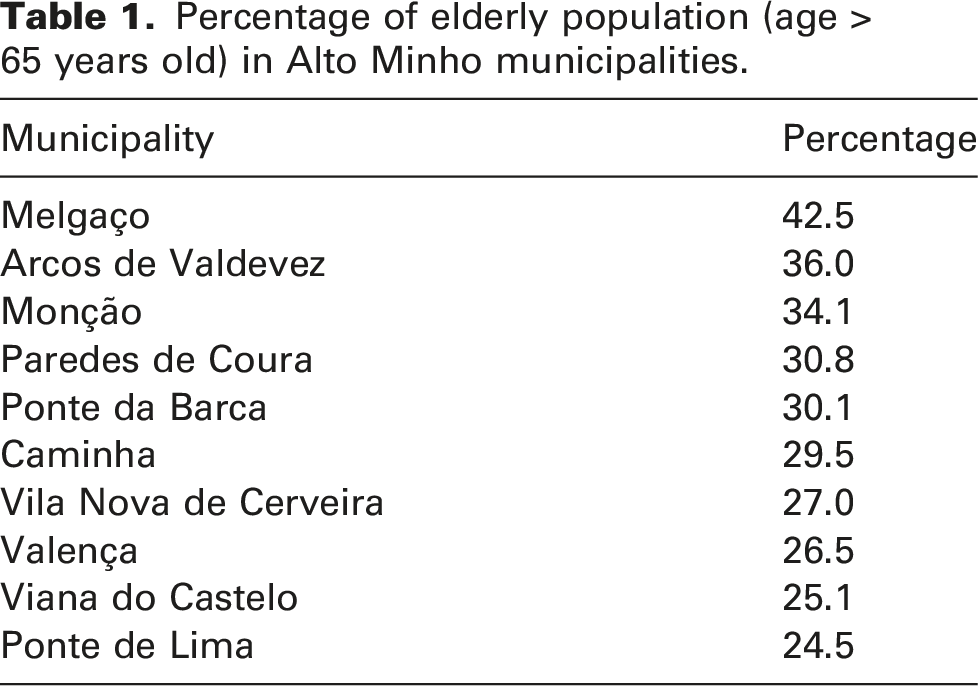
With the general decline in population throughout the district (Figure 12) and the accelerated ageing of the population (Table 1), the pace of new building construction will likely slow down (perhaps except for the larger urban centres of Viana do Castelo and Ponte de Lima, which continue to experience growth trends, especially the former). In this context and considering the types of methodologies presented for mitigating indoor Rn concentration, it seems that those that allow for application to existing buildings will be more widely used, as opposed to projects that may arise in the future. That is, the outlook for the construction sector in the region should evolve more towards the rehabilitation of existing buildings, and less regarding new projects. Evolution of the Alto Minho population from 1995 to 2021. Percentage of elderly population (age > 65 years old) in Alto Minho municipalities.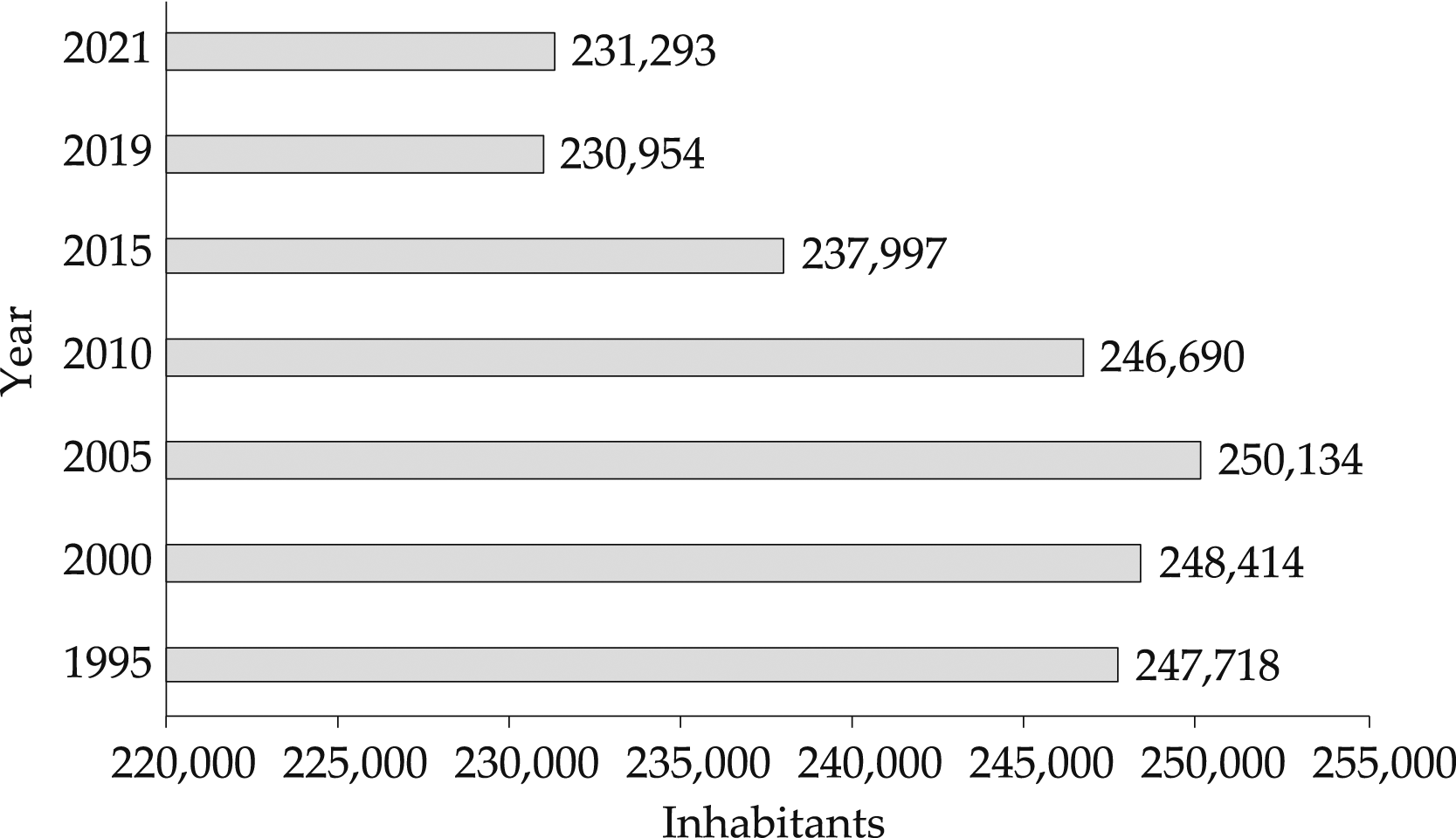
Assuming this assumption, it becomes more likely that the choice of mitigation measures will tend towards those that can be more easily applied to existing buildings, always depending on the construction type and materials used. For this reason, the analysis of data collected in the diagnosis (almost mandatory before any intervention) becomes essential for a properly substantiated choice, assuming that in most situations, the solution may simply be the implementation of natural ventilation procedures, which, without the need for any intervention in the building structure, function only by opening existing devices (windows, bridges, skylights or the like), promoting air circulation and renewal inside the building. In other situations, mere natural ventilation may not be sufficient and may be related to various factors, such as the indoor Rn concentration being too high, there being a high potential for Rn emanation, the internal configuration of the building not allowing for good air circulation or simply there being compartments that do not have direct access (through openings such as windows, for example) to the exterior, to allow for air renewal. In these situations, forced ventilation may be the solution for mitigating indoor Rn concentration.
The use of soil depressurization solutions, both performed naturally and forced, and soil pressurization, in case of their effectiveness in application in the region, still lacks a deeper analysis, as there are no documented tests with the presentation of results. However, as seen previously, several international studies seem to point to the effectiveness of these methodologies for mitigating indoor Rn concentration. It is always important to emphasize that there are always solutions that involve deeper interventions of a constructive nature, so their use should be reserved for special situations or when other solutions do not produce the desired result. Also, more in-depth investigation and discussion on the use of radon mitigation techniques, such as soil depressurization (natural or forced) and positive soil pressurization, is necessary, as it is expected that their use may have impacts on the geotechnical properties of the soils where the buildings are constructed. One potential impact is a change in soil density, as soil depressurization, whether natural or forced, can alter the density of the soil surrounding the building. A reduction in soil pressure can lead to soil consolidation or an increase in voids, affecting the load-bearing capacity and stability of the soil. Another possible impact is a change in water content. Positive soil pressurization can lead to an increase in the water content of the soil, which can affect its mechanical properties, such as shear strength and compressibility. An increase in water content can also increase the susceptibility of the soil to erosion or the leaching of minerals. Additionally, changes in soil permeability can occur due to the application of pressure to the soil, whether negative (depressurization) or positive (pressurization). Permeability is a critical property of soil, as it controls the rate of water and gas flow through the soil. Changes in permeability can affect the performance of foundations and the soil’s ability to drain water. There is also the potential for soil expansion and contraction. Depressurization or pressurization of the soil can cause expansion or contraction, respectively, in soils that are sensitive to volume changes. This can result in differential movement of foundations or structural damage to the building. Lastly, slope stability may be affected. The application of pressure to the soil, especially depressurization, can alter the balance of forces in the soil, possibly leading to slope stability problems, such as landslides or erosion.
As for the use of anti-radon barriers and anti-radon mortars, although there are not many studies, there is already some history of their use in the region, which demonstrates their effectiveness in situations with high indoor Rn concentrations. In fact, as presented in the study by Nunes and Curado, 68 the authors discussed indoor radon concentration and the various methodologies available for mitigation. The case study examines the application of a barrier membrane to lower indoor radon concentration in a ground floor room of a historic building with high occupancy. After installation, long-term monitoring showed a 90% reduction in radon concentration, although the level remained higher than recommended for safe occupation. The article suggests that combining barrier membranes with other mitigation methods, such as mechanical ventilation, can provide an efficient solution for radon remediation. In another study, the same authors, 69 analyzed the application of different constructive measures, which were applied and analyzed sequentially, a barrier membrane on the floor and a coating mortar on the walls. The preliminary long-term monitoring campaign showed extremely high indoor radon concentration measurements. The application of a barrier membrane allowed a 90% reduction in the average radon concentration.
Both the application of barrier membranes and anti-radon mortars can be used in mitigation situations in existing buildings, which can be complemented with other solutions, such as the use of natural ventilation procedures or, when necessary (in situations where indoor Rn concentrations are higher), the use of forced ventilation solutions. The latter solution, in addition to achieving the goal of mitigating indoor Rn concentration, can also contribute to improving indoor air quality with respect to other parameters, especially if it is associated with a real-time multi-parameter monitoring system, which can even be programmed to take action considering procedures to optimize hygrothermal parameters and thus contribute to improving energy efficiency conditions of buildings.
Conclusions
Indoor radon mitigation is a fundamental issue part of radon remediation. The relevance of radon mitigation techniques to tackle indoor radon exposure demands a specific analysis of the distinct available methodologies, taking into account the geological nature of the region, the type of building construction and the occupancy pattern of the building rooms. The rehabilitation of existing buildings seems to be a more likely and accessible solution for the mitigation of indoor Rn concentration, especially in regions such as Alto Minho, where the population is ageing, and the rate of new building construction is decreasing. Solutions such as natural and forced ventilation, anti-radon barriers and anti-radon mortars can be used complementarily to achieve a significant reduction in the concentration of Rn indoors. The choice of mitigation methodology should be based on a rigorous analysis of the data collected in the diagnosis, taking into account relevant factors such as Rn concentration, building configuration and construction materials. The use of more complex solutions such as soil depressurization and soil pressurization should be considered a last resort, reserved for special situations where other solutions have not been effective. The use of a multi-parameter real-time monitoring system can contribute to the optimization of hygrothermal parameters and to the improvement of the energy efficiency conditions of buildings, as well as allowing for continuous evaluation of the effectiveness of the adopted mitigation measures.
Footnotes
Author contributions
All authors have contributed equally to the preparation and completion of this article.
Declaration of conflicting interests
The author(s) declared no potential conflicts of interest with respect to the research, authorship, and/or publication of this article.
Funding
The author(s) disclosed receipt of the following financial support for the research, authorship, and/or publication of this article: This work is a result of the project TECH – Technology, Environment, Creativity and Health, Norte-01-0145-FEDER-000043, supported by Norte Portugal Regional Operational Program (NORTE 2020), under the PORTUGAL 2020 Partnership Agreement, through the European Regional Development Fund (ERDF). L.J.R.N. was supported by proMetheus – Research Unit on Energy, Materials and Environment for Sustainability – UIDP/05975/2020, funded by national funds through FCT – Fundação para a Ciência e Tecnologia. A.C. co-authored this work within the scope of the project proMetheus, Research Unit on Materials, Energy and Environment for Sustainability, FCT Ref. UID/05975/2020, financed by national funds through the FCT/MCTES.
