



Abstract
This paper reviews the state of art of vegetation systems and their effect on the indoor environmental quality (IEQ), based on scientific studies from the past 30 years. Some studies have shown that biophilic workspaces and interaction with plants may change human attitudes, behaviours, improve productivity and the overall well-being. Evapotranspiration from plants helps lowering the temperature around the planting environment and this can be utilised for air cooling and humidity control. Also, indoor greenery can be used to reduce sound levels as a passive acoustic insulation system. Living wall systems in combination with biofiltration are emerging technologies to provide beneficial effects on improvement of indoor comfort. Several studies have indicated that green systems may improve indoor air quality and that they have different pathways for pollutant removal of volatile organic compounds. The plant root zone in potted plants may be an effective area for removing volatile organic compounds under controlled conditions. In conclusion, the full capacity of plants in real-life settings will need to be clarified to establish the true pollutant-removal mechanisms and the general effect on IEQ. The effects of green systems in combination with mechanical elements such as conventional heating, ventilation and air conditioning would need to be studied.
Keywords
Introduction
People spend on average 80% of their time indoors,1,2 therefore, the health risks due to indoor air pollution may be greater than outdoor air pollution.3,4 From past studies, it is clear that indoor environmental quality (IEQ) can play an important role in work performance, productivity and the health of building users.5–10 Using plants as design elements in working environments brings nature inside to create inviting spaces that may reduce stress and may increase the overall well-being, resulting in healthier work and living areas. Interaction with plants can change human attitudes, behaviours and physiological responses. Furthermore, it may decrease absenteeism, increase productivity and overall satisfaction and happiness in people’s lives.11–14 Even though some studies with potted plants and vegetation systems, such as biowalls, have shown potential for absorbing potentially harmful pollutants and improve the overall comfort,2,15–42 there is still a lack of solid and relevant data available to understand the true pollutant-removal mechanisms and factors in these systems. At present, the use of indoor greenery offers several benefits such as producing oxygen through photosynthesis, generating humidity and providing an aesthetical pleasant environment to work and live as well as visual performance to indoor environment.8,11,43,44 In active vegetation systems (vegetation systems combined with mechanical systems), air-cleaning rates have proven to be significantly higher than in passive vegetation systems because of the use of active fan-assisted hydroponics technology that draws the air through the root rhizomes of the plants.
This review includes a panorama of vegetation systems, active and passive and their effect on the indoor environment, drawn from studies from past 30 years. Literature from different scientific fields, such as biology, chemistry, engineering and architecture, has been consulted in order to identify the potentials, challenges and knowledge gaps and define current paths and trends for further exploration. The general goal behind this research is to support the design of an Active Building-Integrated Vegetation System to improve IEQ through examination of past experiences.
Materials and methods
Research experiences from peer-reviewed journal articles were considered as base material for this review. In order to collect relevant articles within the scope of the study, some parameters were defined as input for the search. The constraints served the purpose of limiting the results to the most corresponding articles, and limiting the number to a manageable amount at the same time, which allowed an initial review and categorisation of information. Hence, the search focused on articles published from 1984 onwards considering title, abstract and keywords matching terms as ‘biofiltration’, ‘phytoremediation’, ‘Indoor Air Quality’ and ‘Plants and Pollutants’. It was decided to include articles from different backgrounds, including chemistry, engineering and biology, in order to have a complete scope of the topic. Therefore, the search query was performed in online journal article databases related with the topic, such as Indoor and the Built Environment, Building and Environment, Environmental Science and Technology, Atmospheric Environment, Chemical Engineering Journal, Horticulture, Environment and Biotechnology. After an initial review of results, filtering outliers and checking references from articles to have a complete overview of the latest papers published, a consolidated database of journal articles was generated. The inquiries were performed during November 2015 and November 2017, resulting in a consolidated database of 104 scientific articles in December 2017, including mostly original research but also reviews from other researchers.
Results
Indoor air quality (IAQ), phytoremediation and biofiltration
From the review it is clear that air pollution is not confined to outdoor environment in cities, urban areas and industrial sites only. Most office buildings studied were mechanically ventilated, with a minimum required amount of fresh air, often only based on the number of occupants present, ignoring the presence of pollution sources such as printers, building and furnishing materials, and cleaning procedures. Consequently, health professionals, architects, researchers and building industry undertook actions to improve IAQ through different systems and techniques. 45 In the 1980s, the NASA Clean Air Study presented some studies about the behaviour of plants regarding IAQ. Its results suggested that certain common indoor plants may provide a natural way of removing toxic agents such as benzene, formaldehyde and trichloroethylene from the air.40,41 The results of these tests suggested that (1) low-light-requiring houseplants with activated carbon filters have potential for improving IAQ and (2) the plant root zone is an effective area for removing volatile organic compounds (VOCs). In fact, a maximum air exposure to plant root–soil (rhizosphere) area was recommended for best filtration, and the use of activated carbon filters was recommended to be part of the houseplant/air-cleaning plan.
Since Wolverton’s research, several studies have been conducted regarding the effect of phytoremediation and biofiltration on IAQ. Phytoremediation can be defined as the use of plants to remove pollutants from the air, water and soil. Biofiltration is defined as the process of drawing air in through organic material (such as moss, soil and plants), resulting in the removal of organic gases such as VOCs, and contaminants with a mechanical system involved. Plants have been shown to uptake air pollutants via their stomata during normal gas exchange. Also, plants have frequently been used for cleaning large contaminated areas of soil and water in the outdoor environment, especially with heavy metals, fertilisers, oil spills and solvents. 46 Several studies showed that the performance of botanical biofiltration depends on the interactions between pollutants, plants and microorganisms: the most suitable plant species seemed to be those with high stomatal conductance and lower sensitivities to the pollutants.47–52 Additionally, it seemed that careful selection of plants and substrates might improve the phytoremediation process considerably. 53 The techniques used for phytoremediation have been differentiated according to the physical properties of the contaminants (Figure 1), the type of plant used and the medium to be remediated. These various techniques can be listed as: 46 (1) Phytoextraction: the use of plants to clean up pollutants via accumulation in harvestable tissues; (2) phyto(rhizo)filtration: the use of plants in hydroponic set-up for filtering polluted water; (3) phytostabilisation: the use of plants to stabilise pollutants in soil by preventing erosion, leaching, or runoff, or by converting pollutants to less bioavailable forms; (4) phytodegradation: the breakdown of pollutants by plant enzymes, usually inside tissues; (5) rhizodegradation: the degradation of pollutants in the rhizosphere due to microbial activity and (6) phytovolatilisation: the release of pollutants by plants in volatile form. In phytoextraction, phyto(rhizo)filtration and phytostabilisation, plants need to be changed. In phytodegradation, rhizodegradation and phytovolatilisation, plants do not need to be harvested. These techniques treat contaminants through their metabolic process or by microorganisms in the rhizosphere, which is the region of soil that is directly influenced by interactions between plant roots, soil constituents and microorganisms. 54
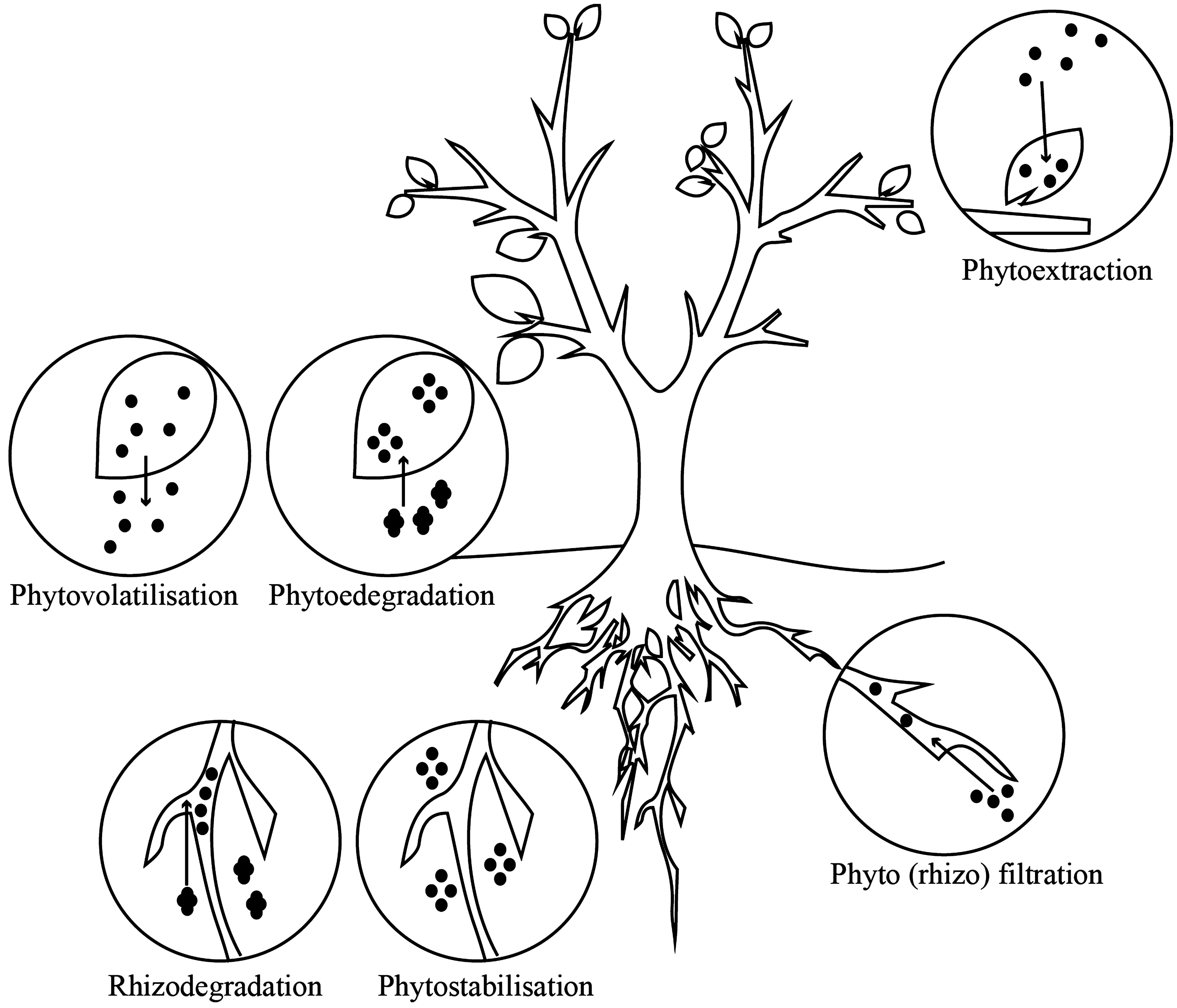
Phytoremediation techniques.
With regard to carbon dioxide (CO2) levels and perceived IAQ, some findings have shown a positive effect of indoor greenery in reducing CO2 levels. 55 CO2 concentrations change based on human activity in indoor living spaces. 55 In fact, research has shown that in non-industrial indoor environments such as offices, schools and homes, the major source of CO2 is human metabolism. 56 Nevertheless, CO2 has not been considered to be a pollutant but rather an indicator of the presence of pollutants that are related to the presence of people indoors. 56 Plants use energy caught in leaf pigments during the photosynthetic process, for the conversion of CO2 and water to cellulose, while producing oxygen. 47 Some aquatic plants have shown to release oxygen through their roots, stimulating the growth of rhizosphere microorganisms improving the botanical biofiltration process.46,47
Health symptoms, psychological impact and productivity
In a recent study named OFFICAIR, performed in 167 office buildings in eight European countries, the most prevailing building-related health symptoms of the 7441 office workers included in the survey were dry eyes (31%), headache (29%) and dry irritated throat (20%). 5 Although the prevalence of most of these symptoms was most likely multifactorial (individual, occupational and environmental risk factors were involved), several indoor air pollution sources were pointed out as important risk factors, in particular for dry eyes complaints, showing the potential for green systems. 57
In 1996, Lohr et al. 12 performed a study on productivity in a working environment and concluded that interior plants may improve worker productivity and reduce stress in a windowless environment. The outcome suggested that the reaction time of workers in the presence of plants was 12% faster than in the absence of plants, indicating that plants contributed to an increased productivity. Lohr et al. 12 also reported that the presence of foliage plants in interior spaces change particulate matter (PM) accumulation: accumulation was lower in both rooms where plants were present than where plants were absent. 12 Other studies showed that vegetation with rough surfaces and fine hairs or raised veins seem more effective in intercepting PM than smooth vegetation, and plant roots may absorb some pollutants and render them harmless in the soil.22,45 While some researchers found that vegetation may improve worker productivity and creativity4,12,58 other researchers found that vegetation may improve occupant comfort and their overall perception of the quality of their environment creating a more desirable place to work.13,59,60 Some benefits perceived by workers using vegetation within the working environment that have been put forward are enhanced collaboration amongst staff, including across teams, improved morale, reduced stress and decreased absenteeism.11,14 Additionally, Mangone and van der Linden 61 stated that the use of vegetation can have both a positive psychological and economic impact within office environments, because improving worker performance is more effective than improving energy performance.
Plant species and pathways for removal of VOCs
According to Dela Cruz et al., 62 the pathways for removal of VOCs by plants can be divided into the following (Figure 2): (1) Removal by the above-ground plant zone, (2) removal by the microorganisms living in the soil, (3) removal by the roots and (4) removal by the growing media (substrate). Plants have been observed to take in air pollutants via their stomata during normal gas exchange. Therefore, to use plants for the remediation of atmospheric pollutants, it was concluded in several studies that the most suitable plant species will be those with high stomatal conductance and lower sensitivities to the pollutants.49–51,63 Additionally, it was found that some bacteria growing on plant leaves also contribute to VOC biodegradation. 48 Wetzel and Doucette 16 stated that the waxy cuticle coating on leaves may provide a simple, cost-effective means to sample indoor air for VOCs and to help improve IAQ. Certain plants such as lichens were found to be excellent biomonitors to establish the type of pollutants present in the area. 64 Next to the stomata, the root zone has been shown to be an important contributor to the removal of VOCs. 22 In addition to the photosynthesis-induced gas exchange through the leaves, the root microbial matrix was found to be an important element in assisting the removal of indoor air pollutants. In some studies, rhizosphere microorganisms, found in the growing media, were identified as significant direct agents of VOCs removal, which also has implications for biofiltration.2,39,63,65–68
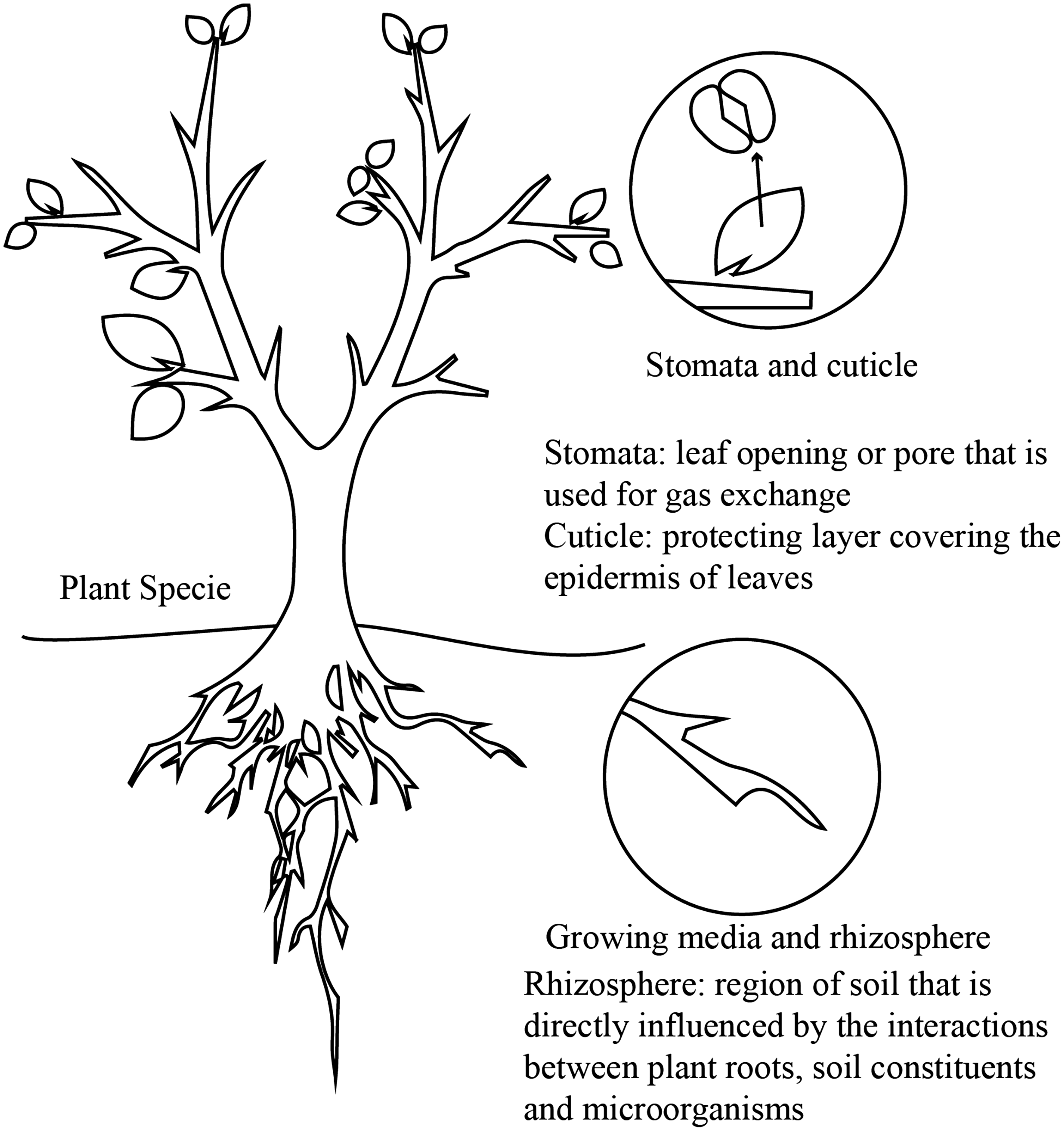
Pathways for removal of VOCs by potted plants.
Therefore, in order to assess the role of vegetation as a sink of air pollutants it is important to evaluate a wide range of species, the efficacy by which the leaves absorb these pollutants and the extent to which the leaves are adversely affected by the exposure. Gas diffusion models can be used to analyse the exchange of water vapour, CO2 and other pollutants between the atmosphere and the plant leaves. 63
According to Soreanu et al., 47 about 120 individual plants species have been analysed by different researchers in several pot-based studies for VOC removal and the following was concluded: (1) the common tropical house plants Janet Craig and Peace Lily were the most studied but not the best performing potted plants69,70 and (2) the best performing plants seem to be Purple waffle, Purple heart, English Ivy, Asparagus fern, Variegated wax 69 and Crassula portulacea. 62 Upadhyay and Kobayashi 45 pointed out that plants with a large leaf surface area are more suitable for removing pollutants. Clausen et al. 71 recommended to use a large leaf surface area in combination with an appropriate ventilation rate to obtain an appropriate performance with potted plants. It has also been stated that rhizosphere degradation (rhizoremediation) could play a major role in VOC removal by botanical biofiltration. 30 Some studies have shown that most plants have limited pollutant removal capacity in the absence of rhizosphere microorganisms. 72 Guieysse et al. 29 found that the diversity of microbial species in the rhizosphere microcosm appeared to be a key parameter in the reduction of VOCs. Most of the houseplants described are commonly found in tropical and subtropical forests, where they received light filtered through the branches of taller trees. Hence, their leaf performed photosynthesis efficiently under relatively low light conditions.
It is also important to consider that air pollution has both direct and indirect impacts on the life of the plant. Some plants are very sensitive to air pollution. The early recognition of pollutant damage to plants, notably characteristic visible foliar symptoms, acts as an alarm for toxic dangers to humans and their environment. 45 Many air pollutants reduce plant growth, partly through their negative effects on photosynthesis. For instance, pollutants such as sulphur dioxide (SO2) and ozone (O3), which enter the leaf through stomata, directly damaged the photosynthetic cells of the leaf. 73 Both the stomata and cuticle (Figure 2) have been suggested to be pathways for VOC removal by the above-ground plant parts: studies conducted on only the above-ground plant parts showed higher removal of formaldehyde, benzene and toluene in light than in darkness. It was therefore concluded that these compounds were taken up through the stomata, as stomata open in light and close in darkness.28,67,74,75 The pathway for VOC uptake by the above-ground plant parts seems likely to dependent on the properties of VOCs. A hydrophilic VOC such as formaldehyde has been found to diffuse easily through the cuticle that consists of lipids, whereas a lipophilic VOC such as benzene was found to more likely penetrate through the cuticle. The relative importance of the stomatal uptake, compared to the cuticular uptake, seemed therefore to be dependent on the VOC in question.76,77 After entering the leaf, a compound can suffer degradation, storage or excretion, either at site of uptake or after translocation to other parts of the plant. Degradation to harmless constituents is the optimal goal, but storage or excretion will be necessary if degradation cannot occur. Storage by the plant will remove VOCs from the air, but excessive storage may lead to damaging effects on the plant due to pollutants building up to lethal concentrations. If the VOC is excreted after uptake, the effect on the indoor VOC concentration is limited. However, the pollutant may be excreted by the roots and subsequently degraded by microorganisms in the soil or adsorbed to the soil particles. 62
Microorganisms existing in the soil of potted plants have appeared to be essential in removal of VOCs from indoor air.2,40,68,78 It has been shown that roots can absorb pollutants by themselves, 79 but can also increase the availability of pollutants for the microorganisms. 80 Increased bioavailability has been achieved through the excretion of root exudates.80–82 Uptake by roots has been found to depend on the root morphology where the lipid content and specific surface area are significant parameters. 83 Once absorbed by the root, the pollutant could therefore undergo the same processes as in the leaf (i.e. degradation, storage or excretion). Consequently, the uptake around the above-ground area affects the root region, both through the lack of root exudation and through the lack of a driving force for the transpiration stream. 62 On the other hand, it has been shown that the growth medium represents an essential component for cleaning the air; but it may require a regular replacement of the filtration medium to remain effective, and to prevent the re-emission of absorbed gases.40,84 Some studies have shown that activated carbon is the most effective microbial biofilter.84,85
Vegetation system and biological purifiers
Common biological processes for VOC reduction include bioscrubbers, biotrickling filters and biofilters.86–88 In bioscrubbers, the air is cleaned with an aqueous phase into which the pollutants transfer, and the aqueous phase is transferred into a bioreactor where the pollutants are biodegraded. In biotrickling filters, microorganisms are grown on an inert material (plastics resins, ceramics, etc.). In biofilters, air is passed through a moist porous material which supports microbial growth. Water remains within the packing material and is added intermittently to maintain humidity and microbial viability. The growth media is generally a natural material, which is biodegradable and provides nutrients to the microorganisms, although intensive research has been done on using synthetic materials.29,89 There are different green systems and strategies that can be used within the indoor environment, such as living wall systems (LWSs) that are vertical hydroponical systems pictured as ecological cores that can be also used as a biofilter (biowall). 37 An LWS supports vegetation that is either rooted on the walls or in substrate attached to the wall itself, rather than being rooted at the base of the wall. 43 Moreover, it is possible to use the evapotranspiration of plants for air cooling and humidity control. 90 LWSs can work as biofilters when they work as an active vegetation system. In an active vegetation system air-cleaning rates may be significantly higher than in passive vegetation systems using active fan-assisted hydroponics technology, which draws the air through the root rhizomes of the plants. On the other hand, building-integrated vegetation systems combining phytoremediation technology with conventional heating, ventilation and air conditioning (HVAC) systems helped increase the air-cleaning capacity and have been shown to decrease energy consumption of buildings, for example for the biowall. 91 Air passing through the plant wall is cleaned and recirculated within the area instead of introducing outdoor air to replace stale indoor air. Moreover, the air does not have to be conditioned (heated or cooled). Therefore, there is a potential to save energy. As air moves through the wall, impurities are removed and clean air is distributed throughout the building via the HVAC system. 91
In the mini-review by Soreanu et al. 47 who pointed out that many industrial biofilters pass contaminated air through a substrate that has limited life expectancy because of the exhaustion of its organic content, which acts as a supplemental or alternative food source for the beneficial microorganisms. Therefore, the media must be replaced in a regular interval, depending on the selected media it may be once per year. Root systems of plants growing in the rooting material of botanical biofilters constantly release organics into the media partly through exudation of materials from living roots and partly from turnover of the entire root mass. Consequently, the rooting zone of the botanical biofiltration system is a packing material with a constantly rejuvenated organic content. 47 Biological indoor air treatment can potentially release dust, microorganisms and water. These problems can be simultaneously solved; for instance, by using membrane bioreactors which physically disconnect the sorption step (air–water exchange) from the biodegradation step. According to Ergas et al., 92 membrane bioreactors for VOC removal have only been used at high pollutant concentrations. Furthermore, since biological purifiers have been typically saturated with water and since indoor air treatment requires high flows, indoor biological purification might increase the moisture content in the room or building where it is used. This beneficial effect when indoor air is too dry (moisture contents of 30–70% are generally recommended for comfort) could also cause an excessive growth of fungi with negative impact on IAQ, 93 although these effects are still uncertain.94,95 Darlington et al.37,96 described that the use of an indoor biological purifier could significantly increase the concentrations of total suspended spores, although these values were similar to concentrations found in flats containing house plants. However, there are limited data available and the potential release of microorganisms from indoor biological purifiers should be better studied and prevented if necessary.
Energy performance
Some studies have been conducted to analyse the energy performance of some living systems, including potted biowalls and potted plants which have shown some positive outcomes. For instance, in INHome – a Solar Decathlon project developed by Purdue University in 2011 – a biowall was integrated as an air filtration system that utilises plants placed in a vertical wall. It was claimed that this biowall saves energy and provides a calming ambiance by bringing nature inside the home. This green vertical system is connected to the HVAC system in the home serving as a natural air purifier. 91 The Biowall concept could become a competitor against the energy recovery system that is more commonly used with HVAC systems. An energy recovery system uses a heat exchanger to transfer energy between the exhaust air and the supply air intake. This saves energy and reduces the cost to condition outside air by reducing the need for preheating and precooling. 91 Logan et al. 97 created a plant microbial fuel cell, which is based on the following principle: with the aid of sunlight, plants convert CO2 into organic compounds (photosynthesis). The plant uses some of the compounds for its own growth, while the remainder is eliminated through the roots. Microorganisms that are naturally found in the ground around the roots of plants break down these organic compounds. This process causes electrons to be released. It is possible to gather these electrons with an electrode and use them to generate electricity.
Noise control and biological purifiers
An LWS can also be used as a passive acoustical insulation system. 98 Some studies show that vegetation can reduce sound levels in three ways. First, sound can be reflected and dispersed by plant elements, such as trunks, branches, twigs and leaves. A second mechanism is absorption by vegetation. This effect can be attributed to mechanical vibrations of plant elements caused by sound waves. Finally, sound levels can be reduced by the destructive interference of sound waves due to the growth media.99,100 Thus, there are several factors that influence noise reduction in an LWS, such as the depth of the growing medium, the materials used as structural components and the overall coverage.
Thermal control and biological purifiers
The evapotranspiration from plants is said to lower temperatures around the planting environment.
59
It is shown to be possible to use the evapotranspiration of plants for air cooling and humidity control.90,101,102 In 2011, a study of indoor living systems performed in warm climates tested different substrates, and the following was concluded:
103
In the room the overall humidity level increased. All substrates tested were suitable for plant growth and their behaviour was similar. Geotextile showed the best cooling capacity but higher water consumption; coconut fibre presented degradation problems. Epiweb performance was the poorest. These systems have been proven to be very useful and interesting for warm indoor environments due to the cooling effect observed in addition to their biofiltration capacity and the aesthetic component.
Some studies on thermal control have been conducted and it was concluded that air passing behind the substrate is most effective to generate an evaporative cooling effect since the air is protected from radiation and the greenhouse effect. Therefore, it was concluded that the cooling process should take place behind the substrate.90,104 Previous studies stated that LWSs can be used as thermal and humidity control systems due to evapotranspiration of plants, the selected growth medium or substrates. However, a ventilation system still is additionally required to optimise the optimal performance of the total system.
General summary
The known and unknown effects of using vegetation indoors are summarised in Figure 3.
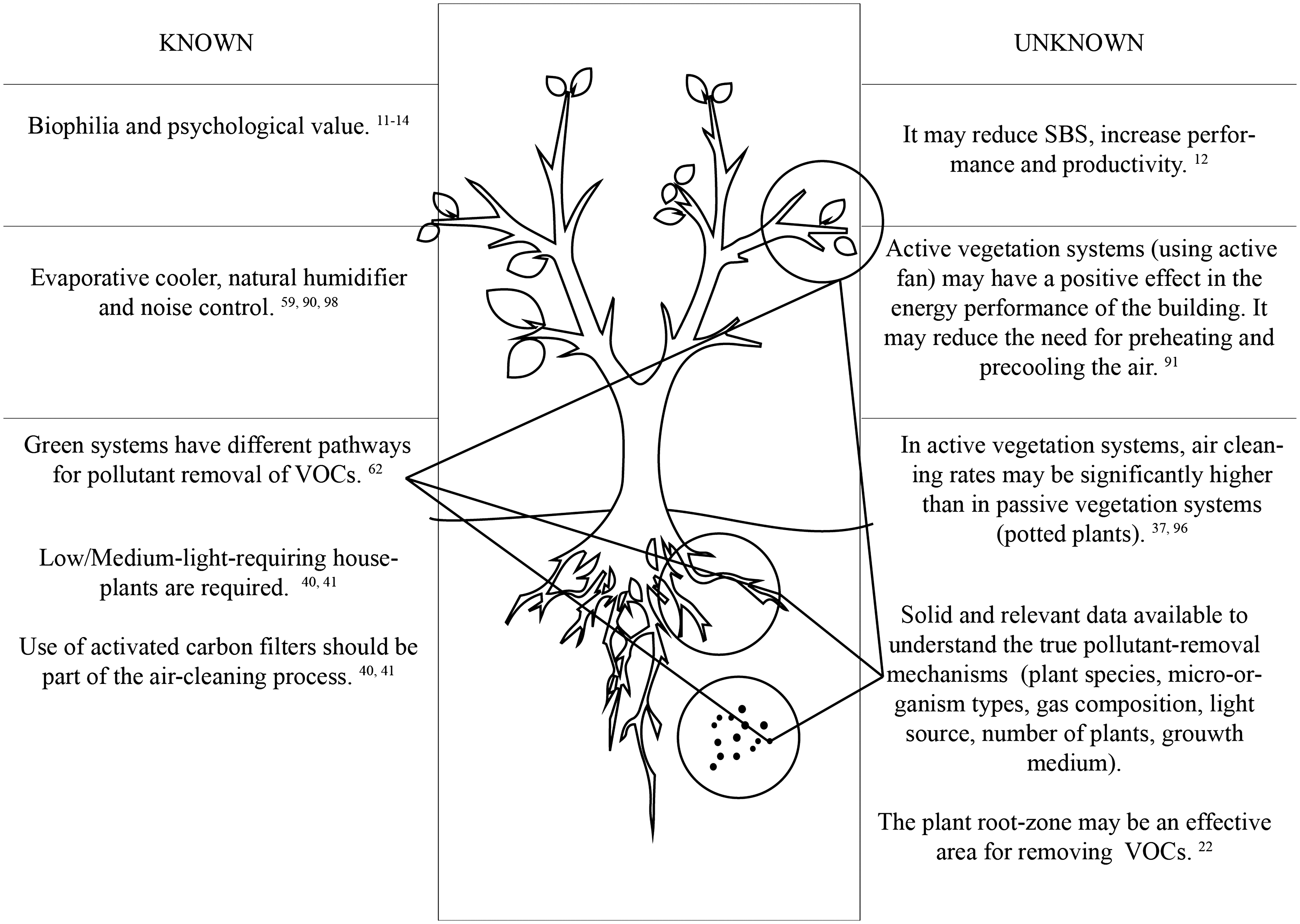
Known and unknown effects of green systems, review. VOC: volatile organic compound.
Conclusions and recommendations
This paper describes the effects of using vegetation indoors and the general conclusions found are the following:
Biophilic design and vegetation has a positive impact on people within office environments. It increases the overall satisfaction and happiness of people’s lives.4,11–14,58–61 However, there is no solid data that prove that it has a strong impact on the performance, productivity and overall reduction of the Sick Building Syndrome. Vegetation has been found to improve occupant comfort, as well as their perception of the quality of their environment, including thermal comfort and acoustics.59,98,104 Several research studies indicate the possible effect of vegetation on IAQ.40,41,62 However, there is still a lack of solid and relevant data available to understand the true pollutant-removal mechanisms and factors in these systems (plant species, microorganism types, gas composition, light source, number of plants), its cooling effect within indoor environments and the effect of these systems on the energy performance of the building. Finally, existing research suggests that in an active vegetation system (green systems in combination with mechanical fans), air-cleaning rates may be significantly higher than in a passive vegetation system (potted plants).37,96
In fact, while the plant’s ability to take up pollutants is well documented in laboratory studies, the effect of plants on indoor air in complex environments like offices requires further investigations to clarify the full capacity of plants in real-life settings. Although the role of plants has been speculated and phytoremediation studies have clearly demonstrated improved pollutant removal by rhizodegradation and phytostimulation, a more accurate picture of the involvement of plants in the biological air purifiers needs to be validated.
This paper underlines the implications of botanical biofiltration and its implications in the indoor environment. Botanical biofilters in many respects have the appearance of typical interior plantscapes. Greening the indoor space with this sort of botanical elements can improve the occupants’ well-being by improving their psychological disposition, which may affect performance and productivity. Because of similar visual content, the integration of botanical biofilters into the built environment could be expected to have all the psychological impacts of ‘greening’ the indoor space with green plants. However, for improving IAQ in real life, although predicted from some laboratory studies2,29,30,32,37,39,40,42,47 still some steps have to be taken (Figure 3). The design of biological air purifiers requires the development of new technologies for highly efficient pollutant removal to allow high volumetric treatment flows while preserving high treatment efficiencies. Current biological purifiers have shown some potential but are all limited by their low treatment capacity. This opens interesting possibilities for multi–cross-disciplinary research initiatives.
There are some selection requirements for the type of plants that can be used indoors, such as light settings, climate conditions and growth medium. Therefore, it is recommended to use medium- and low-light plants, and an inorganic growth medium because it is easier to control, regarding nutrients and modularity. Regarding the possible concerns about phytoremediation systems, biofiltration and indoor plants, it is recommended to use non-pollinating plants, regular maintenance and humidity control. The increase of relative air humidity in the rooms with plants is one of the major issues of the phytoremediation process, mainly in summer. 99 Therefore, to avoid mould development and the deterioration of buildings, the RH should be maintained below 70%. Periodical cleaning of leaves is recommended to maintain proper leaf gas exchange. Careful selection of plants and of the operating parameters, and a combination with other technologies could improve botanical biofiltration and thermal performances. It is clear that the process performance depends on the interactions between pollutant, plant and microorganisms, a complex key aspect that is not elucidated yet for indoor air treatment scenarios and is still under evaluation for many other ecosystems. Recommended future studies are therefore (a) to evaluate pollutant-removal mechanisms, (b) to select appropriate plant species and (c) to design active LWSs with the integration of mechanical ventilation. Both lab tests and tests in real office environments, under different thermal and air quality conditions, are required to establish the possibilities of the selected plants, the growth medium and finally the overall system.
Footnotes
Authors’ contribution
TAM undertook the main review tasks, writing and analysis of the literature. AvdD, MO and PMB contributed with the conception and the design of the work as well as critically reviewing and editing the entire content and approved the final manuscript.
Declaration of conflicting interests
The author(s) declared no potential conflicts of interest with respect to the research, authorship, and/or publication of this article.
Funding
The author(s) disclosed receipt of the following financial support for the research, authorship, and/or publication of this article: The work described in this paper is part of a PhD project, supported by the National Secretariat of Higher Education, Science, Technology and Innovation of Ecuador (Senescyt) and Delft University of Technology.