




Abstract
Aims:
Previous research has documented the adverse economic consequences associated with caring for a child with a disability. However, less is known about the mechanisms responsible for these negative employment probabilities. To address this knowledge gap, this study examined differences in return to work following childbirth between mothers of a child with and without a disability, as well as the associated sociodemographic and job-related characteristics.
Method:
We analysed registry data from Statistics Norway. Our study included all first-born children in Norway between 2007 and 2015 and their respective mothers (n=107,298). Linear probability regression models were used to examine differences in mothers’ return to work after childbirth and its associated factors.
Results:
After adjustment for sociodemographic and job-related characteristics, mothers of a child with a disability had lower probability of returning to work compared with other mothers. The factors having the strongest association with mothers’ return to work were psychosocial job exposures and educational level. Mechanical job exposures, immigrant background, and divorce status had a moderate correlation with mothers’ return to work. Factors that had a weaker influence on mothers’ return to work were mothers’ age at childbirth, and number of younger siblings. Moreover, educational level, divorce status and mechanical job exposures had differential effects on mothers of a child with and without a disability.
Conclusions:
Keywords
Introduction
Child disability has significant direct and indirect costs for parents [1,2]. Mothers are particularly affected by the long-term economic costs that are linked to raising a child with a disability [3]. Raising these children also has an adverse impact on the mother’s physical and mental health. They are at greater risk of experiencing a range of health problems, such as postnatal stress, musculoskeletal pain, depression, anxiety, and insomnia [4,5]. Compared with mothers of a child without a disability, they are more likely to be on long-term sick leave which can be attributable to their intensified care responsibilities [6].
Our paper has a particular focus on mothers because international and Nordic studies show that, compared with fathers, mothers often withdraw from their jobs, work fewer hours and reduce income because of extraordinary care needs [3,7 –10]. A study in Norway by Brekke and Nadim [11] reported that, compared with fathers, mothers caring for a chronically sick or disabled child were at greater risk of withdrawing from labour market participation 3 years after the child was born. Correspondingly, a study in Sweden by Olsson and Hwang [12] found that mothers of a child with intellectual disabilities were less likely to participate in the workforce compared with fathers. Fathers seem to be less affected by raising a child with disabilities, because they more often continue to participate in paid work even after the child is born. Gender differences in caregiving duties can be attributed to various factors, such as biological factors, comparative advantage, and societal expectations. According to specialisation theory, comparative advantage in income plays an important role in determining who takes on caregiving and market responsibilities. Because fathers often earn more, even in countries with advanced gender equality such as Norway, they tend to play the breadwinner role in dual-earner families while mothers specialise in the caregiving role [13]. Gender role theory also explains how societal expectations and cultural norms influence mothers to take on the primary role in providing care for their child with a disability [14]. Despite increased gender equality and a massive increase in women’s labour market participation, women still take on the primary caregiver role for their family, making it challenging to balance their family and work responsibilities [15].
There is a lack of research examining whether mothers who were still employed prior to the birth of their child with a disability can maintain their employment following childbirth at the same level as mothers in general. The transition into caregiving can be the most challenging and stressful phase of caregiving for all mothers [16]. The burden can be even more pronounced for mothers caring for a child with a disability, possibly influencing their employment decisions. Because these mothers are vulnerable to varied economic and health problems, employment sustainability may be more important for them to maintain income and also improve their physical and mental health. Previous studies indicate that intensified caregiving responsibilities may be associated with reduced maternal return to work [17]. This association could be influenced by factors such as sociodemographic and job-related characteristics [7,8,18,19]. Empirical evidence shows that women have less control in the workplace compared with men [20,21]. Mothers may engage in jobs with higher levels of mechanical and psychosocial exposures, which may influence their employment decisions after the birth of their disabled child. Much research in this area has failed to account for the influence of job-related characteristics. To the best of our knowledge, none of the existing studies has examined the influence of mechanical and psychosocial occupational exposures on mothers’ employment decisions following the birth of a child with a disability. Such studies are important for understanding the reasons that may either hinder or promote mothers’ decisions on the process of staying in the labour market after having a child with a disability. Using high-quality Norwegian registry data, the present study seeks to address this gap by investigating differences in returning to work following childbirth between mothers of a child with and without a disability. It has a particular focus on examining the impact of sociodemographic and job-related characteristics on mothers’ return to work. More specifically, it aims to answer the following two research questions:
Methods
Study data
Our study included all first-born children in Norway between 2007 and 2015 and their respective mothers (n=107,298). It was limited to primipara mothers, specifically those who gave birth for the first time. Only mothers who were employed at the childbirth year were included in the study population. Information on sociodemographic characteristics and employment was retrieved using registry data from Statistics Norway (SSB), particularly from the Central Population Register, the Historical Event Database (FD-trygd) and the National Educational Database.
In this paper, disability is understood through social approaches rather than a traditional or medical model. Social approaches acknowledge both the environmental barriers and the functional limitations of a child as opposed to the medical model which only emphasises individual impairment [22]. Due to data limitations, we used a proxy measure of disability, which means that we were not able to capture fully the complex care needs for a child with a disability, which differ by the type and nature of disability. We used attendance benefits as a proxy measure to identify children with a disability. Attendance benefit was measured annually by including children who received attendance benefits across pay grades 1–4. Child disability status was defined based on the receipt of attendance benefit within the 2-year observation period following childbirth. Non-means-tested attendance benefits are granted for all parents of children living with disabilities in Norway if they meet the eligibility criteria described above. The control group was mothers of a child without a disability, identified as those who did not receive any attendance benefits in the observation period.
Support for families of children with a disability in Norway
Parents caring for children with a disability in Norway receive different forms of generous disability-related monetary and social benefits. The primary goal is to compensate for the direct and indirect costs of providing care which exceeds what a child without a disability would require [23]. The expectation is that there should be no difference in labour market participation between families caring for a child with and without a disability. Disability-related benefits for these families are provided by both the state and the municipality. Most care benefits, such as respite services, are provided by municipalities, as they have a high degree of autonomy for social services and welfare provisions [24]. Families of children with a disability must apply to either the Norwegian Labour and Welfare Organization (NAV) or their municipality to access financial and social assistance (i.e. health and care services). Financial benefits include basic benefit, attendance benefit, higher rate attendance benefit, and care benefits. Basic benefits cover additional expenses related to disability, such as transportation, medicine, and service dogs. Attendance benefit (pay grade 1) is provided to parents of children with a disability who require intensified care [23,24]. Childcare extra needs must last at least 2 years to qualify for attendance benefits. For families with significantly higher caregiving demands, the higher rate attendance benefit is available in pay grades 2–4, with the highest level 4 equivalent to six times the standard attendance benefit of 96,912 NOK per year in January 2024. To be eligible for the higher rate attendance benefit, families must document that their child’s physical and mental functioning is substantially reduced. Care allowance is provided as compensation for parents who must take temporary time off work to care for chronically sick children [24].
Measures
Outcome
The outcome measure was mothers’ return to work, a binary measure differentiating whether or not mothers stayed in the labour market 2 years after childbirth. The variable was measured as a dummy variable and coded as 1 if the mother was employed 2 years after childbirth and 0 otherwise. Mothers were classified as employed if they worked as paid employees or entrepreneurs during the reference week (3rd week of November).
Sociodemographic characteristics
We included sociodemographic characteristics that have been shown in previous studies to influence employment probabilities [18,25 –27], and that were available from our data. The variables were mothers’ age at childbirth, number of younger siblings, divorce status, immigrant background, child gender, and educational level. Birth cohort was controlled for in all models.
The mothers’ age at childbirth was measured in number of years and reported with two decimal places. We included age-squared in the models due to the presence of a non-linear relationship between mothers’ age at childbirth and return to work. Research shows that mothers’ age at childbirth can influence their probabilities of returning to work after the birth. Younger mothers often face greater difficulties in maintaining their employment in the post-childbirth period as they may lack enough caregiving experience and have fewer resources compared with older mothers [10].
The binary measure of divorce status differentiated mothers as either divorced or not. We chose not to include marital status to measure family characteristics by categorising mothers as either married or unmarried. This measure does not fully capture the complexities of family dynamics in Norway, as many families in Norway cohabit without marriage. Because we did not have a measure differentiating cohabiting and single mothers, the merged divorced variable was found to be a better measure to investigate the influence of family characteristics on mothers’ return to work. Divorce may serve as a risk factor for mothers of a child with a disability of not returning to work, as divorced mothers often live alone, dedicate much of their time to caregiving and lack the emotional and instrumental support that partners would provide [26].
Child gender was measured as either male or female. Immigrant background was measured using two categories, distinguishing native Norwegians and immigrants. Employment decisions of the mothers have been linked to immigration background. For example, a study conducted by Yu and Singh [28] found that immigrant families of a child with a disability were more likely than other families to withdraw from the labour market due to language barriers.
Educational level was divided into three levels: compulsory education and low, upper secondary education and any college or university education. Studies indicate that mothers of a child with a disability with higher levels of education tend to have a higher income and remain employed in the post-childbirth period, as they face greater opportunity costs of staying at home [29].
The number of younger siblings was included as a continuous variable. The number of children in the family has been associated with adverse employment outcomes. When parents raise both their child with a disability and their other children, they often face heightened financial pressure, time constraints and fatigue [26].
Job-related characteristics
Job-related characteristics have been identified as important for mothers’ employment outcomes. For example, workplace exposures can have health consequences, which may impact mothers’ employment decisions after childbirth [30]. We included indices of mechanical and psychosocial job exposures as measures of job-related characteristics. We used the validated Mechanical Job Exposure Index of Hermansen and Dahl [30] and the validated Job Strain Index of Le et al. [31]. These indices were particularly designed for use in Norwegian registry-based studies. The mechanical exposure index includes heavy lifting, working with the hands above shoulder height, performing heavy physical labour, neck flexion, squatting/kneeling, forward bending, awkward lifting, and standing/walking. The psychosocial job exposure index combines job demands with job control. Job demands include insufficient resources, quantitative demands, conflicting ways of doing things, and contradictory requests. Job control includes deciding the tempo of work, deciding how to proceed, applying skills, making important decisions, and performing repetitive tasks. Both the mechanical and psychological job exposure indices had response options that were dichotomised as exposed or not exposed.
Our data include four-digit Norwegian standard STYRK-98 occupational codes [32] for each employed mother, which were linked with the validated occupational exposures score. The mechanical index measures the average proportion of mechanical exposures in different occupations measured at 2 years after childbirth. It theoretically ranges from 0% to 100%, with the value 0 indicating that no employees of these occupational codes had reported exposure in a particular occupation, while a value of 100 indicated higher levels of exposure – that is, employees with a specific occupational code had reported exposure to all mechanical exposures. The psychological job exposures also range from 0% to 100%, with higher values indicating higher levels of demand and lower levels of control. The lower values indicated lower levels of demand and high levels of control. For a more detailed description, see Hermansen and Dahl [30] and Le et al. [31].
Statistical analyses
Descriptive analyses were presented with means (standard deviations (SDs)) and proportions (%) to describe the baseline sociodemographic and occupational characteristics. Linear probability regression models (LPMs) were used to examine differences in return to work after childbirth and its associated factors between mothers caring for a child with and without a disability. LPM is a widely used regression model to estimate changes in probabilities of dichotomous dependent variables. The coefficients show the changes in the return to work for a one unit increase in the measured predictors. While running the models, we added a robust standard errors estimator to address possible heteroskedastic variance. Three models were included simultaneously to examine differences in mothers’ return to work before and after adjusting for sociodemographic and job-related characteristics. Model 1 examined mothers’ return to work by only including child disability status and childbirth year. Model 2 expanded the analysis by including sociodemographic characteristics. Model 3 included job-related characteristics to examine the combined influence of sociodemographic and job characteristics on mothers’ return to work. The differences in mothers’ return to work across the three models were presented in bar graphs. We used a coefficient plot to identify and visualise the factors that were correlated with mothers’ return to work. We then expanded the analyses by including an interaction term between child disability status and all sociodemographic and job-related characteristics. This was to examine whether these factors exert differential influences on the return to work for the two distinct groups of mothers. Marginal effects and bar graphs were used to visualise statistically significant interaction effects. An additional interaction analysis was performed by only including variables that had a statistically significant interaction effect with child disability status. All statistical analyses were performed using STATA 18.
Ethical considerations
We received approval from the Regional Committee for Medical Research Ethics in south-eastern Norway (116474). We also received permission from the Norwegian Data Protection Authority to access all data without written consent from the study participants (551208).
Results
The baseline sociodemographic and job-related characteristics of the study population are presented in Table I. The study consists of 2829 mothers of a child with a disability and 104,496 mothers of a child without a disability. In both groups of mothers, there were more male children than girls, with a more pronounced difference observed among mothers of a child with a disability.
Characteristics of the study population of all first-born children with and without a disability in Norway during the years 2007–2015.
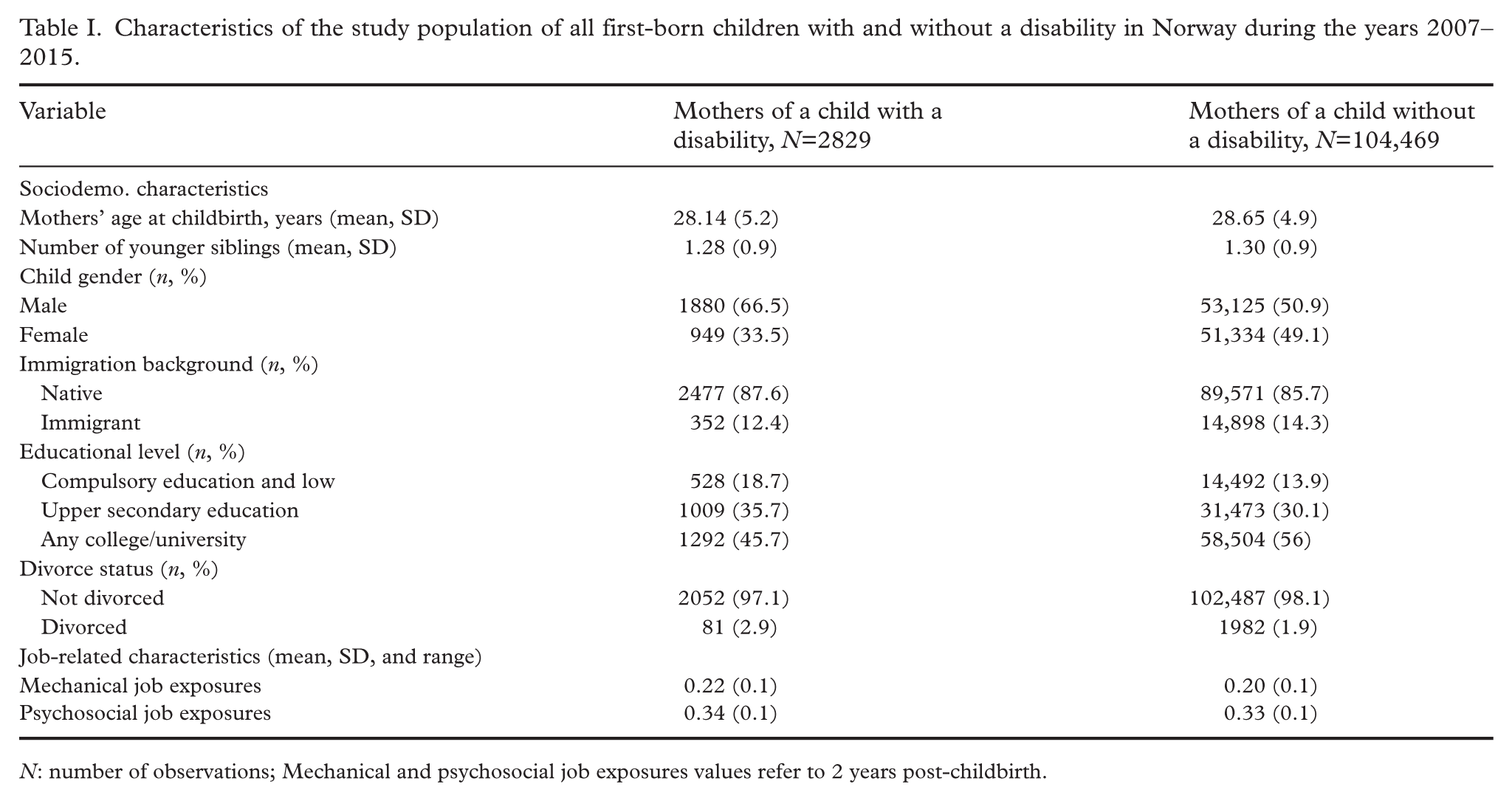
N: number of observations; Mechanical and psychosocial job exposures values refer to 2 years post-childbirth.
Table II presents results for the differences in return to work between mothers of a child with and without a disability. In the baseline model adjusted only for childbirth year, mothers caring for a child with disability were 5 percentage points less likely to return to work 2 years following childbirth compared with mothers caring for a child without a disability (model 1, Table II). In model 2, the addition of sociodemographic factors marginally reduced the observed difference in model 1 by 1 percentage point. Mothers of a child with a disability were 4 percentage points less likely to return to work 2 years following childbirth than mothers of a child without a disability after adjusting for sociodemographic factors. The inclusion of job-related characteristics did not change the results as the disability coefficient remained unchanged from model 2 to model 3. In the Supplemental materials, Figure 1 depicts the variations in mothers’ return to work at 2 years post-childbirth across the three models in Table II.
Linear probability model estimates of differences in return to work between mothers of a child with and without a disability.
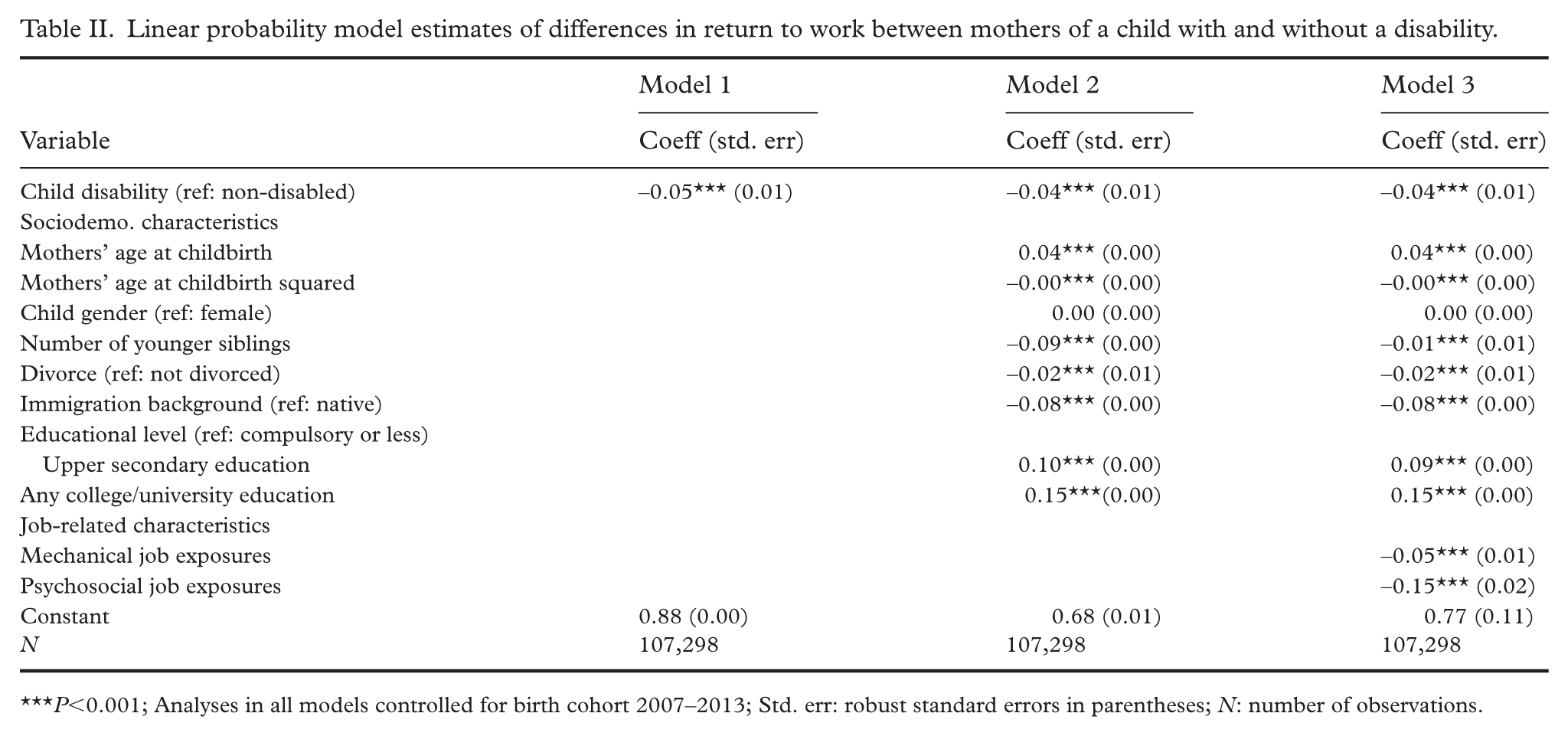
P<0.001; Analyses in all models controlled for birth cohort 2007–2013; Std. err: robust standard errors in parentheses; N: number of observations.
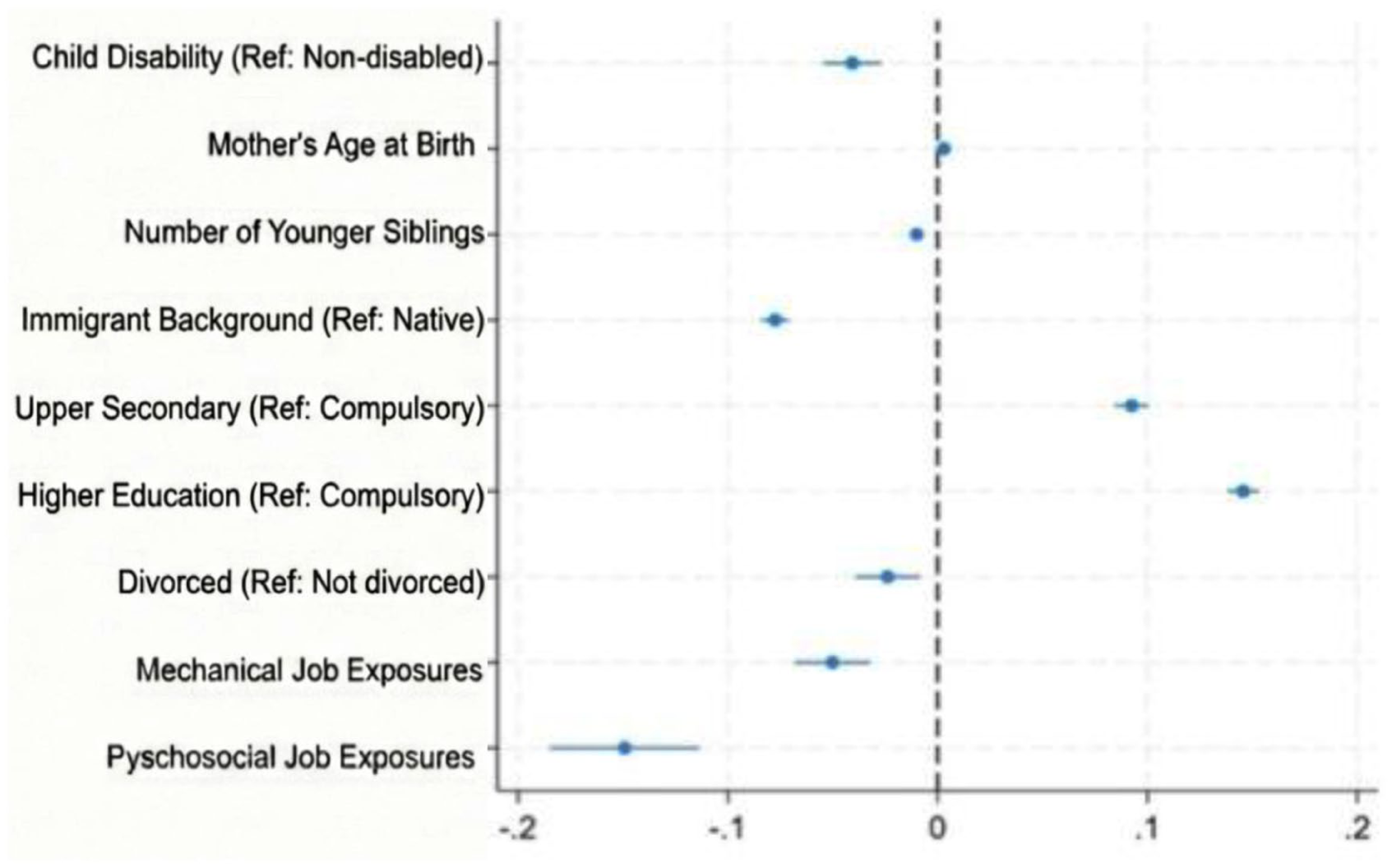
Factors correlated with mothers’ return to work 2 years post-childbirth.
Model 3 in Table II shows that all sociodemographic and job-related characteristics, except for child gender, were significantly associated with mothers’ return to work. A coefficient plot was used to visualise the results (Figure 1). On average, as the mothers’ age increases by one year, the probability of returning to work increased by 4 percentage points. The age squared quadratic term was negative and statistically significant, indicating that as mothers continue to age, the observed effect is not apparent, but rather reversed.
Immigrant mothers were 8 percentage points less likely to return to employment following childbirth compared with native Norwegian mothers. Mothers with any college/university education attainment had a 15 percentage points higher probability of returning to work compared with mothers with compulsory education or less. Mothers with upper secondary education had a 9 percentage points higher probability of returning to work than mothers with compulsory education or less. The number of younger siblings was negatively related to return to work for all mothers, with 1 percentage point reduced probability for each sibling.
Furthermore, the results show that divorced mothers had a 2 percentage points lower probability of returning to work compared with mothers who were not divorced. A similar pattern was observed in job-related characteristics. Both the mechanical and psychosocial job exposures were negatively related with return to work. On average, mothers who were exposed to higher levels of mechanical job exposures were 5 percentage points less likely to return to the labour market compared with those exposed to lower levels of mechanical job exposures. Psychosocial job exposures had a strong negative association with mothers’ return to work. Mothers who were exposed to higher levels of psychosocial job exposures had a 15 percentage points lower probability of returning to employment than those exposed to lower levels of such exposures (Figure 1, Table II: model 3).
The interaction analyses in Table III show that educational level, divorce status and mechanical job exposures predict returning to work for mothers of a child with and without a disability differently. The remaining interaction terms between sociodemographic and job-related characteristics were not significant. The interaction term between mechanical job exposures and child disability status was found to be positive and statistically significant. This indicates that being exposed to higher levels of mechanical job exposures increases the probability of returning to the labour market 2 years after childbirth, and the correlation was stronger among mothers having a child with a disability. We observed a negative and stronger correlation of being a divorced mother on returning to work for mothers of a child with a disability. Having a higher education had a stronger positive impact on returning to work among mothers of a child with a disability. In the Supplemental materials, the bar graphs in Figure 2 and Figure 3 show that the 95% confidence intervals do not overlap for any/college and university and divorce status. In the Supplemental materials, the marginal plot lines in Figure 4 show that as the level of mechanical job exposures increase, the likelihood of returning to work decreases for mothers of a child without a disability, whereas the opposite is true for mothers of a child with a disability.
Linear probability model interaction estimates of mothers’ return to work by child disability status and sociodemographic and job-related characteristics.
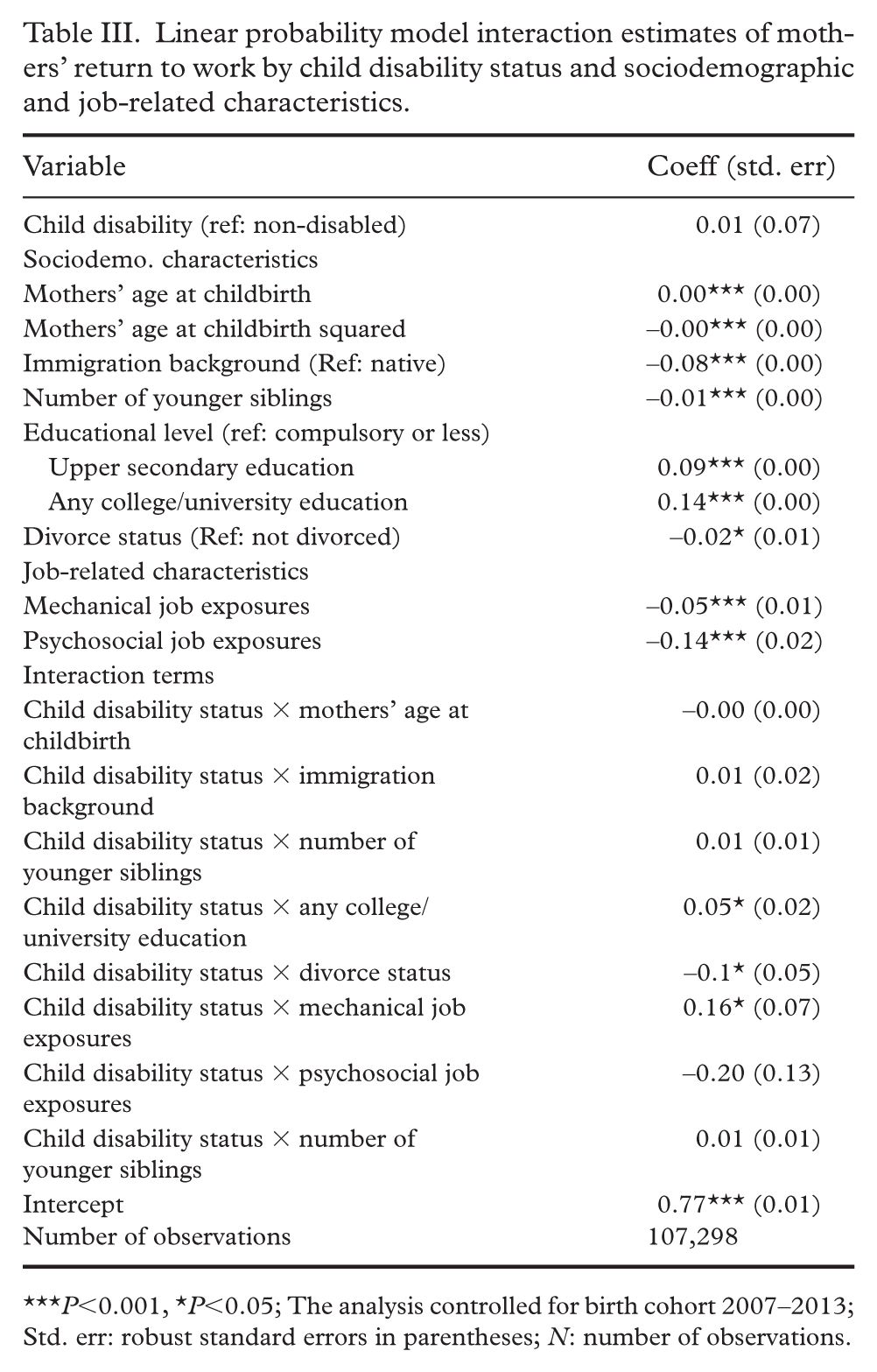
P<0.001, *P<0.05; The analysis controlled for birth cohort 2007–2013; Std. err: robust standard errors in parentheses; N: number of observations.
An additional interaction analysis including only variables that had statistically significant interaction effects with child disability status showed consistent predictions (results available on request).
Discussion
The results of this study demonstrated that mothers caring for children with a disability had a lower probability of returning to work compared with mothers of a child without a disability even after adjusting for sociodemographic and job-related characteristics. This is consistent with previous studies, demonstrating that mothers caring for a child with a disability face more employment challenges compared with those without [1,7,11,12,29]. The overarching political goal in Norway is to ensure that families of a child with a disability can participate in the labour market to the same extent as other families [11]. Although the observed 4 percentage points difference was not large, it is still substantial and consistent with previous Norwegian studies [3,11]. Evidence from studies focusing on specific groups of a child with a disability, such as autism spectrum disorder, shows that the probability of being employed among mothers is lower in countries with weaker family support systems, such as the United States [33]. This indicates that Norway’s generous family policies may mitigate challenges related to work–family balance among mothers of a child with a disability but may not fully compensate for the employment burdens associated with caring for a child with a disability.
We noticed that adding sociodemographic characteristics in the regression model partially explained the observed differences in return to work among mothers. However, the inclusion of job-related characteristics did not explain such differences. These findings suggest that the observed substantial and stable difference in return to work between the two groups of mothers may be related to the extraordinary caregiving responsibilities that mothers of a child with a disability may face, which can influence their decision regarding employment. Our findings imply that mothers caring for children with a disability may experience a more pronounced employment disadvantage than other mothers, even in countries such as Norway, where the welfare support for this group of mothers is robust and extensive compared with other countries.
The findings show that the factors influencing mothers’ decisions regarding employment corroborate with other studies conducted among mothers of a child with a disability and the general population [9,26,34 –37]. The factors having the strongest impact on mothers’ return to work were psychosocial job exposures and educational level. Mechanical job exposures, immigrant background, and divorce status had a moderate correlation with mothers’ return to work. Factors that had a weaker influence on mothers’ return to work were mothers age at childbirth and number of younger siblings. We observed no statistically significant association between child gender and mothers’ return to work. This indicates that mothers’ decisions regarding employment were not influenced by the gender of their child. Immigrant mothers were less likely to return to work, which could be attributed to their risk of being in a more marginalised position, exposing them to immigrant-specific challenges, such as language barriers, limited social networks and lack of knowledge about available welfare services [25]. In contrast, mothers with higher educational attainment had an increased probability of returning to work. One possible explanation is that educated mothers may have increased flexibility in their working hours, a more favourable work environment, and higher earnings or job satisfaction [38].
Furthermore, the findings indicate that divorced mothers were less likely to return to work after having a child. This may be due to the fact that they are on their own and no longer receive the emotional and instrumental support from their partners or husbands. This support includes understanding the partner’s concern regarding the child with a disability and taking a child to hospital visits [26,27]. Despite the association being weak, having more younger siblings had a negative influence on return to work, suggesting that mothers with a larger family may face additional barriers when making employment decisions. This could be due to the quantitative caregiving role overload which results in feelings of exhaustion and stress [26,27]. Regarding job-related characteristics, mothers who were exposed to higher levels of mechanical or psychosocial job exposures were less likely to return to work. This could be because these mothers face the dual challenges of high occupational strain and caregiving responsibilities, discouraging them from returning to work after childbirth.
Although almost all measured sociodemographic and job-related characteristics had an impact on mothers’ return to work, on average, only educational level, divorce status and mechanical job exposures had differential effects between mothers of a child with and without a disability. Educational level had a stronger influence on returning to work for mothers of a child with a disability compared with those without a disability. This suggests that mothers with higher levels of education may have more resources and opportunities to balance caregiving for their child with a disability and returning to work after childbirth. Additionally, we observed that the negative influence of being a divorced mother on the probability of returning to work was more pronounced among mothers caring for children with a disability. This implies that the heightened level of care required for a child with a disability can be even more challenging for a single mother, potentially affecting her future employment decisions. Interestingly, our findings show that a higher level of mechanical exposures on mothers had a positive and stronger influence on returning to work for mothers of a child with a disability. This suggests that our analysis could possibly be influenced by the healthy worker effect. This suggests that mothers of a child with a disability who are exposed to high levels of mechanical job demands might not be the healthiest individuals and could represent a very specific groups in the study population, as they were unemployed at the time of childbirth. In addition, because mothers are more commonly employed in occupations characterised by high psychosocial than mechanical job demands [39], those observed in high mechanical exposure jobs may represent a distinctly selected subgroup.
Our study contributes to the existing literature in several ways. To the best of our knowledge, this is the first study to investigate the combined impact of sociodemographic and job-related characteristics on mothers’ return to work after having a child with disability using a large quantitative register dataset. Our study goes further by comparing the probabilities of returning to work between mothers of a child with and without a disability, as well as how the associated factors differed between the two groups of mothers. This may provide policymakers with valuable insights into the unique factors that affect the employment decisions of mothers caring for children with a disability, which can be used for policy modifications or change. While most studies on the economic challenges of mothers caring for disabled children only control for sociodemographic characteristics, the current study is unique in that we were able to control for and investigate the impact of job-related characteristics on mothers’ return to work. Furthermore, the findings of the current study are methodologically sound due to its use of rich nationally representative longitudinal register data, which enhances our study’s generalisability beyond the study population.
Despite its notable strengths, our study is not without limitations. The results were limited by the use of attendance benefits as a proxy measure for child disability status, raising concerns about the accurate inclusion of a child with a disability from the register-based data. However, based on our understanding of previous research, such as the study conducted by Wendelborg and Tøssebro [40], 91% of the surveyed parents in their study who were caring for a child with a disability received attendance benefits in 2006. Among those who did not receive any benefit, 75–82% had children with mild disabilities. This suggests that it is appropriate to use attendance benefits to identify mothers of a child with a disability. Because we used a proxy for child disability status, we were unable to compare differences in mothers’ return to work by the nature and type of children’s disabling conditions. Additionally, despite the included validated job-exposure indices being effective in estimating average occupational exposures, they failed to account for individual differences in mechanical or psychosocial exposures within the same occupation. Moreover, given that our data included only annual information, specifically the child’s year of birth and the calendar year in which employment was measured, all individuals were assigned a follow-up duration of 2 years. In practice, the true follow-up time varies because children were born in different months of the year, resulting in differences in the number of months between birth and the employment measurement. The absence of month-level information prevents us from capturing this underlying variation and therefore makes it impossible to calculate empirical measures such as the mean or median follow-up time. Furthermore, our registry data did not have information to account for the possible influence of municipal and societal characteristics, and other job-related characteristics on mothers’ employment decision. Some examples of these factors may include workplace arrangement and policies, organisational culture, informal support, social network, and the municipal support system [26].
Conclusions
The findings of this study demonstrated that the probability of returning to work differed substantially between the two groups of mothers. Mothers of a child with a disability were less likely to get back to employment following the childbirth. The observed difference in return to work remained consistent after adjusting for sociodemographic and job characteristics. Overall, the results suggest that mothers of a child with a disability may be particularly vulnerable to not being able to return to their paid jobs after having a child due to additional caregiving responsibilities. Future research should broaden our analysis by incorporating municipal and societal characteristics that could potentially influence mothers’ decision on returning to work following the birth of their chronically sick or disabled child. It is also worthwhile to expand the analysis by including other job-related characteristics, such as workplace flexibility, and organisational culture, to examine their influence on mothers’ return to work. The results indicate that the level of psychosocial job exposures did not have a differential impact for mothers of children with and without disabilities. In addition, mechanical job exposures had a positive association with the mothers’ probability of returning to work. This warrants further studies on the long-term influence of such job exposures on maternal return to work. This is because mothers who are exposed to higher levels of mechanical or psychosocial exposures may struggle to balance caregiving responsibilities and high occupational exposures over time, increasing the likelihood of employment withdrawal.
Supplemental Material
sj-docx-1-sjp-10.1177_14034948261441935 – Supplemental material for Mothers’ return to work after a first-born child with a disability: evidence from Norway
Supplemental material, sj-docx-1-sjp-10.1177_14034948261441935 for Mothers’ return to work after a first-born child with a disability: evidence from Norway by Michael Yisfashewa Wondemu, Åsmund Hermansen, Pål Joranger and Idunn Brekke in Scandinavian Journal of Public Health
Footnotes
Acknowledgements
The authors owe a huge thank you to Andreea Ioana Alecu, who assisted in organising, cleaning, and merging the data for statistical analysis. Additionally, the authors are deeply thankful to Kristian Heggebø for providing insightful feedback on the manuscript.
Data availability statement
The data may be accessible from the authors on reasonable request and with permission from Statistics Norway.
Declaration of conflicting interests
The authors declared no potential conflicts of interest with respect to the research, authorship, and/or publication of this article.
Funding
The authors disclosed receipt of the following financial support for the research, authorship, and/or publication of this article: The Research Council of Norway funded this study as part of the BUDGET project (grant no. 301666).

Supplemental material
Supplemental material for this article is available online.
References
Supplementary Material
Please find the following supplemental material available below.
For Open Access articles published under a Creative Commons License, all supplemental material carries the same license as the article it is associated with.
For non-Open Access articles published, all supplemental material carries a non-exclusive license, and permission requests for re-use of supplemental material or any part of supplemental material shall be sent directly to the copyright owner as specified in the copyright notice associated with the article.
