




Abstract
Aim:
The aim of this study was to identify factors associated with dog-related injuries by analysing data collected from 5908 patients seeking treatment at healthcare facilities in Skaraborg district, Sweden, over the years 2001–2016.
Methods:
To describe factors associated with dog-related injuries, we analysed variables from four categories: people, that is, characteristics (gender and ages) of the patients who were injured; the circumstances in which the injuries occurred; the causes and types of injuries caused by dogs (injury mechanisms); and whether the injuries resulted in hospitalisation.
Results:
Most injuries occurred in residential settings (58%). Half of the reported injuries (n=2954) were due to dog bites, with the same number of patients who were injured in non-bite-related events, comprising a second group. Injury mechanisms for dog-related injuries other than bites varied, as did locations where the various injuries occurred. However, slightly more than half of all non-bite-related injuries were caused by falls, especially falls on the same level involving slips and trips (n= 831, 55.3% of all fall-related injuries). Dog bites were the primary injury cause for younger groups, while non-bite injuries were the leading injury cause for adults aged 45 years and older.
Conclusions:
Introduction
While the exact period in which dogs emerged as domesticated animals is still uncertain, archaeological evidence shows that humans and dogs have been companions since at least the Mesolithic Age [1,2]. Globally, 30% of households are estimated to have at least one dog present [3]. Given the close contact between humans and dogs, it is not surprising that risks for infections from dogs, including viral infections such as rabies and norovirus and bacterial infections, can impact humans [4]. Injuries caused by interactions with dogs also impact humans, for example, through injury mechanisms including bites and falls. The World Health Organization estimates that dog bites alone account for tens of millions of injuries annually, with children being the age group at highest risk. In middle and lower-income countries dogs are the leading cause of animal bite injuries, accounting for between 74% and 96% of all animal bite injuries [5].
However, bites are not the only type of injury that can be caused by interactions between dogs and humans. A study set in Umeå, Sweden, of 280 hospital admissions in 1997–1998 for dog-related injuries found that while men were more likely to be admitted for bites, women were more likely to suffer from fractures and sprains involving falls caused by dogs. Nearly half of all dog-related hospital admissions (48%) in this study were for causes other than bites [6]. The report by Juang et al. [7] on non-bite, dog-related injuries in a paediatric population over a 6-year period found that common injury mechanisms for non-bite injuries were being struck or pushed by dogs, and these types of injuries were more likely to be severe, compared with bite injuries. Another US-based study, analysing medical records from visits to emergency rooms in 2001–2006 due to non-fatal falls caused by dogs and cats, estimated an average annual injury rate of 29.7 per 100,000 population for these events [8].
Forming a better understanding of factors of the range of injuries caused by dogs to humans can provide vital support to public health efforts to reduce both bites and non-bite injuries. Several studies have noted the difficulty of obtaining community-based information on less severe dog-related injuries [9,10], and a systematic review of dog bite injuries found that many existing studies are hampered by a lack of trustworthy data [11]. The use of population-based injury reporting from local healthcare units can enhance this understanding by focusing on injuries that require treatment but may not involve subsequent hospitalisation. By studying injury patterns in community settings over time, we can better understand how to enact prevention programmes and legal and regulatory actions that reduce the incidence of injuries to the groups at highest risk. Thus, the aim of this study was to describe factors associated with dog-related injuries by analysing data collected from patients seeking treatment at healthcare facilities in Skaraborg district, Sweden, over the years 2001–2016.
Methods
Study setting and study population
The study setting was the Skaraborg district in Västra Götaland region, Western Sweden. The study population included all patients who sought ambulatory care for dog-related injuries to healthcare units that were part of an injury registration system, the injury database (IDB) in the district, between 2001 and 2016. Ambulatory care is defined in Sweden as ‘healthcare services provided to patients on an ambulatory basis, rather than by admission to a hospital or other healthcare facility. The services may be part of a hospital, augmenting its inpatient services, or may be provided at a free-standing facility’ [12].
There were 5908 reported injuries involving dogs over the study period. Of these, half (50.0%) were due to bites and the other half due to all other mechanisms. The study thus described factors associated with dog-related injuries to two smaller populations: one group comprised those patients whose injuries occurred through dog bites, and another group comprised patients whose injuries occurred through other dog-related events. Variables related to the study population that were used in this study include information on the injury locations, date and time of day, and the activities involved in dog-related injuries. Additional information that was included in this study were patients’ gender and ages. Free-text descriptions of injuries, as reported by patients, also provided additional information on the circumstances leading to these injuries.
The protocol for this study was reviewed by Sweden’s national ethical review authority, which stated that the study did not pose ethical risks to humans or animals and was therefore exempt from further review.
Database
This study analysed data collected from the healthcare units in the Skaraborg district of Sweden, as reported to Sweden’s injury database [13]. This database was part of a network of injury registration systems based in various locations around Sweden from 2001 to 2016 [14]. At its peak, the network of injury registration systems covered about 5–10% of the total population, of which the Skaraborg region comprised approximately 1.7% of the total Swedish population [13]. The Skaraborg database collected information on approximately 300,000 total injury events requiring outpatient care in the Skaraborg district over the operating period for the IDB. Records related to treatment of injuries in the database were judged to be representative of the treated population, as between 85–90% of all patients, or their parents or relatives, voluntarily agreed to provide information related to their injuries to participating units [15]. However, the number of healthcare units reporting to the database decreased over the period, from 76 in 2001 to 15 in 2016. As such, the annual number of records for all injuries decreased over the study period.
The registration system’s categorisation schemes were harmonised in the early 2000s with the European injury database system (EU-IDB) [16]. This database records all individuals who visit a doctor at a healthcare or an emergency clinic as a result of an injury. The injuries were coded according to the Nordic Medico Statistical Committee’s classification of external causes of injuries [13]. The IDB does not follow the International Classification of Disease (ICD) classification system, but the diagnosis information captured on the forms undergoes automatic coding to ICD codes. Additional information was obtained from the patients themselves, or from relatives or others who accompanied them to the healthcare units, who filled out forms where they described the circumstances leading to injuries. Facilities that reported to the IDB included hospitals, healthcare clinics, and, in some locations, included dental clinics.
We collected information on dog-related injuries from the larger database by first searching for cases that were coded using a specific IDB variable, (‘product code S 0300, hund [dog]’) which yielded 5880 cases. A free-text search for hund* (dog*), yielded an additional 28 cases that were relevant to our study. In total there were 5908 cases with dogs involved in the injury, of which 359 patients were identified as having experienced two dog-related injuries over the study period (6.5% of total included cases), while 21 patients were identified as having experienced three such injuries. Checks of a randomly selected subset of records were made to ensure that all available information was correctly transferred into a combined database.
Analysis of data
We first sorted all injuries involving dogs into two main groups: those involving dog bites, and those involving other dog-related injuries to humans. To describe better the factors associated with dog-related injuries, we analysed variables from four categories: people, that is, characteristics (gender and ages) of the patients who were injured; the circumstances in which the injuries occurred; the causes and types of injuries caused by dogs (injury mechanisms); and whether the injuries resulted in hospitalisation. While all available cases were included in our data analyses, we have opted to not report on any categories or subcategories involving five or fewer cases, to protect better the identities of the individuals involved.
To assess the effects of age, the study population was divided into 5-year age categories. As infants are a specific at-risk group for dog bites in Europe, we opted to include a single age group, with infants under 1 year of age categorised as a single group, and other age groups being divided into 5-year increments, (i.e. 1–4, 5–9. . .) up to the final age group, 85+ years.
Goodness-of-fit (GoF) tests were used to test whether a single vector of frequencies differed under a null hypothesis of an even distribution. For example, when analysing how injuries were distributed between the 7 days of the week, the expected number per weekday was 1/7 of total injuries. If significant, the effect of individual categories was investigated by calculating 95% confidence intervals for the observed values with the MultinomCI function in the DescTools R package [17]. When comparing genders, the expected proportions were not even, but 0.499 men to 0.501 women, based on the mean population gender ratio of the Västra Götaland region in the years 2001–2016.
Two-way contingency tables (e.g. whether injury type was independent of weekday) were tested with chi-square tests of independence. If the null was rejected, the contributions of individual categories were investigated using standardised residuals, where values greater than 1.96 correspond to a significant deviation from the expected value, at α=0.05. All statistical analyses were performed using R version 4.4.1 [18].
Results
Results are presented as they relate to the people, circumstances, injury mechanisms and outcomes involved in dog-related injuries.
People
Gender effects
There was a significant association between gender and the most common injury types (test of independence, χ212=255, P<0.001). The standardised residuals revealed that men had more open wounds than expected and women had more fractures, distortions and bruises than expected (see Supplemental file 1).
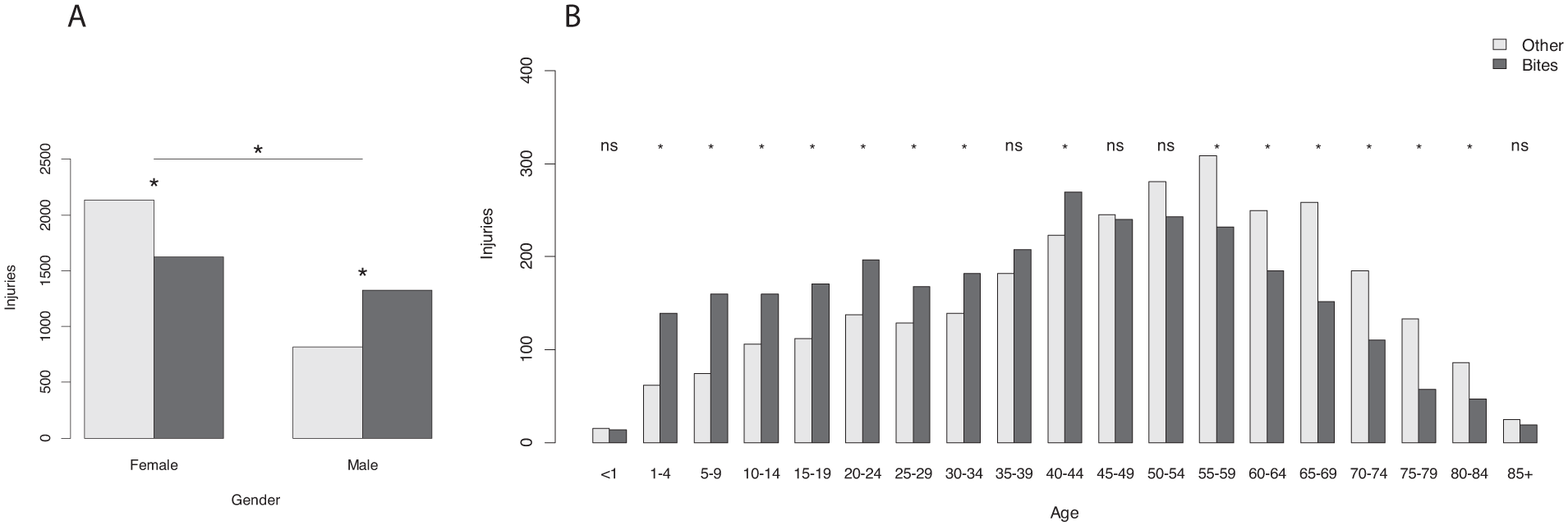
Significantly more women than men were injured by dogs (GoF test, χ21=433, P<0.001); of the injured, 64% were women (see Supplemental file 2, overview of age groups). The two genders differed significantly in the proportion of injuries caused by bites (test of independence, χ21=188, P<0.001, Figure 1(a)), as 62% of injuries to men were bites, compared with 43% of injuries to women.
Effects of age
The age groups of patients included in this study differed significantly when assessing the proportion of injuries that were caused by dog bites as opposed to all other injury mechanisms (test of independence, χ218=228, P<0.001, Figure 1(b)). Age groups from 0 to 34 years had a larger proportion of bites than expected, while adults in age groups covering ages 55 to 84 years had a larger proportion of non-bite injuries than expected.
Circumstances
Injury settings
Overall, most injuries occurred in residential settings (58%). There was a significant association between the type of setting and gender (test of independence, χ29=28, P<0.001, Table I). Significantly more men than expected were injured in residential settings, whereas more women than expected were injured in sports, recreational and entertainment settings. More than two-thirds of all dog-related injuries (67%) occurred in outdoor settings.
Settings where dog-related injuries occurred, by gender, Skaraborg district, Sweden, 2001–2016.
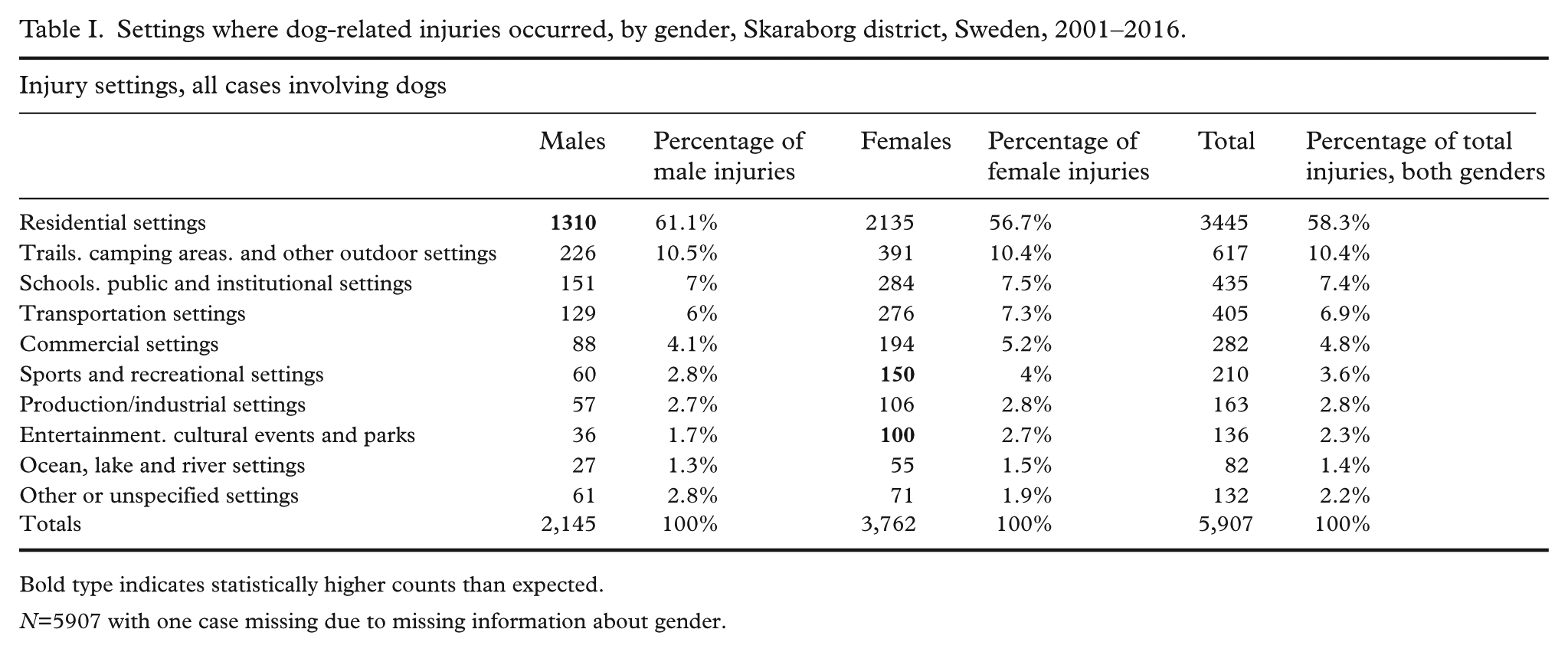
Bold type indicates statistically higher counts than expected.
N=5907 with one case missing due to missing information about gender.
Of the dog-related injuries occurring in residential settings, slightly more than half (53%) occurred indoors. Of these injuries occurring indoors in residential settings, 73% (n=850) were due to bites.
Activities when injuries occurred
Activities that patients engaged in when dog-related injuries occurred varied, but most injuries occurred during recreational and leisure time. Of note are the number of injuries categorised by IDB as ‘other specified’: this category includes walking for recreation, exercise, walking movements and walks, including those with adaptive technology.
Body part injured
Injuries to upper extremities accounted for 59% of all dog-related injuries (3477 cases), followed by injuries to lower extremities (1202 cases, or 20%) and the head (937 cases, or 16%).
Types of injuries
We assessed injuries by looking at the primary, or main injury described in the IDB. As would be expected, people being treated for dog bites were primarily diagnosed with open wounds (n=2479, 84% of all bite-related injuries). Non-bite-related injuries resulted in a broader range of injury types, with the most frequent injuries being fractures (n=1011, 34.5% of all non-bite injuries) or contusions and/or bruises (n=690, or 23.5% of all non-bite injuries, see Table II).
Skaraborg district, Sweden, 2001-2016, dog bites versus other dog-related injuries.
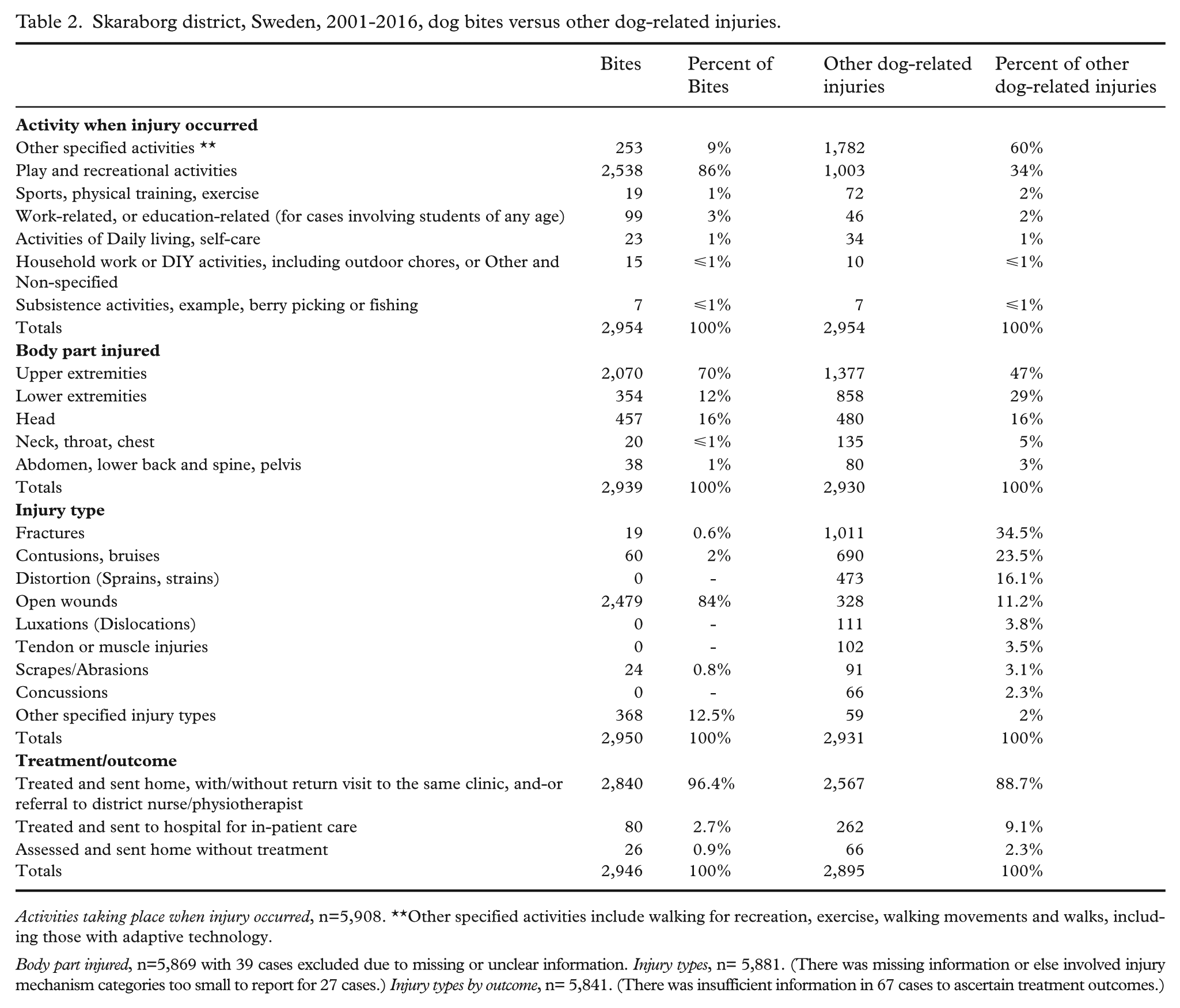
Activities taking place when injury occurred, n=5,908. **Other specified activities include walking for recreation, exercise, walking movements and walks, including those with adaptive technology.
Body part injured, n=5,869 with 39 cases excluded due to missing or unclear information. Injury types, n= 5,881. (There was missing information or else involved injury mechanism categories too small to report for 27 cases.) Injury types by outcome, n= 5,841. (There was insufficient information in 67 cases to ascertain treatment outcomes.)
Injuries by month and weekday
There were significant differences between months in the total number of dog-related injuries (GoF test, χ211=167, P<0.001). The months of November, December and February had significantly fewer injuries than expected, while the months of May to August had more injuries than expected. January, March, April, September and October did not differ from the expected count. There was a significant association between the month and injury type (bites vs. other injuries) (test of independence, χ211=62, P<0.001, Figure 2(a)). Overall, for all dog-related injuries, there was a larger proportion of bites in summer (June to August), and fewer in winter (January to March). The proportion of bites varied from 39% in February to 57% in July. The increase in ‘other’ injuries during January to March (Figure 2(a)) was mainly driven by injuries from ‘falls due to slipping’. This category constituted 18% of all dog-related injuries in January to March, but only 4% for the rest of the year.
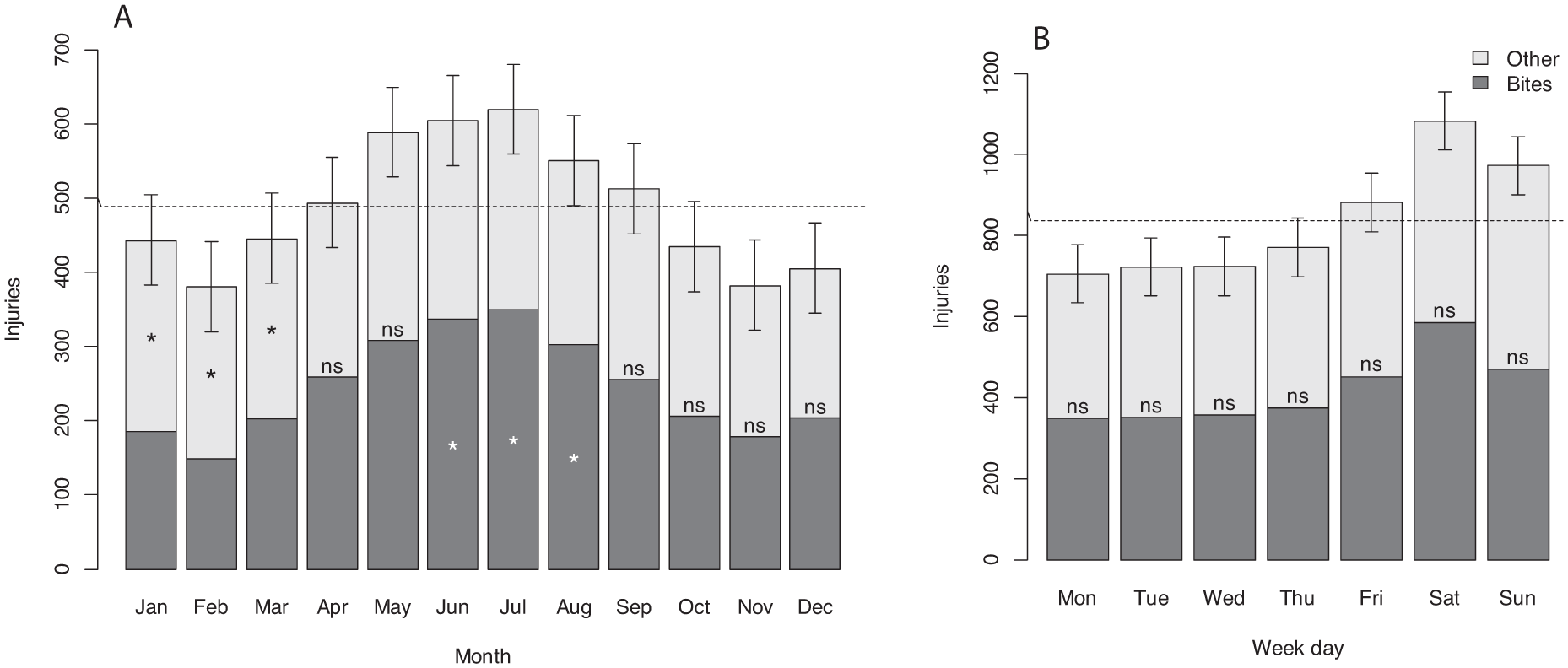
There was a significant effect of the day of the week on the total number of dog-related injuries (GoF test, χ26=153, P<0.001). Investigation of standardised residuals revealed that Saturdays and Sundays had more injuries than expected, while Mondays, Tuesdays and Wednesdays had fewer injuries than expected. Thursday and Friday did not differ significantly from the expected value. The proportion of bites varied slightly over the week, from 48% on Sundays to 54% on Saturdays (Figure 2(b)), but these differences were not significant (test of independence, χ26=10.2, P=0.12).
Injury mechanisms and injury types
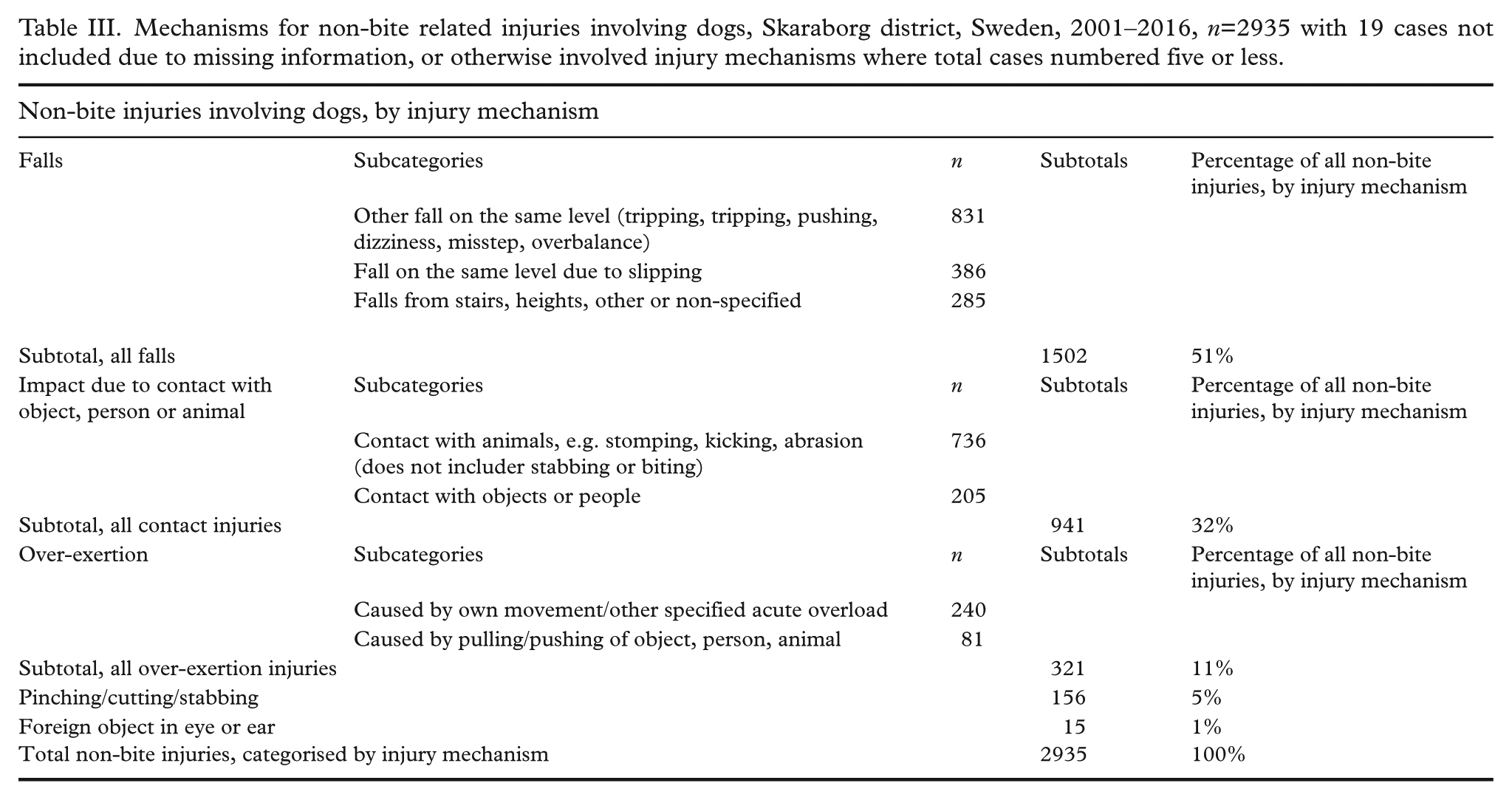
As described earlier, dog bites were the injury mechanism that accounted for 50% of all injuries included in this study. Injury mechanisms for dog-related injuries other than bites varied, as did locations where the various injuries occurred. However, slightly more than half of all non-bite-related injuries were caused by falls (n=1502, 51% of all non-bite-related injuries, see Table III), especially falls on the same level involving slips and trips (n=831, 55.3% of all fall-related injuries). A quarter of all non-bite-related injuries (n=736, 25% of all non-bite-related injuries) involved bodily contact with dogs.
Mechanisms for non-bite related injuries involving dogs, Skaraborg district, Sweden, 2001–2016, n=2935 with 19 cases not included due to missing information, or otherwise involved injury mechanisms where total cases numbered five or less.
There were significant gender effects when categorised by most common injury types (test of independence, χ212=255, P<0.001). Men had more open wounds than expected and women had more fractures, distortions and bruises than expected (see Supplemental file 1).
Injury outcomes
Most dog-related injuries were treated in healthcare units, with patients being sent home afterwards. However, patients being treated for dog bites were less likely to require hospitalisation, compared with patients being treated for non-bite-related injuries.
In total, there were 342 cases in the IDB that identified patients who required hospitalisation, accounting for about 6% of total dog-related injuries (see Table II). Of this group of more severely injured patients, 59% were women. The average age of the hospitalised patients was 54±22 years (mean and standard deviation, with a range of 0 to 95 years). The average hospital stay for all dog-related injuries was 5.6 days. Leading causes of hospitalisation in this group were falls involving dogs (n=186, 54%) and dog bites (n=81, 24%).
Discussion
The injuries we analysed in this study included bites, falls, and muscle and joint injuries after being pulled by dogs, and victims of these injuries ranged in age from newborn to 85 years and older. Given that there were some notable differences in factors associated with dog bite injuries compared with other dog-related injuries, multiple prevention strategies are desirable.
Prevention of dog bite injuries
As with many other studies, our study found that men had higher than expected numbers for dog bite injuries compared with women. There are multiple reasons related to exposure that might come into play to help explain this finding: men could possibly be more likely to own more aggressive dog breeds, for example, or could be less likely to avoid contact with strange dogs. It may also be that dogs respond differently to people, based on behaviour. An older study of physiological responses of dogs taken into animal shelters found that they were more likely to yawn and show relaxed behaviour when petted by women [19], indicating that women’s interactions with dogs may be perceived by the animals as less aggressive compared with men.
This study found a higher than expected incidence of dog bite injuries for all age groups from 1–4 to 30–34 years. Thus, targeted public awareness campaigns to reduce dog bites could focus on men, and the young age groups in communities. The number of cases of infants being treated for bites was quite low over the study period, but we note that more than 80% of all dog-related injuries to infants occurred indoors, meaning that adults were assumed to be nearby. Simply being present is insufficient to prevent injuries to infants from dogs – adults must provide active supervision [20]. The number of young children needing treatment for dog-related injuries over the 16-year study period also raises concern related to article 19 of the Convention on the Rights of the Child, which states that all children have a right to safety [21].
Based on this study’s findings, what can be done at the community level in Sweden to prevent dog bite injuries? There are numerous proposals for educational initiatives and societal interventions aimed at preventing dog bites, but their effectiveness has rarely been evaluated. One exception is the Canadian city of Calgary, whose model for identifying dangerous dogs has been shown to reduce the number of dog bites. The model includes, among other things, stricter local regulations regarding dog ownership, public education about the regulations and the consequences of failing to comply with them, as well as an assessment of the severity of bite injuries [22].
Conditions supporting a lower incidence of dog-related injuries should be favourable in Sweden, given that the country already has strict liability for damages caused by dogs, a built-in dog liability section in regular home insurance policies, a regulatory framework for mandatory dog registration, and relatively extensive animal welfare legislation including rules governing which dogs may be used for breeding. However, recent trends show that the number of dog-related injuries and fatalities is increasing [23,24]. Over the period 2008–2016, the annual mean incidence for patients in Västra Götaland region of Sweden, where the study was set, who required hospitalisations or specialised care due to dog bites was 27.9±3.325 (mean ± SD) cases per 100,000 population per year. Over the period 2017–2024, the annual mean incidence in the region increased to 31.5±2.14 cases per 100,000 population [25]. Nationally, rates of hospitalisation or specialised care due to dog bites increased from 36.7 per 100,000 population in 2018, to 41.3±2.67 (mean ± SD) per 100,000 population in 2024 [26].
This trend may partly be explained by the growing popularity of high-risk dog breeds [27], but this situation may also be exacerbated by a lack of attention from law enforcement agencies and legislators. For example, nearly half of Sweden’s 290 municipalities do not have local ordinances for leash requirements in public spaces [28], and deficiencies in the systems and procedures of the police and county administrative boards hinder, or even prevent, effective and legally sound case management [29].
Unlike Denmark and Norway, Sweden lacks criteria for assessing the severity of dog bites in its dog legislation, apart from breed-specific bans. Moreover, the issue of breed bans was not included in the government’s inquiry, despite the fact that a majority of the public has expressed support for banning fighting dog breeds in surveys conducted by the SOM Institute [30,31]. Preventive measures need to be tailored to the varying conditions in homes, workplaces, and public spaces, considering vulnerable groups (children, the elderly, individuals with certain disabilities), household competence in dog ownership, and the dogs’ characteristics.
While the number of wild or stray dogs in Sweden is quite small or absent compared with other European countries, free ranging dogs certainly present a problem in the country as well in most other communities around the world, emphasising again the importance of animal control authorities in documenting dog-related injuries, and tracking dogs that have exhibited aggressive behaviours.
This study showed that of the injuries taking place indoors in residential settings, 73% (n=850) were due to bites. In their study of dog bite injuries, Caffrey et al. [22] point out that that ‘severe bites tended to occur in the homes where the dogs lived, and to be directed towards children and older adults’. They also emphasise the importance of constant supervision around dogs, including family dogs, whenever children are present. Caffrey et al. further recommend that dog owners should be aware that previous signs of aggression by their dogs may predicate future incidents, and they should learn to read their dogs behaviour to anticipate issues before they arise.
Our data did not fully capture information about the breed of each dog involved in injuries – such information would be valuable to identify better which dogs are more likely to be involved in injuries, and to investigate the severity of these injuries. The Dunbar aggression scale offers a sound way to assess the severity of such injuries [32].
Preventing other dog-related injuries
Slightly more than half (51%) of the cases of non-bite injuries in this study were due to falls over the animals. Older women were an at-risk group for this type of injury and setting, mirroring results found in an earlier study of pet-related injuries in Sweden [6]. Thus, injury prevention campaigns may benefit from focusing on these ages and gender group. Falls and trips can be increased by walking more than one dog at a time, so at-risk groups can be encouraged to take several shorter walks, one pet at a time. Dog size, weight and temperament may also impact injury outcomes, so pet owners should be aware of these factors.
Dog owners can also prevent injuries through falls, by understanding how dogs view shared living spaces. They seldom move if approached by people they trust, meaning that humans are likely to trip over them if dogs are not visible. Similarly, when a dog lies on furniture or a bed, it considers itself to have ‘property rights’ to the area, which it sometimes defends. Keeping in mind this territoriality, indoor tripping or falling over dogs could be prevented by simply keeping dogs in another room at night and not allowing them to sleep in the same bed or room as a human. Nightlights or flashlights can also illuminate dogs and other fall or trip hazards in darkened rooms. Other prevention strategies can also help reduce the severity of falls and trips over dogs or other indoor hazards, including the use of non-slip indoor footwear, removing smaller rugs and other trip hazards, ensuring that homes have clear pathways, and ensuring that handrails and grab bars are installed and used in rooms where dogs and other pets are present [33].
Sixty per cent of non-bite injuries occurred while people were engaged in walking activities with or around dogs. Regulations related to consumer products can play an important role in reducing injuries, by focusing on leashes and fall-reducing footwear. Retractable dog leashes are associated with less control over dogs, as these leashes can be as long as 8 meters and are thus more difficult to grip if dogs wish to move quickly, for example, if they wish to run free to explore new territory or meet another dog. Eleven per cent of the non-bite injuries we documented involved over-exertion. We note that retractable leashes can be one of the contributing factors to over-exertion while walking with dogs, and these types of leashes also carry with them a risk of strangulation [34]. It is not an uncommon event for dogs to attack other dogs, which can also lead to over-exertions and injuries [35]. To address these factors, pet owners should be encouraged to use non-retractable leashes that do not exceed 2 meters in length.
Study limitations and key findings
This study aimed to identify factors related to injuries caused by dogs over a 16-year period in the Skaraborg district of Sweden. While the study aim was met through analysis of a community-based injury registration system, the database itself cannot be considered fully representative of the population in Skaraborg district over the life of the study period, due to the sharp decrease in reporting units. The large number of cases analysed does allow for evidence of patterns that describe differences in how and where injuries occur, vis-à-vis dog bites and other dog-related injuries. However, given the changes to reporting to the database, we are unable to calculate incidence rates, which impacts the generalisability of the findings.
Despite the limitations of the available data the study sheds some much needed light on factors associated with dog-related injuries. The study showed that men and younger age groups were more likely to be injured by dog bites, while older women were more likely to be injured by tripping or falling over dogs. These findings imply that separate injury prevention strategies are required to address the different factors associated with both injury types. The study also provided a look at healthcare utilisation by less serious cases involving dog-related injuries, as more than 94% of all cases were treated and then sent home the same day. The dwindling number of units reporting to the IDB over the study period certainly impacted the generalisability of findings, but the large numbers of injuries reported to the IDB over its lifetime allows for good analysis of factors associated with these dog-related injuries as viewed through the injury registration system. As such, the study also points to the importance of injury registration at local healthcare units, particularly the registration of injuries that are primarily treated through outpatient visits. This type of study will not be possible to do in the future due to lack of a comprehensive injury registration system. Publicly available data on healthcare utilisation due to dog-related injuries in Sweden is now limited to data on hospitalisations and specialised care, and deaths caused by dog bites. We are thus missing important information, particularly about non-bite injuries involving dogs, which may lead to a lack of responses or prevention activities focusing on groups who may be at higher risk of these injuries. This study demonstrated that, when available, injury registration data from local healthcare units can provide a wide range of information on local factors leading to the use of outpatient services for dog-related injuries, and in so doing can help make communities safer.
Supplemental Material
sj-docx-1-sjp-10.1177_14034948251403075 – Supplemental material for Dog-related injuries requiring medical attention in Skaraborg district, Sweden
Supplemental material, sj-docx-1-sjp-10.1177_14034948251403075 for Dog-related injuries requiring medical attention in Skaraborg district, Sweden by P. Andreas Svensson, Sirkku Sarenbo, Diana Stark Ekman and Robert Ekman in Scandinavian Journal of Public Health
Supplemental Material
sj-docx-2-sjp-10.1177_14034948251403075 – Supplemental material for Dog-related injuries requiring medical attention in Skaraborg district, Sweden
Supplemental material, sj-docx-2-sjp-10.1177_14034948251403075 for Dog-related injuries requiring medical attention in Skaraborg district, Sweden by P. Andreas Svensson, Sirkku Sarenbo, Diana Stark Ekman and Robert Ekman in Scandinavian Journal of Public Health
Footnotes
Declaration of conflicting interests
The authors declared no potential conflicts of interest with respect to the research, authorship, and/or publication of this article.
Funding
The authors received no financial support for the research, authorship, and/or publication of this article.
Ethical approval
Ethical approval for this study was obtained on 29 June 2023 from the Swedish Ethical Review Authority, Dnr 2023-03159-01. Informed consent was not sought for the present study because it is retrospective and based on already existing data that were collected at care and emergency centres, dental practices and emergency departments in Skaraborg from patients seeking care for injuries. The information collected was voluntary from the patient, relative or staff. The researchers in the present study have no connections to the patients whose data are included.

Supplemental material
Supplemental material for this article is available online.
References
Supplementary Material
Please find the following supplemental material available below.
For Open Access articles published under a Creative Commons License, all supplemental material carries the same license as the article it is associated with.
For non-Open Access articles published, all supplemental material carries a non-exclusive license, and permission requests for re-use of supplemental material or any part of supplemental material shall be sent directly to the copyright owner as specified in the copyright notice associated with the article.
