




Abstract
Aims:
There is limited research on how family-related events are associated with sustainable working life, which is defined as the absence of long-term periods of unemployment, sickness absence, or disability pension. We aimed to investigate whether family-related events, such as living with children, marriage, or divorce, are associated with sustainable working life. We also examined whether these associations could be explained by health behaviours including physical activity, smoking, and alcohol consumption, as well as by genetic factors and early life environment.
Methods:
Registry data and surveys on family-related events, sustainable working life, and health behaviours of 49,611 Swedish twins in 1993–2016 were used. Cox proportional hazards regressions were applied to estimate the associations between family-related events and sustainable working life, while conditional Cox models for twin pairs accounted for confounding genetic factors and early life environment. Further, the analyses were stratified by health behaviours.
Results:
The results showed that a change from being single living without children to being married and living with children was associated with a sustainable working life. Moreover, individuals who experienced divorce and single individuals who changed their status of living with children were less likely to experience a sustainable working life. Genetic factors and early life environment played a role in some associations. Those with healthy behaviours were more likely to have sustainable working lives despite changes in family life, compared with those with unhealthy behaviours.
Conclusions:
Family formation (i.e. change from being single to getting married and having children) is associated with sustainable working life, whereas divorce seems to decrease the possibility of sustainable working life. Health behaviours, as well as genetic factors and early life environment, also need to be considered with changes in family life to support sustainable working life.
Keywords
Background
Numerous studies have consistently shown that being married is associated with better long-term health outcomes and lower mortality than being unmarried or divorced [1,2]. Moreover, there is some evidence showing that divorce, single parenthood, and the number of children have an impact on individuals’ participation in the labour market [3,4]. In previous studies, however, the focus has typically been on the current family situation, with few studies examining the impact of stability and change in family life on labour market participation [5]. Earlier studies have indicated that various factors may play a role in the associations between family-related events and labour market participation, such as being a woman, older age, poorer self-rated health, a higher burden of musculoskeletal pain, and a higher prevalence of common mental disorders (CMDs) [6,7]. Until now, family-related events and their positive effects on labour market participation have received little attention.
A relatively new area being explored is the impact of health behaviours on the association between family-related events and labour market participation [8,9]. Previous studies have shown that those in marriage or cohabiting relationships tend to smoke less and exercise more [10], whereas heavy alcohol consumption is a risk factor for divorce [11]. Being physically active or having several healthy behaviours also predict labour market participation, indicating an association between healthy behaviours and a longer working life [12]. However, it is still poorly understood how physical activity, smoking, and alcohol consumption together with family-related events affect labour market outcomes.
Previous studies have not investigated the role of familial confounding (i.e. genetic and early life environment factors, such as childhood shared (family) environment) on the association between family-related events and labour market outcomes [13]. Twin studies have reported that sickness absence (SA) has a moderate genetic component, explaining 36% to 50% of the total variance, among both women and men [14,15], and disability pension (DP) has a genetic component of similar magnitude (42% to 49%) [16,17]. Additionally, twin studies have demonstrated that genetic factors account for significant variations in both marital status and health behaviours [12,18]. These findings underline the importance of genetic factors and early life environment (i.e. childhood family) when studying family-related events and sustainable working life, as shown in an earlier study based partly on the same Swedish data [19,20]. Twin studies provide a powerful tool for adjustment of unmeasured confounders, because twins in a pair are matched on genetics (100% for monozygotic (MZ) and on average 50% for dizygotic (DZ) twin pairs) and common rearing environment (100% for both MZ and DZ twins) [21]. To date, research using twin studies to scrutinise family-related events and labour market participation remains limited [19,20].
We used sustainable working life as the measure of labour market participation which is defined as the absence of long-term periods due to unemployment, SA, or DP [22]. Although less extensively studied, sustainable working life is considered to provide better insights into various patterns of working life over the life course [23]. Our aim was to investigate the association between family-related events (such as living with children and/or marrying/divorcing) and sustainable working life (indicated by not having long-term periods of unemployment, SA, and DP) in a Swedish twin cohort. Additionally, we examined the role of familial confounding and health behaviours (i.e. physical activity, smoking, and alcohol consumption) on these associations.
Methods
Data sources
The data were derived from the prospective Swedish Twin project Of Disability pension and Sickness absence (STODS). STODS includes 119,907 twins born between 1925 and 1990 in Sweden who have responded to either the Screening Across the Lifespan Twin Study (SALT) in 1998–2003 or the Study of Twin Adults – Genes and Environment (STAGE) in 2004–2006 [24]. Information on zygosity, health behaviours, pain, CMDs, and self-rated health was assessed in the surveys. National registry data were linked using the unique personal identification numbers of the participants. Data on SA (>2 weeks) and DP were available through the MicroData for Analyses of Social Insurance (MiDAS) from the Swedish Social Insurance Agency. The MiDAS register includes information on spells and dates for all SA (>2 weeks) and DP spells from 1994 onwards. Data on family-related events, unemployment, employment, old-age pension, emigration, and sociodemographic variables were collected from the Longitudinal Integration Database for Health Insurance and Labor Market Studies Register (LISA) from Statistics Sweden [25] from 1990 onwards. Mortality data were obtained from the Causes of Death Register, maintained by the National Board of Health and Welfare, from 1961 onwards.
Study population
The baseline was set as the date of answering the questionnaire/interview. We included twins with information on family-related events and health behaviours, who were less than 65 years old and not receiving old-age pension or DP at the baseline. Additionally, twins who were less than 23 years old at the time of participating in the questionnaire/interview were excluded to allow for the estimation of family history after their 18th birthday. The final sample consisted of 49,611 twins. Among them, there were 17,420 complete twin pairs (5658 monozygotic (MZ) twin pairs, 5659 dizygotic (DZ) same-sex twin pairs, 5765 DZ opposite-sex twin pairs, and 338 twin pairs with unknown zygosity) and 14,771 twins without information on their co-twin. Furthermore, there were 5708 twin pairs discordant for exposure (i.e. one twin in a pair had a stable family life during 1993–2006 and the other did not).
The sample was then stratified into health behaviour subcohorts for individuals with available information on each health behaviour measure. Leisure-time physical activity was measured by asking people to rate their activity level on a scale from 1 to 10. The ratings were grouped into five categories: none (1–2), low (3–4), moderate (5–6), high (7–8), and vigorous (9–10). For analysis, the categories ‘none’, ‘low’, and ‘moderate’ were combined into ‘physically non-active’ and ‘high’ and ‘vigorous’ were combined into ‘physically active’ [26,27]. A variable for smoking was created with two groups: current smokers and non-smokers. Participants were asked if they had ever smoked or used snuff, with different response options. Those who answered ‘never tried’ or ‘tried smoking’ were classified as never smokers. Those who answered ‘smoking occasionally’ or ‘smoking regularly’ were classified as ever smokers. If ever smokers currently smoke, they were classified as current smokers. All others were classified as non-smokers [28]. Alcohol consumption was measured by asking people how much beer, wine, and spirits they drank and how often. The amount of alcohol per week was calculated using the formula grams ALC = (frequency week) (centiliters) × (10) (%alcohol) (gravity ALC). People were then grouped into two categories: ‘moderate alcohol users’ (abstainers, light, and moderate drinkers) and ‘alcohol users’ (heavy drinkers) [29]. There were 45,507 individuals included in the physical activity subcohort, 40,879 in the smoking subcohort, and 35,924 in the alcohol consumption subcohort (Figure 1).
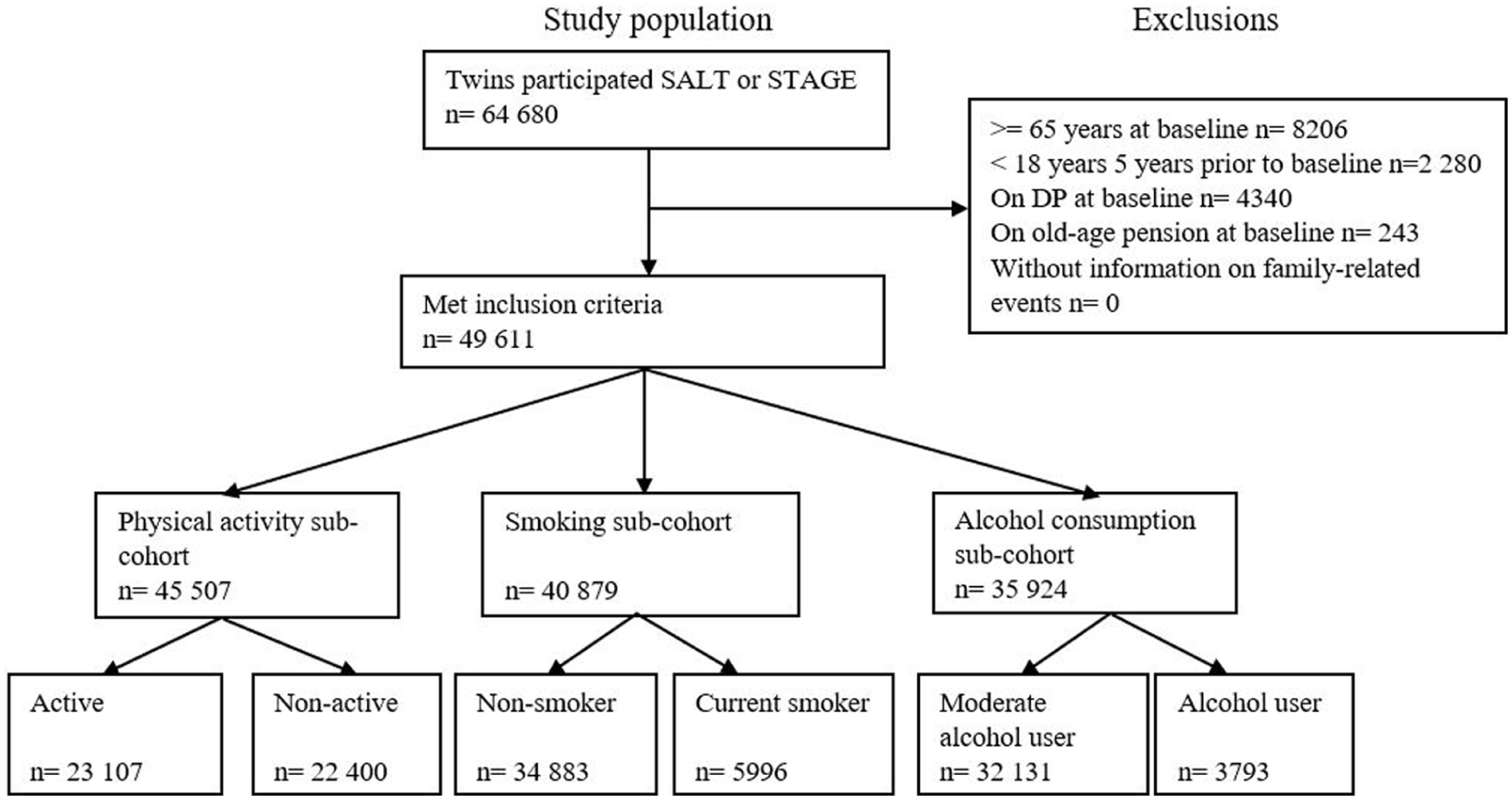
Flow chart for the study population.
Exposure: Information on family-related events was based on whether participants were living with a child and/or had married or divorced during the 5 years before and up to the baseline (i.e. 1993–2003 for the SALT cohort and 1999–2006 for the STAGE cohort) (Supplemental Table I).
Outcomes: The participants were followed from baseline until 31 December 2016 regarding sustainable working life. Sustainable working life was measured using information on the main labour market status for each year of follow-up. The labour market status includes SA/DP (>180 days); unemployment (>180 days); old-age pension (more than half of yearly income from the old-age pension); or employment (i.e. in paid work and did not fulfil the criteria SA/DP, unemployment, or old-age pension).
Covariates: Sex, age, levels of education, type of living area, cohort, pain (measured as pain in neck, shoulder or low back in at least one of the locations), CMDs, self-rated health, and sustainable working life at the baseline were used as covariates. CMDs were measured according to the Diagnostic and Statistical Manual of Mental Disorders, fourth edition (DSM-IV), criteria for major depression and anxiety [30] (Supplemental Table II).
Statistical analyses
First, Cox proportional hazards regression was performed to estimate the associations between family-related events and sustainable working life in the whole sample. Individuals without any changes in family-related events were used as the reference group. The proportional hazards assumption was explored using Kaplan–Meier curves and no violation was detected. Follow-up began at baseline and continued until 31 December 2016. Individuals were followed until the event, death, emigration, or end of follow-up, whichever came first. The covariates were adjusted stepwise in the multivariate models. To elucidate differences between health behaviours, the Cox proportional hazards models were stratified by physical activity (active vs. non-active), smoking (non-smoker vs. current smoker), and alcohol consumption (moderate alcohol user vs. alcohol user).
Second, a co-twin-control analysis was performed, using conditional Cox regression analysis. Conditional Cox proportional hazards models were performed for all discordant twin pairs and then stratified by sex and zygosity. As twins are matched on genetics (100% for MZ twins and on average 50% for DZ twins) and early life (shared family) environment (100% for both MZ and DZ) while growing up (if raised together), the co-twin analysis adjusts for these factors. If the association found in the age and sex-adjusted analyses of the whole sample disappears or attenuates in the discordant twin pair analyses, this indicates that familial factors influence the association. If an association is still observed after controlling for genetics and early life environment, this would instead suggest a direct link between the exposure and the outcome [13]. All analyses were conducted using SAS Statistical Software version 9.4.
This study was approved by the Regional Ethical Review Board in Stockholm, Sweden (Dnr 2007/524-31; 2010/1346-32-5; 2014/311-32; 2017/128-32) and the Swedish Ethical Review Authority (2022-03878-02). The study follows the Helsinki Declaration of 1975, as revised in 1983.
Results
Descriptive statistics of the sociodemographic factors, family-related events, and sustainable working life in the physical activity, smoking, and alcohol consumption subcohorts are shown in Supplemental Table II. During the follow-up period (mean 1.7 years, 3.8 SD, range 0–18.2 years), 41,826 (91%) participants in the physical activity subcohort, 37,831 (93%) participants in the smoking subcohort and 33,531 (93%) participants in the alcohol consumption subcohort had a sustainable working life. More than 76% of individuals in all subcohorts had a stable family life during 1993–2006.
Whole cohort
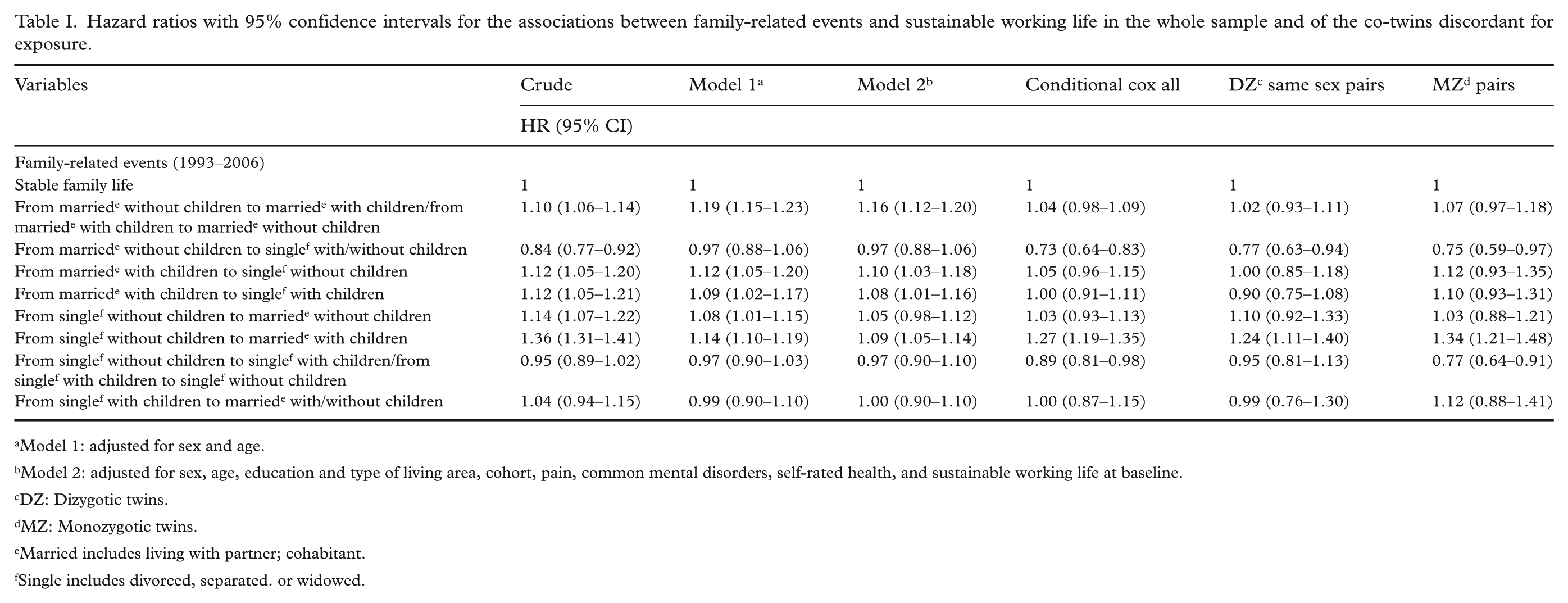
In the multivariate model, single individuals living without children who changed to married living with children had a significantly higher likelihood of having a sustainable working life than individuals with a stable family life (hazard ratio (HR) 1.09, 95% confidence interval (CI) 1.05–1.14). The results also remained significant within discordant pairs (HR 1.34, 95% CI 1.21–1.48). Furthermore, individuals who changed from being married and living with children to being single and living with/without children and married individuals who only changed the status of living with children showed a higher likelihood of having a sustainable working life in the multivariate model. However, the associations became non-significant when studied within discordant pairs. Within discordant pairs, married individuals living without children who became single regardless of the status of living with children (HR 0.75, 95% CI 0.59–0.97) and single individuals who changed the status of living with children (HR 0.77, 95% CI 0.64–0.91) had a lower likelihood of having a sustainable working life than those who remained in the same family life status (Table I).
Hazard ratios with 95% confidence intervals for the associations between family-related events and sustainable working life in the whole sample and of the co-twins discordant for exposure.
Model 1: adjusted for sex and age.
Model 2: adjusted for sex, age, education and type of living area, cohort, pain, common mental disorders, self-rated health, and sustainable working life at baseline.
DZ: Dizygotic twins.
MZ: Monozygotic twins.
Married includes living with partner; cohabitant.
Single includes divorced, separated. or widowed.
Health behaviour stratified results
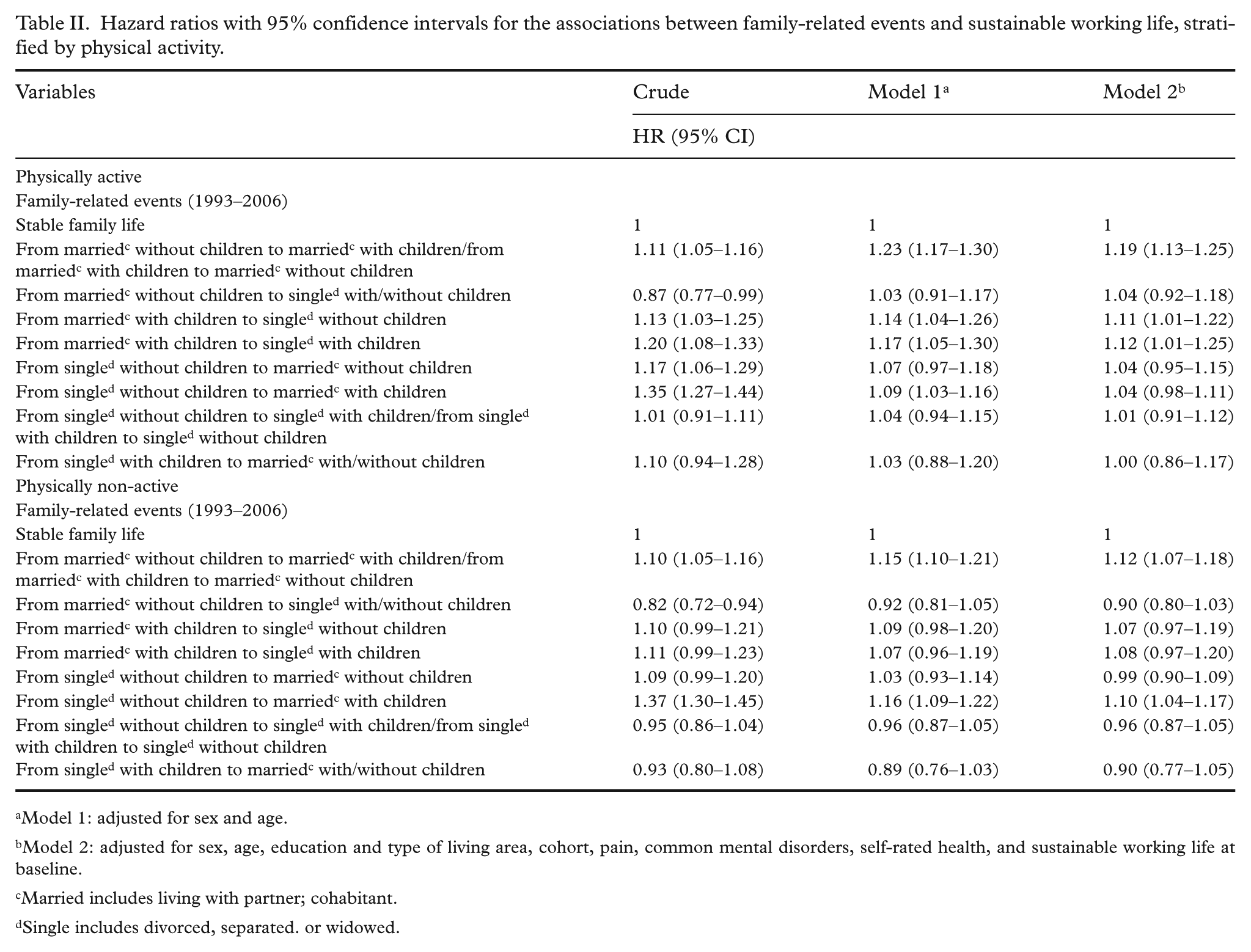
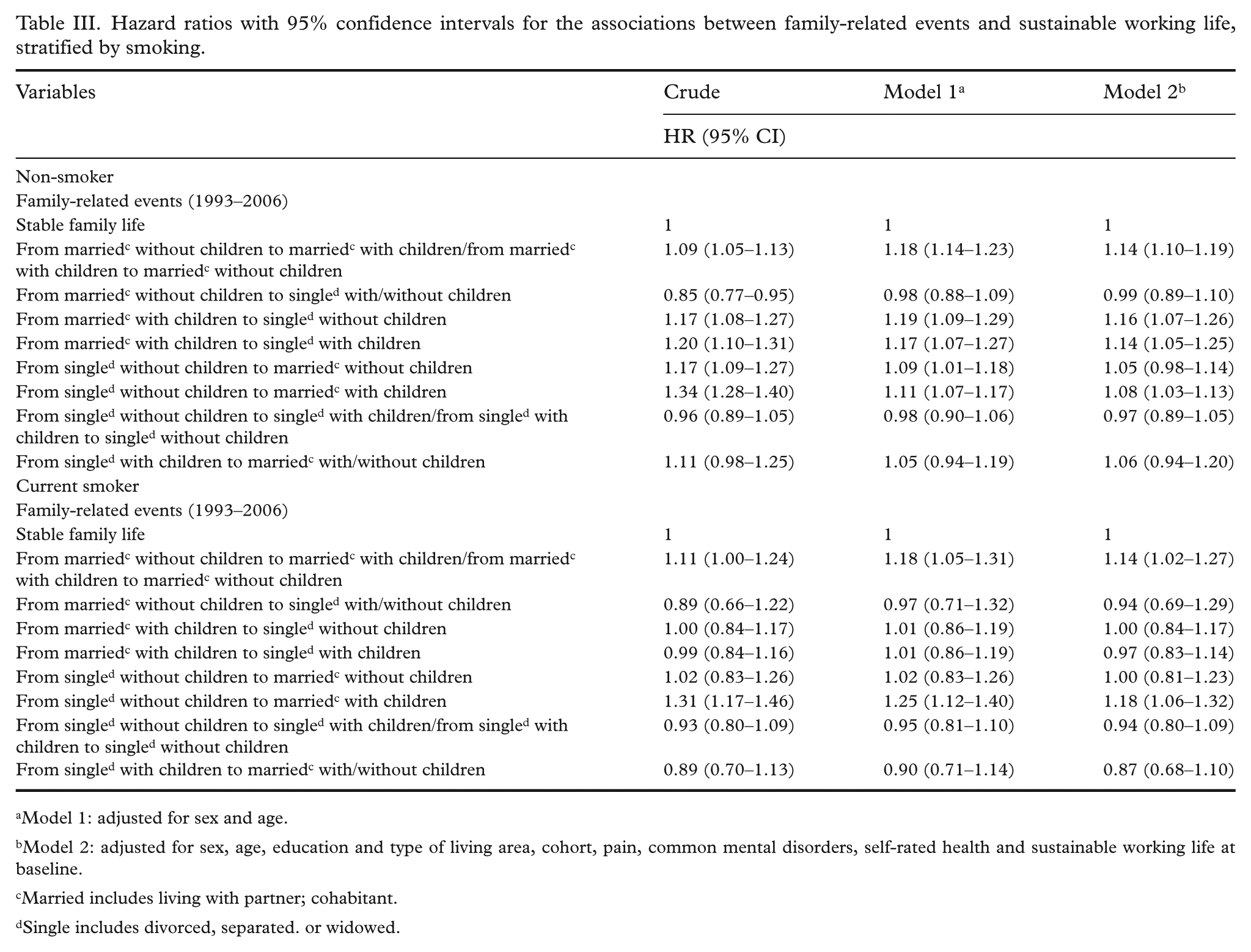
When stratified by health behaviours, results remained consistent with those observed in the whole cohort across both unadjusted and multivariate models (Tables II–IV). There were no significant differences between subcohorts of healthy and unhealthy behaviours regarding family-related events and sustainable working life. However, in the physically non-active and current smoking subcohorts, single individuals who got married and lived with children and individuals who remained in the marriage with a changed status of living with children were associated with a higher likelihood of sustainable working life after adjustment for all covariates. In the physically active and non-smoking subcohorts, married individuals who became single regardless of whether they lived with children and single individuals who became married also had a higher likelihood of sustainable working life than those with a stable family life. In the subcohort of alcohol users, any changes in family-related events were not associated with sustainable working life in the model accounting for all the covariates. But several different changes in family life were associated with sustainable working life in the subcohort with moderate alcohol users; for example, changing from being married and living with children changed to being single and living without children, or from being single and living without children changed to being married and living with children (range of HRs 1.09-1.15).
Hazard ratios with 95% confidence intervals for the associations between family-related events and sustainable working life, stratified by physical activity.
Model 1: adjusted for sex and age.
Model 2: adjusted for sex, age, education and type of living area, cohort, pain, common mental disorders, self-rated health, and sustainable working life at baseline.
Married includes living with partner; cohabitant.
Single includes divorced, separated. or widowed.
Hazard ratios with 95% confidence intervals for the associations between family-related events and sustainable working life, stratified by smoking.
Model 1: adjusted for sex and age.
Model 2: adjusted for sex, age, education and type of living area, cohort, pain, common mental disorders, self-rated health and sustainable working life at baseline.
Married includes living with partner; cohabitant.
Single includes divorced, separated. or widowed.
Hazard ratios with 95% confidence intervals for the associations between family-related events and sustainable working life, stratified by alcohol consumption.
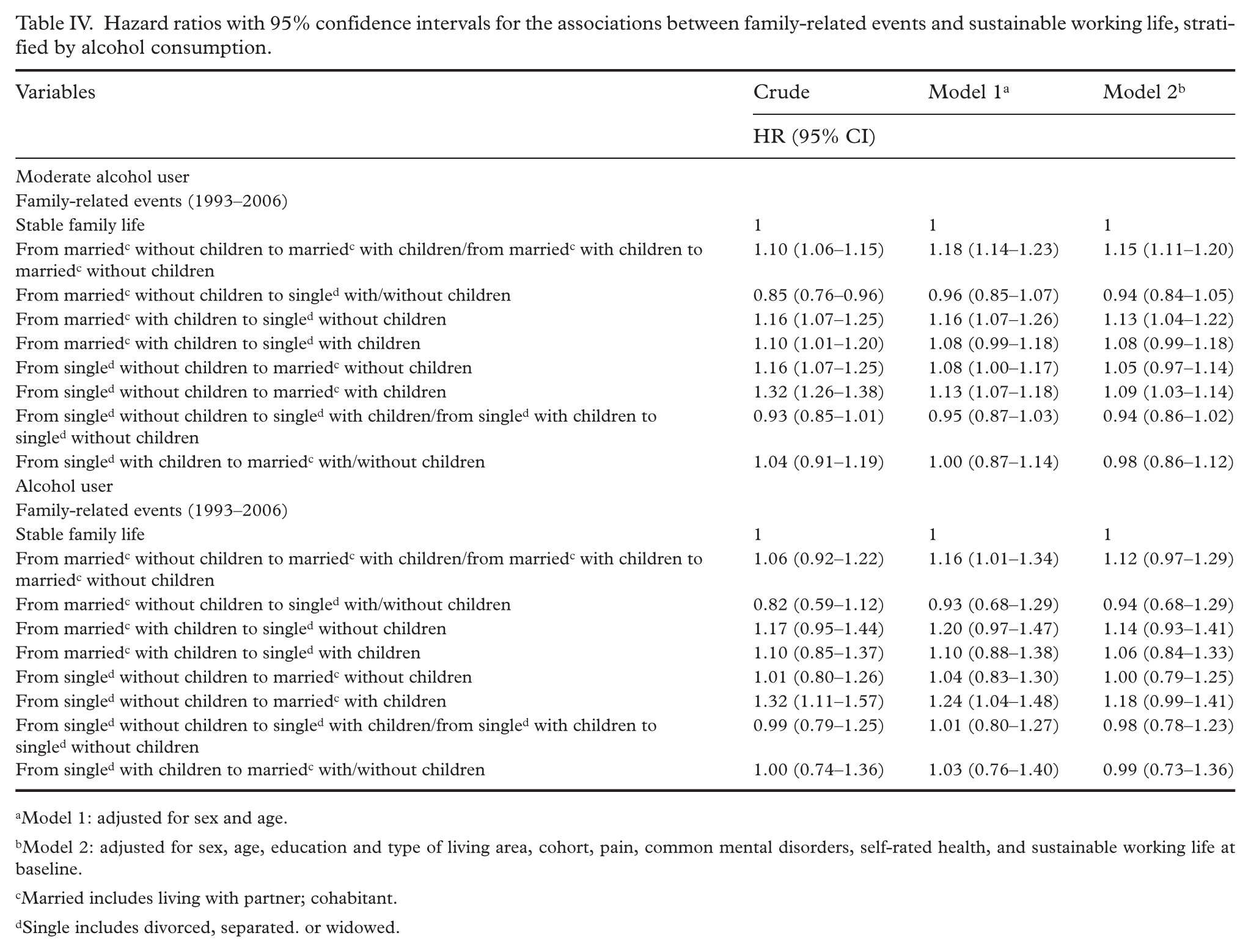
Model 1: adjusted for sex and age.
Model 2: adjusted for sex, age, education and type of living area, cohort, pain, common mental disorders, self-rated health, and sustainable working life at baseline.
Married includes living with partner; cohabitant.
Single includes divorced, separated. or widowed.
Discussion
Previous studies on marital status differentials in health outcomes have mainly focused on current marital status, while the current study investigated the associations between changes and stability in family life, such as living with children and/or being married/divorced and sustainable working life in a large population-based cohort of Swedish twins (n=49,611). Furthermore, we examined the role of health behaviours and familial factors (i.e. genetic factors and early life environment) in these associations.
Our results showed that relative to individuals with stable family life during 1993–2006, those who divorced or single individuals who changed the status of living with children were less likely to have a sustainable working life subsequently. Our results align with previous research that has reported the association between divorce and morbidities and between the burden of having children and suboptimal labour market outcomes [4,31]. Our results shed further light on the findings based on a one-time point only [4,5,32], showing that focusing on changes in family life might be important for a sustainable working life. Using a longitudinal design with a focus on changes in family life, this study is among the first to capture both the major positive changes in family situations, such as marriage and having a child, that could provide social and financial support [33]. On the other hand, the negative changes included divorce, or not living with a child anymore. Although the stable family life across the follow-up constituted a heterogenous group; that is, those remaining single, or married, living with or without children, stable family life was considered to provide a reference to the changes as in Sweden the marriage rate is comparatively low, while the divorce rate is high although many live with someone without marriage [34]. Moreover, our results highlighted that these associations remained significant even after controlling for genetic factors and early life environment. This finding indicates that genetic factors and early life environment do not have a major impact on the lower risk of family-related events in association with sustainable working life. This suggests a direct relationship (independent from familial confounding) between those changes in family life and sustainable working life, highlighting the importance of family formation or staying in a relationship for promoting a sustainable working life.
The role of genetics
As SA, DP, and sustainable working life have been shown to have a genetic predisposition [14–16,18,20], we expected that genetic factors would have an impact on the association between family-related events and sustainable working life. We found that individuals who were stably married with changed status of living with children and married individuals living with children who got divorced tended to have a more sustainable working life than individuals with a stable family life. The associations were no longer significant when studied within discordant pairs, therefore we cannot rule out the effect of genetic factors and early life (shared family) environment on these associations. In contrast, single individuals living without children who became married and began living with children had an excess likelihood of having a sustainable working life compared with those who did not have any change in family life. This significant result was also observed within discordant pairs, suggesting a robust finding of the benefits of forming a family with children. According to the literature, when individuals are involved in life events such as forming relationships with spouses, having children, and engaging with other confidants, they could accomplish emotional, social, and material needs [35], which may also be beneficial for them to stay in the labour market. Our findings show that the benefits of family formation (i.e. changing from being single to getting married and living with children) for a sustainable working life may be even greater than staying in the same family life situation.
The role of health behaviours
We further investigated the role of health behaviour in terms of physical activity, smoking, and alcohol consumption. We assumed that health behaviour plays a role based on earlier research [11,12]. However, no significant differences were observed in the stratified analysis of healthy and unhealthy behaviours. It appears that individuals with healthy behaviours (e.g. being physically active, non-smoker, and moderate alcohol user), several different changes in family life are more predisposed to sustainable working life in contrast to those with unhealthy behaviours. The results suggest a potential benefit of healthy behaviour in minimising the impact of negative changes in family life on future working life. However, the current knowledge on the role of health behaviour in the association between family-related events and sustainable working life is limited and further studies are needed to clarify these findings.
Strengths and weaknesses
The strengths of this study include the large sample size, availability of relevant covariates extracted from nationwide register data of high quality, extensive follow-up time, a prospective cohort design, and no loss to follow-up. We were able to include discordant twin pairs in the analyses to account for the influence of familial factors (i.e. genetic factors and early life shared family environment). However, analysis in the co-twin model is not possible to perform in the stratified analysis by health behaviour due to insufficient statistical power emphasising the need for further studies with even larger sample sizes. Another limitation might be the inability to analyse the effects of living with children separately from the effects of marriage or divorce. As it is not possible to control for all applicable confounders, some work-related factors such as psychosocial working conditions, or occupation may have affected the associations. The results of the current study results are expected to be broadly applicable to individuals in high-income countries that share comparable economic environments, labour market structures, healthcare provisions, and social insurance systems with Sweden.
Other limitations are that health behaviours were assessed based on survey data with missing information especially for alcohol consumption, which has also been observed in many other studies [12,36]. Thus, we might have underestimated our results because individuals with missing information were excluded from the analyses. Also, the self-reported assessment of health behaviours may indicate potential memory bias, which might influence the results. However, it would be very challenging to collect data for a large sample of twins by using other means than surveys. Additionally, only the first change of family-related events was considered in the analysis. Further studies are warranted to address multiple changes that are expected during the follow-up period. For certain groups within the study, the number of events per variable may be insufficient due to the adjustment of several covariates in the model, resulting in reduced statistical power. Additionally, in the stratified analyses by health behaviour, the hazard ratios are not directly comparable between groups, which can limit the ability to draw overarching conclusions. However, comparing the confidence intervals of the hazard ratios can offer valuable insights into the differences between these groups.
Conclusions
This population-based prospective twin study showed that, compared with those with a stable family life over time, the change from being single to getting married and living with children predicts a more sustainable working life. On the other hand, negative family-related events in terms of divorces, even without living with children, are linked with a less sustainable working life. Both health behaviours and familial confounding played a role, suggesting that societies should support family formation and healthy lifestyles to promote a sustainable working life.
Supplemental Material
sj-docx-1-sjp-10.1177_14034948251398693 – Supplemental material for The role of health behaviours, genetic factors, and early life environment in the associations between family-related events and sustainable working life
Supplemental material, sj-docx-1-sjp-10.1177_14034948251398693 for The role of health behaviours, genetic factors, and early life environment in the associations between family-related events and sustainable working life by Mo Wang, Pia Svedberg, Karri Silventoinen, Petri Böckerman, Jurgita Narusyte and Annina Ropponen in Scandinavian Journal of Public Health
Footnotes
Acknowledgements
The authors acknowledge the Swedish Twin Registry for access to data.
Author contributions
AR, MW and PS conceived and designed the study. MW conducted the statistical analysis and drafted the manuscript. All authors contributed to the analytic plan, interpretation of results and participated in revising the manuscript. All authors read and approved the final manuscript.
Data availability statement
The data that support the findings of this study are available from the original sources: the Swedish Twin Registry, Statistics Sweden, the Swedish Social Insurance Agency and the Swedish National Board of Health and Welfare. Restrictions apply to the availability of the data used in this study based on the Swedish Twin project Of Disability pension and Sickness absence (STODS), which were used with ethical permission for the current study and therefore are not publicly available. According to the Swedish Ethical Review Act, the Personal Data Act, and the Administrative Procedure Act, data can only be made available after legal review for researchers who meet the criteria for access to this type of sensitive and confidential data. For questions about this, please contact associate professor Pia Svedberg (
Declaration of conflicting interests
The authors declared no potential conflicts of interest with respect to the research, authorship, and/or publication of this article.
Funding
The authors disclosed receipt of the following financial support for the research, authorship, and/or publication of this article: This study was funded by Forte (2019-01284). The Swedish Twin project Of Disability pension and Sickness absence (STODS) receives funding through the Swedish Research Council under grant nos. 2017-00624 and 2021-00154, as being part of the REWHARD consortium. The Swedish Twin Registry is managed by Karolinska Institutet and receives funding through the Swedish Research Council under grant no. 2017-00641. Screening Across the Lifespan Twin study (SALT) was funded by the Swedish Council for the Planning and Coordination of Research and by a grant from the National Institutes of Health, USA (grant AG 08724). The Study of Twin Adults: Genes and Environment (STAGE) was supported by the National Institute of Health, USA (grants DK 066134 and CA 085739).

Supplemental material
Supplemental material for this article is available online.
References
Supplementary Material
Please find the following supplemental material available below.
For Open Access articles published under a Creative Commons License, all supplemental material carries the same license as the article it is associated with.
For non-Open Access articles published, all supplemental material carries a non-exclusive license, and permission requests for re-use of supplemental material or any part of supplemental material shall be sent directly to the copyright owner as specified in the copyright notice associated with the article.
