




Abstract
Computational fluid dynamics (CFD) has become an essential tool for investigating the effects of the atmospheric boundary layer (ABL) on a wide range of practical applications. However, accurately simulating ABL flows remains challenging, particularly in properly describing boundary conditions and effectively preventing inflow deterioration. While previous studies have primarily focused on neutral ABL conditions, the influence of thermal stratification, driven by daily cycles of surface heating and cooling, is still inadequately addressed. Existing approaches, such as those based on Monin-Obukhov Similarity Theory and the standard gradient diffusion hypothesis, exhibit limitations in capturing turbulent kinetic energy profiles and defining thermal boundary conditions. To overcome these challenges, we propose a unified model for simulating ABL flows across diverse thermal stability regimes. The model integrates local equilibrium theory with the standard gradient diffusion hypothesis within the framework of standard k-ε turbulence model. A set of analytical solutions for inflow profiles and thermal boundary conditions is derived to ensure consistency with the governing transport and energy equations. The model’s performance is validated against wind tunnel experimental data for both wind flow over flat terrain and around a typical building. Results demonstrate that the proposed model maintains horizontal homogeneity and accurately reproduces velocity, turbulence, and temperature profiles under different thermal stratifications, showing good agreement with experimental measurements. Comparative studies further highlight the advantages of the unified model over existing approaches, underscoring its potential for reliable CFD simulation of ABL flows in engineering applications.
Introduction
Computational fluid dynamics (CFD) is increasingly utilized to investigate the effects of atmospheric boundary layer (ABL) on a wide variety of practical applications, including structural safety, pollutant dispersion, and wind energy assessment (Ai and Mak, 2013; Alam et al., 2024; Blocken et al., 2016; Cindori et al., 2022; Liu et al., 2025; Wandji Zoumb et al., 2025; Yang et al., 2008). However, the treatment of boundary conditions remains complicated and challenging over a 30-year development. The promising CFD techniques, such as Reynolds-Averaged Navier-Stokes (RANS) and large-eddy simulation (LES), face limitations in properly describing boundary conditions and effectively preventing inflow deterioration (Gan and Zhang, 2025; Richards and Norris, 2019; Tabor and Baba-Ahmadi, 2010; Tominaga, 2024). The dissipation/growth of turbulent kinetic energy and distortion of inflow profiles lead to unfavorable and uncontrollable approaching flow conditions in the region of interest, thereby resulting in considerable simulation errors.
To produce horizontally homogeneous ABL flows, it is crucial to satisfy the equilibrium of various conservation equations and mitigate the generation of unintended streamwise gradients (Richards and Norris, 2019). Under the framework of standard k-ε model, Richards and Hoxey (1993) first proposed a set of inflow profiles for isothermal (or neutral) condition that are mathematically consistent with the k transport equation. However, the basic assumption of a constant turbulent kinetic energy profile in Richards and Hoxey’s model can barely be supported by field measurements and wind tunnel experiments (Blocken, 2015; Brost and Wyngaard, 1978). Consequently, analytical models presenting a decreasing trend of k profile with height were suggested (Gorlé et al., 2009; Xie et al., 2004; Yang et al., 2009). Meanwhile, to maintain the equilibrium state of ε within the computational domain, the incorporation of source term or height-dependent empirical model parameters in the transport equations have been widely adopted (Parente et al., 2011; Pontiggia et al., 2009; Shen et al., 2024). Furthermore, to overcome the inherent limitations of standard k-ε model, similar concepts can be transplanted to other RANS turbulence models, such as renormalization group k-ε model, realizable k-ε model and shear stress transport (SST) k-ω model (Shen et al., 2024; Yan et al., 2016; Yang et al., 2012).
On the other hand, due to the daily cycle of surface heating and cooling, the turbulent ABL flows during convective (or unstable) and stable conditions can deviate significantly from isothermal condition profiles (Albornoz et al., 2022; Pontiggia et al., 2009). In these non-isothermal scenarios, accurately quantifying the buoyancy effects induced by varying thermal stabilities on inflow profiles, as well as determining the thermal boundary conditions properly, becomes crucial (Sathe et al., 2013; Uehara et al., 2000). A comprehensive review of the literature indicates that the Monin-Obukhov Similarity Theory (MOST)-based model correction strategy is widely imposed in CFD simulations (e.g., Alinot and Masson, 2005; Breedt et al., 2018; Chang et al., 2018; Guo et al., 2021; Pieterse and Harms, 2013; Van der Laan et al., 2017; Wang et al., 2025). The profiles of mean wind speed, temperature and turbulence variables can be updated by empirical correction functions in an analytical manner. For instance, Alinot and Masson (2005) established a general formulation for the closure coefficient associated with the buoyancy production term, which was further improved by Van der Laan et al. (2017). Pieterse and Harms (2013) extended the MOST-based framework from the standard k-ε model to the SST k-
To address these challenges, we aim to propose a unified model based on the standard k-ε model for the simulation of ABL flows under various thermal stratifications in this study. The structure of this work is outlined as follows. In Section 2, the detailed theoretical development of the proposed model will be introduced. To validate the model, two sets of comparative studies will be designed and conducted in Section 3, including wind flow over flat terrain for the horizontal homogeneity test and over a typical bluff body for the practical application demonstration. Finally, Section 4 provides a brief conclusion of this study.
Theory and methodology
Theoretical foundations based on standard k-ε turbulence model
As depicted in standard k-ε turbulence model (Jones and Launder, 1972), the transport equations for the turbulent kinetic energy (

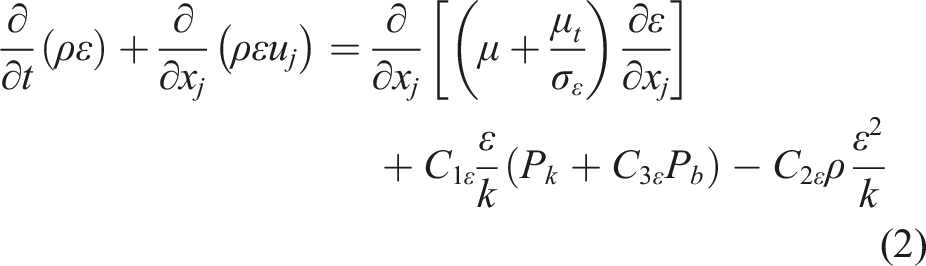



By introducing the following assumptions into the entire computational domain: 1) constant shear stress; 2) constant static pressure; and 3) zero vertical velocity, equations (1) and (2) can be replaced by:

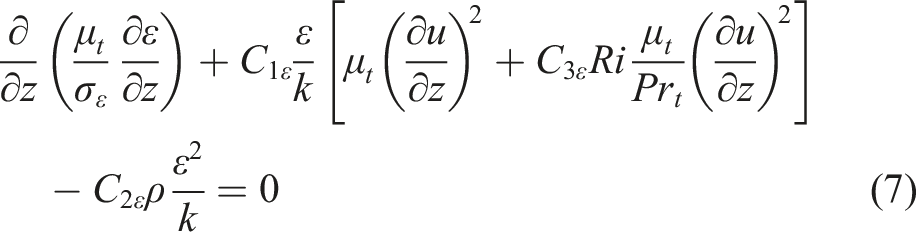
Substituting equation (5) into equations (6) and (7) yields:


Under the equilibrium state, which admits the balance between turbulence production and dissipation (i.e.

Development of inflow boundary conditions for various ABL flows
The inflow boundary conditions should include the profiles of mean wind velocity


Substituting equation (12) into equation (10), the constitute relationship between


Further inserting equations (12–14) into equations (8) and (9) yields:

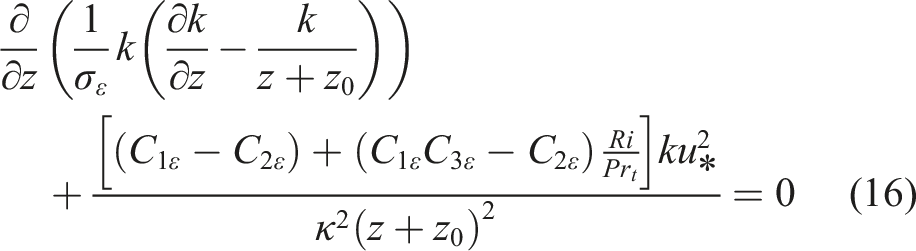
As a result, similar to the demonstrations provided in Yang et al. (2009) and Gorlé et al. (2009), the inlet profile of turbulence kinetic energy

To ensure the inherent self-consistency, the empirical coefficient

Given the limitation of imposing varying values during simulations,
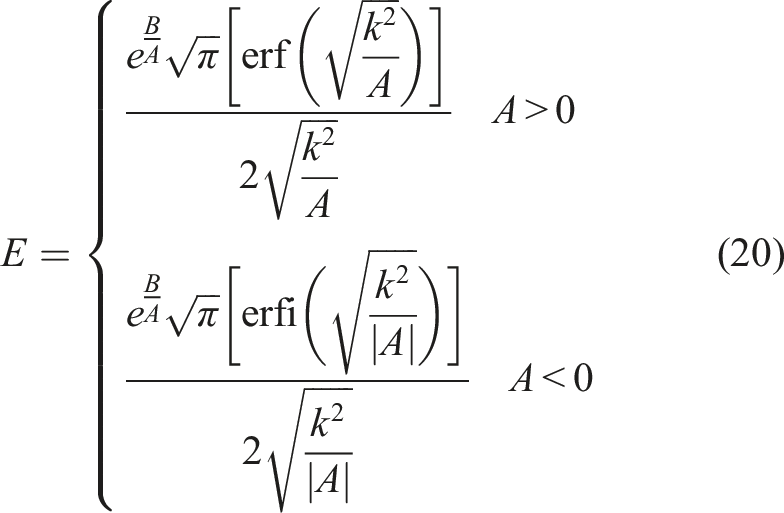
On the other hand, to maintain the horizontal homogeneity within the transport equation of
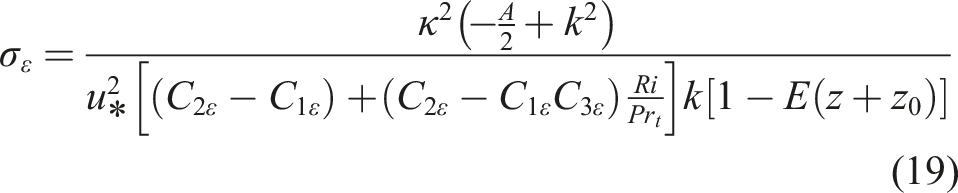
Heat transfer and thermal boundary conditions
In addition to the inflow profiles of


Moreover, as the relationship between the wall heat flux

Combining it with equation (5), it is identified that the temperature profile should meet the requirement:

By integration:



Wall function for rough surfaces
In the RANS regime, the turbulent flow near rough surfaces cannot be fully resolved. To address this issue, the fully rough

And the momentum wall function for an equilibrium boundary layer, valid when

Model validation and practical application
As detailed in Section 2, a unified model has been developed within the framework of standard k-ε turbulence model to simulate atmospheric boundary layer flows under various thermal stratifications. Both the inflow profiles and thermal boundary configurations are derived analytically. To assess the effectiveness of this new approach, two sets of numerical experiments are planned: one involving wind flow over flat terrain and the other examining turbulent flow over a typical bluff body for practical application. The results will be compared with those from other widely used models to highlight the performance of our model.
Wind flow over flat terrain
Computational domain, mesh and numerical settings
To examine the capability of the proposed model in maintaining horizontal homogeneity of inflow properties under different thermal stratifications, we conduct empty domain experiments simulating wind flow over flat terrain using the commercial software package ANSYS Fluent. As sketched in Figure 1, a three-dimensional computational domain is designed, with its size adaptive to each specific study case. The inflow profiles are applied at the velocity inlet through a user-defined function. The bottom surface is modelled as a stationary no-slip wall, while the top and side surfaces are treated as symmetry boundaries. A pressure outlet is imposed for the downstream exit. Simulation configurations for wind flow over flat terrain.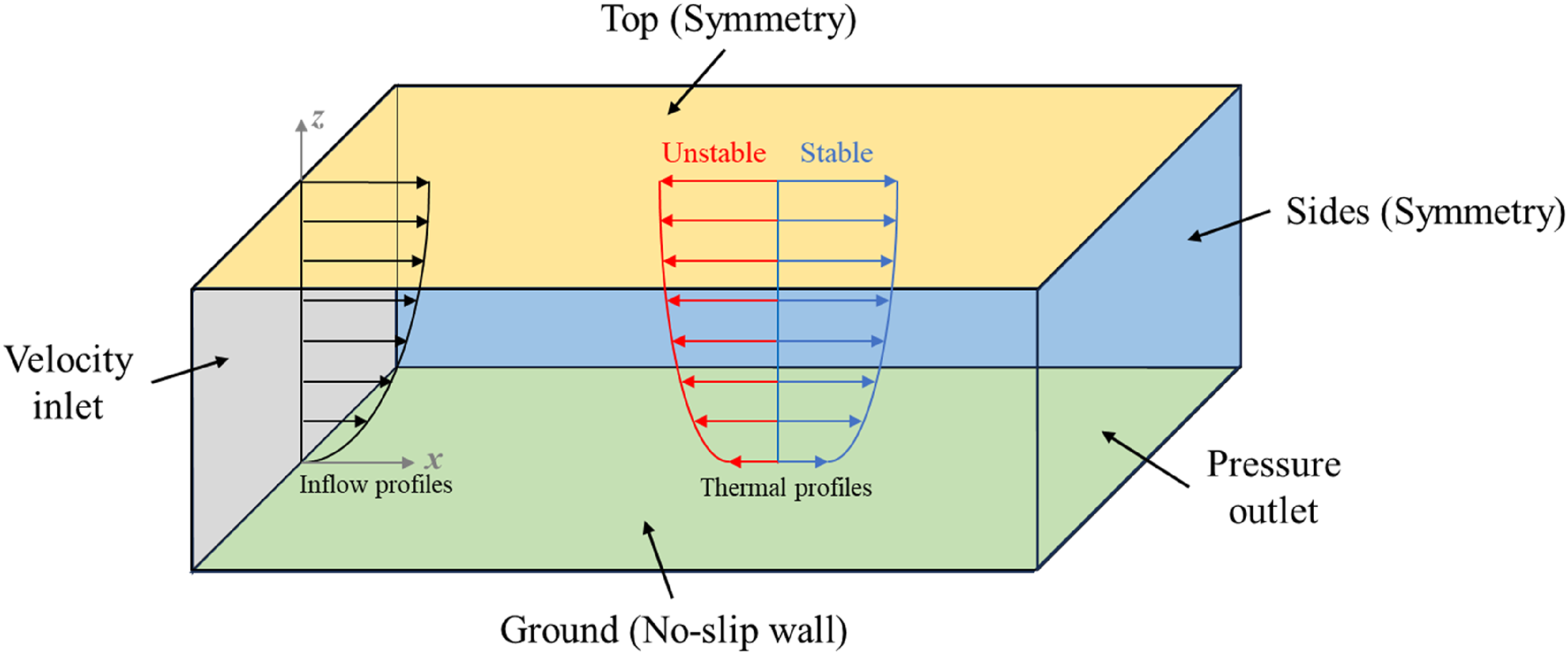
Hexahedral grids are used throughout the entire domain. The height of first mesh layer’s center point above the ground
Simulation of isothermal ABL flows
The wind tunnel database (CEDVAL) built by the University of Hamburg (Donat, 1996) is first applied to evaluate the performance of our model under isothermal condition. Accordingly, the computational domain is defined as 2.2 m (streamwise) × 1.3 m (lateral) × 1 m (vertical) with a reference wind speed of 5.61 m/s at the height of 0.4 m. The wall adjacent cell centroid
Summary of five different models for isothermal ABL flow simulation.
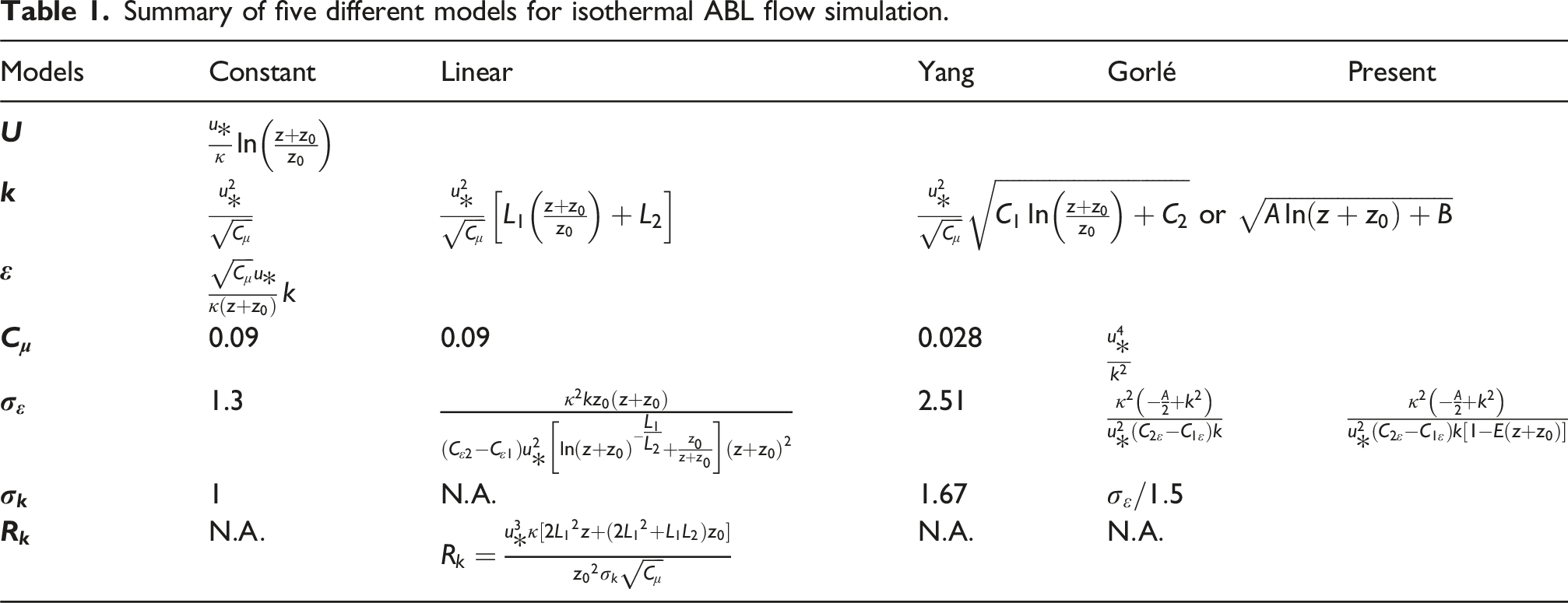
Figure 2 collects the numerical results from different models, presenting the profiles of mean wind velocity Comparison of the vertical profiles at inlet (dashed lines) and outlet (solid lines) for five selected models under isothermal condition: (a) mean wind velocity 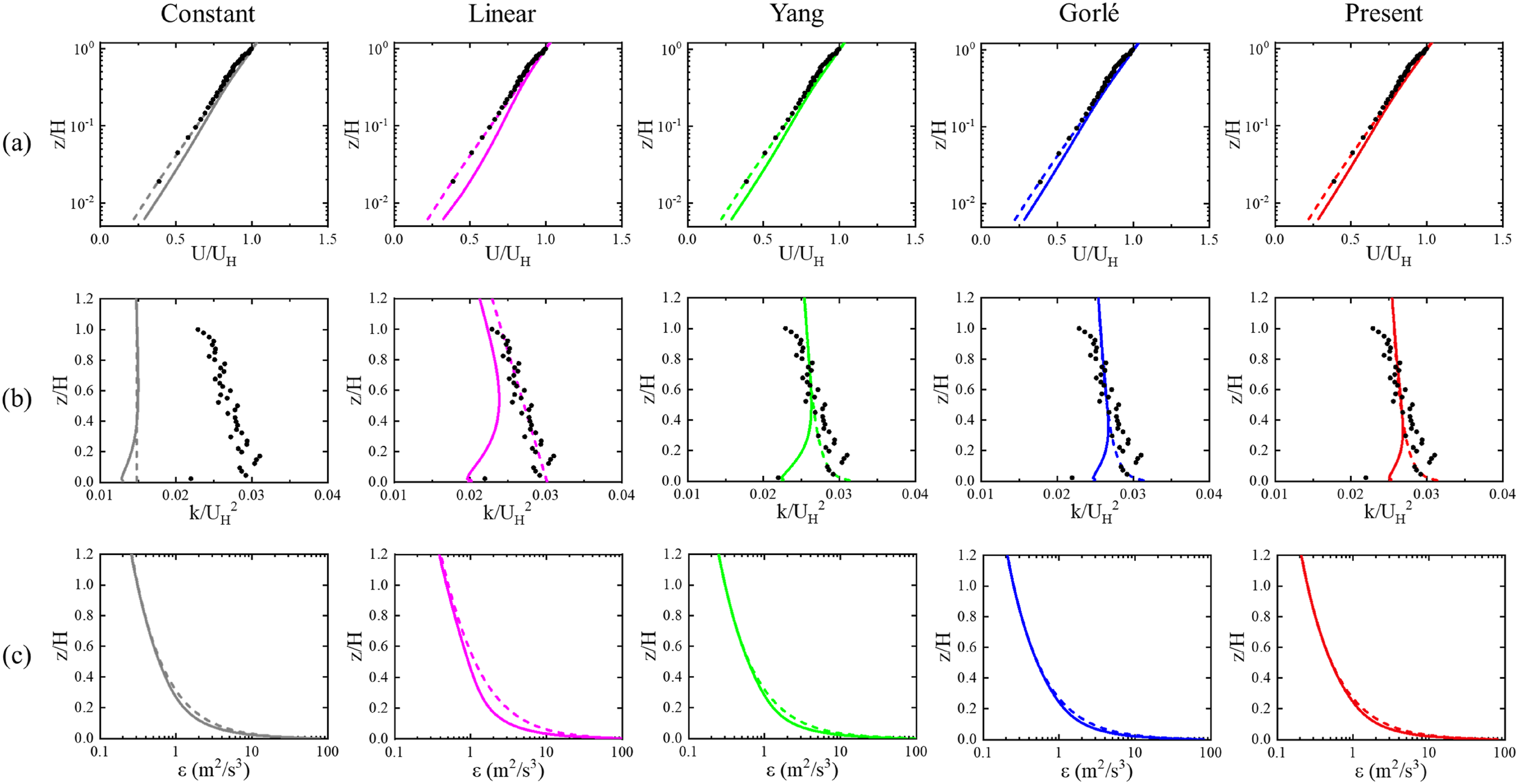
As examined in Table 1, all the models share the same wind velocity inlet profile, which is represented by the dashed line in Figure 2(a) (1st row). The experimental data exhibits a good agreement with the log-law velocity profile. However, at the downstream exit, the development of turbulent boundary layer close to the ground surface considerably affects the maintenance ability in an unfavorable way. More specifically, the Linear model performs the worst, followed by the Constant and Yang models, while the Gorlé and present models perform the best. Regarding the distribution of turbulent kinetic energy k, as illustrated in Figure 2(b), the advantages of our model become more pronounced. Limited to the oversimplified assumption of a constant turbulent kinetic energy distribution with height, the inlet profile of Constant model (gray dashed lines) can barely align with the wind tunnel observations. Additionally, the Linear model fits the experimental data with a straight line. In contrast, the k profiles of the other three models are essentially the same in mathematics, all showing considerable consistency with the observations. Since the Linear model is purely empirical, the validity of transport equations cannot be always guaranteed in the computational domain, resulting in poor performance in sustaining turbulence characteristics. However, the downstream profiles of the Gorlé and present models adhere more closely to both the inlet conditions and the wind tunnel experiment at lower height (z/H <0.2) compared to the Yang model. Overall, in simulating the ABL flow under isothermal condition, both the Gorlé and present models outperform other widely used ones. In essence, the Gorlé model can be identified as a special case of the present model. We extend the Gorlé framework from exclusively neutral conditions to encompass various thermal stratifications by introducing the gradient Richardson number (Ri) into the model. When Ri = 0, our model equations naturally reduce to those developed by Gorlé et al. (2009). Additionally, the Gorlé model assumes the E function (equation (20)) to be zero for simplicity, which may lead to unnecessary errors. We retain this term in our formulation, and this modification yields slight improvements in performance when comparing these two models in detail. For instance, as displayed in Figure 2(b), the detachment point between the inlet and outlet profiles becomes lower in present model, demonstrating an enhanced inflow maintenance capability in turbulence characteristics. Regarding the distribution of the turbulent dissipation rate, it is observed that, except for the Linear model, all models yield nearly identical results at both the inlet and outlet. This similarity also applies to the other cases. Therefore, for the sake of brevity, further comparison will not be discussed.
Key parameters for simulating additional cases under neutral thermal stratification.

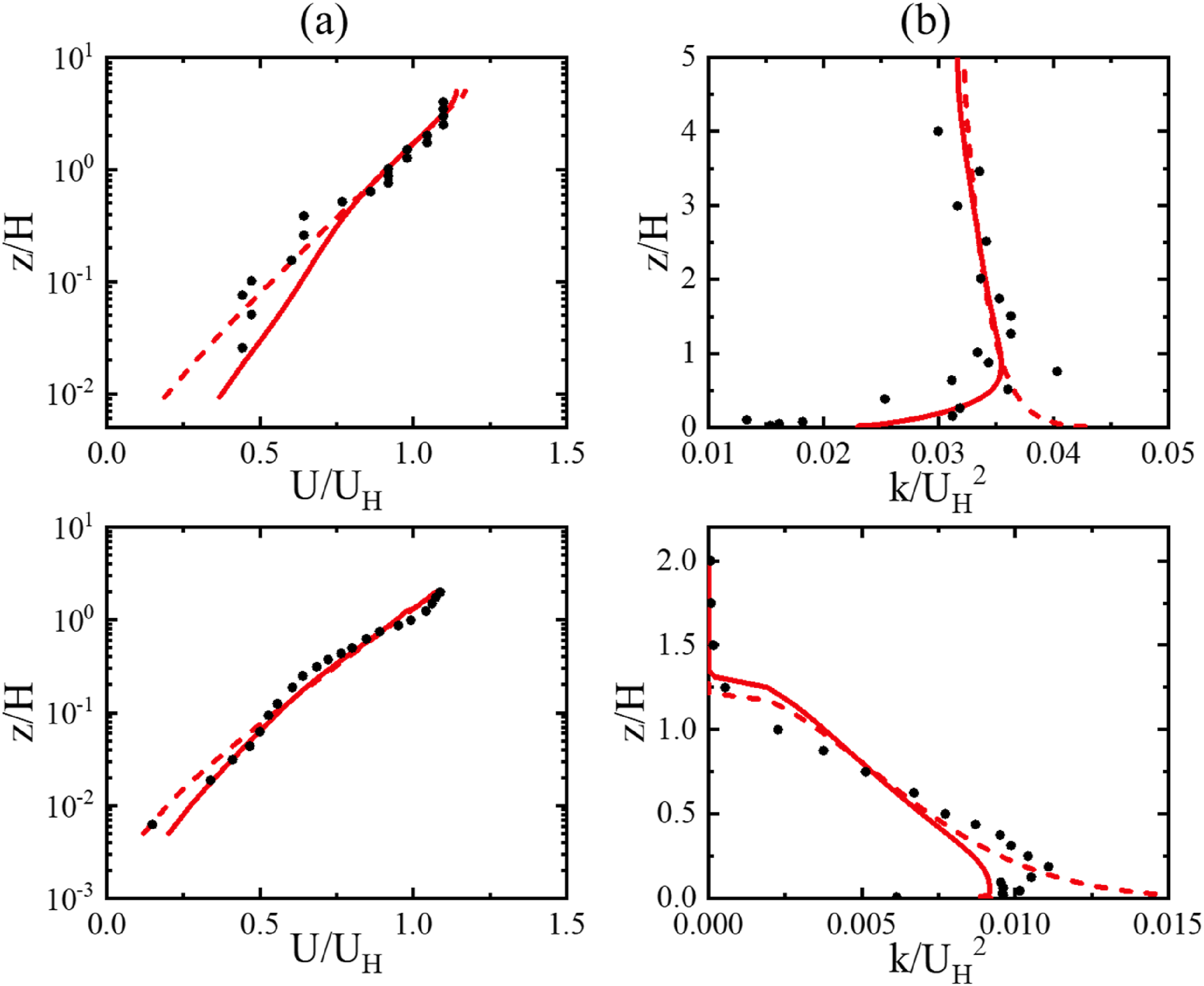
Comparison of the vertical profiles at the inlet (dashed lines) and outlet (solid lines) positions for present model under isothermal condition: (a) mean wind velocity
Simulation of non-isothermal ABL flows
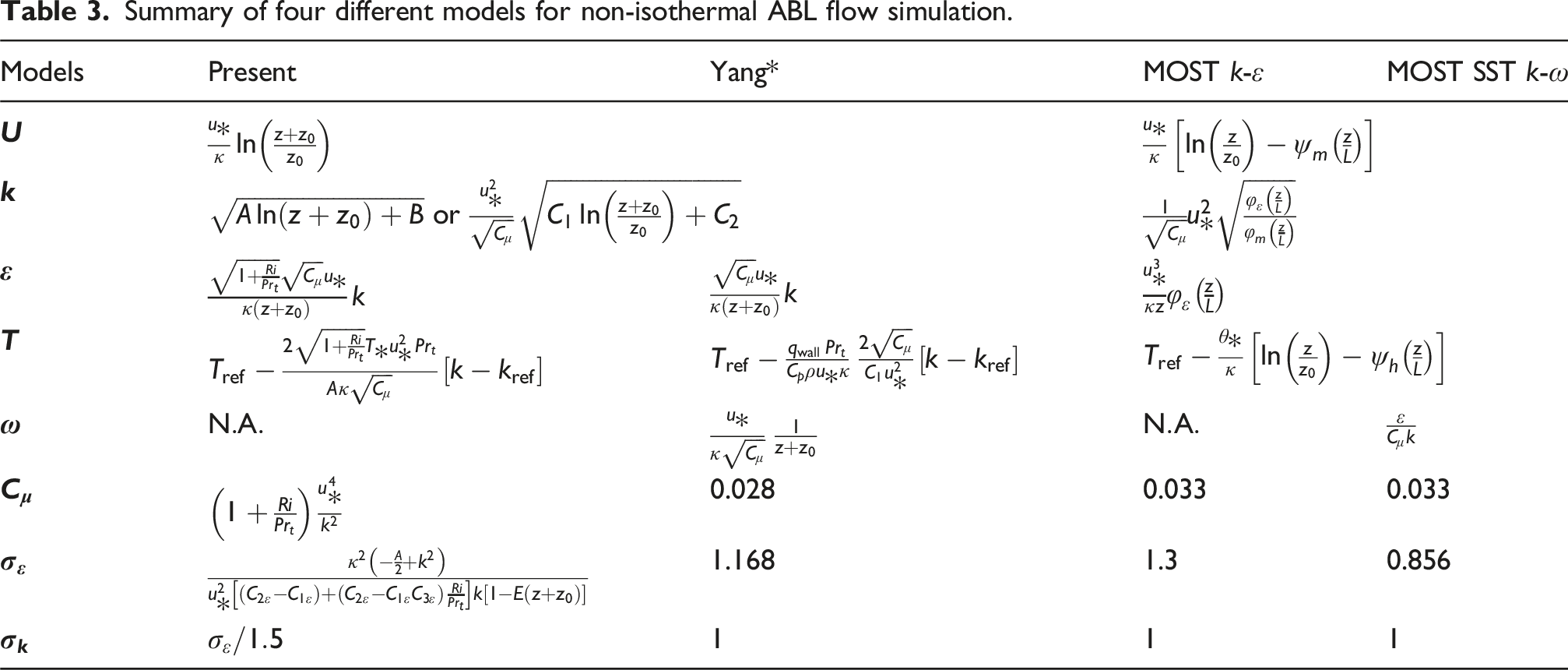
Summary of four different models for non-isothermal ABL flow simulation.
Moreover, to quantify the buoyancy effects in the incompressible RANS simulations, the Boussinesq approximation is utilized, assuming the temperature-induced air density variation solely affects the gravity term of momentum equation. The linear relation between density and temperature is expressed as follows:
According to the authors’ best knowledge, MOST-based models are currently the most popular for simulating non-isothermal ABL flows. The typical MOST-based k-ε and SST k-ω models (Pieterse and Harms, 2013) are involved for comparison. Additionally, a recently developed model by Chen and Yang (2024) is also considered here. To differentiate it from the Yang model for isothermal ABL simulation, we will name it as Yang* model hereafter. Table 3 provides a detailed overview of the theoretical foundations of all four models mentioned above.
Consider that both the Takahashi and TPU databases can offer us experimental data under non-isothermal stratification conditions. The wind tunnel experiments conducted by Takahashi et al. (2005) will first serve as study cases, including both unstable and stable ABL flows, for validation and comparison. The inflow profiles and thermal conditions are again reconstructed by fitting the wind tunnel data using the least squares method, and then applied to simulate wind flow over flat terrain. The surface heat flux from the ground can be evaluated by
Accordingly, Figure 4 compares the ability of various models to maintain key physical parameters, such as mean streamwise wind velocity U, turbulent kinetic energy k, and temperature T, within the computational domain. The temperature is normalized as Comparison of the profiles of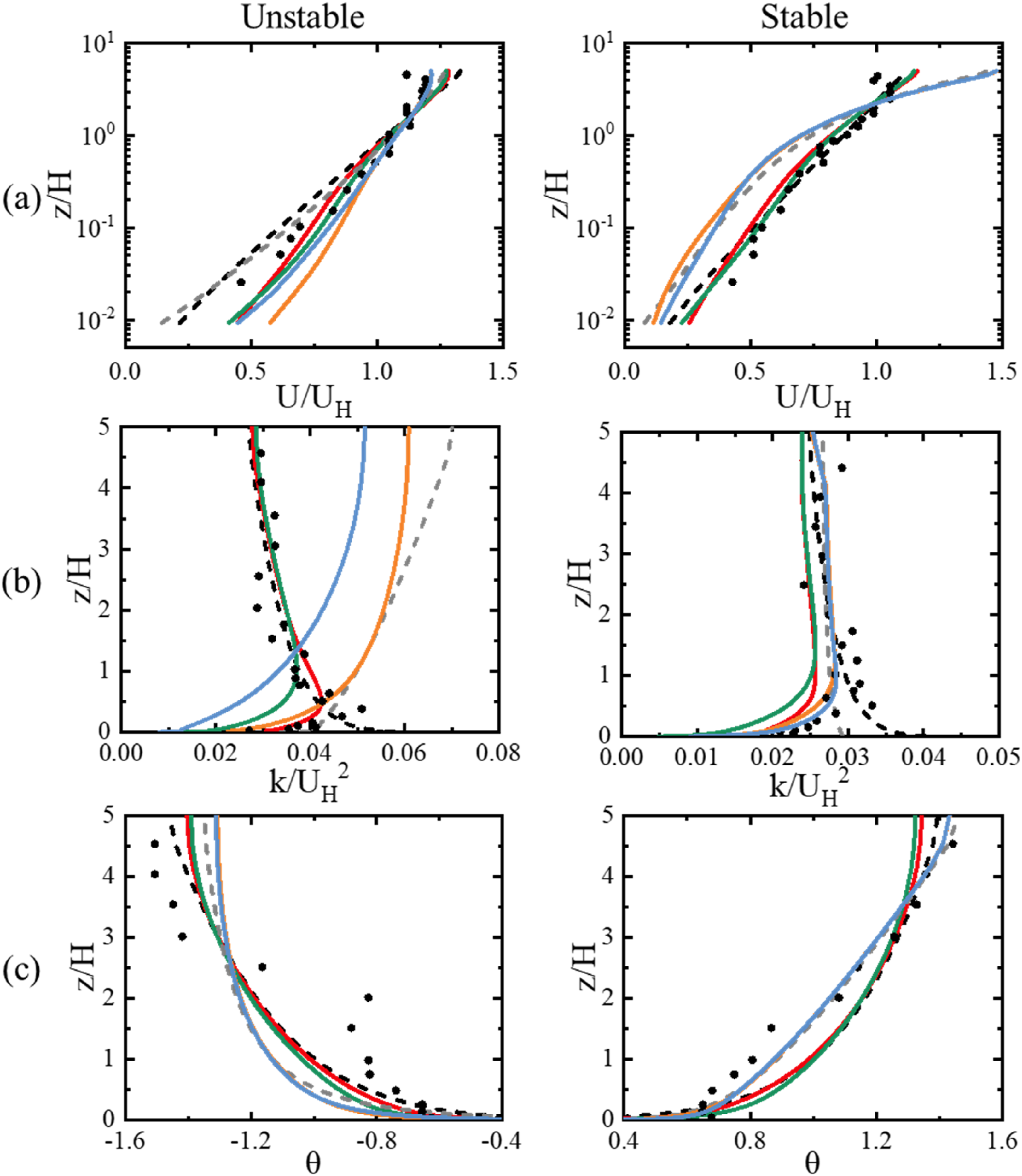
From the perspective of horizontal homogeneity feature of the simulated wind flow over flat terrain, the following observations can be drawn from Figure 4: Both the Yang* and present models can effectively maintain mean wind velocity profiles under non-isothermal ABL conditions, with only a slight increase near the ground. The MOST-based models can achieve good agreement under stable ABL but exhibit a more significant near-ground bias under unstable ABL. The dissipation of turbulent kinetic energy in the near-ground regions is inevitable; however, the present model outperforms the Yang* model in this regard. All models satisfactorily sustain the temperature profiles.
Key parameters for simulating additional cases under non-isothermal stratifications.

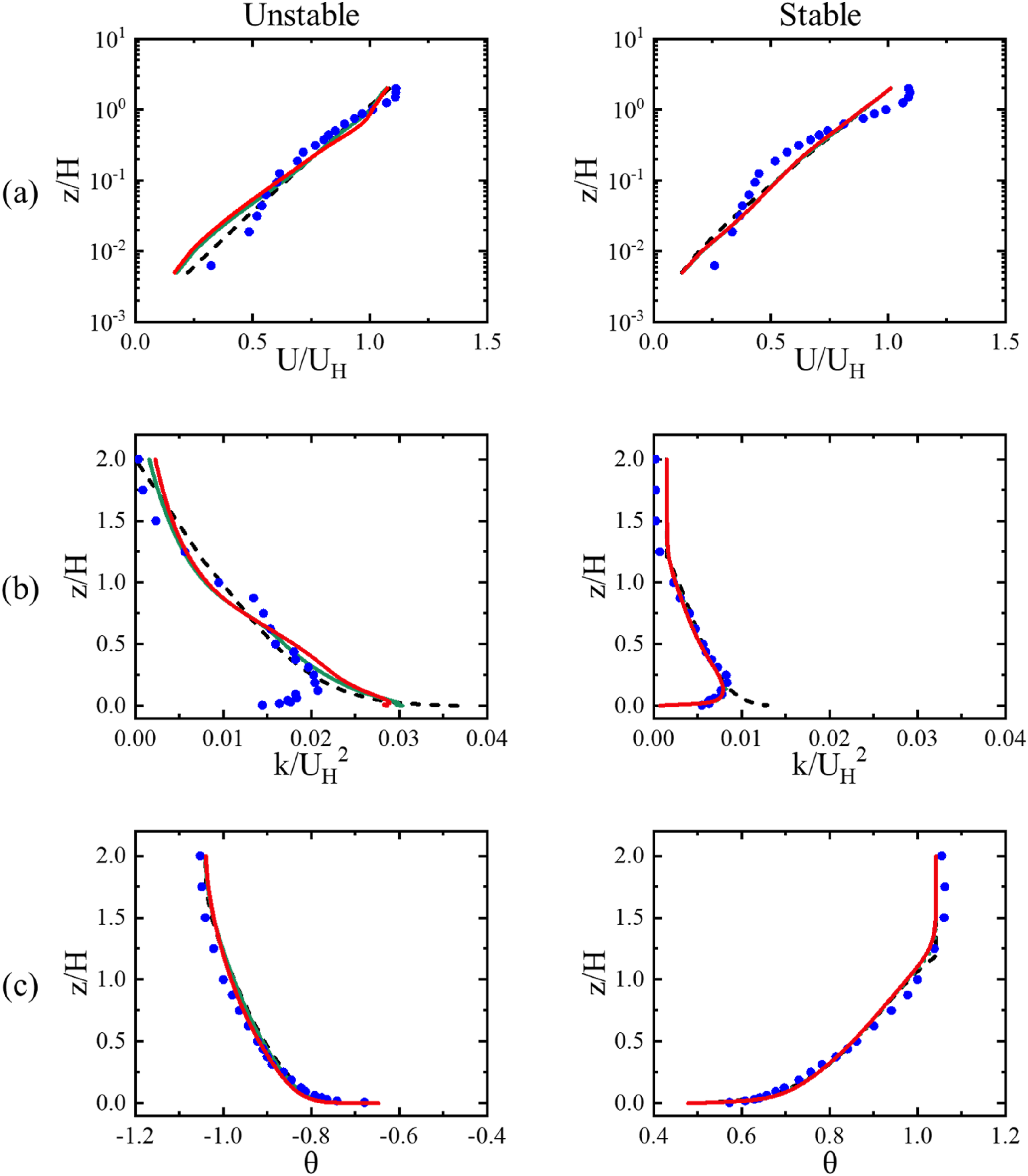
Comparison of the profiles of
Flow over square cylinder
Numerical model and settings
In this section, we aim to apply our model to simulate turbulent winds passing over a realistic bluff body, such as a typical high-rise building. Figure 6 establishes a computational domain that includes a 1:1:2 building model. The model has a height of H = 0.16 m, positioned L
1
= 5H from the upstream inlet and L
2
= 10H from the downstream outlet. The streamwise and lateral mesh size close to the building surface is 5 × 10⁻³ m, with a growth ratio of 1.1 extending in both directions. The vertical grid size along the building is set uniformly as 8 × 10⁻⁴ m, increasing with a ratio of 1.1 above the building, resulting in approximately 1.2 million cells in total. According to the TPU wind tunnel experiments (Takahashi et al., 2005), the reference wind speed at the building height Simulation configurations for wind flow over a typical building model.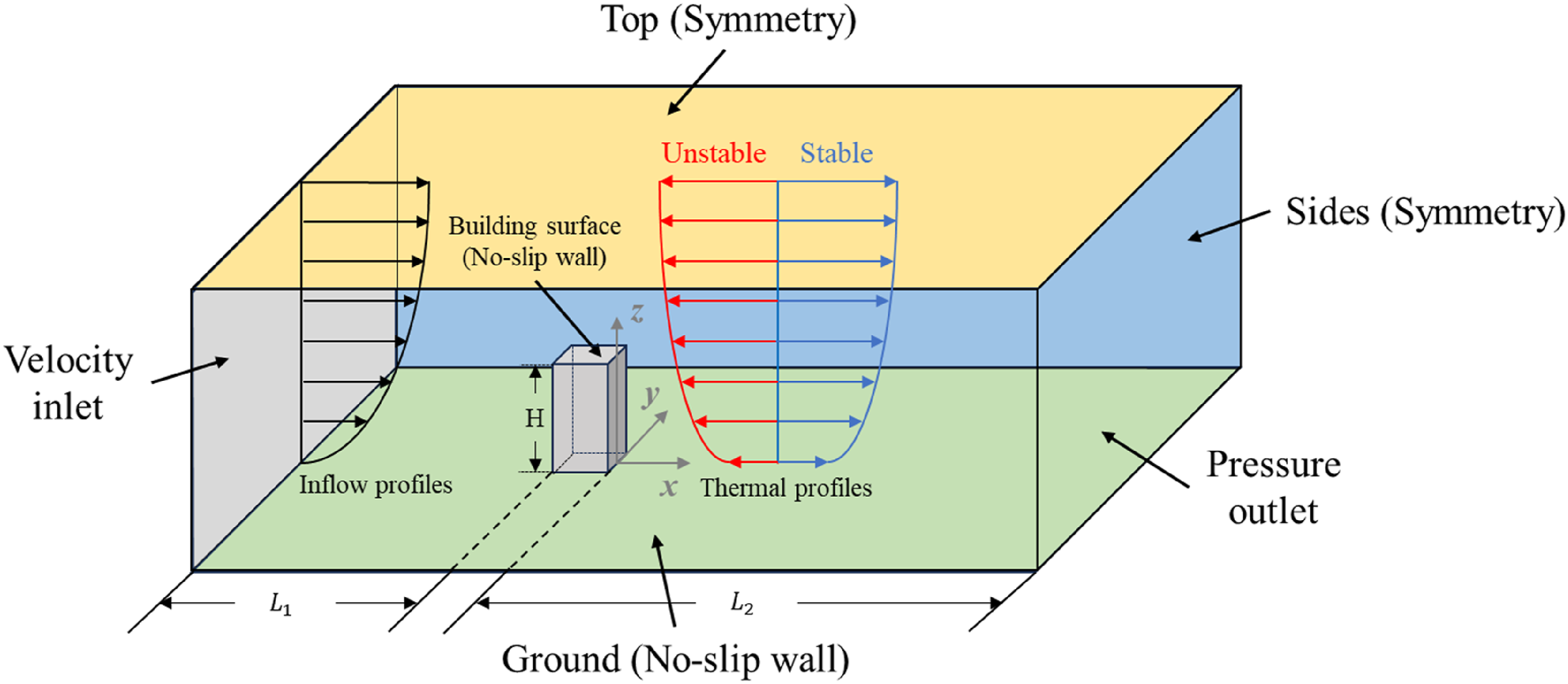
As demonstrated in Section 3.1.3, only the Yang* model achieves performance comparable to our model. Therefore, it will be the only model included for comparison here. The key parameters summarized in Table 4 are again utilized as the boundary conditions. In Figure 7, the measurement locations in the wind tunnel experiments are indicated by red points, while the blue lines suggest where the numerical data will be extracted accordingly for validation and comparison, covering the upstream, middle, and downstream areas around the building model. Selection of typical locations (x/H = −0.625, −0.25, 0.0625 and 0.375) on longitudinal plane y/H = 0 (a) and horizontal plane z/H = 0.025 (b) for comparison.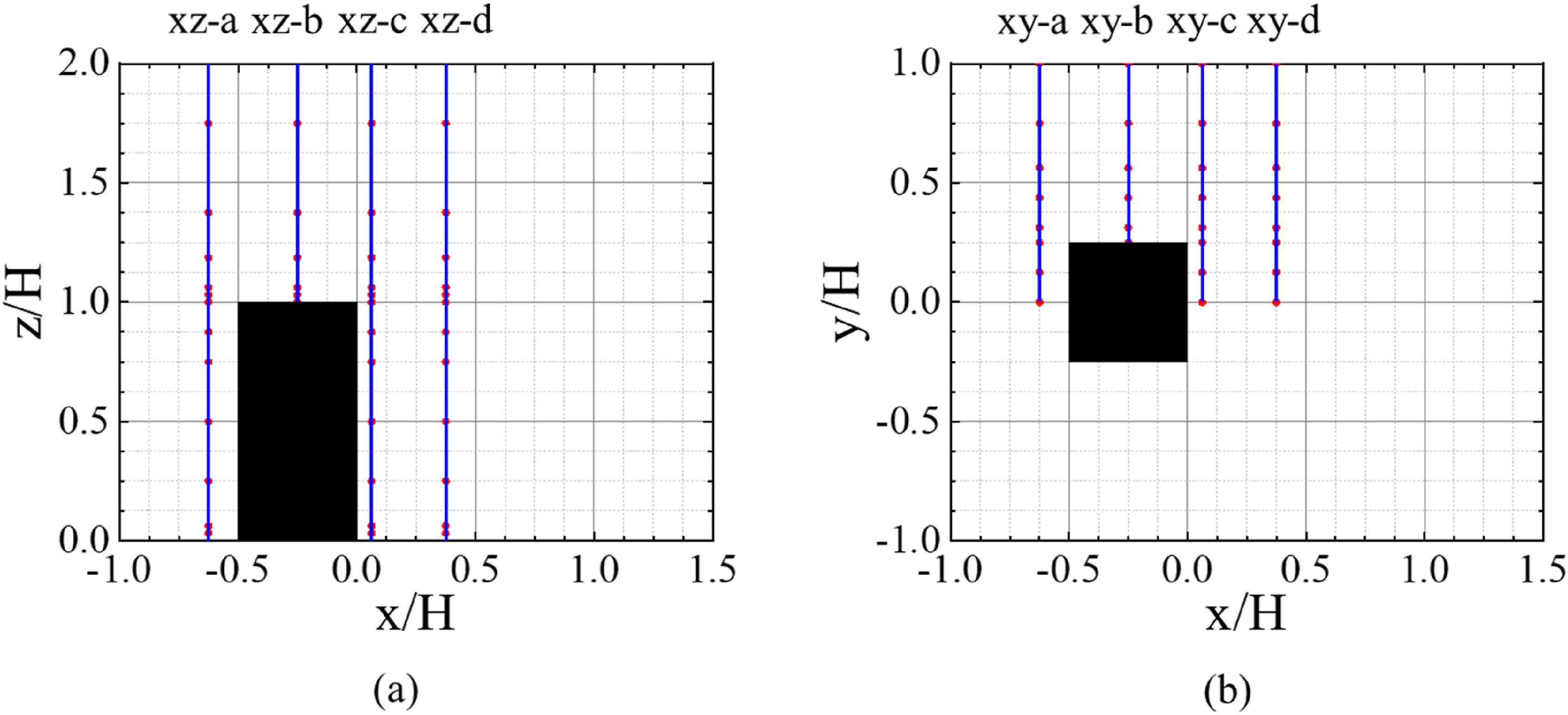
Results and discussion
Figure 8 compares the mean streamwise wind velocity profiles on both longitudinal and horizontal planes under unstable ABL flow. The numerical simulations can effectively capture key physical phenomena, such as the building-induced wind wall effect, the acceleration of airflow along the shear layer caused by sharp leading edges, and the formation of near-wake recirculation. In the front wall-ground corner region, the intensity of primary horseshoe vortex appears to be overestimated, as indicated by the wind velocities at xy-a. Similarly, the reduction in velocity at the windward wall is slightly overestimated up to the top of building model. The presence of leading edges at the top and sides results in pronounced flow separation, as expected, forming unstable shear layer flows extending downstream. This feature is well characterized in xz-b and xy-b. In the near-wake region, the RANS-based simulations tend to provide a larger size of the wake recirculation zone and overestimate the reverse flow behind the building. Comparison of mean streamwise wind velocity at longitudinal (a) and horizontal (b) planes under unstable ABL flow.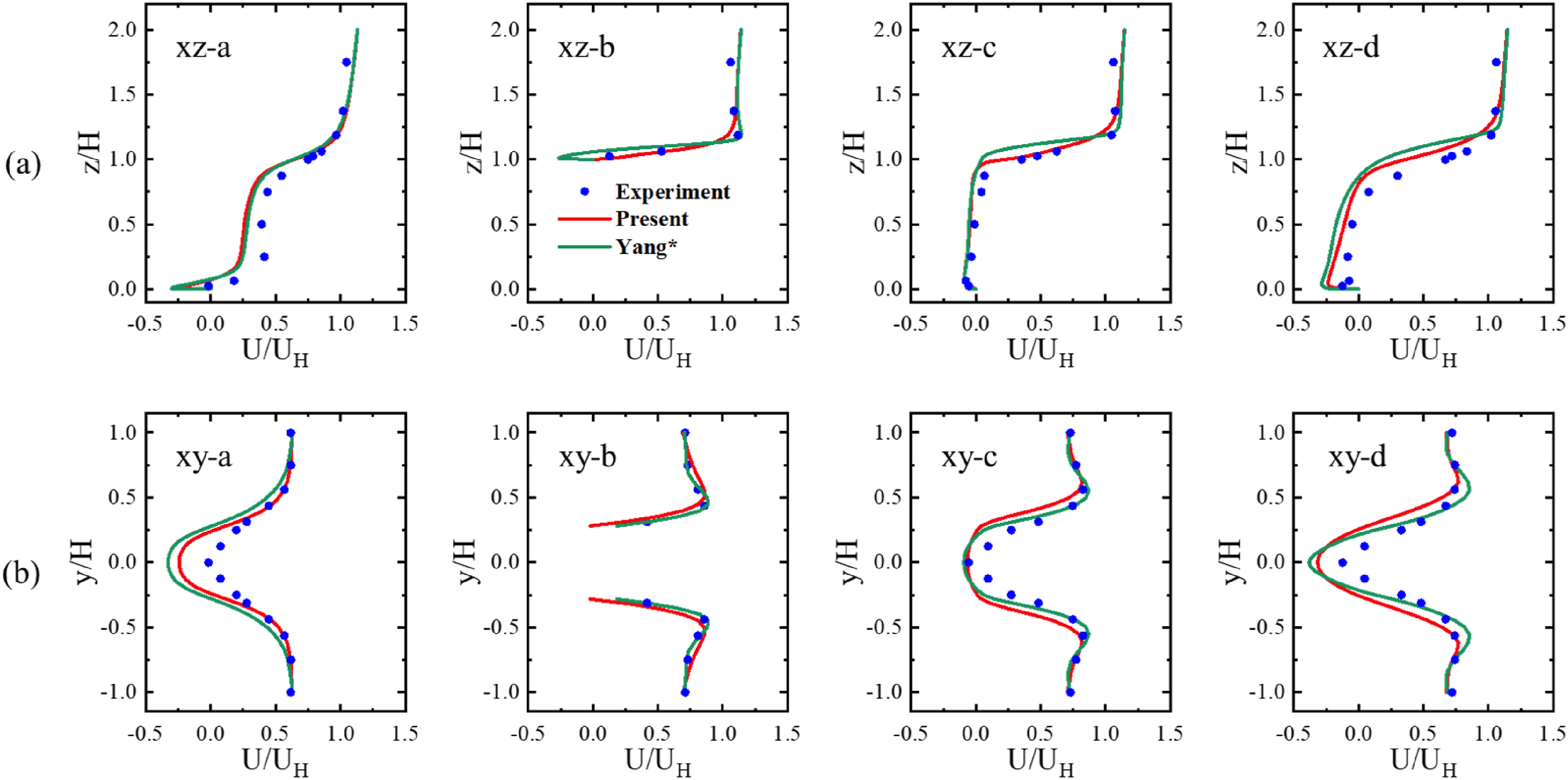
In Figure 9, we compared the spatial distribution of temperature around the building under unstable ABL condition. The performance of Yang* and our models is almost identical, with both providing reliable simulation results when compared to wind tunnel experiments. The major difference occurs in the upper building wake region near the rooftop. The heat transfer process there is considerably overestimated, resulting in an abrupt change in the temperature distribution. Comparison of normalized temperature at longitudinal (a) and horizontal (b) planes under unstable ABL flow.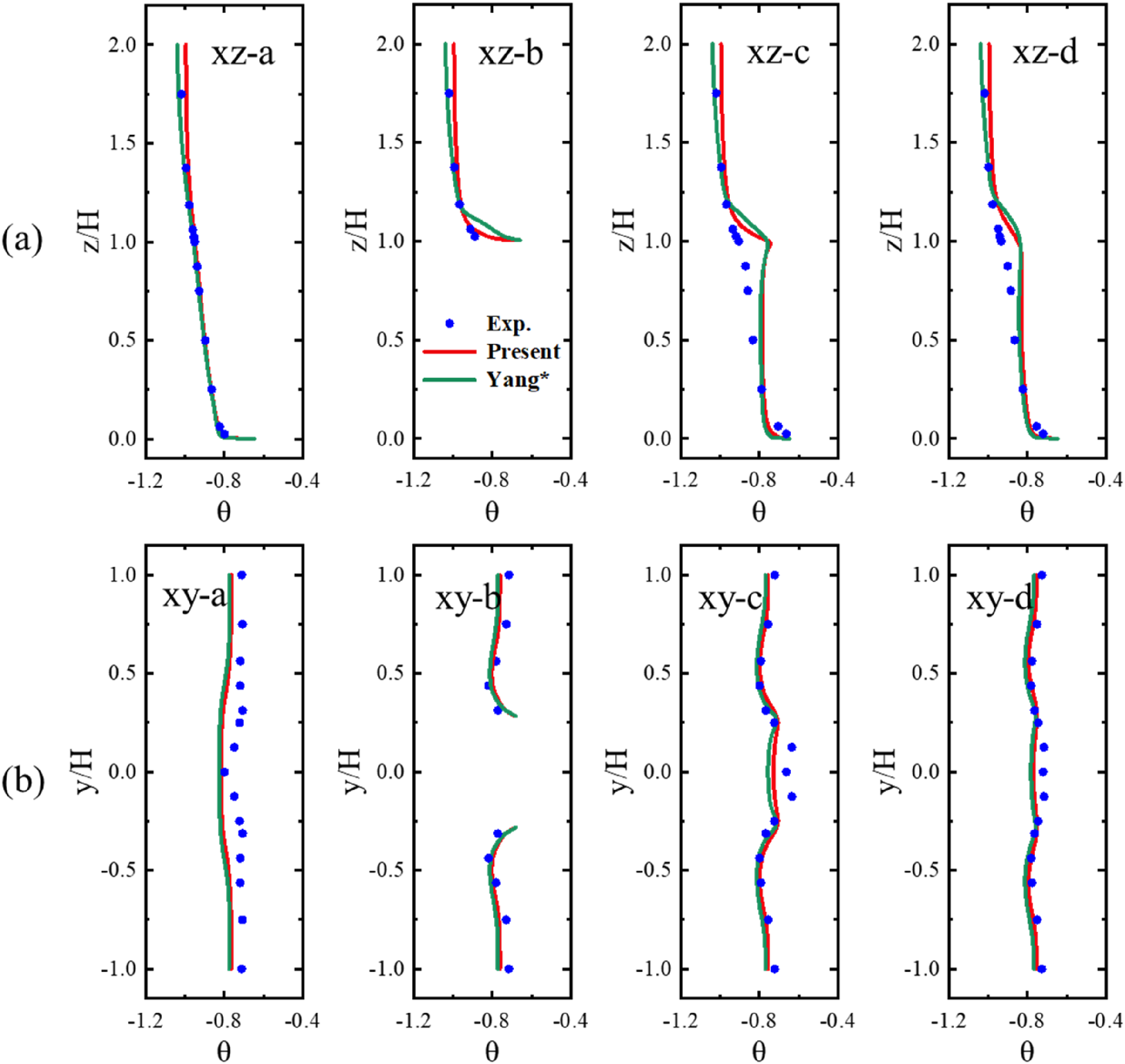
As depicted in Figure 5, the approaching flow refers to the environmental conditions at the building location, assuming the building model is absent. Successfully preserving the turbulent and thermal characteristics of the approaching flow before it encounters the bluff body is crucial for simulating both the wake flow behind the bluff body and the spatial distribution of temperature. Overall, the comparison demonstrates the validity and reliability of applying the newly developed model in the simulation of turbulent wake flow under non-isothermal atmospheric stability.
Concluding remarks
Building on the standard k-ε turbulence model and integrating local equilibrium theory along with the standard gradient diffusion hypothesis, this study has developed a unified model for simulating ABL flows under various thermal stratifications. This new model consists of analytical and self-consistent solutions for inflow profiles, including mean wind velocity, turbulent kinetic energy, turbulence dissipation rate, and temperature. Details are also provided for determining model constants and thermal boundary conditions to ensure the balance of transport and energy equations.
To evaluate the performance of our model, we designed two sets of numerical experiments, i.e., wind flow over flat terrain for horizontal homogeneity test and over a typical square cylinder for practical application purpose. All these numerical simulations are based on previous wind tunnel experiments and are compared with models that are currently widely used. Through a comprehensive step-by-step comparison, the major contribution of our study can be summarized as follows: (1) The model can effectively maintain horizontal homogeneity over flat terrain, outperforming other popular ones. The Gorlé model, which is only applicable under isothermal conditions, can be identified as a special case of our model. Under non-isothermal conditions, the present model demonstrates greater flexibility and accuracy than existing alternatives. (2) The model accurately predicts both turbulent wake flow and thermal conditions behind a typical square cylinder, highlighting its significant potential for engineering applications. (3) Unlike conventional models, the model constants are formulated as functions of spatial location and thermal stratification conditions, rather than relying on empirical values. This improvement offers a more physics-based understanding of the simulation of various ABL flows.
Footnotes
Acknowledgments
FW would like to acknowledge the financial supports from the Research Grants Council - General Research Fund (Project No. 15215723) and the Hong Kong Polytechnic University - Start-up Fund (Project No. P0043763). SMT would like to acknowledge the financial supports from the National Natural Science Foundation of China (Project No. 42275099). Special thanks go to Prof. Yoshie for sharing the experimental data presented in Figures 5, 7– .
.
Funding
The authors disclosed receipt of the following financial support for the research, authorship, and/or publication of this article: This work was supported by the National Natural Science Foundation of China; General Program/42275099, Research Grants Council, University Grants Committee; General Research Fund/15215723 and Hong Kong Polytechnic University; Start-up Fund/P0043763.
Declaration of conflicting interests
The authors declared no potential conflicts of interest with respect to the research, authorship, and/or publication of this article.