




Abstract
This study presents an experimental investigation into the compressive performance of square glass fiber-reinforced polymer (GFRP) pultruded profiles filled with geopolymer concrete (GPC) under elevated temperatures. Ninety concrete-filled GFRP (CFGP) specimens were prepared using GPC mixes of three different compressive strengths (59.85 MPa, 68.31 MPa, and 89.57 MPa), achieved by varying NaOH molarity (4M, 8M, 12M). The specimens were exposed to temperatures ranging from 25°C to 350°C to evaluate post-heating compressive behavior. Results showed that confinement by the GFRP profile improved performance by restraining lateral dilation of the concrete core, thereby enhancing effective compressive strength and stiffness, particularly in low-strength cores where larger lateral expansion activated confinement earlier. However, experiencing elevated temperatures degraded the resin matrix and fiber–resin interface, reducing hoop strength and stress transfer, while microcracking and vapour pressure effects in the core further contributed to capacity loss. At ambient conditions, high-strength cores displayed the greatest peak loads, but they suffered the steepest degradation under heating, retaining only 74.37% of their original strength at 350°C, compared to 82.5% retention in low-strength cores. Two-way ANOVA confirmed that temperature and concrete strength contributed 58.85% and 27.90% of the variation in compressive strength retention, respectively, while their interaction accounted for an additional 8.05%, underscoring that thermal degradation is strongly dependent on concrete grade. These findings demonstrate that while higher-strength cores improve initial capacity, they are more vulnerable to thermal deterioration, and that optimal design of CFGPs must consider both material pairing and exposure conditions.
Keywords
Introduction
The growing interest in concrete-filled fiber-reinforced polymer (FRP) tubes (CFFTs) among researchers stems from the limitations of concrete-filled steel tube (CFST) columns (Zhou et al., 2023), particularly their susceptibility to corrosion in harsh environments, which leads to the deterioration of structural properties and significantly increases maintenance and repair costs over time (Abolfazli et al., 2025; Bian et al., 2024; Hua et al., 2019; Subedi et al., 2025; Wang et al., 2015). CFFTs have been widely used in the construction industry over the past two decades due to their high strength, increased stiffness, permanent formwork, resistance to corrosive environments, suitability for seismic retrofitting, and extended service life across various structures (RameshBabu and Prabavathy, 2018).
To mitigate corrosion issues, various FRP profiles have been developed. Among them, glass fiber-reinforced polymer (GFRP) profiles increasingly utilized in civil engineering due to their appropriate mechanical properties, including lightweight, high tensile strength, and low cost of production (Doostmohamadi et al., 2022; Hajmoosa et al., 2024; He et al., 2021; Hosseini et al., 2024; Shakiba et al., 2023c). A key advantage of GFRP compared to steel is its resistance to corrosive environments such as wastewater treatment plants, offshore platforms, seawalls, and retaining walls (Hoseinzade et al., 2022; Yu et al., 2021). GFRP offers corrosion resistance and electromagnetic transparency at substantially lower cost than carbon fiber, with stiffness and long-term durability governed by the glass type, fiber architecture and matrix; in alkaline pore solutions, hydroxyl attack on glass and moisture ingress into the matrix can degrade mechanical properties, so resin chemistry and fiber protection are key (Yu et al., 2021; Zhang et al., 2024). However, compared to steel, GFRP exhibits a lower modulus of elasticity, shear strength, and ductility. The limited ductility of this material may reduce pre-failure warning signs, presenting a potential challenge for its use in applications where ductility is essential (Chen et al., 2022; Hosseini et al., 2022; Shakiba et al., 2023b; Yu et al., 2021).
To overcome these drawbacks, hybrid structures incorporating pultruded profiles are extensively utilized in grid systems, bridges, buildings, and offshore structures due to their inherent advantages (Ahmadi et al., 2023; Bottoni et al., 2008; Shakiba et al., 2023a; Zhang et al., 2021). Numerous studies have explored the application of square and circular pultruded GFRP profiles as structural components (Alajarmeh et al., 2021; Fang et al., 2020; Guo et al., 2021; Wu et al., 2015). Filling GFRP pultruded profile columns with concrete significantly enhances their geometric stiffness, allowing them to withstand multi-directional forces, establishing them as an emerging structural element in the modern construction industry (Bian et al., 2024; Zhu et al., 2005).
Ferdous et al. (Ferdous et al., 2018) demonstrated that concrete filling enhances bending stiffness while mitigating premature local crushing, ovalization tendencies, and local buckling by providing lateral support to GFRP walls. Additionally, the concrete core improves the tube’s thermal insulation properties by absorbing and dissipating heat, thereby slowing the rate at which the GFRP profile reaches critical temperatures and delaying material degradation (Abolfazli et al., 2023b; Bahrami and Rashid, 2023). Moreover, the main failure mechanisms of hollow GFRP pultruded connections include bolt shear failure, local buckling of the pultruded profile, and localized cracking near holes and cuts. These issues can be mitigated by filling the GFRP profiles with concrete, enhancing their structural performance and integrity (Chen et al., 2022).
Bian et al. (Bian et al., 2024) reported that when FRP pultruded columns are used as a substitute for traditional steel tubes, incorporating Ultra High-Performance Concrete (UHPC) within these columns not only enhances their confinement but also prevents premature instability, effectively optimizing the performance of both materials. Additionally, a significant reduction in strength was observed in profiles without concrete after exposure to high temperatures (Bai and Keller, 2009; Wong and Wang, 2007). However, research on the behavior of concrete-filled FRP profiles under elevated temperatures and short-term fire conditions remains limited (Tabatabaeian et al., 2021).
Filling the GFRP profiles with materials that not only have mechanical behavior compatible with the tubes but also address heat resistance challenges is one of the important aspects of ongoing research (Ahmad et al., 2021; Salman et al., 2023). Ordinary Portland Cement (OPC) concrete typically offers sufficient fire resistance for standard applications. However, its strength diminishes at high temperatures due to chemical and physical alterations in the hydration products (Crozier and Sanjayan, 1999; Kong and Sanjayan, 2010). At elevated temperatures approaching/above the matrix glass-transition, matrix softening (Li and Xian, 2020) and bond deterioration reduce confinement and thus strength/ductility (Abolfazli et al., 2023b), effects accounted for in recent thermal-damage extensions to confinement models.
Geopolymer concrete (GPC), as another material for filling the tubes, contributes to sustainable development and a cleaner environment over time by lowering global CO2 emissions (Akbulut et al., 2024; Marathe et al., 2025a; Murali et al., 2024; Özbayrak et al., 2023). Geopolymer binders can produce concrete with improved properties, including higher compressive strength, enhanced fire and heat resistance, and increased resistance to sulfates, acids, shrinkage, and creep (Ali et al., 2025; Guler and Akbulut, 2023; Nassar et al., 2025a; Phair and Van Deventer, 2001; Özbayrak et al., 2023). These binders are formed through the reaction of an alkaline activator, typically a combination of sodium silicate (Na2SiO3) and sodium hydroxide (NaOH) solution with silica- and aluminum-rich industrial by-products such as fly ash, blast furnace slag, and metakaolin (Azimi and Toufigh, 2023; Marathe et al., 2025a, 2025b; Murali et al., 2024; Topal et al., 2022).
Some studies have reported an increase in the compressive strength retention of certain geopolymer concrete mixtures after exposure to elevated temperatures. For example, geopolymers with a higher fly ash content and lower metakaolin contents exhibit greater strength retention after high-temperature exposure due to reduced mass loss and sintering reactions of unreacted fly ash (Guler and Akbulut, 2023; Zhang et al., 2014; Özbayrak et al., 2023). In contrast, geopolymer concrete made with Class F fly ash and a mixture containing 60% fly ash with 12 M NaOH showed a decrease in strength at 200°C, followed by an increase between 200°C and 400°C (Özbayrak et al., 2023). Slag-based geopolymer concrete generally retains compressive strength more effectively than OPC-based concrete at high temperatures, primarily due to its dense microstructure and the absence of calcium hydroxide (Özbayrak et al., 2023). Additionally, geopolymer concrete has lower thermal conductivity compared to Portland cement concrete. While the thermal conductivity of Portland cement concrete ranges from 0.95 to 2.08 W/m.K, that of geopolymer concrete falls between 0.32 and 1.29 W/m.K (Tekin et al., 2020). Furthermore, geopolymer concrete demonstrates superior spalling resistance compared to Portland cement concrete (Topal et al., 2022; Xotta et al., 2015).
In recent years, the growing use of innovative pultruded FRP profiles as structural components has highlighted the need to assess the compressive strength of the concrete encased within these profiles, particularly under potential exposure to fire and elevated temperatures (Abolfazli et al., 2023a; Bazli et al., 2017; Guo et al., 2022; Wang et al., 2017).
In FRP materials, the fibers retain their integrity at high temperatures, while the polymer resin matrix deteriorates, significantly affecting the material’s thermo-physical and mechanical properties (Chen et al., 2018; Li and Xian, 2020; Xiong et al., 2024). As the bond between fibers and resin weakens at elevated temperatures, stress transfer becomes inefficient, and slender fibers lose the constraints provided by the surrounding resin. Consequently, shear failure between fibers and resin, along with fiber buckling or kink band failure, are likely to occur (Correia et al., 2015). This degradation becomes critical when the temperature surpasses the resin glass transition temperature (T g ), at which the resin transitions from a glassy to a rubber-like state, typically within the range of 65°C–120°C (Abolfazli et al., 2023a; Bazli and Abolfazli, 2020; Bazli et al., 2020). At temperatures beyond the polymer decomposition threshold (T d ), typically ranging from 250 to 550°C, FRP composites experience significant structural degradation, resulting in the emission of heat, smoke, ash, and potentially harmful volatile substances (Abolfazli et al., 2023a).
While concrete-filled GFRP box profiles present a promising solution for structural applications, their performance under elevated temperature conditions especially when combined with geopolymer concrete remains insufficiently explored. Most previous studies have focused on the mechanical performance of hollow GFRP profiles or those filled with traditional OPC concrete (Aydın, 2016), with minimal attention given to the influence of fire or thermal exposure. Investigating the compressive performance of GFRP pultruded profiles filled with geopolymer concrete under elevated temperatures is therefore critical due to their potential application in fire-prone and high-temperature environments. While GFRP profiles provide advantages such as high strength-to-weight ratio and corrosion resistance, their performance is limited by the glass transition temperature of the polymer matrix. Filling these profiles with geopolymer concrete, which exhibits superior thermal stability compared to ordinary Portland cement, not only enhances fire resistance and load-bearing capacity but also contributes to sustainability by utilizing industrial by-products such as fly ash and slag. This study addresses this critical gap by being the first to investigate the compressive performance of GFRP rectangular box sections filled with geopolymer concrete of varying compressive strengths after exposure to elevated temperatures. By exploring the synergistic benefits of combining GFRP profiles with geopolymer concrete, this research provides essential insights for developing future design guidelines, improving fire resilience, and promoting safe and sustainable implementation of these hybrid elements in infrastructure exposed to harsh thermal environments.
Experimental program
Material properties
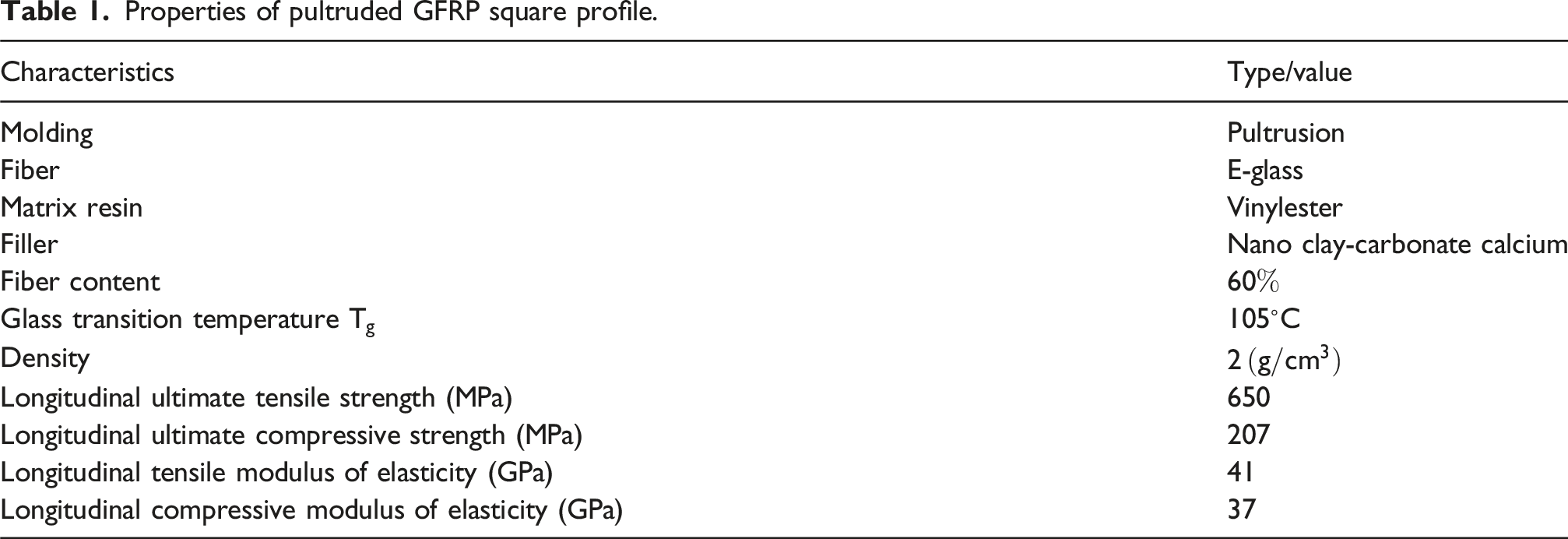
Pultruded GFRP tube
Properties of pultruded GFRP square profile.
Geo-polymer concrete
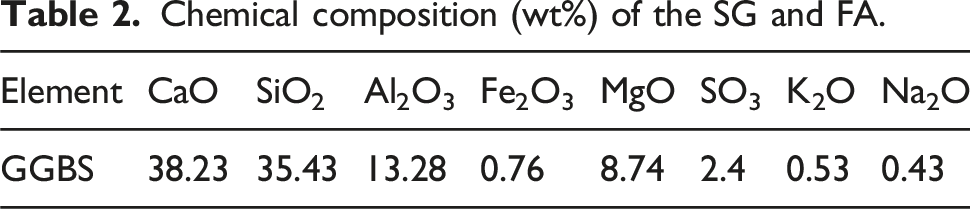
Chemical composition (wt%) of the SG and FA.
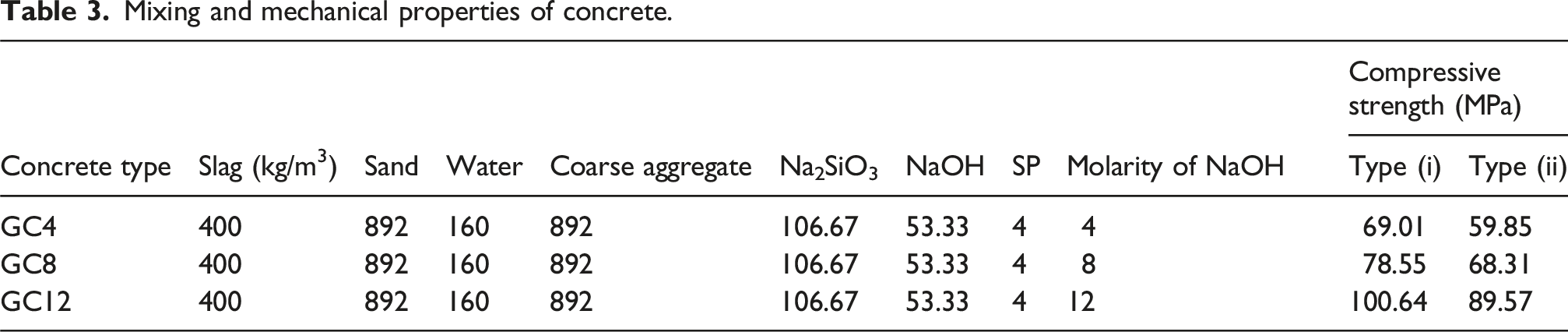
To achieve the target strengths, sodium hydroxide (NaOH) molarity was varied as the key parameter influencing slag polymerization. Specifically, NaOH solutions with molarities of 4 M, 8 M, and 12 M were used (Pane et al., 2018; Verma et al., 2022). This range spans the practical window widely used for slag/fly-ash systems: 4 M provides a lower bound where hydroxide concentration is sufficient to dissolve aluminosilicate precursors while preserving workability; 8 M represents a mid-range level that typically promotes extensive gel formation (N–A–S–H/C–A–S–H) and dense microstructure; and 12 M serves as an upper bound to capture over-activation phenomena (e.g., rapid reaction, excess heat release, incomplete polycondensation, microcracking/porosity, or efflorescence) that can lead to a plateau or decline in strength beyond the optimum. Using these three levels ensures a monotonic increase in alkalinity for trend analysis without changing the activator type or introducing confounding chemistry (Azimi and Toufigh, 2023; Shilar et al., 2022).
GGBS served as the primary binder, while a combination of sodium hydroxide (NH) and sodium silicate (NS) was used as the alkaline activator. The sodium silicate solution comprised 29.8 wt% SiO2, 14.19 wt% Na2O, and 56 wt% H2O, with a modulus (SiO2/Na2O) of 2.1. The NH solution was prepared by dissolving 95%–98% pure NH pellets in tap water 24 hours before mixing.
A polycarboxylate-based superplasticizer was added to improve workability. The fine aggregate had a fineness modulus of 2.84, while the coarse aggregate had a maximum nominal size of 12 mm. The aggregate gradation complied with ASTM C33-01 (ASTM, 2003), and both aggregates were in a saturated surface-dry (SSD) condition, as per ASTM C128 and ASTM C127 (Thanki and Singh, 1998; Tummino et al., 2023), respectively. Based on findings from previous research, an optimal sodium silicate to sodium hydroxide (NS/NH) ratio of 2.5 was adopted in this study (Ding et al., 2016).
Mixing and mechanical properties of concrete.
Specimen preparation
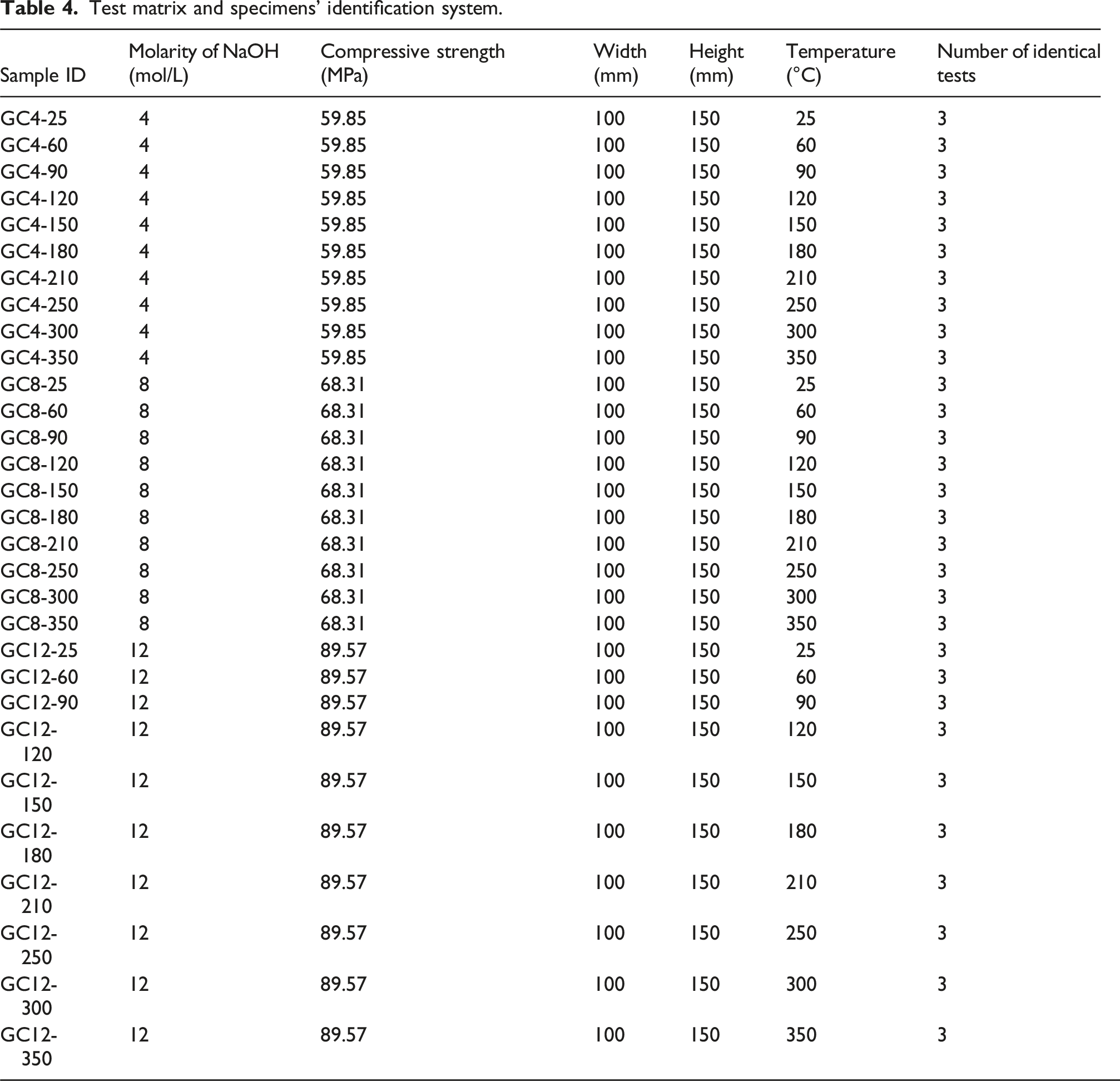
In this study, 90 square pultruded GFRP tubes filled with geopolymer concrete were fabricated and tested. Each specimen featured an external width (D) of 100 mm and a height of 150 mm to facilitate handling and testing while ensuring consistency with previous experimental studies on FRP-confined concrete (He et al., 2021; Lokuge et al., 2019; Zhang et al., 2021). Although smaller than full-scale members, the governing mechanisms of resin degradation, fiber–matrix debonding, and confinement efficiency are material-driven and thus scale-independent. The adopted dimensions therefore provide representative results that can be extrapolated to practical members with appropriate scaling considerations. To minimize testing inaccuracies, the ends of the specimens were precisely cut using a saw to produce smooth, level surfaces, ensuring uniform contact with the compression platens. One of the key objectives of the investigation was to evaluate the effect of the compressive strength of the concrete core, which was varied by altering the sodium hydroxide (NaOH) molarity during the polymerization process. Figure 1 illustrates both actual and schematic views of the test specimens. Concrete filled GFRP pultruded profile: (a) Cross section, and (b) full view.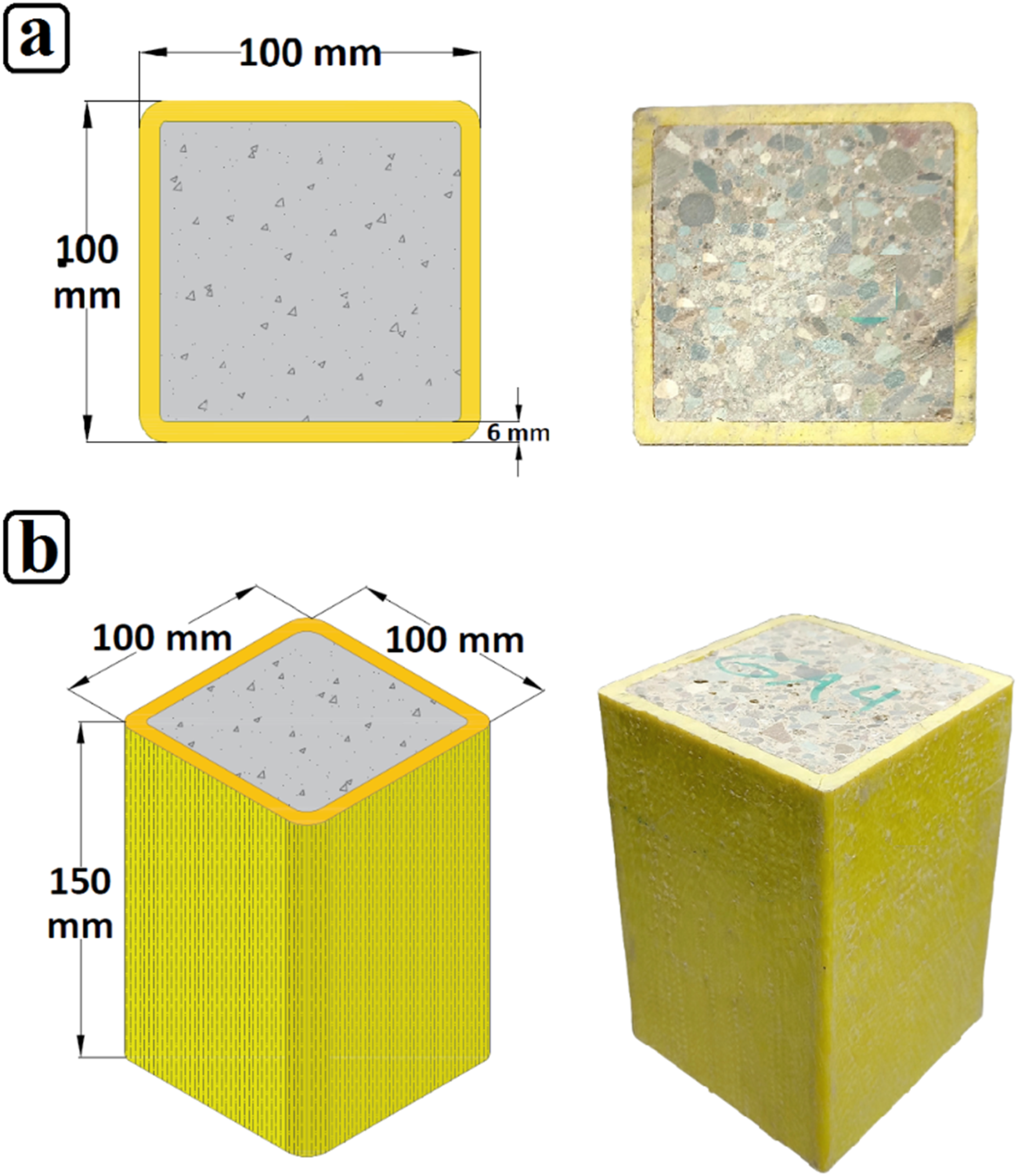
Test matrix and specimens’ identification system.
Test process
After preparation, samples were exposed to the target temperatures (Table 4) for 2 hours. The exposure temperatures were selected with explicit reference to the matrix glass-transition temperature of the pultruded GFRP (Tg = 105°C) and to the early thermal decomposition behavior of vinyl-ester resins. Sub-Tg points at 60 and 90°C represent service-relevant warming while remaining below Tg (and near typical continuous-use limits for pultruded profiles), the 120°C step brackets Tg to capture the onset of matrix softening, and the 150 °C–210°C steps interrogate progressive post-Tg softening and interfacial/bond deterioration. The 250 °C–300°C steps approach the onset of resin mass loss, and 350°C was adopted as an upper bound to probe early pyrolytic damage without entering fully developed fire-damage regimes that typically cause extensive delamination. This temperature ladder aligns with established observations that FRP mechanical and bond properties degrade sharply as Tg is reached/exceeded, and with thermogravimetric evidence placing the main onset of vinyl-ester oxidation at about 280 °C–300°C; it also covers the early portion of the ISO 834 standard fire curve relevant to post-fire assessment of residual properties.
The two-hour exposure duration was chosen to ensure uniform heating throughout the samples (Abolfazli et al., 2023a). The primary objective was to assess the residual compressive properties of the specimens after exposure to elevated temperatures, simulating post-fire conditions. The maximum test temperature of 350°C was selected to reflect the onset of material degradation and serviceability loss in GFRP composites. Temperatures beyond this point often result in significant resin decomposition and delamination, which falls outside the scope of this study focused on early-stage thermal exposure relevant to fire-preventive design strategies. To ensure uniform cooling, the specimens were left for 24 hours before testing. To protect the edges of the pultruded profiles and prevent heat-induced surface degradation of the concrete, rock wool was applied to the sample edges during heating. Following the cooling period, axial load tests were conducted at a displacement-controlled rate of 0.5 mm/min.
SEM analysis procedures
Scanning Electron Microscopy (SEM) was conducted to investigate the microstructural changes in GFRP pultruded profiles after exposure to elevated temperatures. Small fragments (about 10 × 10 mm) were carefully cut from the outer surfaces of selected profiles after compressive testing at 25°C, 150°C, and 350°C. To avoid additional thermal or mechanical alteration, specimens were cut using a diamond saw under cooling water. Samples were sputter-coated with a thin gold layer (about 10 nm) to ensure electrical conductivity. SEM observations were performed using a TESCAN MIRA 3 LMU system at an accelerating voltage of 15 kV and magnifications ranging from 30× to 500×. This procedure enabled detailed examination of the fiber–matrix interface, resin degradation, microcracking, and delamination induced by thermal exposure.
Results and discussion
Compressive strength of concrete
As shown in Figure 2, the load-displacement responses of three geopolymer concrete specimens (GC4, GC8, and GC12) extracted from GFRP profiles with compressive strengths of 59.85 MPa, 68.31 MPa, and 89.57 MPa, respectively, followed a characteristic trend: an initial linear-elastic phase, a peak load, and a subsequent softening stage. As illustrated in Figure 2, higher compressive strength was associated with increased stiffness reflected by a steeper initial slope while slightly reducing ductility, as evidenced by a more pronounced post-peak decline. The GC12 specimen with the highest compressive strength (89.57 MPa) reached a peak load of 677.9 kN at a displacement of 0.85 mm, whereas the GC4 specimen with the lowest strength (59.85 MPa) attained a peak load of 462.8 kN at 1.03 mm displacement. This indicates that specimens with lower compressive strength underwent greater deformation prior to reaching peak capacity. All specimens demonstrated partially ductile behavior beyond the peak load, which is advantageous for structural applications demanding energy dissipation, such as in seismic design. This ductile response is likely influenced by the presence of geopolymer gel products, such as aluminosilicate hydrate (A-S-H), rather than the calcium silicate hydrate (C-S-H) typically found in ordinary Portland cement (OPC) concrete (Cai et al., 2025; Farhan et al., 2021). Load-displacement response of concrete core extracted from GFRP profiles.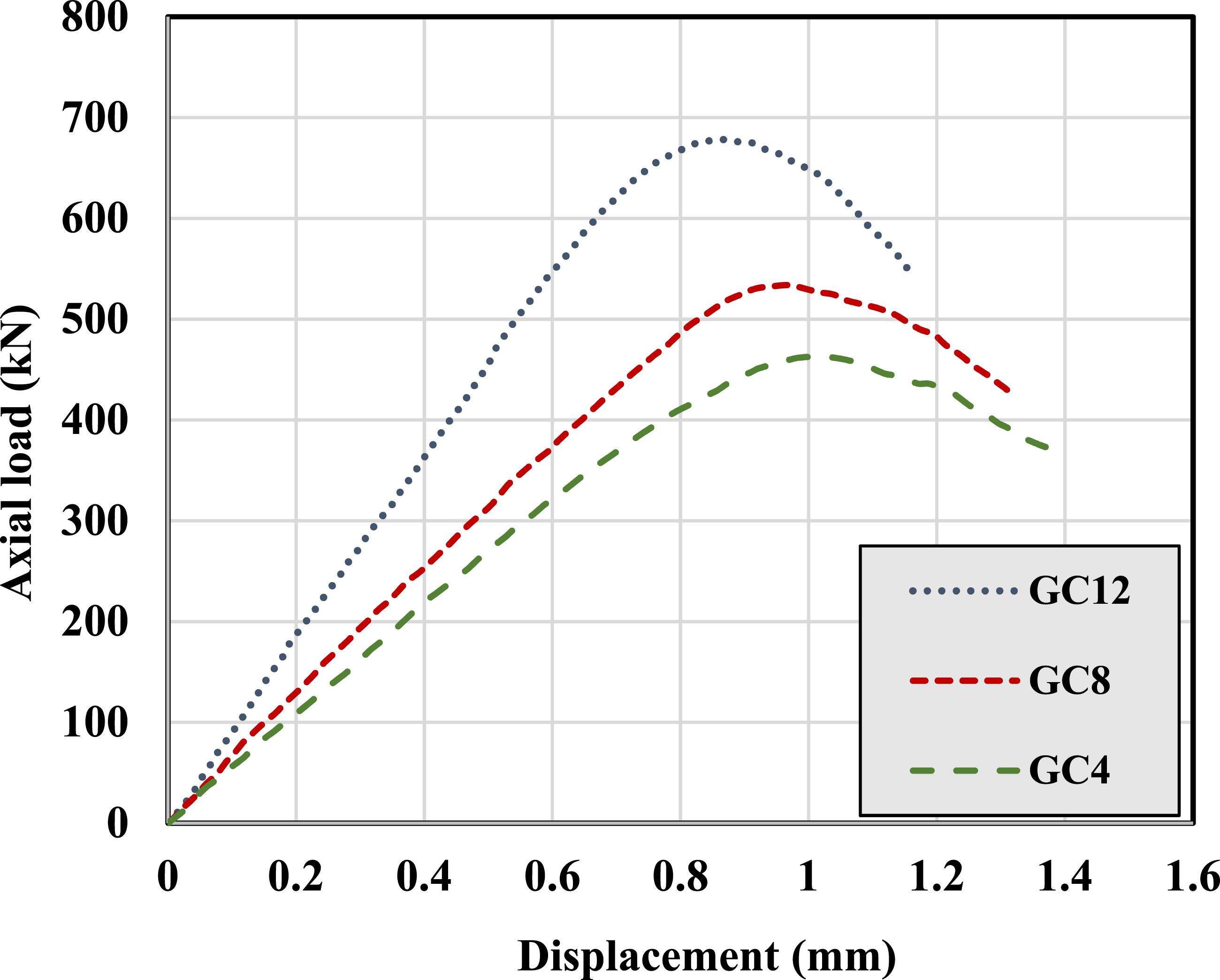
Physical appearance
As expected, all specimens with different concrete cores exhibited similar behavior under thermal exposure. In other words, variations in the strength of the geopolymer concrete had no significant effect on the appearance of the CFGP specimens. Figure 3 shows the visual alterations in the specimens following 120 minutes of thermal exposure. As anticipated, the pultruded profiles gradually darkened with rising temperatures, accompanied by other visible indicators of thermal degradation. This darkening effect is attributed to the penetration and accumulation of pyrolysis gases within surface pores, which alters the color of the resin matrix (Davies et al., 2006). Previous studies suggest that such discoloration in FRP composites is mainly due to the thermal breakdown of the polymer matrix, particularly the release of monomeric acrylic acid from the resin at elevated temperatures (Alsayed et al., 2012; Russo et al., 2015). Given the light coloration of the CFGP specimens, these changes are more apparent. Similarly, Abolfazli et al. (Abolfazli et al., 2023b), in their investigation of bare GFRP tubes under thermal exposure, reported noticeable color shifts at temperatures exceeding 60°C. Nonetheless, as illustrated in Figure 3, no significant changes were detected in the specimens up to 180°C. This behavior may result from the heat absorption and distribution capacity of the concrete core, which improves the thermal stability of the pultruded profiles (Abolfazli et al., 2023b; Bahrami and Rashid, 2023). Between 180°C and 300°C, the outer surfaces of the GFRP profiles exhibited mild darkening. Finally, in the 300°C to 350°C range, prominent visual changes were observed, along with the emission of smoke and the characteristic odor of burning epoxy resin. GFRP pultruded profiles physical appearance after exposure to different temperatures.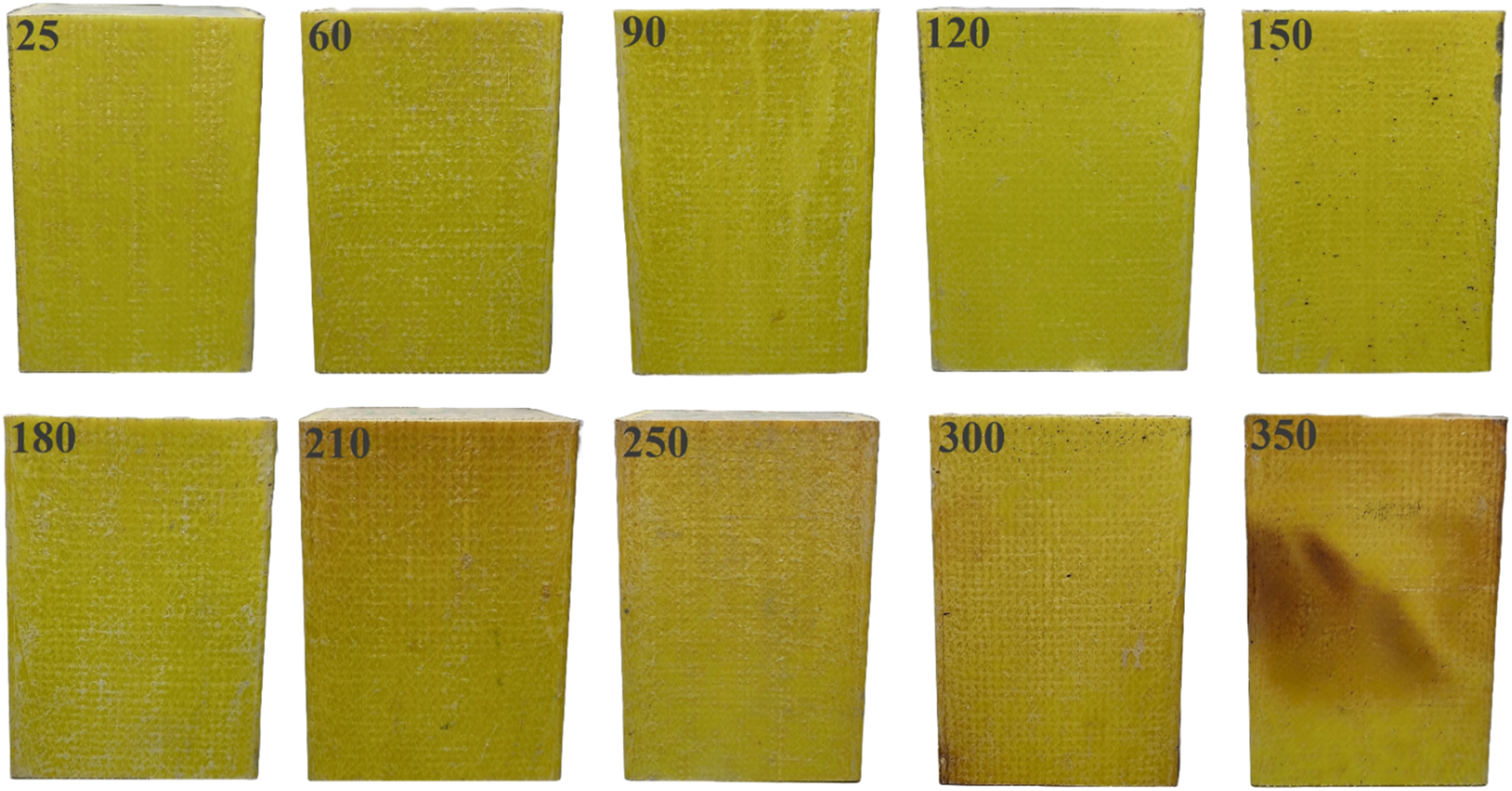
Failure modes
The failure modes identified in the specimens with varying concrete core compressive strengths displayed distinct responses under axial loading, especially when subjected to elevated temperatures. At the initial stages of loading, none of the specimens exhibited visible surface cracks or notable displacements. In CFGP specimens with lower-strength concrete cores, internal microcracking began around 60% of the estimated ultimate load, signaled by hair cracking sounds of concrete core, despite the absence of external cracks. Conversely, in high-strength concrete cores, a crispy cracking sound was heard around 80% of the estimated ultimate load, marking the initiation of failure. This behavior is attributed to the inherent characteristic of lower-strength concrete which exhibits gradual crack development and increased displacement, leading to a more uniform failure pattern. High-strength concrete typically fails in a brittle and abrupt manner, often producing audible cracking and exhibiting fewer but wider macroscopic cracks. This sudden failure can lead to a rapid loss of load-carrying capacity, which may influence the load transfer dynamics to surrounding structural elements such as FRP profiles. In contrast, lower-strength concrete generally contains more internal voids and exhibits greater deformability prior to failure, which can allow for more gradual stress redistribution and energy dissipation through microcracking and internal deformation. As a result, greater displacement and fragmentation are necessary to fully rupture the surrounding profile in these specimens (Słowik et al., 2020; Vincent and Ozbakkaloglu, 2015).
Generally, two types of failure modes were observed in the tested specimens (Figure 4 and Table 5). Failure Mode I (corner splitting illustrated in Figure 4(a)) was characterised by longitudinal cracks initiating at one or more corners and propagating vertically along the pultrusion direction. This mode, present across all temperature conditions, was associated with stress concentration inherent in square-section profiles, leading to an explosive rupture, loud noise, and a sharp post-peak load drop. Such behavior is consistent with previous studies (Lu et al., 2021; Zhang et al., 2021), which reported that square GFRP-confined columns fail due to internal concrete crushing, followed by lateral expansion and eventual fracturing of the GFRP jacket. Typical failure modes of specimens: (a) Corner crack, and (b) Sidewall crack. Summary of the experimental results.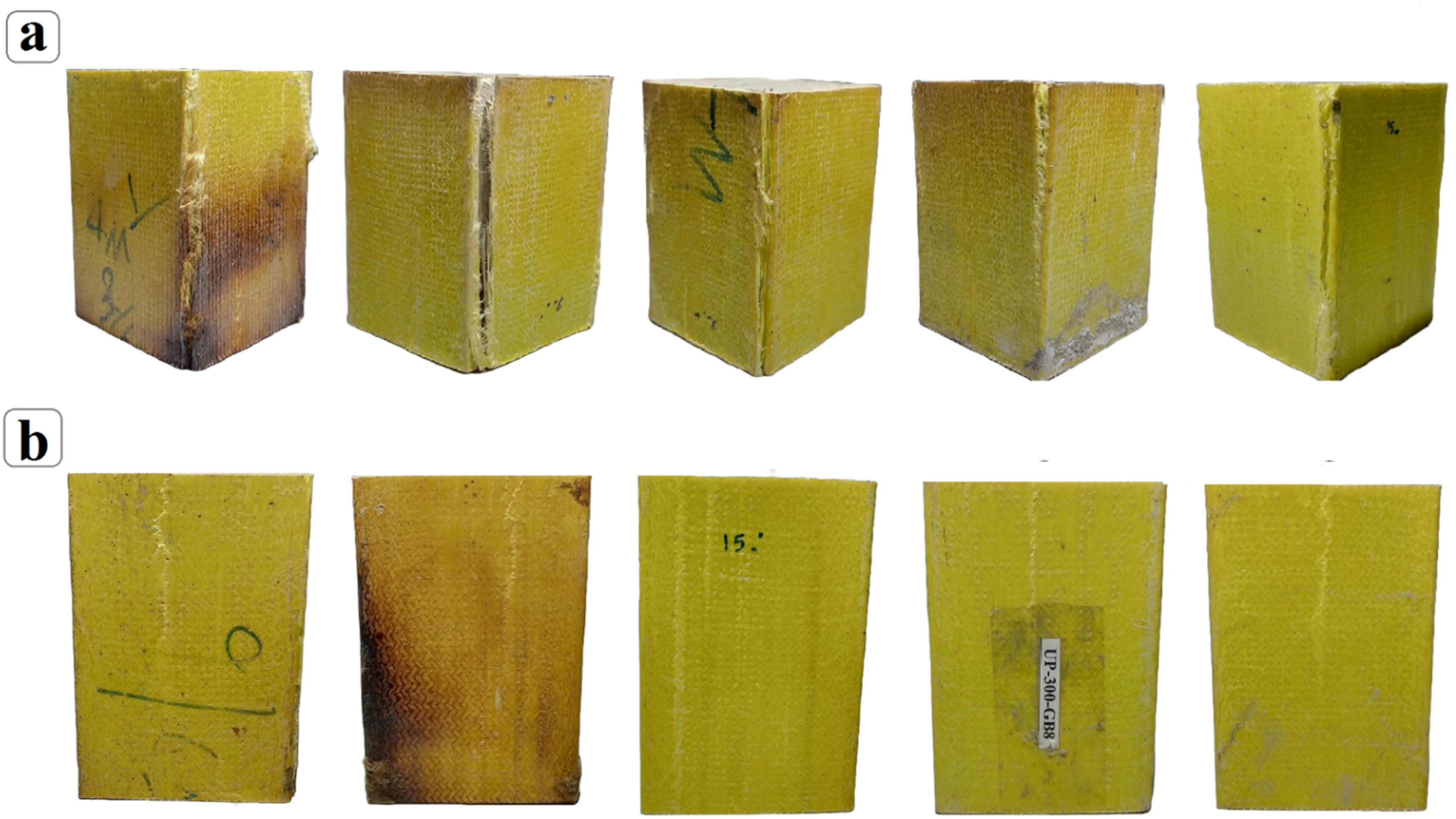
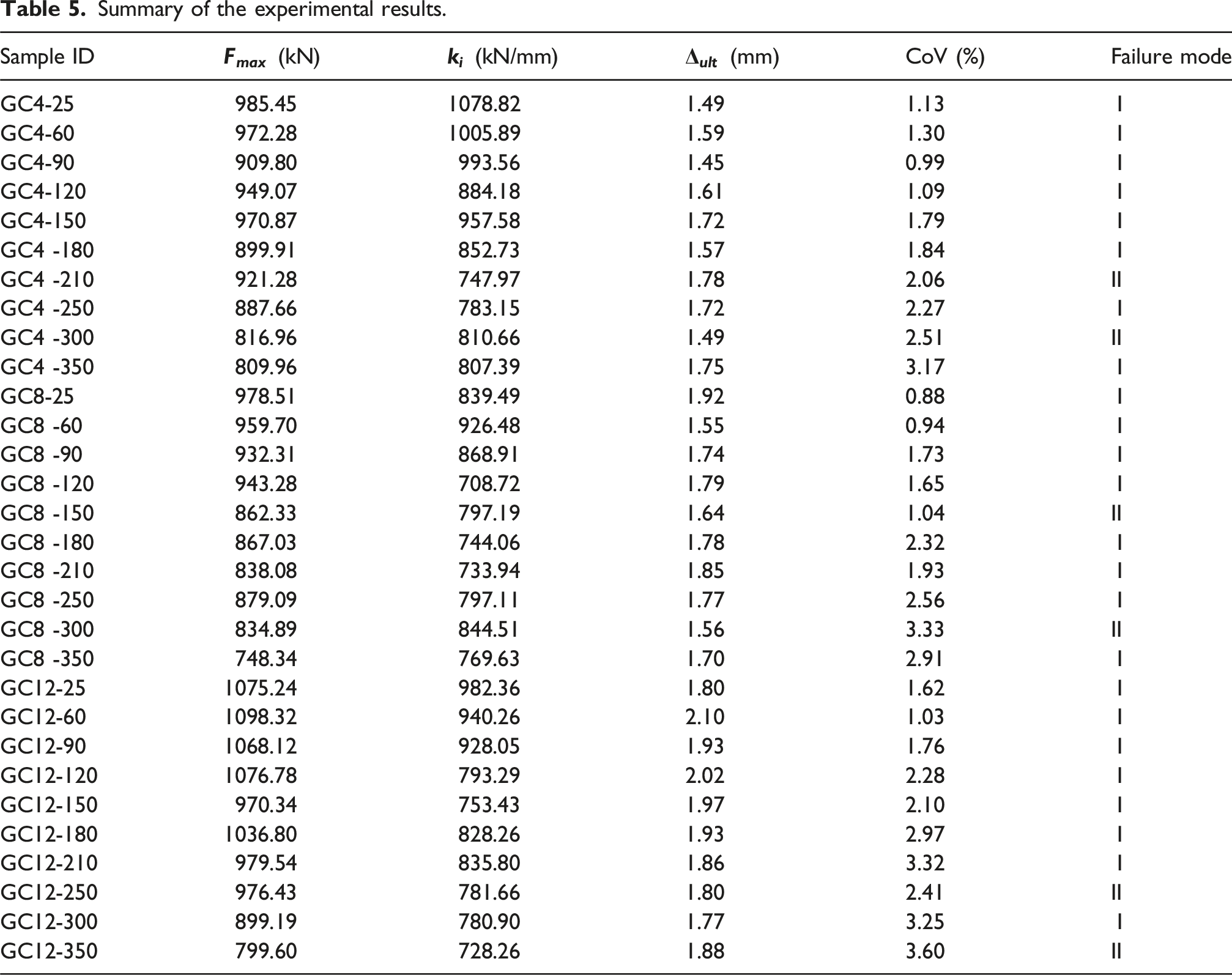
Failure Mode II (sidewall splitting shown in Figure 4(b)) involved longitudinal cracking along one of the flat surfaces, resulting in premature loss of confinement and structural integrity. This mode occurred more frequently at elevated temperatures, reflecting the degradation of the resin matrix, reduced hoop strength, and crack initiation before or near peak load. The classification adopted here was based on visual inspection of crack location and load–displacement responses, and it follows the criteria proposed in earlier studies.
Load-displacement curves
Figure 5 presents the axial load–displacement responses of tested CFGP specimens. Overall, the behavior of all specimens (Figure 5(a)) is predominantly linear up to the peak load, beyond which a sudden and steep drop occurs, indicating a brittle failure mode. No evidence of plastic deformation, such as strain softening or hardening, is observed at the point of failure. This abrupt fracture behavior aligns with the observations of Zhang et al. (Zhang et al., 2022), who reported that square CFGP lacking external wrapping exhibit no distinct elastoplastic transition. The absence of a plastic plateau in the curves further confirms a brittle failure mechanism, governed primarily by internal concrete crushing and a rapid loss of confinement effectiveness. Additionally, the low axial strain capacity and limited energy absorption reflected in the curves support this brittle failure characterization. Load-displacement curves of CFGP specimen filled with GC4, GC8, and GC12 geopolymer concrete.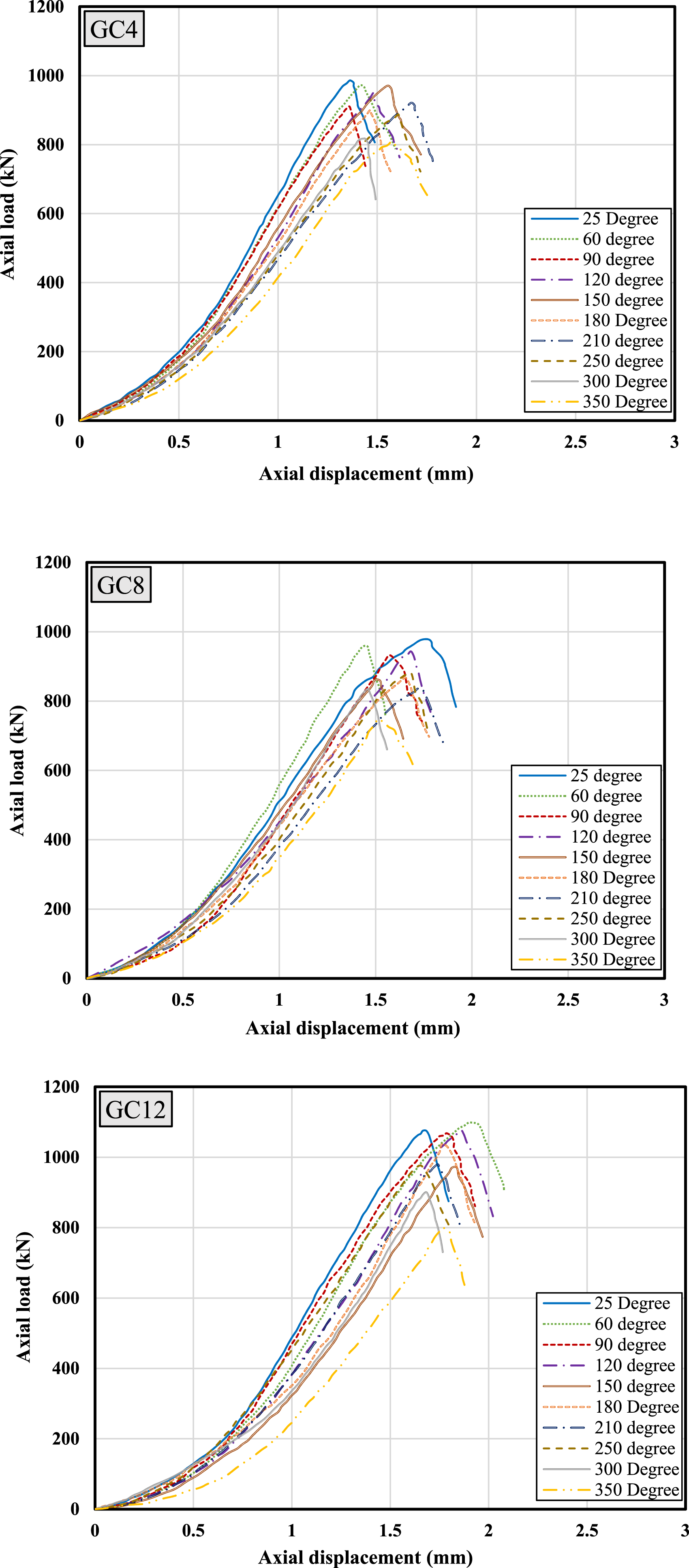
Moreover, across all three groups, the initial portion of the load–displacement curves exhibits a relatively gentle slope, indicative of low initial stiffness. As the loading continues, the slope gradually increases, signaling the progressive activation of the confinement mechanism. In the early stages, the GFRP tube offers limited resistance to the lateral strain of the concrete core. However, with increasing lateral strain, the confinement becomes more engaged, leading to a noticeable improvement in the specimen’s overall stiffness. This staged confinement effect is most prominent in the GC4 specimens, followed by GC8 and GC12, respectively. This trend correlates with the greater axial displacement capacity of the lower-strength concrete, as illustrated in Figure 5.
A key observation at the peak points of the axial load–displacement curves is the influence of the concrete core strength on the ultimate load capacity of the CFGP specimens. It is evident that increasing the core compressive strength does not significantly enhance the ultimate load, suggesting limited efficiency of the GFRP profiles when used with higher-strength cores. Furthermore, comparison across the three concrete strength levels reveals that the GC4 specimens, incorporating lower-strength cores, experience less axial displacement than the GC12 specimens with higher-strength cores. This behavior can be attributed to greater lateral expansion in the GC4 specimens during the early loading stages, which in turn triggers earlier activation of the GFRP confinement. In contrast, the higher-strength cores delay this activation, allowing the GFRP to sustain more axial displacement until failure initiates, often at the corners of CFGP, due to stress concentration.
Another factor potentially influencing the confinement efficiency is the shrinkage behavior of concrete cores with varying strengths. Although previous research has highlighted that geopolymer concretes exhibit greater shrinkage compared to ordinary Portland cement (OPC) concretes, the impact of varying activator molarity on shrinkage has been reported as minimal.
Temperature also influenced the load–displacement behavior across all three groups. Specimens subjected to elevated temperatures (such as 300°C and 350°C) exhibited noticeable reductions in both peak load and axial displacement, signifying deterioration in the confinement effectiveness of the GFRP profile and the structural integrity of the concrete core. With increasing temperature, the load–displacement curves shifted downward and displayed steeper slopes beyond the peak, indicating a transition toward a more brittle failure mode.
Effects of test parameters on ultimate bearing capacity
The degradation of CFGP specimens under thermal exposure is governed by the interaction of three key parameters: confinement effectiveness, core concrete strength, and exposure temperature. Table 5 summarizes the ultimate displacement ( Ultimate compressive load bearing capacity.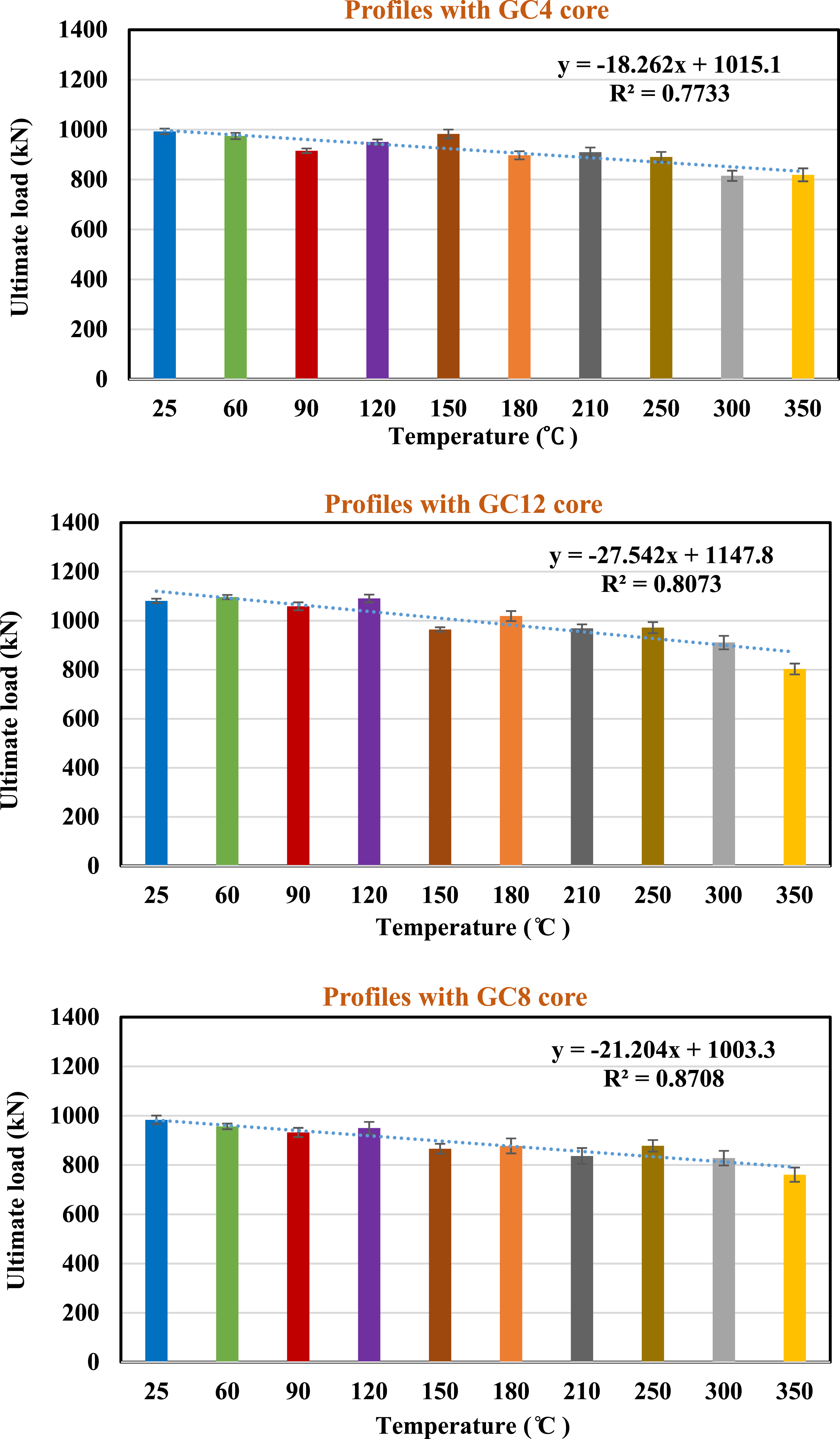
The degradation mechanism governed by GFRP confinement, concrete strength and exposure temperature. The thermal response of CFGP columns emerges from how quickly the concrete core demands lateral restraint, how much restraint the GFRP tube can still deliver after heating, and where the exposure sits relative to matrix transition and decomposition regimes. Lower-strength cores dilate earlier under load, engaging the tube’s hoop action more readily at ambient conditions; as temperature rises, matrix softening and interface degradation progressively delay and weaken that engagement, narrowing the performance gap between core grades. Consistent with the observed evolution of failure, from corner-initiated splitting toward more frequent side-wall cracking at higher temperatures, the tube’s hoop restraint becomes less effective once the matrix passes its transition region and interfacial damage accumulates. The statistical analysis (section Analysis of variance) corroborates this mechanism by identifying temperature as the principal driver of capacity loss, with core strength and their interaction also significant, indicating that thermal deterioration is neither purely material- nor purely core-controlled but a coupled process. Practically, this means thermal resilience depends on aligning core strength (and its lateral dilation characteristics) with the available hoop stiffness and bond integrity of the jacket over the expected temperature range, and on mitigating details that concentrate hoop demand (e.g., sharp corners) when exposure to elevated temperatures is plausible.
For example, while GC12-25 exhibited the highest load capacity (1075.24 kN), its corresponding specimen at 350°C (GC12-350) retained only 799.60 kN, representing a retention of 74.37% compared to its reference. In contrast, the GC4 group showed a more stable response, with GC4-350 retaining 82.48% of its 25°C counterpart. These results suggest that high-strength concrete (GC12) was more sensitive to thermal degradation than low-strength concrete (GC4), despite its initially superior performance. This finding aligns with previous studies that have examined the influence of core concrete strength on the performance of GFRP-confined profiles (Aydın, 2016; Bian et al., 2024). Compared with conventional OPC concrete, which typically retains less than 60% of its compressive strength at 350°C (Kong and Sanjayan, 2010; Mollakhalili et al., 2024; Özbayrak et al., 2023), the GPC-filled GFRP specimens in this study exhibited significantly higher residual strength (74%–82%). This superior performance is attributed to the denser microstructure, lower thermal conductivity, and absence of calcium hydroxide in GPC, which reduces microcracking and mass loss under heat exposure. Therefore, the use of GPC cores provides an advantageous bearing performance in CFGP systems, particularly in fire-prone environments.
Effect of lateral expansion during loading can be explained through the confinement interaction and microstructural characteristics of geopolymer concrete. In low-strength concrete, the higher Poisson’s ratio and greater deformability lead to increased lateral expansion under axial load, which activates the GFRP confinement more effectively. As a result, low-strength mixes benefit more from the external confinement provided by the GFRP profile. Conversely, in high-strength concrete, the lower lateral strain development delays the mobilisation of confinement, reducing its effectiveness and making the composite system more susceptible to sudden strength loss at elevated temperatures. The relationship between hoop and axial strains, governed by Poisson’s ratio, is described by
The role of confinement effectiveness was further highlighted by examining the rate of strength degradation. Linear regression lines were fitted to the strength-temperature data for each group in Figure 6, yielding degradation slopes of −18.26, −21.20, and −27.54 for GC4, GC8, and GC12, respectively. The steeper decline in the GC12 group confirms its higher sensitivity to thermal exposure. This is likely attributed to its denser microstructure, which limits internal pore space and restricts vapour escape. When heated, the increased internal vapour pressure leads to microcracking and, in some cases, spalling, as observed during testing. In contrast, the higher porosity and more compliant matrix of the GC4 mix allow for gradual vapour dissipation, reducing thermal-induced damage. A comparison among all specimens with different concrete cores is briefly illustrated and summarized in Figure 7. Figure 7 synthesises the temperature–strength interaction by plotting the decline in ultimate axial load with increasing temperature for GC4, GC8 and GC12. The significantly steeper degradation slope for GC12 (high-strength core) relative to GC4 (low-strength core) indicates that higher initial capacity comes with greater thermal vulnerability. For example, GC12 retains 74.4% of its 25°C capacity at 350°C, whereas GC4 retains 82.5%. Consistent with the fitted trends (GC4, −18.26; GC8, −21.20; GC12, −27.54 kN per temperature step), this pattern aligns with the two-way analysis of variance (see section Analysis of Variance), where temperature is the dominant factor and the temperature × strength interaction remains significant (contributing 8.1% of variance). These results show that confinement effectiveness degrades more rapidly as core strength increases, confirming the need to consider core grade when specifying CFGP elements for thermally demanding environments. Axial load degradation of specimens with varying concrete cores.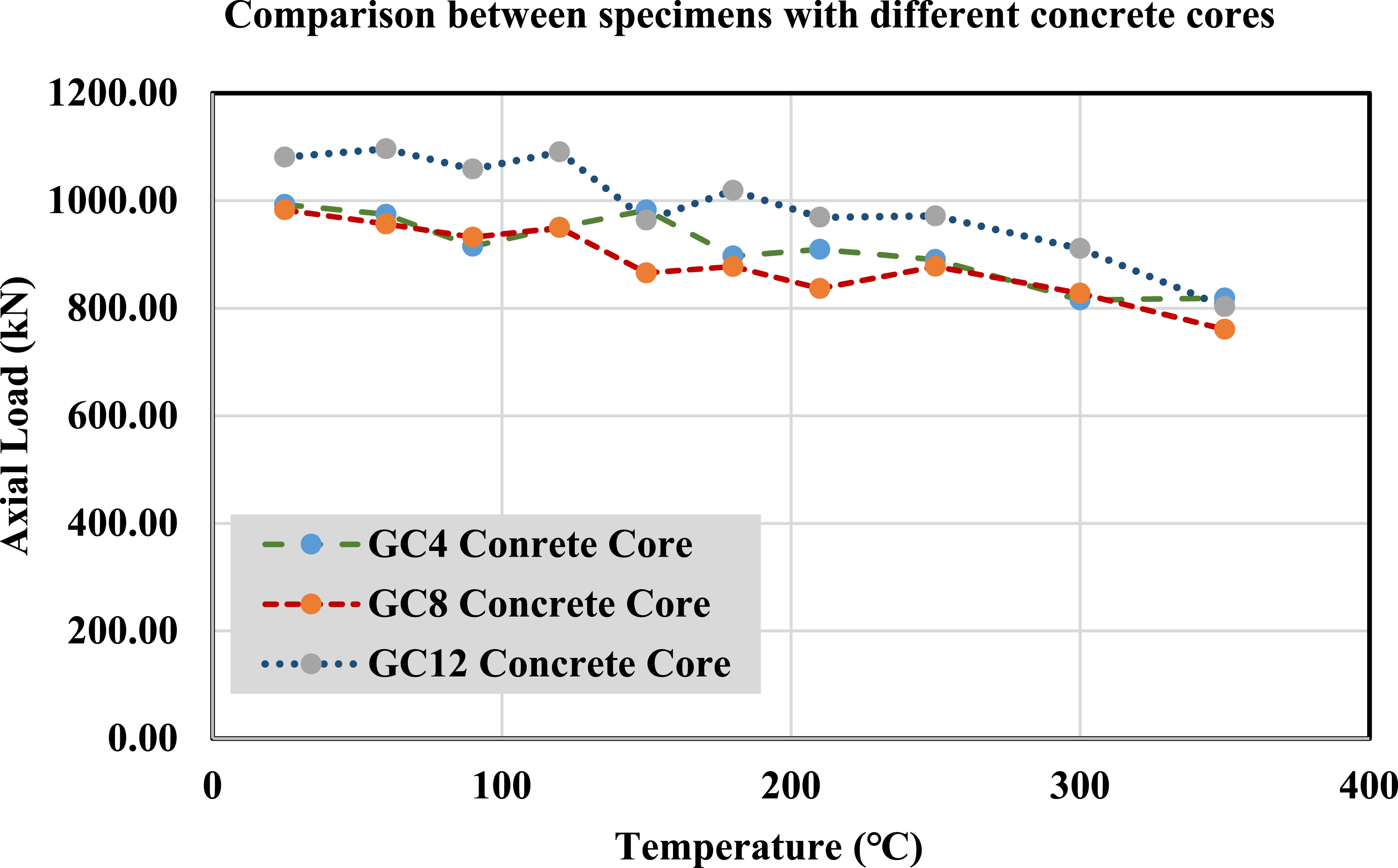
The efficiency of GFRP profiles in enhancing the compressive strength of the concrete core depends on various factors, including the type of concrete (particularly its compressive strength and shrinkage characteristics), whether the core is reinforced, the thickness and type of the profile, and several other parameters (Ali et al., 2019; Aydın, 2016; Bian et al., 2024; Ozbakkaloglu, 2013). Investigating the influence of these factors on the post-fire exposure of CFGP systems is recommended for future research.
It is worth mentioning that the coefficient of variation (CoV) values presented in Table 5 support the reliability of the experimental results. Although slightly higher CoV values were observed at elevated temperatures reaching up to 3.60% for GC12-350, this can likely be attributed to increased material degradation or localized thermal effects. Nevertheless, most specimens demonstrated low variability, indicating consistent behavior across repeated tests.
Effects of test parameters on initial stiffness
The initial stiffness values (kᵢ), as summarized in Table 5 and reflected in the early linear portions of the load–displacement curves shown in Figure 5, vary distinctly across the three concrete grades (GC4, GC8, and GC12) and demonstrate clear trends with increasing exposure temperature. In general, the initial stiffness decreased progressively with temperature for all profiles, which is primarily attributed to the thermal degradation of both the matrix and resin-fiber interface of the composite tube, leading to a reduced effectiveness of confinement.
A comparison of the initial stiffness (
As shown in Figure 5, with increasing temperature, the initial stiffness declined across all groups. This is visibly evident in the flattened initial slopes of the load–displacement curves at higher temperatures, such as 250°C and above. The reduction in stiffness is attributed to the softening and degradation of the resin and partial damage to the fiber–resin interface, which diminishes the tube’s capacity to restrain lateral expansion and thus provide confinement. In the GC4 group, while the peak load remained relatively high at intermediate temperatures (90 °C–150°C), the initial stiffness showed a consistent downward trend, likely due to shrinkage-related effects and resin softening. For GC8 and GC12, stiffness degradation was more significant at elevated temperatures, suggesting that higher-strength concrete may rely more heavily on the integrity of the composite confinement system, which deteriorates more noticeably under thermal exposure.
Moreover, visual inspection of the curves reveals a longer elastic region in the GC12-25 profile compared to GC4 and GC8, corresponding to a delayed onset of nonlinearity. This may reflect the higher modulus of the GC12 mix, but also the more gradual mobilisation of confinement pressure due to its stiffer core. At temperatures above 250°C, however, all profiles displayed a considerable reduction in stiffness and peak load, indicating the onset of substantial thermal damage in the composite shell and potential microcracking or stiffness loss in the concrete core.
These results collectively show the complex interplay between confinement effectiveness, concrete core characteristics, and temperature exposure. Notably, the greatest relative benefit of confinement appears in low-strength concrete (GC4), whereas the high-strength concrete (GC12) benefits less, especially as temperature increases. This suggests that material selection and design strategies for confined columns in fire-prone environments should be tailored to the core concrete grade and expected thermal exposure.
Scanning Electron Microscopy (SEM)
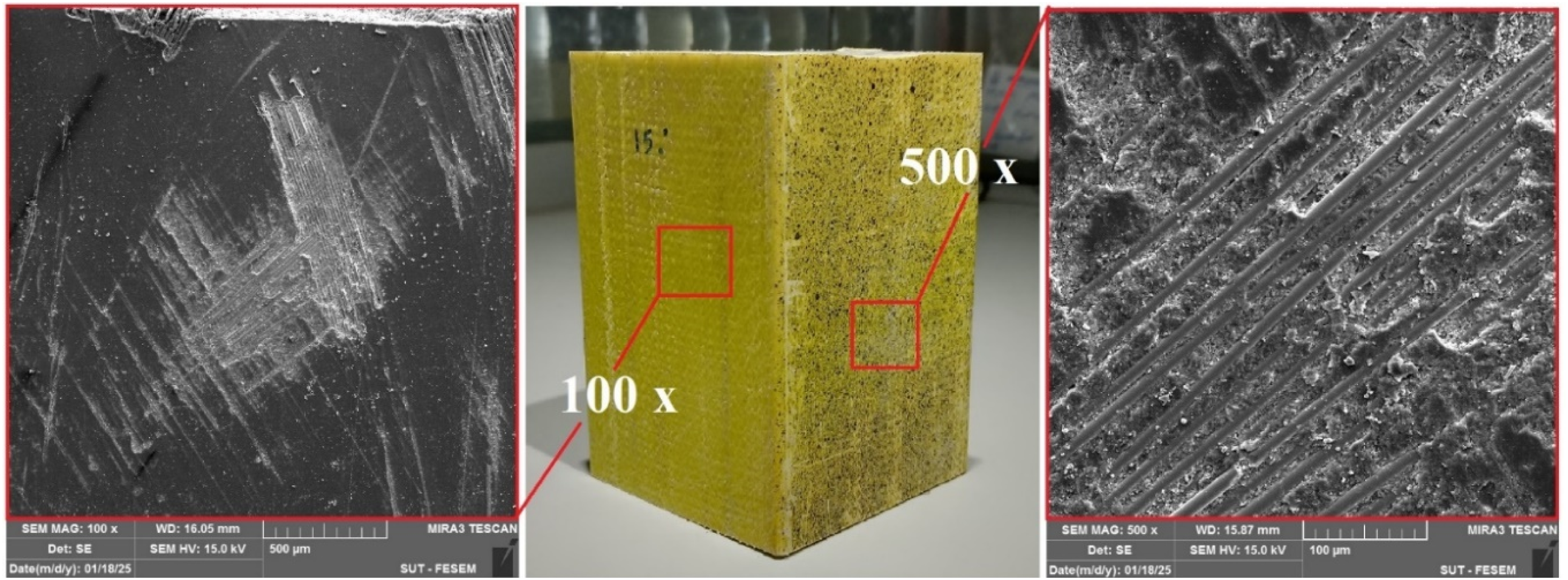
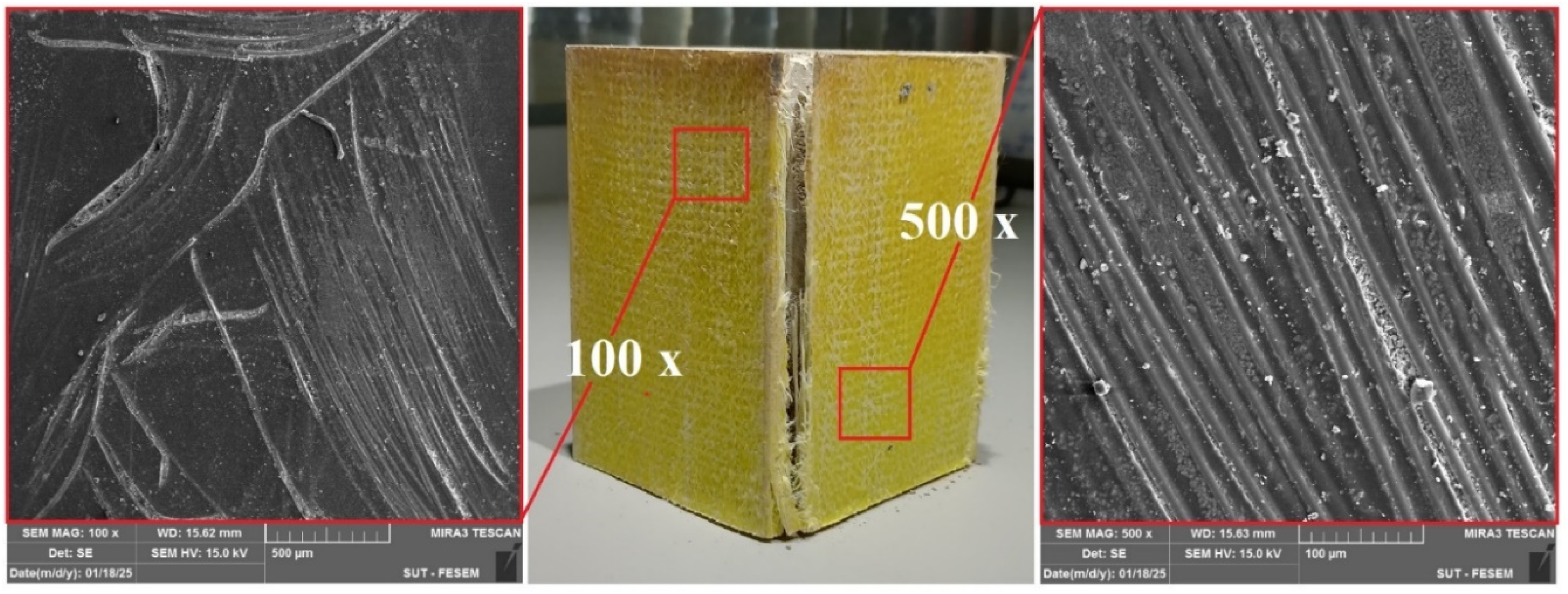
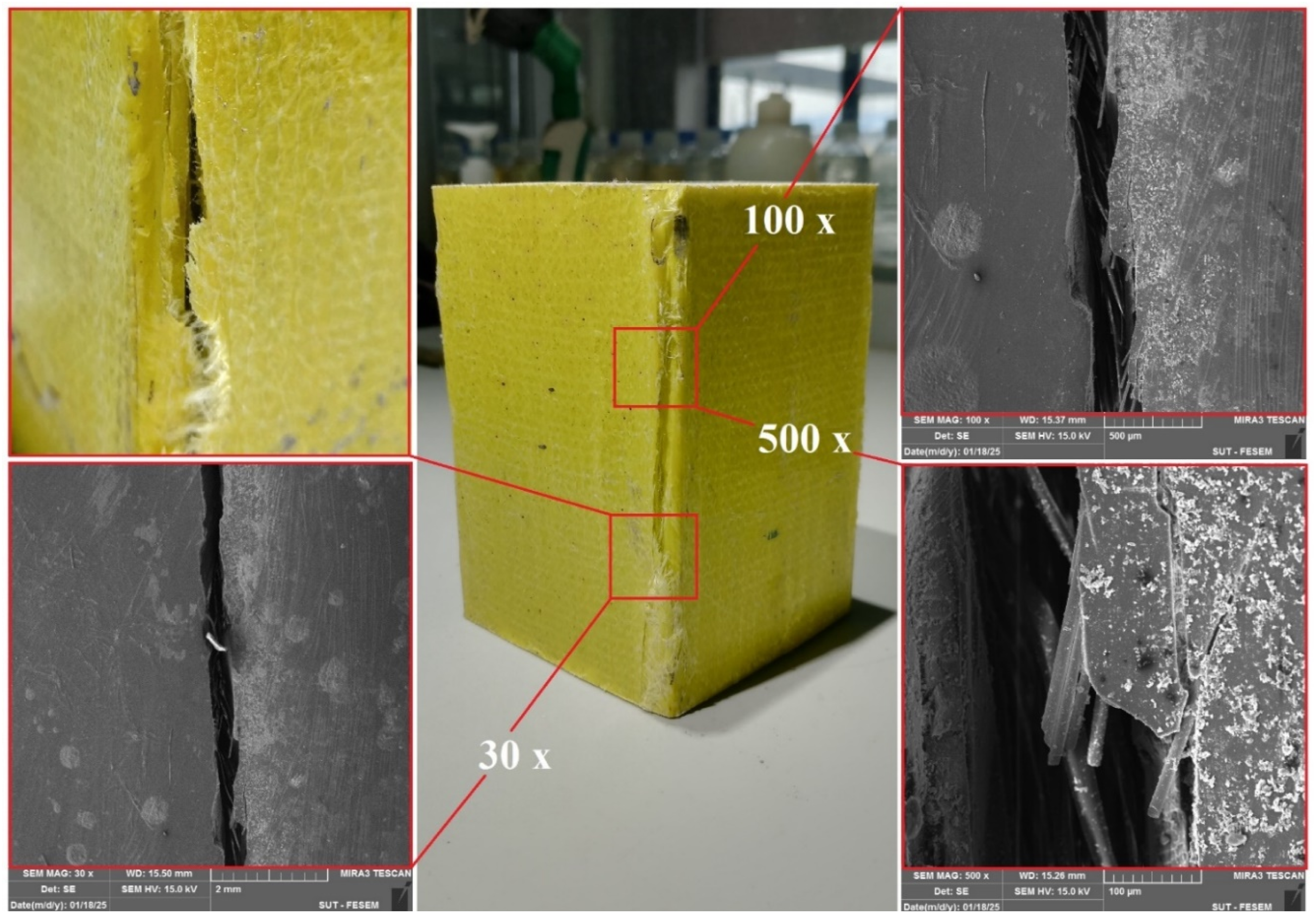
SEM examinations (Figures 8–13) were performed on pultruded GFRP fragments recovered after compressive testing at 25°C, 150°C and 350°C, with the goal of interpreting degradation in terms of three coupled parameters: (i) GFRP confinement effectiveness (hoop stiffness and fiber–matrix bond integrity), (ii) concrete core strength and associated lateral dilatancy, and (iii) exposure temperature relative to the resin’s glass-transition and decomposition regimes. Micrographs of GFRP pultrusion at 25°C, captured at 100x and 500x magnification. Micrographs of GFRP pultrusion at 150°C, captured at 100x and 500x magnification. Micrographs of GFRP pultrusion at 350°C, captured at 100x and 500x magnification. Micrographs of GFRP pultrusion corner crack, captured at 30x, 100x, and 500x magnification. Micrographs of GFRP pultrusion sidewall crack, captured at 30x, 100x, and 500x magnification. Micrographs of GFRP pultrusion edge crushing under compressive strength, captured at 30x, 100x, and 500x magnification.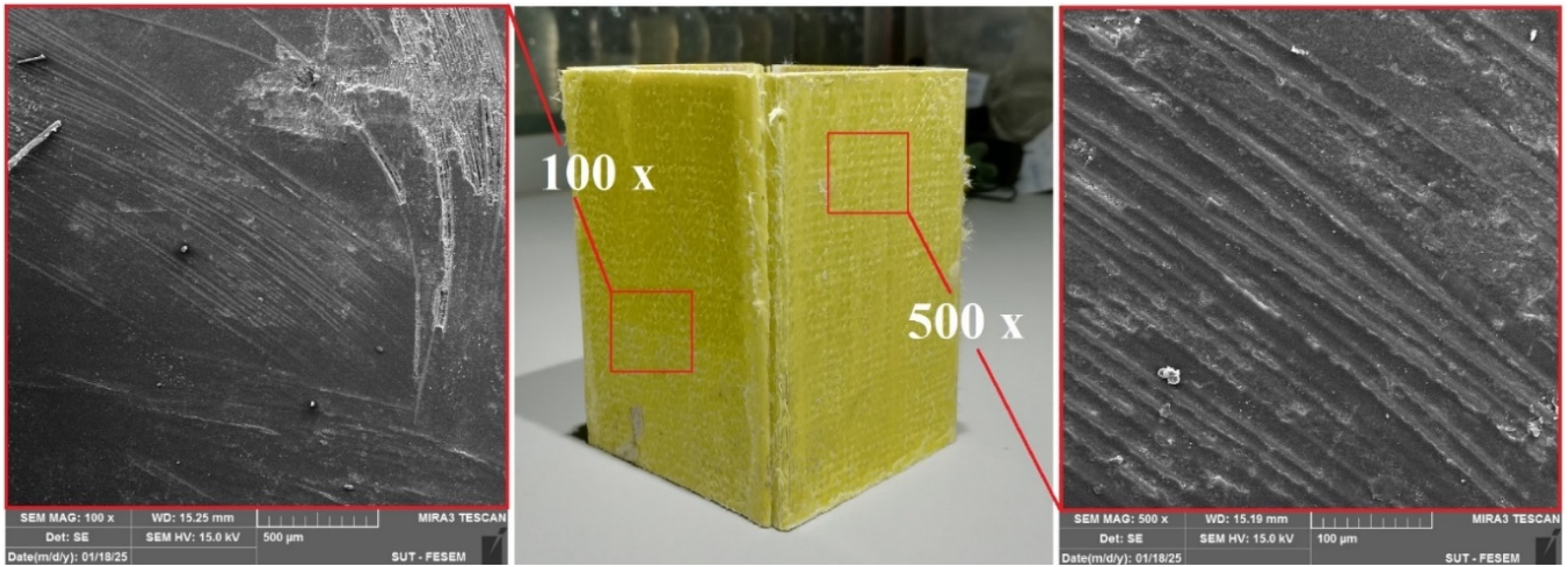
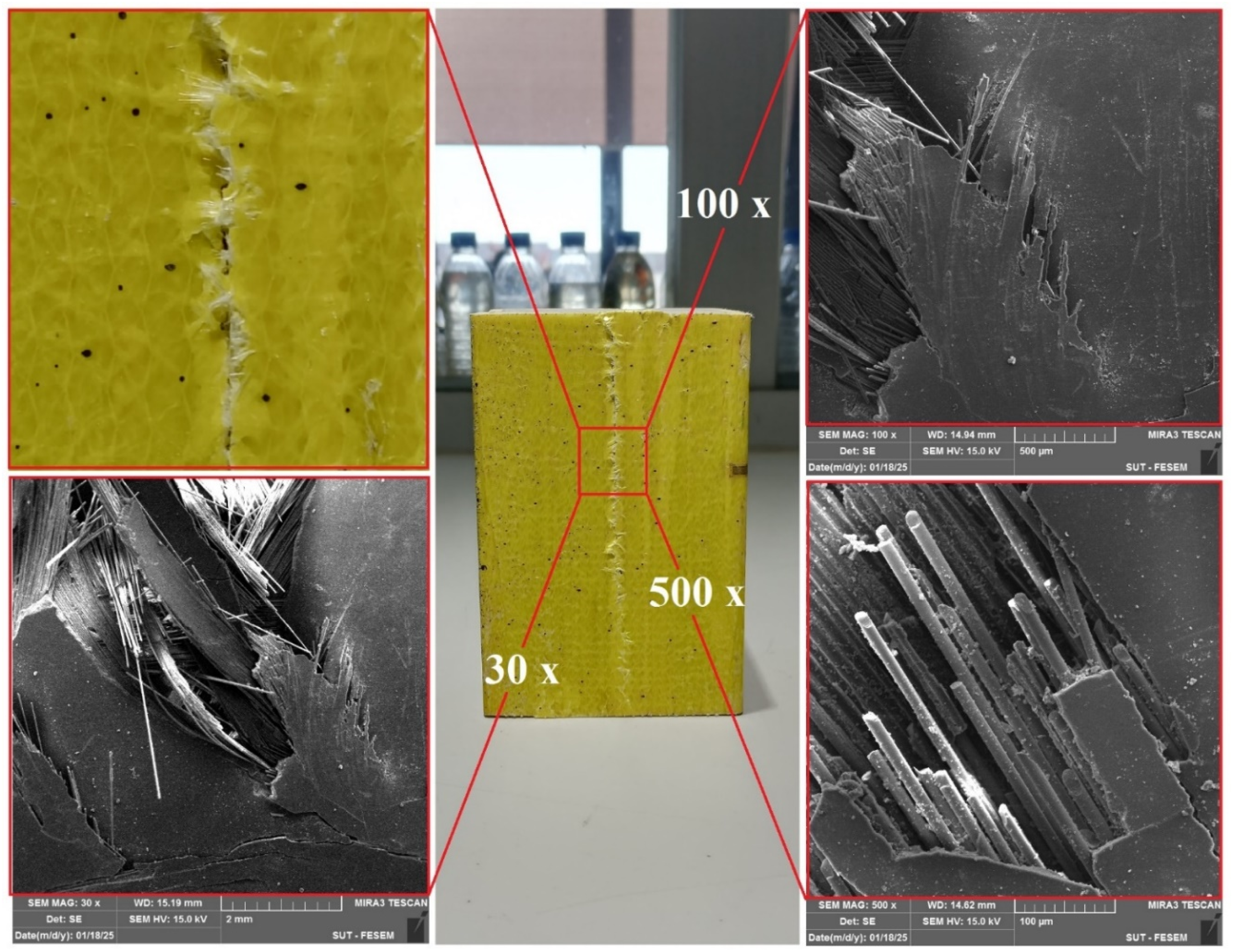
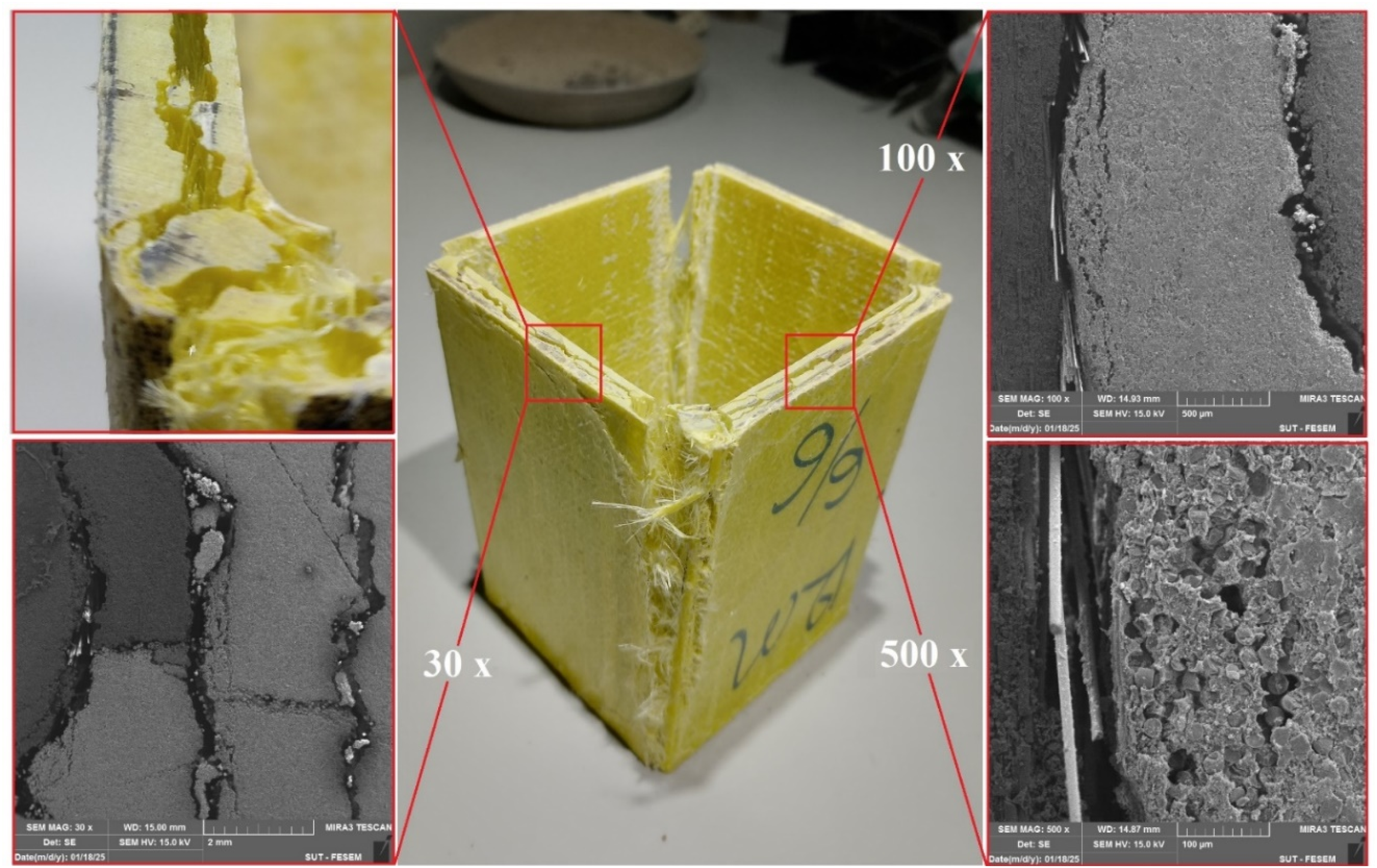
The SEM observations were analysed qualitatively to identify microstructural degradation mechanisms, such as resin softening, cracking, fiber–matrix debonding, and delamination. While this approach provides valuable visual confirmation of the progressive damage mechanisms inferred from the mechanical tests, it does not quantify the extent of matrix degradation. Future work employing quantitative image-processing techniques (e.g., crack density measurement, porosity estimation, or resin–fiber interface damage ratio) is recommended to provide numerical indices of degradation severity.
Fragments were taken from representative corner and mid-span side-wall regions to capture stress-concentrating and nominally uniform fields. Because these observations are post-mortem, some cracking features may be loading-assisted; however, their systematic evolution with temperature and core strength supports the mechanistic interpretations below.
At 25°C (Figure 8), surfaces appear largely undisturbed at low magnification (100×), with only minor cutting/handling marks. At higher magnification (500×), the fiber–resin interface is tight and continuous, with good wet-out of the glass filaments and no observable interfacial voids or microcracks. Matrix topography is smooth and shows a dense microstructure with intact fiber imprints. This intact interphase is consistent with efficient interfacial shear transfer and, macroscopically, with higher initial stiffness and strong confinement action at ambient conditions. In lower-strength cores, earlier lateral dilatancy mobilises hoop tension sooner, so the intact interface observed here is particularly consequential for translating jacket stiffness into column-scale stiffness and strength.
At 150°C (post-T g region; Figure 9), the matrix exhibits clear roughening and localised micro-tearing, while fiber alignment remains largely preserved. Interfacial regions show the first signs of partial debonding with thin separation gaps at the fiber perimeter and occasional shear-lag steps in the matrix adjacent to fibers, indicating a reduction in interfacial shear capacity rather than wholesale fiber damage. These features align with the measured reduction in the initial slope of the load–displacement curves and the delay in confinement mobilization: once the matrix has passed its transition, viscoelastic softening and interphase weakening cause the resin-dominated hoop load path to slip more readily, requiring greater lateral strain before the jacket contributes effectively. The effect is most visible in low- and medium-strength cores, where confinement ordinarily engages early; at post-T g temperatures the onset of effective hoop action shifts to larger deformations and contributes less to stabilizing the post-peak response.
By 350°C (Figure 10), the matrix shows local charring, pervasive microcracking and clear fiber–matrix debonding. Crack networks originate preferentially at corners, where stress concentrations and thermal gradients are greatest, and propagate along fiber directions within the plies. Along the flat sidewalls, longitudinal splitting bands are common, accompanied by inter-fiber delamination and zones of fiber crushing at the edges under compressive load. The net result is a heavily degraded hoop path: interfacial separation and ply-level delamination segment the load-carrying ring, while charred and micro-cracked resin offers little shear transfer. These microstructural changes are consistent with the loss of hoop stiffness, downward-shifted load–displacement curves and brittle corner/side-wall splitting failures recorded at high temperature.
The SEM evidence also clarifies the interaction between temperature and core concrete strength. Confinement effectiveness depends on two oppositional tendencies: the core’s tendency to dilate laterally (which demands hoop restraint) and the GFRP’s capacity to supply that restraint through an intact matrix/interphase. Lower-strength mixes exhibit larger lateral strains at a given axial stress; at 25°C this promotes early engagement of an intact hoop path, which explains their relatively larger stiffness and strength gains from confinement. As temperature rises into and beyond the matrix transition region, SEM reveals interfacial slip and then debonding/delamination that progressively diminish the jacket’s capacity to respond to that demand. Higher-strength mixes, although initially stronger, develop lower lateral strains (delaying mobilization) yet operate at higher internal pore pressures during heating; the combined effect is fewer opportunities for effective hoop transfer and a higher propensity for brittle splitting once the interface is compromised. Differential thermal expansion between glass fibers and resin, together with cooling-induced shrinkage after the two-hour soak, likely intensifies interfacial tensile stresses, an effect echoed by the increased prevalence of fiber-perimeter separation and ply-edge delamination in the 350°C fragments.
Failure morphologies observed in SEM provide a microstructural origin for the macroscopic modes catalogued during testing. Corner-initiated cracks (Figure 11) coincide with resin microcrack clusters and abrupt fiber–matrix separation at ply terminations, while side-wall splits (Figure 12) align with inter-fiber delamination planes and longitudinal fiber rows where the matrix has lost continuity. Edge crushing and delamination near profile borders (Figure 13) rationalize the drop in residual capacity once exposures reach 250 °C–350°C. The micrographs support a temperature-ordered sequence, T g -level softening leading to interfacial slip; progressive debonding and ply-level delamination as temperature increases; and, at the highest exposures, char-facilitated fragmentation of the hoop load path, culminating in the collapse of effective confinement.
Finally, the SEM–mechanics linkage suggests practical levers for mitigating thermal degradation in confined systems. Reducing geometric stress raisers (e.g., sharper corners) and increasing through-thickness restraint at ply edges would directly address the locations where debonding initiates. Matrix and sizing chemistries with higher transition temperatures and tougher interphases would increase the temperature window over which reliable hoop shear transfer is maintained. Although quantitative image metrics are beyond the present scope, the observed features lend themselves to crack-density and debond-length fraction measurements, interlaminar separation ratios at ply interfaces, and texture-based char-area quantification. Coupling such metrics with in-situ methods (e.g., digital image correlation or acoustic emission) would enable a direct, specimen-specific mapping between microstructural damage accrual and the evolving stiffness, confinement effectiveness and ultimate load under elevated-temperature exposure.
Analysis of variance
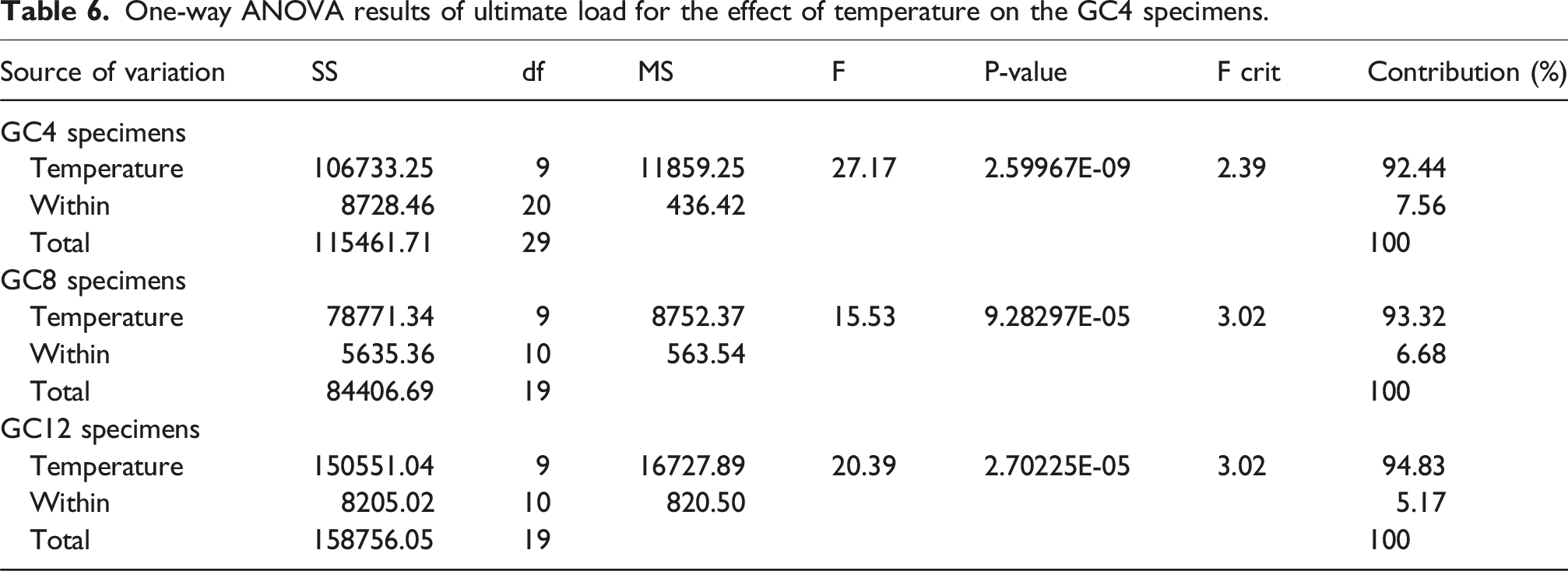
To robustly evaluate the influence of temperature and concrete core compressive strength on the mechanical performance of geopolymer concrete-filled GFRP pultruded profiles, a detailed analysis of variance (ANOVA) was conducted. ANOVA is particularly effective for determining both the individual and interactive effects of categorical variables on a continuous outcome, in this case, the ultimate load-bearing capacity and residual compressive strength following thermal exposure. Prior to performing ANOVA, statistical assumptions were verified usig Shapiro–Wilk test, which confirmed that the data within each group followed a normal distribution (W = 0.781–1.000, p = 0.07–0.96),while Levene’s test indicated no significant differences in variances among the groups (F = 0.279, p = 0.9998). These results validated the applicability of ANOVA to the present dataset.
One-way ANOVA results of ultimate load for the effect of temperature on the GC4 specimens.
Two-way ANOVA results of compressive strength retention for the effect of temperature and the core compressive strength on samples with GC4, GC8, and GC12 concretes.
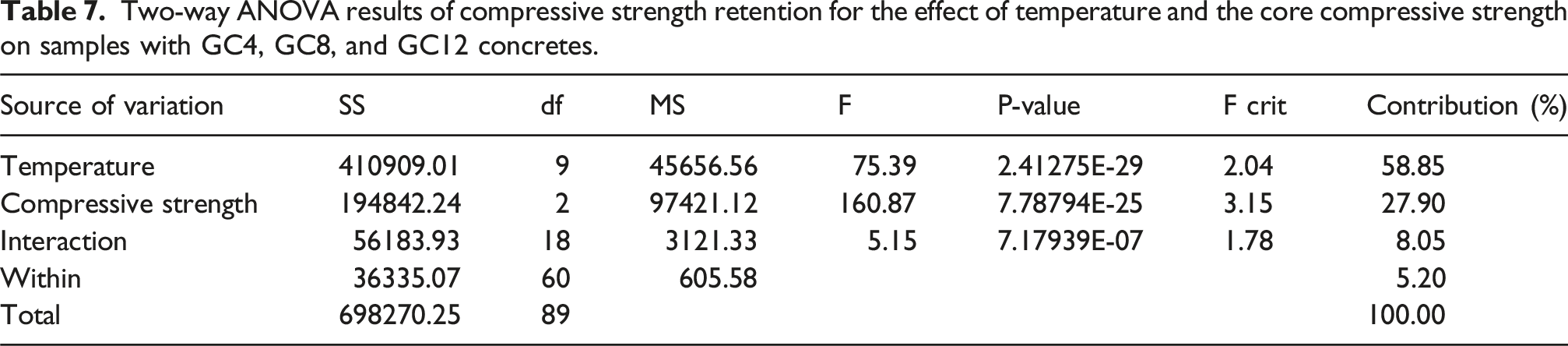
Notably, the interaction between temperature and core compressive strength was statistically significant as well, with an F-value of 5.15 and a p-value of 7.18 × 10⁻⁷. This interaction contributed 8.05% to the overall variance, suggesting that the impact of temperature on compressive strength retention is not uniform across different concrete core strengths. In practical terms, this means that increasing the core compressive strength alters the material’s response to elevated temperatures, potentially moderating thermal degradation effects. The remaining 5.20% of variability was attributed to within-group error, further validating the consistency and robustness of the experimental data.
These results generally confirm the critical role of temperature as the primary driver of mechanical degradation in thermally exposed composite systems, while also highlighting the significant mitigating role of core compressive strength. The significant interaction effect further points to the potential for optimising thermal resilience through tailored combinations of material strength and protective strategies.
The study provides a valuable basis for developing design approaches that enhance the thermal performance of FRP-confined concrete systems, particularly in applications where structural integrity must be preserved under fire or high-temperature conditions.
Conclusions
This study experimentally evaluated the residual compressive behavior of square geopolymer concrete–filled pultruded GFRP columns under elevated temperature. 90 specimens were fabricated with three core strength levels and subjected to two-hour furnace exposures from 25 to 350°C. After 24 h cooling, displacement-controlled axial tests quantified initial stiffness, peak load, strength retention, and failure modes. Microstructural damage and crack paths were examined by SEM on fragments taken at 25, 150, and 350°C. A two-way ANOVA assessed the main and interaction effects of temperature and core strength on capacity and stiffness, enabling a mechanistic interpretation that links matrix/interphase degradation to changes in confinement efficacy. The principal findings are summarized below: 1. Temperature is the primary driver of residual capacity: 58.9% of the variance is explained by temperature, 27.9% by concrete strength, with a 8.1% interaction effect. 2. At room temperature, confinement benefits are largest for lower-strength cores: initial stiffness increased by about 112% (GC4), 54% (GC8), and 6% (GC12); confinement also boosted core strength more in GC4 than GC12. 3. With heating, all groups lose capacity, but higher-strength cores degrade faster: at 350°C, GC4 retained 82.5% of its 25°C capacity, versus 74.4% for GC12; degradation slopes were roughly −18.3, −21.2, and −27.5 kN/°C for GC4, GC8, and GC12. 4. Failure remains predominantly brittle and shifts with temperature: corner splitting is common at all temperatures, with side-wall splitting more frequent at higher temperatures; post-peak softening steepens as temperature rises, and test variability stayed low. 5. Thermal appearance thresholds are clear: no significant visible change up to 180°C, mild darkening from 180 °C to 300°C, and pronounced changes with smoke/odor by 300 °C–350°C; the concrete core delays visible effects but does not prevent strength loss.
The outcomes of this research provide practical insights for the structural application of geopolymer concrete-filled GFRP (CFGP) columns as durable and fire-resistant alternatives to conventional steel-tube systems. Unlike previous studies that primarily examined OPC-based concrete-filled GFRP profiles, this study uniquely explores the thermal–mechanical interaction of geopolymer concrete-filled GFRP (CFGP) systems. The results reveal that geopolymer concrete not only enhances sustainability but also offers improved strength retention (74%–82% at 350°C) compared to OPC systems, demonstrating superior thermal resilience. Moreover, the comparative analysis between different core strengths (GC4, GC8, GC12) provides new evidence that the efficacy of GFRP confinement is strongly dependent on the deformability of the geopolymer core. The integration of statistical (ANOVA) and microstructural (SEM) analyses establishes a direct link between matrix degradation mechanisms and macroscopic strength loss, contributing new understanding to the thermal behavior of hybrid FRP–geopolymer systems. These findings can inform the design of thermally stable and corrosion-resistant geopolymer concrete-filled GFRP columns, enabling their use as permanent formwork and load-bearing elements in infrastructure located in aggressive or fire-prone environments.
Future recommendations
This study is limited by the absence of in-situ strain instrumentation and non-destructive monitoring during compression, which prevented real-time resolution of strain localization and crack initiation/propagation and meant degradation mechanisms were inferred indirectly from post-test observations; it also lacked thermal analyses (DSC, TGA, DMA) to quantify the matrix glass-transition temperature (Tg) and decomposition behavior, so color change and softening were assessed qualitatively. To address these gaps, future work should integrate strain-measurement (e.g., bonded strain gauges) and in-situ non-destructive methods (e.g., digital image correlation, acoustic emission) during heating/loading to capture strain development and crack evolution, and include complementary thermal characterization (DSC, TGA, DMA) to determine Tg and mass-loss/onset temperatures, enabling a direct linkage between polymer transitions, thermal degradation, and residual mechanical performance of GFRP under elevated-temperature exposure. In this study, crack development was documented qualitatively by visual observation and post-failure photographs. Quantitative data such as crack length and width were not measured. Future investigations could employ digital image correlation, photogrammetry, or microscopic crack gauges to capture quantitative crack dimensions and provide deeper insights into failure evolution.
Future work should also include matched OPC-filled GFRP columns (same geometry, aggregate gradation, curing and preconditioning, and the same two-hour thermal exposure protocol) to provide a direct, like-for-like benchmark.
Footnotes
Acknowledgement
The cooperation of Mr Mohammad Ali Shoaibi, the director of Khaneh Beton Manufacturing Company, in supporting this research project is sincerely appreciated.

Funding
The authors received no financial support for the research, authorship, and/or publication of this article.
Declaration of conflicting interests
The authors declared no potential conflicts of interest with respect to the research, authorship, and/or publication of this article.
Data Availability Statement
The data will be available on reasonable request.