




Abstract
To control the structural performance of reinforced concrete (RC) members, enough bonding between rebars and concrete should be provided. Different parameters affect the bond interaction between rebars and concrete. This investigation tends to assess the bonding resistance behaviour of high-strength steel (HSS) bars in concrete considering the effect of two types of concrete: high-performance concrete (HPC) and ultra-high-performance concrete (UHPC). In addition to the type of concrete, the effect of fibers incorporation is measured. For this aim, a total of thirty-six specimens were cast and evaluated. Two diameters (12 mm and 16 mm) and three embedded lengths (1, 2, and 3 times the diameter of rebars) were also used, and the impact of the rebar’s diameter and embedded length on the load-bearing capacity, stress and slip of rebars were examined. To boost the bonding characteristics of reinforcements, three various polypropylene fibres (PF) contents were added: 0%, 0.5% and 1%. A pull-out test was carried out on samples. In addition, the obtained results and previous models proposed by literature have been employed to generate new models to predict the bond-slip characteristics of HSS bars in HPC and UHPC when different PF contents are incorporated. The results showed that the maximum peak of slip between the HSS bars and concrete deteriorated with the utilisation of PF, and this peak declined more for UHPC. Additionally, the load capability of specimens was significantly enhanced when PF were added. Finally, the model suggested in this paper may be used to forecast the ultimate stress and bond-slip characteristics of HSS bars in conventional and PF-reinforced HPC and UHPC, with a good level of correctness with the experimental results.
Keywords
Introduction
The bond resistance between rebars and concrete plays a vital role in controlling the structural performance of RC members. To reach the maximum load-bearing capacity, enough bond resistance and also required rebar yield strength should be provided (Eligehausen et al., 1982; Hossain, 2008; Yoo and Shin, 2018). The bond mechanism transmits forces between rebars and concrete. Many investigations have been performed on bond distribution profiles over the rebars in concrete using numerical models. Bond resistance reflects the stress transfer mechanisms, bond stress distribution and failure modes. Different parameters affect the bond-slip characteristics of reinforcement in concrete, including the adhesive, friction value and interlocking effect between the ribs and the concrete paste (Rezaiee-Pajand et al., 2020; Thermou et al., 2021). According to previous investigations, when reinforcement is subjected to a tensile force, the adhesion’s influence decreases quickly, and the bond stress is moved from the rebar to the concrete, as illustrated in Figure 1 (Rezaiee-Pajand et al., 2020; Helal et al., 2016). The contact between the rebars and the adjacent concrete often serves as the bond mechanism. In RC constructions, the compressive strength of concrete and the yield strength of reinforcement can be effectively integrated through the transfer of stresses. Therefore, the bond mechanism has a significant impact on a structure’s primary functionality, such as fracture propagation, crack width, and ductility. In concrete structures, bond action induces inclined forces that extend outward. These inclined stresses are often decomposed into two components: a longitudinal section representing the bond stress and a circular component representing the normal or tensile stresses. Tensile circular stresses in the adjacent concrete counteract the inclined forces (Figure 1). Also, longitudinal tensile cracks will develop if the tensile stress exceeds the tensile strength of the concrete. As a result, the bond stress distribution might be altered depending on several factors. Conversely, when the embedded length of reinforcement is short, the distribution of bond stress can be considered uniform. Therefore, the following equation may be used to calculate the local bond stress (τ) (Khaksefidi et al., 2021; Rezaiee-Pajand et al., 2020): Bond-slip performance between ribbed rebar and concrete.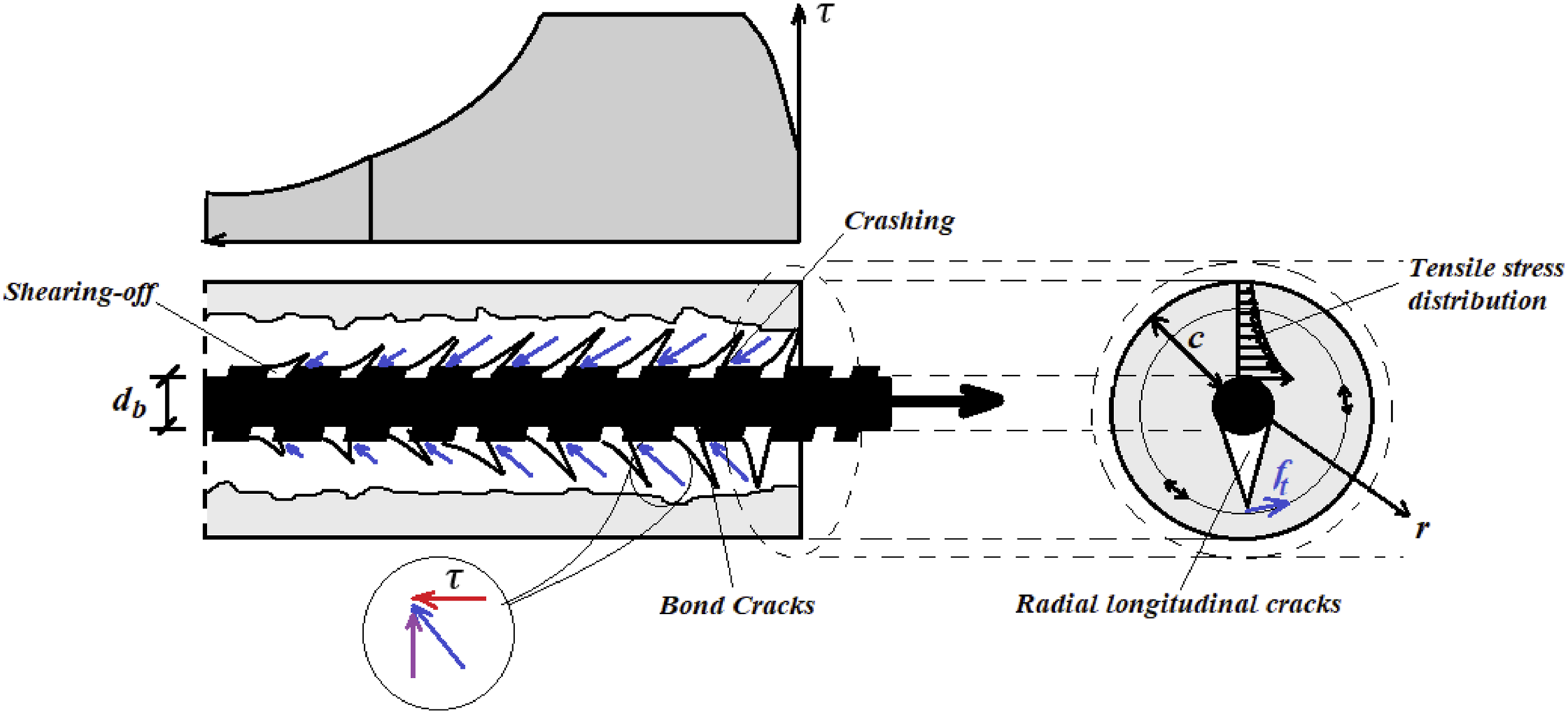

It should be mentioned that, after losing chemical adhesion, normal stresses are necessary to transfer bond stresses. However, when the normal stresses are lost, bond stresses cannot be transferred (Lei et al., 2016). This occurs due to inadequate transverse reinforcement or the development of longitudinal splitting fractures in the concrete adjacent to the bars. Similarly, this can also happen when the rebar begins to yield. Due to the Poisson effect, the contraction of the steel bar increases drastically at yielding (Lei et al., 2016; Pyo et al., 2014; Shen et al., 2016; Wille et al., 2011a, 2014). As a result, only low-bond stress may be transmitted since the typical tension between the concrete and the reinforcements is reduced. Thus, the pull-out failure occurs when the rebars do not fail, and the concrete adjacent to the rebars is well-contained or capable of withstanding the typical tensile forces. Failure under these conditions is characterized by shear cracking adjacent to the rebars. Previous studies have shown that various factors influence the bond-slip resistance of rebars in concrete, including the concrete specifications (e.g. compressive strength, and cover size) and reinforcement specifications (e.g. tensile strength, diameter, surface coating, and rib shape) (Sulaimann et al., 2017; Taber et al., 2002), similarly to the case of wall connections made with injected anchors (Casapulla et al., 2023; Maione et al., 2021).
The relatively weak properties of concrete, such as its tensile strength, have led to the widespread use of HPC and UHPC in the production of RC members globally (Graybeal, 2006; Graybeal and Davis, 2008). In this regard, high-performance concrete (HPC) and ultra-high-performance concrete (UHPC) are advanced formulations designed to surpass the properties of conventional concrete. HPC blends conventional ingredients like cement, water, aggregates, and supplementary materials to achieve strengths ranging from 40 to 96 MPa, offering improved durability and resistance to environmental factors, making it suitable for structures like bridges and parking decks. In contrast, UHPC is a specialized mixture featuring a dense combination of cement, fine aggregates, silica fume, fibers, and admixtures, providing extraordinary compressive strengths exceeding 140 MPa and exceptional durability, making it ideal for architectural elements, seismic-resistant structures, and innovative engineering solutions where superior performance is paramount (American Concrete Institute, 2019). Therefore, engineers have been bright to obtain compressive strength up to 280 MPa for UHPC with no need to use a special curing technique (Holschemacher et al., 2004; Jungwirth and Muttoni 2004; Marchand et al., 2015; Wille et al., 2011a, 2011b; Yuan and Graybeal, 2016). Therefore, due to the high compressive strength of HPC and UHPC, the bond resistance and slip of rebars are definitely affected. The bond-slip performance of rebars in UHPC has been the subject of several studies. In pull-out tests for rebars in UHPC cylinders of varying lengths, Graybeal (2010) found that all of the steel bars failed before bond failure (Graybeal 2014a, 2014b). In another research, Graybeal (2014b) performed pull-out examinations on #4 rebars placed in 150 mm concrete cubes and discovered that differential deflection of more than 1.27 mm caused the bond strength to decrease. Fehling et al. (2012) examined the impact of embedded lengths and cover thickness on bond resistance and found that increasing cover thickness resulted in rebar yielding. The bond-slip characteristics of HSS reinforcing in regular UHPC were evaluated by Khaksefidi et al. (2021) considering the impact of the rebar’s diameter, embedded length, and rib form. Findings showed that the compressive strength of concrete, diameter, embedded length, and characteristics of the rebars significantly affect the failure mode of specimens. In contrast to regular concrete, where bond stress increases with the embedded length, in Ultra-High Performance Concrete (UHPC), the maximum bond stress decreases as the embedded length increases. The early-age bond characteristics of typical steel bars in HPC were measured by Shen et al. (2016). According to the obtained results, the bond strength increased by increasing the age and compressive strength of the concrete.
In addition to the type of concrete and rebar properties, fibers incorporation could significantly affect the bond-slip behaviour of rebars in concrete. Fibers regulate the development and spread of cracks in addition to preventing their creation (Weiss and Shah, 1997). Fibers not only bridge cracks after they form but also reduce their width when the concrete is compressed (Banthia et al., 2004). When properly aligned and in their hardened state, fibers interact with the matrix at the microcrack level, effectively bridging these cracks and delaying their unstable expansion. An enhancement in the matrix’s tensile strength might occur if the fiber volume percentage is high enough (Banthia and Sheng, 1996). Depending on their length and bonding properties, fibers continue to limit crack opening and growth by successfully bridging macro-cracks after the tensile capacity of the concrete has been achieved, as well as after coalescence and the conversion of micro-cracks to macro-cracks. Benefits of high-fiber incorporated concrete include improved toughness beyond fracture localization, a strain-hardening reaction before localization, and greater tensile strength which could improve the bond resistance of rebars in concrete (Bindiganavile and Banthia, 2001). Furthermore, concrete confinement over the rebar during its pull-out may be effectively improved by the fiber reinforcement (Garcia-Taengua et al., 2016; Hameed et al., 2013; Haraji et al., 2002; Yoo and Shin, 2018) and several empirical equations have been developed to measure the impact of fiber-reinforced concrete (FRC) on the bond models (Haraji et al., 1995; Chao 2005; Yoo et al., 2014, CEB-FIP Model Code (2013)).
The long-term service life is the subject of a second stage in the study of bond degradation, which frequently leads to loss of structural performance, including anchoring failure and crack propagation. For this reason, the appropriate design depends on an understanding of the fatigue bond behaviour to evaluate the long-term mechanical characteristics of reinforced concrete buildings. Pull-out failure has been reported in the majority of situations where earlier works (Al-Hammoud et al., 2010, 2013; Balazs, 1991; Lin et al., 2017; Oh and Kim, 2007). In past decades, many studies have been performed to identify the effect of different types of fibers on the properties of concrete and the bond-slip performance of rebars in concrete. Alkaysi and El Tawil (2017) assessed the effect of various parameters on the bond between UHPC and bars. Pull-out experiments were used to determine the effects of epoxy coating, bond length, bar diameter, and casting orientation relative to the rebars for different steel fibres (SF) ratios. To predict the required embedded rebar length in UHPC, a novel model was developed to calculate the effect of concrete compressive strength and bond length on the bond-slip performance of rebars. In another study concerning the bond performance of epoxy-coated bars in steel fiber-reinforced UHPC, Zhou and Qiao (2018) showed that the addition of steel fibers significantly influenced the distribution of bond stress. However, findings showed that the bond-slip behavior of epoxy-coated rebars in UHPC was comparable to that observed in NSC. In another research, Yuan and Graybeal (2016) evaluated the effects of different UHPC mixes and showed that the embedded length of bars in UHPC may be greatly reduced. Additionally, results revealed that the addition of fibres significantly improved the tensile strength, increasing the strength from 5 MPa to more than 8 MPa, which had a significant impact on the bond-slip characteristics of steel bars in fibre-reinforced UHPC. In another study, He et al. (2015) examined the impact of using SF on the pull-out resistance of rebars coated with nanoscale iron oxide. Their findings showed that utilising iron oxide increased the bond resistance of reinforcements in SF-reinforced concrete by about 85% compared to the non-coated rebars.
Research significance
Even though many investigations have been done on the bond behaviour of different types of rebars and concrete types (Lei et al., 2016; Shen et al., 2016), so far only a few investigations measured the bond performance between HPC and UHPC and steel rebars, particularly when HSS rebars are used, especially when fibers are incorporated in the concrete mixture (Li et al., 2023). Previous studies have demonstrated that, unlike normal concrete samples, fiber-reinforced UHPC samples exhibit superior ductility and bonding characteristics. This enhancement is attributed to the fiber-bridging phenomenon, which effectively restricts crack formation (Li et al., 2023). Additionally, many studies have been done to assess the influence of different types of fibers on the bond behaviour of rebars in concrete (Anvari et al., 2019; Gencel et al., 2021; Ghalehnovi et al., 2020). It was found that increasing the tensile strength of concrete and adhesion between rebars and concrete as well as reducing the crack width are the main factors affecting the bond behaviour of rebars in fibres-reinforced concrete. However, there is no comprehensive study about the bond-slip performance of HSS rebars in HPC and UHP concrete especially when polypropylene fibres (PF) are used. Therefore, in this study, the effect of PF on the bond-slip performance of HSS rebars for both HPC and UHPC was investigated. In addition, the results were compared with those from previously proposed models and a new model was developed to predict the bond-slip performance of HSS rebars in conventional and PF-reinforced HPC and UHPC.
Material properties and specimens’ characteristics
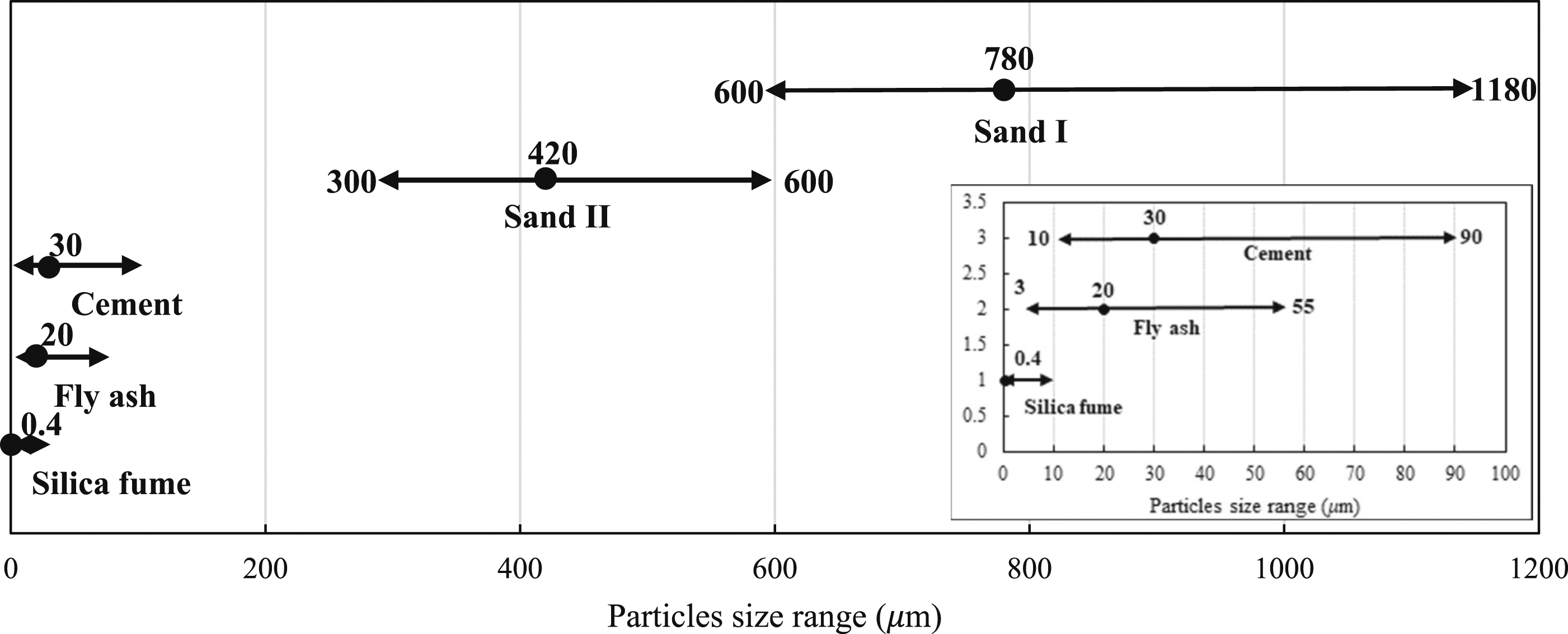
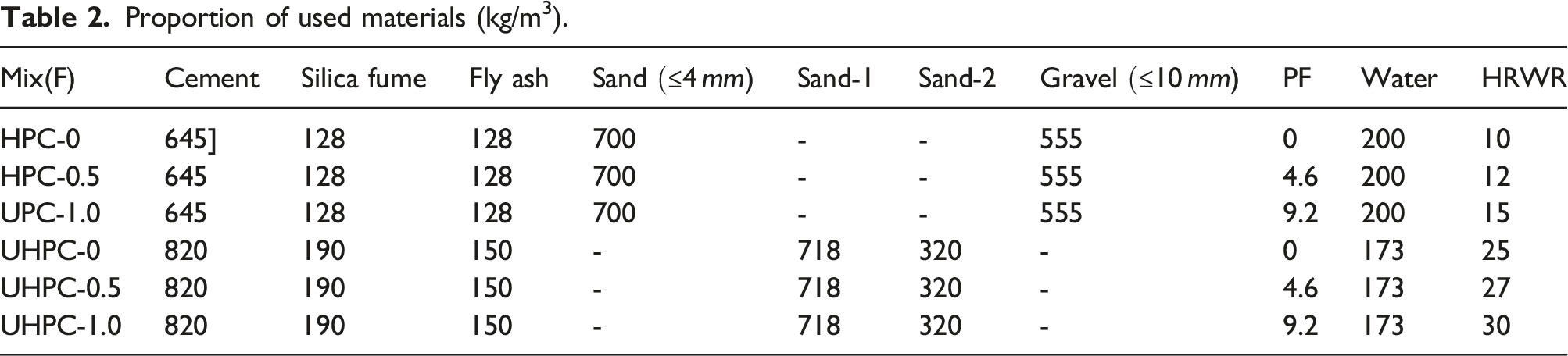
In this study, concrete mixtures were made using ordinary Portland cement (OPC), which complied with CEM I 42.5 R specifications (Bonneau et al., 2000; Epsilon 2020; Pour 2020). Gabbro aggregates and washed sand were used as coarse and fine aggregates, respectively. The coarse and fine aggregates’ particle size distributions are shown in Figures 2 and 3 (Ghous Sohail et al., 2021). Also, Epsilon (2020) was employed as a high-range water reducer (HRWR) to have uniform particle distribution. The UHPC mix comprised two fine sand sizes: sand-1 with a particle size range from 600 μm to 1180 μm and sand-2 ranging from 300 μm to 600 μm. Sands 1 and 2 together accounted for 65% of the entire weight of sand. The remaining 35% of the sand contained either larger particles up to 420 μm or very fine sand below 300 μm for UHPC. Additionally, fly ash and silica fume were also used for HPC and UHPC. The particle size analysis of fly ash, OPC, sand-1, and sand-2 was made using a Malvern Master Sizer 3000®. A Zetasizer Nano ZS (Malvern) setup was used to measure silica fume. To prevent agglomeration, smaller particles were mixed for 15 min before the test. Additionally, as per Figure 3 for UHPC, silica fume exhibited a particle size ranging from 0.1 μm to 10 μm, with an average size of 0.4 μm. In addition, the fly ash had a particle size ranging from 3 μm to 55 μm with an average of 20 μm. The particle size of OPC ranged from 10 μm to 90 μm with an average of 30 μm. Sonication of these finer particles was carried out for 15 min before the analysis to avoid agglomeration. Curves of the particle size spreading for aggregates of different sizes. Sizes range for particles used in UHPC.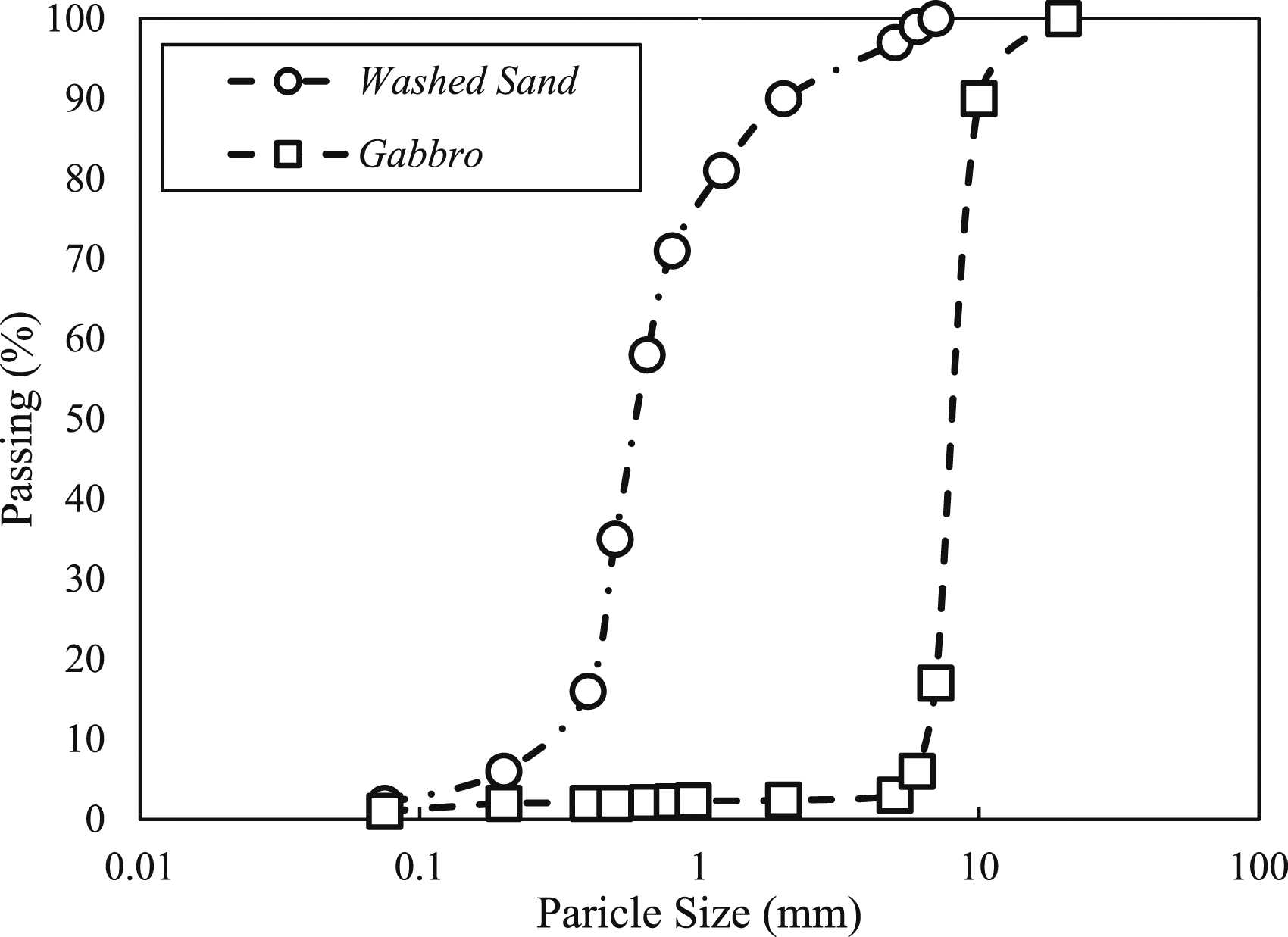
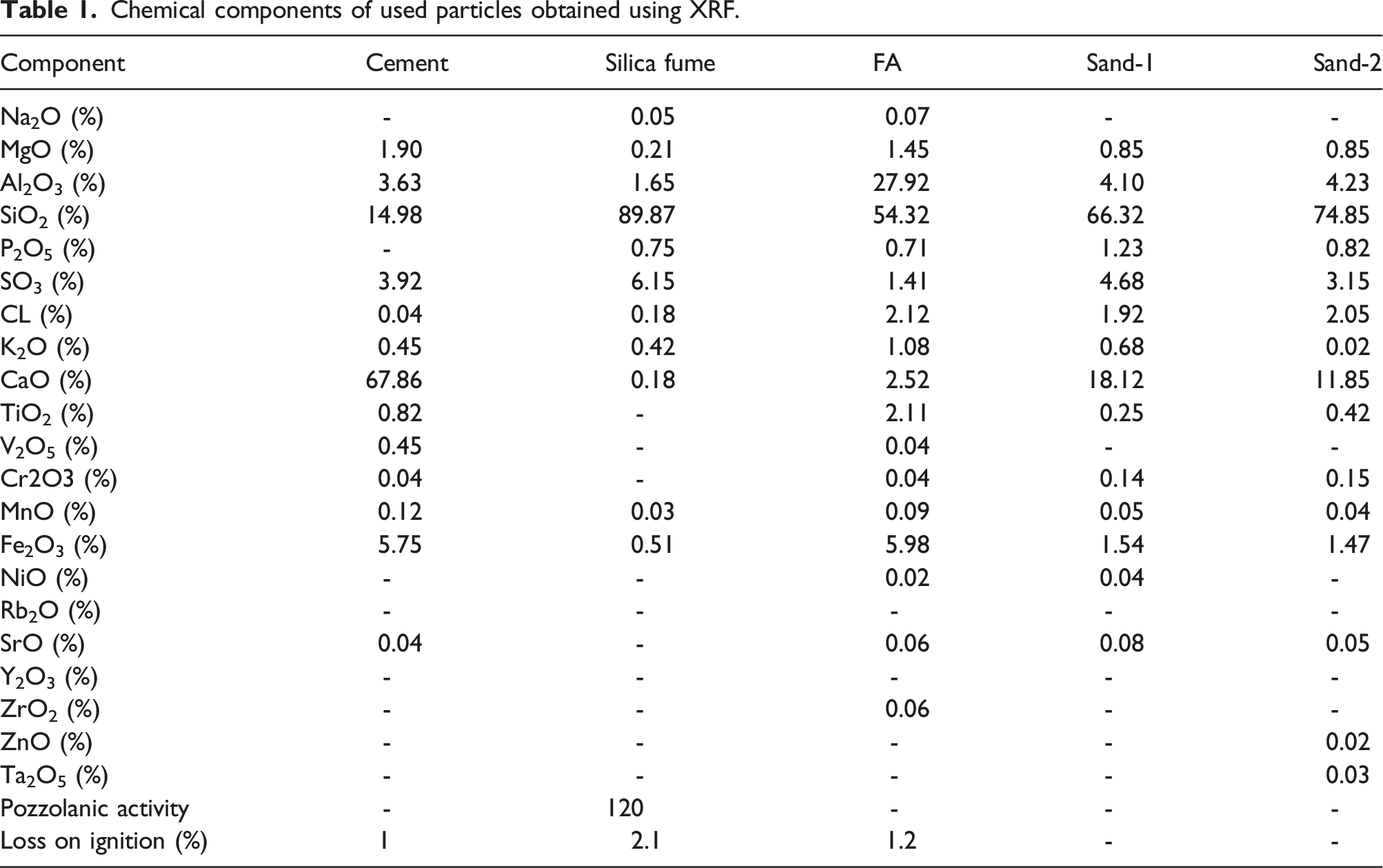
Chemical components of used particles obtained using XRF.
Proportion of used materials (kg/m3).
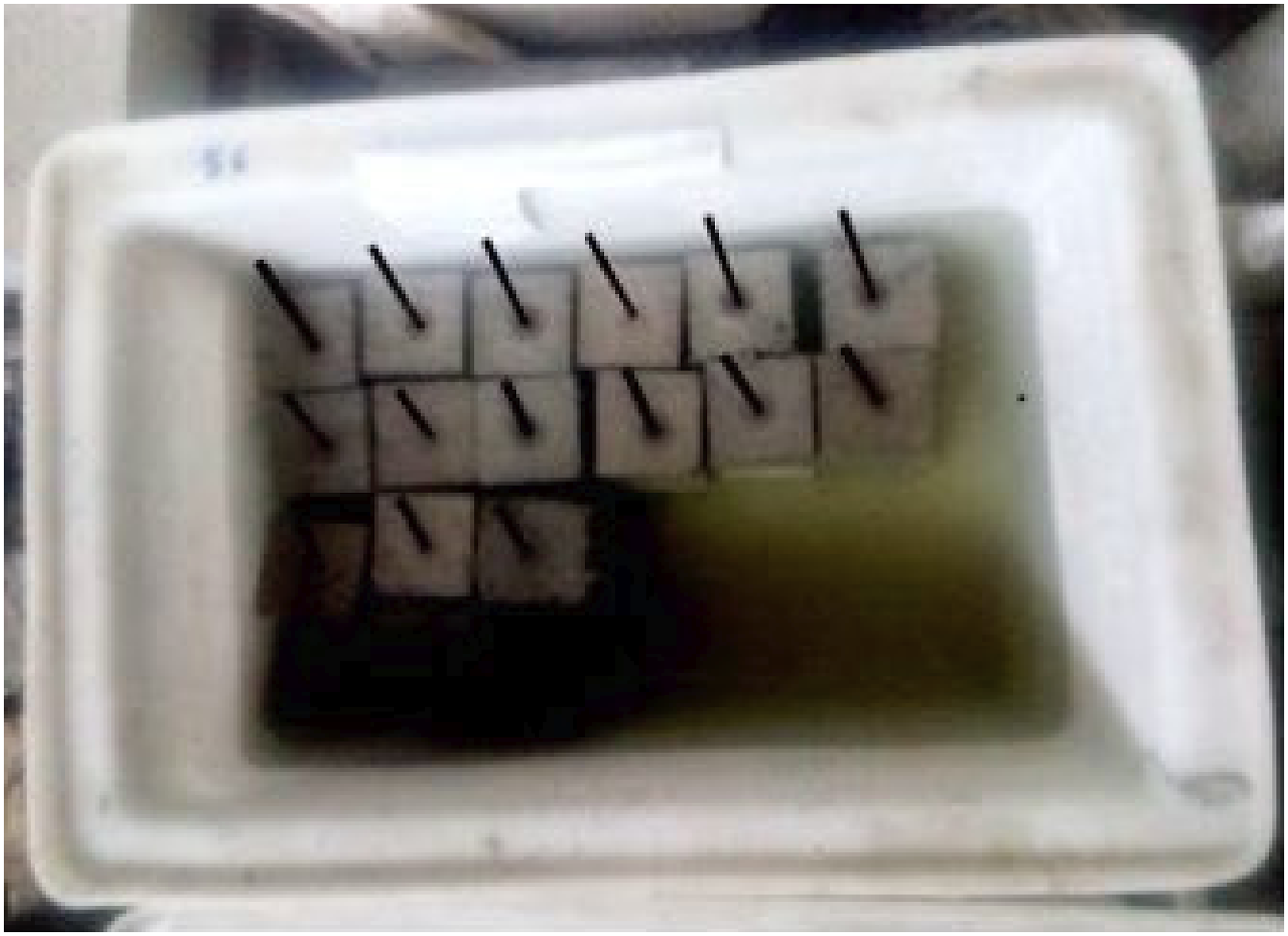
Samples preparation in water.
To produce mixtures with fibre, 12 mm length PF was added at three different volumetric contents: 0%, 0.5%, and 1.0%, as shown in Figure 5. PF has a 350 MPa tensile strength, 900 kg/m3 density, and 160°C melting temperature, respectively. As a result, 36 specimens were produced and tested in a pull-out test: 18 HPC and 18 UHPC specimens. Sample of used PF.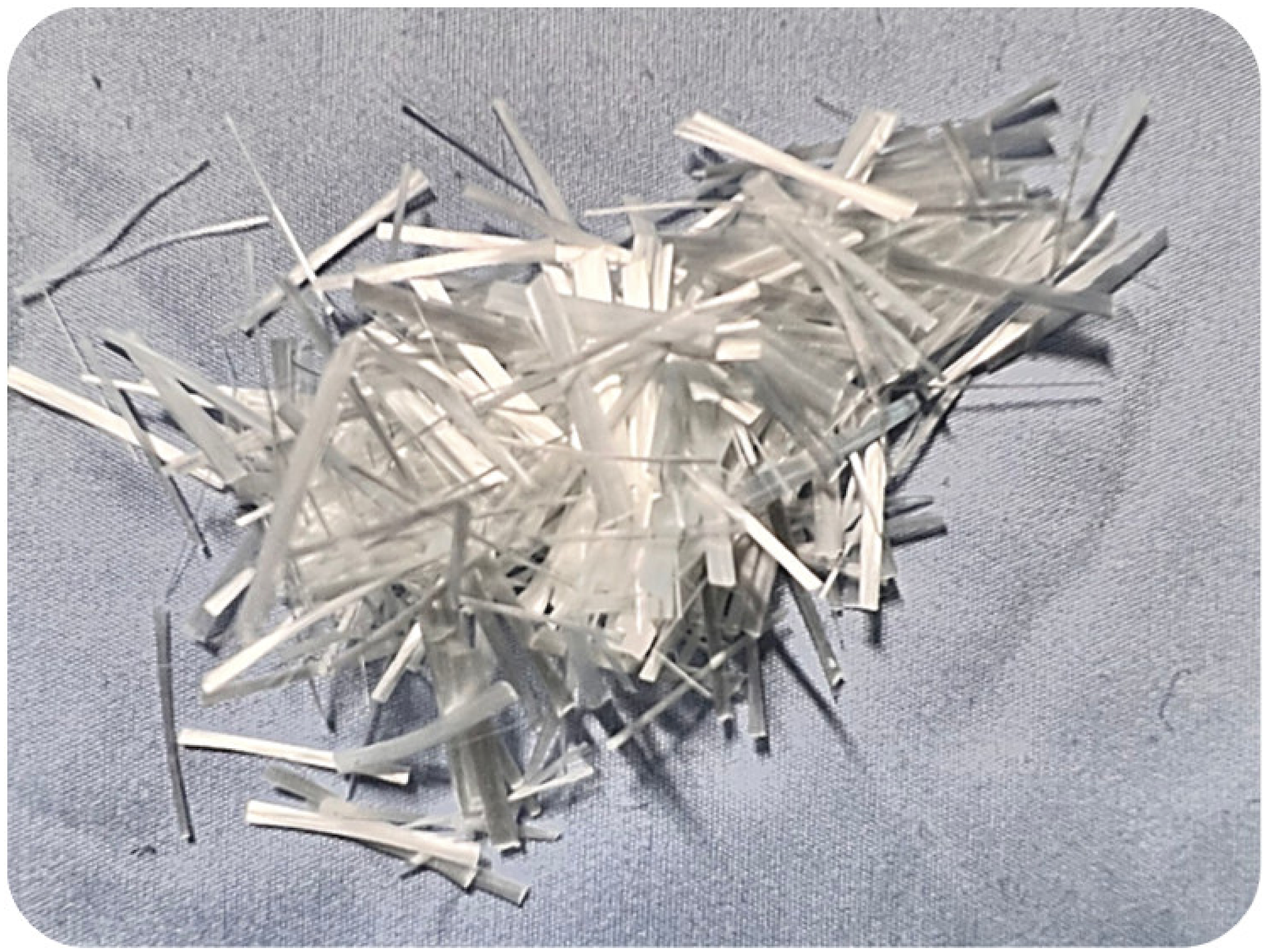
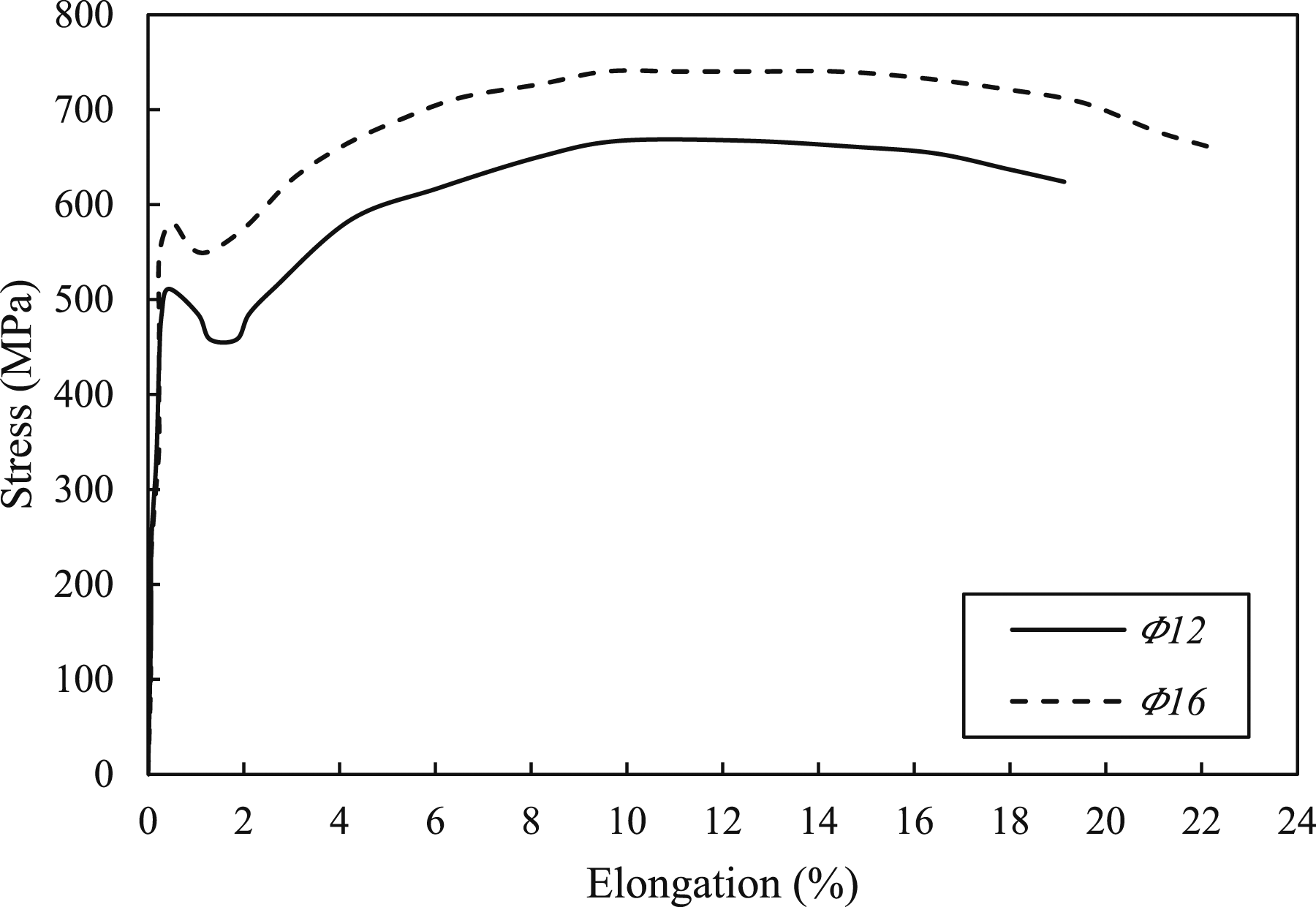
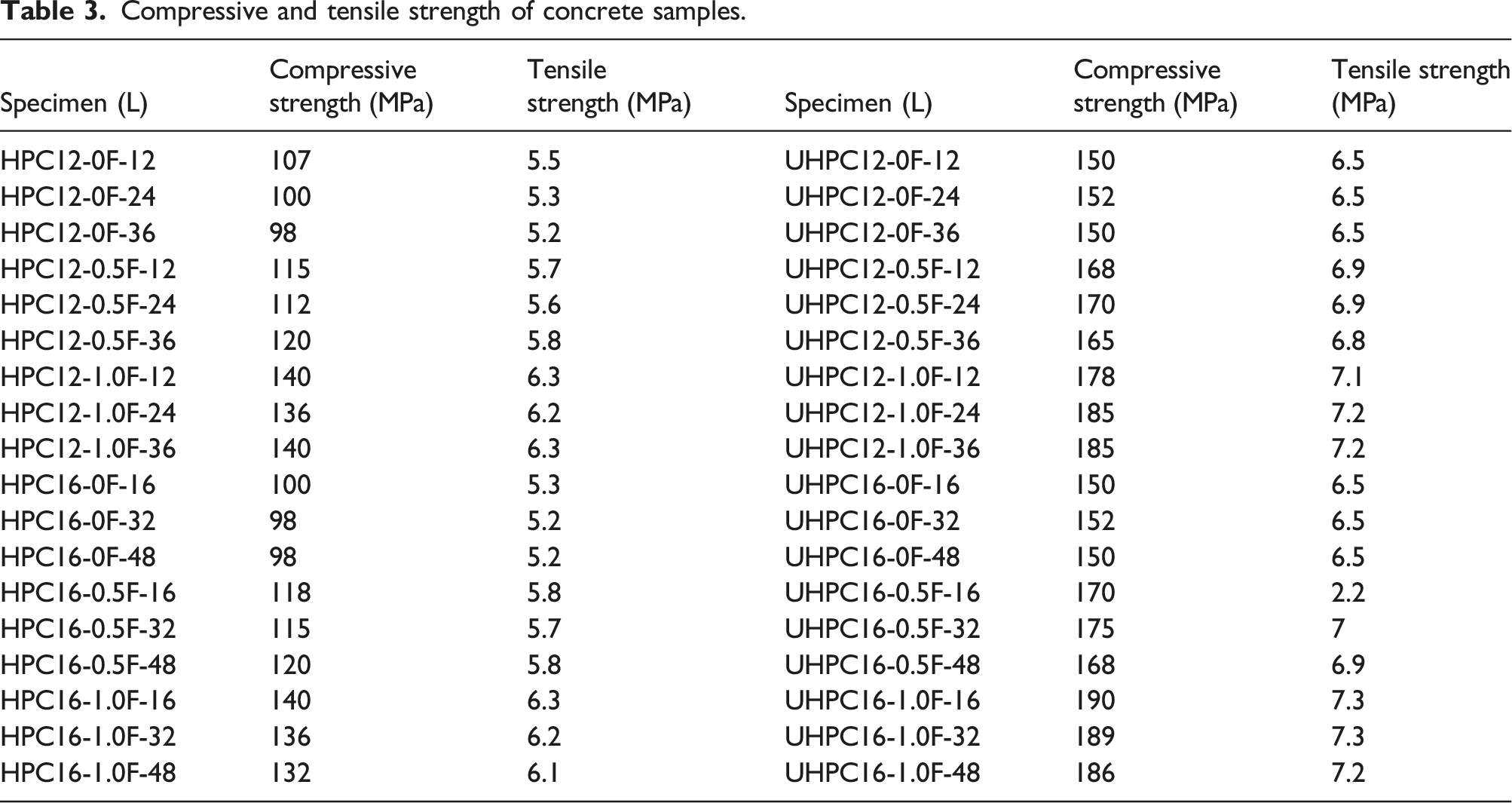
The pull-out test was performed on cubic samples as per RILEM RC6 (1983). Figure 6 shows the geometric properties of the specimens. For each specimen, three samples were produced, and an average of the three was considered. Rebars with two different diameters (12 mm and 16 mm) were employed to assess the impact of the rebars’ diameter on the bond-slip performance. Rebars were also tested under a direct tensile setup according to ASTM A370 (2020). Findings are demonstrated in Figure 7. Also, three different bond lengths were considered: 1, 2 and 3 times of rebars' diameter. According to ACI (2019) and existing research, steel reinforcements are often categorised as HSS bars when they have a yield strength of greater than 400 MPa (Ahmed et al., 2021; Aldabagh and Alam, 2020). To avoid contact between the rebars and concrete outside the bond length, a PVC pipe was used around the rebars. Additionally, to assess the compressive and tensile strengths of samples, three 150 × 300 mm cylindrical specimens were produced and examined under a hydraulic jack (ASTM, 2014). The value of compressive strength was determined by averaging the values of three tested samples for each mixture, and the obtained results are presented in Table 3. In this table, HPC, UHPC, F and L indicated the high-performance concrete sample, ultra-high-performance concrete sample, embedded lengths and PF content. Also, the number after HPC and UHPC indicates the diameter of the rebar. Geometric properties of specimens. Stress-elongation curve of the rebars. Compressive and tensile strength of concrete samples.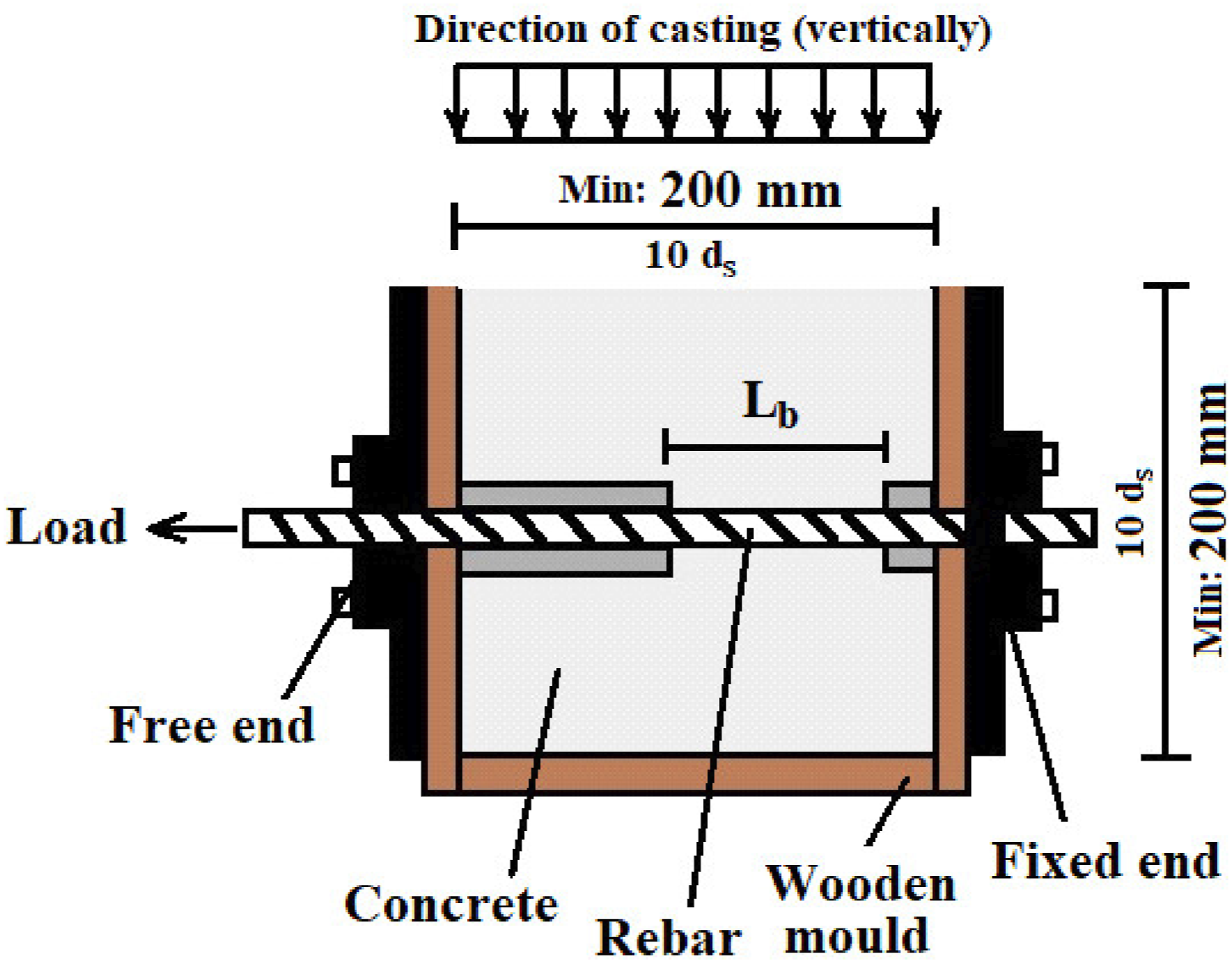
Test setup and loading condition
This study examined the bond performance of HSS rebars using a standard pull-out test. The samples were examined following a 28-days curing period. The failure of the specimen served as the stopping condition for the test, which was conducted under displacement control conditions. The centre of the specimens’ free end of the rebars was subjected to a pull-out load using a hydraulic jack (Hossain et al., 2017; Lundgren et al., 2019; Sulaiman et al., 2017). To measure the displacement, two linear variable differential transformers (LVDTs) were installed at the top and bottom of the sample. A load cell with a 400 kN capacity and 0.005 kN load-step precision was used to apply the force, as shown in Figure 8. Using a data logger, the load and displacement were recorded. Test setup and loading condition.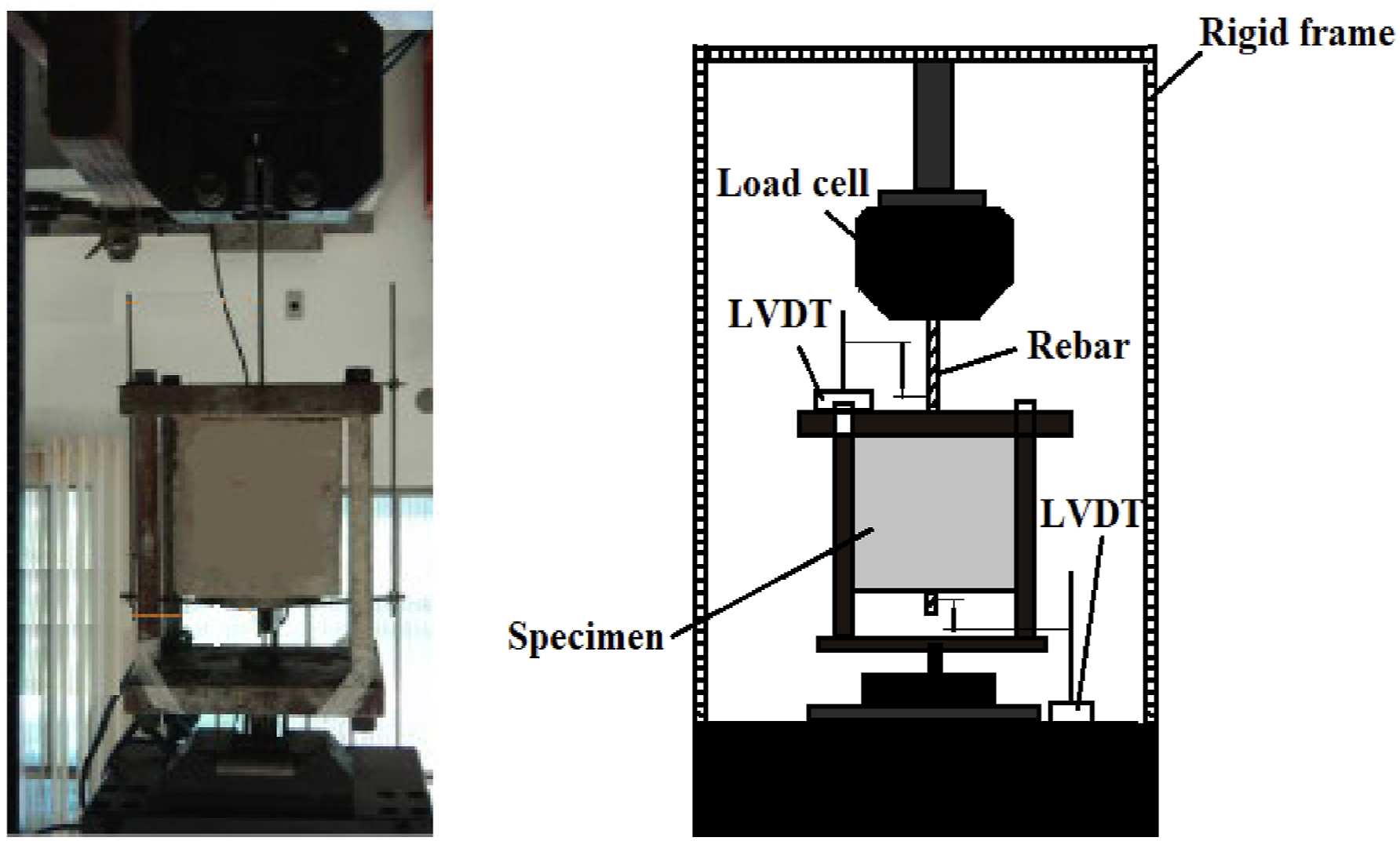
Results and discussion
Load-slip performance
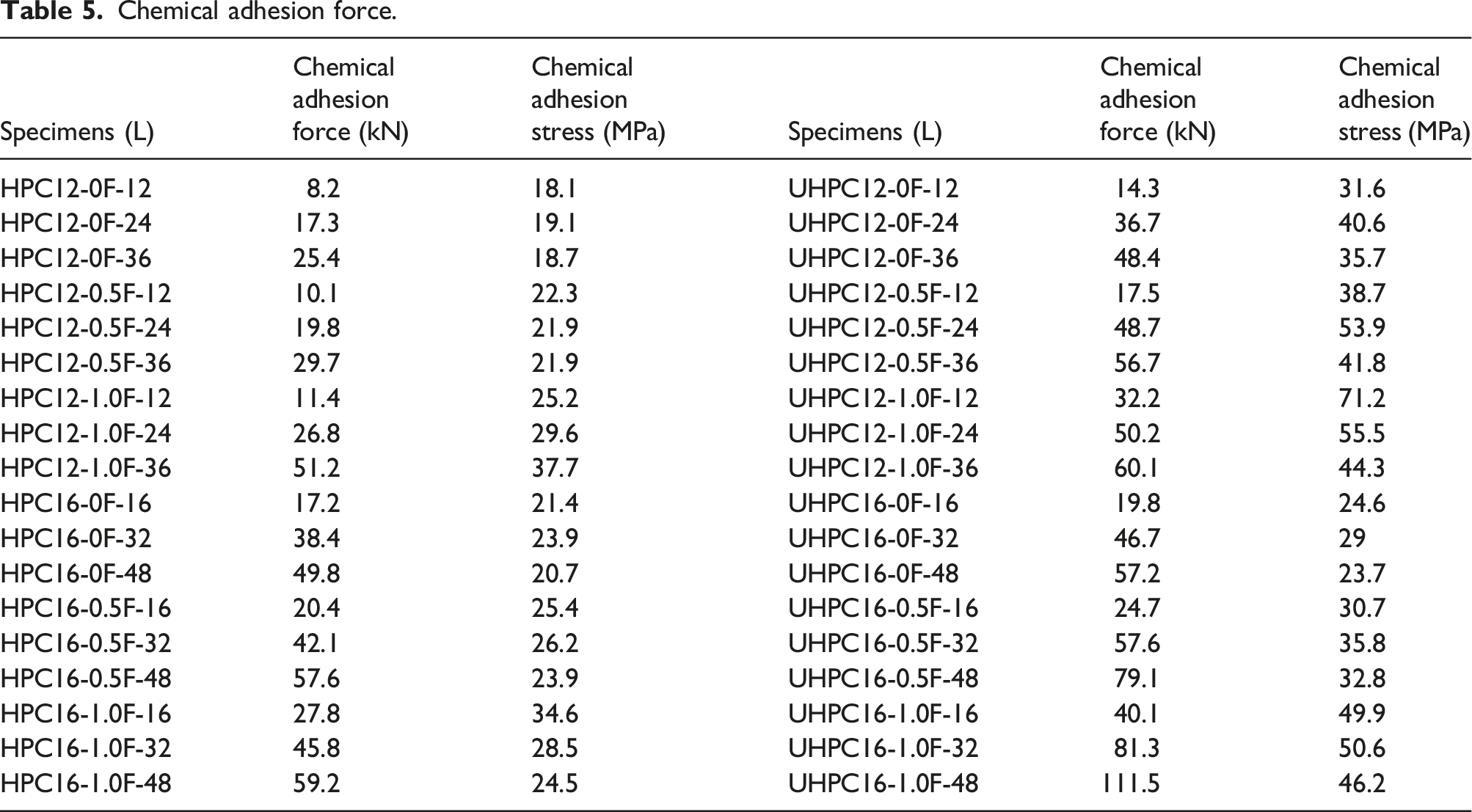
In this section, the load-slip performance of the samples is studied. The findings are presented in Figures 9 and 10. Generally, the slope of all figures at the beginning of loading is sharp, which shows the transfer of the load from the rebar to concrete by chemical bond and static friction. Therefore, there is no considerable difference in the slip between the concrete and rebar. Adding PF led to increasing the slope of the load-slip curve at the beginning point of loading, which shows the increase in slip. This could be associated with increasing the cohesion between rebars and concrete paste due to the bridging role of pF. Another finding was that increasing the embedded length led to an increase in the ultimate load-bearing capacity, while the maximum slip decreased, especially with larger rebar diameters. Almost the same results were observed in UHPC specimens, while the impact of PF decreased due to the higher compressive strength of UHPC in comparison with those HPC specimens (Figure 9). In this regard, the improvement effect of PF incorporation on the maximum load-bearing resistance of samples is provided in Table 4. One of the key factors contributing to rebars’ amplified load resistance, particularly in UHPC, is an increase in chemical adhesion. Therefore, the chemical adhesion slip was considered as 5 μm according to Chiriatti et al. (2019) and its corresponding forces are represented in Table 5 to find the importance of this force on the bond-slip characteristics of HSS in HPC and UHPC. After calculating the chemical adhesion force, chemical adhesion stress was calculated as the chemical adhesion force divided by the lateral area of the embedded rebar. Load-slip curve of HSS reinforcement in HPC with different PF contents. (a) with 12 mm rebar diameter and (b) with 16 mm rebar diameter. Load-slip curve of HSS reinforcement in UHPC with different PF contents. (a) with 12 mm rebar diameter and (b) with 16 mm rebar diameter. PF incorporation effect on the maximum bond-resistance of samples (%). Chemical adhesion force.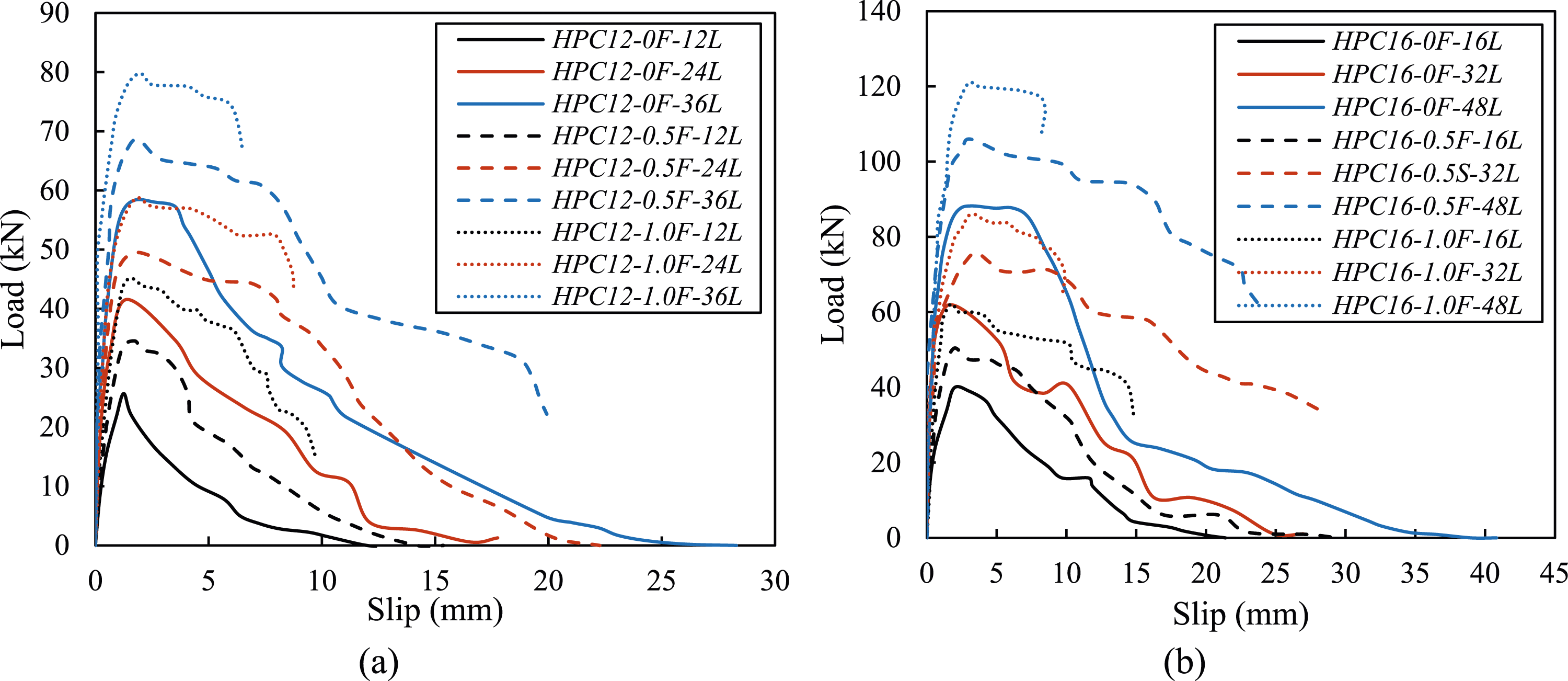
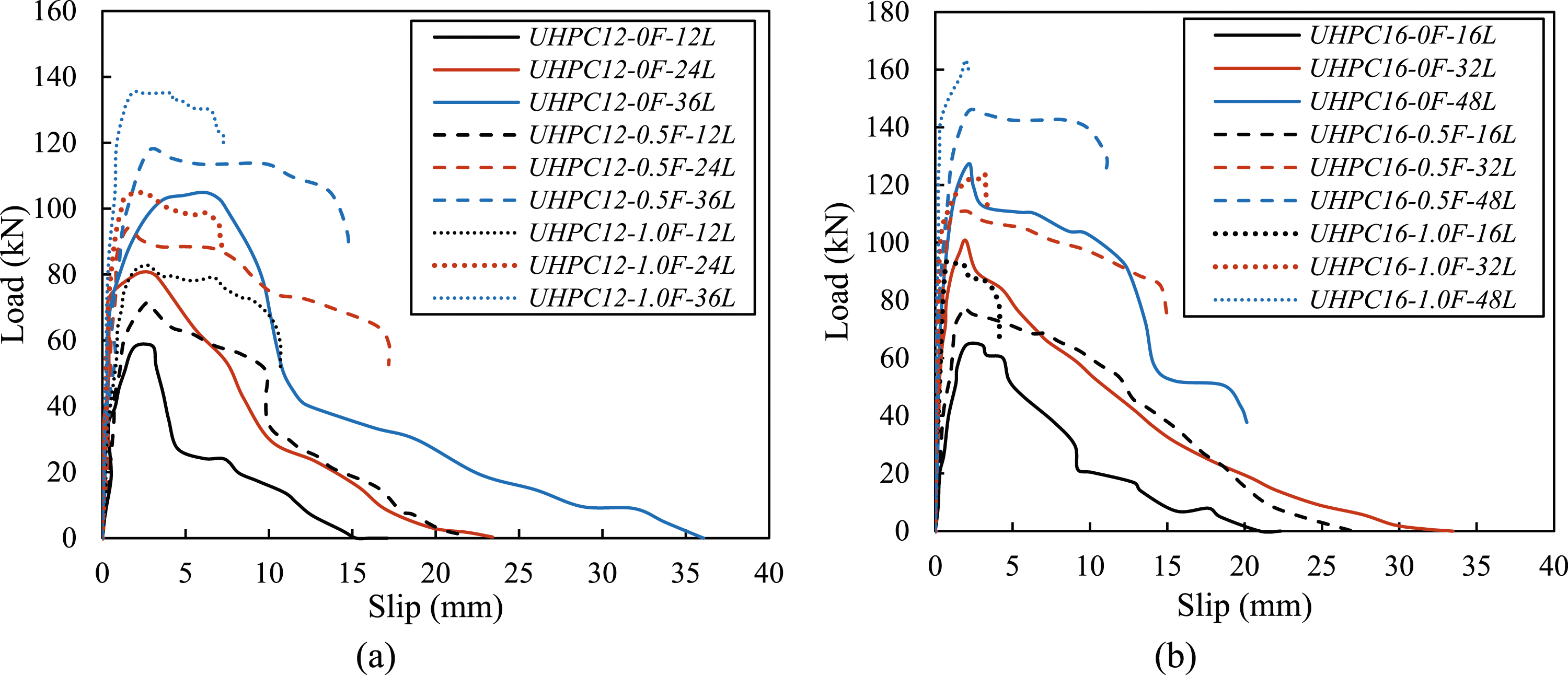
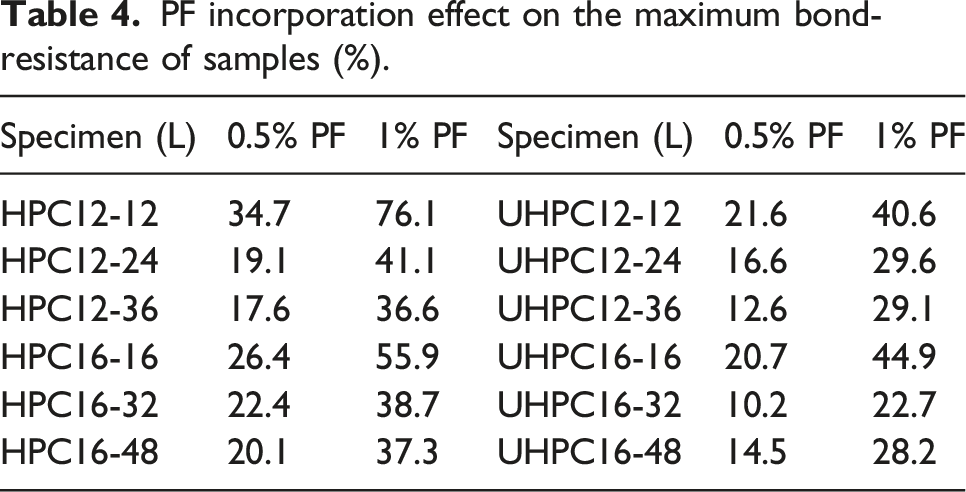
Regarding Figures 9 and 10, by increasing the load, chemical adhesion declined and so friction was changed from a static to a dynamic phase. At this stage, the interlocking effect between the ribs of the rebar and the surrounding concrete plays a significant role in the dynamic friction phase. In UHPC specimens, applying tensile force to the ribbed steel rebar transfers the compression force to the concrete, creating tensile stress in a circumferential direction. By increasing the load, tensile stress reached the concrete’s tensile strength at the tip of the ribs and inclined internal bond cracks initiated, so-called Goto cracks, as defined by Khaksefidi et al. (2021). Lemnitzer et al. (2009) stated that at this stage, the circumferential tensile stresses in the concrete cap balance the conical concrete compression lines. Cracking occurs along the length of the bar when the tensile stress exceeds the concrete’s strength. Consequently, the load-bearing resistance considerably increased with the use of pF. This could be attributed to the rebars’ confinement with pF. When a low PF content was used, the rebars were not completely confined by fibres and so the slip increased due to the fibres deformation in the concrete paste. However, with a rise in PF content, the rebar confinement was significantly increased, and cracks propagation and their width substantially decreased, creating high cohesion between rebars and PF-reinforced concrete paste, which led to reduced slip.
According to Table 5, the maximum chemical adhesion force was further increased when the PF content increased. However, in HPC specimens reinforced with
By increasing the PF content or embedded length, the confinement volume around the rebar with PF considerably increased, which is the main reason for the great reduction in slip. In contrast, for UHPC specimens, the increased tensile strength enhances the adhesion between PF, aggregate, and rebar. As a result, adding PF significantly reduces the slip between the concrete paste and the rebars. Therefore, adding PF allowed greater use of concrete’s capacity. In addition, increasing the embedded length led to dropping slip and increasing the load-bearing resistance, especially when
Modes of failure
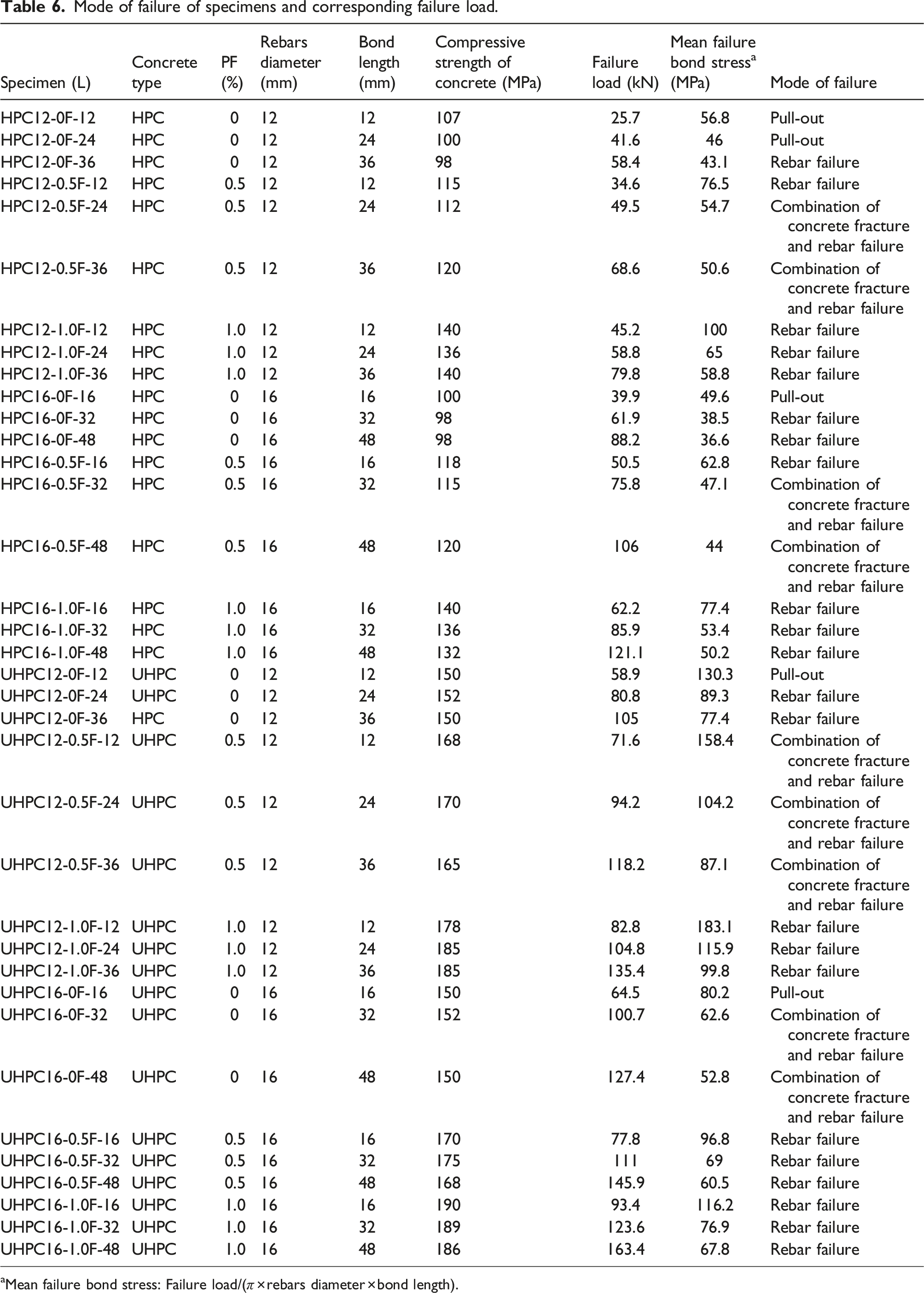
Mode of failure of specimens and corresponding failure load.
aMean failure bond stress: Failure load/(π⨯rebars diameter⨯bond length).
Figure 11 shows the failure modes of all specimens matching the presented results in Table 6. According to this figure, the reinforcement pulled out from the concrete with radial cracking around the rebar area without the rebar’s yielding could be observed when fibers were not incorporated and reinforced with a low embedded length ( Failure mode of typical specimens.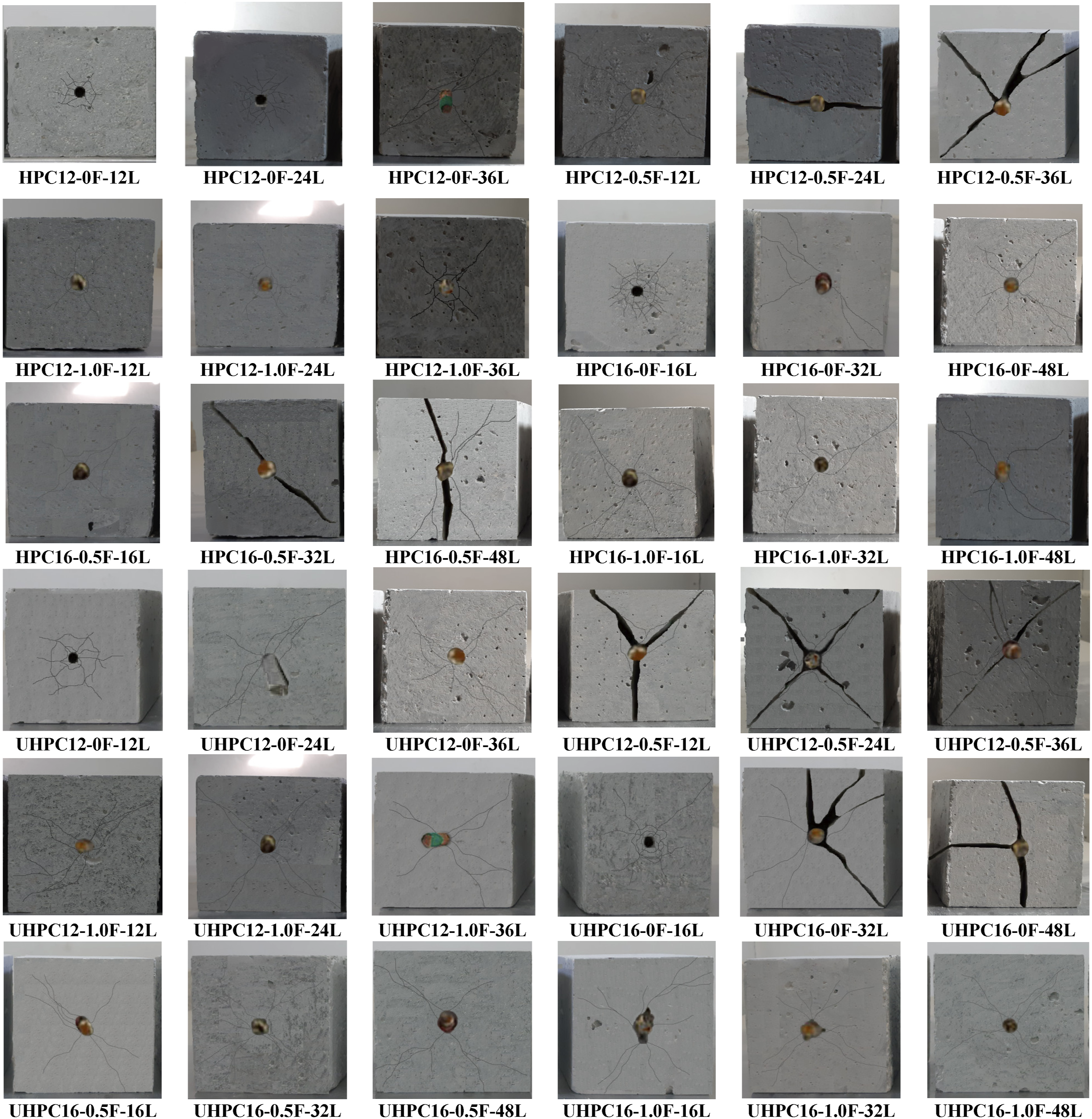
Bond stress-slip performance
Figures 12 and 13 provide the bond stress-slip behavior of the specimens. By increasing the applied load, the tensile stress around the reinforcement increases and the bond stress starts to be transferred from the rebar to the concrete. Therefore, inclined internal bond cracks occur around the rebar in concrete due to the weakness in concrete tensile strength. Adding PF restricts the cracks’ propagation and their width due to the bridging role of pF. Therefore, higher tensile stress moves from the reinforcement to the concrete, which results in higher usage of the concrete’s capacity. The further load caused tensile stress to approach the tip of the ribs' concrete tensile strength and start cracking. By exceeding the tensile stress, cracking happens longitudinally along the rebar. According to Figures 12 and 13, the bond resistance was significantly improved when PF was added. Because PF allowed a higher stress transfer from the reinforcement to concrete, due to the prospect of a larger interlocking effect with higher friction. According to Figures 12(a) and (b), in 12 mm rebar-reinforced HPC specimens with Load-slip behaviour of HSS rebars in HPC with different PF contents. (a) with 12 mm rebar diameter and 12 mm embedded length; (b) with 12 mm rebar diameter and 36 mm embedded length; (c) with 12 mm rebar diameter and 24 mm embedded length; (d) with 16 mm rebar diameter and 16 mm embedded length; (e) with 16 mm rebar diameter and 32 mm embedded length and (f) with 16 mm rebar diameter and 48 mm embedded length. Load-slip behaviour of HSS rebars in UHPC with different PF contents. (a) with 12 mm rebar diameter and 12 mm embedded length; (b) with 12 mm rebar diameter and 24 mm embedded length; (c) with 12 mm rebar diameter and 36 mm embedded length; (d) with 16 mm rebar diameter and 16 mm embedded length; (e) with 16 mm rebar diameter and 32 mm embedded length and (f) with 16 mm rebar diameter and 48 mm embedded length.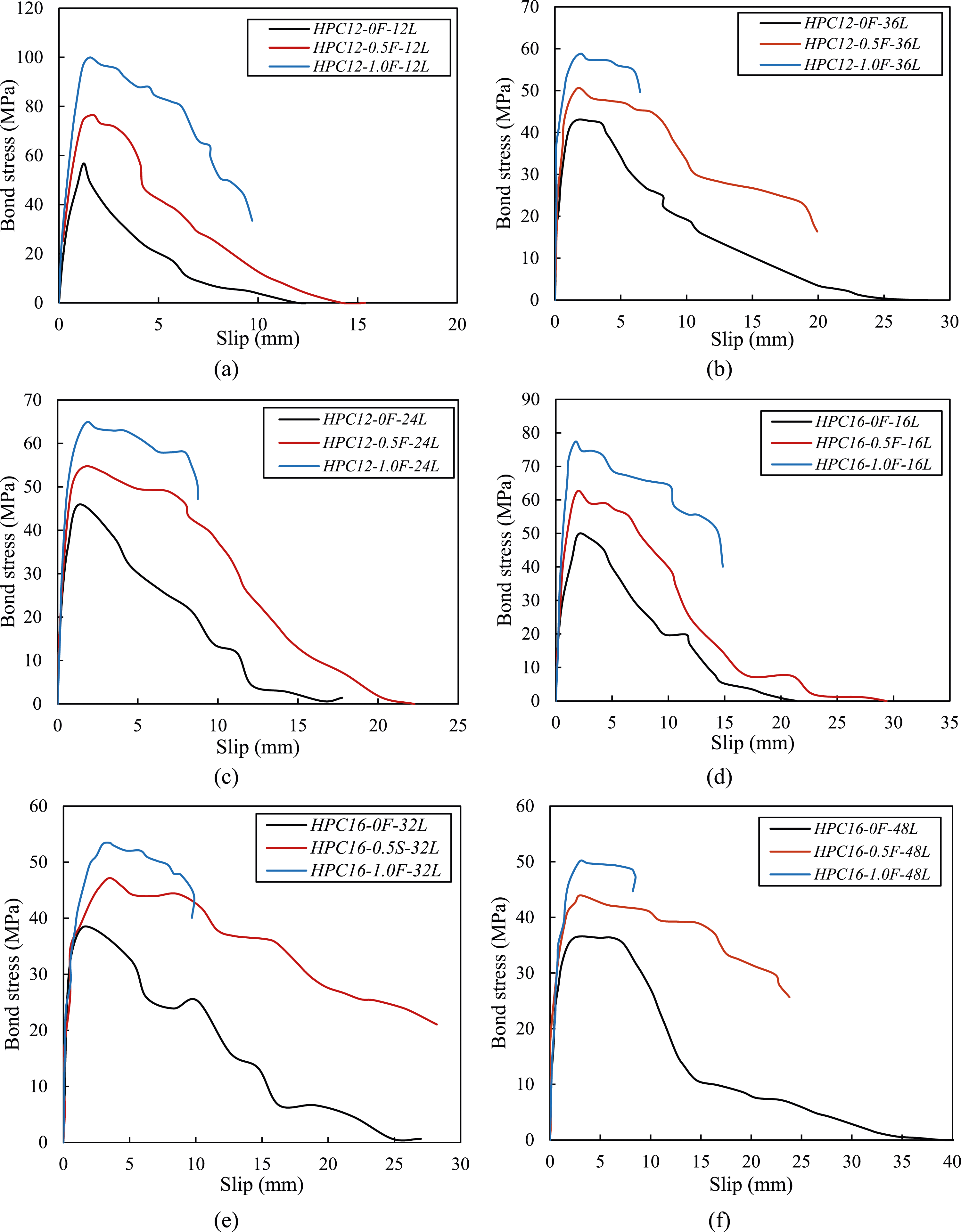
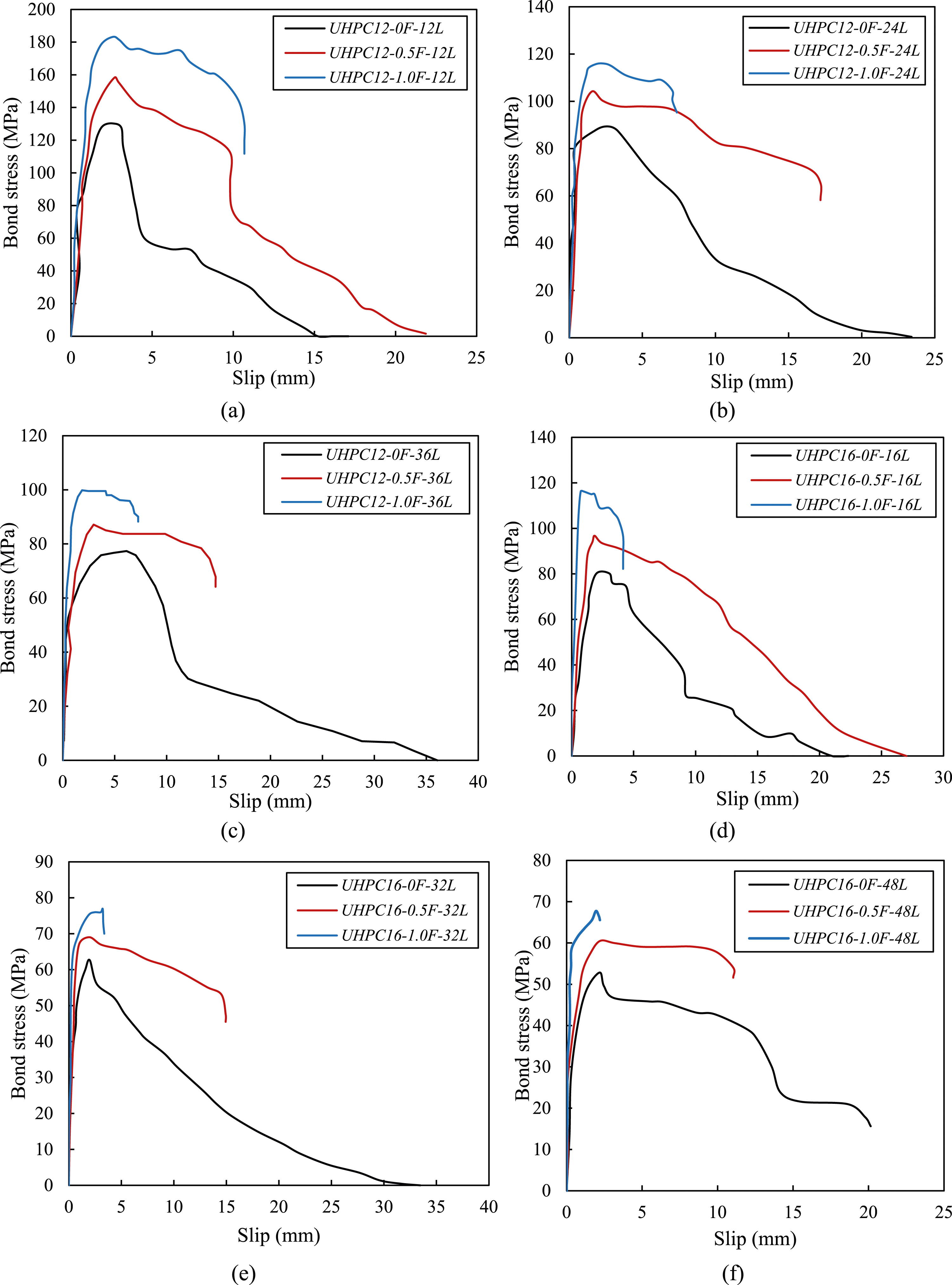
Since concrete plays a vital role in increasing the bond resistance of rebars due to the interlocking influence of concrete because the space between ribs fills with concrete, bond stress considerably increased in UHPC. Therefore, by swelling the performed load, cracking happened in the concrete between the ribs space, so the bond resistance declined and slip increased. The descendant branch decreases in the curves of UHPC with a sharper slope than that of HSC (Figure 12). Alternatively, in UHPC specimens, the bond resistance increased, and slip significantly decreased with the use of PF, because of the higher interlocking and friction among the concrete matrix filling the ribs space and the rebar increased (Figure 13(a) – (f)). There, in specimens with a pull-out failure mode, swelling the bond length value caused the ultimate stress to rise, and the samples’ normalised bond resistance to rise as well. In addition, with an increase in bond length, the residual stress was higher, which is due to a rise in the stress transference path by growing the bond length. Therefore, by adding PF, the stress transmission path considerably increased when the bond length increased, as well. According to Figure 13(d) – 13(e), by increasing the PF fraction and embedded length, the confinement around the rebar considerably increased, which is the main reason for the considerable decrease in the slip when the 16 mm HSS rebar was used.
Since bond strength is significantly influenced by the mechanical interlocking between the rebar ribs and the surrounding concrete, a longer bond length results in more engaged ribs and greater pull-out strength. Therefore, adding PF enhances the utilization of concrete capacity. The applied pull-out force is primarily resisted by the initial ribs near the loading end, reducing the maximum bond force and ensuring a uniform stress distribution along the rebar. Previous studies reported the same behaviour for bond stress distribution over the rebar embedded in UHPC (Khaksefidi et al., 2021; Rezaiee-Pajand et al., 2020). Figures 14 and 15 show the ultimate bond stress and slip for rebars embedded in HPC and UHPC specimens, respectively. Regarding Figures 14(a) and 15(a), the τmax value increased with the use of PF, and the growth trend in τmax of HPC was greater than UHPC. In addition, the increasing influence of PF on τmax value declined with a rise in bond length, which can be associated with the stress distribution through the rebar. Because the stress distribution over the rebar substantially declined from the loading end to the free end, it is expected that an increase in embedded length results in a reduction in the bond stress. Therefore, adding 1% PF increased the bond stress of HPC specimens with l
b
/d
b
of 1, 2 and 3 by 67%, 20% and 50%, respectively, when 12 mm HSS rebar was utilised, while for the 16 mm rebar, the τmax value grew respectively by 167%, 25% and 25%. Since the interlocking effect between the rebar’s ribs and concrete significantly affects the bond stress, the τmax value of UHPC was higher than that of HPC. Therefore, adding 1% PF led to increasing the τmax value of UHPC specimens with l
b
/d
b
of 1, 2 and 3 by 38%, 33% and 25%, respectively, when 12 mm HSS rebar was used, while for the 16 mm rebar, the bond stress increased respectively by 50%, 33% and 40%. Therefore, increasing the diameter of the reinforcement bars decreased the bond stress. The same results were also reported by Yoo and Shin (2018) for 80–180 MPa UHPC, Rao et al. (2007) for NSC and HPC with compressive strength of 30 MPa and 60 MPa, correspondingly and De Larrard et al. (1993) for HPC with compressive strength of 95 MPa. Influence of PF contents and Impact of PF contents and 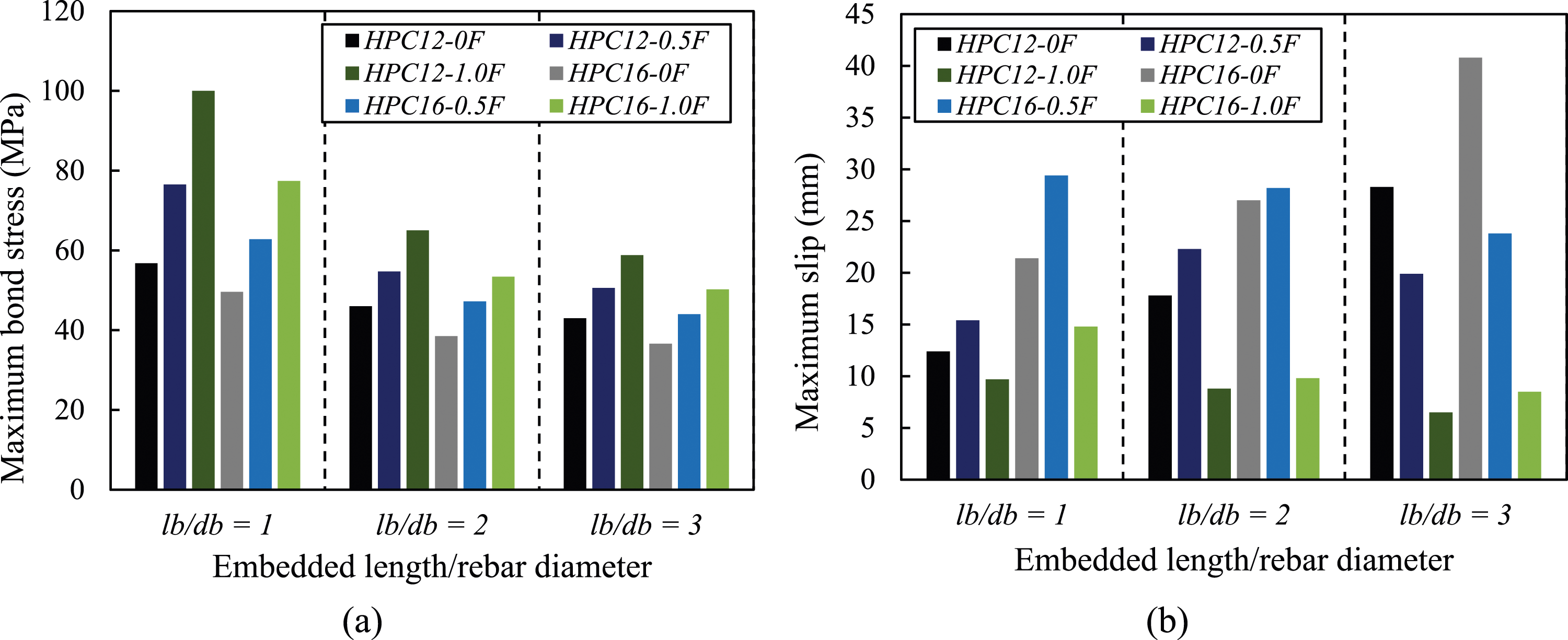
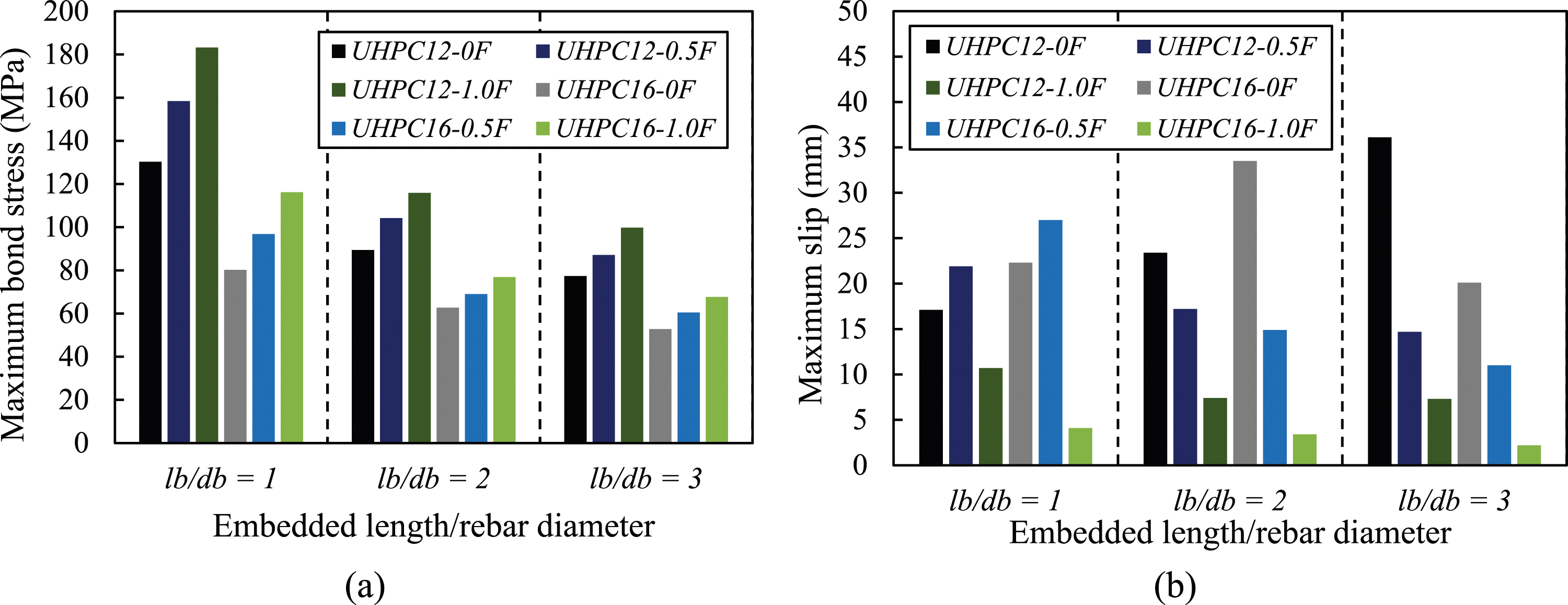
According to Figure 14(b), for both 12 mm and 16 mm rebars embedded in HPC without PF, slip significantly increased with an increase in l b /d b . The same increasing trend in slip was observed for 12 mm rebar embedded in UHPC specimens when bond length increased, while in 16 mm rebar diameter, slip slightly increased and then declined when 3 l b /d b was provided (Figure 15(b)). It is anticipated that an increase in embedded length will lower the bond stress since the stress distribution over the rebar significantly decreased from the loaded end to the free end. Conversely, slip declined with the use of PF especially when 16 mm rebar was used. The minimum slip was observed when 16 mm rebar was used in UHPC. This can be attributed to the high confinement influence of PF around the rebar that increased the interlocking effect between rebar and concrete. Almost the same observation could be found in the previous investigation (Yoo and Shin 2018).
Comparison amongst the present techniques and experiments
This section compared the results with those of previous models. To predict the bond-slip performance of rebars, Eligehausen et al. (1982) presented a model, later developed in the CEB-FIP Model Code (2010), considering more effective parameters, as presented in equation (2) and Figure 16.

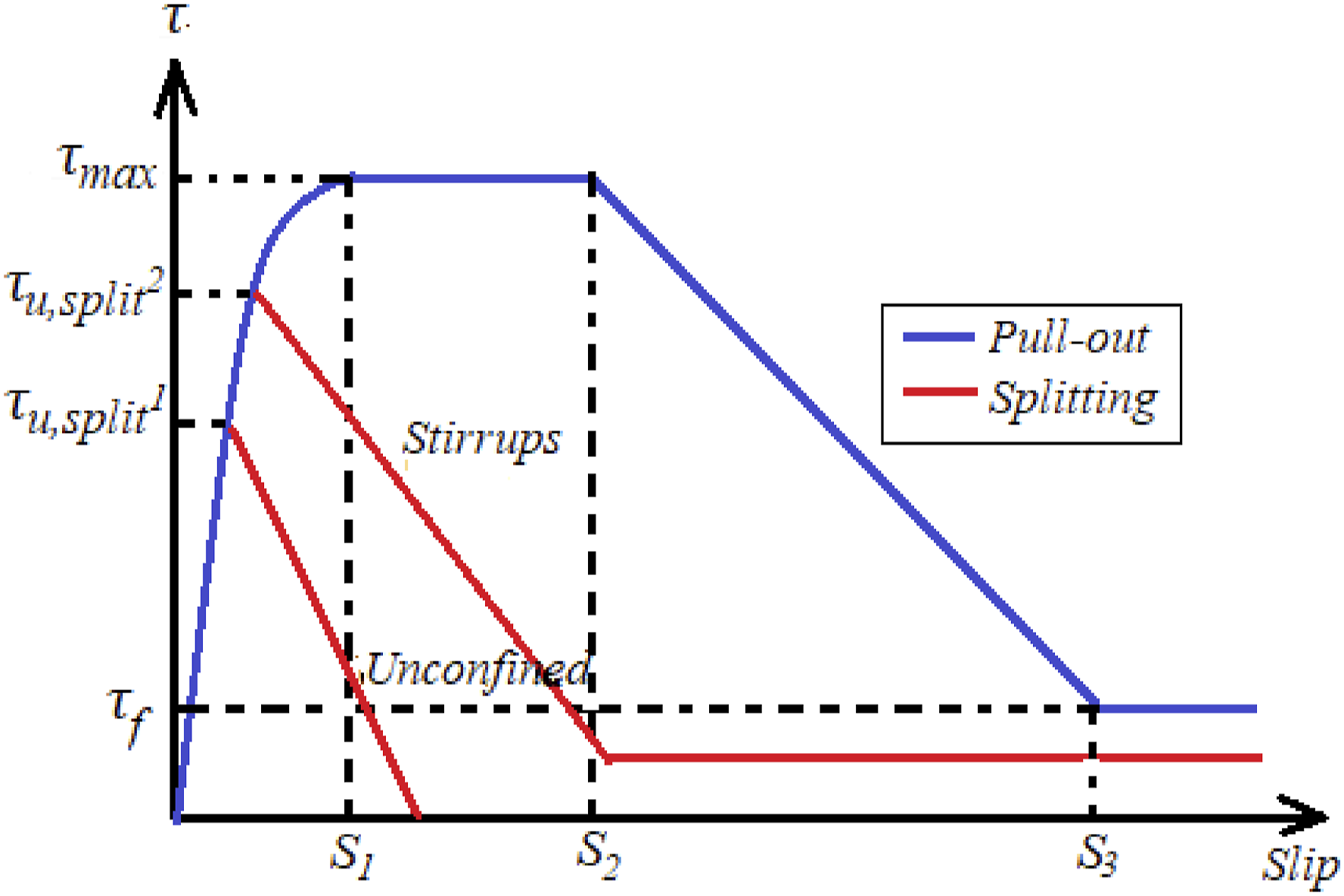
Proposed model for bond stress-slip trend from CEB-FIP Model Code (2010).
In addition, to calculate the third part of the bond stress-slip performance, the constant part of the figure should be measured. For those curves with and without the constant part, the following equations are recommended, respectively (CEB-FIP Model Code, 2010):

Furthermore, the following model was proposed including both the second horizontal part 
As shown in Figure 16 and equations (2) to (6), compressive strength was not considered by the CEB-FIP Model Code (2013). Recently, Khaksefidi et al. (2021) generated a novel formula that included the impact of the compressive strength of concrete 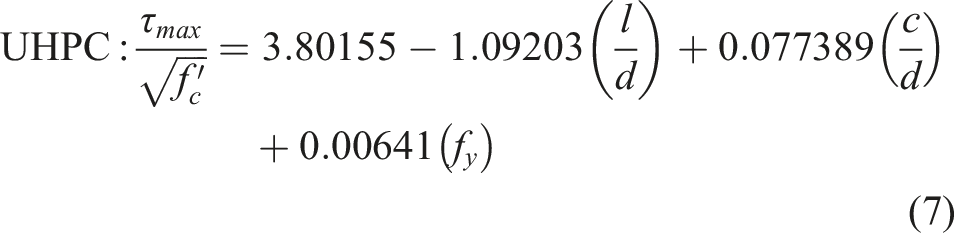



Figures 17 – 20 show the comparison between the experimental results and previous models for HPC and UHPC specimens. Comparison between the experimental results and equations (2) and (5) for HPC specimens. (a) with 12 mm rebar diameter without PF; (b) 12 mm rebar diameter with 0.5%PF; (c) 12 mm rebar diameter with 1.0%PF; (d) with 16 mm rebar diameter without PF; (e) 16 mm rebar diameter with 0.5%PF and (f) 16 mm rebar diameter with 1.0%PF. Comparison between the experimental results and equations (2) and (6) for HPC specimens. (a) with 12 mm rebar diameter without PF; (b) 12 mm rebar diameter with 0.5%PF; (c) 12 mm rebar diameter with 1.0%PF; (d) with 16 mm rebar diameter without PF; (e) 16 mm rebar diameter with 0.5%PF and (f) 16 mm rebar diameter with 1.0%PF. Comparison between the experimental results and equations (2) and (5) for UHPC specimens. (a) with 12 mm rebar diameter without PF; (b) 12 mm rebar diameter with 0.5%PF; (c) 12 mm rebar diameter with 1.0%PF; (d) with 16 mm rebar diameter without PF; (e) 16 mm rebar diameter with 0.5%PF and (f) 16 mm rebar diameter with 1.0%PF. Comparison between the experimental results and equations (2) and (6) for UHPC specimens. (a) with 12 mm rebar diameter without PF; (b) 12 mm rebar diameter with 0.5%PF; (c) 12 mm rebar diameter with 1.0%PF; (d) with 16 mm rebar diameter without PF; (e) 16 mm rebar diameter with 0.5%PF and (f) 16 mm rebar diameter with 1.0%PF.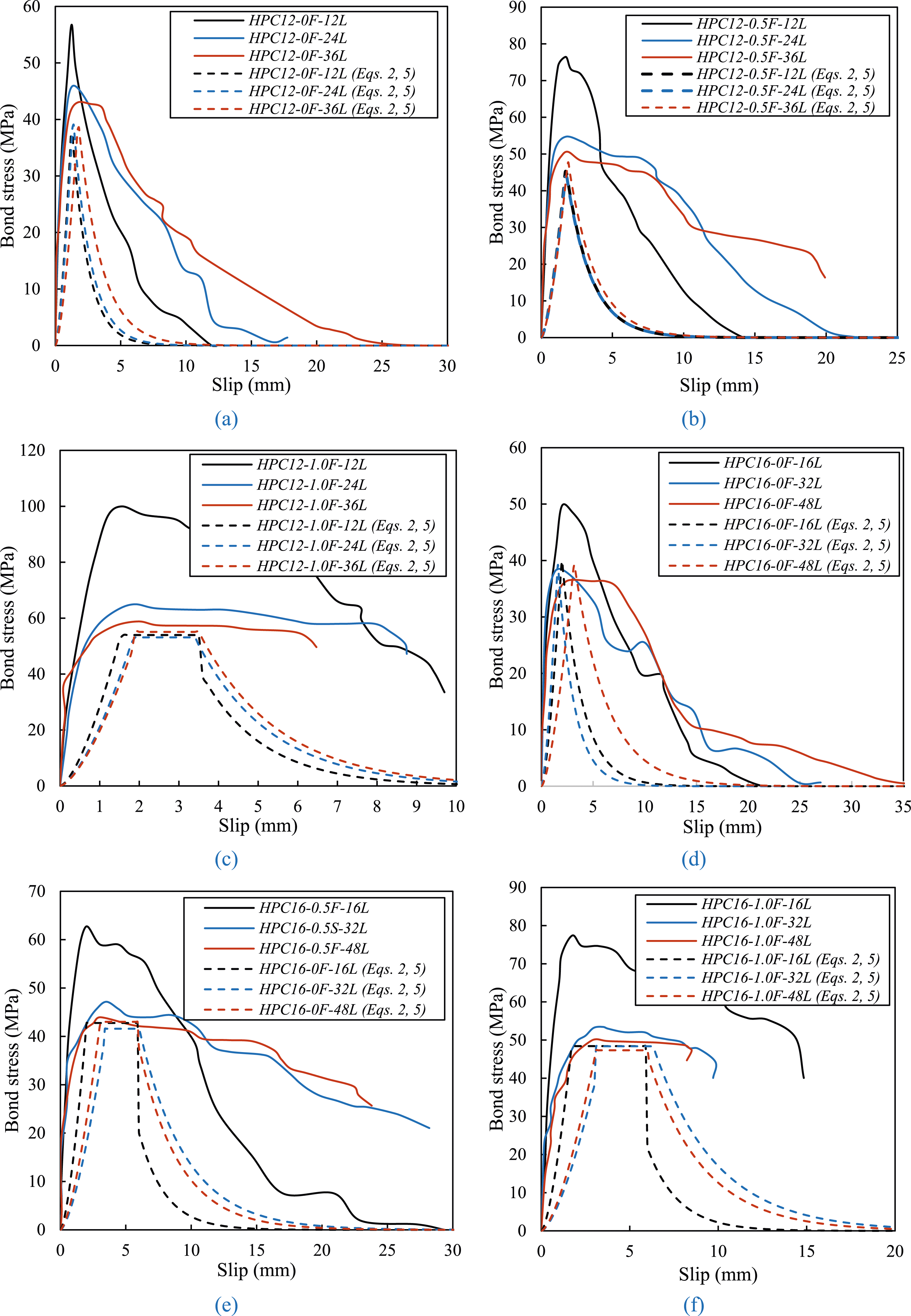
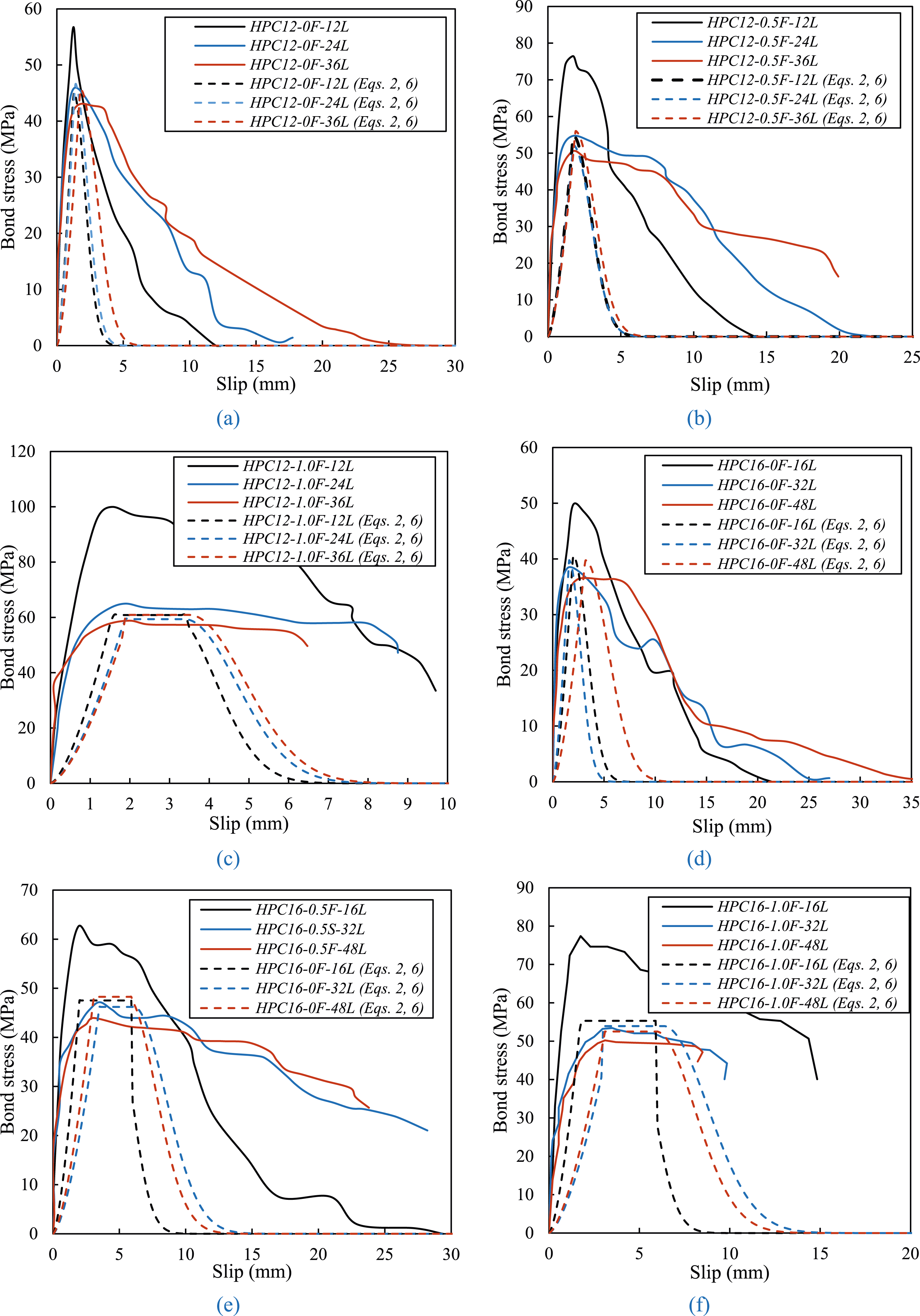
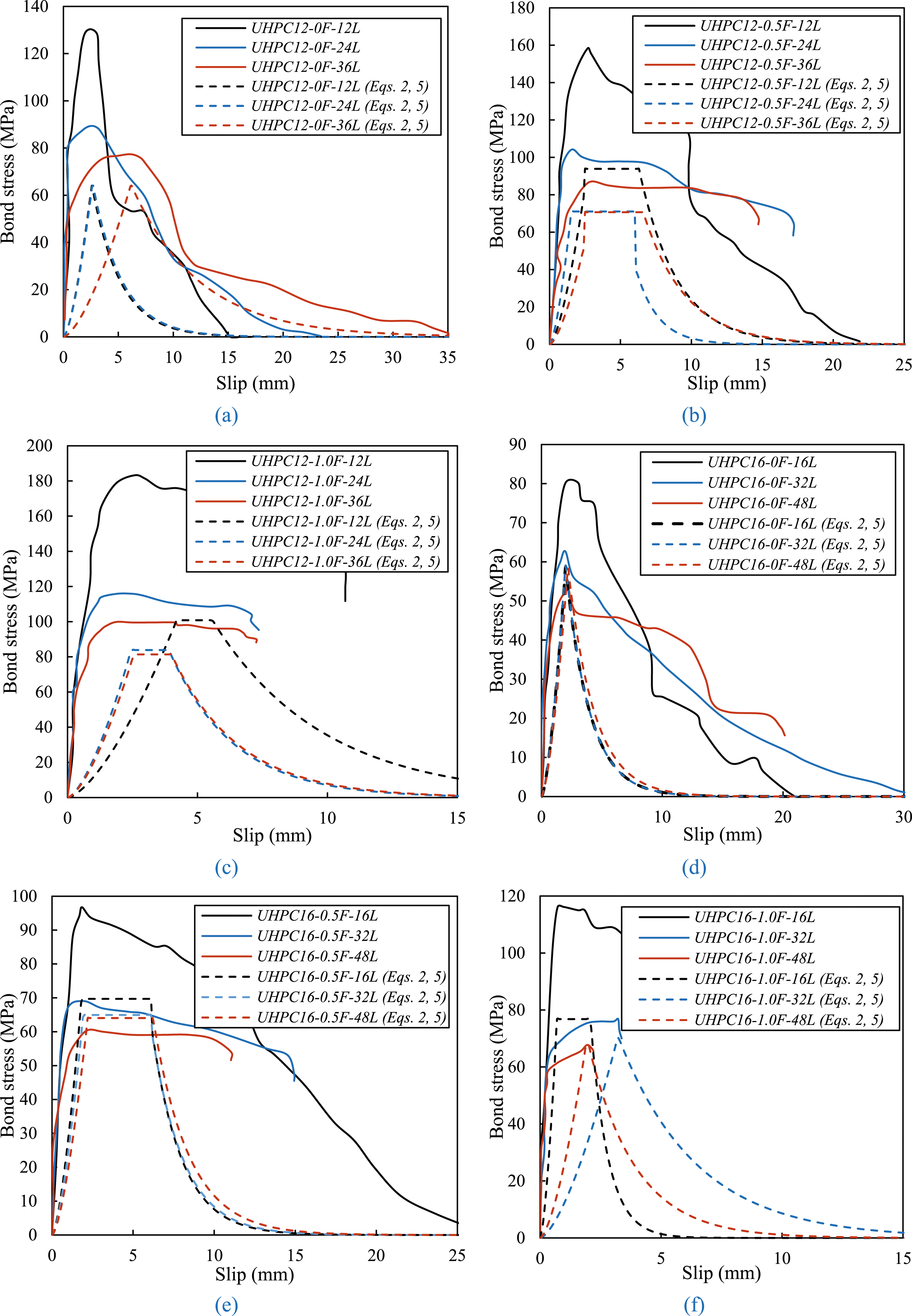
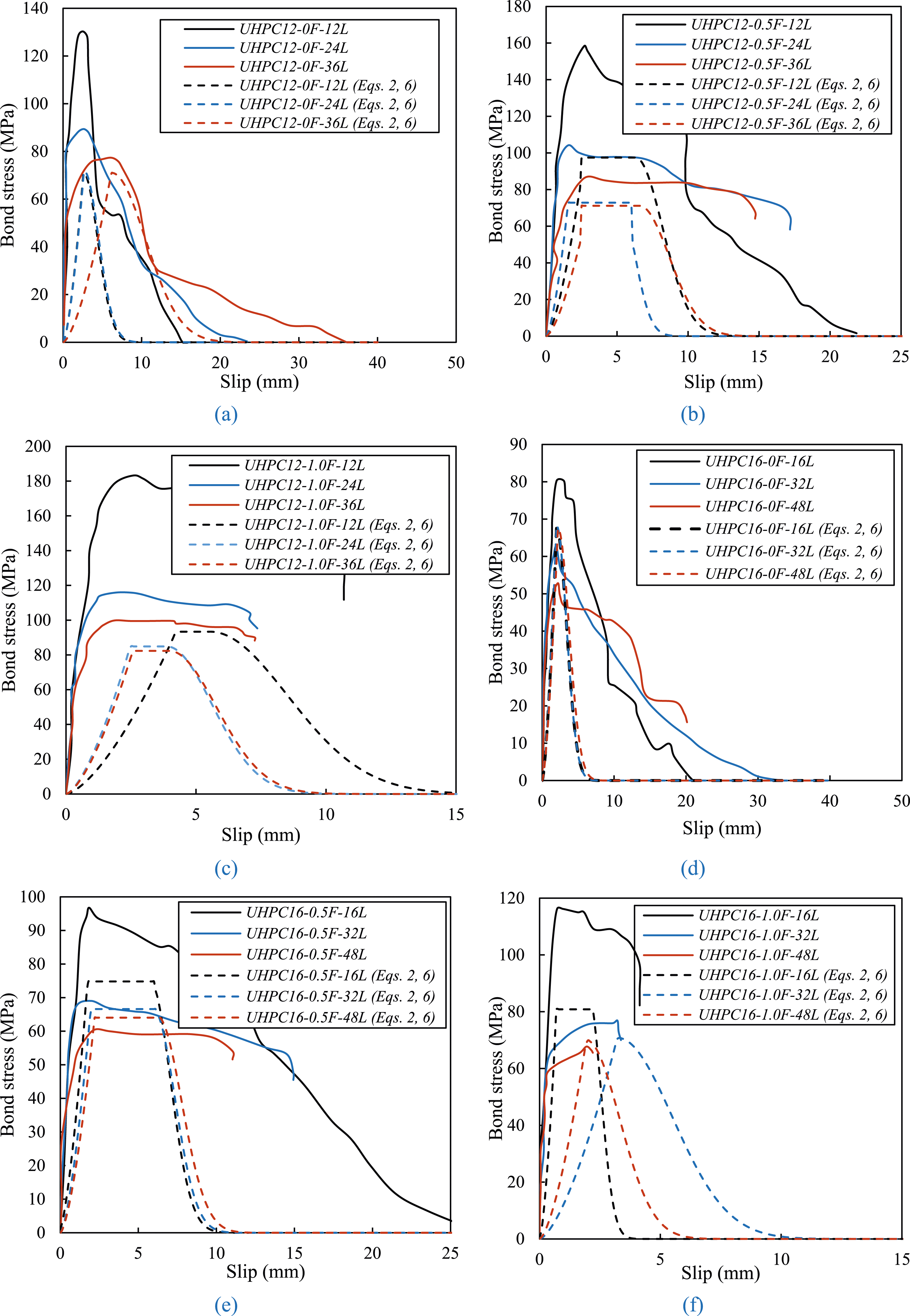
According to Figures 14 – 17, the proposed model by Khaksefidi et al. (2021) can be used as an efficient tool to predict the maximum bond stress
New models development
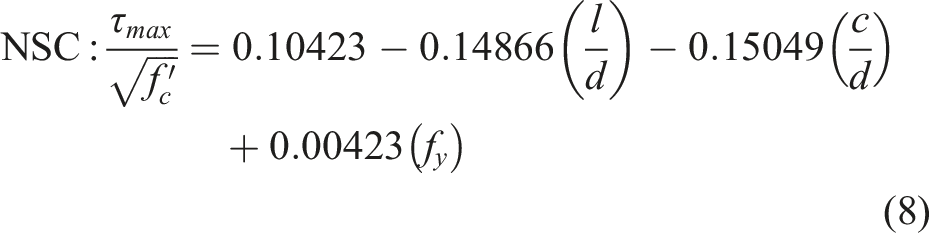
Another effective parameter considered in this study is the PF content. The previous investigation evaluated the impact of SF on the bond-slip characteristics of rebars. In this respect, Alkaysi and El Tawil (2017) and Yoo and Shin (2018) assessed the impact of SF on the bond resistance of UHPC. However, they did not generate a novel formula for the case when fibres are used. According to previous studies, fibres significantly affect the bond-slip performance of rebars due to increasing the tensile strength of concrete and adhesion between the reinforcement bars and concrete as well as reducing the width of the cracks. Therefore, in this study, based on experimental results and previous studies, two new models have been developed as described below: (1) Simple formula: This model has been developed considering the compressive strength of plain concrete with the effect of PF incorporation by defining a modification factor. (2) Complex formula: This model has been developed considering more effect variables including concrete cover over rebars and yield strength of rebars as well as PF content. This model has been established based on the equations presented by previous study (Khaksefidi et al., 2021).
Therefore, the methodology and structure of the proposed models could be explained below:
Simple formula
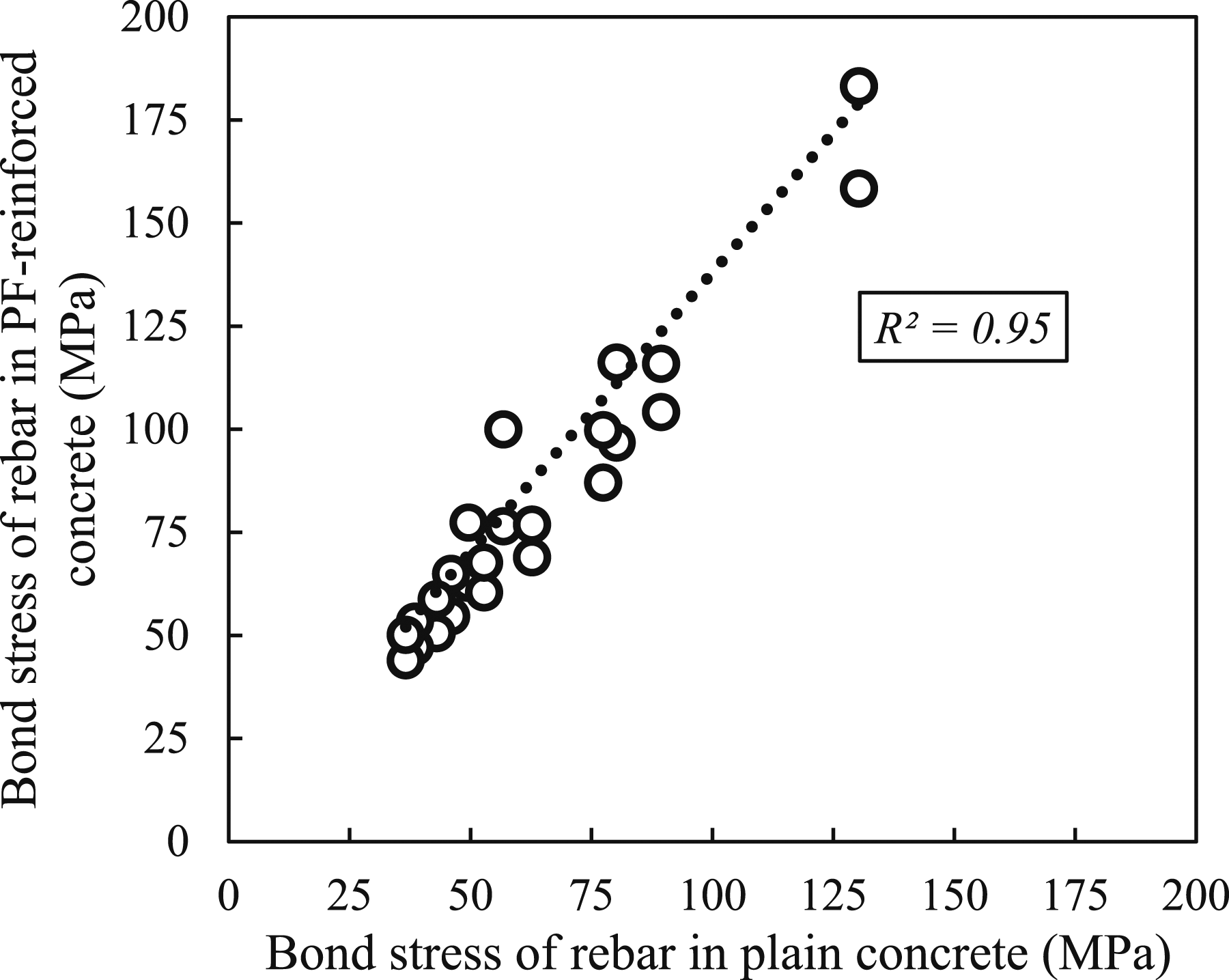
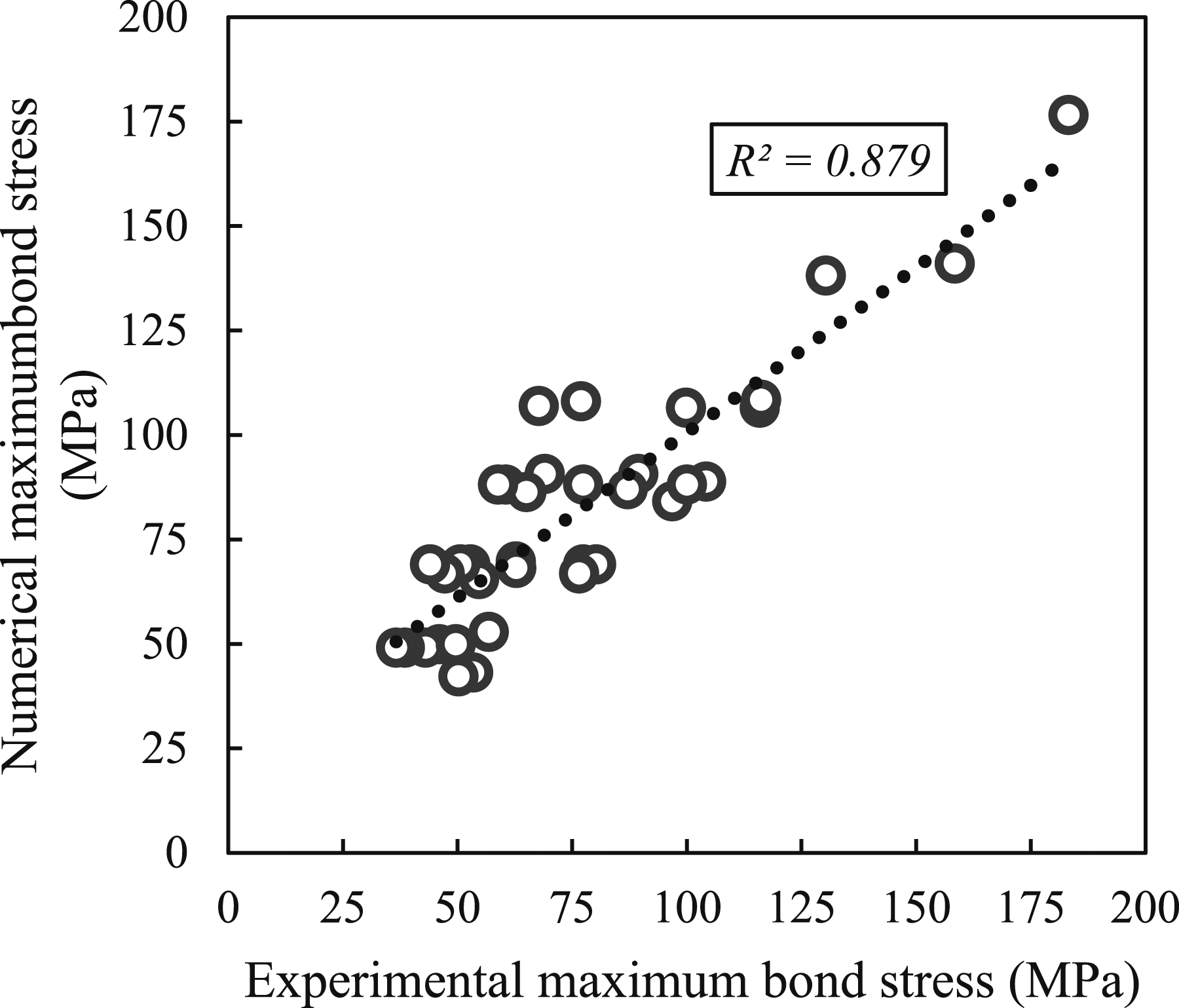
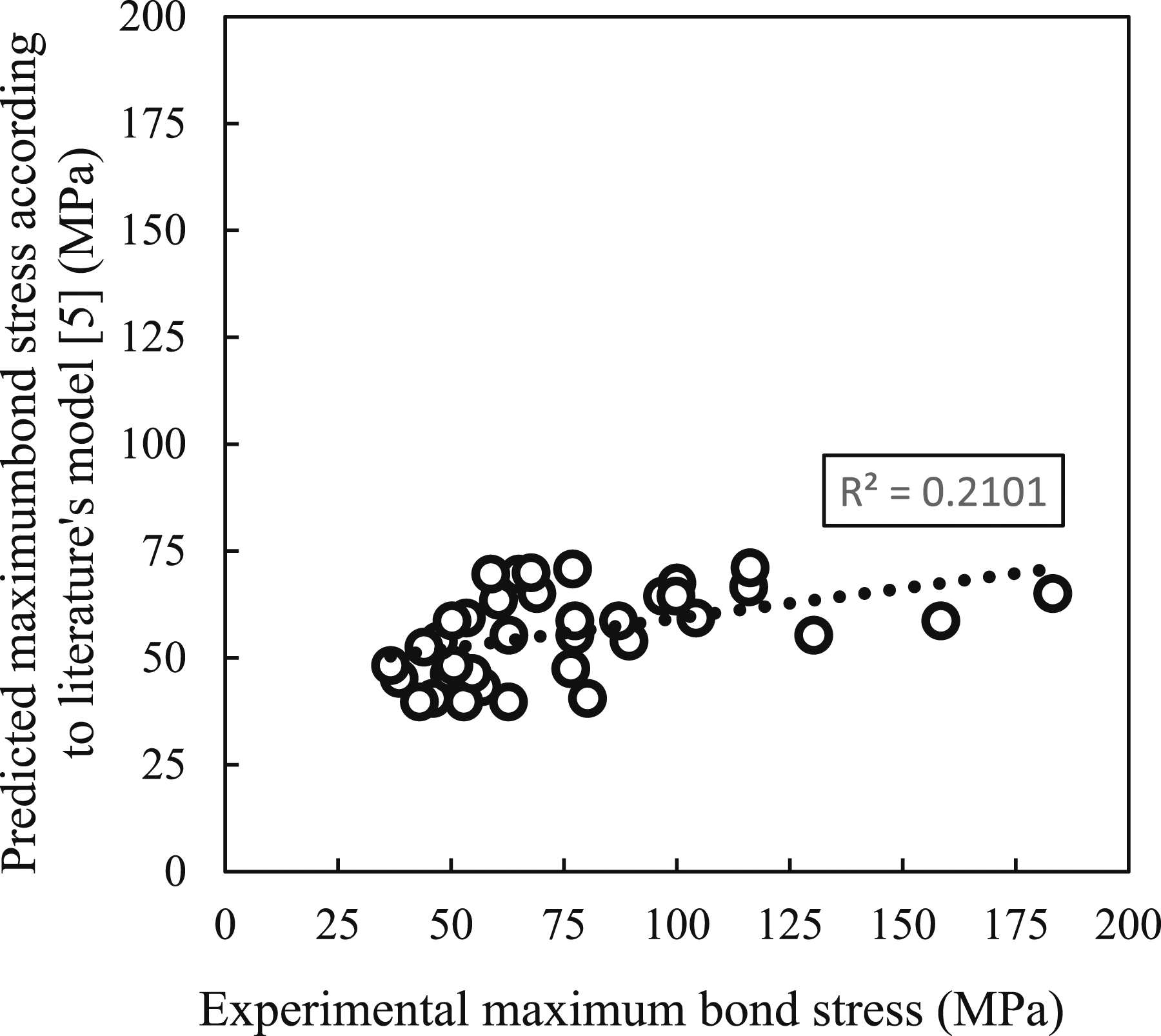
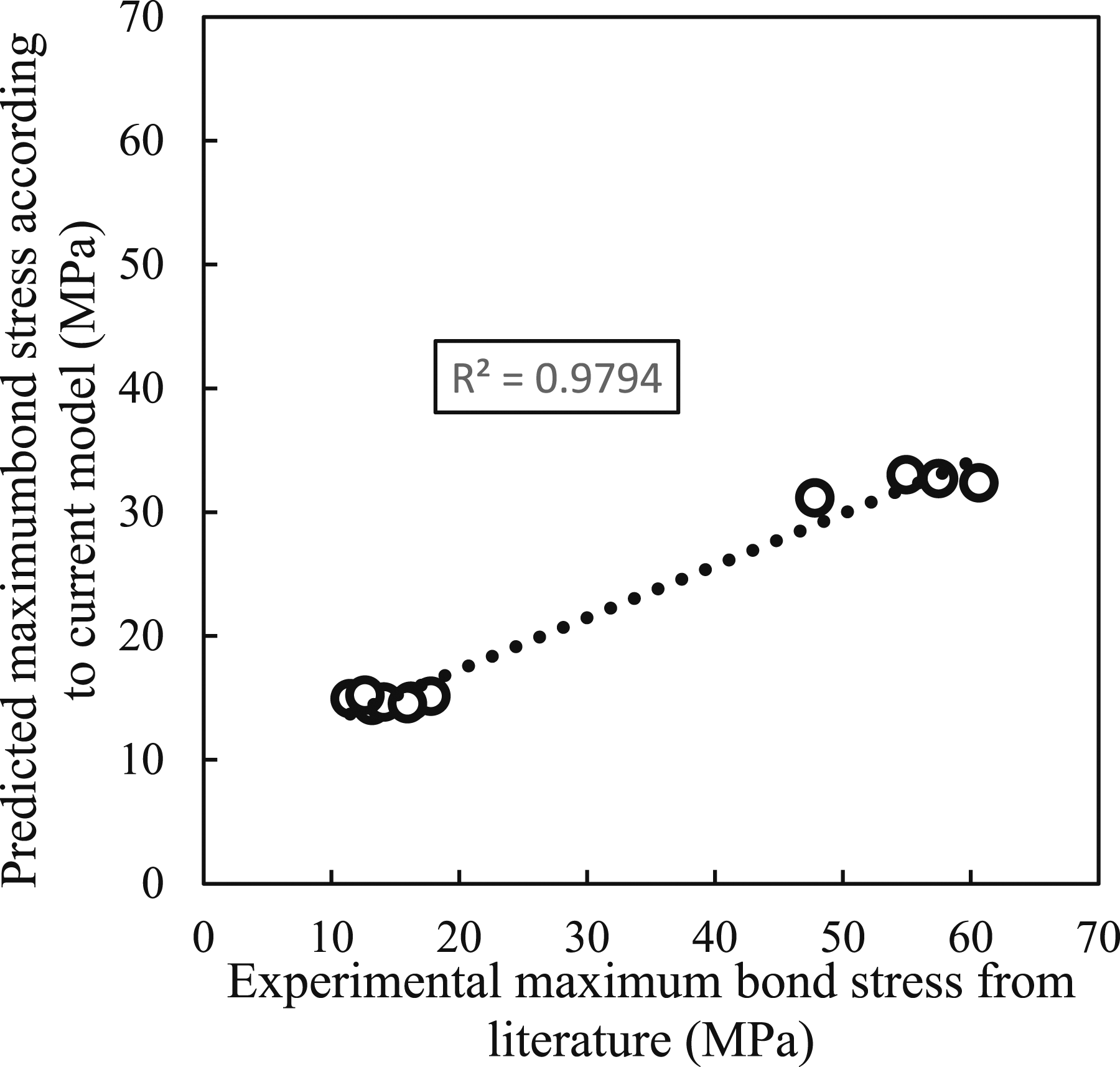
In this section, to present a novel formula, the compressive strength of plain concrete (without PF) was used, and the influence of PF was taken into account as a modification factor for the case when PF is used. For this aim, the proposed model by Khaksefidi et al. (2021) was employed as an extremely precise formula to estimate the bond-slip performance of HSS in HPC and UHPC, and then a nonlinear regression was performed between the experiments and those obtained numerically to find the modification factor. The contribution of independent factors to the prediction of dependent variables is ascertained using a regression analysis. It is appropriate to use multivariate regression analysis to examine how different independent factors affect the dependent variable. The simplest approach for fitting a function that has been documented is linear regression, which is also one of the oldest prediction techniques. The important variables are first found and chosen, and then the regression variables are added to the model using the backward technique. This approach involves first adding each independent variable to the equation and measuring each variable’s impact on the dependent variable. However, the ineffective and weaker variables are gradually eliminated from the equation one by one until the significance test error is reduced to 10% or below. Important variables are known and are included in the equation when using this strategy. Consequently, the proposed technique can be used as a useful tool for plain and PF-reinforced HPC and UHPC specimens, using the nonlinear regression method considering previous models as follows: Correlation between the maximum bond stress of HSS ribbed rebars in plain and PF-reinforced specimens. Correlation between the maximum bond strength obtained from experimental results and equation (12). Prediction according to the available model (Khaksefidi et al., 2021). Prediction with the new model for relevant tests from the literature (Khaksefidi et al., 2021).
Complex formula
In this section, using the model developed by literature, the following models were put forward to determine the bond-slip characteristics of HSS ribbed rebars in plain and PF-reinforced HPC and UHPC specimens considering the effect of more effective variables such as concrete cover and yield strength of rebars. Therefore, these equations have been established based on literature and it has been tried to develop a previous model with higher accuracy to consider the effect of more variables including fibers content. It should be noted that for plain HPC and UHPC, using equations (13) and (14) with equations (2) and (5) is enough. However, for PF-reinforced concrete, the horizontal behaviour of bond-slip behaviour 

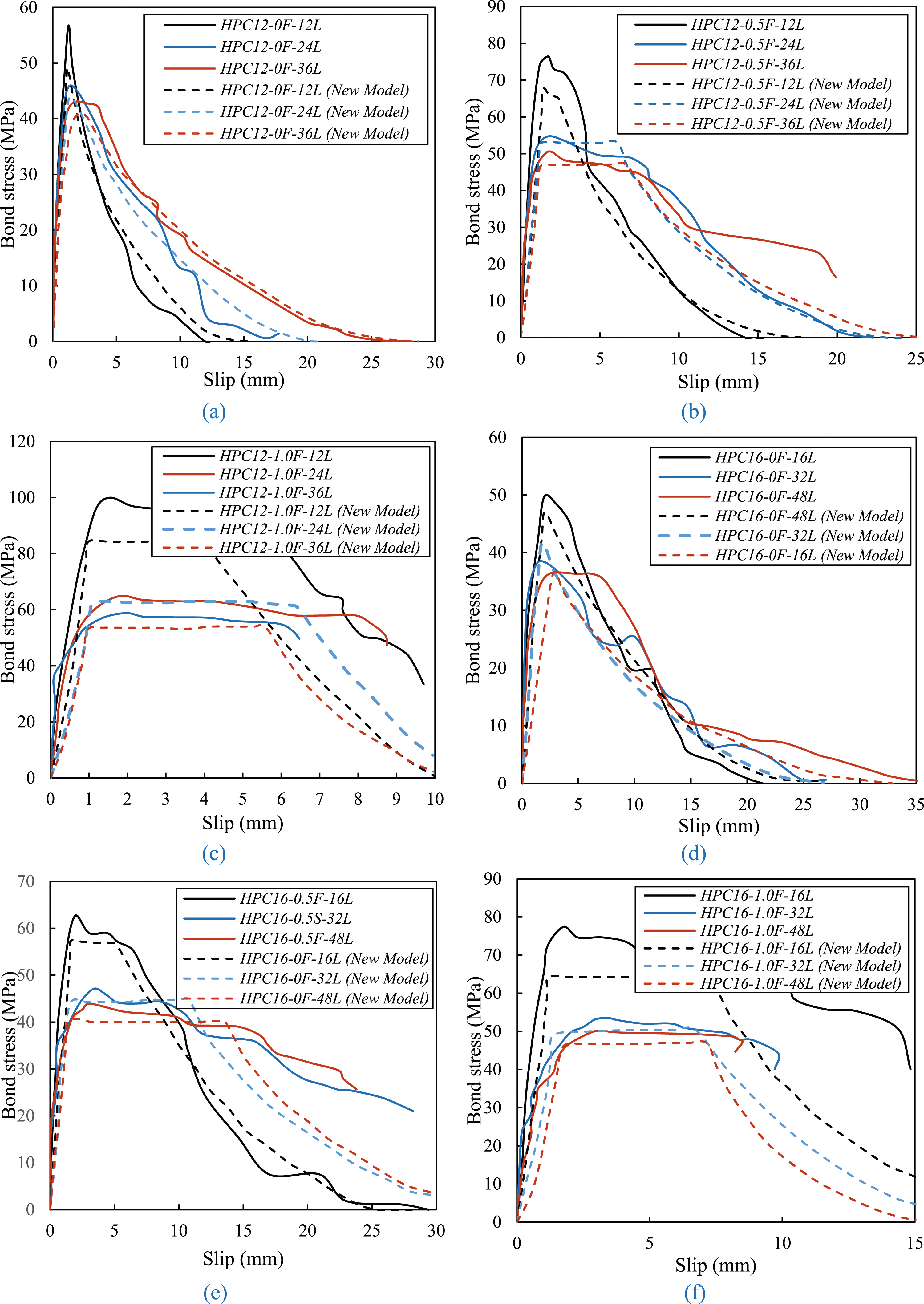
Comparison between the experimental results for HPC specimens and new models (equations (13) and (14)). (a) with 12 mm rebar diameter without PF; (b) 12 mm rebar diameter with 0.5%PF; (c) 12 mm rebar diameter with 1.0%PF; (d) with 16 mm rebar diameter without PF; (e) 16 mm rebar diameter with 0.5%PF and (f) 16 mm rebar diameter with 1.0%PF.
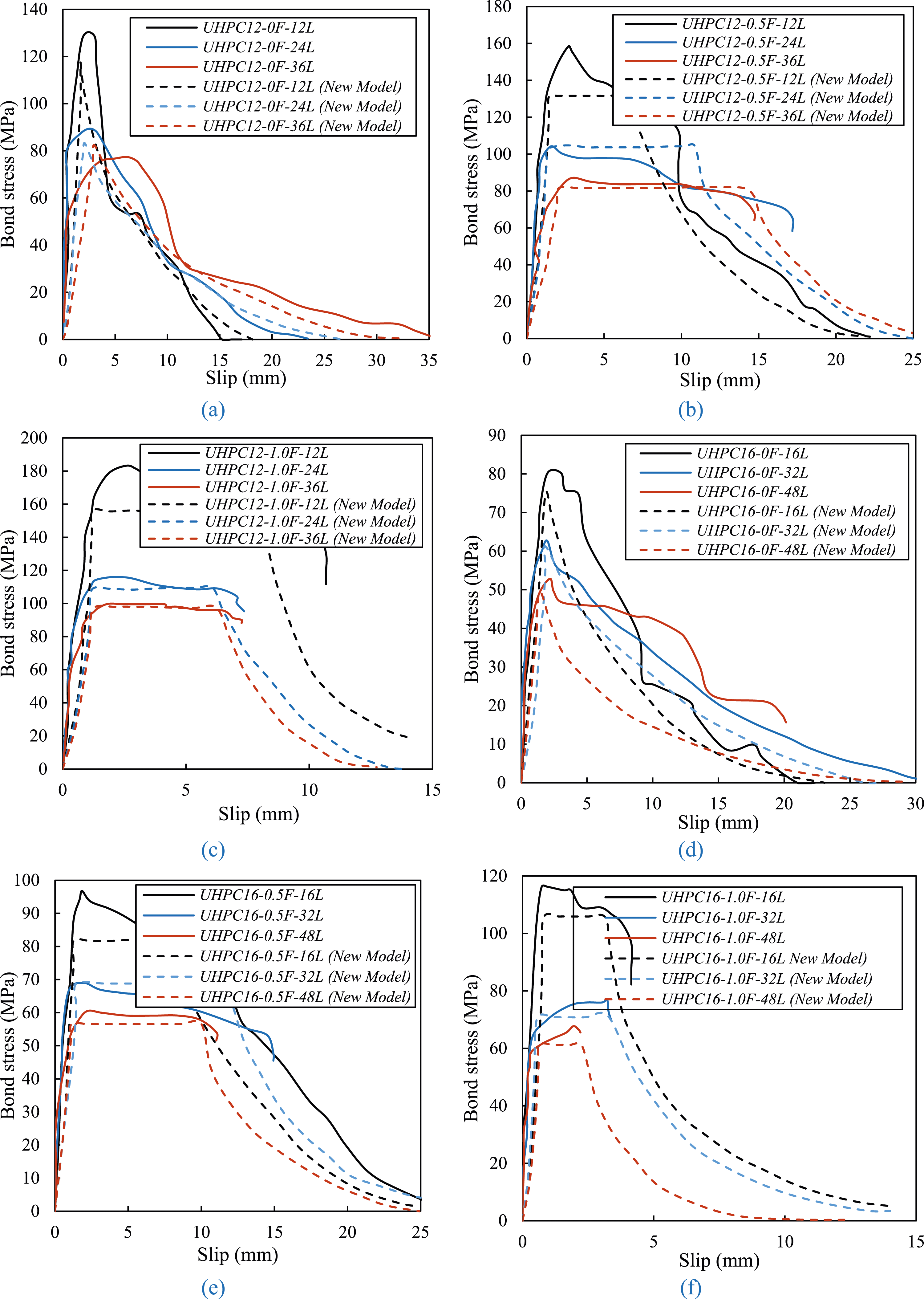
Comparison between the experimental results for UHPC specimens and new models (equations (13) and (14)). (a) with 12 mm rebar diameter without PF; (b) 12 mm rebar diameter with 0.5%PF; (c) 12 mm rebar diameter with 1.0%PF; (d) with 16 mm rebar diameter without PF; (e) 16 mm rebar diameter with 0.5%PF and (f) 16 mm rebar diameter with 1.0%PF.
Conclusions
In this study, the bond-slip performance of HSS rebars in PF-reinforced HPC and UHPC were investigated. In addition, the effect of PF content, the diameter of reinforcement and the embedded length of rebar in concrete were taken into account. Specimens were tested under a pull-out setup. Additionally, the results were compared with previous models and novel models were proposed to predict the bond-slip characteristics of HSS rebar in plain and PF-reinforced HPC and UHPC. According to the obtained results, the following conclusions could be drawn: (1) Slip between the HSS rebar and concrete declined with the use of PF and it further declined in UHPC. Conversely, the load-bearing capacity of specimens was significantly enhanced when PF were added. However, in HPC specimens reinforced with (2) The failure modes were significantly influenced by the use of PF. With an increase in the embedded length, the bond resistance considerably increased especially for UHPC. Adding 1% PF, especially in UHPC significantly increased the bond resistance between the rebar and concrete and failure happened with rebar yielding; (3) In UHPC specimens, the bond resistance significantly improved and slip decreased by adding PF. Therefore, by adding PF, the stress transfer path considerably increased when the bond length also increased. Therefore, adding 1% PF in HPC specimens reinforced with 16 mm rebar declined the slip of rebar with l
b
/d
b
of 1, 2 and 3 by about 31%, 63.5% and 79%, respectively; (4) The slip corresponding to maximum bond stress in UHPC is less than in HPC. In addition, the descending branch of the bond stress-slip curves in UHPC is sharper than in HPC; (5) The developed models, with high agreement with the experimental results, can be used as efficient and accurate tools to predict the maximum bond stress and bond-slip performance of HSS rebars in plain and PF-reinforced HPC and UHPC.
Considering the results presented in this study, it is highly recommended for future investigations to consider the effect of more variables such as concrete cover, yield strength of rebars, other types of fibers, etc. Also, it is suggested to develop a numerical analysis which allows assessing the effect of more variables and developing the current results.
Footnotes
Declaration of conflicting interests
The author(s) declared no potential conflicts of interest with respect to the research, authorship, and/or publication of this article.
Funding
The author(s) received no financial support for the research, authorship, and/or publication of this article.
