




Abstract
Critical global challenges, such as climate change and the insufficient availability of resources, mean that it is a pivotal time to make cities more intelligent, efficient, and sustainable in a drive towards a net-zero carbon future. This requires intelligent, interactive, and responsive structural health monitoring (SHM) to assure the longevity and safety of ageing infrastructure. Drones have the potential to revolutionise SHM. Drone-based SHM (as a potential fly-by technique) involves equipping drones with various sensors, or using inbuilt sensors, to capture data and images of structures from different angles and perspectives. The data is then processed and analysed to facilitate accurate assessment of the structure’s health and early diagnosis of damage. Although the use of fly-by is relatively new, the speedy advances in various technologies that could be integrated with it, such as computer vision with artificial intelligence, deep learning, and links to digital twins, put these systems on the verge of a potential breakthrough. This paper provides an overview of fly-by SHM technique using both scientometric and qualitative systematic literature review processes, in order to provide a distinct understanding of the state of the art of research. As an original contribution, our research identified four main clusters of research within the field of fly-by SHM: (1) the application of UAV-enabled vision-based monitoring; (2) the integration of drones, advanced sensor technologies, and artificial intelligence; (3) drone-based SHM integrating modal analysis, energy harvesting, and deep learning; and (4) automation and robotics in drone-based SHM. The paper highlights the integration of new technologies such as artificial intelligence, machine learning, and sensors with the fly-by technique for SHM, identifies the gaps in current fly-by SHM research, and suggests new directions for research.
Keywords
Introduction
Structural health monitoring (SHM) is a growing field in civil engineering and can play a pivotal role in maintaining and ensuring the longevity and safety of critical civil engineering infrastructure. Damage in civil engineering infrastructure can be an accumulative process which affects the structure until it reaches a point of losing the ability to function safely. For example, the corrosion of steel reinforcing bars in concrete accelerates after initiation. Hence, the significance of early diagnosis in structures is similar to that in healthcare, where early and accurate diagnosis of illness can be significant for timely intervention, enabling tailored treatment that can improve a patient’s prognosis and expedite recovery. Human bodies are magnificent structures that can feel and detect changes and react accordingly. This is due to the human nervous system, which acts as a highly advanced information-gathering system, sensing the environment and providing information about hidden problems through symptoms, thus allowing for appropriate action to keep the body safe. This can be compared to structures where sensors can be provided to monitor changes such as pressure, temperature, and vibration. These sensors would provide information about hidden deficiencies, give warnings, save lives, assure safety, and enable informed strategic budget allocation for repair and maintenance (Figure 1). In the last two decades, there have been more than a hundred major bridge collapses worldwide (Zhang et al., 2022). In 2018, the Morandi Bridge in Italy collapsed, causing 43 deaths and significant economic damage (Calvi et al., 2019). Hence, monitoring the network of civil engineering infrastructure over time and extracting valuable information via SHM can act as an early warning and prevent reaching the critical point of failure during the service life of structures (Bao et al., 2019; Li et al., 2006; Lydon et al., 2019b). The financial cost of repairing faults as they approach the critical phase is enormous, but if damage is prevented at an early stage, informed decisions can be made before the structures are damaged beyond repair (Zonta et al., 2014). Informed decision-making can also assist in the allocation of stretched budgets for prioritising the maintenance of the most critical assets. Global warming poses new challenges, with more frequent and extreme events, increasing the risks to our infrastructure. Heatwaves can induce thermal expansion and raise the incidence of material cracking that threatens the structural integrity (Hossain et al., 2020; Zhou and Yi, 2013). Moreover, the materials used in constructing these infrastructures can deteriorate faster under flood events, increasing the potential for scour in bridges that could lead to serious failure, such as what happened with the Morandi Bridge (Calvi et al., 2019). The increasing occurrence of wildfires, often associated with heatwaves, poses direct threats to structures (Dennison et al., 2014). As the threat of global warming intensifies, early detection and ongoing monitoring offer a chance to extend the life and safety of critical infrastructures. SHM to assess structure health (analogous to medical testing of humans).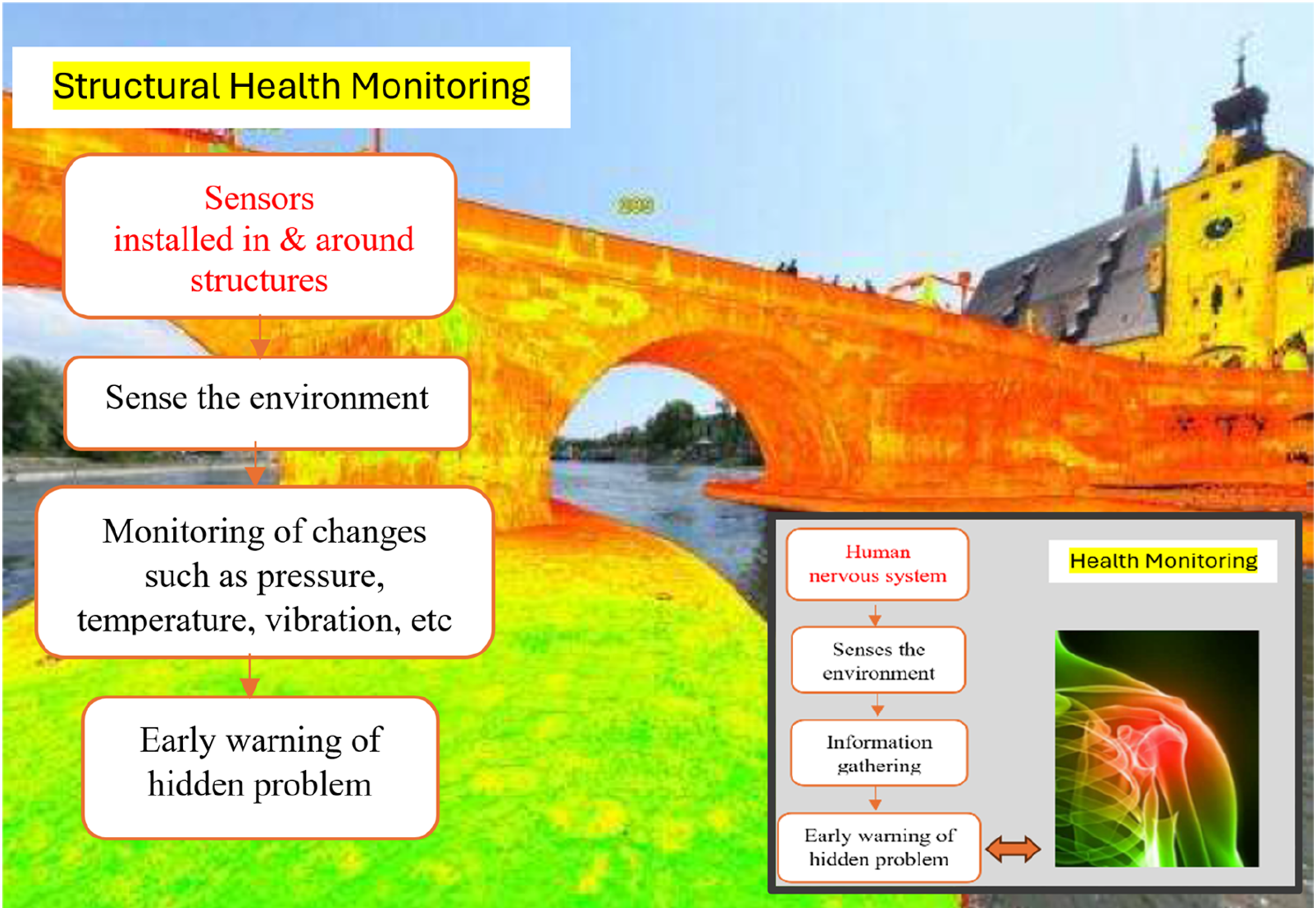
Structural health monitoring (SHM) is the technical method of non-destructively assessing various aspects related to the condition of a structure during its operation. This encompasses the gathering and analysis of information pertinent to the health and integrity of structures. It involves assessing safety ratings, damage, and employing whole-life prediction modelling. SHM is integral to ensuring the longevity and safety of engineering systems by providing critical insights into their current condition and projecting their future performance (Douglas E. Adams, 2007). Sensing is an essential aspect of SHM. The specific goals of an SHM initiative, along with factors such as the nature and scale of the civil structures involved, their geographic positions, accessibility, prevailing weather conditions, and economic considerations, dictate the selection of sensing technologies. Both contact and non-contact sensors, supported by wired and wireless networks, including Internet of Things (IoT) platforms, are primarily utilised. These systems are designed to capture a wide range of structural behaviours as well as significant environmental and operational information, facilitating the transmission of this data to both local storage solutions and cloud-based servers for analysis and decision-making (Sarmadi et al., 2023). Contact sensors, including accelerometers, strain gauges, piezoelectric transducers, fibre optic sensors, linear variable differential transformers, thermocouples, and anemometers, among others, are directly integrated into civil structures. These sensors are deployed to capture key structural reactions, such as acceleration, strain, and displacement, or to monitor environmental conditions, including temperature and wind speed and direction. Conversely, non-contact sensors represent a more recent addition to the field of SHM, functioning without direct attachment to the structures themselves. These sensors, typically operating from a distance, are employed to capture optical images and videos. They utilise a range of technologies, from commercial digital and high-speed cameras to video cameras, as well as optical and synthetic aperture radar imagery obtained through satellite sensors. This technology includes smartphone sensing technology.
More recently, there have been advances in technologies that can change the way we live by moving towards ‘smart’ cities, where services and networks are more efficient through the use of digital and telecommunication technologies (Khan et al., 2016; Li et al., 2006; Ozer and Feng, 2019; Xu et al., 2016; Zhu and Law, 2015). These technological advances coexist with the need to adapt to sustainable solutions that ensure efficient consumption of our natural resources and make cities more intelligent and efficient while driving towards our net-zero carbon future. This requires intelligent infrastructure through interactive and responsive SHM, which is on the verge of a breakthrough when integrated with digital transformation in the monitoring, processing, and analysis of information in real time (Noel et al., 2017; Tokognon et al., 2017). Effective SHM requires comprehensive and precise data collection, often from hard-to-reach or hazardous areas. It demands regular and consistent monitoring to capture any degradation progress or process due to the effect of changing loading or environmental conditions on the structure. Moreover, real-time or near real-time data processing is desirable for rapid assessment and decision-making. This is where new technologies play a vital role in future SHM (Ko and Ni, 2005; Lydon et al., 2012; Pedram et al., 2021).
Drone or Unmanned Aerial Vehicle (UAV) technology has the potential to meet the requirements for intelligent infrastructure by enhancing the effectiveness and integration of SHM techniques. Equipped with a variety of sensors, drones can access hard-to-reach areas and reduce human exposure to potentially dangerous situations. They enable structured and repeatable inspections, which are crucial for maintaining temporal consistency in data collection throughout the lifespan of a monitoring project. A built-in accelerometer can also serve as a sensor for modal analysis if the drone is ‘parked’ on a bridge. The data collected by drones can be processed, enabling real-time or near real-time structural assessments (Kressel et al., 2015; Liang et al., 2023). Drones can facilitate the integration of various sensor modalities, including visual, thermal, and LiDAR sensors, providing a comprehensive perspective on structural health (Poorghasem and Bao, 2022; Sony et al., 2019; Wang and Ueda, 2023). Therefore, the use of drones can address the demands of traditional SHM techniques, making them safer, more efficient, and more integrated, leading to more effective structural inspections. The market for drones is expected to double in the next 3 years (Mohsan et al., 2022). This growth is driven by the increasing demand for drones in different applications (Chen et al., 2016). SHM in various industries such as civil engineering, oil and gas, and wind energy is one of these promising applications. Drone-based SHM (UAV-based SHM) is one of the most recent techniques for SHM, as it can be used in a variety of environments, including urban, rural, and remote areas. They can now be used for more than just inspecting large and complex structures, such as bridges, wind turbines, and high-rise buildings that may be difficult or dangerous to access using traditional inspection methods. The use of vision sensors enables the detection of displacements, strains, and crack openings. Drones passing over or flying around a structure can capture data and images, which are used in conjunction with other vision-based techniques, such as computer vision feature tracking, photogrammetry, LiDAR, or infrared thermal (IRT) imaging- where IRT can detect hidden defects (Pedram et al., 2024) - to collect comprehensive and accurate data about the changing health of a structure (Figure 2) (Efstathios et al., 2021; E Polydorou et al., 2021; Poorghasem and Bao, 2022; Rathinam et al., 2008; Tse et al., 2023; Wang and Ueda, 2023). Accelerometers, including built-in systems, can also be used in drones for SHM in various ways (Feng et al., 2019). By measuring the vibrations of a structure using accelerometers on a UAV, it is possible to detect changes in the modal frequency due to stiffness alterations resulting from damage (Feng et al., 2019; Tse et al., 2023). The change in the structure’s modal frequency can be used to quantify damage, such as cracks or deformation, and to inform detailed 2D or 3D models of the structure for analysis and simulation. UAVs have the potential to revolutionise SHM of buildings, bridges, wind turbines, and other critical infrastructures. This technique of collecting information about the health of structures from the sensor data collected by drones is referred to as fly-by in this review. It has the potential to transform how the health of structures is monitored, identifying defects, and predicting potential failures in real-time. Inspection of our bridge infrastructure is usually periodic and involves examinations of structures to detect visible signs of damage or degradation. It relies on the expertise of the inspector to assess the state of the structure, using tools and methods that provide point-in-time evaluations and are often subjective and prone to human error (Pedram et al., 2024). However, SHM is a continuous or semi-continuous process that employs data collection and data analysis techniques to monitor the condition and performance of a structure, potentially in real-time, for ongoing assessment. Drones have been used successfully in the field for inspection tasks, however, with recent technologies, it is now being integrated into more advanced SHM that provides timely insights, coupling traditional inspection tasks with cutting-edge SHM methodologies. The integration of drones with different sensing system for SHM.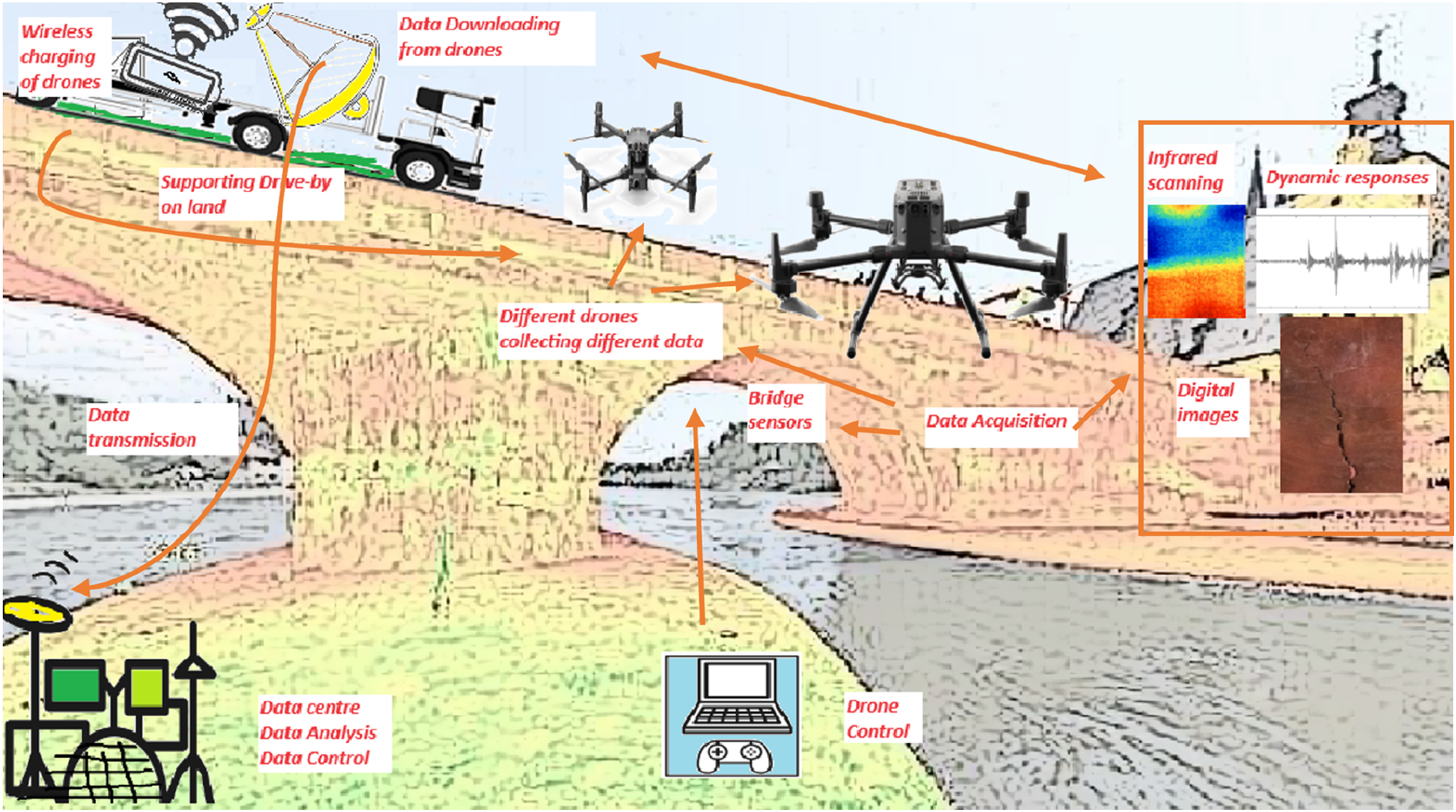
The rapidly increasing demand for drones in SHM has attracted the interest of the research community. Although there is no review on drone-based SHM, recent reviews in the broader field of SHM some insights into the potential use of drones (Ellenberg et al., 2015; Liang et al., 2023; Nooralishahi et al., 2021; Poorghasem and Bao, 2022; Reagan et al., 2018; Sony et al., 2019; Tian et al., 2022; Wang and Ueda, 2023).
While traditional literature reviews offer significant insights, their qualitative and manual nature can introduce a degree of subjectivity. To the authors’ knowledge, there is an evident research gap where no reviews have been conducted on drone-based SHM, nor have any studies sought to establish the intricate connections or operational dynamics among clusters of researchers, journals, and countries engaged in drone-based SHM. Furthermore, the domain lacks a comprehensive analysis that encompasses keyword co-occurrence, evolution, and cluster examination. Recognising these limitations, this paper aims to deliver an unbiased review of drone-based SHM. To achieve this, a combined approach that includes integrating scientometric analysis with a further critical review is presented. Scientometric methods enable systematic literature-related findings (Mingers and Leydesdorff, 2015). This approach identifies potential connections between literature concepts that might otherwise go unnoticed in manual review studies, enabling a more comprehensive overview of the field, which will yield new insights into the developing field. For this scientometric review, the specific objectives were: (1) analysing the stature of drone-based SHM, namely, “fly-by” SHM; (2) analysing the trends and nature of academic publications in the area of drone-based SHM; and (3) science mapping of publication outlets and keywords and defining research clusters. For the further critical systematic literature review, the objective was to explore in more depth the literature from the scientometric analysis, focusing on the methodologies, findings, and implications in the context of drone-based SHM. This further in-depth analysis is presented within the scientometric analysis results to ensure a comprehensive understanding of the latest research, highlighting the trends and the gaps, thus leading to a more comprehensive overview than either method alone can provide. It should be noted that the main aim of this paper is to present a scientometric quantitative review, where the reader is directed to the references being cited to gain more technical depth behind each cluster in the field.
Research methodology
A mixed review approach, scientometric and qualitative systematic literature review, was employed to provide a distinct understanding of the state of the art of research of drone-based SHM. The technique of scientometric analysis, commonly employed for inspecting the advancement of research, offers a lens to examine the scholarly productivity of a country, individuals, academic departments, and academic journals (Mingers and Leydesdorff, 2015) Scientometric analysis emerges from the intersection of information science and bibliometric metrics which focus on a quantitative study and assessment of scientific research. Where publications can be measured and analysed, the scientometric approach seeks to uncover patterns, trends, and networks in scientific literature. The process typically begins with the extraction of bibliographic data from academic databases, followed by rigorous data cleansing to ensure accuracy and consistency. Subsequent stages involve computational and statistical analyses, using tools and techniques ranging from co-citation analysis to network visualisation, offering insights into the structure and dynamics of scientific disciplines (Ivancheva, 2008; Mingers and Leydesdorff, 2015). By charting the flow of research topics and mapping the interconnectivity among researchers and keywords, scientometric analysis provides an overall quantitative view of the evolution and current state of a particular scientific field (Ding and Yang, 2022; Van Eck and Waltman, 2017). It has been widely used to track the chronological progression of research in different fields including construction. This includes areas such as sustainable development (Olawumi and Chan, 2018), the application of artificial intelligence (Darko et al., 2020), computer vision applications (Martinez et al., 2019), and building information modelling (He et al., 2017). This specific approach is employed in this paper in the context of drone-based SHM to map out the area of scientific knowledge systematically and objectively. Meanwhile, the objective of the critical review is to understand and present research themes and corresponding challenges using the scientometric findings as a basis. Figure 3 shows the methodology diagram. Research methodology diagram.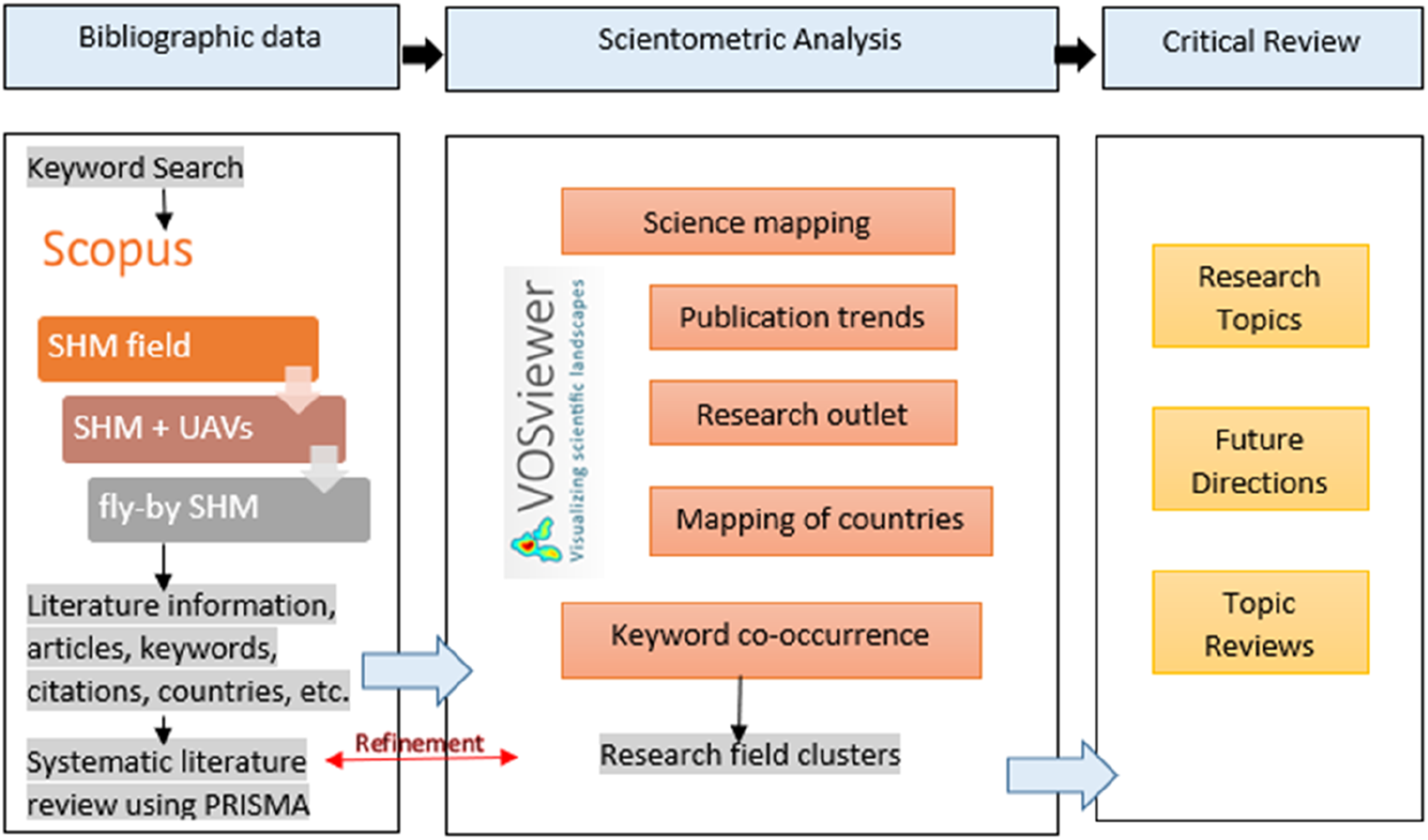
The Scopus database was selected as the literature resource because it offers a more comprehensive coverage of structures-related research compared to other databases (Mongeon and Paul-Hus, 2016). The scientometric analysis was performed in two phases; first, it was conducted on the SHM field in general to determine the stature of UAV-based SHM within the field, and then it focused on the specific topic of drone-based SHM. The analysis in this paper was performed using Scopus analyser, Excel and VOSviewer software tool for science mapping (Ding and Yang, 2022). VOSviewer was chosen due to its features and capabilities that align well with the research’s objectives. It is a tool designed to generate, visualise, and investigate networks in bibliometrics. Systematic literature review was done using the Preferred Reporting Items for Systematic Review and Meta-Analyses (PRISMA) to enhance the reporting quality of review.
Scientometric quantitative analysis
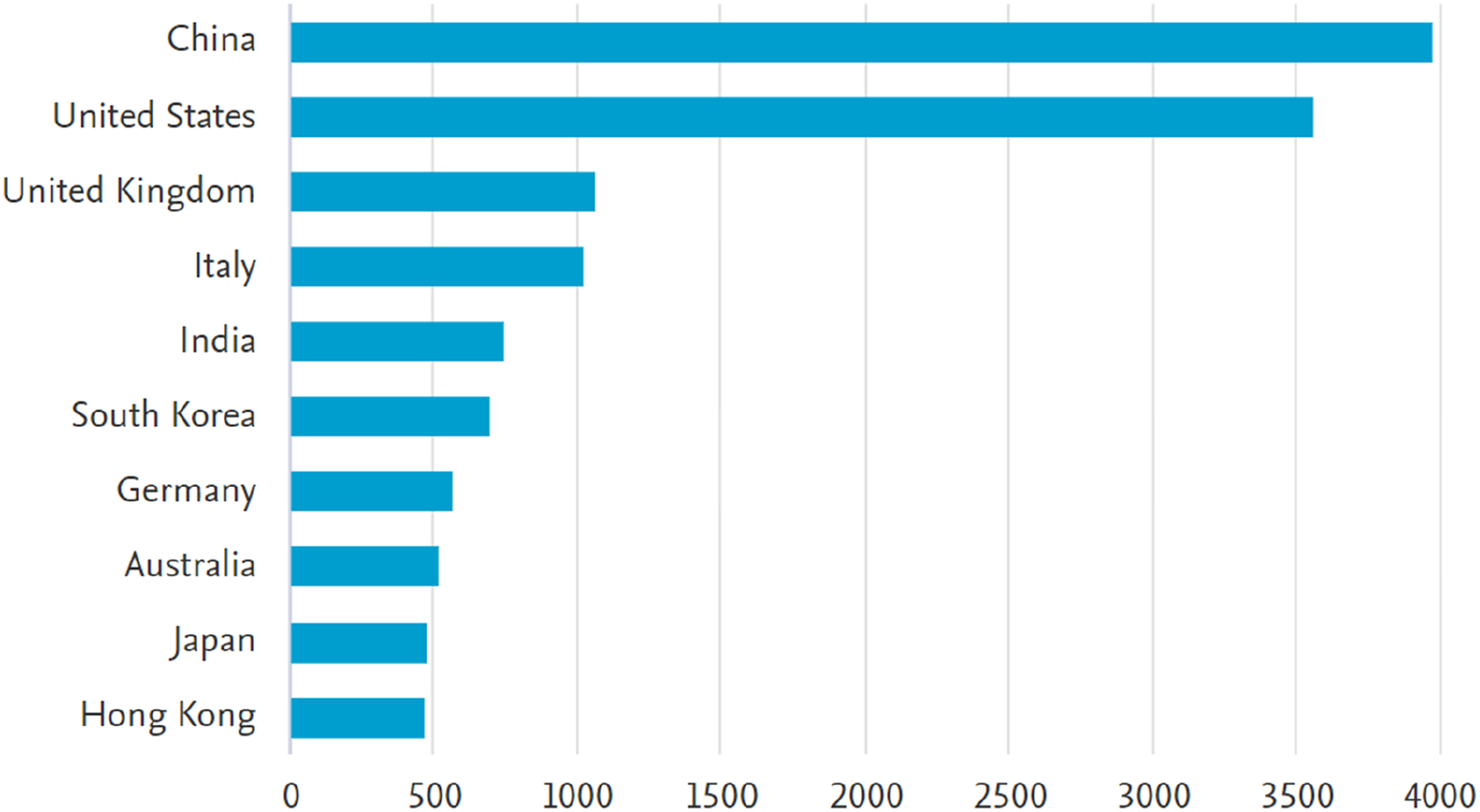
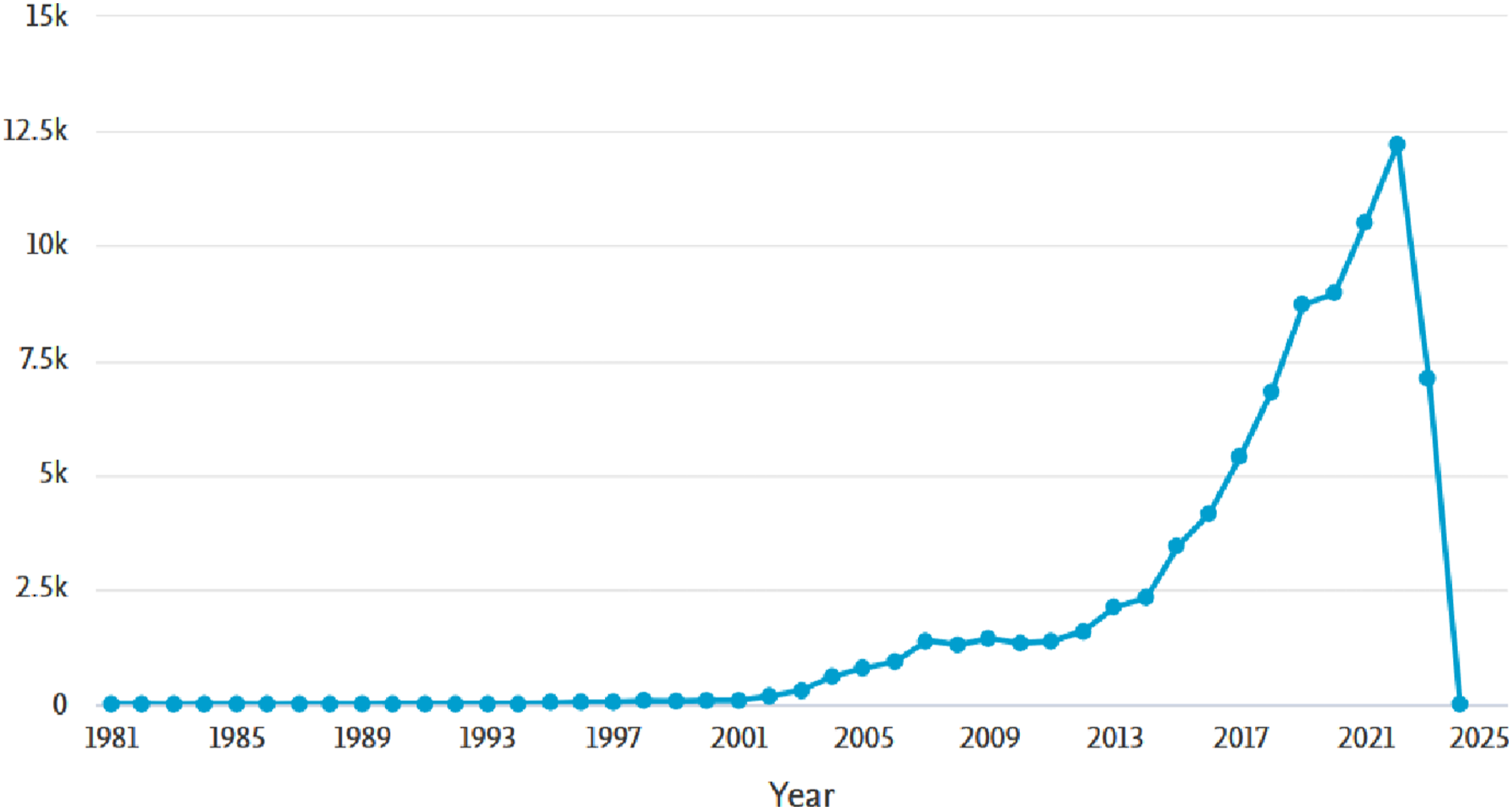
A basic search was conducted on Scopus for all SHM publications. After several rounds of refinement, the field was limited to Engineering to exclude publications related to medical or other fields. Additionally, the language was restricted to English to facilitate tracking keywords without affecting link strength calculations during the analysis. The search query was: TITLE-ABS-KEY (structural AND health AND monitoring) AND (LIMIT-TO ( SUBJAREA, “ENGI”)) AND (LIMIT-TO ( LANGUAGE, “English”)) AND (EXCLUDE (EXACTKEYWORD, “Biological Systems”)). The search resulted in finding 30,466 documents and this includes conference papers, reviews, book chapters and articles. The published articles provide a reflection on the development of a field and how mature the research is. These initial results were screened for articles (13,584 articles) which are presented in Figure 4. The results show that most of the publications (96.955%) were published within the span of the last two decades, from 2003 to 2023. Figure 5 shows the distribution of article publications by country/territory across all aspects of SHM, with China and the United States with the highest volume followed by United Kingdom and Italy. Publications in structural health monitoring over the years. Publications in structural health monitoring by country/territory.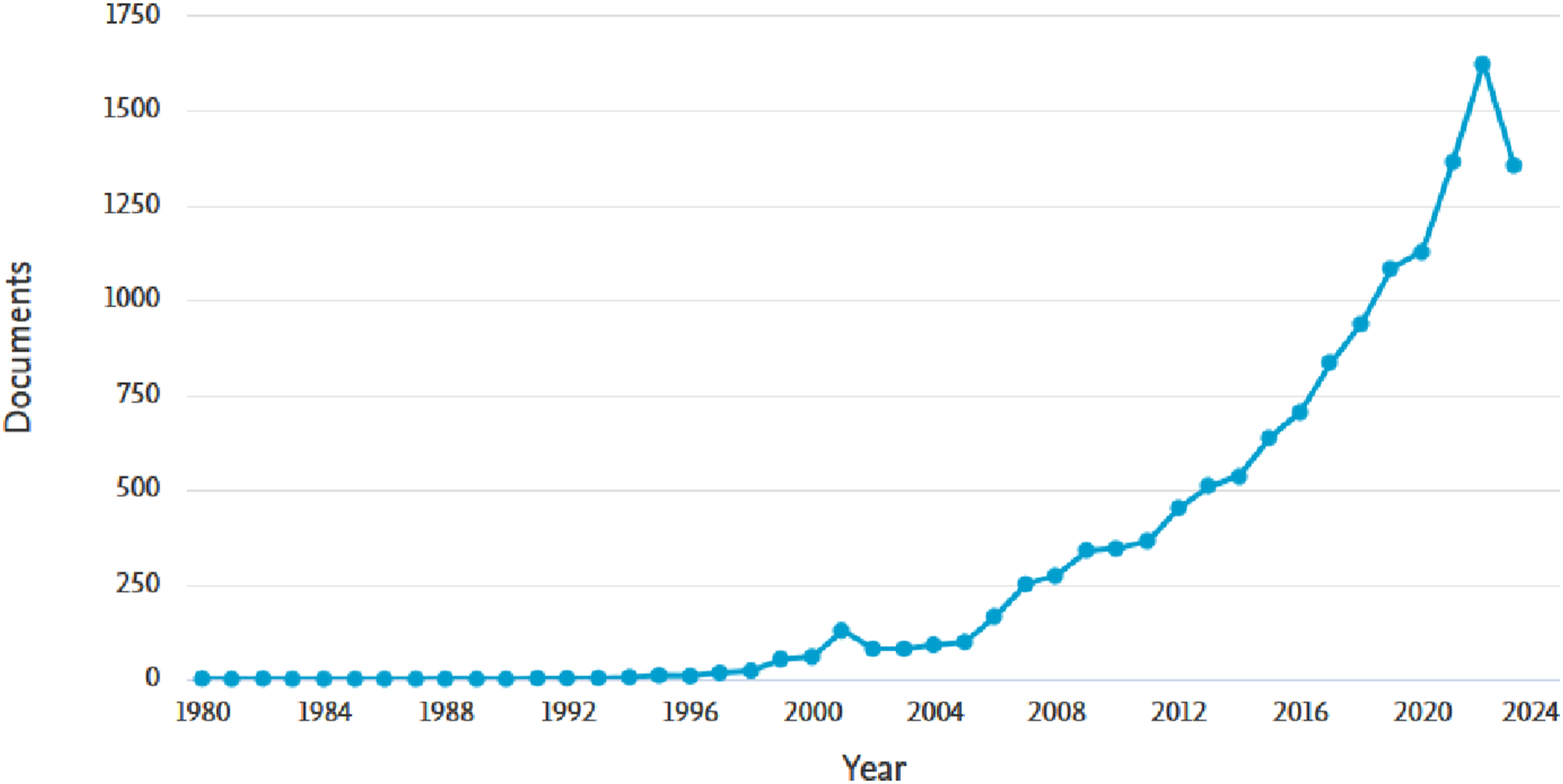
To better understand the more recent evolution of UAV integration within SHM, an analysis of the last decade was conducted (Mohsan et al., 2022). This data was exported to VOSviewer and the research themes were determined using the keywords co-occurrence analysis. VOSviewer (Van Eck and Waltman, 2014) allocates nodes in a network into clusters, with each cluster representing a collection of closely interconnected nodes. Each node in the network is exclusively associated with a single cluster. The quantity of clusters is established through a resolution parameter, where a higher value leads to an increased count of clusters. When visualisation a bibliometric network, VOSviewer employs distinct colours to signify the cluster affiliation of each node. The method employed for clustering within VOSviewer is the one that introduced by Waltman and Van Eck (Van Eck and Waltman, 2014, 2017). The analysis of keyword co-occurrence was conducted leading to the identification of 12 distinct clusters (Figure 6). Defining the specific clusters within the entire field of Structural Health Monitoring (SHM) requires deep analysis and substantial argumentation that is beyond the scope of the current paper. However, the primary aim of Figure 6 and the associated analysis was to identify the position of UAVs within the broader SHM field. Keyword mapping for SHM, 2013-2023.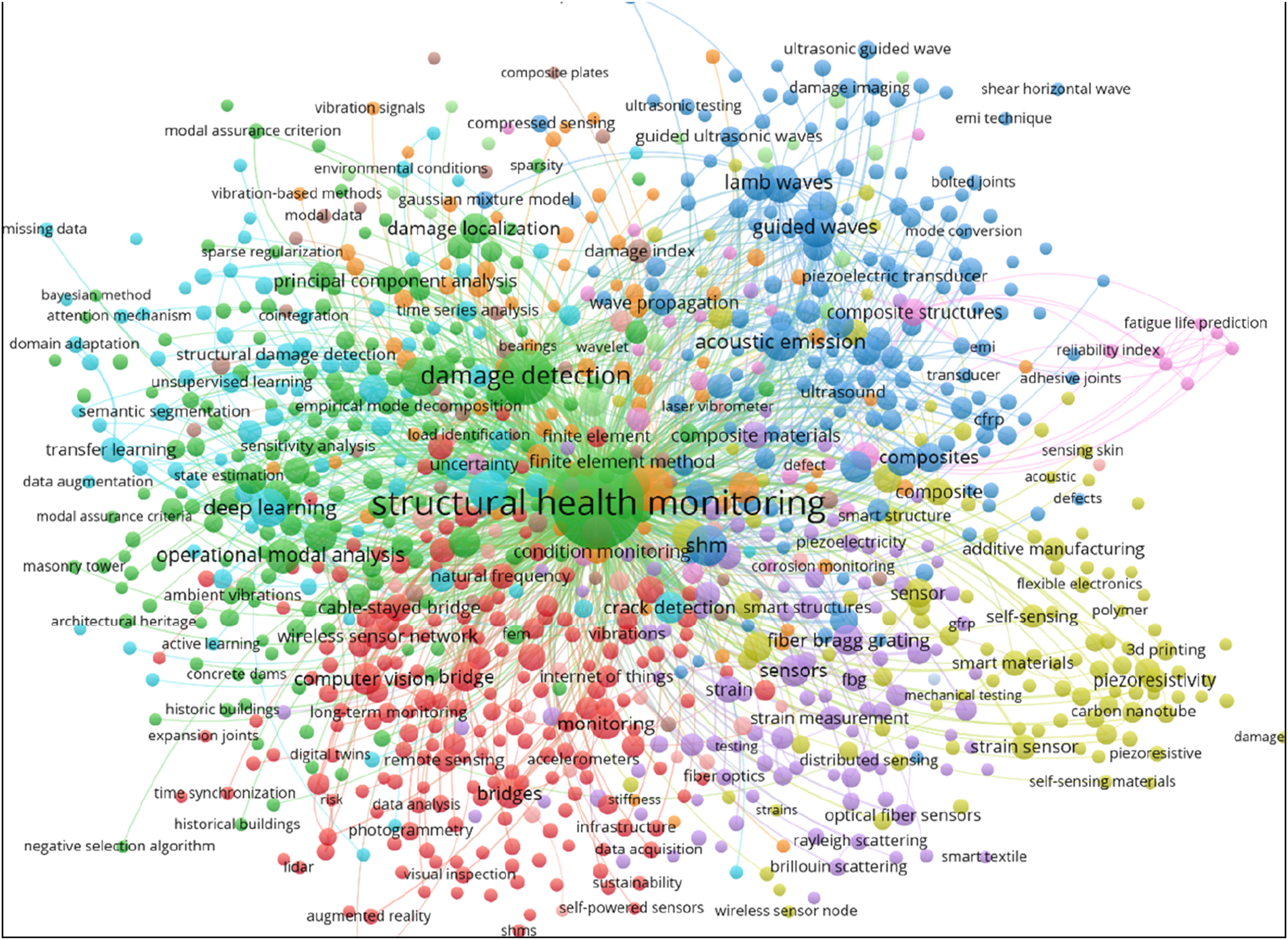
UAVs/drones were found to be among one of the largest clusters in SHM (the red cluster in Figure 6), and this includes all the words that refer to UAVs, such as “drone”, “unmanned aerial vehicle/s”, and “UAV”. A zoom into the red cluster is shown in Figure 7. The centrality of UAVs in the one of the biggest SHM clusters reinforces their integral role in shaping the future of infrastructure maintenance and safety. Drone/UAV in keyword mapping SHM 2013-2023.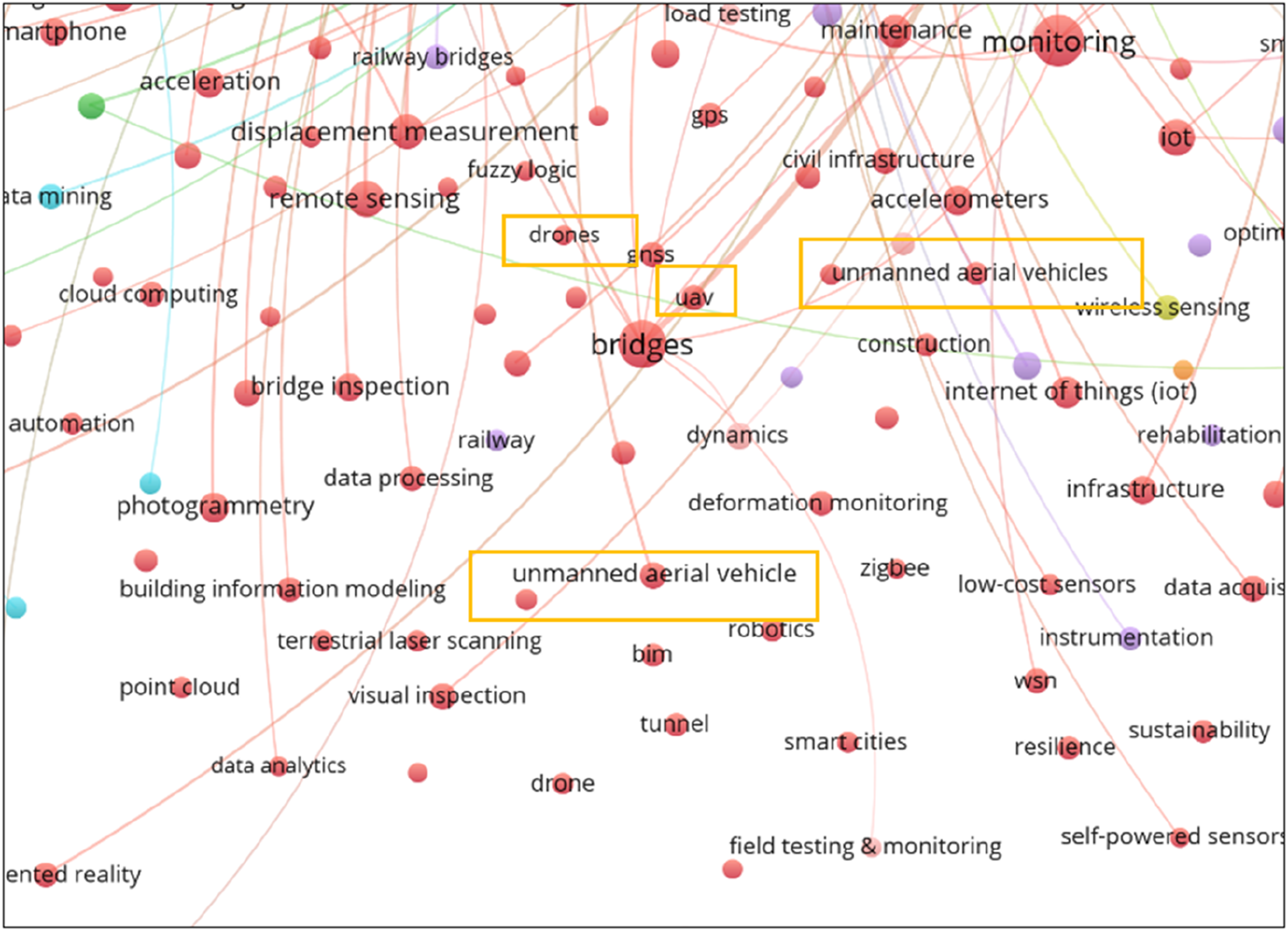
Further analysis is presented in the subsequent sections regarding the relationships between UAV and other interrelated keywords within the field, the findings also show that UAVs began to play a pivotal role in the field of SHM over the last decade. This observation is further supported by investigating the overlay visualization (Figure 8), which illustrates the temporal frequency of all the words/terms over time. It is clear that the words related to UAV are coloured to show increased prevalence from 2020 onwards (yellow and green). Their prominence in recent literature not only highlights the technological advancements in the area but also underscores the growing recognition of their utility. Overly visualisation for SHM 2013–2023.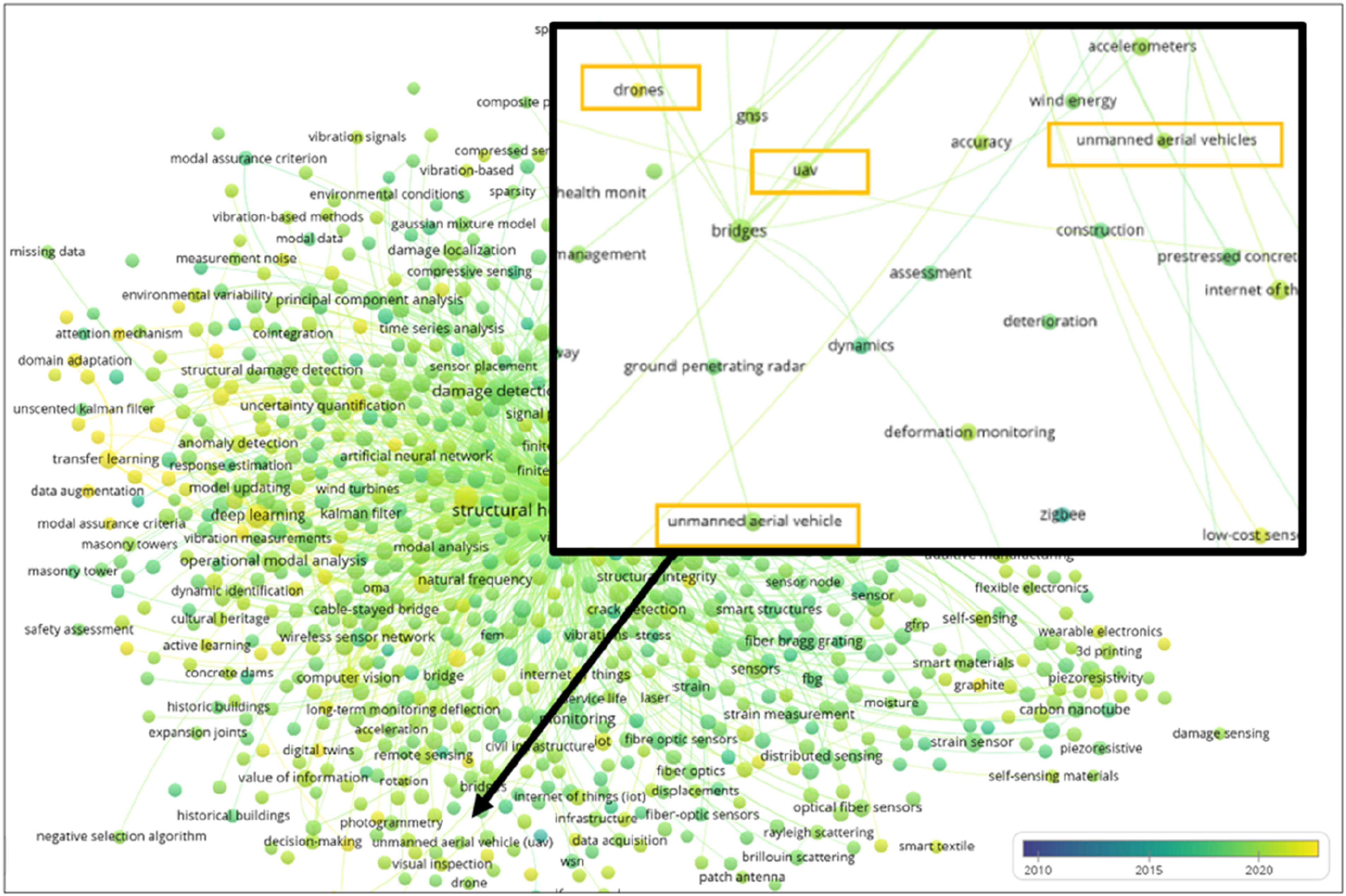
Systematic literature review is done using the Preferred Reporting Items for Systematic Review and Meta-Analyses (PRISMA). PRISMA represents a minimum evidence-based set of items designed for the reporting in systematic reviews and meta-analyses. PRISMA’s objective is to assist authors in enhancing the reporting quality of systematic reviews and meta-analyses (Pedram et al., 2024). Figure 9 below shows the entire process, the number articles that are screened and excluded for a final set of items to be analysed. PRISMA Flow diagram.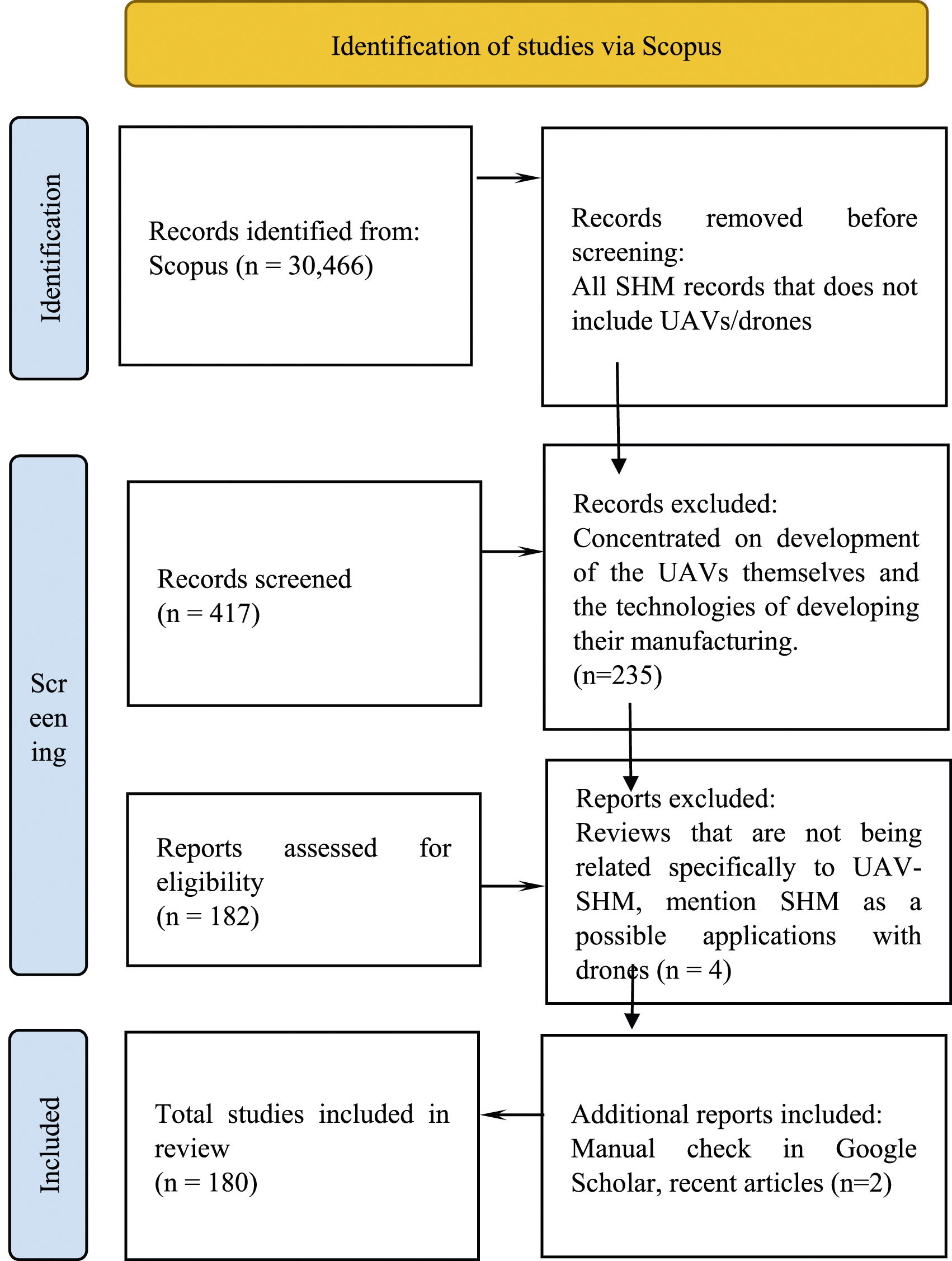
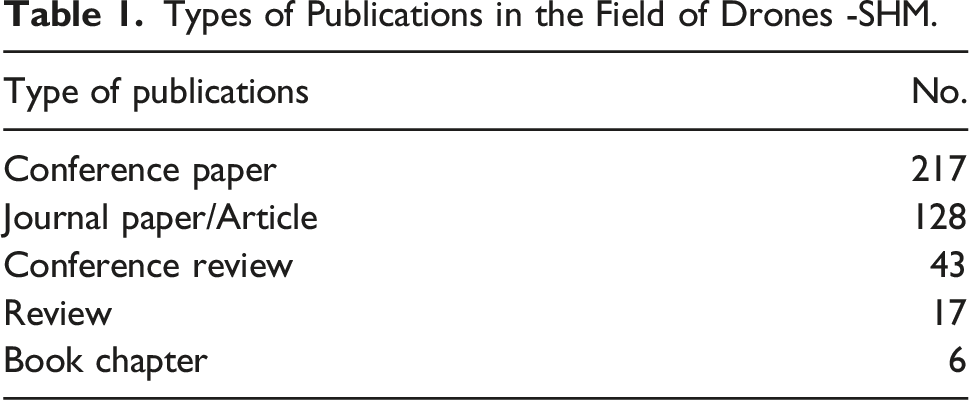
Types of Publications in the Field of Drones -SHM.
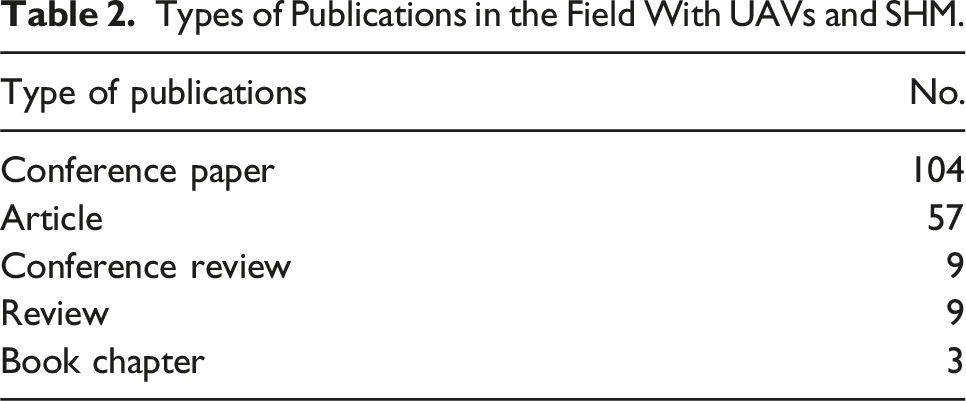
Types of Publications in the Field With UAVs and SHM.
Publication trends
Figure 10 shows the annual variation in the number of publications - both in journals and conference proceedings. A general rise in the publications describing research using drones for SHM has been observed since 2010, with two significant surges in 2017-2018 and 2021-2022 which coincided with the rapid advancements in UAV technology and big data techniques. However, a noticeable decline in publications occurred in 2020, likely attributed to the COVID-19 pandemic’s impact. Also, investigating the total number of publications in all the fields related to UAVs in the Scopus database displays an exceptional plateau or flat trend in 2020 (Figure 11). Therefore, the results in Figure 10 match the overall trend. It should be mentioned that for the year 2023, the study takes into account publications from the first 5 months only. If a linear regression is drawn, the rising trend continues for 2023, predicting over 40 publications on fly-by SHM. Annual variation of UAV-based SHM publications. Publications on Scopus on UAVs in all fields.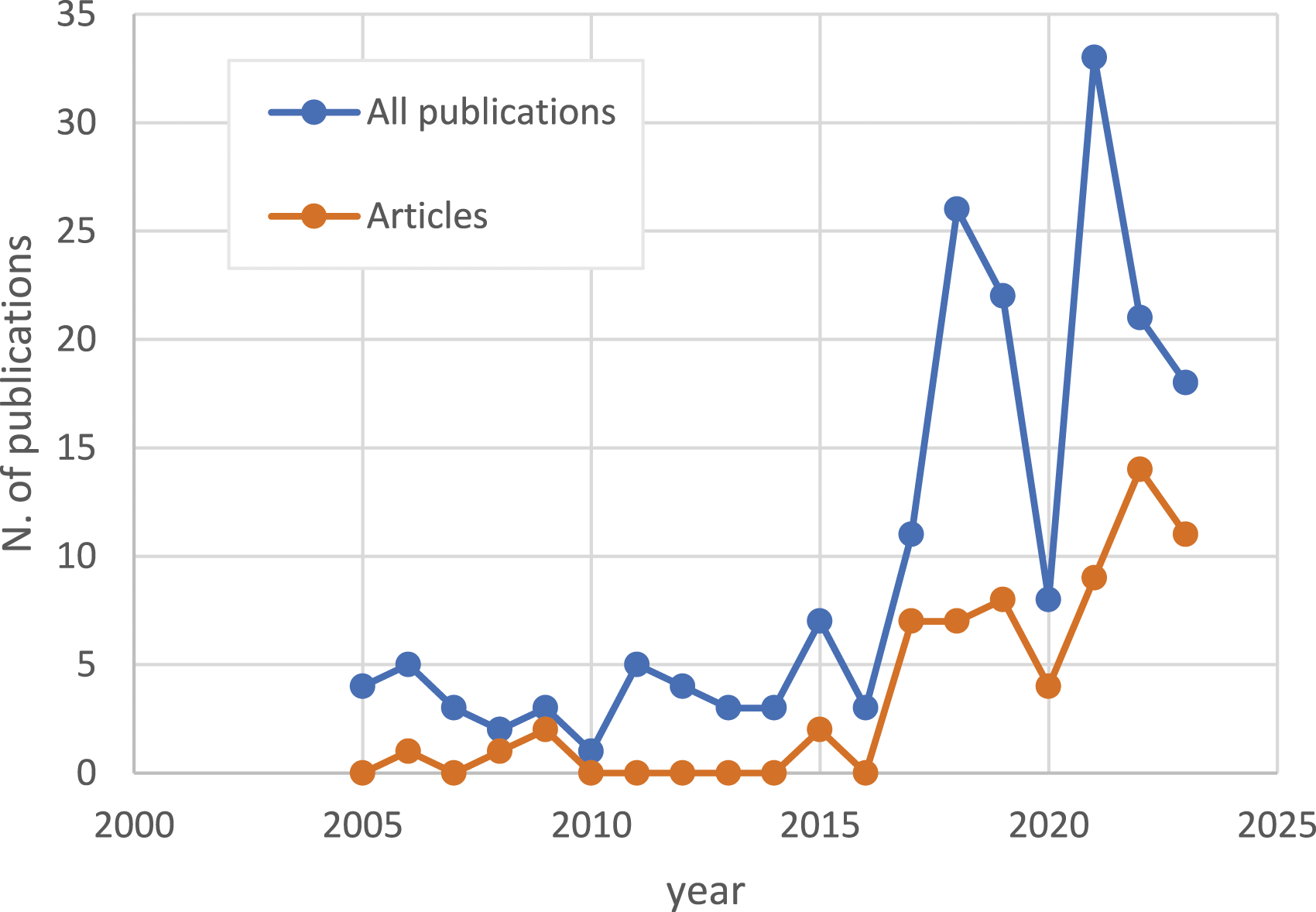
Research outlets
Academic Journals Production.

Mapping of countries
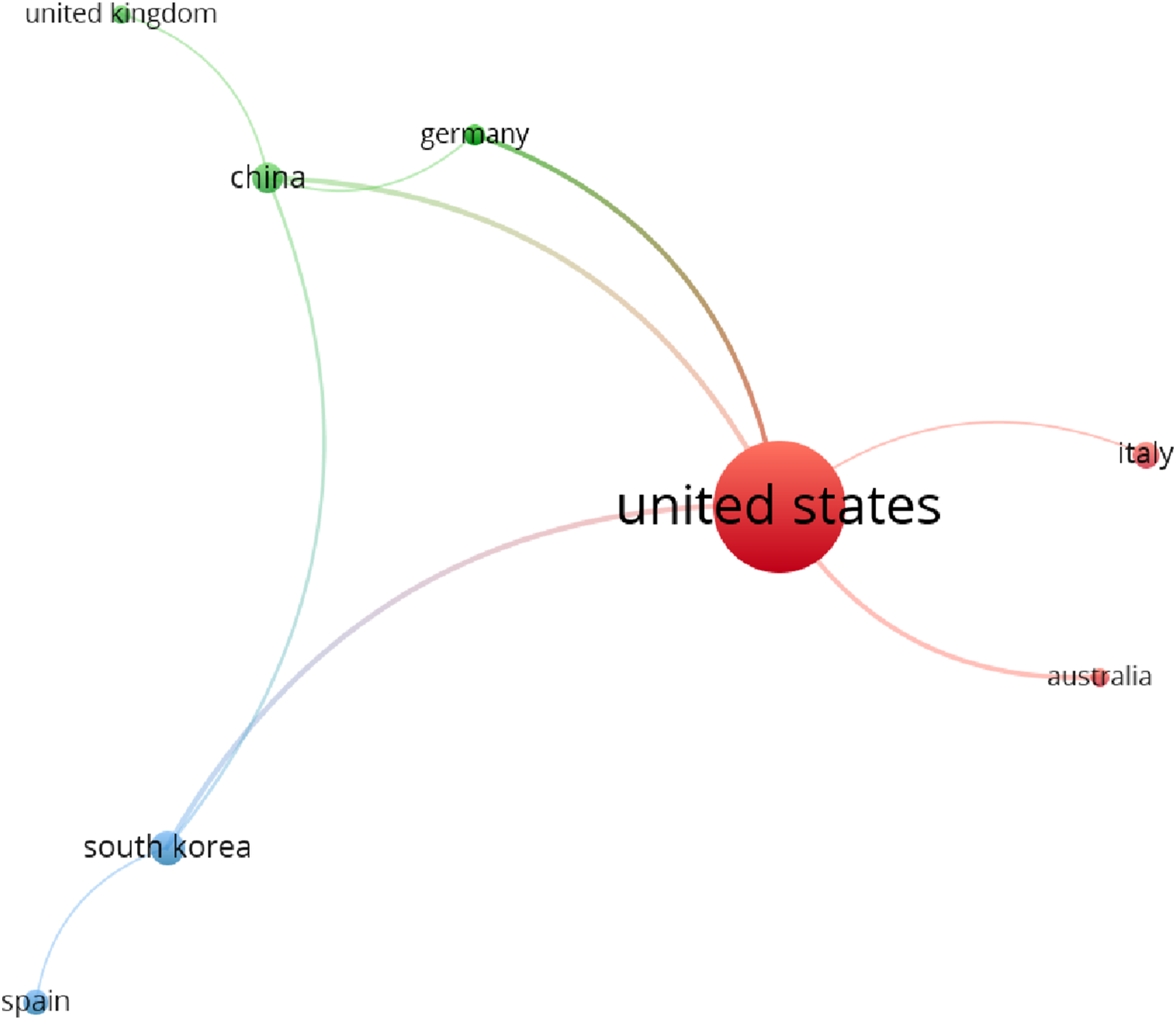
Recognising the most productive countries in a specific research domain can bolster network collaboration. This insight is vital for guiding research funding and nurturing enhanced international partnerships. Figure 12 illustrates the publication distribution by country. There is evident interest and significant research effort in the United States specifically towards the fly-by SHM technique. Many countries show a noticeable equal interest in the field such as South Korea, China, Italy and Spain (Figure 12). For Bibliographic coupling, the search criteria adopted in VOSviewer include analysis type (co-authorship), and analysis unit (country), while the minimum number of documents of a country and the minimum number of citations of a country were set to 7 and 10, respectively. Based on this research criteria, out of 34 countries presenting research on in fly-by SHM, only 9 fulfil the criteria. The collaboration network is shown in Figure 13. The United States of America (USA) is the most productive country with 70 publications and 1033 citations. This might be because of the early adoption of large research projects in UAVs for inspection that lead to start developing it more for SHM applications. Publication distributions of drone-based SHM between countries. Collaboration network in UAV-based SHM.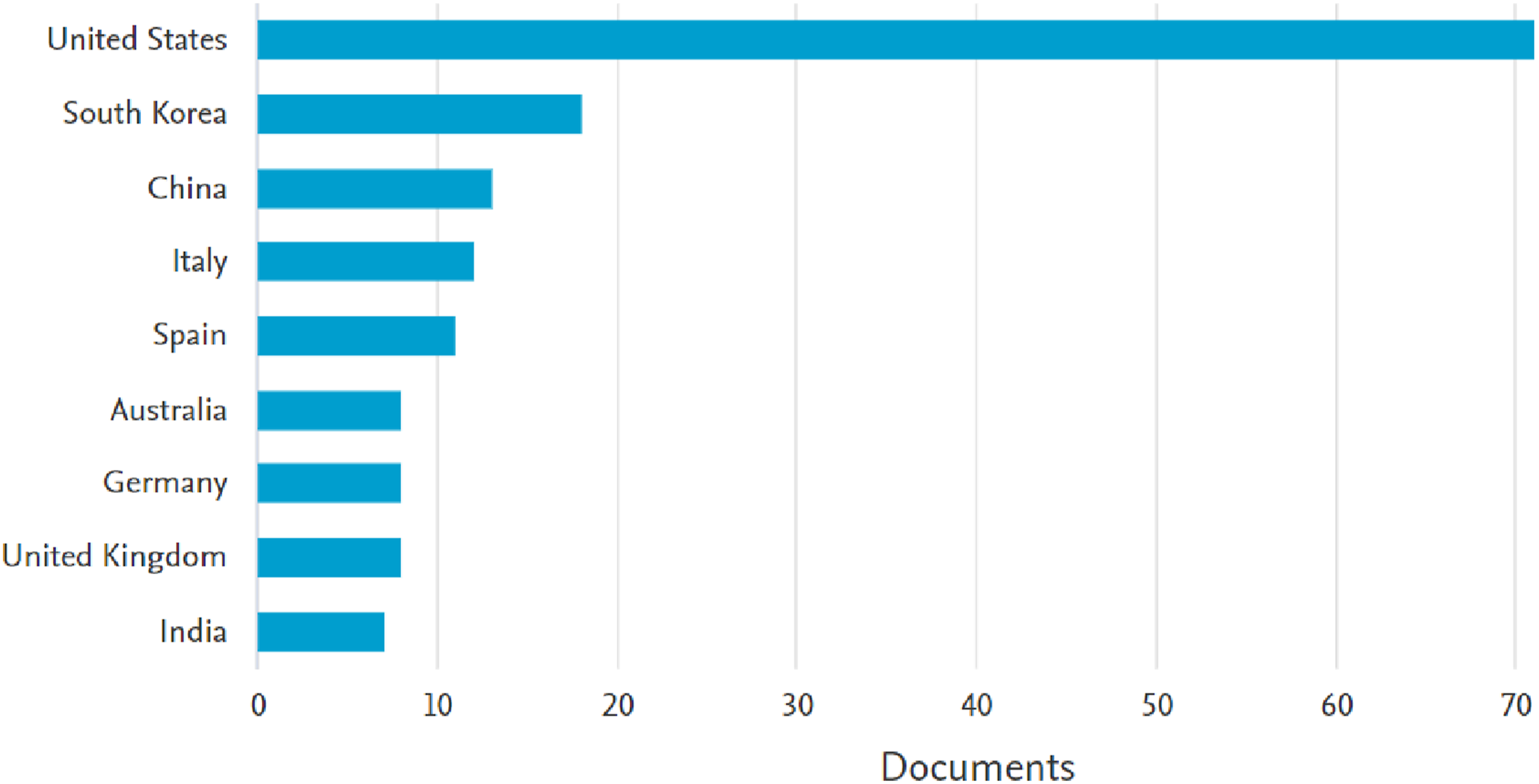
One of the earliest practical applications of UAV-based inspection was in the USA in 2015 (Zink and Lovelace, 2015) within a research project investigating inspection of bridges sponsored by the Minnesota Department of Transportation. The project assessed four different bridges across Minnesota, while evaluating the effectiveness of sensor technology on UAVs, safety, and practicality “accuracy” compared to other inspection methods. The UAVs were equipped with various imaging technologies, including still RGB image, video, and IRT sensors, to facilitate inspection. Some additional data was also collected during the inspections, site maps, and 3D models of the bridge elements. The research project indicated that UAVs can safely be used during bridge inspections, proving especially useful for larger bridges. Another project targeted the Placer River Trail bridge in Alaska in 2017 (Khaloo et al., 2018a). The findings demonstrated the ability of UAV vision based techniques to produce superior 3D models to support decision-making. While SHM needs more accuracy to be achieved for practical and effective SHM, this inspection project was the start for more advanced usage of drones within the field.
Additionally, Figure 13 identifies three country clusters based on their citation frequency. For example, the USA, Australia, and Italy form one cluster, indicated in red. The other two country clusters are coloured blue and green. Countries positioned closely in this figure, like Spain and South Korea, often cite each other. The thickness of the connecting lines signifies higher citation frequency. Lines between countries appear closely packed, likely because the field is relatively new and has a limited number of publications. While USA has the most citations, the VOSviewer overlay visualisation shows the China and Australia have the most recent ones.
Keywords co-occurrence analysis
The keywords chosen by the authors for their publications and in the abstract frequently represent the main themes of a scholarly paper. These keywords are typically used for indexing to databases for enhancing search efficiency. Consequently, a network of these keywords can potentially depict a specific field of knowledge and provide insight into vital research topics. A keyword co-occurrence analysis was carried out to build and illustrate the knowledge relationship between drone and SHM. The dimension of an element corresponds to its significance, with the label size is proportional to the number of publications where the keywords appear (Figure 14). The proximity between two keywords indicates the degree of their co-occurrence link, a measure of how frequently items (in this case, keywords) appear together in a document. The robustness of this co-occurrence connection is decided by the number of publications where the two terms appear jointly. The keywords were subsequently grouped into clusters, each representative of different knowledge domains using VOSviewer’s clustering technique. To ensure the clusters were accurately represented, the occurrence benchmark was established to be greater than one and some refinements were done on the words such as typos. The cluster resolution was reduced to 0.4 to develop four distinct clusters as shown in Figure 14. The clusters are developed based on the degree of co-occurrence and how frequently they appear together. The authors went looked at these clusters and thought of how these clusters can reflects the different research themes in the field of study. These clusters are discussed in the following section. Keywords analysis.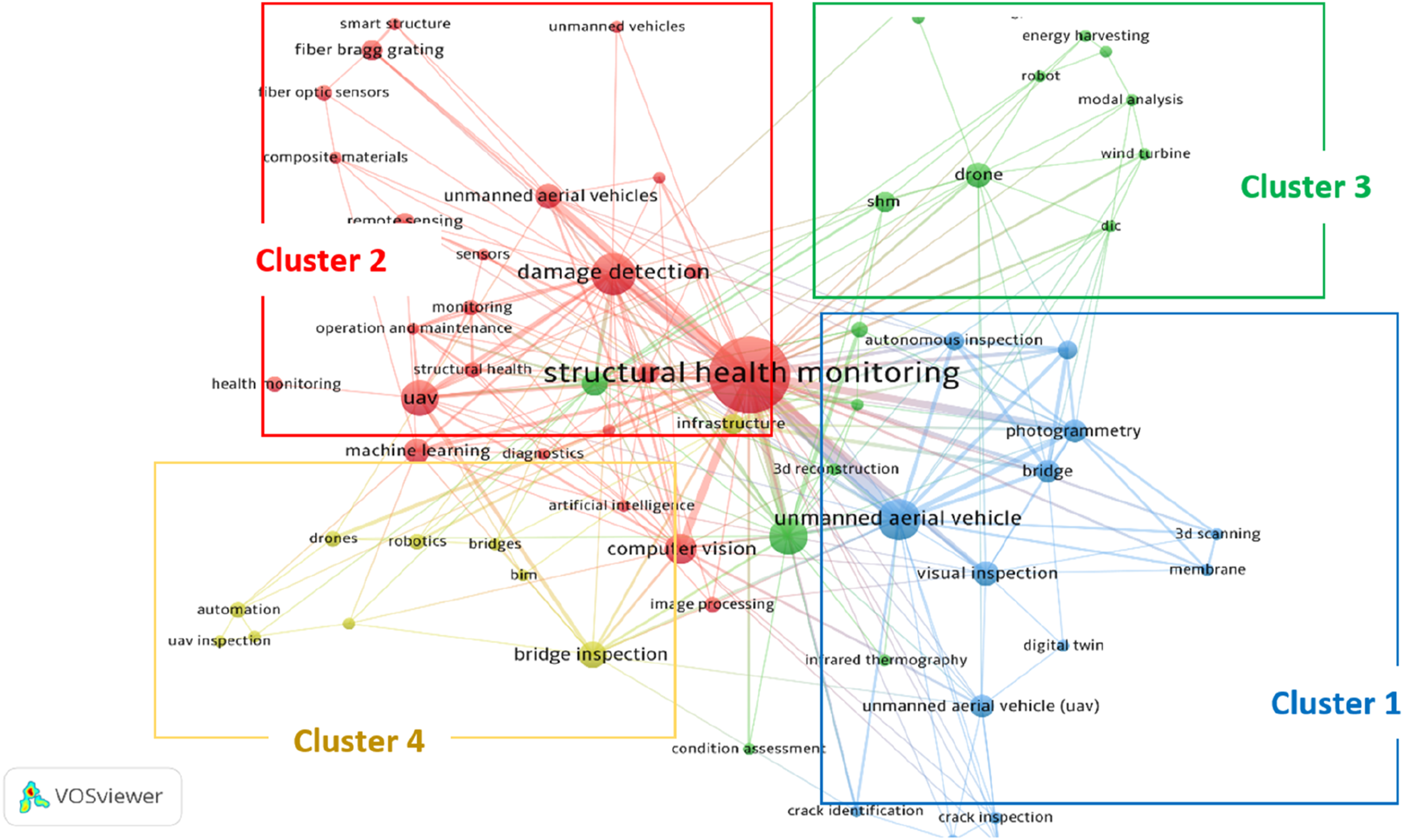
Research fields of drone-based SHM (fly-by)
Clusters derived from keyword co-occurrence analysis highlight close associations between different keyword groups and their citation frequencies. This provides insight into key research topics in this area. These findings were further investigated within the specific research areas:
Cluster (1): Vision-based structural health monitoring using unmanned aerial Vehicles
A UAV is fundamentally designed around a vision system, which includes a camera (e.g., infrared camera, optical sensor, or LADAR), a navigation system, and GPS. It facilitates in-flight data acquisition and post-flight image processing and can be remotely controlled by a ground-based navigator. Therefore, the most significant cluster among the research related to drone-based SHM is expected to focus on the development of the vision-based aspects of the field. The integration of vision-based monitoring with UAVs offers a transformative approach to SHM. Equipped with high-resolution cameras, UAVs can capture detailed images of structures, aiding in the early identification of damage such as cracks, deformations, or discolouration. The primary advantage of vision-based monitoring is its non-contact and remote nature, which allows for the inspection of hard-to-reach or hazardous areas, such as high bridges or tall buildings, in a safe and efficient manner (Lydon et al., 2022). The collected image data can be further analysed using advanced image processing techniques and machine learning algorithms for automated defect detection and localization. Moreover, the combination of UAVs and vision-based monitoring allows for greater coverage in a shorter time compared to traditional inspection methods. The methods of vision-based SHM fundamentally consist of four stages: calibrating the camera, capturing and correcting the image, measuring the displacement field, and identifying damage. The research in this cluster represents a natural progression of years of camera-based research aimed at overcoming challenges related to stability, lighting, and reference images. Imaging-based research was reviewed and summarised in (Sony et al., 2019). A notable advantage of UAV sensors is their ability to deliver 3D information about structures (Chen et al., 2019), which is invaluable for large-scale structures and especially effective for monitoring inaccessible areas. They provide superior temporal and spatial resolutions compared to satellite imagery. Digital Image Correlation (DIC) as a vision-based technique has been widely adopted in UAV-related research; however, the minimal movement associated with high-frequency excitation presents a significant challenge (Lydon et al., 2019a). To enhance the precision of deformation measurements, stabilisation strategies are essential. Techniques such as 3D point cloud and object-based image analysis offer solutions for measuring displacement at low levels during high-frequency excitation up to a certain frequency (Chen et al., 2019; Kalaitzakis et al., 2021; Khaloo et al., 2018b; Kim et al., 2017; Lei et al., 2018, 2020; Pierce et al., 2018; Rathinam et al., 2008; Sony et al., 2019; Zhao et al., 2021). However, further investigation is required in this domain. Methods for eliminating drone motion to obtain accurate displacement measurements require further exploration. Advancing this research direction is essential for effective, applicable drone-based real SHM.
The vision-based research in this cluster is not only related to displacement measurement and tracking, but it also opens the door for vibration analysis of structures. Vision-based techniques were used to characterise dynamic properties of structures. The feasibility of using drone-captured videos for modal identification of a laboratory steel model with correlation functions was explored (Yoon et al., 2017) and subsequently utilised the drone platform for measuring dynamic displacement and extracting dynamic properties of a footbridge (Vedhus et al., 2019). The modal shapes identified using the measured displacement from the flying drone platform correlated well with results obtained from dynamic accelerations of contact-type accelerometers demonstrating that the error in natural frequencies was less than 1.6% compared with the readings from accelerometers. The efficacy of measuring natural frequencies using a UAV alongside a stationary camera was evaluated on a steel frame measuring 9.8 m in length (Chen et al., 2021). The fundamental natural frequency recorded by the UAV, positioned approximately 3 m from the frame, aligned with the results from an accelerometer. Further steps have been invested in achieving subpixel accuracy through interpolation. However, in practical applications of SHM, the vibration of structures is typically induced by operational and ambient loads, such as live loads and temperature variations. The vibration amplitude is usually lower compared to that of specimens tested in laboratories. Additionally, the distance between the cameras and the monitored structures is often greater. Consequently, the vibration amplitude frequently measures less than a pixel in the captured image, significantly compromising measurement accuracy. To take maximum advantage of vision-based techniques with UAVs in real life, more research in this direction should be conducted in the future. The use of thermal images is also a recent advancement under this cluster. UAVs equipped with infrared thermography capabilities to detect damage on concrete bridge decks was used for UAV-based SHM (Omar and Nehdi, 2017). The thermal images captured were processed using an algorithm that stitched the images together to create a mosaic of the bridge deck, and k-means clustering technique was employed to categorize the defects into severity groups. The challenges involved in this cluster need to be overcome in practical applications for real advancement of drone-based SHM.
Cluster (2): Enhancing SHM through the integration of drones, advanced sensor technologies, and artificial intelligence
The utilisation of drones, combined with advanced sensor technologies, represents a significant advancement in the field of infrastructure maintenance and safety. Fibre optic sensors, known for their compact size and sensitivity, are capable of measuring variations in strain or temperature, thereby potentially delivering real-time information about changes in structural behaviour (Lydon et al., 2017; Motwani et al., 2020; Tan et al., 2021, 2024). Consequently, these sensors are increasingly being used to enhance drones themselves, with fibres being installed in the wings to develop the health monitoring of the drones. Moreover, other advanced sensors, such as infrared thermal (IRT) imaging, are employed with drones to develop structural health monitoring. Therefore, the relationships developed in this cluster primarily stem from advancing the structural health monitoring of the drones themselves, which is indispensable for the development of the field of drone-based SHM. In any SHM system, the analysis of measurement data represents the second crucial step for identifying structural characteristics through sensory systems (Hassani and Dackermann, 2023). Various data analysis approaches and algorithms have been developed and continue to evolve, influenced by the type of sensors and the nature of the data collected. The rapidly expanding field of data science, with its swift advancements and innovations in artificial intelligence (AI) and data mining, has brought about significant changes and updates to data analysis methodologies for SHM. While conventional data analysis techniques like traditional signal processing are employed to process datasets and evaluate models and hypotheses, AI techniques such as deep learning are increasingly utilised to reveal underlying patterns in extensive data sets (Li et al., 2023b). The integration of AI into these systems significantly amplifies the ability to analyse vast volumes of data collected by sensors via drones. Machine learning algorithms have the potential to detect irregularities and anticipate potential structural failures based on identified data patterns. However, their accuracy depends on the data used to train them, and they can have severe built-in biases if sufficient data is not available, so more research is needed in this area (Alvarez-Montoya et al., 2020; Datta et al., 2021; Reddy et al., 2019; Zhou et al., 2022). AI technologies have increasingly gained prominence, attracting considerable interest from the research community in recent years for their potential integration into SHM systems, encompassing feature extraction and classification, and applicable in developing intelligent systems and automation models. This requires the multiple levels or stages through which information is processed to develop a data-driven model (Cha et al., 2024; Malekloo et al., 2021). Swift progress in cloud-based computing and wireless technologies, alongside a trend of decreasing costs for advanced sensors and portable devices, has enabled the deployment of sensors and facilitated wireless data transfer into cloud-based computing systems. This development makes autonomous monitoring regimes on complex infrastructures feasible if challenges are to be overcome. This fusion of drones, advanced sensors, and AI heralds a future where structural health monitoring becomes markedly more efficient, precise, and proactive.
Cluster (3): Integration of modal analysis, Energy harvesting, and deep learning in drone-based SHM
In this cluster, modal analysis serves as the foundation for understanding a structure’s dynamic behaviour, as it identifies the structure’s natural frequencies, damping ratios, and mode shapes. Variations in these parameters can indicate potential structural changes or damage (Li et al., 2023a), which can be detected by drones equipped with appropriate sensors such as accelerometers (Kent et al., 2023). Measuring the structural dynamic behaviour in relation to UAVs is primarily related to vision-based methods, as discussed in cluster 1. However, in this cluster, modal analysis pertains to the entire ‘fly-by’ process, where ‘fly-by’ refers to a UAV passing over or flying around a structure to capture data and images. This is used in conjunction with other UAV-based techniques such as photogrammetry, lidar, or infrared imaging (E Polydorou et al., 2021; Poorghasem and Bao, 2022; Rathinam et al., 2008; Tse et al., 2023; Wang and Ueda, 2023) as well as structure-mounted accelerometers (Na and Baek, 2017; Sony et al., 2019). Accelerometers can be used in UAV-based SHM in various ways. UAVs can wirelessly charge sensors installed on structures and transmit data from the sensors to the cloud, essentially working as flying sensors. A built-in accelerometer can also serve as a sensor for modal analysis if the drone is ‘parked’ on a bridge. The accelerometer will be installed inside the drone, which is equipped with a perching mechanism allowing the drone to adhere to a structure (Sony et al., 2019). In a study (Na and Baek, 2017), UAVs were outfitted with a vibration-based non-destructive method to detect damage at an early stage, thereby reducing both maintenance expenses and the number of sensors affixed to the structure. The proposed non-destructive testing (NDT) method employed a single piezoelectric material, serving as both exciter and sensor, connected to the UAV through electrical wiring and magnetically attached to ferromagnetic structures or to a pre-installed magnet on wood or concrete structures. The method proved effective in identifying various types of damage, with one plate exhibiting progressive damage while the other displayed thickness loss. Additionally, in another investigation (Zhou et al., 2022), the use of an autonomous UAV was proposed for deploying wireless sensors in structural monitoring applications. Outdoor experiments validated the vision-aided control of the UAV for precise sensor placement, demonstrating the UAV’s ability to land within a 10 cm radius of a predefined point. This approach underscores the potential for enhancing the efficiency and accuracy of structural monitoring through advanced UAV technology coupled with modal analysis. Meanwhile, energy harvesting plays a crucial role in sustaining the operation of the SHM system, particularly the drone and its embedded sensors. By converting ambient energy, often sourced from the structural system’s vibrations or solar energy, into electrical energy, the SHM system can operate independently of external power sources. This enhances the system’s sustainability and longevity, enabling continuous, long-term monitoring.
One of the foremost data processing challenges associated with UAV-based SHM, as discussed in cluster 2, involves managing the substantial volumes of data that can be produced. UAVs are capable of capturing high-resolution images, videos, dynamic behaviour parameters, and other data swiftly, often resulting in large datasets that necessitate processing and analysis. This demands considerable storage and computing resources, as well as specialised software tools for data management and analysis. Another challenge concerns data accuracy and consistency. UAVs can capture data from various perspectives and at different times, potentially leading to inconsistencies in data quality and accuracy. Furthermore, data may require correction for factors such as camera distortion or sensor errors, which can additionally affect data accuracy (Martinez et al., 2020). Deep learning techniques add another layer of sophistication to the UAV-based SHM system under this cluster. These algorithms can process and analyse the large amounts of data collected by drones in a highly efficient manner, identifying complex patterns and detecting anomalies that may indicate structural damage. By training these algorithms with labelled datasets, they can accurately classify different types of structural damage and potentially predict future structural failures. This fusion of modal analysis, energy harvesting, and deep learning creates an advanced, self-sustaining, and highly accurate drone-based SHM system that can significantly enhance the maintenance and safety of various infrastructures (Agyemang et al., 2022; Chen et al., 2017; Dong et al., 2020; Javadinasab Hormozabad et al., 2021; Kang and Cha, 2018; Kao et al., 2023; Kulkarni et al., 2023; Lydon et al., 2019b; Perez et al., 2019; Ye et al., 2022).
Cluster (4): automation and robotics in drone-based SHM
Traditional methods of defect detection rely heavily on specialised inspection vehicles and visual inspections, which are risky and time-consuming. Advanced robotic technologies offer significant potential for automating defect inspections and vibration measurements of structures i.e. bridges (Smarsly et al., 2023). The integration of automation and UAV-based SHM is a an emerging area of research. Here, the convergence of UAVs and robotics gives rise to automated and intelligent SHM systems, capable of performing comprehensive assessments of structures with minimal human intervention. These automated systems, powered by advanced robotic technologies, can navigate through intricate environments, collect vital data, and identify potential structural concerns (Sony et al., 2019). Yet, most research on the application of robotic machines in health monitoring and inspection fields is related to drones, with less focus on the application of mobile robots. This area requires further investigation to achieve effective SHM. It could be enhanced by the capabilities of Building Information Modelling (BIM), which provides a detailed, three-dimensional, information-rich model of a structure. These technologies allow the data collected by UAVs and robots to be contextualised, visualised, and analysed more efficiently. However, a challenge faced is that BIM models do not currently achieve the accuracy needed for SHM, such as sub-millimetre for deflections and micro-strain for strain measurements. Thus, the fusion of automation, robotics, UAVs, and BIM can potentially revolutionise the field of SHM, leading to more accurate, efficient, and safer structure inspections (Perry et al., 2020; Poorghasem and Bao, 2022; Wang and Ueda, 2023), but this will not happen until the above mentioned challenges are solved.
The main benefits of robots are to overcome the limitations of UAVs, such as restricted flight times and payload capacities. Unmanned ground vehicles (UGVs) and hybrid robots show promise in enhancing the performance of vibration measurements. Collaborating UGVs with unmanned surface vehicles (USVs) and UAVs can enhance the accuracy of vibration measurements through the improved precision of robot navigation. The navigation systems of UGVs can assist in precisely locating UAVs. Additionally, using a tri-rotor hybrid UAV is promising for vibration measurement due to its lower power consumption (Tian et al., 2022). It is noted from the Overlay visualisation Figure 15 (to be explained in the next section) that this cluster involves papers presenting the most recent research. This highlights the significant role of automation and robotics in advancing the capabilities of drone-Based SHM. Keywords timeline in UAV-based SHM.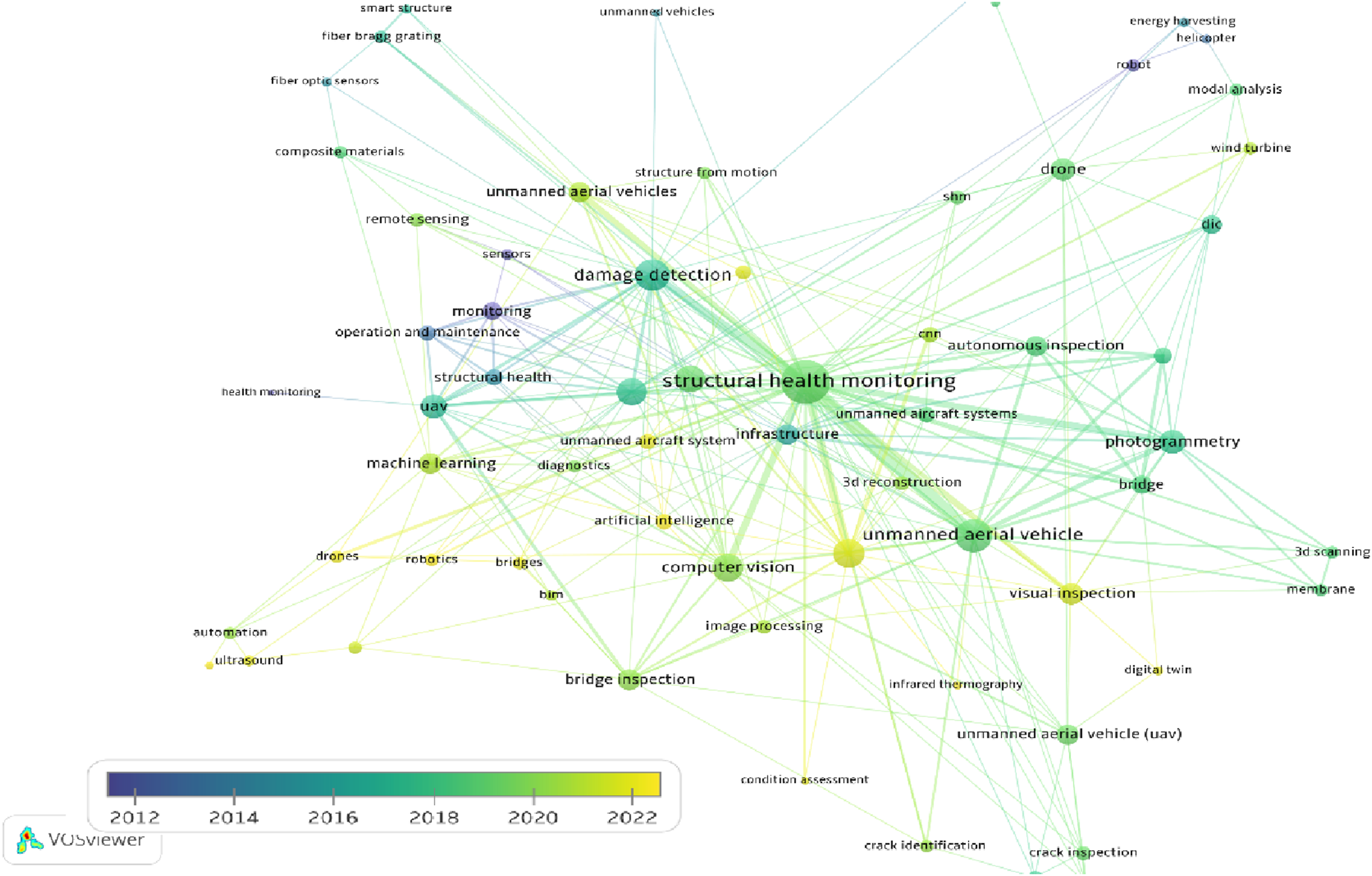
The four distinct clusters coalesce under the umbrella of UAV-based SHM where different techniques can be integrated and various solutions can be harmonised. One of the primary challenges in the field of SHM is that no single technology suffices for comprehensive monitoring, necessitating the integration of various technologies. The complexity and variability of structures mean that different damage mechanisms may not be effectively captured by a singular method. For instance, while vibration-based techniques are adept at identifying changes in structural dynamics, they may not pinpoint the exact location of minor damages as effectively as vision-based techniques. Consequently, merging vibration-based methods with vision-based technologies can offer a more holistic view of a structure’s health. Moreover, the transition of theoretical models into real-world applications presents another significant barrier. These models often require adjustments to accurately reflect the diverse behaviours of structures under different stages of damage, which can vary greatly depending on materials, design, and environmental conditions. This underscores the need for adaptive and multidisciplinary approaches in SHM, capable of interpreting complex data from varied sources to accurately assess structural integrity. Additionally, challenges such as sensor placement optimization, data management, and the interpretation of vast amounts of data from different technologies into actionable insights further complicate the SHM landscape. Addressing these challenges requires ongoing research, interdisciplinary collaboration, and the development of advanced algorithms and software that can seamlessly integrate and analyse data from multiple SHM technologies.
Research timeline
Figure 15 shows that the progress of vision UAV-based SHM over the past decade. Notably, a concentration of research during 2016-2018 focused on “Photogrammetry” and “digital image correlation”, centring around well-established techniques. The span of 2018-2020 shows the emergence of keywords such as “computer vision”, “3D scanning”, “3D reconstruction”, “remote sensing”, and “machine learning”. More recent research topics, including “robotics”, “artificial intelligence”, “automation”, and “digital twin”, suggest a shift in the research focus in this area. While early contributions prioritised data collection for inspection purposes, later publications aimed to leverage “artificial intelligence” and “robotics” to automate SHM. This shift might be attributed to the novel perspectives and methods brought about by advancements in automation and robotics. “Digital twin” is a relatively new research topic with limited coverage so far (Yoon et al., 2022). “Deep learning” and “machine learning” have been integrated with other keywords in recent years, signifying their growing relevance in the field.
Reviews in the field
Review Papers in Fields That Intersect With Fly-By SHM
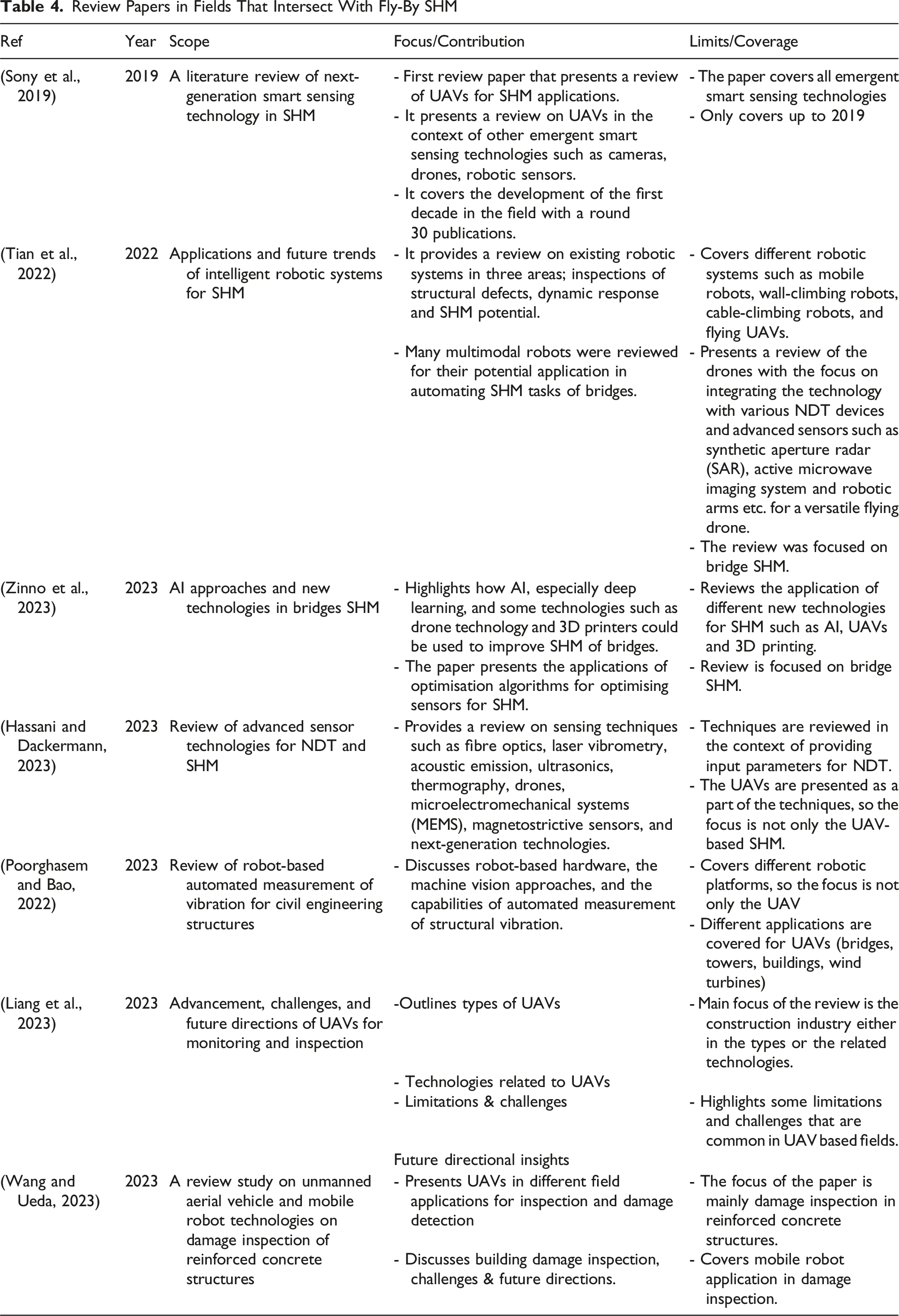
As summarised in Table 4, the existing review papers cover various aspects, fields, and applications that could intersect, to varying extents, with drone-based SHM “fly-by”. To the author’s knowledge, there is no review paper that is meant for drone-based SHM field either traditional qualitative review nor scientometric review. This paper, positioned at the core of UAV-based SHM, in conjunction with other reviews that overlap to some extent with field, offers a new quantitative insights into the advancements in this field. Furthermore, while the review publications primarily adopt a qualitative approach, reflecting the authors’ comprehension and perspectives on the field, this paper presents a quantitative analysis of its current state.
By combining both quantitative and qualitative analyses, a more comprehensive overview of the field is obtained with new insights into logical clusters of research activities. This allows for a clearer picture of potential directions for future progression, mitigating any inherent subjectivity.
Future directions
Building upon the foundations established in drone-based SHM, several directions for future research have been identified to advance this field significantly. - The significant power consumption of different existing technologies pose a challenge. There is a need for further advancements in self-powered sensors. Novel vision-based sensors must be insensitive to light conditions, necessitating the development of enhanced algorithms for image processing. Also, to improve the accuracy of vision-based monitoring systems, further development of stabilisation techniques is crucial. These should aim to mitigate the effects of drone vibration and movement, enabling more precise measurements from the collected data. - Continued advancements in image processing, including the use of machine learning and deep learning algorithms, are required to handle the vast amounts of data generated by drones more effectively. These algorithms can enhance the ability to detect subtle changes and anomalies in structures, thereby predicting potential failures more accurately. - Combining data from various sensors, including thermal, optical, and structural sensors, can provide a more comprehensive understanding of structural health. Research into effective methods for integrating and analysing data from these diverse sources could lead to more robust SHM systems. - Leveraging artificial intelligence further to develop predictive analytics for SHM could revolutionise the field. By employing AI algorithms that analyse historical data and real-time inputs, it’s possible to forecast potential structural issues before they become critical. - The development of fully autonomous drones that can perform regular monitoring without human intervention represents a significant step forward. This would include the capability for drones to navigate and operate in complex environments autonomously, ensuring continuous monitoring and immediate response. - As the precision of measurements is critical for the early detection of structural issues, future research should also focus on achieving subpixel accuracy in displacement measurements. This involves refining the resolution of image data beyond the current capabilities, allowing for the detection of minute changes. - While some of the novel techniques have been applied to UAV-based SHM, many have predominantly been examined under research conditions. Therefore, they require further exploration in real-life environments to fully assess and understand their benefits and challenges. - Digital twin technology represents a cutting-edge technology that bridges the physical and virtual worlds. Further research is required in drone-based SHM to fully exploit the capabilities of digital twin technology.
These directions not only highlight the potential for technological advancements but also underscore the need for a multidisciplinary approach involving engineering, data science, robotics, and regulatory studies to fully realise the benefits of drone-based SHM. Further research and collaboration across these domains will be crucial in overcoming the existing challenges and unlocking the full potential of drones in the field.
Conclusion
Structural Health Monitoring using Drones has the potential to be a highly effective approach (fly-by technique). A mixed review approach combining scientometric and qualitative methodologies has revealed a general rise in publications covering research in SHM using UAVs since 2010, with noticeable surges in 2017-2018 and 2021-2022. This study predicts continued growth in this research field. Keyword analysis has revealed four main clusters of research within the field of fly-by SHM. These are (1) the application of UAV-enabled vision-based monitoring, (2) the integration of drones, advanced sensor technologies, and artificial intelligence, (3) drone-based SHM integrating modal analysis, energy harvesting, and deep learning and lastly, and (4) automation and robotics in drone-based SHM.
A shift in research focus was identified from data collection towards leveraging artificial intelligence and robotics to automate SHM over the last years. The integration of “deep learning” and “machine learning” with other keywords signifies their growing relevance in the field. Some gaps and future research suggestions are: (i) further research and development to enhance the capabilities of drones for SHM, given the potential growth of the UAV market in this field, (ii) shift towards using AI and robotics to automate SHM The creation of smart, autonomous drones, that can conduct inspections alongside processing SHM sensor data is a key area for development, (iii) the use of “digital twins” in SHM is a relatively new research area with limited coverage, suggesting a potential direction for future studies. One of the primary challenges in the field of SHM is that no single technology suffices for comprehensive monitoring, necessitating the integration of various technologies. The complexity and variability of structures mean that different damage mechanisms may not be effectively captured by a singular method. To address these challenges, ongoing research, interdisciplinary collaboration, and the development of advanced algorithms and software that can seamlessly integrate and analyse data from multiple SHM technologies are needed.
Footnotes
Acknowledgments
This research acknowledges the University of Melbourne’s “FEIT Visiting Fellow Scheme” for bringing together the two institutions “Queen’s University of Belfast” and the “University of Melbourne” to develop the research. The authors acknowledge Professors Priyan Mendis and Lu Aye of Dept of Infrastructure Engineering, University of Melbourne for their valuable advice on this paper.
Declaration of conflicting interests
The author(s) declared no potential conflicts of interest with respect to the research, authorship, and/or publication of this article.
