




Abstract
Despite the growing applications of the performance-based design concepts for seismic design of structures, the response modification factors for structural systems proposed by the current design codes and standards do not generally consider different hazard and performance levels. Therefore, these factors are not directly applicable for performance-based design purposes. As a step to address this shortcoming, the present study aims to propose multilevel response modification factors for multistory dual moment-resisting frames equipped with eccentric braces and vertical links corresponding to different seismicity levels and performance targets. The concept of demand and capacity response modification factors is introduced, and these parameters are calculated for moment-resisting frame structures with 3-, 5-, and 7-stories before and after the addition of vertical steel shear links. It is shown that the calculated capacity response modification factors for the dual frames equipped with vertical links are generally higher than the demand response modification factors proposed by the design code for such systems under the design basis earthquake hazard level. This indicates the efficiency of the eccentric braces with the vertical links in improving the seismic reliability and performance of the moment-resisting steel frames. Based on the results of this study, the demand response modification factor for the studied dual lateral load-resisting system is calculated to be in the range of 7–10.
Keywords
Highlights
A novel multilevel approach is adopted to obtain response modification factors for dual moment-resisting frames with vertical links. The method takes into account the effects of using different seismicity levels and performance targets. Multilevel response modification factors are obtained for 3-, 5-, and 7-story systems before and after adding vertical links. Demand response modification factors of dual frames are up to 1.5 times higher than their moment-resisting frame counterparts. The response modification factor for the initial design of dual systems is calculated to be in the range of 7–10.
Introduction
As one of the efficient methods to improve the seismic performance of structures, shear link elements can be used to act as a seismic fuse and dissipate a part of the earthquake input energy through plastic deformations under shear and bending (Schmidt et al., 2004). Different studies have been performed on the performance assessment and design of structures with vertical and horizontal shear links. Shayanfar et al. (2014) studied the seismic performance of eccentrically braced frames equipped with vertical shear links using the performance-based plastic design concept. Subsequently, Bouwkamp et al. (2016) developed an analytical model to simulate the nonlinear inelastic response of eccentric braces with vertical shear links. Lian and Su (2017) conducted an experimental program on eccentrically braced frame structures equipped with vertical shear links. Similarly, Caprili et al. (2018) performed a full-scale experimental program on a one-story eccentrically braced frame structure with horizontal and vertical shear links. Vetr et al. (2017) and Vetr and Ghamari (2019) also performed a wide range of experimental and analytical studies on the seismic behavior of eccentrically braced frames with vertical links. In more recent studies, Mohsenian et al. (2020a, 2021) proposed the application of the eccentric bracing system with vertical links for seismic retrofitting of moment-resisting steel frames. Based on the computed capacity curves of the retrofitted frames, the authors proposed the dual moment-resisting frame equipped with vertical links as a new lateral load-carrying structural system. Mohsenian et al. (2021) also evaluated the performance of the eccentric bracing system with vertical shear links subjected to consecutive ground motion excitations (mainshock–aftershock sequence) using pushover and incremental dynamic analysis. In general, the results of the abovementioned studies have demonstrated the ability of shear links to control lateral displacements and provide high energy dissipation capacity under earthquake excitations.
Accurate estimation of response modification factors (R-factors) is one of the most challenging issues in the seismic design of structures. These factors reflect a combination of nonlinear behavior and economical aspects considerations in the structural design process. It is stated that the response modification factors proposed by design codes
The concept of the response modification factor has been widely investigated by different researchers in the past. For example, Malley and Cheever (2007) discussed the history of the development of response modification factors for different structural systems. By introducing the performance-based design approaches in the modern seismic design codes and utilizing various performance targets and hazard levels, the need for multilevel assessment of structures has been identified. To address the limitations with the conventional code-based modification factors, which are developed only based on a single hazard level and performance target, the response modification factors can be derived based on the seismicity of the site
In one of the most relevant studies, Mohsenian and Mortezaei (2018) derived the multilevel response modification factor for the eccentric bracing frames equipped with vertical links. In this study, due to utilizing hinge connections, the frame elements only carried the gravity loads, and the lateral load-resisting structural system was provided only by the bracing elements. The response modification factors were calculated for the situation that the shear strains in vertical links reached the ultimate value and there was no remaining load-carrying capacity in the system. Based on the findings of this study, it was shown that using a response modification factor equal to 8 in the design process of this system results in acceptable reliability for the structures under high levels of seismic intensity. A similar study has been performed on eccentric bracing systems with dual vertical links by Mohsenian and Nikkhoo (2019). In their investigation, simple frames were used, and the response modification factors were calculated for different shear strain states in the vertical links. The results were then used to derive a matrix of response modification factors for the studied structure, considering different earthquake intensity levels and different damage levels in the vertical links. According to this study, a response modification factor equal to 8 is desirable for the initial design of this structural system. The concept of the multilevel response modification factor was also utilized for other structural systems. For example, Mohsenian et al. (2020d) performed a reliability analysis on the steel diagrid structural system and determined multilevel response modification factors for this type of structure. In another study, Mohsenian et al. (2019a) evaluated the effects of geometrical irregularities in the plan on the seismic performance of tunnel-form structures and calculated multilevel response modification factors for the irregular tunnel-form systems.
In one of the first attempts, Mohsenian and Mortezaei (2019) utilized the concept of multilevel estimation of the response modification factor to evaluate the effects of the steel coupling beam on the seismic performance of tunnel-form concrete structures. However, the multilevel approach and calculation of demand and supply can be used for any kind of structural response. For example, Mohsenian et al. (2019b) utilized this approach for estimating the maximum acceleration demand of acceleration-sensitive nonstructural components. In a follow-up study, in order to reduce the computational time and effort during the estimation of multilevel response modification factors, Mohsenian et al. (2020c) proposed a new scenario based on the novel endurance time analysis method.
As a step to bridge the knowledge gaps discussed above, this article aims to (i) evaluate the efficiency of the eccentric bracing system with vertical shear links as a means for improving the seismic performance of moment-resisting frames; (ii) evaluate the seismic performance and reliability of a dual structural system, which consists of a moment-resisting frame structure equipped with eccentric bracing and vertical shear links, using a comprehensive parametric study; (iii) propose multilevel response modification factors for seismic design of the proposed dual lateral load-resisting system corresponding to different seismicity levels and performance targets; and (iv) demonstrate the efficiency of the suggested response modification factors for moment-resisting frame structures with 3-, 5-, and 7-stories before and after addition of vertical shear links.
Properties of the studied models
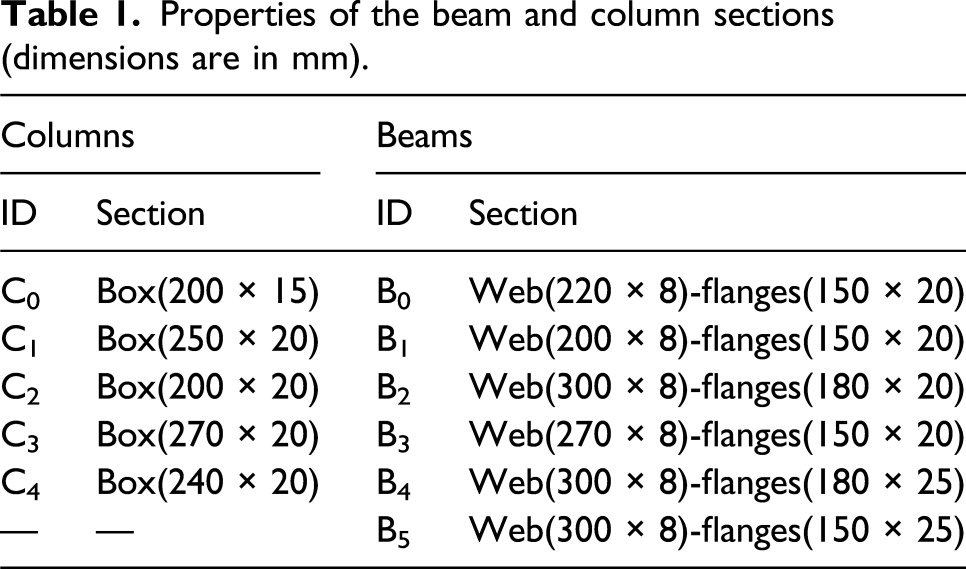
In this study, three multistory intermediate moment-resisting frame structures with 3-, 5-, and 7-stories are designed. The geometrical properties of these structures are shown in Figure 1. As it is evident, these structures are geometrically symmetric. The dead (QD) and live (QL) loads are also applied symmetrically with respect to the z-axis (QD = 2400 kgf/m and QL = 800 kgf/m). All the spans are 5 m wide, and the story height is equal to 3.2 m. Geometrical properties and gravitational loads of the moment-resisting frames.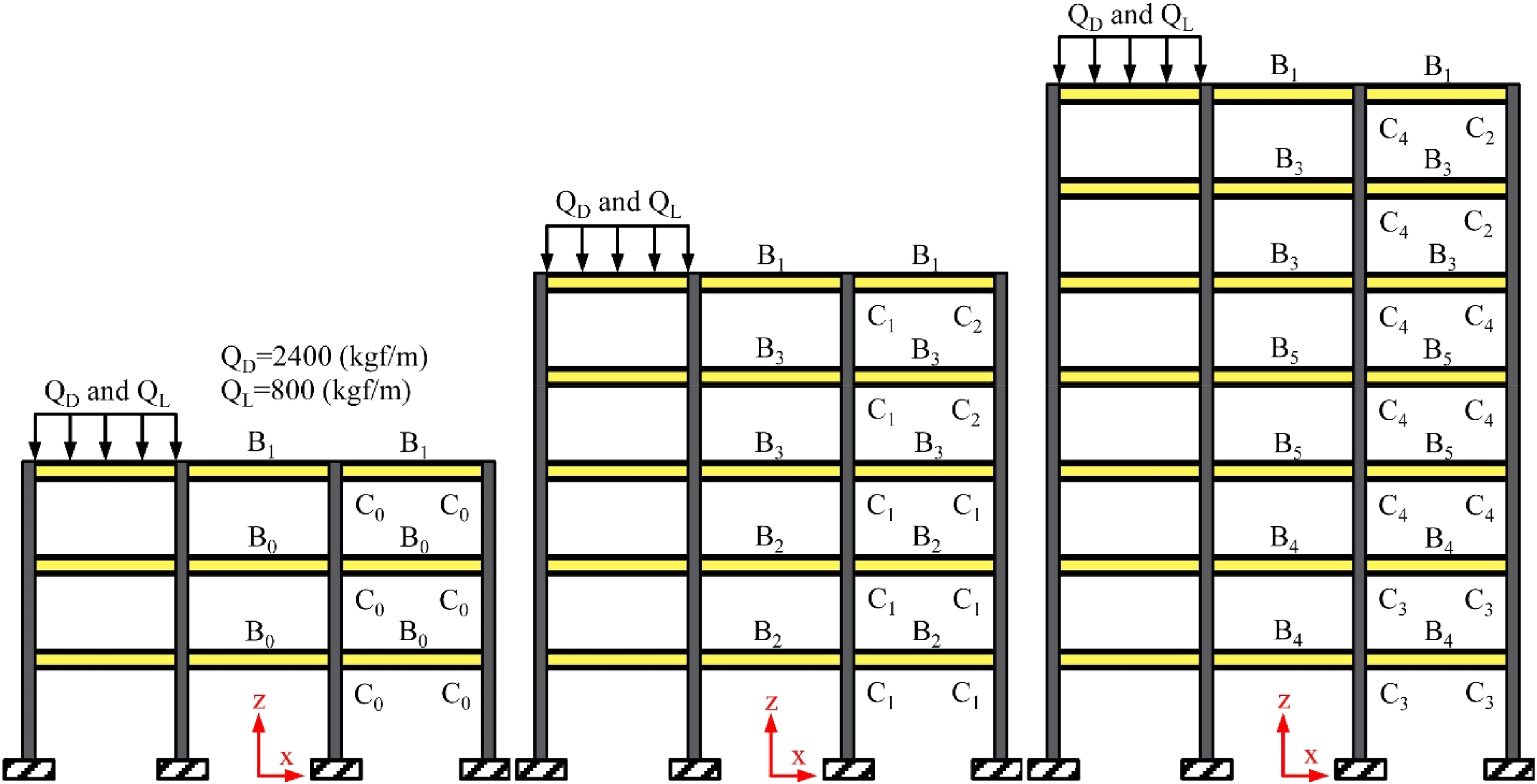
Properties of the beam and column sections (dimensions are in mm).
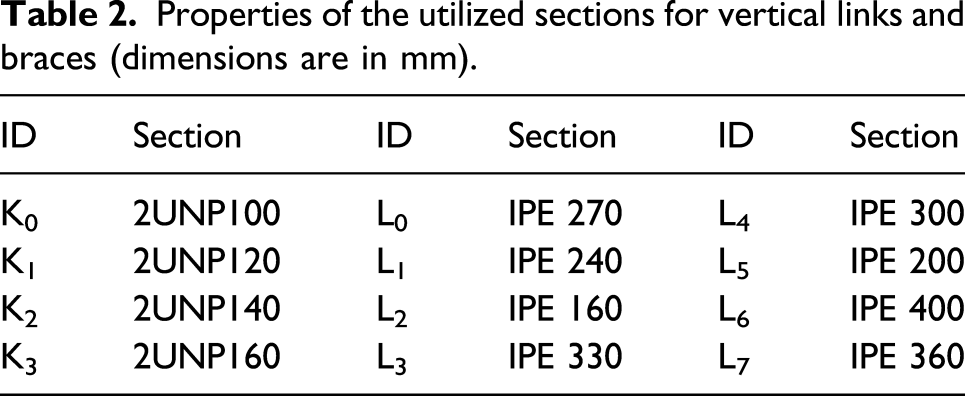
As shown in Figure 2, the eccentric bracing system is mounted in the middle span of the dual frames. The equivalent static method is used for the design of the braces. In the dual structural system, the vertical links are designed to yield before any other structural element, so they can play the role of seismic fuses under the intensity corresponding to the design hazard earthquake (with the return period of 475 years) (Montuori et al., 2016). To achieve this, only 50% of the story shear values are used for the design of the eccentric bracing system. This means that the links at each story are designed to have a shear capacity equal to the 50% of the design story shear force at that level. After the selection of the link cross sections, assuming constant axial force in the braces when the link yields, the maximum axial force in the braces is determined using equilibrium equations. Subsequently, the cross-section area of the braces is calculated, and their slenderness is checked to satisfy the code requirements. Arrangement of braces and vertical links in the dual moment-resisting frame structures.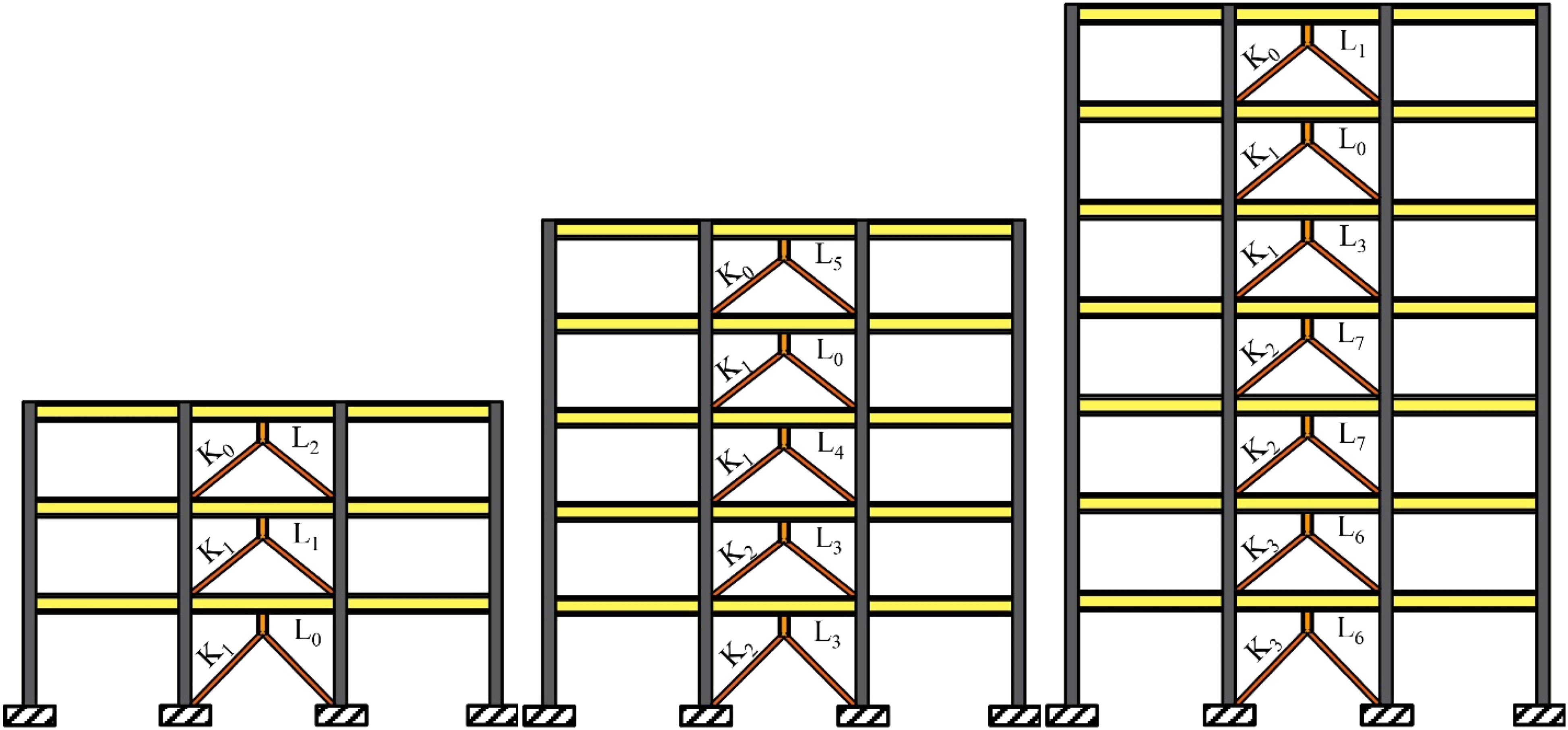
Properties of the utilized sections for vertical links and braces (dimensions are in mm).
Modeling nonlinear behavior
PERFORM-3D software is used for nonlinear modeling and analysis (Computer and Structures Inc., 2017). The beam and column elements are modeled using the generalized load–deformation diagram depicted in Figure 3. The parameters a, b, and c in this figure are taken from the table of acceptance criteria in nonlinear methods for steel components in accordance with the yield mode and cross-section conditions as suggested by ASCE/SEI 41-17 (2017). In Figure 5, Q, Q
y
, and θ
y
represent the ultimate strength, yield strength, and yield rotation of the members, respectively. Load–deformation diagrams used for beams and columns and the quantitative values for rotations of joints corresponding with different performance levels (adopted from ASCE/SEI 41-17 (2017)).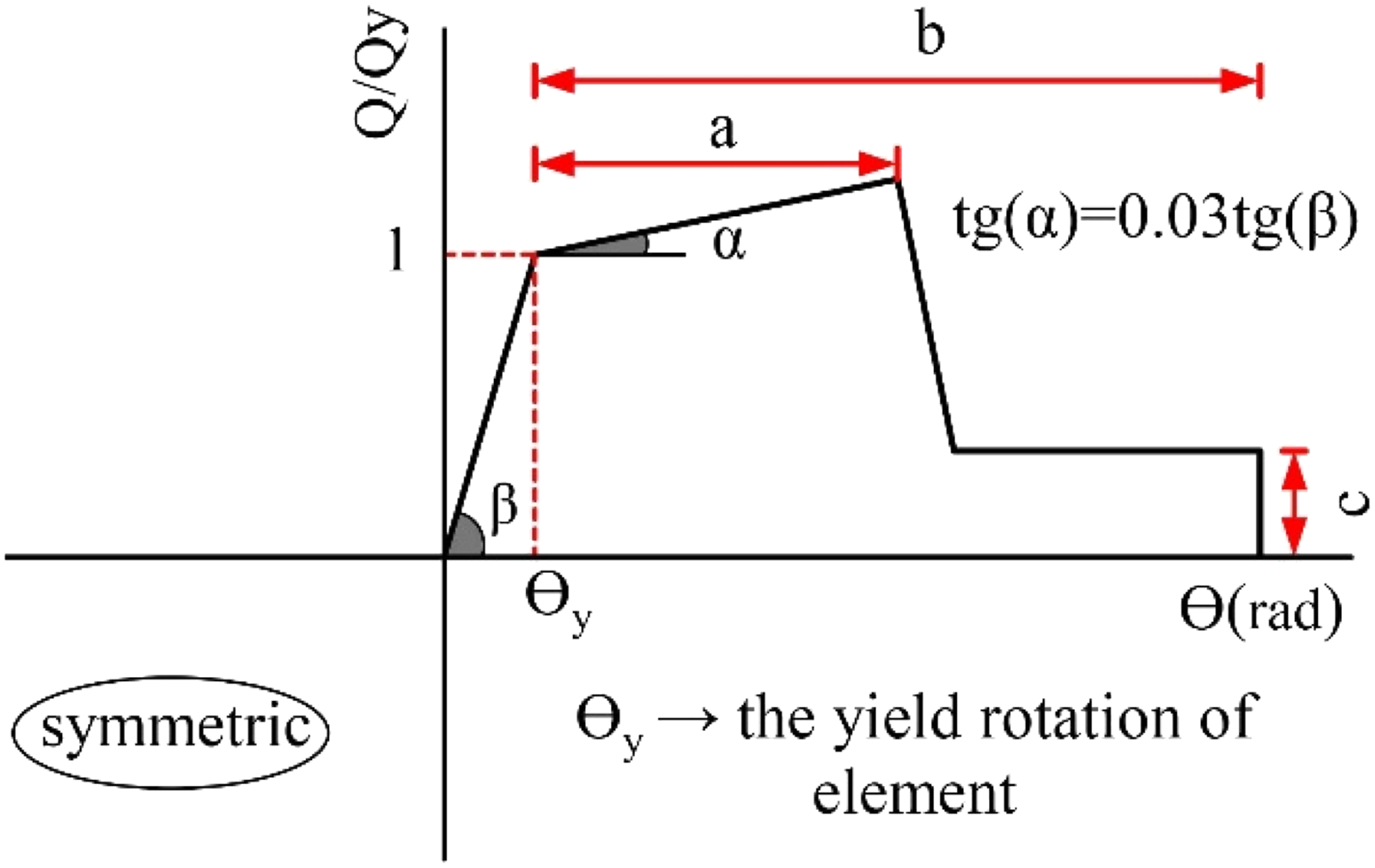
The beam and column elements are assumed to have linear behavior with concentrated plastic hinges at both ends of the members (points susceptible to the formation of plastic hinges). It should be noted that the utilized hinges for the beam elements are only flexural hinges (M-hinges), while for the columns, axial-flexural plastic hinges (P-M hinges) are utilized. P-delta effects are also included in the analysis using PERFORM-3D software (Computer and Structures Inc., 2017).
Although the eccentric bracing system is designed by considering linear behavior for the braces, in this study for the performance evaluation and verification of this design assumption, nonlinear elements are used to simulate the behavior of the braces. Due to the assumption of hinge connections at both ends of braces and their energy absorption through the formation of axial joints (yielding or buckling of the element due to tension and compression, respectively), axial deformations at the expected buckling load, 
In this study, the response of the brace elements in the nonlinear range of behavior is based on the generalized load–deformation relationship depicted in Figure 4. The parameters a, b, and c in this diagram are taken from the corresponding table of the modeling and acceptance criteria in nonlinear methods for steel components (in this study, double channels) according to ASCE/SEI 41-17 (2017). To model the braces in the PERFORM-3D software (Computer and Structures Inc., 2017), a “Simple Bar” element is used that resists only against axial forces. Load–deformation diagrams used for brace elements in tension and compression and the considered limit states for them (adopted from ASCE/SEI 41-17 (2017)).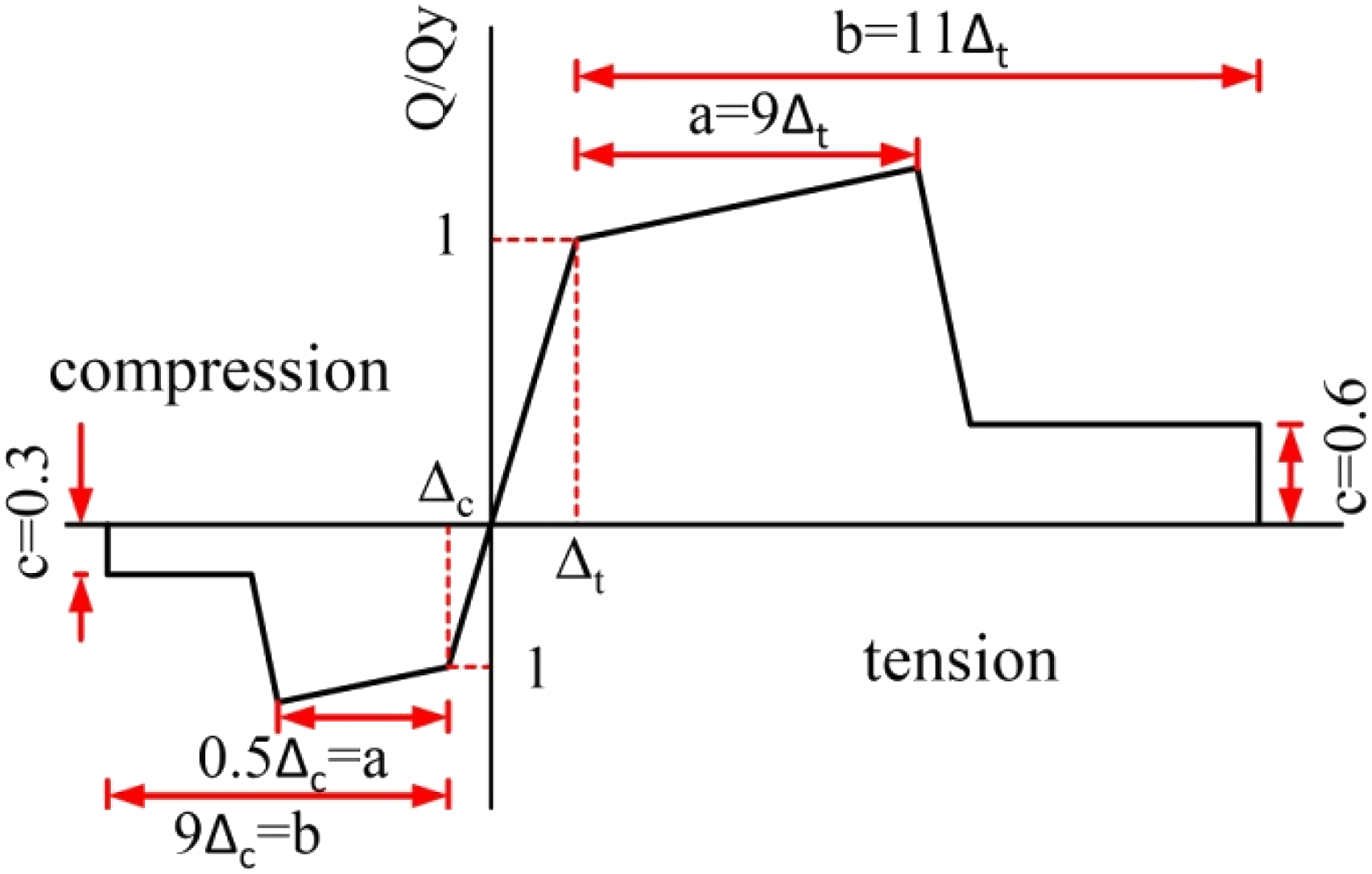
To model the vertical links, first, these structural elements are modeled in OpenSees software (Mazzoni et al., 2006) by taking into account their support and loading conditions. Subsequently, their capacity curves are derived using cyclic loading. Finally, the resulting curves are idealized as bilinear capacity curves for use in PERFORM-3D software (Computer and Structures Inc., 2017) (see Figure 5). The accuracy of this model compared to the experimental tests results on link elements is demonstrated in the previous study by Mohsenian et al. (2020b). Schematic hysteresis curve for a shear link element and the idealized multi-linear curve.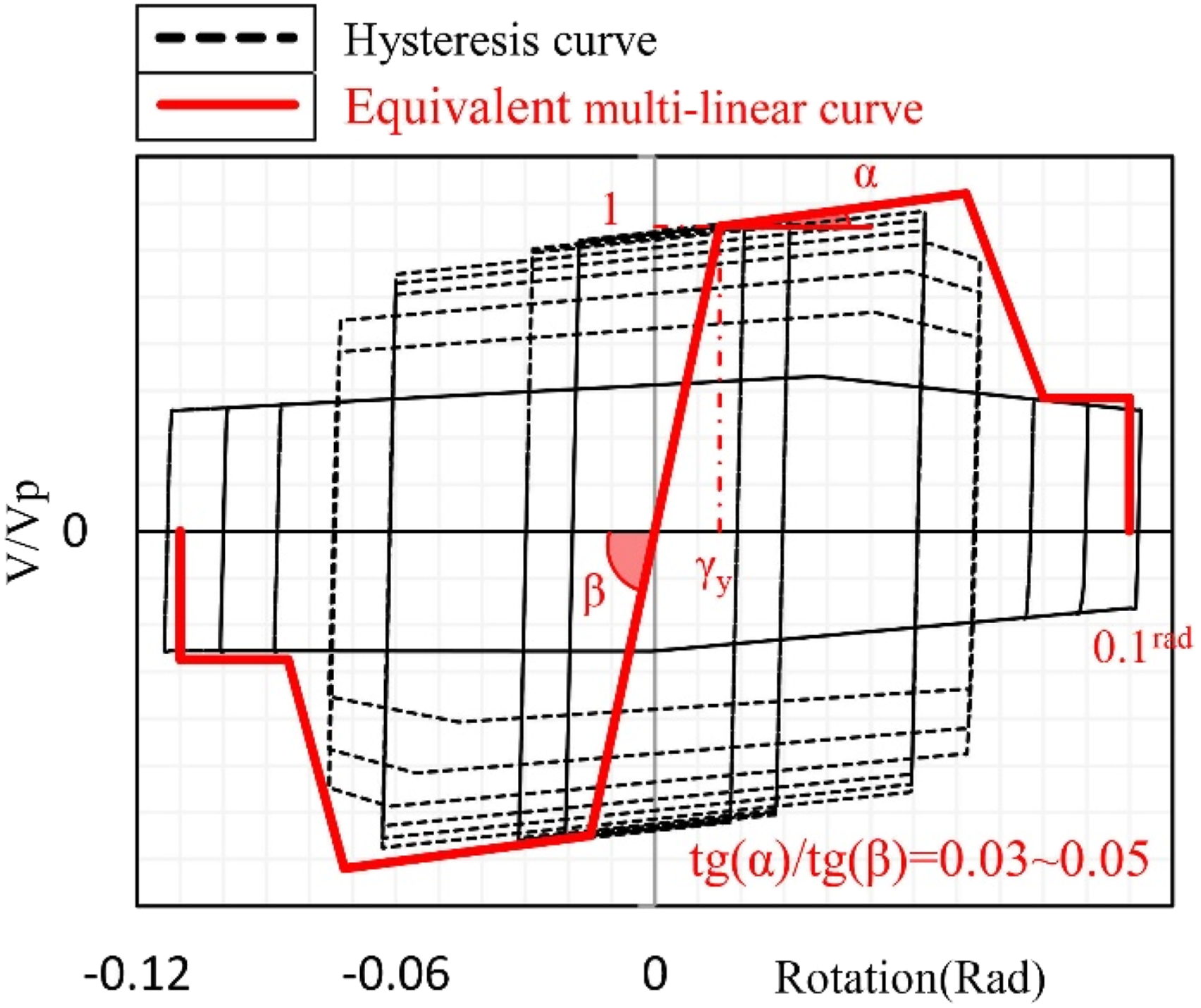
It should be noted that the shear capacity of the sections, Deformation and stress contours for the vertical links 
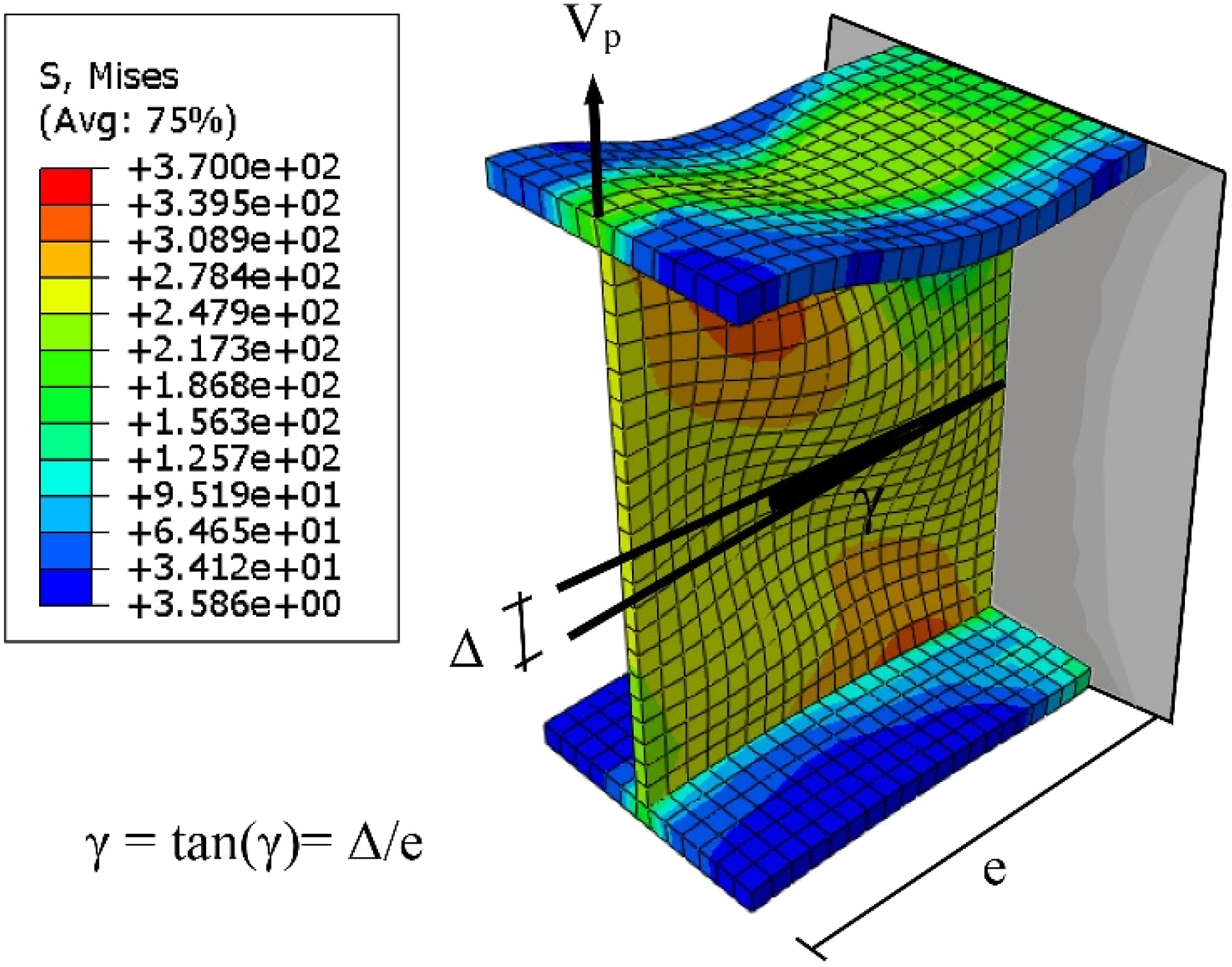
In the previous experimental studies, the deformation angle of links before failure has been reported to vary from 0.128 to 0.156 radian (Zahrai and Mahroozadeh, 2010). However, to provide conservative results in the present study, the maximum acceptable shear deformation angle of the vertical links for the seismic design is limited to 0.1 radian (strain at which the ultimate stress of the material, 
In this equation, e and ke are the length and stiffness of the link element, respectively. As is evident in Figure 6, the level of stress in the wings of the links is always lower than that of the web. This observation confirms that the links yield in shear. As shown in Figure 6, the considered boundary conditions for the link elements in ABAQUS (2014) are to represent the real applications (one end of the link is fixed and the other end is free to rotate).
To model the vertical links in the PERFORM-3D software (Computer and Structures Inc., 2017), a column element with linear behavior and a concentrated shear hinge (with hysteresis curve depicted in Figure 5) is used. It should be stated that all the section nodes at the free end are coupled for the lateral deformation.
The applied gravitational loads to the frames are identical in both linear and nonlinear phases. It should be noted that in the combination of gravitational and lateral loading, according to equation (4), the upper limit of gravitational loads is taken into account to provide the most critical conditions in terms of maximum stress in the beams and columns (ASCE/SEI 41-17, 2017)
Calculation of multilevel response modification factors
In this section, the three different definitions for the response modification factor are briefly described (Mohsenian et al., 2019a, 2019b) and are subsequently derived separately for the modeled frames before and after the addition of eccentric braces with vertical links.
Design response modification factor
Since the ductility requirement is not involved in the determination of this response modification factor, the term “force method” is also used in seismic design codes to introduce this factor. In the current seismic design guidelines, the values proposed for the response modification factor,
Demand (ductility/deformation) response modification factor
The demand response modification factor, 
In this equation, 
In equation (6), 


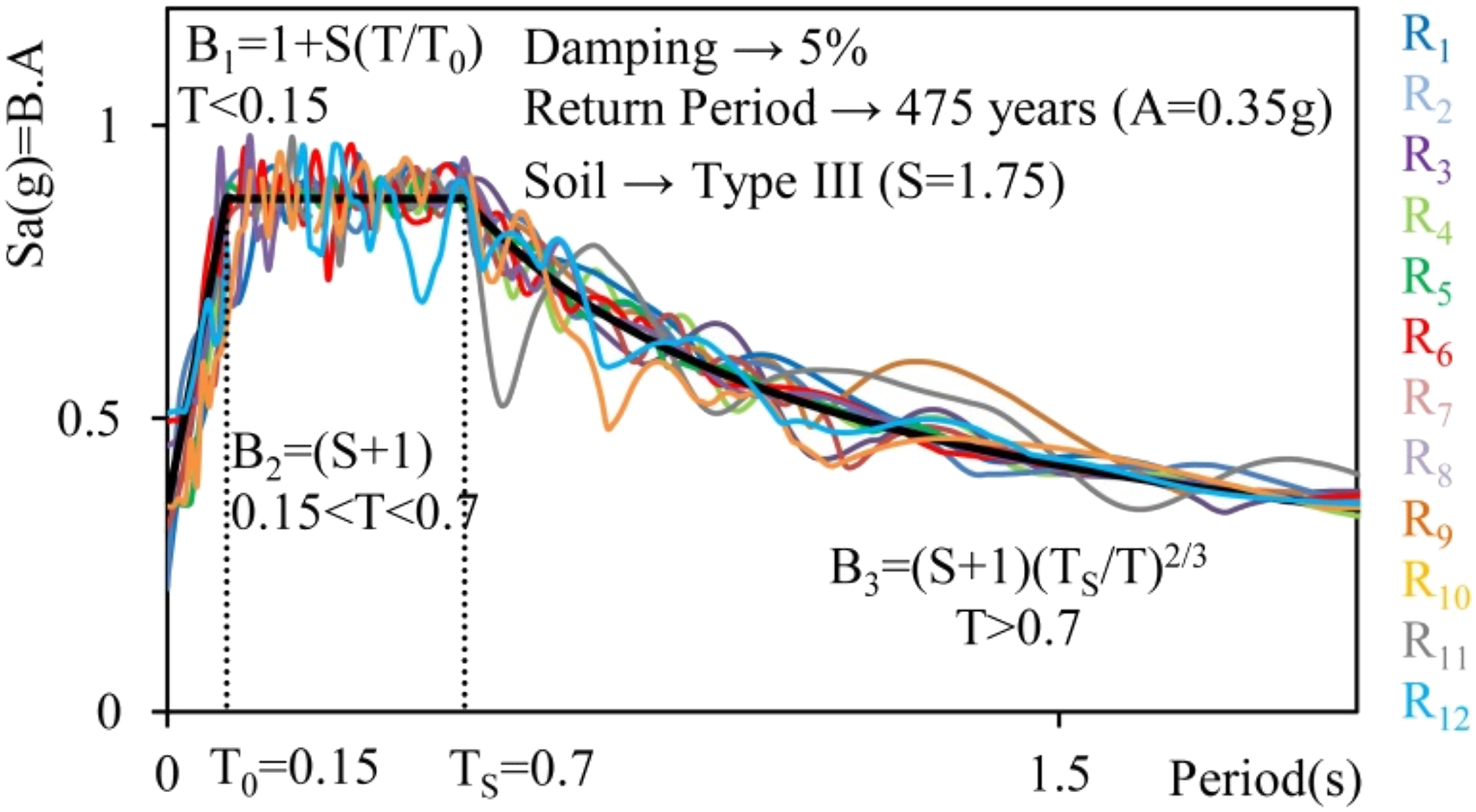
In the above equations, Schematic process of computing elastic base shear under the design hazard level. Comparison between demand spectrums and spectra of artificial accelerograms (Ri).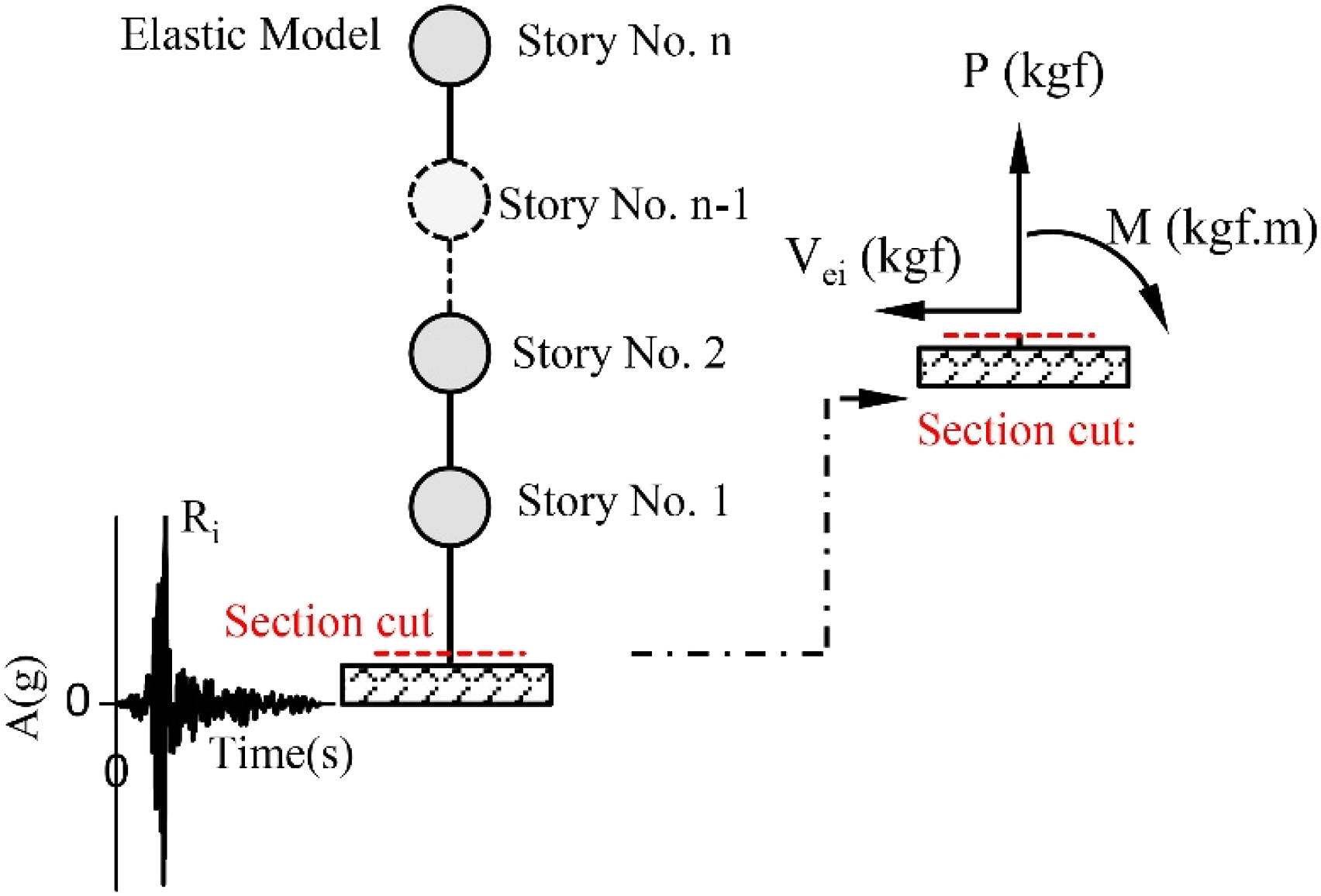
Earthquakes utilized for generating artificial accelerograms and incremental dynamic analysis.
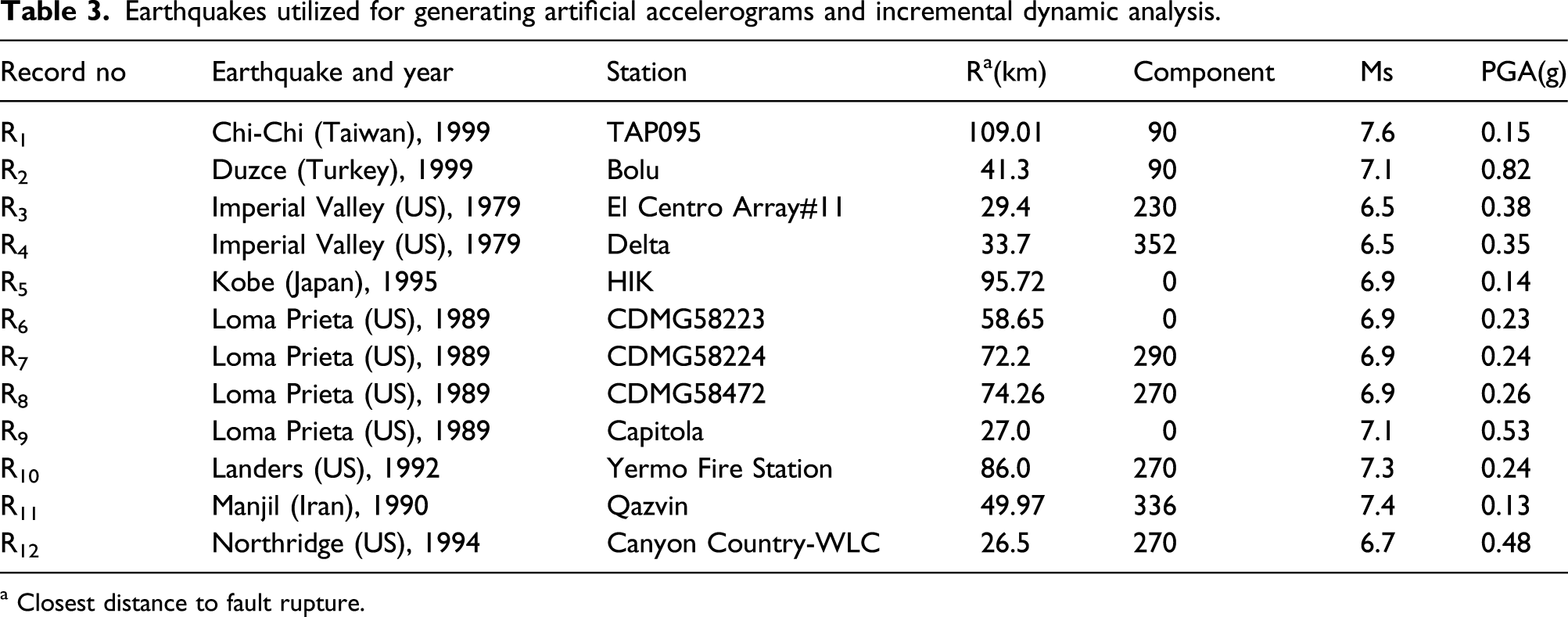
a Closest distance to fault rupture.
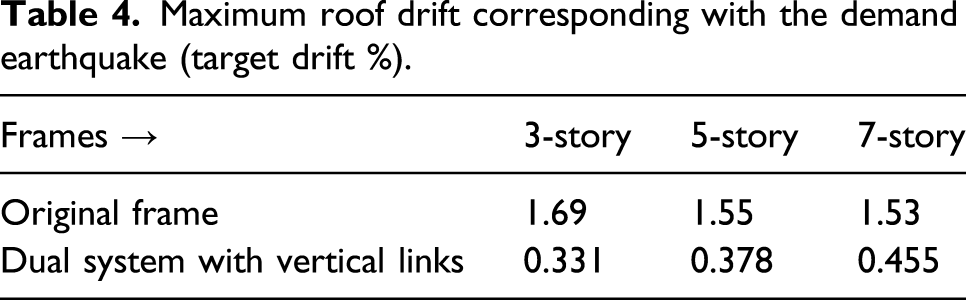
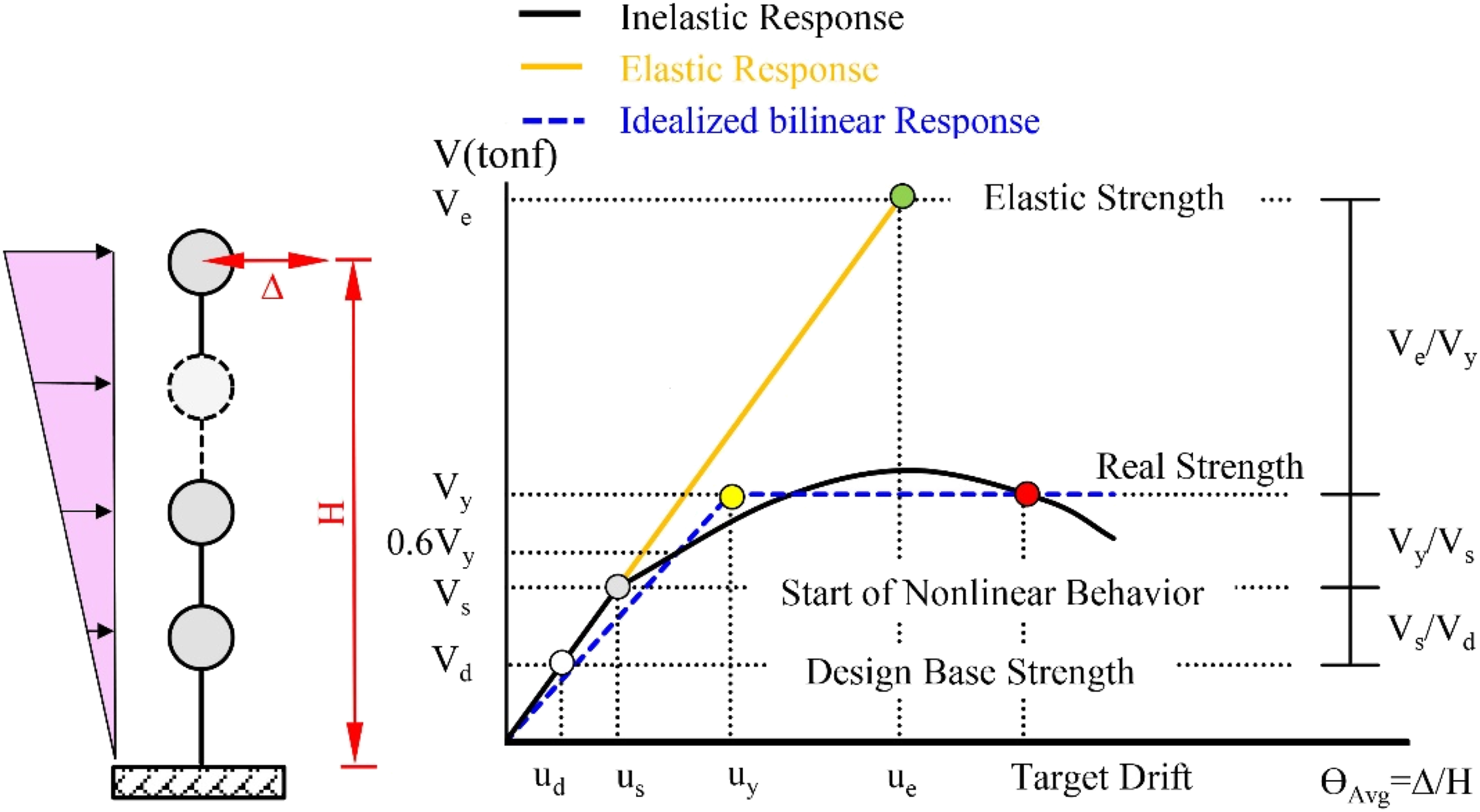
To derive Schematic process of computing average target drift under design hazard level. Maximum roof drift corresponding with the demand earthquake (target drift %). Schematic process of derivation of capacity curve for structure and its idealization (adopted from Mwafy and Elnashai (2002)).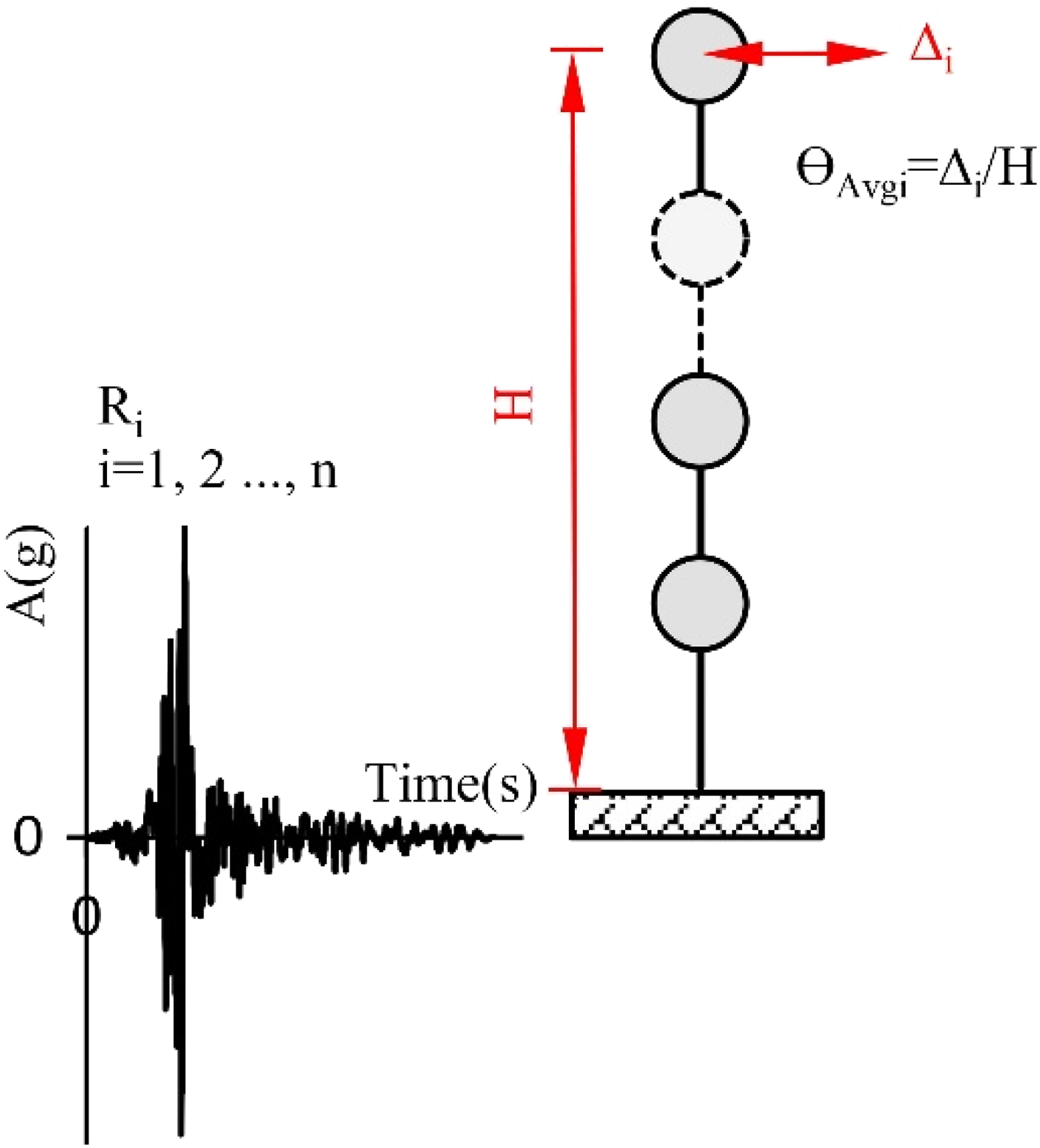
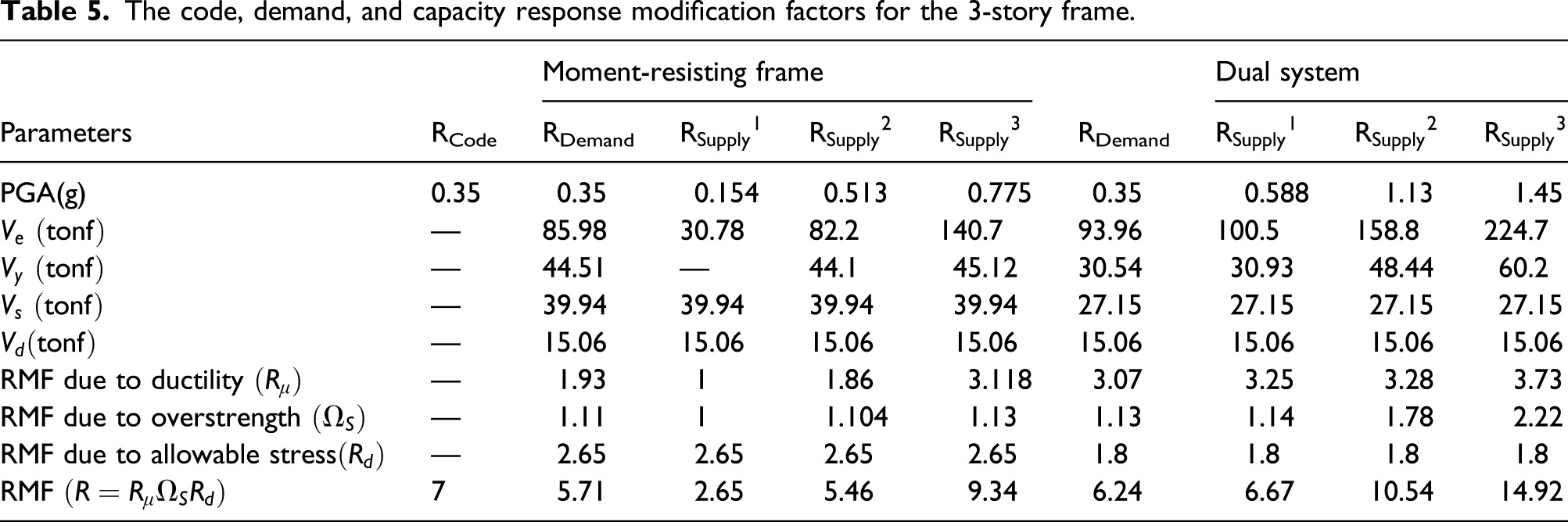
The code, demand, and capacity response modification factors for the 3-story frame.
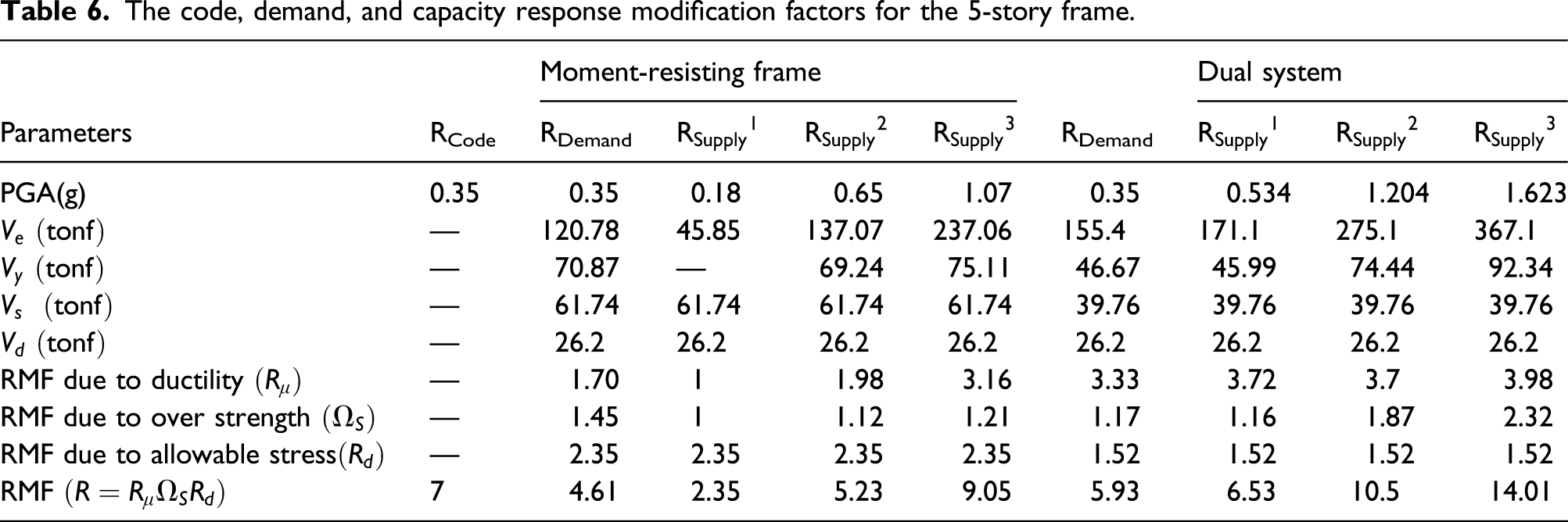
The code, demand, and capacity response modification factors for the 5-story frame.
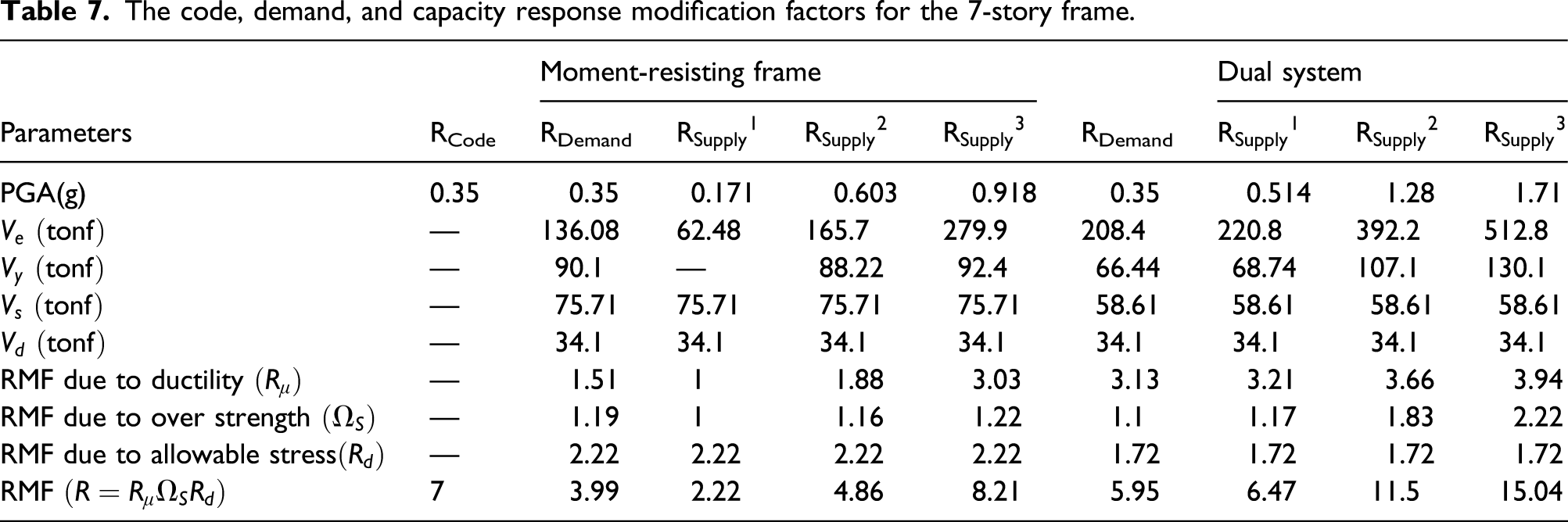
The code, demand, and capacity response modification factors for the 7-story frame.
Supply (capacity) response modification factor
The supply R-factor
In the following step, as demonstrated in Figure 11, linear dynamic analyses are performed on the structures using the PGA values corresponding to the different damage levels derived in the previous step, and the average base shear, Incremental dynamic analysis of the structures and extraction of acceleration corresponding to different performance levels (schematic).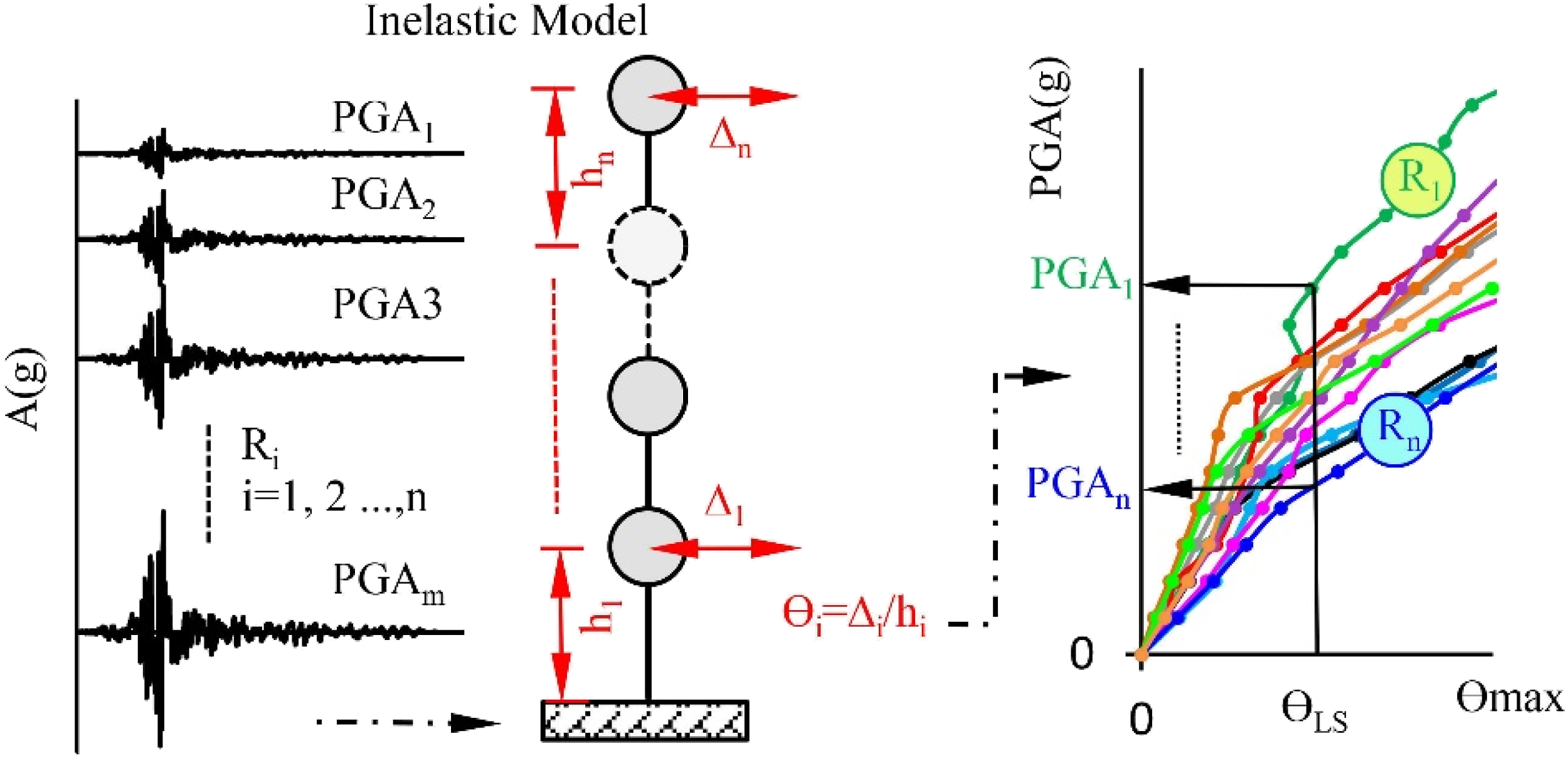
Results and discussion
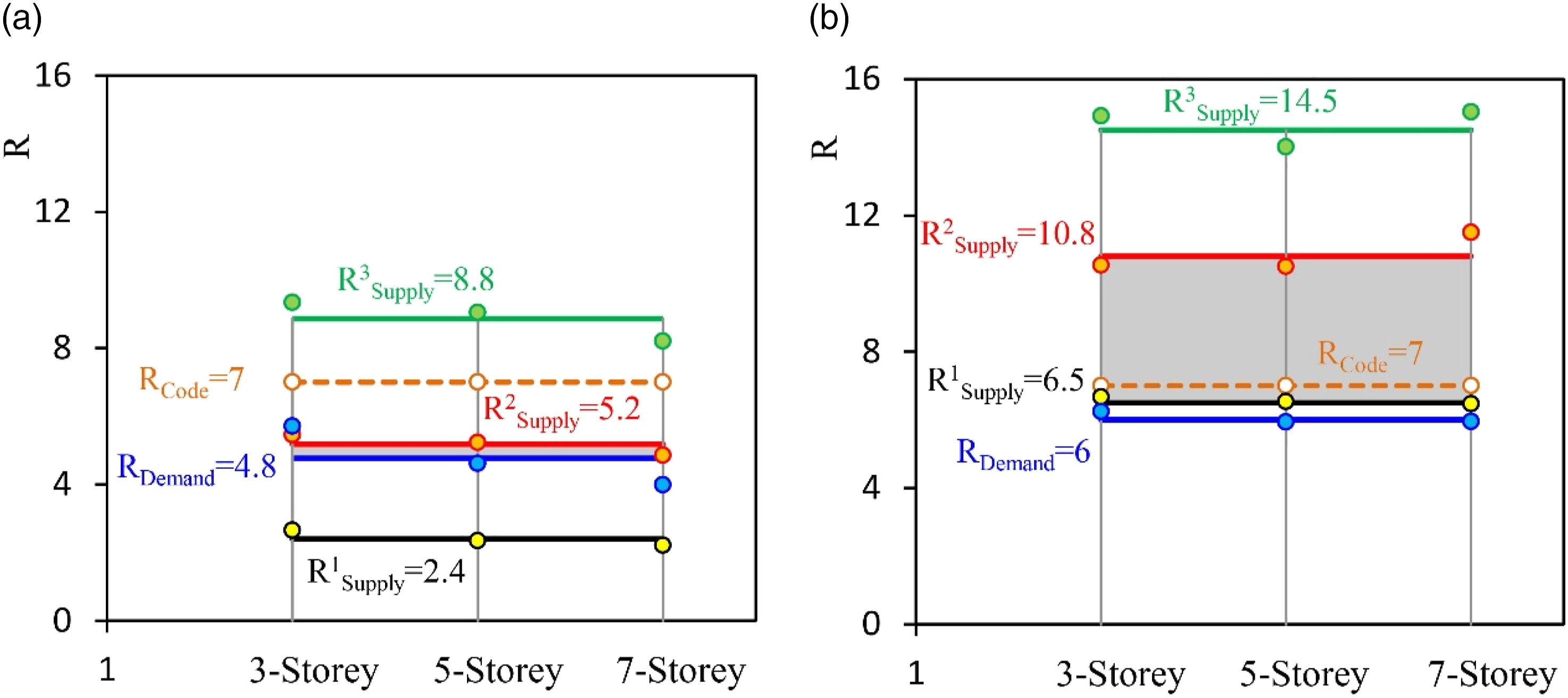
For each of the designed structures, in both moment-resisting frame and dual structural systems, the values of the code, demand, and supply response modification factors are presented in Figure 12. Figure 13 also compares the average of the calculated values for the designed frames as the base of comparison for the selected lateral load-resisting systems. Response modification factors for the studied structures (a) moment-resisting frame and (b) dual system. Average response modification factors for the studied structures: (a) moment-resisting frame and (b) dual system.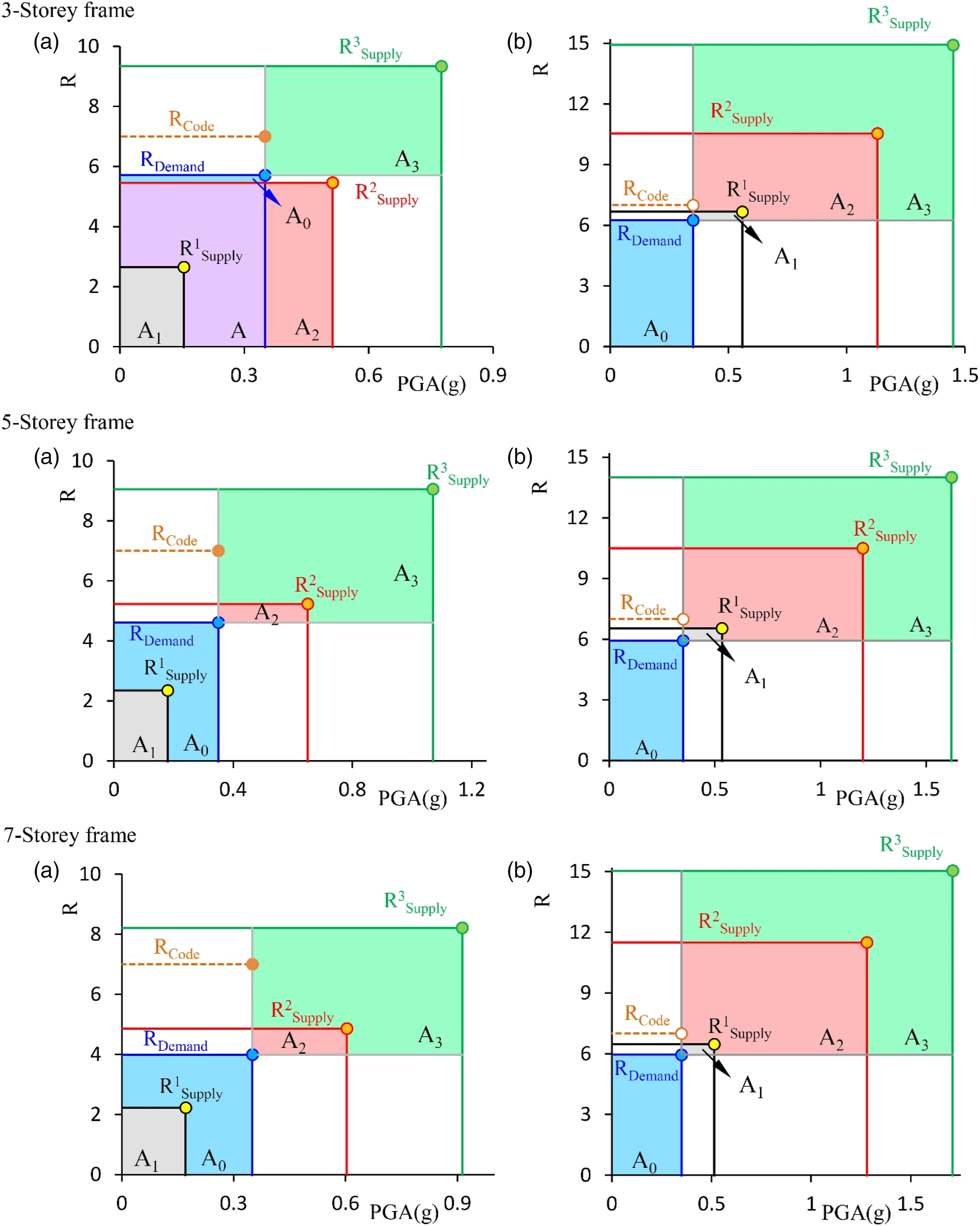
As shown in Figure 12(b), for the dual systems the capacity behavior coefficients for all performance levels and their corresponding risk levels were higher than the demand response modification factors at the design risk levels
It is evident from the results that the selection of the R-factor equal to 7 for the initial design can ensure the safety and reliability of the frame. It is shown that in this case, the maximum story drift will not exceed the predefined target values for LS and the CP levels under the design basis earthquake. The results also indicate that the code R-factor of 7 is always within the safe range. As shown in Figure 13 (b), for the dual moment-resisting frame equipped with vertical links, the choice of any value of the response modification factor within the specified gray range will guarantee LS performance level under the design hazard level and lower intensities. Accordingly, the choice of values between 7 and 10 under the design hazard level will guarantee high reliability for the LS performance level. However, due to the wide range of inherent uncertainties associated with future earthquakes and possible aftershocks, choosing values above 10 for the response modification factor is not recommended.
Based on Figure 13 and the values presented in Tables 5–7, for the design earthquake and lower intensities, the maximum response modification factor to remain at the immediate occupancy performance level would be approximately 6.5. According to the small difference between the demand response modification factor
In the original frames, the calculated supply response modification factors corresponding to the immediate occupancy level are less than the demand response modification factors
In the 5- and 7-story frames, the supply response modification factors corresponding to the LS performance level are higher than the demand response modification factors
For the studied frames, the supply response modification for the CP performance level is higher than the demand response modification factor
A quantitative comparison shows that the addition of eccentric braces with vertical shear links to the intermediate moment-resisting frames makes the capacity response modification factors for the IO, LS, and CP performance levels 6.5, 2, and 1.5 times greater, respectively. Moreover, the results show that the demand response modification factors for the 3-, 5-, and 7-story structures become 1.1, 1.3, and 1.5 times greater, respectively. As depicted in Figure 13(a), the utilized response modification factor equal to 7 for the initial design of frames leads to safe design solutions only for the CP performance level. When the LS performance level is considered, the response modification factor equal to 5 seems appropriate for the intermediate moment-resisting frame systems.
The conducted analysis showed that the dual system, in addition to increasing the demand and supply response modification factors of the frames, results in a significant increase in the response modification factor due to ductility,
According to the given explanations, since each performance level corresponds to a level of intensity, it is possible to present the response modification factors for each frame in the form of a matrix. In this approach, which is demonstrated in Figure 14, each row of the proposed matrix represents a level of intensity, and each column indicates a performance level. For example, in the proposed matrix notation, when the hazard level PGA2 is considered, the frame will experience LS performance level. It should be noted that the response modification factor is proposed only for this performance level (R2). The reason is that at this level of intensity, the frames go beyond the IO performance level and also do not experience CP performance level. Therefore, no value is proposed for the first and second columns in the second row. Matrix presentation for the response modification factor.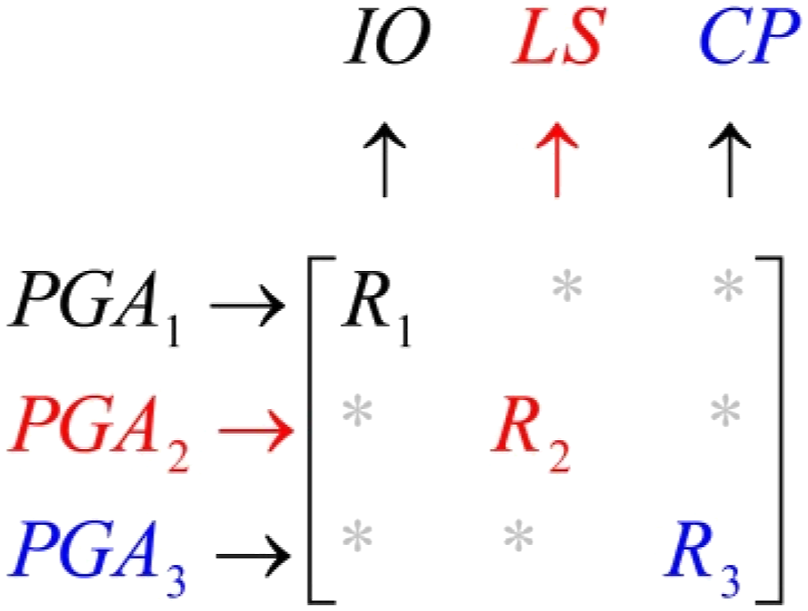
At each level of intensity, for the proposed response modification factor or lower values, the frames will experience the corresponding or higher performance levels. For example, at the PGA2 hazard level, for response modification factors lower than R2 (R ≤ R2), the frame will be at LS or higher performance levels. Similarly, at each row, the proposed response modification factor and the corresponding or lower intensities will guarantee the corresponding or higher performance levels. For instance, by using the response modification factor R2 at the hazard level PGA2 and lower hazard levels (PGA ≤ PGA2), the frame will exhibit LS or higher performance levels.
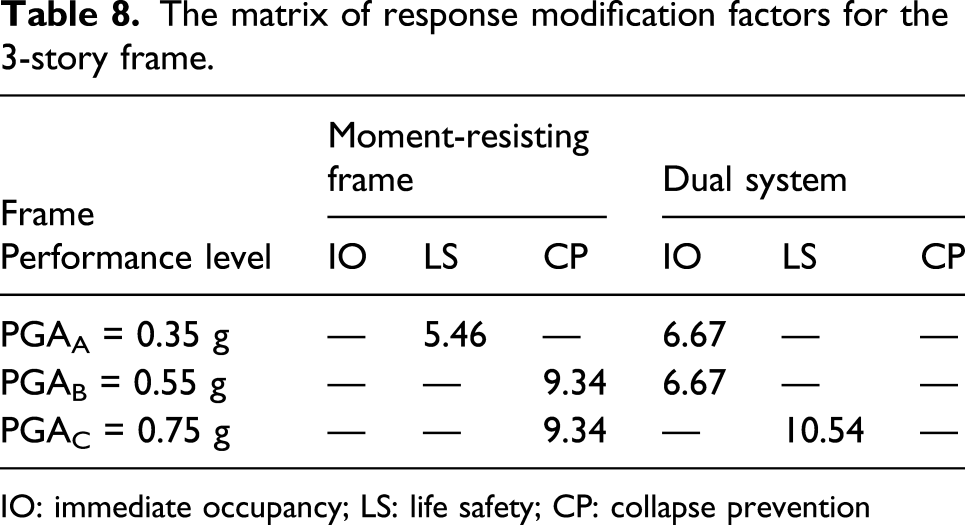
The matrix of response modification factors for the 3-story frame.
IO: immediate occupancy; LS: life safety; CP: collapse prevention
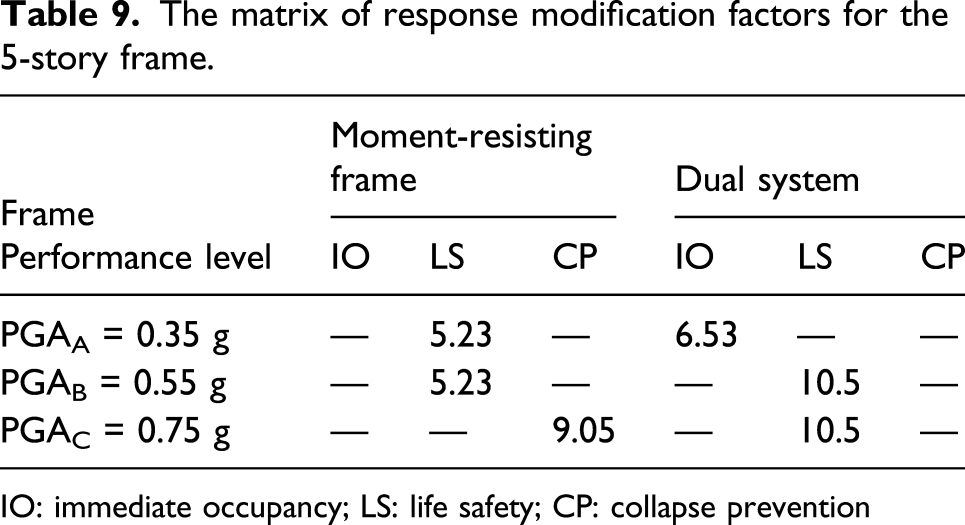
The matrix of response modification factors for the 5-story frame.
IO: immediate occupancy; LS: life safety; CP: collapse prevention
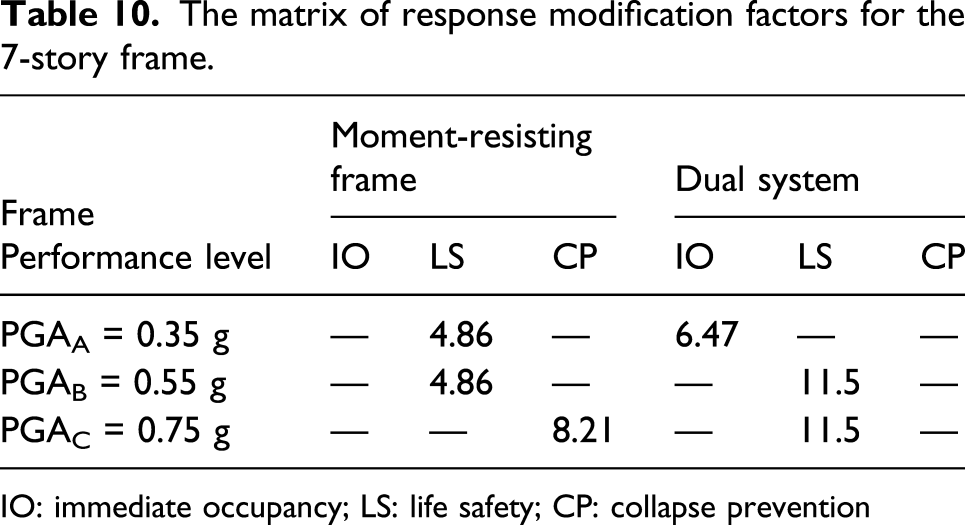
The matrix of response modification factors for the 7-story frame.
IO: immediate occupancy; LS: life safety; CP: collapse prevention
Based on the results in Tables 8–10, for all original frames at the first hazard level (PGAA), the story drifts will be higher than the limit value corresponding with the IO performance level, which means at this level of intensity, the frames will not satisfy the target performance level. For these frames, on average, a response modification factor equal to 5 under the mentioned hazard level, which is corresponding with the selected design hazard level, will guarantee the LS performance level. The addition of eccentric braces with vertical links increases this value to 6.5. As it is evident, the dual frames even under higher levels of intensity (PGAB and PGAC) remain at the performance levels higher than the CP.
As can be seen, the vertical links had a very positive effect on the seismic performance of the moment-resisting frames and could considerably improve their seismic performance to an acceptable level. This implies that the combination of the moment-resisting frame system with the eccentric bracing system equipped with vertical links provides a dual system with high energy absorption and dissipation capability that is capable of providing high performance levels under medium to high intensity levels. The dual system can be also designed as a two-phase system using different performance targets. For example, the design can be performed such that the eccentric bracings dissipate the applied earthquake energy up to the design hazard level and after this stage, the moment-resisting frame provides the main lateral strength and stiffness. In this case, the moment-resisting frames can be designed for higher performance levels. While the presented results are based on the frames and designed assumptions used in this study, the outcomes of this research should prove useful in practical design of dual moment-resisting frames with vertical links.
Conclusion
In the present study, for the first time, a multilevel approach was used to derive the response modification factors of a dual structural system consisted of intermediate moment-resisting frames and eccentric bracing systems equipped with vertical links. By introducing the concept of demand and supply response modification factors, these two factors are extracted based on the seismicity of the site and the desired performance level for 3-, 5-, and 7-story moment-resisting frames before and after the addition of the eccentric braces with vertical links. The matrix representation of the multilevel modification factors developed for the dual systems in the present study should prove useful for the performance-based seismic design of these systems under different seismic hazard levels and performance targets. Based on the results presented in this article, the following conclusions can be made: In the studied dual structural systems, the intensity corresponding to the IO level is estimated to be close to the intensity of the maximum considered earthquake (return period of 2475 years). Therefore, the moment-resisting frames in the dual systems are expected to remain elastic even under strong earthquake events. The addition of the eccentric braces with vertical links has increased the response modification factors of moment-resisting frames corresponding to IO, LS, and CP performance levels at least 6.5, 2, and 1.5 times, respectively. In general, using vertical link increases the modification factors due to ductility and overstrength, while reduces the modification factors related to allowable stress. By choosing a response modification factor between 7 and 10 in the design process of the studied dual structural systems, it is expected that the LS performance level under the design basis hazard level will be provided. Using a response modification factor of 7 for the initial design of moment-resisting frame structures does not guarantee the LS performance level under the design basis earthquake. Therefore, it is proposed to utilize a response modification factor equal to 5 for this system.
Footnotes
Declaration of conflicting interests
The author(s) declared no potential conflicts of interest with respect to the research, authorship, and/or publication of this article.
Funding
The author(s) received no financial support for the research, authorship, and/or publication of this article.
