




Abstract
The behaviour of axially loaded prestressed stayed columns is a commonly studied area. Despite the fact that load eccentricity in columns is commonplace in practice, the amount of investigation into these systems under eccentric loading is limited. This study employed finite element analysis to investigate the interactive post-buckling behaviour of prestressed stayed columns. Critical imperfection combination with respect to the load carrying capacity was established and a comparison of a planar and a three-dimensional model was carried out to investigate key differences in the models. In this work, it has been shown that the load carrying capacity of eccentrically loaded columns can be significantly reduced when buckling in interactive mode is observed. Furthermore, it was established that increase in eccentricity results in a decrease in load carrying capacity of columns for both planar and three-dimensional models. However, a major difference between the models is the twisting effect exhibited in the three-dimensional model under out-of-plane eccentric loading. This work highlights the importance of carefully designing prestressed stayed columns’ connections to minimise loading eccentricity as it has been shown that the benefit of employing these systems over unstayed columns reduces with increasing load eccentricity.
Keywords
Introduction
A common design problem with slender steel columns is that they are susceptible to buckling under compressive loading. This can be improved by employing a prestressed stayed column (PSC) system. This type of system enhances the lateral stability of the structure through the addition of cross-arms, which are welded to the face of the column, with tensioned cable stays connecting the cross-arms to the column ends. Two distinct buckling modes for PSCs are possible: (1) symmetric, in which the column’s deformed shape can be represented by a half sine wave, and (2) antisymmetric which can be represented by a full sine wave. In the post-buckling region, an interactive buckling shape can occur as a combination of symmetric and antisymmetric buckling modes. While research on PSCs has generally focused on axial loading, they will most likely be subjected to eccentric loading conditions in practice. Load eccentricity can occur in many applications of PSCs, including different connection types and structural configurations. There are many different possible configurations of PSCs; the simplest type with a single cross-arm is shown in Figure 1.
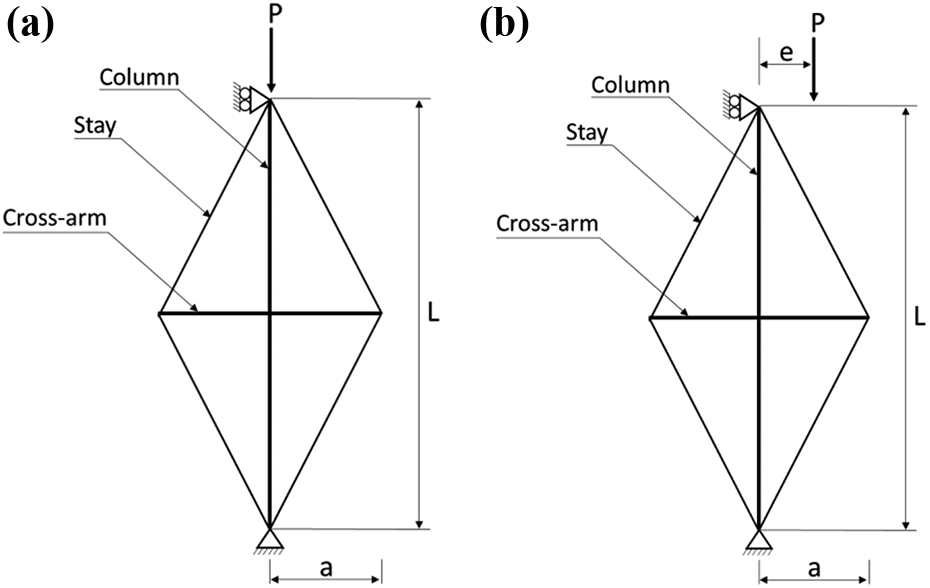
Single cross-arm prestressed stayed column with (a) axial concentric loading and (b) eccentric loading.
The system shown in Figure 1 is a two-dimensional configuration. However, practical applications of these structures require additional support in the perpendicular plane. This is normally achieved through the introduction of additional cross-arms and stays in the perpendicular direction, resulting in two axes of restraint. A study by Krishnan (2020) presents case studies where PSCs have been used in practice. PSCs have been studied since the 1960s (Chu and Berge, 1963), with the first finite element (FE) study being carried out by Temple (1977). A notable contribution to the investigation of PSCs by Hafez et al. (1979) identified an equation for the calculation of the amount of prestress that will result in the highest critical buckling load for a particular geometry, known as the optimal prestress. Several subsequent studies have utilised numerical modelling to investigate the behaviour of these structures under axial loading (Chan et al., 2002; Hyman et al., 2018; Li et al., 2016, 2018a, 2018b; Osofero et al., 2013; Saito and Wadee, 2008, 2009a, 2009b, 2010; Wang et al., 2019; Wong and Temple, 1982; Wu et al., 2019; Yu and Wadee, 2017b). The majority of previous studies have focused on PSCs under axial loading, when in reality these structures may be used in such a way that there is eccentricity in the loading.
A similar structure was studied experimentally and numerically by Feng and Hu (2019) and Feng et al. (2019). In both studies, carbon fibre reinforced polymer strips under tension were used to apply the prestressing force. However, their work was focused on I-beam sections and did not consider eccentricity of loading. One previous study into PSCs under eccentric loading has been carried out (Li et al., 2019); however, this was limited to a planar cross-armed column with box sections instead of the more traditionally used circular sections. Furthermore, this study did not consider interactive buckling, previously shown by Saito and Wadee (2009b), Yu and Wadee (2017a) and demonstrated experimentally by Osofero et al. (2012) as an important phenomenon for axially loaded columns. Therefore, this study aims to investigate different imperfection combinations for eccentrically loaded PSCs with circular hollow sections. Furthermore, a comparison of the results from a planar model and a three-dimensional model will be carried out to highlight the main differences. The model is validated against results from previous experimental studies.
Numerical modelling
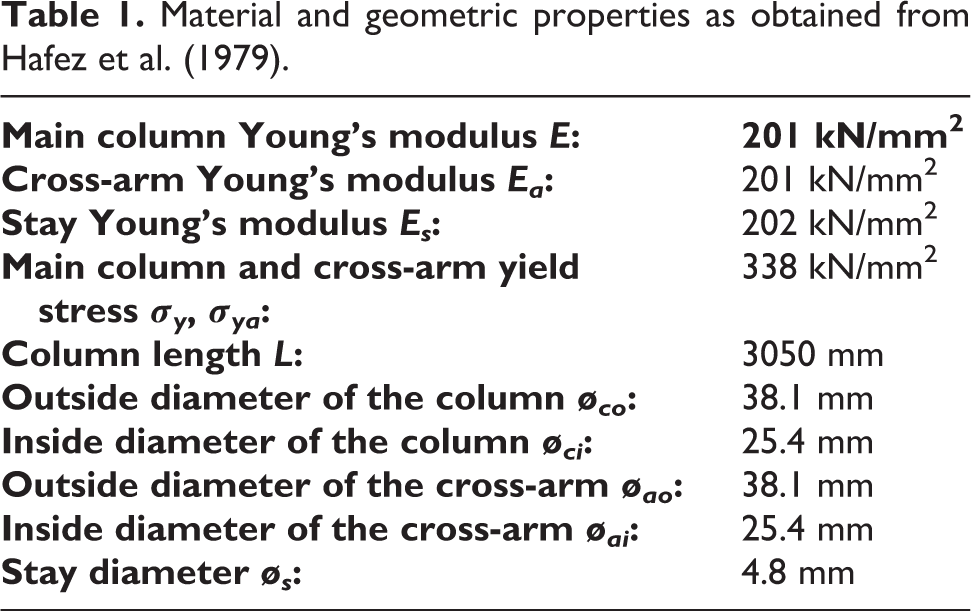
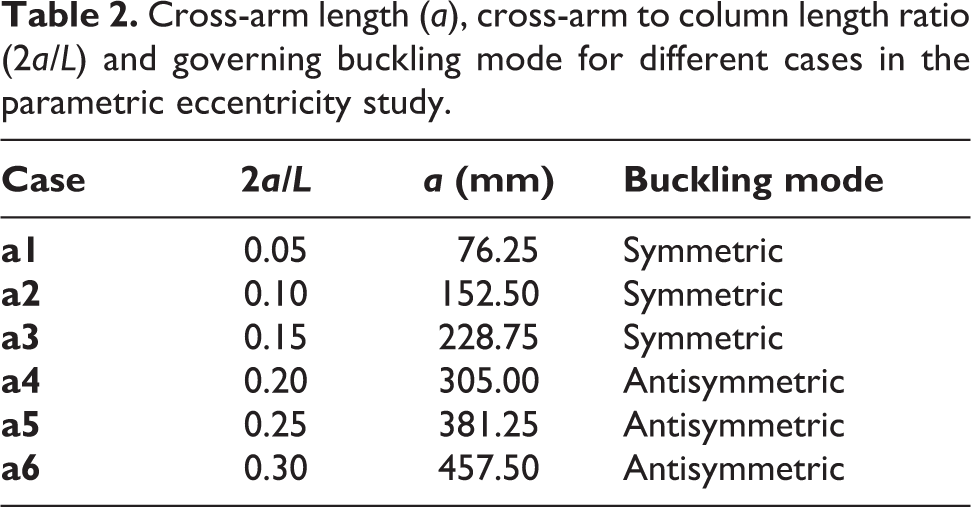
The numerical models were developed using the commercial software ABAQUS. The model was validated against previous experimental results and then used to investigate the post-buckling behaviour of eccentrically loaded columns. Both planar and three-dimensional models were investigated, and a comparison of the results was carried out. Material and geometric properties used in the eccentricity study were based on the experimental values from Hafez et al. (1979), shown in Tables 1 and 2. Hafez et al. (1979) experimental study was in fact a planar buckling column experiment, but these parameters are applied to both the planar and three-dimensional models.
Material and geometric properties as obtained from Hafez et al. (1979).
Cross-arm length (a), cross-arm to column length ratio (2a/L) and governing buckling mode for different cases in the parametric eccentricity study.
The model formulation is the same as that used in previous studies (Hyman et al., 2018; Li et al., 2019; Osofero et al., 2013; Saito and Wadee, 2008, 2009a, 2009b, 2010). Both the column and cross-arm were modelled using B32 beam elements, while the stay was modelled with a single T3D2 truss element. A convergence study was carried out to establish the required mesh size after which a 10-mm element size was chosen for the column and cross-arm. As the stays are cables which go slack under compressive loading, the ‘no compression’ option was used to enable the stays go slack when they lose their prestress. A buckle analysis was used to obtain the eigenmodes of the column and no effect on the buckling shape or eigenvalues of the columns was observed due to load eccentricity. These buckling shapes were then used as initial imperfections in the Riks analysis (Riks, 1979). The ABAQUS keyword file was then edited to include the initial imperfection to induce buckling, so the post-buckling behaviour could be observed. It is common practice to use the buckling shapes as initial imperfections in the post-buckling analysis of PSCs as it has been shown that by adopting these, PSCs post-buckling behaviour can be accurately captured (Li et al., 2016, 2018a, 2018b, 2019; Osofero et al., 2013; Yu and Wadee, 2017a, 2017b). The configuration of the columns investigated in the eccentricity sensitivity study is shown in Figure 1(b), where P is the applied load and e is the eccentricity.
Figure 2 shows images of the planar and three-dimensional FE models used in this study.
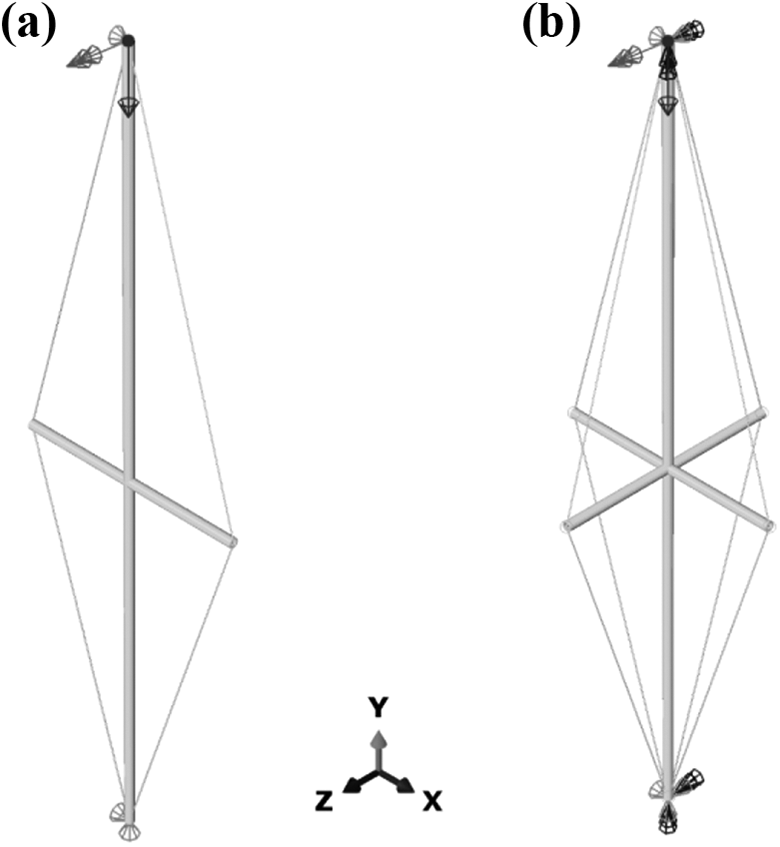
FE model representations: (a) planar model; (b) three-dimensional model.
Experimental validation
The developed FE model was validated by comparing the results with those obtained from previous experimental studies. These experimental results were compared with the results from the three-dimensional FE model to validate the model. Two studies were chosen for the validation, and the geometric properties from these studies are reported in Table 3. First, a buckling analysis was carried out on the reported geometries to obtain the eigenmode shapes. These eigenmode shapes were then used as initial imperfections in the Riks post-buckling analysis, with the amplitudes reported in previous studies (Martins et al., 2016; Osofero et al., 2012). The post-buckling deformed shapes were also compared with previous experimental works (Martins et al., 2016; Osofero et al., 2012) and a good agreement was observed. A symmetric post-buckling shape was observed for all PSCs with symmetric buckling modes in the experimental investigation carried out by Martins et al. (2016). Similar behaviour occurs for PSCs with symmetric buckling modes in the present study (Figure 3(a)). For columns with antisymmetric buckling modes, an interactive post-buckling shape was observed (Figure 3(b)); this is validated by the findings of Osofero et al. (2012).
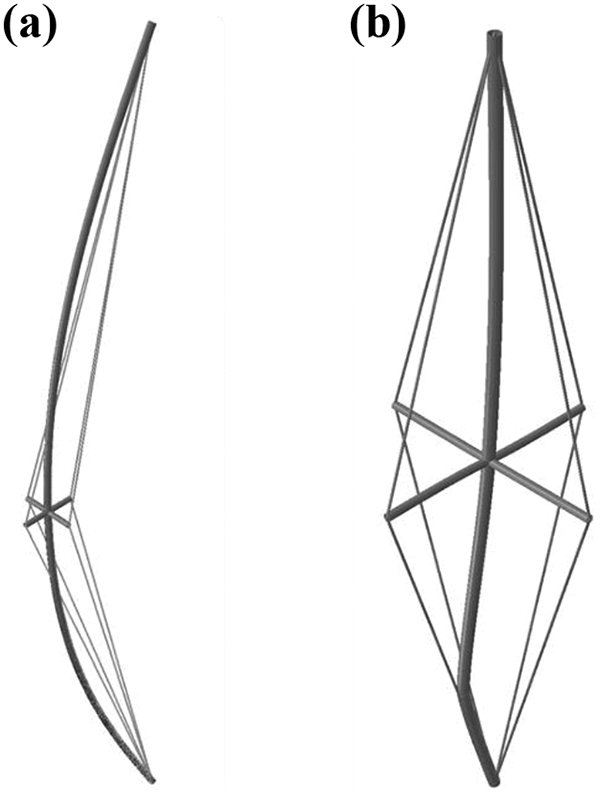
Post-buckling shapes of FE models for experimental validation: (a) symmetric and (b) interactive.
Geometric properties of the experimental studies of Martins et al. (2016) and Osofero et al. (2012) used for the FE model validation, where ø and t are the diameter and wall thickness, a and L are the cross-arm and column lengths, respectively, øs is stay diameter, E, Ea and Es are the column, cross-arm and stay Young’s modulus, respectively, and COV is Pexp/Pnum coefficient of variation.
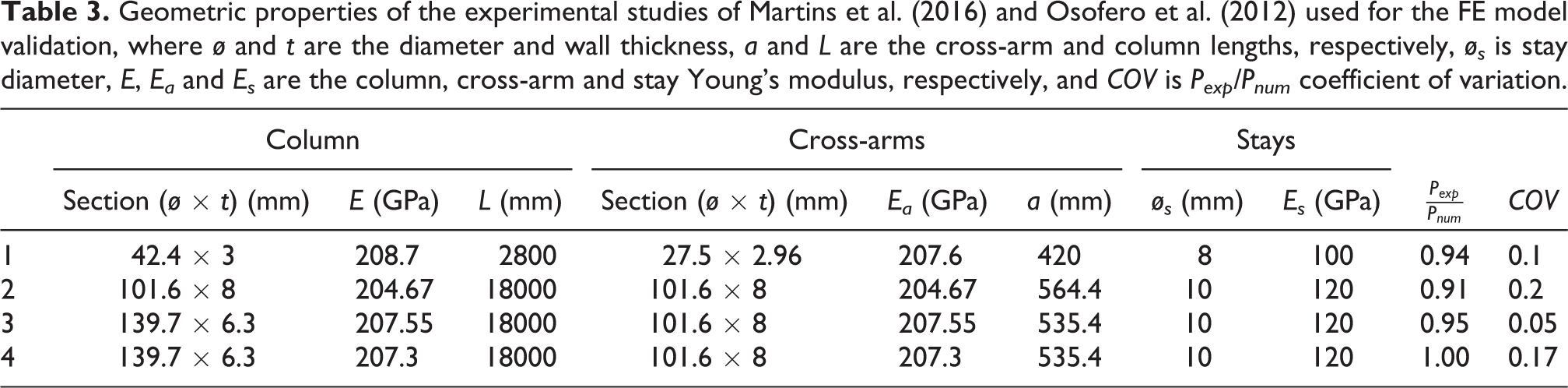
Five columns with antisymmetric buckling mode from Osofero et al. (2012) were modelled with the column parameters reported in Table 3 (row 1). A ratio of maximum load carrying capacity from experiments (Pexp ) and numerical models (Pnum ) expressed as (Pexp/Pnum ) was calculated to be 0.94, with a coefficient of variation of 0.1 for these five columns. Therefore, it was determined that the model can capture the behaviour of columns buckling antisymmetrically as the model captured both the load carrying capacity and post-buckling mode, as shown in Figure 3(b). The column modelled in Figure 3(b), exhibited an antisymmetric post-buckling shape up until the ultimate load, after which interactive buckling began to dominate, which is in line with the observed experimental behaviour (Osofero et al., 2012). Three columns from Martins et al. (2016) which buckled symmetrically were modelled, with column parameters shown on rows 2–4, for three different prestress levels. The average ratio of Pexp /Pnum was 0.95 with a coefficient of variation of 0.14, while also buckling in the symmetric mode, as shown in Figure 3(a). It was thus concluded that the model is accurate enough to model the behaviour of columns buckling symmetrically.
Eccentricity sensitivity
To investigate the effect of the load eccentricity on the load carrying capacity of PSCs, a normalised load eccentricity ratio in equation (1), from Li et al. (2019), was used

Where ε is the eccentricity ratio, e is the load eccentricity, A is the cross-sectional area and Wel is the section modulus. For both eccentrically and axially loaded columns, the critical buckling load obtained from the buckle analysis must be adjusted using equation (2) (Saito and Wadee, 2009b), as the buckle analysis assumes the cables are rigid bars

Where PC Zone 3, T = 0 is the critical buckling load obtained from the FE buckle analysis and C22 is calculated as follows

Where α is the angle between the column and cross-arms, Ka , Kc and Ks are the cross-arm, column and stay axial stiffnesses, respectively. The (2) term is applied only for the three-dimensional model. The theoretical optimal prestress of PSCs, irrespective of the eccentricity in load application, can be calculated using equation (4) (Hafez et al., 1979)

Where C11 is calculated using equation (5)

Previous studies have shown that the highest load carrying capacity of PSCs is usually observed at prestress levels higher than the theoretical optimal prestress (Li et al., 2016, 2019; Osofero et al., 2013; Saito and Wadee, 2008, 2009a, 2009b, 2010). However, for the purpose of comparison, theoretical values of Topt were adopted for all imperfection levels as a benchmark, similar to previous work (Li et al., 2016, 2018a, 2018b, 2019; Saito and Wadee, 2009b, 2010), although the authors recognise that further study is required to investigate the sensitivity of eccentrically loaded columns to change in initial prestress. Furthermore, column yielding was neglected, as column buckling is critical and occurs before material yielding for configurations and material properties considered in this study.
Imperfection sensitivity
In order to induce initial imperfections in the post-buckling analysis, the eigenmode shapes from the buckle analysis were used. It has been previously shown by Saito and Wadee (2009b) that for axially loaded columns with an antisymmetric critical mode that interactive buckling is the worst-case scenario, as this yields the minimum load carrying capacity, therefore an interactive imperfection is used. For eccentric loading, however, this has not yet been established. Thus, this study aims to investigate the influence of the imperfection shape on the post-buckling behaviour of eccentrically loaded columns. The shape function for the initial imperfection is shown in equation (6) as presented in the work of Saito and Wadee (2009b)

Imperfection coefficients µ1 and µ2 for varying imperfection cases.
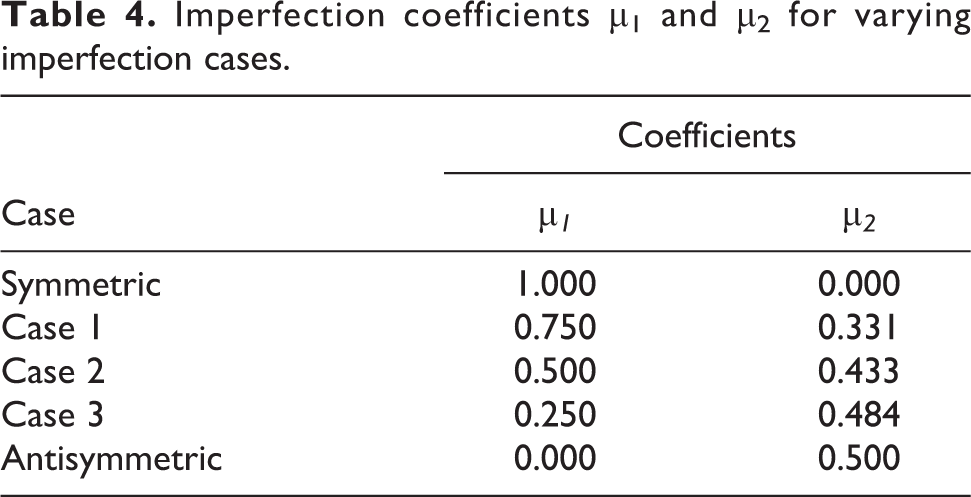

Parameters µ1 and µ2 in the interactive imperfection study were used to calculate the amplitude of imperfection applied from each buckling mode for the interactive case. The amplitude for each mode, applied in the Riks analysis, was calculated by multiplying µ1 and µ2 respectively, by the imperfection level. The imperfection level selected for use throughout this study was L/400 (Osofero et al., 2013) to allow comparison of results with previous studies. Also, this imperfection level is between the Eurocode 3 (2005) design value of local bow imperfections for hot-rolled sections L/300 and the manufacturing tolerance of hot-rolled sections L/500 (British Standards Institution, 2006). All six configurations were modelled in the planar model with varying imperfection coefficients, and the results are shown in Figure 4.
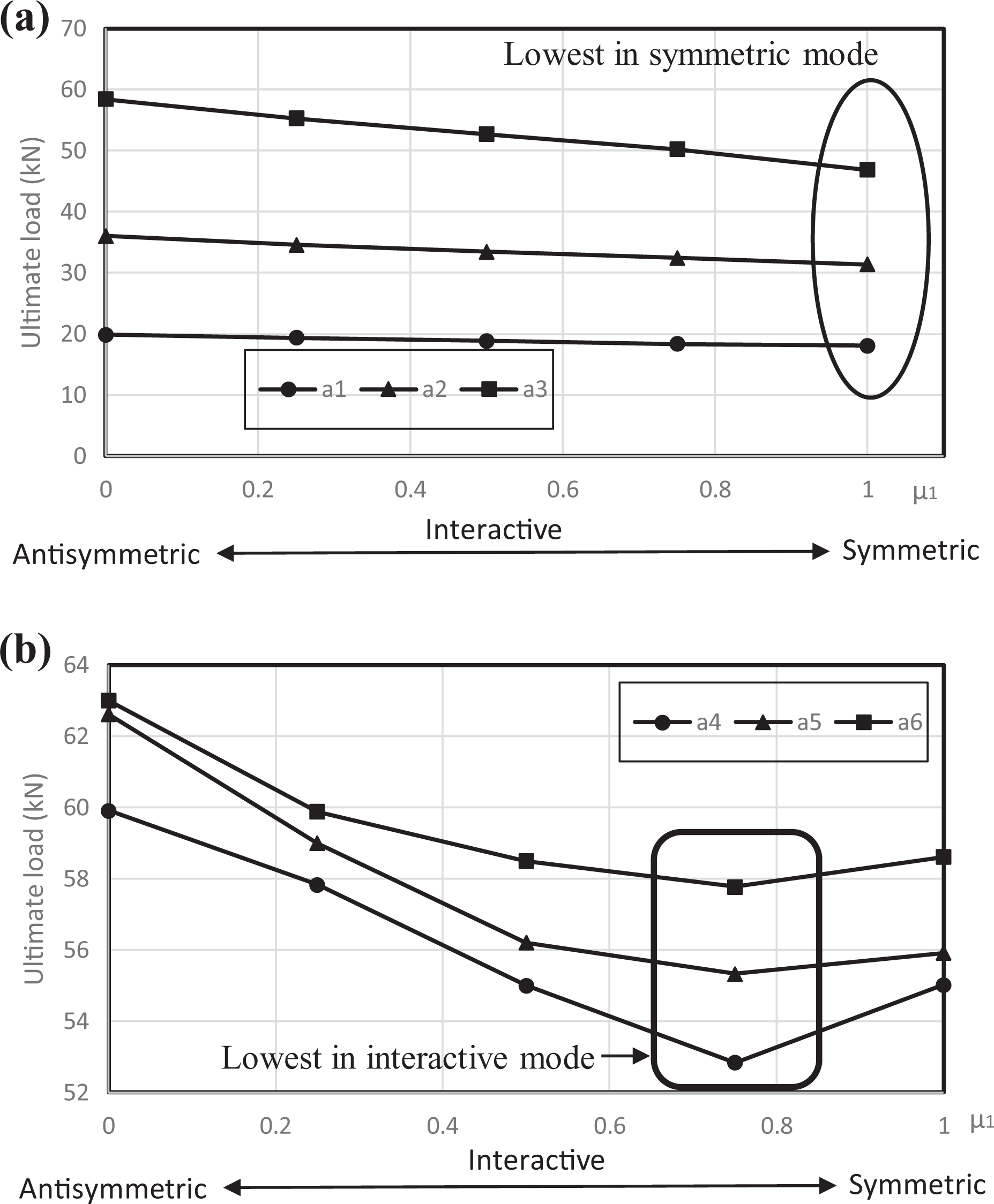
Ultimate loads from the planar model with combined imperfections: (a) configurations a1–a3; (b) configurations a4–a6.
The critical mode for configurations a1–a3 was symmetric and the imperfection which gave the lowest ultimate load was also symmetric (Figure 4(a)). This means that, like the axial loading case, for eccentric loading a symmetric imperfection should be adopted for columns with symmetric critical buckling mode. Whereas for configurations a4–a6, which have an antisymmetric critical mode, the interactive imperfection highlighted in Figure 4(b) gave the lowest ultimate loads. These conclusions are in line with those for axially loaded columns, meaning that an interactive imperfection should be considered for eccentrically loaded columns with an antisymmetric critical mode as this is the worst-case scenario. One difference is that for the axially loaded columns with varying imperfections from Saito and Wadee (2009b), the ultimate capacities were much more constant across the three interactive imperfection cases. However, for the eccentrically loaded columns, the ultimate capacities vary significantly with different interactive imperfection cases. This procedure was also repeated for the three-dimensional model, with the same imperfection cases giving the lowest load carrying capacities. Therefore, an interactive imperfection was used in both the planar and three-dimensional models for columns with an antisymmetric critical mode.
Planar models
Load versus end shortening curves of the six configurations for the four eccentricity levels obtained from the 2D planar models are shown in Figures 5 and 6.
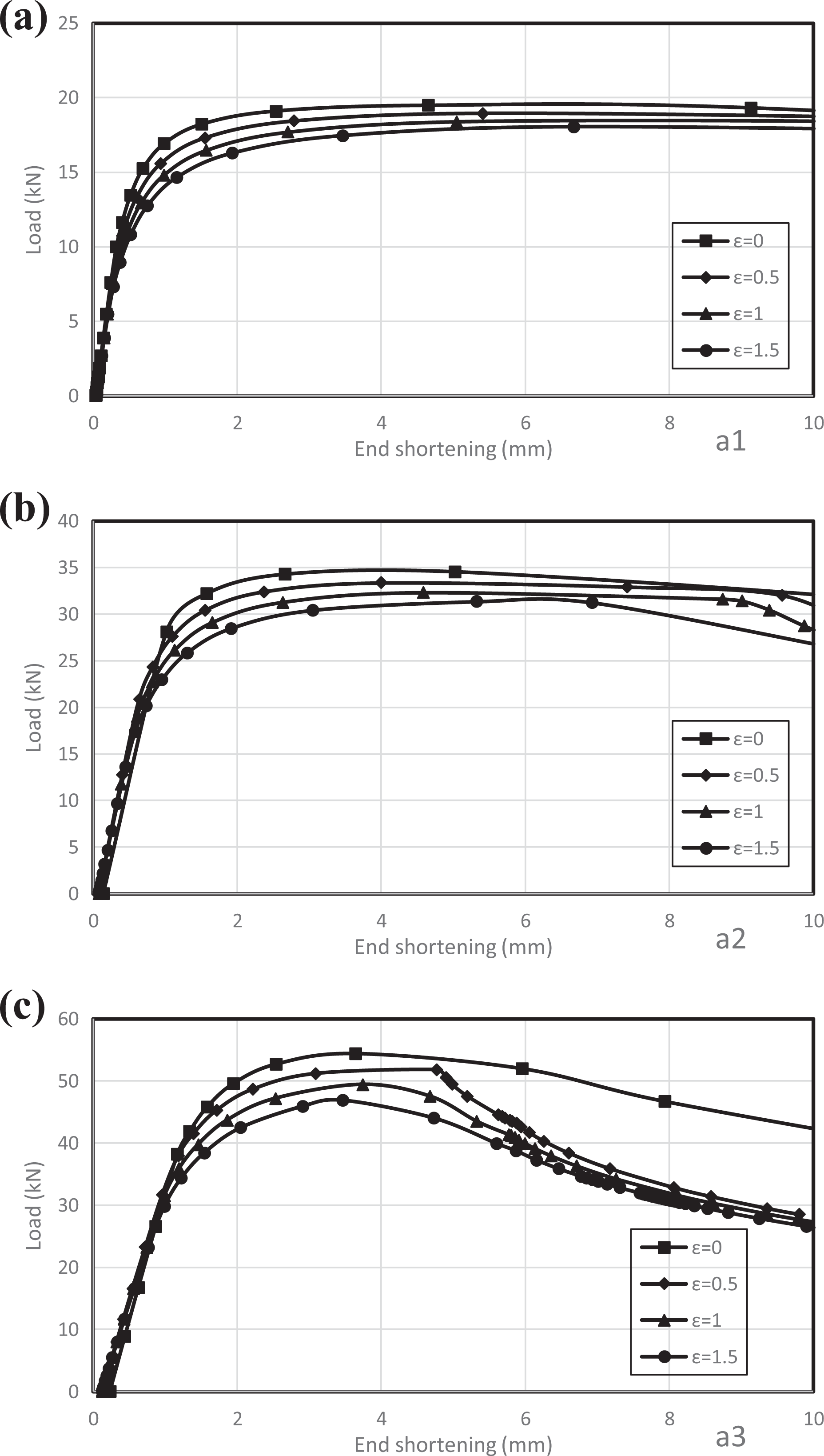
Load versus end shortening with varying eccentricity level for the symmetric buckling configurations a1–a3.
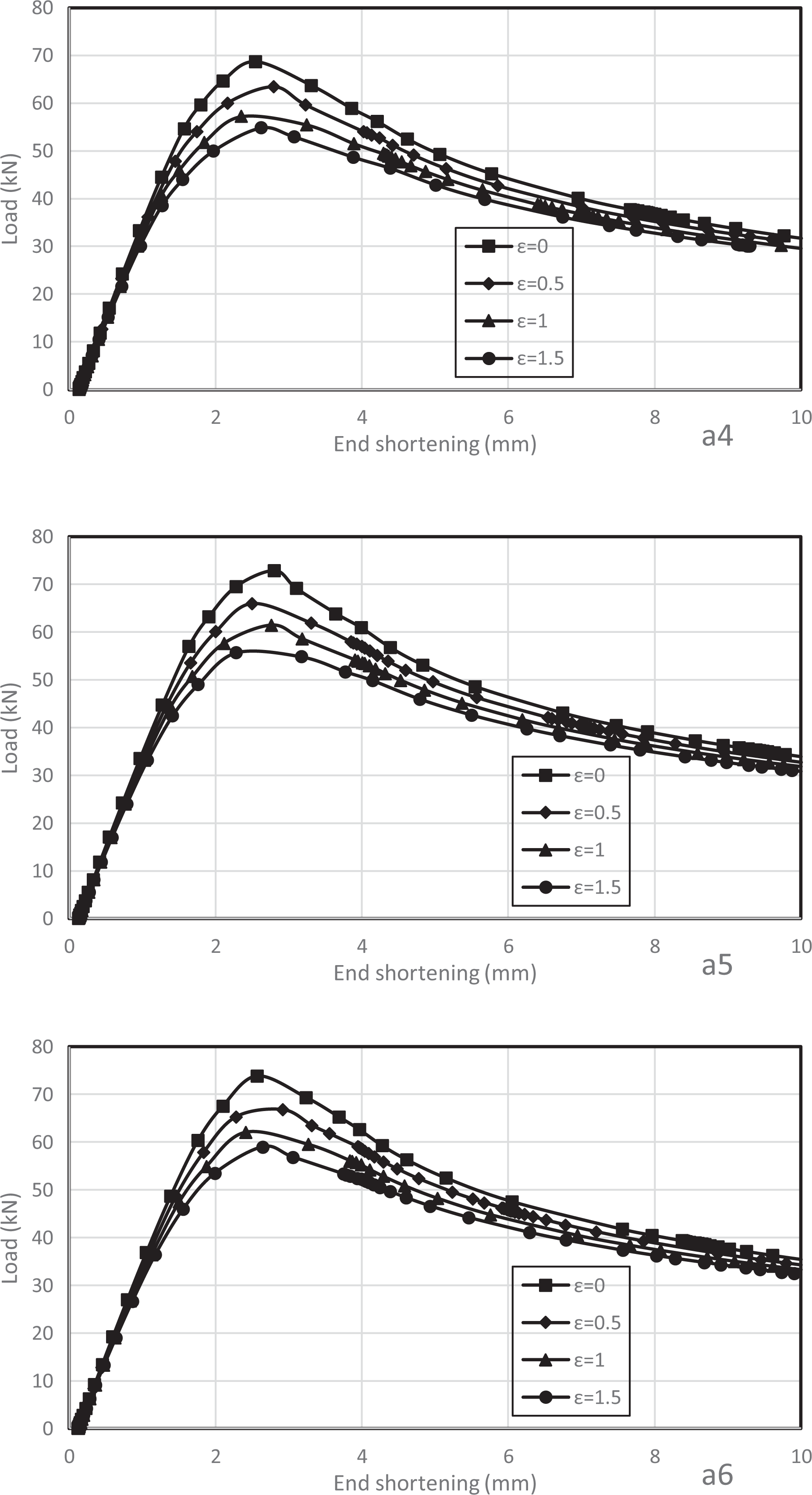
Load versus end shortening with varying eccentricity level for the antisymmetric buckling configurations a4–a6.
A change in the deformed shape of columns with a symmetric critical buckling mode from symmetric to interactive was observed with the introduction of load eccentricity. The interactive post-buckling shape occurs after the ultimate load is reached and results in a decrease in load carrying capacity. Yielding only occurs after the ultimate load carrying capacity is reached, that is, the PSC fails due to buckling rather than material yielding. It should also be noted that the drop-in load carrying capacity due to the interactive post-buckling shape is more significant with increase in cross-arm length. This phenomenon is especially pronounced for configuration a3 (2a/L = 0.15), close to the transition point between symmetric and antisymmetric buckling. This is expected to be caused by the cross-arms providing lower rotational stiffness as the cross-arm length is increased, resulting in the moment effect of the eccentricity having a greater impact for configuration a3 than configurations a1 and a2. Columns with an antisymmetric critical mode, on the other hand, experienced no significant change in post-buckling shape with increasing eccentricity. An interactive imperfection is used for both eccentrically and axially loaded columns with an antisymmetric critical mode; therefore, they will have an interactive post-buckling shape irrespective of the presence of load eccentricity.
For all configurations, the load carrying capacity reduces with increase in eccentricity ratio, as expected. This decrease occurs with increase in eccentricity due to the moment effect of the eccentric loading reducing the maximum stress the column can sustain. This result is important for design purposes as it highlights the sensitivity of the system to eccentricity. Furthermore, the load carrying capacity increases as the cross-arm length increases, until the antisymmetric mode becomes critical, where the load carrying capacity reaches a plateau. The ultimate load carrying capacity of the columns increases rapidly between configurations a1–a3 but is roughly constant for configurations a4–a6. Figures 7 and 8 present the load carrying capacity versus mid-height rotation for configurations a2 and a5, respectively.
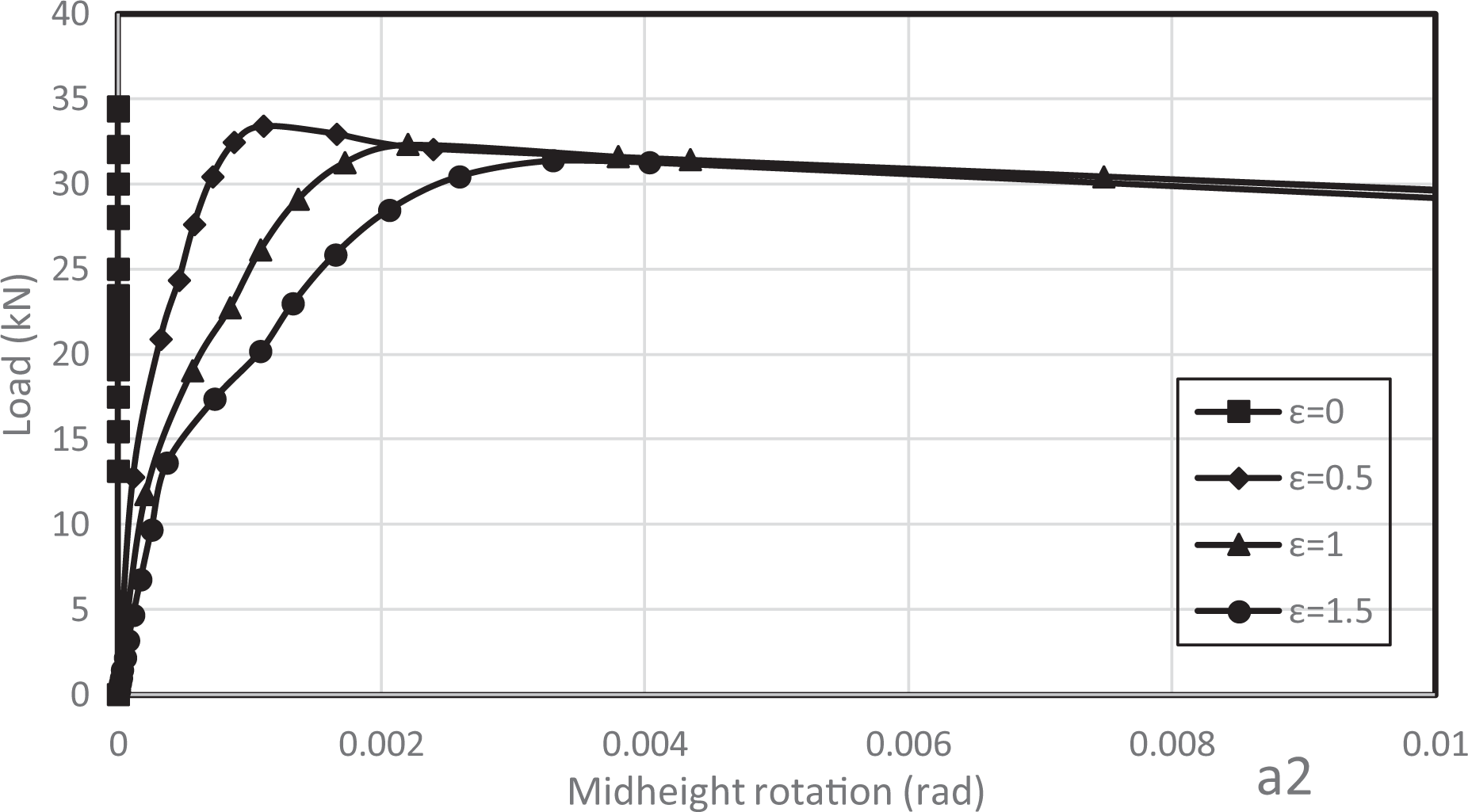
Load versus mid-height rotation curves for configuration a2 with varying eccentricity.
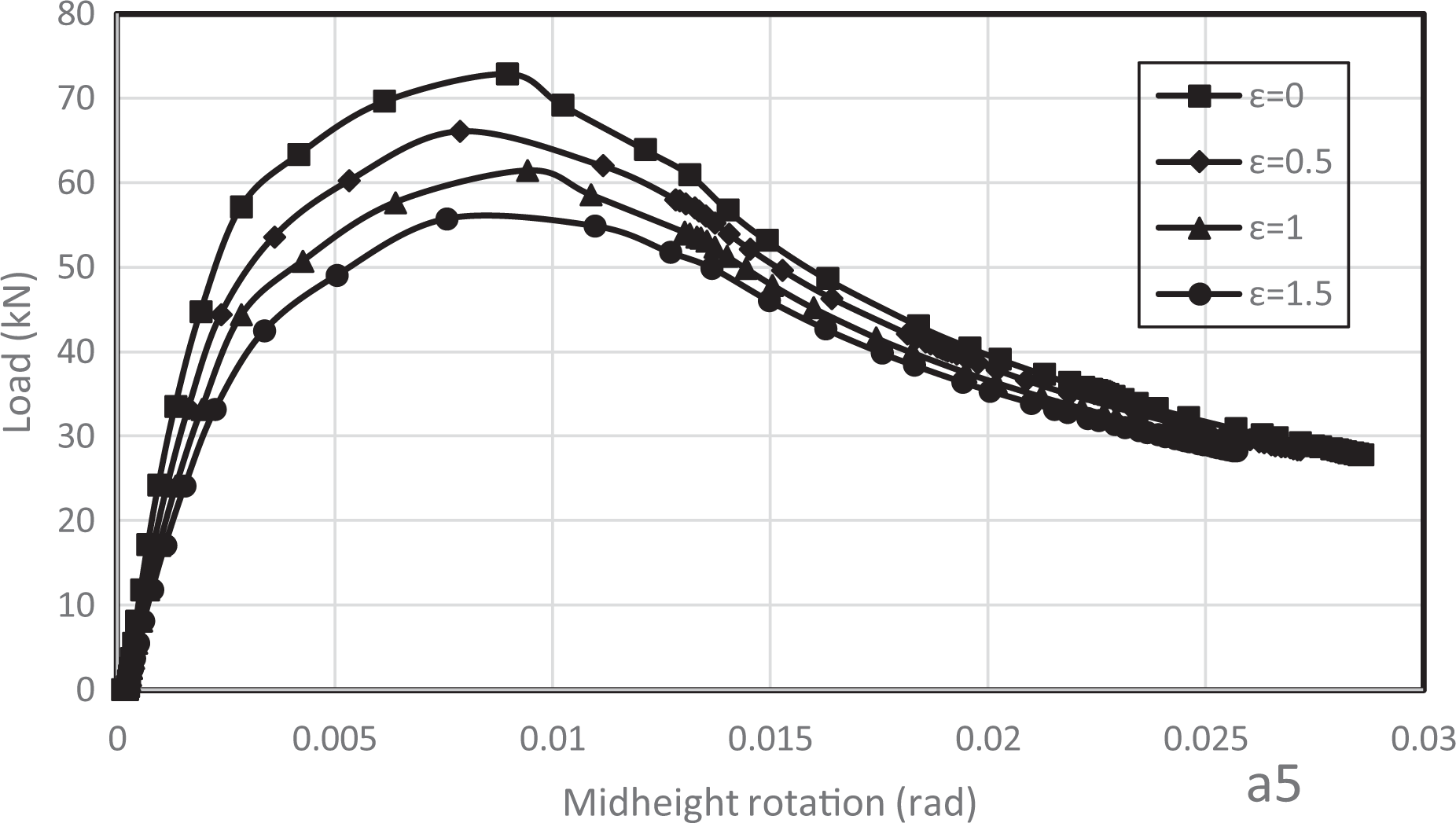
Load versus mid-height rotation curves for configuration a5 with varying eccentricity.
For the symmetrically buckling column, there is no mid-height rotation when the column is loaded axially (ε = 0), but as the eccentricity is introduced a rotation at mid-height occurs (Figure 7). This is due to the moment effect of the eccentricity of loading at the column end which causes the symmetric buckling columns to adopt an interactive post-buckling shape. However, Figure 8 highlights that the mid-height rotation for the antisymmetric buckling column remains roughly constant for increasing eccentricity level. This can be explained as it was shown earlier that an interactive imperfection yielded the greatest reduction in load carrying capacity for columns with an antisymmetric critical buckling mode. Therefore, adopting an interactive imperfection induces rotation at the column mid-height. These conclusions are only applicable to a planar buckling column and three-dimensional modelling is required to verify the results for a three-dimensional system.
Three-dimensional models
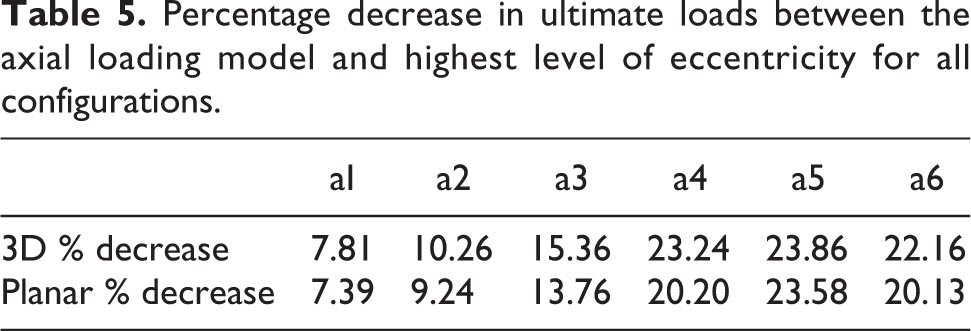
Results from three-dimensional models gave similar results with those obtained from the planar models. First, the load carrying capacity increases with increase in cross-arm length, until the antisymmetric mode becomes critical. In addition, columns with symmetric critical buckling mode experienced interactive post-buckling shapes under eccentric loading, while columns with antisymmetric critical mode maintained their interactive post-buckling shape. Furthermore, columns with a symmetric critical buckling mode experienced a significant drop-in load carrying capacity, most notably for configuration a3 which occurs soon after the ultimate load was achieved. Also, the load carrying capacity decreases with increase in load eccentricity; the percentage decrease in ultimate loads for the three-dimensional and the planar model is similar, as shown in Table 5.
Percentage decrease in ultimate loads between the axial loading model and highest level of eccentricity for all configurations.
The same results were found when comparing the mid-height rotation of the three-dimensional model to the planar model. When configuration a2 is loaded axially (ε = 0), there is no mid-height rotation as the column buckles symmetrically with no rotation about the cross-arm. However, as the load eccentricity is introduced, a mid-height rotation appears. Results from the antisymmetric configurations a4–a6 are the same as the planar model, in that further increase in the load eccentricity causes no real change in in-plane mid-height rotation. Figure 9 demonstrates the effect of eccentricity on the load carrying capacity of all configurations for the three-dimensional model.
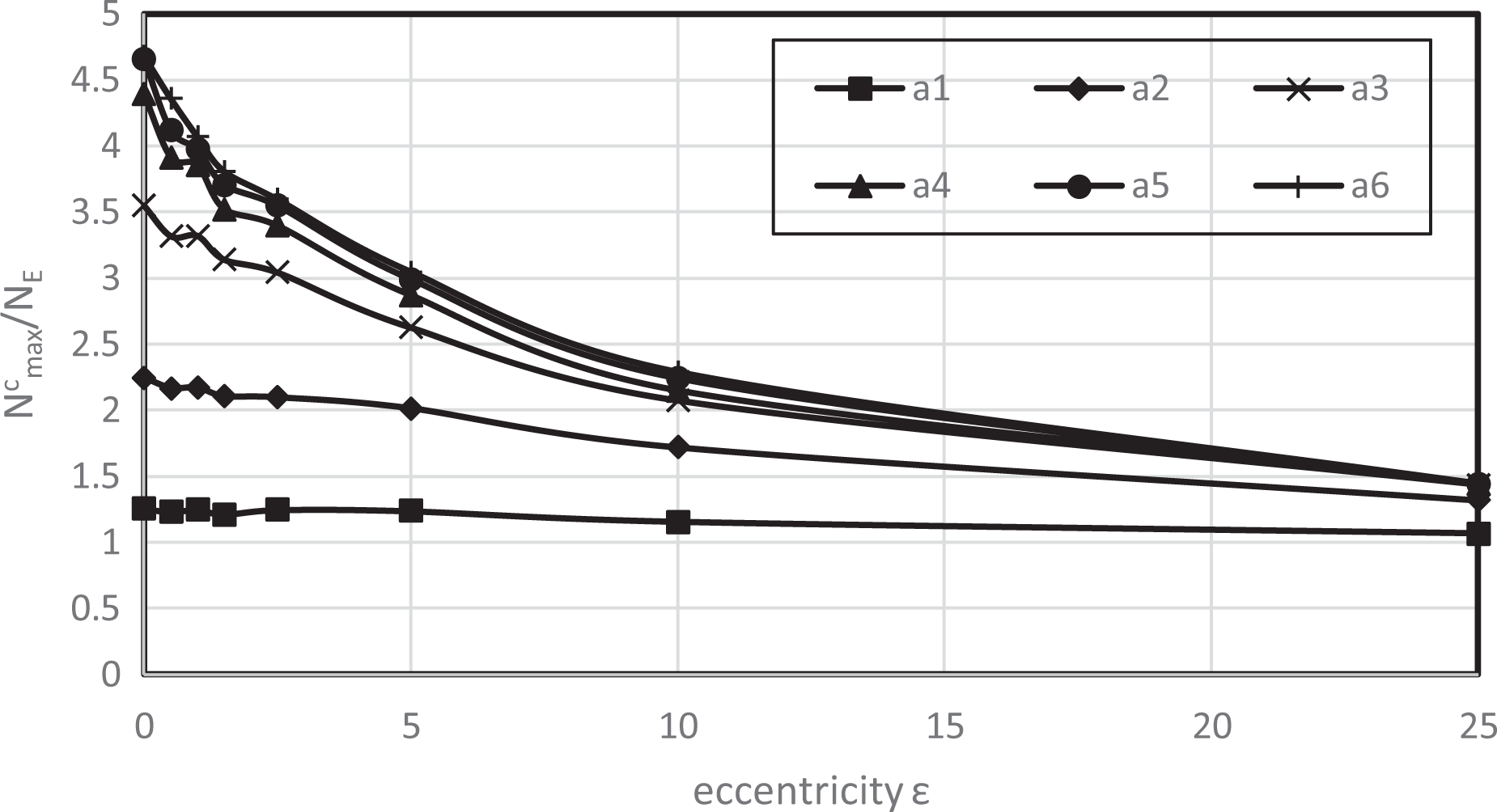
Non-dimensional load carrying capacity of the three-dimensional model for varying eccentricity level.
A control column was modelled with no stays for varying eccentricity levels; the load carrying capacity was then non-dimensionalised by the load carrying capacity of the control column. Figure 9 shows that as the eccentricity level increases, the potential benefit of PSCs over a basic column diminishes. This is probably due to the reduction in rotational stiffness with increase in cross-arm length, resulting in the moment effect of the eccentricity having a larger impact for higher cross-arm lengths. As a result, an interactive post-buckling shape occurs sooner with increase in cross-arm length compared with the control column which requires higher eccentricity values to induce an interactive post-buckling shape. Therefore, the load carrying capacity reduces at a faster rate in the PSC than in the control specimen. However, the authors recognise that further work is required to fully understand this trend. This further emphasises the importance of ensuring eccentricity of loading is minimised in practice for this type of structural system.
An advantage of the three-dimensional model over the planar model is that the three-dimensional model allows the eccentricity to be applied out of the buckling plane, as may occur in practical applications. Figures 10 and 11 highlight the effect of load eccentricity on mid-height rotations for configurations a2 and a5.
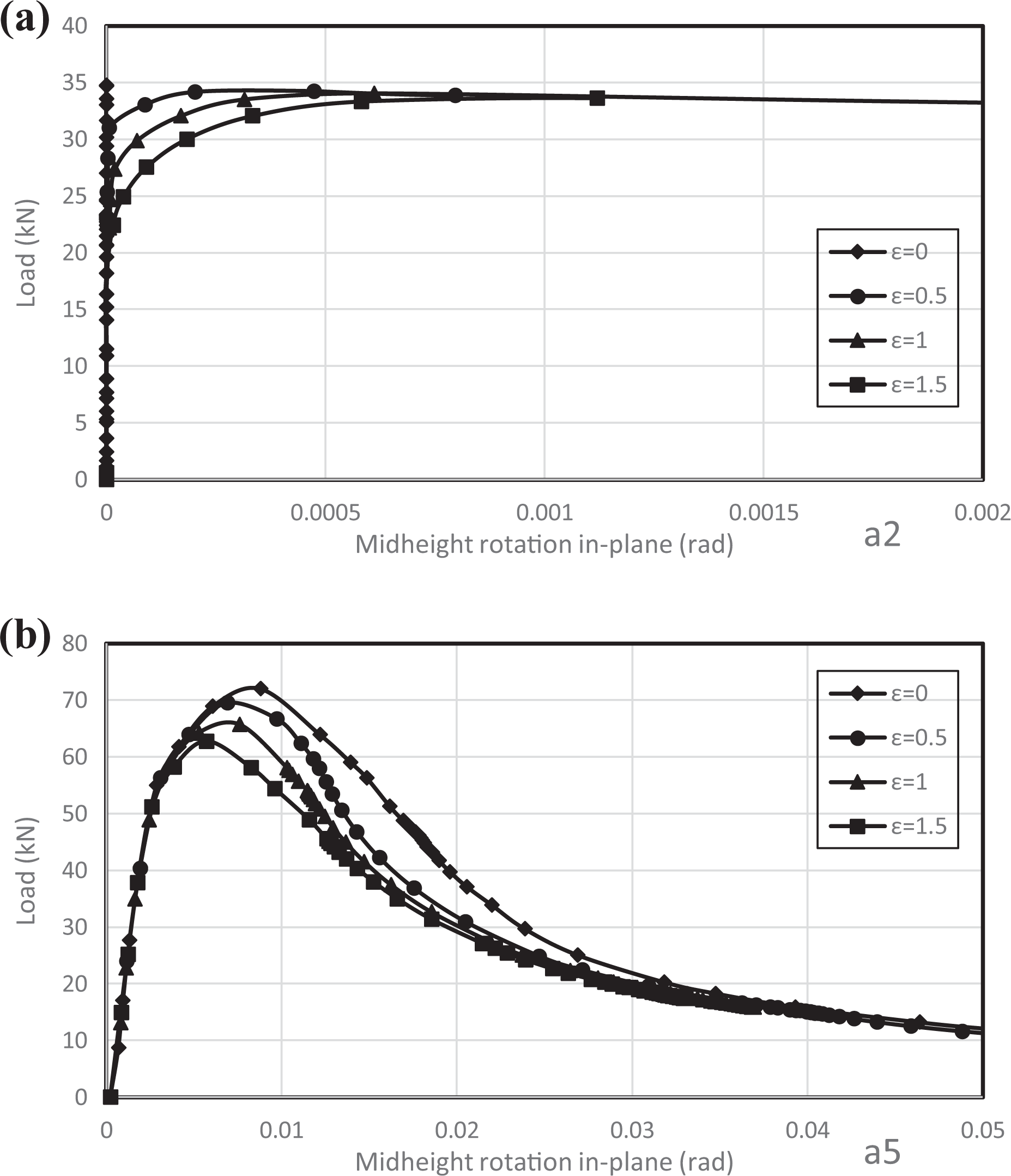
Mid-height in-plane rotation for configurations (a) a2 and (b) a5.
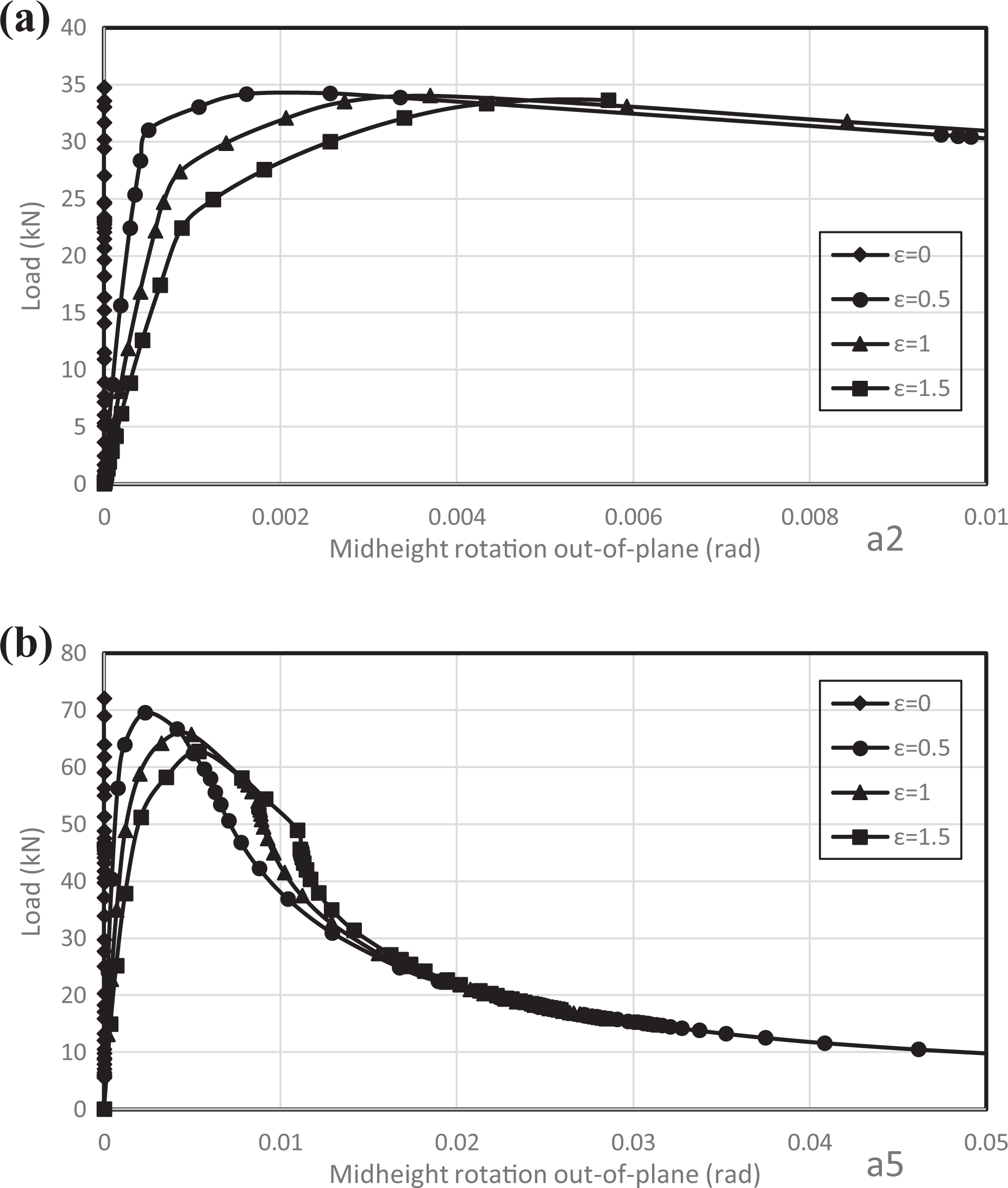
Mid-height out-of-plane rotation for configurations (a) a2 and (b) a5.
Figure 10(a) shows that for configuration a2, there is no mid-height rotation for the axially loaded column (ε = 0), but the in-plane rotation appears for eccentric loading, whereas Figure 10(b) demonstrated that for a5 configuration, the in-plane mid-height rotation does not change significantly with increase in eccentricity. From Figure 11, the in-plane mid-height rotation is not the only component of rotation for columns with an eccentricity out of the buckling plane. As for the out-of-plane eccentricity, a rotation at mid-height out of the buckling plane appears for both a2 and a5 configurations. This means that introduction of load eccentricity out of the plane of buckling results in twisting of the column. This is an important phenomenon with implications on the behaviour and design of PSCs.
Conclusion
The numerical model developed in this study has been validated against previous experimental studies and shown to replicate the post-buckling load carrying capacity and post-buckling mode (deformed shape) accurately. Due to a lack of studies on eccentrically loaded columns, this study aimed at investigating the interactive post-buckling behaviour of eccentrically loaded columns and a comparison of planar and three-dimensional models.
Results from this study suggest that interactive buckling should be designed against for eccentrically loaded columns as the load carrying capacity is significantly reduced when interactive buckling is critical. Also, the load carrying capacity for all eccentricity levels increased with increasing cross-arm length, until the antisymmetric mode is critical. Furthermore, results from both planar and three-dimensional models suggest that the load carrying capacity is significantly reduced through load eccentricity. The planar model and the three-dimensional model gave similar results for the in-plane eccentricity. However, the three-dimensional model with an out-of-plane eccentricity exhibited twisting under eccentric loading. In addition, for both the planar and three-dimensional columns with a symmetric critical mode, eccentric loading caused the column to adopt an interactive shape in the post-buckling region. This results in a steep decrease in load carrying capacity after the ultimate load is achieved. This is particularly significant in configuration a3 in which the decrease occurs soon after the ultimate load. This is hypothesised to be caused by the column cross-arm ratio (2a/L) being near the buckling mode transition point resulting in some modal interaction. This should be further investigated to ascertain its implications on the behaviour and design of PSCs under eccentric loading.
It is worth noting that this study is limited to a single cross-arm system and that further study is required to validate the findings for more complex geometries of PSCs. Similarly, as the materials in the study are assumed to be perfectly elastic, material yielding is out of the scope of this study. Therefore, further investigation would be required to validate whether the eccentrically loaded system yields locally, especially where twisting occurs in the three-dimensional model.
Footnotes
Declaration of conflicting interests
The author(s) declared no potential conflicts of interest with respect to the research, authorship, and/or publication of this article.
Funding
The author(s) disclosed receipt of the following financial support for the research, authorship, and/or publication of this article: This work was supported by the Engineering and Physical Science Research Council (EPSRC) UK Doctoral Training Partnership (grant number 1962441).
