




Abstract
Long-span roof structures with multiple vibration modes may undergo coupled motions when exposed to spatiotemporally varying dynamic wind loads. This article presents a framework for the analysis of coupled wind-induced responses and equivalent static wind loads on long-span roof structures. This framework takes into account the inter-modal coupling of modal response components and cross correlation between the background and resonance. The load–response–correlation method is widely used for the background equivalent static wind loads of rigid structures. Also, the concept of load–response–correlation was extended for the correct estimation of equivalent static wind loads by considering the correlation between the load and exact total responses. However, there is no detailed study for the correct estimation of equivalent static wind loads on the component of background, resonance, and their cross response using load–response–correlation method. In this article, a consistent load–response–correlation method for equivalent static wind loads is presented in a unified framework which contains the background, resonance, and modal coupling. First, the accuracy of wind-induced responses is ensured by considering the modal coupling. Meanwhile, the efficiency is improved by decomposing the covariance matrix of the generalized resuming forces. Second, several effects of the wind-induced responses are discussed in detail, such as the effect of the modal coupling, the effect of the modal participations to resonant responses, and the effect of the cross correlation between the background and resonance. Finally, the proposed equivalent static wind loads are represented by the composition of the external wind loads and inertial forces, which are both the most probable load distributions. Accordingly, the equivalent static wind load distribution and the responses by equivalent static wind loads are reasonable.
Keywords
Introduction
Long-span roof structures have the characteristics of light weight, large flexibility, small damping, and low natural frequencies. Wind-induced response behavior of long-span roof structures is very complicated, showing significant contributions of multiple vibration modes. The complete quadratic combination (CQC) method is an exact method for wind-induced responses on linear structures. However, the efficiency is not sufficient for long-span roof structures due to its huge number of vibration modes. Nakayama et al. (1998) proposed a method to choose a few vibration modes to calculate the wind-induced responses of domes. Chen et al., (2006, 2012, 2014) presented the Ritz-proper orthogonal decomposition (POD) method to calculate the wind-induced responses of long-span roof structures. In order to cast a more convenient and physically meaningful description, dynamic wind loads are separated into background (quasi-static) and resonant components based on their frequency content (e.g. Davenport, 1995). Holmes (2002) gave the combination of the mean wind loads, the background wind loads, and the resonant wind loads. But this method must assume a good separation between each of the vibration modes, that is, without considering the modal coupling effects. However, the assumptions might not be valid for the long-span roof structures with closely spaced natural frequencies. In solving the wind-induced responses of such structures, modal coupling effects may include the coupling effects between each background modes, the coupling effects between each resonant modes, and the cross correlation between the background and resonance. Some studies on the modal coupling effects of structures have been reported (e.g. Chen and Kareem, 2005; Xie, 2007; Zhou and Gu, 2006).
Current design practice often requires dynamic wind loads on structures to be modeled as equivalent static wind loads (ESWLs). The modeling of ESWLs aims at the static load distributions whose static effects on buildings are equal to actual peak dynamic effects, so that this load representation allows designers to follow a relatively simple static analysis procedure for assessing building performance to winds (Chen and Zhou, 2007). The ESWLs of a structure was first introduced by Davenport (1967) using the gust response factor (GRF) approach. This original method results in an ESWL that has a distribution similar to the mean wind loads. Due to simplicity, this method was adopted to study ESWLs on long-span roofs with different geometric and structural configurations (e.g. Lou et al., 2000; Shen and Yang, 1999; Suzuki et al., 1997; Uematsu et al., 1996, 2008; Uematsu and Yamada, 2002). The load–response–correlation (LRC) method (Kasperski and Niemann, 1992) used the correlation coefficient between the loads and response to determine the ESWLs. The LRC method was later developed (Chen and Zhou, 2007; Holmes, 1992) to incorporate POD of fluctuating wind loads for simplifying computation. However, the roof is treated as a rigid structure in the LRC method, that is, only the background response is considered. This method has some limitations in dealing with the resonant responses of the long-span roof structures. The ESWLs distribution identical for all response components, expressed in terms of a polynomial expansion, was suggested for vertical structures in Repetto and Solari (2004). A new method composed of the LRC method and multiple-order structural modal inertial forces was developed by Holmes (2002, 2007) and Chen et al. (2006). The resonant component of ESWLs could be expressed as a linear superposition of structural modal inertial forces under the assumptions that structural modes are well separated and the modal coupling could be ignored. The extended LRC (ELRC) approach contains the background, resonance, and the coupling items (Fu et al., 2008; Xie et al., 2008). The accuracy is sufficient, but the efficiency is equivalent to the CQC method, that is, not sufficient. Then, a modified LRC method was proposed by Zhou and Gu (2010) and Zhou et al. (2012, 2014) to take the effects of structural modal coupling into consideration by structural modal coupling factor.
Considering both of the accuracy and efficiency, a framework for the analysis of the wind-induced responses and ESWLs is proposed on the basis of wind loads derived through synchronous scanning of pressures on structure surfaces. On one hand, all the background modal coupling and all the dominant resonant modal coupling are considered in this method. The only neglected part is the non-dominant resonant modes, while the non-dominant resonant modes have little effect on the structural responses. Accordingly, this method has enough accuracy. On the other hand, by dividing the covariance matrix of generalized resuming forces into the background, resonance, and cross components, and using a consistent LRC method to obtain the ESWLs on long-span roof structures, this method has sufficient efficiency. A case study is also presented to illustrate the applications of this method and to demonstrate its effectiveness by comparative analyses.
Coupled wind-induced responses
In the following section, the analysis of the coupled wind-induced responses on long-span roof structures is presented. The wind loads can be derived from a multiple point synchronously scanned pressure field over a structure model surface in a wind tunnel.
For a structures system with n degrees of freedom, the structural dynamic displacements can be divided into two parts: the first m modes where the resonant effect is significant, and modes m+1 to n where the response is essentially quasi-static, which can be expressed as (e.g. Huang and Chen, 2007)
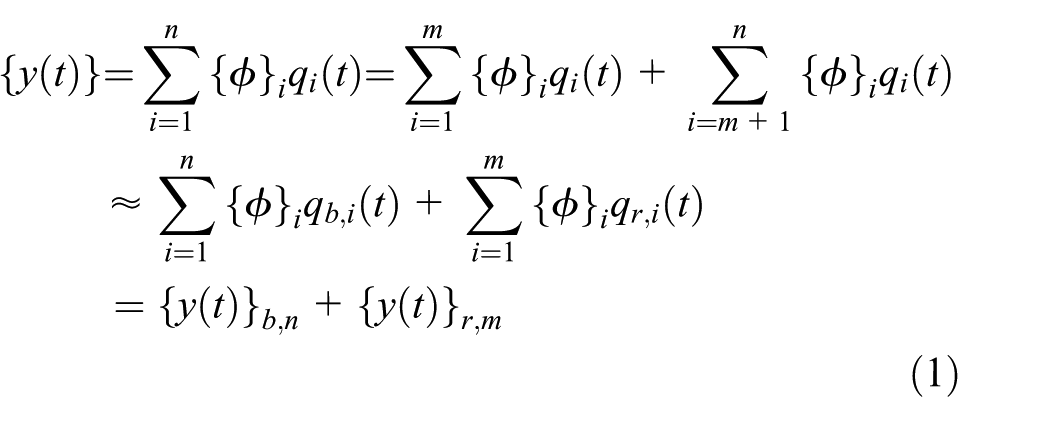
where
Background responses
The quantification of the background responses including all modal contributions is equivalent to the analysis in terms of the influence function, which is expressed as

where
Resonant responses
The background and resonant components of the ith generalized displacement are given by


where
The cross power spectrum density (XPSD) function between the ith and jth resonant generalized displacements,
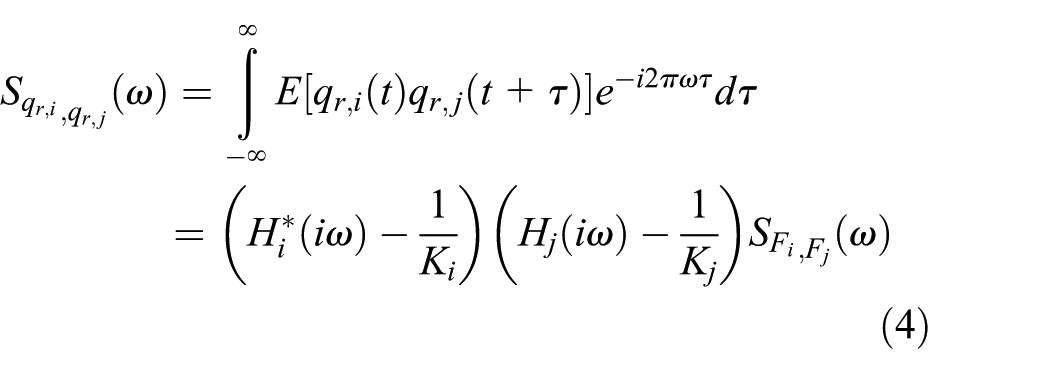
where
The ith resonant frequency response transfer function,

Then, the resonant frequency response transfer function vector,

where
Cross correlation between the background and resonant responses
The XPSD function between the ith resonant generalized displacement and the jth background generalized displacement,
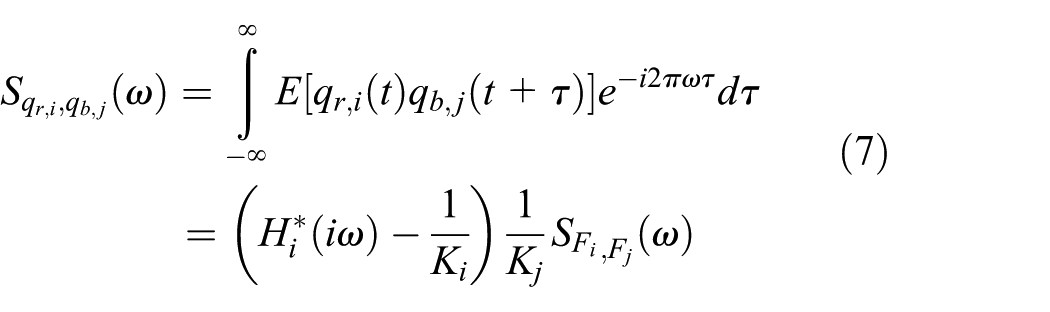
The jth background frequency response transfer function,

Then, the background frequency response transfer function vector,

Total responses and simplified equation
From equation (1), the cross-correlation function of the structural dynamic displacements,
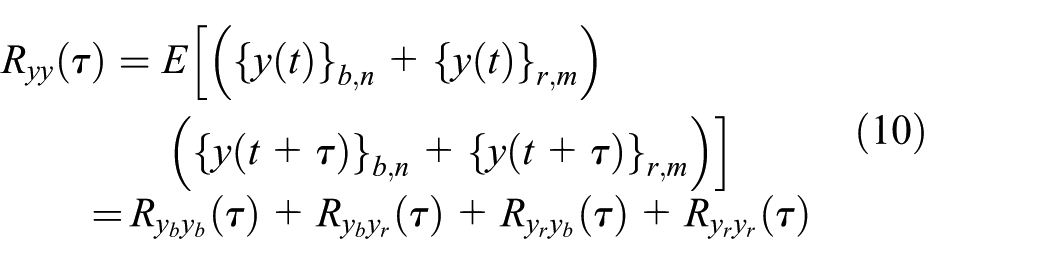
where
With its characteristics of the rotation symmetry, the covariance matrix of the structural dynamic displacements can be obtained by

where
According to the modal superposition method, the covariance matrix of the structural dynamic displacements can be given by

where
As the background (quasi-static) components can be calculated more conveniently by the quasi-static analyses, that is,

where
Theoretically, the covariance matrix of the structural dynamic displacements should be obtained by calculating the covariance matrices of the background, resonant, and cross displacement, respectively. Equation (13) is hereafter referred to as the complete equation. The cross displacement mainly comes from the cross correlation between the background and resonance in the resonant interval. In this narrow interval, the resonant response is usually much larger than the background response when the structural damping is small and the natural frequency is low. Generally, long-span roof structures have the characteristics of small damping and low natural frequencies. Thus, the cross displacement is small enough to be ignored compared to the resonant displacement in many cases. The cross correlation between the background and resonance should be considered only when the structural damping is slightly larger and some of the higher-order modes have effects on the responses. When the covariance matrix of the cross displacement is small enough to be ignored, a simplified equation can be given by

Furthermore, the resonant covariance matrix of the generalized displacements,
The resonant component of the jth generalized displacement,

where
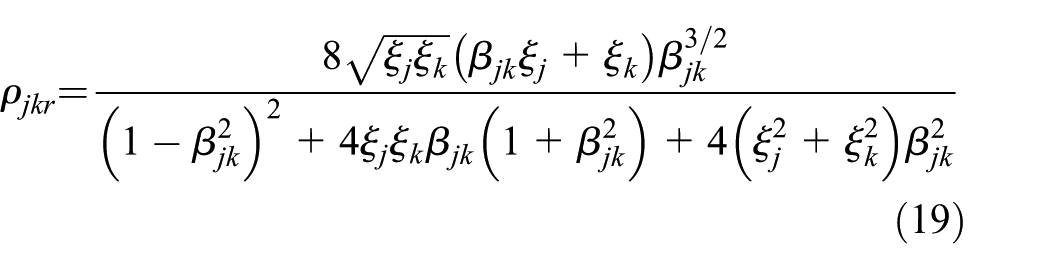
The covariance between the jth and kth resonant modal responses,

where


and
where
ESWLs
In this study, the generalized resuming force vector is defined as

where
Equation (20) can be seen as a quasi-static equation. Thus, the so-called background response under the generalized resuming forces,
When the complete equation is used, the covariance matrix of the generalized resuming forces can be expressed as
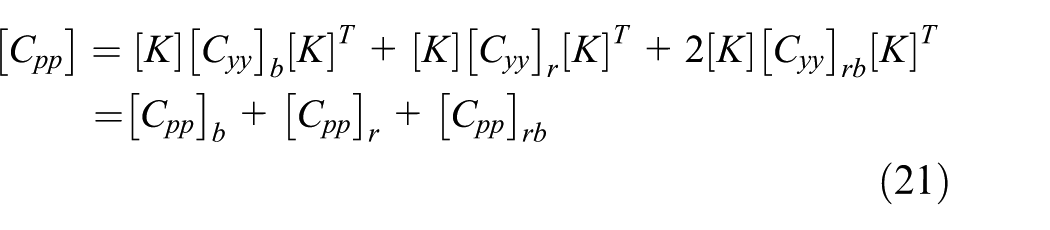
where
When the simplified equation is used, the covariance matrix of the generalized resuming forces can be expressed as
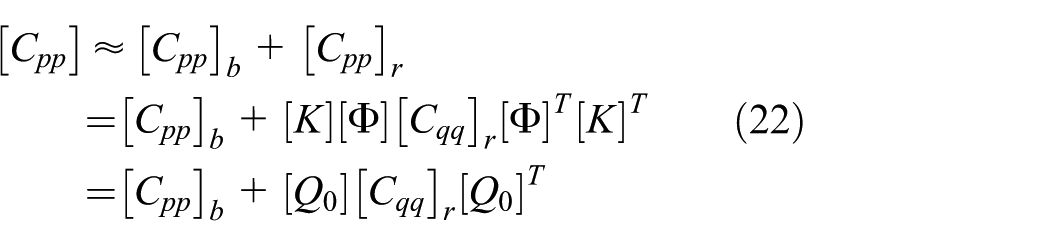
and

where
The traditional LRC approach results in a most probable load distribution for a given peak background response. Since the introduction of the generalized resuming forces, this approach can be extended conveniently to a given peak response including the background, resonance, and their cross components. Following the traditional LRC approach, a consistent LRC method was proposed for the ESWLs including both the external wind loads and the inertial forces.
When the complete equation is used, the ESWLs corresponding to
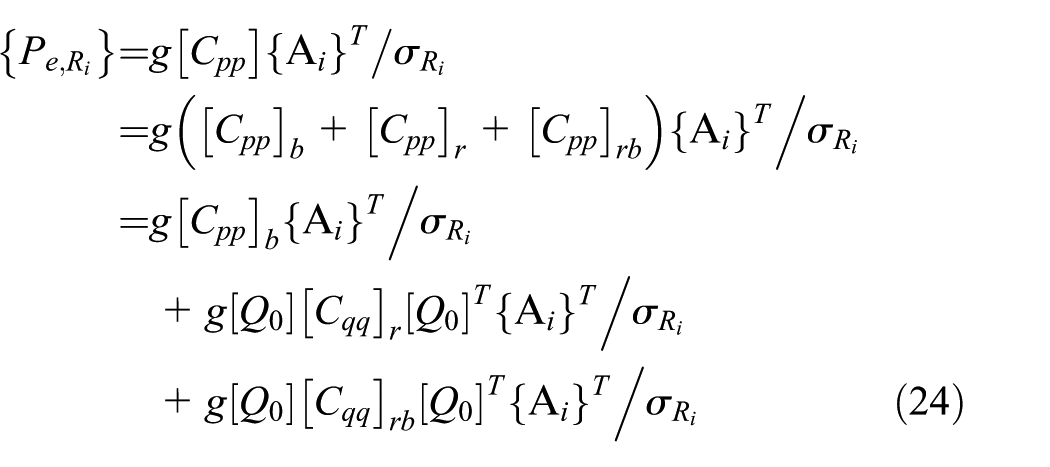
where
When the simplified equation is used, the ESWLs corresponding to
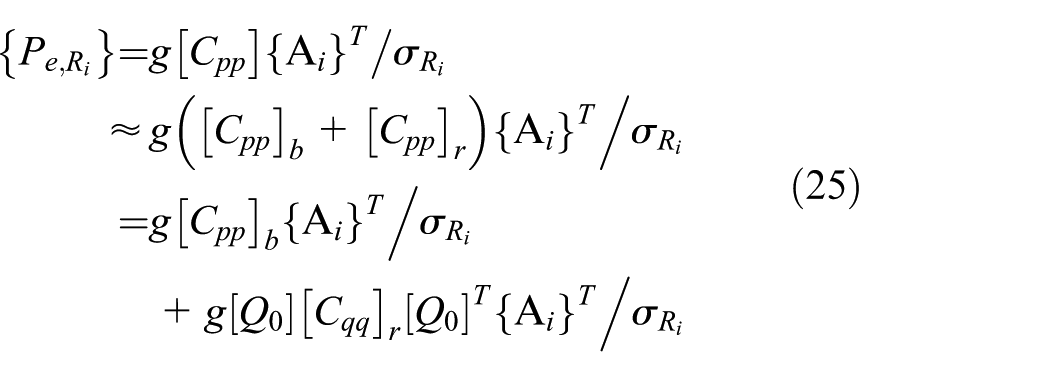
The ESWLs include two items: the first item is essentially a real distribution of fluctuating part of the external wind loads, and the second item is essentially a real distribution of the inertial forces. It is worth emphasizing that not only the distribution of fluctuating part of the external wind loads but also the distribution of the inertial forces is the most probable load distribution in equation (25).
Application
Wind tunnel experiments
The design criteria of the long-span roof structures are not fully covered by any code or standard in the world. Since the boundary layer wind tunnel has become a basic tool for structural wind engineering, it will be useful to conduct a wind tunnel investigation to evaluate the wind effects on the structures. A series of wind tunnel experiments were carried out to measure the fluctuating pressure acting on a long-span roof structure. The long-span roof structure which shapes like the wings of a gull is a novel, unique shell structure, which has a long span of 167.5 m and a short span of 141.7 m. The geometry scale was 1:200. A total of 369 wind pressure measurement points were arranged on the roof surfaces, and fluctuating wind pressures were measured simultaneously at all measurement points. The data sampling frequency was 200 Hz with a total sampling length of 12,000. The layout of the measuring points is shown in Figure 1. The pressure taps were connected to the measurement system through PVC tubing. To avoid dynamic pressure distortion, signals were modified using the transfer function of tubing systems.
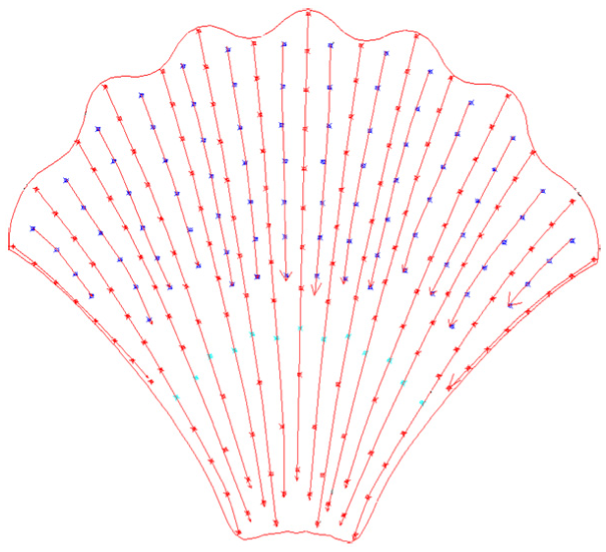
Arrangement of the measuring points.
The wind tunnel test was carried out using a boundary layer wind tunnel (XNJD-1 industrial wind tunnel) of the Research Center for Wind Engineering at Southwest Jiaotong University, as shown in Figure 2. With regard to the oncoming flow in the experiments, spires and roughness elements were used to simulate a typical boundary layer wind flow. The power law exponent of the vertical profile for the mean wind speed was 0.16. The turbulence intensity at the height of the roof was 16%.
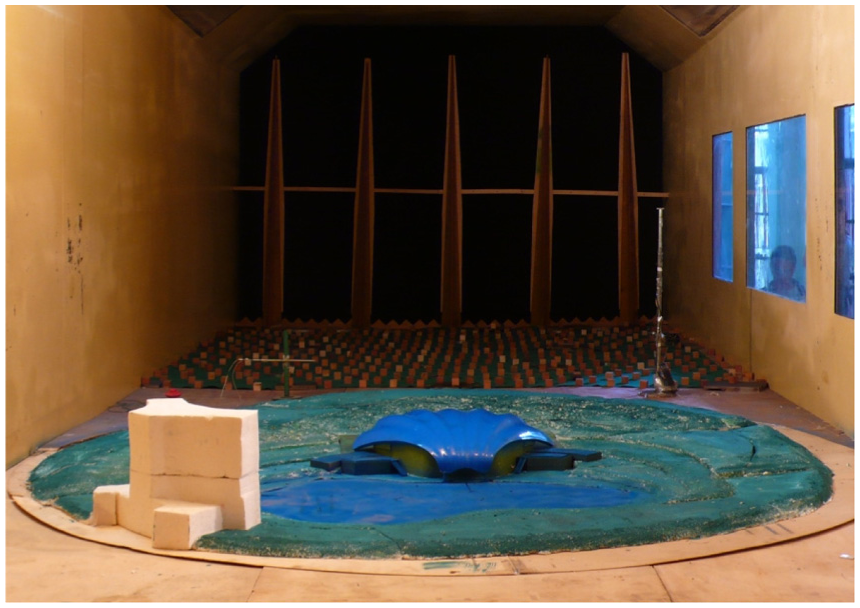
Rigid model for wind tunnel tests.
Wind pressure obtained from the wind tunnel experiments was used to calculate the non-dimensional pressure coefficients. The pressure coefficient at ith measuring point,

where
A brief analysis on the wind pressure in two typical wind directions is given. Figure 3(a) shows the contours of the mean pressure coefficients at 90° wind direction. The mean pressure coefficients are substantially negative which have a maximum value of −0.5. Its value changes gently because of the smooth shape of the structure at this wind direction. Figure 3(b) shows the contours of the mean pressure coefficients at 180° wind direction. The positive mean pressures occur on the windward region, which have a maximum value of 0.2; the negative pressures occur on most of the roof surface, which have a maximum value of −1.0. In addition, several flow separation regions are found because of the wave form shape of the structure at this wind direction.
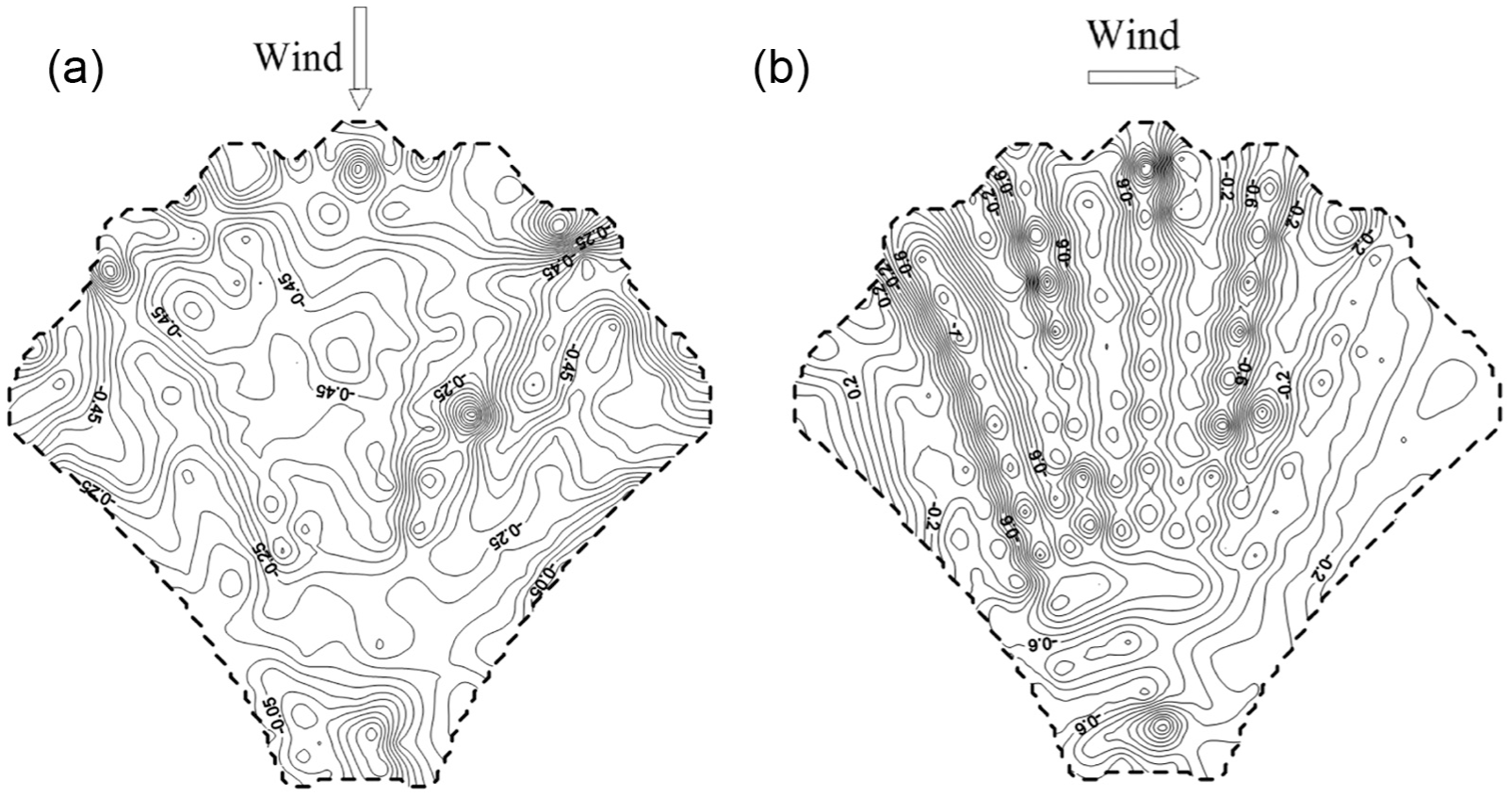
Contours of mean pressure coefficients: (a) 90° wind direction and (b) 180° wind direction.
The contours of RMS pressure coefficients are shown in Figure 4. The RMS pressure coefficients have some similarities with the mean pressure coefficients, which have a uniform distribution at 90° wind direction while a strip distribution at 180° wind direction. Relatively large RMS coefficients are found at the edge of the windward roof and the wavy roof as a result of flow separation. The values of RMS pressure coefficients are generally lower than those of mean wind pressure coefficients.
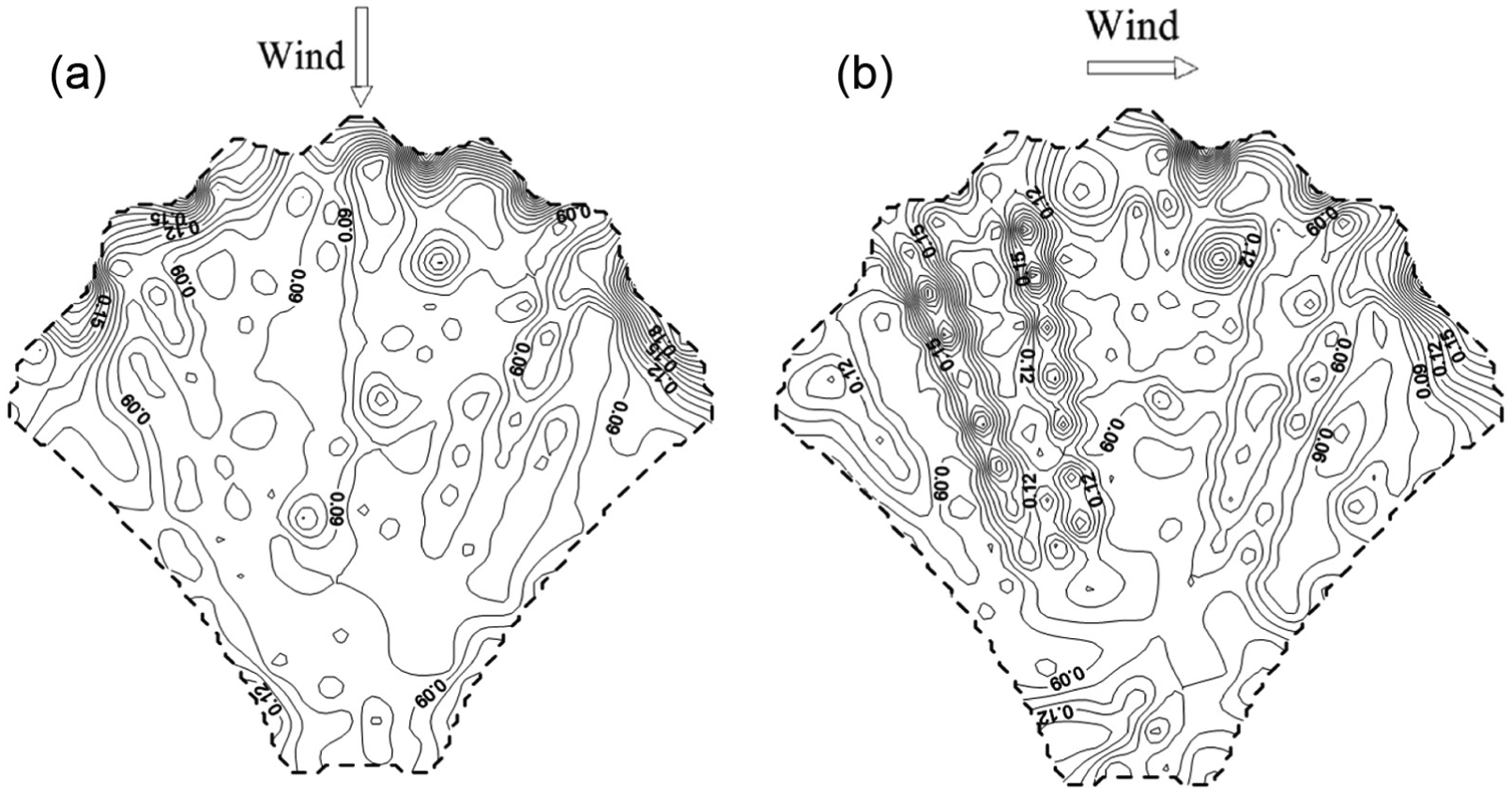
Contours of RMS pressure coefficients: (a) 90° wind direction and (b) 180° wind direction.
Wind-induced response analysis
The structure model was established in order to estimate the load effects caused by the fluctuating wind loads, and six typical nodes are marked out, as shown in Figure 5.
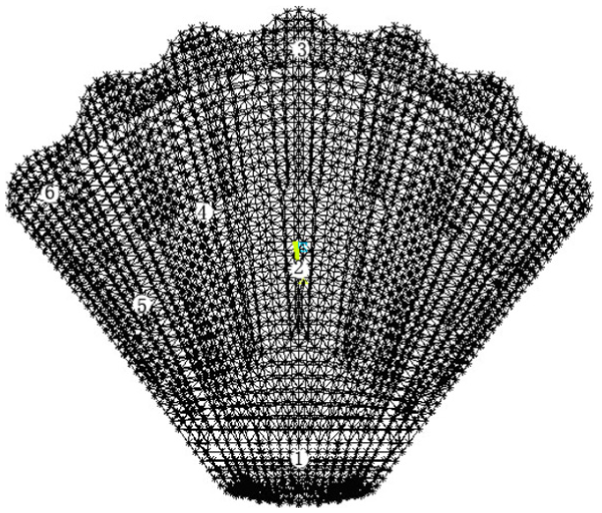
Finite element model.
As an application, the wind-induced displacements on this long-span roof structure at 180° wind direction were investigated. The results of the six typical nodes were obtained by four different methods: (1) CQC method with first 100 modes which are accurate enough to consider all of the modal contributions for this structure; (2) Square root of the sum of the squares (SRSS) method with first 100 modes; (3) the proposed method by complete equation, that is, considering the cross correlation between the background and resonant components; and (4) the proposed method by simplified equation, that is, without considering the cross correlation between the background and resonant components.
For the preliminary analysis, the RMS wind-induced responses by the other three methods are all compared with those by the CQC method, as shown in Table 1. It can be seen that the error of the SRSS method is large without considering the coupling effects. For some nodes, it can be conservative, such as node 4, the error is 9.44%; for some other nodes, it can be unconservative, such as node 3, the error is −8.35%. The results by the complete equation agree well with those by the CQC method which have a maximum error of −1.63%. The results by simplified equation are a little larger than those by the complete equation. The error mainly comes from the ignored cross correlation which is often negative. However, the maximum error is only 3.11%. In summary, the results indicate that the proposed method has comparable accuracy with the CQC method and is better than the SRSS method.
RMS wind-induced displacements of typical nodes.
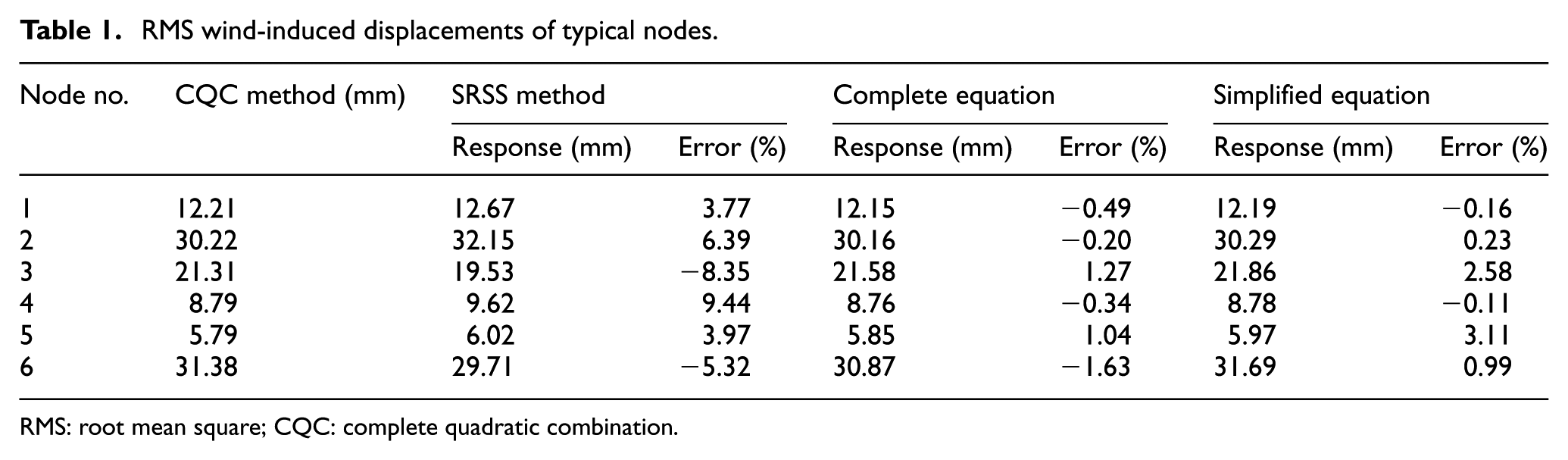
RMS: root mean square; CQC: complete quadratic combination.
The efficiency of CQC, SRSS, and the proposed methods are related to the number of modes involved in the calculation. For this structure, the first 100 modes are accurate enough to consider all of the modal contributions for the CQC and SRSS method, and the first 20 modes are the main resonant modes for the proposed methods. The calculation time of these four different methods are normalized by the calculating time of CQC method. In this case, the normalized calculating time are about 1.000, 0.010, 0.013, and 0.007 corresponding to CQC, SRSS, complete equation, and simplified equation, respectively. The results indicate that the proposed method has the same level of efficiency with the SRSS method and is much better than the CQC method.
In the following section, several effects of the wind-induced responses are discussed in detail, such as the effect of the modal coupling, the effect of the modal participations to resonant responses, and the effect of the cross correlation between the background and resonance.
Effect of the modal coupling
The fundamental frequency of this structure is 0.88 Hz and the first 50 mode frequencies range from 0.88 to 9.95 Hz, as shown in Figure 6. It can be seen that the frequencies are fairly close to one another, which is one of the most important considerations when analyzing the coupling effect between different modes.
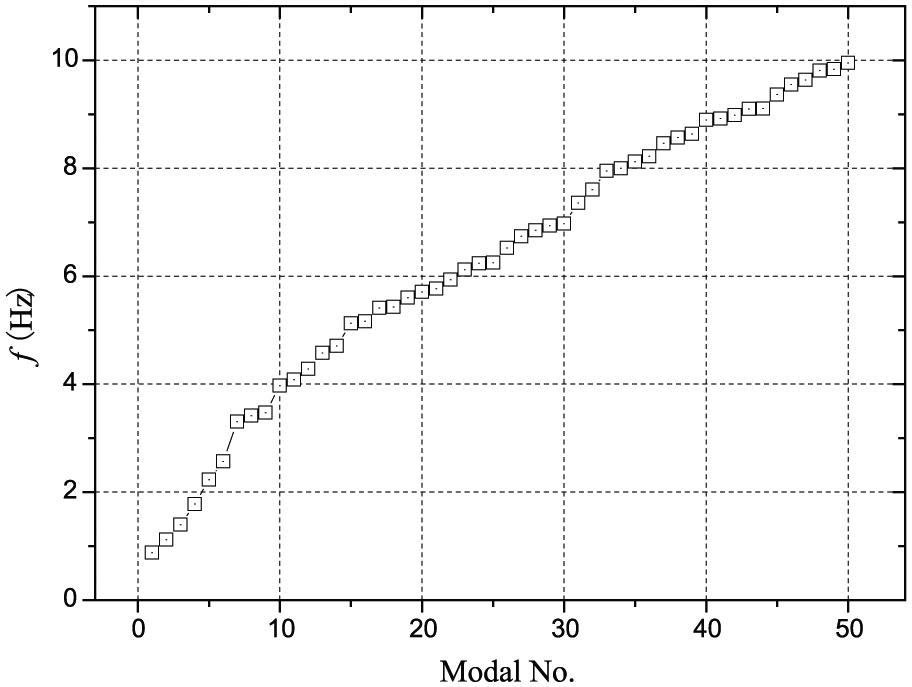
Natural modal frequencies.
The structural damping ratio for each mode is assumed to be 0.02 in this study. The correlation coefficients of two neighboring modal responses,
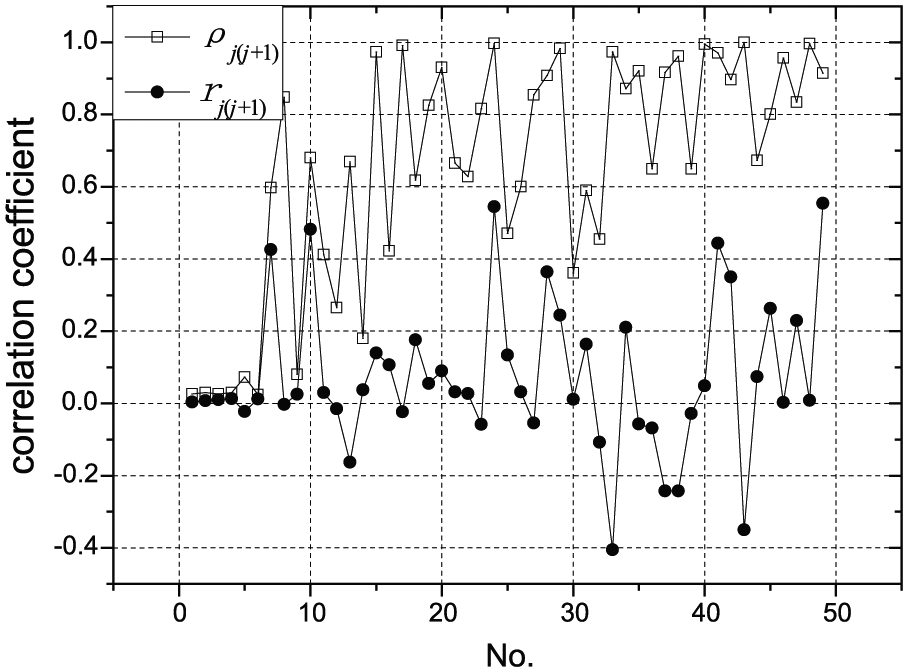
Correlation coefficients of modal responses.
Through the above analysis, the coupling effect should be considered for this long-span roof structure. However, the coupling effect is not as large as
Modal participations to the resonant response
The modes where the resonant effect is significant are not the same for different structures. Studies on choosing the main resonant modes have been reported (e.g. Chen et al., 2006; Nakayama et al., 1998).
Figure 8 compares the responses by choosing different main resonant modes. As can be seen, the main resonant modes required are different for different nodes. For nodes 1 and 4, first 5 modes are just enough to meet the requirement. For node 2, first 10 modes are needed to meet the requirement. For nodes 3, 5, and 6, first 20 modes are needed to meet the requirement. It is understandable because the modal participation coefficients are different for different nodes. Take the central node (Node 2) as an example, the power spectral density function of the displacement response is shown in Figure 9. It can be seen that the modes 1, 4, and 7 are the main resonant modes. That is why the first 10 modes are needed for node 2.
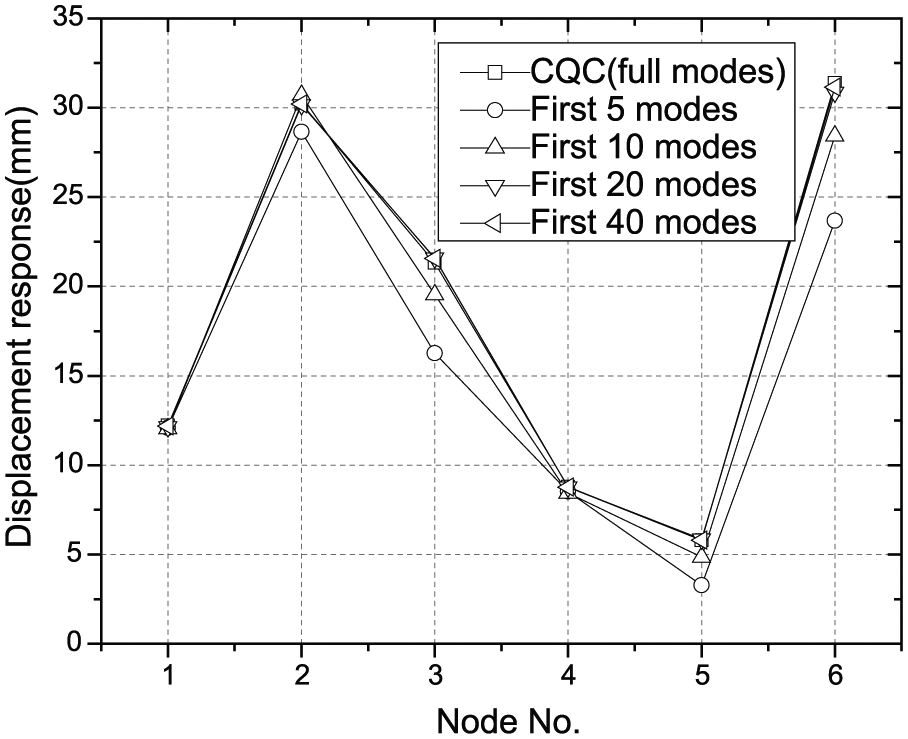
Responses by choosing different main resonant modes.
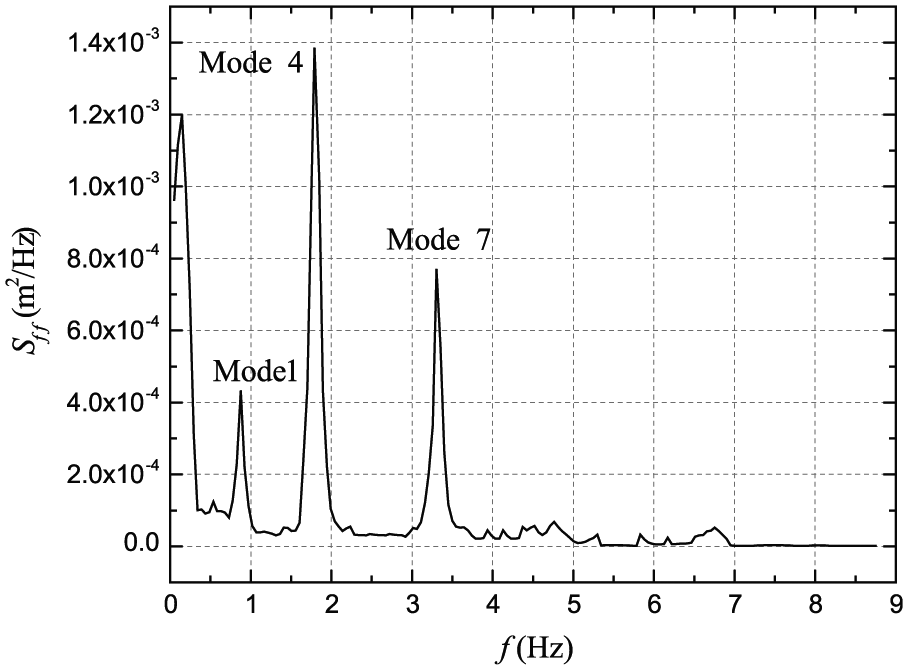
PSD function for the displacement response of node 2.
For all of the nodes, the results by first 20 modes agree well with those by first 40 modes and also agree with those by CQC method. For those responses of this long-span roof structure, the first 20 modes are the main resonant modes.
Cross correlation between the background and resonance
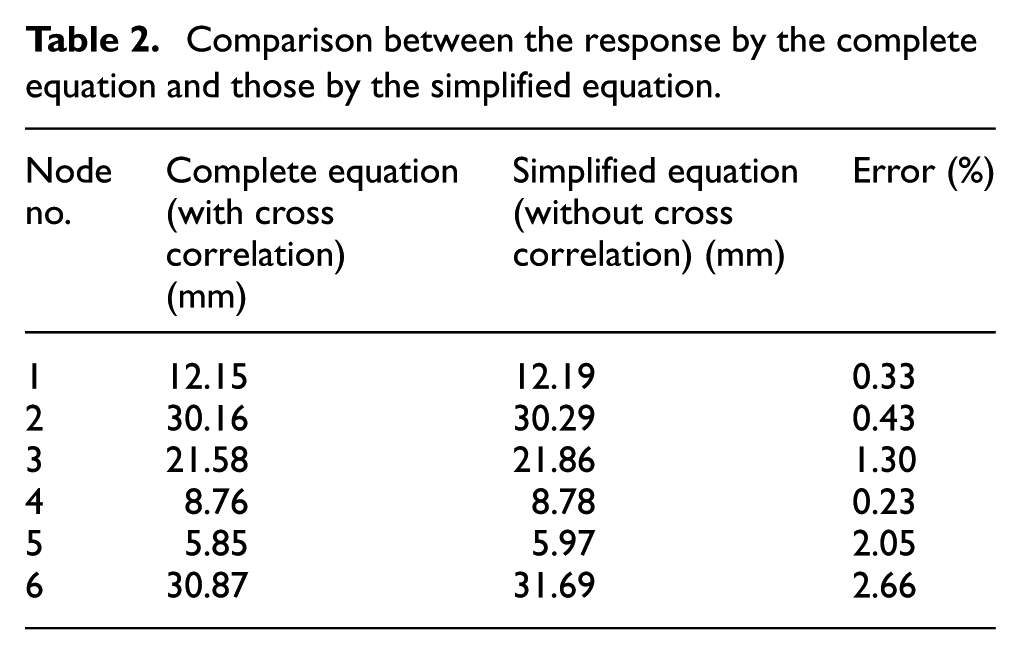
The comparison between the responses by the complete equation (with considering the cross correlation between the background and resonant responses) and those by the simplified equation (without considering the cross correlation between the background and resonant responses) is shown in Table 2. It can be seen that the difference is small, which has a maximum value of 2.66%. The cross correlation between the background and resonance can be ignored for this case. In addition, the results by the simplified equation are slightly larger than those by the complete equation.
Comparison between the response by the complete equation and those by the simplified equation.
ESWLs
Using the methodology presented in this study, the ESWLs for any peak displacement response can be conveniently determined by utilizing the complete equation or simplified equation.
The peak displacement response of a typical node (No. 6), obtained from the CQC and ESWLs approaches, is plotted against various incident wind directions in Figure 10. It can be seen that the peak displacement responses determined by the ESWLs approach are in excellent agreement with those by the CQC approach. The maximum absolute errors of complete equation and simplified equation are −2.71 and 3.77 mm, respectively; the corresponding maximum relative errors of complete equation and simplified equation are only −2.62% and 3.14%, respectively. The corresponding ESWLs distribution at 180° wind direction in terms of complete equation and simplified equation are shown in Figure 11. It can be seen that the distribution of the ESWLs is reasonable. This is because the ESWLs are represented by the composition of the external wind loads and inertial forces, which are both the most probable load distributions.
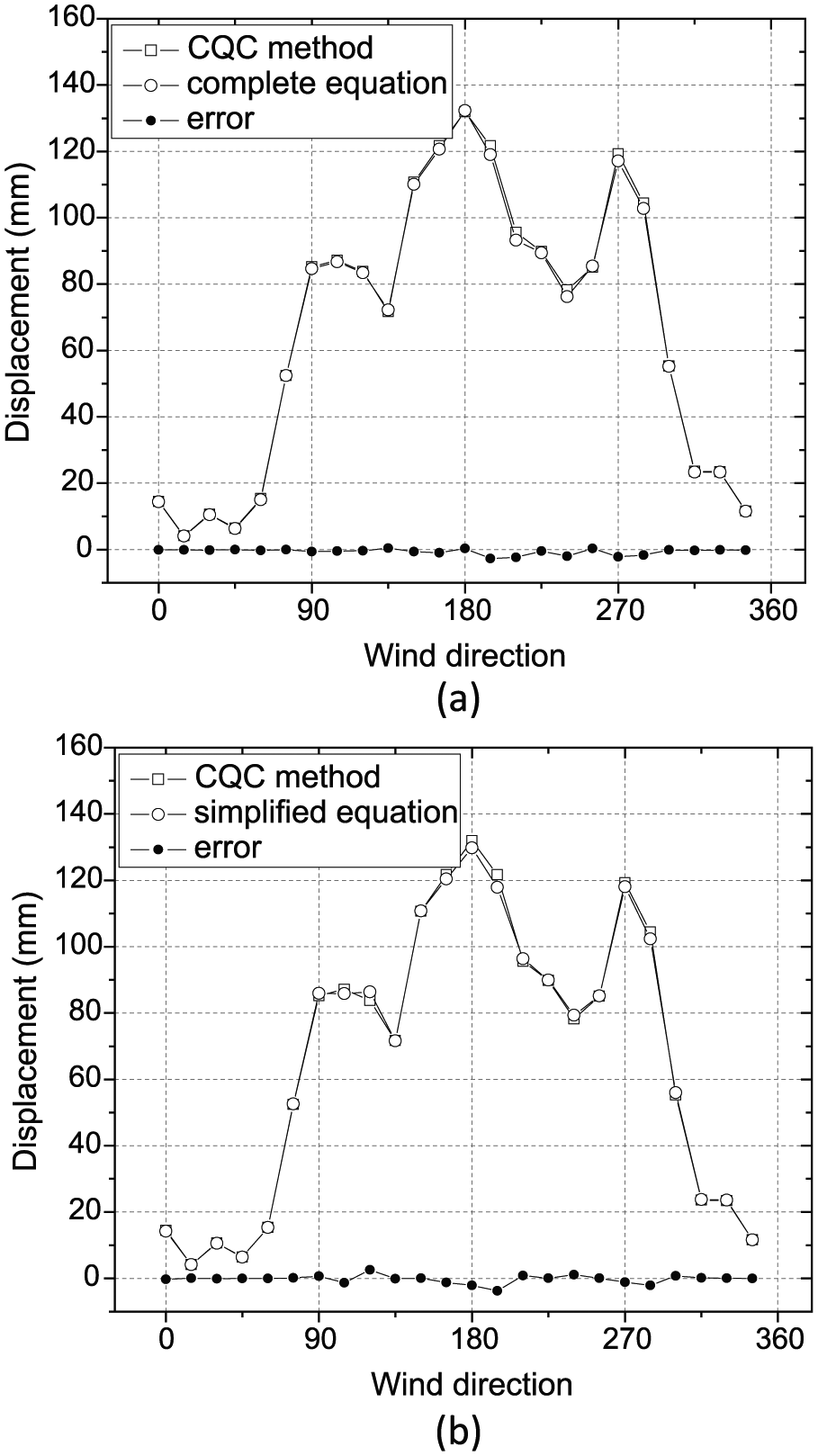
Comparison of the peak displacement responses of node 6 between CQC and ESWLs approaches: (a) with complete equation and (b) with simplified equation.
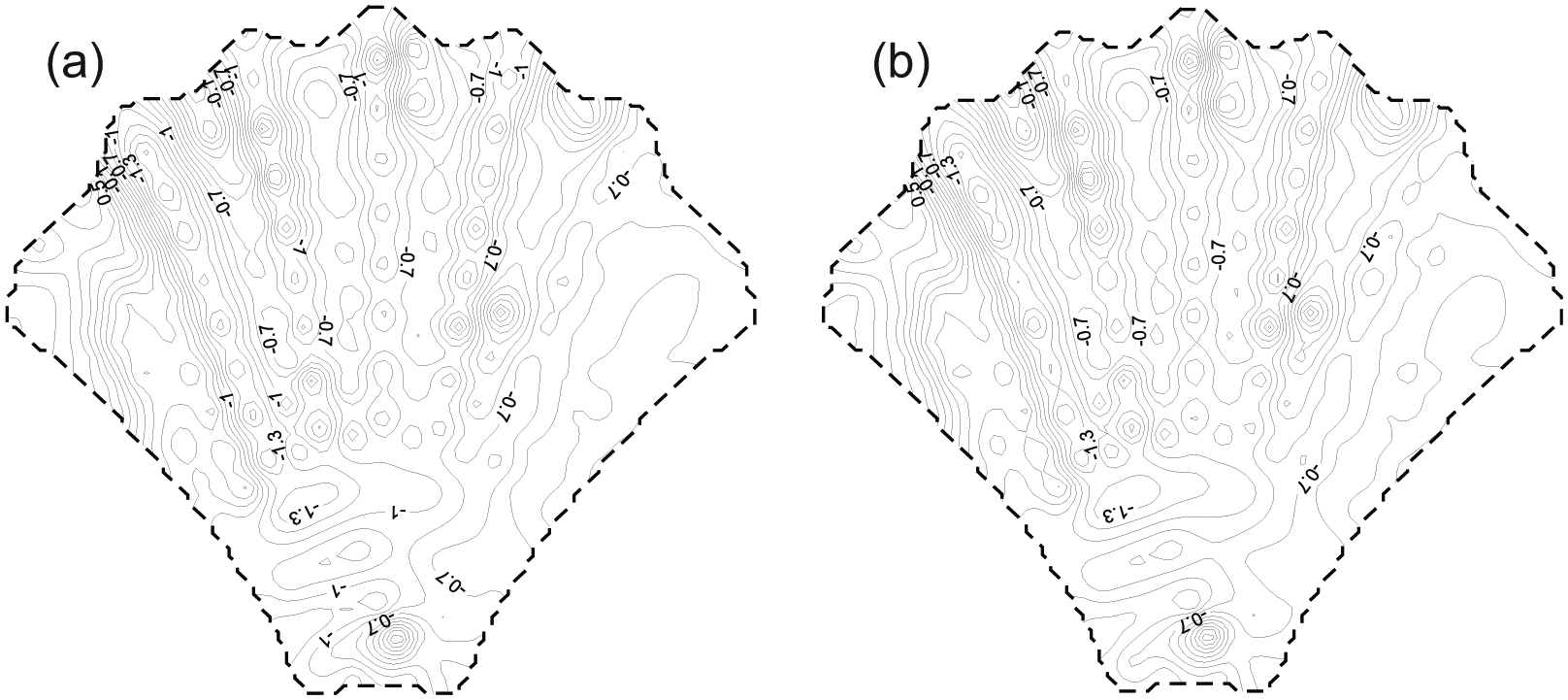
ESWLs distribution for the peak displacement response of node 6 at 180° wind direction: (a) ESWLs with complete equation (kPa) and (b) ESWLs with simplified equation (kPa).
Conclusion
In this article, a framework was proposed for the analysis of the coupled wind-induced responses and ESWLs on long-span roof structures. The main conclusions are as follows.
The SRSS combination method should not be used to analyze the wind-induced responses and ESWLs on strong coupling structures without considering the coupling effects. In this proposed method, the accuracy of the wind-induced responses is ensured by considering the effects of the modal coupling. Meanwhile, the efficiency is improved by decomposing the covariance matrix of the generalized resuming forces. Furthermore, the efficiency will be improved significantly using the simplified equation.
Several effects on the wind-induced responses of the long-span roof structures were discussed in detail: (1) the modal coupling effect should be considered depending not only on the modal frequencies and damping ratios but also on the correlation of the associated generalized forces for the long-span roof structures; (2) the modal participations to the resonant response of this long-span roof structure are discussed, and a sufficient number of modes should be selected for the resonant responses of the long-span roof structures; and (3) the effect of the cross correlation between the background and resonance is not very significant in this case.
A consistent LRC method for ESWLs of the long-span roof structures was proposed which contains the background, resonance, and modal coupling effects. These ESWLs are represented by the composition of the external wind loads and inertial forces. It should be noted that not only the distribution of the external wind loads but also the distribution of the inertial forces is the most probable load distribution in this approach. Accordingly, the ESWLs distribution and the responses by ESWLs are both reasonable.
Footnotes
Acknowledgements
The valuable comments from Prof. Xinzhong Chen at Texas Tech University are appreciated.
Declaration of Conflicting Interests
The author(s) declared no potential conflicts of interest with respect to the research, authorship, and/or publication of this article.
Funding
The author(s) disclosed receipt of the following financial support for the research, authorship, and/or publication of this article: This project was jointly supported by the National Natural Science Foundation of China (Grant No. 51408504) and the Fundamental Research Funds for the Central Universities (Grant No. 2682014CX079), which are gratefully acknowledged.