




Abstract
Research consistently finds that shared experiences of discrimination among people of color (PoC) increase interminority solidarity, which in turn fosters strong support for pro-outgroup policies. However, the durability of solidarity’s effects in political contexts remains underexplored. This gap stems from limited theoretical frameworks and research designs that account for the cross-cutting messages PoC encounter regarding interminority relations in the real world. Guided by the competitive victimhood model, we hypothesized that divisive messages activating zero-sum thinking would diminish solidarity’s downstream impact on political opinions. Using two preregistered blockage experiments with Black adults—the prototypical PoC—we find that boosting solidarity via shared discrimination (d = 0.40) is followed by a reduction in its political influence when exposed to divisive narratives (d = 0.10). A preregistered meta-analysis confirms this reduction is small but reliable, indicating that solidarity’s effects are largely resistant to divisive threats.
Since America’s birth, the US has been defined by a racial hierarchy that positions White individuals as the dominant majority group, with various minority groups stationed below (Kim, 2023; Masuoka & Junn, 2013; Zou & Cheryan, 2017). These minority groups have historically faced significant political disadvantages, as their smaller numbers often limit their ability to overturn discriminatory policies targeting their communities (e.g., Jim Crow laws, the Chinese Exclusion Act, the Patriot Act) (Klarman, 2004; Ngai, 2004; Sinnar, 2003). In the 1970s, this racial hierarchy started to destabilize (Abrajano & Hajnal, 2016). America’s White population has been steadily declining, while people of color (PoC) are approaching 40% of its population, belying their traditional label as racialized “minorities” (Pérez, 2021). These demographic shifts create opportunities for PoC to leverage their growing numbers to pursue shared political goals through greater interminority coordination. However, the feasibility of durable PoC coalitions between diverse groups with similar, yet distinct, experiences remains an open question.
The grain of empirical evidence suggests that the modal outcome in U.S. interminority relations is one of conflict, not cooperation (Benjamin, 2017; Carey et al., 2016; Craig et al., 2018; Gay, 2006; McClain & Karnig, 1990; McClain et al., 2011; Wilkinson, 2015). Many documented instances of cross-racial coalitions in U.S. politics have been fleeting, suggesting real challenges to keeping these collaborations intact (e.g., Brilliant, 2010; Vaca, 2004). This friction-laden trend is consistent with how America’s hierarchy marginalizes PoC (Masuoka & Junn, 2013; Zou & Cheryan, 2017). Although all PoC are marginalized to some degree with respect to Whites, the basis of this marginalization differs across PoC. For example, the early enslavement of Black people and its consequent legacies have produced a population that experiences lower levels of wealth, education, and upward mobility—all contributing to their public characterization as socially inferior (Davies, 2022; Kim, 2023). In turn, the Asian population’s higher levels of education and deep immigrant roots position them as socially superior to Black and Latino people, but also as foreigners and un-American (Lee et al., 2024; Tuan, 1998). Finally, Latinos’ marginalization is the product of internal colonization (e.g., U.S.–Mexico war) (Valerio-Jiménez, 2016) and immigration legacies (García & Sanchez, 2021; García Bedolla, 2005), which stigmatizes them as socially inferior (like Black people) and foreign (like Asian people; Zou & Cheryan, 2017).
These sharp variations in historical experiences and life chances often encourage PoC to focus, parochially, on their own racial ingroup (Benjamin, 2017; Kim, 2023; Masuoka & Junn, 2013; Wilkinson, 2015; Zou & Cheryan, 2017). For instance, learning about discrimination toward one’s own racial ingroup (e.g., Black people) typically causes one to engage in greater ingroup favoritism (i.e., pro-Black sentiment), not greater favorability toward other racially minoritized outgroups (e.g., Asians, Latinos). For example, Pérez (2021) showed that Asian and Latino adults who read about discrimination toward their racial ingroup became more pro-Asian and pro-Latino respectively, without these favorable feelings spilling over to other minority outgroups (e.g., Black people). Cognitively, this occurs because America’s racial hierarchy is populated by several minoritized outgroups, which serve as comparison points for one’s ingroup (Zou & Cheryan, 2017). Consequently, PoC are structurally predisposed to engage in intergroup comparisons that minimize intragroup heterogeneity and widen perceived intergroup differences (Turner et al., 1987). This dynamic steers ingroup members to define themselves based on unique attributes and experiences that make “us” distinctive relative to “them” (Brewer, 1991). Thus, PoC often fail to unite politically because they are encouraged to focus on what makes them different, rather than similar, to other groups with comparable social status.
Recent experimental evidence, however, indicates that racial minority groups can leverage the growing demographic presence of PoC to foster greater political coordination and advance shared goals (Pérez, 2021). Although marginalized along distinct bases, PoC all share broadly similar forms of systematic exclusion (Cortland et al., 2017; Craig & Richeson, 2012; Craig et al., 2018, 2022). By recasting conflicting ingroups, who possess distinct identities, as ingroups that share in a broader identity and corresponding attributes, the benefits of ingroup favoritism can extend to those individuals housed under this shared banner of identification (Gaertner et al., 1989; Pérez, 2021; Pérez, Vicuña, & Ramos, 2024). This approach aligns with the inclusive victimhood model, which suggests that shared patterns of exclusion and marginalization—when acknowledged alongside group-specific histories—can nurture a collective identity (Vollhardt, 2009, 2012, 2015).
This line of research shows that when groups perceive themselves as collectively disadvantaged by systemic forces, they are more inclined to cooperate and engage in solidarity (Craig & Richeson, 2012, 2014; Craig et al., 2022; Vollhardt, 2013; Warner et al., 2014). For example, during the Black Lives Matter (BLM) protests, the hashtag #Palestine2Ferguson trended as Palestine activists, who shared similar experiences of state victimization, offered support and advice to the Black community (McNeill & Vollhardt, 2020). Harnessing this same similarity principle, political psychologists have found that manipulating a sense of shared discrimination heightens solidarity between various PoC groups, steering them to support pro-outgroup policies (for a meta-analysis, see Pérez, Vicuña, & Ramos, 2024). Consistent with the solidarity mechanism, Asian adults expressed increased support for Latino-focused policies; Latino adults for both Black- and Asian-focused policies; and Middle Eastern and North African adults for Latino-focused policies. (Eidgahy & Pérez, 2023; Pérez et al., 2023; Pérez, Vicuña, & Ramos, 2024; see also Chan & Jasso, 2023; Merseth, 2018; Sirin et al., 2021).
However, the existing research overwhelmingly relies on highlighting shared experiences of discrimination to catalyze solidarity between racial minorities. This strategy is engaging and resonates strongly with participants (experimental realism), but it falls short of replicating the cognitive processes (psychological realism) and real-world contexts (mundane realism) in which these dynamics unfold (Aronson et al., 1998). Questions about the durability of solidarity’s political influence and its resistance to divisive narratives remain largely unexplored.
Solidarity Under Strain: The Role of Competing Narratives
Divisive narratives exploit intergroup differences to fracture potential coalitions among racial minorities (e.g., Vaca, 2004). For instance, the “model minority” stereotype suggests that Asian Americans’ perceived socioeconomic success stems from hard work and cultural values, subtly blaming Black and Latino communities for their relative marginalization. This fosters resentment among groups and reinforces the idea that systemic inequality is rooted in group-specific failings rather than shared structural oppression. Research by Zou and Cheryan (2017) shows that such narratives encourage intergroup comparisons that heighten perceived differences, steering Asian Americans away from viewing their struggles with xenophobia as aligned with other groups’ experiences of systemic racism (Kim, 2023). This emphasis on intergroup differences can fuel competitive victimhood, wherein groups vie to assert that their experiences of oppression are more severe or legitimate than others’ (Young & Sullivan, 2016).
For example, during his 2020 and 2024 campaigns, Donald Trump regularly claimed that undocumented immigrants—that is, Latinos—were “stealing jobs” from Black Americans, which encouraged competitive victimhood (e.g., Hussein, 2024; Sides et al., 2022; Zahn, 2024). This framing positions Latino immigrants as direct economic threats to Black communities, compelling each group to prioritize their own grievances over potential shared goals, such as advocating labor rights or the reform of immigration policies. These competitive victimhood narratives are particularly effective at reinforcing zero-sum perceptions, where one group’s progress is seen as inherently detrimental to another’s (McNeill & Vollhardt, 2020; Noor et al., 2012). In doing so, they undermine solidarity by weakening the cognitive and emotional processes that activate it between racially minoritized outgroups.
This implies that two-way communication flows, with competing messages, are a more psychologically and mundanely realistic aspect of PoC’s political information environments than cross-sectional experiments that only manipulate shared discrimination (Chong, 2019; Chong & Druckman, 2013). PoC are likely to encounter countervailing perspectives about their ingroup’s relationship to other PoC (mundane realism), which should condition their psychological reactions to these appeals (psychological realism). Consequently, accounting for these dimensions through new research designs will position researchers to better appraise the durability of PoC solidarity when it is stress-tested against alternate narratives that undercut greater unity between them.
The Current Study
Theoretically, our study tests the resilience of PoC solidarity within a competing-information environment, where individuals are exposed to both unifying and divisive narratives. This focus on stress-testing PoC solidarity also has a methodological benefit. Most experiments on PoC solidarity use a measurement-of-mediator design (Baron & Kenny, 1986), where researchers manipulate shared discrimination with another minoritized outgroup, observe its positive effect on solidarity between PoC, and then evaluate solidarity’s downstream association with pro-outgroup policies (Pérez, Vicuña, & Ramos, 2024; see also Cortland et al., 2017). Although conceptually aligned with how solidarity is expected to operate, this approach has limitations. Specifically, since the proposed mediator is measured, not manipulated, its observed downstream effects are susceptible to confounders (Bullock & Green, 2021). Analysts have bolstered their inferences about solidarity’s downstream influence by adjusting this path for covariates (e.g., political ideology) and conducting sensitivity analyses (Imai & Yamamoto, 2013; Pérez, Vicuña, & Ramos, 2024). Yet these adjustments cannot account for unobserved factors, making causal interpretations tenuous.
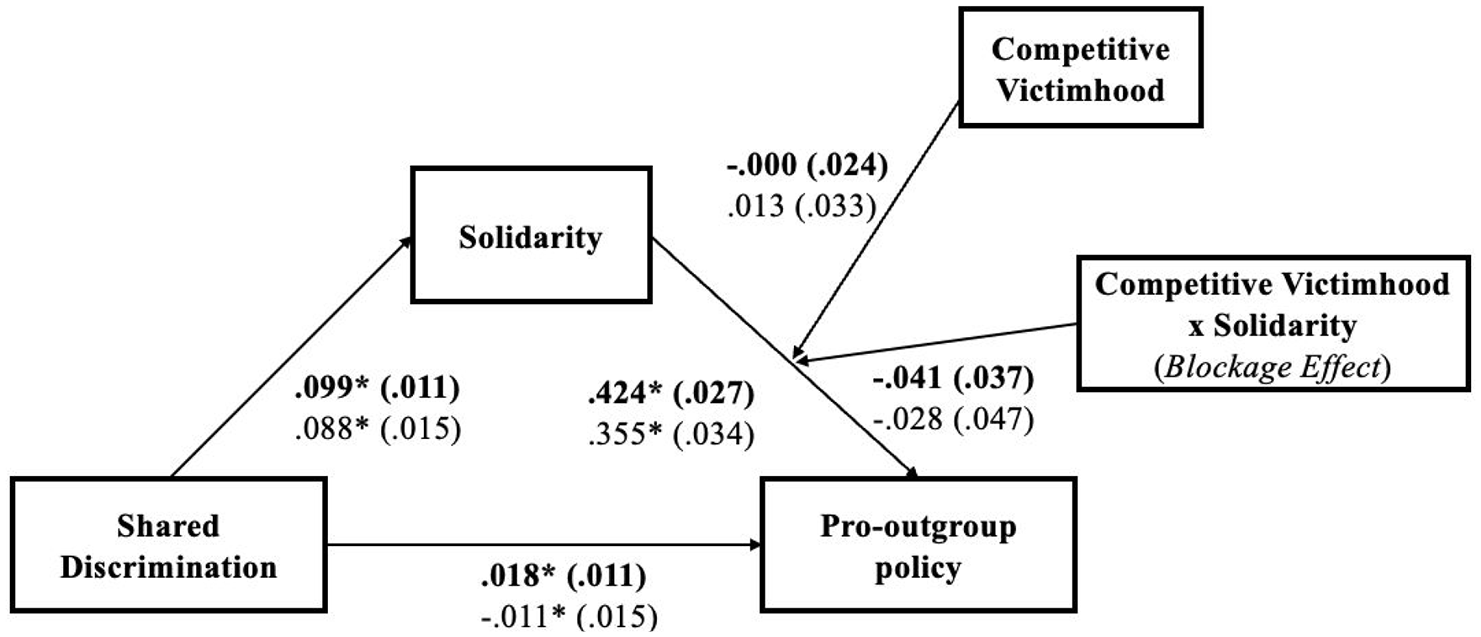
To address these gaps, this study introduces a novel experimental design where solidarity is both manipulated and tested against divisive narratives. This blockage mediation design is recommended by some methodologists as it can yield clearer diagnostic evidence of solidarity’s causal effects (Bullock & Green, 2021). In a blockage design, evidence of a mediator’s causal effects is produced by neutralizing or reducing its downstream influence through a manipulation intended to undermine it (Pirlott & MacKinnon, 2015). Accordingly, we embed both a unifying and a divisive narrative across two preregistered experiments with the aim of better reflecting the contexts in which PoC encounter political information. Specifically, these experiments first catalyze solidarity between PoC via shared discrimination and subsequently manipulate zero-sum thinking by employing a competitive victimhood message that calls attention to core historical differences between Black and Latino Americans (i.e., legacies of slavery vs. voluntary immigration). We hypothesize that introducing a competitive victimhood message after solidarity between PoC is catalyzed will reduce its observed downstream influence on support for outgroup policies. This dual-layer design, depicted in Figure 1, should illuminate the mechanisms that bolster solidarity and some conditions under which it falters, offering new insights into how enduring coalitions can be forged among racial minorities in the face of competing narratives.
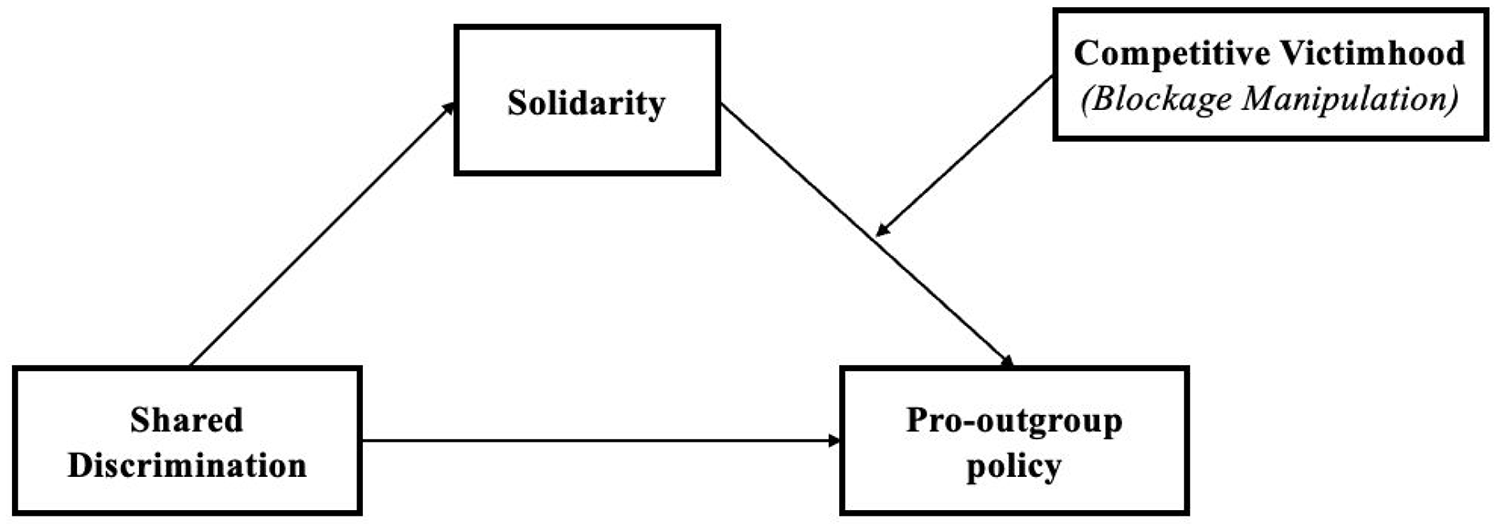
Competitive victimhood disrupts the impact of shared discrimination on support for pro-outgroup policy through solidarity.
Studies 1 & 2 Methods
We test our hypothesis across two preregistered experiments (https://aspredicted.org/nsrx-gwzv.pdf) with Black participants in the context of Black–Latino relations. This is the most common case in the study of interminority politics in the US (e.g., Benjamin, 2017; McClain & Karnig, 1990; McClain & Carew, 2018; Wilkinson, 2015), as the ingroup that is recognized by other non-Whites as the most prototypical PoC, Black individuals, defines the norms and values of the larger mega-group, PoC (Chin et al., 2023). This makes our research setting a “most likely” case (Gerring, 2001), allowing us to observe solidarity’s causal effects on a core population of color as it reacts to another racially marginalized population with whom it often encounters tense political relations (i.e., Latinos; Benjamin, 2017; Wilkinson, 2015). This pair of study characteristics position us to draw experimental conclusions that can generalize to key dimensions (Black–Latino relations) and individuals (African Americans) in U.S. interminority relations.
Participants
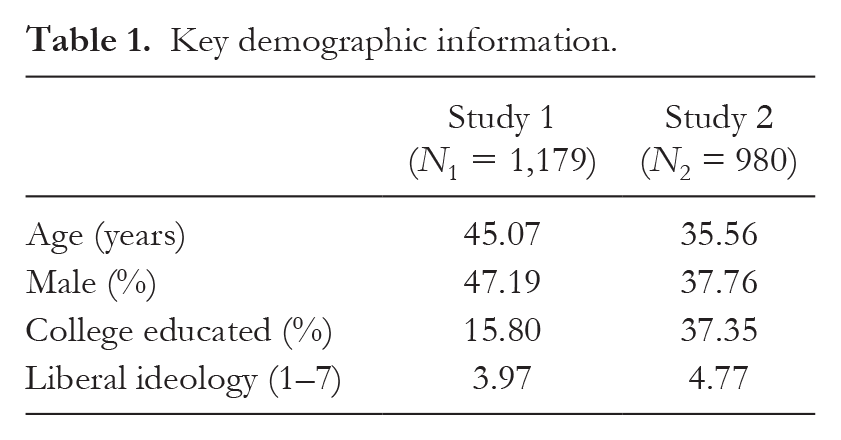
Both studies shared an identical design but were run on different survey platforms. We recruited monoracial Black Americans through Dynata (N1 = 1,719) in November 2023 and Cloud Research (N2 = 973) in February 2024. Prior work on political solidarity allocates about 400–450 participants per experimental condition (Pérez, Vicuña, & Ramos, 2024), which allows one to uncover a substantively small but meaningful effect (Cohen’s d = 0.20) with 80% power. We followed this general approach here. We further maximized the number of Black participants available within each survey platform to guard against possible item nonresponse (i.e., missing data). Table 1 provides key demographic information about each sample.
Key demographic information.
Procedure
In each experiment, Black adults completed a brief pretreatment schedule of items measuring demographic (e.g., age, education) and political (e.g., partisanship) attributes to help characterize our samples. After this, Black participants were randomly assigned to a control or treatment condition. In the control, participants read a news article, attributed to the Associated Press (AP), about the declining number of giant tortoises throughout the globe. In the treatment condition, participants read an AP article of comparable length about continued discrimination against Latinos in the US and how this discrimination is like the one encountered by Black Americans. Specifically, the treatment article was titled, “Despite Their Presence in the United States for Decades, Many Latinos Are Still Treated as Second Class Citizens, as Evidenced by Hate Crimes Data,” with the article noting trends in hate crimes toward Latinos. Drawing on a similarity principle (Cortland et al., 2017; Pérez, Vicuña, & Ramos, 2024), the article concludes by briefly noting how these discriminatory trends toward Latinos are like those faced by Black people, “many of whom experience a similar sense of exclusion.” The full wording and visuals used in the manipulation are reported in the Supplemental Material (SM.1).
Following a manipulation check, participants completed three validated items measuring solidarity between PoC, which is the proposed mediator of shared discrimination in this framework (Pérez, Goldman, et al., 2024). Using a 5-point scale (1 = strongly disagree, 5 = strongly agree), participants completed each item below:
I feel solidarity with people of color, which includes Asian, Black, and Latino people.
The problems of Black, Latino, Asian, and other people of color are similar enough for them to be allies.
What happens to people of color in this country has something to do with what happens in my life as a Black person.
We scaled responses to these items (
After assessing solidarity with PoC, Black participants were then randomly assigned to our blockage manipulation before completing our outcome variables (see SM.2). Here, Black participants were randomly assigned to a control group (no information) or a treatment condition where they read a news article titled, “With a Unique History and Set of Political Goals, Black Alliances With Latinos Don’t Always Make Strategic Sense.” This article induces competitive victimhood by explaining that: [I]t is very hard to compare African Americans’ experience with slavery and its aftermath to the social and political exclusion faced by Latinos. Indeed, the United States continues to marginalize many Blacks as second-class citizens, even though African Americans have been in this country since its founding. Other people of color are not treated in this peculiar way.
This blockage manipulation is designed to reduce solidarity’s downstream effects. Although blockage manipulations like these sometimes seek to increase a mediator’s downstream effects (Pirlott & MacKinnon, 2015), the first part of our experiments already aim to heighten solidarity (see Figure 1). This makes further downstream increases in this mediator less likely due to ceiling effects. Thus, our blockage treatment is meant to reduce heightened solidarity levels. Accordingly, our blockage manipulation has two levels, namely 0 = no additional information versus 1 = exposure to information “blocking” solidarity’s influence. After our blockage manipulation, Black participants reported their support for three pro-Latino policy proposals, each answered on a 5-point scale (1 = strongly disagree, 5 = strongly agree), which we scaled (
Introducing harsher penalties for hate crimes committed against Latinos.
Renewing temporary relief from deportation for undocumented Latino immigrants brought to the US as children.
Supporting the use of affirmative action for Latinos in jobs and education. 1
Results
Using these data, we estimated the model in Figure 1 in a structural equation modeling (SEM) framework using Stata’s “sem” function, treating all variables as observed rather than latent. This approach mimics Model 14 from the PROCESS macro, commonly used by psychologists (Hayes, 2022). 2 Accordingly, we simultaneously estimated the effect of the first treatment (shared discrimination) on observed expressions of Black solidarity with PoC, and the downstream influence of solidarity on observed Black support for pro-Latino policy moderated by the second manipulation (competitive victimhood message). We note that our estimation used the full number of cases available to us (i.e., no observations were excluded).
The coefficient of interest in both studies was the interaction term between solidarity and our competitive victimhood manipulation on support for pro-Latino policy, which we expected to be negatively signed, indicating a reduction in solidarity’s downstream effect. Following prior work (Pérez, Vicuña, & Ramos, 2024), all estimates included liberal ideology as a covariate to better estimate the impact of solidarity, which is positively associated with liberal ideology and influences PoC’s political attitudes in similar directions (Kam & Trussler, 2017). We further evaluated our results through a preregistered internal meta-analysis (https://aspredicted.org/dj46-6k75.pdf), which we designed to appraise whether any interactive patterns in our data could be precisely recovered (Goh et al., 2016). We preregistered this internal analysis after collecting data for Study 1, but before collecting data for Study 2. Our mini meta-analysis included both blockage studies that we undertook to assess solidarity’s downstream effects, thus minimizing “file drawer” concerns.
Table 2 shows that exposure to shared discrimination with Latinos heightened Black adults’ expression of solidarity with PoC. In Study 1, this effect increased solidarity by nearly 10 percentage points (b = 0.10, SE = 0.01, p < .001). Study 2 produced a similar effect (b = 0.09, SE = 0.02, p < .001). Transforming these coefficients to Cohen’s d values, the average effect across both studies was d = 0.385, which is considered a medium-sized effect (d values reflect standardized mean differences). These patterns replicate prior work on shared discrimination’s effects on expressions of solidarity with PoC (Pérez, Vicuña, & Ramos, 2024).
Unstandardized path coefficient estimates from structural equation modeling, with solidarity and pro-Latino policy variables rescaled to a 0–1 interval prior to analysis.
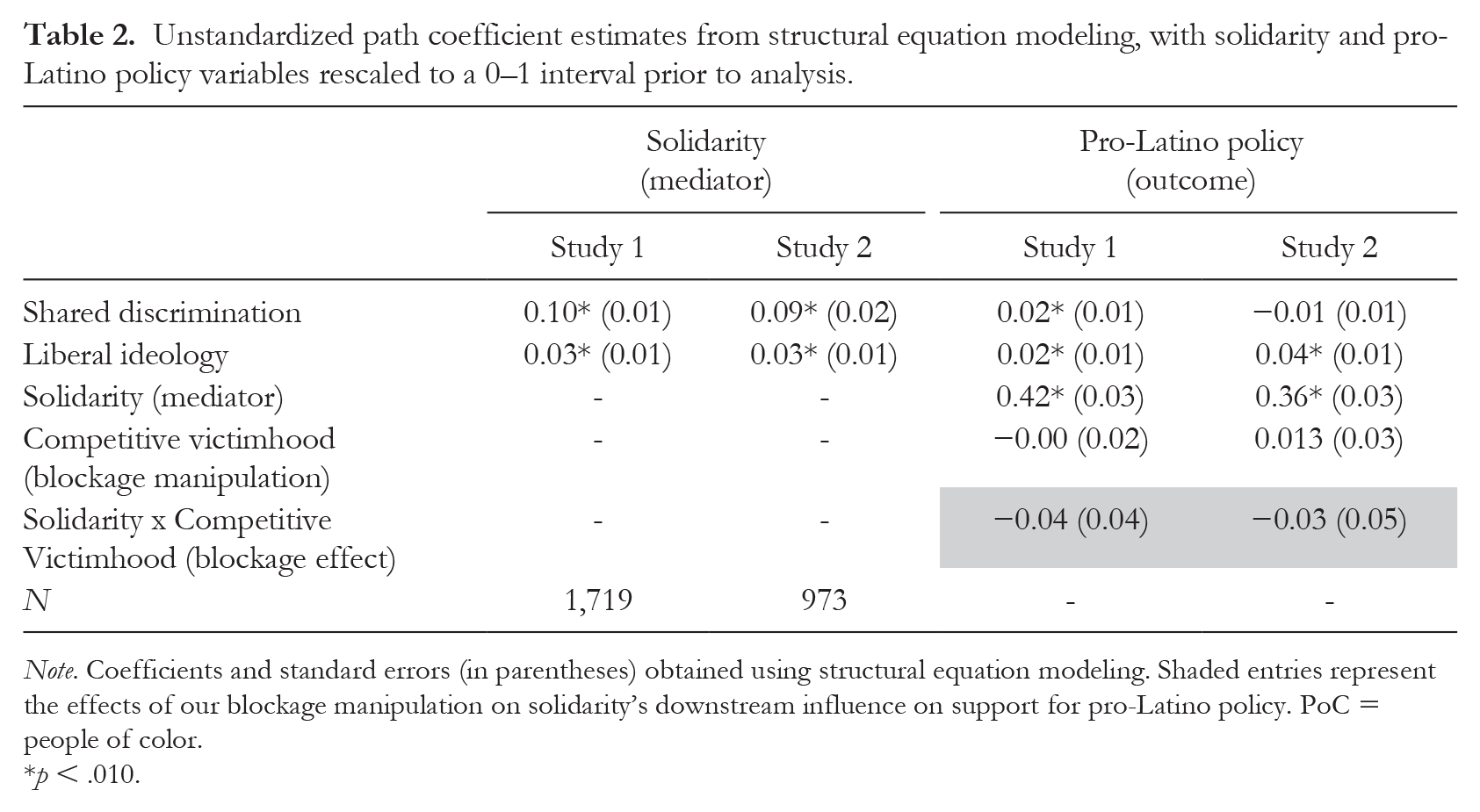
Note. Coefficients and standard errors (in parentheses) obtained using structural equation modeling. Shaded entries represent the effects of our blockage manipulation on solidarity’s downstream influence on support for pro-Latino policy. PoC = people of color.
p < .010.
Next, we examined the downstream association between a heightened sense of solidarity with PoC and Black support for pro-Latino policies. Consistent with prior work, heightened solidarity was significantly and strongly associated with support for pro-Latino policies in Study 1 (b = 0.42, SE = 0.03, p < .001) and Study 2 (b = 0.36, SE = 0.03, p < .001). These coefficients reflect the effects of solidarity on our outcomes in the control condition, when competitive victimhood was set to a value of zero. Converting these associations to Cohen’s d values, the average relationship between solidarity and our outcome was strong across studies (d ~= 0.85), consistent with prior published studies (Pérez, Vicuña, & Ramos, 2024).
We then investigated the resistance of solidarity to countervailing political communications, as captured by our competitive victimhood manipulation. Accordingly, we appraised the effectiveness of our manipulation in the downstream path between solidarity and support for pro-outgroup policy. We expected to see a negatively signed interaction term between solidarity and our competitive victimhood manipulation. The relevant coefficients are shaded in gray in Table 2. As hypothesized, the interaction between solidarity and competitive victimhood was consistently negative but fell far short of statistical significance. For instance, Study 1 results indicate that a one-unit change in solidarity with PoC is associated with a statistically significant 42 percentage-point increase in Black support for pro-Latino policy in the control group of our blockage manipulation (b = 0.42, SE = 0.03, p < .001). The coefficient for solidarity’s interaction with our blockage manipulation indicates solidarity decreased by about four percentage points when exposed to that treatment, but the effect was statistically nonsignificant (b = −0.04, SE = 0.04, p = .271).
Similarly, in Study 2, a unit change in solidarity was significantly associated with a nearly 36 percentage-point increase in Black support for pro-Latino policy (b = 0.36, SE = 0.03, p < .001). In turn, when participants were exposed to our blockage manipulation, the relationship between solidarity and pro-Latino policy support was weakened by nearly three percentage points, but this coefficient was also statistically nonsignificant (b = −0.03, SE = 0.05, p = .550). Both of these interactive patterns, depicted in Figure 2, suggest our downstream manipulation slightly knocked solidarity’s influence off its course, although these effects are imprecisely estimated. To further evaluate these patterns, we turn to a mini meta-analysis of these effects.
Disruptive impact of competitive victimhood messages on the downstream effect of solidarity on pro-outgroup policy support.
Mini Meta-Analysis of Blockage Effect
We gained further clarity on the substance and precision of our blockage effect through a preregistered mini meta-analysis (Clifford et al., 2021; Goh et al., 2016). 3 This analysis was preregistered prior to combining both available studies to probe for any reliable summary trends. We used a fixed-effects regression, which capitalizes on the statistical power of pooling both experiments to evaluate whether the negative interaction between solidarity and competitive victimhood is reliable. Given our directional prediction (i.e., negative interaction term), we preregistered a one-tailed meta-analysis. This meta-analysis uncovered a negative interaction term between solidarity and competitive victimhood that was modest in size and statistically significant (d = −0.07, p = .029, one-tailed). Collectively, all three studies suggest solidarity’s downstream influence is likely causal, rather than simply correlational. Moreover, the relative effect size in these studies suggests that solidarity with PoC is resistant to the divisiveness that competitive victimhood poses, since about three quarters of solidarity’s original association with support for pro-outgroup policies remained intact after accounting for competitive victimhood.
Discussion
Across three preregistered studies, we unearthed converging evidence that solidarity’s downstream effect on pro-outgroup policy support is resistant to the divisiveness that competitive victimhood poses. By exposing Black participants to countervailing messages about unity between PoC, we found that, once activated, solidarity has a steadfast influence on support for pro-outgroup policy. Indeed, while heightening shared discrimination heartily boosts solidarity with PoC (d = 0.39), our competitive victimhood manipulation reduced it by a small but reliable amount (d = 0.07), leaving solidarity’s downstream effect mostly intact. This finding alone makes both theoretical and methodological contributions to the literature on interminority politics.
In theoretical terms, our findings further demonstrate how the same principles and processes that explain how solidarity between PoC is catalyzed are the same principles and processes that help clarify when its potency is reduced. In a more mundanely and psychologically realistic setting defined by two-way communication flows, our studies reveal how solidarity between PoC can be harnessed and preserved in the richer and sometimes contradictory information environments that characterize U.S. politics (Chong & Druckman, 2013; Zaller, 1992). The methodological contribution is that design-based tests of solidarity can help better illuminate this key mediator’s causal effects. The results of our blockage experiments suggest this downstream influence is more likely causal than simply correlational, given that our blockage manipulation reduced solidarity’s downstream effect on support for pro-outgroup policy. While the blockage effect was substantively small, it indicates that the unity and cohesion fostered by solidarity are highly resistant to the divisiveness introduced by the competitive victimhood manipulation we designed. Ultimately, our studies provide a template to explore other forms of identity threat that are theoretically motivated (e.g., value threat to one’s ingroup; prototypicality threat to one’s ingroup) and potentially substantively larger than competitive victimhood as operationalized here (Brewer, 1991; Jetten et al., 1999).
What can social and political psychologists do with these findings? Although there are several possibilities, we focus on the role of threat to solidarity’s unifying effects. We hypothesized, and found evidence, that competitive victimhood can in fact undercut solidarity’s downstream influence, although not by a lot. This pattern must be understood in the context of the population we focused on, namely African American adults. As the prototypical PoC (Pérez, 2021), we theorized that any reductions in solidarity should manifest among individuals who define the group’s norms and values. We discovered that, as prototypical PoC, Black adults’ solidarity intentions are resistant to competitive messages that seek to divide racial minority groups.
It is theoretically plausible, however, that our observed effects are even stronger among individuals who are positioned further from this Black prototype within PoC, such as Latino and Asian American adults. This positioning, social psychologists teach us (Ellemers & Jetten, 2012), can make these individuals more sensitive to threats. This reaction can go in at least one of two directions. PoC considered less prototypical of the group, such as Asians and Latinos, may be more resistant than Black people to ingroup threats, which they may feel compelled to counter by proving their worth as “true” group members (Noel et al., 1995; Pickett & Brewer, 2005). Or, alternatively, they may be more susceptible to threats to their racial ingroup because they are less strongly tethered to the megaingroup, PoC. Theoretical synergy with the research design we offered here stands to further clarify how PoC operate in a system of race relations in the US that is characterized by rapid demographic change and instability in intergroup relations.
Supplemental Material
sj-docx-1-gpi-10.1177_13684302251346402 – Supplemental material for Is unity durable among people of color? Two large experiments stress-testing solidarity between Black and Latino Americans
Supplemental material, sj-docx-1-gpi-10.1177_13684302251346402 for Is unity durable among people of color? Two large experiments stress-testing solidarity between Black and Latino Americans by Kasheena G. Rogbeer, Jae Yeon Kim and Efrén Pérez in Group Processes & Intergroup Relations
Footnotes
Data Availability Statement

Ethical Approval and Consent to Participate
The study was approved by the University of California Los Angeles (UCLA) Institutional Review Board (IRB#23-001615), which waived the requirement for signed informed consent. Participants were provided with a consent form detailing the risks and benefits of participation.
Funding
This work was supported by the Ministry of Education of the Republic of Korea and the National Research Foundation of Korea (NRF-2024S1A3A2A07046269).
Supplemental Material
Supplemental material for this article is available online.
Notes
References
Supplementary Material
Please find the following supplemental material available below.
For Open Access articles published under a Creative Commons License, all supplemental material carries the same license as the article it is associated with.
For non-Open Access articles published, all supplemental material carries a non-exclusive license, and permission requests for re-use of supplemental material or any part of supplemental material shall be sent directly to the copyright owner as specified in the copyright notice associated with the article.
