



Abstract
Much of the research on national identity investigates its negative aspects through the form of nationalism. However, what happens at the opposite end of the spectrum, when someone does not glorify the national ingroup but actively rejects it? Across two studies conducted in Serbia (Ns = 349 and 554), we investigated national identification and disidentification, their antecedents, and consequences. We found no evidence to distinguish between (low) national identification and disidentification. Regarding antecedents of national identification, we found that self-stereotypes (positive and lack of negative) were the most important contributors, followed by right-wing social ideology. Regarding consequences, low national identifiers endorsed wider identities (e.g., European, world citizen) and had higher intentions to migrate. Most strikingly, low identifiers blatantly dehumanized ingroup members, even more so than high identifiers dehumanized (high-status) outgroups. In analyzing qualitative data, we contextualized the quantitative findings by showing that low identification is mainly articulated as a mismatch between self and ingroup prototype, consequently leading to dehumanization. We conclude that low national identification can have detrimental effects, but that more research in the non-Western context is necessary to properly understand this phenomenon.
Keywords
The loss of national identity is the greatest defeat a nation can know, and it is inevitable under the contemporary form of colonization.
Out of the numerous group identities one can possess, national identity is one of the most relevant in psychology or even social sciences. This is not a surprise, as national identity is often considered Janus-faced: on one hand, in the form of nationalism, it has fueled prejudice, outgroup derogation, and wars; on the other, it has been part of anticolonial struggles and civic movements, facilitating collective action and solidarity (Herb, 2002; Mylonas & Tudor, 2021; Pratto et al., 1998; Satherley et al., 2019; Van Bavel et al., 2022; Zedong, 2000). Whereas the implications of strong national identification have received most of the attention within the literature, less is known about national disidentification: a related, and arguably different, phenomenon in which individuals actively reject their national identity. In the present research, we investigated national disidentification using both quantitative and qualitative data, examining its potential antecedents and consequences. In this way, we contribute to the literature on disidentification and (low) national identification, especially when these processes have detrimental consequences for the group that could even jeopardize its existence.
First, we discuss the social identity approach, which directly relates to the question of a group (national) identity and cases when one has a negative view of the ingroup. We next discuss the phenomenon of disidentification, its antecedents, and consequences. We then outline the present research in the context of national (dis)identification in Serbia.
Social Identity Approach: What Happens When Group Membership Is Viewed as Negative?
The social identity approach (SIA) combines the insights of social identity theory (Tajfel & Turner, 1979) and self-categorization theory (Turner et al., 1987) to theorize the psychology of both intra- and intergroup processes. At the core of the theories is the concept of social identity, that is, part of an individual’s sense of self that is derived from group membership. Much research has highlighted the benefits gained from social identification, including a heightened sense of self-esteem and self-distinctiveness (Hogg & Abrams, 1988; Tajfel, 1982; Tajfel & Turner, 1979) . Key to maintaining a positive social identity is an ability to perceive oneself as similar to the social group (e.g., Turner et al., 1987). When this positive sense of self (and collective) is threatened, individuals have different options available: they can either take actions on their own (physically leave the group), engage in a process to represent the group in a more positive light (social creativity), or mobilize the group to change their social position and image (take social action).
Physically leaving the group is not always possible. In cases of national identity, even after migrating (which, in most cases, is not possible due to limited resources), one might still want to keep other related identities (e.g., religious, cultural), or these identities might intersect in important ways with a national identity, making it difficult to disentangle them. Additionally, even if one migrated, one still might be associated with national stereotypes of our origin. How one deals with a stigmatized group membership also depends on whether one accepts the negatively valued image of the group. For example, group devaluation or stigmatization can lead individuals to either identifying more strongly with the group identity (Leach et al., 2010) or internalizing negative stereotypes, engaging in self-hate and self-doubt, and developing numerous social and mental health issues (David, 2013). Consequently, a sense of mismatch between oneself and a social group can reduce social identification and commitment to the group (Becker & Tausch, 2014). This mismatch has been explored through the concept of disidentification.
Existing research differentiates disidentification from low identification by arguing that disdentification includes an active rejection of a group identity, compared to the more neutral process that involves a lack of identification and indifference about the identity (Becker & Tausch, 2014; Ikegami, 2010; Jasinskaja-Lahti et al., 2009; Matschke et al., 2023; Verkuyten & Yildiz, 2007). In the existing literature, disidentification manifests as detachment from the group (separation of psychological ties), dissatisfaction with the group membership (negative emotions regarding the group), and dissimilarity from other members (perceiving oneself as different from prototypical ingroup members). We follow others in considering disidentification as originating from a mismatch between self and the ingroup prototype. Given the distinction between active rejection (disidentification) and passive indifference (low identification) identified in the literature, it becomes important to further disentangle these concepts empirically, as they might have a differential impact on how one acts within, and against, the group. Testing these constructs in a national context enables us to examine further whether the construct of disidentification also tells us something meaningful about larger, abstract groups such as nations.
Antecedents of Disidentification
Ellemers et al. (1999) suggest that disidentification may be a response by ingroup members who are already low identifiers and who find themselves threatened by the low status of the group as a result of a negative event. For example, a recent study (Ditrich et al., 2021) on identity post-Brexit found that the EU referendum, which was experienced as a negative event that violated UK ingroup norms, led to an increased negative relationship towards British identity among Scottish people, and an increased intention to change the subgroup’s (Scottish) identity situation. Disidentification then seems to arise when an individual experiences and evaluates the ingroup negatively and responds by actively rejecting the group. Indeed, existing research has shown that disidentification is more sensitive to negative events (Becker & Tausch, 2014) compared to social identification. As such, negative ingroup evaluations could play a key antecedent of disidentification. Similarly, as identification occurs in an intergroup context of social comparison, ingroup evaluations by relevant others also matter (Amer & Obradovic, 2022). Namely, following SIA’s theoretical premise of the relationship between group membership and self-esteem, if an individual negatively evaluates their ingroup and believes that the group is negatively valued by external others, then the motivation for disidentification could be stronger. As such, in exploring ingroup evaluations as an antecedent, we consider both how the ingroup is evaluated by the self (self-stereotypes) and perceived to be regarded by relevant others within a broader intergroup context (i.e., status perception).
A second set of potential antecedents relates to worldviews (political ideology, social dominance orientation [SDO], and religiosity). A large body of research found that ideological right-wing persons/conservatives (vs. left-wing persons/liberals) more strongly identify with their nation, to the extent it is “almost a truism” (Verkuyten et al., 2022, p. 1; see also Golec de Zavala et al., 2017; Romano et al., 2021) . However, in cases of national disidentification within minorities (e.g., immigrants), the situation is the opposite. That is, when individuals hold multiple identities (i.e., being Muslim and Dutch) and there is a mismatch between two (i.e., being Dutch is being Christian, not Muslim), national disidentification tends to increase within more right-wing and religious individuals (Maliepaard & Verkuyten, 2018; Verkuyten & Yildiz, 2007). Therefore, the role of ideology in national disidentification depends on what the national identity refers to. In the case of Serbia, national identity and right-wing/religious ideology overlap to a large extent (e.g., Stankov, 2018). Because of the importance of worldviews in national (dis)identification, we included them in the present study.
Consequences of Disidentification
If disidentification originates from a perceived mismatch between self and ingroup where negative events or experiences as part of the ingroup lead one to feel a desire to actively reject the group, SIA suggests several potential implications of disidentification. Firstly, while negative ingroup evaluations might serve to increase the psychological distance between the self and ingroup members, and increase dissimilarity from the perceived group prototype, they do not address the continued psychological need for belonging. Previous research drawing on SIA has found that disidentification from one group can take the form of self-recategorization, where other identities instead come to form a more important part of how one sees oneself (Matschke & Sassenberg, 2010). In the case of national disidentification, minority groups have been found to strengthen their subgroup identities because of host national disidentification (Maliepaard & Verkuyten, 2018). However, in the case of a national ingroup where those who disidentify are already part of the “majority” (i.e., their national identity intersects with the dominant religion and ethnicity, as is the case in Serbia) and thus have fewer subgroups available, we could expect that recategorization instead occurs upwards, towards supranational categories. Therefore, we investigated the endorsement of other, wider identities (Yugoslav, Balkan, European, and world citizen).
Secondly, as disidentification relates to the active rejection of the ingroup, a potential consequence of disidentification is an increased dislike or derogation of the ingroup (Becker & Tausch, 2014; Ikegami, 2010; Ikegami & Ishida, 2007). This derogation can take different forms, but in its most extreme, it would entail an increased dehumanization of the ingroup, similarly to how SIA theorizes outgroup dehumanization (Billig, 2002; Tajfel, 1981). Namely, in distancing the self from ingroup members, individuals who disidentify from their national ingroup might come to see everyone else in the group as one and the same, depersonalizing group members. Depersonalization in turn enables dehumanization, the tendency to deny full humanness to others (Haslam, 2006).
Finally, disidentification can have behavioral consequences, such as increased avoidance of ingroup members (Becker & Tausch, 2014) and acting against group interests (de Vreeze & Matschke, 2017). A more extreme option tied to conditions of material reality is to leave the group completely. Intention to leave has been found to be a consequence of disidentification (Matschke et al., 2023), aligned with the strategies proposed by social identity theory on how to cope with a threatened group identity. Therefore, we were interested in exploring the relationship between national disidentification and intention to migrate, which has serious negative consequences for many developing countries (e.g., Heuer, 2011). The conceptual model of the present research is depicted in Figure 1.
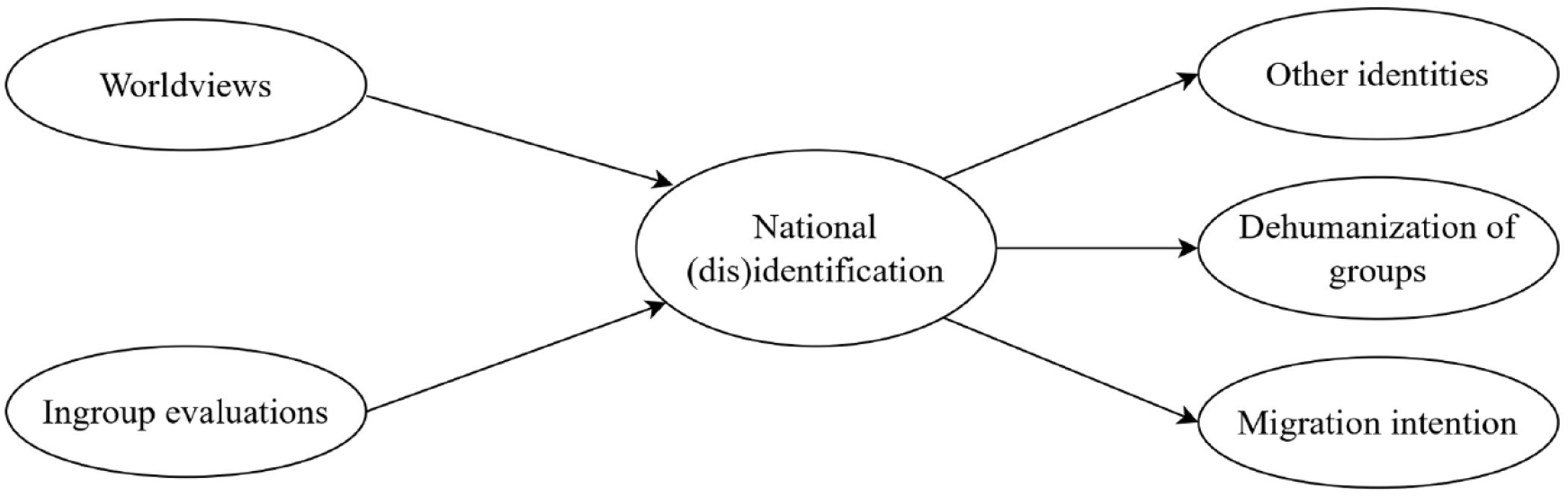
Conceptual model of the present research.
National (Dis)Identification and the Context of Serbia
There is a key way in which the present study on national disidentification might be different from previous research on disidentification. Much of the existing literature discussed has explored disidentification in contexts of two potentially incompatible group identities and the impact this has on disidentification from one or the other (Matschke et al., 2023), using disidentification (distancing) from an outgroup to define one’s identity (e.g., Elsbach & Bhattacharya, 2001), or nested identities such as ethnic subgroups in a national context, or nations in a superordinate context (Ditrich et al., 2021; Maliepaard & Verkuyten, 2018). Furthermore, it has focused on identities that are permeable and possibly less deep-seated for group members, including food preferences (de Vreeze & Matschke, 2018) and student identities (Ikegami & Ishida, 2007; Matschke & Sassenberg, 2010) . Consequently, existing research has mainly explored and validated the construct of disidentification among populations where multiple identities are either made salient or where a kind of trade-off emerges between a disidentification from one group and a heightened identification with another. Instead, our study focuses on disidentification from a national ingroup among the majority population—not those who form a distinct subgroup in the nation (e.g., Muslims in Germany/the Netherlands) and who might have an alternative lower level identity to “trade-off” for, but rather those who are seen as forming part of the dominant majority. As a result, instead of considering recategorization on lower levels (subgroups), we consider whether disidentification leads to recategorization on higher order levels (supranational).
To fill this research gap, we conducted two studies on national identification in Serbia, which we believe is an appropriate context to investigate disidentification. Serbia is a low-status group compared to other European countries (especially Western); the country has historically suffered from different forms of occupation and domination (e.g., Ottoman and Austro-Hungarian period, world wars, NATO bombings) and is associated with many negative stereotypes. In such a context, there is a (perceived) divide between the disidentifiers (the “other Serbia”), who consider themselves different (e.g., prodemocracy, pro-Western, antinationalist) from other ingroup members, and the national identifiers, whose representation of what it means to “be Serbian” is dominant (Russell-Omaljev, 2016). Some research even indicated that Serbia is among the most polarized European countries according to its residents’ perceptions (e.g., Perasso, 2018).
Our research had three aims. First, we aimed to test whether disidentification and identification can be differentiated in the context of national social identities. Based on the disidentification literature, we hypothesized that national disidentification and identification would be distinct factors. Our second aim was to test key antecedents of (dis)identification; self- and other perceptions of the group (ingroup evaluations) and worldviews (ideological dimensions of national belonging). Our third and final aim focused on exploring three potential consequences of (dis)identification: endorsement of other identities (recategorization), dehumanization of the ingroup (ingroup derogation), and migration intention (leaving the ingroup). Although we included antecedents and consequences based on previous literature, we did not make any explicit hypotheses about their relations with (dis)identification measures. Materials, data, and analysis code are retrievable at the Open Science Framework (OSF; https://osf.io/hrjf5/?view_only=fbcd3ce7571046e5972a49365f287751).
Study 1
Method
Participants
We recruited 383 participants using a convenience and snowballing sampling strategy. We also distributed the link to the survey on different social media platforms (Facebook, Twitter), inviting respondents to take part voluntarily. Only participants with the Serbian nationality were eligible to participate (otherwise, their participation was ended). After excluding participants who failed an attention check (n = 16) and Mahalanobis outliers on all continuous variables (n = 18), we were left with a final sample of 349 respondents (190 males, 159 females; Mage = 41.65, SDage = 12.44). Regarding education, less than 1% of participants indicated education lower than high school, 23% indicated they completed high school, 13% were undergraduate students, 41% had an undergraduate degree, 5% were graduate students, and 17% had a postgraduate degree. The ethnicity of participants was predominantly Serbian (93%), and the remaining participants indicated other ethnicities (7%). The sample was balanced in terms of ideology regarding social and economic questions (Ms = 4.50 and 4.49, respectively; range: 1–9). Most of the participants indicated they were Orthodox Christians (70%) and agnostics/atheists (25%), while the remaining participants indicated other religions (5%). Overall, the sample was relatively balanced.
Procedure and materials
After reading the information letter and signing the consent form, participants reported their demographics. Apart from sex, age, education, nationality, and ethnicity, participants also reported their subjective socioeconomic status (SES), which was measured using the MacArthur Scale of Subjective Social Status (Adler et al., 2000). Participants were shown a ladder that represented where people in Serbia stand in terms of money, education, and job status (1 = the least, 10 = the most money, education, and respected job), and were asked where they would position themselves on the ladder (M = 6.20). Next, participants answered the following measures in the order reported here. Table 1 shows descriptives (means and standard deviations; bottom) and reliabilities (diagonal) of the used measures.
Descriptives (bottom), reliabilities (αs; diagonal), and intercorrelations of measures.
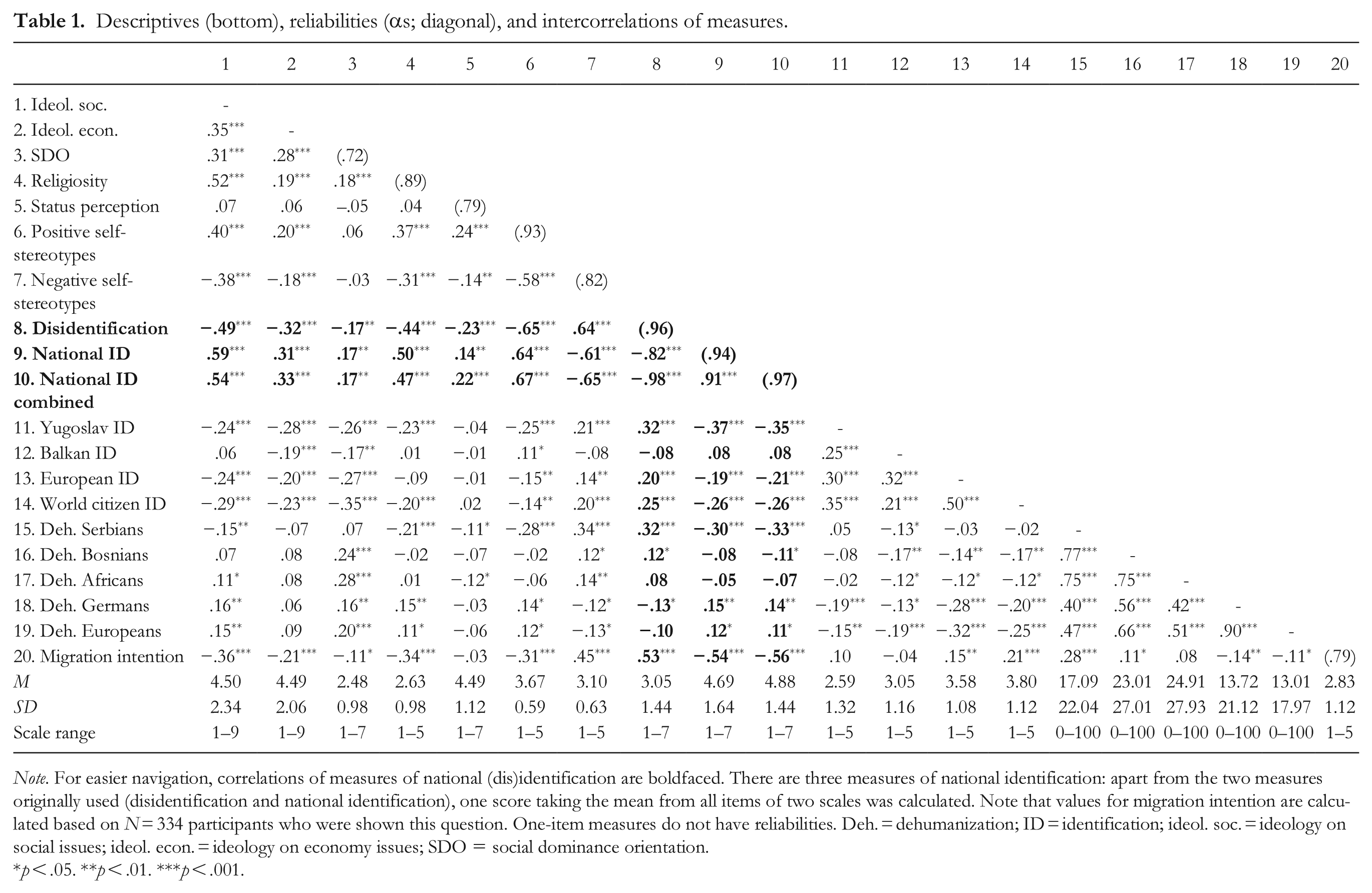
Note. For easier navigation, correlations of measures of national (dis)identification are boldfaced. There are three measures of national identification: apart from the two measures originally used (disidentification and national identification), one score taking the mean from all items of two scales was calculated. Note that values for migration intention are calculated based on N = 334 participants who were shown this question. One-item measures do not have reliabilities. Deh. = dehumanization; ID = identification; ideol. soc. = ideology; ideol. econ. = economy; SDO = social dominance orientation.
p < .05. **p < .01. ***p < .001.
Status perceptions
We asked participants to indicate their agreement (1 = strongly disagree, 7 = strongly agree) with four items (collective self-esteem) that measured how they think others perceive their national group (e.g., “In general, others respect the social group that I am a member of”; Luhtanen & Crocker, 1992).
Ingroup evaluations
To measure positive self-stereotypes, we reviewed the literature on positive stereotypes of Serbians (Koren, 2013; Turjačanin, 2004) and collected the adjectives “proud,” “hospitable,” “humorous,” “courageous,” and “cheerful.” We obtained the negative self-stereotypes in the same way (Bugaeva & Simonova, 2017; Petrović, 2003; Turjačanin, 2004; Vuković, 2006), which included the adjectives “evil,” “vengeful,” “warlike,” “cruel,” “violent,” “corrupt,” “dirty,” “lazy,” and “disorganized” . We also included two filler adjectives (“tall” and “good cooks”). Participants indicated to what extent they thought Serbians possess these characteristics (1 = not at all, 5 = fully). Participants also rated how much they agreed (1 = not at all, 7 = fully) that Serbians are competent (e.g., “intelligent”), sociable (e.g., “friendly”), and moral (e.g., “sincere”), which were all measured using three items (Leach et al., 2007). These three social evaluation dimensions are more universal, compared to the stereotypes that specifically apply to the Serbian national group. To investigate how ingroup evaluations relate to each other, we conducted a factor analysis, which indicated two factors for which we calculated mean scores. One factor was made of positive self-stereotypes, competence, sociability, and morality, which we named “positive self-stereotypes.” We calculated the score by taking the mean of all items after transforming the competence, sociability, and morality items to a 5-point scale. The other factor was made of “negative self-stereotypes” without the adjectives “warlike” and “disorganized,” which did not have clear loadings. We calculated the score by taking the mean of negative self-stereotypes without the two items.
National identity
Participants completed two scales about their national identity, indicating their agreement with the statements (1 = do not agree at all, 7 = fully agree). One scale was about their national identification, which consisted of four items (e.g., “I am glad to be Serbian”; Postmes et al., 2013), while the other was about national disidentification (11 items; e.g., “I wish I had nothing to do with this group”; Becker & Tausch, 2014).
After responding to these questions, participants who scored above the scale midpoint (M > 3.5) on the disidentification measure were asked an additional, open-ended question (n = 128). Participants were asked the following, “Answers on the previous pages show that you, at least to some degree, reject Serbian national identity. We ask you to give the reasons you feel and think that way.” They were given the box to write their answers. In total, 87 participants typed in an answer. However, four of them were not meaningful (e.g., “??”; “It’s not true I reject it”), which left 83 responses to this question (i.e., 65% of the participants were asked). This allowed us to conduct a qualitative analysis of why participants rejected the national identity.
Other identities
Next, participants indicated how much they identified as Yugoslav, Balkan, European, and world citizen using 5-point anchors (1 = not at all, 5 = a lot; Branković et al., 2015). We also included filler/reference items about the city, religion, and Serbian identity. However, we did not analyze these because we had already measured religious and Serbian identity with proper scales (religiosity and national identification).
Dehumanization
Participants also completed the measure of blatant dehumanization in which they were presented with a representation of the human evolution (from apes to modern humans), and were asked to indicate how much members of each of the groups (Africans, Europeans, Germans, Serbians, Bosnians) advanced in the evolution, using a slider from 0 to 100 (Kteily et al., 2015). We used Bosnians and Africans as similar or lower status groups, and Germans and Europeans as high-status groups. Given that lower scores on the slider indicated more dehumanization, we reversed the scores. In this way, higher scores indicated more dehumanization. All target groups scored relatively low on dehumanization (medians in parentheses): Africans (16), Bosnians (14), Europeans (5), Germans (3), and Serbians (8).
Ideological variables
To measure political ideology, participants indicated their position on social and economic issues (1 = left, 5 = center, 9 = right). We elaborated on the left/right ideological positions and provided some examples (e.g., minority rights in social or state intervention in economic issues; Gligorić et al., 2021).
We also measured social dominance orientation (SDO) using six items (Todosijević, 2013). Participants used a 7-point scale (1 = completely disagree, 7 = completely agree) to indicate agreement with statements such as “To get ahead in life, it is sometimes necessary to step on others.”
The next question was about participants’ religious affiliation (e.g., Orthodox Christian, Catholic, agnostic/atheist), which was followed by a measure of religiosity in which participants indicated how often they take part in five activities such as praying or thinking about religious issues (1 = not at all, 5 = a lot).
Migration
Finally, participants reported whether they resided in Serbia or not. If they resided in Serbia (334 did and 15 did not), they answered two questions about whether they would emigrate from Serbia (migration intention) using a 5-point answering scale (M = 2.83; r = .67; Docquier et al., 2014; Van Dalen & Henkens, 2007). 1
Results
National (dis)identification, antecedents and consequences: Quantitative analyses
First, we were interested in whether we would detect the difference between national identification and disidentification. Interestingly, contrary to our expectations, the correlation between the scales was high (r = −.82). To see if measures could be distinguished, we conducted an exploratory factor analysis (minimum residual method, promax rotation) on all items of the two scales. This showed that all items loaded on a single factor (67% variance explained). Therefore, these two scales measured the same concept, which is why we also calculated one score of national identification. Indeed, the correlation patterns (see Table 1) of disidentification, national identification, and the combined score with other measures were identical for all three measures. Therefore, for the remainder of our analyses, we only used the combined score of national identification (higher scores indicated higher national identification).
To test our proposed model, we conducted a path analysis in which worldviews (social and economic ideology, SDO, religiosity) and ingroup evaluations (status perceptions, positive and negative self-stereotypes) predicted national identification, which in turn predicted identification with broader identities (Yugoslav, Balkan, European, world citizen), dehumanization of different groups (Serbians, Bosnians, Africans, Germans, Europeans), and migration intentions (we controlled for sociodemographic variables by adding them as predictors). The model showed an acceptable fit (RMSEA = .071, SRMR = .067, CFI = .923, TLI = 0.877), and the results are shown in Figure 2. As the figure shows, right-wing ideology and religiosity were associated with higher national identification. Interestingly, the most important antecedents of national identification were positive and lack of negative self-stereotypes (differences in slopes from worldview antecedents were significant; zs > 2.440, ps < .05). Regarding consequences, those who identified more as Serbians were less inclined to take broader identities such as Yugoslav, European, and world citizen. They did not, however, take any broader identity, as there was no evidence of association with the “Balkan” identity (which itself is not a very meaningful identity). National identifiers also showed much lower intention to emigrate. 2
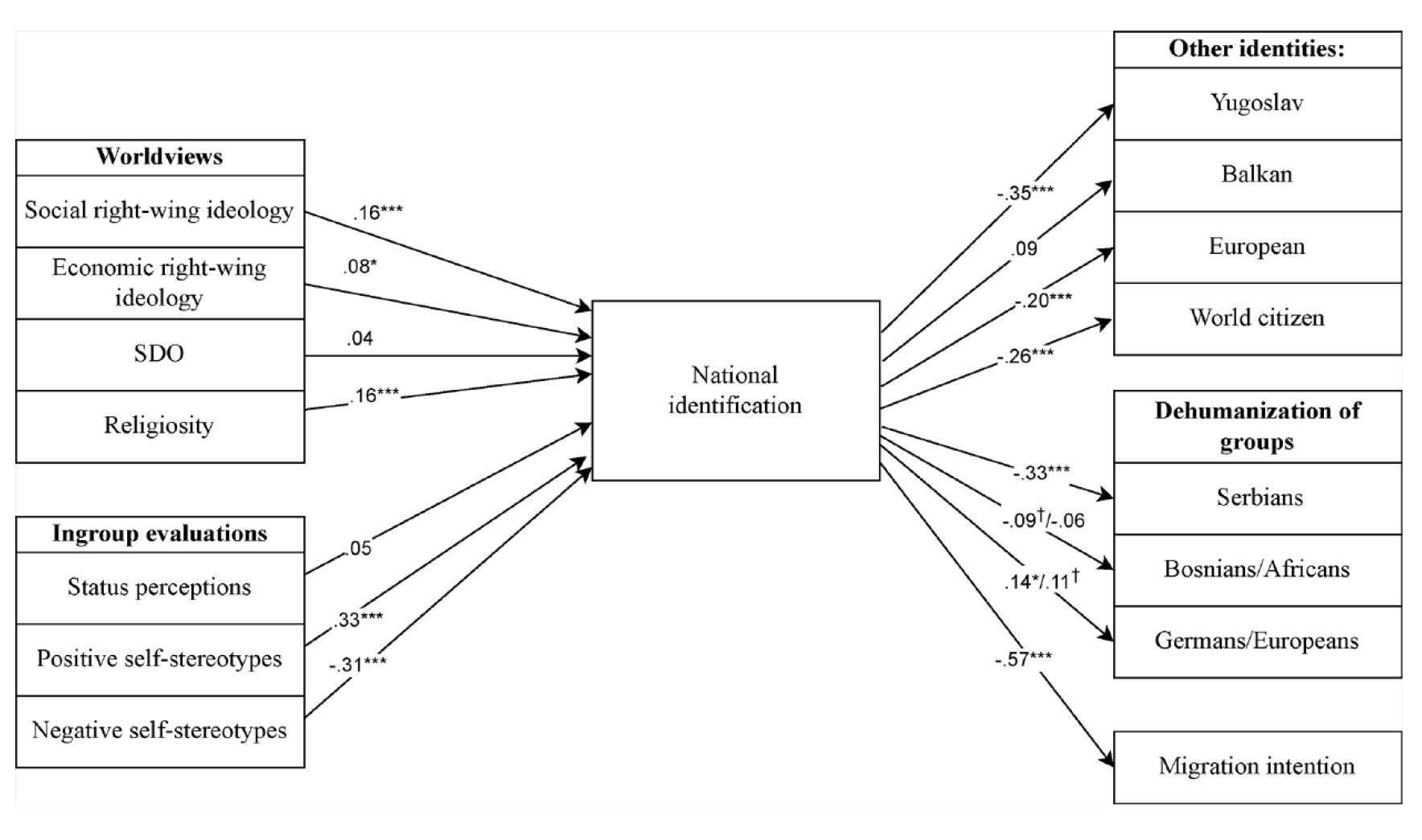
Path analysis in which worldviews and ingroup evaluations predict national identification, which in turn predicts identification with wider identities, dehumanization of groups, and migration intention (controlling for sociodemographic variables as predictors).
National identification and dehumanization of the ingroup and outgroups
Dehumanization showed interesting patterns: national identifiers dehumanized high-status outgroups more (Germans and Europeans, though the latter marginally), but there was no evidence that they did so for similar or lower status outgroups (Bosnians and Africans; in fact, the relationship was opposite in sign). Most interestingly, lower national identification was associated with higher dehumanization of members of the national ingroup (Serbians). Therefore, there was an interaction between national identification and the target group (βs > .448, ps < .001, for the interactions between national identification and Serbian vs. German, and Serbian vs. European target group). That is, whereas national identification was associated with higher dehumanization of Europeans and Germans, it was associated with lower dehumanization of Serbians. We were also interested in whether the slope for low identifiers’ dehumanization of the ingroup was stronger than national identifiers’ dehumanization of the high-status outgroup. Comparison of the absolute values of the slopes of the low national identifiers’ derogation of the ingroup (β = −.334) and high identifiers’ derogation of outgroups (βs = .144 and .107) showed a significant difference (zs = 2.464 and 2.654; ps = .013 and .003, respectively; see Figure 3).
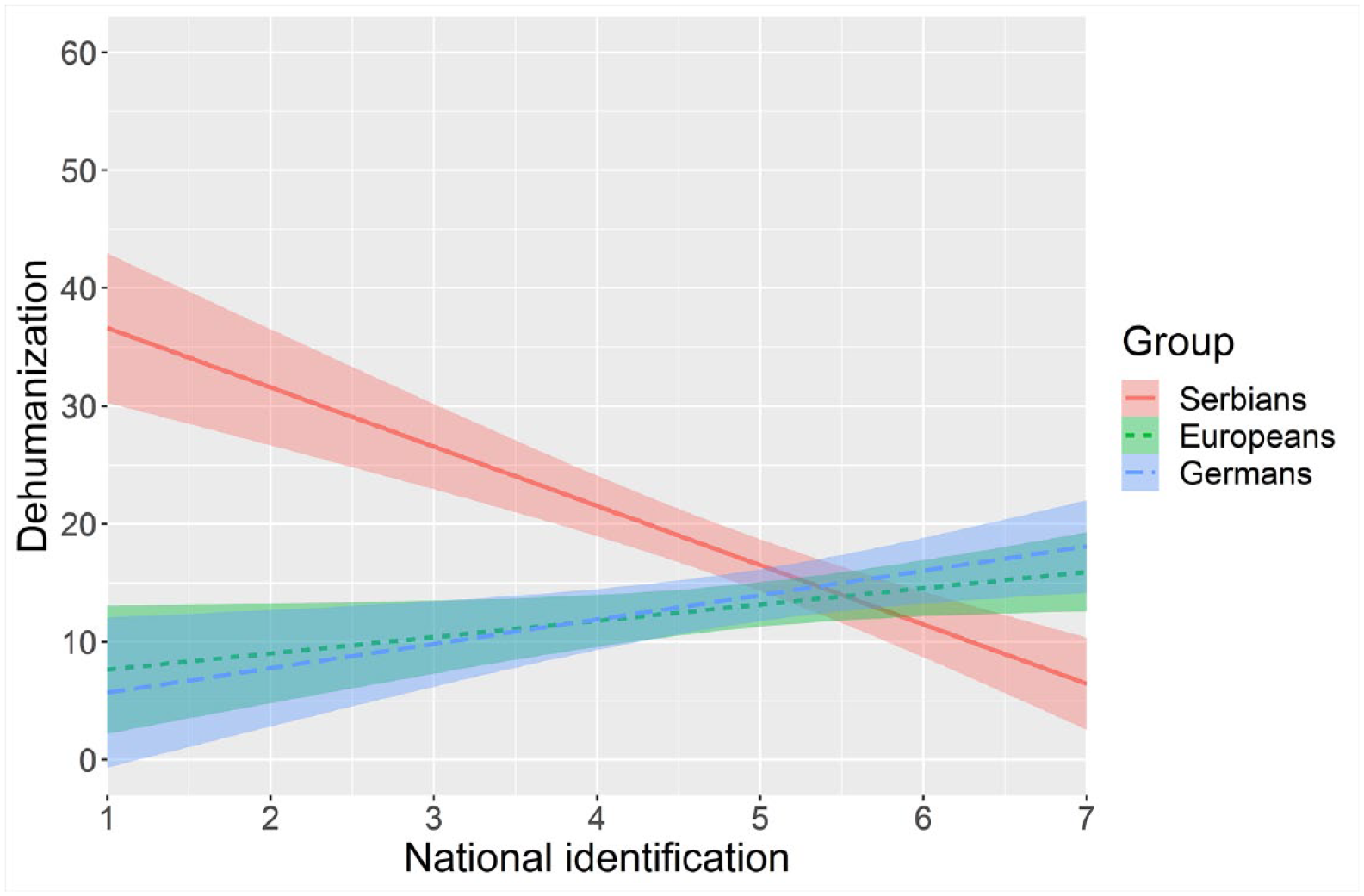
Interaction between national identification and target national groups on dehumanization. Individuals low in national identification dehumanized ingroup members (Serbians), while high national identifiers dehumanized outgroups (Germans and Europeans). However, the former did so more strongly than the latter.
Antecedents of low identification: Qualitative analysis of the open-ended question
To examine further the antecedents of low identification in the Serbian context, we conducted a qualitative analysis of open-ended responses (“Answers on the previous pages show that you, at least to some degree, reject Serbian national identity. We ask you to give the reasons you feel and think that way”). All open-ended responses were coded thematically.
A key finding from the qualitative analysis is that low identification is explained as a mismatch between the person and the perceived prototype of a Serb. Specifically, responses tended to highlight that the dominant way of “being Serbian” meant embodying negative values and characteristics that they did not agree with. These negative characteristics and values included selfishness, loss of communal orientation and care, and believing that the national identity is in some way special or better than others:
I don’t like Serbs as a people, because of numerous bad traits; stubbornness, unhealthy mentalities, corruption, malice, envy, injustice, glorification of Serbian identity while diminishing any other identity, the feeling of being part of a “heavenly people.” Because of these bad traits, which are more common than the good ones, I feel an aversion to Serbian identity. I still think that there is another side to people [here] with better characteristics, but that percentage is drastically lower.
The emphasis on the existence of a minority alternative (“there is another side to people . . . but that percentage is drastically lower”) indicates that it is indeed the prototype embodied by the majority of Serbs that drives low identification. In contextualizing their low identification, references to “the last 30 years” were common. Temporal references were less common but more uniform in that they all referred to the last 30 years, alluding to the beginning of the end of Yugoslavia (the early 1990s) and the sociopolitical aftermath, which was perceived to have negatively impacted society and the “mentality” of the people. These responses, unlike the one above, communicated a sense of loss and sadness, rather than anger:
Not all individuals in our nation are ideal so I cannot fully identify with everyone. Realistically, looking at the present state of the spirit of the people, which has been — for the past 30 years, it’s logical that there will be a substantial amount of people who give in to pressures, and prioritize their personal well-being over the collective, and who have allowed negative characteristics to come to the fore. For centuries Serbs have been graced with a collective spirit that has, slowly but surely, deteriorated in recent decades.
The loss of a positive national identity is juxtaposed with a recent history of change and deterioration of the national ingroup and its prototype. The qualitative responses highlight a complexity regarding low identification where, on a personal level, individuals might feel affinity to an identity and an unwillingness to rid themselves of it, but a low identification with its present social form:
I am not rejecting my identity, you have the wrong conclusion. I feel part of this group, I would never change my nationality for something else. I am proud of Serbian history and my ancestors, but I am disappointed in the entire generation that is alive at the moment, as in various individuals throughout history, who have shown that they do not know how to learn from history.
References to pride in the past were also used to explain the present as a time where the meaning of national identity was being reshaped by non-Serbian ideologies and worldviews, that is, it was being “Americanized”:
We’ve become a colony, one can see that through our culture. My whole generation speaks English, watches Netflix and listens to American music, of course, the Serbian public scene is also followed, but I am talking about what I NOTICE in my surroundings. We became one with Hollywood, we’ve taken on their sayings, as if Vuk [Karadžić] never existed! Two days ago, a man said “don’t cry over spilled milk,” “at the end of the day” (instead “at the end of the ends” [the Serbian equivalent of the saying]) and so on. It sounds like many Turcisms [words originating from the Turkish language]. This looks like colonization to me.
A second set of responses, which also reiterates findings from existing research, highlights the role of negative ingroup experiences (Matschke & Sassenberg, 2010): “[I do not identify as Serbian] because of the bad experiences I have had with almost all nationals [in Serbia] since arriving in Serbia as a refugee, until today, [a period of] almost 30 years.”
Personal experiences also focused on those with outgroup members, emphasizing an awareness of an implicitly negative image of Serbia outside of the group, and the burden to defend oneself as a group member. This further highlights how negative ingroup experiences can come from exposure to negative stereotypes:
When interacting with other people from other countries, I always have to defend my existence and justify history and politics and decisions that happened in the past (centuries, decades, years) in front of others who know much less about these topics than I do, but experience themselves as authorities regardless of the facts. As a member of this nation, I feel like I’m always at a disadvantage from the start compared to others when I apply for an international scholarship or job.
In sum, the qualitative analysis contextualized the quantitative findings by illustrating how low identification was explained by participants predominantly with reference to a self–ingroup mismatch, negative ingroup experiences, and negative ingroup stereotypes. In some cases, this complicated the relationship between low identification and ingroup belonging, as individuals were distancing themselves from the group’s prototype in the present, rather than from their belonging to the group more broadly.
Discussion
In Study 1, we found no evidence to distinguish between national disidentification and identification in Serbia. For this reason, we collapsed the two measures into one construct of national identification. Regarding antecedents, we discovered that more right-wing and religious participants had a stronger national identity, as well as those who had more positive and less negative stereotypes of the ingroup (i.e., Serbians). In turn, national identification was associated with lower endorsement of other wider identities (Yugoslav, European, world citizen), lower intention to emigrate, and higher dehumanization of high-status outgroups (German and Europeans), but lower dehumanization of the ingroup. Qualitative data illustrate how participants explain their low identification as an outcome of holding a negative view of the prototypical ingroup member, which contextualizes further higher dehumanization of ingroup members.
Study 2
Study 2 had two aims. First, we wanted to test whether national disidentification and identification can be distinguished if another measure of disidentification is used, and if measures are administered at different points in the survey (i.e., they were on adjacent pages in Study 1). Secondly, we wanted to replicate the findings regarding the most prominent antecedents, as well as the consequences, of low national identity.
Method
Participants
We recruited 595 participants by distributing the link to the survey via a Facebook advertisement, inviting respondents to take part voluntarily. Same as in Study 1, only participants with Serbian nationality were eligible to participate (otherwise, their participation would terminate). After excluding participants who failed an attention check (n = 15) and Mahalanobis outliers on all continuous variables (n = 26), we were left with a final sample of 554 respondents (313 males, 241 females; Mage = 44.01, SDage = 12.87). Regarding education, less than 1% of participants indicated education lower than high school, 16% indicated they completed high school, 7% were undergraduate students, 44% had an undergraduate degree, 7% were graduate students, and 26% had a postgraduate degree. The ethnicity of participants was predominantly Serbian (85%), and the remaining participants indicated other ethnicities (15%). The sample was balanced on ideology regarding social and economic questions (Ms = 4.10 and 3.97, respectively; range: 1–9). Most of the participants indicated they were Orthodox Christians (60%) and agnostics/atheists (29%), while the remaining participants indicated other religions (11%). Overall, similarly to Study 1, the sample was relatively balanced.
Procedure and materials
We mostly used the same procedure and materials as in Study 1 (note we did not include the follow-up open-ended question about identity rejection). The main difference was the measure of disidentification and the position of measures of disidentification and identification. To measure disidentification, we used a five-item measure previously used for disidentification from Dutch national identity (Verkuyten & Yildiz, 2007). Participants indicated agreement with items such as “I would never say ‘we Serbians’” and “Actually, I do not want to have anything to do with the Serbians” (1 = strongly disagree, 7 = strongly agree). As for the position, the measure of national identification was administered at the beginning of the survey (immediately after demographic questions), whereas the measure of disidentification was at the end (before the last block on migration intentions).
Regarding ingroup evaluations, similar to Study 1, positive self-stereotypes were formed from the items of positive self-stereotypes, competence, sociability, and morality. Other items formed the factor of negative self-stereotypes, without the adjective “warlike” (note that the item “disorganized” was included, unlike Study 1). Table 2 shows descriptives (means and standard deviations; bottom) and reliabilities (diagonal) of the scales.
Descriptives (bottom), reliabilities (diagonal), and intercorrelations of measures.
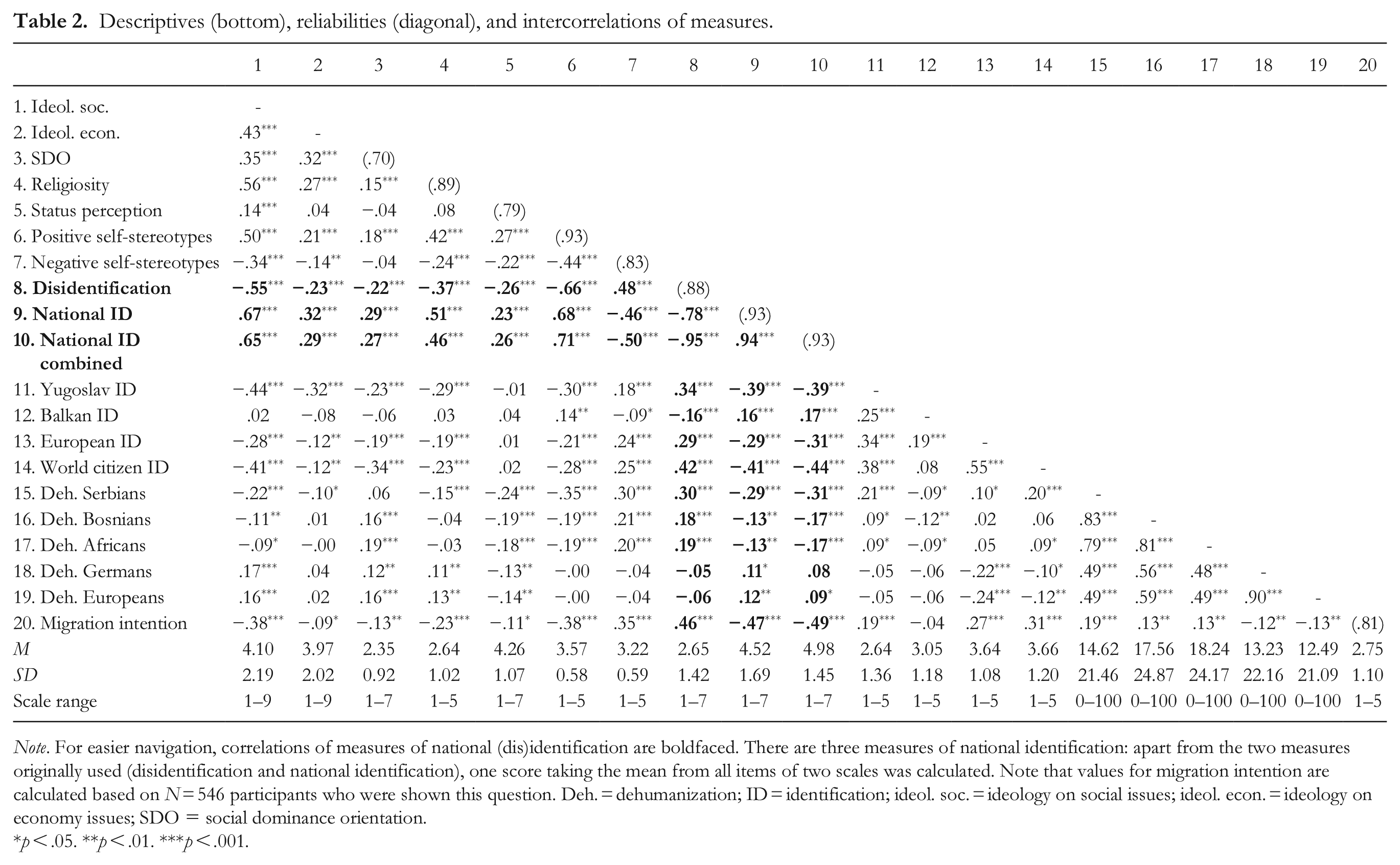
Note. For easier navigation, correlations of measures of national (dis)identification are boldfaced. There are three measures of national identification: apart from the two measures originally used (disidentification and national identification), one score taking the mean from all items of two scales was calculated. Note that values for migration intention are calculated based on N = 546 participants who were shown this question. Deh. = dehumanization; ID = identification; ideol. soc. = ideology; ideol. econ. = economy; SDO = social dominance orientation.
p < .05. **p < .01. ***p < .001.
Results
As in Study 1, we were interested in whether we would find the difference between national identification and disidentification. Similarly to Study 1, the correlation between the scales was high (r = −.78). Exploratory factor analysis (minimum residual method, promax rotation) on all items of the two scales yielded a single-factor solution (62% variance explained). Same as in Study 1, this suggested that the scales measured the same concept, so we again calculated one score of national identification. Indeed, the correlation patterns (see Table 2) of disidentification, national identification, and the combined score with other measures were identical for all three measures. Therefore, for the remainder of our analyses, we only used the combined score of national identification (higher scores indicated higher national identification).
To test the proposed model, we again conducted a path analysis in which worldviews (social and economic ideology, SDO, religiosity) and ingroup evaluations (status perceptions, positive and negative self-stereotypes) predicted national identification, which in turn predicted identification with broader identities (Yugoslav, Balkan, European, world citizen), dehumanization of different groups (Serbians, Bosnians, Africans, Germans, Europeans), and migration intentions. As in Study 1, we controlled for sociodemographic variables (sex, age, education, subjective SES) by including them as predictors of national identification. The model showed an acceptable fit (RMSEA = .08, SRMR = .06, CFI = .92, TLI = 0.88); the results are shown in Figure 4. As in Study 1, right-wing ideology on social issues, as well as more positive (strongest antecedent; zs = 2.235, ps < .05) and less negative self-stereotypes were associated with higher national identification (note religiosity was not, unlike in Study 1). In addition to this, more positive status perceptions and higher SDO predicted higher national identification. Regarding consequences, those who identified more as Serbians were less inclined to take broader identities such as Yugoslav, European, and world citizen, but more so than the “Balkan” identity. National identifiers also showed much lower intention to emigrate. 3
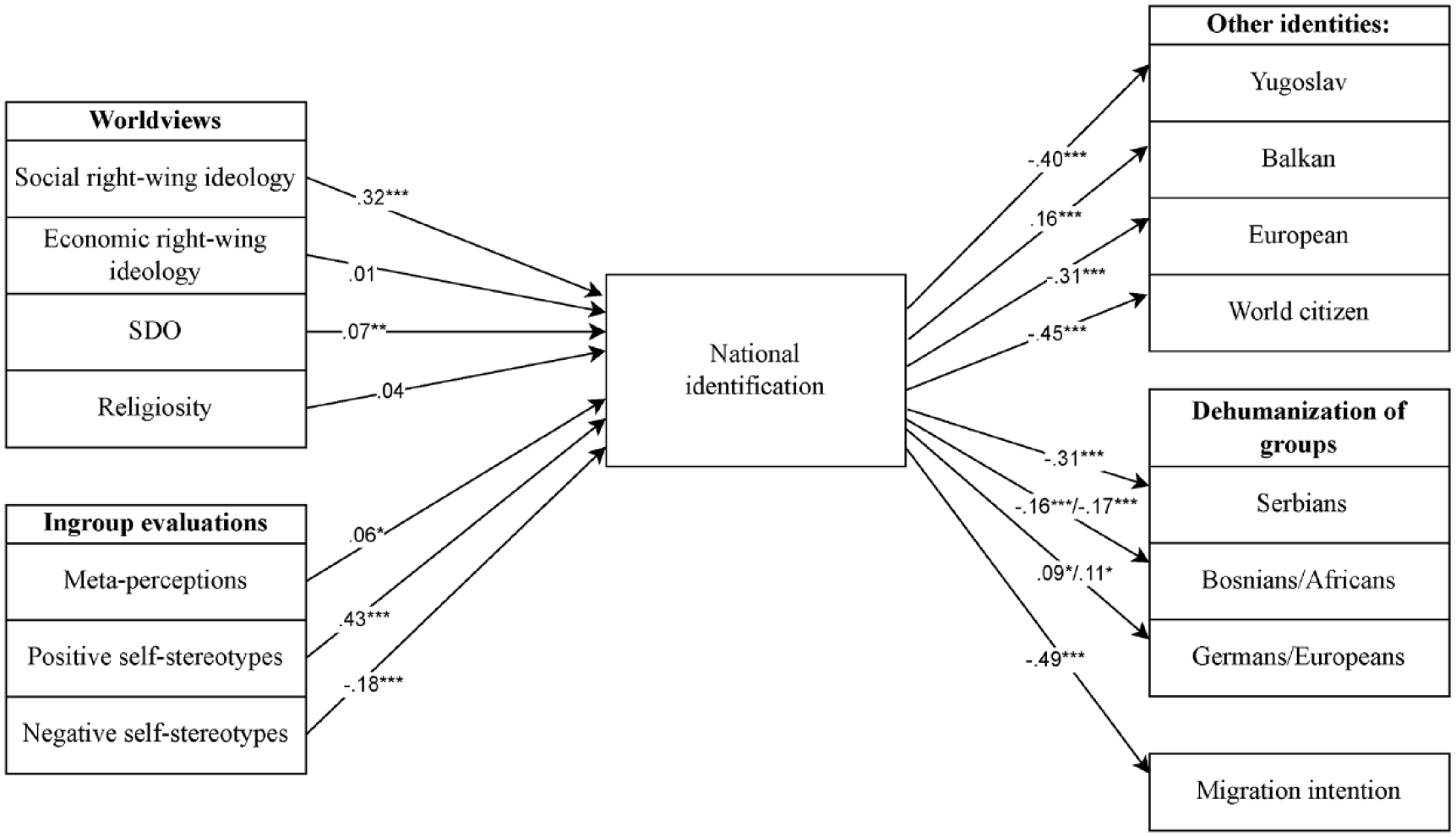
Path analysis in which worldviews and ingroup evaluations predict national identification, which in turn predicts identification with wider identities, dehumanization of groups, and migration intention (controlling for sociodemographic variables as predictors).
National identification and dehumanization of the ingroup and outgroups
We also replicated dehumanization patterns from Study 1: national identifiers dehumanized high-status outgroups more (Germans and Europeans), but did the opposite for similar or lower status outgroups (Bosnians and Africans; compared to Study 1, this relationship was significant). Most interestingly, lower national identification was associated with higher dehumanization of national ingroup members (Serbians). Therefore, there was again an interaction between national identification and the target group (βs > .397, ps < .001, for the interactions between national identification and Serbian vs. German, and Serbian vs. European target group). That is, national identification was associated with higher dehumanization of Europeans and Germans, but with lower dehumanization of Serbians (see Figure 5). As in Study 1, low national identifiers’ derogation of the ingroup (β = −.308) was stronger than high identifiers’ derogation of outgroups (βs = .089 and .107 and zs = 3.776 and 3.466, respectively; ps < .001).
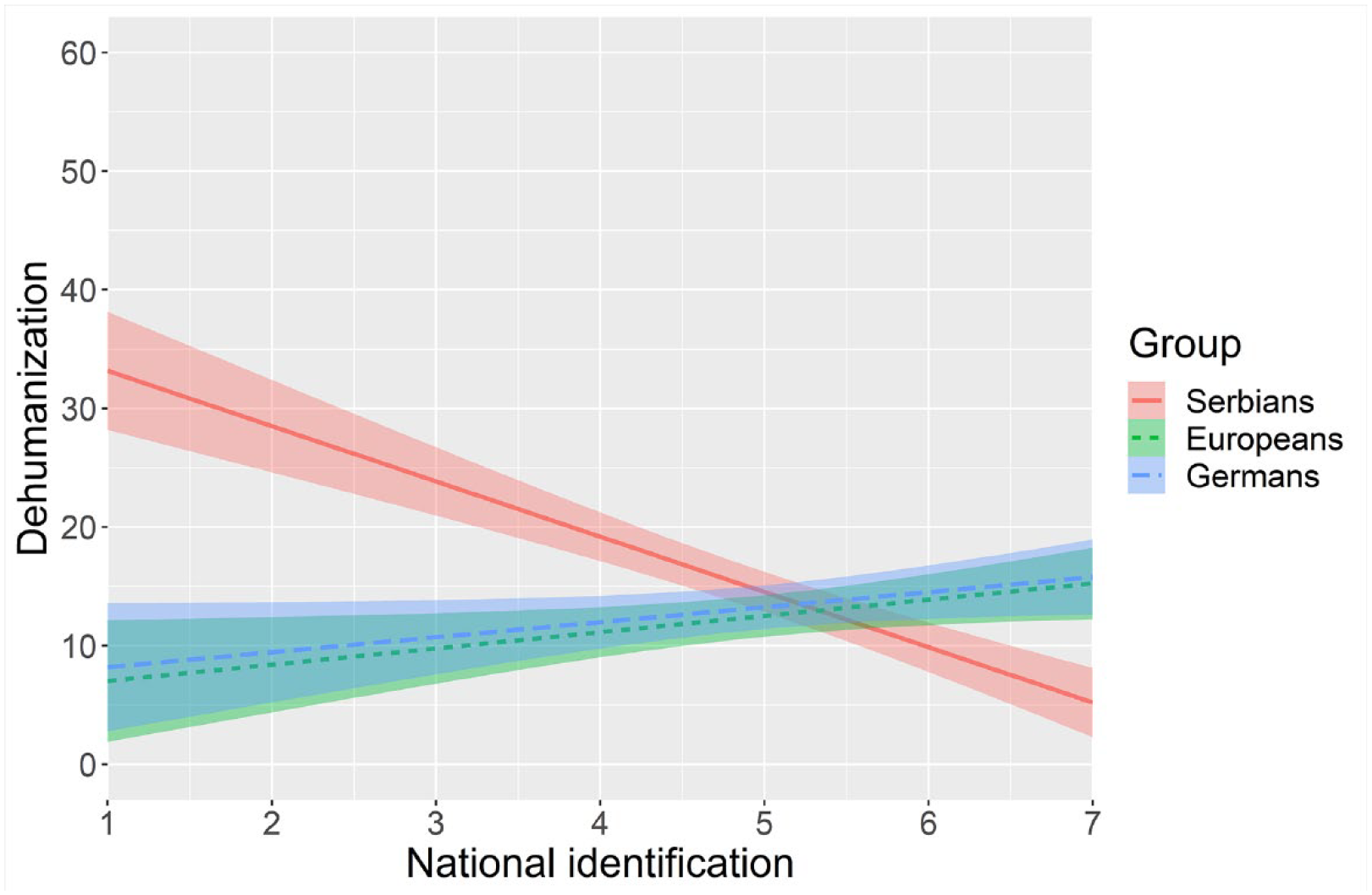
Interaction between national identification and target national groups on dehumanization. Individuals low in national identification dehumanized ingroup members (Serbians), while individuals high in national identification dehumanized outgroups (Germans and Europeans). However, the former did so more strongly than the latter.
General Discussion
In the present research, we investigated whether disidentification and (low) identification can be differentiated in the context of national social identities, as well as their antecedents and consequences. Across two studies, we found no evidence to distinguish between national identification and disidentification, despite using two different measures of disidentification. Regarding the antecedents, we consistently found that national identification stems from more positive (strongest antecedent) and less negative self-stereotypes, and right-wing ideology on social issues. Regarding the consequences, high national identifiers tended to dehumanize high-status outgroups (Germans and Europeans). On the other hand, low national identifiers endorsed other wider identities (Yugoslav, European, world citizen) and engaged in higher dehumanization of the ingroup (Serbians), which was stronger than identifiers’ dehumanization of outgroups. They also indicated a higher intention to migrate from the country. Our qualitative analysis further illustrates our quantitative conclusions—individuals reject their national identity because they disassociate themselves from other ingroup members who are seen as more prototypical of the current version of what it means to “be Serbian.” These individuals also engaged in dehumanization of ingroup members who they believed matched such a prototype.
(Dis)identification: The concept, antecedents, and consequences
One of the most important questions is whether it is possible to distinguish between low identification and disidentification, which is an idea that is getting increased support in the literature as a distinction is made between active rejection and passive indifference to social group membership (Becker & Tausch, 2014; Matschke et al., 2023). We did not observe the distinction in either of our studies: national identification and disidentification were highly correlated, their items loaded on a single factor, and their correlation with other constructs was identical (with an opposite sign) despite using two different measures of disidentification and administering them farther away in Study 2.
Why could we not distinguish between national identification and disidentification? We can think of at least three reasons. First, some studies on disidentification (e.g., Bierle et al., 2019; Matschke & Sassenberg, 2010) did not include both measures and could not, therefore, investigate the distinction between the two. Secondly, literature that finds this distinction usually uses identities (e.g., student or organizational identities; Ikegami & Ishida, 2007) that are acquired rather than ascribed. Joining a university or an organization is often a choice (societal pressures and constraints aside), whereas being born into a particular national ingroup is not. Future research could test this assumption by conducting more research on disidentification/low identification in ascribed identity contexts (such as ethnicity and gender identities).
Relatedly, literature that investigated national disidentification explored the disidentification of an implicit ingroup minority in a superordinate context that serves as “the” ingroup (e.g., Muslims in Western Europe; Maliepaard & Verkuyten, 2018). In this sense, it could be the context of the group dynamics that matters: when there is a clear possibility of trade-off (e.g., an ethnic minority in a national context), disidentification might be different from identification because psychologically leaving the group is easier. In our case, the people who might want to “disidentify” from being Serbians would still (a) continue to be in Serbia and (b) continue to be seen by others as Serbians; thus, this becomes low identification because disidentification is not possible. This would suggest that disidentification might not be separable from identification in the majority context. This is potentially the case because alternative lower order identities are interlinked with the national identity in meaningful ways (i.e., religious identity, ethnic identity), and thus no salient alternative identity that can be separated from the national ingroup is available. This would explain why higher order recategorization occurs. Future research should investigate such interpretation by including both measures in the study, especially in contexts where ingroup members form part of a majority in a social category context (e.g., with other nationalities, or racial disidentification among White people), preferably with nonstudent samples.
On the other hand, findings regarding antecedents and consequences fit well with the social identity approach: individuals have low national identification because they see a mismatch between themselves and the prototype of the group, which reflects negative evaluations and a more right-wing/conservative identity. In such circumstances, low identifiers are likely to attempt individual mobility strategies by endorsing other, wider identities (e.g., European, world citizen), or by even physically leaving the group (migration intention).
Most strikingly, low identifiers engaged in blatant dehumanization of the ingroup. This is very surprising given that dehumanization has always been studied in the context of outgroup derogation (Haslam & Stratemeyer, 2016). These findings resemble the black sheep effect—the phenomenon that norm-deviating ingroup members are judged more harshly than comparable outgroup members (Marques et al., 2001; Marques & Paez, 1994). However, an important difference is that, in our context, those who engage in ingroup derogation are a minority, that is, low identifiers who consider themselves different from the prototype (i.e., the majority). That is, unlike the black sheep effect, norm violation is not driving the effect we discovered. One possibility to explain the dehumanization of the ingroup is by drawing on low identifiers’ perceptions of the prototypical members. As we already noted, low identifiers have a negative perception of the ingroup—it ranges from specific stereotypes (e.g., corrupt, dirty) to more general social evaluations (low warmth and competence). According to the stereotype content model (Cuddy et al., 2007), perceptions of low warmth lead to active harming tendencies (e.g., harassment, bullying, hate crimes), while perceptions of low competence lead to passive harming tendencies (e.g., neglect, exclusion). Combining both of these perceptions (low warmth and competence) generally leads to the emotions of contempt and disgust (Cuddy et al., 2007), which are indeed central characteristics of animal dehumanization (Haslam, 2006). Therefore, negative perceptions of the ingroup could explain their dehumanization. However, as we noted, an important contribution of the present study is that dehumanization is not limited to outgroup members but can occur within the ingroup as well.
Low national identification and structural theoretical approach
The explanations given above reside on a relatively lower (individual and within-group) level of interpretation and therefore do not account for group-level or more structural causes and consequences. More broadly, frameworks of system justification theory (Jost, 2020) and the decolonial perspective (e.g., Adams et al., 2015; Fanon, 1952; Readsura Decolonial Editorial Collective, 2022) could help illuminate our findings. According to these frameworks, hierarchical structural arrangements (e.g., differences in countries’ wealth) produce stereotypes (e.g., populations of some nations are more competent than others) that justify such structures. In this way, low-status groups can internalize negative self-stereotypes, rationalizing their inferior position within the system. This can result in phenomena such as colonial mentality (David & Okazaki, 2006), internalized oppression (David, 2013), and self-hate (Lewin, 1948), all of which have high conceptual overlap with disidentification (or low identification in the present research). 4 Such a theoretical framework helps to additionally illuminate our findings: for low-status (national) groups, low identification could serve to maintain the status quo (e.g., by increasing the emigration rate and reducing the probability of collective action). Serbia certainly is lower in status compared to many other (mostly Western) European countries; and indeed, it was the internalization of self-stereotypes that was the most important antecedent of national identification.
Practical Implications
The structural approach outlined above also helps to understand not only antecedents but also consequences of low national identification, and their practical significance. In our study, we discovered that low national identification can have detrimental consequences for the ingroup: it was strongly associated with migration intentions, which, for Serbia, brings huge socioeconomic losses (Radonjić & Bobić, 2021). Apart from migration intentions (which are most prevalent among young and educated individuals), another detrimental consequence was ingroup dehumanization. Although the implications of how ingroup dehumanization translates to behavior towards the group are still unclear, dehumanization is known to be one of the most negative psychological processes. As such, ingroup dehumanization could indicate other issues consequential for the group, such as more harming and less helping behavior toward group members (Becker & Tausch, 2014), as well as lower chance to take collective action to improve the conditions of the group (e.g., van Zomeren et al., 2008). In this way, at least partially, low identification could be responsible for maintaining the status quo at the structural level.
These negative consequences of low identification stand in stark contrast with the negative consequences of high national identification. As previously mentioned, a lot of work in social sciences has focused on the negative aspects of high national identification, ranging from negative stereotypes and prejudice to intergroup hostilities or even intractable conflicts (e.g., Druckman, 1994; for a distinction between blind and constructive patriotism, see Schatz et al., 1999) . Therefore, the answer in relation to the benefits and dangers of low and high national identification largely depends on the context—national identification has facilitated anticolonial and liberation struggles on the one hand, and colonial wars and genocide on the other; thus, its endorsement is conditioned on where it occurs (Zedong, 2000).
Overall, to better understand the concept of low identification (or disidentification), and especially its negative consequences, more work is needed to situate it within broader theoretical frameworks such as the system justification and decolonial perspectives. We believe that our findings provide the first steps in such an endeavor, given that consequences of disidentification indeed serve the hierarchical status quo.
Limitations, Future Research, and Conclusion
The most important limitation of the present studies is their correlational design, which does not allow us to make causal conclusions. However, many of the variables in the present research are more stable worldviews and traits (e.g., religiosity, political ideology), which can be very difficult (or even impossible) to manipulate. Additionally, an experimental approach would allow us to investigate the impact of only one of the variables, which is too premature given the topic remains largely unexplored. Future research should therefore investigate how these and other potential antecedents and consequences relate to the phenomenon of disidentification in other countries. Specifically, it could aim to understand the strikingly strong association between low national identification and ingroup dehumanization. As for other antecedents, an obvious candidate would be system justification tendencies, which would also improve the theoretical work that we previously mentioned was lacking.
In conclusion, we found that low national identification can have grave consequences for the national group, as evidenced by higher dehumanization of the ingroup and tendencies to leave the group. A better understanding of the negative aspects of low national identification, especially in non-Western and/or developing countries, would lead to the recognition and possibly prevention of these detrimental consequences.
Supplemental Material
sj-docx-1-gpi-10.1177_13684302241229981 – Supplemental material for Active rejection or passive indifference? Mixed-methods evidence on national (dis)identification
Supplemental material, sj-docx-1-gpi-10.1177_13684302241229981 for Active rejection or passive indifference? Mixed-methods evidence on national (dis)identification by Vukašin Gligorić and Sandra Obradović in Group Processes & Intergroup Relations
Footnotes
Acknowledgements
We would like to thank Marija Petrović for her suggestions and comments on the manuscript.
Funding
The author(s) disclosed receipt of the following financial support for the research, authorship, and/or publication of this article: Parts of data collection for this study were funded by Vukašin Gligorić’s personal funds.

Supplemental material
Supplemental material for this article is available online.
Notes
References
Supplementary Material
Please find the following supplemental material available below.
For Open Access articles published under a Creative Commons License, all supplemental material carries the same license as the article it is associated with.
For non-Open Access articles published, all supplemental material carries a non-exclusive license, and permission requests for re-use of supplemental material or any part of supplemental material shall be sent directly to the copyright owner as specified in the copyright notice associated with the article.
