




Abstract
Previous research from the United States suggests that having voted for a losing-side candidate in presidential elections is associated with individual feelings of exclusion and social pain, reactions usually observed in interpersonal or small-group instances of exclusion. The current research replicates these findings for voters of losing-side parties in a field study on a real election in a European country (Austria; Study 1), demonstrating that findings hold within a different political system. Moreover, we add experimental support for the causal effect of electoral loss on feelings of exclusion and social pain reactions in a two-party (Study 2) and a multiparty context (Study 3). We further extend previous research by demonstrating that postelectoral need-threat likely translates into behavioral intentions on a societal level (Studies 1–3). The current findings add to an emerging line of research on the importance of individual feelings of exclusion in politics by integrating small-group research with macropolitical behavior.
Within pluralistic democratic societies, election outcomes not only determine the victory or defeat of politicians or parties, but equally create camps of “winners” and “losers” among the electorate. Learning that the party one voted for lost can evoke intense negative feelings. Multiple studies have documented the dismay among Clinton supporters in the aftermath of the U.S. election in 2016, when Trump prevailed over his opponent to become the new president. For example, Clinton supporters reported high levels of distress when remembering the election (Chiew et al., 2022) and used trauma-related metaphors when describing their feelings toward the loss (Carmack & DeGroot, 2018). These negative feelings can further be accompanied by unfavorable behavioral intentions, such as increased hostility toward political opponents (Oc et al., 2018) or lowered tax compliance intentions (Hunt et al., 2019).
While voters’ negative emotional states following electoral defeat are likely to be a multicausal phenomenon, first empirical evidence suggests that feelings of social exclusion may be a contributing factor. Losing-side voters might experience a form of vicarious exclusion. Although they did not personally lose the election, a representative of their opinions was rejected by society. Indeed, qualitative work releveled that Clinton supporters reported being emotionally hurt and referenced the loss of a personal relationship to put their political grief into words (DeGroot & Carmack, 2021). Additionally, quantitative survey studies on U.S. presidential elections revealed correlational evidence on social pain reactions among losing-side voters resembling those induced by interpersonal experiences of exclusion (Claypool et al., 2020; Salvatore et al., 2021; Young et al., 2009).
In the current project, we aimed to replicate that losing-side voters experience electoral loss as a form of social exclusion in a European context. Results from a field study confirm that the reported effects from the United States are stable in a different cultural and electoral system (Study 1). Moreover, we add experimental support for the causal effect of electoral loss on feelings of exclusion and social pain reactions within a two-party (Study 2) and a multiparty system (Study 3). We further extend previous findings by demonstrating that postelectoral need-threat translates into pro- and antisocial behavioral intentions on a societal level (Studies 1–3).
Theory on Social Exclusion
Feeling socially connected and accepted by others is a fundamental human need and represents a central component of individual well-being (Baumeister & Leary, 1995). Being socially excluded, whether in the form of being ignored (i.e., ostracism) or being rejected, is a painful emotional experience (Wesselmann et al., 2016, 2019). In more than 30 years of research, social psychologists have demonstrated how individuals respond to experiences of social exclusion. According to the temporal need-threat model (Williams, 2009), individuals initially react reflexively with social pain, including an increase in negative affect; a decrease in positive affect; and a deprivation of the fundamental needs for belonging, self-esteem, control, and meaningful existence (Gerber & Wheeler, 2009; Williams, 2009).
Within a second reflective stage, individuals evaluate the significance and meaning of the exclusionary experience. This phase is marked by a variety of behavioral responses, which are thought to serve as coping mechanisms aimed at restoring threatened fundamental needs (Williams, 2009). Specifically, excluded individuals sometimes display affiliative behaviors, such as increased conformity (Williams et al., 2000), compliance (Carter-Sowell et al., 2008), and a tendency to seek out new relationships, particularly if chances of reinclusion are high (Maner et al., 2007). However, research suggests that social exclusion likely dampens prosocial behavior directed to the welfare of others, including helping or rewarding behaviors (Quarmley et al., 2022; Twenge et al., 2007). Individuals also respond aggressively toward the perpetrators of exclusion through negative evaluations or administration of aversive noise (Twenge et al., 2001). Social exclusion further fuels undifferentiated aggression and antisocial tendencies toward uninvolved targets. For example, excluded individuals possess a hostile cognitive mode (DeWall et al., 2009), exhibit more negative attitudes toward minorities (Aydin et al., 2014), and show more engagement in unethical (Kouchaki & Wareham, 2015) and dishonest behaviors (Poon et al., 2013). Finally, if individuals experience exclusion over extended periods and their coping mechanisms become depleted, they might enter a final stage of resignation, marked by profound negative feelings such as alienation, helplessness, and depression (Riva et al., 2017; Rudert et al., 2021; Williams, 2009).
Given these wide-ranging negative effects, it is reasonable that humans are highly sensitive to even minimal signs of exclusion. Subtle phenomena like averted eye gaze (Wirth et al., 2010) or interaction partners’ lack of facial mimicry (Kouzakova et al., 2010) can evoke a sense of exclusion. The detection of potential exclusion is not necessarily influenced by rational characteristics or consequences of the exclusionary experience. For example, individuals display social pain even when they know the excluding party is a nonhuman, computerized agent (Zadro et al., 2004). A seminal line of research further suggests that watching another person being excluded is sufficient to trigger feelings of exclusion.
Vicarious Exclusion
Vicarious exclusion 1 describes the phenomenon that observing someone being excluded elicits similar affective, neural, and behavioral tendencies as if the witnessing individuals themselves had been excluded (Giesen & Echterhoff, 2018; Poon et al., 2020; Wesselmann et al., 2013). Explanatory approaches largely rely on the assumption of an automatic empathic response in observers, often linked to an evolutionary adaptive function perspective (Paolini et al., 2017; Wesselmann et al., 2009). However, neural reactions to vicarious exclusion differ depending on the relationship between victim and observer. For example, activation of neural pain intensifies with increasing relationship closeness (Beeney et al., 2011). While watching a stranger being excluded activated brain regions associated with mentalizing, a friend’s exclusion stimulated emotional pain regions observed in first-hand experiences of exclusion, and this was correlated with perceived self–other overlap (Meyer et al., 2013). Thus, when witnessing the exclusion of a close other, it is still not oneself being excluded, but someone representing important parts of one’s identity.
If perceived similarity and identification with victims play an important role in feelings of vicarious exclusion, it is reasonable that effects can also occur for targets with whom individuals have no personal relationship but still share meaningful parts of their identity. Social identity theory (Tajfel, 1982; Tajfel & Turner, 1979) suggests that besides individual characteristics, identification with broader social groups can represent an important part of human self-concept (i.e., social identity). As these groups reflect aspects of oneself, people are motivated to maintain the ingroup’s welfare, to strive for a positive group image, and to seek favorable comparisons against different groups (i.e., outgroups; Tajfel, 1982; Tajfel & Turner, 1979).
In political contexts, party preference or voting behavior is often considered an expression of an individual’s attitudes. However, political camps can also form an emotionally significant group affiliation and identity (e.g., Greene, 2004; Iyengar et al., 2012, 2019). Empirical evidence suggests that social identity processes drive increasing division and affective polarization between political camps besides (e.g., Hernandez et al., 2021; Lelkes, 2021) or even above content-based ideological disagreements (Dias & Lelkes, 2022). This aspect is likely to become even more pronounced during elections, as they take place in an intergroup context (i.e., the ingroup party is competing against outgroup parties), and thus make one’s social identity as a political group member specifically salient (Hernandez et al., 2021; Singh & Thornton, 2019). Hence, if one’s preferred candidate or party loses an election, the electorate has rejected a part of one’s social identity. Research on how political events like elections influence feelings of exclusion, however, is rare.
Vicarious Exclusion in the Context of Political Elections
Three survey studies investigated the outcomes of presidential elections in the United States (in 2008, 2016, and 2020). They consistently showed that supporters of the losing candidate indicated higher social pain (i.e., higher need-threat, more negative mood), especially if they felt close to the candidate (Claypool et al., 2020; Salvatore et al., 2021; Young et al., 2009). This effect was observed in pre- and postelection measurement designs and seems independent of the winner’s political ideology (Republican vs. Democrat). Although these findings provide initial evidence to suggest that electoral loss is experienced as exclusion, further research is needed to determine the generalizability and relevance of this phenomenon in different contexts. We aim to contribute to this stream of research by (a) investigating the effects in a different political system, (b) additionally using a systematic experimental approach, and (c) extending previous measures to examine pro- and antisocial behavioral intentions.
First, previous studies on electoral loss and exclusion were conducted exclusively in the United States. Research suggests that the type of electoral system can differently impact voters’ perceptions of winning and losing (Plescia, 2019), and might further shape reactions toward electoral defeat (Best & Seyis, 2021; Hooghe & Stiers, 2016). Within the US, two major parties have traditionally dominated the political landscape; the presidential electoral system follows a plurality voting (i.e., “the winner takes it all” principle) and is nowadays strongly oriented towards individual candidates (e.g., Campbell, 2007; Plasser & Plasser, 2002). In contrast, most European countries have a party-centered electoral system where multiple parties reflect a more nuanced spectrum of programs and ideologies (e.g., Esser & Hemmer, 2009; Plasser & Plasser, 2002). Elections there frequently include proportional voting, often resulting in multiparty coalition governments. Even if a preferred party does not enter the government, parties with fewer vote shares still gain representation in the parliament, corresponding to their received votes. Thus, multiparty proportional voting systems imply less of a zero-sum logic in winning versus losing than a plurality-based two-party system. Accordingly, research has shown that the winner–loser gap tends to be smaller (e.g., concerning satisfaction with democracy; Anderson & Guillory, 1997; Anderson et al., 2005) or might even be nonexistent in proportional systems (e.g., concerning political trust; Hooghe & Stiers, 2016). However, when it comes to the experience of exclusion as a consequence of electoral loss, literature on interpersonal instances of exclusion would suggest that effects should be present regardless of the political system in place. Specifically, based on individuals’ high sensitivity to signals of exclusion, it has been shown that immediate reactions to exclusion are relatively unmoderated by contextual factors or potential consequences of the exclusionary experience (e.g., van Beest & Williams, 2006; Williams, 2009). Whether this finding holds true within the realm of political elections, however, remains to be examined.
Secondly, aside from cultural-political limitations, previous findings are exclusively based on survey studies. While such research comes with high external validity and environmental realism, it is also prone to potential confounding variables. It cannot be ruled out that contextual factors (e.g., political climate) additionally influenced findings. For example, antipathy toward outgroup parties has grown more steeply; and polarized dissent between rival parties has grown most steeply in the United States compared to 19 other Western democratic countries during the last decades (Gidron et al., 2020). Under some circumstances, it might also be the case that individuals who already feel a sense of social exclusion be more likely to vote for a losing side. For example, those who hold a societal minority position could be more likely to vote for parties that better represent their specific interests, which, however, might have fewer chances of entering a government compared to parties appealing to a larger mass of people. While investigations in different political systems and pre–post measurements can help to attenuate some of these concerns, experimental research allows to capture effects isolated from possible confounds. Thus, complementing correlation findings with experimental evidence would help to compensate for the shortcomings in both research designs and allow to draw more robust conclusions.
Third, previous studies have only considered social pain reactions (i.e., negative mood and need-threat) as a consequence of experiencing electoral loss as a form of exclusion. Thus, previous research has solely covered reactions from the reflexive stage in response to exclusion. Yet, as outlined by the temporal need-threat model, postexclusionary need-threat likely translates into coping behaviors that can yield destructive interpersonal consequences, such as increased antisocial and decreased prosocial tendencies (Ren et al., 2018; Williams, 2009). However, most findings from the social exclusion literature on pro- and antisocial intentions rely on interpersonal or small intergroup-directed behavior, where the sources of exclusion are usually concrete, identifiable entities. If individuals experience a sense of exclusion in the face of electoral loss, exclusion plays out on a larger scale societal level, and thus, the source of exclusion is more abstract (e.g., individuals could feel excluded from the electorate, society, or the state). Under such circumstances, feeling excluded as a citizen might trigger behavioral intentions on a more abstract level through interpersonal behavioral intentions against other citizens, or civic behaviors that are not directed toward specific individuals or groups but impede the well-being and prosperity of society and the state (e.g., tax evasion).
While there is some evidence that electoral loss can fuel antisocial tendencies such as hostility toward political opponents (Oc et al., 2018) or tax evasion (Hunt et al., 2019), it has not yet been investigated whether these might stem from losing-side voters’ sense of exclusion and related need-threat. Additionally, we are unaware of studies that have investigated a decrease in voters’ prosocial tendencies as a negative but less extreme consequence of electoral loss, an outcome likely to emerge when considering electoral loss as a form of exclusion. Extending previous findings by including behavioral intentions could advance our understanding of whether experiencing electoral loss as a form of exclusion yields broader societal consequences that extend beyond the individual level.
The Current Research
We conducted three studies to contribute to filling the gaps occurring in the current literature. First, to test whether findings from the United States replicate within a different political system, we investigated the effects of a real election in a European country (Austria) on feelings of being excluded and social pain reactions (i.e., threat to the fundamental needs; positive and negative affect) with a pre–post measurement survey design (Study 1). To provide a causal validation that electoral loss is experienced as a form of exclusion, we experimentally manipulated whether a preferred party won or lost an election within a two-party (Study 2, Austrian sample) and a multiparty context (Study 3, German sample), using an imaginative scenario paradigm on a fictitious country. Additionally, to investigate whether need-threat would translate into behavioral responses, similar to findings from interpersonal instances of exclusion, we assessed unfavorable behavioral intentions on a societal level across our studies, either in the form of increased antisocial (Studies 1–3) or decreased prosocial intentions (Studies 2–3).
In line with previous research, we hypothesized that electoral loss would be experienced as a form of social exclusion. Thus, we expected that electoral loss (vs. victory) would lead to higher feelings of exclusion among voters (H1a) and trigger social pain reactions in the form of higher need-threat (H1b) and an increase in negative as well as a decrease in positive affect (H1c). Extending previous research, we further hypothesized that postelectoral need-threat would mediate an increase in antisocial (H2a) and a decrease in prosocial (H2b) intentions on a societal level.
All studies followed ethical principles under the Declaration of Helsinki. Materials and data of all studies are openly available at the Open Science Framework (https://osf.io/nbf5z/?view_only=ce7c9311970542c39582071d79abd61f).
Study 1: Real Election
Method
Participants and design
We implemented a two-wave online survey on the 2017 national election in Austria, possessing a multiparty-centered and proportional voting system. A representative sample (regarding age and gender) was recruited via a market research agency (Respondi). Data were collected 3 days before and after the election. From the initial 331 participants, 282 also participated in the second wave (Mage = 41.7, years SD = 14.0, range: 18–72 years; 50% female). No participants that completed the questionnaire were excluded. A sensitivity power analysis (ANCOVA; α = .05) revealed our sample provided 80% power to detect a group difference (victory vs. loss) effect size of η2 = .02.
We assessed all measures before (T1) and after the election (T2). As independent variable, we coded election outcome (victory vs. loss) based on whether (n = 124) or not (n = 158) the party entered the government. 2 This classification is supported by a significant difference in satisfaction with the election result, F(1, 280) = 109.67, p < .001, η² = .28. Voters in the loss condition indicated lower satisfaction (M = 2.70, SD = 1.57) compared to the victory condition (M = 4.71, SD = 1.63). They also expressed lower trust in the future government (M = 2.85, SD = 1.15) than voters in the victory condition (M = 4.16, SD = 1.40), F(1, 280) = 74.75, p < .001, η² = .21.
Materials and procedure
At T1, after obtaining informed consent, we started with demographic data and an attention check. Next, participants were informed about the upcoming election and were motivated to think about it using some questions (e.g., whether they would vote, which party they would vote for). Then, participants were asked to assess their current situation as a citizen of their country directly before the election. To capture social pain, we measured negative (e.g., sad, depressed) and positive (e.g., happy, satisfied) affect (nine items adapted from Brunstein, 1993), as well as need-threat (adapted from Zadro et al., 2004) with 7-point scales (1 = not at all, 7 = very much/extremely). Need-threat was measured with 11 items comprising the subscales for belonging, self-esteem, meaningful existence, and control, with higher values indicating a higher need-threat. Within the scale on affective reactions, we included three items to assess feelings of exclusion (i.e., alone, excluded, lonely).
Subsequently, to capture antisocial behavioral intentions on a societal level, we assessed antisocial civic engagement, covering engagement in behaviors that impede well-being and prosperity of society and the state. Specifically, participants indicated how likely it was that they engaged in various behaviors in the last year (seven self-designed items: evading taxes, claiming private invoices on tax returns, doing undeclared work, using undeclared work, cheating social welfare, taking vacations abroad, considering emigration; 0% = not likely, 100% = very likely). Finally, participants provided their sociodemographic data.
At T2, all measures were determined in relation to the current situation after the election. We first showed a graph with the election results to the participants and asked them whether they had voted; if they answered “yes,” we asked them for which party they voted. In addition, satisfaction with the election results was assessed (1 = not satisfied at all, 7 = very satisfied). Afterwards, affective reactions, feelings of exclusion, need-threat, and likelihood of antisocial civic engagement in the next year were measured. Finally, participants indicated their trust in the government (adapted from Hofmann et al., 2017; α = .92; 1 = strongly disagree, 7 = strongly agree) and were subsequently debriefed.
Results
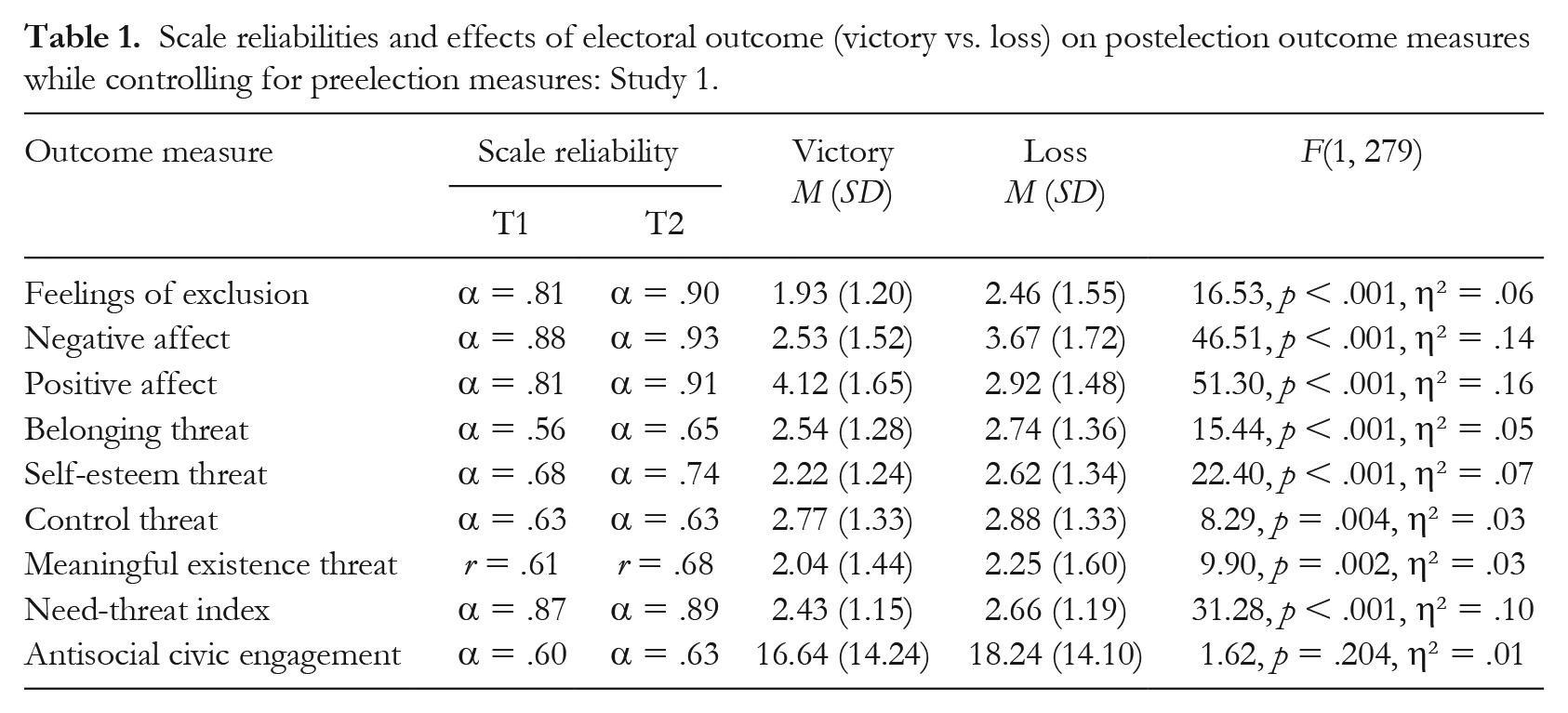
Table 1 presents scale reliabilities, descriptive statistics, and group difference test statistics between the victory and loss conditions for all dependent variables in Study 1.
Scale reliabilities and effects of electoral outcome (victory vs. loss) on postelection outcome measures while controlling for preelection measures: Study 1.
Effects of election outcome on feelings of exclusion and social pain reactions
To investigate whether electoral loss (vs. victory) was associated with higher feelings of exclusion (H1a), need-threat (H1b), and an increase in negative as well as a decrease in positive affect (H1c), we ran separate ANCOVAs with the postelectoral measure as dependent variable and the preelection measure as covariate. As depicted in Table 1, losing-side voters felt more socially excluded, held less positive and more negative affect, and experienced higher need-threat. 3
Effect of election outcome on antisocial behavioral intentions
To test whether electoral loss (vs. victory) was related to more antisocial civic engagement via postelectoral need-threat (H2a), we employed mediation analysis using PROCESS Model 4 (Hayes, 2017) with 5,000 bootstrap samples, using the need-threat index as mediator and controlling for the preelection measures as covariates. 4 Although the total effect of electoral loss on antisocial civic engagement was nonsignificant, b = 0.72, SE = 0.64, t(278) = 1.12, p = .263, 95% CI [−0.54, 1.99], 5 the indirect effect via need-threat was significantly different from zero, b = 0.72, SE = 0.36, 95% CI [0.15, 1.54]. Electoral loss increased need-threat, b = 0.28, SE = 0.05, t(278) = 5.58, p < .001, 95% CI [0.18, 0.38], and higher need-threat was related to more antisocial civic engagement, b = 2.59, SE = 0.76, t(277) = 3.40, p = .001, 95% CI [1.09, 4.09].
Discussion
The results of Study 1 supported our hypotheses that voters experience electoral loss as a form of exclusion. Participants whose party lost showed stronger feelings of exclusion and social pain reactions typically involved in interpersonal instances of exclusion (i.e., need-threat and a decrease in positive as well as an increase in negative affect). Thus, Study 1 was able to replicate findings from the United States (Claypool et al., 2020; Salvatore et al., 2021; Young et al., 2009) in a European context with a multiparty-centered and proportional voting system. Moreover, it provides first evidence that postelectoral need-threat might translate into antisocial intentions on a societal level in the form of civic behaviors that impede prosperity and well-being of society and the state.
While Study 1 contributes to the growing body of research on electoral loss and exclusion, it shares the correlational nature of previous studies. To strengthen evidence, we conducted an experimental investigation in Study 2, examining the effects of winning versus losing in a two-party system in a first step. Furthermore, the measure of antisocial civic engagement might have captured a rather extreme form of antisocial intentions, including several illegal activities (e.g., tax evasion). This was also reflected in our sample’s relatively low level of antisocial civic engagement. Additionally, it might also be the case that antisocial behavioral intentions are more strongly directed toward individuals perceived to be involved in the exclusionary experience. Therefore, we broadened our measures of behavioral intentions in Study 2. Next to assessing antisocial civic engagement, we included a measure of interpersonal antisocial intentions to test whether effects would occur against other societal members (i.e., the electorate). We further included a measure of interpersonal prosocial intentions to capture a decrease in prosocial intentions as a negative but less extreme form of unfavorable behavioral intentions.
Study 2: Election Scenario Experiment in a Two-Party System
Method
Participants and design
In total, 134 Austrian participants were recruited via a market research agency (50.8% women; Mage = 37.79 years, SD = 13.12, range: 18–65). No participants were excluded. In a between-subject design, we manipulated whether participants voted for a losing (loss condition: n = 70) or winning party (victory condition: n = 64) using an imaginative scenario paradigm. A sensitivity power analysis (ANOVA; α = .05) revealed our sample provided 80% power to detect a group difference (victory vs. loss) effect size of η2 = .06.
Materials and procedure
After obtaining informed consent, we started with demographic data and an attention check. Participants were then instructed to imagine living in a fictitious country where government elections were taking place between two opposing parties: A and B. Participants were informed that, based on their evaluation of each party’s program, they had chosen to support Party A due to its alignment with their political interests and actively engage in the election campaign (e.g., through political discussions). The victory (vs. loss) condition was manipulated by telling participants that their party won (vs. lost) the election. To strengthen the manipulation, participants were asked to write down feelings or thoughts they would have in this situation.
As in Study 1, we first measured positive and negative affect, feelings of exclusion, and need-threat. Afterwards, we employed three scales to capture unfavorable behavioral intentions on a societal level. We measured interpersonal behavioral intentions towards all citizens who voted in the election by assessing (a) antisocial intentions (e.g., “I would refuse to work together with these people in the future”) and (b) prosocial intentions (e.g., “I would try to get along with these people”) with three items each (1 = strongly disagree, 7 = strongly agree; adapted from Aydin et al., 2017). As in Study 1, we measured (c) antisocial civic engagement by assessing how likely participants were to engage in specific behaviors in the next year with respect to the scenario described (eight self-designed items). Finally, participants provided sociodemographic data and were subsequently debriefed.
Results
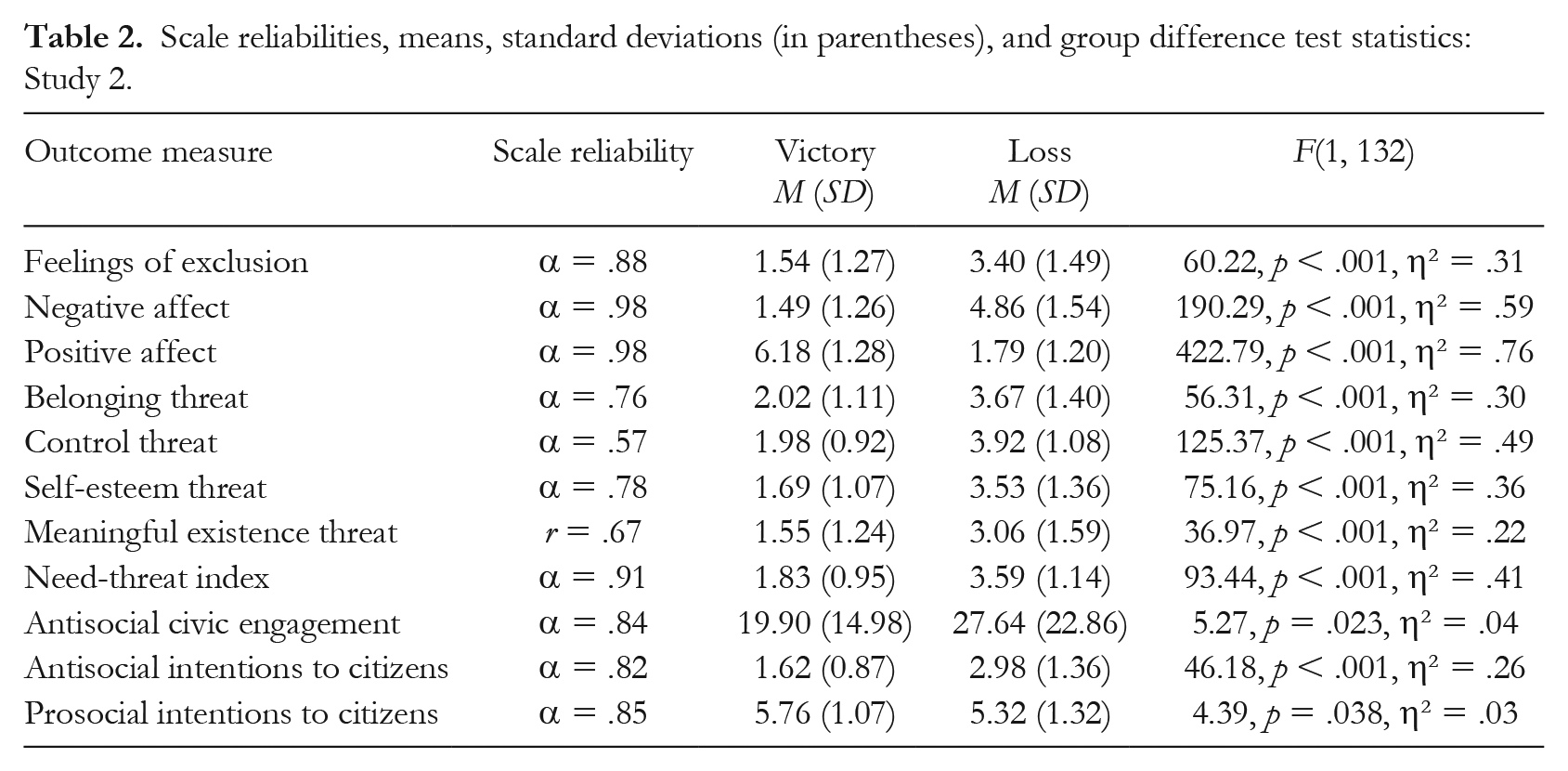
Table 2 presents scale reliabilities, descriptive statistics, and group difference test statistics between the victory and loss conditions for all dependent variables in Study 2.
Scale reliabilities, means, standard deviations (in parentheses), and group difference test statistics: Study 2.
Effects of election outcome on feelings of exclusion and social pain reactions
Separate ANOVAs (see Table 2) revealed that participants in the loss condition felt more excluded (H1a), indicated higher threat to all four fundamental needs (H1b), and reported more negative and less positive affect (H1c) than participants in the victory condition.
Effects of election outcome on behavioral intentions
To test whether election outcome affected any of the behavioral intentions on a societal level via postelectoral need-threat (H2a–b), we employed separate mediation analyses using the need-threat index as mediator and each of the behavioral intention scales as dependent variable (Model 4; 5,000 bootstrap samples). Results revealed that the effect of election outcome on all behavioral intentions was mediated by need-threat (see Table 3 for inferential statistics of all mediation analyses). Electoral loss increased need-threat, which, in turn, was associated with more antisocial and less prosocial behavioral intentions towards other citizens, and higher intentions for antisocial civic engagement.
Results of mediation analyses with need-threat index as a mediator between condition (victory vs. loss) and behavioral intentions: Study 2.
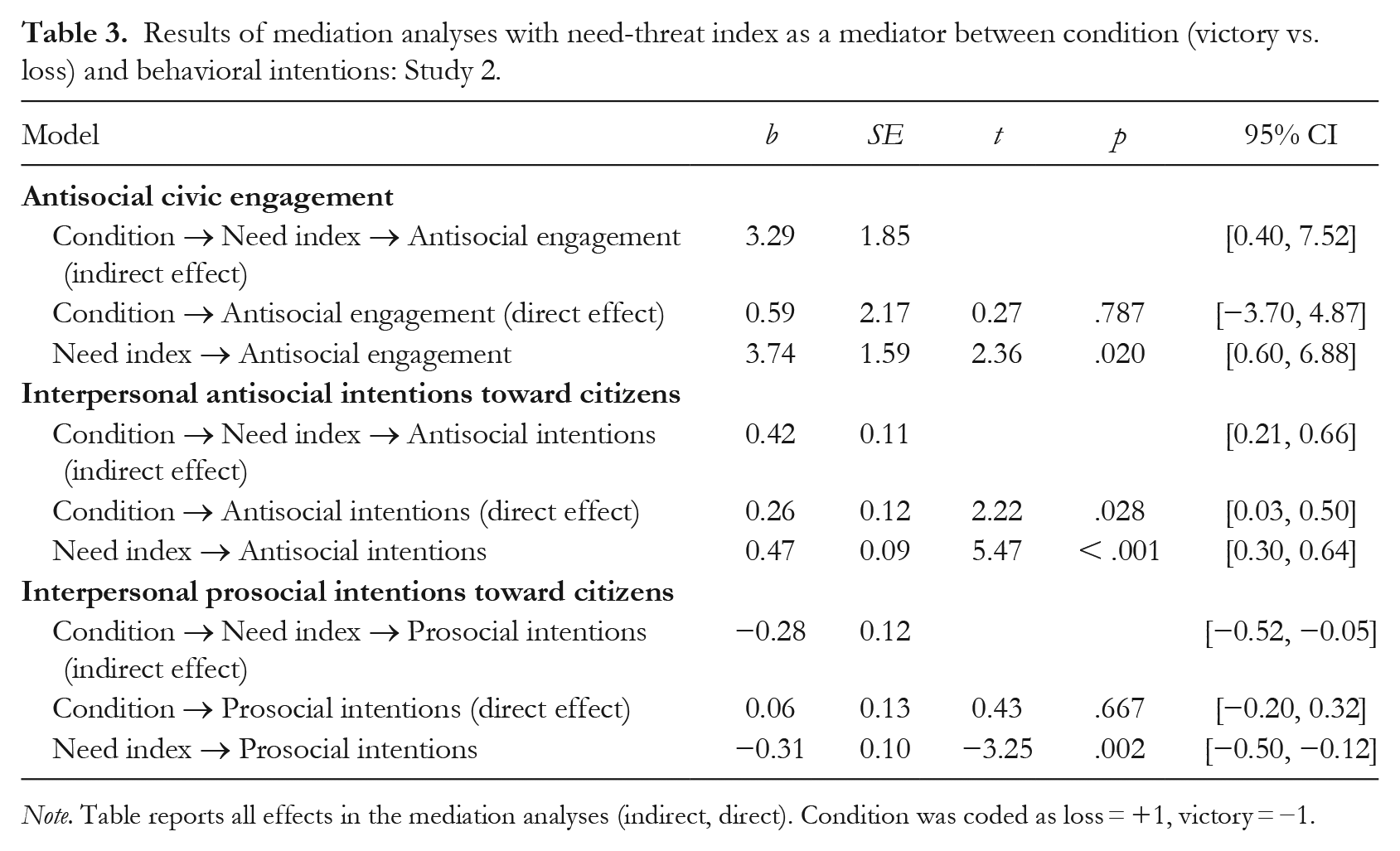
Note. Table reports all effects in the mediation analyses (indirect, direct). Condition was coded as loss = +1, victory = −1.
Discussion
Study 2 presents experimental evidence that voters experience electoral loss as a form of social exclusion. Electoral loss induced feelings of exclusion and social pain reactions among voters, mirroring reactions to interpersonal exclusion. Moreover, the findings provide further support to the hypothesis that postelectoral need-threat contributes to unfavorable intentions on a societal level. Consistent with the results from Study 1, postelectoral need-threat mediated the effect of electoral loss on antisocial civic engagement and, expanding upon the findings of Study 1, on unfavorable intentions toward other societal members, manifested in higher antisocial and less prosocial intentions toward fellow citizens that took part in the voting.
In Study 3, we aimed to extend experimental findings for the case of a multiparty proportional voting system while also addressing several limitations of our previous studies. Specifically, within Study 2, we assessed interpersonal behavioral intentions toward “citizens who took part in the voting.” As a large part of the electorate must have voted for a party to be able to win the election, we considered that losing-side voters might easily project their disappointment and resentment onto a vague and rather undifferentiated abstract construct of other citizens. This might help understand generalized negative attitudes and feelings of alienation from society after an electoral loss as, in practical terms, individuals will usually not know the voting behavior of all societal members. Thus, the source of exclusion could be conceptualized as an unidentified majority of all voters (Rudert et al., 2017). However, when differentiating groups of citizens based on their voting decision, a distinct pattern might emerge, which could also help to explain hardening oppositions and high levels of affective polarization between political camps in the immediate aftermath of elections (e.g., Hernandez et al., 2021). Thus, to evaluate this possibility, we included anti- and prosocial intentions toward separate groups of citizens in Study 3. Moreover, we included an additional measure of prosocial civic engagement to obtain the full spectrum of antisocial and prosocial intentions.
Finally, a further drawback of the former studies was their rather small sample size. Following the simulation studies from Fritz and MacKinnon (2007) on adequate sample sizes for mediated effects, our experimental Study 2 seemed to be adequately powered when considering the sizes we observed for the alpha and beta paths; however, the sample size in Study 1 seemed to be underpowered. To gain further confidence about whether need-threat mediates the effects of electoral loss on behavioral intentions, we thus increased sample size in Study 3.
Study 3: Election Scenario Experiment in a Multiparty System
Method
Participants and design
We followed Fritz and MacKinnon’s (2007) simulation-based guidelines for percentile bootstrap-based mediation analyses to determine sample size. Considering small alpha and beta paths (the lowest effect sizes observed across our studies), a sample size of N = 558 participants is recommended to detect an indirect effect under 80% power. We recruited N = 609 German participants via a market research agency (Mage = 48.91, years SDage = 16.11, range: 18–96 years; 49.6% female, one nonbinary, one missing). No participants that completed the questionnaire were excluded. As in Study 2, we used an imaginative scenario paradigm to manipulate whether participants voted for a losing (loss condition: n = 304) or winning party (victory condition: n = 305) in a between-subject design.
Materials and procedure
Materials and procedure were identical to those in Study 2 except for five changes. First, the imaginative scenario was adapted to reflect a multiparty context. Participants were asked to imagine living in a fictitious country where government elections with several opposing parties were taking place. This multiparty system and the proportional voting rule were explained to the participants (see supplemental material for detailed instructions). Second, the measure of affective reactions was shortened to three items per positive and negative affect. Third, we added a manipulation check on participants’ subjective victory perceptions placed directly after the scenario. On a single-item rating scale, participants indicated whether they thought their party lost (1) versus won (7) the election. Fourth, to check whether antisocial and prosocial interpersonal intentions toward citizens would differ across groups with different voting decisions, we included measures on relevant subgroups. Specifically, in addition to measuring antisocial and prosocial behavioral intentions toward all citizens who voted in the election, participants indicated their intentions towards citizens who voted for the same party, a different but acceptable party, a disliked party, and those who did not vote. Behavioral intentions toward all voters were always placed first, while the order for specific target groups was randomized.
Fifth, we added a measure on prosocial civic engagement to obtain the full spectrum of antisocial and prosocial tendencies on a societal level (i.e., antisocial civic engagement and antisocial intentions toward other citizens, as well as prosocial civic engagement and prosocial intentions toward other citizens). Via four self-designed items, participants indicated how likely they would be willing to donate money to support local projects, help organize and participate in cultural events, and commit to volunteer work (0% = not likely, 100% = very likely).
Results
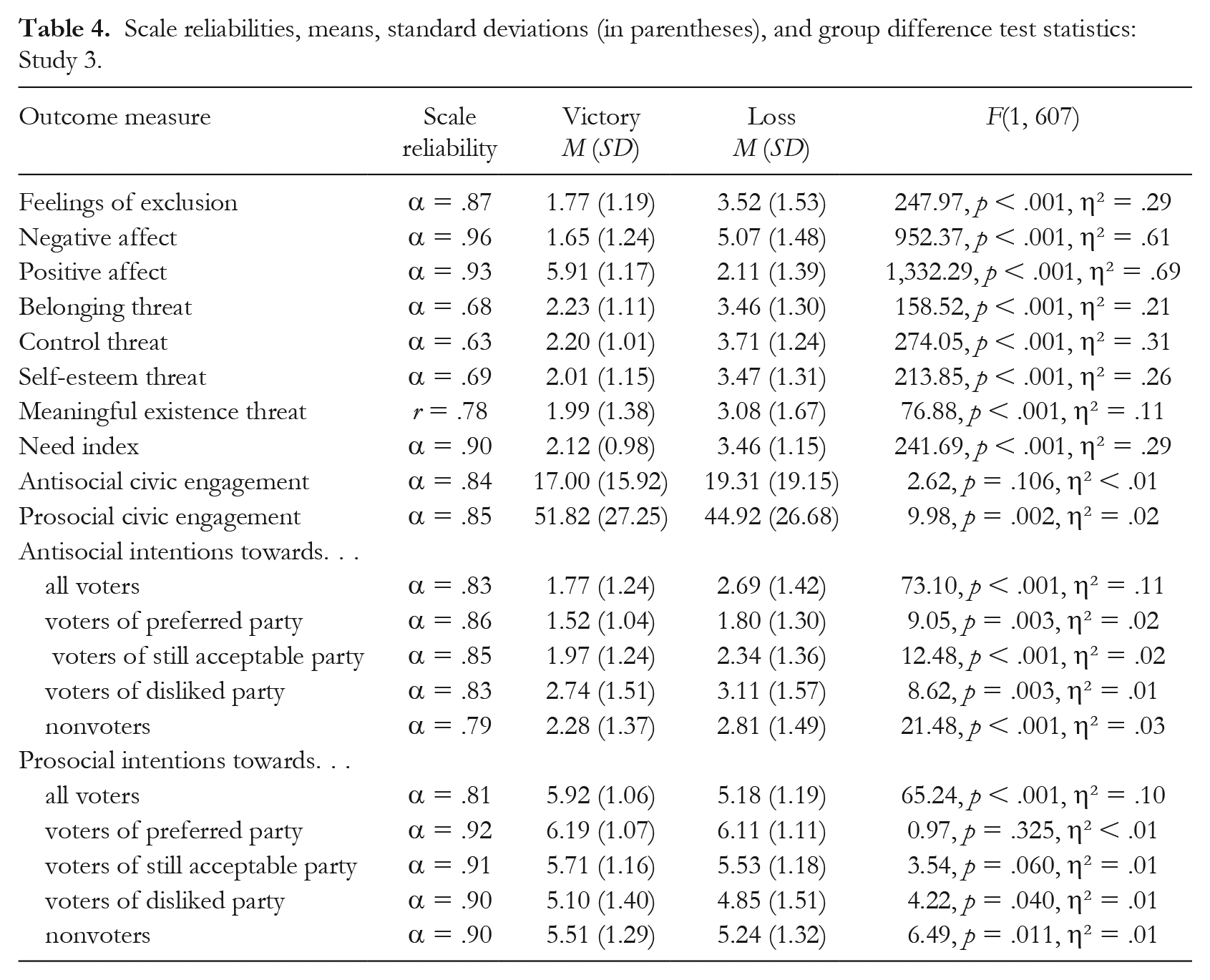
Table 4 presents scale reliabilities, descriptive statistics, and group difference test statistics between the victory and loss condition for the dependent variables in Study 3.
Scale reliabilities, means, standard deviations (in parentheses), and group difference test statistics: Study 3.
Manipulation checks
As expected, participants in the victory condition scored higher on the subjective victory measure (M = 6.20, SD = 1.16 vs. loss: M = 2.28, SD = 1.49) and showed more satisfaction with the election results (M = 6.18, SD = 1.13 vs. loss: M = 1.95, SD = 1.42); F(1, 607) = 1,309.02, p < .001, η² = .68 and F(1, 607) = 1,660.33, p < .001, η² = .73, respectively.
Effects of election outcome on feelings of exclusion and social pain reactions
Separate ANOVAs (see Table 4) revealed that participants in the loss condition felt significantly more excluded (H1a), indicated higher need-threat (H1b), and reported more negative and less positive affect (H1c) compared to those in the victory condition.
Effects of election outcome on behavioral intentions
In a first step, to test whether effects of electoral loss on interpersonal pro- and antisocial intentions would differ across groups of citizens with different voting decisions, we conducted mixed factorial ANOVAs, with election outcome as between-subjects and intentions toward the different groups as within-subjects factors. Results indicated a main effect of target for antisocial, F(3, 1821) = 212.17, p < .001, η² = .26, and prosocial intentions, F(3, 1821) = 237.38, p < .001, η² = .28. Bonferroni corrected post hoc tests revealed that individuals generally held less antisocial and more prosocial intentions towards voters of their preferred party (all ps < .001). Significant differences further emerged between all groups that did not vote for the preferred party. Antisocial intentions were highest toward voters of a disliked party, followed by nonvoters, followed by voters of a different but still acceptable party. Similarly, prosocial intentions were lowest toward voters of a disliked party, followed by nonvoters, followed by voters of a different but still acceptable party (all ps < .001). A main effect of election outcome further indicated that electoral loss heightened antisocial, F(1, 607) = 18.73, p < .001, η² = .03, and decreased prosocial interpersonal intentions, F(1, 607) = 5.08, p = .025, η² = .01. However, this effect did not vary across the target groups for antisocial, F(3, 1821) = 1.98, p = .115, η² < .01, or prosocial intentions, F(3, 1821) = 1.63, p = .181, η² < .01. 6 Thus, electoral loss heightened antisocial and decreased prosocial intentions toward other citizens, irrespective of their voting behavior. Therefore, we only considered pro- and antisocial intentions toward the abstract target of all voters in the subsequent mediation analyses. 7
To test whether election outcome affected behavioral intentions on a societal level via postelectoral need-threat (H2a–b), we employed separate mediation analyses (Model 4; 5,000 bootstrap samples) using the need-threat index as mediator and the behavioral intention scales as dependent variable (i.e., interpersonal antisocial and prosocial intentions toward other citizens; antisocial and prosocial civic engagement). All mediation analyses revealed an indirect effect of election outcome on behavioral intentions via need-threat (see Table 5 for inferential statistics). Electoral loss increased need-threat, which, in turn, was associated with more antisocial and less prosocial behavioral intentions toward other citizens, higher intentions for antisocial civic engagement, and lower intentions for prosocial civic engagement.
Results of mediation analyses with need-threat index as mediator between condition (victory vs. loss) and behavioral intentions: Study 3.
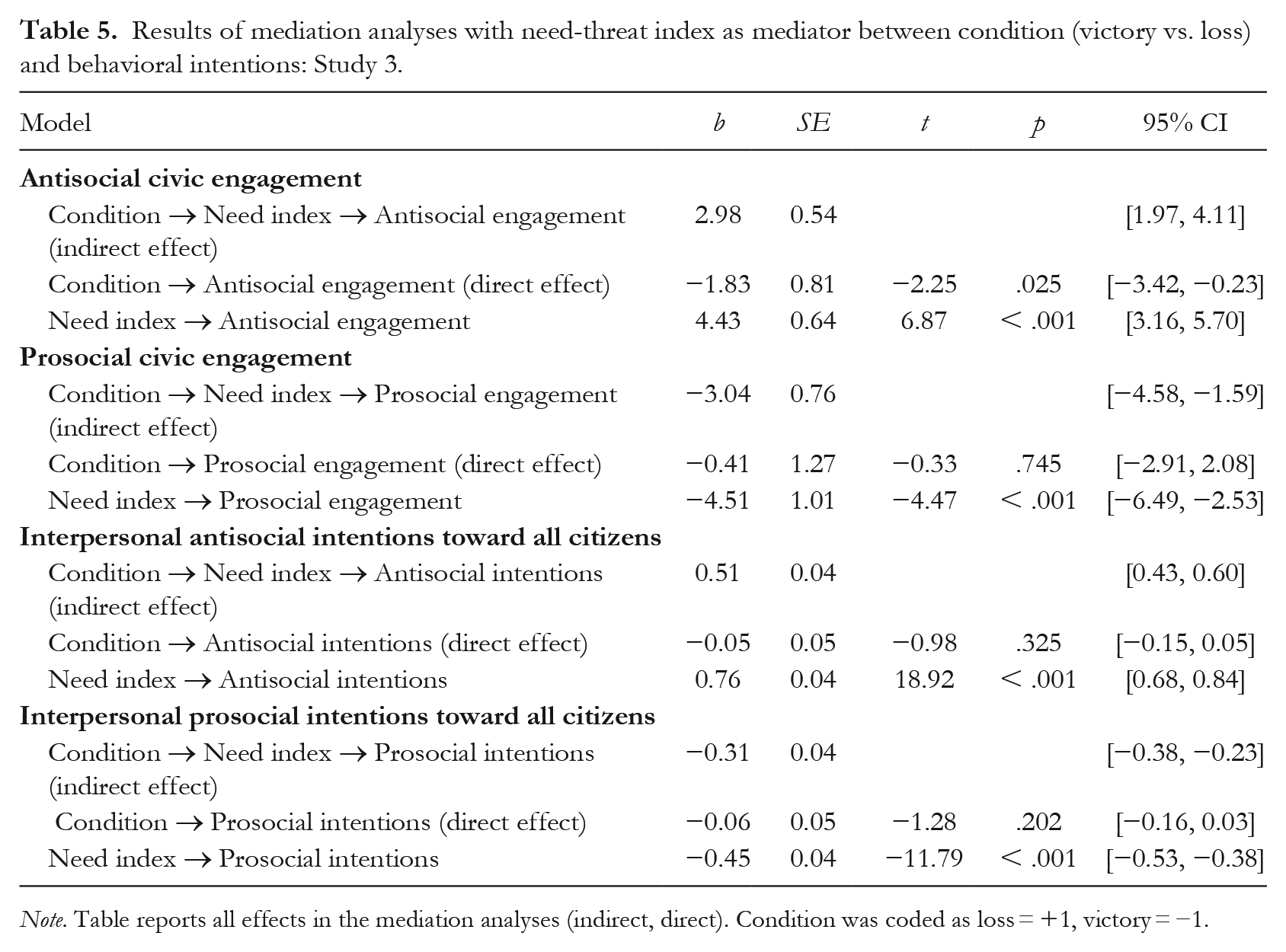
Note. Table reports all effects in the mediation analyses (indirect, direct). Condition was coded as loss = +1, victory = −1.
Discussion
Study 3 provides further experimental evidence that electoral loss is experienced as social exclusion for the case of a multiparty context. Individuals whose party lost expressed increased feelings of exclusion and exhibited affective and need-based social pain reactions. Postelectoral need-threat further translated into a full range of unfavorable intentions on a societal level, consistent with our experimental findings from the two-party context in Study 2. Those who experienced need-threat following electoral loss displayed more antisocial behavioral intentions, both interpersonally toward other citizens and through antisocial civic engagement. Additionally, these individuals expressed less prosocial behavioral intentions, interpersonally toward other citizens but also, in an extension of the findings from Study 2, in terms of reduced prosocial civic engagement.
Notably, Study 3 did not provide evidence that electoral loss had a distinct impact on pro-and antisocial intentions toward different groups of voters. Individuals generally displayed more prosocial and less antisocial intentions toward citizens who voted for the same party, consistent with the literature on ingroup favoritism describing a general favoring of one’s own group over different groups (Hewstone et al., 2002). However, electoral loss generally lowered prosocial and heightened antisocial tendencies, irrespective of the target’s voting choice. This finding appears somewhat surprising when considering the intergroup literature. As suggested by integrated threat theory (Stephan et al., 2015), intergroup bias should increase once a threat between groups arises due to perceived social competition (e.g., cultural or economic). Correspondingly, affective polarization in the form of interparty hostility tends to be high under election salience (Hernandez et al., 2021). Thus, it might be reasonable to expect that electoral loss would only heighten antisocial intentions toward outgroup voters or even increase prosocial intentions toward ingroup voters.
At this point, we can only speculate why we did not observe this pattern in Study 3. Of note, previous research has documented diffuse forms of antisocial tendencies after exclusion, including displaced aggression toward innocent individuals (e.g., Twenge et al., 2001; Warburton et al., 2006). Research further suggests that social exclusion can trigger automatic aggression in an impulsive and spontaneous way (Zhang et al., 2019). Based on these findings, it might be plausible that electoral loss leads to a general increase in antisocial and a decrease in prosocial intentions, despite maintaining a positive bias toward the ingroup.
However, it is important to note that research has also found that individuals amplify their social identities following individual (Knowles & Gardner, 2008) or group-based exclusion (e.g., Knapton et al., 2022; Schmitt et al., 2003). Ingroups can provide a source of affiliation and security after exclusion, facilitating group-serving behavior and attitudes. For example, excluded participants express more ethnocentrism (i.e., assumed superiority of the ingroup; Greitemeyer, 2012). However, we assessed intentions toward other in- and outgroup voters rather than assessing intentions toward political in- and outgroups more specifically. As the ingroup was involved in the experience of exclusion, this might have induced a unique dynamic. One possible interpretation is that electoral loss elicits a sense of disappointment, realizing that ingroup voters, as part of the electorate, “did not make it.” If the exclusionary experience is perceived as the result of a collective failure of the electorate, this might manifest in a first, impulsive reaction of a generalized increase in unfavorable intentions. However, since only one of our studies included different target groups, further research is needed to draw reliable conclusions concerning behavioral intentions toward different groups of voters.
General Discussion
Across a field and two experimental studies, we consistently found evidence that the loss of one’s preferred party was related to individual feelings of exclusion and social pain reactions typically involved in smaller scale instances of exclusion (i.e., higher need-threat, and an increase in negative as well as a decrease in positive affect). Thus, our findings add further confidence to an emerging and timely relevant line of research that widens previous research on interpersonal or small-group exclusion (Wesselmann & Williams, 2017; Williams, 2007), and illustrates the importance of feelings of exclusion on a macro level. We also extend previous findings on vicarious electoral exclusion in several important ways. As Study 1 was conducted in a European context, this supports the assumption that effects are robust across different cultural and electoral systems. Such validations appear important as it has been demonstrated that political research findings from the United States cannot necessarily be transferred to other systems (Hooghe & Stiers, 2016). Further, by including experimental studies, to the best of our knowledge, our research is the first to clearly establish a causal path from electoral loss to voters’ feelings of exclusion and social pain reactions in both a two-party and a multiparty context.
The finding that losing-side voters feel excluded even in a multiparty proportional voting context is remarkable, considering that such systems are perceived as more inclusive, with a less pronounced distinction between winners and losers (e.g., Lijphart, 2012). Yet, individuals whose party failed to enter the government experienced a sense of exclusion similar to that found in a two-party context that is characterized by a zero-sum logic of winning and losing. These findings, however, align well with insights from the social exclusion literature, indicating that cues to exclusion do not need to be blatant to trigger social pain reactions. Rather, individuals respond quickly and broadly even to minimal cues of exclusion, likely as part of an evolutionarily anchored warning system (Williams, 2009). A recent study indeed suggests that holding a minority position on a highly salient political topic can be sufficient to induce need-threat (Knapton et al., 2022). Similarly, learning that a significant proportion of society does not want one’s party governing the country seems to trigger this warning system, regardless of the electoral system in place.
Moving one step further, our research provides first evidence that electoral loss not only triggers social pain reactions akin to the reflexive stage of exclusion, but that need-threat might further translate into behavioral intentions known from the reflective phase of the temporal need-threat model (Williams, 2009). Across our studies, need-threat consistently mediated the effects of electoral loss on unfavorable intentions on a societal level. Under postelectoral need-threat, individuals expressed increased antisocial intentions, interpersonally towards other citizens (Studies 2–3) and through civic behaviors that can impede the prosperity and well-being of society and the state (i.e., antisocial civic engagement; Studies 1–3). In a less extreme but still unfavorable manner, these individuals also expressed reduced prosocial intentions, interpersonally toward other citizens (Studies 2–3) and through decreased prosocial civic engagement that contributes to the common good of society (Study 3).
Previous research has already documented increased antisocial intentions after electoral loss (Hunt et al., 2019; Oc et al., 2018). We were able to extend these findings by showing that prosocial behavioral intentions could also be affected in an unfavorable way. Additionally, our findings provide novel evidence that such intentions, at least partially, could be attributable to need-threat experienced by losing-side voters. Thus, by integrating findings from political research with insights from the social exclusion literature, we were able to illuminate one potential mechanism that is driving negative behavioral reactions after political elections.
According to the temporal need model, behavioral reactions to social exclusion can be considered as attempts to cope with need-threat (Williams, 2009). Within this model, a conceptual distinction is often made between the specific needs, and it is assumed that the type of behavioral response primarily depends on which need has been most severely threatened. Accordingly, threatened needs from the inclusionary cluster (i.e., belonging and self-esteem) should motivate affiliative behaviors, while needs from the power-and-provocation cluster (i.e., control and meaningful existence) should form antisocial behaviors (Williams, 2009). However, whether the four needs can be considered empirically separable constructs or more likely reflect a general sense of need-threat is a continuous debate (Gerber et al., 2017; Williams, 2009). A study on the validity of the most widely used need-threat scale (Zadro et al., 2004) has pointed toward the latter perspective (Gerber et al., 2017). When we analyzed the needs separately as mediators (see supplemental material), we did not find a consistent pattern that would align with the differential need approach. Other theoretical approaches under the need-fortification hypothesis argue that antisocial responses are preferred when individuals feel there is no appropriate possibility for reinclusion (DeWall & Bushman, 2011; Williams & Wesselmann, 2011), a framework that might also align with the context of elections. With the source of exclusion being abstract (e.g., society or the state) and the condition of electoral loss persisting until the next election, individuals might feel there is a lack of a clear and immediate possibility for reinclusion at the level where the exclusion occurred, allowing unfavorable behavioral intentions to unfold.
Importantly, recognizing need-threat as a driving mechanism behind unfavorable behavioral intentions opens new avenues for research on potential strategies to mitigate them. While research on small groups has identified a range of strategies that can help individuals to restore fundamental needs after exclusion (Timeo et al., 2019), finding such interventions at a larger scale will be more challenging. In the context of perceived rejection of one’s political convictions by society, appreciation and respect for losing-side voters (Esaiasson, 2011), friendly treatment (Twenge et al., 2011), or inclusive governmental efforts might mitigate effects, at least to some degree. For example, throughout his campaign, U.S. presidential winner Biden (e.g., Biden, 2020) stressed, “I’ll be a president for all Americans. Not just the ones who vote for me.” Future research should address whether such practices can support losing-side voters to recover from need-threat.
Limitations and Future Directions
Some limitations must be considered when evaluating our findings. While need-threat is commonly used as an indicator for exclusionary experiences (e.g., McCarty et al., 2022), it is plausible that electoral loss might involve factors other than exclusion that can trigger need-threat. Across both studies, social pain reactions (including need-threat) were consistently mediated by feelings of exclusion (see supplemental material); however, these results do not allow definite causal inferences because they are based on correlational analyses (Bullock et al., 2010). While, in the light of previous exclusion literature, we are confident in assuming that social exclusion was a causal contributor to postelectoral affective and need-based states, it is important to be aware that they are likely a multicausal phenomenon, with feelings of exclusion being one out of several important contributors. Similarly, although the effect of electoral loss on unfavorable intentions was mediated through need-threat, this should be considered with some caution due to its correlational nature. Follow-up research on potential buffering factors can clarify whether effects are diminished or lowered when feelings of exclusion and need-threat are kept low, and thus bolster interpretations of causal inference.
Additionally, we defined electoral loss based on the objective performance measure of whether a party entered the government, consistent with prior research (e.g., Anderson et al., 2005; Best & Seyis, 2021; Toshkov & Mazepus, 2022). This choice was supported by participants’ satisfaction with election results and subjective victory perceptions. However, although research shows that government entry plays a predominant role in shaping voters’ reactions (e.g., Daoust et al., 2023; Singh et al., 2012), findings suggest that other performance measures, such as improvements in vote share or expectations prior to the election, can additionally influence perceptions of winning and losing (Plescia, 2019). Future research could thus take a more fine-grained approach and elaborate whether effects vary under different performance measures.
Moreover, we used a self-designed scale for pro- and antisocial civic engagement. The scale on antisocial civic engagement covered various behaviors, including some that could be deemed socially detrimental yet not illegal (e.g., unjustified medical leave), some expressing threats to leave the country (e.g., emigration), and most items assessing illegal behaviors (e.g., tax evasion). As law violations capture a rather extreme behavior, it is reasonable that overall levels of antisocial civic engagement were relatively low across our studies. Relatedly, antisocial civic engagement revealed a right-skewness in all studies (Study 1: z = 9.43, p < .001; Study 2: z = 7.18, p < .001; Study 3: z = 18.55, p < .001). As we used bootstrapping as a distribution-free procedure in our mediation analyses, the analyses on behavioral intentions should provide reliable results despite nonnormally distributed data (Mooney & Duval, 1993; Preacher et al., 2007). However, this skewness indicates that a rather small fraction of the sample exhibited high intentions towards antisocial civic engagement. When examining the effects of electoral loss on antisocial civic engagement at the item level (see supplemental material), we found the most robust effects across our studies for intentions to move to another country. The intention to leave behind one’s country signals a form of disengagement from the country’s society; however, such intentions clearly do not operate on the same antisocial level as active hostile intentions such as tax evasion. Thus, future research would benefit from using more refined measures, and should systematically differentiate between distinct types of negative behavior (e.g., legal vs. illegal, defensive vs. proactive) to more clearly illuminate how and under which circumstances different types of intentions unfold.
In particular, a valuable avenue for future research could be the exploration of radicalization as a specific domain of antisocial tendencies. In 2021, the U.S. public was shaken after Trump supporters stormed the Capitol upon his electoral defeat (Smith, 2021). Prior literature has already linked social exclusion to radical attitudes and interest in extreme groups (for a review, see Pfundmair et al., 2022), suggesting that feelings of exclusion could potentially contribute to radical movements in the aftermath of elections. However, given that intentions for extreme behaviors like illegal activities were rather low in our studies, it might be fruitful to consider factors such as group identification (Knapton et al., 2022) or individual characteristics (e.g., rejection sensitivity; Renström et al., 2020) that have already been established as catalysts for radical attitudes in the face of exclusion.
Lastly, it is important to acknowledge that our study assessed intentions only. Future research could investigate their persistence following elections and explore under which conditions they translate into actual behavior.
Conclusion
Political events can leave parts of the electorate devastated and divide countries. Recent examples, such as the 2016 U.S. election, in which 48% voted for Clinton and 46% voted for Trump (“2016 Presidential Election Results,” 2016), vividly illustrate such events. Such divisions can cause high levels of distress and give ground to behaviors that obstruct societal well-being, making it important to understand the underlying dynamics. Our work adds to an emerging line of research suggesting that negative reactions after political elections could, at least to some extent, be rooted in feelings of exclusion on a macro level. Through a combination of field and experimental research, our findings support the idea that voters experience electoral loss as a form of exclusion, irrespective of the election system in place. Moreover, our research suggests that postelectoral need-threat might play a decisive role in shaping unfavorable behavioral intentions on a societal level. Hence, reducing feelings of exclusion and addressing related need-threat could be one way of reducing negative consequences associated with unfavorable election outcomes.
Supplemental Material
sj-docx-1-gpi-10.1177_13684302231208402 – Supplemental material for Voters’ feelings of exclusion and behavioral intentions after political elections: Replicating and extending findings on vicarious exclusion
Supplemental material, sj-docx-1-gpi-10.1177_13684302231208402 for Voters’ feelings of exclusion and behavioral intentions after political elections: Replicating and extending findings on vicarious exclusion by Nilüfer Aydin, Janet Kleber, Luisa A. M. Mahr and Katharina Gangl in Group Processes & Intergroup Relations
Footnotes
Data Availability Statement

Funding
The author(s) received no financial support for the research, authorship, and/or publication of this article.
Supplemental Material
Supplemental material for this article is available online.
Notes
References
Supplementary Material
Please find the following supplemental material available below.
For Open Access articles published under a Creative Commons License, all supplemental material carries the same license as the article it is associated with.
For non-Open Access articles published, all supplemental material carries a non-exclusive license, and permission requests for re-use of supplemental material or any part of supplemental material shall be sent directly to the copyright owner as specified in the copyright notice associated with the article.
