




Abstract
While classmates have been identified as important socializing agents in relation to adolescents’ prejudice, there is limited understanding of how popularity status plays into classroom transmission of prejudicial attitudes. Drawing on theories of social influence, we used a three-wave panel of Swedish adolescents (N = 941, aged 13–15) to examine the role of sociometric and prestige popular classmates in the development of adolescents’ anti-immigrant attitudes. Multilevel repeated measurement models revealed positive relationships between popular and individual prejudice; between sociometric prejudice and the level and rate of change; and between prestige prejudice and wave-to-wave shifts in individual prejudice. Overall, we found sociometrically popular classmates to be more influential in relation to adolescents’ prejudice. Additionally, we found the effect of sociometric prejudice to be more pronounced if political issues were frequently discussed in the classroom.
The classroom is arguably one of the key socializing contexts in adolescence. It is where adolescents spend most of their time, and simultaneously a place for social interaction and for learning. Not surprisingly, therefore, previous studies have found aspects of classroom life, including the ethnic make-up of class (Thijs & Verkuyten, 2014), the degree of teacher support (Miklikowska, Thijs, & Hjerm, 2019), and the general classroom climate (Carrasco & Torres Irribarra, 2018) to influence adolescents’ outgroup attitudes. Yet other studies point to classmates’ attitudes as an important source of prejudice (Miklikowska et al., 2021; Paluck, 2011). Adolescents’ intergroup attitudes reflect positions and perceptions among their classmates (Thijs & Verkuyten, 2011, 2013), and being part of a prejudiced class also increases prejudice over time, as individuals adjust their attitudes to be in line with perceived (Váradi et al., 2021) or actual classroom norms (Mitchell, 2019).
While previous research has been valuable in demonstrating classmates’ influence over adolescents’ prejudice, there are still important gaps in our understanding of how such influences occur. In particular, we know little about the role of individual classmates, and how their influence varies with social position. Previous work on social influence in groups suggests that individuals who are socially central, who have the attention of others, and whose qualities are broadly desired are likely to be particularly influential in steering group norms (e.g., Hogg, 2001; Paluck et al., 2016). Although this points to popular classmates as key actors, previous research has primarily studied classroom influence as a uniform effect, assuming that everyone in class is equally influential. This is unfortunate, not only as it implies limited understanding of how the social dynamics and hierarchies in classrooms contribute to the development of prejudice in adolescence, but also as such insights could inform strategies to reduce prejudice in ways where targeted efforts could generate broader results.
The current study contributes to previous research by examining the role of popular classmates in influencing how prejudicial attitudes develop in adolescence. We use a three-wave panel of Swedish adolescents in junior high school (aged 13–15) to test if prejudice among the most popular individuals in class (popular prejudice) predicts adolescents’ prejudice (individual prejudice) over time. We focus on early adolescence, as this is a crucial period for the development of intergroup attitudes (Krosnick & Alwin, 1989), when individuals also become increasingly susceptible to social influences (Raabe & Beelmann, 2011). In the Swedish school system, this is also a time when classrooms are highly stable, in the sense that the same students remain together for 3 years, which enables the study of longitudinal relationships. Further, as popularity is a multifaceted concept and the literature suggests that one’s ability to influence others may vary by type of popularity (Zingora et al., 2020), we examine two different measures of classroom popularity: sociometric and prestige popularity, where the first captures popularity by virtue of having many friends and the latter is based on classmates’ views of who is most popular. Additionally, we test if the relationship between popular and individual prejudice is moderated by the degree of classroom discussion.
Social Influence in Classrooms
Throughout the school day, classmates share the same physical environment, they interact with each other, and are exposed to the same learning content. This makes them highly salient in each other’s lives, and potentially important in relation to the formation of attitudes and behavior (Campbell, 2008; Lenzi et al., 2014; Thijs et al., 2010). While previous research demonstrates that classmates influence adolescents’ prejudice, the ability to exert influence is likely to vary between individuals in the classroom, depending on intragroup position (Duffy & Nesdale, 2008; Paluck, 2011). Meanwhile, in order to formulate expectations of who is most influential, we need to understand why individuals adjust to others’ attitudes.
Although there is no coherent theoretical framework available to account for how social influence occurs, previous scholarship provides important guidance in understanding classroom transmission of prejudicial attitudes. In an early account, Deutsch and Gerard (1955) identified two types of social influence: informational influence and normative influence. Informational influence refers to situations when individuals adjust their attitudes in response to cues from others about the correct position (Burnstein & Vinokur, 1977), and normative influence refers to when individuals conform to others’ expectations to be socially rewarded and/or to avoid social sanctions (Deutsch & Gerard, 1955; Kaplan & Miller, 1987). Under normative influence, individuals adjust their attitudes towards others not primarily to be correct, but to be liked and accepted by other group members, something which has been identified as important in adolescence (Eder, 1985). In general, relationships with peers become more important during this time in life (Brown, 2004), which arguably implies stronger incentives to adopt behavior and attitudes to be accepted by the peer group. Indeed, previous research shows that adolescents’ readiness to conform to peers often is prompted by a desire to be accepted by valued ingroups, and to avoid rejection and isolation (Juvonen & Galván, 2008; Zhang et al., 2016).
Later work emphasizes that individuals adjust attitudes and behavior to socially connect with, and confirm membership in, valued ingroups (Crandall et al., 2002; Hogg & Smith, 2007). According to shared reality theory (Hardin & Conley, 2001), individuals adjust their attitudes, norms, and behaviors towards others in salient ingroups to establish and maintain a sense of “shared reality.” Such common understandings reduce feelings of uncertainty and strengthen a sense of interconnectedness, which motivates individuals to “tune” their attitudes to match their social group (Jost et al., 2008). Similar ideas are outlined in work that draws on social identity theory (Tajfel & Turner, 1979) and group norm theory (Sherif & Sherif, 1953). These perspectives stress how group norms are adopted through internal cognitive changes that extend beyond superficial compliance and external constraints (Hogg & Smith, 2007). Individuals shift attitudes according to groups they feel they belong to, or by which they wish to be accepted, as part of a self-categorization process. They internalize group norms to connect socially with valued social identities, and to enact their role as group members, in a process referred to as referent informational influence (Abrams & Hogg, 1990). In line with these perspectives, previous empirical research demonstrates how adolescents follow perceived norms and try to match their behavior and attitudes with norms accepted by their reference group (Jasinskaja-Lahti et al., 2011; Knoll et al., 2015). Perceived group norms can, in this sense, shift youths’ stereotypic attitudes and behavior (Sechrist & Stangor, 2001; Stangor et al., 2001; Wittenbrink & Henly, 1996), as they internalize prejudice (or the opposite) to connect with their social group, including with their classmates (Miklikowska et al., 2021; Váradi et al., 2021). Taken together, the literature on social influence points to various ways that classmates may influence each other’s attitudes: by providing information about what is correct and true, about what it takes to be liked by others, and about what it implies to be a group member. Next, we turn to what these different ways imply for how influence may vary between individual classmates.
The Role of Popular Peers
While previous research convincingly demonstrates that classmates influence how prejudice develops in adolescence (Miklikowska et al., 2021; Mitchell, 2019; Váradi et al., 2021), the literature on social influence also suggests that ability to influence others varies between group members. According to the literature on referent informational influence (Abrams & Hogg, 1990; Hogg & Smith, 2007), individuals form an understanding of what is situationally normative by observing and interacting with other group members. However, in this process, they weight some group members’ cues more heavily than others (Hogg & Reid, 2006), which implies that influence over group norms is likely to vary between different group members. Further, to the extent that classroom influence occurs via informational or normative influence, some individuals are likely to be more influential than others, simply because they provide better information about what is “true” and about what brings social rewards/sanctions within a particular group.
In terms of who is most influential, previous work points to individuals in leadership positions as particularly effective in affecting others and steering group norms (Hogg, 2001; Hogg & Reid, 2006). Besides demanding compliance, leaders may influence others by virtue of prototypicality (Fielding & Hogg, 1997), that is, through embodying what it implies to belong to the group. Others often perceive leaders, and in particular informal leaders, as representing the group essence, which induces legitimacy and trust, and makes them more effective in influencing attitudes and behavior (van Knippenberg, 2011). In this sense, other group members follow their cues, not primarily as an act of obedience but to enact their role as group members. In relationships between classmates, leadership position is best translated into popularity status. Indeed, popular adolescents have previously been found to influence some central outcomes among youth, including patterns of friendship formation, antisocial attitudes, as well as risk and sexual behavior (Cohen & Prinstein, 2006; Laninga-Wijnen et al., 2018; Maheux et al., 2020; Rambaran et al., 2013). In this article, we distinguish between sociometric and prestige popularity, as these represent two distinct dimensions of peer status (Parkhurst & Hopmeyer, 1998). Theoretically, we expect both sociometric and prestige popular adolescents to influence classmates’ attitudes both by virtue of informal leadership in the classroom and based on characteristics associated with the two popularity types separately. In the paragraphs that follow, we discuss sociometric and prestige popularity in further detail, including why we expect sociometric and prestige popular adolescents to influence classmates’ attitudes.
Sociometric and prestige popularity
Sociometric popularity captures how well-liked individuals are by their peers, and is usually measured by friend nominations, or nominations of whom individuals like the best (Coie & Cillessen, 1993). Consequently, peers who score high on sociometric popularity are generally more socially central (Cillessen & Rose, 2005), with more friends (Adler & Adler, 1998), and more frequent social interaction (Adler & Adler, 1998; LaFontana & Cillessen, 2002) compared to less popular peers. Sociometrically popular peers have also been described as cooperative, prosocial, and particularly capable of maintaining positive relationships (Cillessen & Rose, 2005). In terms of ability to influence others, previous research has found group members who are “psychologically salient,” in the sense that they have many social ties, to be particularly influential in steering group norms (Paluck et al., 2016; Tankard & Paluck, 2016). Their many connections imply they are well-liked, perceived to know the group, and that their attitudes and behavior are widely known, which makes them valuable sources of information when it comes to normative cues about group identity (Paluck & Shepherd, 2012). While this suggests that sociometrically popular individuals are important in processes of referent informational influence (Abrams & Hogg, 1990; Turner, 1981), their social centrality may also induce normative adjustments. Due to their many social ties, not adopting attitudes of the sociometrically popular implies a risk of broader rejection from the group, in particular if it leads to open disagreement and/or the ending of friendship. Thus, individuals may be particularly motivated to converge towards the sociometrically popular not only to confirm group membership but also to avoid social sanctions.
The second type of popularity, prestige popularity, is generally measured as perceived popularity by others and is not necessarily associated with prosocial skills. Perceived popular individuals can be both liked and disliked by their classmates (Sandstrom & Cillessen, 2006), they often engage in antisocial behavior and score high on aggression (Cillessen & Mayeux, 2004). Still, they are considered popular by others and hold a high position in the social hierarchy, which suggests that classmates will seek to befriend them, imitate their behavior, and conform to their attitudes to be accepted (Dijkstra et al., 2010). The high ingroup status of the prestige popular implies they can provide important information about which attitudes and behavior bring social rewards, and which do not. Indeed, attitudes and behavior associated with popularity are highly valued among adolescents (Hartup, 1996), and becoming popular is a central goal in adolescence (Dijkstra et al., 2013; LaFontana & Cillessen, 2010), suggesting that in case popular adolescents hold prejudicial attitudes, peers will be motivated to adjust their own attitudes to be in line with them. Taken together, this implies that the prestige popular are also likely to exert influence over classmates’ prejudice, in particular as their high ingroup status elicits processes of normative influence.
Popularity and prejudice
Previous research on the role of popular classmates in prejudice formation is surprisingly scarce. To the extent that studies have examined the relationship between popularity and prejudice, they have either focused on popularity as a factor predicting prejudicial attitudes (Poteat, 2015) or as a moderator of friends’ influence on individual attitudes (Hjerm et al., 2018; Zingora et al., 2020). To our knowledge, no study has examined how adolescents’ prejudice develops in response to popular classmates. Studying the relationship between popularity and prejudice against gays and lesbians among high school students, Poteat (2015) found that popular individuals generally display higher levels of prejudice than less popular individuals, but that the relationship is moderated by gender and perspective-taking ability. Research in the social identity tradition has nuanced this by showing that the relationship between intragroup position and outgroup derogation depends on prevailing group norms (Duffy & Nesdale, 2008). While prototypical leaders, by definition, display more prejudicial attitudes in groups where prejudice is the norm, the opposite applies in groups where the prototype is based on other normative positions. Under such circumstances, peripheral members express more negative outgroup attitudes, as they seek acceptance through favoring the ingroup and derogating outgroups (Noel et al., 1995). As for implications of popularity prejudice, a recent study found that popular individuals exert stronger influence on their friends’ intergroup attitudes, compared to less popular individuals (Zingora et al., 2020). The effect was only observed for sociometric popularity and not for prestige popularity, which the authors discuss in terms of potential differences in attitude saliency. Indeed, only attitudes and behavior that are known to others can be considered by those who seek to raise their own status through adopting attitudes and behavior of popular peers (Rambaran et al., 2013). Thus, if intergroup attitudes are not salient features of the prestige popular, this could explain why prestige popularity did not matter. Meanwhile, although Zingora et al. (2020) found that prestige popularity did not moderate the effect of friends’ intergroup attitudes, the prestige popular may still have a broader impact, in the sense that they influence classmates’ attitudes.
Classroom Political Discussions
So far, we have argued that popular classmates are likely to influence adolescents’ attitudes because they provide important information about prevailing group norms and about qualities that bring social rewards. However, in order to be able to align with popular prejudice, individuals need information about what popular classmates think, information that may be difficult to attain if issues related to prejudice have low saliency in class. Indeed, previous research has shown that lack of information stemming from low saliency makes individuals project their own attitudes onto other group members. By assuming that their own attitudes agree with the group norm, individuals can uphold perceptions of similarity that confirm group membership and connectedness, even if hints about group norms are missing (Locke et al., 2012; Seddig, 2020). Thus, if issue saliency is low, group members’ attitudes will remain fairly stable. If issue saliency is high, on the other hand, and others’ opinions are easier to assess, this type of social projection becomes less motivated. Adolescents can instead use available cues, from popular classmates and from others, to form an understanding of prevailing group norms.
In a classroom context, classroom political discussions are one way to make attitudes towards outgroups salient. Discussions make topics more accessible, provide information, and encourage adolescents to think about the issue more deeply and carefully, which implies higher saliency (Visser et al., 2006). In this sense, discussions may function to disclose information about attitudes of classmates in general, and the popular in particular, which individuals need to estimate specific norms. The role of discussions in the transmission of prejudice has previously been supported in studies of attitudinal similarity both between parents and children (Jennings et al., 2009; Meeusen & Dhont, 2015) and between peers (Bohman et al., 2019). In this study, therefore, we expect that the degree of classroom discussion will moderate the relationship between popular prejudice and individual prejudice. Specifically, we expect frequent classroom political discussions to be associated with a stronger relationship between popular prejudice and individual prejudice.
Current Study
The current study aims to examine the role of popular classmates in shaping adolescents’ attitudes towards immigrants over time. While previous studies on prejudice have identified the classroom as an important socializing context (Mitchell, 2019; Thijs & Verkuyten, 2013), we still know little about the relative influence of individual classmates. Based on theories of social influence in groups, we expect popular individuals to be particularly influential in shaping classmates’ attitudes. We test these expectations using a three-wave panel of Swedish adolescents. Given how previous research has demonstrated qualitative differences between sociometric and prestige popularity, we examine the role of the sociometrically and the prestige popular separately.
In examining the role of popular classmates, our longitudinal design allows us to go beyond testing cross-sectional associations to also study if changes in popular prejudice are followed by changes in individual prejudice, as well as if prejudicial attitudes develop differently over time depending on average levels of popular prejudice. This implies testing two different types of longitudinal relationships: one assessing if changes in adolescents’ prejudice can be linked to longitudinal variation in popular prejudice, and one assessing if adolescents’ prejudice develops differently in different attitudinal contexts. We expect both prestige and sociometric prejudice to display positive relationships with individual prejudice. Moreover, given how attitudes need to be salient—classmates need to know the attitudes of the popular in order to be influenced—we also test if the relationship between popular and individual prejudice is moderated by classroom discussions. Here, we expect the relationship between popular and individual prejudice to be stronger the more classroom discussions there are.
Data and Method
Data
In order to answer our research questions, we used a longitudinal panel of Swedish adolescents from the Youth and Society Project (Amnå et al., 2010). Data collection was carried out in a midsized Swedish city. The city represents the country well with regard to income level, unemployment rate, and share of immigrants. Given our focus on classrooms, we relied on a subsample of the larger panel. The subsample consisted of N = 941 adolescents (51% girls) in junior high school (seventh to ninth grade). They were aged 13 (M = 13.41, SD = 0.54) at T1 and 15 (M = 15.38, SD = 0.53) at T3. Data were collected annually 2010–2012 by trained research assistants distributing questionnaires to the respondents during school hours. The fieldwork was concentrated in 10 different schools, strategically selected to ensure a socially and ethnically representative sample. Before filling in the questionnaires, the respondents were informed about their answers being confidential and about participation being voluntary.
Response rates were 94% at T1 and 88% at T3. The attrition rate was 6.7%. Comparing mean scores on prejudice at T1 for respondents who participated at T3 and respondents who did not participate at T3 reveals no significant differences (M = 2.20, SE = 0.73; M = 2.29, SE = 0.80). Respondents with an immigrant background (i.e., with at least one parent born outside of the Nordic countries; n = 267) were kept in the sample when constructing the classroom variables, but excluded from the analyses. Five classrooms with less than five observations were also excluded, generating a final sample of 640 participants nested in 32 classrooms. In the analyses (i.e., after excluding immigrants and small classrooms), classrooms had an average size of N = 20 and remained largely intact throughout the study. 1 In Sweden, learning activities in junior high school are to a large extent classroom-based, which implies that the adolescents in our study spent much study time together.
Variables
Anti-immigrant attitudes
For our dependent variable, we focused on anti-immigrant attitudes. While prejudice is a broader concept, denoting negative orientations towards a variety of different outgroups (based on age, gender, race, etc.), “immigrants” is arguably the most salient outgroup category in Europe today. Immigration is a main driver of increasing diversity and a hot topic in political and media debates, in Europe and in Sweden. For these reasons, attitudes towards immigrants are commonly used to operationalize prejudice in European studies, ours included. We measured anti-immigrant attitudes using three variables in the data set. At each wave of the panel, adolescents were asked to what extent their own attitudes corresponded to each of the following statements: “Immigrants often come here just to take advantage of welfare in Sweden,” “Immigrants often take jobs from people who are born in Sweden,” and “It happens too often that immigrants have customs and traditions that do not fit into Swedish society.” These items are very similar to those included in the European Social Survey (ESS, 2002–2018), and have been used to measure anti-immigrant attitudes in past studies (e.g., Hjerm et al., 2018; Schneider, 2008). Respondents marked their answers on 4-point scales (1 = doesn’t apply at all, 4 = applies very well). We created an index using row means of the three variables, resulting in a dependent variable ranging between 1 and 4, with higher scores indicating stronger anti-immigrant attitudes. Cronbach’s alpha indicated good internal reliability (.77) at each time point (T1–T3).
Popularity prejudice
In order to identify popular individuals, we used nomination data. To identify adolescents with the most prestige popularity, we used a direct question about whom the adolescents considered to be the most popular in their class. At each wave, adolescents were asked to nominate maximum three classmates who fit the description: “Is popular—does things that others take after.” To identify adolescents with the most sociometric popularity, we used friend nominations, where adolescents, at each wave, were asked to name up to eight friends. Correlations between number of nominations received at each wave ranged between .71 (T1–T2) and .59 (T1–T3) for prestige nominations, and between .60 (T2–T3) and .47 (T1–T3) for friend nominations. As for overlaps between sociometric and prestige popularity, correlations between friend and prestige nominations were .32 at T1 and T3, and .30 at T2, supporting that these capture different types of popularity.
For both measures, we ranked the total number of classmate nominations received by each individual to identify the three most popular individuals in each class at each wave. 2 In order to create the measures of popularity prejudice, we used the index of anti-immigrant attitudes; and for each type of popularity (prestige/sociometric), classroom, and wave, we calculated the average score in the top popular group. This procedure generated our two main independent variables: prestige prejudice and sociometric prejudice. Both variables were time-variant measures at the classroom level, meaning that the same value was assigned to all members in a class at a particular point in time.
Moderator
To investigate if the influence of popular individuals was moderated by classroom discussions, we used an indicator of how much teachers encourage discussions on related topics. At each wave, the adolescents were asked to what extent teachers at their school tried to (a) involve students in discussions about political issues, and (b) encourage students to become more aware of what is going on in the world. While these questions asked about teachers at the school level, rather than in classrooms, the way teaching is organized in Swedish junior high schools implies that students who attend the same class generally are exposed to the same teachers. Thus, we considered it likely that the students in a particular class would generally have the same teachers in mind when answering the questions. The questions did not specifically ask about discussions regarding immigrants but, given the context and timing of the study, we found it likely such topics were addressed. Compared to other EU states, Sweden has one of the highest shares of foreign-born residents (Pelling, 2019). Although our data were collected before the 2015 immigration wave, which dramatically increased both media and political saliency of immigration issues, such topics were already on the agenda in 2010, not the least due to the electoral breakthrough of the radical right-wing party Sweden Democrats in September that year. Also, the national curriculum guiding learning activities in Sweden stipulates that schools should support the development of antidiscriminatory and democratic values.
For both discussion items, response categories ranged from 1 (doesn’t apply at all) to 4 (applies very well). Internal reliability of the items was good throughout the waves, with Cronbach’s alphas of .73, .79, and .80 at T1–T3, respectively. After using row means to create an index of the two variables, we aggregated (averaged) the individual scores to generate a classroom variable, with higher scores indicating higher levels of teacher-initiated discussions in class.
Controls
In line with intergroup contact theory (Allport, 1954; Pettigrew, 1998), previous studies have found classroom diversity to influence anti-immigrant attitudes in early adolescence (Bohman & Miklikowska, 2020). In the analyses, therefore, we used the proportion of students with immigrant background in each class (i.e., with at least one parent born outside of the Nordic countries) to control for classroom diversity. As classroom belonging was very stable over the course of the study, classroom diversity was measured as a time-invariant variable, varying between classrooms but not between waves. We also controlled for gender (1 = boy, 0 = girl) and whether or not the respondent had nominated someone in the popular group as a friend. By controlling for friendships with the popular, we aimed to shed some light on the scope of any popularity effect. This to see to what extent any effect extends beyond adolescents who are friends with the popular, something particularly relevant with regard to sociometric popularity. Finally, we controlled for perceived socioeconomic status measured at the classroom level. At each time point, respondents were asked, “What are your family finances like?”; and marked their answers on a 4-point scale (1 = my parents always complain that they don’t have enough money, 4 = my parents never complain about being short of money). To generate the measure of perceived classroom socioeconomic status, we aggregated the individual responses to classroom level.
Analytical Strategy
To examine the role of popular classmates, we fitted multilevel repeated measurement models using the “mixed” command in STATA (Version 15.1). These are hierarchical models that can incorporate information at different analytical levels while simultaneously controlling for the statistical dependence between repeated observations on the same subject. The data in our analyses are characterized by a three-level structure: time points (Level 1) nested in individuals (Level 2) nested in classrooms (Level 3). The models are specified using an autoregressive covariance structure for the within-individual residual errors. This error structure generates the best model fit, meaning that correlations are expected to decrease with increasing distance between the time points.
The analysis proceeded as follows. First, we conducted a set of multilevel models to examine the relationship between anti-immigrant attitudes and sociometric prejudice (Model 2a–2d, Table 2) and prestige prejudice (Model 2e–2h, Table 2). In order to separate longitudinal associations (within effects) from cross-sectional associations (between effects), we created two variables based on each time-variant covariate. As described in Allison (2009), this was done by group-mean-centering the variables through calculating each classroom’s average score T1–T3, which we then subtracted from the raw scores. This procedure generated two variables: one variable capturing each classroom’s average score T1–T3 and one capturing the deviation from this score at each point in time. When included in the same model, these variables enabled us to capture both between-classroom effects and within-classroom effects with regard to each measure of popularity prejudice. Without the procedure, coefficients for time-variant covariates would merely reflect the average effect of longitudinal and cross-sectional associations. The between-effect variables were also centered on the grand mean, a procedure that we applied to all time-invariant covariates in the analysis. Further, we were also interested in whether adolescents’ prejudice develops differently in classrooms characterized by different levels of prestige and sociometric prejudice. To test this, we modelled growth curves by including an interaction term between the variable time and the between measures of popular prejudice. In a second step, we tested if the relationships between popular prejudice and anti-immigrant attitudes were moderated by teacher-initiated classroom discussions. This in a set of interaction models (Model 3a–3d, Table 3). Besides respondents with an immigrant background, all models in Tables 2 and 3 also exclude popular individuals (i.e., individuals in the top popular group), which is why the number of respondents differs slightly between the models examining sociometric and prestige influence.
Results
Table 1 reports means, standard deviations, and bivariate correlations between key variables in the analyses. We initially note that the average prejudice scores do not differ between the different categories nor over time. The average level of sociometric prejudice decreases slightly between T1 and T3, while both prestige prejudice and individual prejudice display a small increase. These differences are small, and only statistically significant for individual prejudice between T2 and T3, +0.06, t(483) = 2.13, p = .03, suggesting there is no general pattern where the popular systematically are more (or less) prejudiced than the unpopular, or develop in a different direction. As for the relationship between popular and individual prejudice, these preliminary analyses indicate that both prestige and sociometric prejudice generally display strongest correlations with individual prejudice measured at the same point in time or later, and the weakest correlations with individual prejudice measured at previous points in time. For example, sociometrical prejudice at T3 displays the strongest correlation with individual prejudice at T3 (r = .19, p < .001), and a weaker correlation with individual prejudice at T2 (r = .12, p < .001) and T1 (r = .05, p > .05). Corresponding correlations for prestige prejudice are, r = .13, p < .001 for T3; r = .04, p > .05 for T2; and r = −.01, p = .66 for T1. Concerning potential overlaps between sociometric and prestige popularity, the correlations between the two types of popular prejudice are generally positive (ranging between r = .21, p < .001 and r = .41, p < .001). That they are not stronger provides further support for the decision to measure sociometric and prestige prejudice separately.
Means, standard deviations, and correlations between main variables.
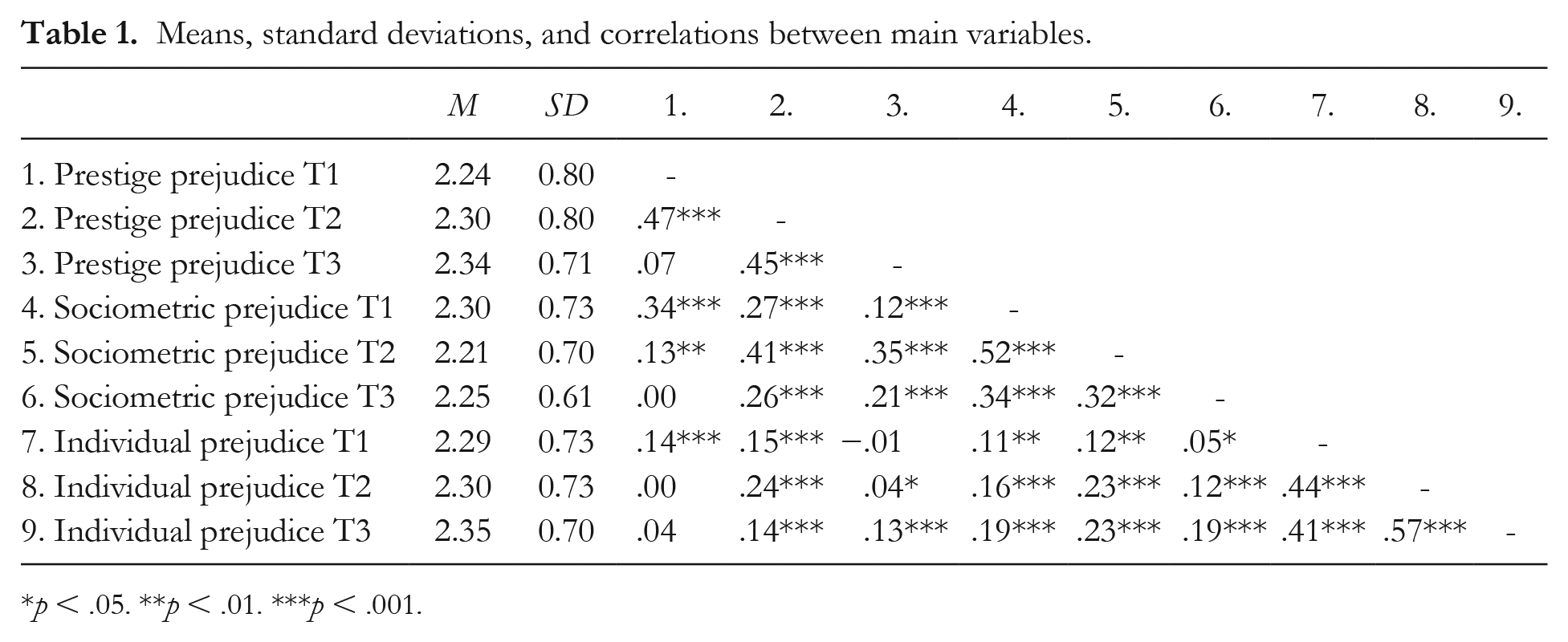
p < .05. **p < .01. ***p < .001.
Table 2 reports results from multilevel repeated measurement models. The table displays two sets of models, where the first focuses on the role of the sociometrically popular (Model 2a–2d) and the second on that of the prestige popular (Model 2e–2h). To avoid the popular predicting their own attitudes, we excluded them from the analyses. Thus, sample size varies somewhat between the two sets of models, which explains why the variance components but also the linear effect of time vary slightly between Model 2a and Model 2e. The models in Table 2 are all random intercept models, where the variance is split between and within individuals, as well as between classrooms. Preliminary analyses included random slopes for time on both classroom and individual level, but as they did not improve model fit, they were left out from the final models. Rho for the within-individual part tells us that the correlation between any two adjacent measurement points for the first model is .24 or .23, depending on the sample.
Relationship between individual and sociometric/prestige prejudice: Multilevel repeated measurement models.
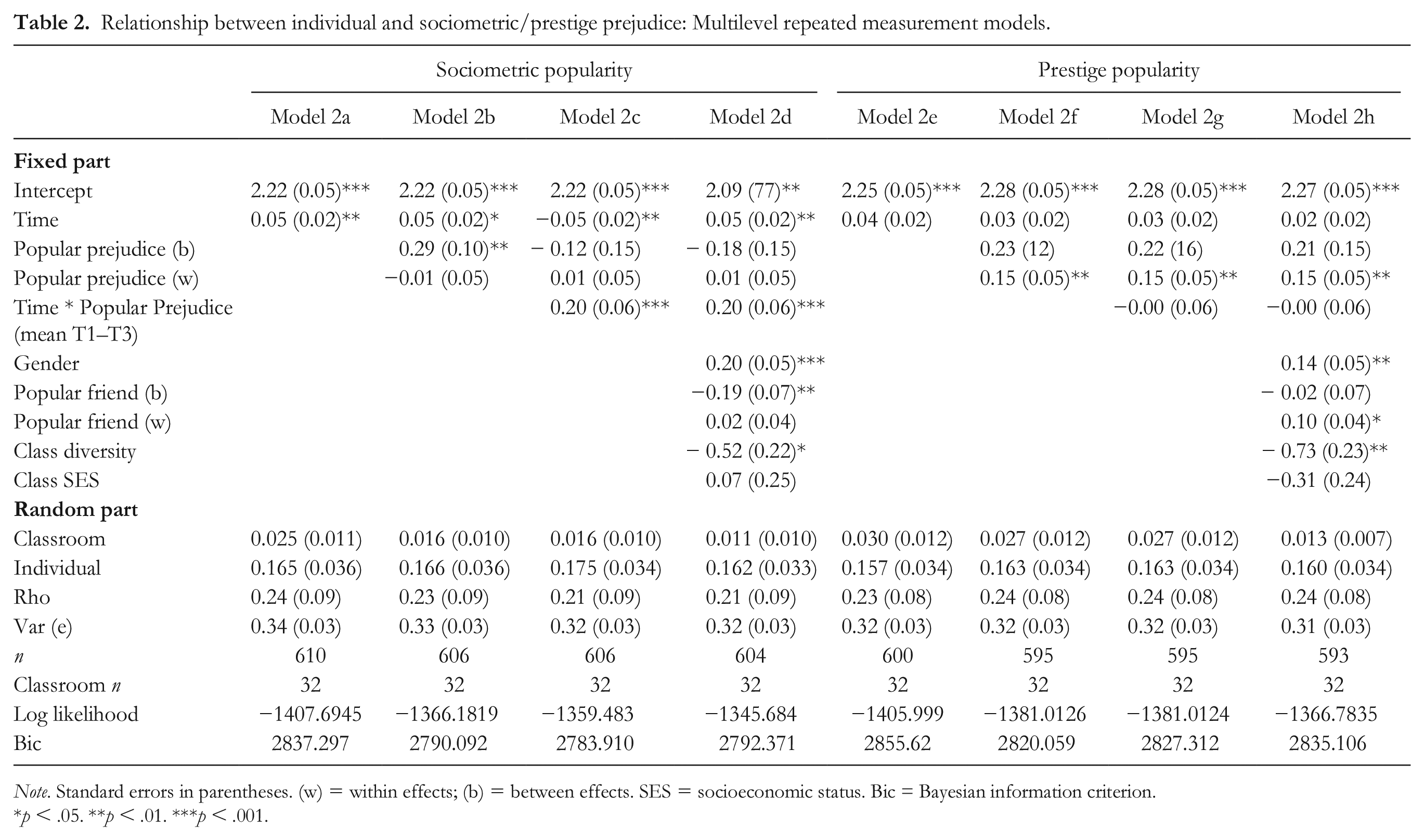
Note. Standard errors in parentheses. (w) = within effects; (b) = between effects. SES = socioeconomic status. Bic = Bayesian information criterion.
p < .05. **p < .01. ***p < .001.
To examine to what extent popular peers influence classmates’ attitudes, we first looked at adolescents who are sociometrically popular. The results in Model 2b (Table 2) reveal a significant positive between-classroom effect of sociometric prejudice on the dependent variable (b = 0.29, SE = 0.10, p < .001). This suggests that individuals in classrooms where the popular group displays higher levels of anti-immigrant attitudes (T1–T3) are also more likely to hold such attitudes. Introducing this variable improved model fit compared to Model 2a (Table 2), which only modelled the linear effect of time, and reduced unexplained variance on classroom level by 36%. In terms of the longitudinal aspects of this relationship, Model 2b provides no support for a within-classroom effect of sociometric prejudice (b = −0.01, SE = 0.05, p = .87), suggesting that changes in sociometric prejudice do not explain changes in individual prejudice T1–T3. Instead, Model 2c supports more gradual attitudinal shifts in response to sociometric prejudice. The significant positive interaction effect between time and the between-classroom measure (b = 0.20, SE = 0.06, p < .001) suggests that the average level of prejudice among the sociometrically popular predicts different developments in individual prejudice T1–T3. As illustrated in Figure 1, classrooms where the popular, on average, score high on the prejudice variable generally develop in a more prejudiced direction, whereas there is little or no change in classrooms where the popular, on average, score low. To control that these findings were not an expression of the general classroom effect, observed for example by Mitchell (2019), we also ran the same models for adolescents outside the top-three group. 3 These models, which are included in the Appendix, displayed no support for a between effect or within effect, and no interaction with time. Controls were introduced in Model 2d (Table 2) but did not change the findings. Boys were, in general, slightly more prejudiced than girls, and individuals who had friends in the top popular group were slightly less prejudiced than those without friends in this group. We also ran separate models where we interacted the between-individual measure for popular friend with popular prejudice, but found no additional effect of friendship relations with the popular (b = 0.31, SE = 0.18, p = .09). In line with previous research, Model 2d (Table 2) revealed a negative effect of classroom diversity; on average, individuals in more heterogeneous classrooms held less anti-immigrant attitudes. Our measure of socioeconomic status displayed no relationship with the dependent variable. 4
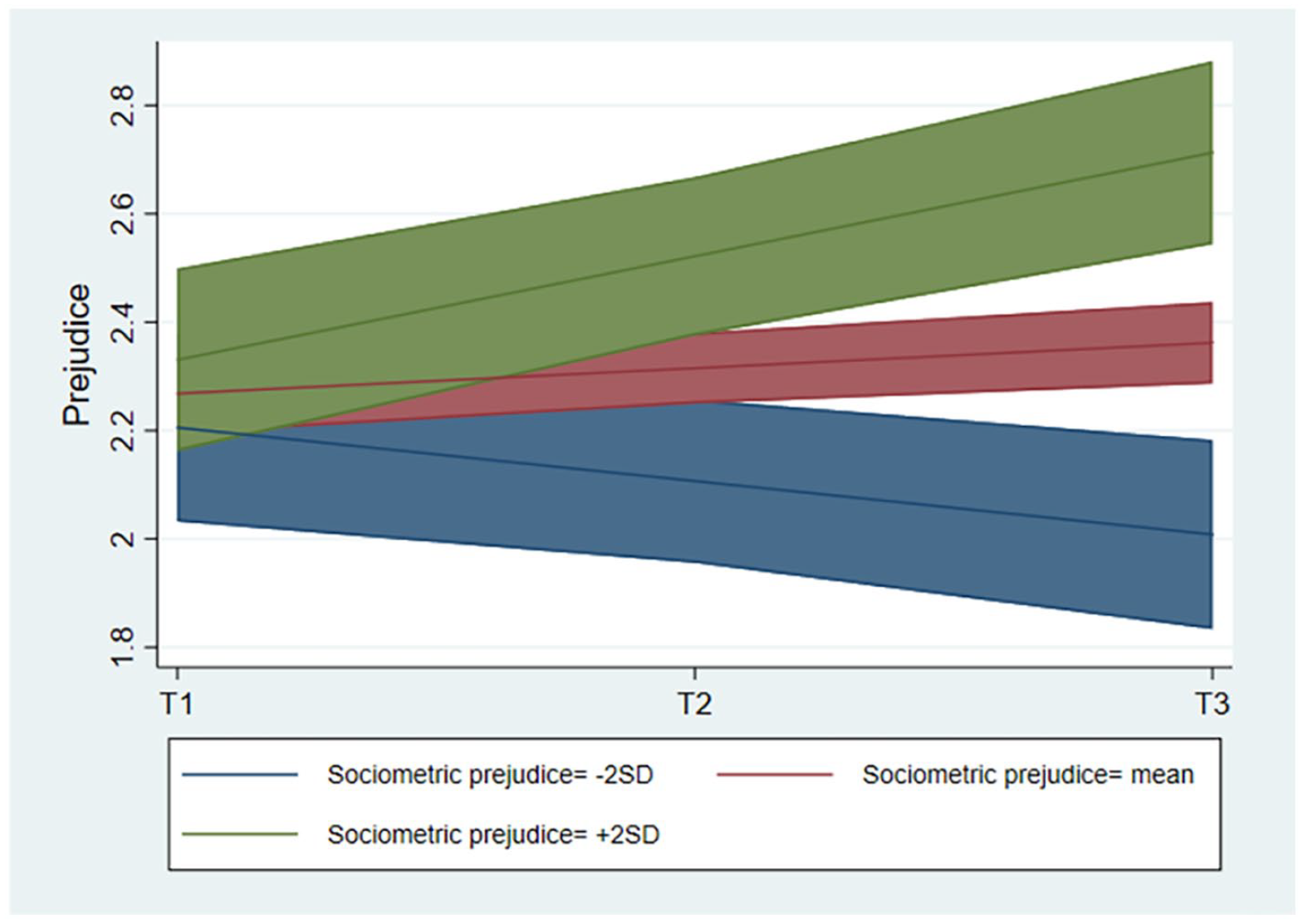
Development in individual prejudice T1-T3 depending on level of sociometric prejudice.
Models 2e–2g (Table 2) examine the role of the prestige popular. Contrary to sociometric popularity, prestige popularity does not explain attitudinal differences between classrooms. Although the coefficients indicate a similar pattern, the between-classroom measure of prestige prejudice is not significantly related to adolescents’ prejudice (b = 0.23, SE = 0.12, p = .054). The within-classroom effect of prestige prejudice in Model 2f is statistically significant and positive throughout the models (b = 0.15, SE = 0.05, p < .01), suggesting that changes in individual prejudice are linked to longitudinal variation in prestige prejudice. Introducing the within- and between-classroom measures in Model 2f reduced unexplained variance at classroom level by 10%, while also improving model fit. The nonsignificant interaction with time in Model 2h (b = −0.00, SE = 0.06, p = .98) suggests that the average level of prestige prejudice in class, again contrary to sociometric prejudice, does not predict different developments in adolescents’ prejudice T1–T3, see Figure 2.
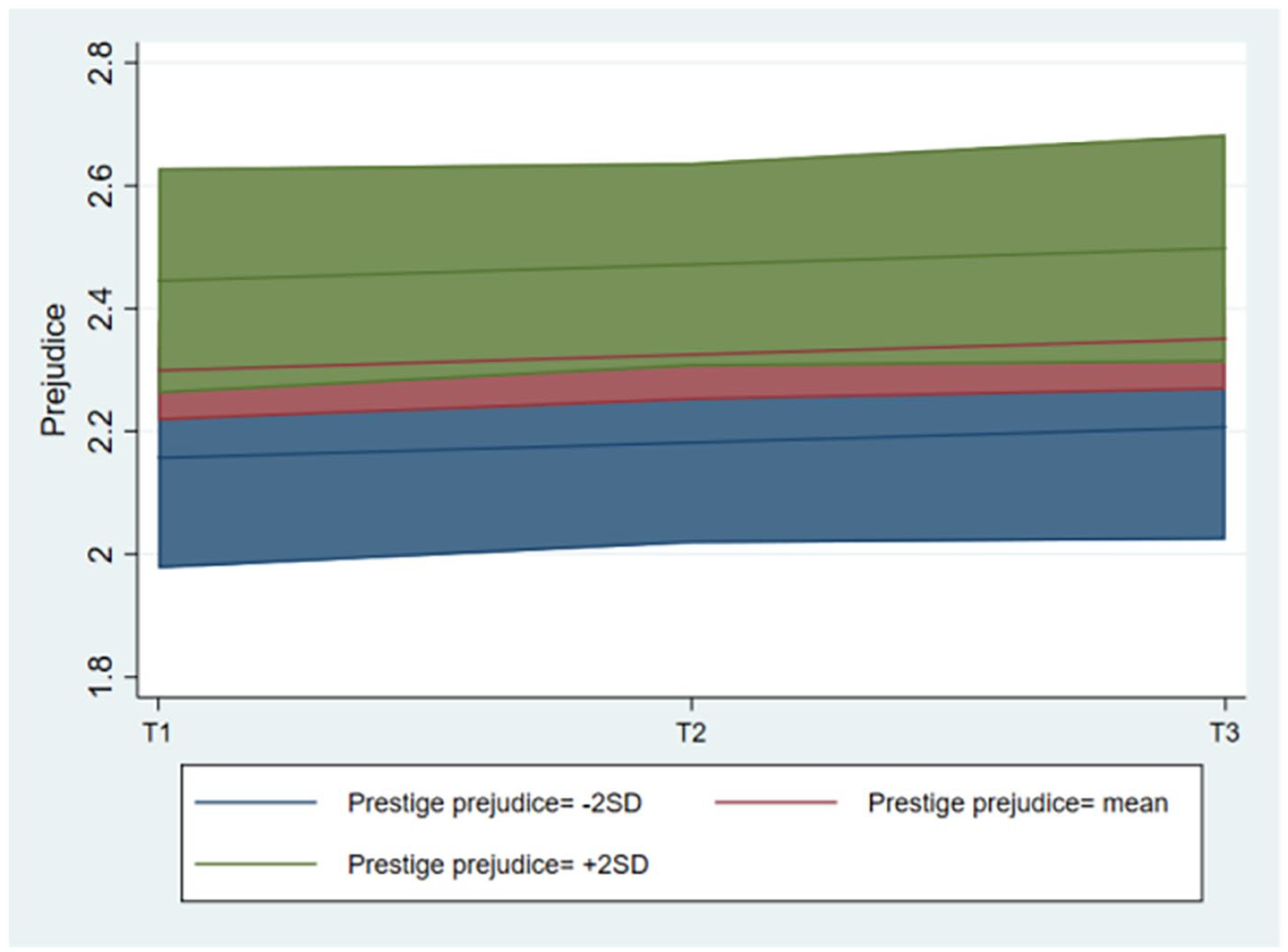
Development in individual prejudice T1-T3 depending on level of prestige prejudice.
In Table 3, we consider the moderating effects of classroom discussions. Results in Model 3a demonstrate how the positive relationship between the average level of sociometric prejudice in a class and individual prejudice is even stronger when political and societal issues are more discussed in the classroom (b = 1.32, SE = 0.51, p < .05). Figure 3 illustrates this relationship revealing that, for classrooms with very little classroom discussions, there are no attitudinal differences related to sociometric prejudice. Instead, such differences arise in classrooms with a relatively high degree of classroom discussions (i.e., above average), indicating that the popular’s ability to influence classmates’ attitudes increases with the degree of classroom discussions. Further, the moderating effect of classroom discussion is stable when introducing the controls in Model 3b (Table 3) as well as when we, in a separate model, allow the sociometric prejudice slope to vary between classrooms (b = 1.31, SE = 0.51, p = .01). Turning to prestige prejudice, we found no significant interaction between classroom discussion and the between-classroom measure (b = −0.48, SE = 0.57, p = .40). Thus, as illustrated in Figure 4, the nonsignificant relationship between prestige prejudice and individual attitudes applied, regardless of the degree of classroom discussion. As we, in earlier models, found support for a within effect of prestige prejudice, we also interacted the within-classroom indicator with both the between- and the within-classroom indicator of classroom discussion, but none of these were significant.
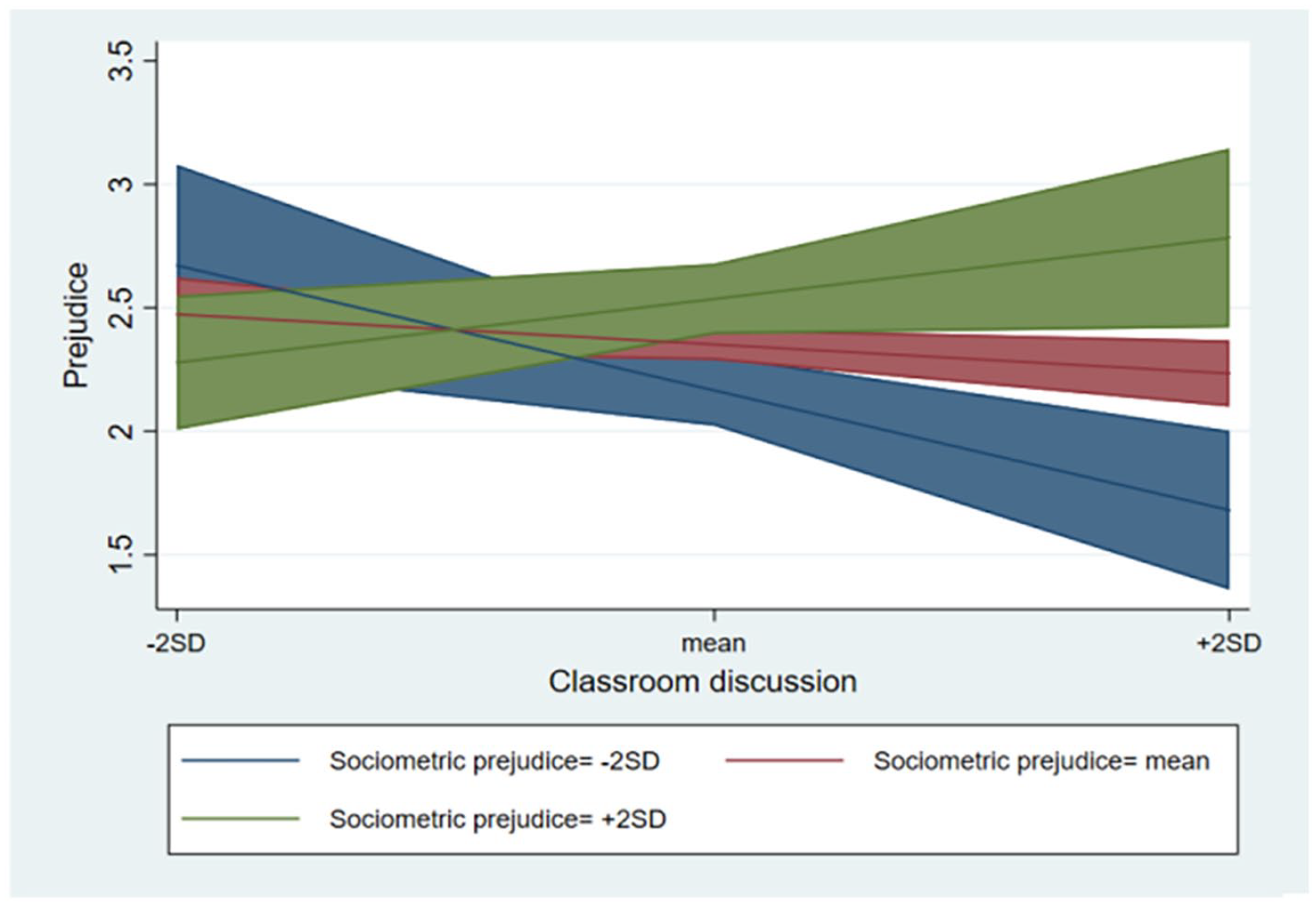
Sociometric prejudice: moderation by classroom discussion.
Moderation by classroom discussion: Multilevel repeated measurement models with interactions.
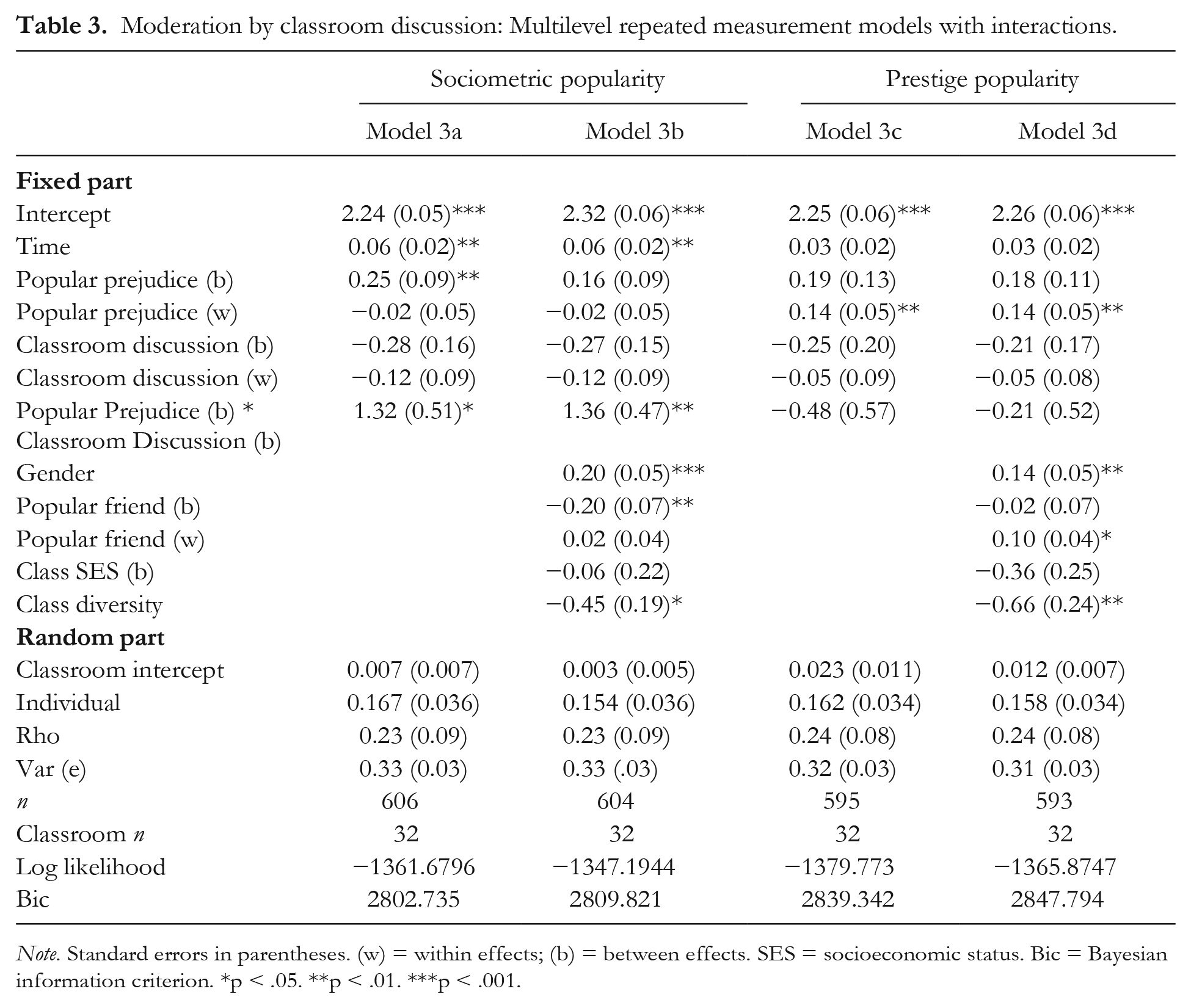
Note. Standard errors in parentheses. (w) = within effects; (b) = between effects. SES = socioeconomic status. Bic = Bayesian information criterion. *p < .05. **p < .01. ***p < .001.
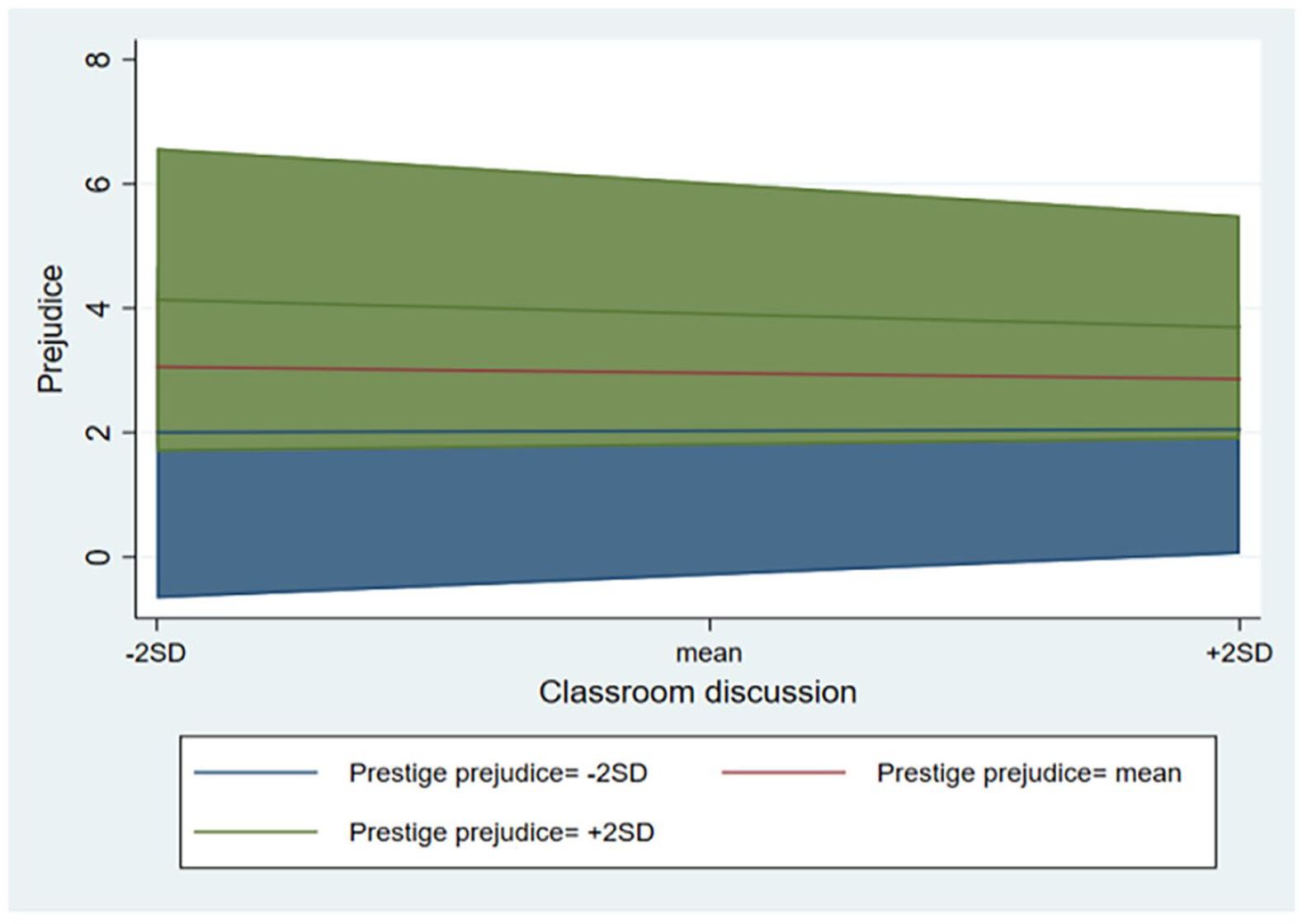
Prestige prejudice: moderation by classroom discussion.
Discussion
Building on previous research identifying classmates as important socializing agents in relation to adolescents’ prejudice, the goal of the current study was to investigate the role of popular classmates in shaping anti-immigrant attitudes. In this research, we focused both on the sociometrically popular, that is, individuals who are popular in the sense that they have many friends, and on the prestige popular—individuals nominated popular by their classmates. The analyses revealed a number of important findings in relation to how social hierarchies influence classroom transmission of anti-immigrant attitudes.
In line with our expectations, we found that popular classmates influenced anti-immigrant attitudes in adolescence. Individuals in classrooms with higher levels of sociometric prejudice both displayed higher levels of prejudice and became more prejudiced over time. The relationship was moderated by classroom discussion, suggesting that as political issues were frequently discussed in class, the sociometrically popular were more successful in steering classmates’ attitudes. Individuals who scored high on prestige popularity, on the other hand, displayed limited influence on classmates’ anti-immigrant attitudes. Prestige prejudice did not significantly predict differences between classrooms, regardless of the degree of classroom discussions, nor did it predict different developments in anti-immigrant attitudes over time. However, unlike sociometric popularity, the prestige popular demonstrated a stable within effect on classmates’ attitudes, meaning that wave-to-wave changes in prestige prejudice were related to wave-to-wave changes in individual prejudice.
The longitudinal approach contributes to extant scholarship by demonstrating that popular classmates influence how prejudice develops over time, but also by revealing differences in how sociometric and prestige prejudice relate to adolescents’ prejudice. The within-classroom effect of the prestige popular suggests that as their attitudes change, either as a result of attitudinal shifts in the popular group or due to changes in who is considered popular, individuals also change their views to match what is currently “popular.” Such attitudinal plasticity has previously been observed in friendship groups (Hjerm et al., 2018; Miklikowska, Bohman, & Titzmann, 2019), and suggests that individuals continuously adjust their position to be in line with the prestige popular. While the prestige popular in this sense are important, as their attitudes can quickly spread to others in class, the long-term consequences of prestige prejudice remain unclear. Indeed, the attitudinal plasticity implies that attitudes can easily change again, in response to new social dynamics. Moreover, that prestige popularity did not predict the general degree or long-term trends casts doubt on its ability to establish more stable classroom norms in relation to anti-immigrant attitudes.
The limited effect of the prestige popular ties in with a recent study showing that prestige popularity has little impact on the transmission of intergroup attitudes between friends (Zingora et al., 2020). Yet, while the authors raise low attitude saliency as a potential explanation, the lack of a moderating effect of classroom discussions in our study suggests a limited effect even if prestige attitudes are salient. However, our measure of discussions is a general one, and we lack detailed information regarding popular individuals’ actual participation. As the prestige popular may remain quiet even in classrooms where political and social issues are frequently discussed, we cannot fully establish how saliency interplays with prestige prejudice. We therefore encourage future studies to develop measures to better account for saliency in relation to attitudes of specific classmates. Future research should also look at how processes that enable adolescents to resist prejudicial peer norms work in relation to popular influence in general, and prestige influence in particular. This concerns particular individuals’ moral development, as previous scholarship has shown that adolescents who apply moral reasoning involving a strong sense of equality and fairness are generally less likely to accept group norms that violate these principles (Killen et al., 2007; Rutland et al., 2010).
As for sociometric prejudice, we found that it explained both levels and trends in anti-immigrant attitudes, but not wave-to-wave shifts. Thus, to the extent that the sociometrically popular influence classmates’ prejudice, they seem to do so through more long-term socialization. Although our data do not allow any closer examination of how influence occurs, the gradual convergence towards sociometric attitudes suggests processes in line with referent informational influence (Abrams & Hogg, 1990), where group members form an understanding of group norms by observing behavior and expressed attitudes of socially central members (Paluck & Shepherd, 2012). Conversely, given how sociometric popularity does not necessarily involve being identified as “popular” by others (Cillessen & Mayeux, 2004), it suggests that the sociometrically popular may be of less immediate interest to individuals who seek to adopt attitudes to raise their own status, which may explain why they—unlike the prestige popular—do not predict wave-to-wave shifts.
Taken together, our results point to the sociometrically popular as main actors in classroom transmission of anti-immigrant attitudes. While previous research has demonstrated that sociometric popularity can boost peer-to-peer influence (Zingora et al., 2020), our study adds the finding that the sociometrically popular also serve as important social referents in the broader classroom context. This finding is consistent with experimental research showing that trained peer educators steer social norms more effectively if they have many social ties (Paluck et al., 2016). Moreover, by controlling for friendship relations, we show that sociometric influence extends beyond a pure friendship effect. Although their many interpersonal relationships are important, they also affect classmates not belonging to their primary group of friends, which indicates that sociometric influence is both a matter of social centrality and status. These dual channels may explain why the sociometrically popular are more influential than prestige popular classmates, whose influence is primarily dependent on status. The dual channels may, for example, imply greater classroom saliency for sociometric attitudes, compared to prestige attitudes. Indeed, their friendship networks bring more, and more intimate, opportunities to convey their thoughts. At the same time, their status in combination with their social skills also make them more visible, and arguably more convincing, in a general classroom setting, which is supported by our finding that the sociometrically popular were more influential in classrooms with more frequent classroom discussions.
Limitations and Conclusions
While our study has many advantages, including its longitudinal design, decomposing within and between effects, distinguishing between sociometric and prestige popularity, and accounting for classroom discussions, we also acknowledge a number of limitations. First, while our data allowed us to follow the same individuals throughout junior high school, we were restricted to three time points. As this implies a full year between data collection times, there may be events and changes relevant to the studied relationships that we did not capture. Relatedly, shifts in popular prejudice may be driven both by shifts in attitudes of popular individuals and by shifts in popularity status. Although the bivariate correlations shown in Table 1—where popular prejudice generally displays stronger relationships with individual prejudice at later points in time—provide support for our interpretation, we acknowledge that shifts in individual attitudes may also influence who is considered popular, and we encourage future studies to develop designs that can account for such an interplay in a more detailed way. Third, our analyses are based on data from a single country. We see no obvious reasons why our findings should not apply elsewhere but acknowledge that immigration issues may be less salient in some contexts, which may inhibit popular classmates’ ability to influence anti-immigrant attitudes as a specific expression of prejudice. Finally, we still know little about individual motives to comply with popular prejudice (or the opposite). While we theoretically discuss a number of ways that the popular may influence others, including providing cues about group norms or about behavior that generates social rewards, we lack possibilities to test these empirically. Thus, future research should seek to more closely establish the mechanisms behind the observed relationships.
Taken together, our study adds to research on how school factors in general (Thijs & Verkuyten, 2014), and interactions with classmates in particular (Mitchell, 2019), contribute to the development of prejudicial attitudes. It demonstrates that popularity status is important to classroom transmission of prejudice, and that sociometrically popular classmates in particular influence anti-immigrant attitudes in adolescence. This suggests that social centrality is more important than sheer prestige, not only with regard to peer-to-peer influence (Zingora et al., 2020), but also when it comes to steering classroom norms. Moreover, our study shows that classroom discussions can facilitate the spread of attitudes from the sociometrically popular to others in class. As for policy implications, these results underscore the importance of classrooms for reducing prejudice and show that a few popular individuals may shift the attitudes of others. Sociometrically popular students, in particular, should therefore be considered when preparing school programs, strategies, or interventions for prejudice reduction, for example, by training them to confront prejudice (cf. Paluck, 2011). When the sociometrically popular hold positive attitudes toward outgroups, these attitudes spread to others both through social contacts and through status, and create classroom norms in favor of equality and tolerance. Teachers may play an important role in identifying popular individuals for training, and in providing opportunities for them to communicate their attitudes. Teachers should therefore get support and training that help them recognize and make use of the classroom’s social dynamics to establish positive classroom norms. In this regard, our study points specifically to the importance of working with political discussions, not only to improve knowledge and increase perspective-taking abilities (Price et al., 2002), but also to facilitate dissemination of popular students’ positive outgroup attitudes.
Footnotes
Appendix
Relationship between individual and control prejudice: Multilevel repeated measurement models.
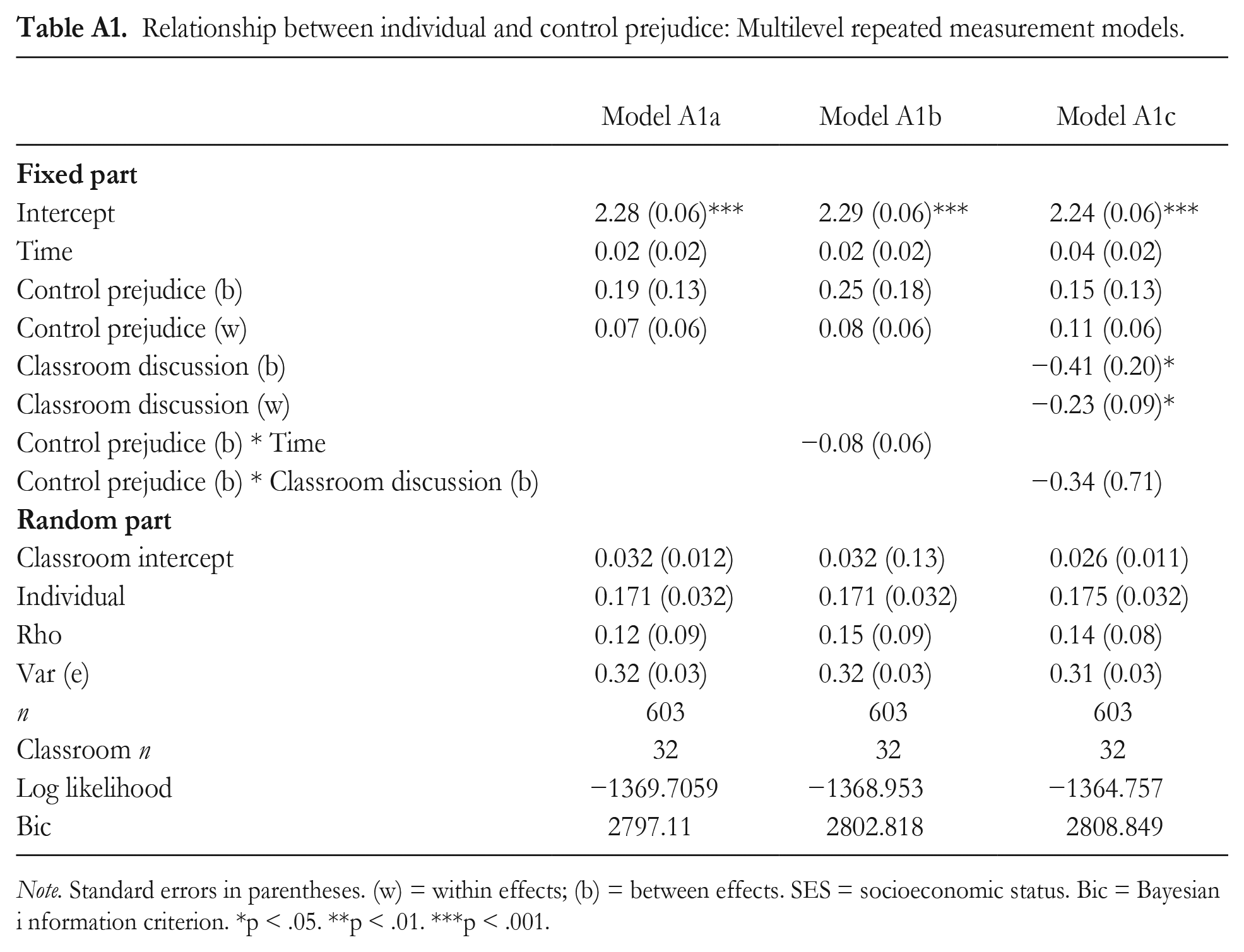
| Model A1a | Model A1b | Model A1c | |
|---|---|---|---|
|
|
|||
| Intercept | 2.28 (0.06)*** | 2.29 (0.06)*** | 2.24 (0.06)*** |
| Time | 0.02 (0.02) | 0.02 (0.02) | 0.04 (0.02) |
| Control prejudice (b) | 0.19 (0.13) | 0.25 (0.18) | 0.15 (0.13) |
| Control prejudice (w) | 0.07 (0.06) | 0.08 (0.06) | 0.11 (0.06) |
| Classroom discussion (b) | −0.41 (0.20)* | ||
| Classroom discussion (w) | −0.23 (0.09)* | ||
| Control prejudice (b) * Time | −0.08 (0.06) | ||
| Control prejudice (b) * Classroom discussion (b) | −0.34 (0.71) | ||
|
|
|||
| Classroom intercept | 0.032 (0.012) | 0.032 (0.13) | 0.026 (0.011) |
| Individual | 0.171 (0.032) | 0.171 (0.032) | 0.175 (0.032) |
| Rho | 0.12 (0.09) | 0.15 (0.09) | 0.14 (0.08) |
| Var (e) | 0.32 (0.03) | 0.32 (0.03) | 0.31 (0.03) |
| n | 603 | 603 | 603 |
| Classroom n | 32 | 32 | 32 |
| Log likelihood | −1369.7059 | −1368.953 | −1364.757 |
| Bic | 2797.11 | 2802.818 | 2808.849 |
Note. Standard errors in parentheses. (w) = within effects; (b) = between effects. SES = socioeconomic status. Bic = Bayesian i nformation criterion. *p < .05. **p < .01. ***p < .001.
Funding
The author(s) disclosed receipt of the following financial support for the research, authorship, and/or publication of this article: This research was supported by grants from the Swedish Foundation for Humanities and Social Sciences (No. P16-0446:1), the Swedish Research Council (No. 2016-04165), and the Swedish Research Council for Health, Working Life, and Welfare (No. 2016-07177).
