




Abstract
Even when overt sexism and prejudice become rarer, social norms that perpetuate inequality are remarkably persistent. The present research lays out one of the subtle ways in which sexist norms may spread through society, by pointing to the role of responses to sexism. We investigate how third parties infer social norms about sexism when observing social interactions. In three studies among male students (Studies 1 and 2) and male and female students (Study 3), we demonstrate that subtle variations in how people respond to a sexist statement can have a substantial influence on inferences third parties make about sexist norms. Specifically, when a sexist statement is made and the conversation continues in a smoothly flowing fashion, third parties infer that this opinion is shared among interaction partners, perceived as appropriate, and that sexism is normative among them. However, when a sexist statement is followed by a brief silence that disrupts the flow of the conversation, observers think that it is contentious and that sexism is neither shared nor normative. Importantly, the effects of the manipulation generalized to the perception of sexist descriptive norms among male students in general. We conclude that social and cultural norms are not just inferred from conversation content, but also from conversational flow.
Everyday social interactions play a central role in shaping and transmitting social and cultural norms (Kashima et al., 2007). Even by merely observing others interact, people can learn the appropriate behaviour for men and for women, and make inferences about commonly held views regarding gender roles (Bussey & Bandura, 1984; Kashima et al., 2015). Little research attention has, however, been dedicated to the role of responses to sexism. In this paper we suggest that the normative influence of sexist statements is partly determined by the immediate social response: even in the absence of explicit agreement, observers may infer consent. Specifically, the present paper aims to demonstrate how subtle variations in responses to sexist expressions may shape whether passive observers infer sexist or egalitarian norms. Moreover, we show that norm inference in specific observed conversations can be generalized to norms in the wider population. Finally, we explore the impact of these conversations on individuals’ personal endorsement of gender equality policies.
Socialization Through Observing Social Interactions
The idea that socialization occurs through social interactions is at the core of social, developmental, and cultural psychology (e.g., Bandura, 1977; Cialdini & Trost, 1998; Kashima et al., 2015). For socialization to occur, however, one does not need to be part of the interaction: indeed, both social and developmental psychologists have pointed to the importance of observing behaviour in understanding social norms and learning behaviour (Bandura, 1977; Kashima et al., 2015). Research on the perpetuation of sexism in society has, for instance, demonstrated the influence of observing gender stereotypical exemplars (Galdi et al., 2014; Scharrer, 2005), of sharing sexist ideologies (Calogero & Jost, 2011; Glick & Fiske, 2001), and of sexist humour (Ford, 2000).
However, in order for behaviours or expressions to be considered normative, it is also important to take into account how others respond to these behaviours and expressions. Imagine a situation in which you are attending a meeting of a group for the first time, and someone cracks a sexist joke and all present laugh and praise the joker. Contrast this to a situation where everyone objects to the joke. You are more likely to infer that sexism is acceptable in this group in the former than in the latter. More generally, we propose that normativity of an idea or practice is grounded (i.e., established as being part of the common ground) when someone presents a certain idea or practice and others—either explicitly or implicitly—accept it without signalling an objection (Clark, 1996; Kashima et al., 2007). In other words, unless others signal some objection to an expressed idea or displayed practice, the idea or practice may be regarded as normative, that is to say, that responders consider it as socially acceptable.
If our proposal is true, it raises an important question because, in everyday life, sexist communication is often neither confronted by victims nor by bystanders (Becker et al., 2014; Swim & Hyers, 1999). What are the social psychological consequences of such nonconfrontation? If someone observes different patterns of responses to a sexist communication in a group setting, would this observation influence the observer’s perception of the normativity of sexism in the group? To date, no studies have examined how responses to sexist statements shape perceived normativity of sexism. In particular, we are interested in the following questions. First, does the presentation of a sexist statement and others’ acceptance without objection promote the perceived normativity of sexism among those who are involved in the conversation, compared to a situation in which no sexist statement is made? Second, if this is the case, would the perceived normativity generalize to a larger group or the broader society?
The Role of Flow Disruptions in Norm Regulation and Grounding
In addition, we also ask how this potentially negative effect of an unchallenged sexist statement can be nullified. It would be obvious that explicit objections would combat this effect, but recent research suggests that in many cases grounding is achieved by more subtle means rather than by explicit agreement or disagreement. Here, by subtle cues we mean micro-level disruptions to conversational flow and the grounding process, such as a brief silence or interruption (Koudenburg et al., 2013b, 2017). Research shows that people are very adept at detecting such micro-level cues that signal whether the audience shares the speaker’s viewpoints (Koudenburg et al., 2011, 2013b). Accordingly, when conversation runs smoothly, people are likely to infer that speaker and audience are on the same wavelength and have a shared understanding regarding the issue (Koudenburg et al., 2011, 2013a). On the other hand, when conversational flow is disrupted, for instance because the audience remains silent for a brief moment after a particular statement, those who attend the conversation infer that the statement may have been controversial (Koudenburg et al., 2011, 2013b). Thus, the microdynamics that influence the flow of a conversation, such as silences, act as subtle cues by which an audience can communicate their acceptance of a statement (Koudenburg, 2018; Koudenburg et al., 2017).
Previous research has shown that these microdynamics can also regulate social norms. Specifically, when a comment in a conversation is responded to with a brief silence that disrupts the flow of the conversation, people will infer that a norm has been breached. When that occurs, communicators who are highly motivated to belong to the group will shift their opinions so they are in line with group norms, to reduce the threat that arises from such disagreements (Koudenburg et al., 2013b). This research thus shows that communicators themselves are sensitive to the microdynamics of flow disruption. But can similar microdynamics also cause shifts in perceived norms among third-party observers?
The Present Research
In three studies, 1 we examined how expressions of, and responses to, a sexist statement in a video fragment can shape inferences of social norms regarding sexism among male students. We argue that the grounding of a statement without a signal of objection means the statement is socially accepted, which implies both that this is what “we believe” or “what we do” (i.e., descriptive norm) and that this “is what we approve of” (i.e., injunctive norm; Cialdini et al., 1991). Social acceptance thus implies both descriptive and injunctive norms, which have been demonstrated to be important predictors of both attitudes and behavioural tendencies (Goldstein et al., 2008; Turner, 1991).
In our studies, we specifically examined the influence of the conversation flow on group norms (injunctive and descriptive) immediately after the sexist expression. We studied this in the context of an informal conversation between male students in the Netherlands, where we expected a baseline norm of moderate support for gender equality. We constructed three conditions. In the control condition, the male students made no sexist statement. In both experimental conditions, one of the students made a blatantly sexist statement; however, the other students’ response to the statement differed between experimental conditions. In the flow condition, the others continued the conversation without disruption in a smoothly flowing fashion as if nothing unusual was said; in the disrupted flow condition, they disrupted the conversation by pausing for 3.5 seconds 2 before they continued the conversation in the same way as in the flow condition. First, we expected that in the flow condition, observers of this conversation would infer that the statement is socially accepted, in the sense that communicators all tacitly agree with the sexist statement, and that the statement is appropriate to express in the conversation. Second, we expected that, in the disrupted flow condition, observers would take the silence as a subtle objection to the sexist statement, and therefore infer the statement breaches the gender equality norm. We formulated Hypotheses 1 and 2, which were tested in three studies.
Hypothesis 1: In the flow condition, observers will infer that the male students in the conversation endorse a sexist norm more than in the control condition, where no sexist statement is made.
Hypothesis 2: A disruption of flow will nullify this effect, leading to significantly lower endorsement of a sexist norm compared to the flow condition, but no different from the control condition.
The third aim of this research was to test whether the effects of perceiving a sexist norm in video conversations would generalize beyond the particular group of male students in the video to male students in general. To this end, we assessed perceived injunctive and descriptive norms regarding the sexist statement in the male student population (Studies 2 and 3), and more general perceptions of benevolent, hostile, and modern sexism among students in general (Study 1).
Hypothesis 3 (mediation hypothesis): Observers in the flow condition will infer increased endorsement of a sexist norm among students in the video, which will generalize to a perception of a more sexist norm in the general (male) student population.
Fourth, we explored the effects of expressions of, and responses to, sexist statements on participants’ personal attitudes. We measured this in terms of their personal agreement with the statement (Study 1) and their endorsement of gender equality policies more generally (Studies 2 and 3).
Finally, we explored whether gender of the participant influenced their norm inferences (Study 3).
Study 1
Methods
Participants and design
Participants were 74 male students (Mage = 22.27, SD = 3.21) enrolled at the business school of a Dutch university. 3 They received partial course credits for their participation. Half the participants were Dutch (n = 39), the others Romanian (n = 8), Bulgarian (n = 5), German, (n = 4), Italian (n = 4), or had a different nationality (n = 14). The study was conducted in English. Students were randomly allocated to one of three conditions of a study in which they were asked to watch a conversation between five male students on video. We manipulated the occurrence of a flow disruption after one of the actors had made a sexist statement (flow vs. disrupted flow vs. control). In the control condition, participants watched the same video but no sexist statement was made.
Procedure
Participants individually entered the laboratory where they were introduced to a female confederate with whom they would later engage in a task. 4 They were then brought to an individual room where they watched a 4-minute video of five male students engaging in a conversation about work experiences. About 3 minutes into the conversation, one of the male students made a sexist statement: “Most women don’t have those natural leadership capacities.” We manipulated the continuation of the conversation after this statement (see also Koudenburg et al., 2011, 2013b, 2014): in the disrupted flow condition, the male students remained silent for 3.5 seconds after which they continued the conversation without revealing their opinion on the statement. In the flow condition, the conversation continued in a similar fashion, but we edited the video such that no silence was discernible, that is, the conversation continued with a smooth conversational flow. In the control condition, participants watched the same video, which was now edited to remove the sexist statement. After watching the video, participants completed a computerized questionnaire assessing the extent to which the statement reflected a descriptive or injunctive group norm. We then assessed participants’ perceptions of sexism in the general student population with a paper-and-pencil questionnaire, which was ostensibly part of a different study (to conceal the purpose of the study). Finally, participants listed their demographics and were fully debriefed.
Dependent variables
After providing some demographics, participants completed a questionnaire. 5 Unless specified differently, participants indicated their agreement with items on a 7-point scale (1= strongly disagree, 7 = strongly agree).
Sexist norm perceptions and personal attitude
We assessed perceived normativity of the sexist statement by listing the target sexist statement among four filler statements (two of which had also occurred in the conversation) and asking participants to indicate whether each statement had been in the group conversation (yes/no). 6 Following this, participants indicated their agreement with the items: “This opinion was appropriate to express in the group conversation” (injunctive norm), “I think the group members share this opinion” (descriptive norm), and “I share this opinion” (personal attitude).
Sexist norm generalization
To assess participants’ perceptions of the norms regarding sexism among students in general, we employed the 22-item Ambivalent Sexism Inventory (ASI; Glick & Fiske, 2001). The scale was adjusted to assess participants’ perceptions of whether most students would agree with the items (1 = most students would strongly disagree, 7 = most students would strongly agree). The ASI assesses hostile sexism, an obvious and old-fashioned form of sexism (α = .73; e.g., “Most women interpret innocent remarks or acts as being sexist”), and benevolent sexism, which is a paternalistic view on women (α = .71; e.g., “Women should be cherished and protected by men”). In addition, we slightly reworded the nine-item Modern Sexism Scale (Becker & Wagner, 2009) to examine the belief that most students would agree that gender equality has been reached and sexist discrimination is not problematic anymore in Western countries (α = .78; e.g., “Discrimination against women is no longer a problem in the Netherlands”).
Results
Sexist norm perception and attitudes
See Table 1 for descriptive statistics and Figure 1 for a graphical representation of the means and 95% CIs. Significant between-condition differences were found for the injunctive norm, F(2, 71) = 4.40, p = .016, η2p = .11, and the descriptive norm, F(2, 71) = 3.81, p = .027, η2p = .10. Supporting H1, pairwise comparisons revealed that participants in the flow condition experienced the statement as more normative than those in the control condition, which was reflected on both the injunctive norm, Δ = 1.21, SE = 0.41, p = .004, and the descriptive norm, Δ = 1.12, SE = 0.43, p = .011. As predicted by H2, a disruption of flow partially nullified this effect: less sexist norms were inferred compared to the flow condition, a difference that was statistically significant for the descriptive norm, Δ = 0.88, SE = 0.42, p = .041, but not for the injunctive norm Δ = 0.64, SE = 0.40, p = .117. Further supporting H2, we found no differences between the disrupted flow condition and the control condition (Δ injunctive norm = 0.57, SE = 0.41, p = .17; Δ descriptive norm = 0.24, SE = 0.43, p = .584).
Means and standard deviations per condition on perceived norms within the group, personal attitudes, and perception of sexism among male students in Study 1.
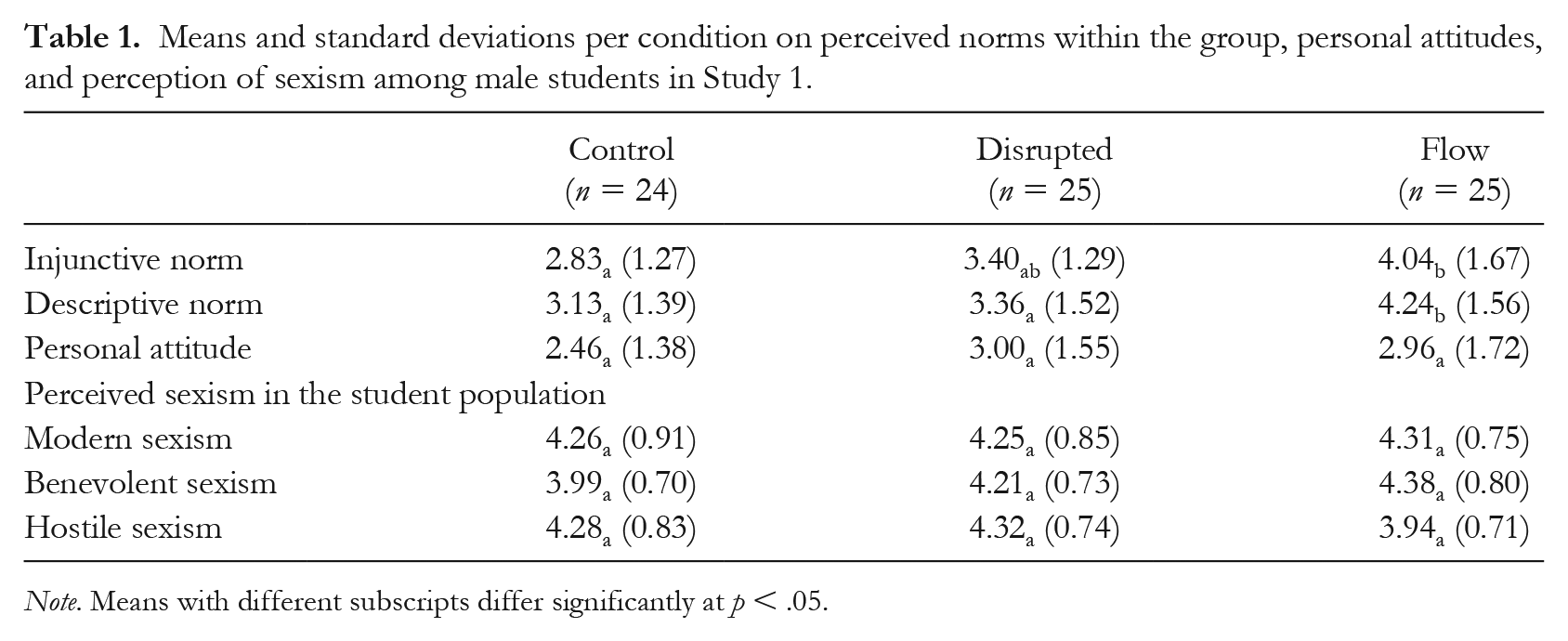
Note. Means with different subscripts differ significantly at p < .05.
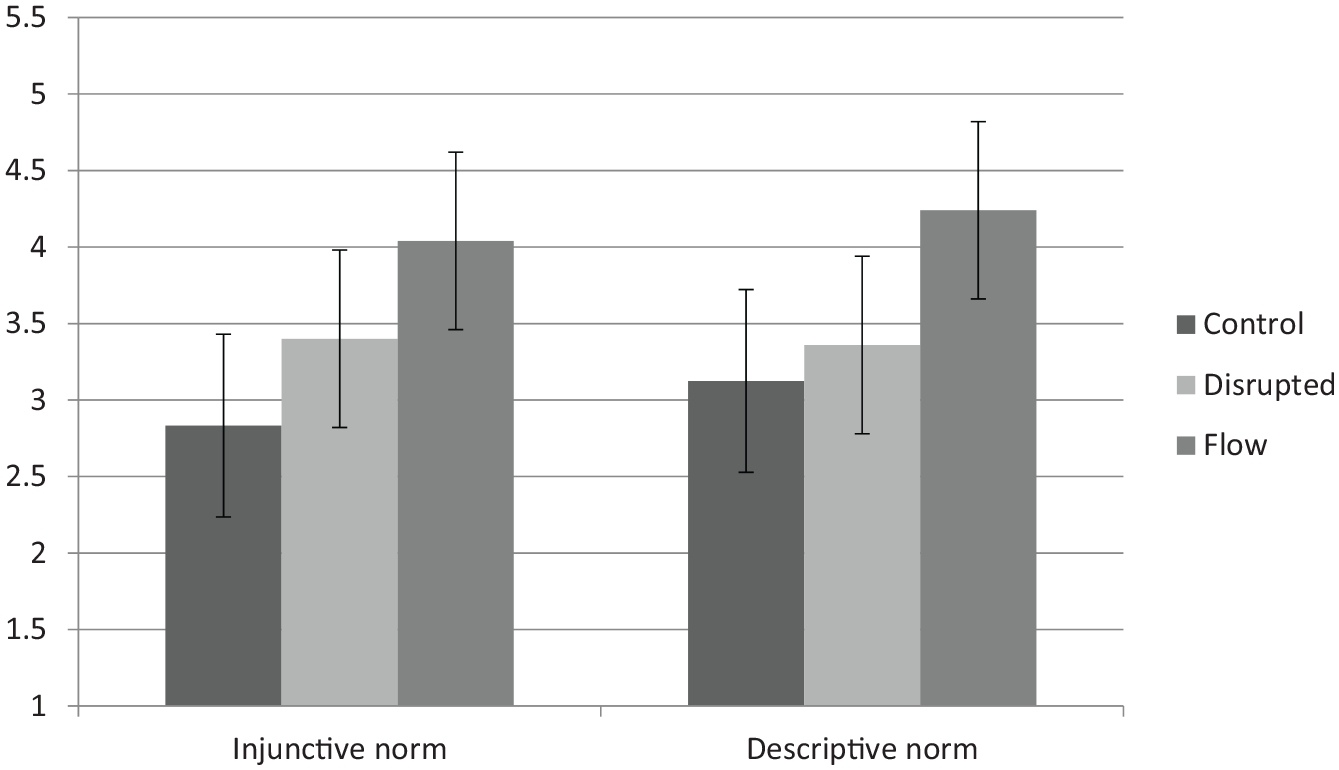
Condition means and 95% confidence intervals for injunctive and descriptive norms in Study 1.
ANOVAs indicated no between-condition differences on personal attitudes, F(2, 71) = 0.91, p = .407, η2p = .03.
Sexist norm generalization
No significant between-condition differences were found for the perceived sexism scales; hostile: F(2, 70) 7 = 1.79, p = .174, η2p = .05; benevolent: F(2, 70) = 1.60, p = .21, η2p = .04; modern: F(2, 70) = 0.04, p = .962, η2p = .001.
Discussion
Results of Study 1 demonstrate that when a speaker makes an overtly sexist comment and the conversation continues smoothly immediately afterwards, observers infer an implicit acceptance of the statement: in line with H1, they report that the opinion is more likely to be shared among the male students in the conversation (descriptive norm inference) and more appropriate (injunctive norm inference) in the given situation, compared to when such sexist statement does not occur.
Furthermore, we hypothesized that observing the occurrence of a brief silence after someone has made a sexist comment is experienced as a subtle rejection (e.g., Koudenburg et al., 2011), and thereby reinforces the norm of gender equality. In partial support of Hypothesis 2, we find that in the disrupted flow condition, people infer that sexist beliefs are less shared than in the flow condition (and, to a smaller extent and not significantly so, consider it somewhat less appropriate). Moreover, both descriptive and injunctive norms in the disrupted flow condition do not differ from a control condition in which no sexist statement was made.
In this study, we did not find a direct effect of flow disruption on perceived norms of the whole student population. Possibly, the adjusted sexism measures were too far removed from the manipulated situation to be affected by it. Indeed, the perceived sexism measures assessed norms of the whole student population (including females), whereas the video involved a conversation among males only. Because it is likely that sexist norms spread differently among males and females, Study 2 focused on generalization to the male student population only.
Study 2
Study 2 aimed to replicate Study 1 by using the same paradigm on a slightly different sample, namely psychology students rather than business students. We were interested in finding out whether a subtle manipulation of conversational flow would also affect a population of students for whom we expected initial norms to be more in favour of gender equality. In our sample, the perceived descriptive norm (i.e., perceived agreement with the statement “Most women don’t have those natural leadership capacities”) in the control condition was, M = 3.13, SD = 1.39, in the business school sample, compared to, M = 2.13, SD =1.15, in the psychology sample (both measured on a 7-point scale).
Moreover, in Study 2 we measured generalization to the population of male students only. This time, rather than using somewhat distant sexism measures, we assessed the extent to which participants expected male students in general to share the expressed statement and to feel the expressed statement was appropriate to express in a conversation among male students. Finally, Study 2 explored the role of microconversational tools in changing attitudes regarding gender equality policies.
Methods
Participants and design
Participants were 74 male students (Mage = 21.58, SD = 3.42) enrolled in the psychology program of a Dutch university. Most participants were of Dutch (n = 25) or German nationality (n = 30), the remaining students were British (n = 4) or had a different nationality (n = 15). The stimulus materials and procedure were similar to Study 1. 8 We used the same three conditions but assessed different dependent variables.
Dependent variables
We measured both perceived descriptive and injunctive sexist norms within the particular group of male students in the video, as in Study 1. In addition, to examine the generalization of norm perceptions, we measured the perceived sexist norms in the population of male students with two items reflecting the descriptive norm (“I think most male students would share this opinion”) and the injunctive norm (“In an everyday conversation with male students this opinion would be appropriate to express”). Participants indicated their agreement with the statements on a 7-point scale (1 = strongly disagree, 7 = strongly agree).
After this questionnaire, participants were presented with an abstract of the (slightly edited) policy plan from the European Commission, titled “Women on Boards” followed by an assessment of their support for gender equality policies. Support for gender equality policies was assessed by asking to what extent participants agreed with five statements (1= strongly disagree, 7 = strongly agree): “I think that legislative action is important to counteract the gender inequality,” “It is good to have gender equality policies,” “I would support a policy such as the women’s quota of 30% in my country,” “I would be okay with being turned down for a job when an equally qualified woman is favoured for the job because of the women’s quota policy,” “I would be willing to work at an organization with an affirmative action plan” (Cronbach’s α = .77).
Results
Sexist norm perception
See Table 2 and Figure 2 for descriptive statistics and graphical representation of the means and 95% CIs. ANOVAs indicated significant between-condition differences for the descriptive norm within the group, F(2, 71) = 8.28, p = .015, η2p = .19. In line with H1, pairwise comparisons of means revealed that, in the flow condition, participants perceived that the sexist opinion was more shared by the members of the group than in the control condition, Δ = 1.72, SE = 0.43, p < .001 (descriptive norm inference). Supporting H2, when flow was disrupted, the statement was perceived as less shared than in the flow condition, Δ = 1.08, SE = 0.42, p = .013, but no more shared than in the control condition, Δ = 0.64, SE = 0.43, p = .14. No between-condition differences were found for injunctive norms (Δ control vs. flow = 0.53, SE = 0.43, p = .217; Δ control vs. disrupted = 0.25, SE = 0.43, p = .556; Δ flow vs. disrupted = −0.28, SE = 0.42, p = .511).
Perceived norms among the male students in the video, among male students in general, and support for gender equality policies: Study 2.
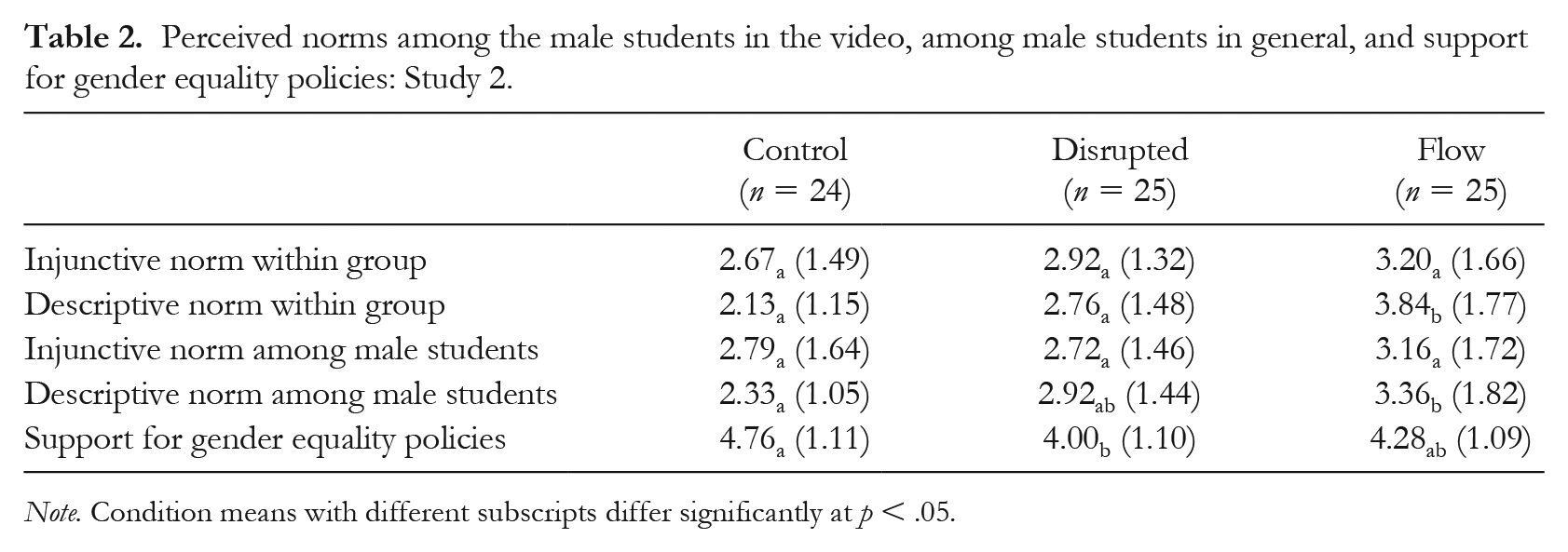
Note. Condition means with different subscripts differ significantly at p < .05.
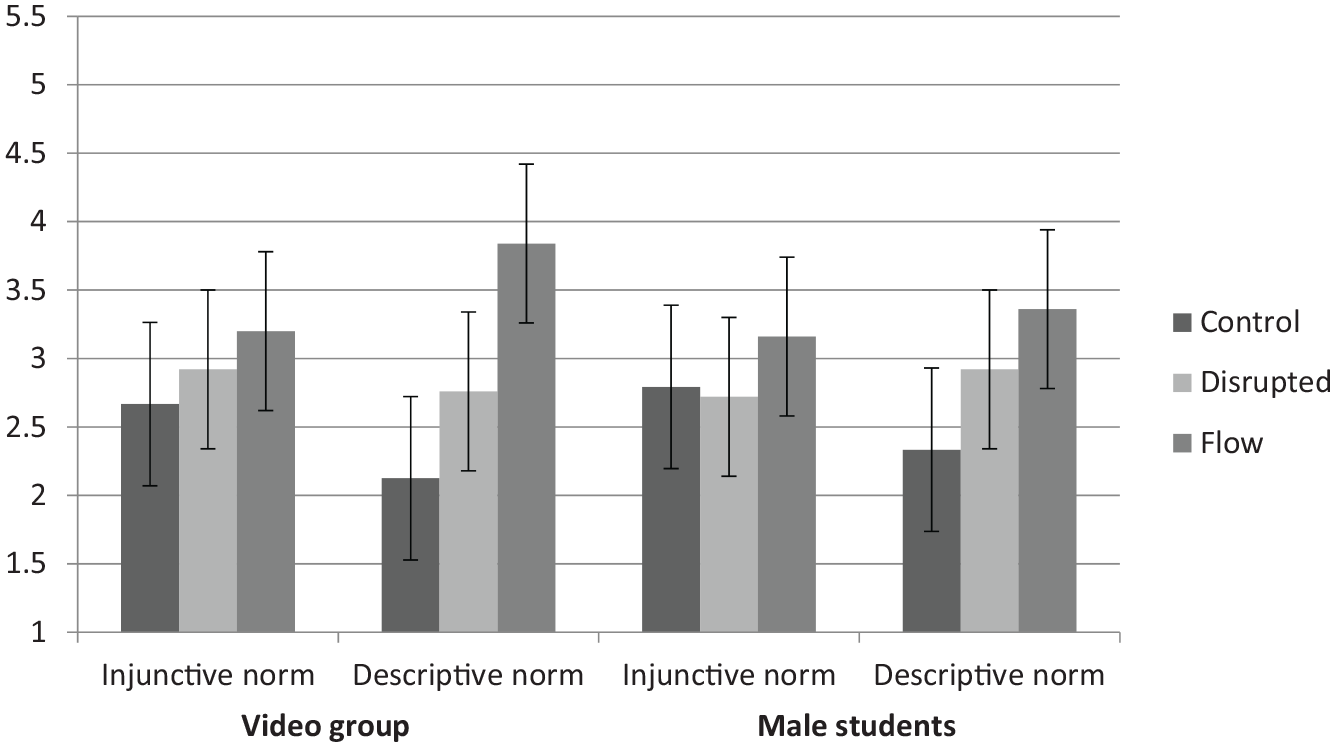
Condition means and 95% confidence intervals for perceived appropriateness and perceived sharedness of the sexist opinion within the specific group in the video and among male students in general in Study 2.
A similar pattern of results with marginally significant between-condition differences was observed for the descriptive norm among male students in general, F(2, 71) = 2.97, p = .058, η2p = .08. Pairwise comparisons revealed that participants perceived more sexist descriptive norms among male students in the flow condition (vs. control), Δ = 1.03, SE = 0.42, p = .018. In the disrupted flow condition, the inferred sexist descriptive norms did not differ from control (Δ = 0.59, SE = 0.42, p = .169). The difference between the flow and the disrupted flow condition was not significant, Δ = −0.44, SE = 0.42, p = .296. The perceived injunctive norm among male students did not vary across conditions (Δ control vs. flow = 0.37, SE = 0.46, p = .426; Δ control vs. disrupted = 0.07, SE = 0.46, p = .877; Δ flow vs. disrupted = −0.44, SE = 0.46, p = .338).
Support for gender equality policies
An ANOVA on support for gender equality policies indicated marginally significant between-condition differences, F(2, 71) = 2.96, p = .058, η2p = .08. The pattern of means was, however, somewhat different. Specifically, it appeared that both experimental conditions yielded attitudes more in line with the statement (i.e., more sexist) compared to the control condition. The disrupted flow condition differed significantly from control, Δ = −0.76, SE = 0.32, p = .019, whereas for the flow condition, a trend in similar direction appeared, Δ = −0.48, SE = 0.32, p = .133. No difference between the flow and disrupted flow conditions was found, Δ = −0.28, SE = 0.31, p = .372.
Indirect effects
To test Hypothesis 3, we examined whether norm perceptions within the target group generalized to perceptions of the descriptive norm among male students. Because there were no direct effects on injunctive norms among male students in general, we did not pursue this mediational path. To create a measure for norm perceptions of the target group, we combined the injunctive and descriptive norm items (r = .37). 9 We dummy-coded both experimental conditions (D1: flow = 1, disrupted = 0, control = 0; D2: flow = 0, disrupted = 1, control = 0). We probed the indirect effects of D1 (while including D2 in the model) on the perceived descriptive norms among male students in general via the perceived norm among students in the video (see Figure 3; Hayes, 2018, PROCESS Model 4). The partially standardized indirect effect for descriptive norms was estimated at 0.31, bootstrapped SE = 0.17, 95% CI [0.06, 0.70]. This suggests that when a sexist statement was followed by a smooth flow of conversation, this increased the perceptions that this statement was shared and considered appropriate among students in the video, and these perceptions were generalized to descriptive norms in the male student population.
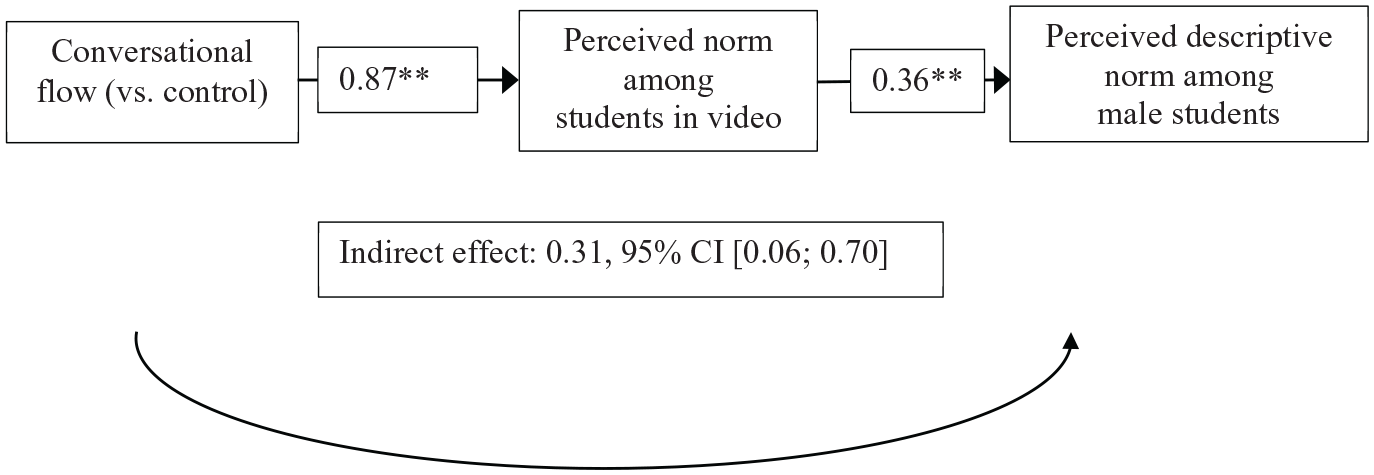
Indirect effect of the flow manipulation (vs. control) via perceived norms (injunctive and descriptive) among the students in the video on perceived descriptive norms among male students in general in Study 2.
Discussion
Study 2 replicated the flow effects and showed that the inference that the conversing group holds sexist norms generalizes to perceptions that the male student population as a whole shares these beliefs too (although the effect is smaller for the population, as would be expected).
A different pattern appeared for male participants’ personal endorsement of policies supporting gender equality: here, the results suggested that observing a sexist statement might decrease support for gender equality policies, regardless of the response of the others in the conversation. This was an unexpected finding, which we examined again in Study 3.
At this stage, we have broadly replicated the predicted effects, but clearly a limitation of the studies so far is that both have small samples, amplifying risks of both Type I and Type II errors. A replication with a bigger sample seems in order. This also provides an opportunity to check whether the effect generalizes to female students.
Study 3
Study 3 was an attempt to replicate the results in a larger sample. This also offered the opportunity to explore whether outgroup observers, that is, females, would make similar inferences from conversational dynamics. We formulated an additional hypothesis to test whether the pattern of Study 2 on gender equality policies would replicate; Hypothesis 4: Being exposed to a sexist statement decreases support for gender equality policies among male students, regardless of how other male students respond to this statement. The hypotheses (Hypothesis 1–4) and analysis plan were preregistered at https://osf.io/fvk84. 10 The tests on whether norm perceptions were moderated by participants’ gender were preregistered as exploratory.
Methods
Participants and design
Participants were 187 students enrolled in the psychology program of a Dutch university. Most participants had Dutch (n = 66) or German nationality (n = 74). Fourteen participants who failed to remember the target statement were excluded, retaining a final sample of 173 participants for data analysis (Mage = 20.17, SD = 2.56; 117 female, 55 male, one nonbinary, two did not indicate gender). Power analysis with G*Power suggested that we required 202 participants for a power of .90 to detect an effect of d = 0.44 (the effect size of injunctive norms and personal attitudes obtained in a meta-analysis across Studies 1 and 2). We terminated data collection slightly before this sample was obtained, because enrollments in the study slowed down. The current sample size yields a power of .86 with an effect of d = 0.44.
The stimulus materials and procedure were similar to Study 2, with the exceptions that Study 3 was conducted online and we only assessed the key dependent variables: (a) perception of descriptive and injunctive sexist norms within the group, (b) within the male student population in general, (c) and support for gender equality policies (Cronbach’s α = .89).
Results
Sexist norm perception
Table 3 and Figure 4 contain the descriptive statistics and show the graphical representation of the means and 95% CIs. Hypotheses were confirmed. ANOVAs indicated significant between-condition differences for the descriptive norm within the group, F(2, 172) = 11.05, p < .001, η2p = .11, and the injunctive norm within the group, F(2, 172) = 17.37, p < .001, η2p = .17. Pairwise comparisons showed that, confirming H1, participants in the flow condition thought that the group members shared the sexist opinion more than those in the control condition, Δ = 0.98, SE = 0.27, p < .001 (reflecting descriptive norm inference). Moreover, in the flow condition, participants felt the sexist statement was more appropriate to express in this group than in the control condition, Δ = 1.41, SE = 0.28, p < .001 (reflecting injunctive norm inference). Furthermore, supporting H2, when flow was disrupted, the sexist statement was perceived as significantly less shared among group members (Δ = 1.15, SE = 0.27, p < .001) and less appropriate to express (Δ = 1.51, SE = 0.29, p < .001) than in the flow condition, but not more shared (Δ = −0.17, SE = 0.26, p = .517) nor more appropriate to express (Δ = −0.10, SE = 0.28, p = .731) than in the control condition.
Perceived norms among the male students in the video, among male students in general, and support for gender equality policies: Study 3.
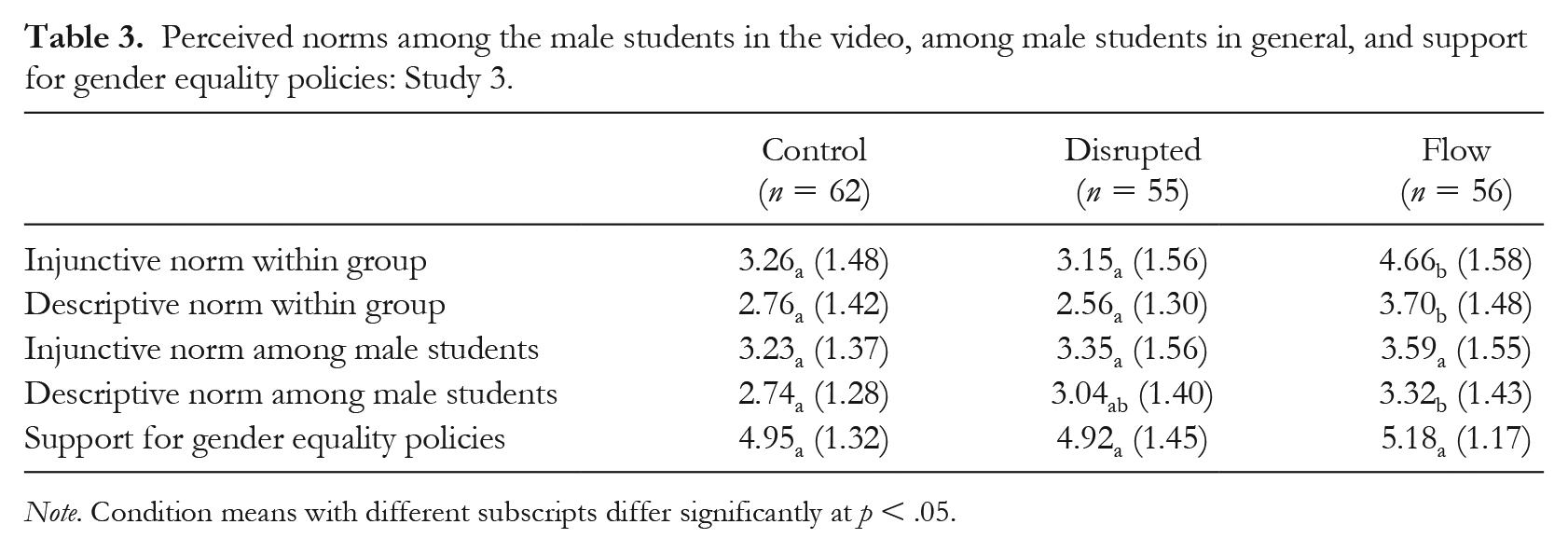
Note. Condition means with different subscripts differ significantly at p < .05.
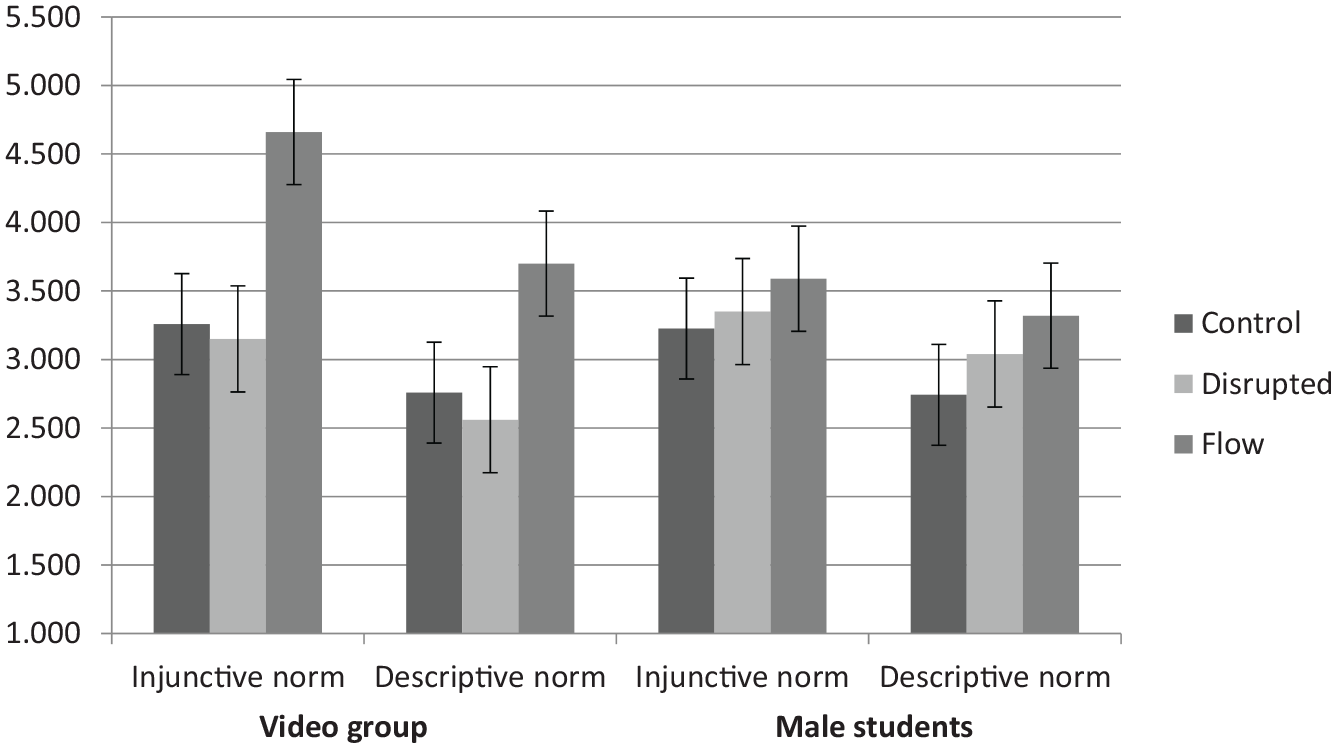
Condition means and 95% confidence intervals for perceived appropriateness and perceived sharedness of the sexist opinion within the specific group in the video and among male students in general in Study 3.
A similar pattern of results was observed for the perception of descriptive norms in the general population of male students. ANOVAs indicated a marginally statistically significant between-condition difference for the descriptive norm, F(2, 172) = 2.65, p = .074, η2p = .03, and no statistically significant differences for the injunctive norm, F(2, 172) = 1.06, p = .350, η2p = .01. Participants in the flow condition indicated that they thought sexist opinions were shared more among male students, compared with participants in the control condition, Δ = 0.57, SE = 0.25, p = .023. In the disrupted flow condition (vs. control), there was no significant increase in perceived descriptive sexist norms (Δ = 0.29, SE = 0.25, p = .243). The difference between the flow and disrupted flow conditions was not statistically significant, Δ = −0.28, SE = 0.26, p = .275.
Support for gender equality policies
An ANOVA on support for gender equality policies indicated no significant between-condition differences, F(2, 172) = 0.56, p = .575, η2p = .01.
Indirect effects
A mediation analysis was performed as in Study 2, to test whether the flow manipulation predicted participants’ perceptions of descriptive norms among male students in general via changing the perceived norms among the students in the video (Hypothesis 3; see Figure 5). As in Study 2, we only tested the mediational path for descriptive norms in the general population, as we found no evidence for a direct effect on injunctive norms in the general population. We calculated a composite score for perceived target group norm (r = .70). The partially standardized indirect effect was estimated at 0.42, bootstrapped SE = 0.10, 95% CI [0.23, 0.64], suggesting that when a sexist statement was followed by a smooth flow of conversation, this increased the perceptions that this statement was normative among students in the video, and these perceptions were generalized to descriptive norms in the male student population.
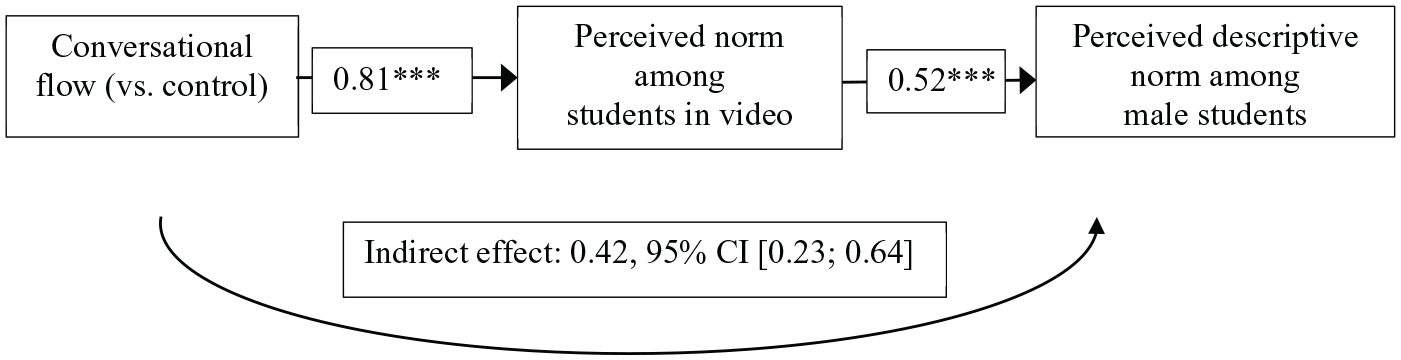
Indirect effect of the flow manipulation (vs. control) via perceived norms (descriptive and injunctive) among the students in the video on perceived descriptive norms among male students in general in Study 3.
Moderation by gender
We conducted a multivariate analysis of variance (MANOVA) to explore whether the effects of condition on the four norm indicators were moderated by participant gender. While the condition main effect remained significant (Wilks’s lambda = 0.84, F = 3.62, p < .001, η2p = .08), we found no main effect for gender (Wilks’s lambda = 0.99, F = 0.30, p = .881, η2p = .01) neither for the Gender x Condition interaction (Wilks’s lambda = 0.99, F = 0.30, p = .964, η2p = .01).
When exploring the effects on policy support, there was a substantial gender difference. Female participants endorsed gender equality policies more (M = 5.28, SD = 1.10) than did male participants (M = 4.44, SD = 1.56), F(1, 164) = 16.04, p < .001, η2p = .09. This effect appeared to be marginally significantly moderated by condition, F(2, 164) = 2.55, p = .081, η2p = .03. Further exploration of the pattern of means showed that females did not differ in their support for policy between the different conditions. In contrast to the findings in Study 2 (and in contrast to Hypothesis 4), males slightly increased their support for gender equality policies when the conversation smoothly flowed after a sexist statement compared to control, Δ = −0.95, SE = 0.49, p = .060. The disrupted flow condition was somewhere in between (but not significantly different from either) the control and the flow condition (disrupted flow vs. control: Δ = −0.55, SE = 0.51, p = .290; flow vs. disrupted flow: Δ = −0.40, SE = 0.52, p = .451). Because the between-condition difference was only marginally statistically significant, and because we found a marginally statistically significant effect in the opposite direction in Study 2 (including only male participants), we do not further interpret this trend here.
Mini Meta-Analysis
We conducted a sample-size weighted mini meta-analysis to examine the effects across the three studies, in order to provide the best possible estimate of the aggregated effect sizes. We believe that accurate assessment of aggregated magnitude of effects is, ultimately, the most important anchor for inferences.
Flow effect on norms
To assess the strength of the effect of flow on perceived sexist norm inference within the group, we again contrasted the flow condition against the other two conditions (see Figure 6, Panels A–B). Across all data sets, the effect size of the effect of flow on perceived descriptive norms is moderate to large, d = 0.77, 95% CI [0.53, 1.01], Z = 6.29, p < .001, as is the effect on perceived injunctive norms, d = 0.65, 95% CI [0.24, 1.05], Z = 3.14, p = .002.
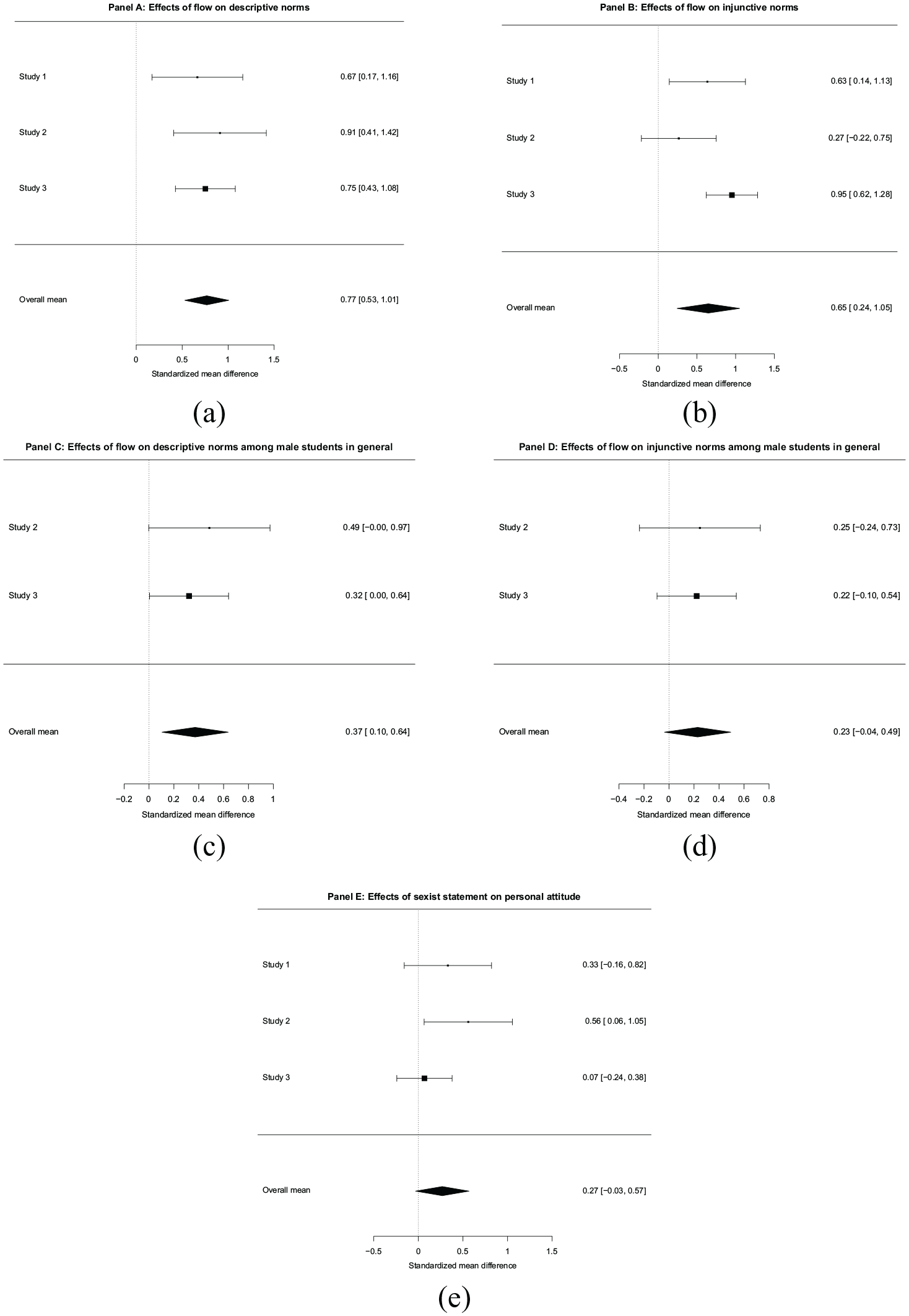
Results of the meta-analysis across Studies 1, 2, and 3. Effects of flow on descriptive norms (Panel A) and injunctive norms (Panel B) among the students in the video; descriptive norms (Panel C) and injunctive norms (Panel D) among male students in general; and effects of watching a sexist statement on personal attitudes (Panel E).
We subsequently assessed the strength of the effect of flow on the inference of sexist norms among the male student population (only measured in Studies 2 and 3; see Figure 6, Panels C–D). The meta-analysis reveals a small- to medium-sized effect on generalized descriptive norms, d = 0.37, 95% CI [0.10, 0.64], Z = 2.73, p = .006, and a small effect with only marginal statistical significance on generalized injunctive norms, d = 0.23, 95% CI [−0.04, 0.49], Z = 1.69, p = .091. The fact that the latter effect is not significant suggests it is either very small or nonexistent.
Statement effect on personal attitudes
In the first two studies, the pattern of means on personal attitudes (and comparably, on support for gender equality policies in Study 2) was somewhat different than that on norms. It appeared that the expression of a sexist statement (regardless of the response) yielded more sexist attitudes compared to a control condition—suggestive of traditional informational influence (see e.g., Turner, 1991). We also explored this effect, because it is important to know the magnitude of such informational influence effects. A meta-analysis across the three studies showed that this effect was small and only marginally statistically significant, d = 0.27, 95% CI [−0.03, 0.57], Z = 1.75, p = .080 (see Figure 6, Panel E). The confidence interval suggests that it cannot be yet concluded whether there is an effect overall. Because these were two studies with smaller effects, we feel this is a borderline case which, although we shall not elaborate further here, might merit attention in future research.
General Discussion
Many concerns have been raised about the perpetuation of social and cultural norms that promote inequality between social groups. The present research lays out one of the subtle ways in which sexist norms may spread through society, by pointing to the role of responses to sexism. Findings suggest that humans are very adept at interpreting social interactions, attending not just to what is said, but also to the subtle ways in which others respond. Even in the absence of explicit responses, sexist expressions are being evaluated by reference to the consensus that is inferred from the microdynamics of the conversational flow.
Across three studies, we demonstrated that subtle variations in conversational responses to a sexist statement influence the inference of sexist norms among passive observers. Specifically, when a sexist statement in a conversation (“Most women don’t have those natural leadership capacities”) was followed by the smooth continuation of the conversation, without objection to the statement, passive observers inferred that this opinion was socially accepted among interaction partners, and thus considered normative. Not only did observers feel this opinion was more shared among interaction partners (reflecting a descriptive norm shift, moderate to large effect), a meta-analysis across the three studies also suggests that participants feel the sexist statement is more appropriate to express in the conversation (reflecting an injunctive norm shift, moderate to large effect). Studies 2 and 3 demonstrated that the sexist norms inferred from a single conversation between male students were generalized to perceptions of increased endorsement of sexist ideas in the general population of male students.
The three studies further provide converging evidence on what could nullify the effect of a sexist statement on norm perception. In line with Hypothesis 2, when a sexist statement was followed by a brief silence that disrupted the flow of the conversation, observers were likely to take this as a sign that the statement was contentious and perceived the descriptive norm to be less sexist than in a conversation that continued as if nothing unusual had been said. Indeed, in the disrupted flow condition, the norm was seen to be no more sexist than in a control condition where no sexist statement was made. This demonstrates that brief disruptions of the flow of a conversation send a subtle but very powerful signal. Extending previous research that showed that speakers and observers experienced a relational threat after being exposed to a pause of less than 4 seconds in a 4-minute conversation (Koudenburg et al., 2011, 2013b, 2014), the present research suggests that these relational inferences are intimately tied to the content of what is being discussed. As a result, conversational flow (or its disruption) can be a highly influential gauge of the degree of consensus within a group.
Study 3 further demonstrates that these inferences are not specific to male observers; female observers are just as likely to pay attention to conversational microdynamics when inferring sexist norms among male students. These findings point to the importance of subtle conversational cues in shaping social norms within specific groups and society in general.
Exploration of the effects on participants’ personal attitudes regarding sexism (Study 1) and their support for gender equality policies (Studies 2 and 3) revealed a somewhat different pattern. Here, we did not find a systematic effect of the responses to the sexist statement. The meta-analysis across studies, moreover, showed that observing a sexist statement, in itself, had only a small and marginally significant effect on sexist attitudes among participants. Thus, overall, there were medium to large effects on norms, and zero to small effects on attitudes. Similar effects have previously been found in within-group discussions about immigration, where strong normative shifts can occur without any corresponding attitude change (Smith & Postmes, 2011). This experimental evidence aligns with opinion polls, which show that despite substantial normative changes in the debate about, for instance, immigration in the US, attitudes on this topic have remained rather stable (e.g., Fussell, 2014). Norm perceptions, as our research confirms, are more subject to change, and important to study considering their influence on, for instance, people’s behaviour and voting (Ahler, 2014; Miller et al., 2000).
The meta-analysis across studies suggests that a single instance of sexism that does not disrupt conversational flow can induce in observers the perception of sexism among the male student population in general. Apparently, inferences about perceived sexism from a small group discussion generalize to inferences about sexism in the wider population (although not to inferences about the appropriateness of such views among the population as a whole). Although we can only speculate about why descriptive population norms might be more affected than injunctive population norms, it could be that the current climate following the #metoo discussions provides many examples for people to imagine situations in which sexism may be inappropriate. The presence of an effect on the generalized descriptive norm, however, suggests that despite the obvious inappropriateness of these sexist views, observers still infer that male students may personally share them.
Whereas our previous research has focused on how flow disruptions signal disagreements, the present research reveals a potentially negative consequence of people’s natural tendency to preserve good and uninterrupted conversational flow. Oftentimes, people are motivated to maintain good relations even when they disagree with their conversation partner. When faced with a sexist expression, receivers may smoothly change topic to avoid further discussion of the sensitive issue, all the while preserving conversational flow. Interestingly, the present findings suggest that such behaviour may encourage the formation and maintenance of sexist norms. Indeed, in the absence of explicit information on receivers’ opinions on the issue, observers may infer that, in fact, the information is consensual and therefore grounded among conversation partners.
Social interactions that are observed by many people, such as those displayed on television, may be particularly influential in transmitting gender norms (Bandura, 2001; Cialdini & Trost, 1998; Signorielli, 1989) simply because they are observed by a large audience (Bandura, 2001; Bryant & Zillmann, 1991). A substantial number of studies has documented the disproportionately high prevalence of gender stereotypic role models and sexist expressions on television (see Furnham & Paltzer, 2010, for a review). Although not much research has focused on the responses to such instances of sexism, the one study that did, documented very clear results: in many cases on prime-time television, bystanders did not respond (39% of the cases) or even responded positively to sexism (27% of the cases; Grauerholz & King, 1997). Without engaging with the consequences of the positive responses, the present research suggests that even the absence of responses could communicate social acceptance of sexist statements on prime-time television.
These findings are particularly interesting when considering that both victims and bystanders are often reluctant to confront sexism (for reviews, see Becker et al., 2014; Drury & Kaiser, 2014). This reluctance is understandable given the consequences that such confrontation (vs. ignoring) may have for female victims, for instance in terms of liking (Dodd et al., 2001) or being viewed as oversensitive, interpersonally cold, or troublemakers (Czopp & Monteith, 2003; Kutlaca et al., 2019). Although research suggests that confronting sexism may be less consequential for male bystanders (Gulker et al., 2013), their fear and stress of negative consequences—such as being disliked—often also lead them to refrain from confrontation (Kawakami et al., 2009). Whereas more research is needed before drawing conclusions about the role of microdynamics within all female, or mixed-gender conversations about sexism, our research is specifically engaged with the consequences of a lack of confrontation among these advantaged, male bystanders (see also Cihangir et al., 2014). In this group, the present study extends the insights into confronting discrimination in two ways: (a) it shows that a failure to confront may not just maintain the status quo, it may shift norms to become even more sexist, (b) but it also provides a relatively noncostly “tool” to prevent such change by communicating one’s disagreement with a brief conversational pause. Disrupting the flow can be a subtle, but quite effective way to signal that a sexist comment may threaten the relationship between speaker and listener, without having to engage in explicit confrontation (Koudenburg, 2018).
Conclusion
How are social and cultural norms maintained? It is often noted that specific tendencies and biases, such as sexism, are persistent and resistant to change. The present paper examines one possible explanation for this phenomenon. Our results show that persistence of such biases may be a consequence of a quite normal and pervasive human tendency: the desire to maintain good conversational flow in an attempt to avoid controversy and awkwardness. Whether in televised or face-to-face conversations, maintaining the smooth flow of conversation after a sexist statement can be sufficient to communicate to passive observers that the sexist views of the speaker are widely shared. In this way, being polite and accommodating may end up reaffirming prejudices. In other words, good relations may be maintained at the expense of societal values. In order to challenge biases, disrupting the flow may be the more appropriate social response. The results suggest that in a conversation, a brief flow disruption sends a powerful message. Subtle conversational signals act as powerful social regulators.
Supplemental Material
Supplementary_material – Supplemental material for The subtle spreading of sexist norms
Supplemental material, Supplementary_material for The subtle spreading of sexist norms by Namkje Koudenburg, Amke Kannegieter, Tom Postmes and Yoshihisa Kashima in Group Processes & Intergroup Relations
Footnotes
Acknowledgements
We thank Jan Aaron Fricke, Jan Homburg, Martin Jarosch, Robin van Stokkum, and Nikolai F. Klitzing for their help in preparing the stimulus materials.
Funding
The author(s) disclosed receipt of the following financial support for the research, authorship, and/or publication of this article: This work was supported by the Netherlands Organisation for Scientific Research (NWO; Grant No. 451-17-011, to the first author).

Supplemental material
Supplemental material for this article is available online.
Notes
References
Supplementary Material
Please find the following supplemental material available below.
For Open Access articles published under a Creative Commons License, all supplemental material carries the same license as the article it is associated with.
For non-Open Access articles published, all supplemental material carries a non-exclusive license, and permission requests for re-use of supplemental material or any part of supplemental material shall be sent directly to the copyright owner as specified in the copyright notice associated with the article.
