




Abstract
Scholars have long argued that sexism is partly rooted in dominance motives over animals and nature, with women being perceived as more animal-like and more closely connected to nature than men. Yet systematic research investigating these associations is currently lacking. Five studies (N = 2,409) consistently show that stronger beliefs in human supremacy over animals and nature were related to heightened hostile and benevolent sexism. Furthermore, perceiving women as more closely connected to nature than men was particularly associated with higher benevolent sexism, whereas subtle dehumanization of women was uniquely associated with higher hostile sexism. Blatant dehumanization predicted both types of sexism. Studies 3 and 4 highlight the roles of social dominance orientation and benevolent beliefs about nature underpinning these associations, while Study 5 demonstrates the implications for individuals’ acceptance of rape myths and policies restricting pregnant women’s freedom. Taken together, our findings reveal the psychological connections between gender relations and human–animal relations.
Both women and animals are identified with nature rather than culture by virtue of biology. Both are imagined in male ideology to be thereby fundamentally inferior to men and humans. (C. A. MacKinnon, 1989, p. 264)
Social psychologists have become increasingly aware that our thinking about animals 1 and nature also informs our understanding of human intergroup relations (Dhont & Hodson, 2014; Hodson et al., 2020; Milfont & Sibley, 2014; Plous, 2003). For instance, people expressing stronger support for animal exploitation tend to hold more prejudiced attitudes toward ethnic outgroups (Caviola et al., 2019; Dhont et al., 2016, 2020).
Yet, as illustrated by the opening quote, feminist scholars have also long proposed that beliefs in human supremacy over animals and nature are associated with subordinating views of women (Adams, 1990/2015; Adams & Gruen, 2014; C. A. MacKinnon, 1989, 2004; Wyckoff, 2014). Systematic research addressing whether and how people’s views about animals and nature may be implicated in gender-based prejudice (i.e., sexism) is currently lacking and is the focus of the present research.
Sexism and Beliefs in Human Supremacy over Animals and Nature
The idea that the exploitation of women and animals are two connected forms of oppression driven by group-based dominance motives has received ample attention outside psychological science. In her seminal work “The Sexual Politics of Meat,” Adams (1990/2015) argued that women are animalized in order to justify their lower status and, in extreme cases, their victimization through sexual violence. Indeed, women are often portrayed as closer to nature and animals because of their role in natural reproduction and their “maternal instincts.” By endorsing beliefs in human superiority over nature and animals and putting women on this lower “animal status,” women are considered inferior to men, and become targets of sexism (C. A. MacKinnon, 2004; Ortner, 1974). Theoretically, human supremacy beliefs are thus assumed to be connected to biases toward women, both entrenched in group dominance motives.
Along similar lines, studies found that beliefs in a greater human–animal divide and human supremacy are related to heightened ethnic prejudice (Costello & Hodson, 2010, 2014), indicating that hierarchically dividing animals and humans organizes our social perception and evaluation of both animals and human groups. Furthermore, recent studies demonstrated the interconnected nature of dominance motives in human intergroup relations and human–animal relations (see Dhont et al., 2020). The Social Dominance Human–Animal Relations model (SD-HARM, Dhont et al., 2016) proposes that preferences for hierarchy and group-based dominance, indicated by social dominance orientation (SDO; Sidanius & Pratto, 1999), represent the common ideological motive underpinning biases in both human intergroup relations and human–animal relations and explain why these biases are connected (see also Caviola et al., 2019; Dhont et al., 2014). Dhont et al. (2016) showed that greater ethnic prejudice was related to greater acceptance of animal exploitation. Yet, as predicted by SD-HARM, these associations became weaker or non-significant after accounting for SDO, modeled as the common factor linking prejudicial tendencies in human–human and human–animal relations.
To date, research in this area has largely focused on ethnic prejudice, but no published study has tested whether human supremacy beliefs are related to gender-based prejudice (i.e., sexism). Integrating theorizing on gender relations and human–animal relations, our first hypothesis states that those holding stronger human supremacy beliefs also show higher levels of sexism (paths B and C in Figure 1). Furthermore, given that SDO is a robust predictor of both human supremacy beliefs (Dhont & Hodson, 2014; Graça et al., 2018; Milfont et al., 2013) and sexism (e.g., Kteily et al., 2015; Meeusen & Dhont, 2015; Sibley et al., 2007), SDO likely represents a key ideological motive underpinning both human supremacy beliefs and sexism.
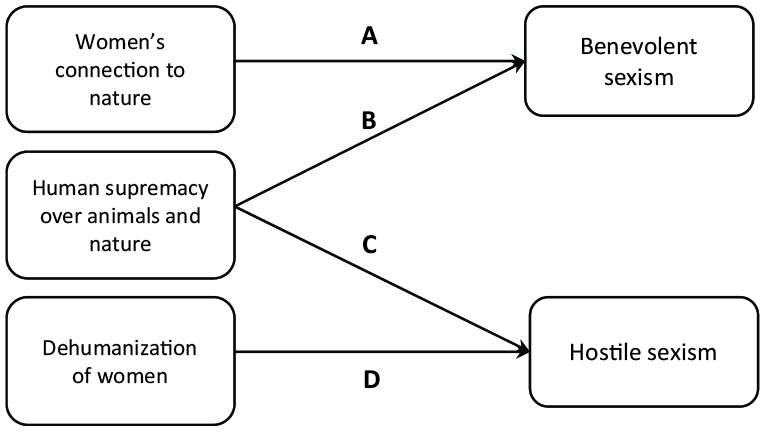
The key hypothesized common and distinct correlates of benevolent and hostile sexism.
Further extending this framework, we also hypothesized that sexism would be related to views of women as more closely connected to nature (i.e., women’s connection to nature) and more animal-like (i.e., dehumanization) than men. Critically, however, these constructs likely show differential relations with different dimensions of sexism, making it important to differentiate between hostile and benevolent sexism.
Ambivalent Sexism
Ambivalent Sexism Theory (Glick & Fiske, 1996, 2011) proposes that sexism is a multidimensional construct reflecting, on the one hand, antipathy towards women, termed hostile sexism. On the other hand, it reflects evaluations of women that are subjectively positive, yet encompassing beliefs that women are weak, in need of protection, and crucial to making men complete and fulfilling their desires (Glick & Fiske, 1996, 2001). This latter dimension has been labeled benevolent sexism. Hostile sexism is, thus, an antagonistic type of prejudice closely fitting classic conceptualizations of prejudice (Allport, 1954), and its expressions are, arguably, easy to identify. Benevolent sexism is, however, often expressed in language and behaviors that can be subjectively perceived as positive, yet are patronizing, rooted in traditional female stereotypes, and legitimize the restriction of women’s autonomy (e.g., Hopkins-Doyle et al., 2019; Sutton et al., 2011).
Glick and Fiske (1996) argued that ambivalent sexism is partly rooted in women’s role in natural reproduction. This role renders women a certain power over men, who depend on them to satisfy their sexual needs and bear their children (Guttentag & Secord, 1983). This dependency paves the way for hostile sexist views, as men resent women for ostensibly being able to gain power over them using their sexual attractiveness (Glick & Fiske, 2001). At the same time, men’s dependency on women for reproduction also fosters paternalistic, benevolently sexist attitudes toward women, who, as the current or future bearers of men’s children, need to be protected (Glick & Fiske, 2001; Glick et al., 2000; Guttentag & Secord, 1983; Smuts, 1992). Critically, this dynamic suggests that women’s role in natural reproduction is associated with both hostile and benevolent sexism.
Benevolent Sexism and Women’s Connection to Nature
While men are often stereotypically perceived as separate from nature, women are stereotyped as part of nature (C. A. MacKinnon, 2004; Ortner, 1974). From this perspective, women are portrayed as being more “in tune” with nature, and assumed to show a stronger connection with nature than men. Given the positive valence associated with nature (e.g., Berman et al., 2008; Van den Berg et al., 2003), viewing women as closely connected to nature likely colors the evaluation of women in a subjectively positive way. Consistent with this idea, Reynolds and Haslam (2011) demonstrated that women who associated themselves with nature were evaluated as more likable than women who did not, and also as more likable than men who associated themselves with nature.
However, views of women’s connection to nature might come with aversive consequences. Indeed, nature itself is viewed as delicate and in need of conservation (Plumwood, 1993), while benevolent metaphors of Mother Nature also portray nature as nurturing and crucial to human thriving (Roach, 2003). Given these benevolent beliefs about nature, the perceived ties between women and nature may also shape perceptions of women as fragile and in need of protection. Such views fit with the ideology that shapes benevolent sexism and constitute legitimizing beliefs for the dominant role of men in social relationships (Glick & Fiske, 1996, 2001; Hopkins-Doyle et al., 2019).
To date, no published studies have directly tested the association between the perceived connection of women with nature and sexist attitudes. We hypothesized that the extent to which people perceive women to be more connected to nature than men is primarily and positively associated with benevolent sexism (path A in Figure 1). Moreover, we expected that this association would be underpinned by benevolent beliefs about nature being fragile and integral to human happiness.
Furthermore, in line with Ambivalent Sexism Theory, women might also be resented for their role in natural reproduction and the perceived power it gives them over men (Glick & Fiske, 2001). Hence, while we expected a pronounced positive association between women’s connection to nature and benevolent sexism, also a positive, albeit weaker, association could be expected with hostile sexism. However, women’s link with nature might be particularly associated with hostile attitudes if they are likened to animals and denied full humanness.
Hostile Sexism and the Dehumanization of Women
Evidence for how women’s role in reproduction can shape negative attitudes toward them comes from research showing that women are often dehumanized when their reproductive and sexual functions are emphasized (Gray et al., 2011; Morris & Goldenberg, 2015; Morris et al., 2018). The view of women as sexually aggressive is also reflected in animalistic metaphors portraying women as predator-like (e.g., cougar, vixen), which are linked to hostile sexist views (Tipler & Ruscher, 2019). Along similar lines, media images of women as animals, sometimes shackled or caged, portray them as feral and in need of being tamed (Plous & Neptune, 1997).
Yet everyday instances of dehumanization most frequently occur in subtle rather than blatant ways, for example, by attributing groups fewer uniquely human characteristics (Haslam, 2006; Haslam & Loughnan, 2014; Hodson & Costello, 2007; Leyens et al., 2000). The dehumanization of social groups seems to put them closer to animals on the perceived animal–human continuum and outside moral boundaries, similar to how animals are excluded from moral consideration to justify their exploitation (see Loughnan et al., 2010; Opotow, 1993). Indeed, when applied to women, research showed that men who implicitly animalize women report a greater willingness to engage in sexual harassment and rape, and hold more negative attitudes towards female rape victims (Rudman & Mescher, 2012).
Given that outgroup dehumanization is associated with outgroup hostility (Haslam & Loughnan, 2014; Hodson & Costello, 2007; Kteily et al., 2015; Leyens et al., 2000), we expected that the dehumanization of women would be positively associated with hostile rather than benevolent sexism (path D in Figure 1; see also Tipler & Ruscher, 2019; Viki & Abrams, 2003). Moreover, the dehumanization of outgroups is rooted in dominance motives aiming to increase the relative status of the ingroup, with SDO as a reliable predictor of dehumanization (e.g., Esses et al., 2008). Therefore, we expected SDO to be a key ideological factor underlying the association between the dehumanization of women and hostile sexism.
The Present Research
The aim of this research was to rigorously test the following set of hypotheses, depicted in Figure 1:
1) Stronger beliefs in human supremacy over nature and animals are associated with both hostile and benevolent sexism (paths B and C).
2) Stronger beliefs in women’s connection to nature are more strongly associated with heightened benevolent sexism than with hostile sexism (path A).
3) Dehumanization of women is more strongly associated with heightened hostile sexism than with benevolent sexism (path D).
We conducted five studies with large samples of adults based in the US and the UK to test the hypotheses. It is noteworthy that in all studies we used a subtle measure of dehumanization, but Studies 2–4 also included a blatant dehumanization measure. This allowed us to test, for the first time, the associations between blatant dehumanization of women and sexism. Additionally, because men typically show stronger support for animal exploitation and score higher on human supremacy beliefs (e.g., Graça et al., 2018; Herzog et al., 1991), we tested all associations while controlling for gender. We also explored whether the hypothesized associations were moderated by gender, yet these analyses (reported in Appendix A of the online Supplemental Material) did not reveal any consistent moderation effects.
In Studies 3 and 4, we also investigated the belief systems expected to underpin the associations. Specifically, Study 3 tested the role of SDO underpinning the associations of human supremacy beliefs and dehumanization with sexist attitudes. Study 4 focused on the role of benevolent nature beliefs in explaining the associations between women’s connection to nature and benevolent sexism. Finally, Study 5 extended the model by investigating how our core constructs are associated with societally relevant variables such as rape myth acceptance and support for policies restricting women’s autonomy. 2
Study 1
Method
Participants
Respondents were 506 adults based in the US and recruited via MTurk, 3 and were paid $0.50. Participants’ age ranged from 19 to 88 years (M = 38.94 years, SD = 13.08), with 57.3% women, 41.9% men, 0.6% indicated “another gender,” and 0.2% indicated no gender or “Prefer not to say.”
Measures
All measures were presented in randomized order. Benevolent and hostile sexism were measured using the Ambivalent Sexism Inventory (Glick & Fiske, 1996), with 11 items assessing benevolent sexism (α = .90; M = 3.71; SD = 1.34), e.g., “Many women have a quality of purity that few men possess,” and 11 items assessing hostile sexism (α = .94; M = 3.16; SD = 1.52), e.g., “Many women are actually seeking special favors, such as hiring policies that favor them over men, under the guise of asking for ‘equality.’” Participants indicated their responses on 7-point scales anchored by strongly disagree and strongly agree. Where needed, item scores were recoded before averaging, so that higher scores reflect greater endorsement of sexist attitudes.
Belief in human supremacy over animals and nature (α = .94; M = 3.61; SD = 1.55) was measured with 12 items on 7-point scales (1 = strongly disagree, 7 = strongly agree), using six items from the “dominance over nature” subscale of Milfont and Duckitt (2010) and the six items of Dhont and Hodson’s (2014) human supremacy scale (see also Jylhä & Akrami, 2015). Example items are “Humans were meant to rule over the rest of nature” and “The life of an animal is just not of equal value as the life of a human being.” Higher scores reflect stronger human supremacy beliefs.
We developed a new scale comprising four items to measure beliefs in women’s connection to nature. Participants indicated the extent to which they think each of the items apply to women more or less than to men using 7-point scales ranging from 1 (a lot less than men) to 7 (a lot more than men). The four items are: “Women are connected with nature,” “Women are closely tied to natural reproduction,” “Women are a part of nature,” and “Women are in tune with nature.” Confirmatory factor analysis supported the unidimensionality of the scale, χ 2 (2) = 0.80, p = .67, comparative fit index (CFI) = 1.000, standardized root-mean-square residual (SRMR) = 0.007, root-mean-square error of approximation (RMSEA) = 0.000, 90% confidence interval (CI) [0.000, 0.067], with factor loadings ranging from .40 to .91. The internal consistency for the scores on this new scale was .78 and thus satisfactory. Item scores were averaged, with higher scores representing a stronger belief that women, relative to men, are more closely connected to nature (M = 4.58, SD = 0.87).
We measured subtle dehumanization of women 4 (M = 0.31, SD = 1.30) closely following the procedures of Hodson and Costello (2007; based on Haslam et al., 2005; see also Costello & Hodson, 2010; Haslam, 2006) through tapping into participants’ attribution of uniquely human personality traits to groups. Following this conceptualization, outgroups are dehumanized if their members are attributed fewer uniquely human traits, relative to traits perceived to be shared with other animals, than the ingroup. Participants were presented with the 10-item Big Five Personality Inventory (Gosling et al., 2003) and indicated the extent to which they thought each trait applied to women and men as a group respectively on a 7-point scale (trait does not apply to women / men as a group; trait strongly applies to women / men as a group). Hodson and Costello (2007) identified openness and conscientiousness as the traits perceived to be the most uniquely human and agreeableness and neuroticism as those perceived to be the least uniquely human, in line with prior research (Gosling & John, 1999; Haslam et al., 2005). We computed the difference score between uniquely human and not uniquely human traits for each group (men and women). The relative dehumanization of women as compared to men was then computed by subtracting the human–nonhuman score for women from the human–nonhuman score for men (Hodson & Costello, 2007). Higher scores represent a greater perception that women possess fewer human relative to nonhuman traits than men. 5
Results and Discussion
Zero-order correlations
As expected, human supremacy beliefs were significantly positively related to both benevolent and hostile sexism (Table 1). Also as expected, women’s connection to nature was significantly positively related to benevolent sexism but not to hostile sexism, whereas subtle dehumanization was significantly related to hostile but not benevolent sexism.
Zero-order correlations between variables in Study 1.
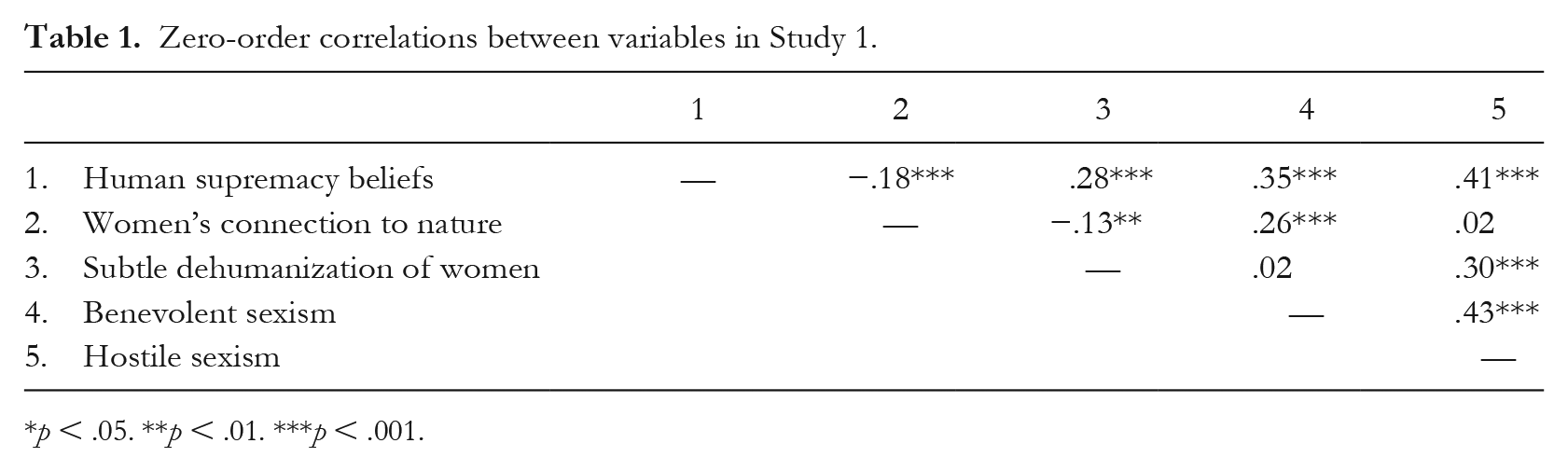
p < .05. **p < .01. ***p < .001.
Hypotheses test
To test our hypotheses, we conducted path analyses in Mplus (Version 8, Muthén & Muthén, 1998–2019), using the robust maximum likelihood estimator. We modeled women’s connection to nature, human supremacy beliefs, and subtle dehumanization as predictors of benevolent and hostile sexism. Gender was included as a control variable next to the predictors. 6
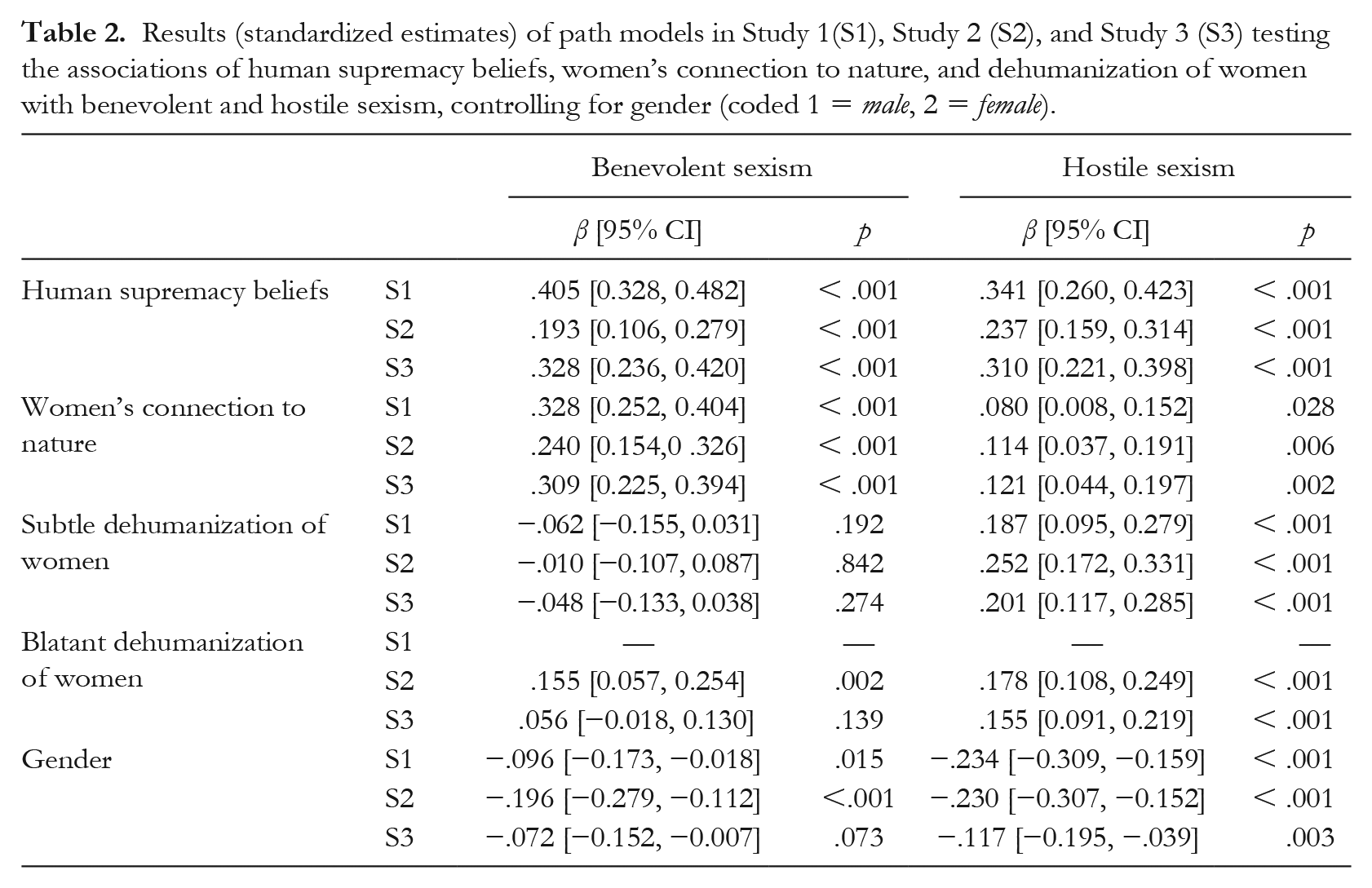
Consistent with Hypothesis 1, stronger endorsement of human supremacy beliefs was significantly related to higher levels of both benevolent and hostile sexism (see Figure 2; Table 2). Furthermore, women’s connection to nature was significantly related to benevolent sexism, while the association with hostile sexism was less pronounced and significantly weaker than the path from women’s connection to nature to benevolent sexism, Δb = .36, SE = .07, p < .001, corroborating Hypothesis 2. Corroborating Hypothesis 3, higher levels of subtle dehumanization significantly predicted hostile sexism, but not benevolent sexism, resulting in a significant difference between the strength of these paths, Δb = .28, SE = .07, p < .001. In sum, Study 1 supported all three hypotheses, demonstrating that people’s views on nature and animals are intertwined with their attitudes towards women.
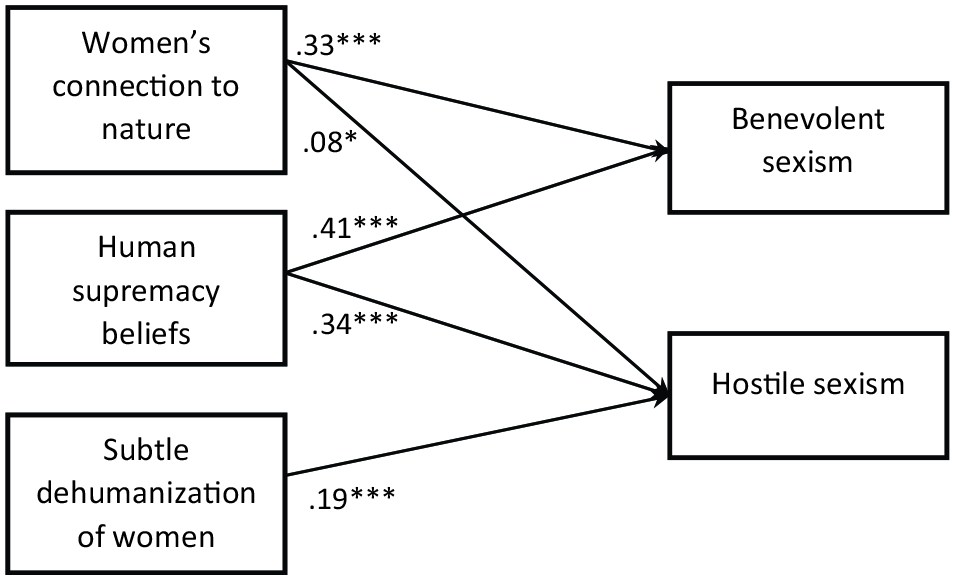
Results of Study 1 showing the associations (standardized estimates) of women’s connection to nature, human supremacy beliefs, and subtle dehumanization of women with benevolent and hostile sexism (N = 502), showing significant, standardized path estimates, controlling for gender (see Table 2).
Results (standardized estimates) of path models in Study 1(S1), Study 2 (S2), and Study 3 (S3) testing the associations of human supremacy beliefs, women’s connection to nature, and dehumanization of women with benevolent and hostile sexism, controlling for gender (coded 1 = male, 2 = female).
Study 2
The aim of Study 2 was to replicate the results of Study 1 in a different country (UK). Furthermore, because we relied on a measure of subtle dehumanization of women in Study 1, we also included a measure of blatant dehumanization in Study 2. While a vast body of research has now explored subtle dehumanization by focusing on the attribution of fewer uniquely human characteristics and experiences to other groups, more blatant forms of dehumanization have, until recently, largely been ignored. Kteily et al. (2015), however, argued that individuals sometimes explicitly endorse and communicate their view of outgroup members as animal-like, and that subtle measures of dehumanization fail to capture such overt expressions. Their newly developed measure of blatant dehumanization predicted intergroup outcomes over and above subtle dehumanization. As of yet, no study has investigated the blatant dehumanization of women and its association with sexism. We expected that blatant dehumanization would predict additional variance in hostile sexism over and above subtle dehumanization.
Method
Participants
Respondents were 499 adults based in the UK, recruited via Prolific, 7 and paid £0.70 (57.5% women, 42.1% men, 0.4% indicated “another gender” or “prefer not to say”). Participant age ranged from 18 to 74 years with a mean age of 36.70 years (SD = 13.24).
Measures
We used the same measures of human supremacy beliefs (α = .90; M = 3.26; SD = 0.96), benevolent (α = .86; M = 3.27; SD = 1.12) and hostile (α = .92; M = 3.12; SD = 1.34) sexism, subtle dehumanization of women (M = 0.24; SD = 1.11), and women’s connection to nature (α = .71; M = 4.53; SD = 0.64) as in Study 1. To measure blatant dehumanization of women, we used an adapted version of Kteily et al.’s (2015) “Ascent of Man” scale. This visual scale uses five silhouettes depicting the physiological and cultural evolution of humans, from early human ancestors to advanced modern humans. Because the original silhouettes appear relatively masculine, we modified them slightly to appear more ambiguous in terms of sex, thereby adapting them to the measurement of blatant dehumanization of women (see Appendix B in online Supplementary Material). Participants were asked to rate the “evolvedness” of seven different social groups, including “women,” using continuous sliders (1–100%). The perceived “evolvedness” of women was reverse-scored so that higher scores represent a greater dehumanization of women. On average, women were perceived as 6.86% below a fully evolved human (SD = 13.51). Other social groups were included as distractors and were not part of the analyses.
Results and Discussion
Zero-order correlations
Replicating the findings of Study 1, human supremacy beliefs were significantly related to both benevolent and hostile sexism (Table 3). Furthermore, women’s connection to nature was significantly correlated with benevolent but not hostile sexism, whereas subtle dehumanization of women was significantly correlated with hostile but not benevolent sexism. Blatant dehumanization was positively and significantly correlated with benevolent and hostile sexism.
Zero-order correlations between variables in Study 2.
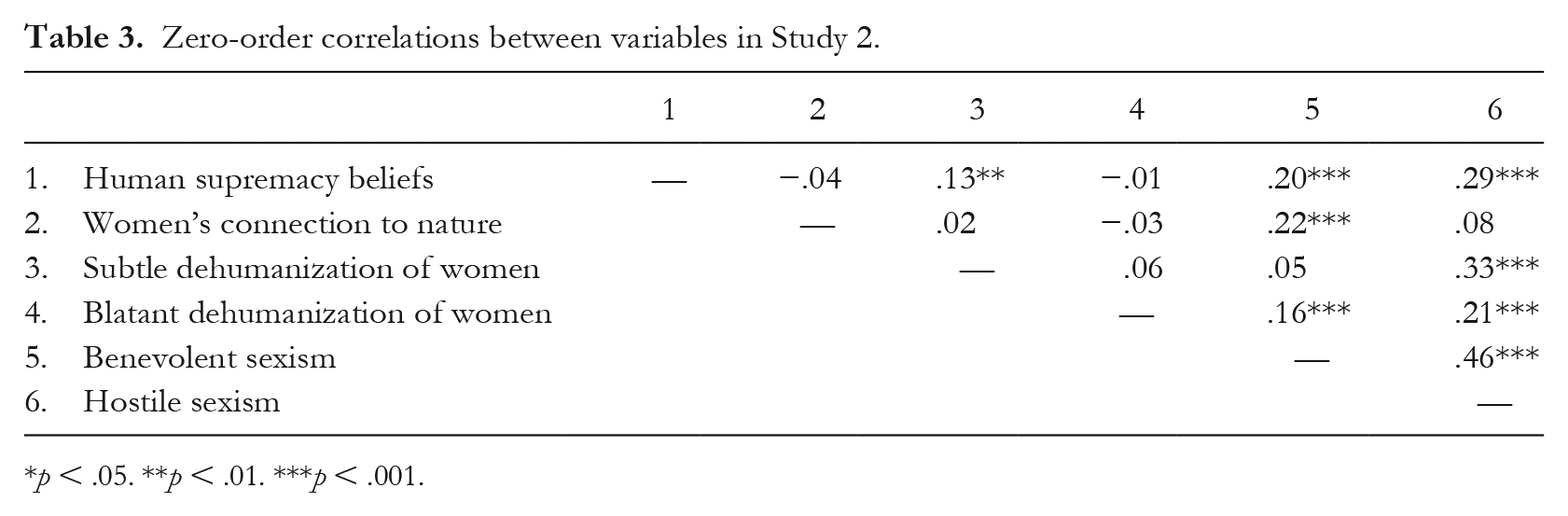
p < .05. **p < .01. ***p < .001.
Hypotheses test
Next, we tested the hypotheses following the same statistical procedures as in Study 1, but in this study, blatant dehumanization was entered as an additional predictor next to the other key predictors.
Replicating the results of Study 1, human supremacy beliefs significantly predicted both hostile and benevolent sexism (Figure 3, Table 2). Furthermore, women’s connection to nature showed a significantly stronger association with benevolent sexism than with hostile sexism, Δb = .18, SE = .09, p = .041. Subtle dehumanization of women significantly predicted hostile sexism, but not benevolent sexism. The strengths of these paths were also significantly different from each other, Δb = .31, SE = .06, p < .001. Extending the findings of Study 1, blatant dehumanization was significantly related to hostile sexism, yet also to benevolent sexism. The strength of these two paths did not differ significantly, Δb = .01, SE = .00, p = .278.
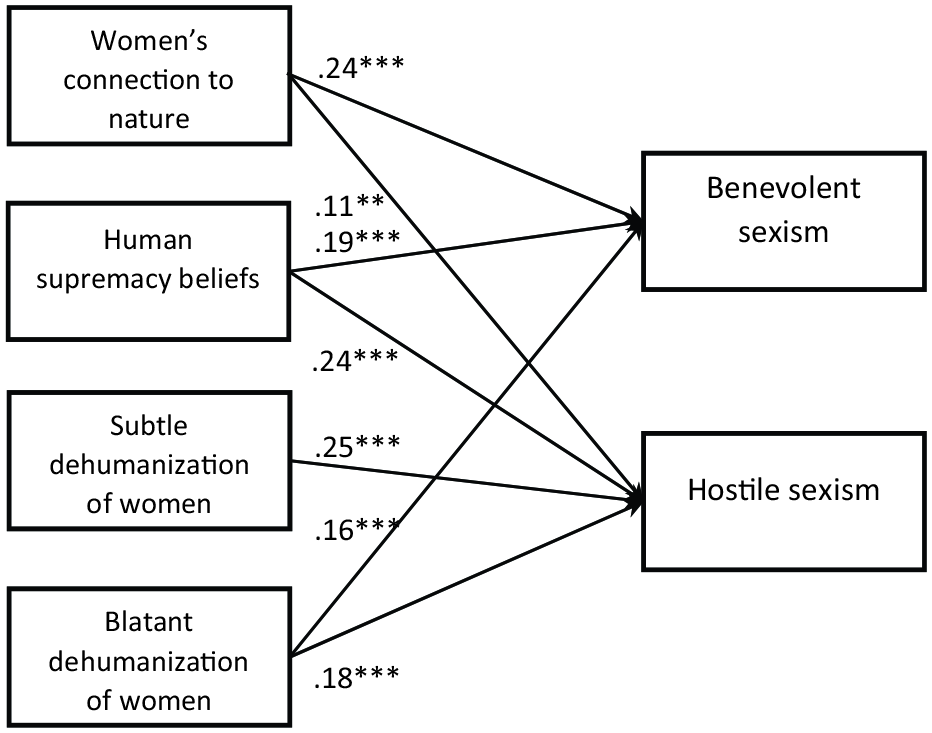
Results of Study 2 showing the associations (standardized estimates) of women’s connection to nature, human supremacy beliefs, and subtle and blatant dehumanization of women with benevolent and hostile sexism (N = 497), only showing significant associations (standardized estimates), controlling for gender (see Table 2).
Study 2 replicated the findings of Study 1 in a UK sample, demonstrating the generalizability of the findings in a different context. Furthermore, Study 2 demonstrated that higher levels of blatant dehumanization of women were associated with greater sexism and explained variance in hostile sexism over and above subtle dehumanization. Moreover, although not expected, blatant dehumanization also predicted benevolent sexism.
Study 3
In Study 3, we turned attention to the potential role of SDO, theoretically considered a key ideological motive underpinning human supremacy beliefs, dehumanization, and sexism. Specifically, drawing on the SD-HARM model (Dhont et al., 2016), we expected that SDO would partly explain the association between human supremacy beliefs and sexism such that the associations between human supremacy beliefs and both benevolent and hostile sexism would become weaker after accounting for SDO. Along similar lines, we tested whether SDO can explain the association between the dehumanization of women and hostile sexism, such that the association between dehumanization and hostile sexism would become weaker after accounting for SDO.
Method
Participants
Respondents were 504 adults based in the US, recruited via MTurk (56.7% women, 43.1% men, 0.2% indicated “other”), and were paid $0.50. Participant age ranged from 19 to 85 years with a mean age of 38.74 years (SD = 12.16).
Measures
Study 3 included the same measures as Study 2 of human supremacy beliefs (α = .93; M = 3.74; SD = 1.44), benevolent (α = .91; M = 3.75; SD = 1.35) and hostile sexism (α = .93; M = 3.19; SD = 1.41), women’s connection to nature (α = .75; M = 4.58; SD = 0.80), subtle dehumanization (M = 0.37; SD = 1.24), and blatant dehumanization (M = 8.97; SD = 16.95).
Social dominance orientation (M = 2.67; SD = 1.35; α = .91) was assessed using the short 8-item version of the SDO7-scale (Ho et al., 2015). An example item is “An ideal society requires some groups to be on top and others to be on the bottom.” Responses were given on a 1 (strongly disagree) to 7 (strongly agree) scale. Reverse-coded items were recoded before calculating the SDO score, with higher scores reflecting greater SDO.
Results
Zero-order correlations
Consistent with the results of Studies 1 and 2, human supremacy beliefs were significantly correlated with both hostile and benevolent sexism (Table 4). Furthermore, women’s connection to nature was significantly correlated with benevolent but not with hostile sexism. Conversely, both subtle and blatant dehumanization of women were significantly correlated with hostile sexism but not with benevolent sexism. SDO showed significant positive correlations with all variables, except with women’s connection to nature.
Zero-order correlations between variables in Study 3.
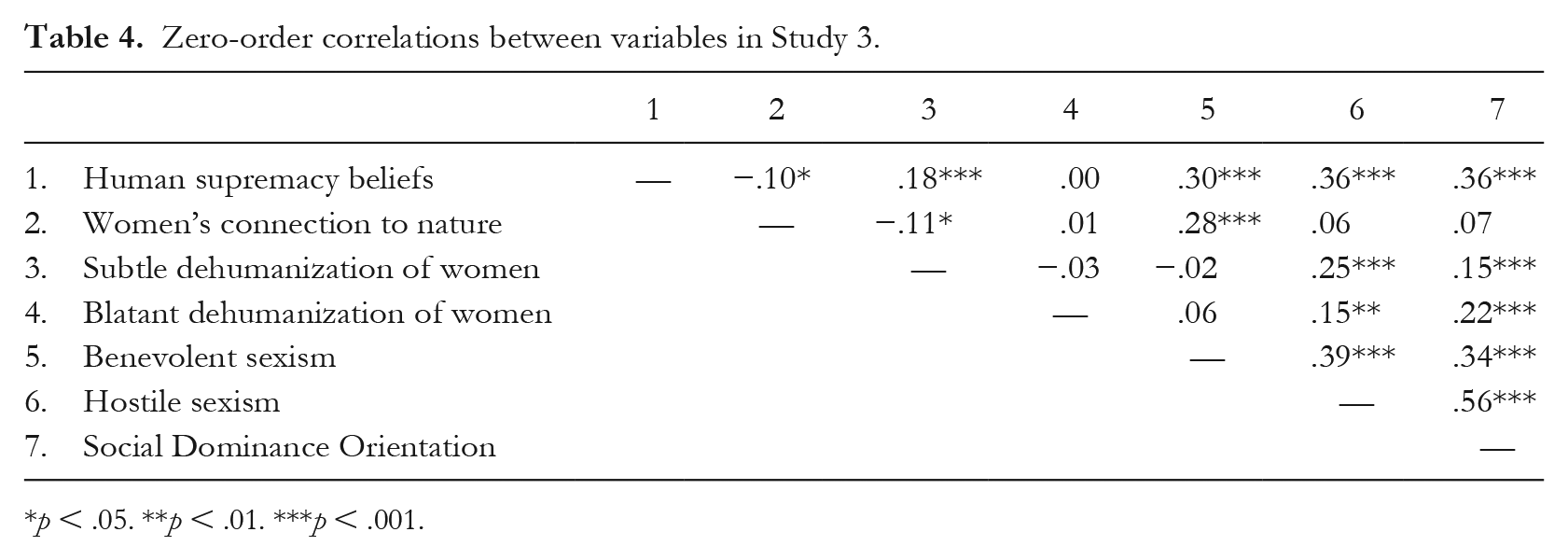
p < .05. **p < .01. ***p < .001.
Hypotheses test
We tested the main hypotheses following the same analytic procedures as applied in Study 2. Confirming Hypothesis 1 (Figure 4 and Table 2), human supremacy beliefs was significantly associated with both types of sexism. Furthermore, although beliefs in women’s connection to nature was associated with both benevolent and hostile sexism, the association with benevolent sexism was significantly stronger than with hostile sexism, Δb = .31, SE = .08, p < .001, corroborating Hypothesis 2. Blatant and subtle dehumanization predicted hostile, but not benevolent sexism, and, confirming Hypothesis 3, the associations with hostile sexism were significantly stronger than with benevolent sexism, Δb = .01, SE = .00, p = .007 and Δb = .28, SE = .06, p < .001, respectively.
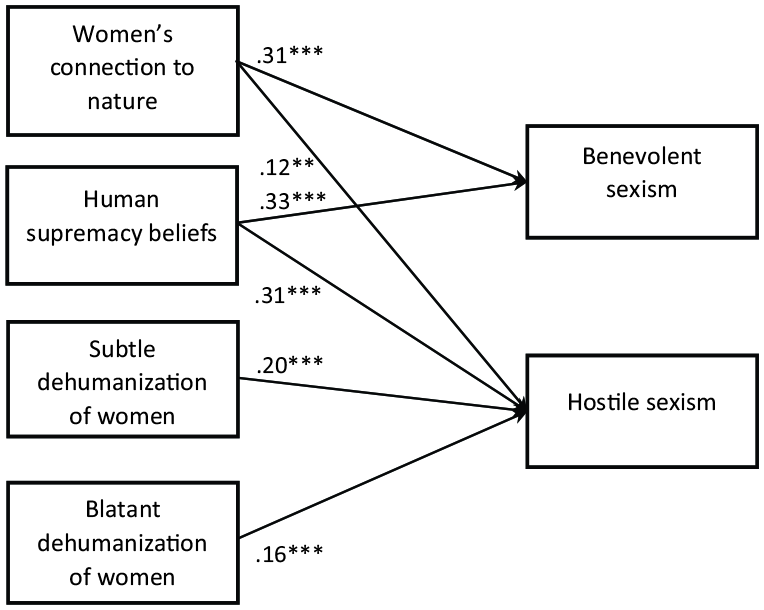
Results of Study 3 showing the associations (standardized estimates) of women’s connection to nature, human supremacy beliefs, and both subtle and blatant dehumanization of women with benevolent and hostile sexism (N = 503), only showing significant associations (standardized estimates), controlling for gender (see Table 2).
Testing the role of SDO
In a next set of analyses, we tested the idea that SDO represents the common ideological factor that connects human supremacy beliefs with both types of sexism (such that, when accounting for SDO, these associations become weaker, see Dhont et al., 2016). We modeled SDO as the common factor underpinning human supremacy beliefs and both types of sexism. We also controlled for the other predictors included in the study. The results (Figure 5) confirmed the pronounced associations of SDO with hostile sexism, benevolent sexism, and human supremacy beliefs. Critically, when accounting for SDO, the residual association of human supremacy beliefs with hostile and benevolent sexism was weaker than without accounting for SDO, confirming SD-HARM.
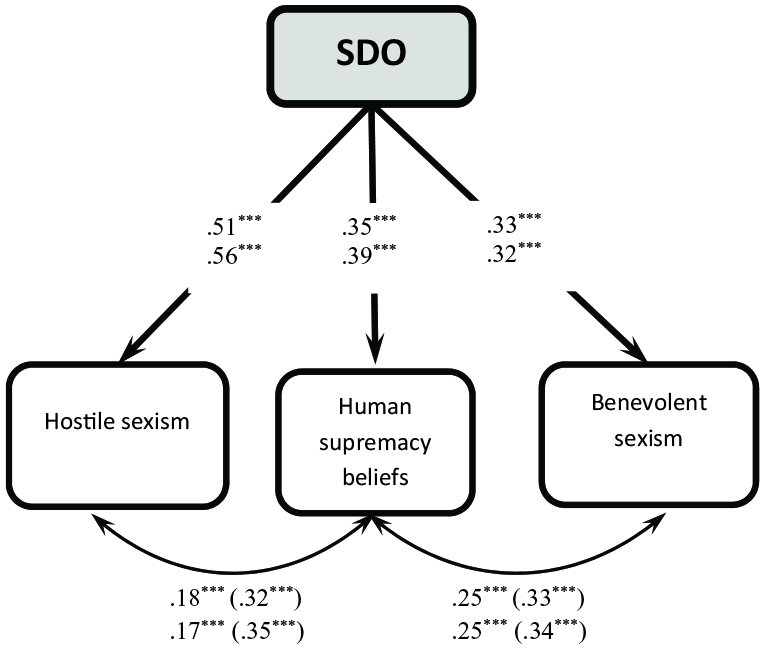
Test of the Social Dominance Human–Animal Relations Model, after controlling for the other predictors and gender (Study 3 and 5).
We also tested whether the drop in the strength of the relationship between human supremacy beliefs and the sexism variables after inclusion of SDO was statistically significant. Specifically, a third variable model was tested, statistically equivalent to testing for indirect effects using mediation analysis (D. P. MacKinnon et al., 2000; see Dhont et al., 2016). Bootstrap analysis based on 10,000 resamples showed that SDO significantly explained part of the relationship between human supremacy beliefs and hostile sexism, standardized estimate = .15, 95% bootstrapped bias-corrected confidence interval 95% BCI [0.103, 0.198], as well as benevolent sexism, standardized estimate = .08, 95% BCI [0.044, 0.115].
Similarly, we tested whether SDO accounted for the association of blatant and subtle dehumanization with hostile sexism (while controlling for the other variables). Modeling SDO as the common factor underpinning these associations confirmed the expected associations of SDO with hostile sexism (β = .48, p < .001) and with blatant and subtle dehumanization (β = .26, p < .001 and β = .10, p = .049, respectively). Furthermore, when accounting for SDO, the association between the dehumanization measures and hostile sexism became non-significant for blatant dehumanization (β = .07, p = .065) and became (slightly) weaker for subtle dehumanization (β = .18, p < .001) compared to these same associations without accounting for SDO (β = .17, p < .001 and β = .22, p < .001, respectively). Critically, SDO significantly explained the relationship between blatant dehumanization and hostile sexism, standardized estimate = .10, 95% BCI [0.061, 0.141], and part of the relationship between subtle dehumanization and hostile sexism, standardized estimate = .04, 95% BCI [0.002, 0.086].
Taken together, Study 3 provided converging support for all three hypotheses and confirmed the key role of SDO underlying the associations of both human supremacy beliefs and the dehumanization of women with sexist beliefs. Hence, our findings extend the SD-HARM framework (Dhont et al., 2016) showing the psychological connections between gender-based beliefs and beliefs related to human–animal relations, with SDO explaining considerable variance in these connections.
Study 4
The aim of Study 4 was to focus specifically on the association between women’s connection to nature and benevolent sexism. Hence, we explicitly tested the idea that associating women with nature predicts benevolent sexism in part because nature itself is seen as delicate, fragile, nurturing, and crucial for human happiness. These benevolent nature beliefs mirror the paternalistic views expressed in benevolently sexist attitudes towards women. Therefore, we tested whether benevolent nature beliefs could (partly) explain the relationship between the perceived connection of women to nature and benevolent sexism.
Methods
Participants
Participants were 400 adults based in the US and recruited via MTurk (62.5% men, 37.0% women, 0.3% selected “prefer not to answer”) and were paid $0.85. Participant age ranged from 20 to 70 years with a mean age of 35.82 years (SD = 10.66).
Measures
Human supremacy beliefs (α = .90; M = 3.68; SD = 1.36), benevolent (α = .91; M = 3.81; SD = 1.48) and hostile sexism (α = .87; M = 3.42; SD = 1.49), women’s connection to nature (α = .83; M = 4.78; SD = 0.97), subtle dehumanization (M = 0.30; SD = 1.36), and blatant dehumanization (M = 13.49; SD = 21.84) were measured as in the previous studies.
Benevolent nature beliefs (α = .75; M = 5.48; SD = 1.06) were measured with five items tapping into beliefs that nature is fragile, requires human protection, and is needed in order for humans to be happy (see Appendix C in online Supplemental Material). An example item is “Nature is fragile and needs to be protected.” Participants indicated their responses on a 1 (strongly disagree) to 7 (strongly agree) scale.
Results
Zero-order correlations
Human supremacy beliefs, women’s connection to nature, and blatant dehumanization were significantly correlated with both types of sexism (Table 5), while subtle dehumanization was positively associated with hostile sexism. As expected, benevolent nature beliefs were positively associated with women’s connection to nature and benevolent sexism, but not with hostile sexism.
Zero-order correlations between variables in Study 4.
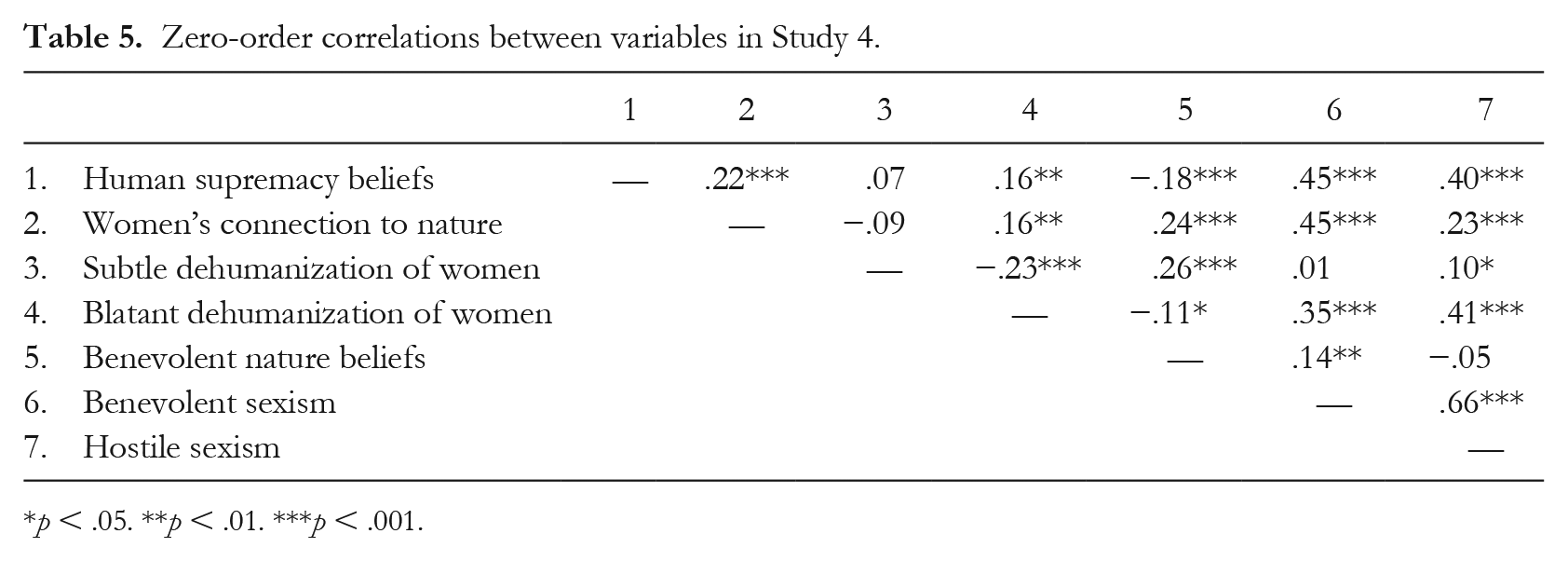
p < .05. **p < .01. ***p < .001.
Hypotheses test
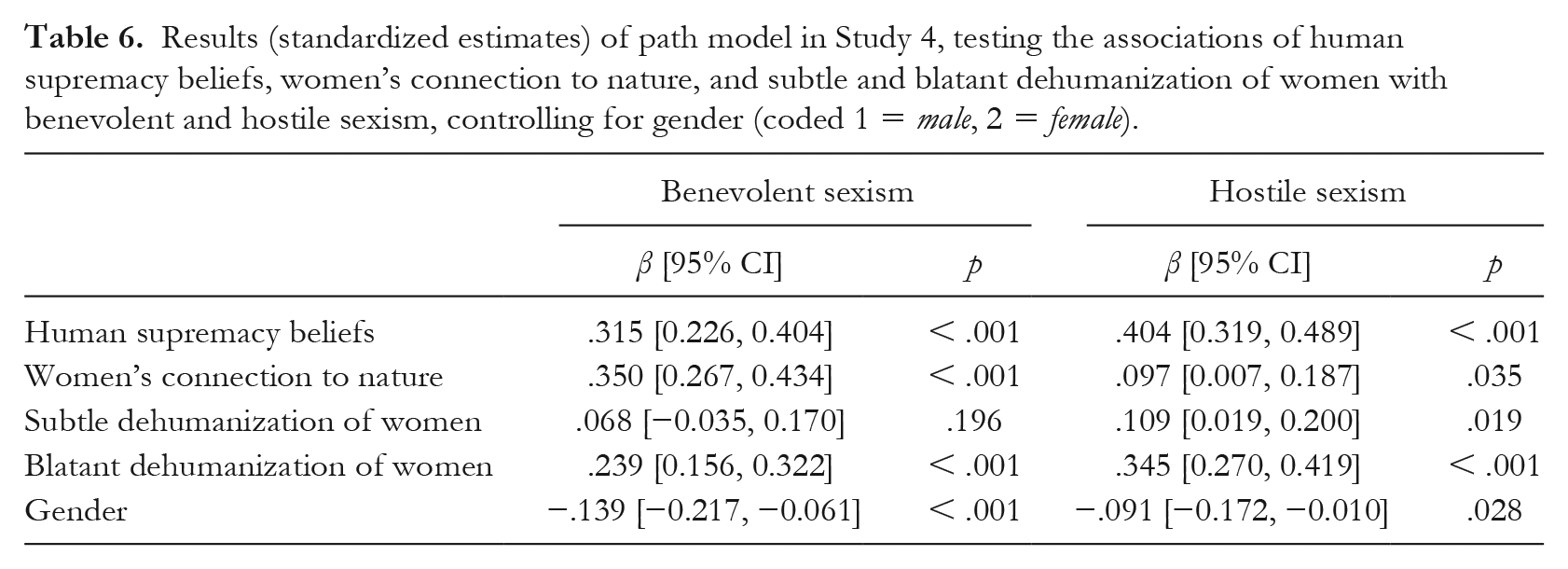
Conducting identical analyses as in the previous studies showed that human supremacy beliefs predicted both types of sexism (Figure 6, Table 6). Women’s connection to nature predicted benevolent, but not hostile sexism, with a significantly stronger association for benevolent sexism than for hostile sexism, Δb = .39, SE = .06, p < .001. Blatant dehumanization predicted both types of sexism, yet the association with hostile sexism was significantly stronger than with benevolent sexism, Δb = .01, SE = .00, p = .003, corroborating Hypothesis 3. Subtle dehumanization predicted only hostile, but not benevolent sexism, although the strength of these paths was not significantly different, Δb = .05, SE = .06, p = .427.
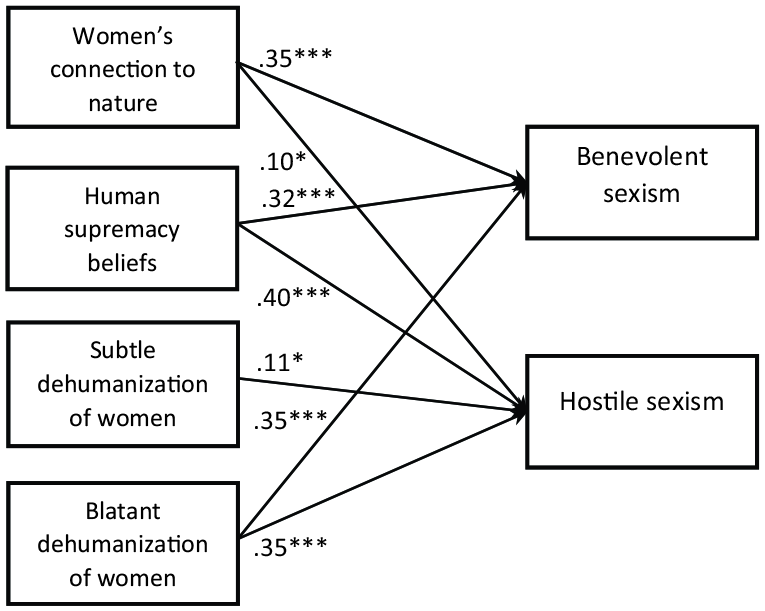
Results of Study 4 showing the associations (standardized estimates) of women’s connection to nature, human supremacy beliefs, and both subtle and blatant dehumanization of women with benevolent and hostile sexism (N = 399), only showing significant associations (standardized estimates), controlling for gender (see Table 6).
Results (standardized estimates) of path model in Study 4, testing the associations of human supremacy beliefs, women’s connection to nature, and subtle and blatant dehumanization of women with benevolent and hostile sexism, controlling for gender (coded 1 = male, 2 = female).
Testing the role of benevolent nature beliefs
Next, we tested the theoretical idea that benevolent nature beliefs underlie the association between women’s connection to nature and benevolent sexism, explaining why these variables are associated. In statistical terms, this means that when accounting for benevolent nature beliefs, the association between women’s connection to nature and benevolent sexism should become weaker. Hence, we modeled benevolent nature beliefs as the common factor underpinning women’s connection to nature and benevolent sexism, while controlling for the other predictors included in the study. The results confirmed the pronounced associations of benevolent nature beliefs with both women’s connection to nature (β = .31, p < .001) and benevolent sexism (β = .27, p < .001). Importantly, the residual association between women’s connection to nature and benevolent sexism was weaker (β = .34, p < .001) than without accounting for benevolent nature beliefs (β = .40, p < .001). Critically, accounting for benevolent nature beliefs significantly decreased the strength of the relationship between women’s connection to nature and benevolent sexism, standardized estimate = .04, 95% BCI = [0.016, 0.066].
Taken together, the pattern of results of Study 4 was largely consistent with the findings from Studies 1–3. Moreover, we explored a potential underlying factor explaining why those who more strongly believe that women (relative to men) are connected to nature also show more benevolently sexist attitudes. As expected, beliefs that nature is fragile, in need for protection, and crucial to human happiness (i.e., benevolent nature beliefs) explained a significant part of the variance in this relationship. However, the association between women’s connection to nature and benevolent sexism remained substantial and significant even after accounting for benevolent nature beliefs.
Study 5
In Study 5 we turned to some of the possible implications of our findings. Specifically, we focused on two potential societally relevant correlates of hostile and benevolent sexism: acceptance of rape myths and support for policies restricting pregnant women’s freedom.
Since October 2017, more than 80 women have come forward with sexual harassment and assault allegations against Hollywood producer Harvey Weinstein. Fashion designer Donna Karan commented: “How do we present ourselves as women? [. . .] Are we asking for it by presenting all the sensuality and all the sexuality?” (Malkin, 2017). The belief that women are harassed and raped because they dress suggestively is one of many myths surrounding rape and sexual violence, and is rooted in hostile sexist views (Abrams et al., 2003; Chapleau et al., 2007; Glick & Fiske, 1997). Bohner (1998, p. 14) defined rape myths as “descriptive or prescriptive beliefs about rape (i.e. about its causes, context, consequences, perpetrators, victims and their interaction) that serve to deny, downplay or justify sexual violence that men commit against women.” Given that the dehumanization of women and human supremacy beliefs are associated with hostile sexism, we expected that both variables would be further associated with greater acceptance of rape myths, through hostile sexism.
The implications associated with benevolent sexism are less openly damaging, and even likely perceived as in women’s best interest. Yet, they are often responsible for sustaining male dominance, and interfere with women’s autonomy, for instance by restricting pregnant women’s choices (Murphy et al., 2011; Sutton et al., 2011). Indeed, benevolent sexism predicts increased willingness to intervene should pregnant women engage in behaviors viewed as risky to their pregnancy (Sutton et al., 2011), highlighting the links between benevolent sexism and the perceived importance of women for natural reproduction (Glick & Fiske, 1996; Guttentag & Secord, 1983; Rothman, 1994; Sutton et al., 2011). Given that beliefs in women’s connection to nature and human supremacy beliefs predicted benevolent sexism, we expected that these variables would also predict support for policies that restrict pregnant women’s autonomy, through benevolent sexism.
Furthermore, the survey also included the SDO scale, allowing us to test the role of SDO in explaining the associations between human supremacy beliefs and both types of sexism, as well as between dehumanization and hostile sexism. This would provide a direct replication of the findings of Study 3.
Method
Participants and procedure
Respondents were 500 MTurk workers located in the US and were paid $0.70 (50.8% women, 48.8% men, and 0.4% indicated “prefer not to say”). Participant age ranged from 19 to 73 years (M = 36.75, SD = 11.81).
Measures
Human supremacy beliefs (α = .93; M = 3.69; SD = 1.43), benevolent sexism (α = .91; M = 3.66; SD = 1.34), hostile sexism (α = .93; M = 3.17; SD = 1.44), women’s connection to nature (α = .74; M = 4.45; SD = 0.79), and SDO (α = .90; M = 2.68; SD = 1.37) were measured as in the previous studies. Dehumanization was measured with the measure of subtle dehumanization (M = 0.26; SD = 1.25) used in Studies 1–4.
Rape myth acceptance (α = .96; M = 2.08; SD = 1.34) was measured using 13 items from the Illinois Rape Myth Acceptance Scale (Payne et al., 1999). Participants indicated on 7-point scales (1 = strongly disagree, 7 = strongly agree) the extent to which they agree with statements describing specific rape myths (e.g. “If a woman is raped while she is drunk, she is at least somewhat responsible for letting things get out of control” and “Many women secretly desire to be raped”). The items were averaged into a single score, with higher scores reflecting stronger endorsement of rape myths.
Support for the restriction of pregnant women’s freedom (M = 4.24; SD = 1.78) was measured with four items based on Murphy et al. (2011). We asked participants to indicate their support for laws that would restrict pregnant women’s autonomy on a 1 (strongly disagree) to 7 (strongly agree) scale. One item was removed from the analysis because of its low item-total correlation (< .30), leaving three items: “It should be against the law for pregnant women to consume alcohol,” “Pregnant women should not be allowed to consume risky foods,” and “Shops should be legally prohibited from selling cigarettes to visibly pregnant women.” The internal consistency was α = .84.
Results
Zero-order correlations
Human supremacy beliefs were significantly correlated with benevolent and hostile sexism, while women’s connection to nature was significantly related to benevolent, but not hostile sexism, and subtle dehumanization was significantly related to hostile, but not to benevolent sexism. Furthermore, both hostile and benevolent sexism were significantly correlated with support for the restriction of pregnant women’s freedom and rape myth acceptance. Women’s connection to nature was significantly positively related to support for the restriction of pregnant women’s freedom while human supremacy beliefs and subtle dehumanization were significantly positively related to rape myth acceptance (Table 7).
Zero-order correlations between variables in Study 5.
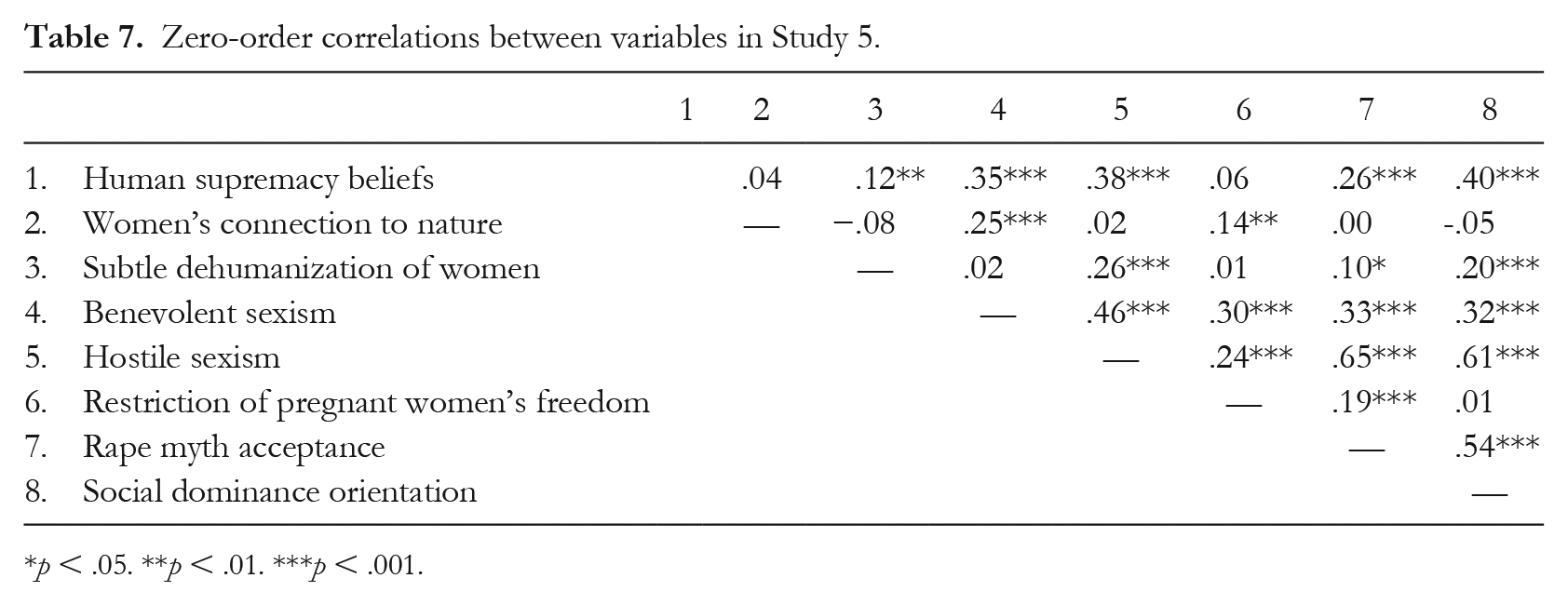
p < .05. **p < .01. ***p < .001.
Hypotheses test
We tested the same path model as in Studies 1–4, but additionally included rape myth acceptance and support for the restriction of women’s freedom as criterion variables. Specifically, to test our additional hypotheses regarding the indirect associations, we included the paths from all predictors to hostile and benevolent sexism, rape myth acceptance, and support for the restriction of women’s freedom, as well as the paths from hostile and benevolent sexism to rape myth acceptance and support for the restriction of women’s freedom. Gender was again included as a control variable.
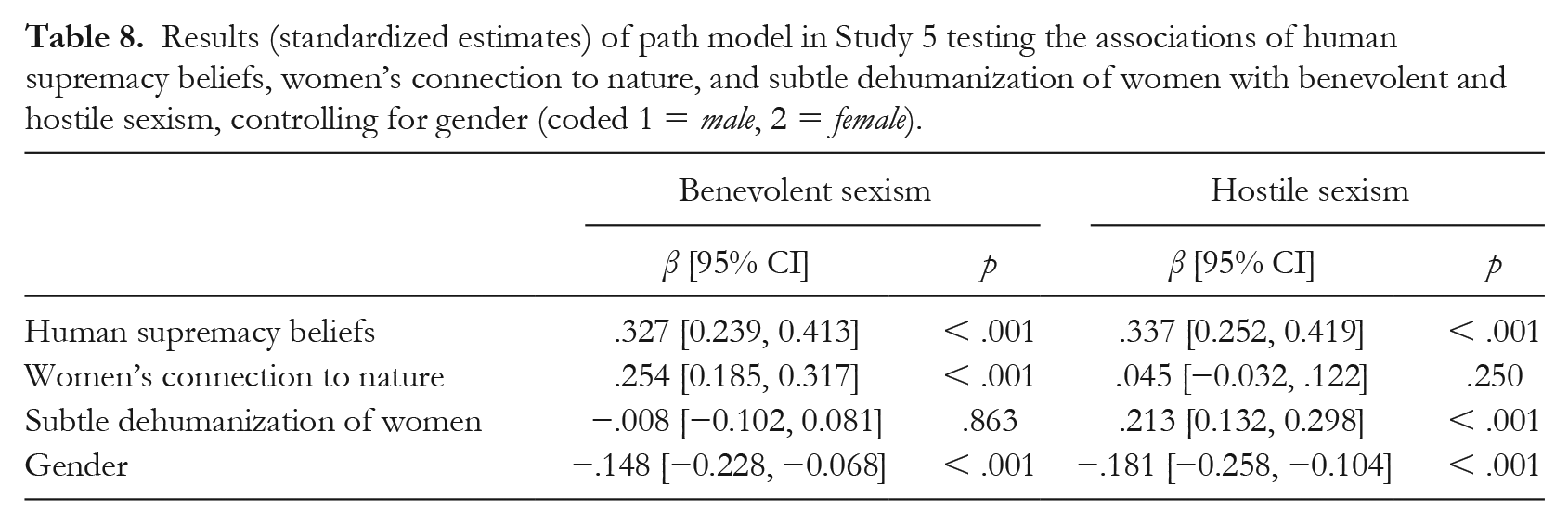
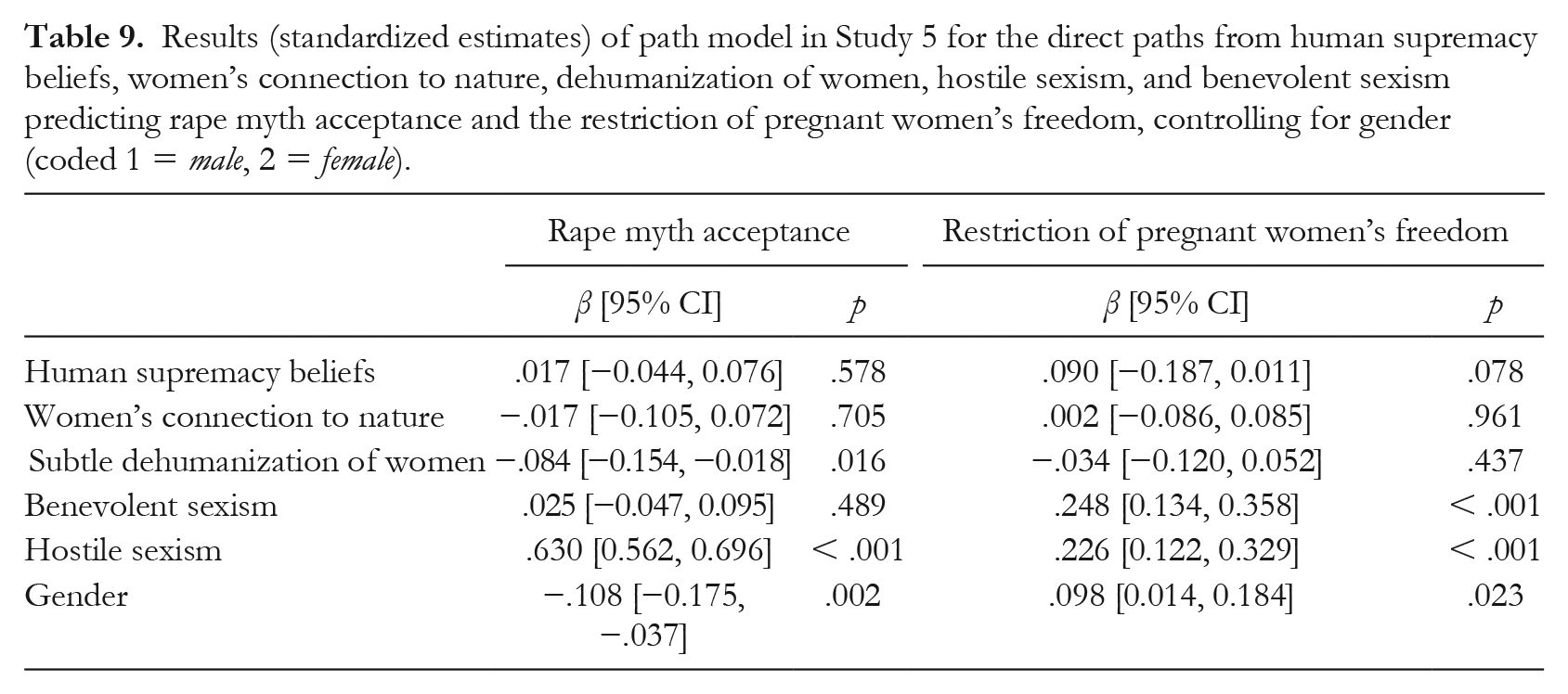
Replicating Studies 1–4, human supremacy beliefs were significantly related to both benevolent and hostile sexism (see Figure 7, Table 8 and 9). Furthermore, women’s connection to nature was a significantly stronger predictor of benevolent sexism than of hostile sexism, Δb = 35, SE = 07, p <.001. Subtle dehumanization of women was significantly related to hostile sexism, but not to benevolent sexism. The former path was also significantly stronger than the latter path, Δb = .25, SE = .07, p < .001. Furthermore, hostile sexism significantly predicted both greater rape myths acceptance and support for the restriction of pregnant women’s freedom while benevolent sexism significantly predicted greater support for the restriction of pregnant women’s freedom.
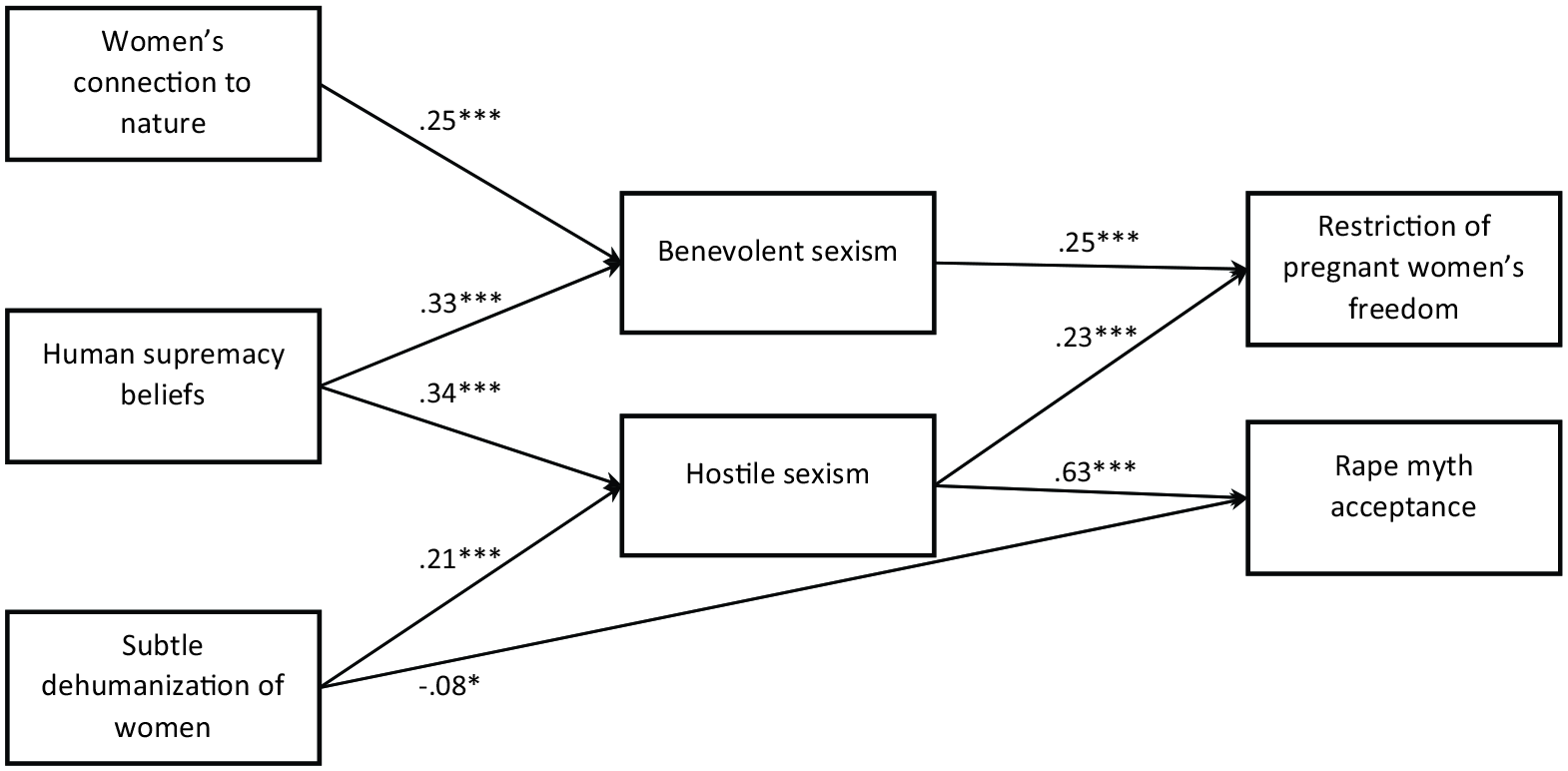
Results of Study 5 showing the associations (standardized estimates) of women’s connection to nature, human supremacy beliefs, and subtle dehumanization of women with benevolent and hostile sexism, and with restriction of pregnant women’s freedom and rape myth acceptance (N = 498), only showing significant associations (standardized estimates), controlling for gender (see Tables 8 and 9).
Results (standardized estimates) of path model in Study 5 testing the associations of human supremacy beliefs, women’s connection to nature, and subtle dehumanization of women with benevolent and hostile sexism, controlling for gender (coded 1 = male, 2 = female).
Results (standardized estimates) of path model in Study 5 for the direct paths from human supremacy beliefs, women’s connection to nature, dehumanization of women, hostile sexism, and benevolent sexism predicting rape myth acceptance and the restriction of pregnant women’s freedom, controlling for gender (coded 1 = male, 2 = female).
Indirect effects
We estimated the indirect associations of women’s connection to nature, subtle dehumanization of women, and human supremacy beliefs (i.e., the three key predictors) with support for the restriction of pregnant women’s freedom and rape myth acceptance (i.e. the two criterion variables) via benevolent and hostile sexism (i.e., the two mediators) based on 10,000 bootstrap samples in Mplus. As predicted, both women’s connection to nature and human supremacy beliefs were significantly indirectly related to support for the restriction of pregnant women’s freedom through benevolent sexism, standardized estimate = .06, 95% BCI [0.033, 0.100] and standardized estimate = .08, 95% BCI [0.043, 0.129], respectively. Also as expected, both subtle dehumanization and human supremacy beliefs were significantly indirectly related to rape myth acceptance through hostile sexism, standardized estimate = .13, 95% BCI [0.083, 0.187] and standardized estimate = .21, 95% BCI [0.154, 0.274], respectively.
Furthermore, both subtle dehumanization and human supremacy beliefs showed significant indirect associations with greater support for the restriction of women’s freedom via hostile sexism, standardized estimate = .05, 95% BCI [0.024, 0.082] and standardized estimate = .08, 95% BCI [0.040, 0.122].
Testing the role of SDO
Following the same analytical procedures as in Study 3, we also tested the role of SDO in explaining the relations between human supremacy beliefs and both types of sexism. Modeling SDO as the common factor underpinning these relationships confirmed the significant relations of SDO with human supremacy beliefs and benevolent and hostile sexism (Figure 5). Critically, when accounting for SDO, the associations of human supremacy beliefs with both hostile and benevolent sexism were significantly weaker than without accounting for SDO, standardized estimate = .19, 95% BCI [0.140, 0.248] and standardized estimate = .08, 95% BCI [0.046, 0.130], respectively.
Finally, modeling SDO as the common factor underpinning the association between subtle dehumanization with hostile sexism also confirmed the associations of SDO with hostile sexism (β = .53, p < .001) and subtle dehumanization (β = .16, p = .001). Furthermore, although the residual association between hostile sexism and subtle dehumanization was still significant (β = .18, p < .001) when accounting for SDO, this association was significantly weaker than without accounting for SDO (β = .23, p < .001). SDO significantly explained part of the relationship, standardized estimate = .07, 95% BCI [0.030, 0.119]), confirming the role of SDO as a common ideological factor underpinning the association between subtle dehumanization and hostile sexism.
Discussion
As hypothesized, both human supremacy beliefs and perceiving women as more closely connected to nature and animals predicted support for restrictive policies, channeled through higher benevolent sexism. Furthermore, both human supremacy beliefs and the subtle dehumanization predicted higher hostile sexism, which, in turn, predicted acceptance of rape myths. Study 5 thus extended our findings by showing the implications for the acceptance of rape myths and policies that restrict pregnant women’s freedom. Study 5 also confirmed the role of SDO in explaining the relationship between human supremacy beliefs and hostile and benevolent sexism as well as between the dehumanization of women and hostile sexism.
General Discussion
This research systematically addressed the associations between sexism and beliefs about human–animal hierarchies and women’s position relative to animals and nature. Across five studies, using large (highly powered) samples from both the US and the UK, our findings demonstrated, for the first time, that a) ideologically motivated beliefs about hierarchical structures and inequality in human–animal relations are significantly related to benevolent and hostile sexism and b) beliefs about women’s position relative to nature and the dehumanization of women show differential relations with benevolent and hostile sexism.
Specifically, stronger beliefs in human superiority over animals and nature were consistently related to stronger benevolent and hostile sexism, confirming Hypothesis 1. These findings suggest that human supremacy beliefs not only express a sense of entitlement to use animals and nature as resources to be exploited for human benefit but are also related to sexist ideologies. Hence, human supremacy beliefs serve as a justification for the lower status and subordination of both animals and women, thereby highlighting the intertwined connections in people’s thinking about animals and women (Dhont et al., 2020; Hodson et al., 2020).
Moreover, the findings extend recent work on the SD-HARM model (Dhont et al., 2016) demonstrating that SDO represents a common ideological motive underpinning both ethnic prejudice and exploitative attitudes toward animals. Indeed, Studies 3 and 5 demonstrated that SDO is also a key ideological factor explaining why beliefs in human superiority over animals and nature are connected to gender-based prejudice.
However, the current focus on gender-based prejudice, rather than ethnic prejudice as in most previous empirical work, required the consideration of a more complex pattern of relations. As outlined by Ambivalent Sexism Theory (Glick & Fiske, 1996; Glick et al., 2000), men and women are more intimately connected than any other two social groups (Fiske & Stevens, 1993), and images and stereotypes of women are not consistently negative (Eagly & Mladinic, 1994; Rudman, 2005). Therefore, considering only a single sexism dimension would have been inadequate (e.g., Glick & Fiske, 1997; Sibley et al., 2007). Indeed, the current findings demonstrated that hostile and benevolent sexism also show differential associations with different ways of how women (relative to men) are viewed in relation to nature and animals.
Specifically, in line with Hypothesis 2, the belief that women are more closely connected to nature than men was more strongly associated with benevolent than hostile sexism. In other words, by portraying women as more “in tune” with nature, and attributing special qualities of natural purity to them, women seem to be put on a pedestal and admired for these qualities. Yet such views also facilitate patronizing attitudes and the idea that women need protection from men, which further contributes to gender-based social hierarchies. Part of this association between women’s connection to nature and benevolent sexism was explained by the benevolent belief that nature itself has a quality of purity that human culture does not, and requires human protection (Study 4). The association was, however, still substantial after accounting for benevolent nature beliefs, indicating that other factors are also at play. For instance, given the crucial role of women in natural reproduction, the idea that women’s wellbeing is integral to the wellbeing of men’s future offspring might contribute to why women’s connection to nature (and thus natural reproduction) is associated with benevolent sexism.
Indeed, pregnant women seem particularly affected by benevolent sexism and are more likely to experience significant interference with their autonomy and health-related behaviors (Sutton et al., 2011). Consistent with this idea, our findings showed that both women’s perceived connection to nature and desires to dominate animals and nature predict support for the restriction of pregnant women’s freedom, through endorsement of benevolent sexism.
Turning to hostile sexism, we established that the dehumanization of women consistently predicted hostile sexism in all five studies using a subtle dehumanization measure based on the denial of characteristics that are assumed to be uniquely human, and in three studies with a measure of blatant dehumanization based on the view of women as not fully evolved. One striking implication of this finding is that, by placing women closer to animals on the animal–human continuum, one can justify women’s subordination in society as well as the disproportionate amount of sexual violence they face as a group. Indeed, the dehumanization of women was further related to justifying and trivializing sexual violence through a stronger endorsement of hostile sexism. This extends previous research suggesting that animalizing women is linked to self-reported rape proclivity in men (Rudman & Mescher, 2012).
Interestingly, yet not predicted by the hypotheses, blatant dehumanization of women also predicted benevolent sexism in Studies 2 and 4 (but not in Study 3). This finding suggests that depicting women as more animal-like may also be associated with protective and patronizing attitudes. Lowering women’s status by animalizing them might be a strategy to establish and justify male dominance in ways that could be perceived as well-intended or socially acceptable.
Furthermore, both dehumanization of women and human supremacy beliefs also showed an indirect association with support for the restriction of pregnant women’s freedom through hostile sexism. These findings may suggest that support for restricting women’s autonomy is driven by multiple motives including motives of protection of women from perceived risks to their wellbeing, motives to assert control over the reproductive process, as well as hostile motives reflecting antagonistic feelings about women.
Limitations and Directions for Future Research
Notwithstanding the consistent support for the hypotheses, some limitations should be acknowledged. First, our goal was to investigate how views regarding human–animal relations and how women are perceived to be related to animals and nature are associated with sexist attitudes, without implying causality given the correlational nature of our data. Future studies could experimentally manipulate the perceived position of women relative to nature, or the perceived status of animals relative to humans, to test for causal effects on sexism.
Second, it should be noted that the measures of dehumanization were not systematically correlated. Also, previous research has reported non-significant or weak correlations between subtle and blatant dehumanization (see Kteily et al., 2015), suggesting that these scales measure qualitatively different concepts. Furthermore, these scales have been developed to measure the dehumanization of ethnic outgroups rather than women. Developing more parallel subtle and blatant dehumanization scales could provide a better understanding of the difference between subtle and blatant dehumanization.
Implications and Conclusions
Scholars have argued that in order to effectively combat oppression, different forms of prejudice cannot be seen in isolation, but their interdependency needs to be understood (Adams, 1990/2015; 1994/2018; Adams & Gruen, 2014; C. A. MacKinnon, 2004). Based on the present findings, it can be argued that the objectification of women in campaigns to promote animal rights not only expresses sexist messages, but may be ineffective in addressing animal suffering (see also Bongiorno et al., 2013). Indeed, it may reinforce superiority beliefs in both human intergroup and human–animal relations. Along similar lines, our findings raise important questions regarding the frequent use of media images depicting women in an animalistic way or together with images of nature (e.g., Adams, 1990/2015; Plous & Neptune, 1997; Reynolds & Haslam, 2011). Through strengthening the association of women with animals and nature, exposure to these images might increase and maintain benevolent and hostile sexism.
Taken together, by showing that the way people think about animals is associated with exploitative views about women, our findings move beyond traditional psychological theorizing on gender-based bias and provide empirical support for the ideas of feminist scholars that, on a psychological level, systems of oppression and exploitation of women and animals are closely connected.
Supplemental Material
GPIR-19-131.R1_Supplementary_materials – Supplemental material for Hostile and benevolent sexism: The differential roles of human supremacy beliefs, women’s connection to nature, and the dehumanization of women
Supplemental material, GPIR-19-131.R1_Supplementary_materials for Hostile and benevolent sexism: The differential roles of human supremacy beliefs, women’s connection to nature, and the dehumanization of women by Alina Salmen and Kristof Dhont in Group Processes & Intergroup Relations
Footnotes

References
Supplementary Material
Please find the following supplemental material available below.
For Open Access articles published under a Creative Commons License, all supplemental material carries the same license as the article it is associated with.
For non-Open Access articles published, all supplemental material carries a non-exclusive license, and permission requests for re-use of supplemental material or any part of supplemental material shall be sent directly to the copyright owner as specified in the copyright notice associated with the article.
