




Abstract
This article aims to explore if social exclusion can constitute a pathway to radicalization, and if individual level of sensitivity of rejection moderates the effect of social exclusion. Humans innately seek belonging and meaning, and strive for re-establishing a sense of value and belongingness if faced with social exclusion. One way to achieve this is by adherence to a new and inviting group. In four studies, we test to what extent individuals who face social exclusion adapt to a radical including group. In Studies 1 (n = 104) and 2 (n = 308), we use a social media-like paradigm to manipulate social exclusion. In Study 3 (n = 1041), we use the so-called Cyberball paradigm, and in Study 4 (n = 40) we use a real-life manipulation. All studies show that rejected individuals who are sensitive to rejection are more prone to identify with, engage with and endorse an extreme group. The results hold over both ideological (Studies 1–3) and non-ideological (Study 4) content. Only the last study showed a main effect of social exclusion. We discuss the results in reference to the significance loss model of radicalization.
Even though the research field of radicalization has grown rapidly over the last two decades, much research still relies on biographies and interviews with former terrorists (Borum, 2010). With a few notable exceptions, experimental research that increases the understanding of the radicalization process is still limited (Bäck et al., 2018; Hales & Williams, 2018; Knapton et al., 2015; Pfundmair & Wetherell, 2019).
The present article contributes to this growing literature by taking contextual, ideological, and individual factors into account in a single experimental research paradigm. We take our point of departure in the literature on social exclusion and anchor our discussion in the “significance loss model” presented by Kruglanski and Webber (2014). The present research concerns political (rather than religious) radicalization, however, an important aspect of the model is that adaption to a radical group should be independent of its content (Kruglanski & Webber, 2014).
We theorize about the possibility that socially excluded individuals who are provided an opportunity for inclusion will seize that opportunity, even if the including group is presented as extreme. In four studies, using three different manipulations of social exclusion, we evaluate the role of social exclusion as a potential first step in a possible radicalization process.
Theory and Previous Research on Radicalization
Approaches to Political Radicalization
The last two decades have witnessed repeated terrorist attacks, violent extremism, and radical activity. Most scholars suggest that radicalization to violent extremism must be understood as a process whereby ordinary people adapt to more extreme views and even appreciate violence as a reasonable method to accomplish a certain goal (Kruglanski & Webber, 2014).
Early approaches to understanding why some individuals engage in violence and terrorism mainly focused on individual-level explanations related to some sort of mental abnormality (Borum, 2010; Gill & Corner, 2017; Schmid et al., 1988). Such ideas gave rise to a large number of attempts to create a “terrorist profile.” Despite several decades of work, no meaningful terrorist profile has been established (Borum, 2004; Horgan, 2008). The conclusion from this work is that the focus on the individual as psychologically disturbed is misguided (for an excellent review of the study of mental disorder and the terrorist, see Gill & Corner, 2017).
More recent social science research has instead focused on a more dynamic approach to radicalization. Most researchers conceive of radicalization as a process where an individual moves in a non-normative direction. This process approach is fruitful when it comes to establishing the possible roots of radicalization as it entails that we must not limit research to only those individuals who have reached an end-state of being “radical.” Instead, we can investigate a normal population and establish what factors affect them in moving in a non-normative direction (Kruglanski & Webber, 2014).
Several approaches to radicalization have been presented, but most center on the same core concepts. Kruglanski and Webber (2014) define radicalization as “a process whereby one moves to support or adopt radical means to address a specific problem or goal” (p. 379). McCauley and Moskalenko (2008) argue that, “Functionally, political radicalization is increased preparation for and commitment to intergroup conflict. Descriptively, radicalization means change in beliefs, feelings, and behaviors in directions that increasingly justify intergroup violence and demand sacrifice in defense of the ingroup” (p. 416). Importantly, none of these definitions contain any assumptions about the ideological content, implying that the radicalization process may be universal, regardless of ideological or religious content (Kruglanski et al., 2014). In line with this, here we follow scholars who have suggested that, even though violent extremist ideologies may be widely different in their contents, there may be common patterns of mechanisms within different ideologies (Borum, 2010; Taylor & Horgan, 2006).
It is important to note that violent action is not a fundament of radicalization (McCauley & Moskalenko, 2008; Moghaddam, 2005). Kruglanski et al. (2014) argue that radicalization is a matter of degrees, where a low degree of radicalization may entail support for radical groups and violence, and a high degree is the actual act of committing violence. This mirrors what McCauley and Moskalenko (2008) call the “pyramid model,” where the large bottom part of the pyramid consists of supporters of a radical cause, and where increased engagement is found among fewer numbers higher up in the pyramid. Moghaddam (2005) calls this process a staircase, where most people remain on the ground floor and some people move up the staircase where the final step involves recruitment to terrorist organizations. Similarly, Van den Bos (2018) presents a process of radicalization with phases from activism to extremism to terrorism. The process does not need to culminate in violent behavior to be considered a radicalization process, but rather a growing willingness to support radical groups.
Radicalization and Social Exclusion
Early approaches to explain radicalization sometimes focused on marginalization, poverty, and lack of education. This has been refuted to the advantage of research showing that psychological interpretations of being deprived are key (Moghaddam, 2005). Social exclusion brings a host of negative feelings. Following social exclusion in experiments conducted by Williams and colleagues, participants reported strong feelings of anger, frustration, and sadness, and also lowered self-esteem, control, and meaningful existence (Williams, 2012; Williams & Zadro, 2005). Hence, it is not difficult to understand that individuals who experience social exclusion strive for some way to remedy the hurt feelings. In fact, even Maslow (1943) presented belongingness needs as the most fundamental need following basic security and physiological needs. To regain feelings of belongingness, individuals may become increasingly attentive to opportunities for social inclusion, and may conform to a new and including group. The motivation is to either gain a sense of self-control damaged by exclusion, or to gain social approval (Bäck et l., 2013, 2015; Carter-Sowell et al., 2008; Knapton et al., 2015; Riva et al., 2014; Williams et al., 2000). 1
One fruitful approach to understand how social exclusion and radicalization are connected is presented by Kruglanski and colleagues and is called “significance loss” (Kruglanski et al., 2009, 2014, 2018; Kruglanski & Webber, 2014). All people have a fundamental need for “significance,” which means to be important, to matter, to earn others’ admiration and respect. This major, universal human motivation is variously labeled “need for esteem,” “achievement,” “meaning,” “competence,” “control,” and so on (Deci & Ryan, 2000; Fiske, 2010; Frankl, 2000; Higgins, 2012; Kruglanski et al., 2014; Maslow, 1943; White, 1959). This connects to the basic needs presented in the social exclusion literature: control, meaningful existence, belongingness, and self-esteem (Williams, 2007). Such needs fall within the concept of “significance” as presented by Kruglanski and colleagues (Kruglanski et al., 2009, 2014, 2018).
Furthermore, Kruglanski and colleagues argue that one central underlying motivational force within the individual is the “quest for significance,” which may be activated through significance loss. An individual may experience lost significance due to different forms of individual- or group-based humiliation, shame or dishonor. In line with this, social exclusion has been argued to induce significance loss and awaken the quest for significance (Bäck et al. 2018; Jasko et al., 2017; Kruglanski et al., 2009; Kruglanski & Orehek, 2011; Williams, 2012), and has previously been related to religious fundamentalism (Gijsberts, 2004; Phalet & Ter Wal, 2004; Verkuyten & Yildiz, 2007). Sympathizing or engaging with extremist groups presents an opportunity for significance—by aligning with a radical ideology and a radical group, significance can be restored (Kruglanski et al., 2014). Hence, individuals who have been excluded should more readily accept an invitation to a radical group, compared to individuals that have not experienced social exclusion.
Individual Differences, Rejection Sensitivity, and Radicalization
Since the radicalization literature abandoned the view of individual factors as determinants of radicalization, individual-level factors have been more or less absent in the literature. However, individual-level factors may moderate how the context is perceived. For instance, the literature on social exclusion shows that there are individual differences in reactions to an exclusion experience (Downey & Feldman, 1996; Williams, 2007), and individuals may react differently to a significance loss (Kruglanski et al., 2014, 2018).
Rejection sensitivity is a personality feature that may help explain why some people, more than others, more readily seem to adapt to a new group following social exclusion. Rejection sensitivity has been defined as a disposition to anxiously expect, readily perceive, and intensely react to rejection (Berenson et al., 2009; Downey et al., 1997). Individuals who are sensitive to rejection have usually experienced rejection from close others previously, and have learnt to expect rejection in different situations (Downey et al., 1998). Highly rejection sensitive individuals more readily adapt to a group following an identity threat (Romero-Canyas et al., 2010). Incorporating rejection sensitivity in research on radicalization is straightforward, as Kruglanski et al. (2014) state that “rejection sensitivity could contribute to the tendency to be offended and hence experience significance loss” (p. 89).
The Role of Ideology in the Radicalization Process
The role of ideology in radicalization processes has been debated. For instance, Sageman (2004) states that, “social bonds play a more important role in the emergence of the global Salafi jihad than ideology” (p. 178). However, our notion of ideology is that it is not separated from social bonds. Kruglanski et al., (2014) state that, “both [ideology and social bonds] are of crucial importance in that it is social bonds of some sort that bring individuals in contact with ideology” (p. 76). According to Hardin and Higgins (1996), ideology constitutes a shared reality to which members of a social network commonly subscribe. The network does not function in an ideological vacuum; it is bonded by a common worldview that, in the case of terrorist networks, ultimately grants license to violence.
In the search to regain belongingness and meaningfulness, in the quest for significance, the ideological context in which the individual is situated will define the perceived acceptable ways to regain significance (Jasko et al., 2017; Kruglanski & Webber, 2014; Kruglanski et al., 2002). A radical ideology presents radical activity as a means to significance that is independent of what the content of ideology is, whether political, or religious (Kruglanski et al., 2014). Identification with a radical ideology may thus alleviate the pain of significance loss.
Hypotheses and Overview of Studies
Hypotheses on Exclusion, Rejection Sensitivity, and Radicalization
Against the backdrop that a radical group presents an opportunity for inclusion, we expect that individuals having experienced social exclusion should identify more strongly with the group, and possibly also become willing to engage with, and endorse, the group. We also expect that this willingness is independent of ideological content as long as the radical group represents views that are line with the pre-existing views of the individual. This means that we do not expect an individual sympathizing with the political left to become engaged in a radical right-wing group. Instead, individuals should more readily identify with a radical version of an ideology that matches their own. For instance, following social exclusion, an individual with a pre-existing preference for left-wing political views, should be more willing to identify and engage with a radical left-wing group, and conversely for someone to the right. We formulate two overarching hypotheses that we test in four different experiments:
H1: Individuals who experience social exclusion will identify more strongly, be more willing to engage with, and endorse a radical group they are invited to join.
Since individuals who are highly sensitive to rejection are more likely to be influenced by social exclusion, we hypothesize that:
H2: The effect of social exclusion on identification, engagement, and endorsement of a radical group will be magnified among highly rejection sensitive individuals.
Overview of the Present Studies
To evaluate our hypotheses, we conducted three online experiments, and one lab experiment using different social exclusion manipulations. In Studies 1 and 2 we used an adapted version of the “Ostracism Online” paradigm (Wolf et al., 2015), and in Study 3 we used the Cyberball paradigm (Hartgerink et al., 2015; Williams et al., 2000; Williams, 2007). Finally, in a fourth study we aimed at a more realistic manipulation of exclusion where a research assistant informed the participants that they were not welcome in a certain group.
In all studies, the experimental design consisted of two conditions, with participants randomly assigned to either being excluded or included. After the manipulation, the participants were presented with an opportunity for inclusion by being invited to a radical group. Hence, half of the participants first experienced exclusion and this was followed by an inclusion opportunity, while the other half experienced inclusion first and then were invited to a radical group. Previous research on social exclusion indicates that threatened needs are re-established when an opportunity for inclusion presents itself (Maner et al., 2007; Williams et al., 2000; Williams & Sommer, 1997). In Study 1, the radical group was framed as a right-wing group, and in Study 2 it was framed as a left-wing group. In Study 3, we collected both left- and right-wing data in a single study. These studies were set up using Qualtrics. In Study 4, the radical group was presented as a student group, and all material was paper and pencil.
Participants for Studies 1, 2, and 3 were recruited from the online platform Prolific Academic. Prolific is a platform that connects research participants with researchers. The participants are reimbursed through Prolific after completing the study. Prolific has been shown to provide reliable results (Palan & Schitter, 2018). To keep as many external factors as possible constant, we chose to analyze British samples only and frame the left- and right-wing messages in terms of British nationality.
Because the groups presented were created to be perceived as radical, and since we believe that only individuals who are already attracted to a certain ideology should feel compelled by their message, we used an ideological selection criterion on participants. For the right-wing study (Study 1), only participants self-rating 5 or higher on a liberal–conservative rating scale were selected. For the left-wing study (Study 2), only participants self-rating 5 or lower on a left–right scale were selected. The scales went from 1 = Clearly liberal to 10 = Clearly conservative and 1 = Clearly left to 10 = Clearly right. In Study 3, participants who self-rated themselves between 1 and 5 on a left–right scale were redirected to receive an invitation to a left-wing radical group while those who rated between 6 and 10 were redirected to receive an invitation to a right-wing radical group.
In Study 4 we recruited students on campus at Lund University in Sweden and scheduled a lab session with them. The set-up was also different in that we used the case of tuition fees instead of a clearly ideological issue. Since the issue was highly relevant to the student population, we assumed that they would agree with the basic position put forth by the including group (which was to oppose the implementation of tuition fees). The reason for this change in content was to explore if similar mechanisms could be involved in attraction toward a radical group regardless of the content, as suggested by Kruglanski et al. (2014).
The material for Studies 1–3 was tested in a pilot study. Our aim was to create groups that were seen as somewhat radical but not so extreme that they would be considered too far away from what the participant would consider a realistic course of action. We were successful in this aim. The pilot study is described in Appendix B (please see Online Supplemental Material). All studies were subjected to ethical approval by the regional ethics board at Lund University.
Study 1: Analyzing Exclusion Using the Ostracism Online Paradigm—A Right-Wing Experiment
Procedure, Participants, and Manipulation
Procedure
Participants were invited to complete an online survey and advised that a third-party group who was involved in the data collection may select them to complete an extra part of the survey (all participants were invited to take part in this segment). The survey began by collecting data on a variety of demographic variables (age, education, political affiliation, etc.), and the personality variable rejection sensitivity.
Participants were then asked to take part in a social media task. They were asked to provide some information for a “profile” (name/nickname, age, gender, and interests), to write a brief introduction about themselves, and choose an avatar. It was explained that this would be presented to some other participants on a platform similar to Facebook, and that the other participants would see their profile, and they would see the other participants, and all participants would have the opportunity to “like” any profiles they found interesting. After providing the profile information, the participants were asked to wait for a few seconds while being connected to the other participants. No other participants were included, but this delay was included to give the impression that participants were really connecting to other participants in the platform.
Once connected, the participant could see a set of 12 profiles including their own, and a timer indicating they have 1 minute to look at the profiles. The profiles included the name/nickname, age, interests, and the avatar they selected (see Appendix A for screenshot, in Online Supple-mental Material). All participants received their first like (shown at the bottom of the screen) from a fictive participant called George. For the participants in the excluded condition this was the only “like” they received. The participants in the included condition received an additional 4 “likes,” that is, 5 “likes” in total, around the same as the other fictive participants that the respondent viewed on the platform. This means that the experimental manipulation consisted of the number of likes the participant received for their profile, where 1 like = excluded and 5 likes = included, as in previous research using this paradigm (Wolf et al., 2015).
After the 1 minute, the participants could click continue. Once they clicked continue, a message appeared on their screen “You have a message!,” and participants could only click “Show Message.” All participants were then invited by “George” (the avatar that liked their profile regardless of condition) to participate in a survey from a political group of which George was a representative. They received a personalized invitation from George and a link to the survey. On clicking the link, they were redirected to the survey. They first read a longer personalized message from George explaining that he is a representative of a new political group and that they would like feedback from possible new members. This was followed by some information about the group and the cause it represents (e.g., decrease immigration), providing a relatively extreme group norm by explaining that previous events hosted by the group had culminated in violence, and that such outcomes highlight the passion of the group members (see Appendix A in the see Online Supplemental Material for full description of the radical groups). Following this, participants were asked to indicate to what extent they identify with right-wing/left-wing activists. Finally, a manipulation check was included where participants answered questions regarding whether they felt excluded during the task.
Participants
Among the participants (n = 104), there were 49% men, 50% women, 1% other, and mean age was 39 (SD = 12). Education level was distributed on 31% completed senior school, 57% had a higher education, and 13% had a postgraduate education. In the exclusion condition there were 55 participants (53%) and in the inclusion condition n = 49 (47%).
Dependent and Independent Variables
The main dependent variables were designed to measure identification with political activists. Identification was measured with three items: “I have a lot in common with right-wing activists,” “Generally, I would be glad to be a right-wing activist,” and “I would feel proud if I saw myself as a right-wing activist.” Answers ranged from 1 = Strongly disagree to 7 = Strongly agree. The items were combined to a mean index, with good reliability, Cronbach’s alpha = .94.
The main independent variables were the exclusion/inclusion condition and rejection sensitivity. Rejection sensitivity (RS) was measured using the short version of the rejection sensitivity scale (Downey & Feldman, 1996). Participants were asked to imagine themselves in different situations that describe things that people sometimes ask of others, for example: “You ask your parents or another family member for a loan to help you through a difficult financial time.” For each situation, participants rate a) how concerned or anxious they would be over the others’ reactions, for example, “How concerned or anxious would you be over whether or not your family would want to help you” (1 = very unconcerned to 6 = very concerned), and b) to what extent they expect the others to help them in this situation, for example, “I would expect that they would agree to help as much as they can” (1 = very unlikely to 6 = very likely). A total of 8 similar scenarios were presented. To calculate a score of sensitivity for each situation, the level of rejection concern (response to question a) is multiplied by the reverse of the level of acceptance expectancy (response to question b). An index of overall rejection sensitivity was calculated by taking the mean of all situation scores. Cronbach’s alpha was .73.
The manipulation check consisted of three items from Wolf et al (2015). Participants rated on a scale from 1 to 5 what their thoughts during the game were: “I was ignored,” “I was excluded,” and “the others liked my profile” (reversed). We created a mean index of these items, and the Cronbach’s alpha was high, .88.
Empirical Analyses
To establish that our manipulation of social exclusion had worked as expected, we t-tested the difference between the two conditions using the three manipulation check items as an index (Wolf et al., 2015). There were significant differences between the included and excluded conditions, t(102) = -5.75, p = .001 (included: M = 1.80, SD = 0.67; excluded: M = 2.76, SD = 1.03), Cohen’s d = 1.07. Hence, the manipulation resulted in increased feelings of being excluded.
Table 1 shows means and standard deviations for rejection sensitivity, political self-positioning and identification, split on condition (exclusion/inclusion) for Studies 1 and 2.
Means and standard deviations for excluded and included participants, and total means and standard deviations split on Studies 1 and 2.
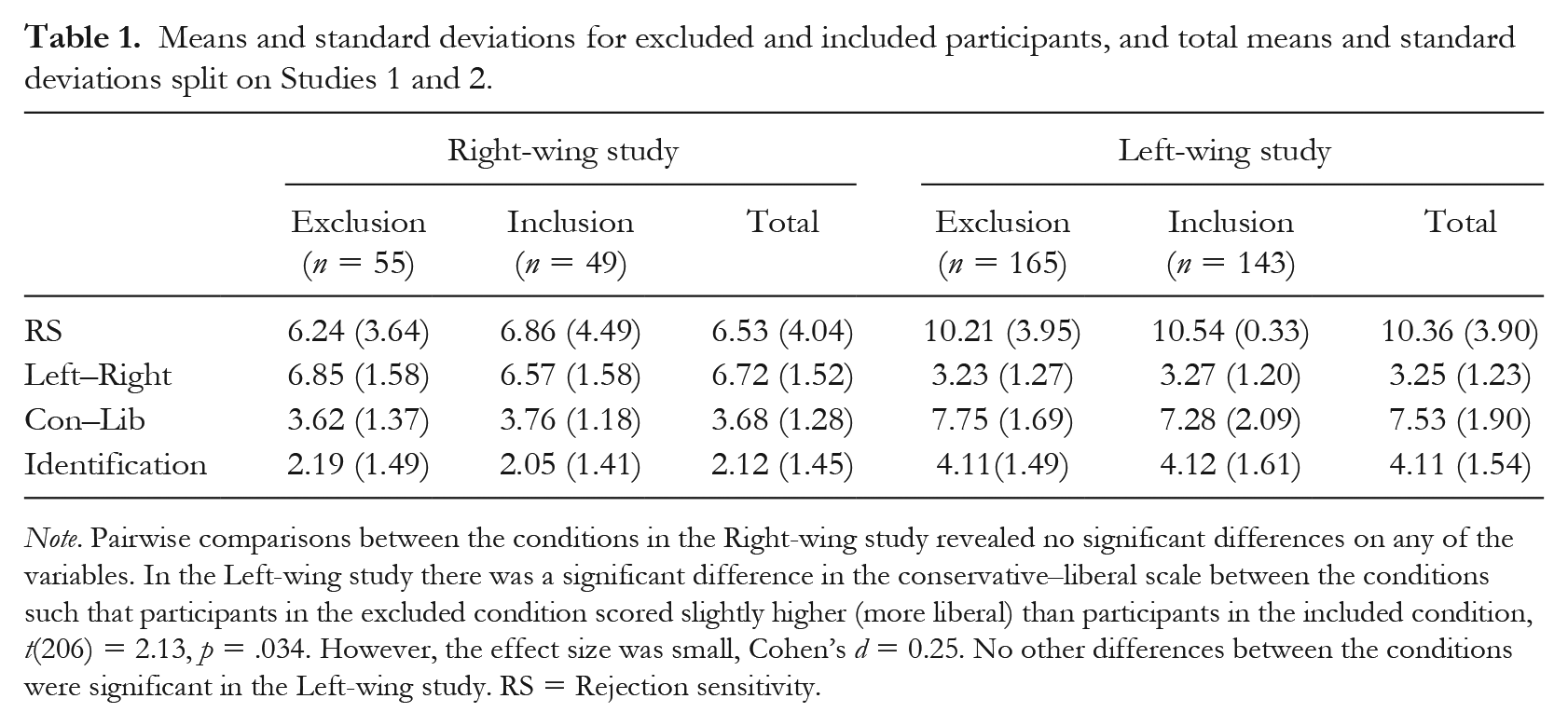
Note. Pairwise comparisons between the conditions in the Right-wing study revealed no significant differences on any of the variables. In the Left-wing study there was a significant difference in the conservative–liberal scale between the conditions such that participants in the excluded condition scored slightly higher (more liberal) than participants in the included condition, t(206) = 2.13, p = .034. However, the effect size was small, Cohen’s d = 0.25. No other differences between the conditions were significant in the Left-wing study. RS = Rejection sensitivity.
To further evaluate our hypotheses, we performed a linear, hierarchical regression analysis, regressing condition (dummy-coded as 1 if excluded and 0 for included) on identification with right-wing activists. In Step 1 the control variables age and education level were added. In Step 2, condition and RS were entered and we added the interaction between condition and RS in Step 3. The results are presented in Table 2. The first hypothesis stated that individuals who experience social exclusion will identify more strongly with a radical group.
Regression analyses identification with right/left-wing activists, for Study 1 (right-wing) and 2 (left-wing) separately.
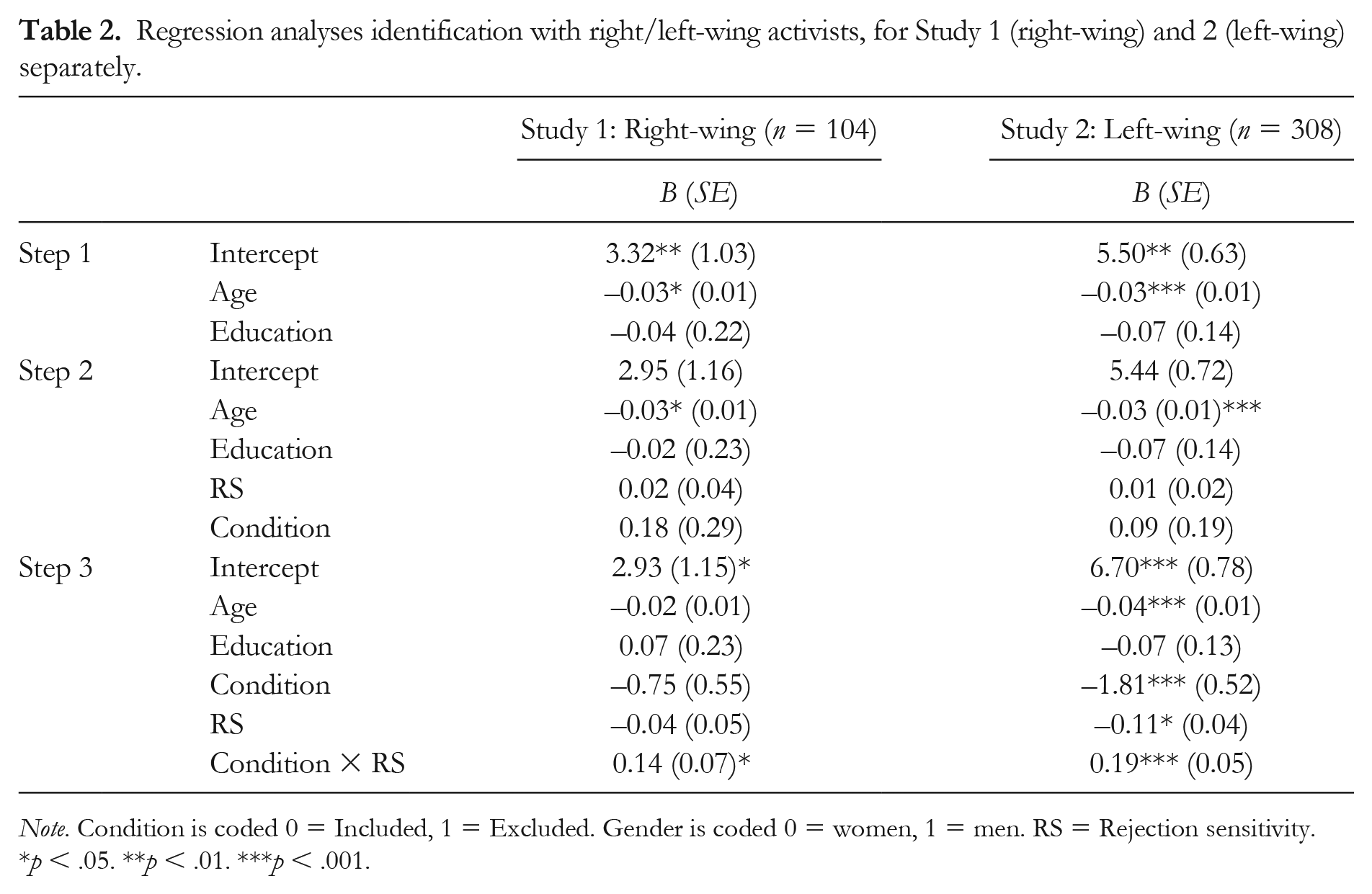
Note. Condition is coded 0 = Included, 1 = Excluded. Gender is coded 0 = women, 1 = men. RS = Rejection sensitivity.
p < .05. **p < .01. ***p < .001.
There was no effect of the manipulation (exclusion) condition on the outcome. Hence, Hypothesis 1 was not supported. However, as can be seen in Table 2, there was a significant interaction effect between the experimental condition and RS on identification with right-wing activists. Hence, Hypothesis 2, which stated that the effect of social exclusion on identification with a radical group will be magnified among highly rejection sensitive individuals, was supported. The interaction is plotted in Figure 1 and effects plots including 95% confidence intervals for excluded participants is shown in Figure 2. Figure 2 shows that the effect of being excluded is significant at relatively high values (around 11) of RS. We also ran simple slope analyses analyzing the effect of RS within each condition (excluded/included). The slope in the exclusion condition was significant, B = 0.11 (SE = 0.05), t = 1.94, p = 0.05, while the slope for the included was not, B = -0.03 (SE = 0.05), t = -0.78, p = 0.44.
Power analysis using G*Power showed that this study was a bit underpowered. The achieved power was 0.41, and estimated sample size for a power of 0.80 was 170.
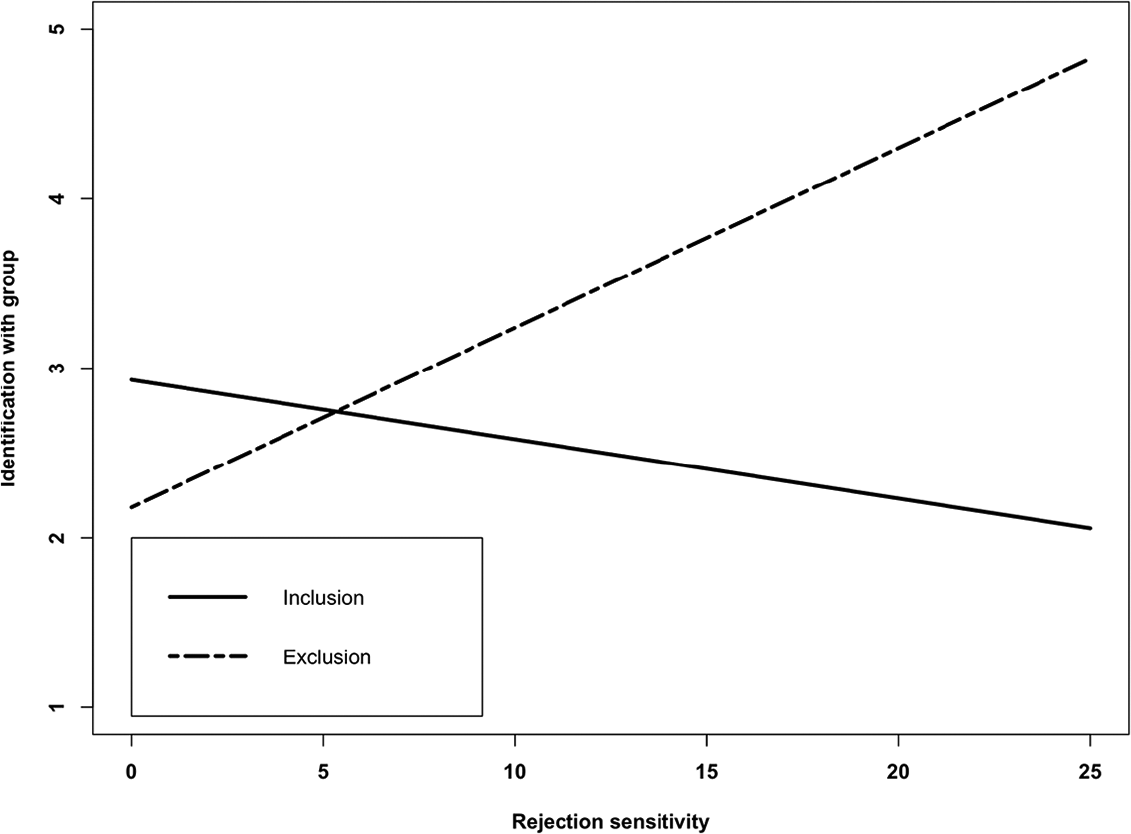
Interactions between exclusion and rejection sensitivity on identification with right-wing activists, Study 1.
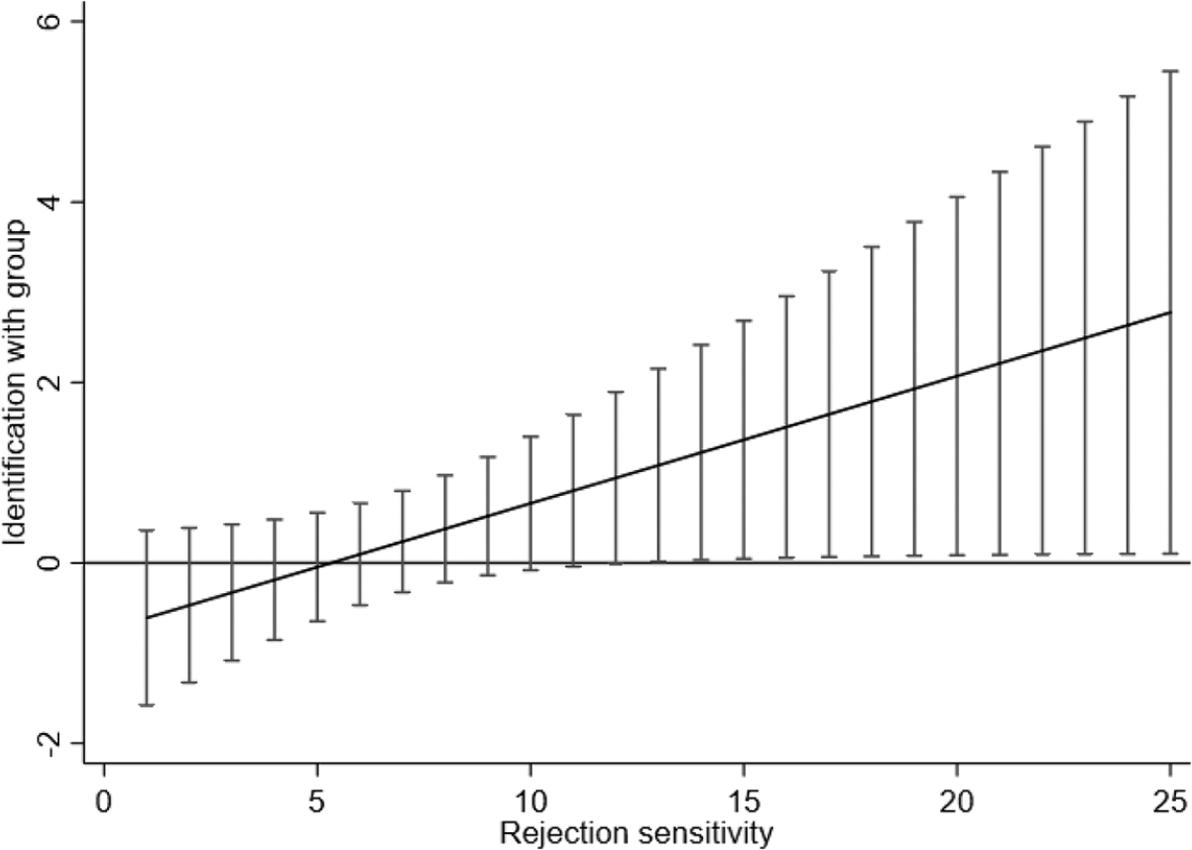
Marginal effect of exclusion on group identification at different values of rejection sensitivity, Study 1.
In sum, the results using the Ostracism Online paradigm in a right-wing context did not support our first hypothesis, showing no main effect of exclusion, but supported our second hypothesis that social exclusion can lead rejection sensitive people to identify with a radical group, showing that there are significant effects of the exclusion condition at higher values (roughly 1.5 SD above the mean) of rejection sensitivity. In a second study, we increased the sample size, and contextualized the study in terms of left-wing political orientation.
Study 2: Analyzing Exclusion Using the Ostracism Online Paradigm—A Left-Wing Experiment
Procedure, Participants, and Manipulation
The first study showed that there was a tendency for right-wing orientated, excluded individuals who were highly rejection sensitive to identify with a somewhat radical right-wing group, However, the sample was quite small, and to be able to conclude that the mechanism of social exclusion is the same for different ideological content, we ran a second experiment. The purpose was to 1) increase sample size, and 2) test a left-wing context. The set-up of Study 2 mimicked the set-up of Study 1, except that the participants were left-wing oriented (5 or lower on the left–right self-positioning scale), and the group presented to them was a left-wing group instead of a right-wing group.
Participants
In the left-wing experiment, 308 participants participated. In this study, participants were 38% men, 61% women, and 1% other. Mean age was 35 (SD = 11). We also asked about education level and 1% had only primary schooling, 24% had completed senior school, 54% had attended higher education, and 21% had a postgraduate education. In the exclusion condition n = 165 (54%) and in the inclusion n = 143 (46%).
Dependent and Independent Variables
The procedure was identical to that of Study 1, except that the radical group was framed in left-wing terms and labeled the British Solidarity Alliance. The variables were also identical, but adapted to fit with the left-wing group. For instance, identification was measured with the three items: “I have a lot in common with left-wing activists,” “Generally, I would be glad to be a left-wing activist,” and “I would feel proud if I saw myself as a left-wing activist.” Answers ranged from 1 = Strongly disagree to 7 = Strongly agree. Again, Cronbach’s alpha was high, .95.
Rejection sensitivity was measured as in Study 1, and the manipulation check was measured the same way following Wolf et al. (2015), collapsing the three items of the manipulation check into a mean index, alpha was .87.
Empirical Analyses
The success of the manipulation was again assessed with a t-test of the difference between the two conditions using the manipulation index. Again there was a significant difference between the included and excluded conditions, t(266) = -13.53, p < .001 (included: M = 1.67, SD = 0.59; excluded M = 3.08, SD = 1.02), Cohen’s d = 1.70.
Means and standard deviations for rejection sensitivity, political self-positioning and identification are shown in Table 1.
Again, we performed a hierarchical, linear regression to evaluate the hypotheses. As in Study 1, we first entered the control variables (age and education), then in Step 2 condition (coded as 1 for exclusion), and rejection sensitivity, and then the interaction between condition and rejection sensitivity in Step 3. The outcome variable was identification with left-wing activists. The results are shown in Table 2.
Again, there was no main effect of condition, hence not supporting H1 that exclusion leads to higher identification with left-wing activists. However, this time the interaction effect in Step 2 was stronger. The interaction is plotted in Figure 3 and confidence interval effects are plotted in Figure 4. Again, at values roughly 1.5 SD above the mean of rejection sensitivity (about 13) there is a significant effect of social exclusion on identification left-wing activists. The simple slope analysis showed that the slope for the excluded participants was positive B = 0.08 (SE = 0.03), t = 2.37, p = .02, while the slope for the included participants was negative, B = -0.11 (SE = 0.03), t = -3.51, p < .001.
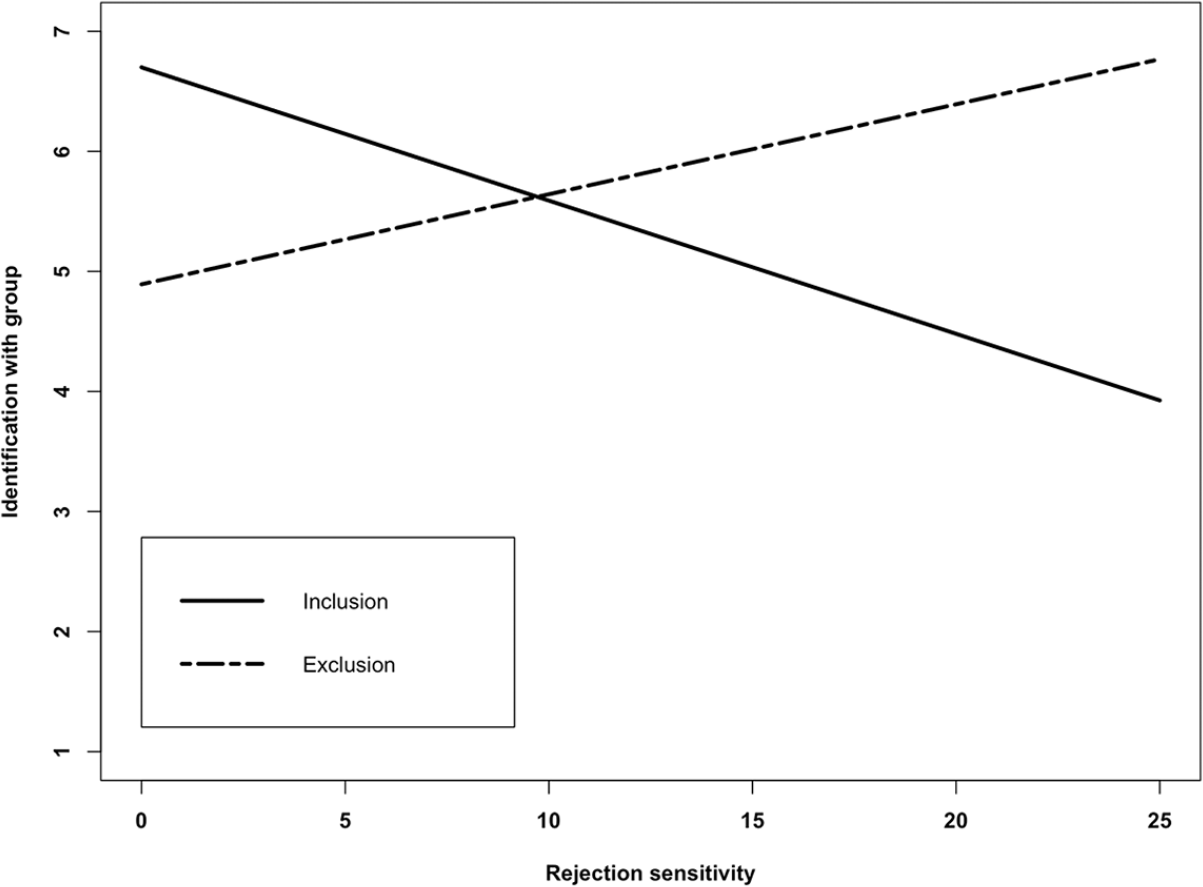
Interactions between exclusion and rejection sensitivity on identification with left-wing activists, Study 2.
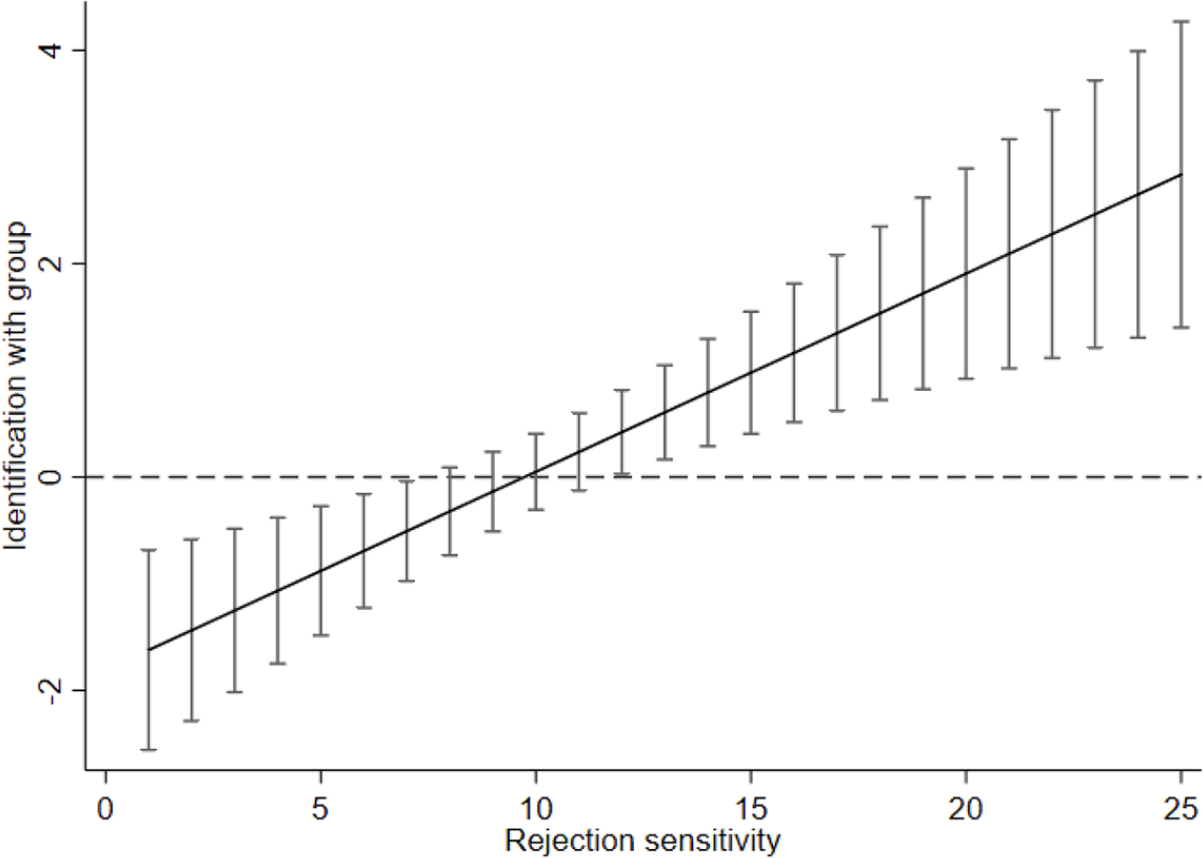
Marginal effect of exclusion on group identification at different values of rejection sensitivity, Study 2.
Since there was a significant difference between the excluded and included participants on the Con–Lib scale (see Table 1), we ran additional regression models with the Con–Lib scale as an additional control variable. The results showed that the Con–Lib scale significantly predicted left-wing identification. However, the interaction between rejection and rejection sensitivity remained significant for left-wing identification. The analysis is presented in Appendix B (see Online Supplemental Material).
Power analyses showed that achieved power was good, 0.99, and estimated sample size for a power of 0.80 was 111.
The results from Study 2 largely mirrored those of Study 1, but were stronger. Still, we did not find the expected main effect of social exclusion. One possibility is that the paradigm of Ostracism Online is not strong enough to affect those who are less rejection sensitive. In a third study, we instead used the Cyberball paradigm (Williams et al., 2000) to evaluate our hypotheses.
Study 3: Analyzing Social Exclusion Using the Cyberball Paradigm
Procedure, Participants, and Manipulation
The Ostracism Online paradigm is relatively new and even though Wolf and colleagues (2015) show promising results, we also evaluate the hypotheses using a more validated social exclusion manipulation; the Cyberball paradigm (Williams et al., 2000).
As with Studies 1 and 2, this experimental design consisted of two conditions; social exclusion or inclusion. However, this paradigm uses ball tosses to manipulate exclusion/inclusion. The game is set up so that participants are led to believe that they are to play an online game with other participants where they are to throw a ball to each other for a few minutes. Excluded participants receive the ball once, but are then left out of the game, whereas included participants regularly receive the ball. Participants were randomly assigned to one of the two experimental conditions. After the manipulation, respondents were presented with an opportunity for significance gain by being invited to a radical group.
The main differences between Studies 1–2 and Study 3 were that, 1) we used a single design for both left- and right-wing participants allowing us to analyze left- and right-wing radicalization using a single data set, 2) we used the Cyberball paradigm, which is well-established as a manipulation of ostracism, 3) we extended the previous design with other dependent variables, analyzing both identification and engagement with a radical group, and finally, 4) we collected a considerably larger sample in Study 3 than in Studies 1 and 2.
Participants
Among the participants (n = 1041), there were 42% men, 57% women, 1% other, and mean age was 37 (SD = 13). There were 0.3% who did not have any formal schooling, 0.2% had only primary school, 31% had attended senior school, 52% had higher education, and 17% had some postgraduate education. There were 528 participants who identified to the left and 513 to the right and as a result received the corresponding surveys. In the exclusion condition there were 517 participants (50%) and in the inclusion condition n = 524 (50%). Left/excluded: 259 (25%); left/included: 269 (26%); right/excluded: 258 (25%); right/included: 255 (24%).
Procedure
Study 3 was set up to mimic Studies 1 and 2 as closely as possible. Again, we used Qualtrics and participants were recruited from Prolific (the invitations were filtered so that participants in the previous studies were not invited). Participants were invited to complete an online survey, and were advised at the start that a third-party group may select them to complete an extra part of the survey (all participants were invited to take part in this segment). The survey began by collecting data on a variety of demographic variables (age, education, political affiliation, etc.), and rejection sensitivity.
The participants were then asked to take part in a visualization task. They were told that they were to play a ball-tossing game with other participants across the network and that they should try to visualize what it would be like to play the game with them in real life. After reading the instructions they were asked to wait for a few seconds while being connected to the other participants. No other participants were included, but this delay was included to give the impression that participants were really connecting to other participants in the platform. This is the standard set-up of the Cyberball paradigm. Once connected, the participant could see three other players (called Player 1, Player 2, and Player 3) and themselves. Further, a throw counter was visible in which the participant could see how many times the ball had been thrown and how many times they had received the ball. The participants in the included condition received the ball around a quarter of the time, so between 10 and 15 times out of the 50 in total. In contrast, the excluded participants received the ball 1 time out of 50.
After the 50 throws the participant was automatically redirected to a political group website which was presented with a personalized message from “John” in which he explained that he was a representative of a new group and that they would like feedback from possible new members. Based on the political affiliation the participant indicated at the start of the survey, the group they were redirected to was either a left-wing or right-wing radical group. Participants who responded 1–5 on the left–right self-rating scale were redirected to the left-wing group, and participants who responded 6–10 were redirected to the right-wing group. These groups were the same as in Studies 1 and 2, and thus the descriptions of the groups can be seen in Appendix A (see Online Supplemental Material). Following the personalized message there was some information about the group and the cause it represented, again providing a relatively extreme group norm. Following this, a selection of political engagement items was presented, where participants were asked about willingness to engage with the group and to what extent they identified with the group. Finally, a manipulation check was included.
Dependent and Independent Variables
The main independent variables were the exclusion condition (coded 1 for excluded and 0 for included participants), and rejection sensitivity (the same scale as in Studies 1 and 2). Cronbach’s alpha was high, .82. The main dependent variables were designed to measure willingness to engage in actions with the group and identification with the radical group.
Engagement with the group was measured with three items. The question read: “Below are some questions about what you would be willing to do on behalf of the [British National Alliance/British Solidarity Alliance] in an effort to help [reduce immigration/promote their cause].” Then three forms of political engagement were listed; participate in a demonstration; donate money; and protest on social media (e.g., posting material on opposing political groups). Answers ranged from 1 = Not at all willing to 5 = Very willing and the three items were combined to make an index of group engagement intentions. Cronbach’s alpha was high, .83.
Identification with the radical group was measured with three items in which the participant indicated the extent to which they agreed with the following statements: “I feel I could identify with the British National Alliance/British Solidarity Alliance”; I feel I could connect with the British National Alliance/British Solidarity Alliance”; and “I identify with the aims of British National Alliance/British Solidarity Alliance.” Answers ranged from 1 = Strongly disagree to 5 = Strongly agree and the three items were combined to make an identity index. Cronbach’s alpha was high, .94. We changed the identification measure from Study 1 and 2 where we asked about identification with left/right-wing activists more generally to ask specifically about the group they were invited to join. We believe that this measure better captures feelings related to the actual group that they were included in.
The manipulation check consisted of three items identical to those used in Study 1 and 2. Participants were asked to rate on a scale of 1 = Do not agree at all to 5 = Completely agree what their thoughts during the game was; “I was ignored,” “I was excluded,” and “the others players kept me involved in the game” (reversed). We created a mean index of these items, and the Cronbach’s alpha was .95.
Empirical Analyses
Table 3 shows means and standard deviations for the two conditions (exclusion/inclusion). To ensure our manipulation of social exclusion worked as expected, we t-tested the difference between the two conditions (exclusion/inclusion) using the manipulation check index as dependent variable. There was a significant difference, t(985) = -42,75, p < .001, between the excluded (M = 4.74, SD = 0.52) and included condition (M = 2.41, SD = 1.08) indicating that our manipulation of social exclusion was successful. The effect was strong, Cohen’s d = 2.75. Further, to ensure that no other differences between our conditions (exclusion/inclusion) existed we ran a series of independent samples t-tests on the remaining variables (RS, left/right, liberal/conservative, engagement intentions and identification) and found no significant differences between conditions.
Means and standard deviations for excluded and included participants in Study 3.
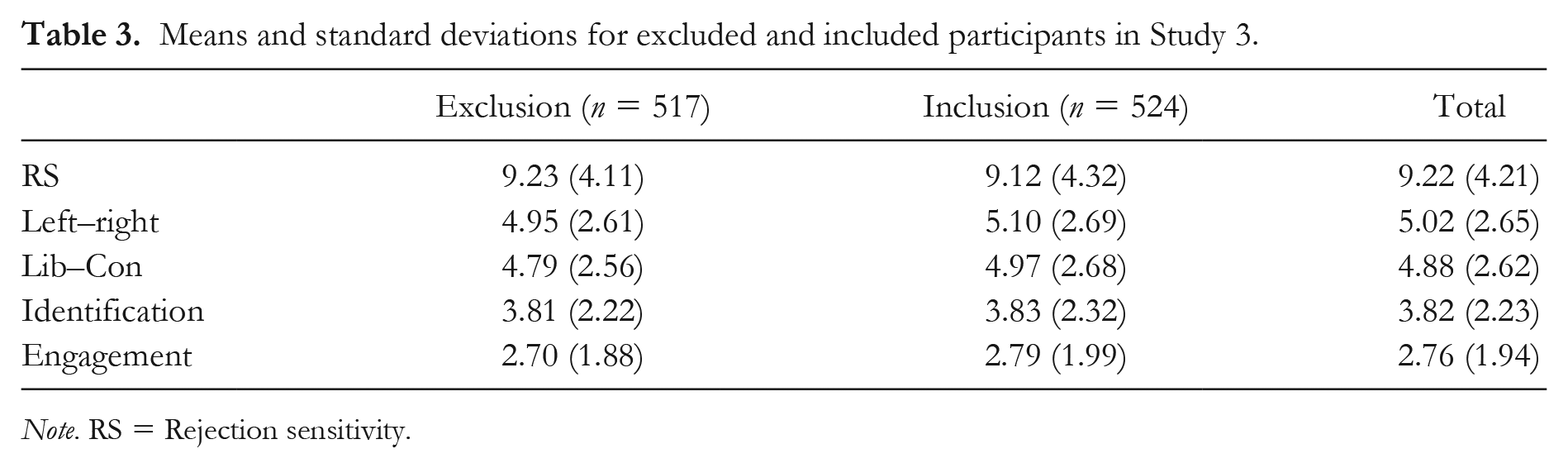
Note. RS = Rejection sensitivity.
We also tested if there were any other differences between left- and right-wing participants by t-testing all variables using the left/right group as independent grouping variable. The results are shown in Table 4. There were significant differences on all variables such that people who received the left-wing group information (i.e., participants who rated themselves to the left on the left–right scale), were more rejection sensitive, more to the left, more liberal, but also more willing to participate with the group and identified more strongly with the group. Identification and participation intentions may reflect a generally higher level of political engagement in social movements from the left. Interestingly, we found that left-wing individuals were higher in rejection sensitivity, which we have not found any discussion of in the literature.
Means and standard deviations for the left- and right-wing groups in Study 3.
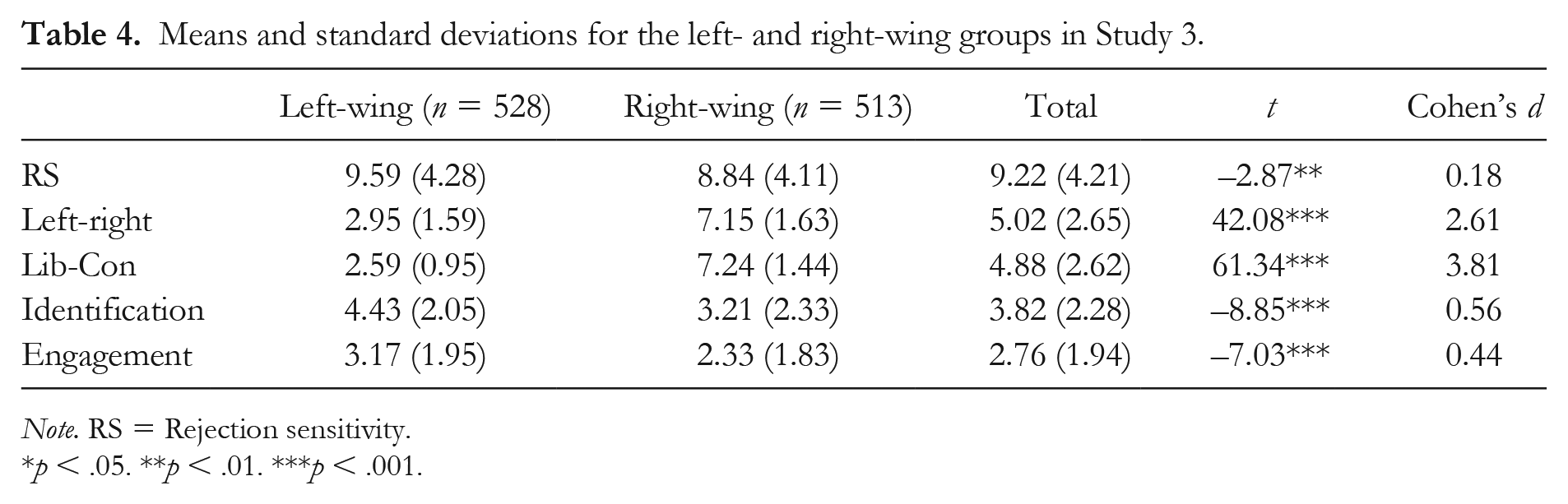
Note. RS = Rejection sensitivity.
p < .05. **p < .01. ***p < .001.
To evaluate our hypotheses, we performed two linear, hierarchical regression analyses, one for each of the dependent variables (engagement intentions and identification). In step 1, the control variables (age and education) were entered, and in Step 2 we included condition, rejection sensitivity, and the group survey they received (left or right), and in step 3, two-way interactions were added. In step 4, the three-way interaction between exclusion condition, RS, and group (left/right) was added. The results are presented in Table 5.
Regression analyses of identification with the right/left-wing group, and willingness to engage on behalf of group, Study 3.
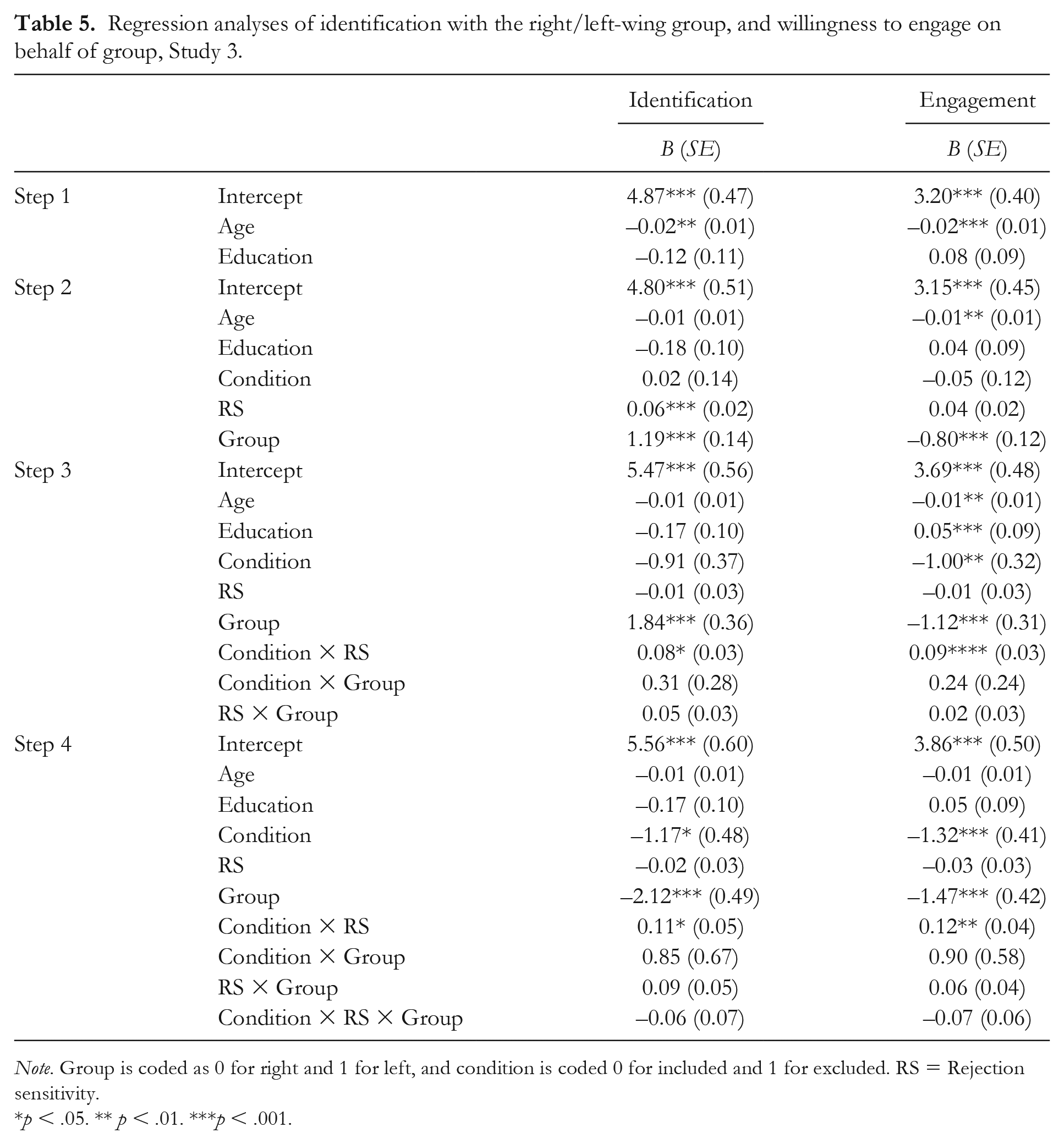
Note. Group is coded as 0 for right and 1 for left, and condition is coded 0 for included and 1 for excluded. RS = Rejection sensitivity.
p < .05. ** p < .01. ***p < .001.
As in Studies 1 and 2, there was no effect of the manipulation (exclusion) condition on the outcome variables. However, as can be seen in Table 5, there were significant two-way interaction effects between the experimental condition and rejection sensitivity on both willingness to engage with the radical group and identification with the radical group. These results are plotted in Figure 5. Figures 6 and 7 plot the marginal effects of the exclusion manipulation at different values of rejection sensitivity on group engagement (Figure 6) and group identification (Figure 7), including 95% confidence intervals. Here, we can clearly see that it is only at relatively high values of rejection sensitivity that there is a significant effect of exclusion on both group engagement (at about 15 on the RS scale, see Figure 6) and group identification (at about 16 on the RS scale, see Figure 7).
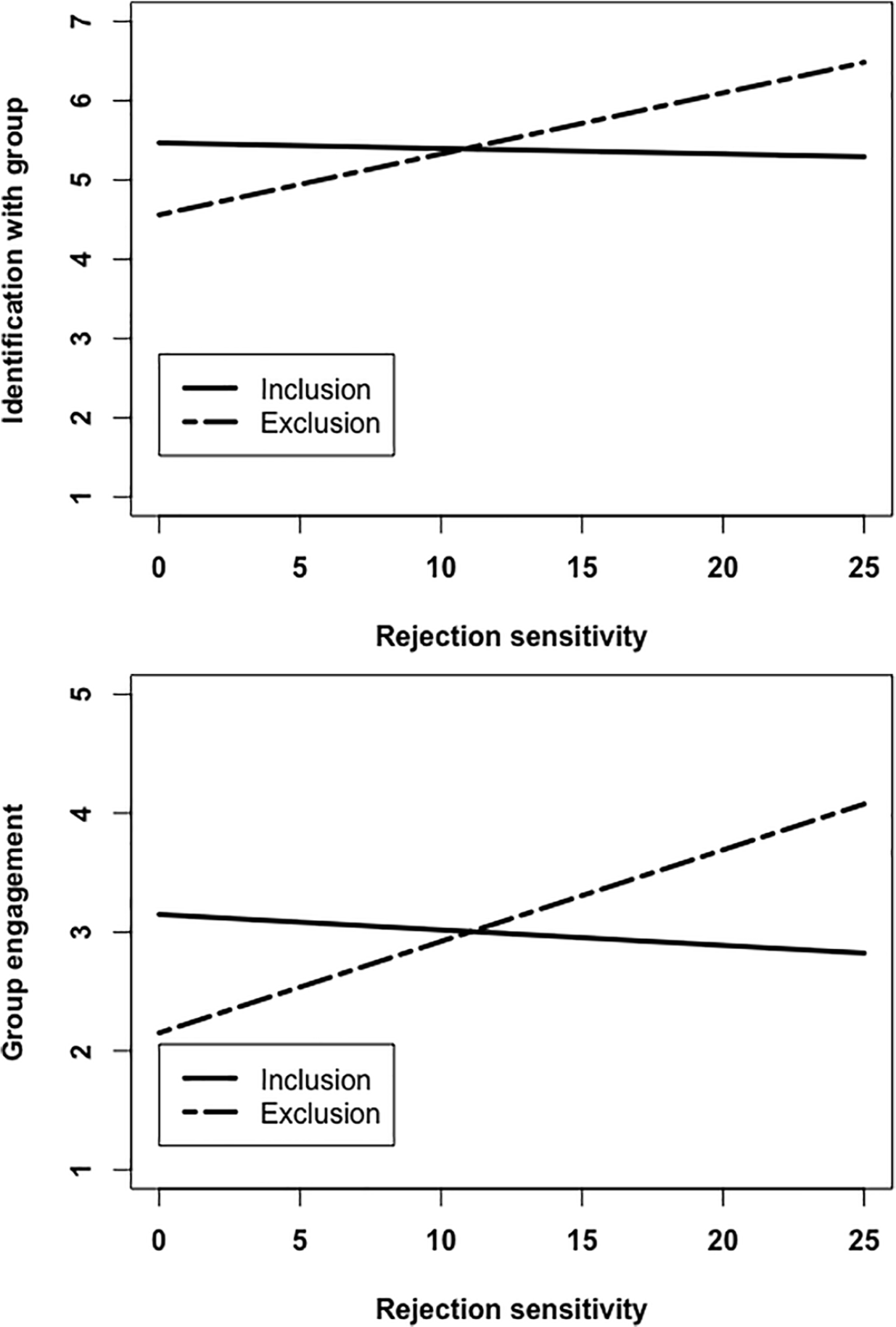
Interactions between exclusion and rejection sensitivity on identification and engagement with radical group, Study 3.
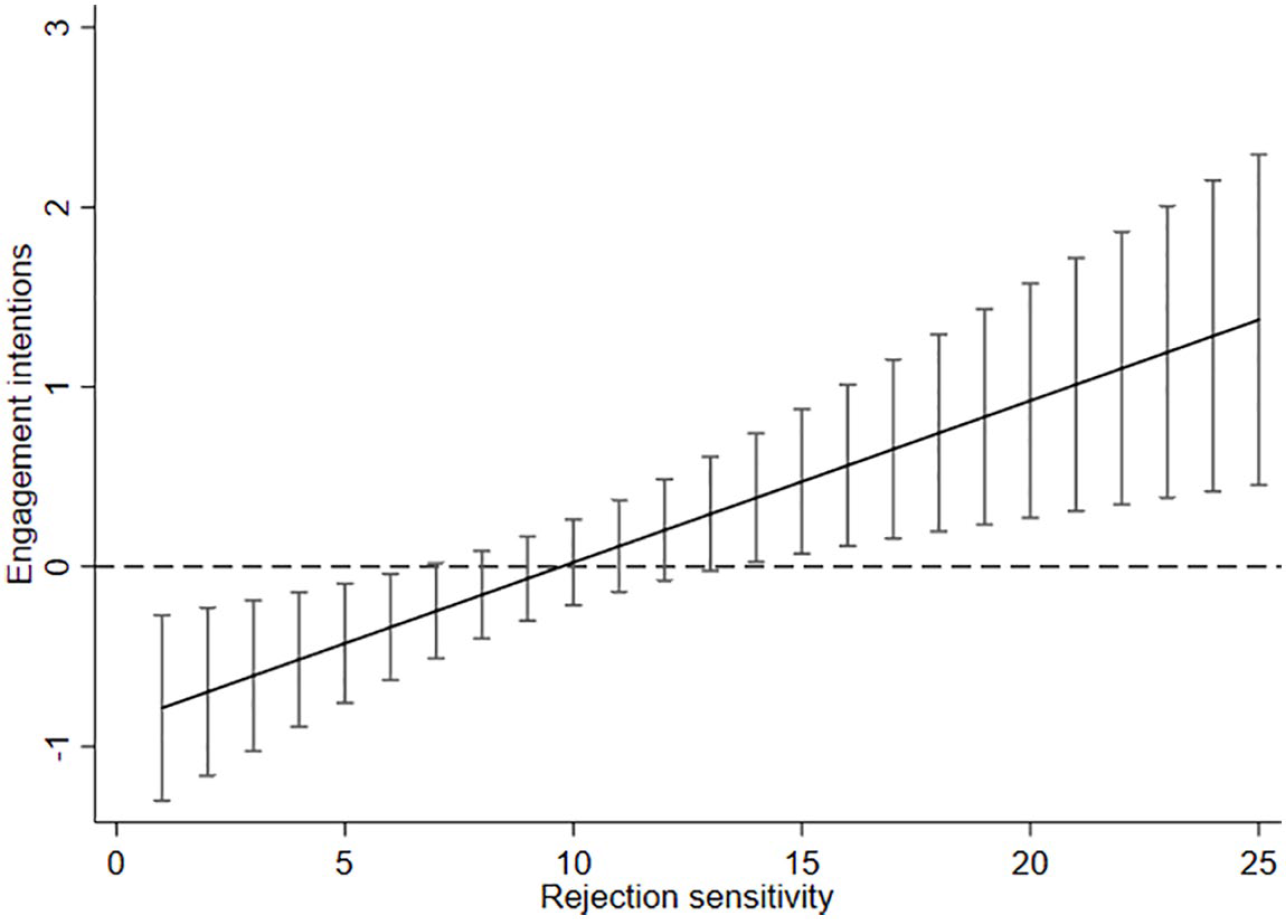
Marginal effects of exclusion on group engagement at different values of rejection sensitivity.
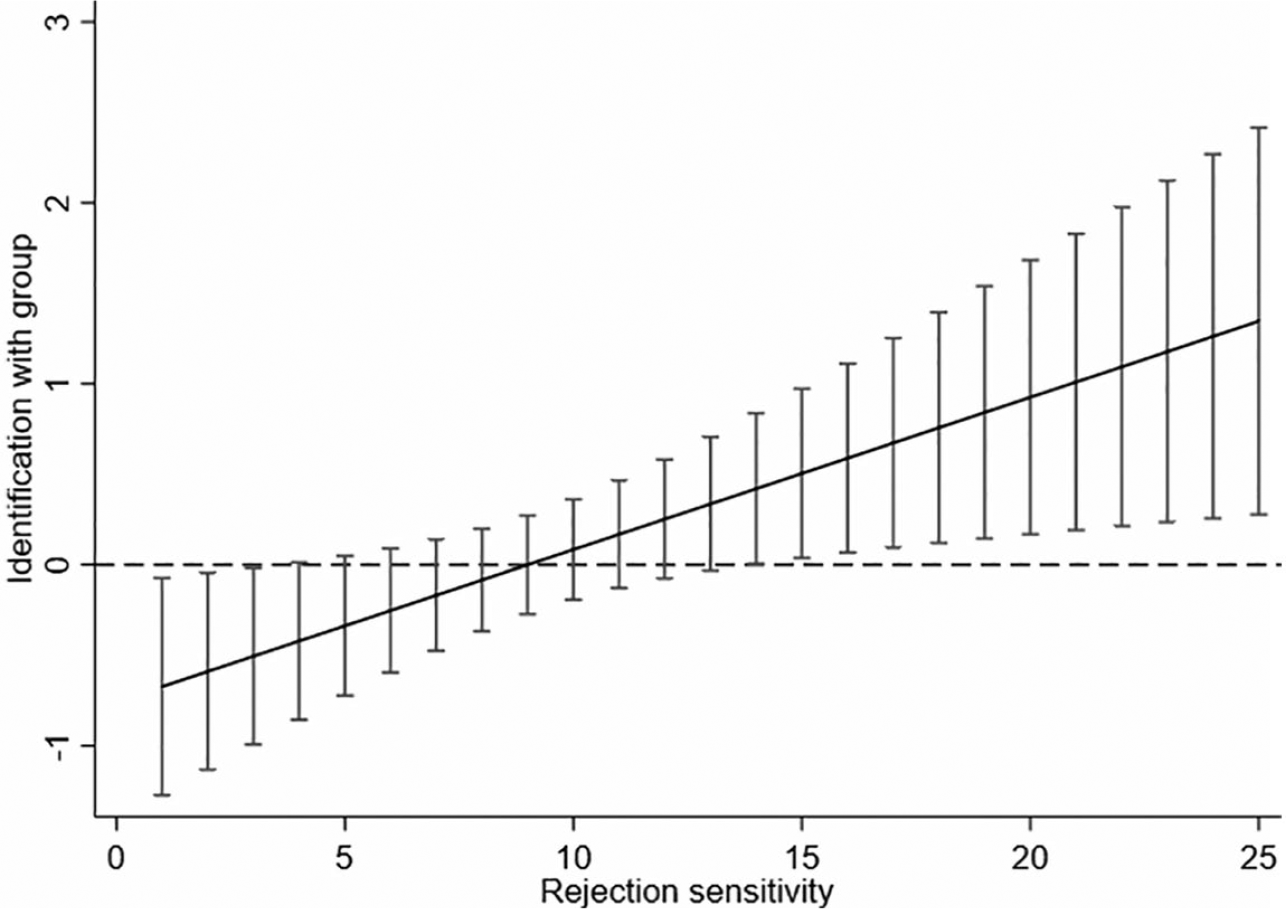
Marginal effects of exclusion on group identification at different values of rejection sensitivity.
Again, we also ran simple slope analyses. The simple slopes for the included were nonsignificant both for identification, B = -0.007, SE = 0.03, t = -0.22, p = .82, and for engagement B = -0.001, SE = 0.03, t = -0.41, p = .68, while the simple slopes for the excluded were significant for both identification, B = 0.08, SE = 0.03, t = 2.39, p = .02, and for engagement, B = 0.08, SE = 0.03, t = 2.28, p = .02. Hence, there was a positive effect of rejection sensitivity for excluded participants, such that higher rejection sensitivity was related to stronger identification with the radical group and more willingness to engage with the group.
Finally, as can be seen in Table 5, there were no significant interactions with the group variable (left/right) on the outcome variables. That is, it did not matter if the participant was assigned the right- or left-wing group information (i.e., if they rated themselves to above or below the midpoint of the left–right scale) for their willingness to engage with, or identify with a radical group that is in line with their pre-existing ideology. This result indicates that there are no ideological differences between the appeal shown toward a radical group following an exclusion experience. This is in line with Kruglanski et al.’s (2002) idea that the mechanisms of radicalization may be similar regardless of the content.
Power analyses showed that achieved power was very good, 1.00, and estimated sample size for a power of 0.80 was 213.
To sum up thus far, the three online experiments showed promising results regarding the hypothesized interaction between social exclusion and rejection sensitivity. Even with a considerably larger sample size in Study 3 compared to Studies 1 and 2, and a more validated manipulation, we did not find the expected main effect of exclusion. A possible explanation is that even though Cyberball has been extensively used before, it has mainly been used in the lab. Perhaps individuals, in the comfort of their own home, are less influenced by the online ball-tossing experience. Hence, Study 4 was designed to really make social exclusion salient. In addition, we wanted to extend on the idea that the mechanism of social exclusion on adaption to a new group should be relatively content free.
Study 4: Analyzing Social Exclusion in a Real-Life Setting
Procedure, Participants, and Manipulation
Study 4 aimed at complementing and filling some gaps in the previous studies; 1) we wanted to see if the mechanisms found in Studies 1–3 would generalize to other content, 2) we wanted to test if the findings would be stronger in a real-life setting, 3) we wanted to test if the results would hold if the group was presented as clearly radical and focusing more on violence, and 4) we again extended on the dependent variables.
Participants
Participants were 40 students (21 women, 19 men, Mage = 24, SD = 3.28) at Lund University Campus, who were approached by the experimenters and asked to participate in a study on student politics related to tuition fees in exchange for a lottery ticket. Participants were recruited in pairs. Since we wanted individuals’ attitude position to be in line with the radical group in our experiment, we only recruited participants who stated that they opposed tuition fees. Two of the individuals who were approached did not oppose tuition fees and hence they were not recruited to the experimental session.
Procedure
Upon arrival to the lab, participants were first given a background questionnaire assessing demographics, and rejection sensitivity. After this, they were given a neutral (fake) newspaper article to introduce them to the issue of tuition fees. It was neutral in the sense that it presented both arguments in favor of and against the proposal to implement tuition fees (see Appendix A in the Online Supplemental Material for the full description). Next, participants were asked to write a statement regarding their feelings toward the implementation of tuition fees to be used as a “proposal” to join a (fictive) group called the International Students Union, who were going to take action against the proposal to implement tuition fees. The instructions specifically read:
The International Students Union (ISU) is interested in potential new members’ opinions towards tuition fees. They would therefore like you to describe your opinions and feelings with respect to the plans to implement tuition fees for all Swedish citizens. Please use the space below.
Participants were informed that the ISU also had a questionnaire that they wanted filled in, but that the experimenter first needed to check with an ISU representative if the participant was compatible with the ISU standards. This evaluation would be based on the written statement that the participant had just made. Hence, the experimenter took the statement and left the room for a while, ostensibly checking the participant’s compatibility with an ISU representative who supposedly was in another room. In fact, this was completely fictional and the experimenter simply waited outside for five minutes.
Upon arriving back, the experimenter told one of the participants that the group representative felt that they were compatible with the ISU standards and would like to know what actions they would recommend the ISU to engage in, and whether they would be willing to participate in these actions in order to stop the implementation of tuition fees. Thus, this participant was in the included condition. The participant in the excluded condition was told that the group representative did not feel that they were compatible with the ISU standards, that the participant’s beliefs and values do not match those of the ISU, and thus they cannot be part of the ISU. Then the experimenter said that there is, however, another group that is willing to accept them based on their statement, called the European Students Union (ESU). The ESU would also like to know what actions the participant recommends for the ESU to engage in, and what actions they would be willing to participate in. Hence, the participants who were rejected based on their personal statement from one group, were accepted into another group. Also important to note here, is that the new group has the explicit objective to take action against tuition fees. Hence, the participants own interest regarding tuition fees was in line with that of the group.
The experimenter then handed questionnaires to the participants supposedly from the including organization. These were exactly the same in both conditions. This was to see if excluded participants were willing to invest more in a (new) group if they had previously been excluded from another group—that is, we mimicked the set-up from the online Studies 1–3. The questionnaires featured a (fake) newspaper article describing the group’s previous extreme actions of vandalizing and rioting along with a picture supposedly from a previous event in London where a masked person was seen smashing a window in the backdrop of a crowd and fire. After the article, participants rated questions about the events featured in the article to assess their appeal to the radical group.
Dependent and Independent Variables
As before, the independent variables were exclusion condition (coded 1 for excluded and 0 for included participants), and rejection sensitivity (the same scale as in Studies 1–3). Cronbach’s alpha was good, .70. The dependent variable was an index measuring endorsement of extremism.
Endorsement of extremism was measured with six items. The question read: Below are some questions about how you perceive the organization’s actions. Please rate each from 1 = Not at all acceptable to 7 = Definitely acceptable. The items were: How acceptable do you think the organization’s actions were earlier this year ? and Do you think more extreme actions (e.g., violent actions) are acceptable?. A second question read: Now follows some questions about whether you think the organization’s actions were justified. Answers ranged from 1 = Not at all justified to 7 = Completely justified. The items read: Do you think the action earlier this year was justified?, and Do you think more extreme actions are justified?. Finally, we assessed their willingness to participate with the organization, asking: Below are some questions about what you would consider yourself doing to stop the implementation of tuition fees. Answers ranged from 1 = Not at all likely to 7 = Very likely. The questions read: If you had the opportunity to participate, would you have considered participating in the vandalizing of universities that the group organized earlier this year? and Would you consider participating in more extreme actions than vandalization? The six items were highly correlated as shown in Table 6, and the Cronbach’s alpha revealed good internal consistency, .87. The six items were combined into a mean index, which we labeled endorsement of extremism.
Correlations for the endorsement of extremism items in Study 4.
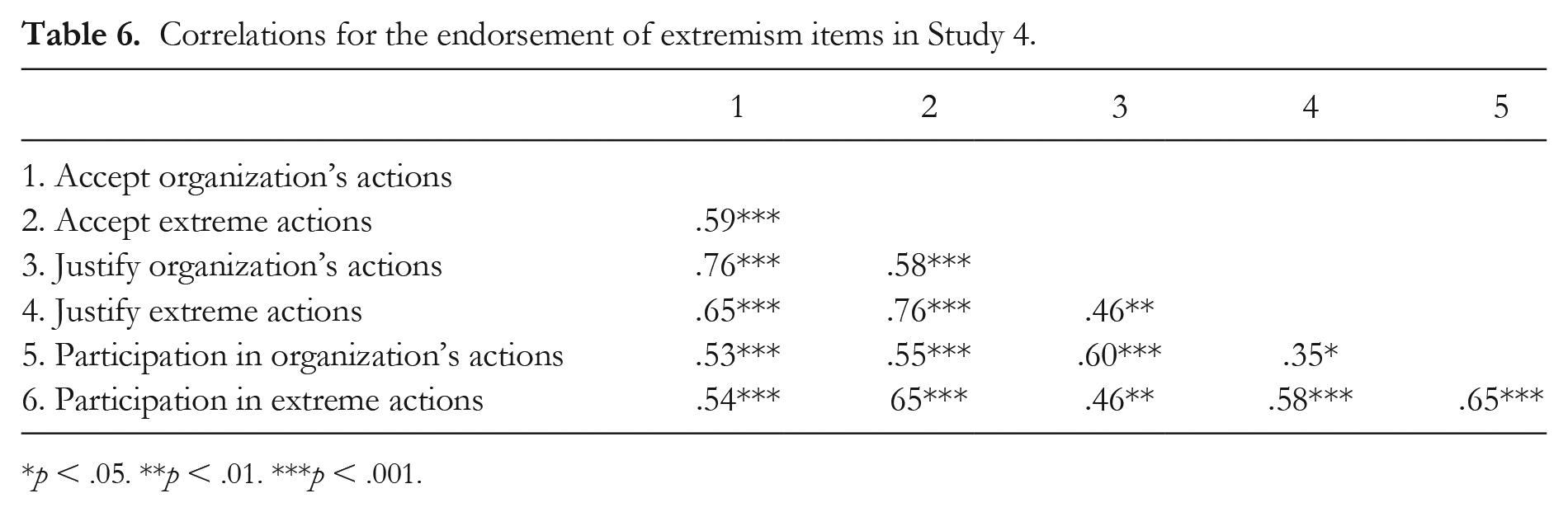
p < .05. **p < .01. ***p < .001.
We also measured to what extent the participants felt hurt by the exclusion episode using an adapted version of Williams et al.’s (2000) need threats. We used nine items, such as I felt ostracized when I heard about the group’s decision and I did not feel accepted by the group. Answers ranged from 1 = Not at all to 7 = Very much. The items were combined to a mean index of threatened needs, and Cronbach’s alpha was good, .76.
Empirical Analyses
We first ran an independent samples t-test to check that the manipulation had affected the participants’ needs. The results showed a strong effect, t(37) = -2.84, p = .007, Cohen’s d = 1.51 (excluded: M = 5.10, SD = 1.26, included: M = 2.37, SD = 1.99).
To test our hypotheses, we ran a hierarchical regression analysis with the endorsement of extremism index as outcome variable and condition (coded as excluded = 1, included = 0), and rejection sensitivity in Step 1. In Step 2 we added the interaction between condition and rejection sensitivity. The results are shown in Table 7.
Regression analysis of endorsement of extremism, Study 4.
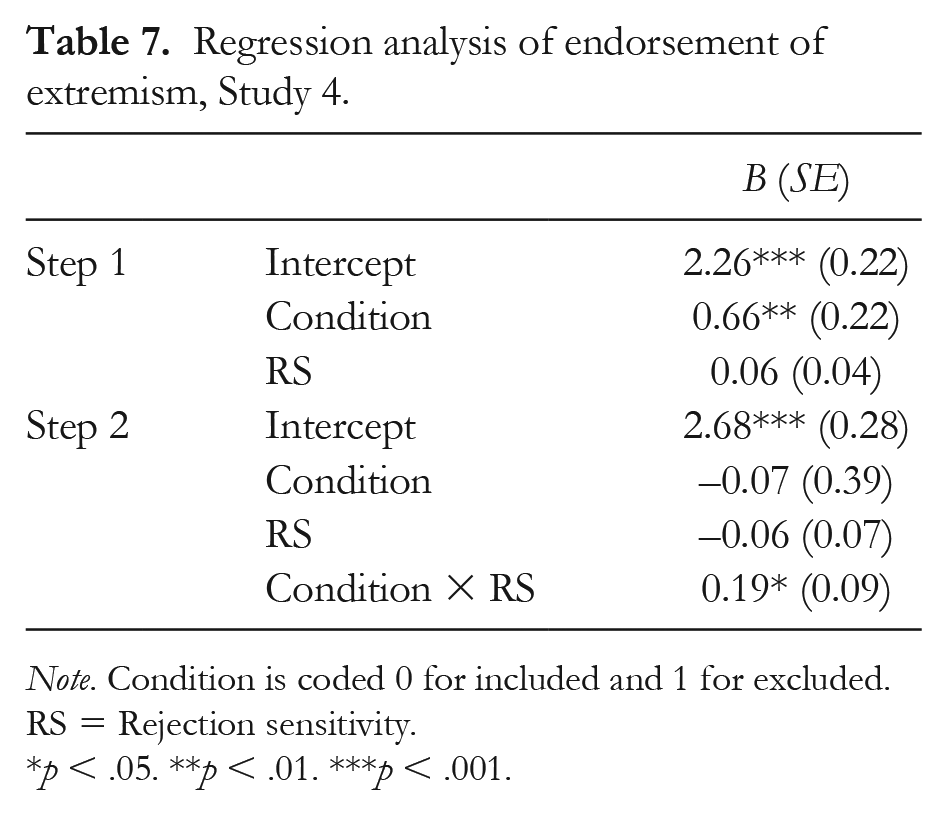
Note. Condition is coded 0 for included and 1 for excluded. RS = Rejection sensitivity.
p < .05. **p < .01. ***p < .001.
As can be seen in Table 7, there was a significant effect of condition such that excluded participants were more likely to endorse extremism. We also found the expected interaction effect between condition and rejection sensitivity. The interaction is plotted in Figure 8 and marginal effects are plotted in Figure 9. In this study, the effect of social exclusion was significant also for those with low values on rejection sensitivity. The cut-off was at 0.67 on rejection sensitivity.
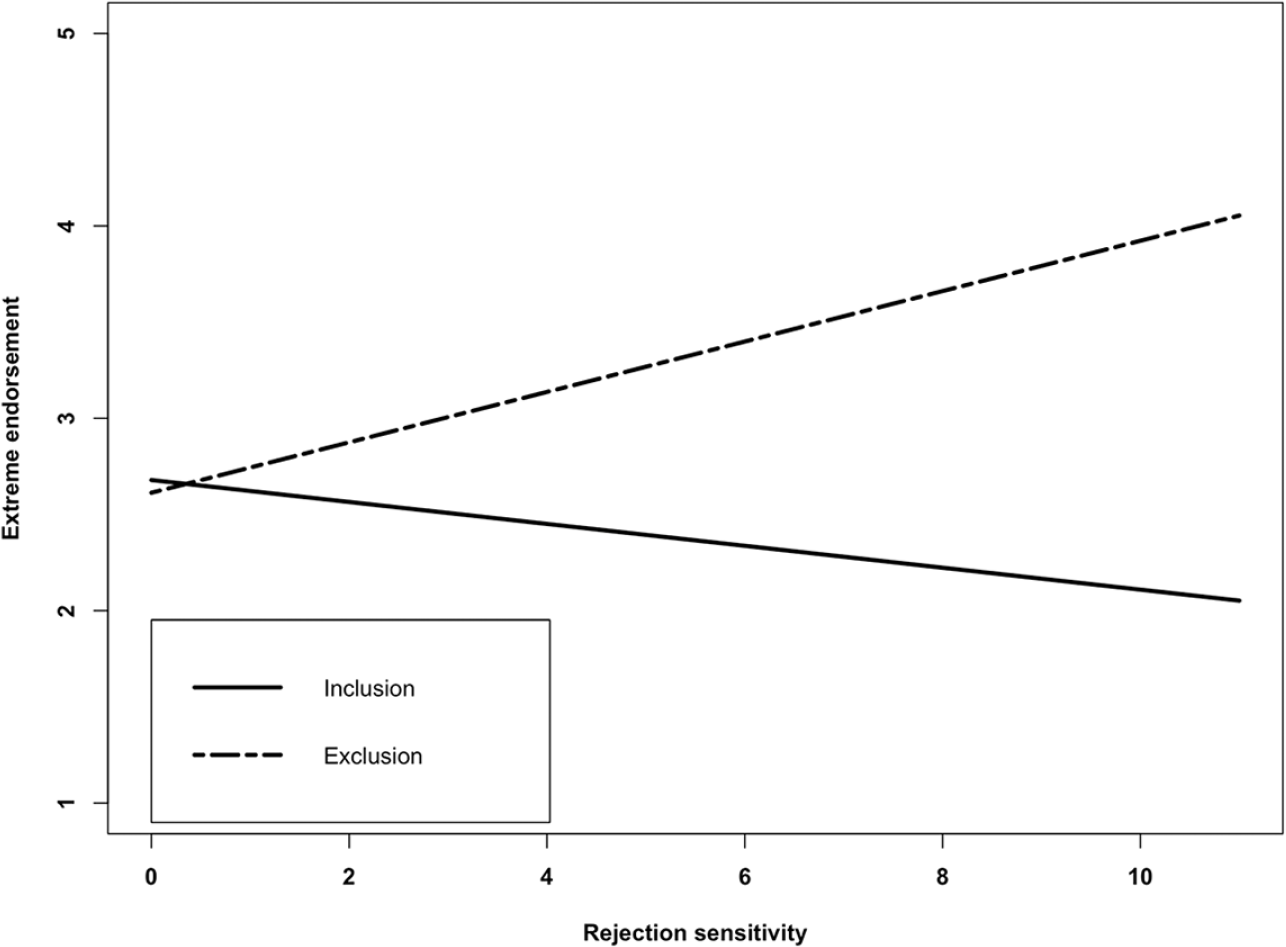
Interactions between exclusion and rejection sensitivity on endorsement of extremism, Study 4.
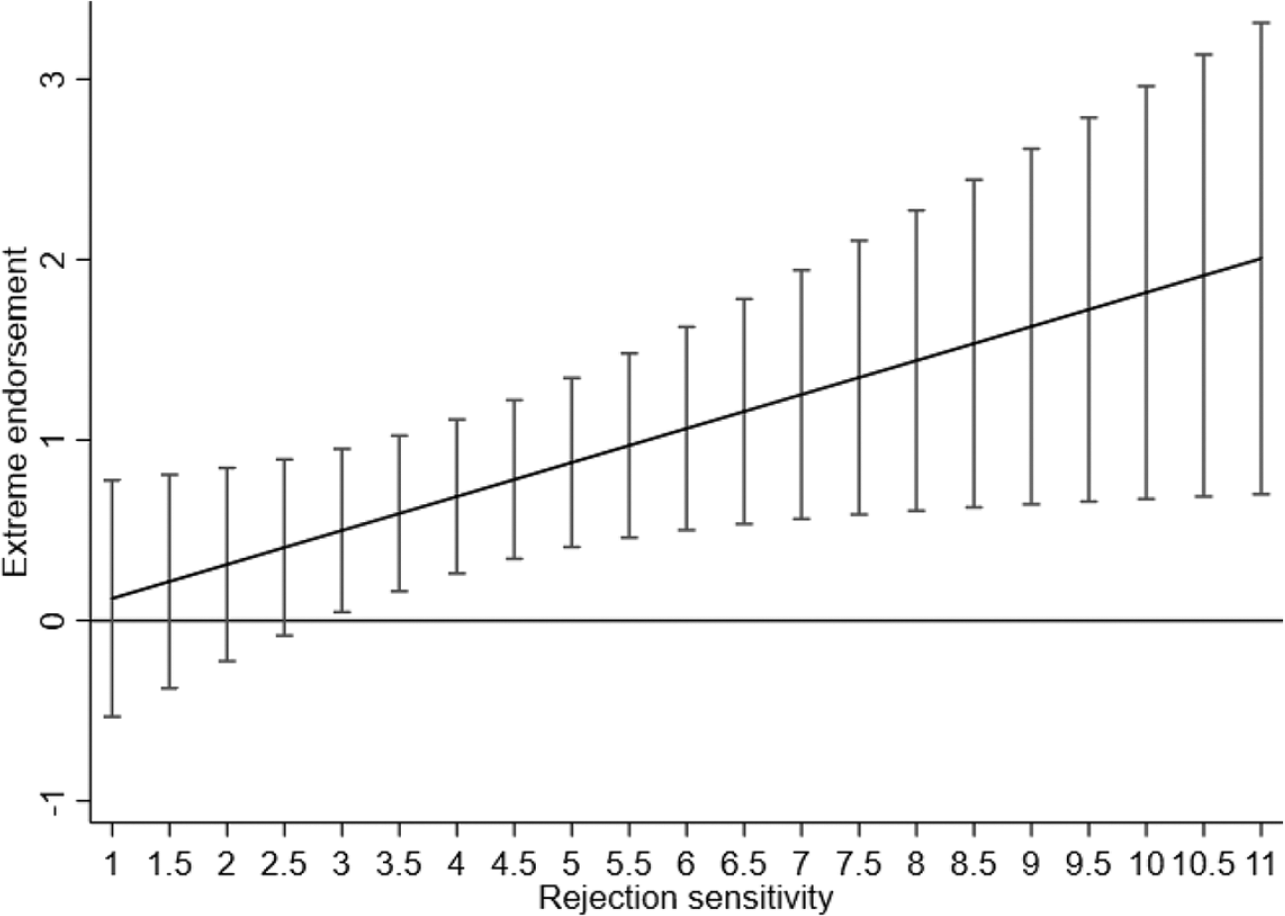
Marginal effects of exclusion on extreme endorsement at different values of rejection sensitivity, Study 4.
Again, we also ran simple slope analyses, which showed that the effect of rejection sensitivity on extremism endorsement was significant for the excluded participants, B = 0.13, SE = 0.05, t = 2.93, p = .006, but not for the included participants, B = -0.06, SE = 0.07, t = -0.81, p = .43. Again, for socially excluded participants, there was a significant and positive effect of rejection sensitivity such that the higher they are in rejection sensitivity, the more willing they are to endorse extremism.
This last study, even though the sample size was small, clearly showed that real-life experiences of social exclusion are much more powerful than online experiences. In fact, in this study we did find the expected main effect of exclusion that we hypothesized. Interestingly, in this study the group was presented as clearly extreme and the outcome variable related to more extreme and even violent actions. Also, even though the sample was small it was not under-powered. Achieved power was good, 0.82, and the estimated sample size for a power of 0.80 was 39.
General Discussion
This article presents four studies testing how social exclusion influences the willingness to identify with, engage with, and endorse, a radical group. Moreover, we wanted to explore how individual level of rejection sensitivity may moderate the effect of exclusion. A fruitful approach to theoretically frame these ideas specifically in relation to radicalization is the notion of significance loss (Kruglanski et al., 2009, 2014, 2018; Kruglanski & Webber, 2014).
We expected a main effect of social exclusion, such that an individual who experiences exclusion and is then invited to a radical group, should be more willing to adapt to this group. Three of our studies were performed online, using two different paradigms for manipulating exclusion (Ostracism Online and Cyberball). None of these showed the expected main effect of exclusion. There are basically two different explanations for this. First, there may be individual differences that moderate the effect of exclusion. In the literature on social exclusion, some individual-level factors have been identified, and one prominent such feature is rejection sensitivity. Basically, not all individuals react to rejection or exclusion in the same way. Some people are more sensitive to others which means that they are more attentive to rejection and react more strongly to it (Downey & Feldman, 1996; Williams, 2007). Previous research suggests that highly rejection sensitive individuals are overly aware of rejection cues (real or perceived) and dedicate attention to information that might relay whether rejection is about to occur, or is occurring (Berenson et al., 2009; Downey & Feldman, 1996; Ehrlich et al., 2015). Hence, it is quite plausible that the individual’s degree of rejection sensitivity affects both the extent to which the participants actually perceive that they are socially excluded, and how strongly they react to it. In support of this, we found consistent interaction effects between social exclusion and rejection sensitivity across all studies. The results indicate that individuals high in rejection sensitivity (roughly 1.5 SD above the mean in Studies 1–3) are more likely to identify with and be willing to engage with a radical group if they have experienced exclusion. Thus, we suggest that the quest for significance model be complemented with personality features related to individuals’ belongingness needs.
A second explanation is that the online experiences of exclusion were not strong enough to lead people to become interested in a radical group. Even though previous research on these paradigms shows consistent and relatively strong effects (Hartgerink et al., 2015; Wolf et al., 2015), it may still not have been strong enough for most individuals to become attracted to a radical group. In line with this, we found strong effects on our manipulation checks indicating that the participants did experience social exclusion. This interpretation is also supported by the last study, which was performed in the lab. This study showed stronger effects and revealed that real-life exclusion leads most people to endorse an extreme group. The effect was, as expected, magnified among those high in rejection sensitivity.
The present research has focused on how social rejection increases adaption to a new and including group, especially for individuals who are highly sensitive to rejection. Under certain circumstances, such as when the group is radical, this could potentially set off a process of radicalization. Our argument is built on the human fundamental need for belongingness (Baumeister & Leary, 1995; Maslow, 1943) and an important note here is that we do not expect that radical groups are the only groups to which people adapt. In fact, belongingness processes are probably a strong factor in most group activities. However, if the context in which the individual is situated prescribes radical activity or attitudes as one way to become a valued person, the individual may adapt to a radical group, and it is in such situations that it is potentially problematic. For the present studies this argument implies that had there been other, less radical, groups that explicitly welcomed the excluded participants, they may choose them instead. Or at the very least, the threshold for identification and engagement might have been lower compared to a radical group. Our aim here is not to state that excluded individuals prefer radical groups over other groups, but simply that under the specific conditions where a radical group presents a realistic opportunity for inclusion and significance, excluded individuals may be more easily persuaded by such groups, compared to individuals that do not feel excluded.
We have argued that social exclusion could be a valid way to experimentally induce significance loss, an idea supported in previous research (Kruglanski & Orehek, 2011; Kruglanski et al., 2009, 2012; Schaafsma & Williams, 2012; Williams, 2012). Significance should be perceived of as a general concept of needs encompassing more specific needs, such as self-worth, value, and respect (Kruglanski et al., 2014). In that sense, we argue that what threatens such specific needs should also threaten significance. A vast literature has shown that social exclusion does in fact threaten fundamental human needs such as self-worth, and value, but also meaningful existence, feelings of power, and respect (Williams, 2007; Williams & Zadro, 2005). Moreover, previous research shows that following social exclusion, individuals adapt to an including group because it provides them with an opportunity to re-establish the threatened needs (Maner et al., 2007; Williams et al., 2000; Williams & Sommer, 1997). Similarly, we argue here that the inclusion of participants in the radical group in our experiments is a decisive factor for the possibility of capturing radicalization tendencies. The present research adds to the growing literature showing that social exclusion could be used to elicit significance loss.
Previous research on radicalization discusses that the mechanism of becoming radicalized or at least entering a radicalization process should be independent of the ideological or religious content and similar across different contents (Kruglanski & Webber, 2014). An important contribution of the present research is that we show that the same mechanism seems to be present in both left- and right-wing radicalization, but also endorsement of a radical group without a clear connection to a left-right ideology; a student group.
Future Directions, Limitations, and Implications
The present research investigated the significance quest model using political ideology, focusing on inclusion by radical groups, following an episode of exclusion. However, according to Kruglanski and Webber (2014), the quest for significance model should function for religious radicalization as well. A next step is to investigate the validity of that claim, and to perform a similar study as presented here, using the “Ostracism Online” paradigm or Cyberball paradigm, but focusing on religious extremism. In fact, some previous research on anti-terror and anti-western radicalization may provide important insights for future research on exclusion and religious radicalization (Henry et al., 2005; Rothschild et al, 2009; Sidanius et al., 2004).
An important aspect of the present research is that we do not make any claims about what should be considered “radical.” That is, our dependent measures of willingness to engage with a radical group or identification should not per se be considered radical, but rather a step in a more radical direction. As radicalization is conceived of as a process (Kruglanski & Webber, 2014), it is of highest priority to understand such steps (Bäck et al., 2018).
The aim of this research was to provide an experimental test of how socially excluded or marginalized individuals may be drawn to extremism. Social exclusion and marginalization have previously consistently presented as drivers of radicalization (Moghaddam, 2005). We tried to mimic such feelings in an artificial setting. Such an endeavor requires some adaptions. For instance, the groups that we present participants with cannot be too extreme, otherwise we would most likely not find anyone who wanted to adapt, at least not following an online, fairly mild experience of exclusion. Such an experience can never fully mimic repeated social exclusion or marginalization. The fact that we still find that many participants, especially when sensitive to rejection, are in fact more likely to both identify with, and engage with, a radical group points to the potentially strong driving force of social exclusion. In fact, the last study showed that exclusion is most likely a very important driver, since we found strong effects in a very small sample. Not only were these participants on average more endorsing of an extreme group following social exclusion, and particularly when rejection sensitive, but this group was also clearly extreme and violence-oriented.
Some limitations in the experimental design should be noted. For instance, we tried to create a set-up of avatars that were fairly representative of the British population. However, we cannot rule out that attributes of the avatars (such as skin tone or gender) may have influenced the outcome.
It is important to note that in the experimental set-ups there is an opportunity for inclusion directly after the exclusion and this is important to consider for two reasons. First, this set-up suggests that the mechanism that drives the effect in our dependent variables is a stepwise procedure where social exclusion is followed by inclusion. That is, following the exclusion experience, there must be a realistic opportunity for inclusion present—basically, there must be an inviting group to adapt to.
Second, the inclusion occurs directly after the exclusion, and it has been noted that there may be differences in how individuals respond to inclusion directly after exclusion, and after some time has passed (Williams, 2009). Thus, future studies may want to investigate how important the effect of inclusion following exclusion is, and also the timing of inclusion when re-establishing significance in a new group.
In Studies 1–3 we used an online panel, Prolific Academic, to collect data. This is a very efficient way to collect data, and we successively increased the sample sizes in the first three studies to be certain that the results are to be trusted. Even though Prolific has been shown to provide reliable results that even seem to outperform similar platforms (Palan & Schitter, 2018; Peer et al., 2017), online experiences of social exclusion could not be compared to real-life situations. Hence, in the last study, we used a real-life situation. The drawback in this study is the small sample, due to the experimental set-up being heavily resource demanding. The results from this article must be seen in light of these collective strengths and weaknesses of different experimental set-ups.
Another limitation is that we did not measure significance loss directly. Ideally, we would want to measure the mediating role of significance loss evoked by the exclusion experience to radical tendencies. We suggest that future research take up this opportunity. Based on the literature discussing social exclusion as a cause of significance loss (Bäck et al. 2018; Kruglanski et al., 2009; Kruglanski & Orehek, 2011; Williams, 2012), we believe significance loss is most likely the mechanism when social exclusion affects radicalization.
Concluding Remarks
Taken together, we believe that the present studies show that social exclusion, especially in combination with the individual trait rejection sensitivity, may play an important role in who becomes radicalized. Moreover, the mechanism seems to be independent of ideological content. In the preventive work on radicalization, policy makers must appreciate the impact of social factors in the radicalization process. This article highlights how basic human needs for affiliation and belongingness may push individuals in a destructive direction. We side with Moghaddam (2005) in stating that we need to focus on the individuals who are still on the ground floor and on preventive work, rather than on those already at the top of the staircase.
Supplemental Material
sj-pdf-1-gpi-10.1177_1368430220917215 – Supplemental material for Exploring a pathway to radicalization: The effects of social exclusion and rejection sensitivity
Supplemental material, sj-pdf-1-gpi-10.1177_1368430220917215 for Exploring a pathway to radicalization: The effects of social exclusion and rejection sensitivity by Emma A. Renström, Hanna Bäck and Holly M. Knapton in Group Processes & Intergroup Relations
Supplemental Material
sj-pdf-2-gpi-10.1177_1368430220917215 – Supplemental material for Exploring a pathway to radicalization: The effects of social exclusion and rejection sensitivity
Supplemental material, sj-pdf-2-gpi-10.1177_1368430220917215 for Exploring a pathway to radicalization: The effects of social exclusion and rejection sensitivity by Emma A. Renström, Hanna Bäck and Holly M. Knapton in Group Processes & Intergroup Relations
Footnotes
Funding
The author(s) disclosed receipt of the following financial support for the research, authorship, and/or publication of this article: This research was funded by Swedish Research Council for Health, Working Life and Welfare (Grant No. 2015-01017) and Marianne and Marcus Wallenberg Foundation (Grant No. 2014-0160).

Supplemental material
Supplemental material for this article is available online.
Notes
References
Supplementary Material
Please find the following supplemental material available below.
For Open Access articles published under a Creative Commons License, all supplemental material carries the same license as the article it is associated with.
For non-Open Access articles published, all supplemental material carries a non-exclusive license, and permission requests for re-use of supplemental material or any part of supplemental material shall be sent directly to the copyright owner as specified in the copyright notice associated with the article.
