




Abstract
This paper explores a new frontier in Chinese translation fandom: the rise of fan podcasting. Against the backdrop of post-fansubbing, we examine how fan podcasters reconfigure media translation by mobilising audio practices that traverse linguistic, cultural, and technological boundaries. The term post-fansubbing refers to the evolving fan translation culture that emerged following the dissolution of YYeTsin February 2021, once the most prominent Chinese fansubbing collective. In this new terrain, fans strategically produce and disseminate translated content via audio and video platforms. We argue that podcasting enables Chinese audiences of global entertainment media to generate audio-based translations of audiovisual texts, thereby cultivating a distinctive mode of fan-driven paratextuality. This emergent practice not only redefines the modalities of translation but also enriches local engagements with global popular culture in the post-fansubbing era.
Introduction
Fan-produced podcasts in China are reshaping the landscape of media translation and interpretation, offering a new paratextual frontier within transcultural fandom. Originally envisaged by Gérard Genette (1997: 1) as “thresholds of interpretation”, paratexts are information and opinions which are taking shape around a certain literary text and establish its presence to readers and the wider public. Jonathan Gray (2010: 45) extends Genette's framework to the media world where “there is never a point at which a text frees itself from the contextualizing powers of paratextuality”. This study focuses on contemporary China to examine how fan podcasters engage with global entertainment media through audio-based translation and discussion. It builds on two premises: first, that many Chinese-speaking audiences cannot access foreign media in its intended form; and second, that while distributors and authorities tightly control translation and distribution, such dominance is difficult to maintain in off-screen, paratextual spaces like podcasts. These audio practices—rooted in commentary, critique, and creative translation—operate in the margins of official media circulation, where linguistic access and cultural resonance are often unevenly distributed. In contexts where foreign-language audiovisual content remains inaccessible or censored, fan podcasters intervene by crafting alternative interpretive frameworks that traverse linguistic, cultural, and digital boundaries.
Considering the conspicuous linguistic and cultural barriers involved, translation should be foregrounded as crucial pathways for fans around the globe to access each other's media cultures. In particular, audiovisual translation (AVT) has been an essential component to transnational distribution of moving images since the silent era. The universality of visual storytelling ended when intertitles were inserted to enhance the narrative and characterization but inevitably raise the threshold of accessibility to international audiences. In parallel to the technological advancement in media production, AVT consistently evolves in terms of quality and production methods to cope with the ever-growing volume of media production and the ever-changing audience demographics. Meanwhile, legislation such as the EU Accessibility Act (2024) further instigates the necessity for inclusive production and distribution packaged with multilingual translations and in multiple media formats. For instance, subscribers of streaming services usually have multilingual subtitling and dubbing tracks, closed captions in their native languages which cater to the needs of hearing-loss viewers, and audio description for sight-loss users. Emerging practices such as easy-texts for cognitively challenged populations and accessible gaming for visually impaired players further enable the accessibility of screen media for diverse audiences from various linguistic, cultural and societal backgrounds. Collectively, they continue to perpetuate the ideal of media for all with the rising multilingual, multiformatted production and distribution (Díaz-Cintas, Rizzo and Spinzi, 2023). That said, such progress has mostly been made in the West, with the existing knowledge prioritizing how US-based streaming platforms drive distinctive contents produced in Chinese, Thai, Turkish, Icelandic, Hindi, Korean and Japanese to Western audiences (see Lotz, 2021). A few studies indicate that multilingual and multiformatted distribution started ahead of the contemporary streaming businesses, driven by informal agencies such as fansubbing and bootleg DVD productions (see Leonard, 2005; Lobato, 2019; Pang, 2006). Under those circumstances, paratexts such as fan translations become the primary objects for transcultural consumption and interpretation.
Fan translations comprise alternative versions produced and circulated in those contexts where no commercially distributed translations are available for mass consumption or are unsatisfactory to local fan audiences (Evans, 2019). Ting Guo and Jonathan Evans (2020) consider fan translation a subcategory of transcultural fandom and term the practices “translational fandom”. As will be further explained in a later section, China represents such a recipient context where fan translations form the ground zero for transcultural consumption and interpretation. The crucial role of translation in nurturing a certain local-bounding transcultural fandom and the fan-driven paratextuality that expands beyond official and non-official translation productions thus require further acknowledgement. In addition, previous research on fan translations mostly focused on the quality, style and innovation shown in fan-translated versions and their receptions in the corresponding linguistic contexts (Dwyer, 2019). Others have shown the alternative ethics and power dynamics in fan translations, given that fan translators and their audiences are acting against the grain to forge media undercurrents (Li, 2021; Meng, 2012). Chinese podcasters often comment on translation in their review and recap, as their transcultural media consumption largely relies on the translated versions distributed by the industries and via the non-official channels of fan translation. Despite this, research rarely addresses the transcultural paratextuality pivoted by such noncompliant behavior beyond the viewing of fan-translated versions and the ways in which fan-driven paratextual production contributes to further rendition and interpretation of the texts offscreen. In this remit, knowledge is even scarcer when it comes to the translational mechanism involved in the podcast production, while podcasting is rarely discussed in the research of transcultural fandom.
Market research firm eMarketer ranked China as the second largest podcast market in the world, following the US, driven by domestic audio platforms such as Himalaya, Lizhi and Xiaoyuzhou (Huang, 2024). The number of podcast listeners in China is estimated to grow from 133.5 million in 2024 to 178.7 million by 2027 (Yuen, 2024). Despite passing its decennial year, podcasting is still an emerging medium in China, which is embraced mostly by knowledge-based communities of specialists, and by media fans as well (Wang and Lin, 2025). In particular, the proliferation of film and television podcasts (yingshiboke) enables media fans in China to negotiate their relationships with other audience groups (e.g., casual viewers) and with the domestic and global media industries that produced and distributed the audiovisual texts on which their podcasts are based. Many of them are (former) media industry personnel who sign up to global and local audio platforms to share reviews and discussions on screen stories produced in China and elsewhere in the world.
Following the success of Fanpaiyingping (Oppositional Film Reviews) and Dianyingguantou (Movie Cans), two female media professionals Jie Zhu and Jiajia Gao started their podcast channel Liaoyangyuan (Movie Talks for Wellness) in 2018. Their content brought critical voices of women to an audienceship surprisingly dominated by men (Liu et al., 2024). They founded the multiple-channel network company Erguang in 2020 to promote film and television podcast as an audio genre. The company is bringing more podcasters into the field or saidao (the racing track), as they say in Chinese, since film and television podcasters must compete with each other while facing challenges and opportunities from hosts working on other more popular genres in current affairs, books, history, and humor, etc. and who support them in becoming key-opinion leaders. Meanwhile, popular film and television podcasters often create cross-over episodes with each other as well as with hosts from other topical channels such as book reviews, history, society and culture, and lifestyle. In contrast to the substantive research into the sociocultural impact of podcasting (Wang and Lin, 2025), knowledge remains scarce when it comes to podcasting as a translational medium for generating Chinese audio texts about foreign media content which have no official release in China.
This study seeks to fill the existing gaps in knowledge by showcasing how fan podcasters in China transport and translate media content across cultural and online domains through their audio practices of reading across languages, cultures, and media. It takes stock of what has been done by the research in fan translation and brings in fan podcasts as a nascent translational practice of transcultural fans. In the following sections, we will underpin the translational practices of transcultural fans. This will lead to a further elaboration on the post-fansubbing fan translation culture that is thriving since the downfall of YYeTs in February 2021 –formerly the most popular Chinese fansubbing group. Against this backdrop, we showcase how podcasters link their audio content creation with other fan translations and enrich the local offscreen reading of translated films and television programs. In doing so, we highlight the transcultural dynamics of fan-driven paratextuality arising from the new audio frontiers of transcultural fandom.
Chinese translational fandom: Fansubbing and thereafter
Before establishing the fan podcasting practice in question as a new variation of fan translation, it is necessary to reexamine the Chinese media context where fan translation of global screen cultures has persisted since the inception of fansubbing. Fansubbing is considered improper to both the source context of production and the target context of reception. On the one hand, foreign media content still has very limited access through officially sanctioned channels to the Chinese marketplace, and that licensed content has to undergo stringent censorship before reaching the Chinese audience. On the other hand, fansubbing communities proliferated in the early 2000s on various online sites, such as the former BT@China, sharing a wide variety of fan-translated foreign media content. Their self-organized, self-commissioned translation production cultivated a nationwide multilingual, multicultural media consumption, outside official outlets such as cinema, television networks, and online streaming sites such as Tecent, iQiYi and Bilibili (Lu, 2024; Zhang and Mao, 2013). Because of fansubbing, the Chinese audience can experience the emerging “global shuffle” – a term used by Henry Jenkins (2024) to describe the multilingual and multiformatted media flows driven by streaming platforms – while the media world reshuffled by transnational streaming services remain officially unavailable in China. Therefore, the meaning and value of fansubbing should be assessed in light of the social and cultural circumstances under which they thrive, instead of subjugating them to the copyright regime.
Considering the sociocultural circumstances under which Chinese fansubbing thrived, Dingkun Wang and Xiaochun Zhang (2017) framed the practice as a technology-enabled activism. They explicated the tug of war between fansubbing communities, and the Party-State censorship regime and the tactical moves taken by the popular fansubbing community Renren Yingshi (YYeTs) after their main website was shut down by the authorities in 2014. YYeTs managed to sustain their translation and distribution of foreign media content on multiple websites, remaining in touch with the viewers through emails and social media, and eventually they built a gamified community of translation, consumption and interpretation after they restored their main website. Guo and Evans (2020) questioned the use of the word “activism” in reference to the non-conformational behavior of fansubbers, as YYeTs and other Chinese fansubbing communities back then never openly confronted the authorities, neither were they dedicated to any course that would lead to societal change. That said, they strove to enrich domestic media by synchronizing local audiences with the abundant global media trends barred by Party-State gatekeepers.
Although explicit dissidence was never conveyed, YYeTs posted the phrase “Invictus Maneo” (I remain unvanquished) on their Weibo account, citing an episode of Person of Interest (2011–2016) that they translated before the forced closure in 2014. The television series is about a group of rogue agents who fight crimes while sabotaging government-led conspiracies. YYeTs was vanquished after another governmental clamp-down in February 2021, which led to the imprisonment of fourteen senior members (including its founder Yongping Liang; see Zhu, 2023) and the permanent erasure of the community's IP address. Before that happened, YYeTs launched an application program (Figure 1) in 2019, where the users could stream or download from a vast content library and share their comments and reviews with each other through blogging and danmu – a live texting function which allows users to type verbal information and visual symbols into the videoframe. Whereas the convergence of media consumption and social interaction is not rare in fansubbing culture, YYeTs was the first and only fansubbing community in China who consistently simulated digital cocreation of fansubs, content sharing and community-building on a single application programming interface (API). This last strike of YYeTs further revolutionized the ways in which foreign media content was translated, distributed and consumed in China, even though the change was temporary.
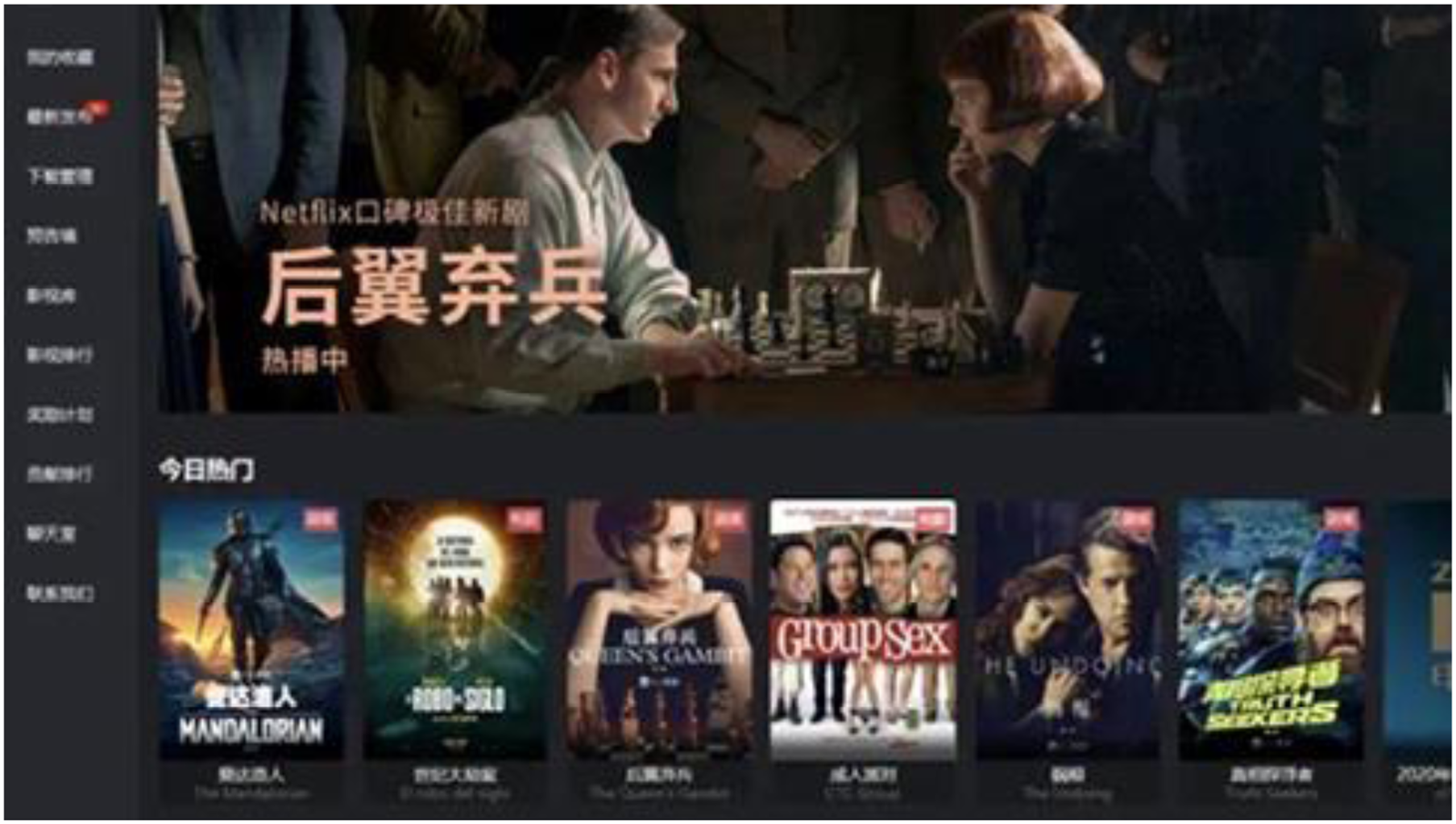
A screenshot on the application program interface (API) of YYeTs.
We consider the downfall of YYeTs a turning point to what we envisage here as the post-fansubbing era of Chinese translational fandom. Notably, many Chinese fansubbing communities either stopped operating or chose to be cautious, sharing only the text files of fansubs instead of ready-made fansubbed videos. The viewers have to find the source video content by themselves and pair them with fansubs files found at other online sites such as SubHD.com – a digital archive of fansubs built by media fans. Since mid-2023, the website introduced new gatekeeping policies by only granting access to registered users, while late comers who sought to register may struggle to do so. As a result, the consumption of fansubbed media content has evolved into a Do-It-Yourself (DIY) convergence culture. Although it seems to invite more active involvement on the part of viewers, the search for the desired content across multiple domains may not be accessible for all. Additionally, “original translation” (yuanchuang fanyi) created “by the fans for the fans” (Díaz-Cintas and Muñoz Sánchez, 2006) is being replaced by content transportation (banyun). Media fans can transport Chinese-subtitled foreign content from their host platforms to different local-facing rogue sites. The transporters still need to translate various paratexts for film titles, cast and crew, country of production, synopses, among other related contents, to fully localize the transported content. This part of the translational work may have been done by the host platforms which produce multilingual APIs for different market locales. Despite that, the fans still need to ensure that the translated information is adaptable to, for instance, the local platform infrastructures, audience demographics, tastes and habits of consumption.
On social media and entertainment platforms, fansubbing remains crucial to content transportation. Media fans continue searching for new material to translate and thereby cultivate fandoms of new trends, celebrities and genres. For instance, fans seek out previously less translated and less known content such as the radio drama The Adventures of Superman (1952–1958) and share it with Chinese subtitles on the China-based Bilibili – one of the largest over-the-top platforms in the world. Although vintage media as such attract little attention, their appearance on the major Chinese platform indicates the commitment of fansubbers to an emerging fandom of nostalgic consumption. In comparison, fansubbed social media content such as gameplay videos, training vlogs, BookTok, cooking videos, stand-up comedies, indie music and podcasts are gaining greater popularity on Bilibili, Red Note and Douyin. They have introduced a number of influencers and content creators based on YouTube, Twitch and Spotify, who may otherwise have no reception in China.
As an informal media economy, fansubbing facilitates alternative pathways for specific target audiences to access those media products which would otherwise be unavailable in their domestic contexts. In this respect, fansubbing is similar to the non-official, underground distribution of Western popular media entertainment in the former Soviet bloc. Tessa Dwyer (2017) studied the screen translators who were working for the state media of former Socialist Romania who took “moonlight jobs” to create “quick, cheap voice-over for illicit media” (p.118) such as Hollywood movies for underground distribution. Their works were brought to light by the New York Times and later, in a Netflix documentary film titled Chuck Norris VS. Communism which casts a positive light on the subversive actions of those “guerrilla translators” working under an authoritarian regime. Similarly, Jaroslav Švelch (2018) documented the social history of gaming in former Czechoslovakia. The local niche communities of gamers thrived on the inception of computers in households, communal centers and schools even though the country did not have a market and economic anticipation for digital gaming. Digital games were brought in from overseas by diplomats and personnel who were eligible to travel abroad, among other informal channels of distribution. To make the digital games playable, tech savvy individuals at that time translated the original games into local languages and produced homemade gadgets to enable communal and private gaming. They even moderated the original programming to create alternative plotlines or created their own games to resonate with the changing social climates (Švelch, 2018, xxii). Whereas subversive actions like these were praised for their critical role in bringing down the Iron Curtain, fansubbers at present are facing legal and political repercussions from industries and institutions.
Seeing the recurring conflict between media users, industry and politics in recent history helps us sensitize the rise of film and television podcasts in China as an audio translational fandom. Compared with fansubbers, fan podcasters are more rule-abiding. At least, they do not and cannot include copyrighted (and particularly audiovisual) content in their audio production. That said, they are also frequent consumers of fan translations from which they resource their reviews and interpretations. Their compliant audio practice is largely built on their noncompliant consumption off the pod. The ensuing discussion will explicate why film and television podcasts belong to the Chinese translational fandom where different translational practices emerge and intersect with each other to engage with the meanings of media texts transported from afar.
Film and television podcasts: An audio translational fandom in transcultural fandom
Fandom is increasingly transcultural as fans continue to create transformative works through their transcultural media engagement. Bertha Chin and Lori Morimoto (2013) argued that transcultural fandom brings together different consumptive practices of diverse genres, languages and cultures. Their theorization helps bridge intercultural dialogue between fandom and fan scholarship for more inclusive and holistic theorization on fan-initiated border-crossing in language, distribution and accessibility as well as intersectional practices at physical and virtual borders.
First, what makes the fans “transcultural” emerges from “a moment of affinity regardless of origin”, wherein they devote affectively “in characters, stories, and even fan subjectivities that exceed any national orientation” (Chin and Morimoto, 2013: 99). Such a “moment of affinity” can be illustrated by Jinhua, a celebrated host on the podcast Heishuigongyuan (Black Water Park), who spoke a panel during the 2023 Chinese Podcast Award convention. Jinhua recalled that he was not drawn to audiovisual storytelling in his early childhood due to his first experience in cinema watching a Taiwanese film called My Beloved (1988) with his mother. The film became a nationwide sensation in China where many audiences were moved to tears by the tragic childhood of the male protagonist who was conceived out of wedlock and forcefully taken from his mother by his privileged paternal family. The young Jinhua was traumatized by this cinematic exposure and did not have any further interest in films until a local television network in Beijing launched a movie talk show in 1994. That program became the inspiration for his podcasting career many years later. As he recalled: Then Beijing Television Station launched a program called Global Films. From there I started appreciating the charm of films. They introduced films such like Pulp Fiction which made me realize for the first time, “Wow! Films can have so much fun”. […] I want to create a podcast program to do the things Global Films did for me. I want to introduce to my listeners my favorite stuffs. I want to let more people enjoy good stuff like science fiction, superheroes, or anesthetization of violence. (c.f. Shenmediantai, 2024a; our translation)
Interestingly, Jinhua found his obsession with Hollywood films through a local television program which condenses feature films into ten-minute video commentaries. Due to the restriction on foreign-language content in official distribution channels at that time, television programs such as Huanqiuyingshi (Global Films) started a trend of introducing foreign popular media through abridged retelling in Putonghua, a standard form of Mandarin Chinese. The longest running production of this kind is Dishifangyingshi (The Tenth Cinema) which aired on China Central Television 10 from 2004 to 2016. Video commentaries, as such, are abridged translations of original films. They provide the Chinese audience with summaries of plotlines and some of the visual spectacles and therefore allow them to experience the pleasure of global films without encountering much cultural discount or language barriers. Through those abridged retellings across languages and media, young audiences such as Jinhua could expand their horizons of media consumption and become affectively attached to translated screen stories. Despite the thrilling media life which they were permitted to enjoy, it also took a strong will to persist with their consumptive behavior. In this regard, Jinhua spoke of how his father reacted to a sex-related scene in Trainspotting (1996) and how he, as a young adult, continued to explore foreign screen cultures as a way to rebel: I thought that I need to watch something more serious, something like Trainspotting. It has that kind of scenes where the characters are enjoying ecstasy. […] My dad stormed into my room while I was watching. Caught me by surprise. He pressed on by asking what I was watching, and I said that I was watching an art-house film which is very sophisticated. He didn’t believe me and started beating me. I kept watching even like that. I still remember what was shown at that point: the guy spread the bedsheet without noticing the ejaculated substance on it. The stuff landed on the table next to him where his fellows were eating breakfast. That made my dad so pissed that he scolded me badly. His voice actually resonated quite well with the noises on the screen. Amusing. I became more invested into films. My dad couldn’t stop me. I’m hard to tame. The harder he put me down, the more I watched. […] At certain point as my viewing experience grew, I also became interested in comic books, stuffs like superheroes which I like so much because of X-Men. All in all, I am drawn to the cultures of Hollywood. (c.f. Shenmediantai, 2024a; our translation)
In addition to the bitterness and joy, such fannish engagement is significantly different from what has been defined and debated in Western fandom studies. Transcultural fans such as Jinhua are not devoted to any specific genres, titles, or characters. Rather, they cultivate their own fandoms of transcultural media consumption by actively searching for means to access a wide range of global media works translated into the Chinese context through official and non-official productions. As shown above, Jinhua described the content he felt attached to as “cultures of Hollywood” (haolaiwude nazhongwenhua), while on his podcast, he and his cohosts also talked about works created in other media cultures, including the Wisely Series created by the esteemed Hong Kong author Ni Kuang, Japanese horror series such as Tales of Terror: The Haunted Apartment and Tales of the Unusual, and French cyberpunk animated film Mars Express. Such breadth and diversity instantiate a trans-fandom which, according to Matt Hills (2014), refers to “all sort of different ways of leaving fandom, and also ways of navigating across and combining and fusing fandoms” (Hills and Greco 2015: 159). The prefix “trans-” means transformation and transference of fan individuals and fan cultures over time and social spaces, instead of being reserved to the sense of gender fluidity and gender performativity. To podcasters such as Jinhua, being a fan comprises “repertoires of fan tastes as expressions of person identity” (Hills, 2005: 818). Their transitional practice from consumption to production underpins the points or moments of affinity where fans feel attached to and express authentic personal identity through specific fan objects, and the capability to use the felt fan objects to discover and transform their self-identity. Film and television podcasts as a trans-fandom is thus built upon intersectional practices of fans with flexible identities traversing multiple media genres and communicational spaces.
Moreover, Chin and Morimoto drew on the notion of “transcultural homology” derived by Matt Hills (2002a) from the cultural homology theory developed by Paul E. Willis ( 2014). Hills (2002a) applied transcultural homology to explicate the ways “subcultures can use representations of other national subcultures to articulate a shared identity or devaluation” (p.13). He went on to explore the ways the derogatory Japanese word “otaku” (fans of anime) was adopted by American anime fans as a badge of honor and a way to forge transcultural solidarity with Japanese anime fans based on the cultural devaluation they experience locally. The phrase “transcultural otaku” allows American anime fans to build homological relationships with anime texts, thus crafting their fan identities and practices to forge multiple fan cultures surrounding one or more anime contents. Chin and Morimoto (2013) further applied the concept to analyze a variety of fan border-crossings. For instance, they reflected on their own immigrational upbringings in various Western and Asian societies where they kept becoming fans of something that was not local. Such transcultural homology enabled them to appreciate the subcultural scenes where Hong Kong film star Leslie Cheung was given a new persona by Japanese fans for a reimagination of a Japanese folktale character through the medium of manga. The authors also referred to the cross-cultural imageries and jargons of manga adopted by Harry Potter fans in Japan for the writing and commenting on slash fiction. Overall, the transcultural fans not only move beyond their domestic contexts but also traverse different fandoms through particular points of homological affinity regardless of their cultural origins.
Transcultural homology as such would be impossible without translation which is not merely a tool or skill for overcoming language barriers in interlingual and intercultural communication. Homological dispositions of transcultural fans are the results of translation which cannot be afforded by any isolated source-to-target transmission. Instead, the fans assemble multiple media texts from diverse genres, sources, and contexts of production to approximate cultural differences to the local popular media contents and actively create new meanings around them. For instance, the discussion in film and television podcasts can be translational as well as speculative, allowing the fan's audio productivity to achieve more than transcultural interpretation of translated screen stories. Podcasters can embark on more creative tasks by blending fiction and reality. In a trilogy on American horror films on the Liaoyangyuan (Movie Talks for Wellness, 2023), host Jie Zhu spent the first two episodes introducing the popular subgenres and films in different decades since the 1960s. In the last episode, Zhu frequently used “we” to align with the listeners and imagine what one could do to survive a zombie apocalypse or escape from psycho killers and haunted houses (Liaoyangyuan, 2023). In this way, she made a survivors’ guide from the films discussed in the previous two episodes, as though she was preparing the listeners for certain real-world dangers. In a different vein, the hosts on Yingheshuo (Hardcore) imagined how the story of The Day of the Jackal (2024) would turn out in contemporary China (Yingheshuo, 2024). They took a step further to imagine how Chinese filmmakers might create a story about professional assassins set in the contemporary world, even though, in their opinions, such a project would never be approved in reality.
Hence, fan podcasting as an audio rendition of audiovisual media works instantiates Pratt's (2008) concept of “contact zones”, in which fans in a specific media context are wrestling with contesting discourses, agendas, policies, ideologies and ethics through their local media life pivoted by translation. Bearing these in mind, we turn to the following case studies to illustrate how fan podcasters utilize the audio medium to retell and interpret the previously translated content, fill the gaps left by other (fan) translations, and render audiovisual storytelling through audio paratextual production.
Case study 1
The production and products usually involve translation which retells and refashions global stories created and distributed audiovisually in an audio format. Thus, visually mediated information is rare in podcasts, even though more and more podcasters are sharing their content on video platforms. The hosts mostly make sense of an audiovisual production through their verbal creativity which is, in turn, delivered to the audience via audio transmission (see also Korfmacher, 2024; Llinares, 2020). Visual messages are lost in audio transmission, specifically when the hosts fast-forward or rewind a fan-translated film or television episode in search of those visual clues which can help them illustrate or justify specific points of view or interpretations. Meanwhile, fan podcasters frequently cross the boundaries between languages, cultures, genres, and online infrastructures to reassemble the meaning of a media text through its paratexts in translation. As not all the fan podcasters are fluent in English and other foreign languages, they rely on existing translations (if any) to comprehend meanings of the original media works on which their podcasts are based. They also search for paratextual and intertextual references on online sites to craft their arguments, reviews, interpretations and even parodies. In other cases, podcasters seek help from their own networks of informants who are willing to share their personal collections of raw and translated media resources. These production techniques are frequently mentioned in the midst of recaps and reviews and therefore would be acquired as common knowledge for zealous listeners. That said, the following analysis shows an exceptional scenario where the fan podcasters are well-versed in the language(s) used in a source work and thus able to scrutinize the work of translation and other matters related to transnational distribution.
On July 2, 2024, Disney invited a thousand journalists, content creators and local key-opinion leaders to an advance screening of Deadpool & Wolverine (D&W) in Shanghai (Zhang, 2024). The guests had the opportunity to watch the first thirty minutes of the film and to meet with the film director Shawn Levy and actors Hugh Jackman and Ryan Reynolds. An audio recording of that meeting was shared on the podcast channel Shenmediantai (What Channel) two days later (Shenmediantai, 2024b). The channel is hosted by a group of creative industry specialists who studied film and media at New York University and University of South California. The listeners could hear Reynolds thanking China with “extreme gratitude” for allowing them “to bring this movie over here and to be able to show it in the way it is meant to be seen”. Remarkably, the actor uttered a foulmouthed sarcastic response to Chinese censorship which banned the first Deadpool film in 2016, during an interview with the British entertainment news agency Digital Spy (Armitage, 2016). Before the recording started, the host, Weiqing Kong, greeted the listeners and was joined by Jackie, a podcaster on Yingheshuo (Hardcore). According to Kong, the conversation was recorded shortly after the preview event. They talked with utmost enthusiasm about the content they had seen and shared their anticipation for how the story would evolve. They refrained from commenting on the overall quality of the film but nevertheless did what they could to contribute to the film hype (Shenmediantai, 2024b). They revoked such positivity shortly after the film's premiere and frankly dismissed its storytelling and characterization while applauding its fan-oriented messages (Shenmediantai, 2024c).
Notedly, podcasters such as Weiqing Kong were speaking to their audiences about Chinese-subtitled versions of the same film in Marvel Cinematic Universe (MCU). Their initial responses to the preview may help raise the interests of the local audiences and forecast what can be expected from a blockbuster film. Rather than merely diminishing its charm, they provided valuable information in the recaps and reviews by elaborating on the character relationships, intertextual references to multiple popular-culture franchises, and off-the-screen stories about the film's production. Such paratextual information helped clear the barriers posed by generically and culturally specific elements in the original film which could not be fully rendered through the subtitling medium. As audience members, the podcasters criticized some of the translation which, in their opinion, was not what was being said on screen. Yet, audiences of subtitled films may not be aware of the technical constraints in space and time that subtitlers have to cope with when they search for a suitable way to render the source information (Orrego-Carmona, 2021). On the top of that, the so-called faithful translation of “what is being said on screen” usually does not sit well with the local policies and mainstream values (or ideology, be it political or religious). Manipulation is thus inevitable. As far as Kong reflected in a post-show review, when Deadpool said to the agents of Time Variance Authority, “Pegging isn’t new for me, friendo”, the sexual connotation of “pegging” was absent in Simplified Chinese subtitles even though the line was preserved (Shenmediantai, 2024d). Kong also recounted that the translation was more faithful in the preview content shown at the advance screening, which was subtitled in Traditional Chinese (Shenmediantai, 2024d). He suspected that the preview belonged to a different Chinese-language version distributed outside China (Shenmediantai, 2024d). As such, Kong not only exposed the manipulative conduct of translation but also informed the audience about the existence of distinctive “Chinese” versions of the same film. The next case study is about how fan podcasters access and compare such re-versioning in Chinese language in order to render a full screen story.
Case study 2
It is worthwhile emphasizing that some podcasters sometimes have to travel far in order to watch a long-anticipated film. Hong Kong and Macau are the primary destinations for such movie-going tourism. As special administrative regions of China, the two cities maintain a higher degree of autonomy – at least for business and trade – than those in the mainland. They have more developed and comprehensive rating systems to categorize films and television programs in age-appropriate and socially inclusive manners. At present, they continue to be open to transnational media services such as streaming provided by Netflix, Amazon Prime, Disney+, HBO Max, and others. The local cinemas offer a wider variety of local and international art-house and popular films with less censorship-imposed cuts (if any, when compared with the versions distributed in the mainland) and more genre-specific and culturally authentic translations. Therefore, they provide mainland Chinese media fans chances to gain fuller experience of their beloved films if they can afford the extra cost for travel.
Movie-going tourism implies at the physical mobility that transcultural fans need for paratextual production. Essentially, fan podcasters need to physically visit a different media context in order to access a certain text, and previous studies have shown the creation and interpretations sparked from fan tourism or pilgrimage, wherein the fan-generated paratexts can be digital as well as material (see Couldry, 2000; Geraghty, 2014; Hills, 2002b). The fans can write blogs about visiting (possible) production sites when hunting for specific clues. They also go to fan conventions or comic bookstores to exchange and search for collectible items based on their favorite characters and stories. Fan podcasters are not reaching for any specific physical location and object but the translations of the texts, which exist beyond their primary media environments, for their own paratextual creation after viewing. Take the previously mentioned Heishuigongyuan (Black Water Park) for instance. One of the channel hosts went to Hong Kong to watch Logan (2017), while the others watched a different and shorter version of the film in mainland China (Heishuigongyuan, 2017). They gathered online in a recap episode to walk through the film story scene by scene and compare what they saw in cinemas. In this way, they explained to the listeners, and inform each other as well, about what differences could be found in the versions released in the two Chinese market locales, and how the changes and cuts made in the mainland Chinese version altered the storyline and character relationships of the film. In the absence of audiovisuality, they rebuild the audiovisual text through their reflections on the viewing of two different Chinese-translated versions.
Discussion
Based on the illustrations above, fan podcasters adopt various media resources to help Chinese audiences understand the plot, context and cultural dynamic of audiovisual fiction. Such paratextuality showcases how transcultural fans retell and interpret an existing audiovisual story without adhering to the meaning of source information and the dominant rules of media consumption – given that many media works discussed by them do not have official distributions in China. In doing so, they not only fill the gaps left by incomplete or inconsistent (fan) translations but also recontextualize the source material within shared cultural and social realities familiar to their listeners.
Film and television podcasts thus emerge as an aural extension of translational fandom, continuing the legacy of fansubbing through a new modality of engagement. These podcasts are not merely commentary—they are acts of transcreation, where interpretation becomes a dynamic, collaborative, and culturally situated process. Fan podcasters speak across linguistic and cultural divides, rendering foreign media intelligible and resonant for local audiences. Their interpretations of both texts and paratexts generate new meanings through transcultural consumption, often drawing on lived experiences, intertextual references, and socio-political commentary. Unlike professional localization workflows, which often rely on fixed and authorized start texts—a translated-version which is adopted to function as the bona fide source text for further translational productions, fan podcasters draw from a fluid and eclectic archive. This ongoing process of mediation and reinterpretation aligns with the concept of hypertranslation—a term coined to describe the emergent communicational ecology shaped by rapid sociotechnical transformations (Claramonte and Lee, 2024). In sum, fan podcasting represents a radical reimagining of translation as a participatory, decentralized, and culturally embedded practice. It challenges the authority of official media channels, redefines the role of the translator, and exemplifies how grassroots media engagement can reshape the global circulation of meaning.
Conclusion
This study explores film and television podcast as an emerging translational fandom in China. Essentially, the rise of fan podcasting further expands translational fandom in the era of post-fansubbing, in which global genres and stories continue to flood in and merge with local media trends through fan translations. Our findings reaffirm Gray's observation that fan-driven paratextuality has considerable power to shape how audiences comprehend and interpret films and television programs (Gray, 2010: 141).
Fan podcasting exemplifies a mode of transcultural remediation, where informal audio practices sustain noncompliant consumption and foster alternative engagements with global media texts. Instead of resisting the version of the text endorsed by the industry, audiences (and fans in particular) seek to find their own ways to enter and interact with it. Through paratextual engagement, the fans build intertextual networks among the existing media works by rendering some of them as paratexts to others. Similar to those distributed by media industries, e.g., trailers, tie-ins, billboards, guest appearances on talk shows, fan-generated paratexts such as fan trailers, break-down videos, reviews, memes, and podcasts, all frame and reframe the meaning of the source content, help the audience gain insights into plotlines and character relationships, and thereby shape the corresponding consumption in a certain cultural context.
We are aware that the study merely touches the surface of a niche genre in the Chinese ear economy by focusing on selected content and their creators. It is worthwhile to further explore how fan podcasters exploit audio platforms to build new virtual connections and craft fandoms of their own with profound intercultural and genre expertise. It is equally important to investigate how listeners and followers respond to the podcast content and evaluate the performance of podcasters. Future research can adopt a more empirical approach to investigate the workflows and social interaction unfolding at different channels and across different platforms. Potential findings can help further uncover the interiors of audio transcultural fandom. In particular, how podcasters search for texts and paratexts as part of their (co)creation. How podcasters manage their audio creation and other aspect of their professional and personal lives, given that many podcasters have full-time jobs in areas unrelated to media and entertainment industries. What do listeners do when they listen to an episode? Where can they interact with the podcasters and fellow listeners? And what would such social interactions contribute to further paratextual generation across different platform domains? Answering these questions can lead to crucial insights into the ways transcultural fans in China build intertextual and transtextual relationships across media, whereas the texts are already paratextualised by translation.
Footnotes

Funding
The authors disclosed receipt of the following financial support for the research, authorship, and/or publication of this article: This work has been supported by The University of Hong Kong under the “Start-up Funds” programme for professoriate staff (Project no.: 006021001).
Declaration of conflicting interests
The authors declared no potential conflicts of interest with respect to the research, authorship, and/or publication of this article.