




Abstract
The Rohingya refugees are a minority group that escaped to Bangladesh from Myanmar as a result of persecution and violence. This article explores diverse forms of Rohingya art that amplify their voices and addresses barriers artists face in producing and disseminating art. This article exclusively focuses on the art created by refugees themselves. The empirical data derives from in-depth interviews with Rohingya artists, researchers, and practitioners; field visits to Rohingya camps; and examination of social media. The findings reveal that Rohingya's most prevalent art forms are poetry, song, paintings, murals, and photography. Rohingya artistic expressions carry messages of trauma, love, life in Myanmar, and eagerness to return to their homeland. Rohingya artists face significant barriers in their communities, including cultural and social resistance, trauma-induced withdrawal from art, limited access to materials, and challenges in effectively disseminating their artworks.
Introduction
The Rohingya are an ethnic Muslim minority group from predominantly Buddhist-dominant Myanmar. Rohingya are not considered among the 135 ethnic groups officially recognized by Myanmar (Radcliff, 2018). Instead, Myanmar labels the Rohingya as illegal immigrants from Bangladesh, despite many tracing their ancestry in Myanmar for generations (Albert and Maizland, 2020). Due to geographic proximity, Rohingya have fled to Bangladesh in large numbers at different times – 1978, 1989, 1992, 2012, and 2017 (Doctors Without Borders, 2022). The largest exodus began in August 2017 after a massive wave of violence (including extrajudicial killing, rapes, and arson) broke out in Myanmar's Rakhine State, forcing more than 700,000 people - half of them children - to get refuge in Bangladesh by August 2018. (Alam, 2019: 1; UNHCR, 2020)
The Cox's Bazar region in Bangladesh has 969,096 Rohingya refugees (UNHCR Data Portal, 2024). Being a host to about a million refugees, Kutupalong in Cox's Bazar is currently the world's largest and most densely populated refugee camp (UNHCR, 2024).
Rohingya people do not have a state, citizen rights do not apply to them, and they are often referred to as non-citizens. “Losing or lacking citizenship implies losing speech and some of the essential characteristics of human life” (Hannah, 1968: 9). When individuals are compelled to leave their country of origin due to circumstances beyond their control, their rights to self-expression frequently become less accessible, and rights, like voices, are often conditional and constrained by the apprehension of censure or the risk of attracting unwanted attention (Sharp, 2024). Similarly, Rohingya struggle to have the right to voice due to the authoritarian government in Myanmar, and they have limited opportunities in their host countries of Bangladesh and Malaysia. Persecution and censorship push artistic production as a means of expression (Marinucci, 2022). Consequently, they often resort to alternative means of resistance and expression, including poetry, paintings, street performances, songs, graffiti, and posters. These artistic forms serve as powerful tools for humanity to pursue peace. Art, poetry, and storytelling can be a springboard for refugees to develop alternative discourses and reach broader audiences (O'Neill and Hubbard, 2010 as cited in Aljouni et al., 2023). Farzana (2017a) highlights the crucial aspects of the relationship between the arts and the Rohingya's voice, identity, and defiance. She claimed that through artistic expression, Rohingya people challenge their imposed identity and resist the socio-political circumstances thrust upon them, preserving their memory and history. The alternative mediums of expression bridge communication gaps, promote consciousness, and help break the silence, acting as covert symbols of resistance (Farzana, 2017b).
Various organizations, media outlets, and individuals create and use diverse arts to represent refugees. One popular way is the photojournalistic representation of refugees. For example, the image of Alan Kurdi, a three-year-old Syrian refugee who profoundly impacted Western society by bringing attention to the ongoing Syrian refugee crisis (Walsh, 2015). There are other forms of refugee representation, such as wearing black headscarves and orange life vests in Greek carnivals to symbolize refugee accessories (Yalouri, 2019). Refugees show protest and project their voices in many different forms. These include organizing sit-in protests, sewing their lips together, seeking sanctuary in churches, organizing public demonstrations, and visiting immigration authorities (Shindo, 2009). When individuals or organizations other than refugees attempt to convey refugee voices, there is a potential risk of bias. Refugee-produced art can help overcome the bias of art through others, as “some non-refugee artists may have a limited understanding of their own biases and frameworks when speaking on behalf of people whose experiences, they have not personally shared” (Blomfield and Lenette, 2018: 323).
Following the significant migration of the Rohingya to Bangladesh in 2017, there has been an influx of studies encompassing academic research, NGO/consultancy-based reports, media coverage, and policy briefs. These studies predominantly address the Rohingya crisis, citizenship, identity, public health, mental health, and gender issues. Yet, the literature on artistic expression among Rohingya refugees is sparse.
While a considerable amount of research on refugee art addressing refugee situations in different parts of the world is available, only a handful of studies have focused on Rohingya art. Farzana (2011, 2015, 2017a, 2017b) is perhaps the most notable academic in the field of Rohingya art. She primarily explores Rohingya music in relation to identity formation and memory. Additionally, Banki (2024) examines how Rohingya art contributes to activism, and Basu (2022) analyzes a series of Rohingya poems as a record of the survival of a community that has endured horrific violence as a minority. Moreover, a good number of PhD and Master's dissertations on Rohingya art have been completed in recent years, indicating a likely increase in research on this topic in the near future.
However, to date, a thorough exploration of Rohingya art is missing. In this context, the present article's original contribution is to deliver a broad outline of Rohingya refugees’ art that amplifies the voices of the Rohingya community. This article seeks to identify the artists involved and explore how Rohingya artists navigate and express their identities and experiences through their artwork. This article's findings are relevant to refugees and stateless individuals, especially those in less developed nations.
The first section of this article explores the significance of refugees’ voices and how they bring authenticity and immediacy to refugee stories. The next section elucidates how art functions as a crucial medium for these voices, articulating its significance and efficacy in conveying the lived realities of refugees. Following this, the methodology is explained. Finally, I will discuss the major findings and conclusion.
Significance of refugees’ own voices in relation to expert testimony and media portrayal
The stories and voices of refugees are commonly disseminated through academics, development practitioners, mainstream media, people-led social media and refugees themselves. The scope of the present article is solely the latter, i.e., refugee voice and experience. Turton (2003) argues that a refugee's voice is far from singular, as is the case of the plurality of refugee experiences. I think the “experience” concept is more relevant to policy discourse, however, the individual account of the refugee is not negligible as it may bring valuable insights. These personal accounts of Rohingya refugees are a critical component of this article. I have widely used the Rohingya's personal accounts in the present article. For this analysis, the terms ‘voice’ and ‘experience’ are used interchangeably.
There is a considerable risk of bias when the voices of refugees are represented by parties other than the refugees themselves, be they individuals, development organizations, any government, or the media; and “the significance of the refugee experience can be lost when social actors such as academics and representatives of humanitarian organizations frame these personal accounts” (Godin and Doná, 2016: 61).
Academic interest in refugees’ voices can be traced back to the 1980s. In the first issue of the Journal of Refugee Studies (JRS) in 1988, the editor encouraged the publication of materials produced by refugees in addition to the development of theoretical and analytical tools in the field of Refugee Studies (Zetter, 1988). The “Refugee Voices” section subsequently appeared in JRS, and other dedicated journals, such as The Suitcase: Refugee Voices from Bosnia and Croatia and Crossing the Border which debuted in 1997 and 2002, respectively (Godin and Doná, 2016).
The start of the war in Syria marks the beginning of the recent refugee crisis (Chatzipanagiotidou and Murphy, 2021). In the context of the modern “refugee crisis,” the Refugee Studies Centre at Oxford University hosted a conference on refugees’ “aesthetic expression” in March 2014, which echoed the importance of refugees’ voices in the contemporary era by focusing on refugees as the producers of knowledge rather than as subjects of inquiry (Chatty, 2016).
In addition to the voices of refugees themselves, narratives provided by third parties play an essential role in the discourse surrounding refugees. Aside from academic representation of refugees, journalistic (/media) representations of the refugee crisis and the narrative of their lives have become increasingly prevalent. Through the mediation (via photographs, maps, graphs, and personal stories conveyed through textual testimonies, audio and audiovisual) of media, audiences gain knowledge about distant events and the experiences of people they would not otherwise confront; however, such a presentation is invariably partial; it results from framing, and selection (Horsti, 2016: 5). Hyper-visibility does not secure voice. An estimated 800 migrants lost their lives in the Mediterranean Sea in 2015, which attracted widespread media and political attention (Bonomolo and Kirchgaessner, 2015). This event is extremely visible, yet migrants’ voices remain largely silent (Horsti, 2016). For the most part, refugees, asylum-seekers, and migrants do not have a say in how they are depicted in traditional media or on social media– if not portrayed as a threat, they can be seen as helpless victims, and they regularly become stereotypes, with a few stories meant to represent the experience of thousands (Oakes, n.d.).
The discourse around trauma and victimization often serves to justify the act of making decisions for refugees, who are portrayed as unable to make choices for themselves. This perspective effectively reduces refugees to a mere object, and refugees’ own voices become marginalized (Georgiou, 2018). In the process refugees are further silenced and, consequently, Western “experts” and aid groups emerge as the sole credible source for refugee narratives and experiences (Sigona, 2014). Furthermore, agentive voices may vary in their representation of refugees, as influenced by their distinct agendas. Georgiou (2018) referred to the “I Am a Refugee/I Am a Migrant” website and “Aware Migrant” as examples. The former depicts a narrative of success, while the latter conveys stories of failure, death, and trauma. Such disparities raise questions about the conflicting moral and political intentions of migration institutions.
To avoid representing refugees’ lives through what is called “expert (refugee experts and relief officials) testimony” (Malkki, 1996), “some organizations opt to use testimonies, life stories, narratives, and other forms created by refugees themselves to advocate on their behalf, however, despite the inclusive aims of the ‘refugee voices’ project, there are limitations and contradictions in its application” (Godin and Doná, 2016: 61). Nevertheless, refugees have increasingly taken center stage as actors whose stories are shared, allowing their voices to be heard when they might otherwise remain silenced and excluded. “Displaced people have been recognized as narrators who can challenge portrayals of refugees as passive, vulnerable, needy victims and whose accounts refer to personal, lived, and first-hand experiences of refugee life” (Godin and Doná, 2016: 61).
Art as a medium of the refugee voice
The act of carrying voice through various forms of art, such as songs, posters, and poetry, has a long history. From ancient times to the middle ages, through to the early twentieth century and to the modern world, art has been widely used (Moore, 2010). Since the beginning of the Syrian war and subsequent refugee crisis, there has been a surge in research, NGO (Non-governmental Organization) initiatives and policy efforts aimed at involving refugees in artistic endeavors, such as in Jordan, Kenya, and Istanbul; and these projects are supported by different agencies, such as NGOs and embassies (Chatzipanagiotidou and Murphy, 2021). Many of these NGO-funded projects aim to empower refugees by giving them a voice, which they lack in the public domain of their host countries because they lack citizenship and are socio-culturally and politically excluded, and these projects try to reach national and international audiences (Chatzipanagiotidou and Murphy, 2021: 464). The increased availability of new social media platforms has allowed refugee agencies to manage the creation, construction, and dissemination of a diverse range of “situated refugee voices” (Godin and Doná, 2016: 61). Art and technology are tools that change who we are listening to and how we are listening to them—how their voices are or are not being filtered, how their dialogue is being framed and constrained, and how this affects which diverse actors—including humanitarians—hear and ultimately act upon the information (Hero et al., 2022). “Social media platforms facilitate the displaced Rohingya members to reach new audiences globally” (Aziz, 2024: 15).
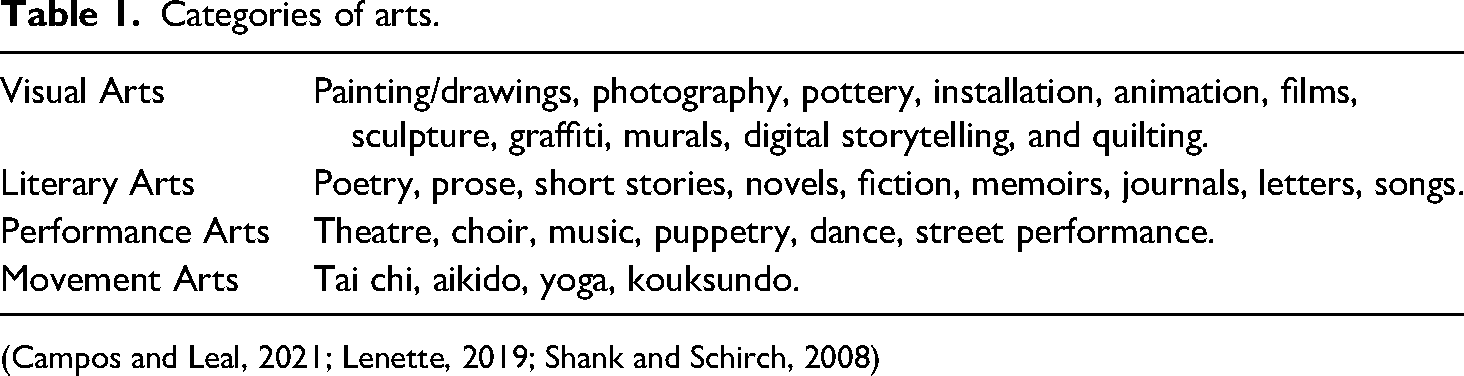
“When art is undertaken by people on the move, it becomes the voice of the voiceless; sometimes, art is the only ‘word’ available to those who, as ‘foreigners’ and/or ‘non-citizens,’ are excluded from all political and civic spaces of participation” (Marinucci, 2022: 16). Banki (2024) called the artwork produced by transnational artists as “migrating art”. Refugee voice through arts is also referred to as “alternative voice” (Kokanovic and Stone, 2010) or “non-conventional means” (Farzana, 2011). Another term is “artivism”, which is a portmanteau word that combines “art” and “activism” (Danko, 2018). Regardless of the terminology employed, arts serve as powerful communication tools for marginalized populations like displaced communities. In this article, I will use the term ‘art’ generically to refer to all kinds of art mentioned in Table 1.
Categories of arts.
Artistic and performative expressions serve liberating and therapeutic purposes by enabling individuals to manifest their identity and imprisoned cries through aural, visual, and verbal means (Marinucci, 2022).
Voice and citizenship scholarship needs to pay more attention to what performance studies approaches can offer to the study of practices of citizenship and suggest that an expanded notion of voice as an act of self-expression, as which is not purely discursive, is needed for understanding citizenship as an embodied and expressive practice. (Rovisco, 2019: 647)
Shank and Schirch (2008: 218) describe art as “an expressive vehicle for communication.” They broadly define art “as including both ephemeral and more classical approaches and embrace various forms, including visual, literary, performance, and movement arts”. “Cultural expression (e.g., aesthetic expression through art, music, literature, and storytelling) contextualizes our understanding of refugee experiences” (Chatty, 2016: 4). Based on scholarly works, Table 1 categorizes various approaches under the overarching term ‘arts.’
Artistic expressions that depict human rights violations demonstrate a social justice role (Banki, 2024); Fine art that captures challenging histories that can prevent oppressive regimes from engaging in historical amnesia (Dirgantoro, 2020 cited by Banki, 2024); Theater, photography, and creative writing which offer forms of witnessing that establish alternative legal spaces, and they can also address the moral intricacies of human rights violations in ways that legal and campaign testimonies cannot (Andrews et al., 2014). In short, the multifaceted role of art in amplifying the voices of refugees underscores its profound impact as a medium of expression and advocacy. As technology and social media continue to evolve, they enhance the dissemination and reach of these artistic expressions, enabling refugee voices to resonate on the global stage.
Methodology
This article employs a qualitative research design based on interviews, Rohingya refugee camp visits, analysis of social media content, and observations of the activities of two international NGOs. Primary data collection occurred in two phases: in January 2023 and March 2023. In the first phase, I conducted most of the interviews and meetings in January 2023 in Dhaka, Bangladesh. Subsequently, in March 2023, I visited the Rohingya camp in Cox's Bazar, Bangladesh, and explored the Rohingya Cultural Memory Center (RCMC). RCMC is located inside the camp, which is operated by the International Organization for Migration (IOM). RCMC aims to provide the Rohingya community with a platform to showcase their heritage, art, and creativity, and not just their marginalization (Palazón, n.d.). In the camp, I observed murals and tapestries crafted by the Rohingya and had the chance to see Rohingya cultural artifacts.
The present study uses a qualitative research approach, focusing on fifteen semi-structured in-depth interviews and thematic analysis to understand the experiences and opinions of participants. The participants included four Rohingya refugee artists, one Rohingya community leader, six development practitioners (/NGO personnel), and four academic researchers including one researcher from Myanmar. The respondents were primarily asked about the various art forms utilized by the Rohingya to convey messages, the prevalent themes within Rohingya art, the challenges faced by Rohingya artists, and how non-governmental organizations (NGOs) support these artists.
I transcribed the interviews verbatim and performed two iterative rounds of coding, during which I made brief annotations. I primarily generated codes directly from the data, reflecting the inductive nature of this study. I subsequently analyzed and categorized these codes, formulating a range of themes. The principal topics identified encompass the diverse manifestations of Rohingya artwork, the motivations driving their creative endeavors, the assistance provided to Rohingya artists by external organizations, the primary audience for Rohingya art, and the obstacles encountered in the art production process.
I am a Bangladeshi, and my native language is Bengali, which is close to the Rohingya language. Besides, after living in Bangladesh for several years, many Rohingya people can communicate in Bengali. Therefore, I could communicate with the Rohingya people without an interpreter. My birth and upbringing in Dhaka, the nation's capital, situated at a considerable distance from the Rohingya camps, meant that before the initiation of data collection my exposure to Rohingya arts and culture was limited. This lack of preconceived notions allowed me to enter the field with an open mind and without any predisposition.
Compared to for-profit mainstream media platforms, organizations within the charitable, cultural, and human rights sectors more effectively mediate refugee voices and advocate for their representation at local, regional, and international levels (Sharp, 2024). During data collection, Artolution and the RCMC of the IOM served as my gatekeepers, facilitating access to my respondents. Artolution is an international NGO that works on community-based art projects for the Rohingya camp. These two organizations have been working with them for a long time, and so the Rohingya people trust them. As a result, the Rohingya people did not perceive me as a complete outsider, and the respondents were generally open during interviews, willing to discuss their experiences and perspectives.
Apart from these two organizations, numerous art-based projects have emerged in recent years, including Omar's Film School, Art Garden Rohingya, and Rohingyatographer (Hero et al., 2022) – these are more grassroots organizations, and I did not have access to grassroots organizations before visiting the camp. Nonetheless, during my camp visit, I met people like the founder of Rohingyatographer. However, to capture art-based initiatives, I observed the digital platforms of some NGOs and a couple of grassroots organizations. I paid close attention to Facebook and LinkedIn posts by key figures from these organizations, such as country managers. The social media analysis was performed without a specific timeframe; instead, I researched these entities’ and peoples’ pages on Facebook and LinkedIn to get an overall idea. These individuals and organizations frequently post updates, blogs, and photographs about Rohingya topics, providing valuable information for my research. Twitter/X is a widely used medium, yet, I restricted myself to only two platforms to maintain a manageable workload for data collecting.
Findings and discussion
Rohingya artists
Young Rohingya and women play the dominant role in art-based activism (/artivism). Young artists are increasingly interested in new media tools and gravitating towards photography, poetry, and paintings. It was difficult for me to track artists in the refugee camp. The artist's identity itself is often a matter of contestation. Many Rohingya involved in creative arts hesitate to claim or introduce themselves as artists, while others proactively use the artist title/identity. Some have taken the ‘artist identity’ to the next level—adding the artist title before their name on their wedding invitation cards.
In my present research, I took “Artolution” as a case to understand their process of discovering Rohingya artists. Artolution organized a pilot project to discover artists in Rohingya camps. They invited Rohingya artists to collaborate. The initial response from Rohingya participants was that there were no artists in camps. Artolution members noticed that Rohingya females apply a distinctive type of facial makeup known as ‘Thanaka’, which is often decorated uniquely. The members of Artolution used ‘Thanaka’ as a practical illustration of art to demonstrate to the Rohingya that the Rohingya community possesses a distinct culture and civilization, comparable to any other society. This approach encouraged a Rohingya boy to step forward and say, “I do not know if I am an artist, but I can draw. May I come tomorrow?” On day three, the boy said, “I have one more friend; can he come?” Gradually, they found many artists through this snowball method. Most of Artolution's artists are female and aged from 18 to 25.
During conversations, Rohingya artists shared that they face significant barriers in expressing their artistic voice, particularly within refugee communities where multiple factors contribute to stifling creative expression. Artists often face resistance from their own families and communities, where their creative pursuits clash with prevailing religious and social values. For instance, in culturally active groups within refugee camps, leaders may impose restrictions based on religious beliefs, such as prohibiting singing or barring female participation in dance performances. Women, in particular, face heightened challenges due to gender biases, as seen in the case of a Rohingya female singer who was compelled to abandon her singing career due to societal backlash and derogatory remarks questioning her character. Moreover, the process of creating art can sometimes revive traumatic experiences for artists, making it difficult for them to continue their artistic endeavors.
Rohingya art forms
Rohingya artists engage in various art forms to express themselves, including, but not limited to, storytelling, poetry, music, filmmaking, murals, posters, photography, and artifacts. Poetry, song, and photography are the predominant art forms within the Rohingya community. These art forms are not entirely the product of the Rohingya refugees alone; diverse development partners support these artworks to a varying degree, which is common in the refugee camp context. There are some documentaries on the Rohingya issue, namely, I Am Rohingya: A Genocide in Four Acts (2018), Displaced (2018), Wandering: A Rohingya Story (2020), and Rohingya (2021). Non-Rohingya directors and producers mostly created these films and documentaries.
Rohingya do not have a fully developed written form for their language, and artistic expression becomes a powerful alternative for communication. A Rohingya artist stated during an interview, In Myanmar, we pursued education in either Burmese or English curricula. I find it difficult to communicate my thoughts in a second language. As an adolescent, my communication skills in English and Burmese were limited. To overcome the language barrier, I decided to express myself through drawings.
What follows is a concise description of each major art form produced by Rohingya artists:
Song
Religious, philosophical, and folk songs have been traditional practices in the Rohingya community. By conveying the feelings of the Rohingya community, this oral medium keeps their history alive for the majority of this non-literate community (Rafique, 2012). In Rohingya culture, traditional songs often revolve around religious themes known as ‘Kawali/Qawwali’, whereas the Arakan (now Rakhine state) region is known for seasonal songs, referred to as ‘Geet’ (Tan, 2023). At wedding ceremonies, Rohingya women perform a particular genre of songs known as ‘Howla’ (Tan, 2023). Many older registered refugees at the camps compose and perform Tarana songs (Farzana, 2017b). Tarana is a particular genre of songs that they have been producing for years. Most of these songs are undocumented, and only a few Taranas have reached the public. These Taranas portray Rohingyas’ perception of freedom, the concept of migration and home, and despair. The lyrics of a typical Tarana typically resemble what is depicted in Figure 1.
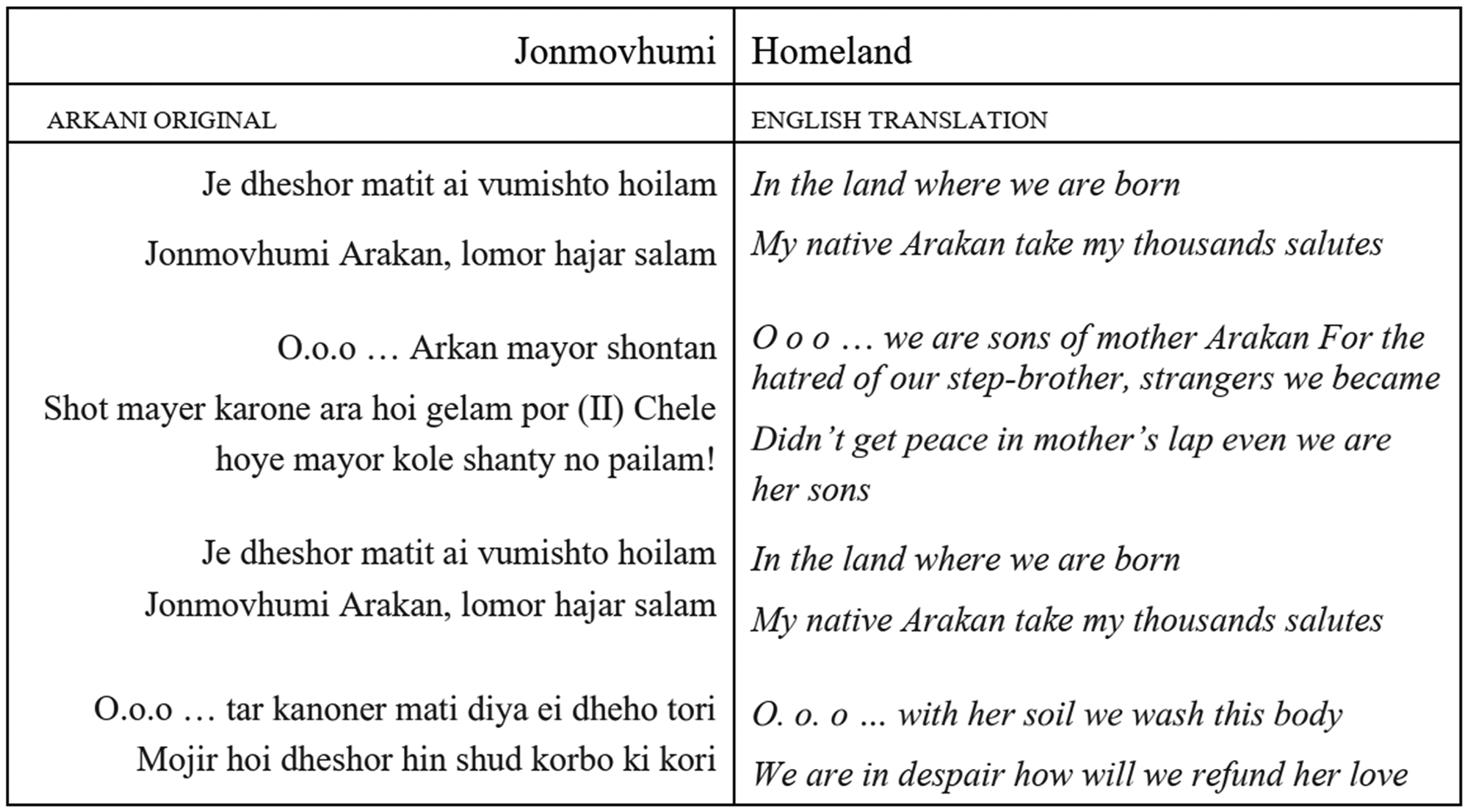
Rohingya Song. Source: Molla Kamal, Rohingya Singer and Tarana Producer (Farzana, 2017b). The above Tarana/song paid tribute to their motherland, Arakan (to see more Tarana in different genres: Farzana, 2017a).
Poetry
Poetry is primarily a community-initiated practice, for example, there is the Rohingya youth established Art Garden Online, the first Rohingya-community-based online art and poetry website (http://www.theartgardenrohingya.com/). Through poetry, youths express their aspirations and lived experiences (Figure 2). Many female poets who have witnessed the Rohingya atrocities use poetry to advocate for equitable representation. Rohingya poets write in various languages and disseminate their work through social media.
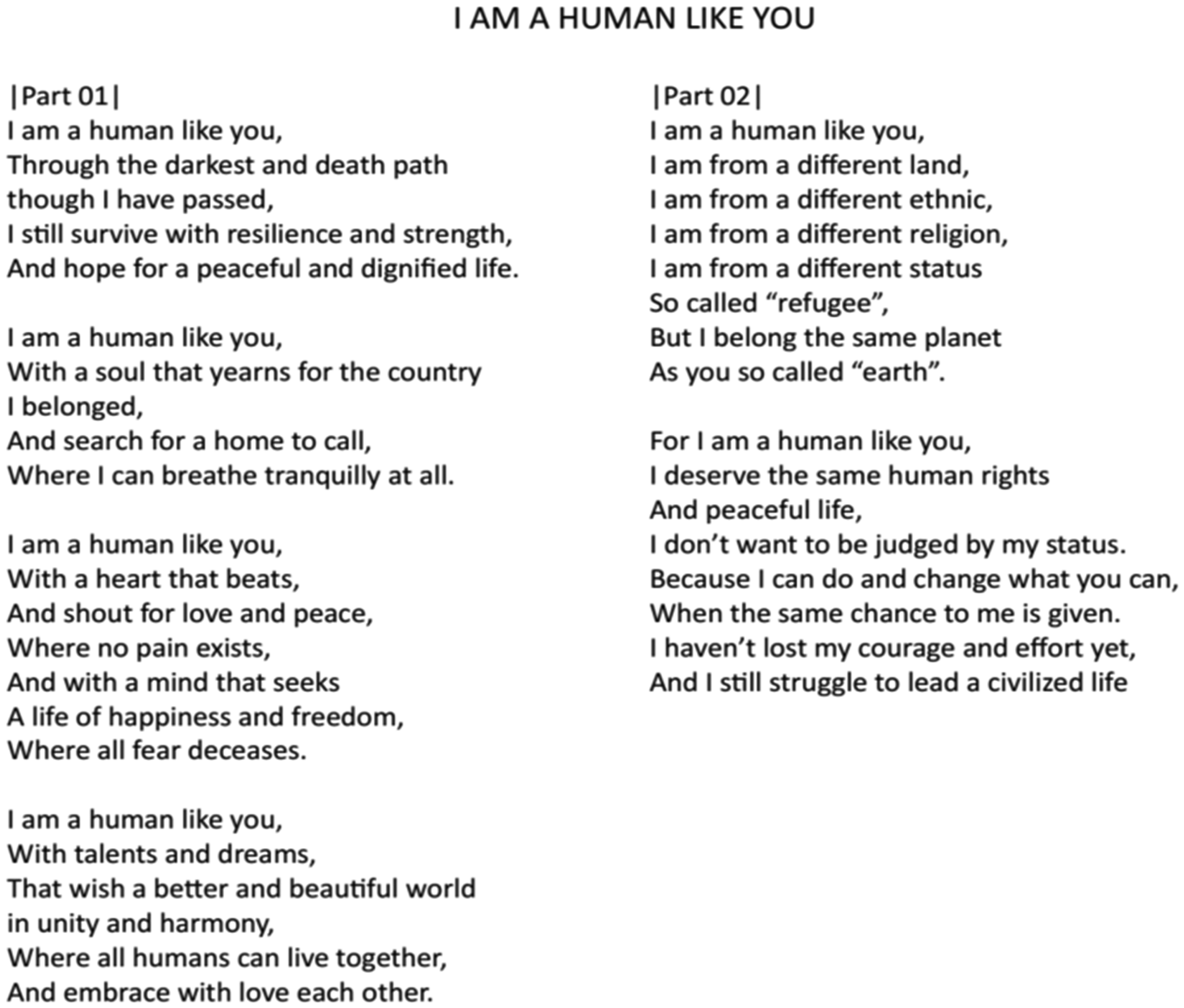
A poem written by a young Rohingya writer and activist, Enam Uddin (Uddin, 2023).
Painting
Painting is a fairly common art form, especially among Rohingya children. Painting and drawing are becoming important for NGOs. Rohingya paintings and drawings touch on different themes, including their traumatic experiences and the aspects of life in Myanmar they long for, such as their homes, sports, and flying kites in the fields (Figure 3). There are some Rohingya muralists, along with some other Bangladeshi muralists, who earned the nickname – “Ronger Manush” (Colorful People).
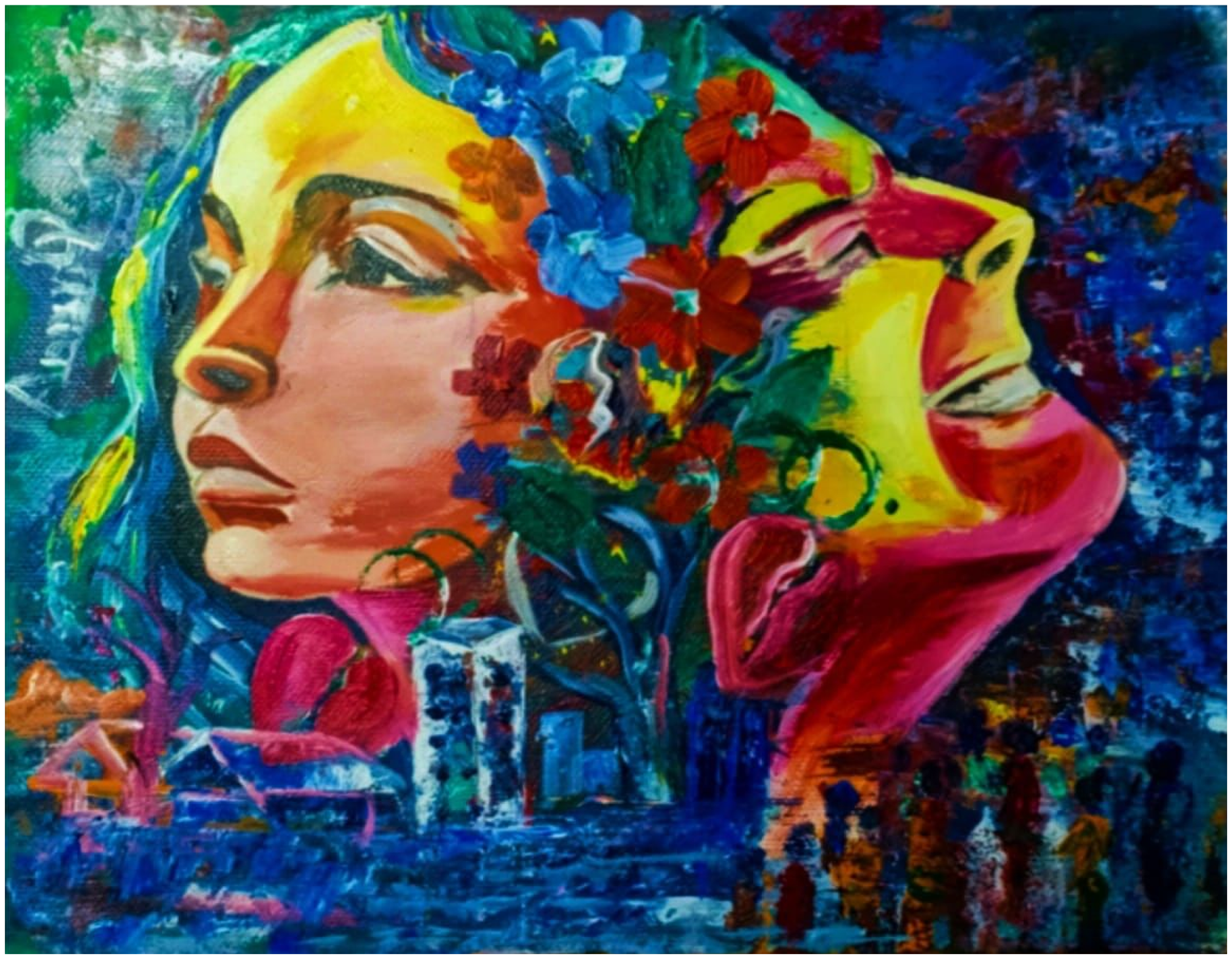
A Rohingya artist painted their trauma experience. Photo by Anwar Faruk (Source: Artolution).
Photography
Many Rohingya artists utilize photography, and particularly photojournalism, as a tool to carry their voices. However, the work of refugee journalists, particularly those from the Rohingya community, is often not recognized, valued, or given space for expression (Crisp et al., 2023). Humanitarian organizations, NGOs, and UN organizations have primarily introduced photography in Cox's Bazar Rohingya camp. For example, a human rights organization, Fortify Rights, has sponsored three fellowships for young Rohingya photographers since 2018 and 2019 to encourage art forms. These fellows have documented their lives in the camps and shared their experiences on their Instagram accounts (Figure 4).
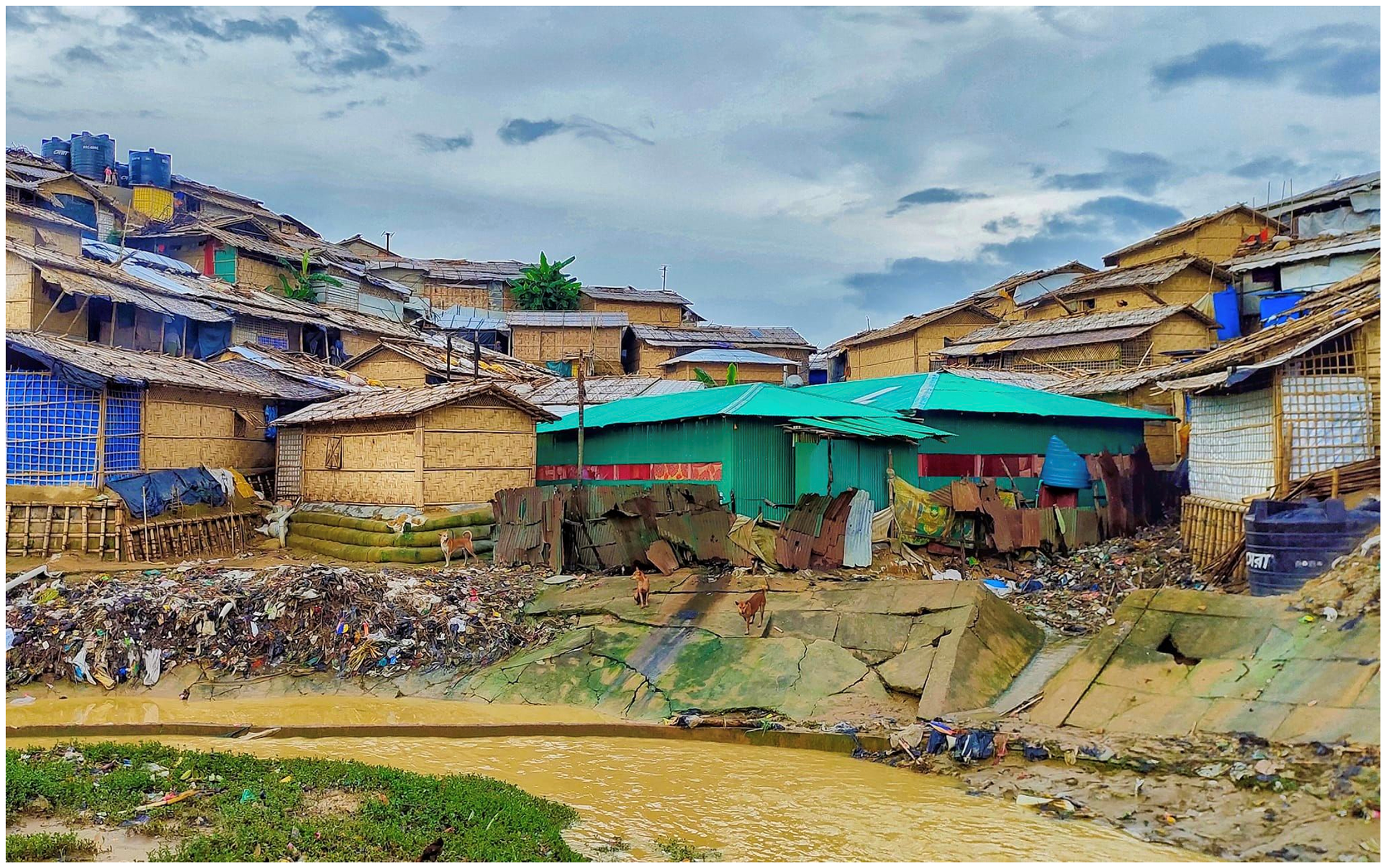
Rohingya camp after a fire incident. Source: Photo by Mg Thein Naing (Rohingyatographer, 2023).
Artifacts
Artifacts constitute a significant component of Rohingya cultural heritage, expressing their identity and different aspects of their culture. Rohingya artisans residing in the camps demonstrate their expertise in crafting diverse artifacts (Figure 5). The IOM utilized Rohingya artisans’ expertise to establish the RCMC within the camp. The RCMC creates and preserves many artifacts. The IOM organizes exhibitions of Rohingya artifacts at local, national, and international levels.
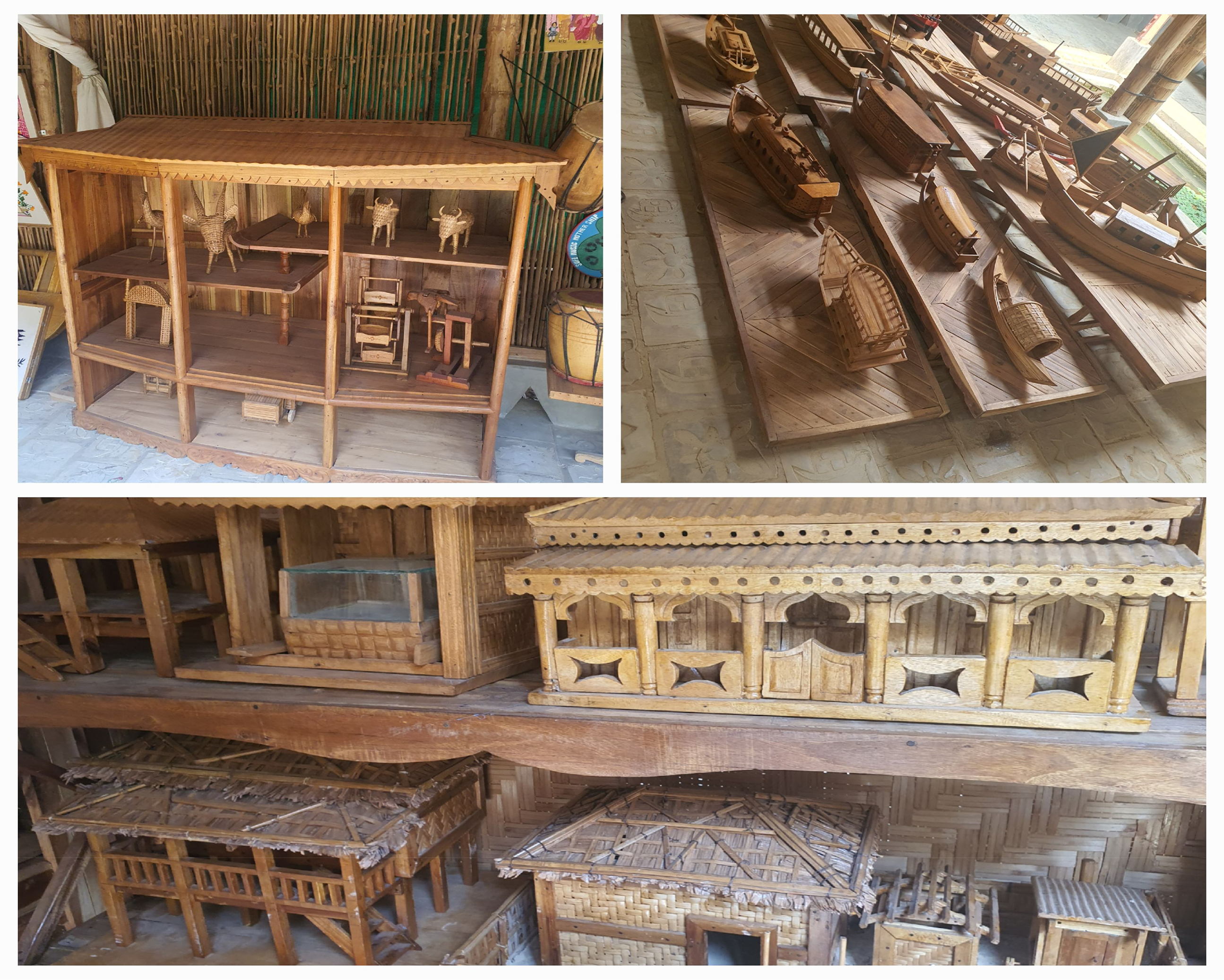
Roghingy Artifact. Source: Photo by author.
Storytelling
Rohingya pass their stories and traditions orally through bedtime stories, songs, and proverbs. Nowadays, Rohingya people use new media to share stories. In addition, Rohingya children play specific dialogue-based games that involve storytelling. Using a “scaffolded learning model,” Artolution organizes interactive storytelling workshops where artists help children, adolescents, and women tell their stories as a collaborative narrative that ends up in large-scale murals (U.S. Embassy in Bangladesh, 2022). Murals, after all, are another way of telling stories. These murals are thoughtfully positioned in the camps and depict different aspects of Rohingya life and experiences (Figure 6).
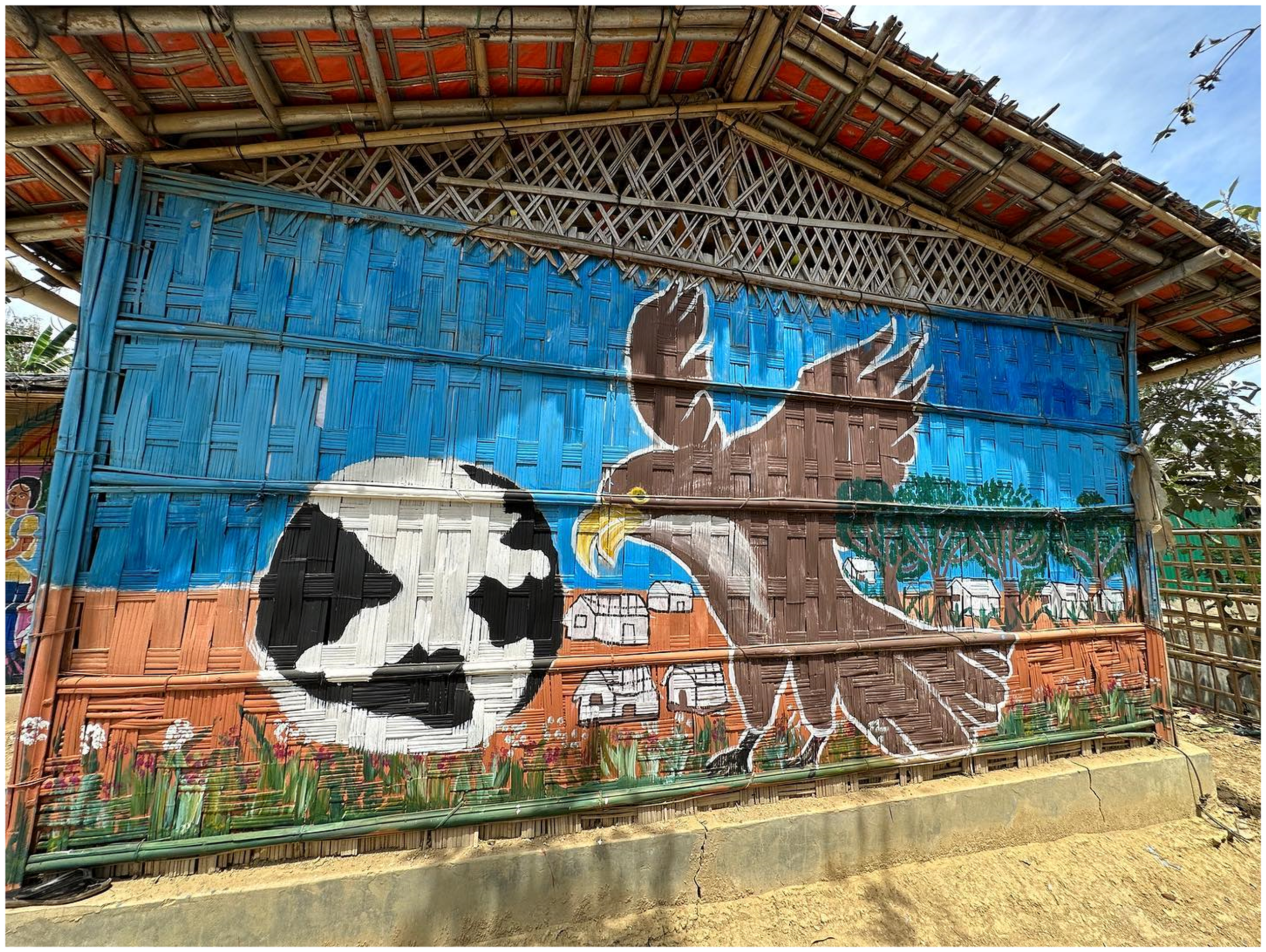
A mural with a metaphor: A hawk brings peace. Source: Artolution.
Embroidery
Embroidery has become a valuable medium for Rohingya to showcase their stories, emotions, and feelings. Rohingya used to apply their embroidery skills to sew and decorate household items like blankets and cushion covers. They use embroidery and tapestry to illustrate different narratives and stories (Figure 7). Through intricate designs and patterns, they convey tales of resilience, hope, and sorrow, transforming simple fabrics into canvases of collective memory. This artistic form of storytelling provides a voice to those often unheard, allowing them to share their experiences with a broader audience.
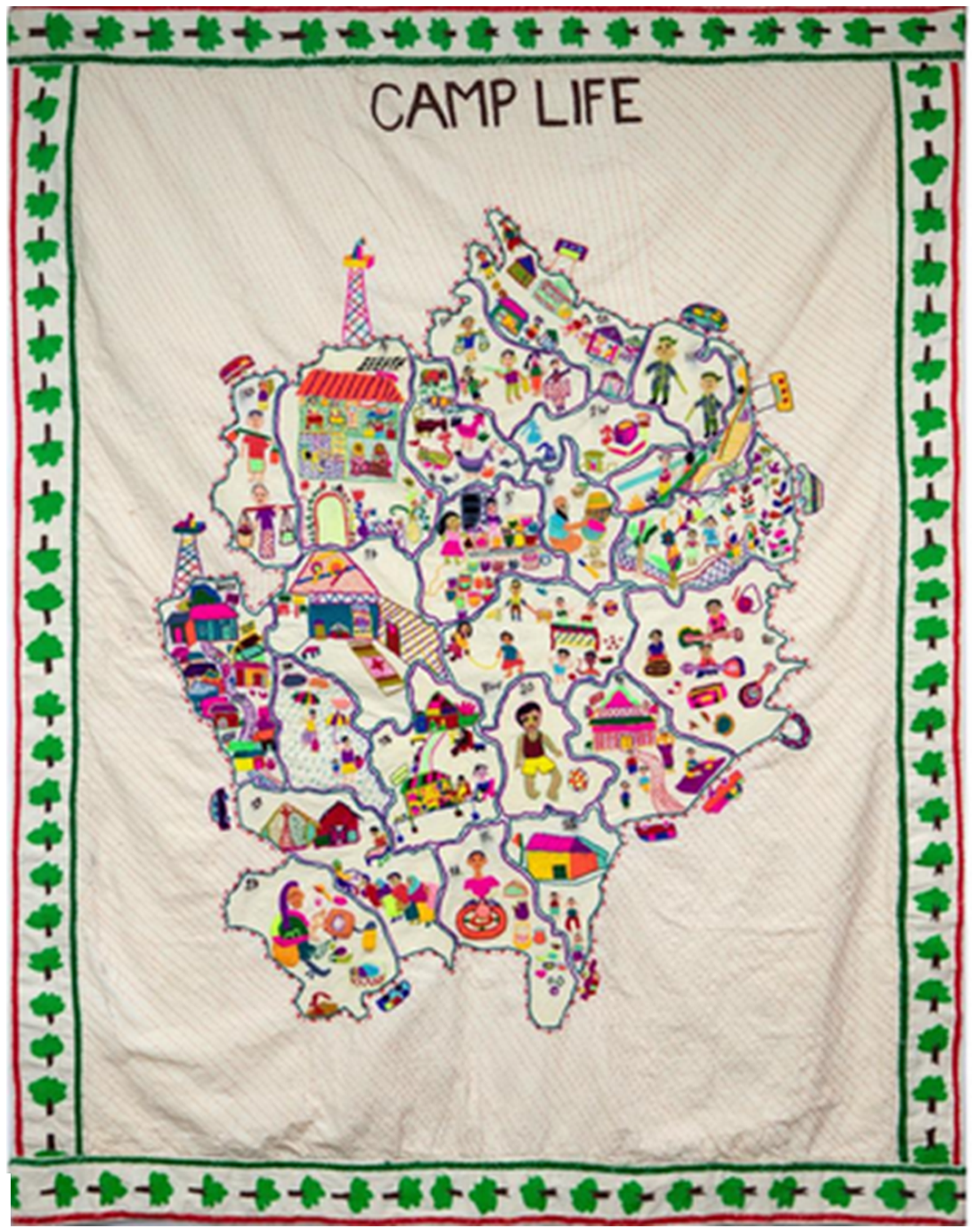
Rohingya embroidery illustrates camp life. Source: Photo by author.
Open space performances / dramas
A researcher opined during an interview that a colonialist approach exists in the Rohingya camp, where “special permission” is required for big public gatherings. This restriction hinders the Rohingya from performing plays and means that the scope of performative arts is exceptionally minimal. Nonetheless, some organizations occasionally arrange open-stage drama with pre-approval. During the RCMC visit, I observed IOM personnel participating in rehearsals for a theatrical performance alongside Rohingya artists at the RCMC in Cox's Bazar.
Themes in Rohingya art
Rohingya commonly employ artistic expressions to memorialize their love and their lives in Myanmar, as well as to express their eagerness to return to their homeland. The analysis of interview responses revealed that the motifs and themes portrayed in Rohingya artwork have undergone a transformation over time, and the situation of the contemporary context mainly influences the themes.
Rohingya artists in Bangladesh typically work on predefined themes with community support. When collaborating with NGOs, the artists receive guidance and direction from the organizations. Nevertheless, Artolution claims to offer creative freedom to artists, allowing them to generate fresh ideas. I engaged in an extensive conversation with a senior official from Artolution, who has been actively involved with the Rohingya artist community through various roles, including facilitator and organizer of training programs for Rohingya artists, since the mass displacement event in 2017. He shared his insights on the thematic evolution of Rohingya refugee art. Before the 2017 exodus, Rohingya art predominantly explored themes of “identity.” However, the influx of refugees in 2017 marked a thematic shift towards “war” and “trauma.” During the COVID-19 pandemic (2020–2021), art was a medium for promoting public health awareness. As the community moved beyond the immediate impacts of war and the pandemic, the focus of their artwork transitioned to “surroundings,” reflecting life within the refugee camps. More recently, after the pandemic, there has been a shift towards articulating visions of a ‘desired future’ through their artistic endeavors. A respondent noted, “A child who once drew weapons now (2022–23) sketches roses.”
While certain themes may be more prominent during particular periods, they are not static. The themes overlap across different time frames. For instance, the lived experience of trauma, which continues to haunt them, means that Rohingya artists still express their experiences of violence through their art, alongside aspirations for a brighter future.
Reception of Rohingya art
The Rohingya people demonstrate a diversity of artistic expressions that potentially cater to different audiences, including the host country government, the Myanmar government, humanitarian organizations, the international community, policy forums, and academics. These entities, organizations, and groups of people receive art according to their interests. For instance, an academic with expertise in mental health might be drawn to artistic works that convey the trauma endured by the Rohingya, while someone with a background in fine arts may focus on the aesthetic qualities of the art.
I have encountered contrasting views regarding the intended audience for art produced by the Rohingya. Artists living in refugee camps emphasize their community as the primary audience for their work. On the other hand, an academic from Myanmar, who is not a Rohingya, offers a different viewpoint: Individuals who have been victims or stakeholders of any form of conflict may not seek out art that depicts the violence they have experienced. Having lived through the daily realities of conflict, they may not want to further immerse themselves in depictions of it through art. People frequently ask me why I do not collect paintings and pictures of art related to the Myanmar conflict, especially since it aligns with my academic interests. My response is, ‘Why should I hang something that mirrors the experiences I face in reality every day’? I do not need it. He added, “If you are using art for certain forms of awareness and causes—these are usually targeted at those who are not part of the game.”
In the refugee camps, most artwork is community-oriented and created collaboratively. The intended audience is frequently determined by the message of the art. For instance, if the artists produce work addressing gender-based violence (GBV), then the primary audience is likely to be NGOs that focus on combating GBV.
In the realm of NGO-supported artworks, the NGOs often determine the audience for the artworks. Sometimes, NGOs choose the intended audience only after completing the artwork. A staff member from an NGO, who coordinates art initiatives in the camps, mentioned that the Rohingya people seek a broader international audience that can offer assistance. He explained: We do not dictate artists to create artwork for a specific audience group; instead, we ask them what message they wish to share with the global community. We also inquire why they believe this message is critical to themselves, their community, and the world at large. Based on the type and nature of the art, we (NGOs) ponder who might be the relevant target audience.
Mode of disseminating Rohingya art
NGOs and IGOs (Intergovernmental Organizations) play a crucial role in amplifying the voice of the Rohingya by providing platforms – website, social media page, online and physical exhibition – for showcasing Rohingya arts. These platforms help to bring Rohingya artistic expressions to the attention of donors and the broader international community.
Collaborating with local NGOs, international NGOs create spaces that support Rohingya artistic practices and facilitate their visibility. For instance, UNFPA (United Nations Population Fund) has “women's space centers” for making handcrafts like Nakshi Kantha – centuries-old traditional colorful embroidery.
New media platforms have also become instrumental in disseminating Rohingya art. Rohingya people widely use social media and messaging platforms such as Twitter, YouTube, Instagram, LinkedIn, Facebook, Imo, and WhatsApp. Different artists employ new media depending on their artistic genre and accessibility.
One Rohingya respondent stated that WhatsApp is particularly popular within the Rohingya community and functions as an internal community-based network. Researchers and NGO staff members may also be included in these WhatsApp groups if they have close ties to the Rohingya. YouTube is another popular platform among the Rohingya for raising awareness on various issues. I spoke with a leader of a Rohingya community organization who produces videos to highlight different concerns and primarily uses YouTube to disseminate them. Many artists use Facebook to spread their artwork (For instance, Rohingyatographer Facebook page). A Rohingya artist expressed dissatisfaction with social media, as social media algorithms play a substantial role in deciding the audience, which is entirely out of his control.
The Rohingya also use Twitter to reach a global audience. Multiple Twitter accounts managed by Rohingya refugees offer daily insights into their lives, fears, boredom and deprivation of refugees’ lives, as well as their joys, aspirations, and wishes to return one day to their homes and homeland. Rohingya living in camps have strategically leveraged Twitter to highlight their concerns and discuss their ideas with humanitarian decision-makers. The Rohingya Camp Voice (formerly the RYA Media Team), for example, is a Twitter account run from the Cox's Bazar camps that photographically documents hazardous areas (flooded walkways, unstable slopes, damaged bridges) and tags the Twitter accounts of various humanitarian response actors. Humanitarian agencies often respond to these posts, acknowledging the concerns and pledging to investigate the conditions (Hero et al., 2022).
Role of NGOs in facilitating art-based Rohingya voices
Art initiatives within the Rohingya community can be self-started or facilitated by NGOs. Even when the Rohingya initiated the art, NGO support was very noticeable. IGOs and INGOs prioritize localization and rely on local and national NGOs to perform different tasks, including promoting art and culture. I could not track how these arts differ based on who initiates those arts. Art typically constitutes just one of the many endeavors undertaken by NGOs. NGOs focused solely on art are rare; however, Artolution and RCMC focus exclusively on Rohingya art and culture. Artolution created a group of artists, including both host and refugee people. These artists not only create art but also provide art education to children in the refugee camps. Artolution assisted in drawing hundreds of murals in the camp area (Bangladesh — Artolution, n.d.).
Most NGOs incorporate at least one small-scale art-based project or component into their programs. One example is the Digital Arts – Refugee Engagement project, carried out in partnership with different groups and organizations. This project investigates how artistic approaches can facilitate learning and provide a means for individuals to express their pain and pleasure, recount their past and envision their future, affirm their identity and ethnicity, and articulate their aspirations and life visions (see more Aljouni et al., 2023). Additionally, NGOs often integrate art into child education and community awareness-raising initiatives.
NGOs in Bangladesh have faced criticism for potentially influencing the decisions of their beneficiaries or clients (Rahman, 2023). In this context, the Refugee artist is the client/beneficiary. During interviews, I inquired about the extent of artistic freedom Rohingya artists enjoy when choosing art themes while working with NGOs. Most Rohingya artists think that they have the freedom to select motifs and forms of artwork. One artist shared that individual artistic practices often begin independently within the refugee camps; NGOs typically offer support only after the artist gains popularity. Additionally, an NGO staff member noted that their organization not only supports established artists but also helps in nurturing aspiring ones.
From my field observations, it appears that Rohingya artists have the opportunity to discuss their ideas with NGO art advisors before initiating any projects. While there might be subtle and implicit influences from NGOs, there is no overt pressure exerted on the artists. Owing to Bangladesh's immediate repatriation policy, humanitarian organizations, and the Rohingya population must adhere to numerous restrictive measures imposed by the host government within a constrained humanitarian space (Khan, 2023). This governmental oversight necessitates that all development partners working with the Rohingya tread carefully to ensure their activities do not conflict with government policies. In August 2024, a new interim government assumed power in Bangladesh. It remains to be seen whether this change will lead to any policy shifts concerning Rohingya refugees in the country.
Conclusion
My findings reveal that Rohingya people engage in diverse art forms such as storytelling, poetry, music, filmmaking, graffiti, handcraft, photography, and artifacts. Among the diverse artistic practices, poetry, music, and photography have become particularly significant mediums for self-expression. Theatre and other performative art forms are not prevalent because they are not feasible due to various restrictions in the camp.
Overall, Rohingya artists exhibit certain common art forms prevalent in other refugee contexts. For instance, the Rohingya use murals to portray issues like memories and raise COVID-19 awareness (Brown, 2021). Similarly, “public murals have a long history of communicating dissent against social, political, and economic structures” (Shank and Schirch, 2008: 221). The findings of this paper may be helpful for other refugee contexts. Nevertheless, the artistic expressions of the Rohingya community exhibit distinct characteristics that set them apart from other contexts, primarily due to their unique cultural and religious norms.
However, the sustainability of Rohingya artistic practices is often jeopardized by a lack of policy continuity. Changes in NGO or government personnel can lead to shifts in support for the arts, and the intangible nature of artistic outcomes makes it challenging to secure consistent donor funding and support. The artistic expression within the refugee camps is predominantly managed by a limited number of artists who are often affiliated with some non-governmental organizations. My concern is whether such affiliations may inadvertently lead to the influence of NGOs on the selection of themes or topics in the art, potentially shaping the narrative to align with the interests of these organizations as NGOs working in Bangladesh have been criticized for manipulating beneficiary choice (Rahman, 2023). The assuring thing is that most respondents’ responses suggest that the artists can freely choose their subject. However, the residents of the Rohingya camps face significant barriers in accessing the necessary tools and materials for art production, consequently, they rely on the support of NGOs for both the creation and dissemination of their art. The importance of this collaboration is undeniable.
Despite numerous barriers hindering the full expression and appreciation of artistic endeavors among Rohingya refugees, art has emerged as a vital medium for the Rohingya to express their emotions, preserve their cultural heritage, and share their narratives with the global audience. Art not only serves as a therapeutic and liberating tool but also as a critical instrument for social justice and change, advocating for the rights and recognition of marginalized communities. Art helps the Rohingya people overcome language barriers with the international community. In many circumstances, artistic expression is not an alternative way; it is the only way or primary way to showcase the life and experience of displaced people.
Footnotes
Funding
The author received no financial support for the research, authorship, and/or publication of this article.
