




Abstract
In recent years, media organizations globally have increasingly benefited from financial support from digital platforms. In 2018, Google launched the Google News Initiative (GNI) Innovation Challenge aimed at bolstering journalism by encouraging innovation in media organizations. This study, conducted through 36 in-depth interviews with GNI beneficiaries in Africa, Latin America, and the Middle East, reveals that despite its narrative of enhancing technological innovation for the media's future, this scheme inadvertently fosters dependence and extends the philanthrocapitalism concept to the media industry on a global scale. Employing a theory-building approach, our research underscores the emergence of a new form of ‘philanthrocapitalism’ that prompts critical questions about the dependency of media organizations on big tech and the motives of these tech giants in their evolving relationship with such institutions. We also demonstrate that the GNI Innovative Challenge, while ostensibly promoting sustainable business models through technological innovation, poses challenges for organizations striving to sustain and develop these projects. The proposed path to sustainability by the GNI is found to be indirect and difficult for organizations to navigate, hindering their adoption of new technologies. Additionally, the study highlights the creation of a dependency syndrome among news organizations, driven by the perception that embracing GNI initiatives is crucial for survival in the digital age. Ultimately, the research contributes valuable insights to the understanding of these issues, aiming to raise awareness among relevant stakeholders and conceptualize philanthrocapitalism through a new lens.
Keywords
Introduction
Big tech companies, including Amazon, Apple, Google, Microsoft, and Meta, have gained significant power in the information and communication ecosystem, influencing market dynamics and accumulating vast amounts of data (BIA, 2021). While this dominance has favored these companies, it has adversely affected journalism, particularly because Facebook and Google could rapidly and inexpensively distribute journalistic content, a role that was historically reserved for traditional media outlets. This situation capitalized on market shortcomings and has left a lasting impact on all stages of the journalistic value chain (Nielsen and Ganter, 2022).
In response to growing concerns, big tech companies have sought to improve their relationships with the news media (Rashidian et al., 2019). Three main reasons drive this change: the realization by Silicon Valley firms that they are undermining content producers essential for their businesses; increased regulatory scrutiny worldwide; and pushback from institutional press accusing tech companies of disrupting their business models (Bell, 2019; Smith, 2020). Global regulators, such as the Australian competition authority, have demanded that platforms like Facebook and Google compensate media outlets for using their content (Burrell, 2020).
In an attempt to mitigate criticism and avoid stringent regulations, some tech giants have introduced initiatives to collaborate with the news industry. Google, for instance, launched the Google News Initiative (GNI) program in 2018. The GNI aims to form partnerships with specific news organizations, offering training and financial support to foster high-quality journalism in the digital age. It also focuses on introducing technological advancements and innovation into newsroom operations (Google, 2022). The launch of the GNI program coincided with what experts have labeled an ‘institutional crisis’ (Reese, 2020: iv), which has taken various forms, including the challenging transition driven by digitalization (Paulussen, 2016), newsroom downsizing, staff reductions (Skowronski, 2009), juniorization (Munoriyarwa, 2018), and, in some cases, the complete disappearance of news outlets (Wasserman 2017). Hence, the increasing reliance of audiences on online news sources has profoundly impacted the business model of news organizations, leaving them with an uncertain path to sustainability (Sirkkunen and Cook, 2012). Smaller nonprofit digital news outlets have become highly dependent on ‘donations, both from audience members and philanthropists’ (Konieczna, 2020: 136) to fund their operations. In the Global South, philanthropic foundations particularly have taken on a key role in funding the news media sector, becoming its primary support source (Requejo-Alemán and Lugo-Ocando, 2014).
The GNI Innovation Challenge builds upon the Digital News Innovation (DNI) Fund, which operated from 2015 to 2018, supporting 662 projects exclusively in Europe. Since 2018, the GNI has expanded to encompass more than a hundred media organizations globally under the ‘Innovation Challenge’ scheme, with funding exceeding US$300 million from Google (Google, 2022). Reports have indicated that funding from big tech companies through initiatives like the GNI has become a significant source of financial support for media. In absolute figures, this funding has surpassed philanthropic contributions over the last decade (Rashidian et al., 2019). This initiative reflects a broader trend of big tech companies acknowledging their impact on the media industry and taking steps to address concerns through collaborative efforts and support programs. However, the effectiveness of such initiatives in addressing the broader challenges and power imbalances within the information and communication ecosystem remains a subject of ongoing debate.
Our research engages in a theory-building process to examine how the GNI serves as a catalyst for innovation in newsrooms and simultaneously fosters new manifestations of philanthrocapitalism. We conducted a total of thirty-six (n = 36) in-depth interviews with key figures from organizations that were recipients of GNI Innovation Challenge grants in Africa, Latin America, and the Middle East. This study has three primary objectives. First, it critically examines the relationship between Google and its role in promoting technological innovation within journalism, specifically for ‘sustainable’ business models. Second, we evaluate the degree of dependence imposed by the GNI on the actual feasibility of the sustainability path it proposes. This involves assessing the extent to which news organizations rely on the GNI for support, both financially and in terms of technological resources. Lastly, we investigate the potential development of a dependency syndrome resulting from these projects. Thus, our study addresses three specific research questions:
We move beyond simple criticism of the GNI; instead, we conduct a comprehensive analysis of the dependence framework that elucidates the role of platforms within the technological innovation ecosystem of media organizations. This analysis offers theoretical perspectives that can serve as a basis for future research, aiming to understand philanthropic projects as integral components of philanthrocapitalism. Our study significantly contributes to existing scholarship on digital platforms and their impact on shaping social and cultural dynamics, highlighting the development of power imbalances between those who form the foundation for data flows and technological operations and those who depend on these entities.
Theoretical framework
Platformization, society, the global economy: Perpetuating digital coloniality
Platformization is an ongoing process primarily spread by the five big tech companies: Google, Apple, Facebook, Amazon, and Microsoft (Poell, Nieborg, van Dijck, 2019), although this has changed over these years. This phenomenon underscores how major tech corporations have become integral components of contemporary society and the global economy. With the emergence of more platforms, a diverse array of actors now influences this process, shaping various aspects of society. These platforms have established extensive digital ecosystems, facilitating connections between individuals, products, and services in unprecedented ways. The impact of platforms on society is notably evident in four key domains: news, urban transport, health, and education (Davis, 2020; Nieborg and Poell, 2018). These companies have redefined modes of cultural product production, distribution, and monetization (Nieborg and Poell, 2018).
Essentially, platforms act as intermediaries connecting users to other users, businesses, or resources, enabling them to rapidly expand and assert dominance over entire industries. Examples include Google's dominance in the online search market, Amazon's significant share of online retail sales, and Meta's control over major social media and messaging platforms like Facebook, Instagram, and WhatsApp (Cooper, 2019).
Other tech companies have reshaped the global economy by introducing novel business models and challenging traditional industries. For instance, the emergence of ride-hailing and delivery platforms like Uber has disrupted the taxi and food industry, while Airbnb has transformed the hospitality sector. These platforms have opened up new opportunities for employment and income generation, enabling individuals to earn money through gig work and freelancing. Nonetheless, they have also generated apprehensions regarding job security, labor rights, and income inequality (Shaw et al., 2022; Wood et al., 2019).
Platforms have profoundly influenced society by enabling new modes of communication and collaboration, fostering connections among individuals irrespective of geographical and cultural boundaries. Their essential feature lies in their capacity to optimize content, enhance user engagement and retention, and support investments in paid promotion (van Dijck et al., 2018). Facebook and Twitter, for instance, have provided people with a powerful voice and a platform to express their opinions, connect with others, and mobilize for social and political change during particular historical moments, such as the Arab Spring (Schapals and Harb, 2022) and the June Journeys in Brazil (Ruediger et al., 2014). However, the rise of these platforms has also led to concerns regarding the proliferation of misinformation and disinformation, hate speech, cyberbullying, and the erosion of privacy (Serrano-Puche, 2021).
In the news industry, platforms have evolved into influential gatekeepers of information and commerce, wielding the capacity to influence the movement of data and the dissemination of products and services (Bruns, 2005). This has led to apprehensions regarding the concentration of power and the likelihood of anti-competitive conduct. For example, Google and Meta have been accused of lobbying against regulations that could restrict their influence (Myllylahti, 2018). As a result, governments and regulators across the globe have initiated investigations into platform activities and are exploring ways to enact regulations. Notably, the European Union has implemented stringent data privacy regulations and passed two significant laws: the Digital Services Act (DSA) and the Digital Markets Act (DMA) to enhance transparency, accountability, and user safety and to establish specific regulations for large online platforms (Laux et al., 2021). In the United States, antitrust investigations have been launched into the practices of big tech companies. Similarly, Australia and Canada have introduced laws mandating that these firms compensate media organizations for their news content (Bossio et al., 2022). These regulatory initiatives face resistance from the platforms themselves, arguing that such measures could hinder innovation and harm the news industry (de-Lima-Santos et al., 2023).
This concept leads us to the idea of digital coloniality (Kwet, 2019; van den Scott, 2017), which revolves around the location of digital power and its distribution (Oyedemi, 2021). This concept is rooted in the idea that the United States is reestablishing a novel form of colonialism in the Global South by exerting dominance through digital technology. In essence, the American elite has convinced society that it should align with their influential interpretations of the digital realm, thereby establishing the groundwork for their technological hegemony (Kwet, 2019).
Historically, traditional colonialism found support in legacy media mediums like telegraphy, radio, newspapers, and television, all of which played pivotal roles in upholding cultural dominance. However, in the era of digital colonialism, it is the big tech companies that wield this power. These tech giants exhibit an ‘imperial appetite’ that empowers them to establish the rules of the game, granting them direct influence over the political, economic, and cultural domains of life. Thus, these companies also exert control over communication spaces. Notably, digital colonialism is a structural form of control deeply ingrained in the centralized ownership and regulation of digital ecosystem components, including software, hardware, and network connectivity (Kwet, 2019). The dominance of these companies and their technological infrastructure, such as Facebook and Google, is a significant facet of this colonialism. This control over these infrastructures enables big tech companies to extend their influence on various regions (Oyedemi, 2021).
In our study, we take this argument a step further by pointing out that beyond controlling networking connectivity, software, and hardware in the digital age, big tech companies govern the context within which cultural and media production occurs. This becomes apparent in ‘global’ initiatives like the GNI, which purportedly aims to support the sustainability of newsrooms through innovation.
Philanthrocapitalism in the digital media era: Redefining business models
In the digital age, media companies are actively embracing digital transformation, placing a strong emphasis on refining their news offerings with innovative tools and content formats to ensure their sustainability (Sirkkunen and Cook, 2012). Thus, platformization is increasingly becoming a driving factor in the organization and structuring of our public and private lives (Davis, 2020; Nieborg, Poell, and van Dijck, 2022; van Dijck et al., 2018). These platforms have globalized our cultural production ecosystems, including news production. For instance, many news organizations are experimenting with podcasts, newsletters, and social media content to deliver novel and engaging formats of news stories. News products also encompass the technology and tools used by news organizations to create and distribute their content, such as content management systems (CMS), mobile apps, data analytics platforms, newsletters, podcasts, games, immersive storytelling experiences, artificial intelligence applications, and tools designed to support various functions of journalism (de-Lima-Santos et al., 2021; Royal, 2023). Nieborg and Poell, 2018) argue that platforms now pioneer new modes of (cultural) production, distribution, and monetization. In Africa, for instance, datafied platforms have engendered new forms of (journalism) ontologies (Mutsvairo et al., 2021). Therefore, it reconceptualizes what journalism practice is and its role in society.
Nonetheless, digital transformation also presents challenges for news outlets. One significant obstacle is the limited funding available for these initiatives. This financial constraint can hinder media companies, particularly small and mid-sized ones, from obtaining the necessary resources to invest in new technologies and develop the required capabilities (Mesquita and de-Lima-Santos, 2023).
Public funding for the media remains a challenge in the context of the Global South, as it is typically prioritized for pressing needs such as infrastructure, defense, health, education, and other essential public services (Pickard, 2021). To prevent their financial collapse, journalism institutions have increasingly turned to philanthropy, among other options, to fill the monetary gap left by disappearing advertisements and the lack of public funding. Philanthropy has played a crucial role in sustaining and supporting the sector in the face of significant challenges, especially independent and smaller news outlets in Latin American and African news ecosystems (Creech and Parks, 2021; Lugo-Ocando, 2020).
Philanthropy has also led to the emergence of new non-profit media organizations capable of producing high-quality journalism without the pressure to generate profits (Requejo-Alemán and Lugo-Ocando, 2014). Similarly, founders have supported training programs and other initiatives aimed at bolstering the development of a robust, independent media sector (de-Lima-Santos and Mesquita, 2021). Conversely, philanthropy has been accused of perpetuating a culture of donor dependence (Kaye and Quinn, 2010).
To prevent their financial collapse, journalism institutions have increasingly turned to philanthropy among other options to fill the monetary gap left by disappearing advertisements and lack of public funding. Philanthropy has played a crucial role in sustaining and supporting the sector in the face of significant challenges, especially independent and smaller news outlets from Latin American and African news ecosystems (Creech and Parks, 2021; Lugo-Ocando, 2020). On one side, philanthropism has led to the emergence of new non-profit media organizations capable of producing high-quality journalism without the pressure to generate profits (Requejo-Alemán and Lugo-Ocando, 2014). Similarly, founders have supported training programs and other initiatives aimed at bolstering the development of a robust, independent media sector (de-Lima-Santos and Mesquita, 2021). On the other side, philanthropy has been accused of perpetuating a culture of donors’ dependence (Kaye and Quinn, 2010).
The principles of philanthrocapitalism, particularly in health and education, have sparked extensive debates in recent decades (Amzat et al., 2023; Canfield, 2022). Some assert that nonprofits in the health sector adopt market-oriented strategies to tackle challenges (Youde, 2013). Scholars and activists have drawn attention to the ideological and political complexities associated with these approaches, suggesting that they may perpetuate capitalist exploitation (Canfield, 2022). Others have raised concerns about the concentration of power, exemplified by the substantial influence exerted by foundations like Bill & Melinda Gates’ (Garett, 2012; McCoy et al., 2009). A discernible shift toward ‘philanthrocapitalism’ is becoming evident, characterized by an emphasis on efficiency and market-driven strategies instead of the traditional focus on poverty alleviation and altruistic foreign aid (Morvaridi, 2012).
The term ‘philanthrocapitalism’ dates to 2006 and is generally understood in two primary ways (Ramdas, 2011). First, it is seen as a philanthropic approach inspired by business practices. Second, it embodies the belief that capitalism inherently serves the greater public good. The rise of philanthrocapitalism is a response to the evolving and somewhat uneasy relationship between markets and democracy. Philanthrocapitalism is perceived as a fusion of financial resources, market principles, and effective management, with a strong emphasis on measuring success metrics. Bishop and Green (2015) contend that contemporary philanthropists are increasingly seeking active involvement, with a focus on scaling innovative solutions through personal commitment. These donors are usually described as ‘social investors’ (Bishop and Green, 2008: 6) because their aim is to achieve returns from their charitable actions, believing this approach is more efficient in attracting capital for social causes.
The growing role of private corporations in global philanthropy has added complexity to the funding landscape, with concerns about the undue influence of wealthy donors on public discourse and policymaking (Obadare and Krawczyk, 2022). While philanthropists like Bill and Melinda Gates, George Soros, Eli Broad, and the Koch brothers have been recognized for their large-scale initiatives (Bishop and Green, 2008), critiques highlight potential self-serving motives and the lack of accountability and transparency (Languille, 2017). As philanthrocapitalism is seen as a business-like strategy, potentially driven by self-interest, some influential donors view philanthropy as a means to maintain privilege (McGoey, 2015: 19). These donors rely on the assumption that personal interests align with the collective good, a notion with historical roots that have been frequently misinterpreted (Thompson, 2018).
In recent years, philanthrocapitalism has made its way into the media landscape, especially in the Global South. Large philanthropic and corporate organizations have begun investing millions of dollars in supporting various forms of media (Moyo, 2021). Notably, investigative journalism and health reporting have been some of the most well-funded news beats. For instance, successful investigative and health news outlets like Amabhungane and Bhekisisa in South Africa have received philanthropic funding (Wafula and Njonjo, 2019). The motivation behind supporting journalism lies in the long-term goal of promoting sustainable journalism, particularly when journalism institutions are facing crises and struggling to maintain themselves. In this context, philanthropy becomes a quick and readily available means of supporting the survival of journalistic entities (Ntibinyane, 2018).
However, philanthropic organizations often lack a deep understanding of the specific issues affecting various media ecosystems (Wafula and Njonjo, 2019). Founders can also interfere with journalistic content, influence editorial processes, and advocate for specific issues that may not align with the community's priority. Inevitably, journalism may become constrained (Wafula and Njonjo, 2019). Ntibinyane (2018) further notes that, despite its potential drawbacks, philanthropic journalism plays a crucial role in reducing the vulnerability of independent media among these traditional journalism entities and supporting journalistic content that holds those in power accountable.
Existing research has only raised concerns about philanthrocapitalism in the media (Wright et al., 2019). Nevertheless, platforms have also reshaped journalism relationships (Davis, 2020; Mutsvairo et al., 2021). This raises fundamental questions about how platforms contribute to the public good, encompassing aspects like democratic control, accountability, accessibility of cultural products, and fairness (van Dijck et al., 2020).
Methods
Since its establishment in 2018, the GNI Innovation Challenge program has supported over 200 projects across 47 countries (Mesquita et al., 2023). To comprehensively understand how the GNI drives innovation in newsrooms while also promoting new forms of philanthrocapitalism, we employed a multi-method qualitative research approach in this study. Initially, as supplementary data, we utilized publicly available project descriptions on the Google website. Between 2019 and 2021, 94 grants were given in Africa, Latin America, and the Middle East. However, after the publication of some studies about GNI (de-Lima-Santos et al., 2023; Mesquita et al., 2023), the webpage is no longer accessible.
Moreover, we conducted in-depth, semi-structured interviews with thirty-six (n = 36) leaders from organizations that received support from this program between 2019 and 2021 in the covered region. These interviews took place using various platforms such as Zoom, WhatsApp, or Google Meet between January 2020 and May 2023. On average, our interviews lasted about 55 min. Participants provided formal consent to be interviewed during the recording, and confidentiality was maintained. Thus, Table 1 presents information about the interviewed beneficiaries, their countries of origin, and the type of news organizations they belong to, without disclosing any further details that could identify them.
The sample of GNI recipients interviewed for this paper.
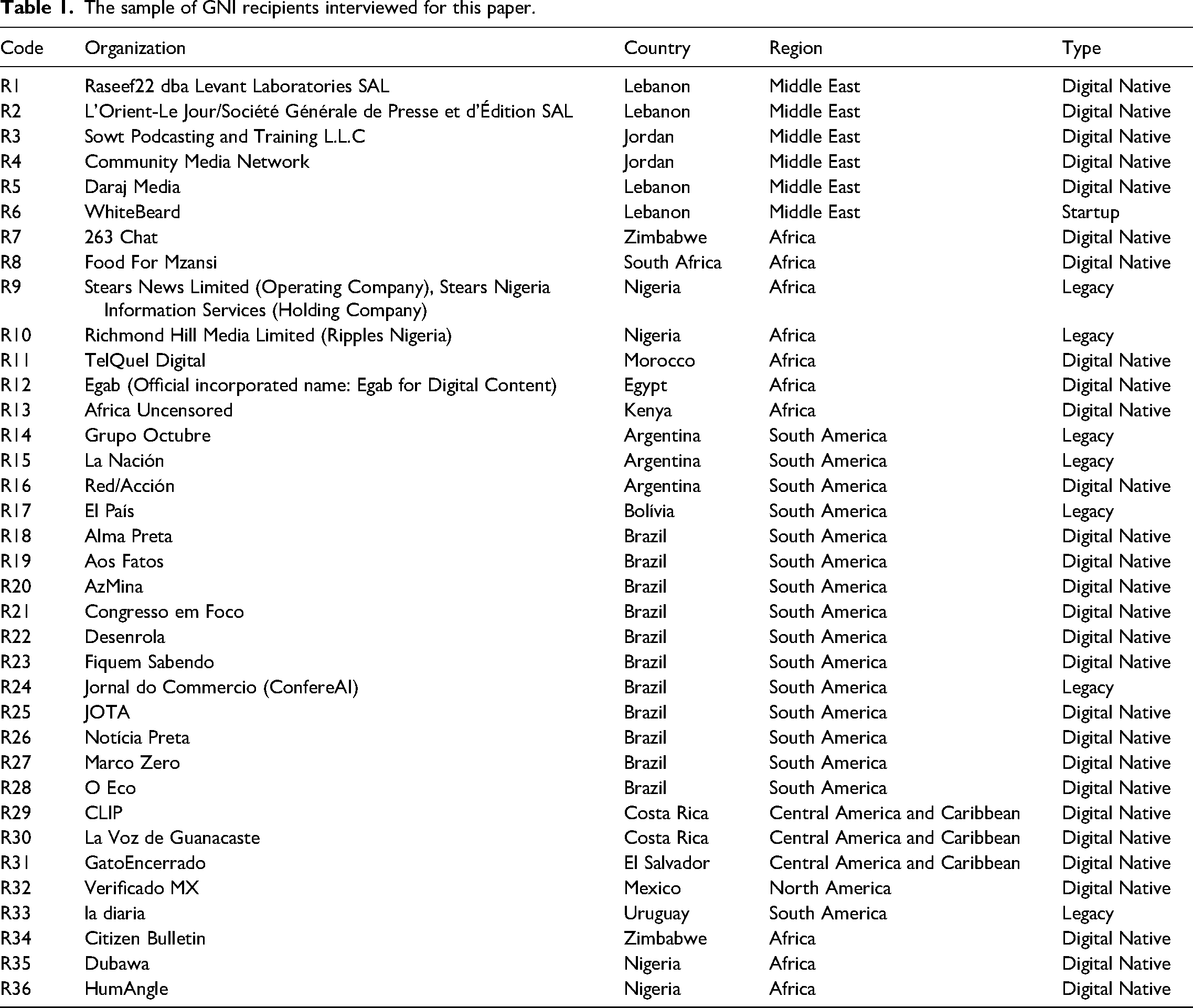
Our focus was on achieving geographical representation of GNI recipients across these regions. We made efforts to interview all recipients of the GNI by contacting key figures in these organizations on different social media channels and their websites. However, some beneficiaries were unavailable, and others faced challenges such as language barriers. For instance, a French-speaking grantee in Central Africa expressed discomfort with English and subsequently withdrew from the interview. Additionally, some informed us that they were afraid to be interviewed because of the non-disclosure agreements (NDAs) they had signed with Google when they received the grant. While we did not extrapolate the total number of GNI grantees, our data provides a comprehensive representation of them, covering specific minor regions within this area. Importantly, some countries have more grantees than others, such as Brazil, Argentina, and Lebanon, which explains a higher percentage of respondents.
The objective in conducting these interviews was to gather insights into the nature of innovation supported by GNI, the level of independence these projects instill within newsrooms, the extent to which sustainability is promoted, and the ultimate news business models adopted by these beneficiaries. Through this exploration, we aimed to illuminate the level of dependence cultivated by the GNI Innovation Challenge and the power dynamics that give rise to the new form of philanthropy examined in this study. Additionally, we examined the business model that aligns GNI's objectives with these organizations. While our interview guide focused on these topics, we allowed respondents the flexibility to discuss other relevant areas they deemed important.
For data analysis, we relied on thematic analysis (Braun and Clarke, 2006). Adopting an inductive thematic approach, we relied on generating insights/findings from the data as they emerged, without consciously attempting to fit them in pre-existing coding frames. We also used NVivo, qualitative research software, to assist in the analysis, especially considering the substantial volume of data we were dealing with.
We also relied on the theory-building method. This research approach is often used in sociology, psychology, and management to develop theories about human behavior, organizational dynamics, and social phenomena (Eisenhardt and Graebner, 2007). Theory-building methods help develop new theories or expand upon existing ones through systematic data collection and analysis. It typically involves conducting empirical research to generate data, which is then analyzed using qualitative or quantitative methods to identify patterns and relationships. These patterns and relationships are then used to develop or refine theories about the studied topic.
By adopting a theory-building approach, we systematically construct a framework to analyze and interpret the data gathered from the interviews. This method allows them to uncover patterns, relationships, and overarching themes within the context of the GNI Innovation Challenge. The study emphasizes the emergence of a new form of philanthrocapitalism, shedding light on the intricate new dynamics between technology giants and media institutions on a global scale (Plank, 2017). Our goal with theory-building is to create a framework that explains the phenomena of platforms in the technological innovation ecosystem of media companies, facilitating further research and understanding.
Findings
News and technology: Not an easy cultural fit
Three-quarters of respondents expressed difficulties in implementing technological innovation in the media sector. R5, R23, R24, R30, and R35 reported that a significant portion of their one-year project was dedicated to identifying potential service providers or technologists who could assist them in implementing these initiatives. For instance, R20 from AzMina stressed the importance of a grant for their project, which involved creating a bot to assess the decisions of Senators and Deputies and rank them. R20 emphasized that the project was viable within their newsrooms primarily because of its ‘journalistic element,’ with the development of a weekly newsletter featuring reports as a central aspect of the initiative. R20 further explained that without the grant, such a project would have been unattainable, especially considering its cost due to the technology involved. AzMina ‘lacked an in-house team dedicated to this kind of work, and we didn’t have the financial resources to hire the necessary professionals for the project’ (R20).
The challenge of implementing projects also extends to other smaller organizations like R23. A common hurdle they face is the absence of an in-house technology team. R23 shared their aspiration to have technologists working with them, but she acknowledged that ‘it's a costly endeavor, particularly for a small newsroom.’ R23 emphasized the necessity of the grant ‘to establish this team, especially during the initial phases of their project.’ For example, R20 had to outsource certain components or enlist freelancers from outside their organization, as these were more financially feasible approaches for AzMina.
Respondents shared similar sentiments regarding the complex relationship between news and technology. According to R10, a substantial portion of the GNI team comprised full-time employees of the parent company who had prior experience in online reporting and investigations. This dynamic led to a shortage of technological expertise within the organization. R10 explained, ‘[…] even though the EcoNai+ platform is a dedicated platform and somewhat separate, we receive considerable technical support and journalistic assistance. Additionally, we have sought external support, particularly for the technological aspects of our work.’ Similarly, R6, a startup specializing in developing innovative technological projects for journalism, not only obtained their own grant but also executed the projects for R1 and R2.
In this specific case, one-third of respondents mentioned that they had difficulty working with different stakeholders to deploy their projects. The collaborative project Reload, designed for young audiences, involves various practitioners working together to adapt journalistic content for youth. Recognizing the distinct attention span of young individuals, where even five minutes can feel like the length of a full movie, presents a particular challenge. Converting extensive reports spanning 20-30,000 words into concise 15-second formats necessitates extensive discussions. This highlights the importance of ‘learning and adjusting to modern journalism practices’ (R28), showing the need for collaboration with experts from various fields beyond the news industry to drive innovation and connect effectively with other audiences.
One interviewee described the challenge:
We are a group of seasoned journalists creating content for our generation while trying to reach a younger audience. To overcome this, it was crucial to collaborate with individuals from the advertising and marketing sector, involve social media experts, and work with young professionals who grasp social media and their languages. (R28)
The perception of the Reload project varies within the group. One member expressed a degree of disappointment, stating, Reload is a project that I may have my vision of, which may not necessarily reflect the thinking of the majority, but I was a little disappointed with the project. I think the project is very good, the videos are really interesting, the language used on them is extremely cool, and the format developed is also very attractive. I think the reach is very limited, and for the investment that was made, the result is quite modest, but it's a personal opinion of mine. Probably most of the organizations involved might not think that way. (R21)
The integration of technological innovations into journalistic practices has always been challenging, even though practitioners recognize the necessity of adapting to a world where technology plays a significant role (Paulussen, 2016). The challenges are compounded by the funding support from philanthrocapitalists, whose approach to driving social change often mirrors business strategies. For instance, a one-year project might not provide sufficient time for these organizations to fully learn and refine their strategies. This support is often enabled by cutting-edge technology, effectively positioning newsrooms as experimental grounds for extensive and transformative innovations (Gade, 2004). For this reason, journalists can often perceive themselves as victims rather than active participants in these transformative changes.
Limited innovation opportunities, but a unique chance
The GNI Innovation Challenge is viewed by all respondents as a valuable opportunity for media organizations to secure funding for their innovative technological projects. According to R24, their project would not have been possible without this grant. However, the program comes with limitations that can affect the long-term success of the projects it supports. A major issue is the funding restrictions, with Google contributing only a percentage of the total budget. While some respondents mentioned that Google funded 70%, others said it was 80% or 60%. It is unclear whether this variation is due to the respondents’ knowledge or if it depends on the specific project and organization. For R24's organization, Google covered 70%, and their organization had to finance the remaining 30%. There are also constraints on how the funding can be used: only 20% can be allocated to marketing.
In line with the philanthrocapitalist approach, R24 segmented the project into sprints, one in the middle and one at the end. ‘An external auditing company monitored the expenses and verified that the organization was covering the remaining 30% of the budget’ (R24). Grantees were only required to submit reports at two specific stages of the project, which they found to be less complex compared to dealing with traditional philanthropic donors (R20). While dealing with a third-party company, interviewees noted that the process generally proceeded smoothly.
One of the limitations raised by the respondents is the focus on short-term outcomes, with projects required to demonstrate measurable results within a year. This often results in the delivery of early versions of applications, many of which are not made available to the general public, like R4's project. Thus, many projects become Minimum Viable Products (MVPs) rather than fully-fledged solutions. This limitation also led to projects narrowing their scope, with limited impact beyond the initial development phase. While MVPs can be valuable for testing ideas, they may lack long-term sustainability and scalability to drive meaningful and sustainable change in the media industry.
Additionally, the lack of transparency regarding the recipients of funding in the program raises concerns about whether it prioritizes projects that use Google's products and services. This lack of diversity in approaches and tools can limit the potential for innovation and creativity among grantees. This situation can be seen as a form of digital colonialism, in which organizations in the Global South become dependent on infrastructures and systems provided by tech companies (Kwet, ).
Philanthrocapitalism often operates by concealing or downplaying contemporary harms committed by philanthropic businesses (McGoey et al.,2018). Such organizations may attempt to mask their omissions, offenses, and misdeeds while promoting regulatory blindness (Tombs, 2017). In the case of the GNI, it aligns closely with Google's philanthrocapitalistic intentions. One significant aspect is Google's gradual increase in the number of GNI beneficiaries, particularly in regions where Google's impact on the news ecosystem faces scrutiny. For example, in Europe, Google became more involved with the GNI as discussions of regulating the tech industry gained momentum within the European Union (Cameron, 2023). Consequently, certain respondents perceive Google's dual objective with GNI as a preemptive strategy to address forthcoming regulations and demonstrate to regulators that big tech companies and media organizations could coexist and cooperate successfully.
By emphasizing innovation as a critical element, Google aimed to communicate that media could flourish alongside tech giants if they adjusted their practices to embrace an innovative culture. This approach is consistent with a common characteristic of philanthrocapitalism, which operates through acts of abnegation of responsibilities for the media institutional crisis (Reese, 2021). By presenting itself as a charitable entity, Google seeks to deflect criticism and mitigate potential regulatory scrutiny, all while maintaining a corporate facade of benevolence.
Continuity: An uncertain future
Two-thirds of respondents mentioned that it is less expensive to maintain a technological project after its deployment. However, they still require funds to sustain these projects over the long term. For example, one respondent stated,
there are still costs for servers, writing the reports, and creating the newsletter. We plan to launch a crowdfunding campaign to keep the project running for at least one more semester, while looking for other fundraising opportunities. We have a dedicated team within AzMina, and they are seeking for foundations’ funding, which is usually what sustains our organization. (R20)
Similarly, R4 is also actively seeking fundraising opportunities to continue sustaining and developing the GNI project. This funding dynamic is particularly common among small and medium-sized organizations, which heavily rely on philanthropic funding to sustain their newsrooms (Lugo-Ocando, 2020). In contrast, larger and mainstream organizations are more likely to continue developing the project within their existing structures, redistributing the responsibilities among their staff without expanding their workforce like R14 and R15.
Despite the optimistic views expressed by some respondents, the challenge of maintaining a project after the initial deployment appears to be more daunting than originally anticipated, especially because funding is not typically focused on technological innovations in news organizations. ‘I thought this whole management was really the most laborious, but today I think the main challenge is to see how we are going to maintain the project and do this search for fundraising’ (R20).
Half of respondents emphasized that proper planning from the outset is crucial for ensuring continuity. For example, R9's approach is to ensure that the product becomes self-sustaining after the funding period expires because it aligns with their internal strategic agenda: When the grant finishes, the base and foundation we have established are sufficient for us to pick it up from there. If sustainability wasn’t a major consideration from the beginning, things could have been different. We might face some challenges during that time, but because the Google team encouraged us to prioritize sustainability from the outset. It will be a matter of returning to our normal day-to-day operations and aligning our expenses accordingly. We have had enough time to plan for this, so I expect minimal disruption. (R9)
Google positions itself as a company that serves society through innovation, a perspective shared by philanthrocapitalists who see philanthropy as expandable business strategies (Bishop and Green, 2015). What is notable about the GNI is its alignment with Google's own business approach. It funds innovation in various ways, reflecting a specific journalistic business model. In Kenya, for example, R13 mentioned GNI funded a health news software. Similarly, in Zimbabwe, R34 and R7 noted Google's support for software development in newsrooms. In Nigeria, Google funded R10 to develop a tech platform to produce geojournalism and R35 to develop AI solutions for fact-checking initiatives. These technological innovation-focused projects tend to align with Google's business model. However, innovation is just one part of a more comprehensive picture.
Furthermore, we observe the emergence of a new culture of ‘philanthrocapitalism’ within these organizations. Contrary to its stated goal of promoting newsroom innovation, this culture fosters a climate of dependency on these big tech companies. This philanthropic approach promotes a market-based, for-profit kind of philanthrocapitalism as the solution to newsroom challenges. Philanthrocapitalism posits that capitalist enterprises are inherently altruistic in their modes and suggests that founders’ resources and values can legitimately be channeled toward beneficiaries (Ramdas, 2011). Nonetheless, the effectiveness of this approach within the media, which also plays a vital role in serving the public interest, is still an open question. These dynamics have prompted respondents to raise questions about the future of media in Africa and Latin America.
Discussions and conclusions
In this research, we identify key transformations in a philanthrocapitalism-driven news making context brought about by platformization. Our respondents view the GNI grant as a distinctive opportunity to survive in the digital age. However, many of these projects face challenges in progressing beyond the beta or MVP phase. Consequently, we contend that merging forms of philanthrocapitalism, promoted in media outlets by big tech companies, are establishing new power dynamics of dependence on these firms.
By primarily emphasizing innovation as a tool to save the legacy media's business model, Google's philanthropy overlooks non-technological factors. Technology has become more pervasive in the news industry, even though practitioners are not fully prepared to handle it. Moreover, the scarcity of knowledgeable IT personnel and the high costs associated with hiring them have compelled these organizations to depend on third-party entities for project development. Some beneficiaries’ projects might be considered transient since they were outsourced overseas, underscoring the consequences of providing grants without adequate support. Equally important, others are long-term residents overseas, introducing European or US perspectives into these projects.
Thus, the GNI's view on media challenges and solutions may be one-sided. Solely attempting to resolve these issues through costly technological solutions, regardless of the philanthropic donor's intentions, can sustain or worsen the very problems they aim to tackle (Shiva, 2022). While innovation and tech advancements are crucial for media challenges, a comprehensive approach is needed. Innovation holds value, but fostering professional and objective journalism in specific contexts demands a broader approach beyond innovation alone. While transformations can be advantageous, enhancing the standard practices of media organizations may prove more effective in advancing high-quality journalism. To fully harness the potential of innovations, it is vital to address the underlying structures that perpetuate problems. A holistic perspective with diverse solutions is crucial to address today's multifaceted media issues, one that tackles systemic issues within the media industry and emphasizes sustainable solutions beyond technological advancements alone. Trust-building, ethical journalism, diversity, inclusivity, and financial sustainability are essential for media's long-term health (Reese, 2020), highlighting the importance of factors beyond technology.
The GNI serves as a strategic tool for the company to address concerns about its impact on the media industry. Through the lens of innovation, Google endeavors to shape the discourse and showcase its backing for media, albeit within a framework that aligns with its business goals. It enables Google to establish itself as a philanthropic entity while simultaneously furthering its own interests. This project allows Google to rebuild trust with news organizations, eroded by the involvement of big tech companies in the news ecosystem. Simultaneously, it enables Google to promote its innovative endeavors without accusations of unfair competition.
We contend that the direct involvement and support from platforms, as exemplified by initiatives like the GNI, have led to media institutions increasingly relying on the ecosystem created by these platforms. This culture of dependency carries ironic undertones, given that big tech companies were initially responsible for undermining and destabilizing journalism. In many regions, particularly in Africa and Latin America, media organizations have been reduced to mere shells as big tech companies continue to divert their primary revenue source, which is advertising. Some media organizations have raised concerns about the preservation and protection promised by Google. A notable example is the Canadian publication Sask Dispatch, which rejected Google's funding offer in 2022, citing concerns about its impact on the news media ecosystem. Overall, this deliberate strategy of direct access to beneficiaries, coupled with the elimination of intermediaries, positions Google to exert more influence and control over technological innovation processes and cultures within the media industry, a form of digital coloniality (Kwet, 2019; van den Scott, 2017).
It can be argued that these media organizations exhibit a dependency syndrome as they transition from relying on philanthropic foundations to tech platforms through this new ‘philanthrocapitalism’ approach. In other words, it indicates an expansion of the philanthrocapitalism concept, which Bishop and Green (2008) define as ‘private wealth [that] can advance the public good by applying entrepreneurial skills, speed, and score-keeping to our most persistent challenges’ (p. ix). In traditional philanthrocapitalism, intermediary organizations, like the Bill & Melinda Gates Foundation, funnel funds from tech giants (e.g. Microsoft) to media outlets. In contrast, the GNI provides direct funding from Google to news organizations without intermediaries. This direct funding takes the form of one-year grants, with Google expecting news organizations to resolve their long-standing financial sustainability issues and swiftly integrate technological innovations that can transform their business models. However, none of the cases examined have fully realized this transformation within such a short timeframe.
Based on our theory-building approach, we systematically construct a framework to show this transformation (Plank, 2017). Figure 1 illustrates the evolution of philanthrocapitalism in the tech industry. The first part of the figure depicts the traditional philanthrocapitalism process, which involved intermediaries facilitating fund and resource distribution. In the second part, we see a shift where major tech companies prefer to engage directly with the beneficiaries, bypassing intermediaries. This shift is exemplified by platform philanthrocapitalism initiatives like the GNI, where Google establishes a direct connection with its beneficiaries.
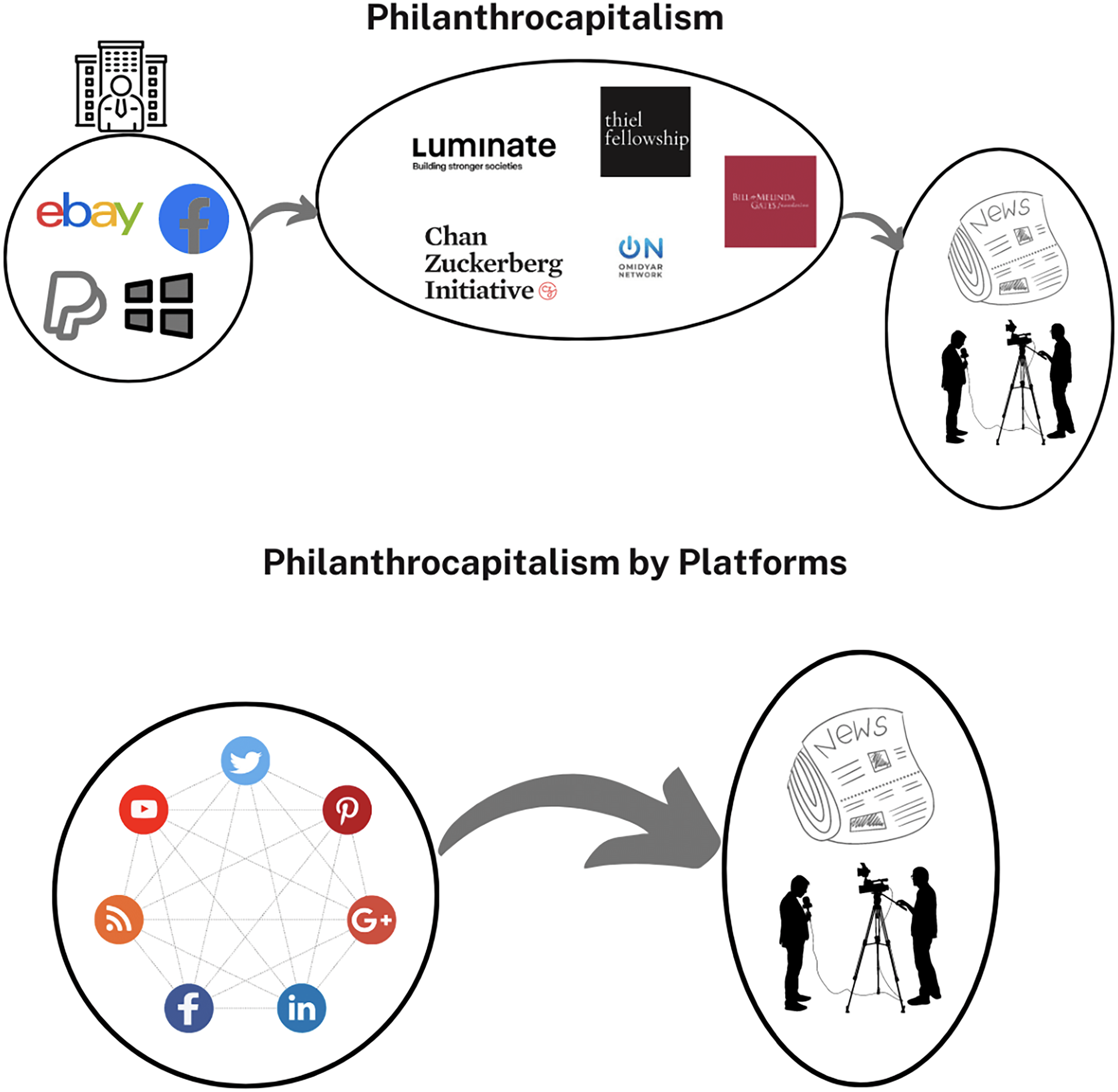
Evolution of philanthrocapitalism.
This change signifies a significant shift in philanthropy dynamics as big tech firms increasingly communicate their innovation message directly to recipients. By circumventing intermediaries, who previously held political influence in traditional philanthrocapitalism, the relationship between Google and the GNI beneficiaries becomes stronger. Direct engagement streamlines the allocation of resources, allowing tech companies to have a more immediate impact on the projects they support. This shift in philanthrocapitalism marks a substantial transformation in the tech industry, prioritizing direct relationships between tech giants and beneficiaries, leading to improved collaboration and potentially more effective outcomes in their perspective.
Furthermore, the removal of intermediaries in the GNI underscores Google's intent to establish direct access to beneficiaries, form its own alliances, and cultivate philanthrocapitalistic relationships. This approach grants Google exceptional access to the unfolding innovation processes, potentially optimizing its business interests through a controlled innovation framework, i.e. deciding what will be the trend in the industry, by engaging directly with beneficiaries, capable of shaping their innovation trajectory. Google also raises the grantees’ expectations, as they are dealing with Silicon Valley business culture (Hendrikse et al., 2022).
Google's philanthropic initiatives are fundamentally aligned with its self-interest and business objectives. Its emphasis on funding innovation within the GNI raises questions about these tech companies’ true motives and the potential impact of this emerging ‘philanthrocapitalism’ on the future of media already beset by numerous crises. When situated in the broader context of Extreme Philanthropy (Eikenberry and Mirabella, 2018), these findings underscore the argument that platform interventions, often branded with seemingly altruistic titles like ‘Innovation Challenge,’ may inadvertently exacerbate the problems they purport to resolve. This is because these platforms may not possess a comprehensive understanding of the extent or intricacy of the obstacles confronting media organizations. As observed, some organizations may have proposed ideas primarily to secure the grant rather than genuinely addressing their most urgent issues.
We also contend that these projects embody a form of philanthrocapitalism that allows big tech companies to retain influence over specific cultural production communities, especially in journalism and among practitioners. Paradoxically, while they offer funding as a legitimate means to promote innovation, as we will illustrate, these initiatives ultimately place the beneficiaries in a precarious situation. Nonetheless, platforms are likely to remain a dominant force in society and the economy. They have proven to be powerful engines of innovation and growth, particularly in the media industry. Platforms’ projects like GNI have enabled innovations in the industry that were hardly possible (de-Lima-Santos et al., 2023). However, as they continue to grow and evolve, it is important that we carefully consider their impact on society and the economy and take steps to mitigate negative effects.
The question arises: Can media organizations in Africa and Latin America afford to decline such funding? Given the crises they are confronting, any form of funding is often embraced. However, it is imperative to subject Google's philanthrocapitalism to critical analysis, particularly in light of its strong opposition and forceful lobbying against regulations mandating compensation for publishers. Big tech companies have positioned themselves as intermediaries, profiting by offering easy access to content created by journalists while redirecting revenue away from traditional journalists (Cameroon, 2023). This same revenue is now repackaged as ‘innovation funds.’ Consequently, programs like the GNI should not be viewed as acts of newfound generosity from a reinvigorated global corporation showcasing exemplary citizenship. Instead, they represent a substantial media capture and digital coloniality strategies employed through various tactics, including placating media institutions to dissuade them from seeking a larger share of their content from platforms and using their programs as a scare tactic to discourage potential regulators by creating an illusion of care, collaboration, and concern for the media.
In conclusion, the projects financed through the GNI Innovation Challenge illuminate the challenges confronting news outlets in Africa, the Middle East, and Latin America. They also underscore the power dynamics and cultural influences inherent in their implementation, which play a pivotal role in shaping the extent and direction of innovation dependency between Google and the project beneficiaries. The existing literature has explored the broader implications of platformization (Davis, 2020; Mutsvairo et al., 2021; van Dijck et al., 2020). Our findings contribute to this literature by examining a global practice, the GNI, and illustrating how it transforms news production and hampers newsroom innovations by aligning these processes with capitalist practices such as philanthrocapitalism. Additionally, our findings suggest that, in terms of literature, philanthrocapitalism deviates from media sustainability. While Creech and Parks (2021) have suggested that platforms could possibly promote journalism sustainability, our research indicates that they have increased newsroom dependence on these platforms and, in the process, hindered journalism institutions from engaging in sustainable innovation to address the future challenges of mainstream media. To address specific issues associated with the GNI Innovation Challenge, Google could consider broadening its funding criteria and extending project timelines. This would enable the development and testing of more ambitious and comprehensive initiatives over an extended period. By offering increased flexibility and support, Google can foster innovative projects that address the multifaceted needs of the media industry in the Global South. This approach would promote sustainable solutions and enhance the independence and resilience of news organizations in these regions.
Footnotes
Acknowledgements
We are immensely grateful to the respondents who took part in our study. Their willingness to engage and share your experiences has been crucial in advancing our understanding of this topic. We would also like to thank Dr. Arwa Kooli who have helped us with our data collection in French.
Funding
The authors disclosed receipt of the following financial support for the research, authorship, and/or publication of this article: This project was partially funded by the University of Amsterdam's RPA Human(e) AI and by the European Union's Horizon 2020 research and innovation programs No 951911 (AI4Media).
