




Abstract
This article focuses on young people as producers of cultural heritage and, in particular, on their drawing practices. Based on ten in-depth interviews with youth (aged 11–20) living in Sweden, we explore young people's digital drawing practices and what these mean to their everyday lives. This is relevant to the production of descriptive metadata when young people's pictures become a part of cultural heritage. Our analysis illustrates how young people engage with pictures that circulate across time, space, relationships and mediums, challenging the idea of pictures and meaning-making as fixed and final. This analysis offers valuable insights into cultural heritage by approaching it as a process and extending our ideas of how tangible and intangible heritage may interact. Furthermore, this article contributes to our understanding of young people's digital drawing practices from their own perspectives.
Keywords
Introduction
Cultural heritage is a performance that emphasises the individual and collective acts of remembering whereby histories and societal and cultural principles are shaped, evaluated, confirmed and contested (Smith, 2013). Children and young people are generally under-represented in cultural heritage studies and practice, and are mostly approached as consumers of cultural heritage (Darian-Smith and Pascoe, 2013). More recently, however, heritage institutions have approached young people as not only consumers but also producers of culture. There are examples of archives and museums that prioritise the collection of objects made by children (Patterson and Friend, 2021; Sparrman and Aarsand, 2022), and even include children in the creation of exhibitions (Patterson and Friend, 2021).
Cultural heritage institutions collect, document and interpret young people's circumstances and communicate them to future generations. For example, they use young people's pictures as (historical) objects that provide insights into the everyday lives of the youth at any given time in history. Assuming that these institutions should be able to tell us something about what it means to be young at a given moment in time, this article argues that they need to know how and why these objects have been created, as well as how they function in young people's everyday lives. Chang and Mah's (2021) study of playgrounds in Singapore categorised as national heritage presents a similar analysis. The authors direct attention to the implications of everyday user contestation for how we think about heritage. They argue that playgrounds, as heritage sites, must be seen as processes in constant evolution. Put differently, how children understand and use playgrounds is closely related to how these places are understood as cultural heritage. Moreover, rather than being once-and-for-all, heritage is always in the process of becoming.
This underlines the importance of heritage institutions’ interpretations, descriptions and categorisations of objects such as pictures. Collecting contemporary objects made by young people offers heritage institutions a unique opportunity to generate knowledge about the objects, how they are used and how they have come into being – also called descriptive metadata. Descriptive metadata are data about what an object is, how it was made, how it was used and where it comes from (Dahlgren et al., 2020). This kind of metadata may even include young people's voices in cultural heritage institutions (Patterson and Friend 2021), which, in turn, can be seen as a precondition for understanding what it means to be young – in this case around 2020. This means that heritage institutions must pay attention to the relationship between the tangible (for instance, a picture) and the intangible (the picture-making process) when categorising, storing and displaying objects (see e.g. Ginzarly and Srour, 2021).
In the present article, we direct attention to young people as producers of digital drawings. By exploring these drawing practices, along with what they mean to young people's everyday lives, we challenge the idea of pictures and young people's meaning-making as fixed and final. This has consequences for the production of descriptive metadata on young people's pictures in cultural heritage institutions. We ask: how are digital pictures created and used by young people, and how can this contribute to our understanding of young people's visual practices when creating cultural heritage?
Children and young people as cultural producers
Drawing and creating pictures are examples of the visual practices young people engage in every day. Studies on children's and young people's drawing and picture-making have often been limited to institutional contexts such as schools or preschools, often with the aim of examining learning and artistic performance (see e.g. Duncum, 2015; Leung et al., 2020). The focus has been on individual pictures or the institutional practices whereby pictures have been created (Eldén, 2013; Sakr, 2017). Arguably, this rests on the assumption that children and young people create a picture in one place at a particular time, that is, an idea of picture-making as situated and restricted in time and space. The ideas of situatedness and context have been questioned and criticised (see e.g. Burnett and Merchant, 2014; Leander et al., 2010). It has been argued that the former implies a certain boundedness and therefore ignores that practices evoke a variety of contexts that intersect in multiple ways (Burnett and Merchant, 2014).
Research on young people's digital visual practices takes place at the intersection of several fields, such as the maker movement (Landwehr Sydow, 2019), do-it-yourself (Baker, 2015; Knobel and Lankshear, 2014), cosplay (Buhl, 2019) and participatory culture (Jenkins, 2006; Jenkins et al., 2016). Central to all of these is their understanding of these practices as informal and interest-driven. Furthermore, they have focused on acts of creating, recreating and making across platforms and practices in interaction with others (Drotner, 2020; Ito et al., 2013). Visual practices are thus located both online and offline (Leung et al., 2020) and recur across sites such as the home, kindergarten, school and after-school centres (Änggård, 2005; Sakr, 2017; Sparrman, 2002). Put differently, visual practices are enacted across time, space and social spheres. This also means that young people's visual practices must be considered as moving within and across places, people, objects, ideas and pleasures (Leander and Lovvorn, 2006; Sparrman, 2019). As research has often focused on learning outcomes or social participation, the actual production of digital content has been ignored (Drotner, 2020), and more research about how children and young people carry out these visual practices is needed (Valtchanov and Parry, 2017).
Previous research has contributed to our understanding of children and young people as cultural producers engaging in visual practices across sites. It has also underlined that neither young people nor cultural objects are fixed entities. We argue that to understand young people's digital visual practices, cultural heritage institutions must recognise the embeddedness of young people's cultural productions in their lives and life stories, as well as the ways in which young people understand these (see Manchester and Pett, 2015; Patterson and Friend, 2021; Sparrman and Aarsand, 2022). Building on previous research, we unpack young people's visual practices by directing attention to young people's talk about them, viewing these as multiple, situated and enacted in and across places and practices. To explore and track the movement of these practices, we direct our attention to their manner of appearance across different sites and to the articulations between them (cf. Burnett and Merchant, 2014).
Approaching visual practices along lines
In visual cultural studies and among cultural studies scholars, there has been an ongoing turn towards approaches that consider the senses, movement, materiality and environment (Pink et al., 2015; Schiermer, 2023). Rather than simply looking at pictures and locking them into dominant discourses on visual culture, there is growing interest in how images, ‘as products of and participants in wider environments, are both produced and consumed in movement’ (Pink, 2011: 6). The focus is on studying how the relations between images, discourses, persons and other materialities might cohere to constitute economies of power and relatedness in specific situations. This means that visual practices are seen as performative pathways or narratives along which images, people, materialities and technologies are interwoven (Pink, 2011). Visual practices are thus understood as relational, multiple and flexible, as they move along the trajectories of people's everyday lives.
We draw here on Ingold's (2007, 2011, 2016) notion of objects as unfinished. Approaching objects as unfinished means considering how they move and flow – that is, in a series of lines – rather than thinking about what a finished object is. According to Ingold (2007), life's most fundamental quality is that it is ongoing, in constant motion along lines. These lines are not to be understood as straight (such as a line between two points) or as a closed network, but as open, evolving and having the potential to go in a variety of directions, even as they become entangled with the lines of others. In this view, materials and objects occur rather than exist, and meaning and matter are interwoven. Additionally, material things can matter in multiple ways depending on how they are engaged with in practice. Ingold uses the metaphor of meshwork to illustrate the lines of becoming along which life is lived: In the meshwork, each constituent line, as it bodies forth, lays its own trail from within the interstices of its binding with others. Thus, the joining of lives is also their continual differentiation. The knots formed in the process are not inclusive or encompassing, not wrapped up in themselves, but always in the midst of things, while their ends are on the loose, rooting for other lines to join with. (Ingold, 2016: 11)
Ingold's meshwork is a relational world that consists of a correspondence between bodies of matter in motion, with constant change at its centre. Further, it is our bodily perception of movement that provides us with knowledge and experience, and we develop through these pathways (Ingold, 2011). Knowledge and how we understand the world are thus continuously generated through movement rather than being fixed. The creation and movements of young people's pictures in the digital sphere can be described as a meshwork of lines that cross and become entangled with other persons and things, and wherein the pictures are open-ended and unfinished (cf. Pink et al., 2015). The notion of meshwork is relevant to the exploration of picture practices as complex and in flux, involving both relations and material things. As such, we display, in this article, openness to and curiosity about both the tangible and the intangible interactions between past, present and future picture production and practices.
Method
The present article builds on data from a larger research project entitled: Children’s cultural heritage: the visual voices of the archive (VR dnr 2020-03095), which focuses on how children and young people's cultural expressions can be collected, preserved, digitised and archived for the future. The project is being carried out in collaboration with Swedish Archive of Children’s Art (SBBA); the children and young people who participate in it can choose to donate their pictures to the archive. Part of the project examines how young people make digital pictures and express themselves visually in their spare time, without the involvement of adults.
Information about the study was disseminated through libraries, social media platforms and the distribution of flyers; the participants were recruited by these means and by the snowball sampling method (see Bernard, 2006). Those who were interested in participating contacted the research team themselves (or with the help of a parent) and received further information. The participants provided informed consent prior to the interviews, in both written and verbal form. Parental consent was also obtained for children younger than 15 years. The study followed the research ethics guidelines adopted for use in the humanities and social sciences in Sweden (Swedish Research Council, 2021), and ethics approval was granted by the Swedish Ethical Review Authority (reg. nr. 2021-04088).
In-depth, semi-structured interviews were conducted with ten participants aged 11–20 years (nine girls and one boy). The interviews took place in their homes and lasted from one to two hours. They were videorecorded with two cameras, one that focused on the device on which the pictures were shown and one on the interviewee. The participants had long-standing experience in creating analogue and digital pictures. In the interviews, they were encouraged to show pictures that they had previously made and that they either were particularly happy with or disliked. In these conversations, they described how they took inspiration for their pictures from popular culture and social media, and they reflected on their digital picture-making, their development of different methods, their ways of displaying and sharing their pictures, and the social meanings of drawing. The interviews were transcribed verbatim, and the participants’ names were pseudonymised.
The focus of this article is to investigate young people's digital drawing practices and the possible consequences of these practices for the production of descriptive metadata in cultural heritage institutions. The data analysis process was continuous, shifting back and forth between the video recordings and the transcripts. At an early stage in the analysis, we identified that the participants describe movements when they talked about their pictures. Following the theoretical framework outlined above, acknowledging knowledge production as ongoing and unfinished, offers an analytical approach that does not aim to generalise the empirical material, but to open up and attend to its complexity (Orrmalm, 2021). As such, the analytical process explores what flows and movements, tangles, lines and patterns became apparent in the young people's talk about their digital drawing practices. Throughout the analysis, regular meetings took place between the first author and the co-author. The rest of the research team has been used to ensure that the interpretations derived from the data were not unduly influenced by the researcher (Shenton, 2004). Five excerpts from three participants were chosen for this article. These excerpts will be discussed with reference to four different lines that, even though presented separately, cross and become entangled with one another: pictures along the lines of characters, pictures along the lines of algorithms and likes, pictures along the lines of friendships, and pictures along the lines of life. They were chosen as they illustrate recurring patterns in the young people's digital drawing practices across the interviews. Moreover, they clearly illustrate the complexities of the study's empirical material, highlighting the multiplicities and movement of young people's digital pictures and practices. The examples aim to illustrate how young people, as part of a visual culture, engage with pictures that circulate across time, space, relations and mediums. The pictures used to discuss the findings are screenshots from the participants’ computers, tablets or mobile phones.
Following the lines of pictures
To acknowledge how young people's pictures can be understood as a meshwork of moving things (Ingold, 2007) rather than as bounded objects, this section follows the different lines made visible through three young people's talk of the pictures they created and the visual practices to which these belong. The results are presented along four different lines, providing a rich and varied depiction of young people's digital drawing practices and expanding our understanding of what a picture is/can be.
Pictures along the lines of characters
In this first section, we follow the lines of the character Carla from the computer game Smile for Me, made and displayed through the pictures of Sally (age 17). At the time of the interview, Smile for Me was one of Sally's favourite computer games, and she wanted to create her own drawings from the game. She displayed Carla on Google (Figure 1), noting, ‘It all has a very interesting style, and, since the character itself is just a piece of folded paper, I had a lot of freedom in making her human.’
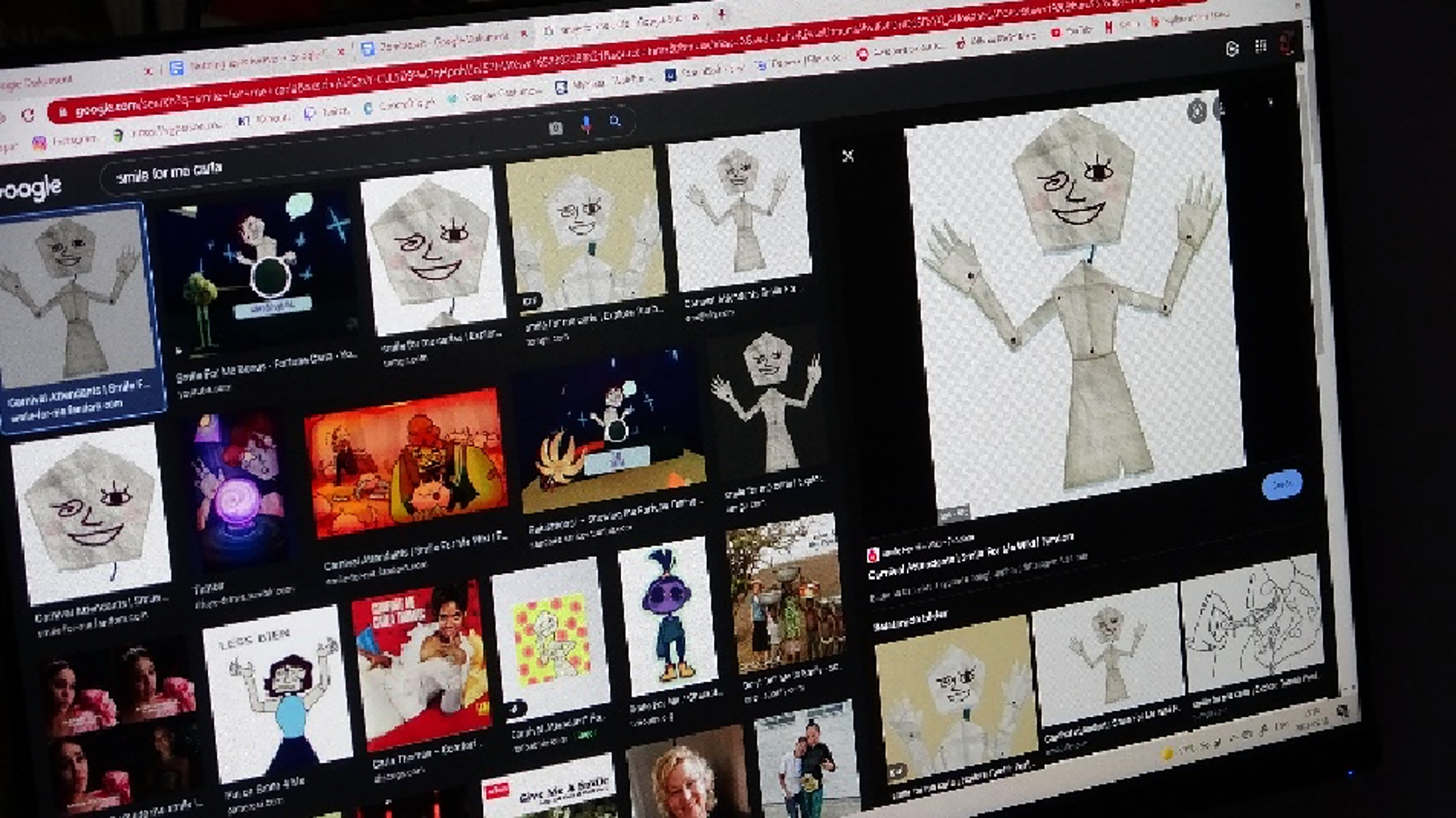
Sally searching for Carla on Google.
Sally described how, in making her own Carla (Figure 2), she experimented with the texture of the paper, which is the character's hallmark feature, and ended up saving some paper to put into the skirt. She also demonstrated her use of a blurred screenshot from Smile for Me as a background, which situated Carla in her world and served as an identifier for those familiar with the game. Sally was so pleased with the picture that she posted it to her Instagram account.
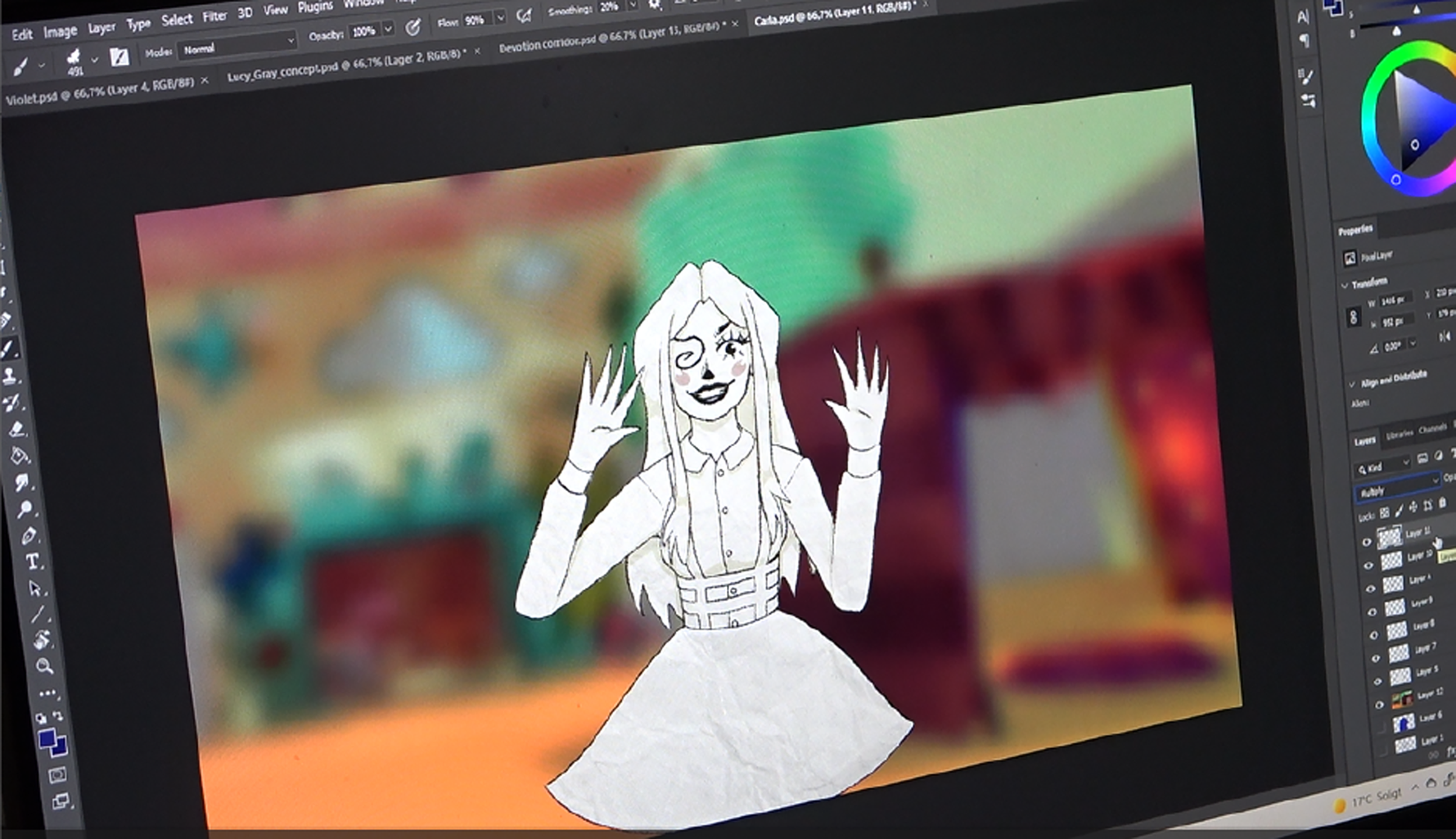
Sally's version of Carla (copyright Sally).
Already, we can follow a movement from the computer game's paper doll to a drawing of a more human-looking character that is then shared on Instagram and signals relationship and recognition to other gamers. Sally went on to say that she had also created a cosplay character of Carla. Cosplay is a performance that involves ‘the transformation of mediated characters into physical activities that are organised and partly enacted in social media’ (Buhl, 2019: 36). It is a multifaceted phenomenon that takes place in various contexts, from large, organised events to everyday life and socialising in smaller groups, and it embraces all the activity that surrounds becoming a fictional character, such as choosing and creating its costume (Buhl, 2019).
In Smile for Me, there are two versions of Carla: a paper doll with blond hair and a paper doll in the role of a fortune teller with brown hair (Figure 3).
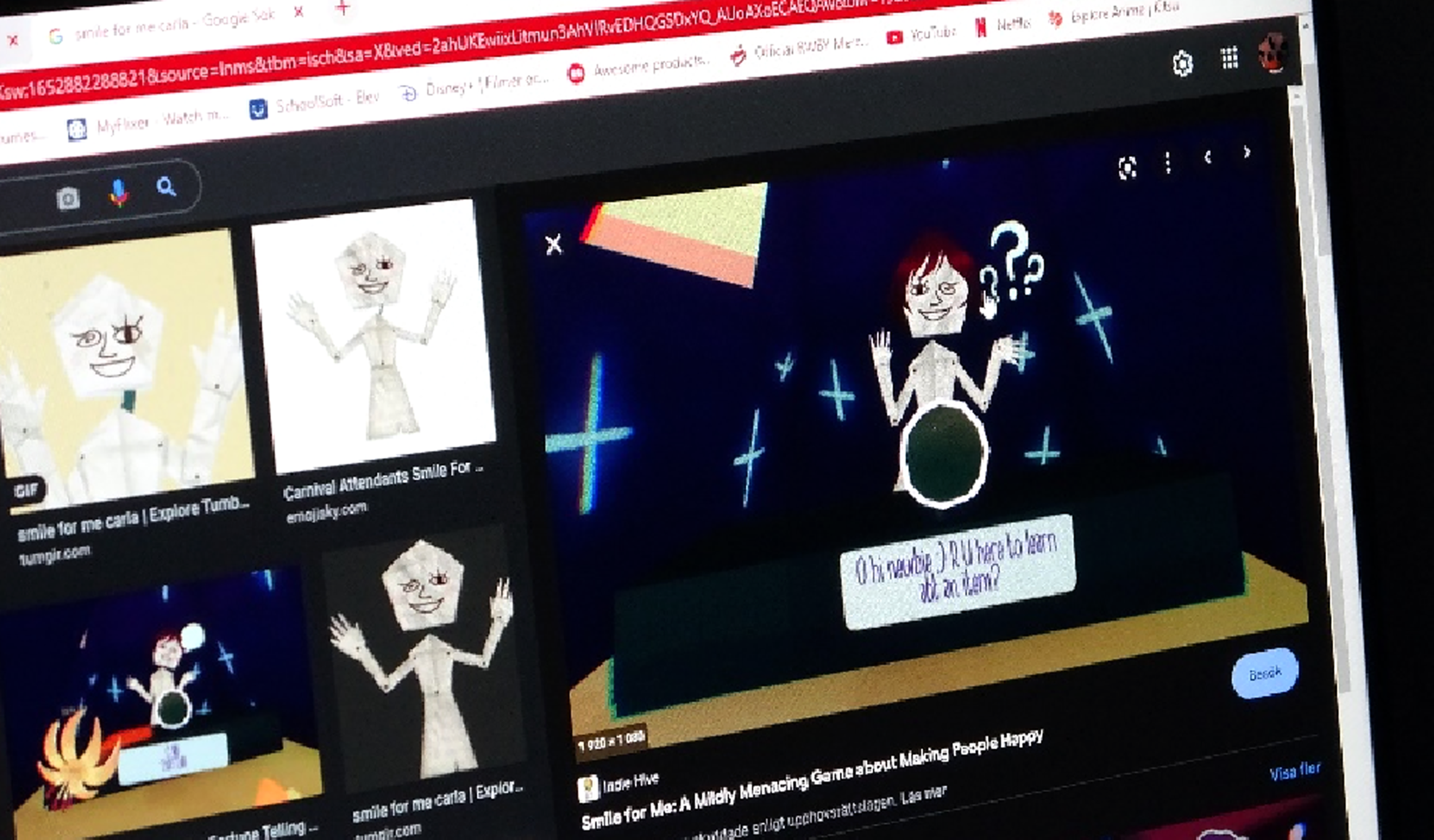
Sally showing the dark--haired version of Carla on Google.
Sally's cosplay character represented the latter version. Sally described how she created short videos with music appropriate to the character and tried to do things in the videos that related to the game: So, this cosplay was also very, very fun to do, because I had a lot of freedom in that she's just a piece of paper. And I made the fortune teller out of cardboard and did the makeup and the wig and everything. And I’ve folded paper claws like that, because she has a bit, uh, pointy fingers.
1
(Figure 4).
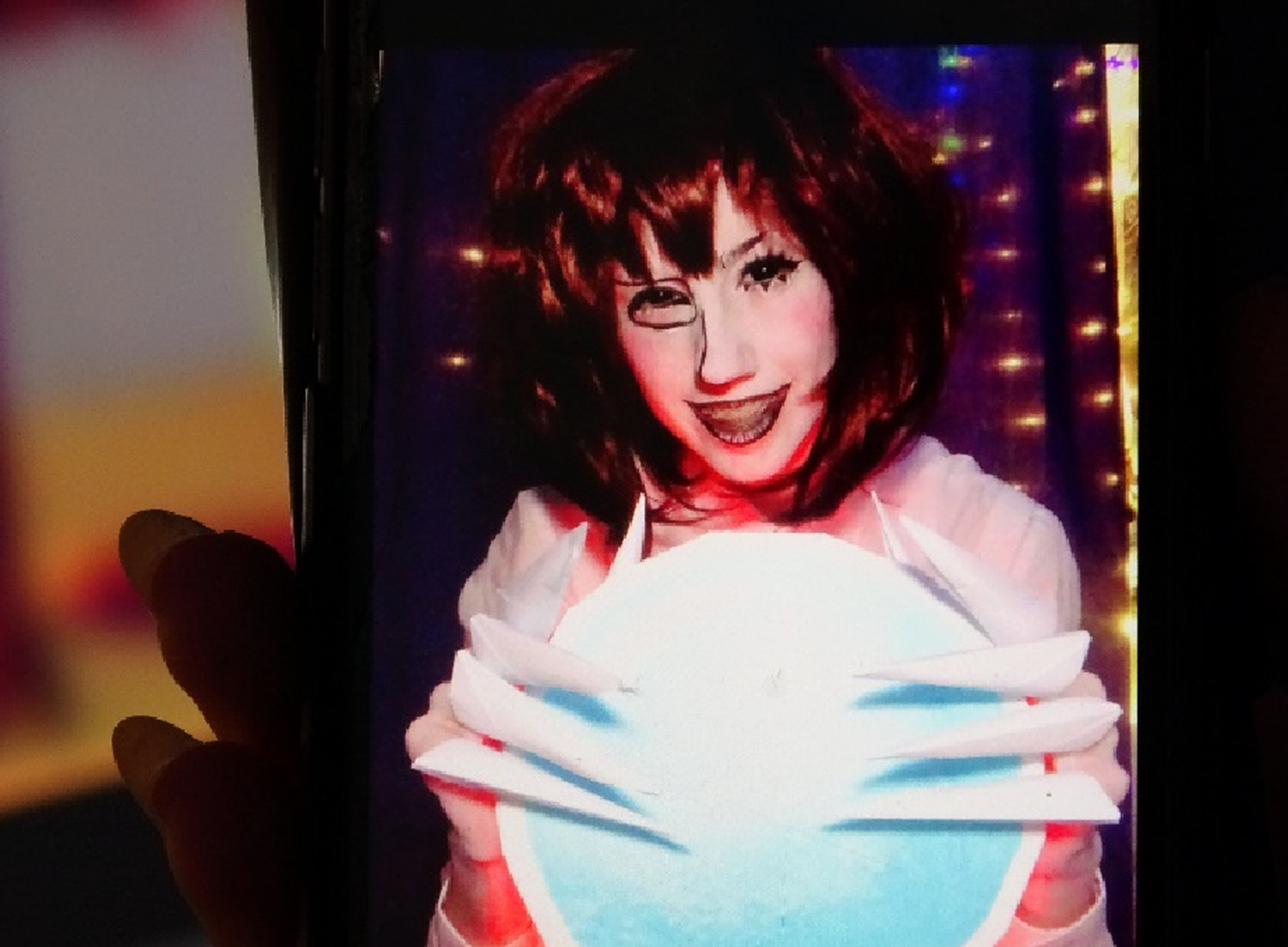
Sally's cosplay version of Carla (copyright Sally).
ally belongs to a cosplay community on TikTok in which she shares her videos. She felt content with receiving positive feedback when someone recognised her character: ‘It's very, very fun if you cosplay a character that not many people know, and then someone recognises who it is, and then it's just like, ah, then I know you’ve played it too. It's so fun.’
Thus, Carla's material lines travel in a range of directions, from the computer game and Google images to Photoshop, where Sally redesigns the character, saves it on her computer, and shares it on her Instagram account. There, it is consumed, recognised and liked by others.
The lines continue with Sally's creation of a cosplay version of Carla, her transformation of the character into a physical being, and her performance, filming, editing and sharing of this character on TikTok. Sally also expresses the joy and positive emotions evoked by the process of making Carla and the appreciation of her work by others. The motif, that is, Carla, thus becomes entangled in a meshwork (Ingold, 2011) of material things, techniques and technologies, social relations, emotions and affects, that are experienced, produced and circulated in a continuous motion (Pink, 2011).
Pictures along the lines of algorithms and likes
Rose (2016) argues that social media images are cultural artefacts and a form of social practice that initiates a number of relationships. A selfie, for example, contains a relation between the viewer and the viewed, the image and the software, and among the individuals circulating the image. Additionally, a selfie is distributed, displayed and monetised through a number of non-human entities such as algorithms, cameras and servers, and is part of a digital infrastructure that shapes new relations and separates the picture from its original time and place of production (Senft and Baym, 2015: 1589). Other types of pictures move along the trails of the digital landscape in a similar way. Here, we follow the lines of the pictures that young people share on social media, along with the young people's reflections on these acts of sharing.
Tina, age 16, has an Instagram account for her pictures. She also posts comics on Webtoon and, sometimes, X (formerly Twitter), although she finds it more difficult to connect deeply with others on X. She is aware of the importance of tags and described how to work with algorithms to gain visibility: There could have been more people watching if I had managed to have a schedule to post more, but then you have to post pictures once a day. To be kind of liked by the algorithm and that, I simply don’t do that much. I don’t produce so much that I can do that […] Then it depends on why you paint the pictures. A common way to get followers is to paint things like this [Figure 5] and then you tag them, and if you get tagged too then you get – because if I, if this person had posted this picture on their story, then I would have been exposed to how many, to, ah to 43,000 people, uh. Now it didn’t … but, it could have happened. Erm. So yes, it's also a way to get followers, so to speak. A person posts a picture, which they have made, and then they say like, draw this in your style. And then you post it under the hashtag, and all is collected so you can see everyone's version of the picture as well. I made this [Figure 6]. Thought it turned out pretty well. Erm. Maybe it's not really my usual style, but I want to explore a little more, do different things. And then you become influenced by other people's style as well. I have kept most of what I have posted. It's just that some pictures maybe have like five likes and then I think that it was a bit sad when not even my friends like the picture. But I can’t bear to go back and delete it. I’ve developed so much since then. This was the very first one I posted [Figure 7]. And now, now I could make it so much better. So, I might actually delete some of the earliest pictures, but I’ve tried and refrained from doing that because I think it's interesting sometimes to look at what other people have done early on and see how they’ve developed.
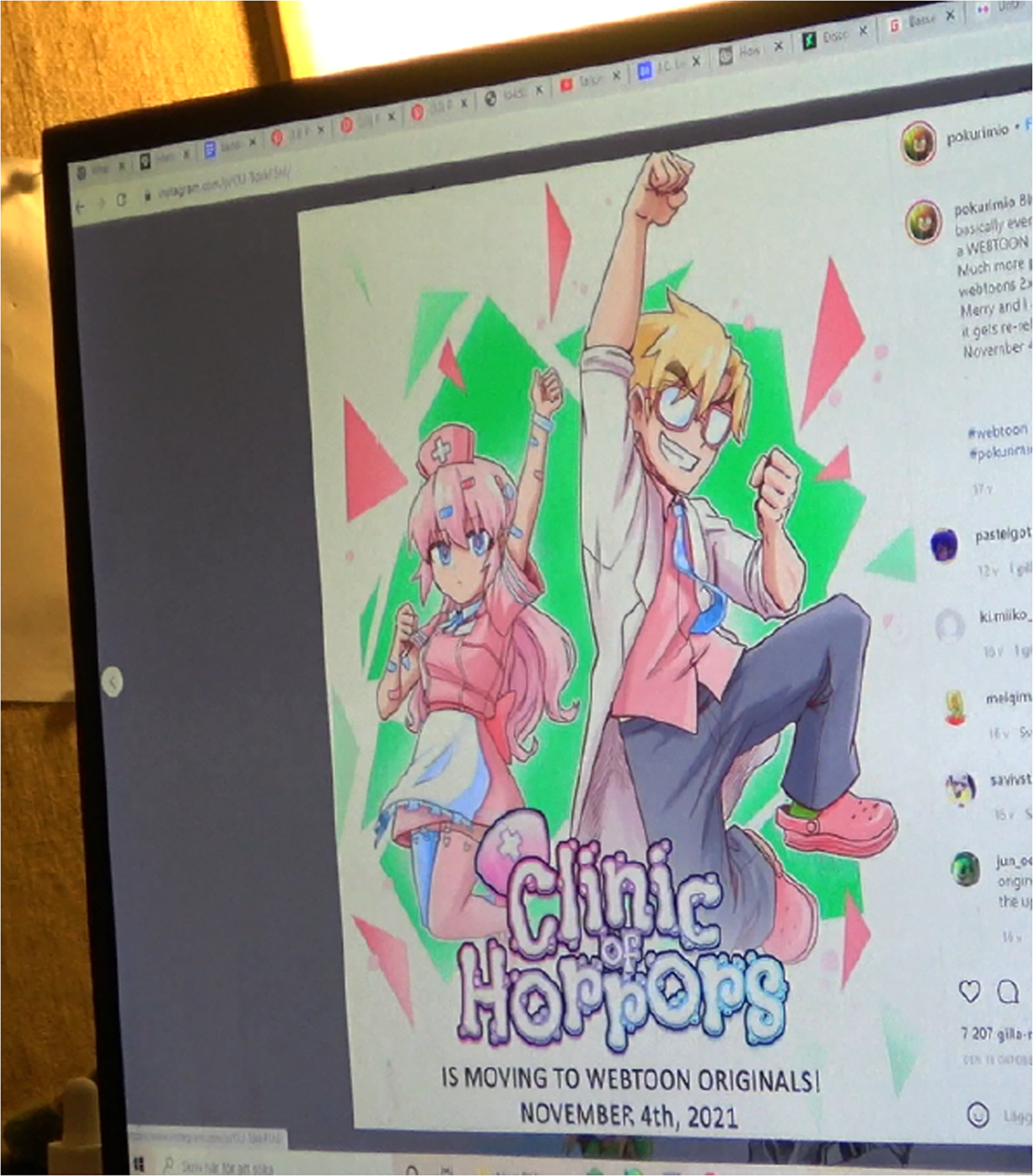
Tina shows a popular way of drawing on Instagram.
Pictures along the lines of friendships
I don’t think that many people think about it. I think there is quite many people that have friends all over the world now, but I don’t think that many people, at least not adults, talk about it that much. Because they don’t see it as real friends, it's just digital. (Marianne)
Engagement in media activities that have, from the beginning, been interest-driven can lead to deep and binding friendships (Ito et al., 2013). This section follows the lines of Marianne's pictures. Marianne's digital drawing practice has led to close friendships; she has had a friend in the United Arab Emirates for a few years now. We met through a game, Undertail, if you know what it is? So, we met through another website, on Tumblr, because I started posting pictures there. So, she saw my picture, and then we started talking, and then we made a character. Or she helped me with mine, and I helped her with hers, and then we’ve changed them from this kind of skeleton guy to real people that we’ve played with and changed. So, these are the two we’re talking about, so these are the main characters in our story. And they’ve got family, and they’ve got enemies and stuff like that. There are a lot of side characters, but you can’t bear to paint them all […] Then, we write like this [Figure 9], so this is her and this is me who has written. We’ve had the same characters for a long time, but we put them in different scenarios. Like, now he's supposed to be a pop star, and that person is a barista. They meet or something happens. Or now they are in the Middle Ages. Sometimes, we also draw at the same time; there is a website where you can create together, draw on the same picture. And she draws the ones she created, and I draw mine. But we made them at the same time. Here they are [Figure 11]. You can see a little difference in the styles. Here, I also draw Sugar, the cute cat. She crawled into a flowerpot just before we were going to paint. And I just wanted to get started, and then she was just, oh, it was there, and she (the friend) put it in the picture. So, you can sort of talk through the pictures […] But, usually, it's that one of us draws a character, and then maybe the other has a scene together, and then the other has to paint that character as well. So, it turns out that we paint each other a lot, so there is a lot of back and forth.
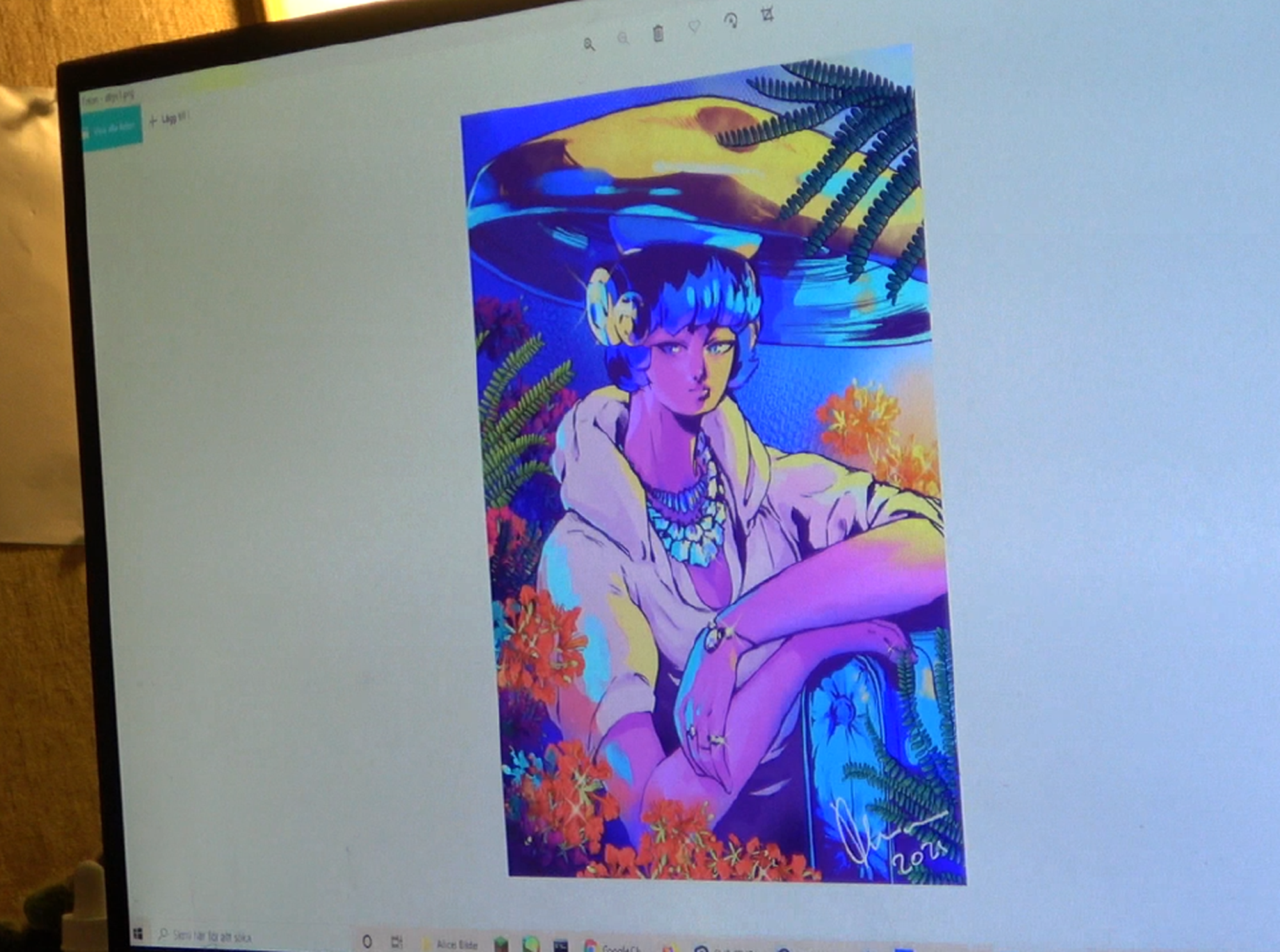
A picture made by Tina (copyright Tina).
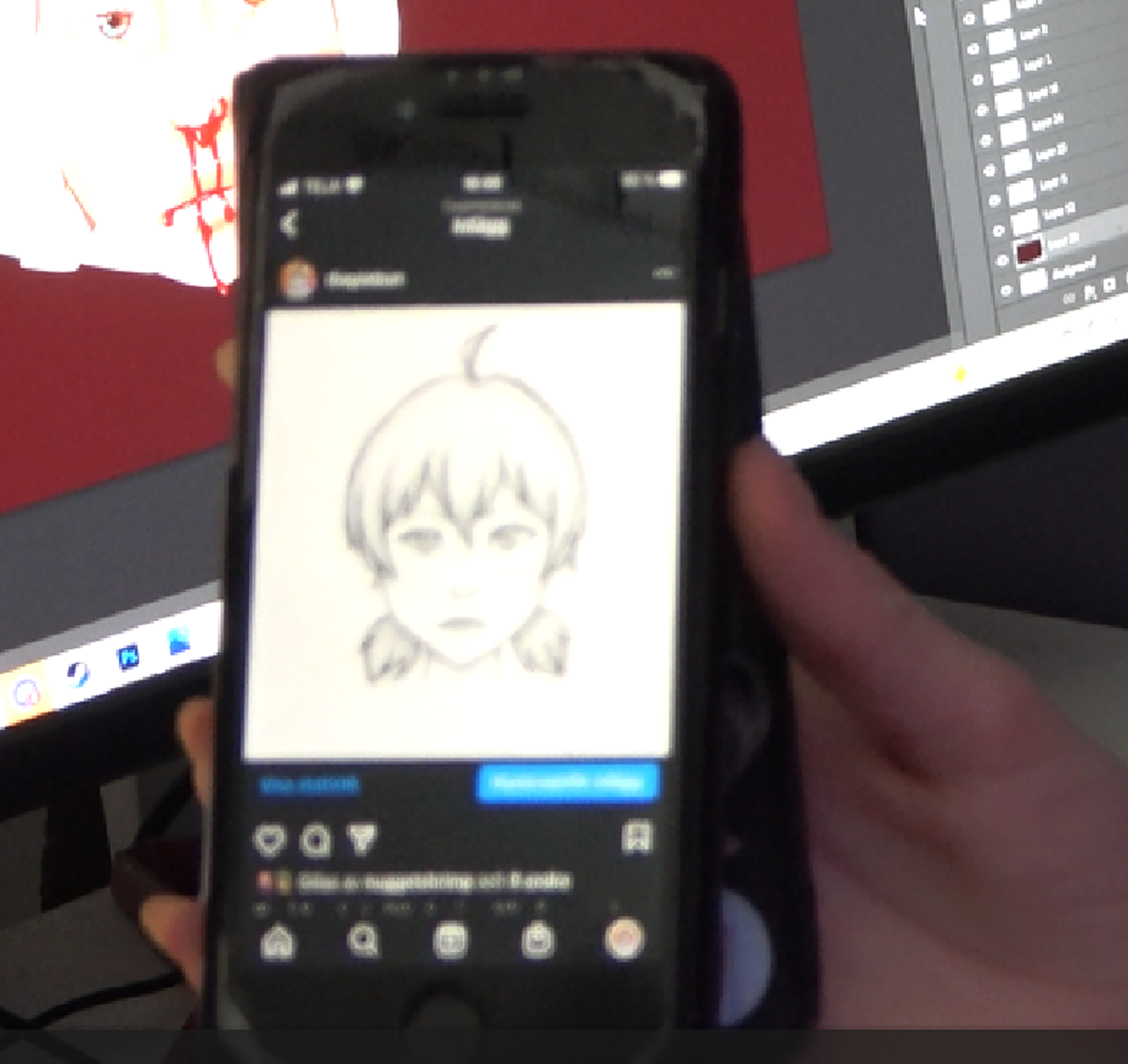
Sally's first picture on Instagram (copyright Sally).
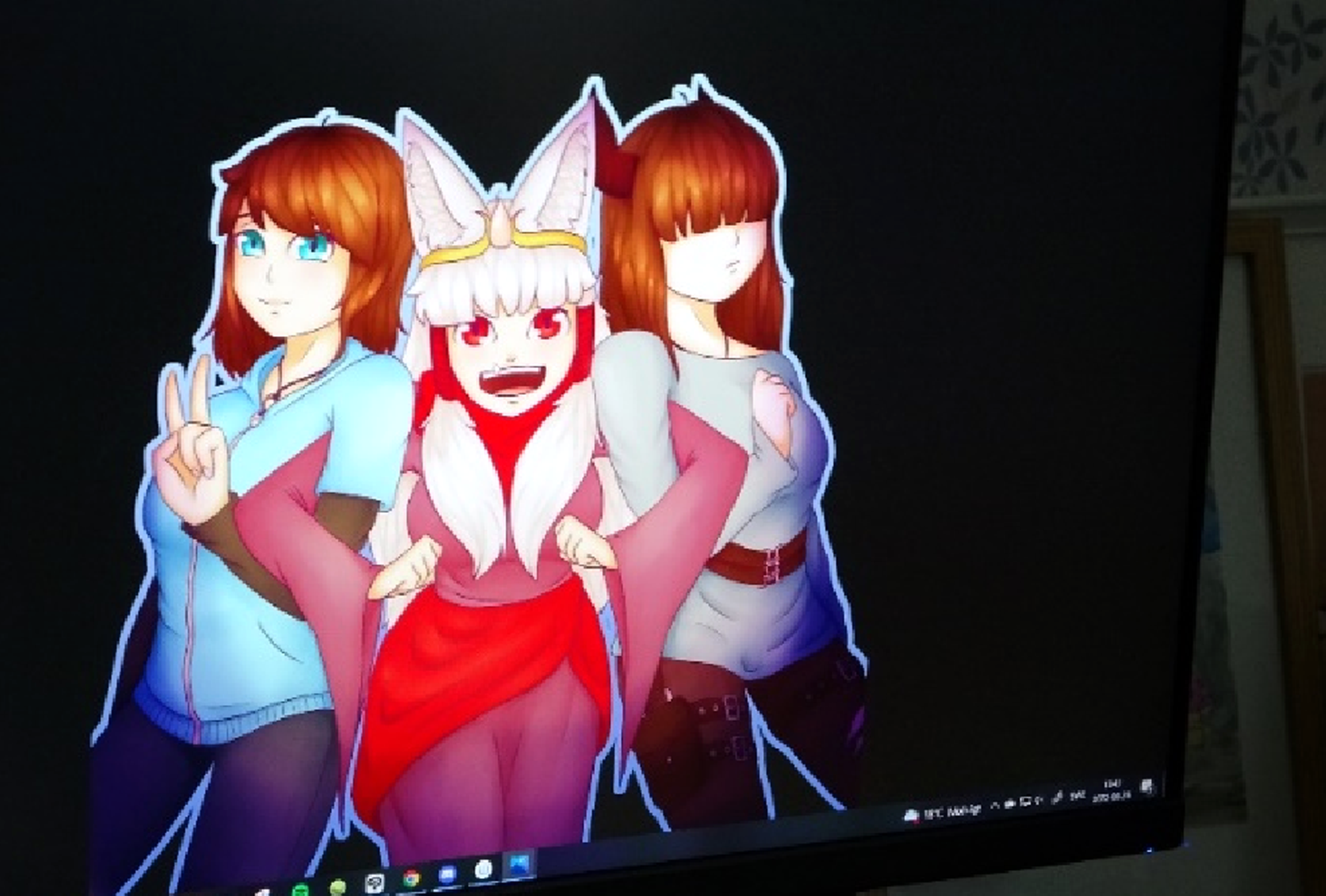
Marianne's and her friend's characters (copyright Marianne).
Conceived as a meshwork, friendship can be interpreted as lines of becoming that are shaped by histories, relationships and trajectories entangled with those of others. In Marianne's pictures, and in her talk about co-creation, we can follow both the lines of the characters in the stories the girls create for them and the movement of the friendship across different platforms, as well as across physical and digital time and space. Marianne also described how she and her friend discuss the pictures and sometimes offer comments about technique or anatomy, how to place the light in the right direction, etc. Giving advice based on skills and abilities is common in fandom (Jenkins et al., 2016), and for Marianne it is a natural way of talking about her pictures, learning and improving. It is also an example of the undulating process of digital content production, which is important for cultural heritage institutions to consider, but which often remains ignored.
Blurred chat.
Blurred detail.
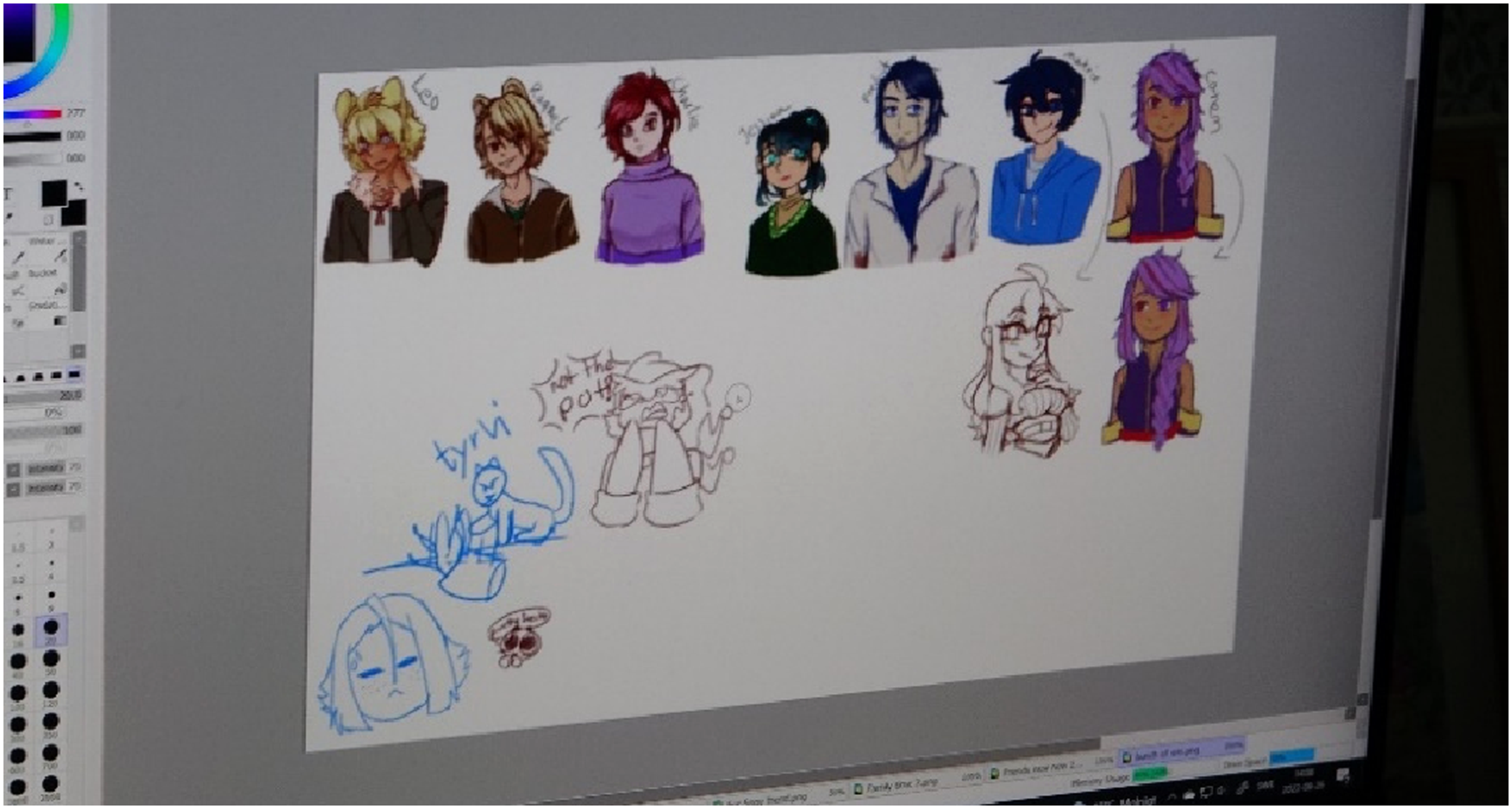
Marianne and her friend drawing at the same time (copyright Marianne).
Pictures along the lines of life
The ten young participants had, over time, saved numerous pictures on their computers, on webpages, in cloud-based storage or in their own digital visual collections. Many of them also returned to older pictures and worked on them again, changed something or developed the pictures in new directions, which goes against the common understanding of a picture as finished or fixed. This final section follows the lines around Marianne's birthday pictures to demonstrate how even a single motif, such as the character Carla introduced earlier, is connected to others and to the world through movement.
For the past six years, Marianne has been drawing a picture of herself on her birthday. The first picture was lost on a webpage she could no longer access, but the last five remain. This is the first one [Figure 12]. It's very sticky and quickly made. Then we have this one, which is more stylish [Figure 13]. It's without hard lines, and on this one I tried to play a little more with the light. Softer, and kind of soften everything down so it's more coherent. The icing on the cake. Here it's night [Figure 14]. That's the big difference and here you can see how I’ve gotten better at doing hair. There is a completely different lighting here as well. This was more monotonous, it's blue but it's still more colour and with the light stretching a little more. On this one it's morning [Figure 15], and here is a painting on the wall. The cake changes every year. It's chocolate cake every year, I think, but I change it a little every year. You can also think of her in the picture. She is the one I painted from the beginning; she also changes over the years, with different hairstyles and clothes […]. This is the picture from this year, and this one has wallpaper [Figure 16]. I have started with that this year. There's a lot of new things this year, just something completely different. Because I always felt that I want to change something but this year I felt I can do better. I can do other things, more.
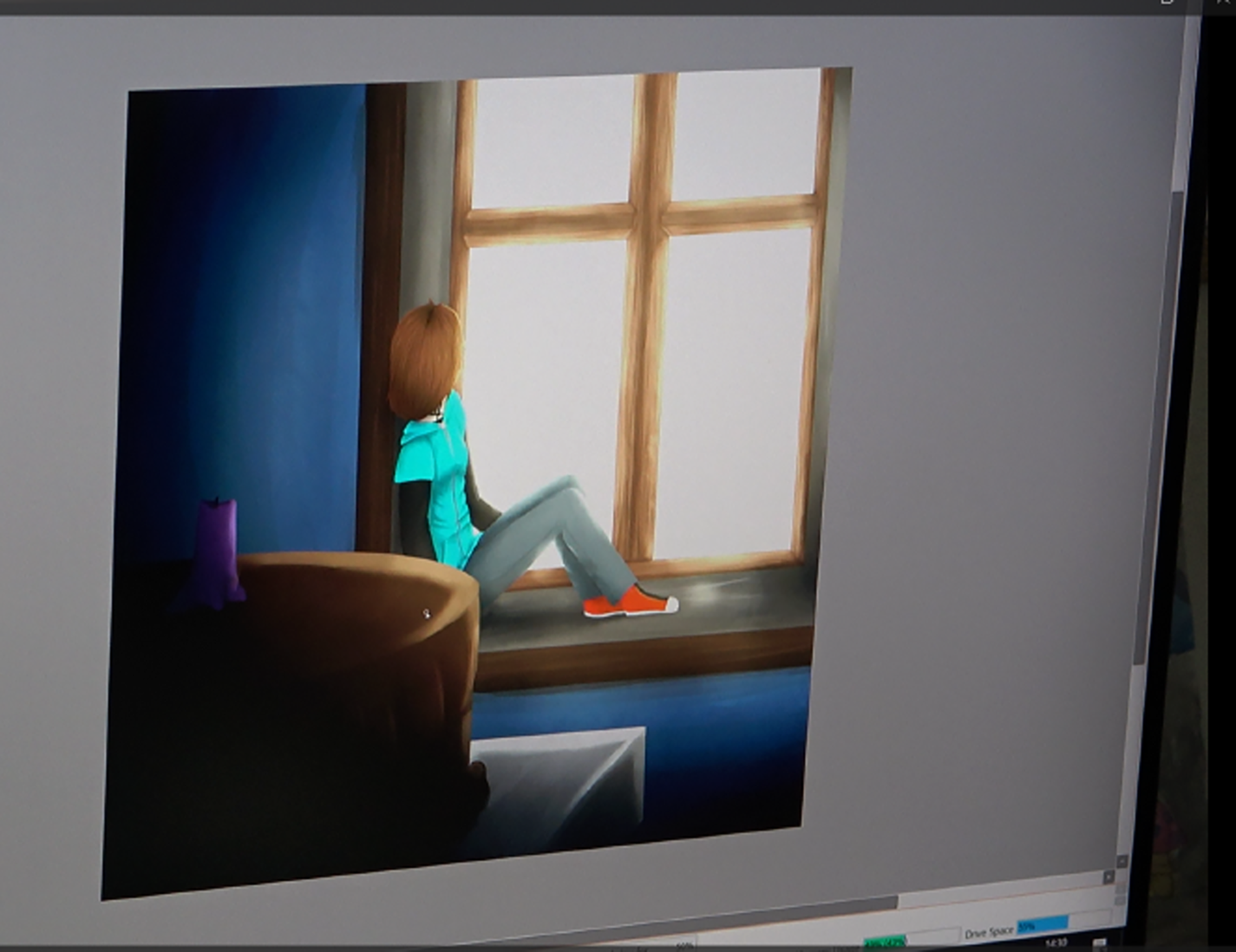
Birthday 1 (copyright Marianne).
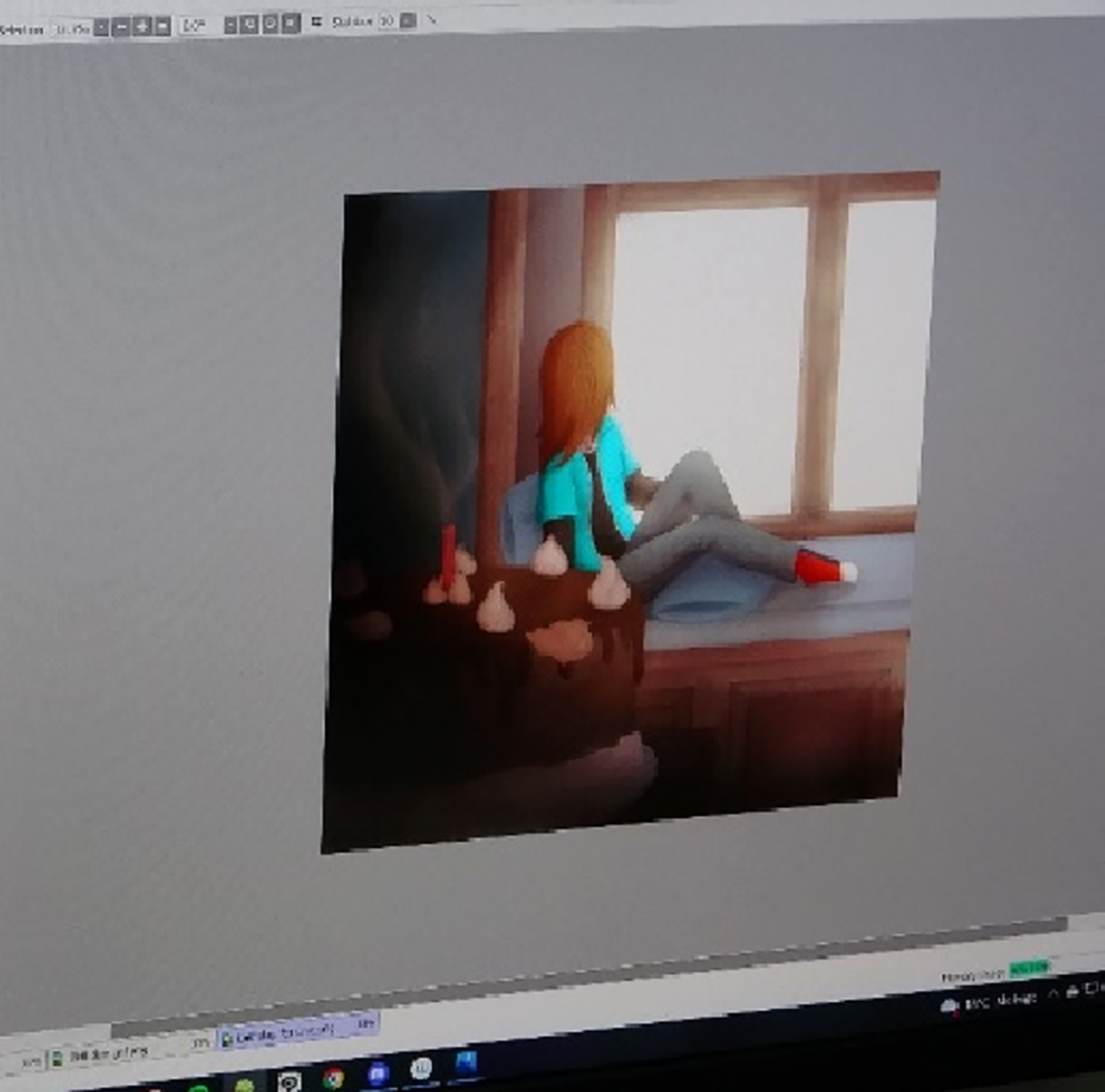
Birthday 2 (copyright Marianne).
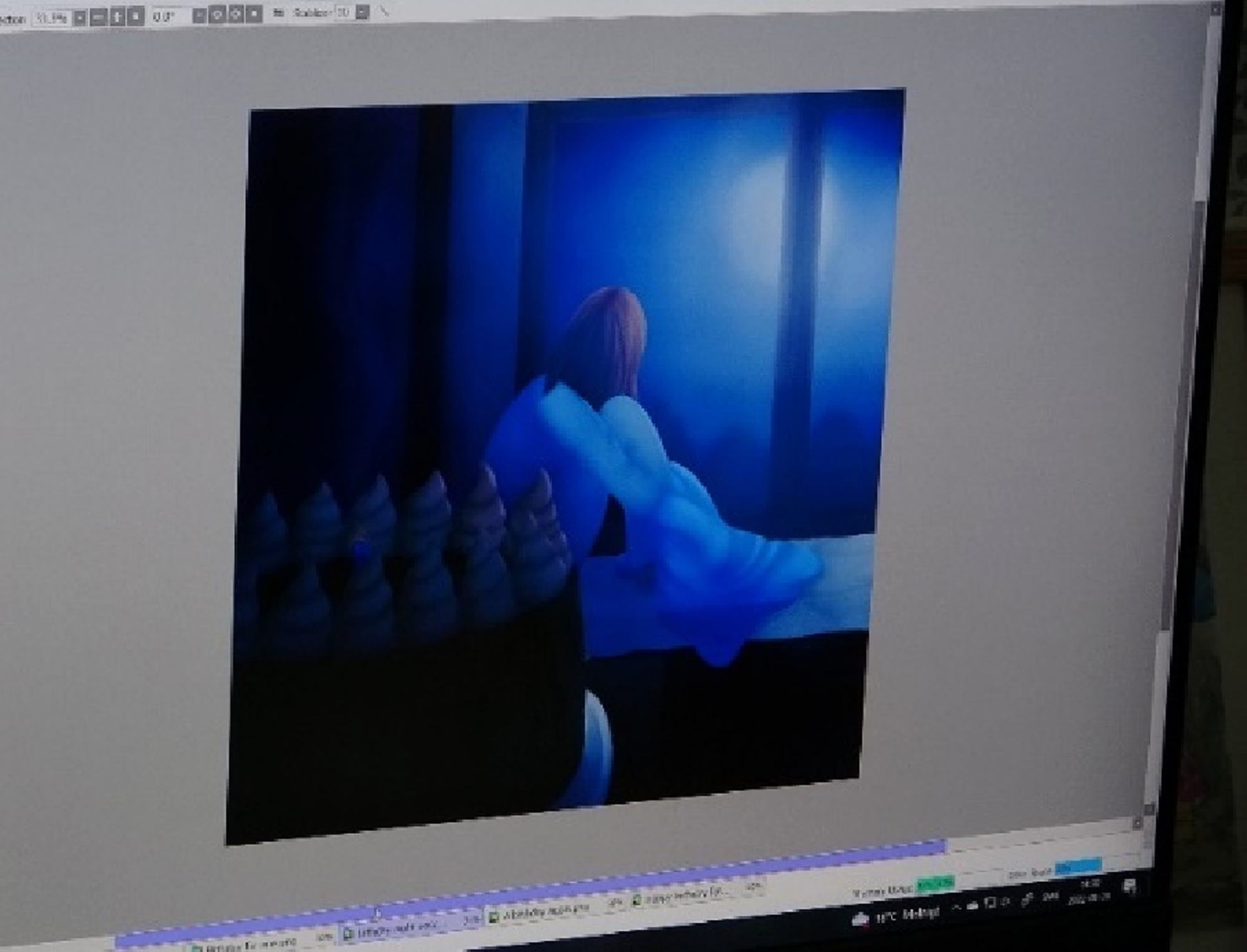
Birthday 3(copyright Marianne).
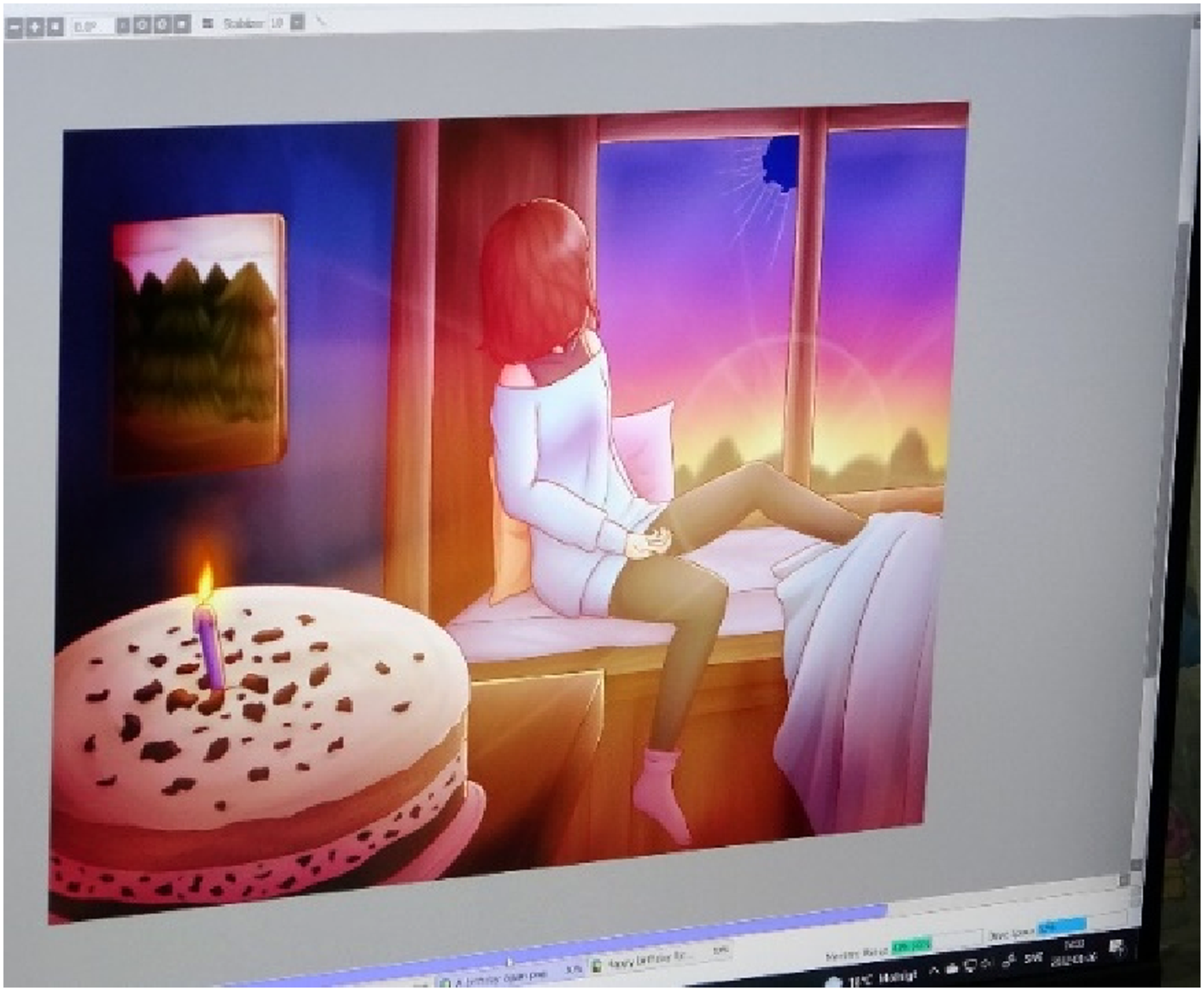
Birthday 4 (copyright Marianne).
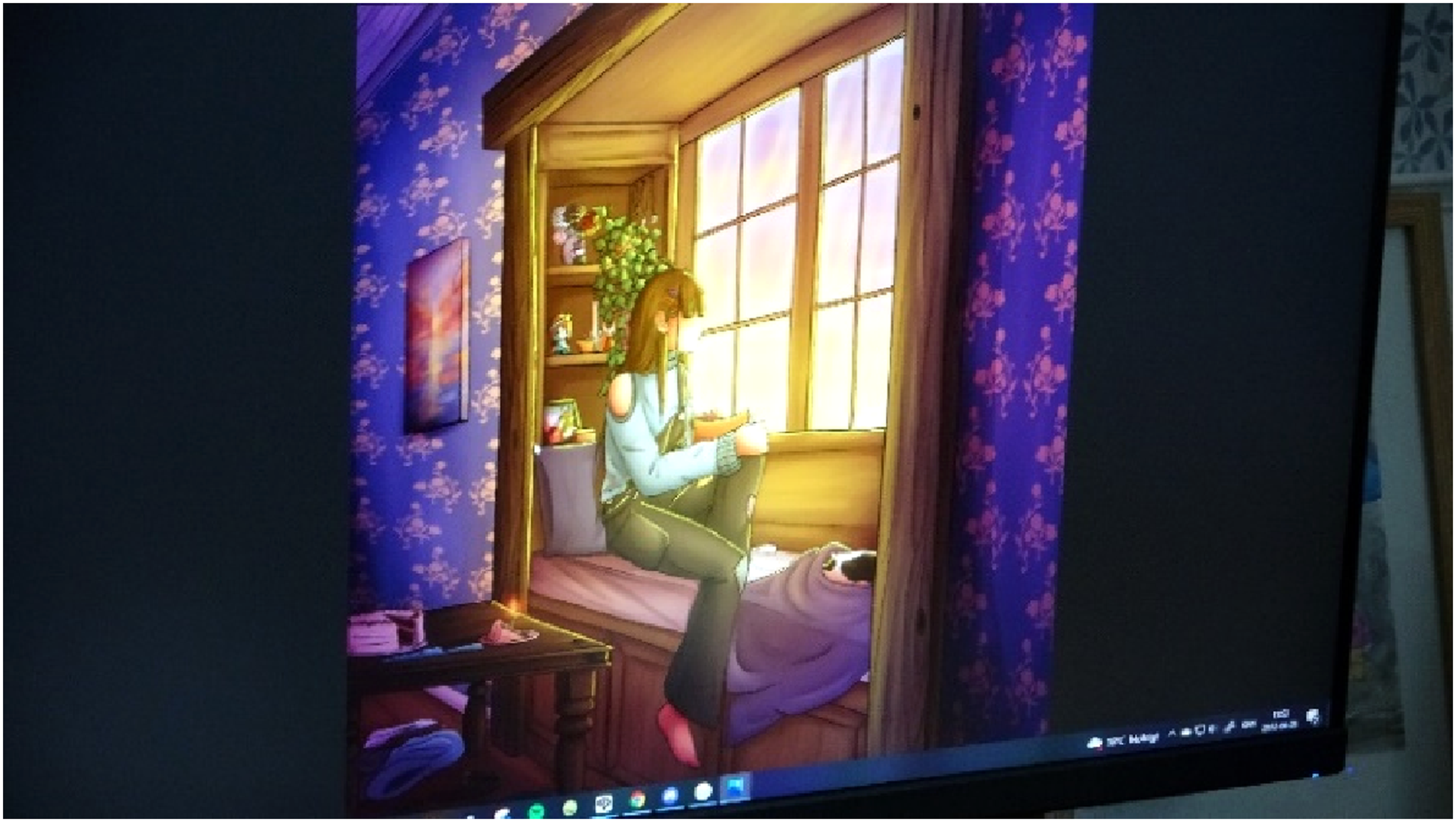
Birthday 5 (copyright Marianne).
Marianne's pictures also create new lines among her friends, as the motif evokes feelings and affects in them: My friends say ‘Why are you always alone in this birthday picture?’ And many see it as something sad. But I’m not sad, I’m just lonely, that's all. Maybe the idea from the beginning was to be alone because no one came to the party and such. Just because, but then it became a tradition for me and it was more that […] well, I’m not sad. It's more just that I’m taking it easy, I’d say. It should be quiet but not depressing. Yet many say ‘But why are you alone?’ But now I have the cat with me. So, a friend drew me for my birthday. One actually painted my picture from outside and another friend painted me with her sitting in that window.
Cultural heritage as a meshwork of visual practices
If young people's cultural heritage is to be more than adults’ nostalgic remembering of the past, more knowledge is needed regarding how the participants view the social practice they engage in. In this article, we have dealt with the complexities of young people's digital picture-making, demonstrating the process with threads running through the past, the present and the future. We have acknowledged the relationship between the tangible (the pictures) and the intangible (the picture-making process), arguing that cultural heritage institutions must consider why and how these pictures were created and what role they play in young people's everyday lives.
The attentiveness to entanglements of lines in Ingold's (2007) work makes it possible to discuss the mobilities and relationalities of young people's digital drawing practices (cf. Leander et al., 2010). This approach underlines that young people's digital drawing practices are not restricted to one place, a predefined set of people, or a single picture. Rather, these practices are undertaken in changing conditions; they move across time and space involving various tools and people from different places and cultures and carrying shifting knowledge and meaning (see Kopytoff, 1986). Picture-making may begin as something that is done alone and end up being something that is collaborated on with others as pictures are reworked. The creation of pictures is a process that does not immediately end with a final product, but one that is reworked, corrected, discarded, displayed, commented on, appraised and perhaps reworked once more. It can be argued that picture-making includes setting the pictures in motion. Young people's digital drawing practices can thus be seen as a visual meshwork; they are socially, materially and virtually relational, as they intertwine and become entangled with other practices and pictures in different contexts, on different platforms and with different materialities, emotions and things (cf. Pink, 2011). As such, young people's picture-making is part of a digital culture that takes place in bedrooms as well as in social meeting places where young people communicate and interact with others with whom they share interests (Duncum, 2015; Ito et al., 2013).
The participants in the present study set their pictures in motion but also move with and along the images. For example, in Marianne's birthday pictures, the same motif appears across time, displaying Marianne at different ages. Furthermore, it is not only humans who set pictures in motion, but also non-human entities such as algorithms in a digital infrastructure. This contributes to the creation of new relationships and movements that are beyond human control, illustrating Ingold's (2007) view of things as unfinished. Even the present article is the beginning of a new thread along which the young people's pictures continue to travel; sending pictures to a museum or an archive or simply posting pictures on social media platforms are other threads. This can be seen as a movement along different lines in a kind of undulating relationship whereby young people's digital drawing practices cannot be understood as restricted, situated activities with fixed entities or finalised pictures as outcomes. In such a limited understanding, the process gets lost, and the picture becomes an empty ruin for the future that will say little of what it meant to be young today (see e.g. Eklund et al., 2019).
It has been argued that collecting young people's pictures is not enough to make their voices heard (see Patterson and Friend, 2021); rather, more knowledge is needed concerning the roles visual practices play in their everyday lives, and young people's perspectives and knowledge must be included in the production of descriptive metadata. Thus, to be able to say something about young people's visual practices, cultural heritage institutions must know what these practices are and how they are carried out and must talk to people who undertake them. Ginzarly and Srour (2021) argue that children should be given a greater role in preserving cultural heritage, as they can help ensure future awareness of cultural heritage and help preserve a community's cultural values as a collective memory. This can be done by cultural heritage institutions enabling children to donate their cultural productions, such as pictures and artefacts that they have made themselves, and make it possible for them to contribute with their perspectives on the meaning and creation of these objects. However, cultural heritage institutions are normally adult spaces. In order to involve children and young people in the process of preserving cultural heritage, the information about archives and other cultural institutions needs to be available, relevant, interesting, and inclusive of young people and their realities (Ågren, 2023).
In sum, this article presents a rich and heterogeneous description of young people's digital drawing practices, revealing a tangle of lines and movements across all visual forms and practices. It thus offers new perspectives on how to understand pictures and picture-making. We suggest that cultural heritage institutions must be aware of and interested in these practices as they are enacted in, outside of and across children's everyday lives, as well as of how these cultural expressions are valued (Duncum, 2015; Faucher, 2016; Manchester and Pett, 2015). Finally, this article extends our ideas about how tangible and intangible heritage may interact, and about approaching heritage as a process, a constant becoming rather than a permanent given (see e.g. Chang and Mah, 2021).
Footnotes
Funding
The authors disclosed receipt of the following financial support for the research, authorship, and/or publication of this article: This work was supported by the Swedish Research Council, Riksbankens Jubileumsfond and Kungliga Vitterhetsakademin, (grant number 2020-03095).

Notes
Author biographies
Ylva Ågren is Senior Lecturer in Child and Youth Studies at the Department of Education, Communication and Learning at the University of Gothenburg, Sweden. Ågren's research focuses children’s cultural production, social media, consumer culture, children's rights and children’s cultural heritage.
Pål Aarsand is Professor at the Department of Education and Lifelong Learning, Norwegian University of Science and Technology, Trondheim, Norway. His main research interest concerns children's digital technology practices and phenomena, such as gaming, playing, identity work and digital literacy.