



Abstract
Using the analysis of online activity, autoethnographic reflection, and a participant survey, this article examines Australian rock-decorating groups on Facebook and the role of social media in everyday practices of decorating, hiding, and finding rocks. These groups use the platform to celebrate and share their creativity, generate digital connections between strangers, and in so doing bring about a distinctive hybrid of online and offline space. We draw on a cultural studies approach to issues of placemaking and social media to ask: what kinds of public space – online and offline – are created through these digital and material practices? Our analysis is framed by notions of placemaking, affordances, and public atmosphere to understand these forms of everyday creativity, community, and place.
Keywords
Introduction
This article examines rock decorating, 1 hiding and finding practices, and the use of smartphone cameras to document and share the activity on Facebook. We reflect on the affective atmospheres of public space created by participants through physical and digital means and the extent to which the experience of the city is shaped by the evolving affordances of social media. We ask: what kinds of public space – online and offline – are created through this hybrid of digital and material practices? The painted rocks hidden by creators and the digital images captured by those that find them generate a sense of play and intimate co-presence, interweaving the experience of public space and urban life with media platforms. Place is created not just by rocks hidden in physical locations but by the use of smartphones to photograph and share these creations, the ‘rock drops’, and finds online. By participating in these communal photographic exchanges group members express their ‘identity as interactive producers and consumers of culture’ (Van Dijck, 2008: 63). We argue that mobile phones are an essential component in the activity, amplifying the capacity to actively shape the experience of public space; by photographing, commenting and sharing rock imagery on social media, the rock-decorating community creates public atmospheres of creativity, play, and connection that are indelibly hybrid.
Background
It may seem easy to dismiss rock decorating as unworthy of serious study because of its amateur aesthetic and popularity with children and families. However, online membership in Australia and globally would suggest the importance of the hobby. For example, the state-level group ‘NSW Rocks' boasts over 126,000 members. The practice of decorating rocks is pre-dated here in Australia by a long continuous history of mark-making and painting rock surfaces such as cave walls; First Nations communities have shared stories and produced a sense of connection to place and community over thousands of years, with smartphones now playing a role in the process (Miyarrka Media, 2019). Indeed, high-quality camera phones have changed how cultural values circulate, providing opportunities for people to participate in the production of place in new ways.
The practice of rock decorating involves finding a stone that fits comfortably in the hand and is easy to decorate. Ordinary grey garden pebbles work well and can be purchased from a hardware store. A range of materials are used but paint pens are favoured because they are vibrant and easy to apply. Hashtags or the Facebook group's name are often added to the underside so that images of the stones are easy to share and locate on social media. Images are posted to social media before the objects are hidden in parks, on beaches, in iconic places, or on street corners for others to find. Once rocks are discovered, they are either kept as a souvenir or re-hidden. This step may also be documented on social media. Participants might engage in all aspects of the process or be focused primarily on decorating and hiding or solely engaged in the joy of finding. Camera phones are used to document and share the different stages of the activity, mostly on Facebook rock-painting groups. Rock decorators can share artworks and post imagery of ‘rock drops’ in particular locations, often tagging a postcode, and rock finders publish pictures of their rock discoveries. In this way the Facebook group makes it possible to publicise the activity, allowing users to respond quickly in real time, rewriting public space via a collective visual language.
While smartphones are widely used to engage with everyday spaces and share artworks, the practice is under-researched. Our study makes three key contributions to understanding rock painting and hiding. First, it highlights the role of smartphones and media platforms in generating atmospheres of connection and co-presence. Second, it examines the role of the rocks in facilitating the communication of community values. Third, it explores the ways in which both digital and material domains enmesh to produce a sense of place. In so doing, our study contributes to ongoing debates in the fields of media and spatial studies about the relationship between media platforms, people, and place, offering insights into new forms of community. We also respond to the challenge articulated by Burgess and other cultural studies scholars to take everyday, vernacular forms of creativity seriously, as culturally valuable expressions of ‘the serious business of the human experience – life, loss, belonging, hope for the future, friendship and love’ (Burgess, 2006: 212).
Literature review
This section of the article situates our study among a number of relevant scholarly coordinates, none of which neatly match the specific practices under examination. For example, Hjorth's (2015) analysis of camera phone use in the mapping of urban space and Merrill et al.'s (2020) study on its role in helping communities commemorate a crisis both emphasise affect and creativity in placemaking. Unlike these studies, however, location-based data is less relevant to rock-decorating practices; further, the nature of the creative activity and playfulness is far less professional or organised. Both, however, highlight the entanglement of online and offline space in building atmospheres of connection and mapping a sense of place. Our study is designed to build on these works and other scholarship in the fields of cultural, media, and urban studies via the use of three key concepts: placemaking; affordances; and public atmosphere.
Placemaking
The first of our conceptual coordinates is the notion of ‘placemaking’: the social process of creating liveable, meaningful places from geographical space (Basaraba, 2023). The concept can be traced to the work of Henri Lefebvre (1991, 1996) and Doreen Massey (2005). Placemaking also refers more specifically to the set of professional practices that emerged in the 1960s in the work of architects, geographers, and urban designers, and is deployed by developers and city councils to enhance public space for the purposes of economic development.
A recent review of placemaking (Ellery et al., 2021) highlights three dimensions to the concept: the process involves the creation of a ‘sense of place’ for community members; people's perception of a place can be positive or negative, due to past experiences for example; the process exists along a continuum between ‘a community centred, bottom-up, approach and a government or developer led, top-down approach’ (2021: 69). Ellery et al. (2021) further identify a strong correlation between degree of community engagement and the strength and rate at which a positive sense of place is developed.
While placemaking strategies can involve a broad range of approaches, the creative arts have long been recognised as important to individual and community well-being (Fancourt and Finn, 2019), community development (Sari and Mengi, 2022) and socio-economic revitalisation of place (Markusen and Gadwa, 2010). The term ‘creative placemaking’ – to ‘strategically shape the physical and social character of a neighbourhood, town, city, or region around arts and cultural activities … to animate places and spark economic development’ (Markusen and Gadwa, 2010: 3) – captures the distinct blend of socio-economic policy and the arts common to many regions’ and cities’ approach to development. However, creative placemaking, along with policies related to notions of the ‘creative city’ and ‘creative industries’, tends to be enclosed within a neoliberal lens (Gibson et al., 2012). This risks an overemphasis on professional creatives, inner-city creative clusters and the ‘business’ of culture, at the expense of more dispersed and vernacular forms of creativity and the ‘unheralded and prosaic sites of suburban creativity’ (Gibson et al., 2012: 299). Although our study is focused on the role played by creativity to build a sense of place, the term ‘creative placemaking’ struggles to capture the participatory, amateur nature of the activity under consideration or its enmeshment with people's everyday use of media platforms.
‘Digital placemaking’, on the other hand – the use of ‘digital media affordances in order to cultivate or maintain a sense of attachment to place’ (Helagoua and Polson, 2021: 574) – emphasises the role that digital technologies can play in more participatory forms of placemaking, with a focus on questions of power relations and the significance of everyday culture (Gibson et al., 2021). For example, Foth (2017) argues that the emergence of digital technologies has opened opportunities for grassroots placemaking, whereby individuals become ‘co-creators in a collaborative form of city making’ (2017: 2). The hybridised nature of our experience of space (de Souza e Silva, 2006) has changed how communities are formed, while enabling more participatory forms of placemaking (Frith and Richter, 2021). As such, the notion of community is shifting from one of group membership, physical co-presence, or a particular location (Rainie and Wellman, 2012) to one of shared values, more akin to Gee's (2005) concept of ‘affinity spaces’.
Halegoua's (2020: 5) notion of ‘re-placing the city’ also points to the everyday, habitual production of a ‘unique sense of place through the use of digital media affordances’. It is to this concept of ‘affordances’ that we now turn.
Affordances
With its origins in psychology and design, the notion of ‘affordances’ allows us to focus on the co-evolutionary relationship between particular technologies and their users; it refers generally to ‘the range of functions and constraints that an object provides for, and places upon, structurally situated subjects’ (Davis and Chouinard, 2016: 241). In social media research, affordances is understood to refer more specifically to ‘the perceived actual or imagined properties of social media, emerging through the relation of technological, social, and contextual, that enable and constrain specific uses of the platforms’ (Ronzhyn et al., 2022: 14).
While the affordances enabled by location and tracking technology are not an important factor in our case study, the nodes of connection and sense of place built by the documentation of these acts of hiding and finding involve a ‘digital wayfaring’ (Hjorth and Pink, 2014) across places and times that weaves together the movement of human participants, devices, and decorated rocks. In turn, the online and offline activity adds layers of social significance to specific locations with the ‘emplaced cartography’ (Pink and Hjorth, 2012) afforded by mobile phones.
Public atmospheres
To the concepts of placemaking and affordances, we add ‘public atmospheres’ (Merrill et al., 2020) for its attention to questions of emotion and affect across online and offline space. The notion of atmosphere (Anderson, 2009) – a ‘spatially extended quality of feeling’ (Böhme, 1993: 118) – illuminates the role of the body and emotion in placemaking. While affect has always played an important role in people's experience and sense of place (Duff, 2010), the mobile dimension to digital technologies provides particular ‘mobile-emotive contexts’ (Cumiskey and Hjorth, 2017) that work to ‘amplify feelings of intimacy, co-presence and affect’ (Gibson et al., 2021: 559). In turn, these feelings contribute to the production of space: intimacy, for instance, ‘builds worlds; it creates spaces and usurps places meant for other kinds of relation’ (Berlant, 1998: 282).
Like Merrill et al. (2020), we are concerned with the emotional tone of the ‘more or less digital’ experience of public environments. Unlike Merrill et al.'s case study, which looked at everyday creative practices commemorating the first anniversary of the Manchester Arena bombing, the practices we follow are not prompted by one event, theme, or catalyst. People hiding and finding decorated rocks and then sharing the process on Facebook traces a more diffuse network of social connection and atmosphere of ‘togetherness’ (Merrill et al., 2020).
In addition to a sense of enhanced ‘digital intimacy’ (Dobson et al., 2019) and co-presence, smartphones and social media afford a playfulness that is important to the dynamic of hide-and-seek inherent to rock-painting groups. While the practice shares some gamified elements with organised public games such as geo-caching (Klausen, 2014) and Pokemon Go (Woods, 2020), this sense of playfulness is also more diffuse. The playful mood activated by these games continues a much longer history of playful urbanism (Hjorth, 2015), while illustrating the ‘gamifying effects of digital technologies on everyday life’ (Woods, 2020).
The next section of the article outlines our approaches to gathering and analysing data. We then turn to a discussion of our findings and their implications for our research question and the scholarly framework outlined above.
Methodology
This research draws on our own experience of creating, sharing, and hiding rocks along with a three-year process (2019–22) of scanning Facebook, Twitter, TikTok, Instagram, and YouTube to identify the digital meaning-making spaces of the rock-painting community. In order to communicate the complexity of the phenomena, we deployed a mixed-methods approach. Following scholars who have used visual content analysis to interpret visual and text posts (Budge, 2017; Palmer, 2020) and the use of smartphones in the everyday experience of public space (see de Souza e Silva and Frith, 2012; Gazzard, 2011; Hjorth and Pink, 2014), we took screenshots of social media posts and analysed their visual and textual content (e.g. a picture of a person holding the rock they had just found, specified location, particular hashtags, and interactions in the comments). We also undertook visual analysis of the physical outputs of the group by looking at the imagery and techniques used to decorate rocks.
To further contextualise the above, we participated in a range of activities designed to enhance our embodied understanding of the digital and material dimensions of the practice: we decorated and hid rocks ourselves; observed public parks and other sites of rock-hiding activity; carried out observations on our own smartphones; and followed relevant hashtags like #rockpainting, #rockpaintingisfun, and #rockdecorating. Our experience of these practices was captured via autoethnographic observations in the form of face-to-face discussions, sharing of imagery, field notes, and discussions with other colleagues, including research assistants who were involved in the project. This bricolage (Denzin and Lincoln, 2011; Pratt et al., 2022) of autoethnographic and cultural studies methods helped knit together a narrative of the highly dispersed digital and urban atmospheres evoked by the practice.
Facebook was identified as the primary platform through which rock painters shared imagery and communicated about their experiences. While rock-painting content was found on other platforms, it was of a different kind, without the public hiding-and-finding and group functionality that is so central to the current study. As such, our analysis also considers the role that Facebook's socio-technical architecture (Van Djik, 2013) plays in enabling particular kinds of social interactions and thus the production of particular kinds of public space.
We further limited the scope of our research to groups that were physically based in Australia and organised at a city or state level. In line with their greater expectation of privacy and the limits of our project's ethics, private groups were excluded from the study, as were groups organised by traumatic themes such as suicide or cancer. Checking the group description of each on Facebook, we examined how these practices were represented, including any protocols that dictated the use of particular materials, inappropriate ‘drop’ zones, such as private property, cemeteries, and war memorials, and how to tag your rock to ensure it is ‘shareable’ to the relevant Facebook group. The overview of these practices along with our autoethnographic embedded understanding then worked as the framework for identifying recurring themes across individual posts and comments.
Finally, we also approached public groups to survey individual members in order to better understand why people join online groups dedicated to decorating and hiding rocks. Respondents were almost exclusively female and more than half were 50 years or older.
In the following section, we outline our findings in the context of our research question which revolves around the kinds of public space online and offline that are created through these hybrid digital and material practices.
Findings
Facebook's popularity for these rock-decorating groups is closely related to its well-established group functionality. The platform's group option affords users the ability to generate a community of like-minded individuals realised as an ‘affinity group’ (Gee, 2005) by tools of moderation and membership. The administrative practices of these groups are an important framework for the rest of our analysis, including our understanding of the extent to which the affordances of the media platform shaped the content and interactions we observed. All the groups we reviewed were closely moderated, and many of the themes identified were directly shaped by the guidance put in place by administrators regarding what to paint with, how to share images and tag rocks, and where and how to hide rocks. For example, NSW Rocks, which has 128,900 followers, asks participants to ‘use unpolished clean dry rocks’ and to avoid ‘glass and ceramic rocks as they can shatter when dropped’; it also advises people to opt for ‘acrylic paints’. The group also recommends sealing rocks ‘prior to hiding them so they hold up to the elements,’ and asks that creators consider whether the image or message they put on the rock is appropriate for children. Participants are asked to include indicators such as the Facebook symbol – that is, ‘NSW Rocks’ – on the back of the rock, and are also invited to include a postcode.
Some groups, such as TAS Rocks (a Tasmanian group with 23,400 members), advise members to ‘not place rocks on or on the edge of lawns, and around tree bases’ or to drop rocks ‘in or around public toilets, including breastfeeding areas, car parks, traffic lights, road signs, bollards, petrol stations, war memorials, Aboriginal sacred grounds or cemeteries’. Similarly, WA Rocks, a West Australian group with a membership of 48,700, reminds members of no-drop zones such as zoos, national parks, supermarkets, places of worship/sacred grounds and private property. This is significant because the practice seeks to be respectful of its engagement with public space. Remarkably, none of the rock-painting groups that we surveyed provide explicit guidance in terms of the content to be painted onto rocks, thus leaving members free to draw on any inspiration or style for their decorating. Rather, advice focused on the ‘how’ of the practice of decorating and hiding, along with how to share one's finds online. This is reinforced by the pictures and commentary that set the tone for these groups. For example, on the homepage of WA Rocks, there is a photo of a chalk drawing that states ‘Kindness is a gift everyone can give.’ Group members are advised to avoid commercial or contentious content but encouraged to be inclusive, supporting a range of issues such as reconciliation and marriage equality without engaging in overly contentious debate or disrespectful comments.
The group administration and its guidelines produce a particular hybridised form of digital and material public space by promoting the hiding and finding of rocks at particular places and times, celebrating different forms of vernacular creativity and seeking to provide a community of help and support. It is to these three themes – activating place and time; creative interventions into public space; and a community of help and support – that we now turn.
Activating place and time
Inherent to rock painting and decorating is the hiding of rocks in particular places where they can be found. By posting rock drops to Facebook a physical location is activated or ‘re-placed’ (Helegoua, 2020) as a site. These sites are imbued with meaning by the artworks on rocks themselves, which may mark an event or a date that the decorator seeks to commemorate. There are two dimensions to our use of ‘place’: first, the physical place in which a rock is hidden or found – under a park bench, for example – and its location, such as a particular suburb. Second, ‘place’ indicates the socio-cultural meaning of a location. Our discussion of ‘time’ is also multidimensional: rocks may help celebrate particular events such as Halloween but ‘time’ also relates to the sequence of hiding, finding, and re-hiding inherent to the process and its pleasures. In Figure 1, for example, the post includes the date, images of the park's name and the specific park bench and tree of the rock drop.
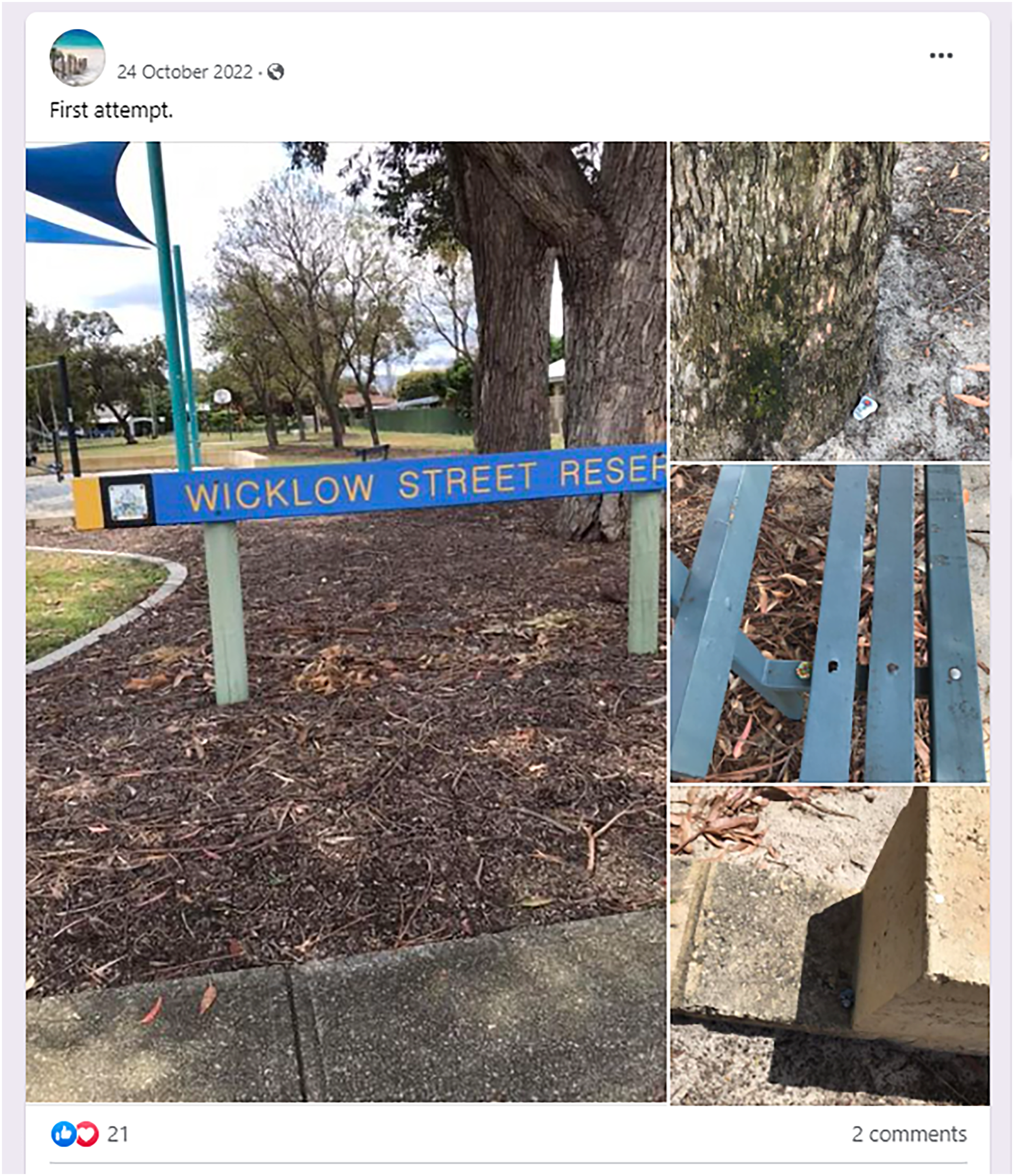
Rock drop in a park, posted to WA Rocks (24 October 2022)
Another aspect of the importance of location relates to the distance a particular rock has travelled. In Figure 2, rocks decorated in Tasmania have been transported to Point Lookout, Minjerribah in Queensland. Interestingly, the person who has decorated the rock is not always the same person who hides it. Family and friends, schools and care groups are co-opted into the activity. The portability of the rock and its visibility on social media promise the pleasure of discovery and a sense of adventure and connection. Stories about how the rock was found and how far (and long) it has travelled are important themes.
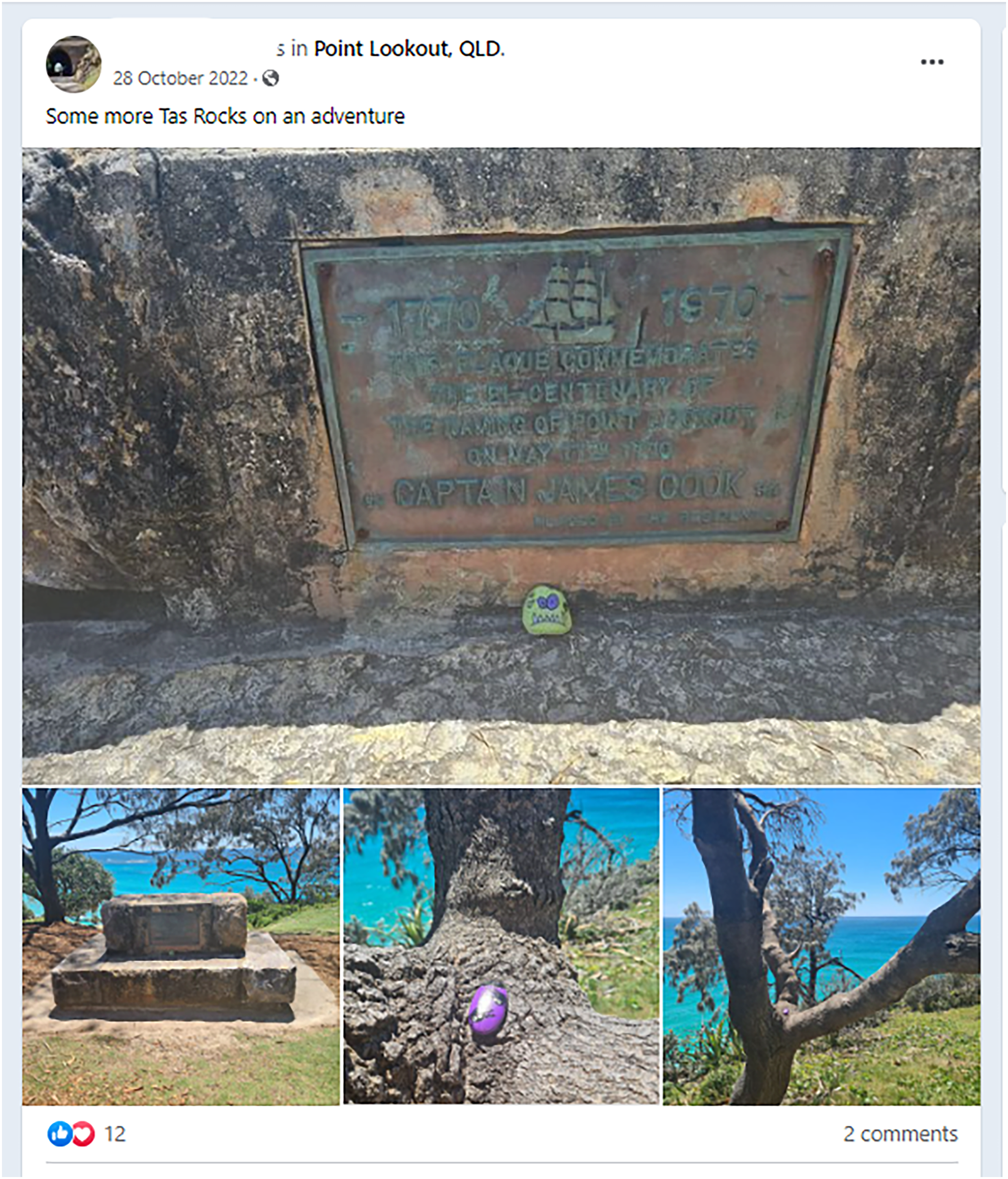
Tasmanian rocks hidden in Queensland, posted to TAS Rocks (24 October 2022)
The rocks are also decorated to commemorate time-specific events such as Christmas or the death of a loved one. A survey participant said: I’ve done themed rocks for various holiday seasons – for example, Christmas and Halloween. For the Halloween ones, I chose to decorate them as a non-sugar option for kids doing trick or treating at my house. I also hide a few in our local area.
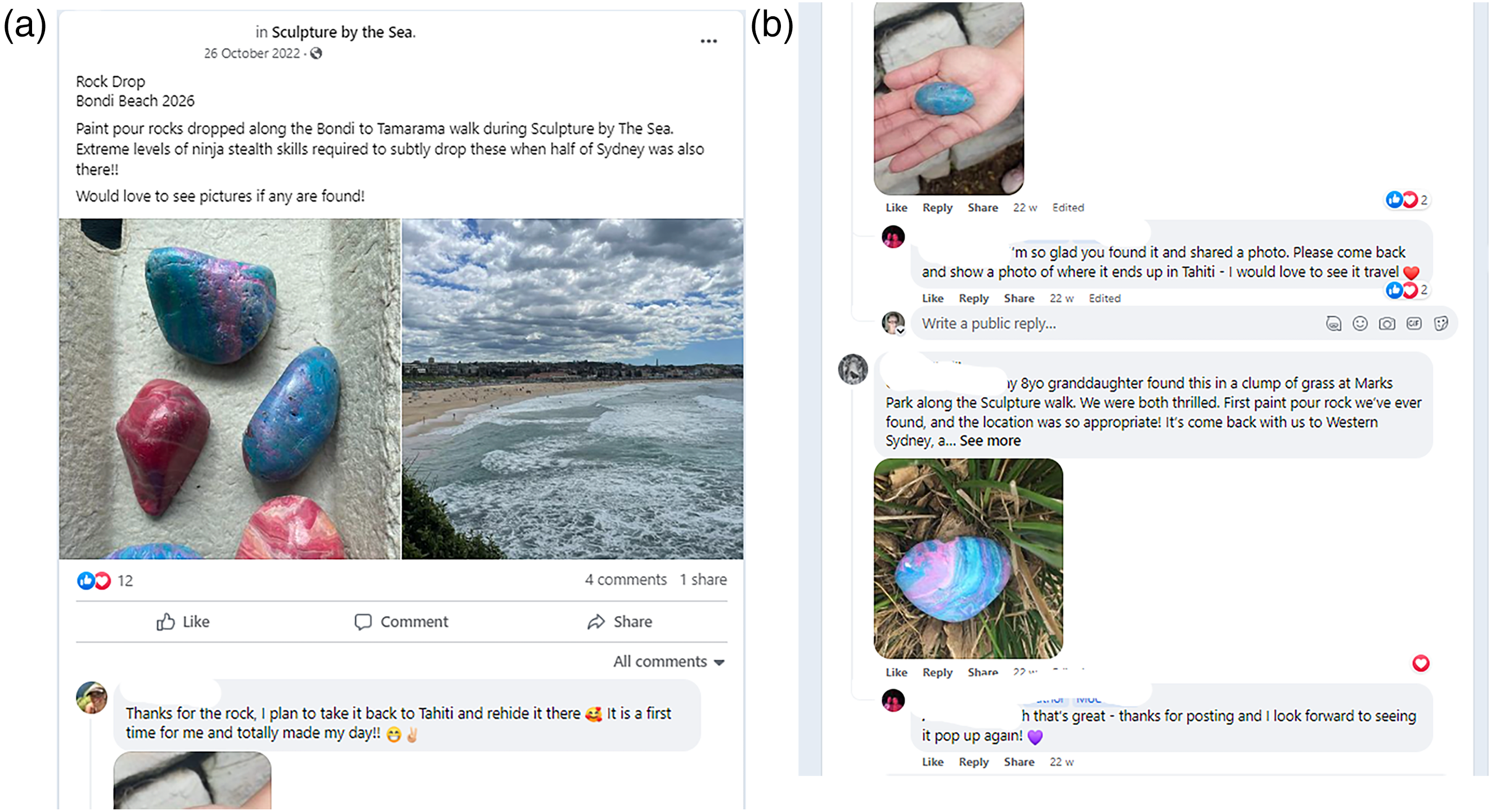
Rock drops and finds at Bondi Beach, Sydney, posted to NSW Rocks (26 October 2022)
The rocks are hidden with their discovery in mind: they cannot be so well hidden that they will not be found. Further, the media platform is used to help others locate the rocks by including their location or postcode and the date of the rock drop. There is a desire to close the gap between when a rock is hidden and when its discovery is posted to the Facebook group. Without social media a participant may never know their rock's fate: ‘hoping to see my rocks found by others’ was nominated by survey participants as the most important benefit to being a member of an online community. The survey also indicated that they are more likely to share a rock-drop image than any other stage in the process. Facebook groups further support this dimension of the activity by advising members to use headings for their posts: ‘Rock Drop’, ‘Rock Found’, ‘Rock Re-hide’. These online and offline strategies enable an ongoing process of hiding and discovery. For example, NSW Rocks' homepage states: ‘our artists love to know when their creations are found, and love to see them move from park to park spreading joy’.
Creative interventions into public space
This next theme regards the rocks as a creative intervention into public space. The rocks are decorated and hidden without official or institutional permission for the purpose of altering the experience of public space. To some extent, then, the activity has much in common with graffiti. Participants anticipate the reaction of the finder in the same way that a spray-painted wall might elicit a particular response. Similarly, there is a broad range of skill levels involved, and a diversity of styles. Unlike graffiti, however, the artwork is mobile, relatively ephemeral, and not viewed as destructive. Rock painting might be regarded as graffiti's ‘family-friendly’ alternative, making use of cheap and everyday materials that more easily circulate beyond property laws (both physical and intellectual).
Perhaps unsurprisingly, people turn to the visual language of popular culture for their inspiration when decorating rocks, and a significant number of surveyed posts depicted images of Spiderman, Minions and other cartoon and animated movie characters. While not exclusively a children's activity, these popular figures demonstrate the extent to which rock painting and hiding are activities that are embraced by families. As such, the imagery is often designed to be child friendly – or painted by children themselves. Many posts of finds include images of children proudly holding the rocks in their hands, rather than the adults posting about it. 2 This use of popular culture also indicates how participants make use of a shared visual language in their designs.
Figure 4, from WA Rocks, presents an image taken by a parent who has decorated 30 rocks, which they then plan to hide as an activity at a children's birthday party. The images on the rocks depict popular children's personalities such as Snoopy, Donald Duck and Bluey. A survey participant said they decorated with Minions because ‘they are simple to do and most children recognize Minions’. Other more generic imagery, such as chickens, lady beetles, crabs, turkeys, dragons, and pandas, is also used, with the same cartoon-like style commonly adopted in picture books and TV shows.
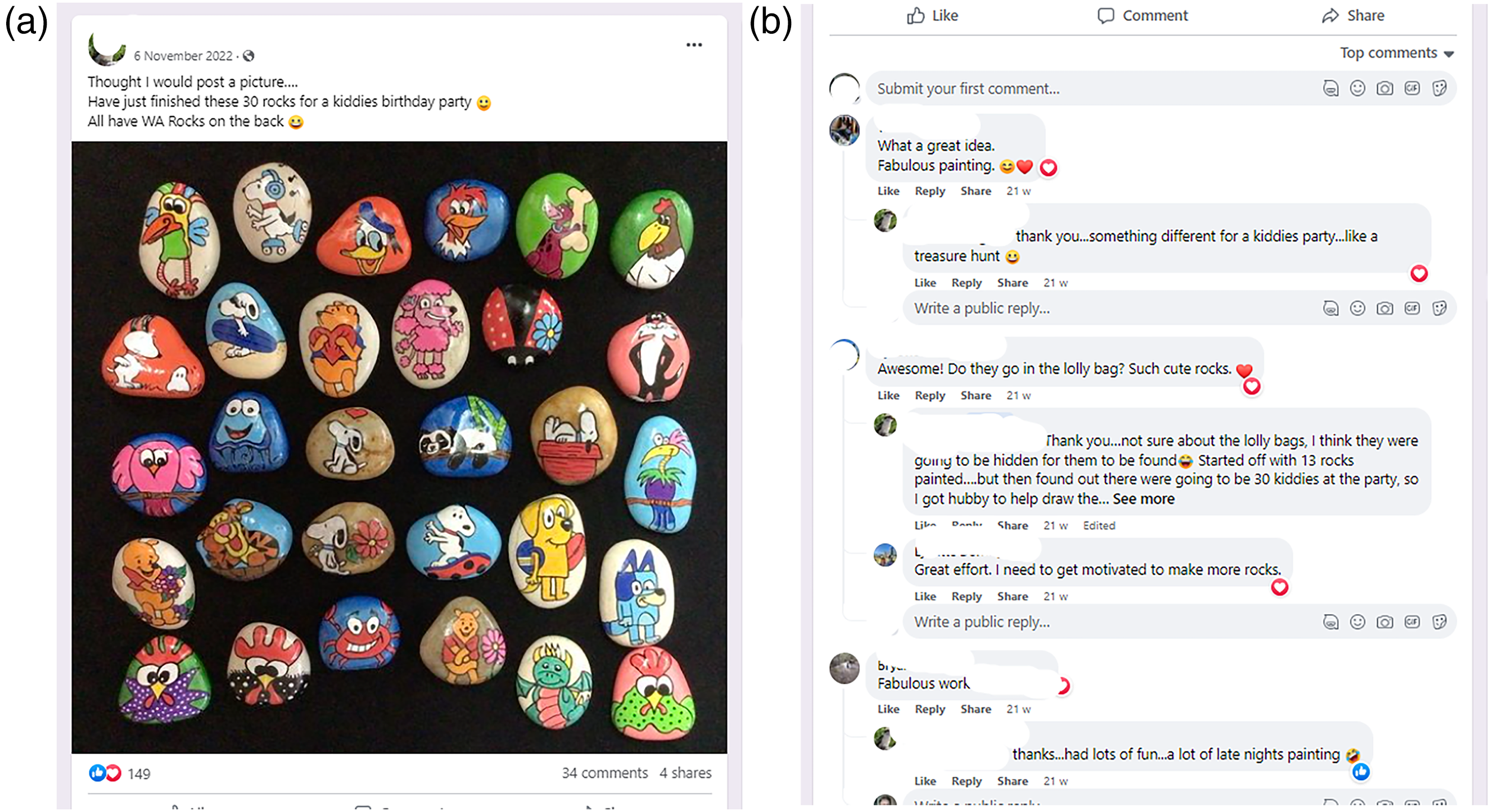
Rocks decorated for a birthday party, posted to WA Rocks (6 November 2022)
Rock pictures such as this example receive considerable engagement within the group, given this one attracted 120 likes and hearts, 3 shares and 30 comments. Notably, most of the responses are focused on celebrating the artworks and acknowledging the logic of using rocks as a treasure hunt at children's birthday parties. Interestingly, a number of posts discussed the creative process used by the author. She was also asked about the materials, and, in her reply, notes that she prefers paint pens and generally finishes the rocks using a sealant. This is significant because, within the groups, careful attention is paid to the process of creating rocks that are visually attractive as well as ensuring artworks will remain durable and will withstand the elements.
In our next example (Figure 5), a parent has shared an image of a rock decorated with a dinosaur that was found by their child on holidays at the coast and is now kept on his bedside table in regional Dubbo because ‘as a 3 year old everything is dinosauce [sic] everything so it was a special find’. While the previous example was focused on the process of painting and then sharing the images before they were hidden, this one is about the joy of finding a rock and the role of imagery in this process. Although generic, the imagery provides a point of connection for those that found the rock – to the extent that they have returned to the online space to share their find and its significance for their child. The exchange under this post between the artist – who, although not from Dubbo herself, has ‘family in Dubbo (hubby is from there)’ – and the person who found and has now kept their art has fostered an intimate and positive connection: the artwork has been gifted to public space but has found its home in the privacy of a child's bedroom.
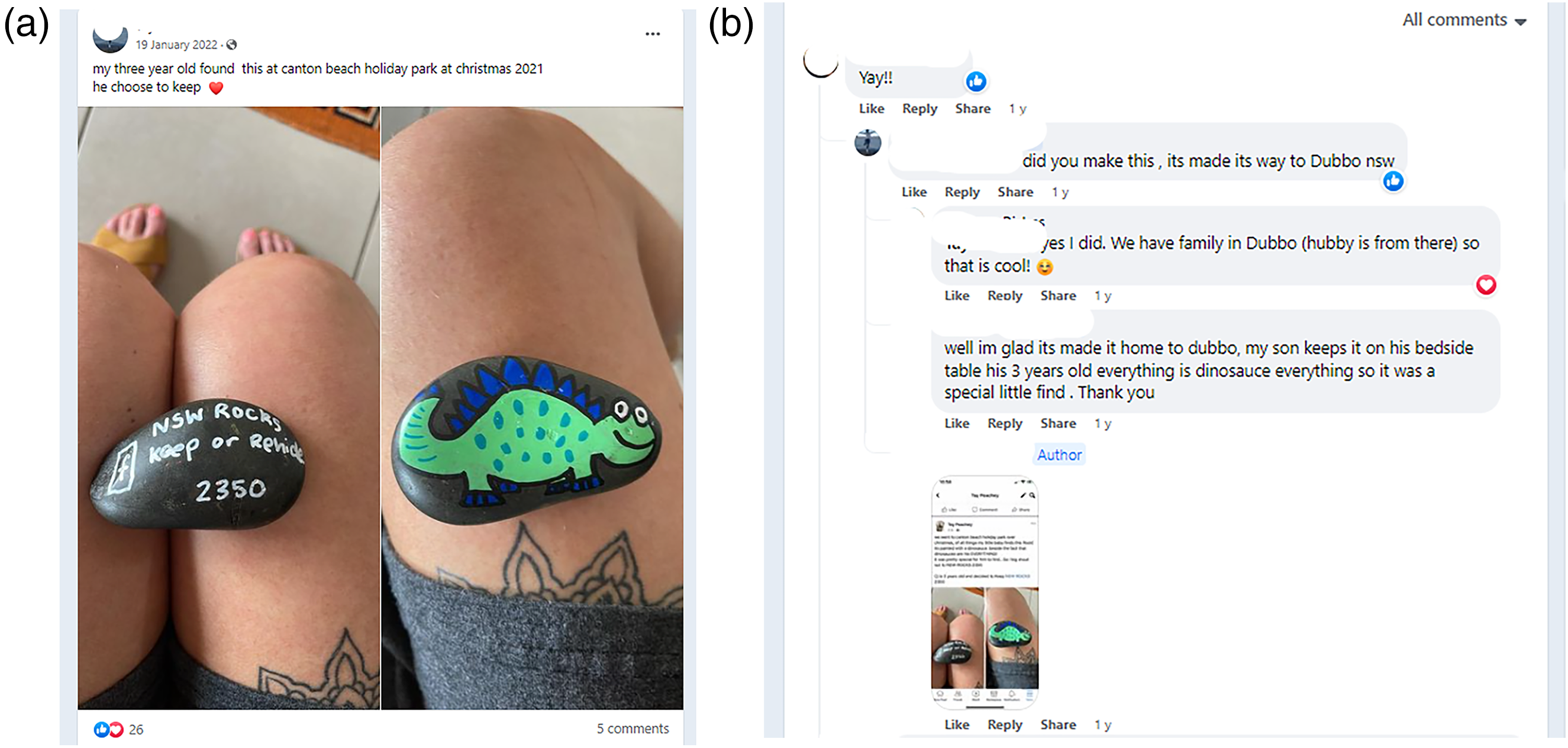
Dinosaur from Dubbo, posted to NSW Rocks (19 January 2022)
While all people who contribute to the rock-painting sites consciously draw on their creative imagination and skills, some contributions attract attention for their artistic abilities. Figure 6, from NSW Rocks, received 850 reactions, 67 comments, and 6 shares at the time of viewing. Here, the artist – well known in the online community for his skill and creativity – allows the shape of the rock to inspire a highly realistic rendering of the wizard Gandalf. His other painting in the post, of a steampunk airship and 17C ship, is not part of the rock drop but is nevertheless shared and then appreciated by the community, as evidenced by the comments.
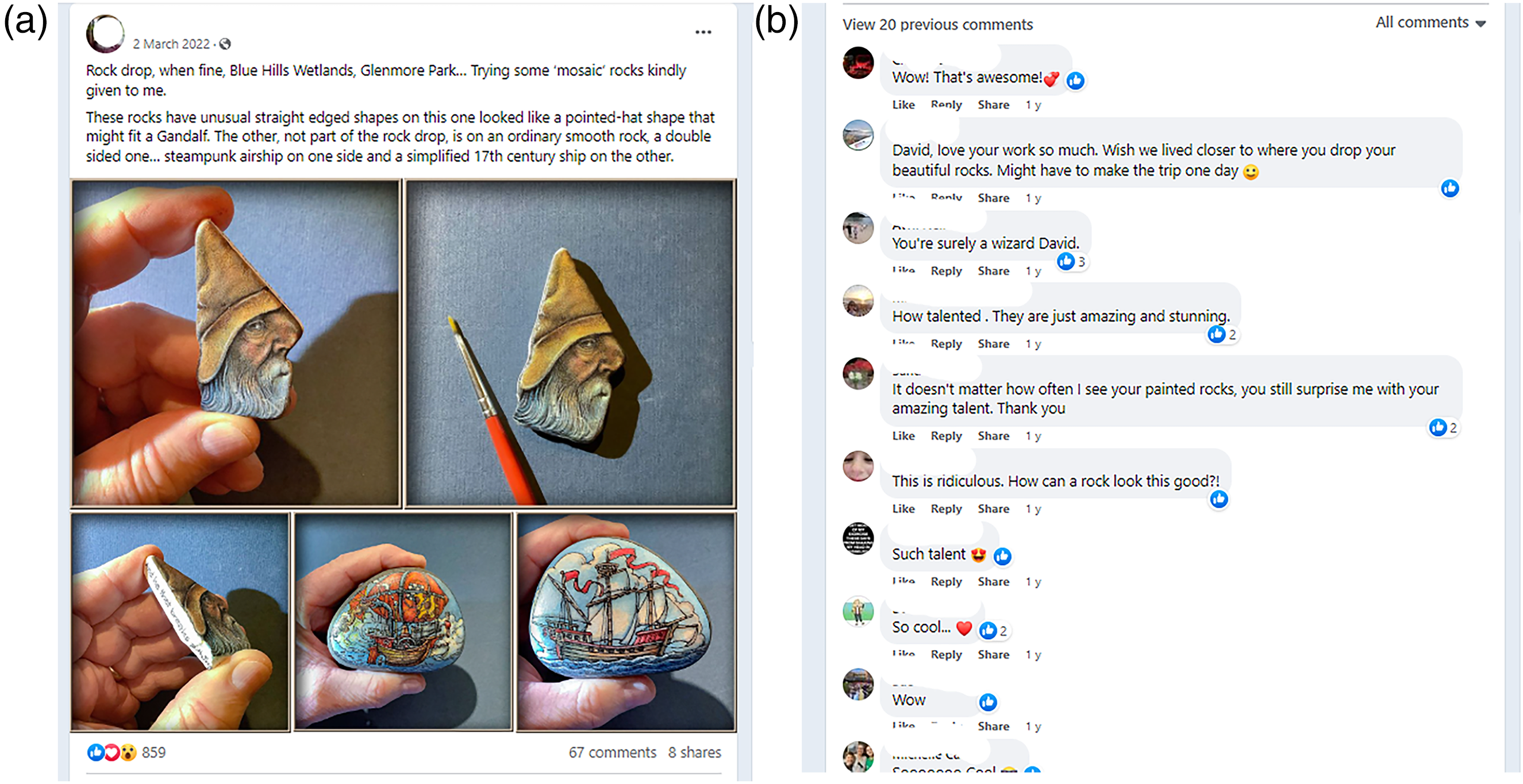
Gandalf, posted to NSW Rocks (2 March 2022)
This particular participant is known for sharing advice within the group on how to achieve particular effects, such as the use of a traditional dip pen paired with acrylic ink. It is significant, however, that a common theme in all of the Facebook groups we examined is that creative expertise and aesthetic sophistication are not required or even the point. Instead, advice is practical and works within the confines of an individual's creative abilities. As this survey response demonstrates: ‘whatever the shape of the rock looks like … triangle shape rock = pizza or cheese wedge, etc.’ For the most talented artist, a wedge-shaped rock can be a Gandalf, but for someone without the craft skills, it can be as simple as a cheese wedge or a pizza slice. This emphasis on inclusivity and support is the focus of the final theme we identified in our analysis of the online posts and survey.
Creating atmospheres of togetherness
This theme is related to notions of how the rock-painting community goes about creating an atmosphere of help and support, one that weaves together both the digital and material public space. Across all the public Australian Facebook sites we surveyed, we were struck by an emphasis on inclusivity and kindness pervading these online groups, with one survey participant noting that it is ‘one of the least nasty and opinionated groups I’ve experienced’. We found rocks decorated with messages of hope and support, such as ‘believe’, ‘be happy’, ‘be polite’, ‘enjoy the little things’, and ‘you are loved’. One survey participant reinforced the importance of the messages on rocks, commenting that ‘I normally do a background and then hand write a positive quote. Everyone has some difficulty in their lives.’ Another participant said they wrote ‘positive words on them like “you’re loved/you’re awesome/smile” to make the person who finds it feel special, as that is why they are called “kindness rocks”’. A similar perspective was reinforced by a survey participant who wrote, ‘You are so loved. Because everyone should know that they are loved.’ TAS Rocks describes itself as promoting ‘inclusion of all ages, abilities and diversity. We build friendships, community inclusion and family unity.’ We noticed some evidence of an explicit emphasis on inclusivity such as rocks decorated in support of the LGBTIQA+ community and Ukraine.
Inherent to this practice appears to be an understanding that the finder will experience a sense of well-being and inclusion as a result. Perhaps in part due to the relatively anonymous connection that is established between the creator and finder, the messages work as serendipitous reminders left in commonly used public spaces, which have the potential to help someone overcome negative or isolating thoughts. In Figure 7, which was taken from Sydney Rocks for a rock drop in Lethbridge and Hearvy Streets, Weetington Lakes, images of hearts, ice creams, and butterflies are accompanied by a rock painted with a positive message. As one of the survey responses commented, ‘Yes I’ve done a few positive phrases to cheer people up. One was “When it rains, look for rainbows. When it's dark, look for stars.”’ On occasion – Figure 8, for example – there is reference to the typeface and graphic design used in generic affirmation messages found on Instagram accounts such as ‘positive quotes affirmations’ and ‘thefemalehustler’. The photos themselves, however, lack the aesthetics and use of filters we might associate with Instagram or Tiktok, relying instead on a very prosaic form of documentary snapshot.
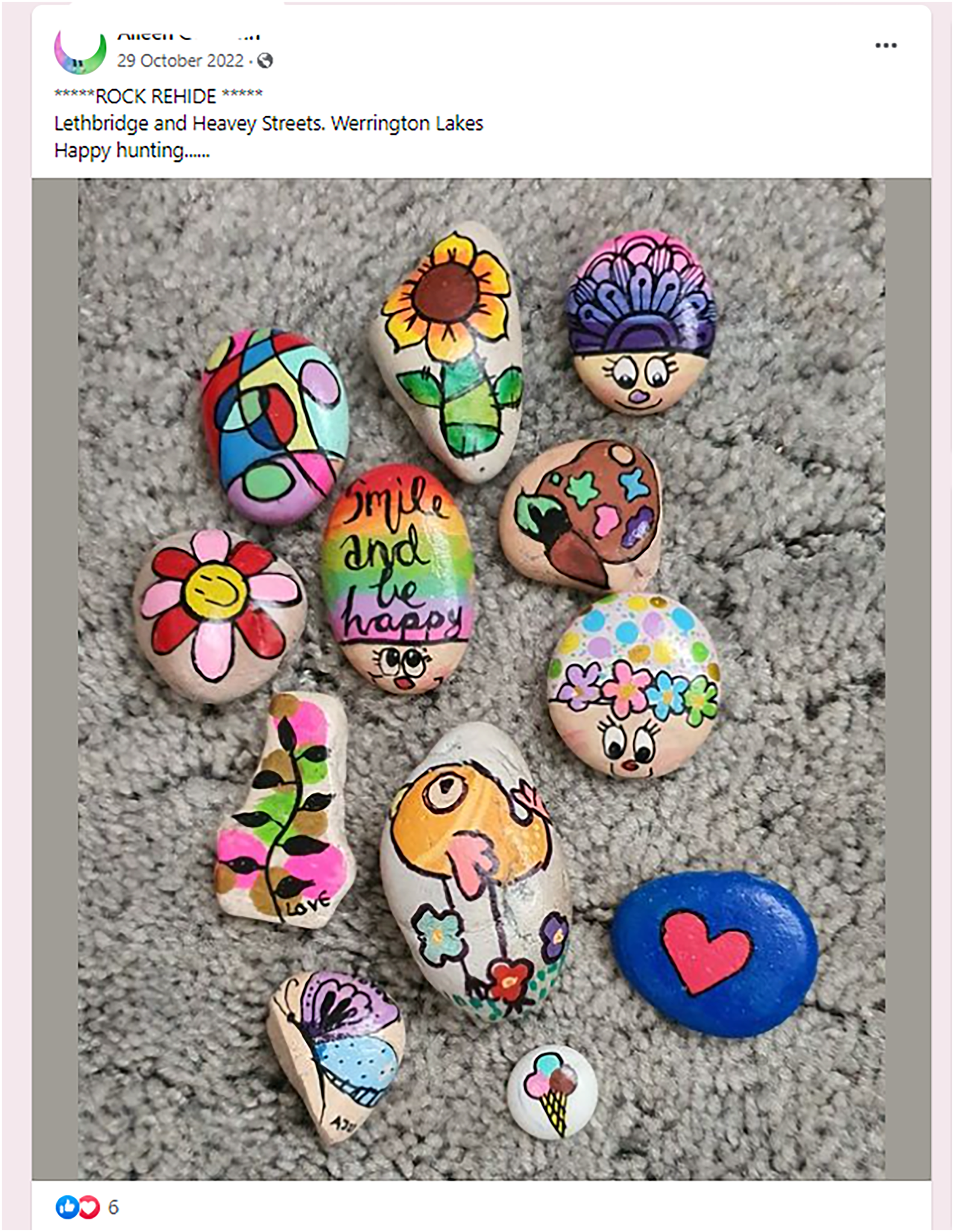
Happy hunting, posted to Sydney Rocks (29 October 2022)
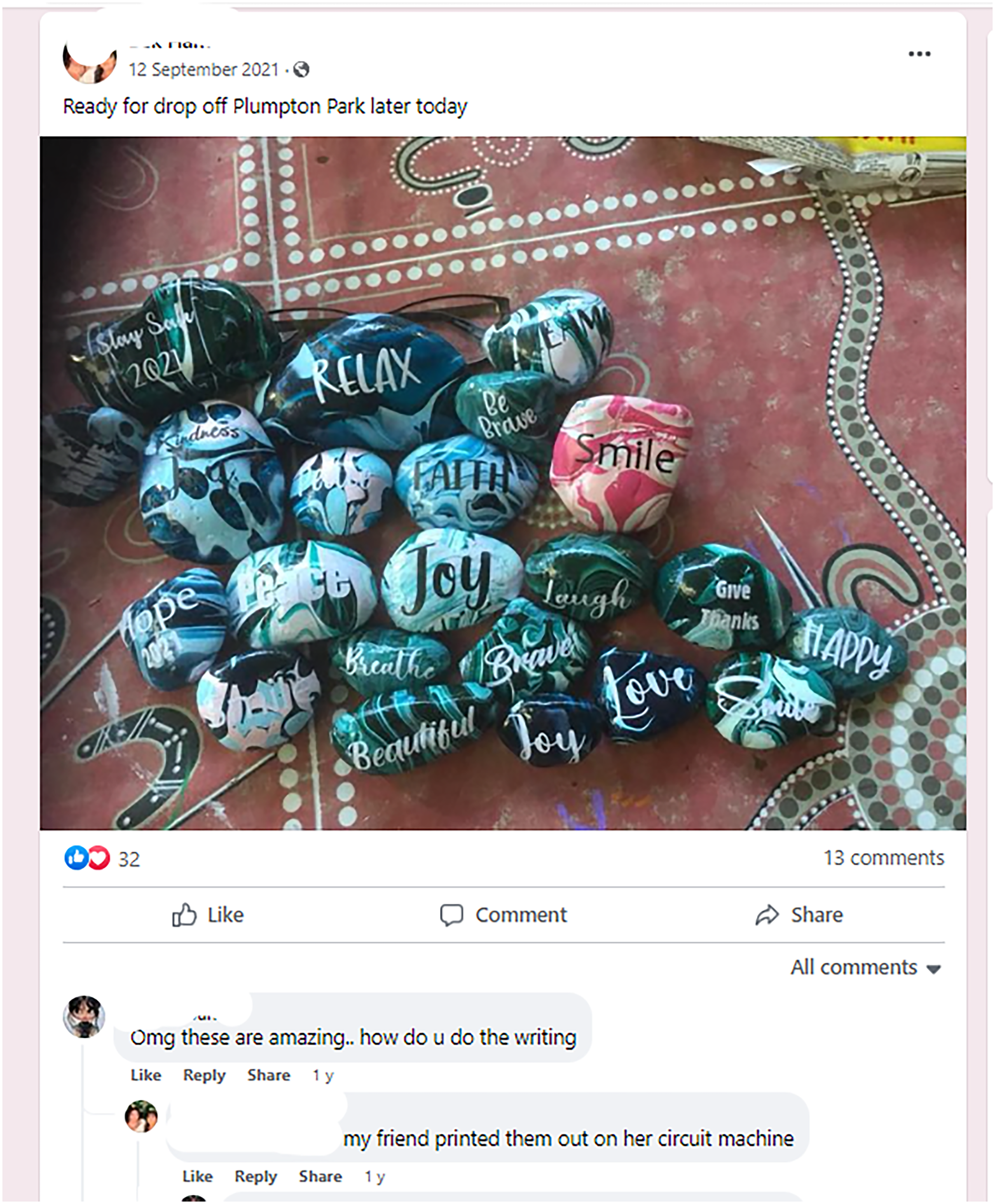
Ready for drop off, posted to Sydney Rocks (12 September 2021)
There were numerous posts from disability workers sharing stories about their clients and the joy they have experienced finding and hiding rocks (see Figure 9, for example).
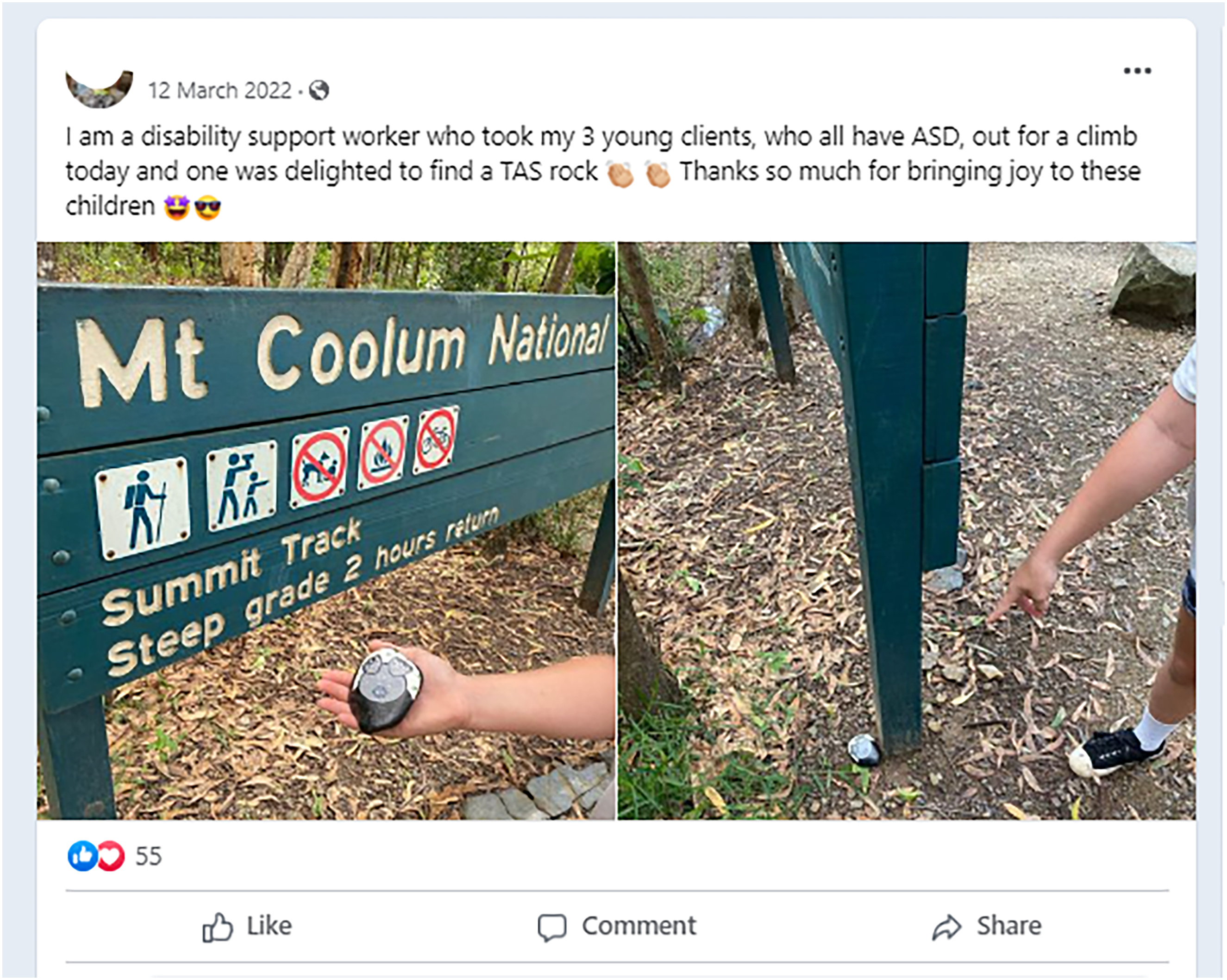
Bringing joy, posted to TAS Rocks (12 March 2022)
One survey participant provided a story that sums up the anonymous connection formed between participants: I posted the message ‘Fly High’ when I painted a pic of a kite…. I hid this rock in Hahndorf SA. A lady found it and gave it to her husband who is a pilot; he was very happy and inspired to have the rock and posted about the find.
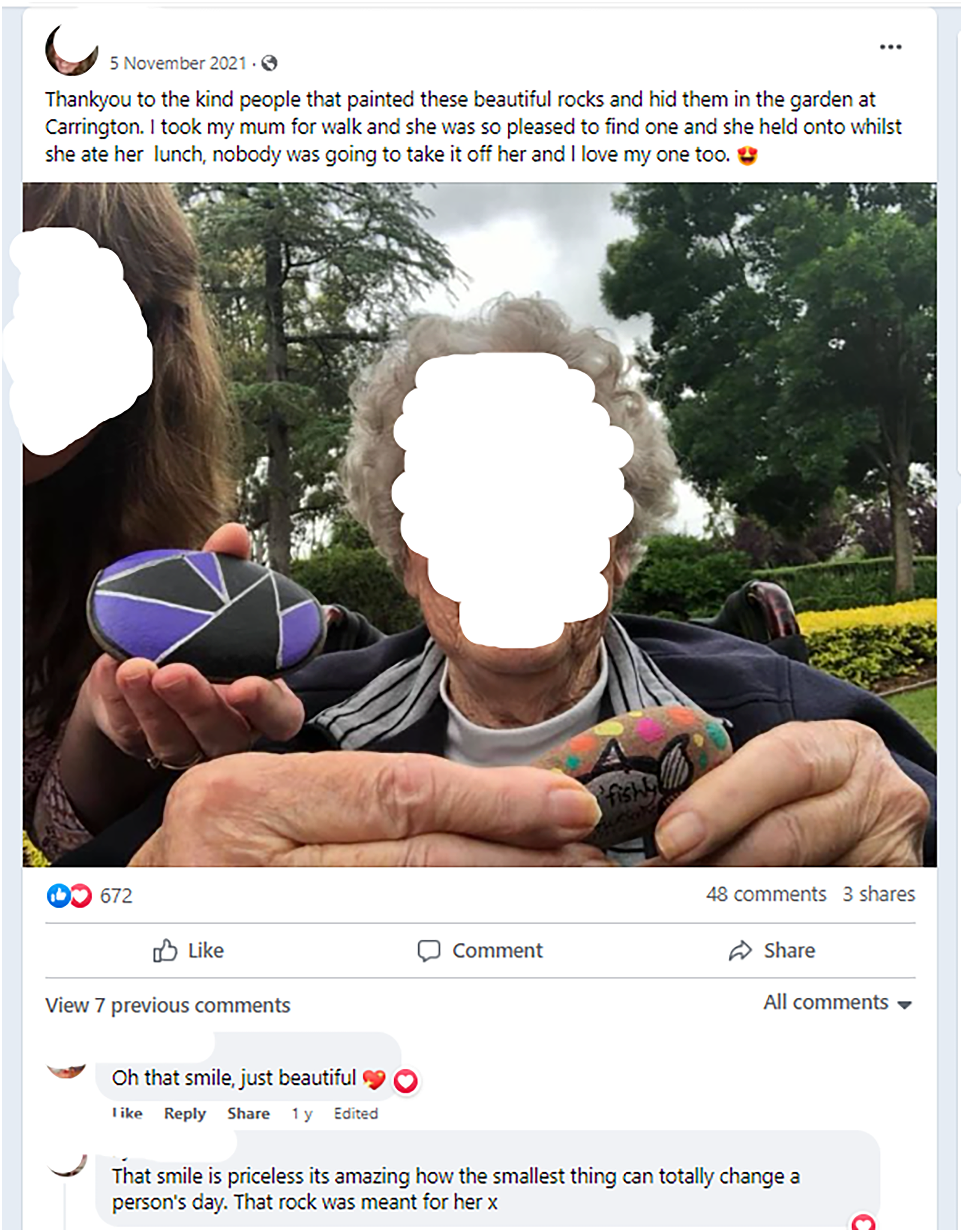
Thankyou, posted to NSW Rocks (5 November 2021)
This emphasis on kindness is evident in other community activities, such as Christmas gift donations or painting rocks for particular causes (Figure 11). The survey and online content indicate that participants understand the rocks and their Facebook groups as a means of spreading kindness and sense of community online and offline.
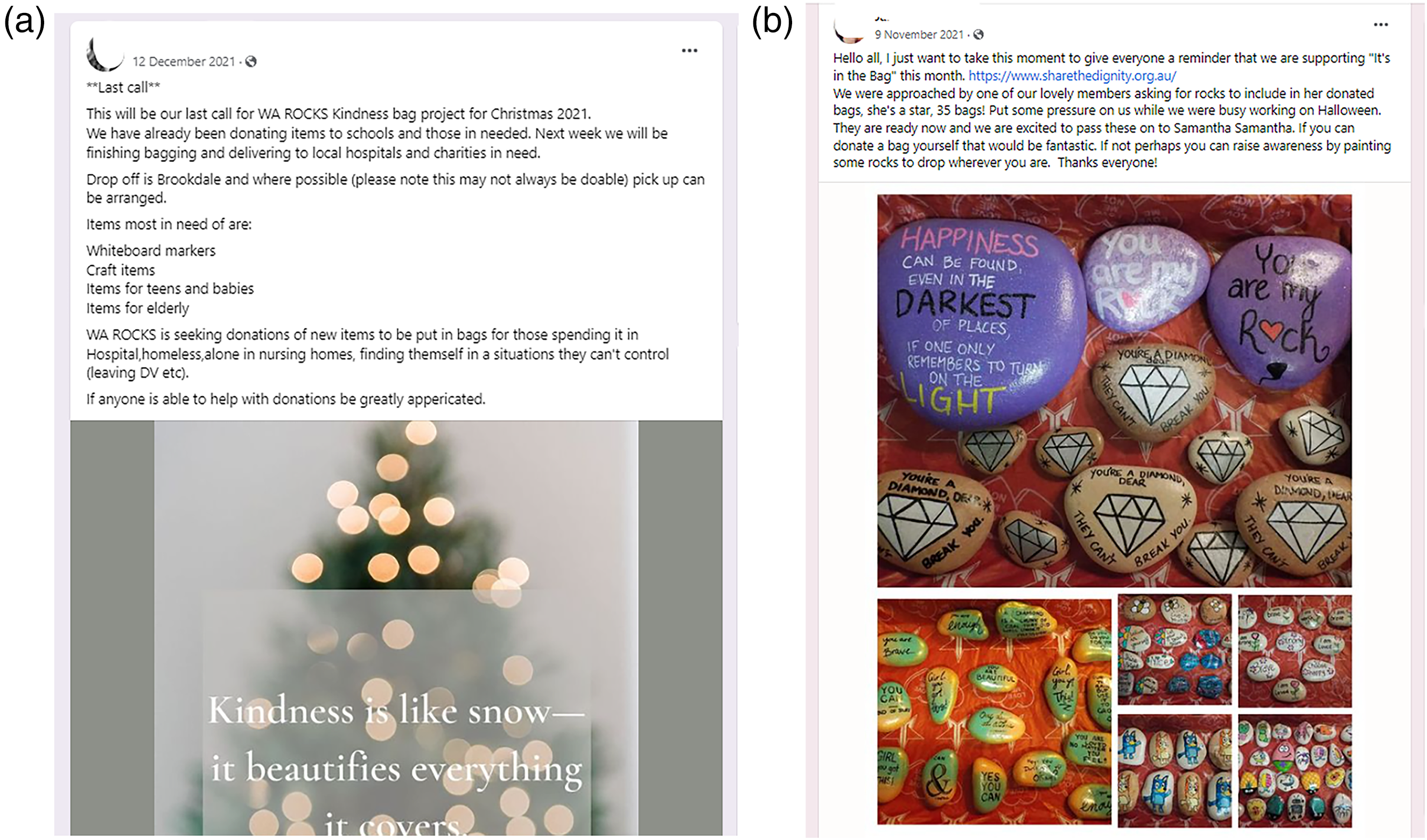
Kindness bags, posted to WA Rocks (12 December 2021) and Sydney Rocks (9 November 2021)
Discussion
The public space under production here is a distinctive hybrid of online and offline space, ‘more or less digital’, and notably less meaningful or engaging if lacking one or the other. Participants value this hobby, not just because it is creative or gets them likes but because it provides an impetus to leave social media and enter into physical activity – even if only briefly – providing a focused and safe means of using and thus rewriting public space for those who are often left out of its design and production: children, people with a disability, older people. The Facebook platform documents drops and finds, makes visible (Frosh, 2019) the connections between participants, rocks, and particular places. Users perform the game of hiding and finding with its online documentation and sharing in mind, in line with Frosh's (2019) emphasis on the performative nature of this documentation: in people's deliberate gestures, proudly showing their finds, for instance, in the context of the place in which they’ve been hidden, with the artwork (the content) carefully positioned for viewing, in anticipation of a response from the rock art's creator, in gratitude for their gift.
Each one of those rocks is the creative expression of the user, hidden to invite contemplation and deliberation in the ‘slow time’ of physical public space and the tangible nature of the painting and the hiding-and-finding process. Common to the online and the offline dimensions of these placemaking practices, however, is the valuing of accessible, everyday forms of creativity and an inclusive and supportive community. The rock-decorating and -hiding community improve the everyday experience of place (Hjorth and Pink, 2014), sharing digital content and material objects in the process of weaving ‘atmospheres of togetherness’ (Merrill et al., 2020).
Social media connects people both to the practice of rock painting and to each other. The platform provides a space to display artworks and to share creative rock-painting techniques. While the rocks themselves are decorated and hidden anonymously, the online dimension allows participants to become more visible and known to each other. In so doing, it enables forms of co-presence and digital intimacy (Dobson et al., 2019) that would be difficult to achieve otherwise. Facebook's administrative function allows the groups to advocate for particular behaviours and ensure the quality of the interactions that occur within the community. The choice by some of these groups to go ‘private’ is another dimension to Facebook's group function, enabling a further negotiation of the tendency of social media to blur online/offline and public/private space.
The combined affordances of the rocks, phones, and Facebook shape the hybrid experience of public space in our case study. The physical rocks exert an enduring physical trace throughout most stages of the rock painting and the hiding-and-finding process. While social media works to moderate the unknowability and unpredictability of the hiding/finding by increasing the chances that an artwork will be located, the rocks remain the focus of all interaction and are valued for their tangibility and ability to create flows of feeling between participants. The mobile phone and the ease of taking and sharing photos of the rocks in situ extend the co-presence of participants in an intimate yet slow network of communication and connection. Painted rocks of this kind materialise the logics of social media, automating connectivity between users, for instance (Merrill et al., 2020). The rocks also act as a motivation for sharing imagery online, functioning as a ‘portal’ (Gee, 2005: 217) that connects participants to the community and a sense of shared values. They communicate and circulate particular kinds of feelings, operating as ‘sticky objects’ (Ahmed, 2014) that greatly contribute to the affective tone and rich experience of a place.
This is reinforced by the survey, where participants highlighted the benefits and stages where social media is best used. In addition to hoping the rocks will be found, survey recipients nominated ‘a sense of belonging’ and the joy in showing their finds to those who did the decorating as the two most important reasons for using social media. There may be a range of ways in which people discover this hobby, but nearly half of those on the Facebook groups we surveyed found the Facebook group before starting to decorate rocks. Understandably, then, our survey also indicated that most participants felt their online participation was ‘somewhat’ or ‘very’ important to their rock-painting activities. The most commonly cited reason for their online participation was sharing knowledge and skills.
The posts we studied involved images of decorated rocks and people hiding and finding them, accompanied by hashtags, descriptions, and comments. It is significant that many of the posts included people with disabilities, the elderly, and children, a cross-section of different people, and an emphasis on the inclusive nature of the activity. The rock-painting designs featured in the posts we analysed draw heavily on popular imagery and affirmations that are immediately recognisable and engaging. They celebrate all forms of vernacular creativity and work as a shorthand for a variety of common human experiences and emotions; although generic and anonymous, they still push against the isolation and individualism of contemporary society, dispersing a gentle ‘participatory counternarrative’ (Frith and Richter, 2021) to the alienation many of us experience in public space. The rocks themselves are coded with emotions that draw participants into an atmospheric experience. The familiar and mostly apolitical nature of the rock imagery is important to its capacity to instantly generate recognition, which in turn activates online sharing. The rocks are decorated, at least in part, with a view to them being experienced in both physical and digital realms. This is akin to the ways in which smart phones and Instagram are reconfiguring graffiti and street art (MacDowall and de Souza, 2018: 6) where ‘the piece of art is designed to solicit digital audiences and be experienced through digital media’.
Conclusion
Rock decorating is surprisingly persistent in its popularity and scale, in spite of no singular event or issue driving people's participation. We argue that this attests to an enduring and deep-felt need to connect in everyday ways to a sense of creativity, community, and the spaces in which we live. This is an everyday form of weaving public atmospheres of togetherness somewhat different from the one studied by Merrill et al. (2020), which was focused by the desire to commemorate a single tragic event. This article thus contributes in three ways to explorations of public space, social media, and creativity. First, we have built on Merrill et al. (2020) and others to understand a more diffuse and less managed form of public atmosphere in which a combination of digital and physical objects play a critical role. Second, we have explored the types of atmospheres that participants create using amateur forms of cultural and media production: producing feelings of inclusion, co-presence, creativity, and togetherness. Third, we have evidenced the value of a cultural studies approach to understanding the role of creativity in placemaking, with our focus on everyday, more diffuse and mundane forms of ‘vernacular creativity’ (Burgess, 2006), in contrast to the professionalised, instrumentalist approaches endemic to placemaking policy and practices.
The weaving of real and virtual space is central to the logic and pleasures of rock painting, hiding and finding, which require that participants venture into physical spaces and places to hide or find rocks. The material nature of the rocks themselves is not easily displaced by the virtual paint, parks, and rocks promised by the future of digital reality. The rock is a sticky object (Ahmed, 2014) that traverses physical and digital space, playing an important role in stimulating atmospheres of creativity and community which are amplified by its enmeshment in the platform's digital circulation of affect. And it can also persist in the pocket or on the bedside table as a tangible reminder of an interaction with physical and digital space. As such, its cultural value exceeds its capacity for circulation solely online or offline, producing a hybrid ‘more or less digital’ atmosphere that is enjoyed by participants for a variety of reasons: the positive sentiment; the joy of everyday creativity; the relative anonymity and serendipity of the exchange.
Unlike traditional notions of artistic value – where a work's ‘aura’ is diminished by the copy (Benjamin, 1973 [1936]) – the value of this imagery is not to be found in its uniqueness or irreplaceability; rather, it is valued to the degree to which the finding of a rock decorated with recognisable artwork becomes a reminder of an everyday ‘vernacular’ (Burgess, 2006) language used to share a common understanding of everyday life. In its inclusive, everyday nature, this practice says: anyone can do this, anyone can find a rock, anyone can decorate a rock, anyone can share.
Footnotes
Funding
The author(s) received no financial support for the research, authorship, and/or publication of this article.

Notes
Author biographies
Caroline Wilson-Barnao is the Director of Museum Studies at the University of Queensland. Formerly a communications professional with around 20 years of experience in the arts and not-for-profit sector, she has a strong interest in exploring the impacts and possibilities of the use of digital and participatory media by the museum. Her most recent publications include Digital Access and Museums as Platforms, published by Routledge in 2022.
Natalie Collie lectures in professional writing and media and cultural studies at the University of Queensland. Her research examines the role of creativity and story in our experience of place, the future, and identity. She is also interested in the impact of digital technologies on contemporary culture and the public sphere.