




Abstract
The article interrogates whether citizens’ (embodied) encounters with migrant populations (newcomers and settled) enable or hinder convivial reflexivity in a multicultural city of compounded crises. Convivial reflexivity refers to the embodied process of identity-making that is rooted in the context of everyday life and emerges at the juncture of embodied encounters with the Other and the intense mediation of migration that shapes citizens’ perceptions and practices. The article draws on a four-month intense ethnographic study in an Athenian neighbourhood and reveals how, even in a very tense environment of crises and intensified racism, everyday encounters in the city could mediate class solidarities and support the emergence of networked commons against national and racial hierarchies. The article aims to move beyond claims of conviviality as a natural outcome of urban encounters, and instead to reveal a convivial reflexivity that understands urban encounters as an assemblage of cognition, affect and embodiment.
Introduction: Changing cities in the context of migration
Processes of globalization and post-industrialization that have led to the continuing rise in new patterns of migration have changed the city and redefined its cultural boundaries. Cities have historically been primary destinations for migrants seeking opportunities for a better life (De Genova, 2015; Isin, 2002). However, the impact of migration on receiving communities has been insufficiently studied. Migration, whether forced or chosen, has played an essential role in the transformation of urban spaces and communities across the globe. Given that different individuals constantly mix and interact, it is easy to visualize the locale as a space of belonging to the nation and offering migrants recognition as citizens-in-the-making (Georgiou, 2019). As significant numbers of migrants have now settled in European metropolises, there is a need to reflect on the changing city in the context of migration. Migration, which destabilizes definitions of belonging and citizenship, constitutes a complex phenomenon that is intrinsically associated with different forms of encounters in the city, not least between citizens and non-citizens, materiality and temporality, imagination and experience. It defines imagination and practice in European cities that have been challenged by the arrival of migrant waves. For cities that are more ethnically homogeneous than others, mediated encounters, which are related to imagination and circulation of discourses on social and traditional media, are probably the most consistent interactions that exist for most Europeans who have no direct engagement with refugees’ predicament and vulnerabilities (Silverstone, 2006). Such encounters are themselves contradictory and conflicting because of the different narratives as well as mediated communication in everyday life.
Throwntogetherness in the city (Massey, 2005) raises the following question for this article: how are citizens’ identities shaped when embodied encounters in physical proximity occur in a multicultural neighbourhood? In my effort to explore how citizens and non-citizens live together when they have no choice but to live in close proximity, I first synthesize ideas that address the issue of togetherness-in-difference through the concepts of reflexivity and conviviality. I ground the discussion in Kypseli, a multicultural neighbourhood of Athens, and explore citizens’ embodied encounters with non-citizens, currently an understudied angle in the context of globalization and intense mediated communication. By embodied encounters, I refer to the affective and lived close coexistence of citizens with non-citizens in the material space of the locale. Regarding togetherness-in-difference, Amin (2002: 959) argues that meaningful contact can be achieved in the city's ‘micro-publics’. He claims that embodied encounters ‘can offer moments of cultural destabilisation’ and give ‘individuals the chance to break out of fixed relations and fixed notions’ (2002: 15). The city might be ‘the place, above all, of living with others’ (Laurier and Philo, 2006: 193), but Valentine (2008) argues that spatial proximity does not guarantee cultural proximity and intercultural interactions. Based on evidence from the field, Valentine is reluctant to wholeheartedly embrace the idea of the encounter as a panacea to tackle racial and socio-cultural antagonisms.
In dialogue with this critical urban literature of conviviality, I seek to explore what happens when the predominant encounters between citizens and non-citizens, which has only been represented on the screen, becomes embodied (and mediated) in the experiential space of everyday life. Georgiou (2019: 612; emphasis in original) has argued that ‘cities of refuge emerge as hopeful but fragile ethicopolitical projects’. Does the city become a space of hospitality, one of hostility, or both? To explore this, the article focuses on a multicultural neighbourhood in the heart of Athens as a space where the majority of citizens have embodied encounters with established migrant populations (from the Balkans and Eastern European countries in the 1990s) and recent ones (mainly from the Middle East and Africa since 2015). It attempts to problematize everyday encounters in a multicultural neighbourhood for the construction of identity through the lens of mediation (which is related to the circulation of discourses and technologies of urban life). This approach positions the media within broader systems of mediation that are related to power and knowledge, and prioritizes them in this intersectional analysis to uncover moments of media influence and resistance. Inspired by Massey (2005), who emphasizes throwntogetherness as an expression of stories and narratives-so-far that are confronted when individuals meet one another, I treat the encounters as embodied communication – as bodies that meet, subjects that speak or remain silent. As identity narratives (who belongs and who does not) are present in a ‘simultaneity of stories-so-far’ (Massey, 2005: 11) in urban space, I argue for a conceptualization of the encounter that speaks to its diverging experiential and discursive dimensions.
Inspired by literature on reflexivity and conviviality, I will first synthesize ideas that address the issue of togetherness-in-difference. The second section of the article focuses on these ideas in Kypseli and in the analysis of material collected through online and offline participant observation as well as through in-depth interviews. It asks what happens in the multicultural neighbourhood where citizens are in proximal distance with migrants and have to constantly negotiate their spatial and ideological boundaries. Following my analysis, the concluding section demonstrates the importance of bringing reflexivity and conviviality into dialogue, and manifests their limits and contradictions in modernity.
Everyday space of reflexivity: Shaped at the intersection of embodied and mediated encounters
The study that informs this discussion relied on a 4-month short-term ethnography which studied Athenian citizens’ interactions with non-citizens. The rationale behind selecting one of the most multicultural neighbourhoods in Athens (Vaiou and Lafazani, 2015) was my interest in understanding how unavoidable and inevitable proximal encounters shape citizens’ identities. The fact that the neighbourhood has become a ‘space of encounter’ (Valentine and Harris, 2016: 915) – especially following substantial, or perceived as substantial, migrant arrivals in the city after the so-called ‘migration crisis’ in 2015 – raises questions about the consequences of this embodied interaction with migrants on national subjects’ identity make-up. How are citizens’ identities shaped when living with non-citizens in such close proximity and having to negotiate their spatial and ideological boundaries for peaceful coexistence? The following section synthesizes ideas that address the notion of togetherness-in-difference through the concepts of reflexivity and conviviality, with a particular focus on embodied encounters in order to gain an understanding of citizens’ identities in the context of globalization and intense mediated communication in the changing city.
The reflexive project of the self
I will engage with the theorization of identity-making through embodied encounters with Others as they take place in the digital and material streets of the neighbourhood, by placing the process of reflexivity at the core of citizens’ identity. According to key theorists of reflexive modernization (Beck, 1992; Giddens, 1991), the concept of reflexivity describes how subjects construct their identities in response to the constantly changing structural conditions and place individual rationality at the core of the modern self. With a focus on individual agency, rationality and cognition, Giddens’ influential theorization of ‘reflexivity’ is defined as the ‘radicalised revision of convention’ or the ‘susceptibility of most aspects of social activity, and material relations with nature, to chronic revision in the light of new information or knowledge’ (Giddens, 1991: 21) and associated with ideas of detraditionalization. For him, it is primarily a cognitive phenomenon that has to do with the intake of new information/knowledge about events that take place in the world and modification of one's own practice.
While Giddens’ classic theorization of reflexivity has influenced academic interest in the reflexive self in modernity, there is critical scholarship that challenges this preoccupation with rationality and cognitive skills. Important critiques of the classic model of reflexivity have underlined that the concept overemphasizes ‘unfettered agency, cognitive deliberation and critical rationality’ (Farrugia, 2013: 876), ‘teleology of self mastery’ (Adams, 2003: 226) and dis-embeds ‘identities from contexts such as locality’ (Farrugia, 2013: 874).
Thus, in this article, reflexivity acknowledges cognition (Giddens, 1991; 1992) but also recognizes the affective force of embodied encounters – the non-verbal dimensions of embodied feeling (Seyfert, 2012). It aligns with the critical scholarship that treats the concept as a property of human bodies and interactions, and focuses on the self that is ‘immersed in relations with others and shared experiences’ (Adams, 2003: 236). It addresses individuals’ capacities for embodied knowledge (Bourdieu, 1990) – the micro-level dimension of identity-making in everyday life, which Giddens somehow overlooks – and mediated reflexivity (Andrejevic, 2017: 557), which is related to circulation of discourses and the framing of imagination of the self–other construction. I think about the media as discourse (Chouliaraki, 2011)– the framing of living-together-in-difference – and the embodied encounter as practice (Couldry, 2012)– a form of interaction that allows the self to think normatively about how we live together in a multicultural city. One cannot enquire about embodied encounters without simultaneously enquiring into mediated ones, because the encounter is no longer embodied or mediated – it is both. Regarding the mediated encounter, I refer to the discursive encounter (that is circulated through and by traditional and mass media) and the technologies of everyday life (that are part of the embodied interaction) that mediate relations. Therefore, it is through a dialogical (dialogue between the mediated and embodied encounter) approach, the article argues, that I can understand the encounter in its full totality, by grasping the ways in which the spatial and physical presence of ‘Others’ is actually experienced, lived and communicated.
What is currently missing from both classic and critical approaches to reflexivity is an account of how the latter works on different levels – there is a constant interplay in which cognitive capabilities do not pre-exist, but are shaped through discourse that is circulated, especially when users engage with mass and social media and their framing of migration. At the same time, discourse circulated through and by the media also takes its meanings via the embodied interaction and forms the hyperspace, or third dimension, of reflexivity that is not only either cognitive or material – it is both. The third level of thinking about reflexivity, between the embodied and mediated, is not pre-existing, but affectively emerges in the city as a result of the combination of mediated exposure to narratives of migration, alongside embodied interaction and physical proximity with the Other.
At the juncture of imagination and experience, embodied and mediated encounters, and of the material and symbolic, the multicultural neighbourhood becomes a space that directly challenges the self–Other construction in modernity. Inspired by this, I explore citizens’ identity in a dialogical framework which is always defined through the encounter with the Other, who, in the case of the multicultural city, is primarily embodied and represented as the migrant non-citizen. Thus, this study seeks to explore how the tangibility of experience figures in citizens’ reflexive accounts of how they live together-in-difference.
Together-in-difference through conviviality
There is substantial work in urban and racial studies literature that has explored the issue of how people live together-in-difference through the concept of conviviality (Georgiou et al., 2016; Gilroy, 2004; Nowicka and Vertovec, 2014). To comprehend the quotidian routines of multicultural cities and the ways of living with difference, Gilroy (2004: xi) defines conviviality as ‘the processes of cohabitation and interaction that have made multi-culture an ordinary feature of social life’. Its usefulness for this project lies, first and foremost, in an acknowledgement of the Other's proximate distance in the locale. The primary focus on the material space and bottom-up face-to-face interactions that recognize the process of cohabitation in the locale is a theoretical yardstick for this study. Using Gilroy’s (2004) conviviality as an important point of reference, I aim to start a conversation in which conviviality becomes an analytical tool in the making of reflexive identities through intercultural and embodied encounters. Besides observing the banal interaction of ethnic, cultural and social differences and how they are confronted (Laurier and Philo, 2006), I reflect upon the rationale behind relationships and bonds between citizens and non-citizens, and how encounters impact the latter's identity.
Urban geographers emphasize the material space and practices, but does close proximity with the Other always lead to reflexive accounts? Conviviality might offer great potential for disadvantaged groups (Gilroy, 2004; Laurier and Philo, 2006), but cannot be taken for granted (Valentine and Harris, 2016) or be enough to achieve solidarity, mutual learning and/or hospitality. Urban scholars, Lane argues, ‘typically overlook the use of communication technologies within the geography of the city’ (2019: 3). Thus my study follows the thinking of communication and digital urban ethnography scholars researching the city, who treat ‘neighbourhoods as communication environments’ that emerge at the juncture of in-person and ‘technologically mediated forms of involvement (Lanes, 2019: 4). As Georgiou et al. (2016: 27) write, encounters are experienced physically and are ‘managed through proximity’, but are also ‘symbolically managed’ in social and mass media through circulation of dominant discourses and representations (Lane, 2019). Consequently, the politics of conviviality rely on access to and use of urban (communication) infrastructures (Amin, 2012). Exploring conviviality through the lens of media and communications is the missing link in understanding the spatiality of the encounter, which is not only tested on the material street, but is also highly mediated and dependent on urban communication infrastructures (Georgiou et al., 2016). The digital and material worlds do not just represent each other, but each opens up an avenue to engage how their assemblage shapes and is shaped by citizens’ identities. How are meanings of who belongs and who does not co-constructed within the digital and physical streets?
The next section aims to show how the micro-publics in Kypseli emerge around class solidarities – where factors of identity and solidarity that have their roots in class ‘have made a strong sense of racial difference unthinkable to the point of absurdity’ (Gilroy, 2004: 132). In the same vein, I will discuss convivial encounters that take place through the ‘networked commons’ (Chouliaraki and Georgiou, forthcoming) – the material and digital public space of the city, which is shared horizontally and where co-creation of the city takes place (Amin and Howell, 2016; Federici, 2020) and challenges existing systems of knowledge. The last section of this article will bring the concepts of reflexivity and conviviality together to explain how participants in this study rely on affect, embodiment and cognition in the process of identity-making, as well as to critique existing literature that celebrates conviviality as being the endpoint in politics of living with difference.
Methodology
The discussion draws on a 4-month intense and ‘short-term ethnography’ (Pink and Morgan, 2013) in a multicultural neighbourhood of Athens, where citizens have inevitable embodied encounters with non-citizens. My study is situated in Kypseli, a lively multicultural neighbourhood of approximately 50,000 residents, located in the 6th district of the municipality of the more peripheral ‘global city’ of Athens (Sassen, 2000). The recent migrant waves have added to the long history of migration in Greece, which has never been ethnically homogeneous. The country has always been a mixture of different ethnic groups, such as Muslims, Vlachs, Jews, Moraites, Roumelians, Turkish, Pomaks, Roma, Arvanites, Slavo-Macedonians, and refugees from Asia Minor – groups and communities that formed the modern Greek state (Koumandaraki, 2008). The concept of multiculturalism, however, acquired significance with the arrival of a number of immigrants from Balkan and Eastern European countries in the 1990s (Gill, 2011). Then, the beginning of the new millennium brought various migrant populations from Africa, Asia and the Middle East to the country.
This research employed online and offline ethnographic participant observation, and 30 in-depth interviews were conducted to understand the social circulation of media discourse, and to uncover how citizens understand and narrate their ordinary interactions between citizens and non-citizens. Greek adults aged between 30 and 50 years old who represent the neighbourhood's diversity, in relation to education and class (working-class and middle-class residents), were chosen. Participants were recruited using the snowball technique and selected on the basis of their Greek nationality in the first place. Men and women are equally represented in the sample. My Greek nationality and personal contacts allowed me easy access to the neighbourhood, and my identity as a young female scholar made participants more inclined to talk to me. Given the structural inequalities as far as the status of women in Greek society is concerned, my age and gender assigned me the inferior subject label, as a result of which participants did not feel threatened and were more likely to open up. Participants either viewed me as part of the brain drain (and thus one of those hit by Greece's economic crisis) or as a researcher from a prestigious university (and thus an outsider). I should mention that I am a privileged migrant and have a long history of migration in my family. To negotiate the power relations of fieldwork, I did not present myself as the knowledgeable researcher, but instead adopted a position of humility and sympathy, especially when participants referred to the repercussions of the economic crisis on their lives. The audio recordings of my in-depth interviews were transcribed verbatim. These transcripts were coded and analysed using Nvivo 11 software for qualitative data analysis. I took a grounded theory approach and inductively generated codes and themes to analyse my data. The discussion that follows focuses on citizens’ embodied encounters with non-citizens, the ways they are realized and negotiated, and the limits on the adaptability of politics of difference.
Class solidarities in micro-publics
The first day of April (2019) found me wandering the streets of Kypseli and reading the graffiti messages on the walls that manifested a strong class consciousness. ‘Class struggle’, ‘migrant labour are our brothers’ and ‘our enemies are the banks and the ministries’ were some of the most powerful ones. Similar class discourses were also circulated on social media platforms. Kimon, a male participant, expressed, on his Facebook timeline, his dissatisfaction with local citizens who had an unwelcoming attitude towards newcomers despite Kypseli's multiculturalism. He wrote: ‘I find it surprising that many Greeks even refuse to co-occupy and/or even to share the same space with migrants.’ The area I walked through was clearly dense and overpopulated – the old blocks of flats consisted of approximately 30 flats and prices varied from the underground, to the basements up to the upper floors and depended on whether they faced the street or not. Many blocks of flats did not operate their central heating because tenants and property owners could not afford to pay their electricity and gas bills. Although Kypseli still attracts residents from different socio-economic backgrounds, the majority are poor, working-class and a mixture of different ethnic groups. This section seeks to explore how class solidarities can be manifested through mutual understanding and socio-economic awareness, which are always supported by networks of mediation and sharing culture online.
My Greek identity gave me the opportunity to build rapport and have conversations with Greek individuals who worked in grocery stores, beauty and nail salons, with plumbers, locksmiths, nannies, a butcher and a driver, and I had offline and online interactions with non-citizens. Vassilis, the butcher in my study, was in touch with a Syrian customer he got along well with, Farid, on WhatsApp. Anastasia and Petros, a couple who are parents, belonged to a school-related Viber group and had regular lunches with Kurdish parents every Saturday in the schoolyard while their children had extracurricular activities. Olympia, who worked as a nanny, had a Lebanese refugee neighbour, Yuri, with four kids and was not afraid to stand up to unwelcoming residents of her building to make the young woman feel more supported. Dimitris, an employee of an off-licence stood in solidarity with a Syrian man, by giving him €3 or €5 credit and getting it back when the man received his stipend: ‘I don't have money either, but I understand. This is the least I could do,’ he said.
Due to Kypseli's density, blocks of flats represented some of the most important spaces where mainly working-class citizens had unavoidable and constant interactions with non-citizens. This was the case with Olympia, a working-class mother of two teenagers, who worked as a nanny (following the 2008 economic crisis) and lived in the same building as Yuri, the Lebanese woman mentioned above. Olympia was not familiar with technology – she did not own a computer or a laptop. There was one computer in the house shared between her husband and her two children. Her mobile phone was not a smartphone – she had one dating from the early 2000s. As the conversation unfolded, I realized this participant did not speak English or any other language to be able to communicate with Yuri. Yuri did not speak any Greek. In line with studies that explore refugees’ use of social media to transcend borders (Leurs and Smets, 2018; Rygiel, 2011), here is how a ‘translator’ – a mobile app – sustained a three-year kinship: She speaks on her phone, in her own language and the message appears in Greek on her screen; and vice versa. I dictate on her phone in Greek, and she receives the message in Arabic. Also, one of her four children goes to school, so we communicate about the everyday things, like where to buy things. But mainly, we communicate through the ‘translator’ and I know things about her life.
‘Living “in translation”’ (Hall, 2008: 347) is more relevant than ever given the relationship between the two women was created and sustained through the use of ‘translator’ – a mobile phone application to ‘cope with everyday challenges’ (Kauffman, 2018: abstract). Olympia's description attested not only that the embodied encounter was far from pure, but also that technologies of everyday life were part of that embodiment – such that their relationship was not formed due to the inevitable nature of the encounter, but due to devices and apps (Attwood et al., 2017).
While Olympia was affectively liberated from persistent divides between ‘us’ and ‘them’, with evidence of solidarity and no discriminatory attitudes against her Lebanese neighbour, she relied on traditional media discourses of Islamophobia to focus on religious separation between Muslims and Christians. Their common struggles fed into banal acts of collaboration that are integrated into the juxtaposed embodied and mediated encounters with the Muslim woman. Without sharing the same language, religion or history, this participant felt she shared the same socio-economic condition as the non-citizen. She was a mother; she was poor and hard hit by Greece's economic crisis – the two shared a common societal position that was shaped through the specific embodied experience that significantly relied on a mobile application.
As in the case of Olympia, Vassilis, ended up working in the local butcher shop due to the economic crisis and austerity, despite having an economics degree. Although he was not the owner of the shop, he took the initiative not to charge Farid (the Syrian customer) for meat, with a mutual understanding that they would arrange the payment whenever this was possible via WhatsApp. Speaking from his disadvantaged position – having lost his job during the Greek crisis and feeling unprotected from the government – Vassilis saw the stranger as familiar (Amin, 2012). He offered emotional and practical support to the man. Beyond the face-to-face, their relationship was mainly sustained through their WhatsApp communication. Vassilis’s support of migrants and his anti-fascist sentiment also spilled into the symbolic space of the neighbourhood that was frequently dominated by hostile and racist imagery. Some citizens and residents of Kypseli organized on Facebook groups, such as The Ant – Kypseli Solidarity Haunt group, to stand in solidarity with communities. Vassilis, a member of The Ant, criticized the picture on the left of Figure 1, which depicts Ilias Kasidiaris, the far-right candidate who ran for Athens mayor in 2019 and was an ousted member of the Golden Dawn, in his electoral campaign photo under the title ‘For a clean Athens’ – meaning ‘clean’ of migrants. Vassilis uploaded an image with the same slogan (‘For a clean Athens’) on Facebook, but this time depicting Kasidiaris's leaflets in a recycling bin – meaning ‘clean’ of far-right politicians.
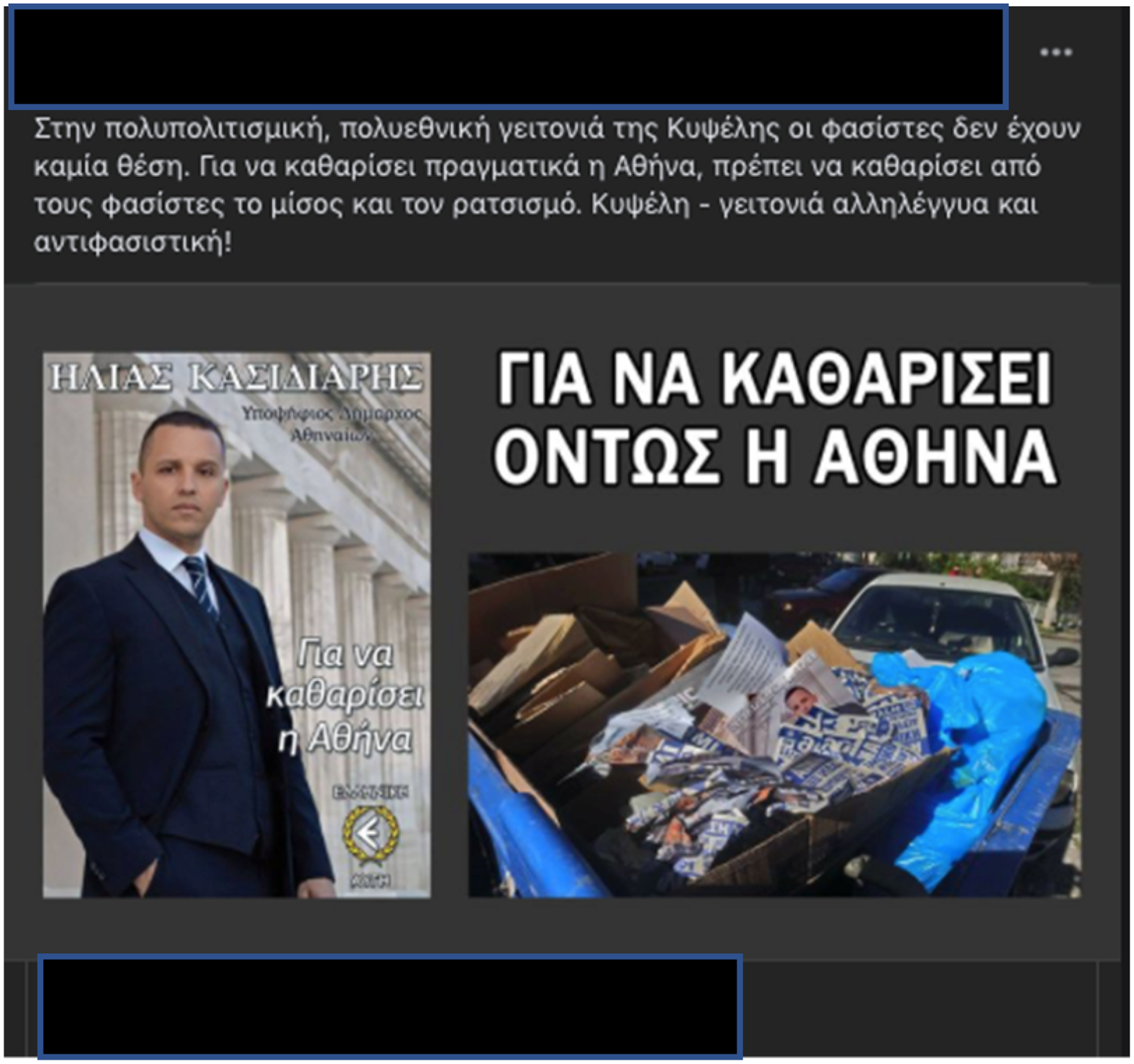
Anti-fascist expressions on Facebook. Source: Participant's Facebook timeline.
To support the image he uploaded, he wrote that fascists had no place in the multicultural, multinational neighbourhood of Kypseli. For him, a clean Athens meant clean from fascists, hatred and racism. Another participant, Konstantina, uploaded an article entitled ‘Atmospheric images of Kypseli through the lens of 3rdmobb’ on her Facebook timeline with the caption ‘Proud to live in this neighbourhood’ (Figures 2 and 3 below).
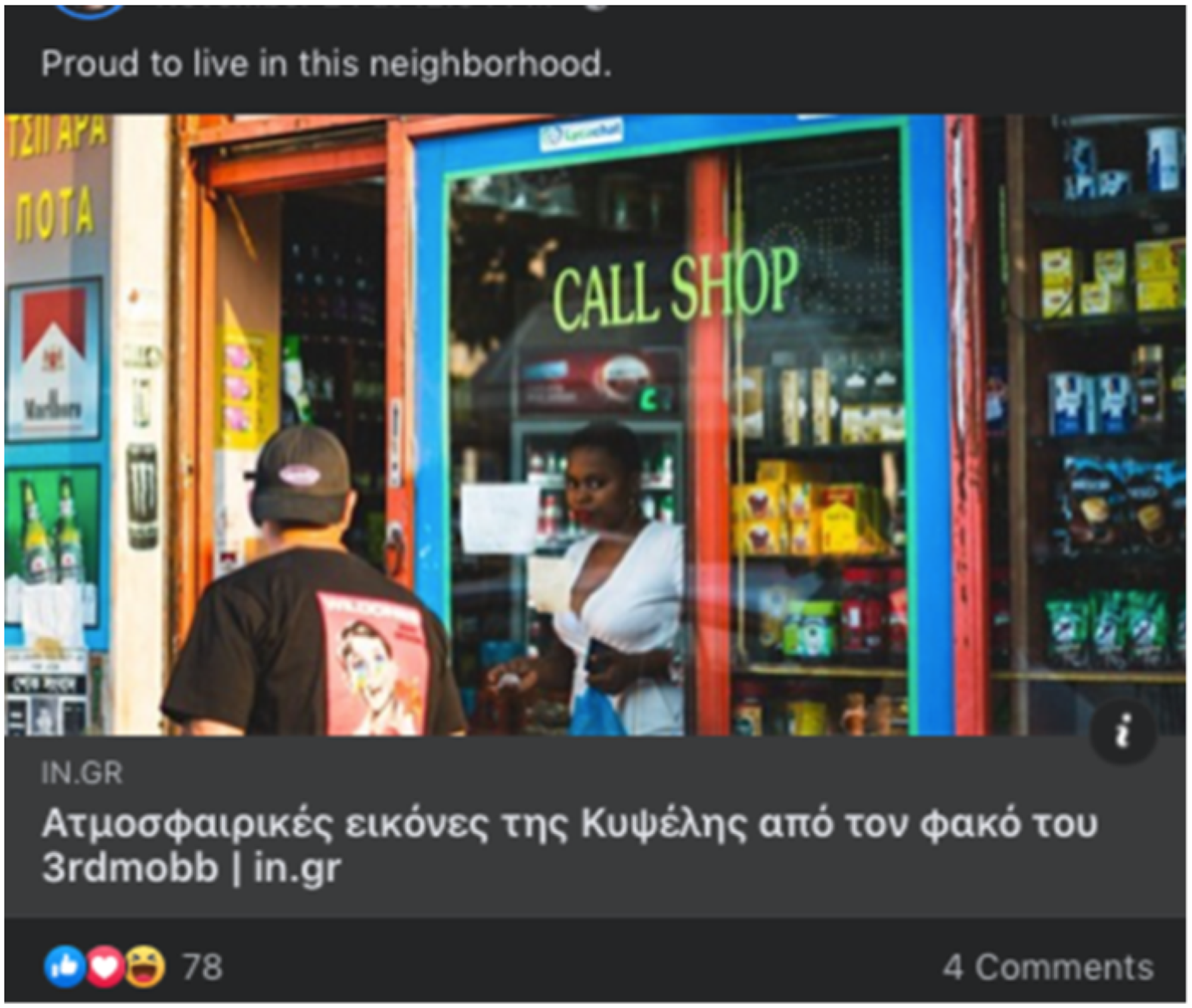
Celebrating multiculturalism online. Source: Participant's Facebook timeline.
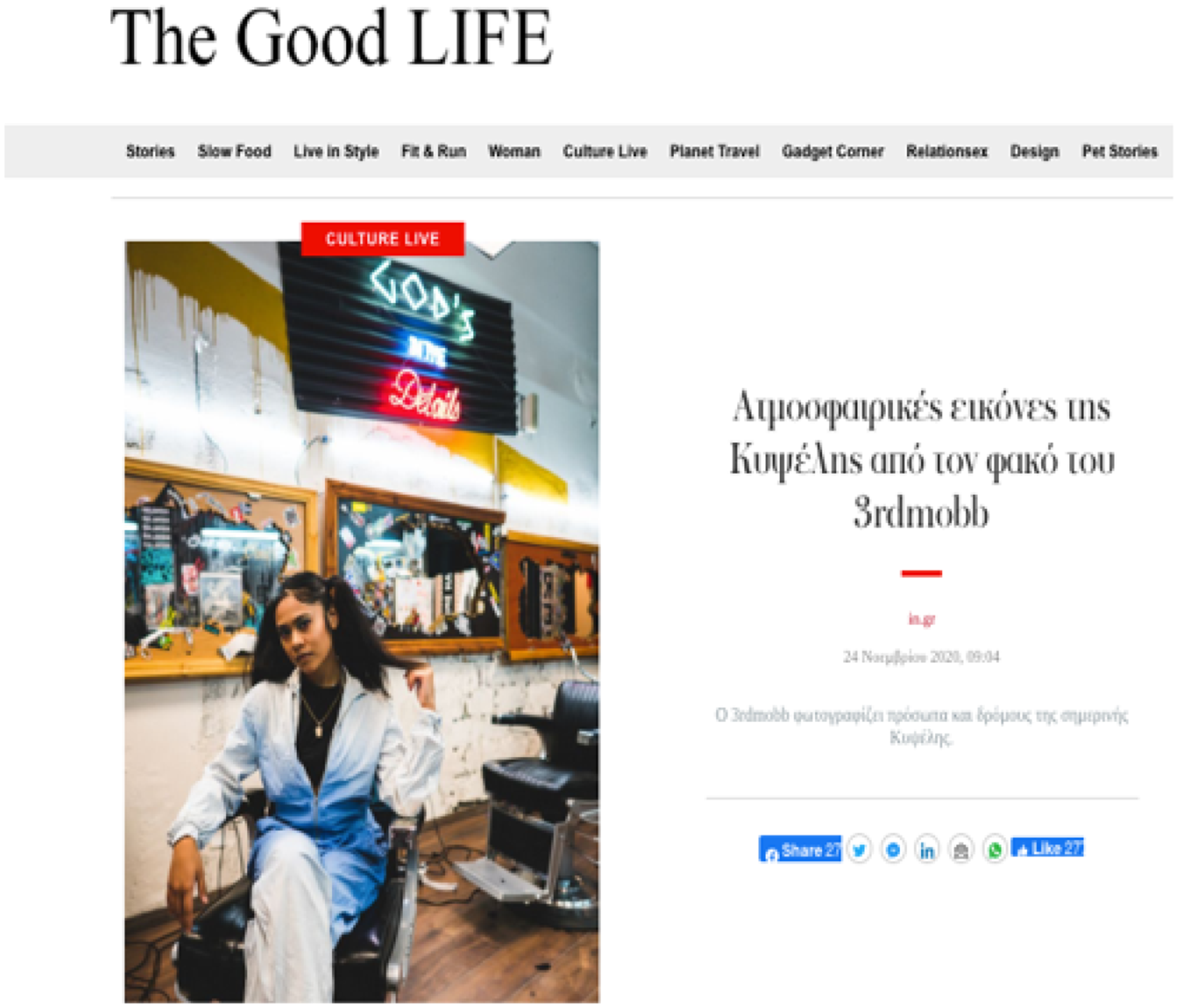
Article on everyday faces of Kypseli. Source: In.gr.
The page contained pictures of everyday faces of Kypseli – people of colour and individuals from various ethnic communities of the neighbourhood were protagonists in her work. Konstantina celebrated that ‘face’ of Kypseli and expressed her pride in being a resident of that area.
From graffiti on the streets to in-depth interviews and online participant observation, my empirical evidence suggests that the ‘micro-publics of everyday social contact and encounter’ (Amin, 2002: 959) mediate class solidarities that are related to the interaction of cognitive and affective elements of reflexivity. The specific cognitive articulation of (working-) class relations was vital, but solidarities were shaped through the embodied experience in the workspace and the blocks of flats that did not exist outside their networks of mediation and sharing culture. They were more a result of throwntogetherness (Massey, 2005) on the basis of class than of rationality and choice. More specifically, I have shown how working-class individuals manifested a form of identification with migrants because they shared the same socio-economic background. Inspired by Werbner’s (1999) ‘working-class cosmopolitanism’ and Hall’s (2008) ‘cosmopolitanism from below’, I have demonstrated how the category of class, which is heterogeneous and fluid, especially in the Greek context, could function as a consciousness in itself. I have witnessed the emergence of a working-class mutual understanding of what it means not to have money, to struggle, not to have food on the table, but also being humiliated for being poor and disadvantaged in the community of citizens. This was what opened up an avenue for class solidarity and consciousness and made it more dominant than racism, nationalism and/or culturalism.
Intercultural exchange in the networked commons
Besides the urban micro-publics of the workspace and the blocks of flats that mediated solidarities, the Municipal Market of Kypseli seemed to be a vibrant public space and point of reference for the locals. The Municipal Market of Kypseli has long been an important building in the history of the neighbourhood. From its establishment in 1935 up until 2002, it operated as a food market, but in the years between 2002 and 2006 it was abandoned. In 2004, it was recognized as a monument building, in 2006 Kypseli residents started squatting there, and in 2012, they were evicted by the police. Since then, the Municipal Market of Kypseli has followed ‘a participatory model of management and revival’ (as the website puts it) of the public space. By participatory, I refer to knowledge exchange that takes place between old and new residents through public initiatives that are planned and scheduled on social media platforms but realized in the physical space of the market: percussion lessons, stringed instrument lessons, music and dance, science events, art labs for children and adults, children's choir, yoga class and world dance classes were activities that experientially became shared and, in the process, reshaped spaces from ethnically divided to culturally co-experienced and discovered together. It is a public space with free wi-fi connectivity that ‘houses educational, cultural activities, as well as social economy initiatives, based on the strong agenda of development, social cohesion and participation’. 1 This raises the following question: does the market constitute another public space?
As the etymological roots of the Greek word agora indicate, the market appears to indeed illustrate its original meaning – a ‘gathering place’ – with cultural representation and intercultural interaction, and embodied interaction between citizens and non-citizens. Going beyond the indifferent sharing of a public space, this study focuses on social relations and interactions that take place in the market (Federici, 2018). The dynamics of the market's space mean that convivial encounters do not only take place in a public space, but in the commons – the public space of the city, which is shared horizontally and where co-creation of the city takes place (Chouliaraki and Georgiou, forthcoming; Amin and Howell, 2016; Federici, 2020), which then challenges the neoliberal order and homogenization of the urban space.
In the ‘commoning’ of the Municipal Market of Kypseli, both citizens and non-citizens are active agents (Harvey, 2012). For example, Valeria and Konstantina referred to the market as a symbol of ‘coexistence’ and ‘revival’ of the neighbourhood. Valeria said: ‘I feel that in the Municipal Market of Kypseli we come closer. It's a common space. It's so nice to familiarize yourself with and come closer to groups and populations that want to approach you.’ Konstantina mentioned that ‘the market and, maybe the Kypseli square are the only spaces where you can hear people speaking in Greek and at the same time English, Albanian, Arabic or French’. She added that she ‘likes that multiculturalism is now considered an interesting element of Kypseli’ and that ‘it's nice to see how different populations coexist’. Participants considered the market a material entity that created an inclusive city for all – a space that valued ‘the many varieties of togetherness’ (Amin and Howell, 2016: 6) and was integral to citizens’ imaginary of the commons. It was horizontally shared and attracted the various ethnic communities in the area – it was characteristic of ‘a quality of relations, a principle of cooperation and of responsibility to each other’ (Federici, 2018: 110).
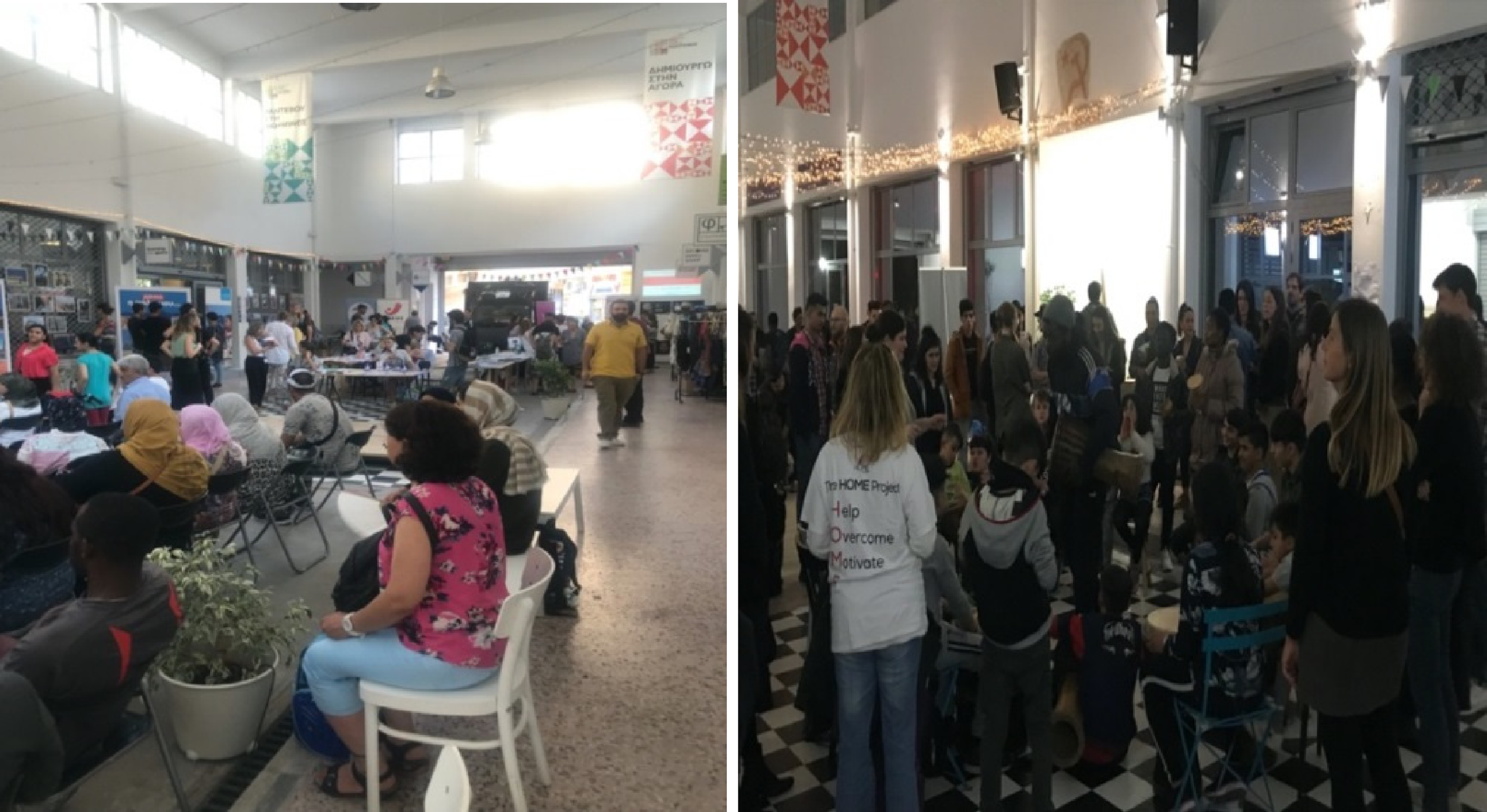
The practice of commoning was also evident on World Refugee Day, on 20 June 2019 (see images above). As a response to the top-down homogenization of urban space, screenings of short films familiarized the audience of the Municipal Market of Kypseli with migrants’ activity, with a particular focus on music. I got to know a 30-year-old man from Congo-Kinshasa. I listened to gospel and rumba music by his band ‘Perle Music’, which was created in the Volvi reception centre by Congolese refugees. I met Teressa, a nurse with a dream to become a singer – she was also singing about that. Later, I watched the ‘the crazy fisherman and other stories’ by Mhran, a Kurdish refugee from Syria. In an effort to give voice to all the people he met in Iraq and who were forced to flee their countries, he started writing stories. As an ambitious young man, his ultimate dream was to see these stories published. One of them, ‘the crazy fisherman and other stories’ was the short film all residents of Kypseli had the pleasure of watching. Beyond the face-to-face, the practice of commoning was also organized through networks of intermediation on Instagram's live function. As the World Refugee Day event was live-streamed, individuals left comments in many different languages (including Greek, French and Arabic that I could recognize). Greeks reacted with ‘hearts’ or left comments such as ‘I’ll be there’, ‘Great song’ or ‘Sorry I’ll miss this’. The ones I could read in French said ‘I’m coming soon’ and ‘How long will the event last?’ I saw on the chat that two women who were planning to attend on their own, met online and decided to come to the event together. As demonstrated during the fieldwork, digital connectivity was not only an important tool for promoting events and engaging users online, but also for enabling the coming together of citizens and non-citizens in the market.
In general, organizers and materials from the market's events gained recognition and received publicity through their mediation and sharing culture on social media platforms (live function on Instagram and sharing events and pictures on Facebook pages and groups) and rarely on traditional media. A key media strategy of the commoning was dependence on intermediation, mainly on Facebook and to a lesser extent on Instagram. Beyond the aforementioned event, participants frequently reposted the market's events on their timelines and/or used the RSVP function of the event to publicly announce their intention to attend. Valeria told me she always reviewed the list of attendees on Facebook to check whether familiar people from the neighbourhood were planning to attend. Relatedly, posts on Instagram and Facebook showed that the commons of the Kypseli Market was mobilized through intermediation, which aimed to spread the word about Ethiopian, Nigerian and other events and encourage social media users to interact. This shows that, as Federici (2018: 284) argues, ‘not only has the common not vanished, but that new forms of social cooperation are constantly being produced’. Learning about Others in the neighbourhood was a practice which was mainly realized in the shared space of the Municipal Market of Kypseli but heavily relied on infrastructures of intermediation, what Chouliaraki, and Georgiou (forthcoming; emphasis added) would call ‘a site of possibilities for the realisation of the networked commons’.
The section has shown that the urban micro-public of the Municipal Market of Kypseli has supported the emergence of a networked commons that contests national and racial hierarchies – a commoning that reflects the coming together of affective and cognitive elements of reflexivity. First and foremost, this practice of commoning treats both citizens and non-citizens as active agents in the co-creation of the city. At the juncture of mediated and embodied encounters, networked commons foster citizens’ reflexivity, which relies on throwntogetherness and digital connectedness. On the one hand, the commons might rely on networks of mediation, but it is mainly when individuals come ‘in close bodily experience’ that they are given the opportunity to experience the Other and her culture as an affective presence (Simonsen and Koefoed, 2020: 55). Such practices generate new ways of imagining the self by portraying Others’ difference as a way of managing a shared space and by mutually recognizing Others who are profoundly different (Fenton, 2016; Georgiou, 2017).
Conviviality with conditions: at the juncture of race and neoliberalism
Despite the fact that everyday encounters in the urban micro-publics mediated class solidarities and supported the emergence of networked commons, embodied encounters traversed their own conditions. In this section, I examine how embodied encounters were subordinated to socio-cultural hierarchies in the digital and material street; citizens were distinguished as ‘good’ or ‘bad’, ‘legal’ or ‘illegal’ and ‘worthy’ or ‘unworthy’ migrants in their reflexive accounts. Their words and practices celebrated migrants’ contribution to the economy, hardworking ethos and/or legality, but also assessed migrants on the basis of racial hierarchy – based on their level of assimilability in the nation-state – Balkan and Eastern European migrants were considered more assimilable than Muslim Middle Eastern ones. My findings under this thematic umbrella showed that participants embraced cultural diversity but kept it within a national hierarchy. For example, Panagiotis, a working-class man, pointed to his son and his friends, who had Egyptian, Nigerian, Romanian and Albanian origins, when they were playing football in the Kypseli square and said: ‘It amazes me that they all speak the same language [Greek]. They might speak their mother tongue with their parents, but they speak Greek with each other. They are the same.’ The official language of the country (Greek) became integral to the nation-state order – speaking the Greek language and being able to laugh at the same jokes paved the way to convivial moments, which remained conditional, however.
Exemplary migrants and Greece's ‘success story’ were Albanian immigrants who arrived in the country following the dissolution of the Soviet Union (1988–1991). Their willingness to fully assimilate (speaking the language, being baptized as Christian Orthodox, contributing to the economy, offering cheap labour) by adopting the cultures and traditions of Greek society was a point of reference for certain participants. Many participants drew the line between established migrants, who according to them ‘have become one with Greeks’, and recent refugee arrivals from the Middle East, who were criticized for keeping alive their own cultural, religious and linguistic traits and were not ‘willing to work’:
What can I say about these people then? They do not work at all. I have not seen any Syrian working. But Syrians do not work. I have not seen any Syrian working. They get easy money. They find it easy … why should they work? I have to work for them. Albanians, Polish and others did not receive any benefits, so they were forced to work. Where does this money come from? You tell me. They definitely tax us to make some money for them.
How do you know this?
From TV, newspapers and articles…. On the internet. That WE pay for them. WE pay for them.
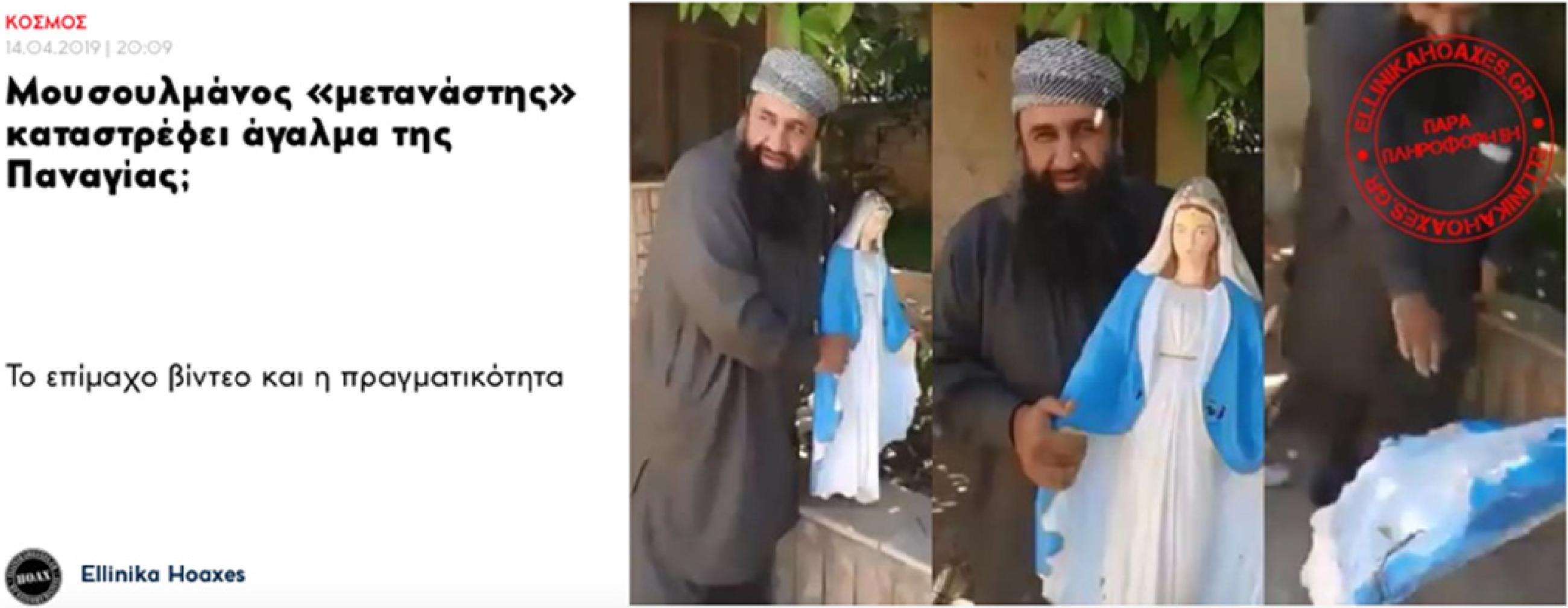
This view was not exceptional and was reproduced by many. ‘They cannot be Europeanized’ and ‘Islam is the religion of hatred’ were some of the common phrases heard when participants were asked about the possibility of inclusion of recent migrant populations in their society. The reification of their cultural/religious inferiority made individuals from the Middle East ‘an Islamophobic signifier, symbolic of the “barbaric Muslim Other” and became more sustained in the contemporary western imagination since the terrorist attacks of 9/11’ (Mirza and Meetoo, 2018: 228). Islamophobia is intensely mediated and circulated through contemporary systems of representation in the media of Islam as a religion that supposedly suppresses other religions in Europe, as the following screenshot with the title ‘Muslim male migrant destroys a Holy Mary statue’ exemplifies.
The racial element and beliefs in European superiority intersected with neoliberal arguments on economy and the free market. Danae, a middle-aged female participant, was angry because refugees were being granted asylum and received documents, while her friend from Georgia (present during the conversation), who met all the conditions (worked and spent money on services and Greek products), had no rights to the city she lived in: This lady cannot be considered a migrant, she's Greek. When you contribute, you’re not a migrant any more. She's been here for 16 years now. I don't have any issue with migrants in general. The only thing that annoys me is the recent arrivals of refugees who come to Greece and don't contribute to the economy. The lady you see in front you works. Others too. They own local shops in the area, they don't bother anyone. They are exactly the same as me. They work, they contribute. I am not racist towards them. If you live here, you work and make money, I’m fine.
Danae, among others, distinguished between settled migrants (those from the Balkans and Eastern European countries) and recent arrivals (mostly referring to non-Europeans and those from the Middle East) on the basis of a race hierarchy that intersected with the market order. A hardworking ethos and contributing to the economy were prerequisites and/or conditions for conviviality and hospitality. They confessed that, those migrants that ‘worked like a dog’ did not need to do anything else ‘to be accepted’. The criteria to be accepted or not accepted participated in the reproduction of the symbolic boundaries between ‘us’ and ‘them’.
My empirical evidence has shown that, despite the embodied nature of the encounters, the cognitive process of reflexivity dominated – encounters were expressed within a neoliberal framework that is twofold. As seen from empirical findings, the neoliberal framework is not to be solely associated with the economy (Hall, 2011). Citizens showed a commitment to the market-driven logic of the European project and ‘construed migrants as a neoliberal subject’ (Chouliaraki and Georgiou, forthcoming). Apart from the economic dimension, the newcomer who was eligible to stay in Greece needed to meet certain cultural and religious requirements to deserve a place in the community of citizens (Kirtsoglou and Tsimouris, 2018). Neoliberal and racial hierarchies of difference made invisible the boundaries that underpinned everyday encounters with difference.
Convivial reflexivity: Cognition, affect, embodiment
What can be said in conclusion about the relationship between conviviality, identity and reflexivity in the city that continues to change through migration? As recorded in multicultural Kypseli, the diverging experiential and discursive dimensions of encounters expose citizens to a third level of reflexivity beyond a focus on either cognitive or affective or embodied elements. This hybrid space of reflexivity leads me to the concept of ‘convivial reflexivity’ which points to both the symbolic and the material conditions of reflexivity, as these relate to the experience of urban life. By definition, convivial reflexivity refers to the embodied process of identity-making that is rooted in the context of everyday life and emerges at the juncture of embodied and sustained encounters with Others and the intense mediation of migration. Not surprisingly, participants’ encounters and interactions with non-citizens are profoundly marked by ambivalence – citizens are constantly reminded of two realities in everyday life, while trying to make sense of reality in the geographical space of Kypseli. However, it is this duality and coexistence of experience and imagination in the context of everyday life that leads to a third level of thinking about reflexivity – a convivial reflexivity that understands embodied encounters as an assemblage of cognition, affect and embodiment. Convivial reflexivity functions as a communicative process that manifests itself at the juncture of practised face-to-face encounters with migrant non-citizens and discourse – that is increasingly mediated – and which gives this practice meaning. The concept of convivial reflexivity thus offers a conceptual tool to make sense of the complex and contradictory intercultural interactions in the city of difference and their role in shaping practices and ideologies of citizenry and Otherness. These practices and ideologies are, of course, historicized and socially situated – depending on participants’ class, and local and national position in an unequal system, convivial reflexivity is realized in several different ways.
Class solidarities, which intersect with urban life, constitute a process that is related to the interaction of cognitive and affective elements of reflexivity. Despite the racialized public sphere, mutual respect affectively emerges in the densely populated blocks of flats and even becomes possible through digital technologies (in the case of the mobile app). Being a working-class citizen, belonging to the same socio-economic background, and sharing everyday life struggles with non-citizens, brings their humanity closer for some Kypselians. They are both fighting for recognition from different positions: from the national and the non-national position. This realization does not necessarily pre-exist, but actively emerges in the changing city.
Networked commons were empirically observed mainly in the Municipal Market of Kypseli. This is a place that has a material entity but whose performative conviviality expands to the digital world of social media (publicity received through its mediation and intermediation – sharing culture on social media platforms). It is constituted as a space that is shared horizontally and where intercultural exchange and mutual learning take place online and offline. This was a powerful case to observe how networked commons, which grant both citizens and non-citizens co-ownership (Amin and Howell, 2016) of the landscape of the city, foster citizens’ convivial reflexivity, which relies on affective encounters in the material space and digital connectedness. While the commoning process relies on networks of mediation, evidence has shown that it is the embodied and affective encounter that mainly challenges existing racial hierarchies.
Conditional conviviality of a nationalist neoliberal order constitutes a process in which discourse dominates practice in citizens’ reflexive accounts. This study understands conditional conviviality as lying at the heart of conflicting pressures of modernity that promote cultural diversity and free movement, while also aiming to comply with the nation-state order of sovereignty, homogenization, economic development and assimilation. Cultural diversity is embraced and comprehended through the nation-state orders (Brett and Moran, 2010) – there is a level of cognitive ethnocentrism and nationalism in citizens’ convivial reflexivity. There is an interesting juncture between race and neoliberalism, according to which racism serves to exclude non-citizens socio-culturally and nationally, while at the same time it structures their economic inclusion for the betterment of the economy.
There is evidence that everyday encounters in urban micro-publics mediate class solidarities and support the emergence of networked commons that contest hegemonic power regimes, but are also subjected to dominant discourses that are related to the nation-state and neoliberal order.
The (pre) conditions of convivial reflexivity
Reflexivity is not the endpoint of living-together-in-difference; neither is conviviality, as they are both conditioned by the nation-state and market order. Not all encounters in a multicultural neighbourhood lead to conviviality or reflexivity, and not all groups that come together overcome their prejudices (Allport, 1954). In line with this idea, my empirical material has shown that the locale is not stripped of cultural difference, but instead that cultural difference becomes ‘unruly’ (Gilroy, 2004: xiv) because of class solidarities and intercultural exchange that actively emerges in the networked commons. However, this study has demonstrated the limits and/contradictions of convivial reflexivity in modernity.
Convivial reflexivity functions as a communicative process that underlies embodied encounters. Thus, the encounter offers a way to think about reflexivity as an embodied process (besides Giddens' cognitive theorization). It is worth emphasizing that the embodied and mediated encounter do not always overlap, and while they are complementary (in the sense that the embodied encounter is shaped by the mediated one), they are not interchangeable. Speaking of diverging embodied and discursive dimensions of encounters, a key contradiction emerges: while embodied reflexivity might reveal a politics of solidarity and mutual understanding, media reflexivity points at socio-cultural separation. In order to disentangle their intersecting nature, I position the mediated and the embodied encounter in Silverstone’s (1994) double articulation of mediation – introduced to contrast ‘the analysis of the media qua material objects located in particular spatio-temporal settings with the analysis of the media qua texts or symbolic messages located within the flows of particular socio-cultural discourses’ (Livingstone, 2007: 18). As ‘information and communication technologies’ constitute ‘the focus of meaning construction at the same time as they enable it’ Mansell and Silverstone (1996: 213), Silverstone's double articulation enables me to comprehend the encounter as an embodied/mediated assemblage within a complex system of mediations.
In the same vein, the cross-fertilization of urban studies with media and communications addresses both the material and symbolic conditions of reflexivity. While urban studies emphasizes the material space and practices, a media and communications approach brings to the conversation the mediated forms of involvement (Lane, 2019) to focus on the third space of reflexivity that is not just cognitive or material – it is both.
Footnotes
Acknowledgements
I would like to thank Prof. Myria Georgiou for her constructive feedback on earlier drafts of this paper. Additional thanks are due to Dr Sarah Taylor for her thoughtful comments.
Declaration of conflicting interests
The author(s) declared no potential conflicts of interest with respect to the research, authorship, and/or publication of this article.
Funding
The author(s) disclosed receipt of the following financial support for the research, authorship, and/or publication of this article: This work was supported by the Economic and Social Research Council.

Notes
Author Biography
Afroditi-Maria Koulaxi is an ESRC PhD Researcher in the Department of Media and Communications at the London School of Economics and Political Science. Her doctoral thesis explores the role of mediation in intercultural encounters for the construction of Greek identity in the context of crisis.