




Abstract
This article explores the evolving spatiality of media production through an analysis of recent developments in UK broadcaster Channel 4’s move to a multi-site operating model. Historically, media buildings have served as landmarks of power and influence, embodying the aspirations and identities of media organisations and, as such, offer a fruitful lens for the specific exploration of the spaces of contemporary media production. Through a detailed analysis of Channel 4’s decision-making process, site selections and the significance of the chosen buildings within areas with an urban regeneration focus, the study investigates the complex interplay between media industry dynamics, regional development policies, and wider political and economic forces. Drawing on a range of academic literature and evidence from media, industry and policy reporting, the article highlights the strategic motivations behind Channel 4’s decentralisation efforts, positioned by the organisation as an effort to address diversity in terms of nations and regions representation but significantly shaped by political factors. However, it also raises critical questions about the long-term sustainability, economic viability and cultural impact of these relocation decisions. The article discusses how Channel 4’s regional media spaces and decentralisation reflect the impermanence and crisis facing Public Service Media, emphasising the shifting power dynamics within the media landscape and the need for adaptive strategies in an increasingly volatile industry environment. By examining the evolving investment in media buildings, this research contributes to a growing body of research seeking to understand the complex dynamics shaping contemporary media landscapes and urban environments.
Introduction
Place is not just a thing in the world but a way of understanding the world [. . .] When we look at the world as a world of places, we see different things. We see attachments and connections between people and place. We see worlds of meaning and experience.
This article is influenced by the ‘spatial turn’ in media studies, which interrogates the claims for the collapse of a spatial structure and recognises the importance of place for cultural production (Couldry and McCarthy, 2004). By attending to the spaces and spatiality of media production, we can help uncover important insights about the economic, political, social and cultural forces shaping contemporary media. Media industries have become increasingly globalised, with transnational and multi-directional flows of capital and labour (Curtin, 2003), but there is significant unevenness in the spatial patterns of production across different geographic locations. Within this complexity, a multiplicity of spatial patterns emerge with arguments variously made for increasing centralisation and decentralisation of media production and power. We ask, how can we better understand the ways in which global and local dynamics intersect to shape the spatiality of media production.
Historically, media buildings have served as landmarks of power and influence, embodying the aspirations and identities of media organisations. The use of architecture in the objectification of power of elites (Sudjic, 2005) is not limited to media buildings, of course, but their iconic status makes them a fruitful area for exploration and the chosen lens for this specific exploration of the spaces of media production. From iconic skyscrapers to adaptive reuse of industrial spaces, the architecture of media institutions has both produced and reflected broader socio-political narratives and urban imaginaries associated with media production. As Aurora Wallace (2012: 6) explains, ‘media companies have used architecture to project an image of their company to the public that made a statement about its own power, yes, but the buildings were also vehicles for communicating a preferred set of values’. Media institutions have traditionally occupied commanding and impressive buildings, visibly asserting a sense of symbolic power and authority and arguably ‘producing’ tangible centres in their choice of headquarters and flagship buildings (Ericson and Riegert, 2010: 2). The continued use of ‘starchitects’ like Rem Koolhaas, Frank Gehry and Norman Foster, and the ongoing investment in iconic buildings like Hearst Tower in New York or the CCTV Headquarters in Beijing suggest that conscious architectural choices are still being made which articulate a centralising aspiration for media power (Ericson and Riegert, 2010). At the same time, spatial articulations of decentralising forces and buildings which integrate into flexible communications networks are also evident in media quarters and adapted urban spaces. We ask, is the dislocation of ‘place’ from ‘space’ heralded by the ‘paradoxical’ forces of dispersion and concentration (McQuire, 2008: 19) reflected in the form of the contemporary media buildings?
While there is a long history of highly visible and symbolically charged material manifestations of media power, contemporary media is increasingly subject to highly global forces that operate at different scales, which we argue may influence the nature of the spaces of media production. In this complex ‘space of flows’ (Castells, 1996), media buildings, their locations, aesthetics and rationales can be considered material manifestations of wider power relations, ideologies and practices.
By attending to the spaces and spatiality of media buildings, we aim to unpack the complex interrelations between architecture, power and ideology within contemporary media landscapes. This approach enriches our understanding of how media institutions negotiate their physical presence in a digital world, shedding light on the ways in which spatial configurations both reflect and shape broader socio-cultural dynamics.
This article explores the evolving spatiality of media production through an analysis of recent developments in UK broadcaster Channel 4’s move to a multi-site operating model. Channel 4 is a British free-to-air public broadcast television channel owned and operated by Channel Four Television Corporation. Following a competitive pitching process as part of the ‘4 All the UK’ strategy, in 2018 Channel 4 confirmed that Leeds would be home to its new National HQ, while Bristol and Glasgow would be the locations of two new Creative Hubs. Using Channel 4 as a case study, we draw on media commentary and coverage of the move to the regions, documents shared by the organisation relating to this process alongside existing scholarship. Drawing on a historical perspective of media buildings and their symbolic significance, the article examines how these spatial shifts reflect broader socio-cultural dynamics and imaginaries of media production. By contextualising the recent Channel 4 move within this historical trajectory, we can uncover the deeper meanings embedded within these spatial transformations. By analysing both the material and symbolic dimensions of these spatial transformations, this research contributes to a deeper understanding of the places and spaces of media production.
The following section explores some of the history of the relationship of media buildings within the urban environment. After contextualising the Channel 4 move within the wider history of media spaces and buildings, this article examines the final choice of workspaces, with their ultimate focus on mixed-use, revitalised urban hubs. It reflects on what the location choices and building decisions say about the strategic positioning of the broadcaster in the context of the ongoing challenges it faces, representative of a wider shift in the symbolic relationship between media buildings and media power and signalling the crisis in Public Service Media (PSM).
Media buildings and urban development
There is a long history of media institutions and buildings playing a key role in urban development and architectural form going back to the late medieval period, 1 but it is a somewhat neglected area within scholarship (with notable exceptions including Ericson and Riegert, 2010; McQuire, 2008; Wallace, 2012). While any attempt to provide an overarching account of such a history is bound to be partial and subjective, we suggest that it is useful to explore some of the key relationships of media buildings within the urban environment.
Early modern media agglomerations – print, media and the city
Fleet Street in London epitomises the role of media space and co-location in the early modern development of the city. It played a key role in the urban cultural geography of London and was a key node in the communicative infrastructure of London’s press industry. According to Michael Bromley (2008), Fleet Street connected up the City of London with the City of Westminster ‘and thus governmental, financial, and commercial activities – traditionally staple sources of news’. This made it the ideal location to become the centre for publishing and printing shops from the early 1500s onwards after William Caxton (1415–1492) brought the craft of printing from Europe to England, following Johannes Gutenberg’s creation of the world’s first printing press in Mainz, Germany, in the 1450s (The Morgan Library and Museum, n.d). Fleet Street’s position in the heart of the city, and as a connective route joining up different nodes of power within London, ensured its position as the centre for news production. As Clarke (2017) notes,
Thereafter, Fleet Street and The Strand, and the alleys and lanes that run off those streets, became home to an emergent printing industry that served the aristocratic, legal and ecclesiastical houses that were dotted like a string of pearls along the Thames from Somerset House to Whitefriars. (p. 348)
By the 20th century the majority of British newspapers operated from there, although following Rupert Murdoch’s decision to move The Times to Wapping, East London, in 1986, motivated by an attempt to break union control and force down costs, it gradually lost its role as the heart of British journalism. In addition, factors like digital production, rent levels, the emergence of web services, convergence, continuous news and multiskilling meant that by the 1990s all newspapers had departed the cluster (Pratt, 2011).
Similarly, in New York, Park Row was a node in the larger system of communications in the city, a central site in the urban cultural geography of communications (Wallace, 2012). Park Row developed later than Fleet Street with much of the initial growth of news buildings and press and printing production occurring in the 19th century. While its development owes much to the very different political and economic history as well as urban geography and planning environment of early New York City, there are similarities to Fleet Street. For example, as Wallace (2012) notes, ‘as in other major cities where newspapers were concentrated – with London’s Fleet Street establishing the pattern – Park Row newspapers were near the post office and all of the other major printing services in the city’ (p. 8). Park Row, similarly to Fleet Street, was also well positioned for accessing news with its proximity to Wall Street, City Hall and the port as well as the existing publishing and printing infrastructure linked to the easy access to paper via ships and railways (Wallace, 2012).
A wide diversity of architectural styles can be observed within these early examples of media buildings. Some buildings, such as the Telegraph or Daily Express buildings, exhibit distinct features that reflect the branding of their respective publications. These architectural elements, such as the art deco frontage, became emblematic of the media companies they housed. A significant characteristic of this category is the unplanned nature of development, where production and printing facilities coexisted within the same space. This integration of functions added a unique dynamic to the early media development ecology, and prefigures the subsequent evolution of media landscapes, where infrastructure and operational needs intertwine. The pubs, bars and cafes in the vicinity of these media buildings played a crucial role within this ecosystem. These establishments served as gathering places for journalists and professionals in the field, fostering informal discussions, idea exchange and the sharing of tacit knowledge, therefore becoming an integral part of the social fabric and work practices of the media industry during that period (Bromley, 2008).
These early modern developments emerged to some degree in a relatively unplanned fashion in conjunction with wider forces of modernisation and urbanisation and can be said to represent formative examples of clustering of activity.
Flagship media buildings: soft power and development of the contemporary metropolis
As mentioned in the ‘introduction, landmark headquarter spaces and buildings for media institutions and empires emerged in cities such as New York in the 19th century. Such buildings often stretch the boundaries of contemporary architectural form and technical possibility, are predominantly high-rise in relation to the existing urban skyline and project modernity and progress (Wallace, 2012). For example, Aurora Wallace’s book on media buildings in New York City shows the crucial symbolic and architectural role that such developments have played in the history of the city’s urban aesthetic. As she argues, New York’s skyline and modernist aesthetic was shaped in no small part by the rise of the news press and buildings that started to be built for news empires:
In nineteenth-century New York, the Fourth Estate used the tall building to eclipse the old First Estate – the church spires that until then had ruled the skyline of America’s most powerful city. Building as much for each other as for the public, newspaper rivalry manifested itself in increasingly tall and bold purpose-built structures, and new additions on top of existing buildings. (Wallace, 2012: 10)
New York’s Tribune Tower, completed and opened in 1875 and designed by Richard Morris Hunt as the headquarters of the New-York Tribune reflected the growing confidence of the news industry, and its aesthetic of height and power reflected the ambition and values of the booming Fourth Estate (Figure 1).
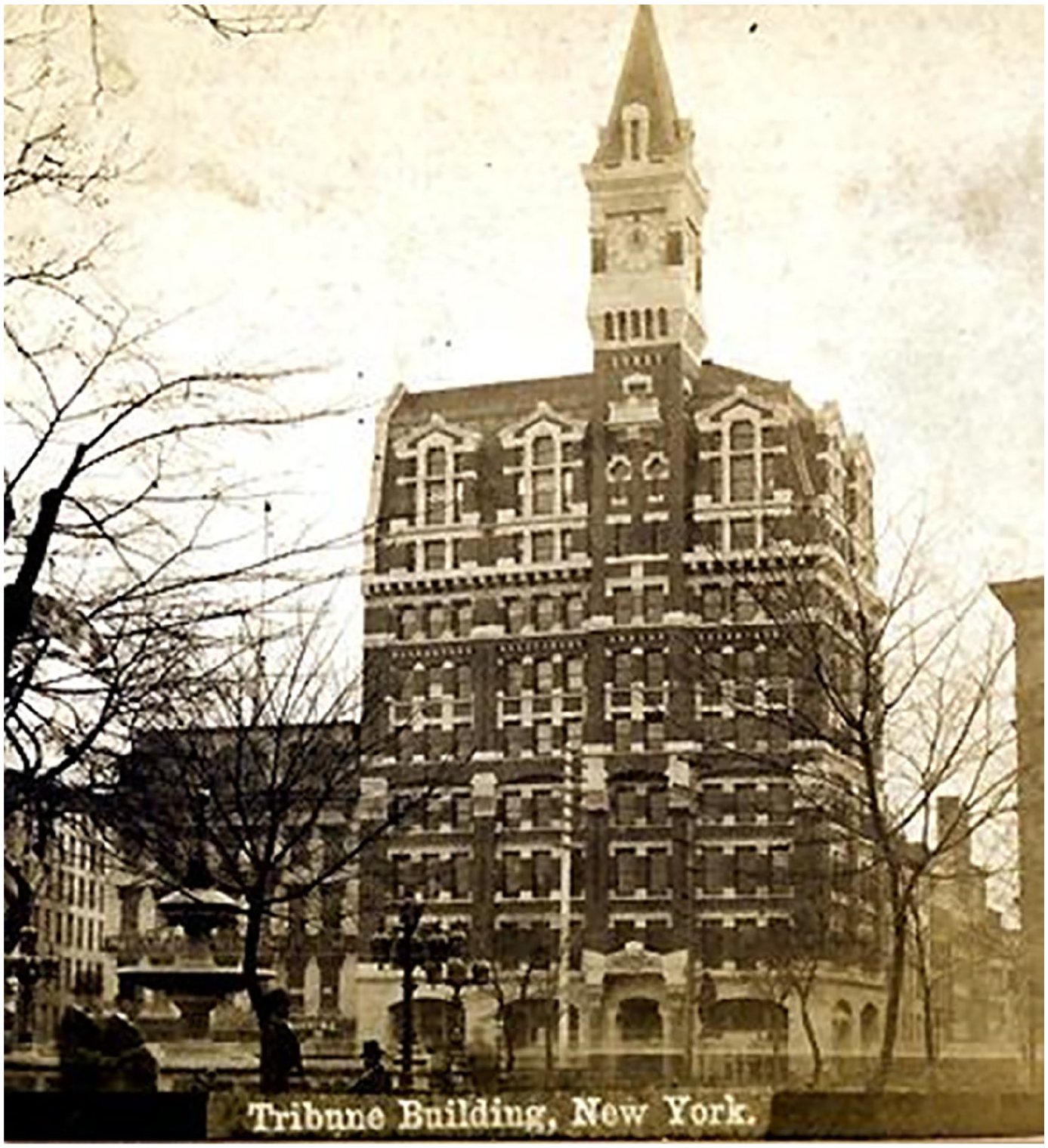
Tribune building, New York, 1870s.
The Tribune Building contained a facade of brick and masonry, with a clock tower at the top. The building was originally 10 stories high, including a mansard roof, and measured 260 feet (79 m) tall to its pinnacle. It was expanded in the 1900s (Landau and Condit, 1999).
In the United Kingdom, Spicer (2019) explains how Sidney Bernstein, the founder of Manchester-based Granada Television, in contrast to the ‘timidity of the Manchester BBC presence’ (p. 281), set about making its regional presence felt by immediately erecting the United Kingdom’s first purpose-built television centre – and the most modern in Europe – on Quay Street in central Manchester. Benedict Nightingale described the Granada TV HQ (Figure 2), in The Guardian, 22 August 1966, as rising ‘sleek, green and glamorous above the shabby greys and mouldering reds around the River Irwell’ (quoted in Spicer, 2019: 281).
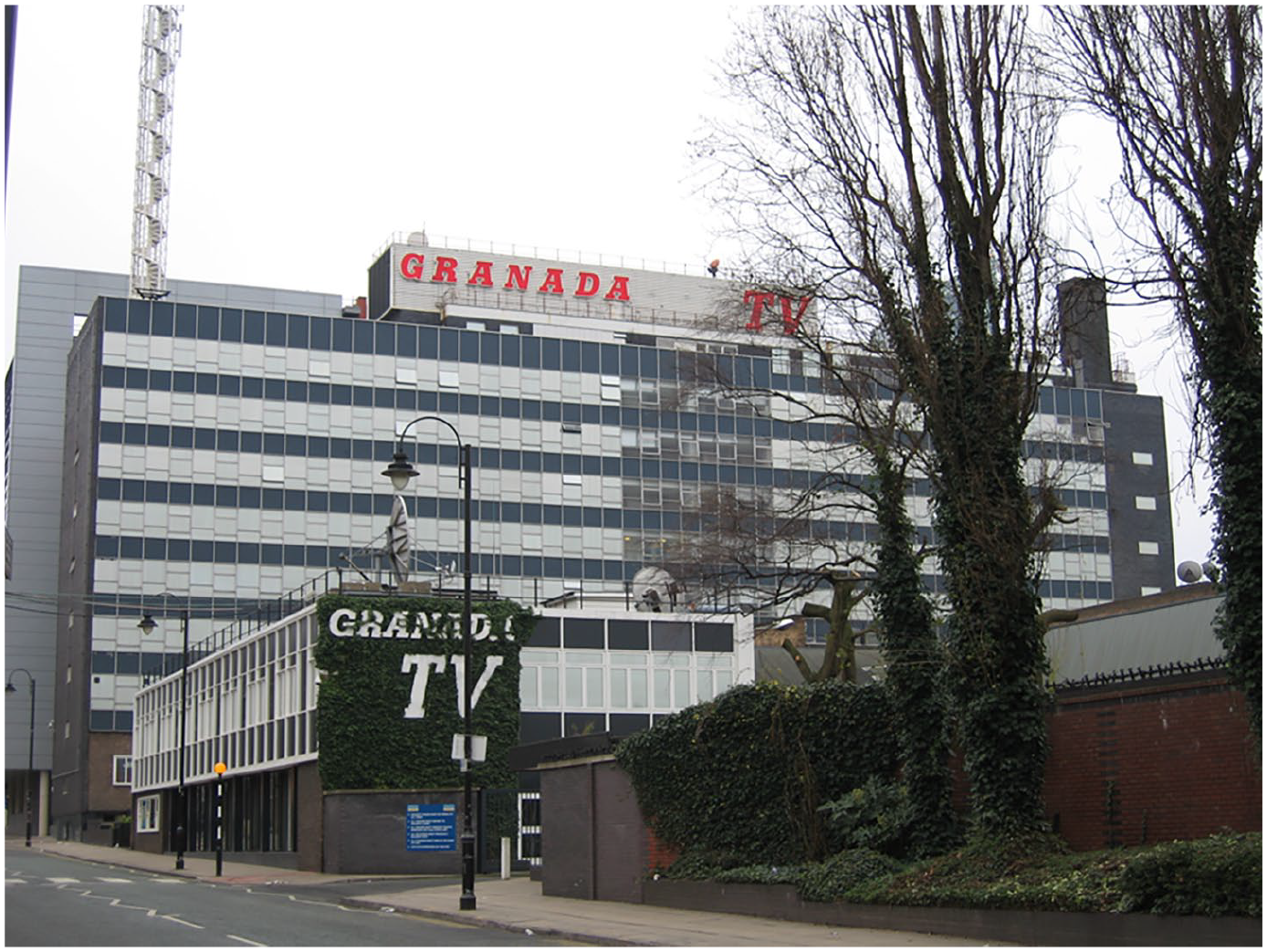
Granada Television headquarters, Manchester.
Globally, more recent examples of flagship media buildings have emerged which play a key symbolic role in projecting domestic and international soft power. For example, in China the growth of a ‘mediascape’ within Shanghai and Beijing has taken place alongside the growth of China’s power and influence globally since the 1990s. The headquarters of the Chinese television network CCTV in Beijing, China, designed by Rem Koolhaas and Ole Scheeren of OMA, embodied China’s domestic and global ambition in the 1990s and its drive for rapid modernisation. It is a 234 m, 51-storey structure in the Beijing Central Business District; development started in 2004, was completed in 2012 and opened in June 2013. It has been argued that in the contemporary global media landscape in response to increasing fragmentation and disruption, organisations like CCTV (and the BBC in the United Kingdom) have constructed ‘media edifices that project the idea of a focused and centralised organism’ (Mattsson, 2010: 184). Such buildings, often designed by leading architects of their time, play a key role in shaping urban development, but also reflect and project national power and confidence, as well as being spatial symbolic embodiments of a culture’s values, ideals and ambition (Figure 3).
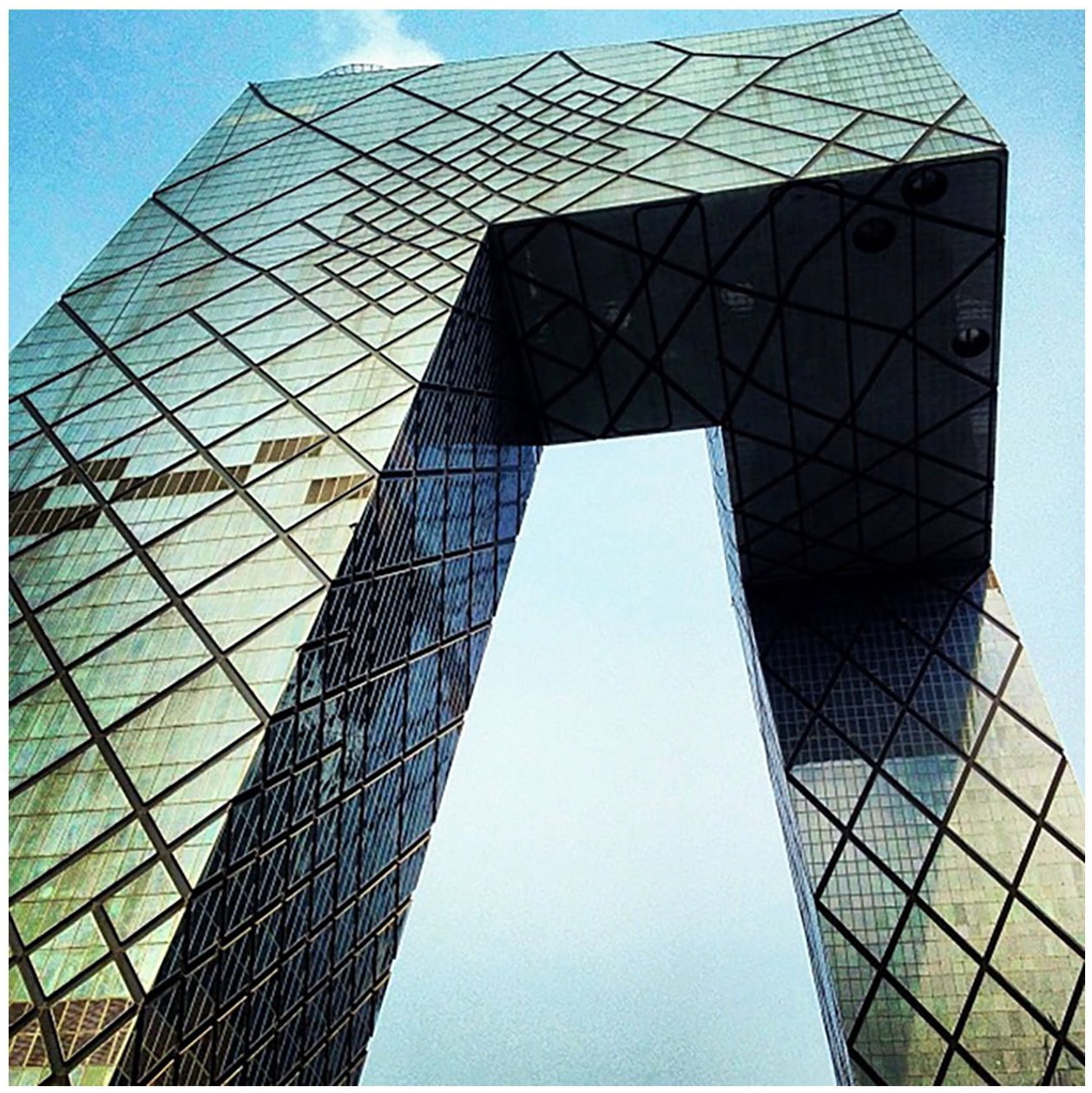
CCTV headquarters, Beijing.
Media buildings and urban revitalisation
Since the 1980s, media buildings and developments have increasingly played a key role in efforts to rebalance regional economic and cultural inequalities and regenerate cities suffering from post-industrial decline because of the loss of manufacturing and other modes of heavy industry. Many of these processes began organically as low cost or abandoned buildings in marginal or transitional areas, often in the city centre fringe and inner city, were colonised by artists and countercultural and organic ‘entrepreneurs’ (Allen, 2007) as sites of cultural production and night-time economy. There are far too many examples of this type of development to list here, but exemplars would include the revitalisation of Hoxton in London, the Northern Quarter in Manchester and the Cultural Industries Quarter in Sheffield. For example, in Hoxton, the affordable space-led explosion of Britart activities in the area during the late 1980s made the area popular with artists, and led to the growth of ancillary services, such as bars, restaurants and clubs allowing the emergence of a creative atmosphere (Leadbeater and Oakley, 1999). In Manchester’s Northern Quarter, a plethora of vacant property in this ‘devalued’ inner city attracted small creative industry firms alongside independent fashion and music retailers, as well as bars, nightclubs and cafes (Champion, 2010). The emergence of such areas coincided with more pluralistic modes of governance within UK cities, which saw local authorities and constellations of public and private sector agencies adopt entrepreneurial strategies to capitalise on and inspire a ‘city renaissance’. Many cities and regions have vigorously adopted a market-orientated property-led development strategy formally designating cultural quarters and encouraging a city centre revival (Bassett, 1993; Montgomery, 2003). Media industries are often a key part of these developments, but tend to be part of a wider mix within the digital economy, and such office spaces generally host a range of companies from across the creative and cultural industries. Variously, policymakers and local authorities have supported such developments with reduction of rents, business support activities and public–private management arrangements to ensure the desired mix of business sectors. Often the urban form associated with these areas tends to be of mixed-use and adaptable, frequently located in formally industrial space with an effort to use relics of industrial past as core elements of a reprogrammed landscape (Scott, 2004). This is also linked to the heritage buildings themselves, with appeal resting in their ‘physical configuration, durability, and embedded construction qualities, as well as in the appeal of historical imagery and other representational values for property firms, residential gentrifiers, and new industrial enterprises’ (Hutton, 2006: 1834). As has now been extensively documented and theorised, creativity and cultural and creative industries have come to play a key role for policymakers in addressing urban decline, although the evidence around the success of this has been mixed (Comunian, 2011; Oakley, 2004). Such developments are often based in the logic of the ‘creative economy’ script of cultural and economic policy, in the concept of cluster theory of agglomeration (Porter, 1998), a belief in the role of co-location for innovation and the concept of creativity as a driver of economic growth and regeneration and talent-attraction (Florida, 2002).
Commonly part of wider often regional urban renewal strategies, we have also seen the development of larger-scale planned media city developments concentrating media production within specialised infrastructure. Similar examples of these large-scale media development abound across the United Kingdom and globally with some varying characteristics. They tend to be made up of purpose-built developments with access to cutting-edge technology within highly landscaped areas associated with real-estate speculation and private ownership, although often facilitated by public funds (Mould, 2016). Internationally, the Dubai Media City (DMC) established in 2001 constitutes one of a growing number of media- related clusters developing in the Middle East. Managed and operated by the Dubai government and driven by a real-estate boom, its focus rests on attracting foreign firms rather than stimulation of local media industries or employment (Picard and Barkho, 2011). An example of this type of media building development in the United Kingdom, and of relevance to the Channel 4 move, can be seen in the MediaCityUK project in Salford, Greater Manchester. This project involved the relocation of key parts of the BBC’s activities to North West England, along with the development of co-location space for ITV Studios and various indies. It is a mixed-use property development by Peel Media, part of Peel Group, one of the largest private sector companies in the north of England (Knowles and Binder, 2017). Peel own a property portfolio worth £2.3 billion and have control over huge swathes of central Manchester and Liverpool (Scrubsole, 2019). MediaCityUK, as an entirely new-built project on brownfield sites, fitted into a wider regeneration strategy for the Salford Quays area, which began with an enterprise zone in the 1980s, but took off in the late 1990s with the construction of the Lowry Arts Centre, Metrolink extension and in 2007 BBC agreement to relocate to the core of the site (Law, 2012). The wider quays development has a focus on leisure, culture and media and, as noted by Schulze-Baing and Wong (2018), has retained and reused very few remnants of its industrial past. Aesthetically, MediaCity UK, like other purpose-built media city developments, has transformed brownfield land with an industrial past into a ‘shiny modern cityscape’ (Schulze-Baing and Wong, 2018: 520). Planners Gillespies (n.d.), in relation to the delivery of the first stage of the development, note the ‘largescale piazza with flexible performance spaces, an intimate media park, and a bustling boulevard, all set adjacent to the waterfront’. Of note is the private nature of this space – while public realm of a piazza provides public realm for up to 5000 people, it is owned and controlled by Peel Media, which has led to clashes in terms of its use by public vendors (Mould, 2016). Critiques have been levelled at the privatisation of public realm, albeit largely previously disused industrial space as well as the focus on capital accumulation of large-scale developments with questions of benefit to local populations.
Hubs and historic buildings: Channel 4’s relocation to Leeds, Glasgow and Bristol
In October 2018, Channel 4 confirmed that Leeds would be home to its new National HQ, while Bristol and Glasgow would be the locations of two new Creative Hubs. The decision followed a competitive pitching process which was initiated in 2018 with the announcement by Channel 4 of the ‘4 All the UK’ strategy. In keeping with the political and economic hegemony of ‘creative hub’ discourses for regional and urban development (Gill et al., 2019), Channel 4 (2018) stressed that the new locations should offer ‘cutting edge connectivity’ (p. 9) to enable agile working between the geographically dispersed locations. Well-rehearsed arguments around talent attraction (Florida, 2002) were also evident, with the ‘quality of life’ and ‘general attractiveness’ offered by the competing cities being described as ‘paramount’ (Channel 4, 2018: 9). The importance of the quality of working space was also embedded throughout the tender documentation, although the specific requirements were quite vague.
The bids were led by consortia with strong presence and leadership from the local authorities and regional development bodies and the regenerative potential for the physical fabric of the cities, as well as the direct and indirect economic impacts were outlined. The Hub and HQ sites were confirmed in 2019: the new Channel 4 HQ in Leeds is The Majestic, a former Beaux Arts cinema built in the early 1920s which the broadcaster would take three floors of; the Glasgow base is located centrally in a restored industrial building, The Garment Factory in the Merchant City; and the Bristol office is located in Finzel’s Reach, a recently transformed area near Bristol’s medieval centre. While none of the offices are located within the existing screen production clusters of the cities, they are all centrally sited, and all three are very much in keeping with the post-industrial creative cities aesthetic hinted at in the pitching briefs with their emphasis on of the attractiveness of workspace and the importance of quality of life (Channel 4, 2018).
Previous writers (Andrews, 2012; Born, 2003; Fanthome, 2007) have noted the deliberate and sustained efforts to brand and position Channel 4 in relation to both its commercial and aesthetic decisions, and logically it can be assumed that the architectural decisions have been accompanied with a similar level of consideration. Prior to the decentralisation heralded by the 2018 strategy, Channel 4 was headquartered at Horseferry Road where a London presence is still maintained. Completed in 1994, 124 Horseferry Road (Figure 4), was a purpose-built flagship building in a mixed development area of Westminster, which was designed by the Richard Rogers partnership. Amid the period of worry for the future of Channel 4 during the most recent calls for privatisation, concerns regarding the future of the flagship Horseferry Road site were also expressed. Non-profit Twentieth Century Society (2022) called for it to receive listed status as it ‘admirably expresses the perceived identity of the broadcaster, while reflecting civic and contextual values – innovative, socially aware and willing to take risks’. If, as Wallace (2012) argues, architecture is a ‘domestic strategy of soft power, a chosen instrument in the battle for civic authority and public relations’ (p. 6), the choice of the new HQ and hub media buildings represent, as we will see, a considerable modification in how the organisation wishes to be perceived publicly.
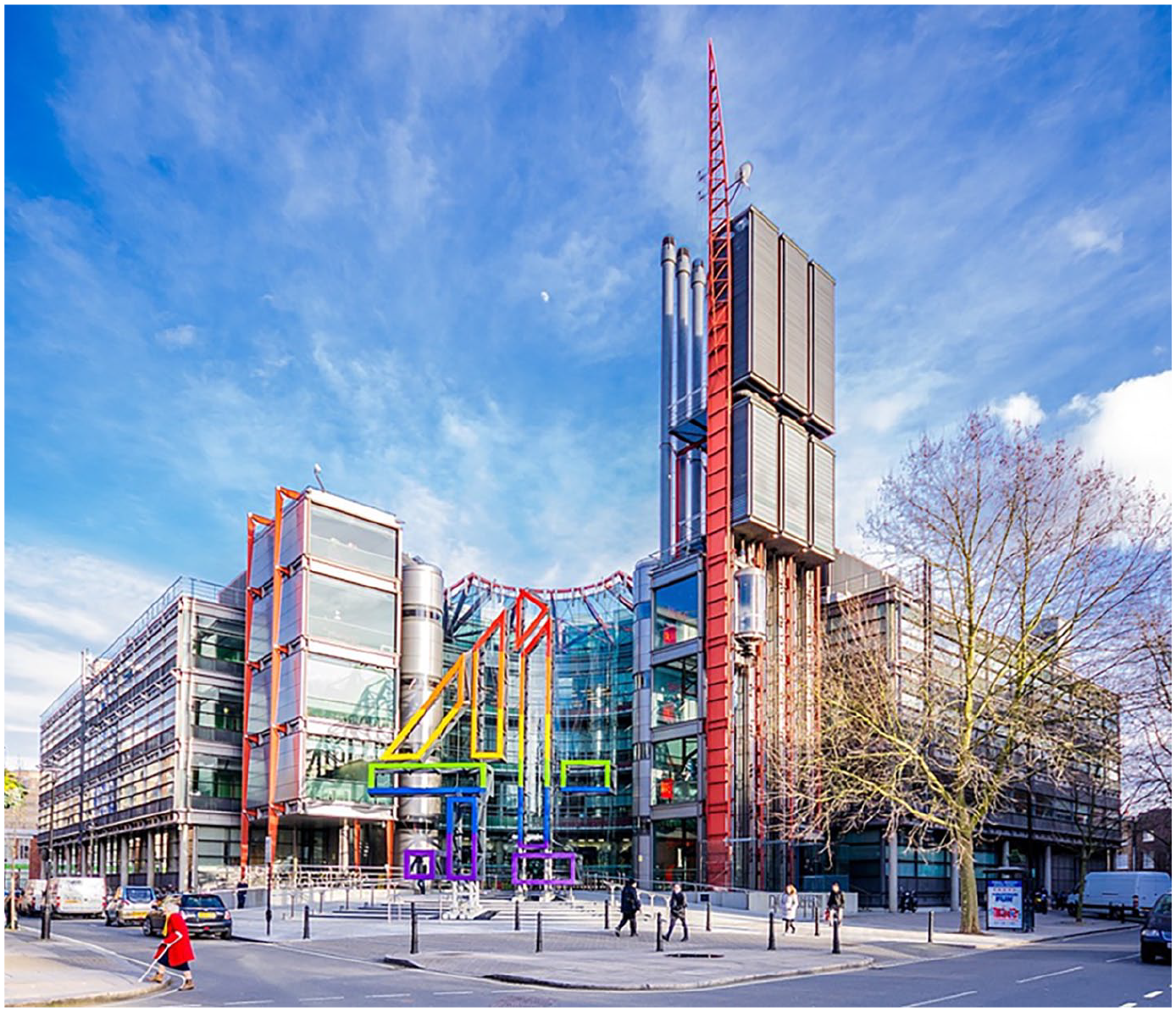
124 Horseferry Road, London.
All three new sites have historic and symbolic significance and are important parts of the urban regeneration plans within each city. Regenerating and revitalising the Majestic site has been a key aim for Leeds City Council since the closure of the building in the 1990s and the subsequent fire in 2014. Finzel’s Reach in Bristol and the Merchant City in Glasgow have also been key regeneration sites for the local authorities.
Channel 4’s relocation has firmly been framed within the language of the creative hub and urban revitalisation, and much has been made of the ability of the relocated broadcaster to accelerate economic growth in the regional screen industries, as well as contribute to the cultural infrastructure of each city. There was significant attention during the C4 bidding process on the value of creative hubs, although as others such as Gill et al. (2019) have argued and we have noted elsewhere (Lee et al., 2021), despite creative hub becoming a fashionable cornerstone of economic and cultural policy, it remains an under-examined and under-theorised term. 2
Nonetheless, the symbolic significance for local stakeholders of attracting Channel 4 to their cities is also important to understand in this context. Extensive promotional campaigns in all three cities were undertaken during the bidding process and to accompany the moves, with the billboard campaign in Leeds outside The Majestic being particularly high profile. This more recently has been signified by the support of city leaders for C4 in the resistance to the threat of privatisation. Organised by Tracy Brabin, mayor of West Yorkshire, and Sir Roger Marsh, chair of the Leeds City Region Enterprise Partnership, an open letter was signed by local and regional government representatives out of London, calling on the government to reconsider selling C4 and highlighting the benefits that C4’s Bristol, Leeds and Glasgow offices have had on the local creative industries (Burn, 2022). The letter argued that the Leeds location for the headquarters signalled the beginning of a real Northern powerhouse in the cultural industries and noted the significance of some of the United Kingdom’s largest independent producers setting up in the region or expanding their presence, alongside new production and studio facilities, plus significant financial support from the public sector.
Having provided an overarching framework for contextualising the Channel 4 relocation sites, we now want to zoom in to consider each location in more detail before considering how the choice of these particular locations reveals ‘the production’ of Channel 4 as an organisation devolving its centralised media power and reflects some of the socio-cultural patterns shaping the spatiality of PSM.
Channel 4 in Leeds: from night-time economy to media workspace
Opened formally in early September 2021, the key Leeds site, The Majestic, which was planned to house approximately 200 of the planned 300 relocated staff committed to in the ‘4 All the UK’ strategy, is a highly visible building which is unmissable as you exit Leeds train station in the city centre. A Grade II listed building on City Square, designed by the architect Edwin Cooper, it is an example of Beaux Arts design and sits on the corner of Quebec Street and Wellington Street (Wrathmell, 2005). It was originally constructed as a cinema in the early 1920s, was closed in 1968 and has since had various leisure uses up until the early 2000s, from a bingo hall to a nightclub. The building’s Art Deco design and lavish interior decor made it a popular destination for both cinema-goers and dancers.
Over the years, the Majestic building has undergone several renovations and changes of ownership, eventually falling into disrepair in the early 2000s. In 2014, the building was purchased by the property development firm Rushbond, with plans to restore it and transform it into a mixed-use development. As part of this redevelopment, Rushbond worked with the architects Feilden Clegg Bradley Studios to design a new building that would complement the historic site while also providing modern office and event space. The result was the Leeds City Hub, which opened in 2020 and features a large public atrium, flexible event spaces and state-of-the-art production facilities. Channel 4 have occupied three floors of The Majestic – co-locating as tenants with Knights – a legal firm (Figure 5). The aesthetic is urban modernist chic – somewhat fitting the Channel 4 brand. Interestingly Alex Mahon, Chief Executive of Channel 4, speaking in June 2021 noted that internally they have responded to post-Covid working styles by massively reducing the desk ratio in favour of communal, collaborative workspace (Goldbart, 2021).
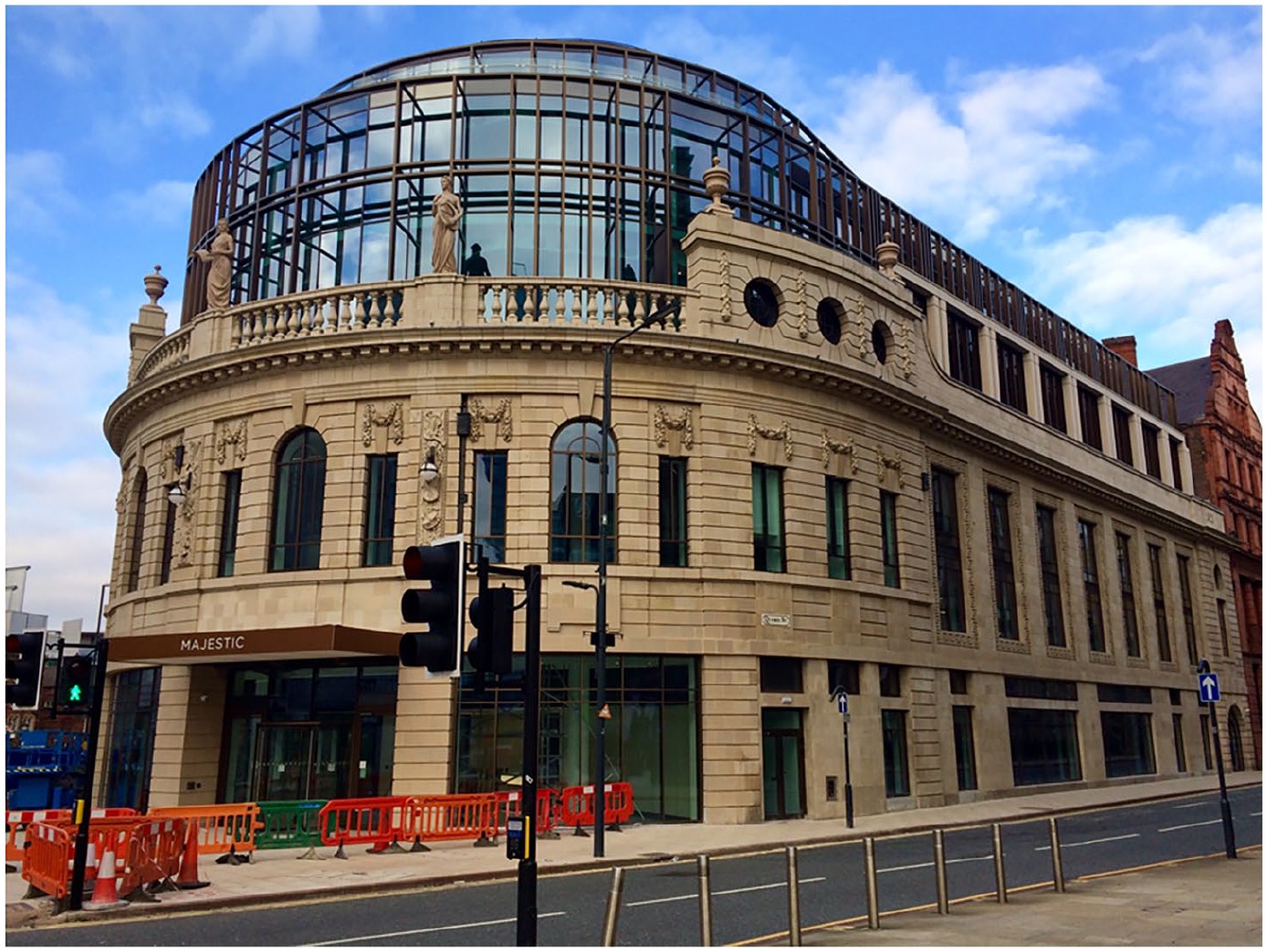
Channel 4 headquarters, The Majestic, Leeds.
Glasgow creative hub: a 21st-century workspace in a conservation area
Opened in late 2019, the Glasgow base, which was intended to house 30–50 people, is also located centrally in a restored industrial building, The Garment Factory. Channel 4 now leases space on the first floor of the building, which also houses digital agencies and an architecture firm Threesixty Architecture, in Montrose Street in the city centre. The Garment Factory, originally built in 1898 as the garment factory of J & W Campbell, comprises part of the Merchant City Central Conservation Area (Figure 6). The big regeneration focus on this part of the city was predominantly from the 1980s onwards after properties in the area had fallen into disrepair in the 1960s. It is a mixed-used cultural quarter with residential property, cultural flagship organisations (GOMA, Fruitmarket and City Halls) as well as high-end shops, bars and restaurants.
Again, the choice of building itself is very much in keeping with the post-industrial ‘creative cities’ aesthetic hinted at in the pitching briefs with their emphasis on the attractiveness of workspace and the importance of quality of life (Channel 4, 2018). This focus on aesthetic appeal and urban modernism is reflected in the subsequent promotion of the site by the property management companies involved. For example, The Garment Factory’ Linkedin profile (n.d.) speaks of ‘the restoration of many of the original features – including exposed ceilings, steel and brickwork, wooden flooring and ornate staircases – with the introduction of contemporary finishes throughout’.
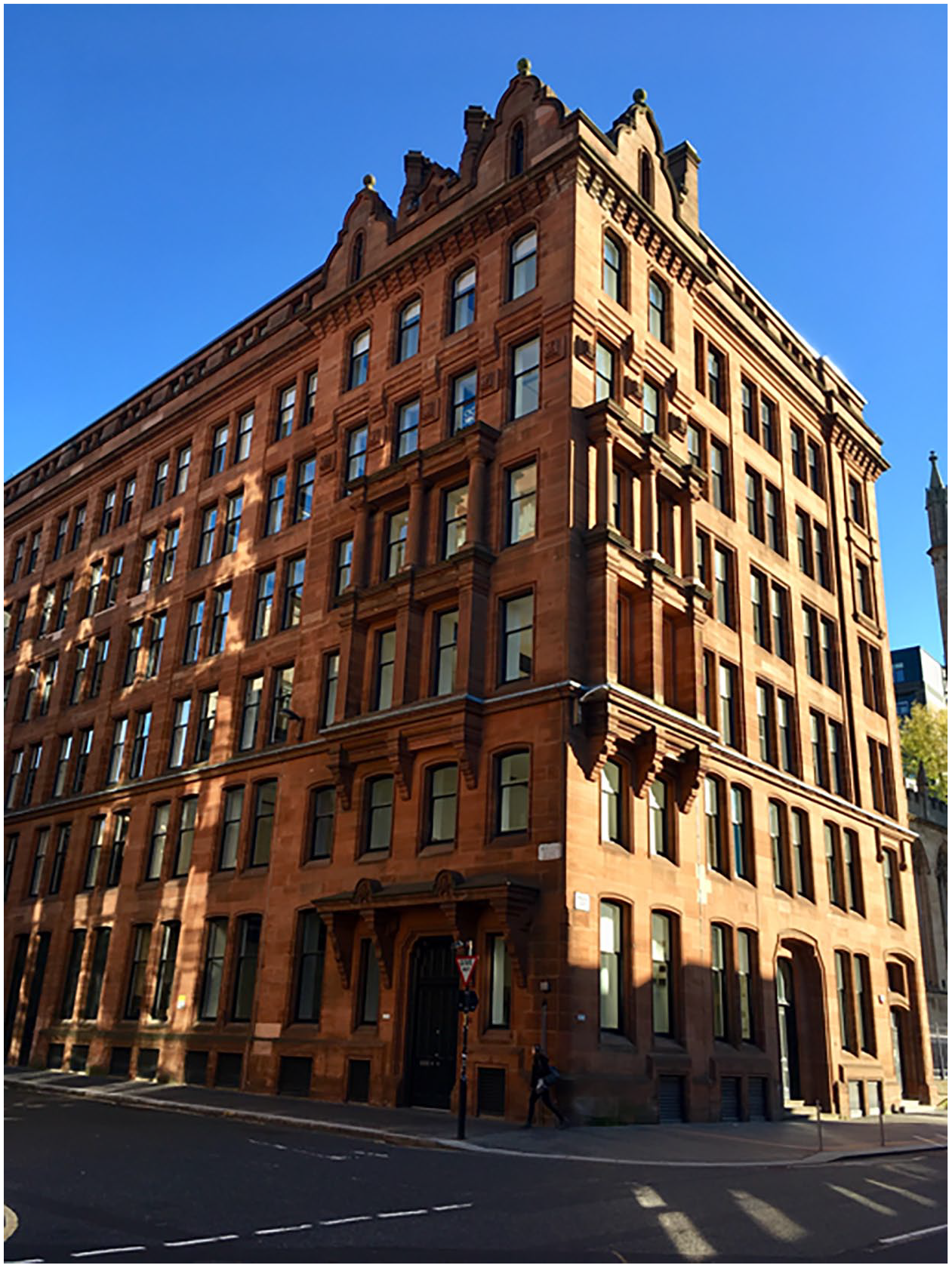
Channel 4 creative hub, The Garment Factory, Glasgow.
Bristol creative hub – from brewing buildings to loft living office space
Channel 4’s Bristol base is located in The Fermentation Buildings, a working brewery from 1702 until 2000, located in Finzel’s Reach, a recently transformed area that overlooks Bristol’s floating harbour. As with the Glasgow hub, it was intended to have 30–50 people working in it. Formally opened in January 2020 and located close to Temple Meads Station, the Bristol office was the final piece in the relocation puzzle, following the opening of C4’s Leeds and Glasgow offices the previous October. The C4 Bristol hub comprises 3200 sq ft of space on the second floor of the Fermentation Buildings. Creative agency BDH, which delivered the special effects for BBC1’s Blue Planet II and produced self-help film parody Celebrity Life Skills for Channel 4, is also now located in Finzel’s Reach along with design agency Outlaw (Figure 7). The buildings also house an eclectic mix of restaurants, cafes and shops on the ground floor. Finzel’s Reach developer Cubex describe the area as offering ‘sensitive restoration of some of the existing and historic buildings’ alongside ‘high quality, striking new architecture and contemporary public realm’ (Cubex, 2020).
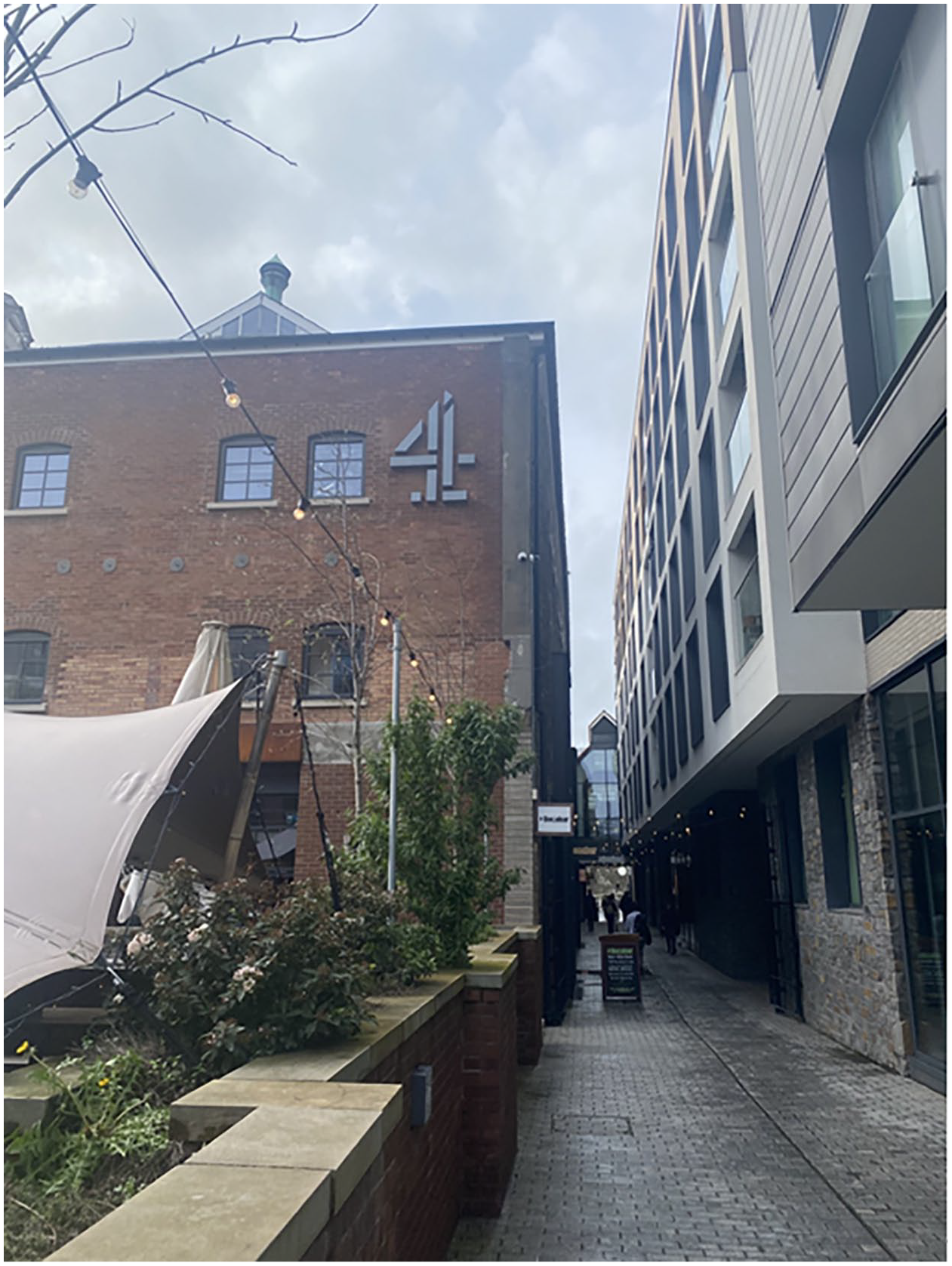
Channel 4 creative hub, Finzels Reach, Bristol.
What do these new C4 locations tell us about Channel 4’s changing position in the British media ecology, as well as the changing role of media buildings in urban development? First, we note that proximity to existing media production clusters appears less important than the symbolic importance of a central, high-profile location. Within Leeds, for example, the office space seems completely apart from the existing creative economy, such as the Holbeck/Round Foundry area of the city, and is very much adjacent to the corporate downtown zone of finance, legal and consultancy firms, as well as within the leisure and retail zone of the city. Rather than being located within established creative clusters, the new locations are situated in more central business zones, which could be seen as an attempt to tap into the potential synergies and networks that exist within these areas. All three locations, including The Majestic and The Garment Factory, are very close to the mainline train stations in each city – making travel for commissioners coming out of London and companies much easier. These choices can be firmly linked back to the C4 pitch brochure stipulations which stressed that the new locations should offer ‘cutting edge connectivity’ to ‘enable fully agile working and a seamless experience between our geographically dispersed locations’ (Channel 4, 2018: 9). The document specifically listed the requirement for relatively fast travel to London (within 3 hours for the national HQ and within 4 hours for the hubs) (Channel 4, 2018).
The decision by Channel 4 (2018) to move its HQ and hubs to regions outside London was an important strategic move, which was argued by the organisation to allow it to better reflect the diversity and interests of the entire UK population. By having a presence in the regions, Channel 4 is potentially better able to understand and respond to the needs and interests of audiences in those areas, and access a wider range of creators, writers and producers who may bring different perspectives and experiences to their programming. However, the possibility that the buildings are on fairly short leases and that they are not connected geographically to the existing production community, creates a sense of liminality and temporariness. This was perhaps most readily indicated when Alex Mahon warned of the viability of the regional sites if the privatisation went ahead (Harding and Johnson, 2021). Indeed, given that the move itself was very much a result of political pressure put on the earlier Chief Executive of Channel 4, the commitment to regionalisation appears a fragile one (Lee et al., 2021).
Another notable feature of Channel 4’s relocation decisions relate to questions about the longevity and sustainability of the move, and of the broadcaster itself. The whole period of the relocation has unfortunately coincided with deep public concerns and existential debates about Channel 4’s long-term sustainability (Woodhouse, 2023). The background to the regional move, itself a tactic to offset privatisation calls, followed the decision by DCMS that C4 should relocate and move beyond London. Plans to privatise, however, returned in the aftermath of the Conservatives’ 2019 general election victory, when Nadine Dorries, under Boris Johnson’s government, drew up proposals which would have seen Channel 4 sold to a private owner (Waterson, 2022). This government-led pressure on Channel 4 and the BBC have been part of the broader ‘culture wars’ and ‘anti-woke agenda’ being pursued by the recent Conservative governments. As well as the threat to Channel 4 around privatisation, acrimonious relations with the BBC led Boris Johnson to attempt to delegitimise the BBC licence fee by announcing that he was considering decriminalising non-payment of the licence fee (Holtz-Bacha, 2021). While the Channel 4 privatisation plans were formally abandoned in January 2023 (Waterson, 2023), proposed relaxation of the publisher-broader model and further commitment to decentralise activity and investment in the regions suggest that the turbulence of recent years is likely to continue.
Most recently, the organisation has faced a funding crisis exemplified by what has been referred to as a ‘bloodbath’ of cancelled shows, although some of the reported axings were denied by the broadcaster (Wagstaff and Preston, 2023). In mid-2023, it was reported that Channel 4 had overspent on content, which had led to the unofficial commissioning moratorium (Kanter and Goldbart, 2023) and significant potential job cuts have also been mooted (Sweney, 2024). As with other broadcasters, they face a real threat with the massive increase in the popularity of US streaming services and the downturn in advertising revenues. UK broadcasters have struggled to maintain audiences – especially younger viewers with OfCom (2022) figures from 2022 suggesting that nine in ten 18- to 24-year-old adults turn to streaming, on-demand and social video services rather than broadcast TV when looking for screen content.
The impact of the pandemic and the emergence of post-Covid working practices (Nathan and Overman, 2020) also shape an insecure landscape for Channel 4. In terms of responsiveness, the original plans for the hubs and HQ workspaces were drawn up in a pre-pandemic era and have more recently confronted the potential transformation of working lives through remote and hybrid working patterns. As the alterations to the HQ desk arrangements demonstrate, the ability to adjust configurations in response to external pressures has been a consideration in their choice. The need to stay adaptable and responsive in the regular threats to their existence has arguably shaped their choice of flexible, adaptable space in the face of a fragmented media landscape.
In terms of the changing role of media buildings in urban development, Channel 4’s regional offices also reflect the increasingly limited capacity for media buildings to act as transformative actors in urban and regional development. If past modes of media development, as noted in the earlier half of this article, were, however problematically, major catalysts for transformation – be that the BBC in Salford, or the monuments to media power in early modern New York – the Channel 4 move is fundamentally different at a scalar level. Certainly, the move and the buildings undoubtedly hold a symbolic power, acting as a talking point for journalists, and indeed Channel 4’s relocation was the basis of an intra-regional competition endorsed by regional politicians and metro mayors. In this sense, it is clear that there are echoes of, for example, the BBC’s partial relocation to Salford. However, the economic case for Channel 4’s move has always been more based on that symbolism and on supposed effects of clustering dynamics, rather than on hard capital investment. To some extent then, the Channel 4 relocation, the lack of significant capital investment and the temporary, refitted and refurbished spaces of media production that it has created, must be seen in the context of a post-austerity lack of funding at the local and regional levels and worsening regional inequalities. If media buildings reflect the political economic contexts of their times, then Channel 4’s move speaks not only of a PSM in a funding crisis, but also of a wider lack of investment in regional development in the United Kingdom.
Conclusion
In this article, we have explored the evolving spatiality of Channel 4’s move to a multi-site operating model. Drawing on a historical perspective of media buildings and their symbolic significance, the article has contextualised this move within this historical trajectory and situated it within a context of utilising media buildings and developments within urban and regional revitalisation. Channel 4’s relocation to Leeds, Glasgow and Bristol and the corresponding choice of media buildings represents a significant strategic move with implications for both the broadcaster and the cities involved. Traditionally, media buildings were often centralised in major urban centres, serving as symbols of prestige and power. Channel 4’s relocation to Leeds, Glasgow and Bristol represents a broader trend towards decentralisation within UK PSM, driven by largely political factors but shaped by the wider global economic and cultural forces, for example, associated with the rise of global platforms. Given the complexities of what is an ever-changing landscape, UK PSM is often subject to forces outside of local control. The streaming era has changed the rules of the game and reshaped the context for media production. In this context, as Martin and Johnson (2024) highlight, a key battleground has emerged for PSM in the shape of debates about their universality. In this context, they argue, Channel 4 has chosen to represent a key characteristic of their universal appeal as diversity by, in part at least, endeavouring to represent the whole of the United Kingdom. The visible and symbolic importance of their choice of media buildings as a material manifestation of this commitment to the nations and regions has heightened significance within this fight for survival.
Questions remain about the long-term sustainability of the move, particularly in light of past privatisation threats and ongoing funding challenges. A feeling of impermanence of the new sites may be perceived as a lack of commitment on the part of Channel 4 to regional production by the existing production community in Yorkshire, Bristol and Scotland, and reflect a more strategic political positioning (House of Lords Communications and Digital Committee, 2019). This would need to be followed up by research, but it would certainly be useful, now that privatisation is off the cards, to examine how C4 can deepen its bonds and commitment to regional production, tackling those fears head on. The shift away from a centralised and flagship site towards decentralised hubs in regional city centres, we argue therefore, denotes both a reflection of the strategic positioning of Channel 4 and their response to the challenges in the media landscape driven by contemporary polycrisis. There is an absence of monumentalising or building immortality through the architecture as the new media space choices seem more temporary, ephemeral and less fixed.
Ultimately, reflecting on the symbolic representation of the workspace decisions of the recent Channel 4 moves, if the ‘media houses’ described by Ericson and Riegert (2010) are all about the production of centrality, we argue that the broadcaster’s choices represent an effort to produce decentralisation and the perception, at least, of devolution of power away from London to the regions. We further argue that the decisions signify a move away from media power in the traditional sense as a reflection of the impermanence that hovers over PSM. Among other concerns, this raises questions around the fragility of the impact of such decentralisation of broadcast and screen activity to the UK regions.
Footnotes
Data availability statement
Data sharing not applicable to this article as no datasets were generated or analysed during the current study.
Declaration of conflicting interests
The author(s) declared no potential conflicts of interest with respect to the research, authorship and/or publication of this article.
Funding
The author(s) received no financial support for the research, authorship and/or publication of this article.
