




Abstract
This article revisits an earlier investigation of the impact of networking practices on social inequality and creative work in the British independent television production sector. The original study analysed the role of networking as a means of finding work and developing a career, as well as highlighting the exclusion of individuals without high levels of cultural and social capital. The present study updates the earlier research, exploring how the rise of social media platforms has transformed the nature of social interactions and the implications of this for the television industry. The analysis focuses on the experiences of six of the original cohort of interviewees and six people who have entered the industry since 2015. The article examines interviewees’ social class through social origin, utilising the NS-SEC 3 class classification system, to explore the role that social class plays in networking, and whether the largely middle-class and exclusive milieu of TV production culture in the mid-late 2000s has become more or less inclusive in recent years. Through qualitative analysis of interviews, the study explores differences between the two groups in their experiences of networking, the affective costs of labour intensification, their attitudes towards inequality, and their tactics for navigating a highly socially stratified labour market. The article aims to contribute to a better understanding of the complex relationship between social networks, the television industry and wider social inequalities. The study suggests that the rise of social media has been a catalyst for a transformation in how social networking takes place in the television labour market, potentially opening up the industry but also reinforcing existing inequalities.
Keywords
Introduction
In the mid-late 2000s I explored the rise of network culture and its impact on social inequality and creative work in the television industry (Lee, 2011). This research explored the role of networking practices in the British independent television production sector (ITPS), based on fieldwork carried out between 2005 and 2007, involving in-depth interviews with twenty freelancers in the industry. It highlighted the significance of networking as a means of finding work and developing a career, but also notes that it can lead to exclusion of individuals without high levels of cultural and social capital. The study drew on sociological theories of networks to analyse patterns of hierarchy and discrimination within the ITPS (Burt, 1995; Granovetter, 1973). Since the original cohort participated in the study, the use of social media and network culture has become more prevalent in society, and the impact of social media on networking and sociality has been studied extensively (Poell et al., 2021; Van Dijk, 2013). However, the rise of social media and its effects on social inequality and polarisation have intensified, affecting how individuals navigate their personal and professional networks. As Couldry (2015) asks, questioning the ‘thin’ account of democratisation that is often mounted by advocates of networking communication, ‘since elites are networks (and always have been), how can the fact of intensified networking by itself shift long-term hierarchies?’
Scholars have noted how social media has transformed the nature of social interactions, creating new opportunities for connection but also exacerbating existing inequalities (Van Dijck, 2013). Social media platforms such as Twitter, Instagram, and LinkedIn have become popular tools for individuals to create and maintain networks, but have also contributed to an ‘always on’ culture, where individuals must constantly perform and maintain their online persona (Hearn, 2015). This technological change has also led to an increased blurring of boundaries between work and personal life, contributing to intense stress and lack of sleep (Crary, 2013). In addition, cultural production is increasingly being undertaken through and for social media platforms, leading to shifts in labour dynamics (Poell et al., 2021). The use of social media in cultural industries’ labour markets, and an increased reliance on platforms for content production, consumption and distribution, have raised wider questions about the role of social networks in creative work, including discussions about the ‘reputation economy’, ‘gig economy’, diversity and precarity (Bishop, 2018; Gandini, 2016; Gill and Pratt, 2008).
The rise of social media and its effects on networking and sociality have implications for the television industry. As social media becomes more ubiquitous, professionals in the industry must navigate the pressure to cultivate a personal brand and to constantly engage with their network. This can contribute to a sense of anxiety and self-doubt, as individuals worry about whether they are ‘doing enough’ to stay relevant and competitive. The pressure to build and maintain a social media following can be challenging and add an additional layer of performance pressure, especially in the television industry where audience engagement is paramount.
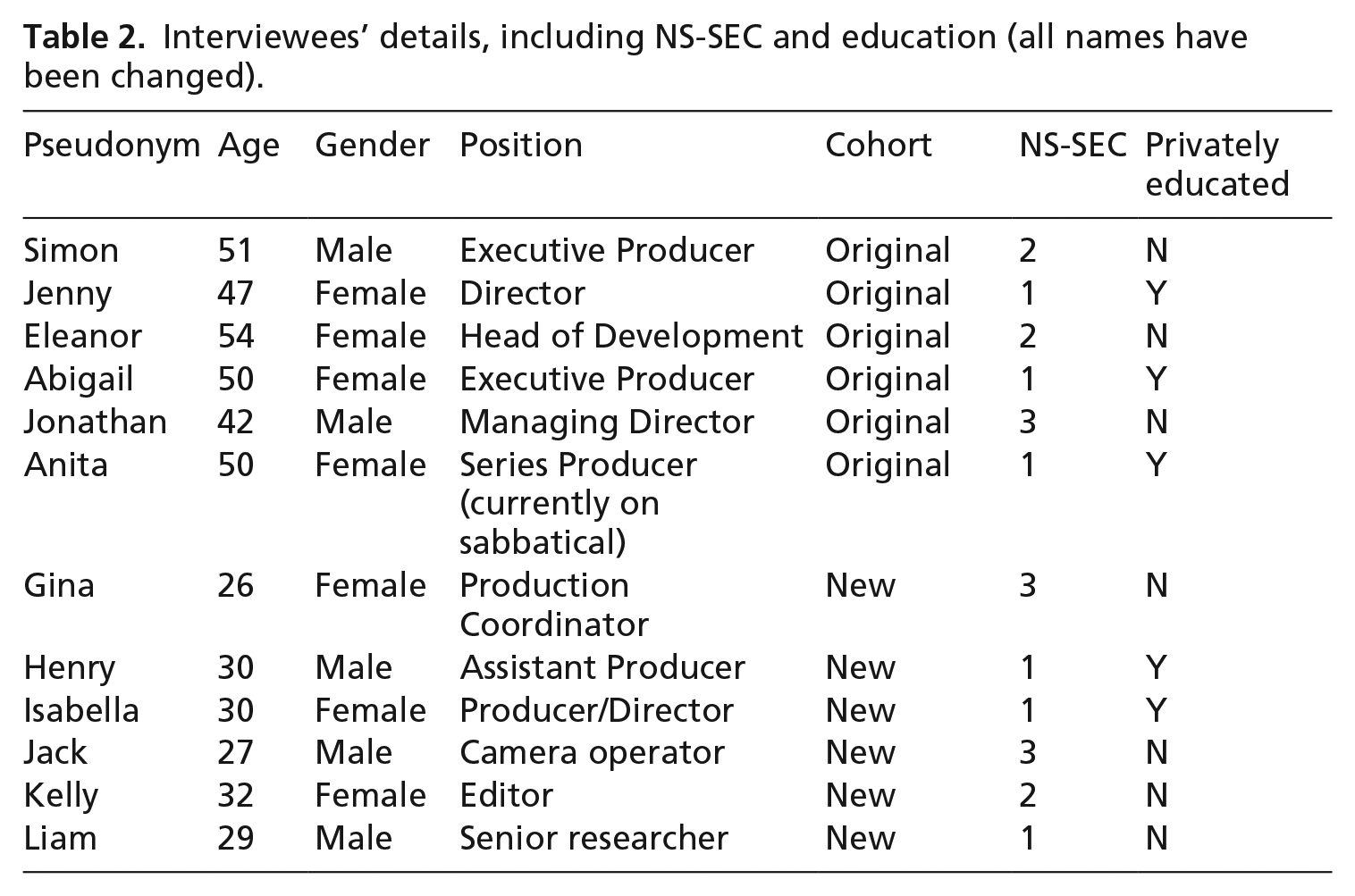
As research on social inequality in the cultural and creative industries (CCIs) has grown in range, scope, and detail, the issues explored in the original article have become much more pressing. This article revisits these issues and updates them to take into account how networking culture has changed, exploring the experiences of six of the original cohort of interviewees, and six people who have entered the British television industry since 2015 (Table 2). The analysis interrogates interviewees’ social class through social origin, utilising the NS-SEC 3 class classification system, to consider class as a key factor in their experiences of networking and progression in the industry, as well as asking them additional questions about whether or not they were privately educated (Table 1). 1 The article aims to investigate changes in networking culture in TV production over the past 15 years, taking into account changes in television production, the role of social media in labour markets, and the impact of intensified creative work on mental health. Building on the earlier article’s focus on social inequality, cultural capital and class in TV production, this article examines the role that social class plays in networking, and whether the largely middle-class and exclusive milieu of TV production culture of the mid-late 2000s has become more or less inclusive in recent years. Through qualitative analysis of interviews with members of the first and second cohorts, the article explores differences in experiences of networking and intensification of work between the two groups. By examining the changing opportunities and challenges that the reliance on social networks present for creative work in television, this article aims to contribute to a better understanding of the complex relationship between social networks, the television industry and wider social inequalities.
NS-SEC 3 model classification. a
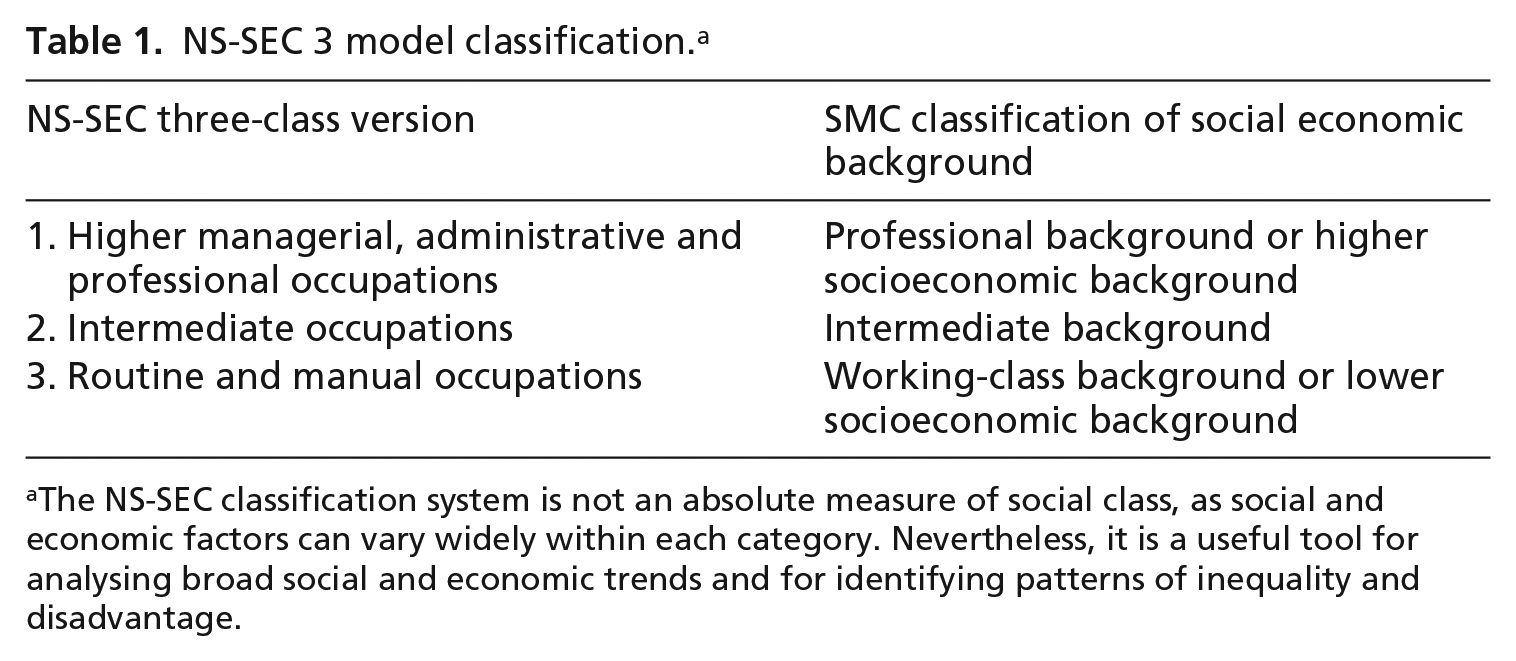
The NS-SEC classification system is not an absolute measure of social class, as social and economic factors can vary widely within each category. Nevertheless, it is a useful tool for analysing broad social and economic trends and for identifying patterns of inequality and disadvantage.
Interviewees’ details, including NS-SEC and education (all names have been changed).
Creative work, social media and inequality
The creative industries have been the subject of extensive analysis in recent years, with a growing body of research focusing on the role of social class in shaping access to and success in creative work (Brook et al., 2020; Friedman and Laurison, 2020). Studies have highlighted the challenges faced by working-class individuals in gaining entry to creative occupations, with middle-class networks and cultural capital playing a crucial role in opening up opportunities (Brook et al., 2020).
Social class has emerged as a key issue to explore in relation to cultural work, and recent research in this area has provided much-needed quantitative analysis (Brook et al., 2018, 2020). This has been made possible in part by changes to the Office for National Statistics household survey, which now includes social origin (via parental occupation) as a proxy for social class (Friedman et al., 2015). The evidence is now beyond doubt that the creative and cultural industries are some of the most socially exclusive sectors of the economy, with persistent inequalities in access and progression (Banks, 2017; Brook et al., 2020), a situation compounded by an embedded culture of low-no pay, nepotism and contingent labour markets often based on network forms of hiring (Grugulis and Stoyanova, 2012). In television production, this is particularly pronounced (Lee, 2018). The networking labour market model is a key factor reproducing this systemic inequality, but despite important changes in on-screen representation, off-screen labour representation remains stubbornly white, middle-class and privileged, with individuals from working-class backgrounds and ethnic minority groups often being excluded from opportunities for advancement (Brook et al., 2020; Saha, 2018). 2
Research has shown that the television industry is characterised by high levels of social exclusion and inequality, with opportunities for advancement being concentrated among a small elite group of individuals (Randle, 2015). These inequalities are perpetuated through the informal networks that exist within the industry, which are often based on social class, education and cultural capital (Lee, 2011; Hesmondhalgh and Baker, 2010). Moreover, individuals who come from privileged backgrounds are often better equipped to navigate these networks and access the opportunities that exist within them.
The rise of social media and online social networks has transformed the landscape of creative work, providing new opportunities for self-promotion, networking and collaboration (McRobbie, 2016). Platforms such as Twitter, Instagram, LinkedIn, TikTok and YouTube have become crucial tools for creative practitioners, allowing them to reach audiences, showcase their work and build personal brands (Poell et al., 2021). However, these platforms have also created new challenges and inequalities, with the visibility and success of individuals and projects often determined by factors such as algorithmic biases and the power of existing social networks (Gillespie, 2014; Marwick, 2013). There is a dynamic of misrecognition at work here where social media theoretically opens up connection possibilities but maintains or even intensifies patterns of inequality in terms of what is legitimated or recognised as having value (Campanella, 2023).
Research in this area suggests that the opportunities for networking created by social media platforms have not necessarily opened up the creative industries socially, but instead have reinforced existing patterns of inequality and exclusion (Bishop, 2018; Poell et al., 2021; Sobande et al., 2023). In particular, middle- and upper-class entrants are more likely to have the skills, resources, and networks to effectively navigate these platforms and leverage their benefits, while working-class individuals may lack the same level of access and support (Brook et al., 2018).
These changes in the creative industries have taken place against a backdrop of increasing social inequality and polarisation, both online and offline (boyd, 2023; Dorling, 2019). This broader societal context has had an impact on the television industry and creative labour markets more broadly, exacerbating existing inequalities and reinforcing patterns of social exclusion. According to recent research on class diversity in the Screen Industries, more than half of the individuals working in these industries in the United Kingdom in 2020 came from privileged backgrounds, accounting for 53 percent of the workforce, compared with 38 percent in any other industry. However, there is a significant under-representation of individuals from working-class backgrounds in the UK Screen Industries, with only one in four of the workforce coming from lower socio-economic backgrounds, as opposed to the 38 percent representation across the economy (Carey et al, 2021). Statistical data shows that social inequality in creative work has been increasing in recent years, with the gap between the highest and lowest earners widening (Campbell et al., 2019).
The rise of social media and online networking may offer new opportunities for self-promotion, collaboration, and networking. However, research shows that the creative industries remain highly exclusive, with social class remaining a significant barrier to entry and success. The networking practices that are so crucial to success in these fields are often built on exclusionary practices that privilege those with pre-existing social connections and cultural capital, reinforcing existing inequalities. This is particularly heightened for freelancers, who make up the bulk of creative workers in the UK television industry. This is because television freelancers move from company to company on a project basis, often on short-term contracts and with very little job security (Lee, 2012). In such a context, the reliance on networks for finding work and negotiating labour precarity becomes critically important.
Creative work, intensification and mental health
Another notable feature of contemporary cultural production carried out in and through digital networks is the increase in anxiety and mental health caused by an ‘always on’ work culture, where the boundaries between work and leisure time are increasingly eroded, and where work has intensified even more than in the 2000s. This has been exacerbated by the proliferation of social media platforms such as Twitter, Instagram and LinkedIn, which have made networking more accessible but have also intensified competition (Fuchs, 2014; Hearn, 2015). As a result, individuals feel pressure to constantly perform their selves through social media networks, with the attendant pressure of feeling constantly observed (Duffy and Chan, 2019).
Research on mental health challenges in creative work, such as a recent report on mental health in television in the United Kingdom, has highlighted the need for greater support (Film and TV Charity, 2022). Burnout and industry exit is also prevalent (Lee, 2018). Similarly, researchers have highlighted the mental health challenges faced by musicians (Gross and Musgrave, 2020). Research on networking and the reputation economy provides further insight into the affective pressures that individuals face in an ‘always on’ culture, where networking and self-promotion are key to success (Gandini, 2016). Social media networks have in part also facilitated a much wider discussion about the inequities in television work and the psychological cost of this mode of labour, leading to a rise of activism and online support groups such as ‘Share My Telly Job’ (Aust, 2022).
Social media platforms used for networking offer the promise for individuals to build authentic and equitable relationships, and they have helped to promote a discourse of diversity and inclusion and an increased awareness of inequality and exploitation. However, they have also intensified competition and labour, and blurred the boundaries between work and personal life, creating new forms of psychological and affective pressure and the risk of burnout.
Methodology
This study is based on in-depth qualitative interviews. It also utilises a longitudinal study approach that involved revisiting six of the original interviewees and interviewing six new interviewees who have joined the television industry since 2015. 3 This approach is designed to provide an in-depth understanding of the changes that have occurred in the television industry, particularly in relation to the impact of social media, social networks, increased social inequality, and polarisation. The use of a longitudinal approach in research has several advantages. By examining changes over time, researchers can track the evolution of individuals and organisations in response to changes in their context, such as shifts in the industry (Elder and Shanahan, 2007). Revisiting the original interviewees in a longitudinal study allows for a comparison of their experiences with those of a new cohort, providing a rich and nuanced understanding of the changes that have occurred in the industry over time. This approach can uncover how the same social structures and inequalities play out differently over time and across different generations (Dekkers et al., 2000). It can also yield valuable insights into the complex and dynamic processes underlying social change in the industry, such as how social networks and cultural norms evolve over time.
Table 2 shows the interviewees’ details, including their social class of origin classification, based on parental occupation, using the updated NS-SEC 3 class classification system.
I. Revisiting the original cohort
The original cohort of six interviewees provided rich insights into the television industry in the mid-2000s. Upon revisiting them, several themes emerged that shed light on how their experiences have evolved over time.
Social class, networking and meritocracy
My earlier article focused in depth on the relationship between cultural capital and social capital, and the social inequalities inherent to the networked labour market in the ITPS. Social class was a feature of the research, but was not empirically measured. While I did not undertake a detailed class-based analysis at that stage, this time round, I felt it would be instructive to ask about parental occupation and education (as a recognised proxy for measuring social class) when re-interviewing them, to provide more detail and additional analysis. What emerges is a strong relationship between social class and a belief in meritocracy, connecting to other research in this area which shows that often those who are the beneficiaries of a class-based inequality structure are most likely to naturalise the ideology of meritocracy as a rationale for their (and others’) success. I also explored the tactics that they utilised for navigating the classed social landscape of ITPS, which varied considerably depending on their social class and by cohort. I re-interviewed six of the original respondents, who represented a variety of social class backgrounds (Table 1).
Some of the original cohort had achieved significant success in the industry. For instance, Abigail, (NS-SEC 1, privately educated) who had started out as a runner, had worked her way up to become an executive producer on a popular factual series. She described her success as a combination of hard work, talent, and luck: ‘I worked my way up . . . and I got lucky with the projects I worked on. But it’s also about being in the right place at the right time’, stressing her belief in the importance of both individual effort and external factors in determining success in the industry (Throsby and Hollister, 2003). However, this quote also reflects the importance of the ideology of meritocracy as a method for masking structural advantage. The discourse of meritocracy is pernicious in the CCIs (Littler, 2017), often acting as a mask for systemic and embedded inequality.
However, when pressed, social advantage and cultural capital played a clear role. For example, the importance of cultural and social capital through background was highlighted by series producer Anita (NS-SEC 1). She spoke of her upbringing in a family with a background in media, stating, I suppose growing up with it and being around it, I had an awareness of how the industry worked and felt pretty relaxed in that environment . . . in you know a way that maybe some of the others didn’t have.
The discourse of meritocracy masks the advantages that some individuals have due to their social class, cultural capital and access to high-value social networks (Bourdieu, 1984). As in the earlier research, networks continued to play a vital role. As Anita stated, ‘The contacts you make early on are crucial. They may not get you a job, but they can really help you to get a foot in the door’ (NS-SEC 1). However, there is also recognition among some members of cohort 1 that hard work and talent are not enough to guarantee success in the industry, particularly among the working-class interviewees, who were much more attuned to the inequality of CCI work and the role networks play. As Jonathan (NS-SEC 3) noted, ‘I climbed the ladder by working hard, but I also had to network and make connections to get where I am today. It’s a bit of both, you know?’ Similarly, in contrast to those from privilege, Eleanor (NS-SEC 2), who comes from a lower middle-class background, is much more aware of the role that networks play in success. As she stated, ‘Look, it’s not only what you know, it’s also who you know. Without those connections, it’s tough to make progress in this industry’. This awareness of social closure reflects how access to opportunities is restricted by social networks and cultural knowledge, where those with cultural capital and social connections have a greater advantage in accessing opportunities and accumulating symbolic capital (Bourdieu, 1986).
Tellingly, the older cohort in the television industry programme seems to have accepted the structural advantages of social class, cultural capital, and networks as a fact of life. As one interviewee, Anita, stated, ‘It’s just the way things are. You can’t change it, so you just have to deal with it’. This resignation reflects the normalisation of inequality in the industry and the way in which it is internalised by those who have succeeded despite these barriers. It is also important to note that this cohort is one that has survived and (sometimes) thrived in a highly competitive industry, so arguably they may be less likely to be bitter about its social inequities – even if they are aware of them.
However, despite this acceptance, there is also a recognition of the need to navigate the industry and the importance of networking. Working-class interviewees described the need to ‘mask’ their class origins in certain circles, while highlighting them in others, indicating an understanding of the role that subcultural capital can play in navigating different networks. As Jonathan stated, ‘I knew when to be more “working-class” and when to be more “middle-class”, depending on who I was talking to’. He placed value on adaptation in navigating different social networks, suggestive of the ways in which social class can be performed and strategically deployed for success.
This strategic deployment of social class can also fit within a meritocratic discourse, where an individual’s ability to succeed despite their social origins is seen as emblematic of their resilience and individual heroism, echoing a wider cultural and political shift towards ‘resilient’ subjects (Chandler and Reid, 2016). Jonathan told me, ‘I’m not ashamed of where I come from. Actually, it’s made me tougher, more motivated to succeed’. Here, the discourse of meritocracy cuts across class divides, being mobilised by those from polar opposites of the class system, masking structural inequality and reinforcing the idea that success is solely the result of individual effort, rather than external factors such as social class and networks.
Burnout and networking
The issue of burnout was also prevalent among the original cohort (see also Lee, 2018). Many felt that the intense and demanding nature of their work had taken a toll on their mental and physical health. For instance, Anita, who had worked her way up to a senior position, explained how the pressure to constantly deliver high-quality content had led to her burnout: ‘I just couldn’t take it anymore. The long hours, the constant deadlines, it was just too much’. The emotional labour required in the industry, as well as the culture of overwork and deadlines, contribute to the high levels of burnout experienced by television professionals. The intense competition and precarious nature of work in the industry also add to the stress. The pressure to constantly innovate and produce new content, coupled with the need to maintain high audience ratings, further exacerbates the problem.
In the ITPS, the culture of networking and self-promotion has intensified in recent years, leading to added pressure and burnout for television professionals, particularly those just starting their careers. Simon (NS-SEC 2), talked about how tiring it is to have to promote yourself. He said, ‘It’s not enough to just do your work well. You have to keep promoting yourself, being present on social media, attending events, and building connections all the time’. This need to constantly self-promote and network has been linked to research on the negative impact of networking on mental health, as it can lead to anxiety and burnout (Pantic, 2014). Indeed, several of the original cohort had left the industry due to these pressures. 4
In addition to the pressure of self-promotion, the industry’s commercial transformation has forced interviewees to adapt to new networking strategies, in particular with subscription video on demand commissioners. The rise of the streaming services has intensified the pressure, with companies such as Netflix and Amazon investing heavily in content production to attract and retain subscribers. This has led to a greater demand for commercially viable programming, which can come at the cost of artistic integrity (Lotz, 2022). This shift in networking strategies has also contributed to a de-naturalisation of the meritocratic belief that has prevailed among the interviewees, as they feel that their established networks which had sustained them for many years are no longer sufficient for success in the industry. As Jonathan explained, ‘It used to be that we had these established relationships with the commissioners, we knew who they were, they knew us. But we don’t know who these guys are in the streamers. . . It’s like we’re always starting over’. These experiences of pressure and displacement are reminiscent of the ‘corrosion of character’ discussed by Sennett (1998), where he describes the erosion of a sense of self and moral character in the face of the demands of contemporary capitalism; they also speak to questions about ageing and cultural work and the need for constant reinvention and adaptation (Brodmerkel and Barker, 2019), as well as the loss of ‘the stamina of youth’ that is required to sustain a creative career (McRobbie, 2016).
II. The new cohort
The new cohort interviewed for this study was composed of six individuals who had entered the television industry after 2015. Their experiences reveal the evolving nature of the industry and the impact of social media on networking and work culture.
Networks, social class and the weakening of ‘weak ties’
The original study highlighted the issue of cultural capital and social inequality, which had become more pronounced in the current climate. Generally, there was a far greater awareness of inequality among those interviewees who were not from privileged middle- or upper-class backgrounds, than in the first cohort. This suggests that the wider discourse around social justice more broadly, and inequality in the CCIs, has filtered down to the consciousness of the younger cohort. For example, some working-class interviewees were acutely aware of their disadvantage, as production co-ordinator Gina (NS-SEC 3), illustrates: ‘Coming from a working-class background, I always feel like I had to work twice as hard to prove myself. And even then, it feels like I’m never really taken seriously’. Despite this growing awareness of inequality, there seemed to be a sense that meaningful change was receding, with the younger cohort feeling the pressures of student debt and the struggle to save for their futures. As camera operator, Jack (NS-SEC 3) put it, ‘We’re, what do they call it . . . yeah, generation rent. It’s like we’re never going to be able to afford our own homes, let alone succeed in this industry’. While they felt supported by training programmes and wider discourse around social justice, they struggled to imagine a long-term future in the industry due to these pressures.
Conversely, for those from privilege, there was a distinct lack of awareness of social privilege, suggesting that the ideology and values of meritocracy continue to hold a powerful sway, or even more powerful. For example, some more privileged interviewees from the younger cohort were not even aware of their social privilege. Henry, an assistant producer (NS-SEC 1, privately educated) said, ‘I never really thought about where I came from before. I just assumed everyone had the same chances I did, but now I see that most people in the industry are a lot like me’.
The interviews with Cohort 2 suggest an important shift in the importance of ‘weak ties’ when it comes to networking in the creative and cultural industries, compared with the earlier cohort.
5
While the earlier Cohort 1 had extensively relied on these ‘weak ties’ to access the industry and get their foot in the door, the qualitative evidence from Cohort 2 suggests a lessening of their importance as a means of gaining competitive advantage in a labour market that has become increasingly competitive and difficult to navigate. In a context where open networks are prevalent across social media platforms, and where ‘everyone can be connected’, some interviewees were dismissive of that kind of networking, emphasising the importance of building closed, private networks. Also, more emphasis was placed on perception of skills. As one interviewee, Kelly (NS-SEC 2, state educated), noted, Look, it’s not just about knowing people and having connections anymore. That’s still important, don’t get me wrong, but it’s not the only thing. You’ve got to have the skills and the knowledge to back it up. You can’t just rely on charm and who you’ve rubbed shoulders with at some fancy event. You’ve got to know your stuff, and you’ve got to be able to show it. That’s what’s gonna get you ahead in this industry now.
This reflects the interconnected importance of skills and competencies, rather than simply social connections. It doesn’t mean that weak ties have lost all their value, but it suggests that certain forms of ‘weak ties’ – especially those gained through digital platforms, and which lack a regular element of communication or co-presence, have become far less valuable. Weak ties still offer an advantage, but only if they are face-to-face and based on trust and mutual respect. As Isabella (NS SEC 1, privately educated), explained, To be honest, the best connections I’ve made in this industry haven’t come from some fancy networking event or LinkedIn message. It’s been through people I know personally – friends of friends, former colleagues, people who can really vouch for me and my work. That’s how I’ve gotten some of my best opportunities, and I think it’s because people trust the recommendations of those they know and like. It’s not just about who you know, but who knows you and is willing to put in a good word.
While this quote supports the idea that ‘weak ties’ and ‘structural holes’ continue to have importance (Burt, 1995; Granovetter, 1973), emphasising the importance of networks in accessing information and resources, it also highlights the importance of trust and reciprocity in these relationships. 6 This indicates that some members of cohort 2 are placing less emphasis on traditional networking strategies and are instead focusing on building strong relationships based on trust and mutual respect. While digital networks and social media can certainly play a role in this process, they are not seen as a substitute for face-to-face interactions and personal relationships. But there is a class-based twist to this, reinforcing privilege and inequality, as we shall see below.
Cohort 2 navigates the privileged terrain of the television industry by utilising various tactics. One of these tactics for the privileged interviewees (NS-SEC 1) is to downplay their privilege. Isabella said, ‘I know I’ve had a lot of advantages in life because of my family’s money, but I try not to make a big deal out of it. I don’t want people to think I’m entitled or snobbish, so I try to act like everyone else’.
Another interviewee, Henry (NS-SEC 1) added, ‘I don’t like to talk about my upbringing. I don’t want to be seen as some posh guy who only got into this industry because of who I know. I want to be judged on my skills and my work, like everyone else’.
However, despite the efforts of some privileged members of Cohort 2 to underplay their privilege, there is still a hidden culture and a contradiction between the personas that people take on. Upper-class individuals may try to play down their class background, much as in cohort 1 working-class individuals act up. But both cohorts profess a belief in the importance of networking. Yet, the ways in which members of different social classes network are distinctive, and worthy of discussion. Their belief in the importance of networking is reinforced by the ideology of open networks fostered by communicative capitalism (Dean, 2005), and embodied in platforms like LinkedIn. However, the reality is that closed, class-based networks appear to be deepening and strengthening, and this is where real power lies. And this is also where the more privileged put in the real networking labour, although it is work that is hidden from view and not openly discussed. Those from privilege work hard to reinforce their privilege by building long-term closed, much less visible networks than those available online, which Cohort 1 also mentioned. For example, as Jack notes, I mean, social media is cool and everything, but let’s be real, the big names in this industry are all in these tight-knit groups. It’s really crap because it seems like no matter how much effort you put in . . . you’re just not going to make it unless you’re in with the in-crowd.
The more socially privileged interviewees understand the significance of building networks based on shared class backgrounds and values, which they recognise will sustain them through their career. As Liam (NS-SEC 1), explained, I reckon it’s crucial to connect with folks who are from a similar background, who get where you’re at, and who’ve been through similar experiences. It’s not just about getting ahead, but finding people who’ve got your back, and who you can help out too.
This emphasises the importance of social capital, the resources gained through one’s social connections which can be used to gain advantages in the labour market and other social settings (Bourdieu, 1986). However, this practice of building networks based on shared backgrounds also reveals the (unconscious) duplicity of elites in masking their hidden labour on building class-based networks of privilege while espousing the value of open networks and meritocracy. As Gina (NS-SEC 3) put it: ‘They say it’s all about who you know, but they don’t tell you that it’s mostly about who you know who is the same as you’. Such behaviour perpetuates social reproduction, where individuals from privileged backgrounds maintain their advantages through their social networks and resources, while those from lower social classes struggle to access these same opportunities, reproducing social inequality and reinforcing class-based disparities in the CCIs.
This advantage of understanding networking culture through social learning based on class is something that working-class members of Cohort 2 may not fully comprehend. They may believe that access to a network will automatically translate to success. However, as the interviews show, the reality is more complex, with networks becoming more closed and class-based. It suggests that while social capital is an essential resource for getting ahead in the industry, access to it is not evenly distributed, and the privileged are better equipped to navigate and benefit from it.
‘Always on’ and networking
Another key theme that emerged in this network economy was the pressure to always be ‘on’ and the challenges this can pose to mental health. Isabella describes ‘this constant pressure to be online, to be connected, to be posting and all that. It’s really exhausting, and it makes you anxious, especially if you don’t get a response back’. This demand to maintain a social media presence and to constantly engage with one’s network is a hallmark of contemporary network culture, and it can take a toll on individuals who feel like they are always ‘performing’ online. Notably, this experience differed through class origin, with those state educated and from lower-class social origins feeling this pressure more keenly – perhaps because they had bought into the ideology and discourse around networking more readily than those from privileged backgrounds.
In the context of the television industry, the pressure to be ‘always on’ can be particularly intense. As Liam explained, ‘In this industry, you have to be constantly hustling, pitching idea[s]. . . It’s not just a 9-to-5 job, it’s a 24/7 lifestyle’. This sentiment was echoed by Kelly who added, ‘In today’s world, it’s like you’re supposed to be on call all the time. If you’re not, you run the risk of losing out on chances or being seen as not putting in enough effort’. The impact of being ‘always on’ is not just limited to mental health, but can also lead to physical health problems, such as sleep deprivation and other stress-related conditions (Crary, 2013). The new cohort also highlighted the difficulty of setting boundaries between work and personal life, with social media blurring the lines between the two. As Henry, put it, ‘It’s hard to switch off when your work is also your social life. You’re never really away from it’.
As several interviewees noted, social media has made it easier to connect with people and to build a network, but it has also made it harder to establish genuine, meaningful relationships. As Gina explained, ‘It’s like we’re all just collecting followers and connections, but we’re not really building relationships. It can feel really superficial sometimes’. This tension between the ease of connection and the difficulty of building genuine relationships is a hallmark of contemporary network culture, and it can be a source of frustration and disillusionment for individuals who feel like their social media presence is not translating into meaningful connections or opportunities.
The demands on building and maintaining a social media following can have a significant impact on individuals’ mental health and well-being, creating a sense of anxiety and self-doubt. As Liam stated, It feels like there’s always something else I could be doing to stay relevant and keep my followers interested, you know? I’m really worried that if I don’t post often enough, people will lose interest, and I’ll end up falling behind.
This constant pressure to create content and stay connected can be exhausting, even when individuals are off the clock. The pressure to present a certain image online can be exhausting and even create a sense of inauthenticity. As Isabella explained: I think that’s one of the main issues with social media, especially for people who work in the media. You’re always trying to show your best side, your most exciting side, your most successful side, and it can be really tiring to keep that up. . .it’s not even about your work, but about your personality and your lifestyle. I feel like I have to be someone I’m not on social media, just to keep up. . . It’s exhausting.
Reflections: a tale of two cohorts?
This study opens up commonalities but also important differences in the experiences of these two small cohorts of television workers from different generations. While the primary focus is on networking, other related factors have been explored such as commercialisation and mental health. Below, I consider some of the implications of the research, comparing and reflecting on the findings across both cohorts.
The changing relationship between networking and social inequality
The intensification of social inequality and the growing awareness of the issue have become increasingly relevant in contemporary society. As the television industry has continued to evolve, networking culture has shifted, and the decreasing importance of digital weak ties has become apparent. For socially privileged members of both cohorts, long-standing networks based on accumulated social capital over time have become more important for sustaining a career in a precarious environment. These closed, hidden, and protected networks are based on trust and reciprocity, but maintain class inequality, rather than open and digital networks that are felt to be more superficial and transactional. For the socially privileged members of both cohorts, it was noticeable how social media networks are far less important than those they trust – long standing networks that have sustained them through their time in the industry. These are not ‘open’ in the way that digital networks might appear to be on platforms such as LinkedIn – these are closed, hidden, protected and based on accumulated social capital over time.
The changing nature of networking and sociality in the television industry was a topic of reflection for both cohorts. While social media has made it easier to connect with others, it has also led to more superficial and transactional networking practices. As discussed by Baym (2015), this reflects the wider trend of the changing nature of sociality in the digital age. While weak ties were once seen as valuable for expanding one’s network, the expansion of weak ties into online social networks may have rendered them far less valuable than before, particularly in a context where face-to-face contact and networks remain vital.
The reflections of both cohorts on the changing nature of networking and sociality in the television industry demonstrate the complex interplay between technology, social change, and inequality. While social media has undoubtedly made it easier to connect with others, it has also introduced new forms of competition and stratification, perpetuating and exacerbating existing patterns of advantage and disadvantage. The importance of face-to-face contact and deeper networks has become more apparent, particularly in the context of the Covid-19 pandemic, where the lack of face-time is important when trying to navigate creative labour markets (Lee, 2023).
Mental health, intensification of work and performance
Another striking finding across the cohorts is the increased level of pressure. Work in television in the 2000s was certainly not relaxed or easy. But if the labour of networking largely took place in physical spaces in that period, now that work has extended vastly across the sphere of leisure time both in physical space and digital space. Curating one’s various online profiles is of crucial importance, often seen as more important than the work itself. In turn this has led to a cynicism about the ‘value’ of the work that is done and a sense that recognition for creative work is now more about successful online self-promotion – this comes across clearly in interviews for both cohorts. Cynicism is also a key feature of ‘burn out’ (Maslach et al., 1997), something that appears highly prevalent in cohort 1, and reflects wider concerns about ageing and the sustainability of a high pressure creative career over time (Brodmerkel and Barker, 2019).
These mental health pressures have intensified alongside the intensification of networking. The new cohort’s experiences highlight the changing nature of the television industry and the wider pressures brought about by social media and influencer culture (Bishop, 2018). These pressures can contribute to burnout and mental health concerns, as well as the pressure to perform and individualisation of work. The cultural shift towards network culture also adds an additional layer of pressure, as social connections and online presence become increasingly important in the industry.
Conclusion
This article explores how the rise of social media has been a catalyst for a transformation in how social networking takes place in the television labour market, potentially opening up an industry that has always been opaque in terms of entry and progression based on social capital, who you know, and possession of a middle-class disposition (Randle, 2015). However, the changes in networking culture have taken place during a time of growing social inequality, and the research reflects wider concerns that social media platforms may intensify social divisions and create an array of new problems (Van Dijck, 2013), favouring those who already have social and cultural capital, and reinforcing existing inequalities.
The findings of this study shed light on the changing nature of networking tactics and the growing importance of class-based networks in the creative industries. The distinction between open and ‘hidden’ networks, and the devaluation of weak digital connections in favour of physically proximate and class-based relationships based on trust and reciprocity, reflects the deep-seated social inequalities that continue to shape the industry. The research also reveals the intensifying pressure facing both generational cohorts, as a result of commercialisation and the ‘always on’ culture, which has serious implications for the mental health and well-being of workers in the industry. While this study was limited by its small-scale qualitative research design, it has laid the groundwork for further exploration of these issues at a larger, quantitative scale. Future research could examine these findings in other areas of the creative economy, building on the insights gained from this study to deepen our understanding of the challenges facing workers in this sector.
The television industry has continued to evolve in the decade since the original article was published, with social media and network culture playing an increasingly important role in shaping work culture and professional identity. This article provides insights into the challenges facing workers in the creative industries, highlighting the need for greater attention to be paid to the role of networking and social class in shaping career trajectories and opportunities for advancement. Despite the ’open’ discourses of communicative capitalism which are so prevalent, instead this research sheds light on new hidden forms of privilege, operating and sustained in closed (socially privileged) networks, and operating largely out of sight: meritocracy’s ugly underbelly.
Footnotes
Funding
The author(s) received no financial support for the research, authorship and/or publication of this article.

Data availability statement
Data sharing not applicable to this article as no datasets were generated or analysed during the current study.