




Abstract
The circulation of the discourse as well as the direct actions of the United Kingdom’s YouthStrike4Climate movement is analysed by considering the production of movement discourses in conjunction with the way in which the movement self-mediates those discourses and actions, the way the mainstream media represents them and how they were received by non-activist citizens as well as political elites. It was found that the movement discourse invokes crisis and a sense of emergency to act; the need for a green new deal is proposed with an emphasis on intersectional climate justice and more democracy and inclusion of youth voices. The Internet, social media and cloud-based platforms were used a lot, to communicate both outwards and inwards. However, the resonance of social media engagement was relatively low. Mainstream media resonance, on the contrary, was quite high and overall relatively positive, although there was also evidence of belittlement and misogyny. The movement has played its role, among others, to increase awareness of climate change and the need to act, but the direct actions of the movement were less supported and there is also still a gap in terms of class and race, which will require a more embodied rather than performative intersectionality with regard to environmental issues.
Introduction
As the passionate Black Lives Matter protests across the world in the summer of 2020 demonstrated, the fire of protest can never be fully extinguished and repressed, but at the same time it would be fair to say that the COVID-19 pandemic did stop an emerging high cycle of protest movements dead in its tracks. We could refer in this regard to the gilets jaunes protests in France, the protests against neoliberalism in Chile, national strikes in Colombia, the October movement in Lebanon, pro-democracy protests in Hong Kong, protests against the citizenship law in India and environmental protests by Extinction Rebellion as well as secondary school students across the world.
It is this last, YouthStrike4Climate, movement, and more specifically its UK manifestation, that will be the focus here. The aim is to assess the ways in which this movement and its environmental discourses have circulated through British society, mediated through their spectacular direct actions, their self-mediation practices and mainstream media representations. Inspired by the circuit of culture, a circuit of protest framework will be proposed to assess and analyse the agentic opportunities as well as the structural constraints in the efforts by young adults to produce and subsequently circulate pro-environmental discourses through British society. In doing so, it is argued that protest movements are meaning-makers and important political actors in a democracy; they highlight emerging and pressing issues and introduce new ideas to tackle them. Both communication by activists and sympathisers, as well as media as actors external to the movement who represent the movement, are central to this, emphasising the importance of mediation to propel the circuit.
The mediated circulation of protest
Through emphasising mediation and adopting the metaphor of the circuit and circulation, I align myself among others with the work of Martín-Barbero (1993), who stressed that there is ‘no hegemony – nor counter-hegemony – without circulation’ (p. 99) and that this mediated circulation of information, knowledge and meaning is essential when it comes to resisting dominant culture and hegemonic structures. Taking inspiration from the Circuit of Culture, as developed within cultural studies (see Du Gay et al., 1997), a Circuit of Protest is proposed to analyse the circulation of protest (Cammaerts, 2018). The Circuit of Protest comprises four core moments: (1) the production of movement discourses, collective identity and actions by activists, (2) a set of self-mediation practices, (3) the mainstream representation of the movement and, finally, (4) the reception of the movement’s discourses and frames by the general public and by political elites.
The Circuit of Protest addresses both the meaning-making process and its reception in the context of contentious politics. In line with the work of the Glasgow Media Group, the Circuit of Protest framework aims to consider and interrelate ‘processes of production, content, reception and circulation of social meaning simultaneously’ (Philo, 2007: 175). It also considers the symbolic aspects of a political struggle in conjunction with material ones. First, the four moments of the circuit will be unpacked further.
Production of movement discourses, identities and actions
Movement discourses articulate a set of aims and demands or what Tilly (2004) called ‘program claims’ (p. 12). As Benford and Snow (2000) outlined, they not only identify problems that need fixing (diagnostic frames) but also present a number of solutions to fix those problems (prognostic frames). While there might be consensus about the former, there is often much more internal debate and conflict about the latter.
Movement discourses also do boundary work; through identity claims (Tilly, 2004) they articulate an inside – a ‘we’, which translates into a collective identity and an outside – a ‘they’, which denotes the productive role of an ideological enemy (p. 12). Antagonisms are constitutive in the construction of collective identities as the self gets defined in juxtaposition to what it is not, or to what Derrida (1978) called ‘the constitutive outside’ (pp. 39–44). Besides this, a well-defined common enemy is productive in terms of constructing intersectional alliances – or ‘chains of equivalence’ – across different identities and agendas (Laclau and Mouffe, 1985: 127). A further point to make in the context of movement discourses is the extensive deployment of moral and injustice frames (Benford and Snow, 2000). In this regard, movements will often frame issues through binary oppositions such as ‘just versus unjust’, ‘fair versus unfair’ or ‘good versus evil’.
By emphasising the discursive work of movements, it is being recognised that the discursive is an important and proper ‘medium of social conflict and symbolic struggle’ in its own right (Koopmans and Statham, 1999: 205). This has led some scholars to refer to the existence of a ‘discursive opportunity structure’, which is related to, as well as semi-independent from, the more traditional political opportunity structure (Ferree et al., 2002). It speaks not only to the degree of salience of a particular discourse or frame, but also to the ability of discourse to shape our understanding of the world.
Another important aspect of movement messaging relates to the agentic or motivational frames; movements tend to communicate an urgency to act which connects the discursive to the actions a movement mobilises for and the symbolic to the material (Benford and Snow, 2000). Activists select from an action toolbox – or a repertoire of contentious action – which actions they engage in and the conjunction of actions amounts to a sustained campaign (Tilly, 2004). A wide variety of actions can be undertaken by movements, from mass demonstrations, petitions, sit-ins, blockades, strikes, occupations, targeted destruction, sabotage and so on. In recent years, the Modernist repertoire has also been complemented by an online digital repertoire of contentious action (Earl and Kimport, 2011; Rolfe, 2005), which can in part be related to self-mediation practices.
Self-mediation practices
Throughout history, movements have attempted to develop and/or use various means of communication to disseminate their discourses and frames, but also to mobilise for direct action and to coordinate the movement. This foregrounds a set of activist self-mediation practices, which moves us away from the discursive and the symbolic towards practices and a set of materialistic concerns which are closely intertwined with technological innovation and -affordances, as well as regulatory constraints and limitations. In other words, the ways in which movements appropriate media and communication technologies is circumscribed by the ‘intersection between social context, political purpose and technological possibility’ (Gillan et al., 2008: 151).
Various communicative affordances such as public versus private, real-time versus asynchronous communication, concealment and circumvention, make different activist self-mediation practices possible. Public forms of communication suit disclosure practices more whereas private forms of communication can better facilitate self-reflexive examination practices. Fleeting forms of real-time communication can be productive in terms of self-reflexive examination and coordination practices, but asynchronous forms of communication are more useful when it comes to practices of remembrance, which create a movement’s memory and make movement spill-overs possible (Meyer and Whittier, 1994). In terms of (collective) identity construction this maps onto Foucault’s Stoic Technologies of the Self – disclosure, examination and remembrance (Cammaerts, 2015).
As Foucault (1993) also pointed out, however, Technologies of the Self are deeply integrated with Technologies of Domination (p. 203). Applied to the context of contentious politics, States and corporations have consistently tried to limit, restrict, and/or regulate the use of media and communication technologies, be it print, telecommunication, broadcasting and more recently the Internet, especially when it concerns their use to disrupt and contest the status quo (Cammaerts, 2019; Downing et al., 2001). This has led to a dynamic interplay between activists and the powers that be when it comes to control over the means of communication, as well as access to communication infrastructures and circumvention of surveillance.
Mainstream media representation of movements
Self-mediation is, however, often not enough to make movement discourses resonate widely, which is where mainstream media come in (Rucht, 2013). Mainstream media and journalists play important normative roles in democratic societies and are considered to be gate-keepers to the public sphere, facilitators of public debate, as well as watchdogs of political and economic elites (Christians et al., 2009). They also enable access to mass audiences by reaching beyond the already converted.
The relationship between mainstream media and social movements is, however, a fraught and complex one. Certain patterns in the ways in which journalists tend to cover protest and movements have been discerned. This has given rise to what has been called the protest and the public nuisance paradigms, shaping the reporting on protest and social movements (Di Cicco, 2010; Lee, 2014). The former is characterised by a dominance of negative frames, an over-reliance on official sources, the marginalisation and demonisation of protesters as well as the delegitimisation of the demands which protesters make. The latter points towards the tendency of mainstream media to portray protest, and especially disruptive protest, as a public nuisance, emphasising the negative consequences of the action for ‘ordinary’ people.
It would, however, be too simplistic to claim that all media and all journalists abide by the protest, or public nuisance, paradigm for each movement and for every protest. For example, the political position and ideology of the media outlet matters, with left-leaning media less prone to report protest according to the principles of the protest paradigm (Cammaerts, 2013). The diagnostic and prognostic frames of the movement, and especially the extent to which these are anti-systemic, also play a role here. Finally, the repertoire of contentious action used by the activists is also relevant in this regard; the more disruptive and violent, the greater the chances are that the protest and public nuisance paradigms are activated in the media (Lee, 2014).
Reception of movement discourses and frames
As Hall (1980 [1973]) pointed out five decades ago, besides the encoders of meaning, we also need to pay attention to the decoders of meaning, which in our case are both non-activist citizens and political elites. Whereas the former can be related to a more opaque notion such as public opinion, the latter refers to the extent to which there are channels of communication between more informal political processes, such as contentious politics, and formal political institutions and actors.
When it comes to public opinion, movements need to convince a critical mass of people to support their cause to legitimate their aims and demands and achieve genuine change at the level of behaviour and/or policy. Following on from this, political elites tend to be more prone to compromise or to attend to the demands of movements if support for these demands among the population is high. As Giugni (1998) also argues, this triad of movements’ demands and actions, public opinion and elite reaction, ‘makes a strong case for taking public opinion into account as an important factor in the study of the outcomes of social movements’ (p. 379). Movement success can, however, not merely be reduced to the amount of public support or policy changes, it can also be situated elsewhere, for example, in terms of the previously-mentioned movement spill-overs, shifting the discourse, or inducing a pre-figurative politics from below and achieving changes in social behaviour.
Research questions and methodology
Based on the conceptual framework outlined above, the main research question being addressed here is: In what ways and to which extent did the discourses, frames and actions of the UK’s YouthStrike4Climate movement circulate through and resonate with British society? This leads to the articulation of the following four sub-questions:
Production. What were the main discourses, frames and action repertoires produced by the movement?
Self-mediation. Which self-mediation practices were enacted by the movement?
Representation. How did the mainstream media represent the movement and was the protest or public nuisance paradigm activated?
Reception. What was the reaction of public opinion and political elites to the movement and its discourses?
Each of the moments of the Circuit of Protest – production, self-mediation, representation and reception – require different methodologies and come with their own limitations. To research the production of movement discourses, a discursive frame analysis was conducted revealing the identity, diagnostic, prognostic and motivational frames of the movement (cf. Benford and Snow, 2000). The corpus consisted of the mission statements and demands of the UK Youth Climate Coalition (UKYCC) and the UK Student Climate Network (UKSCN). 1 Self-mediation practices were researched through an analysis of the use of social media platforms, such as YouTube, Facebook, Twitter and TikTok by the movement, complemented by an exploratory interview with a youth activist. 2
Mainstream media representation was analysed through a content analysis with two periods of analysis: (1) 13 February–6 March 2019: 1 month after the movement first emerged in the United Kingdom and (2) 17 September–3 October 2019: 1 month after a global action week and the speech of Greta Thunberg at the UN in September 2019. The following media outlets were chosen: left-leaning broadsheet The Guardian, and rightwing broadsheet The Times, a liberal London-based local newspaper Evening Standard and the tabloid Daily Mail. Besides this, the website of the public service broadcaster BBC, left-leaning blog The Huffington Post and the rightwing magazine The Spectator were included. Within the two periods of analysis, the sample was exhaustive; a total of 157 articles were coded. Coders were trained and 20 percent of the sample was double coded enabling us to calculate the ICR scores, 3 which were above 80 percent for all variables and with an average of 89 percent.
To analyse reception, a secondary data analysis was done on polling data from Hope not Hate (2019), and besides this, an identical variable from Eurobarometer 459 (2017) and Eurobarometer 501 (2020) was compared. It has to be noted though that a secondary analysis of polling data does not constitute a proper reception study. While it does enable us to assess shifts in opinion regarding climate change and environmental politics, a statistical causal relationship between production and reception cannot be established.
Movement discourses and actions of YouthStrike4Climate
The discourses that were most prevalent in the messaging of both networks – UKYCC and UKSCN – are climate change/crisis and linked to this Climate Justice/Green New Deal (Schlosberg and Collins, 2014), as well as Intersectionality (Kaijser and Kronsell, 2014) and Full Participation (Pateman, 1970).
If we discern the diagnostic frames embedded in these discourses, climate change is front and centre in the movement’s discourse as the main issue, which is illustrated by this quote from the mission statement of the UKYCC: ‘climate change is imminent, man-made and will exacerbate the already damaging structures of oppression that exist in our society’. Other related diagnostic frames on the website of the UKSCN include ‘climate crisis’, ‘climate emergency’ and ‘climate breakdown’, all highlighting the pressing nature of the identified problem.
Analysing the prognostic frames, the notion of climate justice, and linked to this the Green New Deal, is emphasised by both networks. The UKSCN calls upon the government to ‘implement a Green New Deal to achieve Climate Justice’. Likewise, the UKYCC states that there can be ‘no climate solution without justice’. We see here clearly the activation of a moral frame. The emphasis is also very much on the government as the actor that needs to act urgently, which we can observe in calls for a ‘bold, dynamic and creative cross-government response to climate change’ (UKSCN). In the discourse relating to the Green New Deal, corporations and ‘the economy’ are also addressed: ‘decarbonise the economy’ demands the UKSCN, and the UKYCC points towards the ‘complicit role the UK government, other governments, and companies have had in creating climate injustice’, and demanding that they make ‘efforts to change behaviours and practises to undo this harm’.
What is also prevalent throughout the movement’s discourse is a strong sense of intersectionality and the explicit activation of a chain of equivalence between various struggles and agendas. UKSCN explicitly states that they combat ‘all forms of oppression, including racism, sexism, transphobia and so on. Climate justice cannot be reached without social justice!’. UKYCC says that it is guided by a set of values which include ‘systemic change, non-violence, transparency, anti-oppression, inclusivity, diversity and independence’. It furthermore calls for ‘system change’ by acknowledging that ‘[c]apitalism is preventing us from making progress towards a greener and fairer society’.
Democracy and meaningful participation are also central to both networks, with the UKSCN demanding the right to vote for all those over the age of 16 years, and a ‘proportional representation, so that everyone’s vote is reflected in our government and is worth the same’. Likewise, the UKYCC aims to ‘mobilise and empower young people’ and ‘amplify youth voices’. They furthermore stress the need for inclusivity and accessibility of climate decision-making for climate justice campaigners, with particular emphasis on the inputs of marginalised and indigenous communities most significantly impacted by climate change.
Finally, a set of motivational frames can be discerned too, emphasising the ‘necessity to act’ and the need for ‘radical action’, as well as ‘bolstering the European and trans-Atlantic climate movements’ (UKSCN).
In terms of actions, the repertoire of contentious action consisted of direct actions, such as the school strikes on Fridays and mass demonstrations, both in the capital London and locally, which are very prominent on the UKSCN website. UKYCC focuses more on lobbying and influencing formal political institutions. For instance, it developed a database mapping the green credentials of MPs, so as to allow ‘voters to hold their MP accountable’. The UKSCN also has a campaign focusing on schools, developing packs for climate education and a youth-led campaign entitled ‘teach the future’.
Self-mediation practices of YouthStrike4Climate
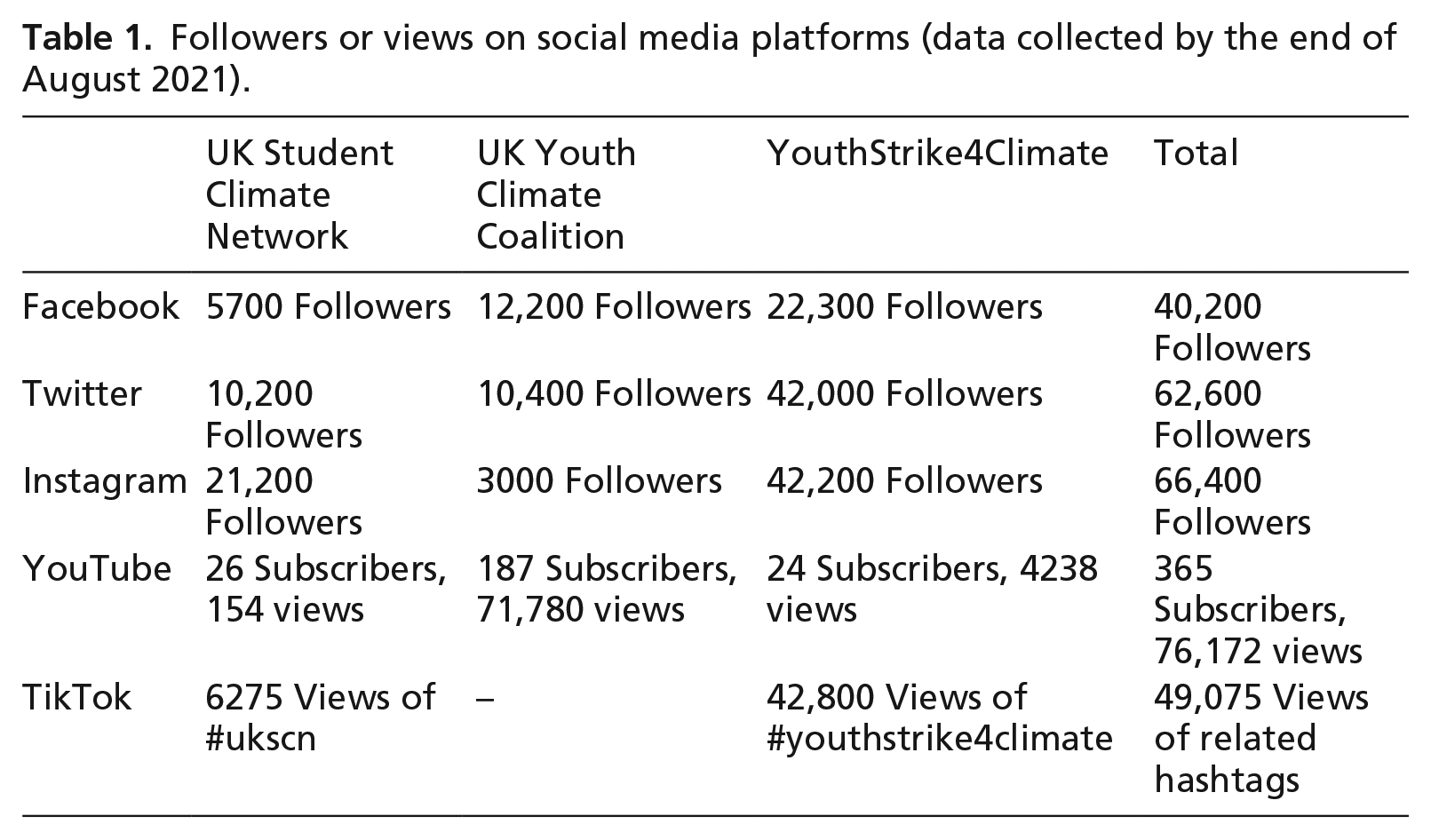
The Internet and social media play an integrative and embedded role in the self-mediation practices of the YouthStrike4Climate movement, more so than print cultures, for example (Table 1). Besides this, another important self-mediation practice is an attempt to manage and shape the mainstream media representation. Let me address both in turn.
Followers or views on social media platforms (data collected by the end of August 2021).
Central to any activist self-mediation strategy today is the profuse use of a whole range of hashtags, in this case: #FridaysForFuture, #ClimateStrike, #GreenNewDeal, #UKSCN and so on. They serve as accumulative aggregators and are instrumental in fostering connections between various actors and local chapters and establishing an epistemic community. These hashtags enable young people to express their solidarity with and emotional attachment to the movement (Brünker et al., 2019), and they play an instrumental role in the disclosure as well as remembrance practices of the movement. Indeed, hashtags enable youth activists to link their own content of actions to the movement, thereby contributing to the co-creation of a movement archive of self-representations.
It is unsurprisingly the more direct-action-oriented account or hashtag (i.e. YouthStrike4Climate) that boasts most views, likes and followers, YouTube was not really used, except by UKYCC, whose account is also 12 years old and has regular content, but the organisation is absent from TikTok. What is more surprising, however, is that these are not very high numbers in terms of social media engagement, especially if we consider the much higher number of young people the movement managed to mobilise in the context of their direct actions. These numbers thus place the relative hype around social media and protest somewhat into context, showing that other forms of communication, for instance, peer-to-peer interaction, the role of opinion leaders (who are called influencers today) or even the good old flyer remain important tools of communication in contentious politics.
This does not mean, however, that young people in the United Kingdom are not using social media, but it might be an indication that social media is mainly used for other things than politics. Empirical evidence suggests that 12–15-year-olds use social media platforms to watch pranks, vloggers, tutorials, music videos, or to exchange memes and banter with friends, but not so much to consume news, let alone seek out political information (Ofcom, 2021). Furthermore, as expressed by the motivational frames discussed above, the main focus of the movement was on offline direct action and not so much social media resonance.
Besides social media use, there are robust websites in place which are snappy, and provide a lot of information about the movement and its frames in a very accessible way,with the option to dig deeper and receive more detailed information. For example, access is provided to specific resources targeted at schools and teachers in the case of UKSCN, or to a system change statement and open webinars by the UKYCC. Consistent with the discursive analysis above, the action and mobilisation components on the UKSCN website are more pronounced than is the case on the website of the UKYCC, where lobbying and movement demands are more central. Websites are thus important tools in terms of disclosure but also of remembrance, as they provide a stable repository of the movement’s documents, publications, actions and so on.
Activists are also often offered media and communication training specifically geared towards climate change issues. For example, UKSCN mobilised its young activists to join a ‘Zoom webinar to find out a little bit more about solutions like the Green New Deal and media messaging’ (Facebook post, UKSCN, 07/04/2019). Likewise, in the context of COP26, held in the United Kingdom, UKYCC offered ‘free strategic climate comms training’ with a view to ‘more impactfully communicate the scale, complexity, and urgency of the #climate and biodiversity crises (and their intersection with wider social justice)’ (Facebook post, UKYCC, 30/01/2021).
Besides this, activists use a plethora of online tools to organise and self-mediate internally; WhatsApp groups to coordinate or platforms such as Google Drive, but also not-for-profit cloud-based tools such as PiratePad or RiseUpPad, to share documents and information, 4 all amounting to what Milan (2019) has called ‘cloud protesting’. This comes with the obvious danger of surveillance and infiltration, and while the more media-savvy activists are increasingly aware of this danger, most activists use these cloud-based tools profusely regardless of these risks.
Another prescient danger that comes with the centrality of the online within the mediation practices of contemporary movements is the abuse which activists have to deal with when engaging online and the mental energy this drains. Young environmental activists, in particular, experience high volumes of hate and online harassment that is directed at them from outside the movement; in the case of female environmental activists this is often combined with misogyny (Givetash, 2019). This is partly a sign of the polarised times we live in politically, but the hate and misogyny expressed online should also be considered in terms of the mental strength and well-being of activists and the strategic intention to silence them through intimidation (Young, 2020).
In the next section, the mainstream media resonance of the YouthStrike4Climate movement will be assessed.
Mainstream media representation of YouthStrike4Climate
The content analysis was coded respectively for the tone of the coverage, the prevalent themes in the coverage and the voices present in the coverage. Furthermore, special attention was also paid to the representation of age and gender as well as the presence of misogyny.
Tone of the coverage
Coders were asked to assess the overall tone of the article and indicate whether the tone was negative, positive or neutral, whereby a negative tone referred to references to truancy, as well as disparaging or condescending comments, a positive tone to celebrations of youth activism and pro-environmental statements and a neutral tone to a lack of value judgements or a combination of positive and negative comments. In the corpus, a bit less than half of the articles were positive in tone, whereas a bit more than 10 percent were negative (Figure 1). This is in line with overall positive media representations of the YouthStrike4Climate movement in other countries too (cf. Rucht and Sommer, 2019).
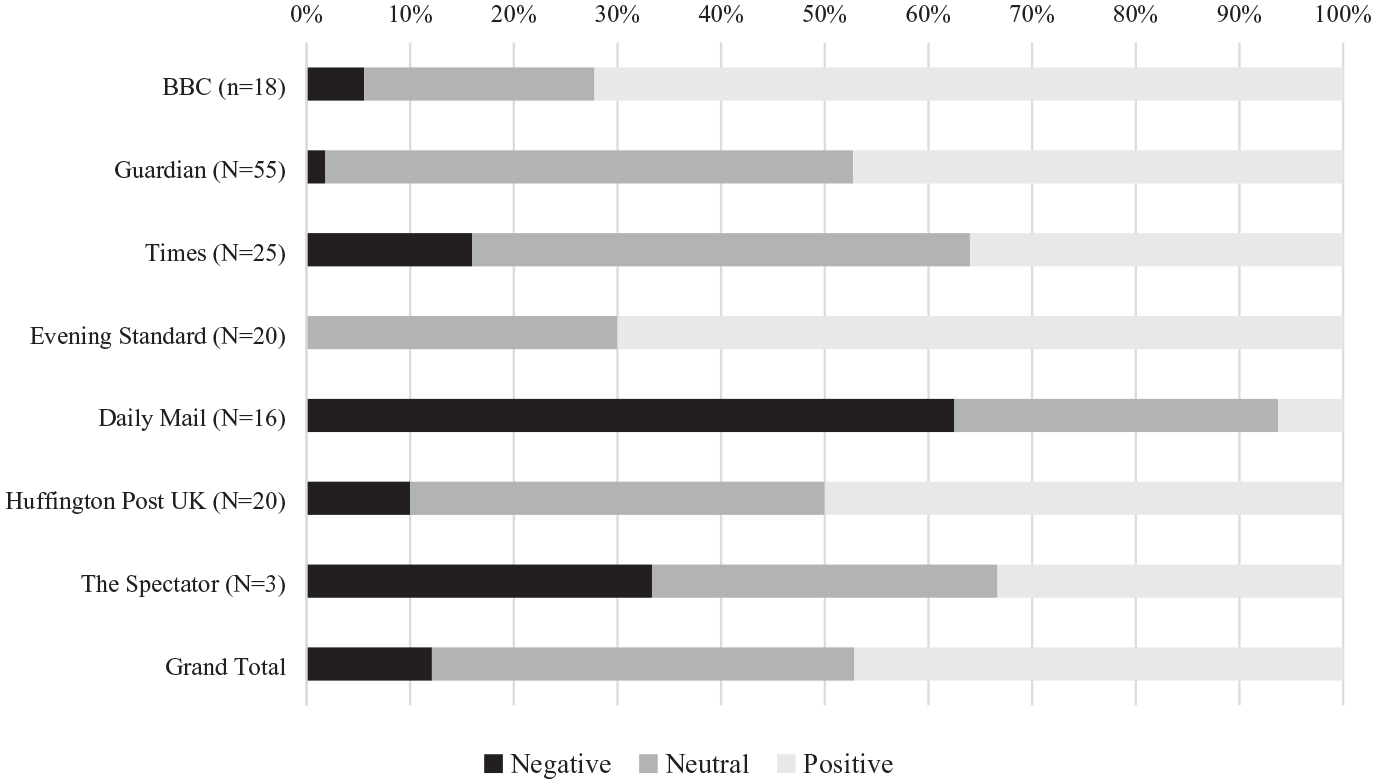
Overall tone of the coverage (N = 157).
As Table 2 indicates, however, there are some marked differences in tone between the first period of analysis, corresponding to the genesis of the movement in the United Kingdom and the second period of analysis, some months later. Whereas the number of negative articles remained proportionally the same across the two periods of analysis, the degree of positive articles was higher in the first period of analysis compared with the second period (54% vs. 44%).
Differences in tone between Period 1 (N = 53) and Period 2 (N = 105).
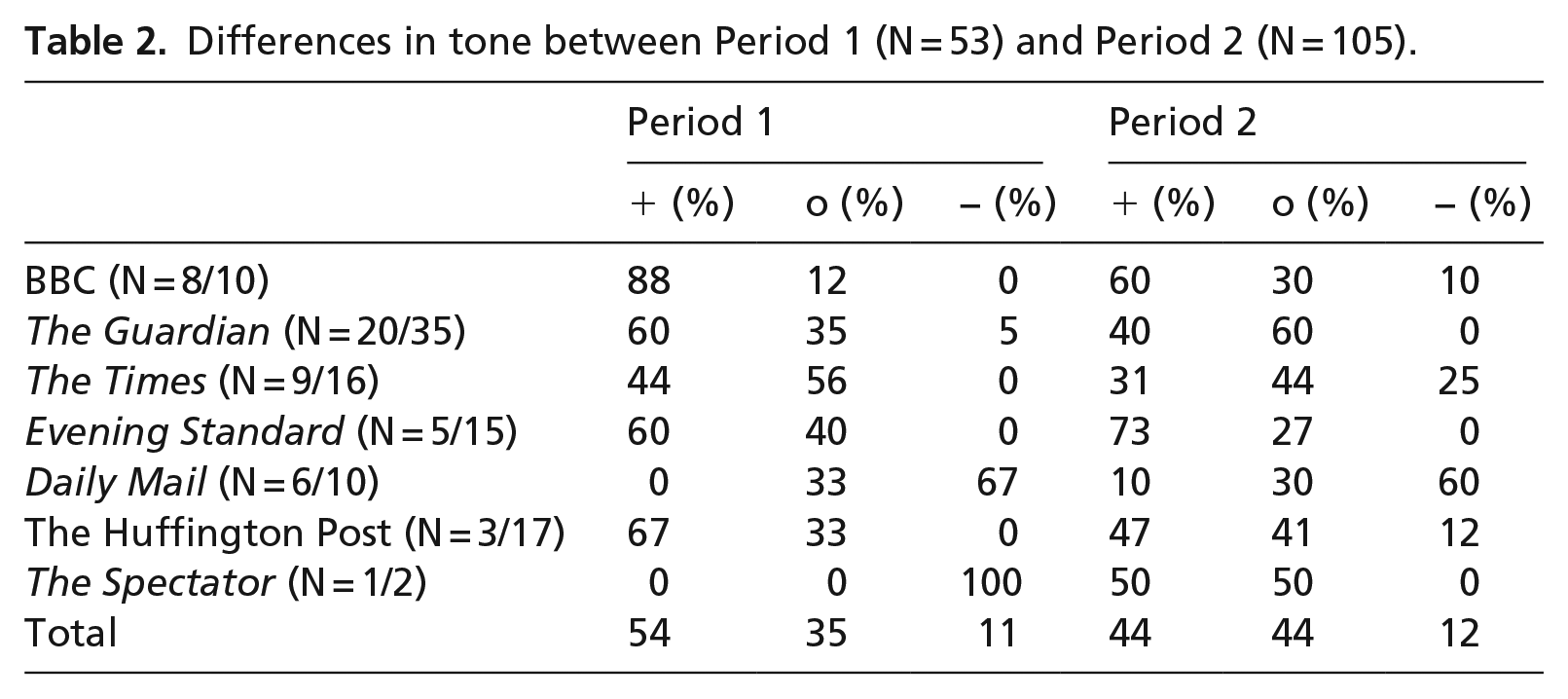
The first period of analysis was characterised by an overall enthusiasm in the mainstream media vis-à-vis the emerging youth movement, countering prevalent perceptions of youth apathy and lack of interest in politics (Cammaerts et al., 2014). In the second period of analysis, we can observe a reduction in the proportion of articles with a distinctly positive tone on the BBC website, The Guardian, The Times and The Huffington Post.
It is, furthermore, unsurprising that articles with a more negative tone could mainly be found in the rightwing media, especially the Daily Mail, which also boasts relatively few articles with a positive tone. In The Times, a more pronounced negative tone could also be observed in the second period of analysis. The London-based local newspaper Evening Standard was very positive towards the movement, with lots of coverage of the protests that took place in London and the activists that are based there. Also, the left-leaning The Guardian, the progressive blog The Huffington Post and the website of the public service broadcaster BBC were quite positive towards the YouthStrike4Climate movement.
Main themes in the coverage
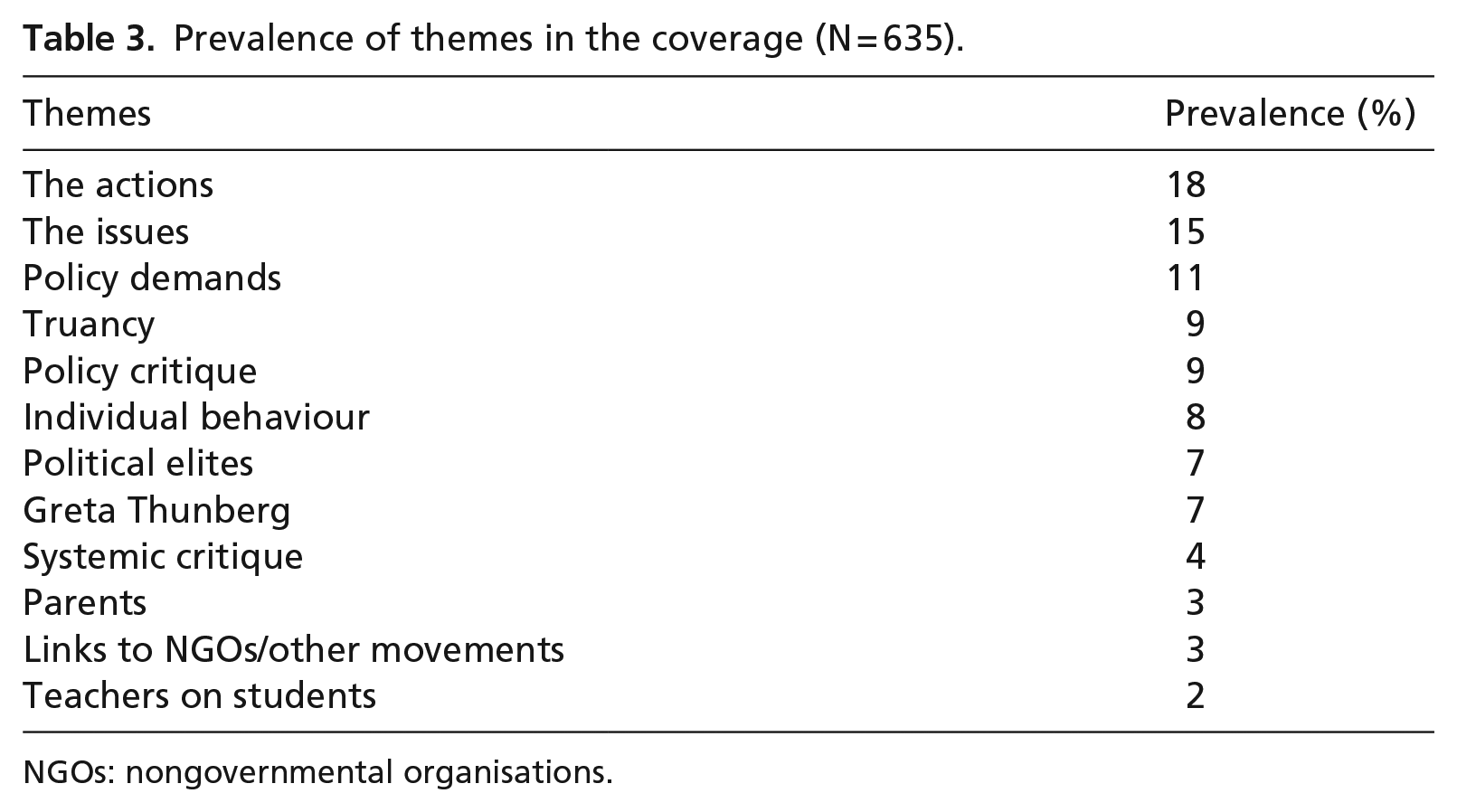
The variable ‘prevalent themes’ measured which themes were present in each article; up to 5 themes per article could be identified. This allows us to assess which themes were most prevalent across the corpus (see Table 3).
Prevalence of themes in the coverage (N = 635).
NGOs: nongovernmental organisations.
This shows that the disruption caused by the strike action and the protest demonstrations organised by the young activists was the most prevalent theme within the sample, which is in line with the public nuisance paradigm, more so than the protest paradigm. This also dovetails with the high number of articles mentioning or discussing truancy. Contradicting the protest and public nuisance paradigms, however, is the ample attention that was given to the issues the students wanted to address, such as climate change and the environment, as well as various policy demands such as Green New Deal and Climate Justice.
It is equally relevant to discuss what received less or very little attention in the mainstream coverage of the YouthStrike4Climate Movement. There is relatively little attention given to more systemic critiques of capitalism as the main cause of climate change and environmental damage, especially if we compare this with the prevalence of individual behaviour and consumption being considered problematic. Regarding the latter, quite some attention was given to travelling, especially when it concerned plane travel by activists. There was also relatively limited attention in the coverage of the YouthStrike4Climate Movement for given to links with nongovernmental organisations (NGOs)/other movements.
The attention to Greta Thunberg only emerged in the second period of analysis, which coincided with her speech to the UN (23 September 2019) and her rise as a global activist celebrity, which also went hand in hand with a rise in attention as (online) harassment and misogyny.
Voices in the coverage
Another important variable when assessing mainstream media coverage is who gets a voice (Couldry, 2010). Each voice present within each article was coded and categorised according to specific subject positions both within and outside the movement. A distinction was made between local and international leaders of the movement, student activists from within the movement, as well as activists outside of the movement, NGO and union representatives, parents, teachers, public intellectuals, political elites and the police. A further differentiation was introduced between public intellectuals and political elites who are supportive of the YouthStrike4Climate movement and those that critiqued it. In Figure 2, cross-tabulations with the different periods of analysis and the different publications in the sample are presented.
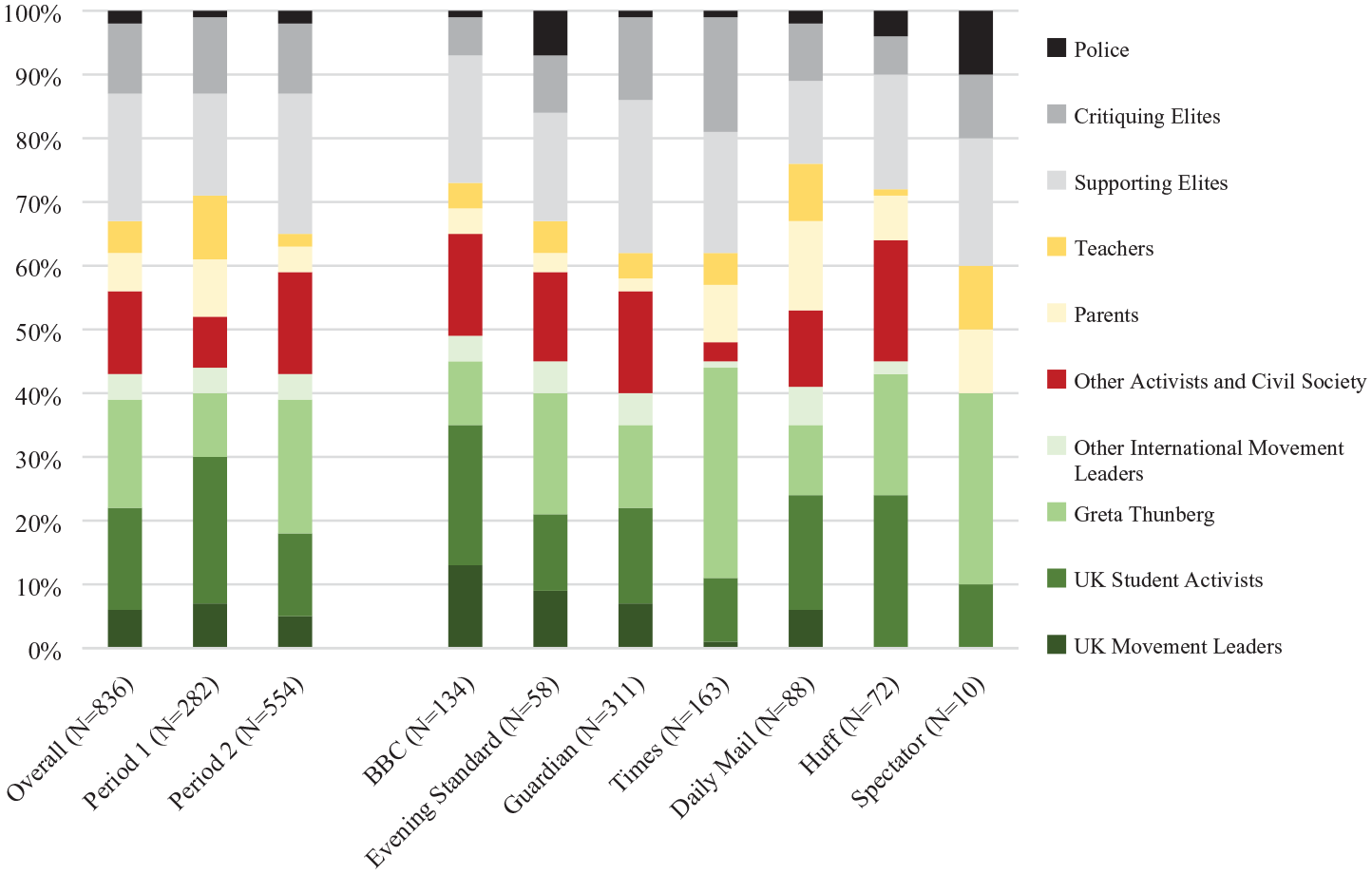
Distribution of voices across the coverage.
This analysis yields some interesting observations. Going against the common characteristics of the protest paradigm, the proportion of activist voices in the corpus is very high, fluctuating between 45 and 60 percent of the total number of voices. Within the activist voice, it is also interesting to note the high number of ‘ordinary’ student activists who were given a voice, especially in the first period of analysis (16% overall and 23% of voices in the first period). The other side of the coin is the high level of attention given to Greta Thunberg, which tended to crowd out local UK leaders’ voices in the corpus; this was especially apparent in the second period of analysis when 21 percent of the total number of voices could be attributed to Greta Thunberg.
Parents and teachers received a voice especially in the first period of analysis (respectively 9% and 10% of voices), which can to some extent be linked to the issue of truancy discussed above, and the means of action employed by the activists, i.e. is a school strike.
About 35 percent of voices in the corpus could be considered establishment voices. From the perspective of the protest paradigm, this could be seen as relatively low. Furthermore, by introducing a qualitative measure to determine whether these voices were broadly in support or rather critical of the movement, we can observe that the establishment voices were more supportive than critical. For example, 20 percent of voices are elites in support of the movement, compared with 11 percent of voices from elites critical of the movement.
If we bring ideological positioning of the media into the fray, some aspects of the protest paradigm do re-emerge. Compared with more progressive media and the BBC, critical political elites are much more on a par with supportive political elites in establishment newspaper The Times and the rightwing tabloid Daily Mail. Unsurprisingly, the proportion of activist voices is also lower in these two rightwing publications. Parents and teachers are also over-represented in the coverage of Daily Mail. In the Evening Standard, police got much more of a voice compared with other outlets, whereas in left-leaning The Guardian, a higher proportion of supporting intellectual and political elites are given a voice; this is especially prevalent through its extensive opinion section.
Age, gender and misogyny
Finally, special attention is given to the prevalence of age and gender in the reporting of the YouthStrike4Climate movement, as well as the presence of misogyny, which was often directed at Greta Thunberg, but also towards other young female leaders of the movement.
As Table 4 shows, the generational dimension, inherent to this movement, was very much highlighted in the coverage across all publications. While it contradicted common perceptions of an apathetic youth, age and youth was also used to delegitimise the activists and their demands. Often the words ‘kids’, ‘school girls’ or ‘children’ are used in a tone which is not endearing but rather belittling.
Number of articles explicitly mentioning age and gender.
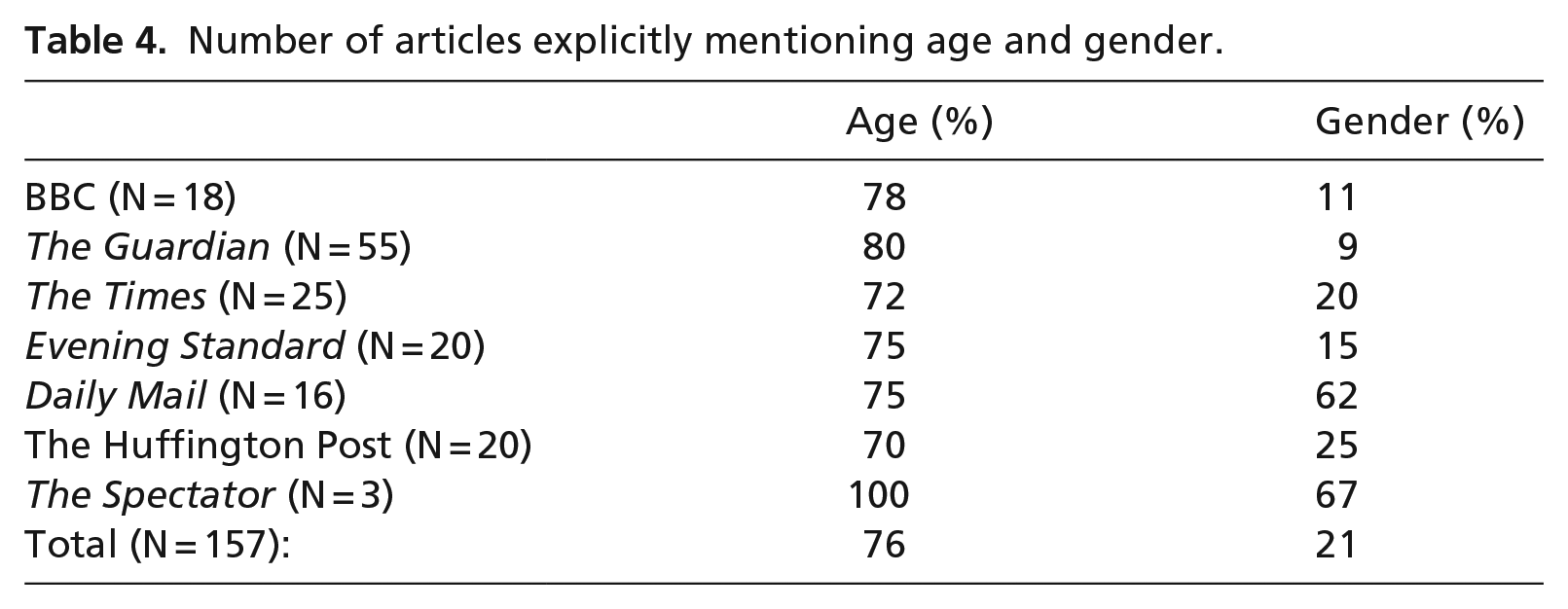
To a lesser extent, the gender aspects also featured in many articles, especially since many of the visible leaders of the movement in many countries were young women. This unfortunately also led to a high degree of online abuse and misogyny towards these women, which was also reflected in the coverage. About 9 percent (N = 14) of the coverage explicitly mentioned or referred to online harassment and misogyny; for example, by reporting on Trump’s tweet telling Greta Thunberg to ‘work on her anger management problem’ (@RealDonaldTrump, 12/12/2019). Some rightwing newspapers went further and exhibited degrees of misogyny and sexism themselves, as shown by this headline in The Times: ‘The disturbing spectacle of Greta the Great’ (26/09/2019), calling her a ‘schoolgirl puppet’. The Daily Mail reported enthusiastically on the broadcaster Jeremy Clarkson calling her a ‘spoilt brat’, and telling her to be a ‘good girl, shut up and let [the scientists] get on with it’ (30/09/2019). These disparaging discourses of belittlement also serve to deny children the right to have a voice on environmentalism and politics.
Reception of YouthStrike4Climate movement discourses and actions
Public opinion matters when it comes to making an issue salient and ultimately also push political elites to address the concerns that are being raised by social movements. In the context of environmental activism in the United States, Agnone (2007) observed an amplification effect and concluded that more legislation ‘is passed when protest amplifies, or raises the salience of, public opinion on a given issue’ (p. 1609). More recently, Geiger (2019) tentatively argued that survey data are suggesting that mass mobilisations in the United States, including those of the ClimateStrike4Climate actions, ‘could be influencing public opinion’ (np).
In terms of the UK context, two Eurobarometer surveys, from March 2017 (EBS#459) and from December 2019 (EBS#501), the latter wave directly after a high cycle of environmental activism, were compared. Unfortunately, the surveys only had one question in common, namely ‘How serious a problem do you think climate change is at this moment?’
As Figure 3 shows, a significant shift has taken place between the first and the second survey regarding overall attitudes concerning the severity of climate change, with the number of respondents considering climate change a serious problem jumping from almost 65–73 percent and likewise those considering it not a serious problem halving from 10 to 5 percent. Furthermore, while gender imbalances can be observed, with women being more inclined to consider climate change a fairly to substantial problem, in 2019 an equal proportion of men to women considered climate change very problematic.
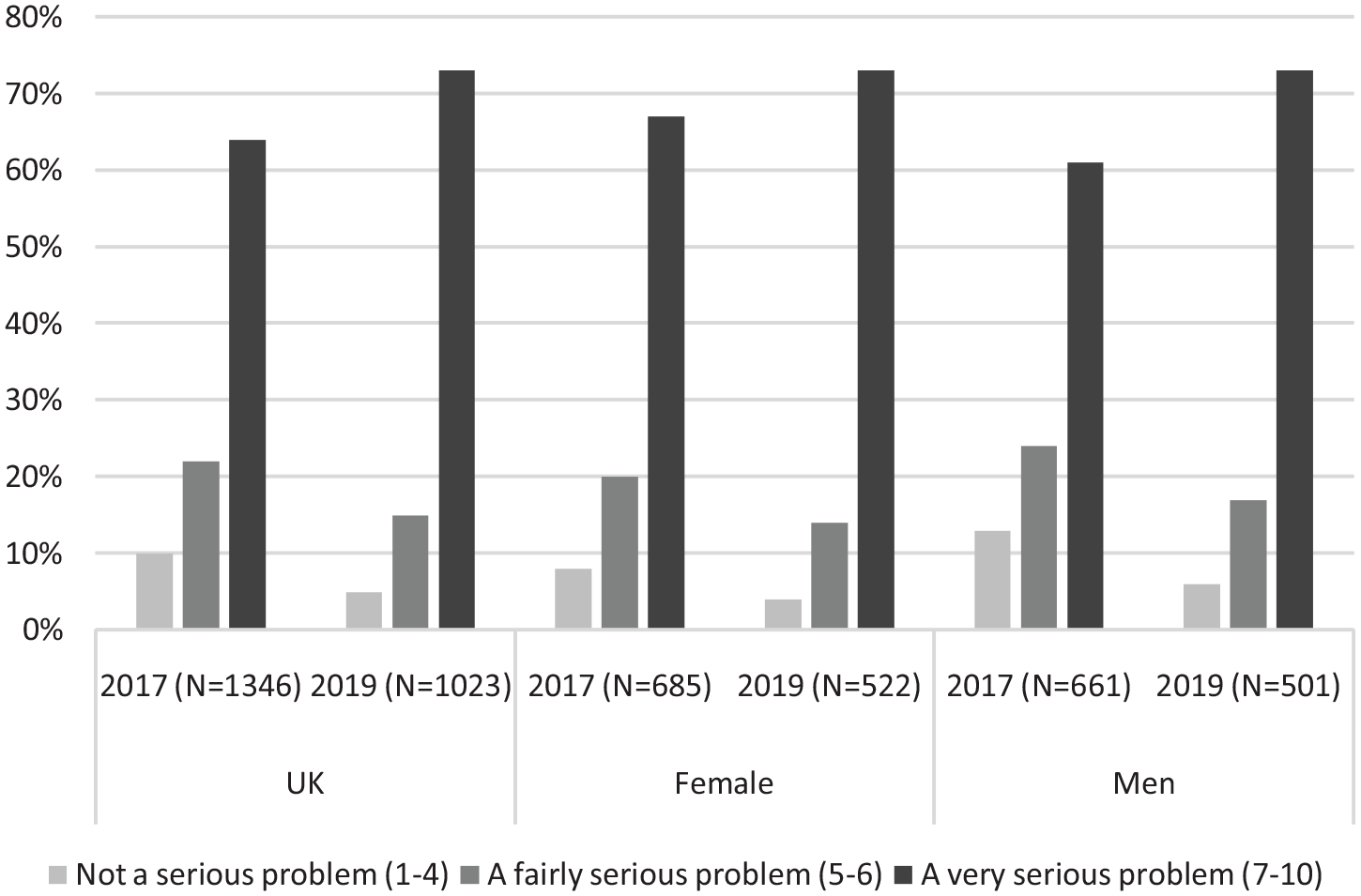
Attitudes towards climate change.
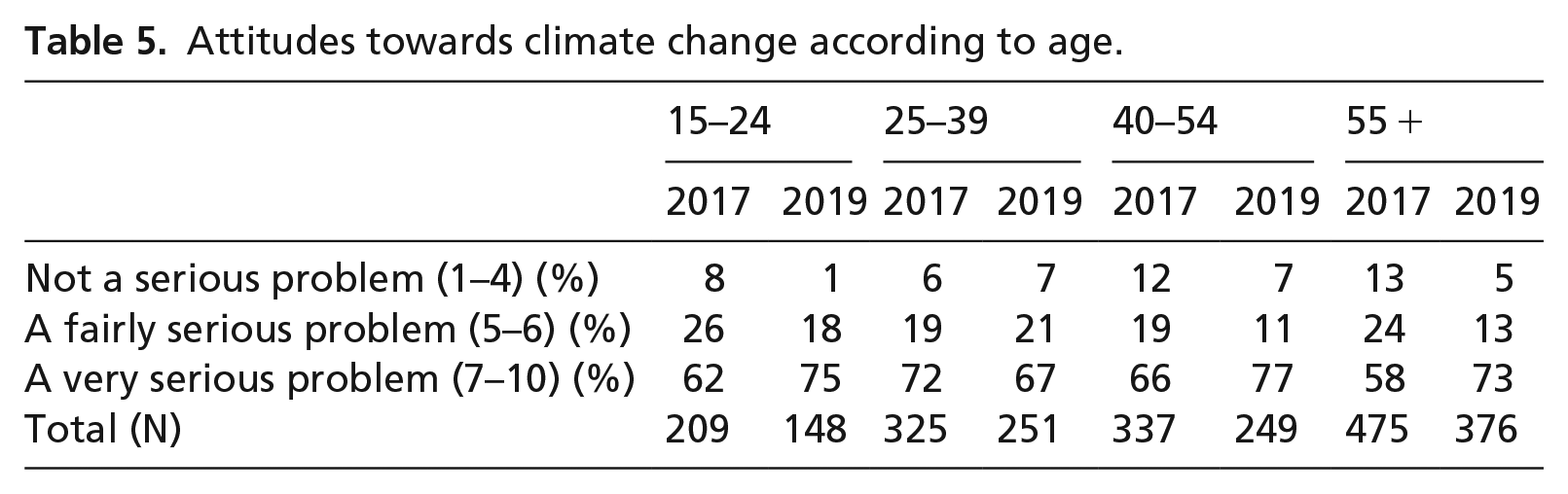
When cross-tabulating the survey results with age, more interesting observations emerge (cf. Table 5). Broadly speaking, younger generations tend to be more concerned with climate change, above all in the most recent survey, with a massive jump from a bit more than 60 percent in 2017 to 75 percent in 2019 who consider climate change a very serious problem. Surprisingly, in the age category 25–39-year-olds, one generation above the activists, those who consider climate change a very serious problem decreased significantly from 72 to 67 percent. Across other age categories, those believing that climate change is not a serious problem decreased considerably and those who are of the opinion that this is a very serious problem also rose substantially.
Attitudes towards climate change according to age.
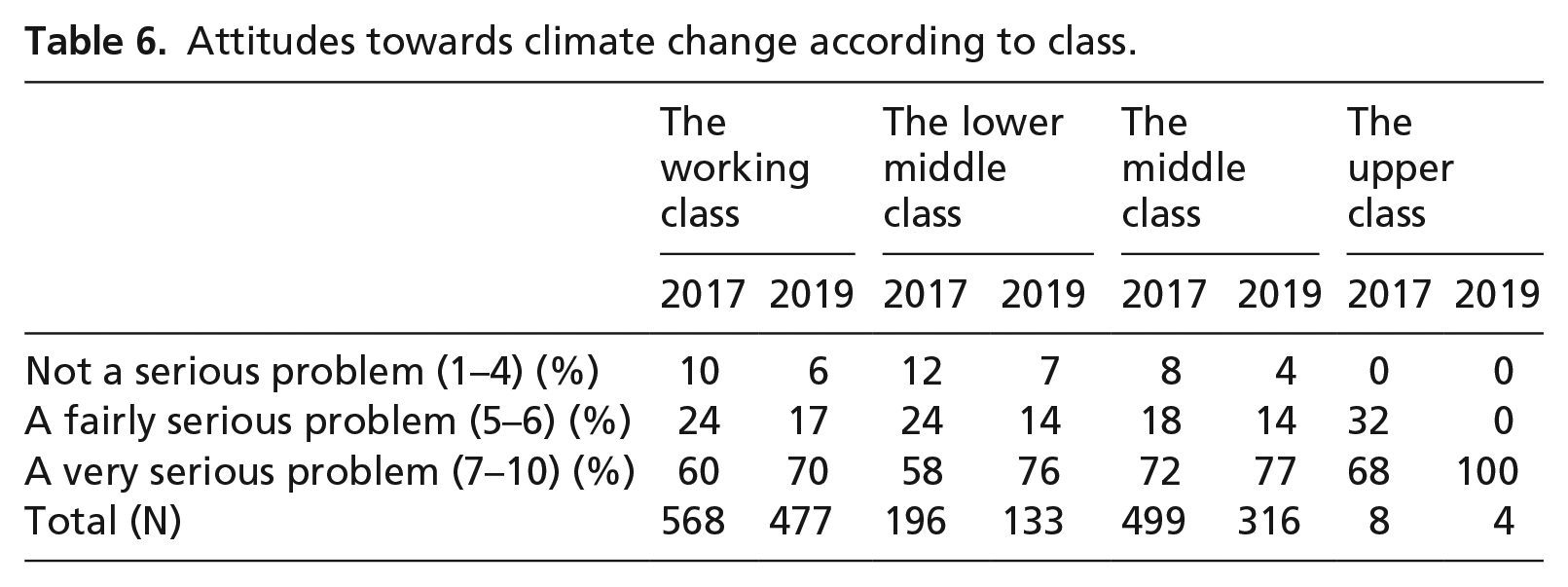
When it comes to class differences (cf. Table 6), we can observe a decline across the board in the number of respondents considering climate change not a problem, and a marked increase in the number of respondents who believe it to be a very serious problem. Having said this, working=class respondents answer more often ‘I don’t know’ (5%–6%) are less likely to view climate change as a very serious problem.
Attitudes towards climate change according to class.
Another survey, conducted by the NGO Hope not Hate (2019), corroborates the results of the 2019 Eurobarometer survey. Three quarters of respondents (74%) partially or strongly agreed with the following statement: ‘The world is facing a climate emergency and unless greenhouse gas emissions fall dramatically in the next few years global warming will become extremely dangerous’. Interestingly, this survey also specifically probed support for the Strike4Climate movement (see Table 7). It asked if respondents agreed that the movement plays a useful role in ‘raising the profile of the climate crisis’, as well as whether the tactic of ‘skipping school’ was justified ‘to demand climate change action’.
Support for the Strike4Climate movement and its tactics.
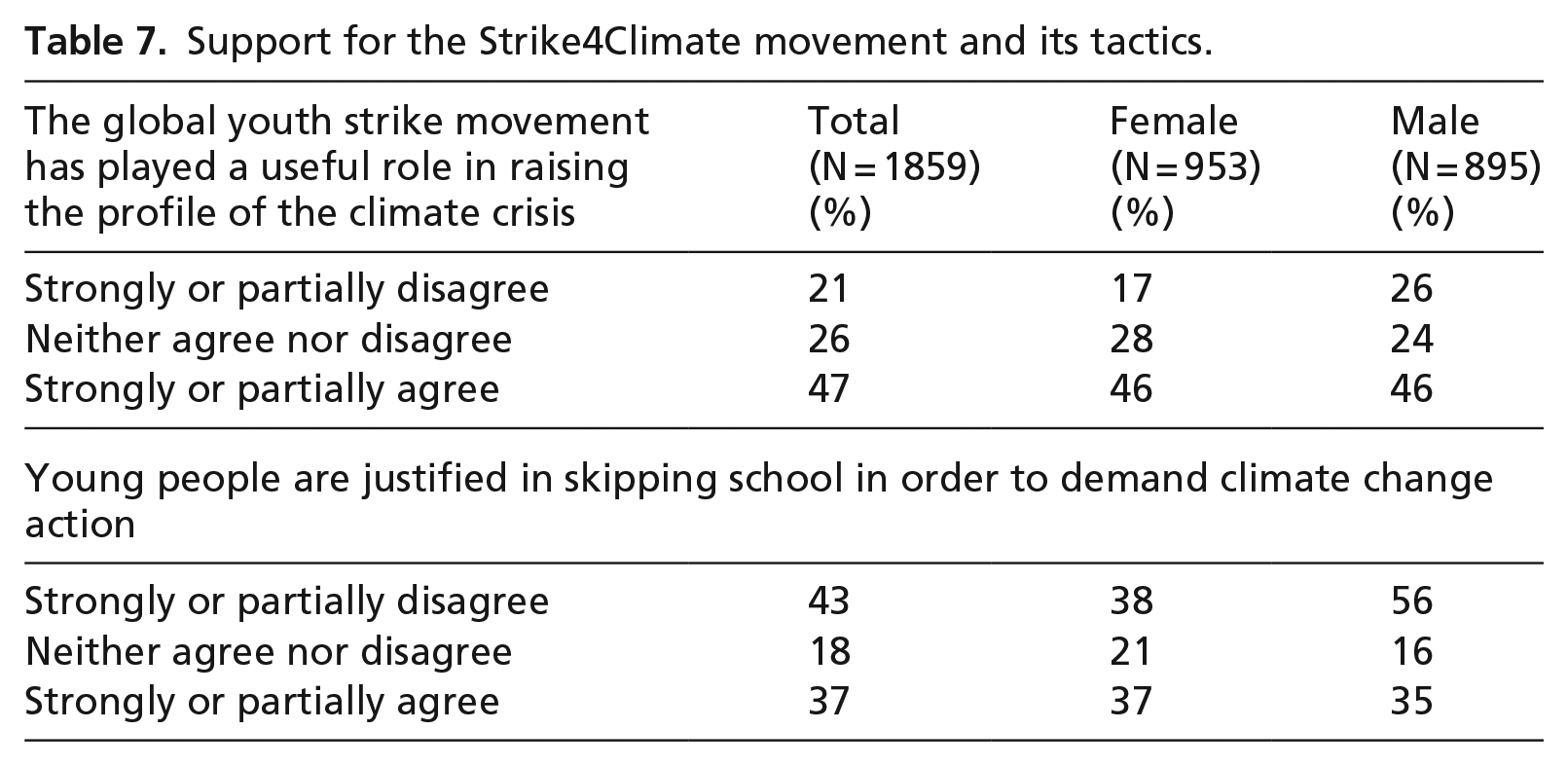
We can observe here that support for the movement’s aims is relatively high (almost 50%), but not as high as the awareness of the climate crisis itself. Likewise, support for the tactics of the protesters is even lower, around 35 percent. Here too, we can observe a gender imbalance, not so much in terms of support for the movement or its tactics, but above all in terms of critique and lack of support: 26 percent of men compared with 17 percent of women agree that the movement played a useful role and 56 percent of men disagree with the tactics used by the young protesters. These survey data also align with the Eurobarometer data in the sense that support among middle- and high-income households is higher than is the case among low-income households (see Hope not Hate, 2019).
When it comes to the reception of the movement among political and cultural elites, it goes without saying that here competing views also exist. Overall the resonance of the movement was high and the support from civil society and parts of the political elite overwhelming, as was also shown in the content analysis. Another example of this is the letter of support signed by over 200 leading academics and published in The Guardian (2019), but also a very supportive tweet by the then opposition leader Jeremy Corbyn (@jeremycorbyn, 15/02/2019). When focusing on the figure of Greta Thunberg, we can also observe how she was co-opted by politicians organising photo-ops with her. After she received Time magazine’s person of the year award, Thunberg said of meetings with politicians: ‘It’s just small talk, basically. And of course they want to take selfies. I’m a bit tired of selfies right now’ (@Time, 11/12/2019).
As was already apparent in the content analysis, support for the movement and the young activists was by no means universal. There was also a serious push-back, some of which was indeed ageist and misogynistic, as the comments above by Donald Trump or Jeremy Clarkson demonstrate. Another form of delegitimisation focused more on the tactics of the movement rather than the message and fed the truancy frame which was detected in the content analysis. Then British PM Theresa May lauded the good intentions of the activists, but lamented the disruption to their education in the following statement: Everybody wants young people to be engaged in the issues that affect them most [. . .] But it is important to emphasise that disruption [. . .] wastes lesson time that teachers have carefully prepared for. That time is crucial [. . .] precisely so that they can develop into the top scientists, engineers and advocates we need to help tackle [climate change]. (Theresa May, 15/02/2019)
Conclusion
By approaching contentious politics from the perspective of the circulation of meaning and as a mediation process, it becomes possible to analyse a set of interrelated aspects central to contemporary activism and broader questions relating to social change in conjunction with each other. Indeed, while production of movement discourses, collective identity and actions, self-mediation practices, mainstream media representations and reception were analytically disaggregated, the metaphor of the circuit and of circulation implies that these different moments in the circuit are also in permanent conversation with each other. This means that triangulation of the data does not situate itself at a quantitative statistical level. The circulation efforts of the YouthStrike4Climate-movement can thus not be causally linked to the increase in awareness of climate change among the general population, but what we can argue is that they, among other actors and factors, played their part in that increase.
The messaging of the UK YouthStrike4Climate movement invoked emotive frames of crisis and emergency, which combined diagnosis with motivation to act. The solution to this apparent and worrying crisis is, according to the movement, Climate Justice and a Green New Deal, which are presented as broad concepts that implicate not only pro-environmental frames, but also intersectional ones as well as pleas for more and better democracy and meaningful (youth) participation. Governments and corporations were positioned as the constitutive outside and the target of direct action.
It is helpful to remind ourselves that these young activists are digital natives and thus astutely aware of the potential, but also the potential pitfalls, of using social media strategically in their struggle. In view of the logic of disclosure and the circulation of movement discourses, they built powerful websites and their social media content is tailored to different platforms and to what is deemed to work for their constituency. The number of young netizens reached by the movement through social media is, however, relatively limited and there is also evidence of online intimidation, harassment and misogyny, which can be emotionally draining for some. When it comes to the logic of examination, social media and online cloud-based platforms are increasingly used to communicate and coordinate internally. These are, however, vulnerable to surveillance. Relevant to the logic of remembrance, social media also serve as a repository of positive self-representations and hashtags are also instrumental to connect activists, both nationally as well as internationally, feeding movement spill-overs.
The media resonance of the movement was high and fairly positive, although they were also ridiculed and belittled by some, with some worrying evidence of misogyny too. The protest paradigm was, however, not really activated by the majority of the British media; the issues received ample attention, youth activists got a fair voice in the reporting on the movement, and protesters were by and large not demonised nor silenced. The public nuisance paradigm did apply though as the main critique fielded against the movement was its use of the strike tactic and accusations of truancy. However, at the same time, the protesters were also acutely aware that spectacular transgressions, such as striking and refusing to be taught, in themselves generate media attention and resonance. There was also unavoidably an ideological bias, with liberal and progressive media by and large more supportive of the movement than rightwing media. Mainstream media and the media logic also look for leader figures and in doing so construct celebrity activists, which could be observed here.
The YouthStrike4Climate movement, together with others, has played an important role in raising the profile of climate change as a serious threat, and in the mainstreaming of the idea of Climate Justice and the notion of a Green New Deal. As the survey data showed, more people than ever are convinced that climate change is something real that needs tackling. However, while some sort of consensus might be growing at the level of the diagnostics, it is arguably at the level of the prognostics, that is, the solutions to curb climate change, where most disagreement and conflict is situated today. In line with the public nuisance frame as presented by the media, the action repertoire of the movement is also much less supported than their concerns regarding climate change. It is also questionable to what extent the practical and systemic consequences of the Green Deal, or the prognostic frames, are supported by the population at large.
In this regard, despite the emphasis on justice and intersectionality in the movement’s discourse, it is precisely class and race that represents the Achilles heel of not only the YouthStrike4Climate movement, but the wider environmental movement as well. The movement has to reflect more on how to build stronger chains of equivalence with working -class communities and ethnic minorities beyond merely appropriating the discourse and lingo of intersectionality. The explicit assertion of an intersectional agenda is indeed crucial in this regard, but this should become more of an embodied frame rather than a performative one.
Overall, it could be concluded that the UK YouthStrike4Climate movement was quite successful in making its discourses circulate through the circuit by organising direct actions that were spectacular enough to generate media resonance, as well as not so disruptive that they activated the protest paradigm. Their social media use was arguably more focused on mobilisation for and coordination of direct action, but that did not hinder their successful struggle for visibility, which highlights the continued importance of mainstream media resonance.
Finally, the Circuit of Protest is deemed to be a productive framework to analyse and critically assess the impact of social movements from a holistic perspective. It considers both the symbolic and the material aspects of a political struggle, external and internal communication strategies, the self-mediation practices as well as mainstream media representations, and the production of movement discourses in conjunction with their reception. Taken together these provide an encompassing analysis of a movement and its influence in the public sphere, but it also constitutes a plea to approach the impact of a movement on society in a long-term perspective and as a multi-layered process.
Footnotes
Acknowledgements
The author would furthermore like to thank Risto Kunelius, Adrienne Russell, Mathew Tegelberg, Hanne Stegeman and Anthony Kelly for their help with parts of the research.
Funding
The author disclosed receipt of the following financial support for the research, authorship and/or publication of this article: The research for this paper was funded by the Department of Media and Communications at The London School of Economics and Political Science.
