




Abstract
The body occupies a prominent place in the social sciences literature, where it is understood to be an important social marker. The body is either used to classify and supervise individuals and certain social groups, or as a tool for individual agency. The body might, for this reason, be conceived as a political device in the sense that the structures of power and dominant groups have always applied methods or control, surveillance and regulation over it. Thus, several social groups have, throughout history, been stigmatised, diminished or supervised based on their skin colour, gender or sexual orientation. Equally, the body also functions as a tool of resistance, disruption and afront to the ruling norms and the status quo. In this article, we base our arguments on research developed in Portugal on young people’s activism and citizenhood. Our project focussed on creative forms of engaged citizenship and political participation encompassing a range of practices, particularly in the context of artivism. This article is based on interviews conducted with young artivists, focussing on the way in which the body assumes a central role in their political efforts and artistic practices. We have concluded that it occupies a prominent place in their discourses, becoming either a source of inspiration or a tool for their artivist endeavours.
Introduction
This article results from a research project on the association between young people’s creative practices, activism, and citizenship that was developed in Portugal. It is another addition to a line of research within youth studies dedicated to investigating non-institutional forms of political engagement, sometimes described as non-electoral (Pickard, 2019) or non-conventional (Pitti, 2018). This is particularly relevant when you consider the range of challenges and dilemmas that the democratic system is currently facing (Chou et al., 2017). The sense of crisis in the system is fed by a discourse reiterating young people’s deficit in political engagement, motivated by scepticism and breakdown of trust in its actors and institutions. However, the current research confirms that, as other studies suggest (Pickard, 2019; Soep, 2014), young people are not entirely apathetic or disinterested, since there are pockets of intense civic and political engagement energised by certain specific causes. The Portuguese context makes such analysis particularly welcome since, notwithstanding some studies looking at the non-institutional engagement of young people (Costa et al., 2022; Malafaia et al., 2021; Soares et al., 2021), there is still a dearth of research in this field. Where activist artistic and creative practices are concerned, there is still a considerable void in Portugal. We are convinced, however, that the importance of the issues raised in this article makes it an important contribution towards the specialist literature, which is internationally relevant and goes far beyond the national context. This project sought to understand this form of political engagement through developing a problematisation around distinct action resources and grammars, specifically: (1) the body; (2) image; (3) sound; (4) technology. Above anything else, we wanted to understand how these resources are employed creatively in the context of young people’s political and civic engagement. This article focusses exclusively on the topic of the body, which proves to be crucial at this stage of life.
Being young is a life stage of exploration and identity building (Dworkin et al., 2003; Best, 2011; Horowitz, 2017). As such, the body has a particularly relevant role, not only because it is going through a process of transformation and definition, but also because it functions as a crucial social marker. That is why discourses around the body, and its uses, are critical to the way in which young people develop their individual and social identities. Thus, the body assumes, in a variety of contexts, the role of a political tool. Quite often it turns into a mechanism for challenging the status quo and the normative rules imposed by the dominant adult-centric, White majority and cisgender culture. Certain youth subcultures have used the body precisely in this sense, creatively articulating alternative aesthetics and political perspectives (Ferreira, 2009; Hebdige, 1979; Roberts, 2015; Tiggemann and Hopkins, 2011).
As such, the body might be seen as a political element in two distinct ways. It is a site of oppression, linked to the ranking and classification of individuals and to established rules of conduct that define the limits of the socially acceptable. At the same time, the body becomes a mechanism of struggle through multiple forms of resistance, protest or rebellion, in opposition to specific forms of oppression. This political nature of the body becomes especially salient in historically ostracised, unappreciated, or abused communities due to its physical appearance. Women, ethnic minorities, Blacks, gays, the trans community and lesbians, among others, are clear examples of this (Chrisler and Johnston-Robledo, 2018; Harper and Schneider, 2003; Hines, 2020; Lebron, 2017; MacGuire et al., 2016; Mustaffa, 2017; O’Keefe, 2014; Richard and Dudley, 2013; Souza, 2019; Terriquez, 2015).
In some of the cases here analysed, the role of the body in the construction of personal and political identities is crucial, particularly for those whose body was or still is a site of stigma and violence. For them, the body inevitably becomes a political resource. We will focus exclusively on the body as ‘theme’ or ‘tool’ for an engaged artistic production, something we might define as artivism (Sandoval and Latorre, 2008). The body as ‘theme’ involves the production of content contemplating and reflecting the body and its experience. The body as a ‘tool’ is linked to the way in which the physical body is mobilised for creative and artistic acts.
Methodology
This article is the outcome of a project that took place between 2019 and 2022 and whose main goal was researching non-institutional territories of citizenship building, political participation, and creative practices. This was a qualitative project employing a range of techniques of data sampling and analysis. In addition to an ethnographical approach, a series of interviews were conducted with a political angle ranging from creative practices to activism (lesbian, gay, bisexual, transgender, queer, intersexual and asexual, feminism, climate change, antiracism, education, human rights and anticapitalism). We chose a sample marked by diversity to better understand the distinct profiles of young activists. We should also note that this project initially had a strong ethnographic component. However, due to the pandemic, which coincided to a large extent with the fieldwork period, we had to rely less on field research and spend more time conducting and analysing interviews.
In terms of method, we took a loose approach to youth as a group, as we wanted it to encompass several stages of life thus ensuring we obtained a broad and diverse sample. For this reason, the age limits were set between 14 and 35 years, which allowed us to interview both adolescents and young adults. Participants were selected via snowball sampling. We conducted a total of 69 interviews, which included the probing-type. From this sample, we selected 50 for a more detailed analysis, excluding exploratory interviews with some key informants and those which fell outside of the type of profile that interested us. Most of the interviews were conducted face to face. 1 The interviews were duly codified (via MAXQDA software) following an initial reading and analysis of the accounts that was used to contrast the data against the conceptual and theoretical framework initially defined. 2
Considering that we had access to a wide range of individuals, with distinct characteristics, it was possible to conduct specific analysis based on subsamples made up of civic causes, activist practices and a variety of other types. In this article, we focussed on questions involving the body, since it emerged in the accounts of some of the interviewees as a central element for the construction of their identity and their artistic practices. In general, this question surfaced among young people with racialised, non-normative or undervalued bodies (women, Blacks, members of the LGBTQIA + community). As such, we carried out a second content analysis isolating four crucial dimensions: (a) Discrimination, through the analysis of a range of traumatic events suffered by these agents; (b) Isolation, by seeking to understand how these agents developed forms of self-rejection; (c) Identity, by trying to understand how they saw themselves and the reasons that led them to civic interventions and (d) Artivism, by appraising the diverse art forms that they used to express their identity to reclaim a space for intervention in face of the injustices they suffered.
The body, identity and political agency
The body is one of the most widely debated themes in social sciences, given the importance it has in a wide range of contexts (Blackman, 2020; Featherstone et al., 1991; Turner, 2008). It was important to discuss here the body from two dimensions that, inevitably, are interlinked. First, to understand the way in which the body is a foundational element in the construction of the personal and social identity of individuals and, second, to appreciate the role it holds as a political symbol and tool.
Body and identity
There is a strong link between the body and identity as the literature shows (Budgeon, 2003; Ferreira, 2009, 2018; Hines, 2020; Höppner, 2017; Le Breton, 2018; Souza, 2019). Such articulation has repercussions not only on a psychological and cognitive level, but also in terms of socialisation and culture. Individuals understand and evaluate the world on the basis of their body, it being the site for the construction of subjectivity and self-expression (Brandon, 2016; Budgeon, 2003; Butler, 1993). The concept of embodied identities translates this intersection involving the development of a personal and social identity based on the interiorisation of features attributed to the body. The expression ‘embodiment’ was largely developed by the phenomenologist Merleau-Ponty (1968) who describes the body as a social agent that effects changes on its surroundings. Every form of action occurring in the physical and social environment encircling the agents is acted out by their bodies.
Although this involves forms of individual embodiment, the body is more than a physiological and sensorial mechanism. It is a socially constructed element with a crucial impact in the way in which individuals position themselves in a specific social and cultural universe, interacting with social structures and other agents, in a field of constraints framed in ontologies that organise those identities (Budgeon, 2003; Butler, 1993). Such understanding of the body derives equally from a number of panoptical codes (Foucault, 2012) that regulate and supervise bodies and behaviours as sequences of specific forms of evaluation and categorisation.
The symbolic ranking of bodies establishes the existence of bodies historically oppressed, subject to forms of devaluation premised on skin colour, sexual orientation, gender or disability. Rosemarie Garland-Thomson (1997, 2017) has coined the term ‘normate embodiment’, as a social representation of a Eugenic body, a fantasy aspiration of perfect health, beauty, behaviours, and functioning corpse, as an aspiring ideal that is not closed, but socially distributed among different cultures, classes, genders, sexualities and abilities. The author adds that despite being almost unattainable, it has a strong cultural influence, creating a bodily template of the ideal citizen; it has a strong effect on the medical normalisation of the health and created a subordinate position for disabled people. The conflict around the normative/domesticated body versus dissident body results from experiences, memories and the different forms of socialisation and social interaction practices that those social actors experience (Budgeon, 2003; Hines, 2020; Höppner, 2017; Souza, 2019).
Dissident bodies are historically subject to prejudices, and discriminatory attitudes. The origins of these forms of discrimination are deeply linked to the initial construction of nation states, to the entrenchment of patriarchal societies, and to post-colonial visions that maintain a hierarchical system that is absorbed by the agents (Butler, 1993; Foucault, 2012; Harvey and Harvey, 2000; Hines, 2020). They are carried out through institutional forms such as the media or public authorities and are deeply rooted in traditional visions of the patriarchal family and racist societies. It is particularly important to highlight the way in which the control of the body functions as a form of production and administration of personal subjectivities, a crucial field for the impression of forms of power, giving rise to bodies that are under guardianship (Souza, 2019). These forms of bio-power are particularly determinant on lesbian, gay, bisexual, transgender, queer, unsure, intersexual and asexual (LGBTQUIA +) and non-White bodies.
However, bodies and embodied identities are not determined in absolute. The construction of identity is a reflexive process in which work on the body also plays a part. The embodied ‘I’ contains equally a narrative, discursive nature resulting from the experience of the agents. Not only does the body inform the self, but the narrative of the self is also crucial to the way in which agents make sense of their bodies. In this process of ‘embodied reflexivity’ (Giddens, 1991, 2013, 2020), the body might assume itself as an individual project. Enjoying the body is configured as an act of sovereignty, which might be understood in the context of an ‘existential politics’ (Ferreira, 2016). Processes of self-consciousness and emancipation through the body assume an eminently political character in specific social groups for whom the body constitutes a handicap or a source of stigmatisation. The body as a site of oppression might give rise to the self-conscious and emancipated body through a process of identity building. In such cases, there is a direct relationship between the evaluation of the body, the construction of identity and the political socialisation that may result in forms of civic engagement (Earl et al., 2017; Höppner, 2017; Horowitz, 2017).
The political body
There are an abundance of studies when it comes to identifying specific resources and grammars of civic intervention (Soep, 2014; Isin, 2017; Pickard, 2019). The body, often associated with a more performative dimension, is one of the most used resources. Clothing, posture, body marking and manipulation (tattoos, piercings, hairstyle, etc.) are elements that allow individuals to express a range of social affiliations and, therefore, links to specific political spaces (MacGuire et al., 2016; Tiggemann and Hopkins, 2011). This implies fundamentally a symbolic intervention always relevant to the way in which political identities and ideological narratives are constructed.
The body can become a political battlefield. Developing an awareness of the existence of a number of female, LGBTQUIA + or Black bodies which are targets of an institutionalised system of oppression is crucial to fighting the social processes that wish them docile, domesticated, dominated, subaltern. Such processes of politicisation of oppressed bodies are embedded in arenas of ethical discussion around justice and human rights. To several agents, groups and movements wishing to subvert and replace a system they associate with injustice, the struggle for visibility and for the right to existence of oppressed bodies becomes an element of a conflict that is simultaneously individual and collective (Budgeon, 2003; O’Keefe, 2014).
The importance of the body in several contemporary activism discourses must be understood in a broader context. The literature shows that individuals, especially younger age groups, are gradually moving away from traditional movements and institutions of political representation such as unions, local and community associations, and from political parties. Currently, we come across rather more fluid ways of commitment, based on the appreciation of personal identities, styles of life and consumption, resulting in the creation of engagement networks involved in a more informal, horizontal and individualised type of action (Abramson et al., 1997; Inglehart, 1997; Pickard, 2019). In this context, the arts, culture and the new media have been crucial centres for the exercise of civic action (Campos and Silva, 2023; Sarrouy, Simões and Campos, 2022; Guerra, 2018).
We might mention here artivism, which has become a generic term involving the individual or collective production of artistic events or content engaging with several specific causes. This neologism implies an organic relationship between two fields, summoning a multiplicity of techniques, languages, directions and means, from performance and urban arts to digital formats and hacktivism. The literature on this subject highlights the fact that social change is the main aim of artivism (Mekdjian, 2018; Sandoval and Latorre, 2008; Zebracki, 2020). However, artivism as a practice has specific attributes that must be stressed. First of all, many of the artivist expressions have a manifestly subversive character, critiquing the establishment and the status quo. Second, artivism is frequently linked to the development of communal and democratic projects seeking to empower stigmatised and subaltern individuals and communities. Finally, artivism often takes place outside or against the objectives, mechanisms, and structures of the art market and its institutions. Considering the symbolic and material importance held by the body in terms of political identity and the struggle of several activists, it is not surprising that it becomes associated with different artivist practices and develops into a source of inspiration and mobilisation.
The use of the body critically and as a form of activism in the arts covers several artistic formats. As a symbol of resistance and struggle, for instance, it is present in music, theatre and performances, but also in the visual and digital arts (Rice et al., 2021). In this context, overweight, disabled, queer, Black or indigenous bodies are mobilised as tools or themes for reflection on the mechanisms of bodily oppression and regulation. On this matter, the foundational work of Butler (1993) interrogated performativity practices, exploring the dualism between sex and gender, body materialisation as a dynamic of power, a social appropriation produced throughout the disidentification with regulatory norms, particularly on gender refusal, irony and mimicry (drag queens). The same discussion around gendered norms and artistic expression can be seen in the representation of queer and transgender bodies, to discuss, highlight and criticise gender binarism, particularly in contemporary arts, showing ambiguous, hybrid, collage and ambivalent bodies (Halberstam, 2005; Albuquerque, 2000).
Bodily narratives: self-awareness, civic intervention and artistic practices
For our project, we interviewed a collection of young people involved in a wide range of creative and artistic practices (graffiti, street art, rap, illustration, performance, poetry, cultural and digital production, etc.). Not all of them had an art background, with some indicating being autodidacts and amateurs without any connection to the art market or professional environments linked to the arts and culture. All of them share an expressed desire to contribute with their art to debating and giving visibility to social causes and issues that affect them personally or the communities to which they belong. In this context, the body is seen as an important resource of artistic and political agency. This becomes especially salient in young people with bodies and identities that are undervalued or stigmatised. Thus, it is crucial to stress the importance of the artists’ biographies to have a better understanding of these processes.
In the interviews and in their personal narratives, it becomes clear that bodies and embodied identities are a recurrent theme, a focal point of their artistic practices. The body is central because, as many acknowledge, the fact of inhabiting a non-conventional, non-hegemonic or deviant body changes them into potential political beings. Their body forces them to deal, existentially, with places of inferiority and censure with implications in terms of their individual subjectivity, but also of their political awareness. These imply personal experiences beset by several episodes of bullying, identity exploration and corporeal transformation, as well as processes of liberation. Art ends up assuming a relevant role in this journey, functioning as an element of self-reflection and communication. Several of the more traumatic and painful episodes permeate their pages, the lyrics of their songs, or their canvases. Through this act of creative exposure and the development of their biographical experiences around the body, these young people activate several emotional and political mechanisms. Next, we will look at how the body is, on one hand, the theme of artistic inspiration and, on the other hand, a physical and performative tool for their political and artistic agency.
The body as theme
The interviews expose misconstrued, dissonant bodies, beset by traumatic experiences of physical and symbolic violence, of repression, indifference, discrimination and isolation. The more direct episodes of oppression and bullying involved verbal attacks, criticism of how they dressed and presented themselves, the inability to express affection in public spaces, and a multitude of threats. Several of these forms of violence degenerate into loneliness. Many cite periods of low self-esteem, difficulties in accepting their image, feelings of guilt and self-rejection. Often, these forms of isolation result in episodes of depression/estrangement/mutilation and even suicide attempts, facts which have been widely reported in the literature (Follins et al., 2014; Richard and Dudley, 2013). To many, the body becomes a site of existential doubts and anxieties in virtue of their belonging to ambivalent social categories that escape the normative classifications of gender and skin colour.
To several of these artivists, the body is a crucial element in their artistic practice, their reflection about themselves and the world, their self-acceptance as a dissonant element. The art originating from the reflection about the body operates through deep processes of self-discovery. The body and the embodied identity, the historical object of mechanisms of erasure and oppression, are converted into a wealthy subject for artistic exploration. In this sense, art either acquires a cathartic angle, for the release of pain, fears and anxieties, or it assumes contours of a political discourse by giving visibility to these problems and the structural mechanisms of injustice. And so, their artistic expression has a dimension which is at once personal and collective.
The 27-year-old illustrator and graphic artist Carolina Elis3,4 is someone whose identity encompasses several socially disadvantaged traits. She is a Black, lesbian, immigrant from Brazil. Her artistic statements spring from the need for personal expression as a form of powerful political activism. She makes use of the knowledge acquired through reading and from other activists with similar life experiences. In her work, the use of digital technologies is crucial, particularly for the creation of a blog dedicated to afro-feminism, but also for producing and disseminating cartoons, illustrations and collage as effective forms of expression linking text and image thus amplifying the effectiveness and accessibility of her afroqueer message. She sees the body as a crucial element of artistic expression. She focusses on her body and that of other Black women as targets of abuse, scrutiny, objectification and sexualisation. She also highlights in a controversial fashion the ways in which Black women deal with their bodies, shifting between appreciation and denial:
I discovered that I am a lesbian [laughter] which took me quite a while, [. . .] my awareness springs from that, because a lesbian black woman was something that didn’t exist in my world. [. . .] And then this self-hatred, this. . . low self-esteem that I have [. . .] it comes from all of that, the racism and the homophobia, right? [. . .] everything that I make in my artivism I get from personal experiences [. . .] I need to sit down and process and imagine and connect with myself to be able to put down something on paper [. . .] You know, it’s personal stuff that I’m putting out [. . .] I was searching . . . I needed to get everything out of the system [. . .] it was a way of escaping [. . .] I was always trying to find a way to express myself and. . . get it all out, for the world to see what it like to be a black lesbian woman in a postcolonial country [. . .]So, the way I see it, there isn’t art without activism [. . .] It’s engaged and must expose the silent screams of an entire community. Two communities, in my case, three, I don’t know, a woman, black. . . and LGBT [. . .] Interview with Carolina Elis, 2022.
This artivist deals in her work with an intersection of stigma and violence which is sited and condensed in a minority and dissident body. The body is thus converted into a central theme for her reflection as an artist, defining an artistic identity, which fuses with the self.
Below we can find two of her artivist works. Both images have a clear political and antiracist message. The first one is determinant to understand the importance of unheard voices of Black people (Figure 1). But the second one is particularly about the post-colonial controversies, happening around the world, as well as in Portugal. Figure 2 shows the Padrao dos Descobrimentos 5 (Monument to the Age of Discoveries) that is symbolically covered by a Black woman’s hair. As in other countries, where post-colonial questions are being discussed, the author named this artwork ‘Dívida Histórica’ (Historical Debt) (Figures 4 and 5).
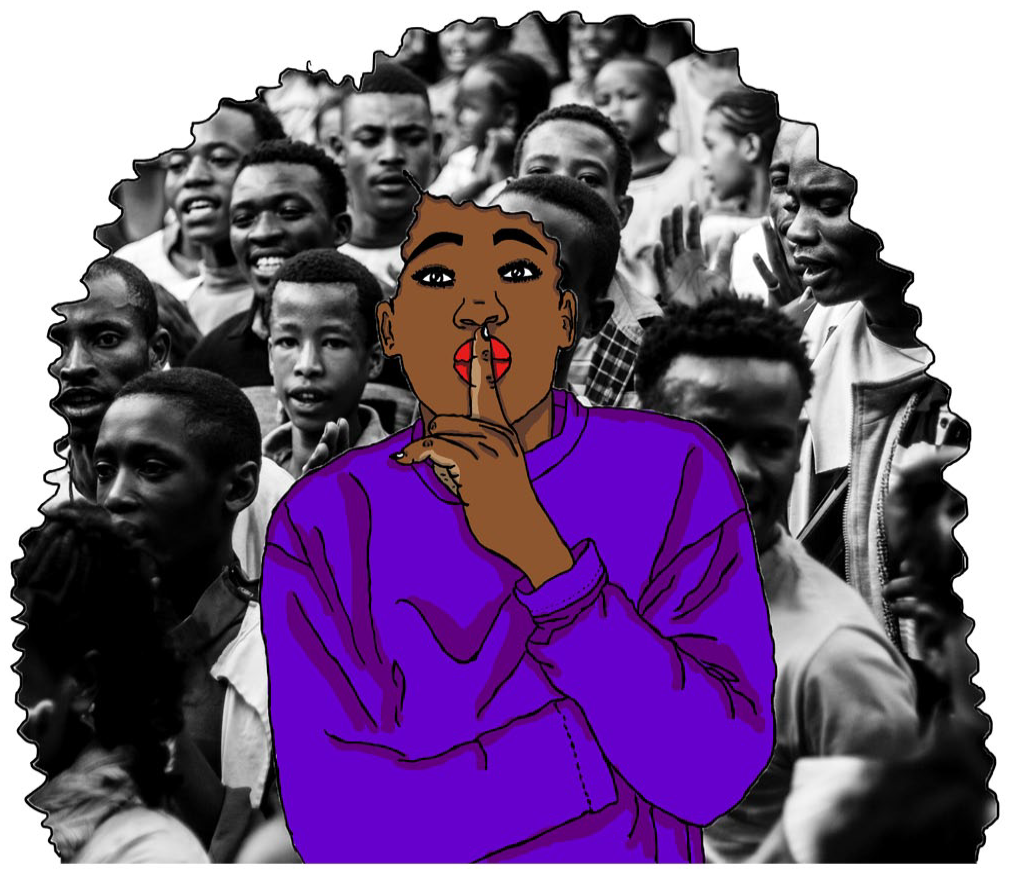
Silent Voice”, 2019.
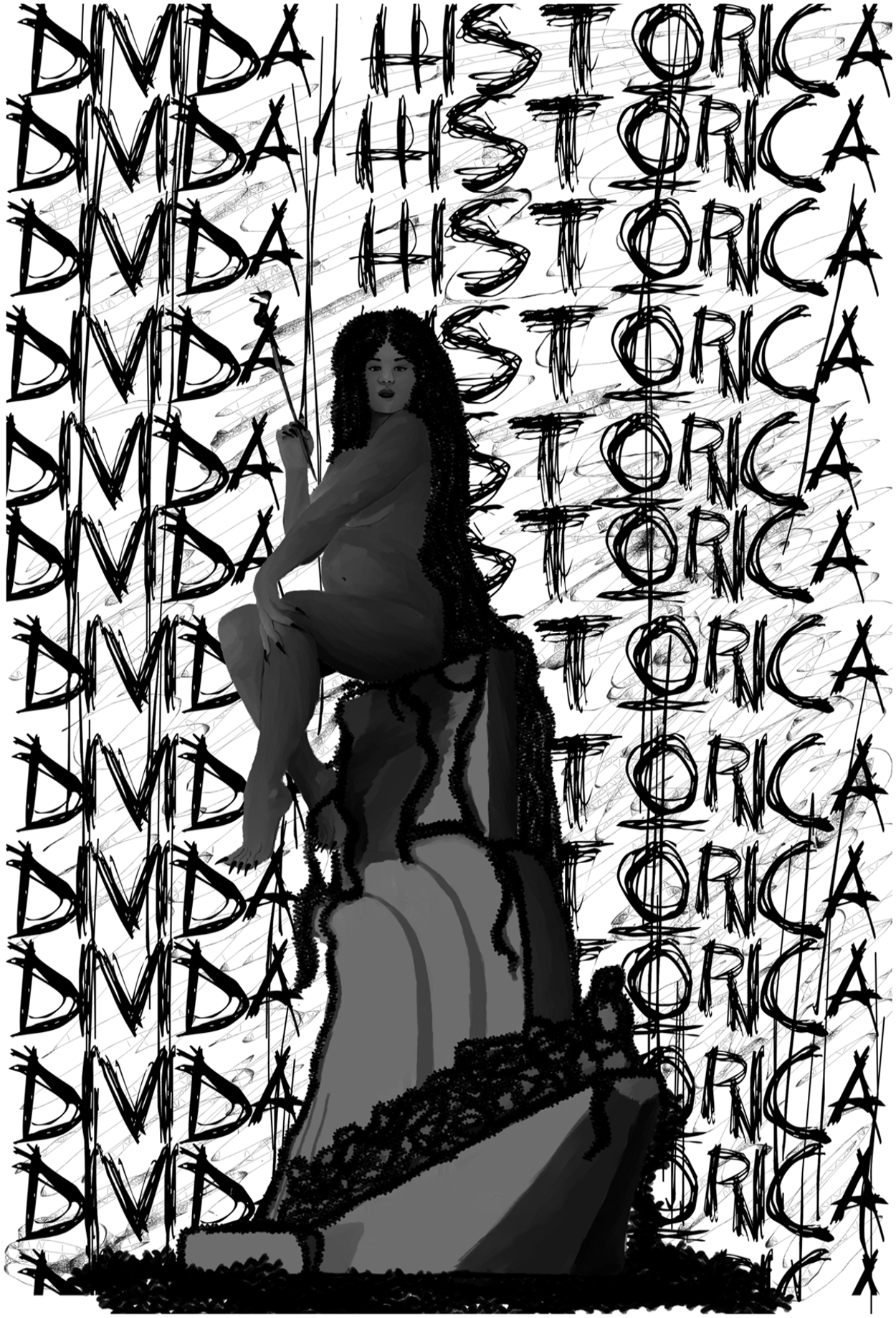
Dívida Histórica. 2021.
Skin colour is one of the most salient issues in these accounts. Portugal has a high percentage of migrant populations with roots in former Portuguese colonies in Africa. 6 Several studies have revealed it as an especially vulnerable population, marked by higher levels of poverty, unemployment and housing difficulties, and by living in fringe geographical areas (European Union Agency for Fundamental Rights, 2019; Maeso, 2019). The issue of racism, although happening in the open, has only recently obtained visibility among the younger generations and in the Black activism that has emerged in recent years (Santos and Vasconcelos, 2019; La Valle, 2016). For decades, protest rap by Black artists was one of the few vehicles for a more politicised expression of young Black people living in Portugal (Raposo et al., 2021). Currently, the issue of skin colour, of racism and decolonialising narratives ranges across other cultural and artistic fields. One of the most visible artists in this field, enjoying an international projection, is Grada Kilomba. 7 She has done work on colonialism, having in the process become a source of inspiration for a whole new generation of artists. Other artists who have attained growing visibility, include several Brazilian artivists who have been based in Portugal for the last few years. 8 We are then witnesses to the birth of a new generation of artists belonging to traditionally subaltern communities but who have been gaining visibility in the context of a strongly dynamic artistic activity. Paradigmatic of this is the exhibition ‘Interferências: Culturas Urbanas Emergentes’ [Interferences: Emerging Urban Cultures] (2022) that took place in one of the main art institutions of the Portuguese capital (MAAT Museum). 9 Such places for decades offered limited access to a racialised population, essentially the poor and marginalised, have begun to open up to new types of people. The realm of the arts and culture, albeit still with sub representation of Black bodies, is more accessible not only to this group but also to a range of other issues and social causes.
The conversation with Nadia
10
reveals how the development of identity is not linear and results from ongoing negotiations and rifts. Some of these young people grew up surrounded by White people, frequently being assimilated by the White society. They are often biracial, neither White enough in a mostly White society, nor Black enough among African background communities. Nadia, a singer who voices queer, feminist and antiracist causes recounts an experience marked by bidirectional identity forms, in the fields of both race and gender. She relates forms of discrimination beset by colourism, being the victim of forms of oppression coming from two separate worlds, the Black and the White, eventually asserting herself as Black/non-White. The doubts and discoveries around her identity had implications for the way she makes her music, as revealed in our conversation:
[. . .] I talk a lot about that in my songs. About the fact that I feel very much outside the world, of feeling torn between two worlds, both in terms of race and gender. . . [. . .] But I began to identity more as a black person and wanted to know more about my culture. Because, like I just said, there was some internalised racism within me concerning my culture. And after ending that association I began to discover who I was, to define myself more as a person and moving away from indie and folk. And I got interested in R&B which I listened to a lot at the time. But now that I know myself better – and that is a lifelong process – I feel that there is this scene, because there aren’t black people in Portugal doing folk or indie. And so, I really want to engage with that.
In another case, the 25-year-old illustrator, Plant Boy, 11 tells us that at 19 he realised his lesbian leanings, something that progressively turned into the desire to be identified as a trans man. Consequently, he went through a process of gender reassignment that involved not only questioning his identity, but also the physical alteration of his body and the legal change of gender in the civil registry. He notes that these were the easier processes, since he is still dealing with some difficulties in being accepted by his family and work colleagues.
This artivist uses his drawings, regularly published on his social network profiles (particularly on Instagram), to highlight his process of transition, the challenges of these processes, but also progression. The social networks (namely, Tumblr) were crucial to the clarification of his gender identity, allowing him to discuss with other young people terms such as non-binary and transgender, platforms where he could meet people who were experiencing the same identity challenges. It should be noted that this is an important issue for several people. Their artistic output facilitates the establishment of bonds with a specific group contributing towards the development of a sense of community. This is a crucial dimension in terms of individual self-empowerment, but also for that of others. Through digital networks, live concerts and shows, artists can communicate, interact and receive feedback not only on their work but also on the causes that move them. Through this process, Plant Boy created his trans art persona:
The art environment came almost as a need to express me to myself and to share things that I liked. [. . .] I think that my art has sometimes an activist angle, when I speak specifically about my challenges as trans, when I speak about my struggle to get help or the way I am perceived by the world [. . .] I’m still a mere trans man, that exists [. . .] and I cannot get away from the activism because I live it each day. When I receive transphobic comments daily, it is something I have to go through. [. . .] I’m an activist because, in fact, I think I have ideas and opinions which are important and deserving of debate. To some, certain things which to them are activism, are to me simply part of life. Interview with Plant Boy, 2020.
In Figure 3, the artist describes some of his achievements, as the new gender status on his identity card, an administrative process that he described as surprisingly smooth, noting the comprehensive attitude from the civil-law notary officer. But at the same time, he describes the present and future physical changes, towards a better feeling about himself. This image was posted on the artist Instagram account 2 weeks before he started his hormonal testosterone process.
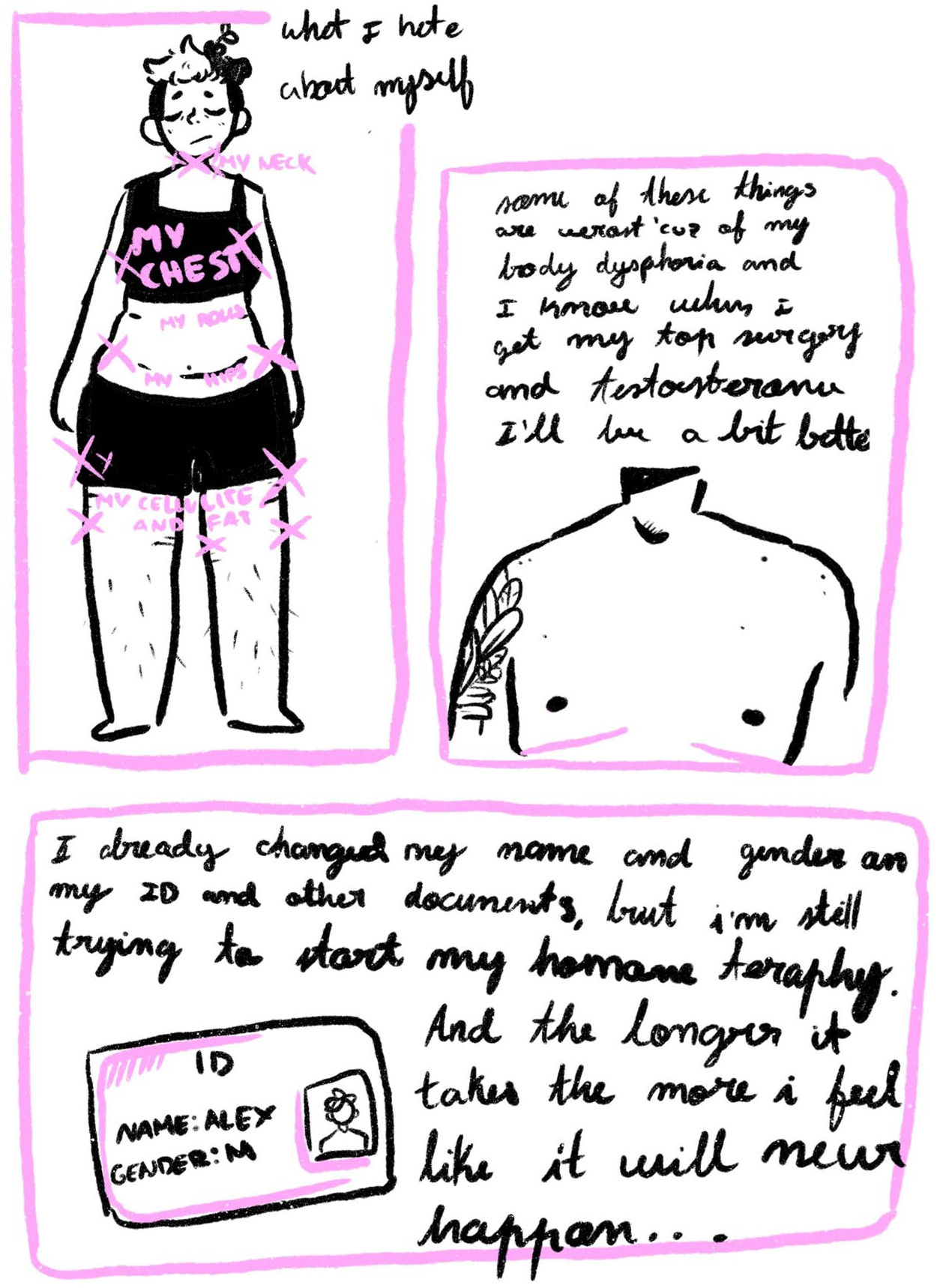
No Title. 2019.
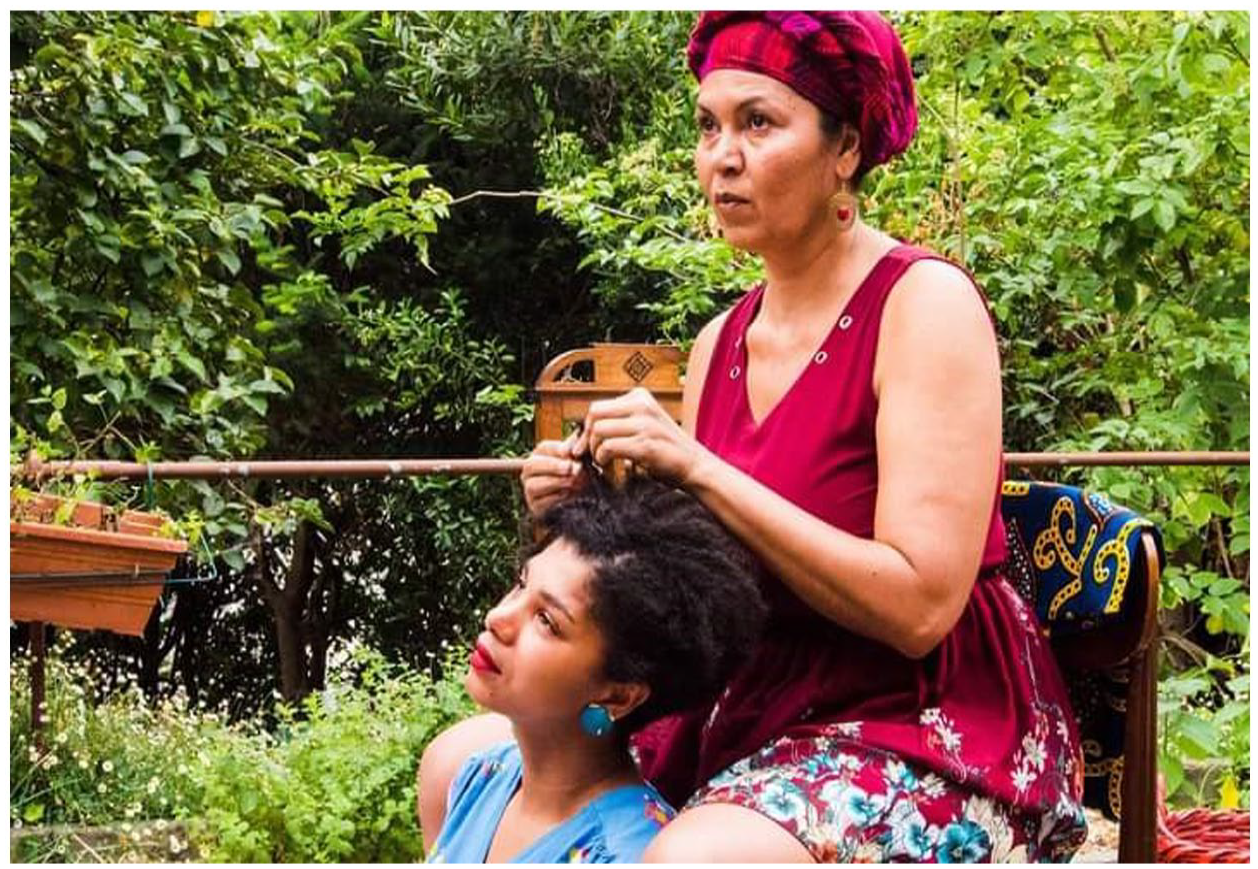
“Hair”. 2017.
“Hair”. 2017.
Similarly to what we saw in previous examples, the body also becomes for Plant Boy the central theme of a reflexive two-fold artistic work. On one hand, it serves as theme for an individual reflection, helping him deal with anxieties, dilemmas, and complex emotional processes. On the other hand, his work on the body also plays an important social role by reaching out to others in similar circumstances, thus generating a sense of community based on shared experiences.
Similarly, the illustrator Andreia Coutinho,
12
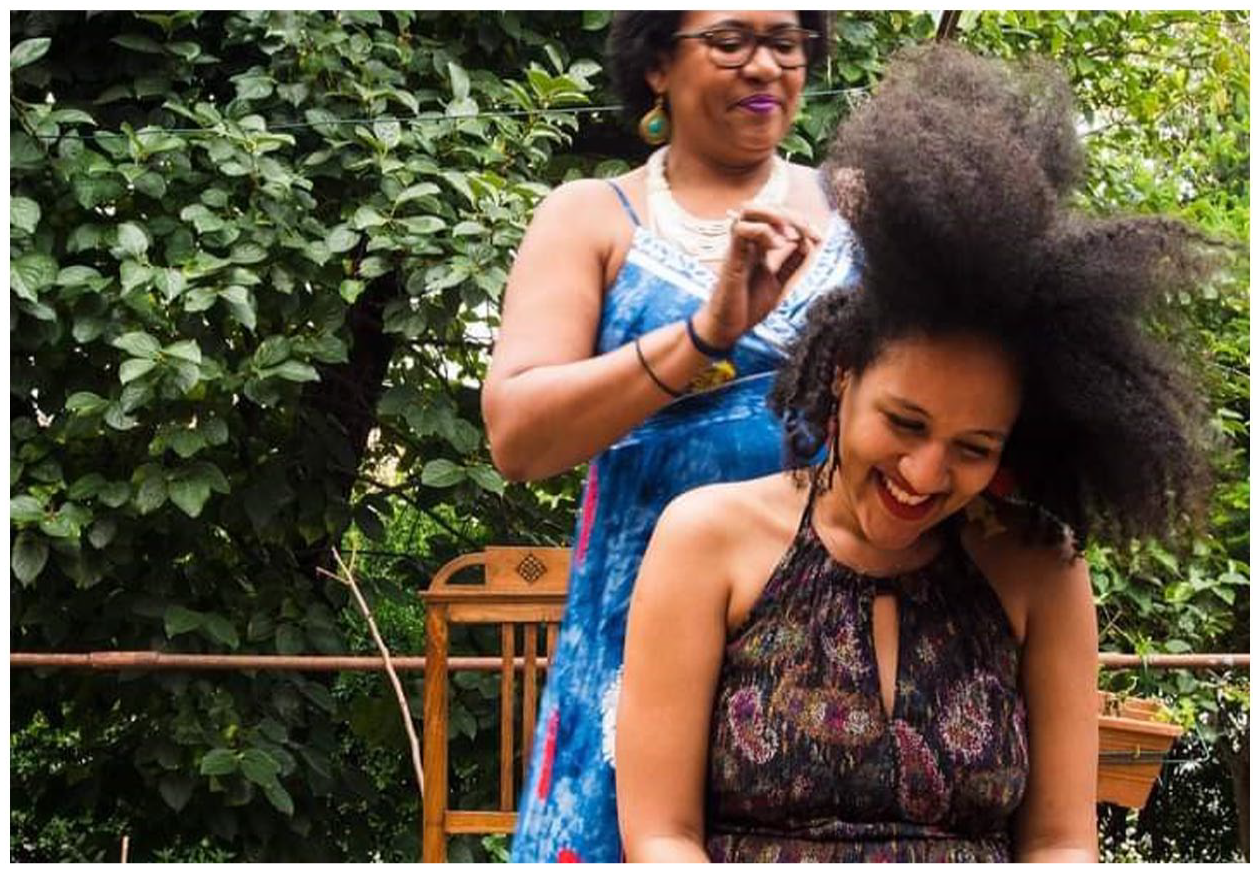
afroqueer and art curator activist, does her work in museums via non-hegemonic art formats around the representation of marginal spaces, questioning the paradigms of concealed bodies, namely, Black, colonial, feminine and LGBTQIA + . She also makes clear the importance of her hair in her art and as an element of the personal and collective identity of other Black women, with impact on her own family. In several reports, mostly those of women, the hair becomes a powerful symbol of identity that either raises questions around oppression and (self) censure or acts as an emancipatory tool. Adopting an Afro hairstyle as an expression of a body image emancipated from constraints and assumed as non-White, non-hegemonic, is an important step in the politicisation of bodies. This is a recurrent narrative element that spills over into the artistic practices of some of these young people:
I think that my black activism also emerged because of my hair activism, of the natural hair movement. I stopped straightening my hair 7 years ago and started thinking about what it meant. [. . .] And that triggered the conversations that gave rise to ‘Hair’, a risography zine about my personal experience with my hair, literally since I was born until the moment it was written. [. . .] Interview with Andreia Coutinho, 2020
The body as a tool for an engaged art
As we have seen, the body is a crucial resource for the denunciation of incidents of discrimination and violence, and a central element in the construction of narratives that, in some way, represent a challenge to the status quo (White, cisgender, masculine). The body becomes then a communicative and physical resource for political agency. 13 It is used to communicate dissention and rupture from the norm, especially in young people, moving us to an eminently symbolic dimension marked by disruptive episodes, breaking with traditions and with normalcy. This disruptive dimension, which employs bricolage and semiotic guerrilla tactics (Hebdige, 1979), holds a clear role in certain art practices.
Two of our interviewees are in a band that reappropriates a rather traditional musical style in Portugal: Fado. Not only through instrumentalisation but also lyrically and above all in terms of an androgynous performance, they convert fado into a political manifesto. This group, Fado Bicha
14
[Queer Fado], engages in a political process by subverting the canon of an art form commonly associated with a conservative, cisgender and classist Portugal:
[. . .] we dressed fado in new garments and gave it a second name: Queer. Queer because it’s not traditional. Queer because it’s not afraid to stand up. Queer because it’s proud of itself. [. . .] What we did was take a term with pejorative connotations and used it as an insurrection, as a form of catharsis. Interview with Fado Bicha, 2019.
They received quite sharp criticism from some artists and fado enthusiasts who saw them as a threat, an insult, as a form of contempt for a musical style that is still seen today as a symbol of Portuguese identity. From their perspective, they just wish to tell their stories through their music, the experiences of people who consider themselves as agender and transgender, as non-normative. The body frequently emerges as a topic of conversation, as an inspiring element of their art, but also because the body is a performative tool that allows them to break with the conservative normativity associated with fado:
[. . .] we were politicised by our bodies. As people we must be aware of the world and, given our identities, it would be nonsensical not be activists. [. . .] You are entitled to have your own space and a place to create on stage things as you see them, without rules, patterns, pre-established norms. . . This is something quite hard to achieve. [. . .] I began to deconstruct, for instance, clothing, gender expression. [. . .] gradually I deconstructed it by using high heels, leopard trousers. . . . It involves conceiving our body as our own and, for that reason, as something we can celebrate as we please [. . .] to use our body as a form of activism. I find very interesting this principle, which I also learned from Fado Bicha, which is a form of activism with the body, with garments, with makeup. It is an exercise in removing the garments of normativity. Interview with Fado Bicha, 2019.
The same reasoning animates the narrative of the queer musician Rahul.
15
In his interview, he explains the motivations behind his artivism practices involving the affirmation of his oppressed body and other non-normative bodies. For him, there is a performative edge in how he acts and in the way he assumes himself in his artistic persona, which is crucial as a political statement:
[. . .] the truth is that I wasn’t born happy with my body. I was also heavier than normal and taller than normal [. . .] It’s not a false body positivity. I think it’s important for people to accept what they have, but there is also another important term which is body neutrality, which means looking at your body and trying to understand what it has and what it’s missing, understanding the possibility that it might change and understand what you might do with it. [. . .] And, precisely because I have a clear notion about it, I know that this body must be seen, because this body is more like the body of other people than the body that is over there. Does this make me feel comfortable? No, sometimes I do that which I’m uncomfortable with. And as such it becomes political, because I’m not doing it out of love. [. . .] You make music with your guitar, write with your own stories, speak with your life experiences. . . Your gender, your race, your work, the people with whom you sleep. . . will show through in your work. [. . .] this idea that I’m an artist and that my identity is something on the side is a false one, and people know it’s false. And they know it because the fact that they are non-white or queer informs their work, that is obvious. Interviews with Rahul, 2019.
In a different artistic context, the 34-year-old antiracist performer, educator and activist Melissa Rodrigues,
16
from Cape Verde, worked for some years as an art-educator in peripheric and marginalised communities of Lisbon. It was in this context that she understood the importance of the idea of representation of a political body that she currently develops professionally in a contemporary art museum. She stresses the necessity to understand Black bodies, their sub-representation in contemporary art, in photography or advertising, and the lack of knowledge of Black people of their own history. Melissa describes the importance of visibility and hair as fundamental elements for her self-discovery as Black, and for that of other Black activists, having recreated this issue in an art performance:
‘I’m gonna stop straightening my hair’. [. . .] I sometimes wore braids, but only because I liked the aesthetics, it wasn’t a question of being black. Maybe it was unconscious, I don’t know. [. . .] The arts helped quite a lot [. . .] I invited the women from the Chá das Pretas [Black Women’s Tea] to share a final act with me. [. . .] And so we did a performance that involved, whilst doing our hair, talking about our lives and experiences and about the black movement. And they all belonged to the Brazilian black movement. And we talked about how the way we relate with our hair, how it transforms us and about the moment in our lives when we became conscious of ourselves as black women. Because we all have an awareness of ourselves as women, but as black women it happened in different moments of our lives. That was very beautiful and powerful, because we are different women, but our stories bear strong similarities, regarding our mothers, our hair. Interview with Melissa Rodrigues, 2019.
In these examples, we see the body as a theme for self-reflection that is also converted into an important creative tool. This is clearly linked to the identification of the body as a political instrument which must overcome its status as a mere object of hegemonic violence to become an agent of rebellion, to display and validate a spirit of dissidence, as Fado Bicha so aptly demonstrated. This way, the body can be understood as ‘semiotic guerrilla warfare’ device (Hebdige, 1979) employing the inversion of meanings, disruption, as a weapon against normativity and the status quo. It is important to note, however, that the use of the body as a tool is also conditioned by the type of artistic manifestation, since it is more visible in certain artistic fields where the body is directly used such as music, theatre and performance.
Conclusion
Recent decades have seen a range of changes in the way in which individuals engage with the political universe. Young people seem to be well ahead in terms of their mastery of the innovative processes of political action, something which is in distinct contrast with the much-publicised apathy that supposedly defines this age group (Chou et al., 2017; Pickard, 2019; Sefton-Green and Soep, 2007). Cultural and identity aspects are key to the new forms of political action, particularly among the middle classes that benefit from higher levels of education and enjoy higher levels of access to information. These new movements are significantly oriented towards reflexivity and identity causes.
In this regard, several areas have been identified as especially dynamic in terms of civic and political intervention happening outside institutional processes. The spheres of leisure and private life, of lifestyles and intimacy, have turned into fields of political action. In this context, the body, linked to issues of gender, sexual, ethnic or racial identity, is converted into a theme and object of battle, at once a political symbol and mechanism for action.
In this article, we reflected on discourses around the body as material for the civic and artistic intervention of young activists. If, generally, our research reveals that, in fact, for several young people, civic and political interventions imply identity causes linked to life options involving the body, gender, intimacy, this is especially salient in non-normative and marginalised social groups. In these cases, assessments made about the body by agents and others imply processes of censure and discrimination. A reinterpretation and resignification of the body fosters a feeling of liberation in the individuals. The discourses reveal the perception of the right to the body as a potential site of politicisation. The interviews demonstrate that art holds an important role in these journeys. Common to most of them is the role it has had on a personal level, working as a tool for self-reflection, discovery and catharsis. Art enables the embodiment of a range of anxieties, pains and doubts, making public and visible an existential experience that facilitates the connection with others and, therefore, the development of a collective identity. Although this is an individual process, it also implies a process of getting involved with others, where likeminded people sharing the same existential questions are met. In this sense, art also becomes a device for public communication in the service of a clearer civic and political agenda. Through art it becomes possible to communicate issues to a broader audience, leading to the empowerment of the self and of others in similar situations. The body, then, acquires an important role both as a recurring topic of artistic motivation and as a device of political creation.
We believe that our data bring a decisive contribution towards a field of research that has become increasingly relevant in academic studies, as well as in terms of public debate. We are talking about the importance of debating the plural meanings of contemporary democracy and the role that young people can play in its renewal. It becomes clear, in our opinion, that young people can assume a particularly significant role by developing creative forms of engagement, and developing new grammars of action, which have impact in the public sphere. In this context, the field of cultural and artistic creation is revealed as one of especial significance, particularly due to the weight it carries in the daily lives of young people, being intrinsically linked to the way in which they build their personal and cultural identities, as well as their lifestyles. This is an approach that meets the suggestion of Dahlgren (2006) who advocates a ‘cultural turn’ in citizenship studies, which takes into account the role of the private sphere, the universe of cultural and media consumption, in the way civic competences are developed.
Footnotes
Funding
The author(s) disclosed receipt of the following financial support for the research, authorship and/or publication of this article: This article was developed under the ‘Artcitizenship – Young People and the arts of citizenship: Activism, Participatory Culture and Creative Practices’ (PTDC/SOC-SOC/28655/2017) project funded by FCT, Fundação para a Ciência e Tecnologia.
