




Abstract
Drawing on feminist scholarship that interrogates cultural representations of ageing women, this article examines UK news coverage of menopause from 2001 to 2021. We show that not only has there been a dramatic rise in menopause’s visibility since 2015, and especially since 2021, but that the coverage is concentrated in the conservative right-wing press. We also document six peaks in coverage, which are driven by celebrity stories, news about menopause-related medical guidelines, national hormone replacement therapy shortages and menopause-related governmental interventions, as well as the use of menopause as a metaphor for the economy. Based on these findings, we discuss some key social, cultural and economic forces that may help explain menopause’s heightened visibility. These include the rise of popular neoliberal feminism, celebrity culture, changing demographics and changes to UK work policy, ideological notions of biological womanhood and the influence of Big Pharma. We conclude by highlighting how menopause’s new luminosity contributes to challenging its traditional invisibility and negative framing, and gendered ageism more broadly. Yet, at the same time, in its current iteration, menopause’s increased visibility may reinforce a neoliberal feminist framework that deflects attention away from understanding menopause as a social and cultural issue, while also buttressing narrow conceptions of femininity and supporting neoliberal policies that aim to keep older women in the workforce for longer.
Keywords
Introduction
‘Menopause’, in the words of journalists Anna North (2021) and Linda Geddes (2022), ‘is having a moment’. In the United Kingdom, for example, the Channel 4 television documentary Davina McCall: Sex, Myths and the Menopause, aired in May 2021, and was credited with producing a significant rise in women demanding workplace menopause support alongside a notable increase in requests for hormone replacement therapy (HRT). Meanwhile, in the fourth season of the popular Netflix drama Borgen, Denmark’s former prime minister and now foreign minister, Birgitte Nyborg, is depicted as suffering from menopausal symptoms which impact her working life. In another popular television drama, And Just Like That, the postfeminist heroines of the 1990s’ Sex and the City are now going through menopause. ‘I haven’t got my period in 4 months, so I think I’m finally in menopause’, Charlotte tells her girlfriends. ‘Welcome to the club, prepare to be sweaty’, Miranda replies (Farrell, 2022).
Even a cursory perusal of the contemporary Anglo-American popular cultural landscape suggests that menopause is, indeed, enjoying a moment. In the past few years, we have witnessed an increasing number of extremely high-profile women, including Angela Jolie, Michelle Obama and Gwyneth Paltrow, speaking publicly about their experiences of what Greer (2018 [1993]) famously popularised as ‘the change’. There has also been a flurry of best-selling books written by women on the topic: from What New Hell Is This? (Corinna, 2021) to The Menopause Manifesto (Gunter, 2021) and Cracking the Menopause (Frostrup and Smellie, 2021). Indeed, one of Britain’s biggest publishers, HarperCollins, recently announced that in an effort ‘to cater to their growing army of middle-aged female readers’, they are planning to create a new genre: ‘the menopause thriller’ (Sawer, 2022). The heightened attention to menopause in the cultural sphere has, in turn, bolstered – and is partly driven by – an expanding market for menopause remedies and products (Geddes, 2022), seen, for instance, in the cosmetics brand Clarins’s facial products targeting ‘menopausal skin’ and the haircare brand Pantene’s new range of ‘hair biology menopause’ products. 1
As we started noticing more representations of menopause in the Anglophone sphere, and as white cis-gendered women researchers in the United Kingdom in our late forties, we became fascinated by this seeming rise in ‘menopause talk’ in the United Kingdom and whether and how it might disrupt gendered ageism. We wondered whether menopause was indeed enjoying a moment or, alternatively, whether we were seeing menopause everywhere because of our own bias and growing interest in the topic. To what extent has the visibility of menopause in UK public discourse increased? If it has increased, are there particular events and/or issues associated with this heightened visibility, and what forces might be animating this moment of increased public visibility?
To address these questions, we decided to begin our investigation by examining UK news coverage of menopause. UK Labour MP Carolyn Harris, a long-time campaigner on menopause issues, observes that menopause awareness is higher in the United Kingdom compared with other European countries and North America. This is largely due to campaigns for better workplace provisions for menopausal women, the reduction of prescription drug charges and the creation of a national Women’s Health Strategy (Spencer and Crowther, 2022), which, in 2022, declared menopause as one of England’s seven priority areas. The use of HRT in the United Kingdom, which has fluctuated over the years, is also reported to have soared in the last few years. In January 2022, 520,000 prescriptions were issued, a 50 percent rise from a year earlier, and more than double the amount issued in January 2017 (Spencer and Crowther, 2022). Meanwhile, also in 2022, the Women and Equalities Committee published a report calling for menopause to be a protected characteristic, although this call was rejected by the UK government in January 2023.
We focus on news coverage because research has underscored the role that news continues to play in informing national debates in general and discussions around women’s health and health-related experiences more specifically (e.g. Elvestad et al., 2018; Hayashi et al., 2016; McIntosh and Blalock, 2005; Tanikawa, 2017). Furthermore, despite the decrease in circulation of national titles, newspapers in the United Kingdom remain an important platform for shaping the national agenda (Gavin, 2018) and for the consumption of news (Ofcom, 2021), with an increasing number of people reading them online.
The article is divided into four parts. The first section situates our study within current scholarship on media representation of ageing women, with a specific focus on the research on menopause. In the second section, we introduce the questions our study seeks to address and discuss its methodological design. The third section presents our main findings, followed by a discussion of some key social, cultural and economic forces that help explain menopause’s heightened visibility in the news. In our conclusion, we tie the strands of our argument together and outline directions for future research.
Ageing femininities: critiques of gendered ageism in culture and media
Feminist scholarship has documented how, for centuries, ageing women in the West have been rendered culturally and socially invisible and/or disdained and demeaned in the Western cultural imagination (De Beauvoir, 2010 [1953]; Friedan, 2006; Greer, 2018 [1993]; Segal, 2012). However, more recently, scholars have identified both an increase in portrayals of ageing women in contemporary Anglo-American culture (De Vuyst, 2022; Dolan and Tincknell, 2012; Jermyn, 2016) and a shift, where older female celebrities, influencers, politicians and public figures are beginning to rebel against their ‘manufactured invisibility’ (Douglas, 2020: 12; Farinosi, 2022). As Jermyn (2016) observes, ‘across various media genres, from film, through TV, to advertising, older women are more frequently evoked as vital, passionate, and purposeful, in ways that would have seemed quite unimaginable a generation ago’ (p. 574). At the same time, as Douglas (2020: 110) points out, the ‘visibility revolts’ of older women have been extremely uneven, with many women excluded across the lines of race, class, ableism, and heteronormative beauty standards.
Scholars have discussed this shift in ageing women’s visibility in relation to different processes and factors. In her account of media representations of older women in the contemporary US cultural landscape, Douglas (2020) links this shift to the significant expansion of the ageing female population. Indeed, in the United States and the United Kingdom there are more older women than at any other historical period and ‘[w]omen over the age of 50 represent one of the fastest growing economically active demographics over the past 20 years’ (Women’s Business Council, 2018:14, cited in Fegitz, 2022: 9; Douglas, 2020).
Another significant factor that scholars have underscored is the entrenchment of neoliberalism and neoliberal feminism. 2 For example, in her analysis of UK policy discourse, Fegitz (2022: 4) shows how the slew of ‘extended working lives’ policies that have been rolled out during austerity (2010–2019) encourages older women to stay in paid work for longer, maintain financial independence and become entrepreneurs. These neoliberal policies construct ‘the ideal neoliberal ageing subject in terms of the older entrepreneurial woman, who actively seeks employment and better opportunities in old age, in the name of gender equality’ (Fegitz, 2022: 6).
Similar constructions and messages can be seen in media discourse. Wearing (2007, 2013), Dolan and Tincknell (2012) and Jermyn (2016) posit that older women are increasingly subjected to ideals of ‘successful ageing’ (Dolan and Tincknell, 2012: viii) and neoliberalism’s promise that ‘a better self and the capacity for another (better) makeover is always on the horizon’ (Jermyn, 2016: 586, see also Gill, 2017). In other words, ageing women are increasingly expected to embody what Douglas (2020: 57) calls ‘aspirational ageing’: a ‘media-crafted, marketing-created zeitgeist whose central tenets are self-actualization, the ongoing importance of personal pro-active transformation, and developing another new potential self to ward off aging’. In this context, Douglas (2020) also highlights the role played by Big Pharma and the ever-expanding cosmetic industry in the ‘aspirational aging industrial complex’, which exploits deep-seated cultural and gendered anxieties around ageing to tap into the buying power of this growing demographic.
Menopause in the media
While the in/visibility of older women in the cultural and media landscape has received increased attention, menopause has remained under-researched in this context. Tellingly, in key books focusing on women 3 and ageing within the media and cultural spheres, such as Dolan and Tincknell’s (2012) Aging Femininities and Douglas’s (2020) In Our Prime, the word ‘menopause’ is not included as an index entry and is barely mentioned. The existing scholarship on menopause in the media is limited and almost exclusively based on analyses of news and magazine representations in Australia (Shoebridge and Steed, 1998) and the United States (Cimons, 2008; Gannon and Ekstrom, 1993; Gannon and Stevens, 1998), 4 but not the United Kingdom. Moreover, to date, there has been no account of the media’s growing interest in menopause in the last decade or so.
That said, the existing literature has made several significant contributions upon which we draw. First, studies emphasise the general invisibility of menopause in Anglo-American media, an absence inextricable from the lack of interest in older and ageing women. Second, research has consistently shown that when menopause was depicted, it was framed almost exclusively in biomedical terms (Throsby and Roberts, 2023) and as a medical problem associated with illness, fear, and as ‘an end-of-gender marker’ (Shoebridge and Steed, 1998: 480). Third, the handful of studies examining menopause in the media over time note a shift in the framing and a slight increase in visibility from the first to the second half of the 20th century. Cimons’s (2008) research – the most comprehensive study of US media depictions of menopause – observes that it is not until the 1950s ‘when menopause became a disease with a scientific focus, rather than an unmentionable condition that provoked emotional strife and physical distress’ (p. 152), and it is only when it became ‘treatable’ (with hormones), that menopause started gaining more coverage. Cimons argues that this shift is related to changes in US health journalism, shifting attitudes towards abortion, the Pill’s increasing popularity, and, crucially, the resurgence of feminism during the 1960s and 1970s.
Thus, extant literature underscores that, notwithstanding some shifts, menopause has remained a subject of relatively minor media interest overall and has been framed predominantly in medicalised and negative terms. Gunter (2021) and Mattern (2019) have recently argued that the continued medicalisation of menopause – its framing as an oestrogen deficiency disease – has facilitated and maintained its largely negative depiction, reinforcing wider cultural norms that render ageing women’s bodies undesirable and distasteful. Scholars have also documented how positing menopause as a deficiency disease conveys the message that ageing women are ‘sick, bad, and abnormal’ (Gannon and Stevens, 1998: 12) and require medical treatment.
Research design and methodology
Building on this literature, we now move to examine the coverage of menopause in UK daily newspapers from 2001 to 2021. We begin with 1 January 2001 to allow for a sample of two full decades, and because the following year (2002), the first Women’s Health Initiative Randomised Controlled Trial report was published - the first report to link HRT with increased risks of breast cancer and cardiovascular disease (Writing Group for the Women’s Health Initiative Randomized Controlled Trial, 2002). As Throsby and Roberts (2023) note, the report’s findings were re-evaluated in 2012 and the recommendation for HRT use was reinstated; however, that 2002 report ‘remains a point of caution for many, as evidenced by the proliferating genre of menopause “self-help” texts oriented towards achieving a “natural” menopause’. Thus, to see whether coverage increased in the wake of the 2002 report, we started the sample a year earlier.
In what follows, we therefore ask: (1) Has there been an increase in coverage of menopause? (2) How has the coverage been distributed among newspapers? (3) Are there specific peaks in the coverage, and if so, are these associated with particular topics or events?; and, finally, (4)What might the coverage peaks tell us about the forces animating menopause’s current visibility? To address these questions, we conducted a search of the word ‘menopause’ in UK daily press coverage from 1 January 2001 to 31 December 2021, using the Nexis UK database – the most comprehensive online news database. 5 We examine the coverage over two decades to assess if and how the visibility of menopause has changed over time and/or around certain peaks. In the interest of creating a manageable sample, we searched articles that mention the word ‘menopause’ and/or its variations (e.g., menopausal, perimenopause) in the headline and/or the lead paragraph. This search corresponds with our study’s interest in menopause’s visibility, since the appearance of words in headlines and lead paragraphs arguably contributes to their greater visibility, and normally indicates that menopause is a central focus of the article. While we are aware that this may have resulted in the omission of some relevant articles, the search resulted in a sample that still captures the central discussions about menopause in the press.
The search yielded 9681 newspaper articles across eight major UK newspaper groups: (1) The Times and The Sunday Times; (2) The Daily Telegraph, Sunday Telegraph and telegraph.co.uk; (3) The Guardian and Observer; (4) The Independent and i-independent; (5) The Mirror, The People and mirror.co.uk; (6) Daily Mail and Mail Online; 6 (7) Express, Express on Sunday and Express Online and (8) The Sun, Daily Star, Daily Star Online and Daily Star Sunday. Next, duplicates and errors were removed, resulting in the final sample of 9080 items. A research assistant compiled the data, ran frequencies and produced a series of statistical graphics summarising the key trends in the 20-year period; these are included and/or discussed in the following section. The analysis of these statistical findings addresses the first three research questions concerning (1) the increase in menopause’s coverage, (2) the coverage distribution across newspapers and (3) the identification of peaks in the coverage. To address the fourth research question, namely, what the peaks might reveal about the forces animating menopause’s visibility, we reviewed the content of all the articles published within each peak. Thus, our study focuses on providing a broad-brush overview of menopause’s UK news coverage over time; a detailed content analysis of the articles is beyond the scope of this article.
UK news coverage of menopause
Overall increase in visibility
Across national coverage, and within each newspaper, menopause has garnered increased visibility in the press over the 20-year period. As shown in Figure 1, while the rise in coverage is not completely linear, the overall trajectory is up.
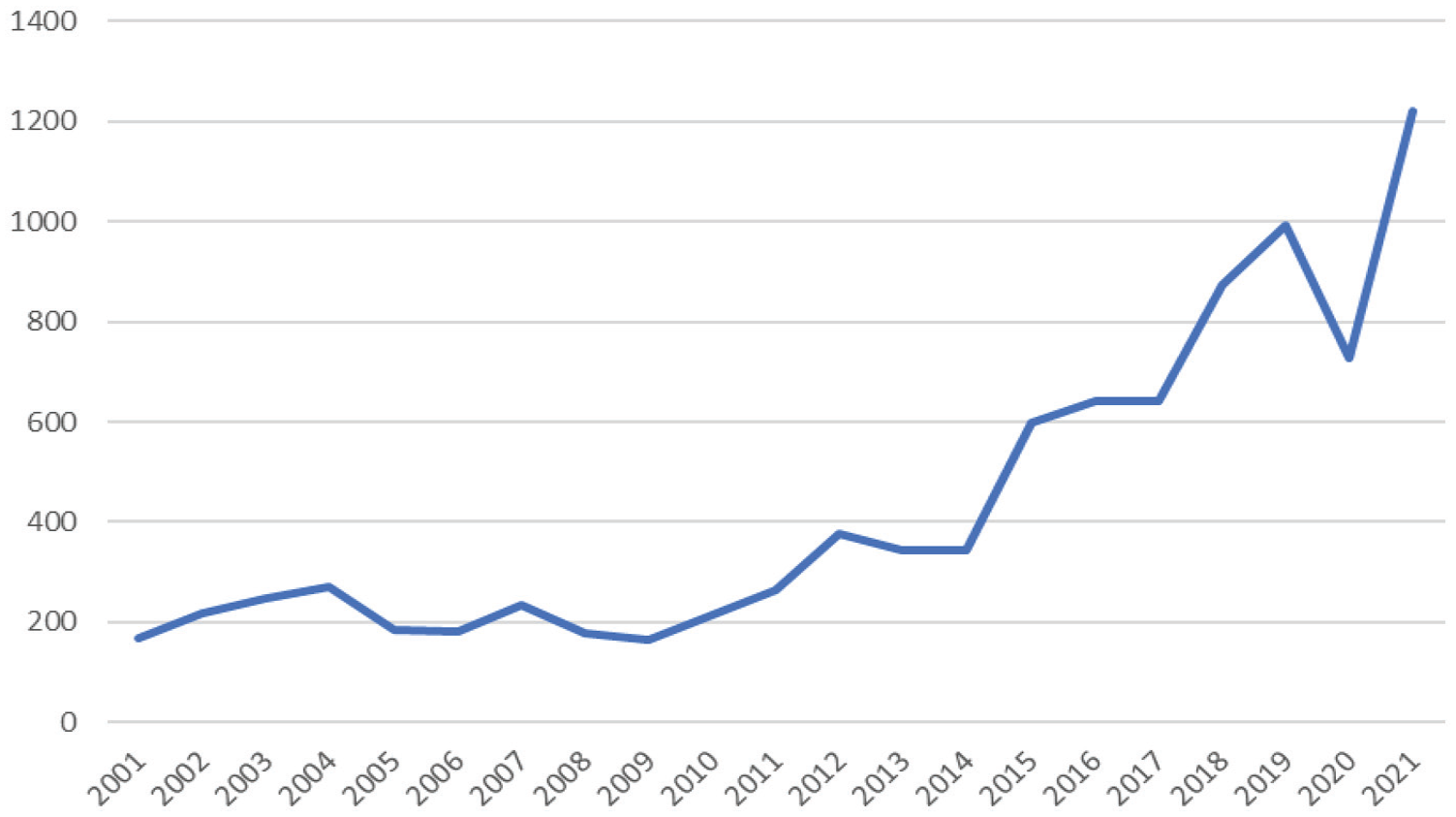
Annual newspaper coverage of menopause (2001–2021).
As shown in the table in Figure 2, for the first decade (2001–2011), the coverage is relatively steady.
7
The first sharp rise can be seen in
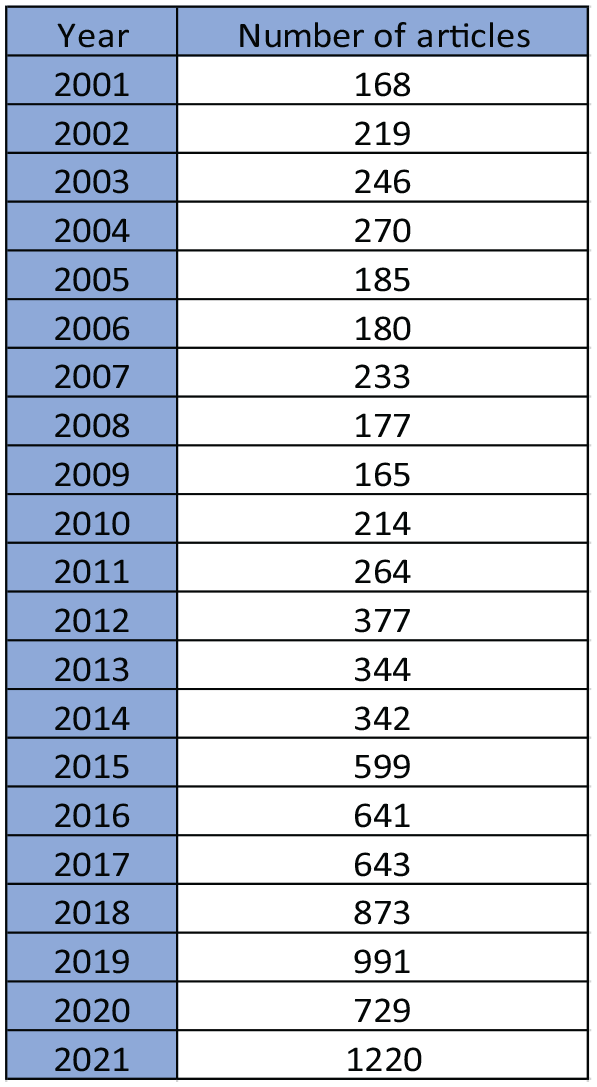
Annual number of articles about menopause (2001–2021).
Taking the two end points of our sample and comparing the overall coverage in 2001 and 2021 – the first and last year – we see that the frequency of articles is 7 times greater: 168 items in 2001 compared with 1220 in 2021. As noted above, this does not suggest a linear or steady rise, but, taken together with the figures across the years, there is clear evidence that menopause’s visibility has increased significantly in UK news coverage.
Distribution of coverage among newspapers
Examining the distribution of the coverage among the different newspapers reveals several noteworthy trends.
First, a quarter of the entire coverage appeared in the Daily Mail and Mail Online (combined) – the most-read daily UK title (Ofcom, 2021), which is also seen as Britain’s most right-wing paper (Smith, 2017). The second largest share is the Mirror’s (The Mirror, Mirror.co.uk and The People) – a tabloid considered left leaning (Smith, 2017) – with 18 percent of the entire coverage. The Sun, the second most-read national UK daily with a readership and political alingnment considered right leaning (Hurst Media, 2023; Ofcom, 2021), was responsible for 11 percent of the coverage, followed by The Express, a conservative right-wing daily, which has 10 percent of the overall share. The Times and the Telegraph – two politically conservative broadsheets – jointly provided 24 percent of the coverage, divided equally between the two.
Thus, the conservative right-wing press (Mail, Sun, Express, Times, and Telegraph) has played a considerable role in driving the increased coverage of menopause: altogether these newspapers have been responsible for 70 percent of the entire coverage over the past two decades – a finding we discuss in greater detail in the conclusion. By contrast, the left-wing press in the sample, represented by The Mirror, The Guardian, and Independent, has been responsible for only 30 percent of the overall coverage. However, as mentioned, the Mirror’s share of 18 percent is significant and the second highest among all newspapers, while the liberal broadsheets The Guardian and Independent contributed relatively little to the overall coverage, with 6 percent each (see Figure 3). We discuss further the implications of this distribution in the section following the description of the peaks.
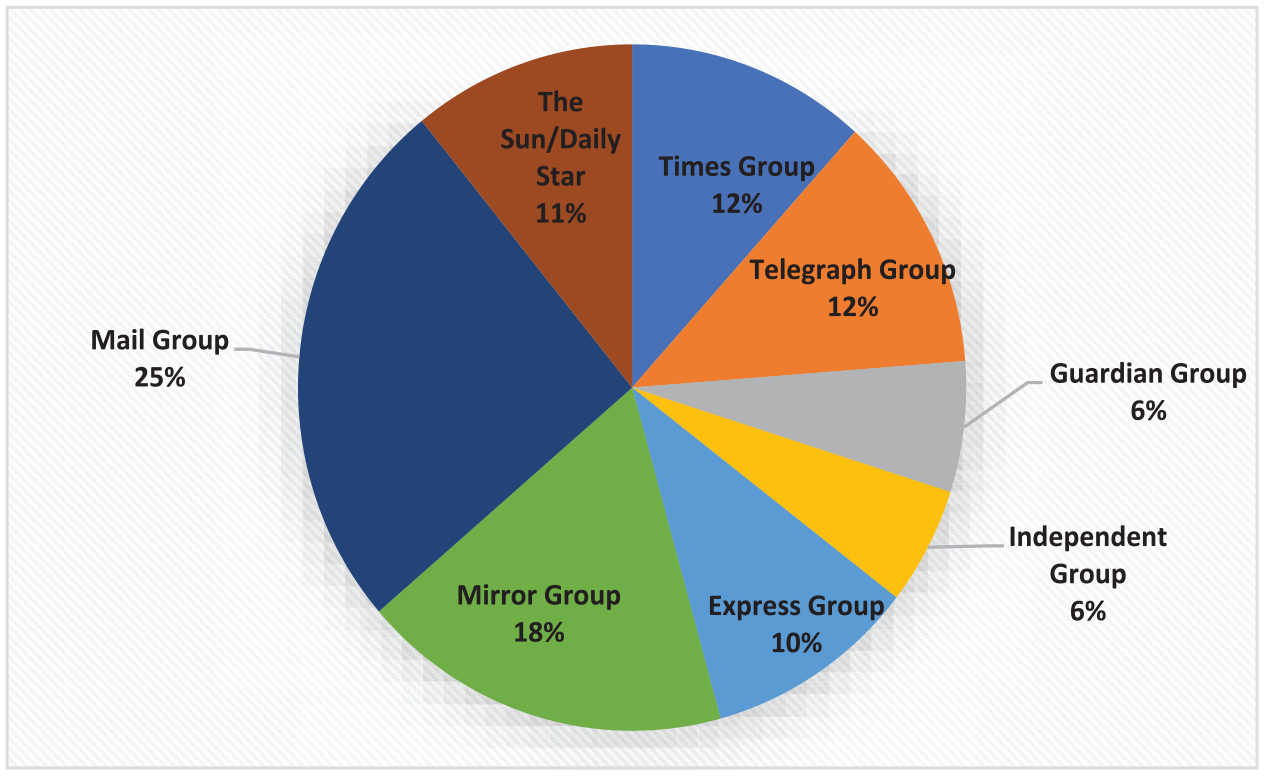
Coverage distribution of menopause by newspaper group.
Peaks in coverage
When exploring the sample by months, we identified six notable peaks within the 20-year timeframe.
Peak 1: November 2015 – medical guidelines and celebrity confessions
The first 14 years of coverage are characterised by a relatively low volume of articles across all newspapers, with an annual average of 242 articles. In 2015 we see a significant rise for the first time, with a total of 599 articles, 17 percent of which are concentrated in November 2015. Indeed, the number of articles published in November 2015 alone (101) is almost five times the monthly average from January 2001 to October 2015. Notably, just under a third of the coverage in November 2015 – consistent with the overall distribution of coverage over the 20-year period – is in the Mail (30 articles out of 101), followed by the Telegraph (23 out of 101).
This dramatic increase in coverage is related to two key issues discussed extensively by the press during November 2015. The first concerns the publication of the first national guidelines on the diagnosis and management of menopause by the National Institute for Health and Care Excellence (NICE, 2015). 8 These new guidelines provoked a lively and polarised debate concerning the safety of HRT, which the guidelines promote as the most effective treatment for symptoms associated with menopause, including hot flushes, night sweats, insomnia and mood swings. Some newspapers cite experts who warn about the link between HRT and breast and ovarian cancer (e.g. Borland and Atkinson, 2015), while other stories highlight that the benefits of HRT outweigh the negatives (e.g. Lambert, 2015).
The significant increase in coverage during November 2015 is also related to media interviews with Angelina Jolie, which attracted considerable attention across tabloids and broadsheets and across the newspapers’ political and ideological spectrum. Jolie confessed to ‘love being in menopause’ (Saul, 2015) following her double mastectomy and ovary-removal surgery after she tested positive for the BRCA1 gene. 9
Peak 2: November 2016 – celebrity confessions
This peak consists of 95 articles, a slightly smaller number than in Peak 1 but almost double the monthly average between the previous peak and this one (December 2015–October 2016: monthly average of 52). Like Jolie’s story in Peak 1, here too the rise in coverage – though almost exclusively in tabloid articles – is driven by a celebrity, this time the UK reality TV persona Carol Vorderman, who self-identified as a ‘menopausal mama’ (Jackson, 2016). Vorderman’s story is framed across tabloid newspapers as breaking the taboo around the mental health aspects of menopause. Dovetailing with the ‘aspirational ageing’ framework (Douglas, 2020), all of the articles are accompanied by often highly sexualised photos of Vorderman, highlighting her fit and slim body. The articles are firmly situated within a makeover paradigm, which is illustrated by Vorderman’s declaration of her move from the ‘before’, associated with the onset of menopause and characterised by depression and self-doubt, to the ‘after’ stage, associated with confidence, positivity and happiness.
Peak 3: May 2018 – menopause as metaphor for the economy
The third peak occurs during May 2018, where the number of articles is the highest since 2001, amounting to 16 percent (141 articles) of the entire coverage that year (2018). This dramatic increase is driven partly by the press’s extensive discussion of a comment made by the then-deputy governor of the Bank of England, Ben Broadbent, who publicly stated that the UK economy was in a ‘menopausal’ phase after passing its productive peak – a metaphor for which he later apologised. Broadbent’s choice of words triggered a slew of angry reactions, with many describing the statement as ‘sexist’ and ‘inappropriate’ (Monaghan, 2018).
While, on the face of it, this news topic does not appear related to the subject of our study – since menopause was used here as a metaphor for the economy rather than the subject of interest per se – and, at first, we considered removing these articles from our sample – upon review, however, we concluded that it would be not only interesting but vital to include them for two reasons. First, the coverage of the deputy governor’s choice of words is often connected to a discussion – which is more explicit in some stories than others – about the perception of menopause itself. Thus, for example, a Guardian editorial highlights that the deputy governor’s ‘ill-chosen words act as a grim reminder of the pervasiveness of language that objectifies and belittles women, particularly older women’ (Editorial, 2018) while a Daily Mail article cites former pensions minister baroness Altmann saying that she found the comments ‘offensive’, ‘demeaning’, ‘dangerous and utterly wrong’ because ‘[m]illions of women are in, or are yet to enter, their prime’ (Duncan, 2018). Second, some articles used the controversy around Broadbent’s comment to centre-stage menopause. For example, in a Guardian op-ed by Jayne-Anne Gadhia (2018), the author makes the point that unlike Broadbent’s conception of menopause as a bad thing, she has enjoyed this stage of life, experiencing it as very positive.
Peak 4: August 2019 – a medical procedure and HRT shortages
August 2019 sees a dramatic rise in coverage (216 articles), driven by a focus on two main issues. The first follows a news story about a novel medical procedure that would allow women to delay menopause for up to 20 years. The reactions to this medical intervention were generally critical across newspapers: from concerns about overpopulation and ‘going against nature’ to women being exploited by the fertility industry, and ‘tr[ying] to fix female bodies rather than the male-centred society around them’ (Gill, 2019). Interestingly, news about the medical procedure provided a springboard for a reflexive and critical discussion about why menopause is still often considered problematic or undesirable, and thus, in need of delay. For example, writing in the Daily Mail, ‘The Mind Doctor’ Dr Max Pemberton (2019) wrote:
western women are inculcated with the belief that the menopause is something to be feared and loathed – it is seen as the failing of the female body – and an industry has sprung up to medicalise it. It is an attitude I find worrying, deeply misogynistic and informed by our society’s obsession with youth and ageing.
The second topic generating a significant number of stories in August 2019 was a national HRT shortage caused by manufacturing and supply chain problems. The articles discussing the shortages are largely factual. They repeat the statistic that 200,000 women in Britain are using HRT, while discussing the repercussions of women having to switch HRT medications and brands, and the choices individual women were forced to make to cope with the shortages.
Peak 5: May 21 – a celebrity documentary
The coverage in this peak (136 articles) revolves around the Channel 4 documentary, mentioned in the article’s introduction. Titled Davina McCall: Sex, Myths and the Menopause 10 the documentary, which aired on 12 May 2021, discusses some key taboos associated with menopause, including sex. Made and narrated by the former reality TV presenter Davina McCall, the programme centres on McCall sharing her own experience as well as interviewing other women who speak openly about menopause’s often-debilitating symptoms, including brain fog and depression. The programme, which largely endorses HRT as the solution for dealing with menopausal symptoms, generated significant public response, while positioning McCall as a menopause expert and educator. 11
Another set of stories contributing to this peak concerns the Countess of Wessex’s discussion of her menopause experience. Sophie Wessex is said to be the ‘first royal to put a spotlight on the previously taboo issue’ (English, 2021), and as such her disclosure received significant coverage, especially from the conservative pro-monarchy papers, such as the Daily Mail and Express.
Peak 6: October 2021 – government policies, celebrity accounts and wellness products
The final most dramatic peak occurs in October 2021, consisting of 263 articles. The central factor animating this surge was the UK government’s announcement of new policies related to menopause support, including changes to prescription drug charges and the establishment of a menopause taskforce. This generated a wider discussion, including menopause’s impact on women in the workforce and the need for workplace support, advice about how to cope with menopausal symptoms and celebrity accounts of menopause – similar to those seen in previous peaks, but here including a larger pool of celebrities, for example, television personalities Shirley Ballas and Lorraine Kelly, royal Sophie Wessex and model Penny Lancaster.
The Express is responsible for 27 percent of the coverage in this peak (75 articles of 283 in total), a significantly larger share than the other newspapers and almost triple its overall share across the 20 years (which is 10%). Its coverage consists of various celebrities’ accounts of menopause, discussions of menopause in the workplace, and wellness-type pieces, including the marketing of products related to relieving menopausal symptoms.
Thus, our findings clearly confirm that the UK press coverage of menopause has increased over time. Since 2015, and most conspicuously from 2021, menopause has enjoyed significantly heightened visibility. We now turn to interrogating what the content of the coverage during the peaks might reveal about the forces driving this rise in visibility.
Social, cultural and economic forces behind menopause’s rising visibility
Popular neoliberal feminism
It is noteworthy that the rise in menopause’s visibility in the United Kingdom – with the first significant peak occurring in 2015 – coincides with the emergence of what scholars have identified as a new variant of feminism: popular neoliberal feminism. Widely circulated and accessible (Banet-Weiser, 2018), this version of feminism foregrounds individual and psychological transformation and champions women’s individual empowerment, resilience, and positivity rather than a demand for social and structural change (Rottenberg, 2018). Indeed, the embrace of popular neoliberal feminism in Anglo-American media seems to have provided a conducive backdrop for the increased attention to menopause, especially as an experience of female self-transformation, empowerment and even liberation. This emphasis is particularly evident in celebrity stories, which constitute a significant driver of the peaks. For instance, in a MailOnline article about rediscovering her sex appeal as a menopausal woman, TV presenter Penny Lancaster is cited as stating: ‘As you get older you embrace each stage of your life with more maturity, and give yourself a bit of a break’ (Chester, 2021). Similarly, TV celebrity Lorraine Kelly is quoted as initially feeling ‘joylessness, anxiety and tiredness’ (Green, 2021) but describing how she ‘tried to keep positive while going through the change, and saw it as freeing because it was a natural thing to happen’ (Hodson, 2021). The coverage of Angelina Jolie’s early onset of menopause – following her preventive ovary-removal surgery – similarly underscores her experience of menopause as positive, empowering and even emancipating (e.g., Saul, 2015). Thus, in the same way that the shifts in the framing and (slightly) increased visibility of menopause in the 1960s and 1970s were related to the resurgence of (second-wave) feminism (see Cimons, 2006, 2008; Corinna, 2021; Gannon and Stevens, 1998; Krajewski, 2019; Shoebridge and Steed, 1998), our study suggests that the rise of popular neoliberal feminism has helped to facilitate the visibility of menopause in the second decade of the 21st century. 12
Celebrity culture
As we note above, celebrity figures occupy centre stage during the peaks, particularly in the Daily Mail’s coverage. These are often confessional stories, where the celebrities first disclose menopause’s negative impact on their lives and then move to the story’s ‘moral’: self-transformation through the exercise of popular neoliberal feminist dispositions, such as positive thinking, confidence, empowerment, and resilience (Orgad and Gill, 2022), alongside the adoption of wellness regimes and the use of HRT. Thus, the convergence of celebrity culture, aspirational ageing and popular neoliberal feminism provides fertile ground for menopause’s increased visibility.
Indeed, as Douglas (2020: 20) argues, celebrity culture ‘has become a central site where the struggles over what it means to be an older woman, and battles over our “common sense” about aging, are being fought out’. It is perhaps not surprising then that celebrity figures are at the forefront of menopause’s new ‘luminosity’ in the media. 13 Yet, in the context of the history of menopause’s cultural construction, the fact that it appears to be celebrities and journalists rather than medical experts whose voices are central in these discussions seems important. Indeed, this shift appears to signal a broader change in the framing and understanding of menopause: from an exclusively biomedical phenomenon to an individual experience that needs to be confronted and even embraced through psychological work on the self, often aided by the wellness, happiness and HRT industries. Furthermore, similar to the role that celebrities have played in opening up public discussion about other medicalised experiences affecting women, such as breast cancer, here, too, celebrities speaking out about menopause seem to play a key role in making menopause publicly visible, and potentially encouraging ordinary people to talk about it more openly. However, further research is needed to establish whether and how celebrities do influence people’s discussions about and understanding of menopause.
Changing UK work policy
The focus on menopause in the workplace is most conspicuous in the final peak (6), with many articles discussing the UK government’s announcement of new policies related to menopause support and the establishment of a new menopause taskforce. However, the impact of menopause on women’s working lives is also frequently mentioned in the context of previous peaks. For example, in Peak 4, discussions about the national HRT shortage highlight its impact on women in the workforce. Similarly, in stories of celebrities like the royal Sophie Wessex (Peaks 5 and 6), the discussion often emphasises the impact of menopause on these women’s working lives, with Wessex recounting her experience of brain fog in the middle of a work presentation and calling on employers to provide support for menopausal women (English, 2021).
It does not seem coincidental that this focus, which has helped to propel menopause’s heightened visibility, corresponds with the shift in UK government policy related to older women in paid employment. As we note above, in the aftermath of the 2008 economic crisis, and specifically from 2012 onward, the UK government initiated substantial changes to the pension and benefit systems. Its ‘Fuller Working Lives’ strategy, for example, is underpinned by a desire both to encourage people 50 years and above to stay in paid work for longer and industries to take advantage of this growing demographic. These policies frame women as ‘untapped potential’ for the UK economy and industry and seek to maximise their contribution to Britain’s economic growth (Fegitz, 2022: 2). Read against this backdrop, menopause’s growing visibility in the UK press and the move towards breaking the taboo around it seem intimately, if not always explicitly, linked to the UK government’s move towards encouraging ageing women to remain in the workforce, thereby actively discouraging them from becoming dependent on the state. Tellingly, the ideal subject of ‘the entrepreneurial older woman’ that Fegitz (2022) identifies in recent UK policy discourse, exhibits similar dispositions to the celebrities whose stories of menopause drive some of the coverage peaks: capacity and desire to continue working alongside a disposition that exudes self-responsibilisation, positivity and resilience.
Biological womanhood
The considerable (70%) share of the coverage by the conservative right-wing press and its role in driving the peaks are suggestive of yet another force which is arguably animating the visibility of menopause, namely, an ideological emphasis on biological womanhood. The Daily Mail, which is associated with a conservative-voting readership, has historically been known ‘for its postfeminist and, at times, anti-feminist stance’ (De Benedictis et al., 2019: 724; McRobbie, 2009, 2013, 2015). Yet, in recent years, and partly as a result of its shrinking male readership and the changing ecology of news media (e.g. decline in print circulation), the newspaper has become a bastion of popular neoliberal feminism (McRobbie, 2022, private conversation). The newspaper has increasingly promoted a middle-class aspirational version of confident femininity – often through white celebrity figures – and has positioned itself as the champion of ‘real women’s issues’, and specifically women’s health issues (McRobbie, 2022, private conversation). As part of this ideological positioning the Daily Mail has promoted biological womanhood, which closely links women to their reproductive bodies (e.g. Mavin et al., 2018; McGill, 2021). Menopause appears to sit perfectly with this agenda as well as with the Daily Mail’s significant older female readership (Hurst Media, 2022; Statista, 2021), whereby an emphasis on ‘the change’ as a ‘real woman’s issue’ supports the (re)suturing of notions of ideal womanhood to the biological body and to whiteness.
Big Pharma
The ideological emphasis on biological womanhood also goes hand in hand with an active promotion of HRT, since both tend to centre menopause as a biological condition caused by hormonal imbalance. Indeed, it is notable that in four out of the six coverage peaks, HRT is front and centre: Peak 1 is driven by stories about the publication of the NICE guidelines, which promote HRT as an effective treatment for symptoms associated with menopause; Peak 4 is partly driven by stories concerning a national HRT shortage, highlighting the largely negative impact of this shortage on menopausal women, and particularly women in the workforce; Peak 5 is partly explained by responses to Davina McCall’s documentary, where HRT is a central issue – following which, as we note in the introduction, there was a considerable increase in demand for HRT; and Peak 6, which includes reports on HRT shortages and many stories related to the UK government’s announcement of new menopause-related policies, including changes to prescription charges for HRT.
The centrality of HRT in the coverage points to an additional force that may also be behind the increased visibility of menopause, namely the powerful and symbiotic relationship between aspirational ageing and Big Pharma. As Douglas (2020) notes, Big Pharma ‘has played a complicated role in the construction of aspirational ageing in the media, addressing and even representing older people living their lives in fulfilling, self-actualizing ways, but also sick and needing medication – and able to afford them!’ (pp. 67–68). Interestingly, this two-pronged representation – as prone to sickness but also able to self-actualise with a little medical intervention – dovetails with the confessional narratives we identified in the celebrities’ menopause stories, where the start of hormone therapy is often presented as liberating and providing a new lease of life.
Conclusion
Our analysis of UK daily newspaper coverage of menopause from 2001 to 2021 clearly documents that, in conjunction with the shifting cultural representation of ageing women, there has been a parallel and related shift in the representation of menopause, in terms of both quantity and content – although our findings concerning the latter remain somewhat tentative. With respect to menopause’s sheer visibility, our study demonstrates that there has been a significant increase in the UK press, particularly since 2015. Regarding its framing, we note a shift from a largely negative and medicalised frame to portrayals of menopause as an experience of female self-transformation. Indeed, many of the celebrities’ stories in the six peaks highlight the necessity of breaking the taboo around menopause and underscore its liberating effects, particularly once various psychological and physical difficulties associated with its onset have been overcome. Furthermore, the discussions in the news articles during the peaks – notably in Peak 3 and 4 – consist of a significant number of reflexive and critical commentaries concerning how menopause continues to be perceived in negative terms, and the need to challenge this perception. In this sense, menopause’s growing luminosity contributes to undoing its historical invisibility, going some way towards challenging both its dominant framing as negative and the persistence of gendered ageism more broadly. Yet the extent to which the ‘coming out of the closet’ of menopause benefits ageing women and enhances gender equality remains an important question that needs to be addressed.
Indeed, our findings suggest that the trend towards the undoing of menopause’s ‘manufactured invisibility’ (Douglas, 2020) in the UK press is complex, and the forces contributing to menopause’s new luminosity work in contradictory ways. First, the coverage, especially its celebrity focus, tends to highlight individual experiences, presenting menopause as a personal challenge. Resonating with discourses of popular neoliberal feminism, this emphasis deflects attention away from understanding menopause as a social and cultural issue that needs to be addressed on a structural rather than on an individual level. Second, individual stories that frame menopause as an individual challenge that can be overcome (and even experienced as liberating) through work on the self, positive thinking and the consumption of wellness products and HRT also feed into neoliberal discourses and policies that aim to keep older women in the workforce for longer, especially in view of growing evidence that experiencing menopause symptoms is a key factor pushing women to quit the workforce (Fawcett Society, 2022).
Third, given how menopause’s increased visibility appears linked to promoting notions of biological womanhood, particularly in the conservative press, the heightened media attention helps to reinforce narrow conceptions of femininity that refuse to consider gender complexity, although further discursive analysis is required to establish this more firmly. Moreover, while our analysis does suggest a shift across the coverage from a medicalised frame to one that emphasises menopause as a personally transformative experience, this transformation continues to be portrayed as crucially aided and enabled by medical intervention – most often by HRT. The focus on HRT, in turn, begs the question of whether and in what ways Big Pharma and its interests have played a part in the increased visibility of menopause in the press.
The dominance of the right-wing press in the coverage is perhaps our most surprising finding. We expected the left-wing press, which aligns itself with equality and social progress, to be the key driver of menopause’s visibility. Particularly in the wake of #MeToo and the entrenchment of popular neoliberal feminism, we hypothesised that the left press would lead the coverage to expose how menopause affects women and gender equality. We also expected that the right-wing press, which leans towards more conservative values and largely promotes heteronormative femininity, would be more reluctant to contribute to breaking a taboo that has historically buttressed traditional notions of femininity and womanhood. However, while menopause’s heightened visibility has enabled a more public conversation about the subject and as such does centre (certain) women’s experiences and gender equality more broadly, some of the most powerful forces animating the increased attention to menopause are tightly sutured to conservative ideologies and agendas. These include the promotion of heteronormative cis-gender biological femininity, neoliberal rationality, which casts people ‘exhaustively as market actors’ (Brown, 2015: 31) and encourages the self-responsibilisation of individuals, neoliberal policies facilitating the continued evisceration of the social safety net, and, crucially, the interests of pharmaceutical and other for-profit industries.
However, more research is necessary to account more fully for the changes in the discourses surrounding menopause and its framing over time as well as the consequences of these shifts. Moreover, an intersectional approach is urgently needed to identify and analyse the particular ways in which exclusions across dimensions such as race, class and sexuality – some of which are alluded to in our discussion – operate within menopause’s current luminosity in the United Kingdom. Finally, a larger study across various media genres and cultural contexts would allow scholars to ascertain whether the trends identified in this article go beyond the United Kingdom and beyond the news media, and what the significance of these differences or similarities might be.
Footnotes
Acknowledgements
The authors are very grateful to Sarah Campbell for her assistance in collecting the data and producing statistical figures as well as to Angela McRobbie for her invaluable advice, as well as the anonymous reviewers who offered very helpful and constructive feedback.
Funding
The author(s) disclosed receipt of the following financial support for the research, authorship, and/or publication of this article: The author(s) received financial support for research, assistance from their respective institutions.

Notes
Biographical notes
Shani Orgad is a professor of media and communications at the London School of Economics and Political Science (LSE). Her research focuses on gender, feminism and the media, inequality and contemporary culture and media representations of suffering and migration. She is the author of numerous articles, op-eds and books including the most recent, Confidence Culture (with Rosalind Gill, 2022, Duke University Press) and Heading Home: Motherhood, Work, and the Failed Promise of Equality (2019, Columbia University Press).
Catherine Rottenberg is a professor of feminist thought and culutre in the department of american and canadian studies at the University of Nottingham. Her monographs include The Rise of Neoliberal Feminism (2018) and Performing Americanness (2008), and she is the co-author of The Care Manifesto (2020) as well as the editor of This is Not A Feminism Textbook! (2023) and Black Harlem and the Jewish Lower East Side (2013).