




Abstract
In recent years, significant numbers of young middle-class Chinese women have moved abroad to construct an individual ‘biography’ beyond the unequal gendered expectations of the post-reform context. This article reports on a 2019 qualitative study combining interviews and visual analysis of WeChat and Instagram posts to consider how young Chinese women temporarily living in Australia maintain relationships with upper middle class family who have supported their daughters’ overseas ventures. In the wake of sweeping privatization which has encouraged parents to invest in their only children as their ‘only hopes’, online media has allowed parents to be ‘pervasively present’ for distant daughters in these transnational movements. We document participants’ curated self-branding for family on WeChat as a means of managing and negotiating this sometimes interventionist presence. Our participants’ practices reveal a complex juggling act: managing individual desires to optimize the overseas experience but carefully modulating such experience for the parental audience. Post-pandemic follow-up interviews in 2022 also suggest complications in the use of transnational mobility to extend the possibilities of flourishing, with parental pressure to return to a more proximate zone of surveillance in China. Such practices indicate the gendered contradictions young women face: pushed but also desiring to succeed individually in an unequal marketplace, while being further tethered to the family unit.
Introduction
For some time now, media has reconfigured notions of distance and proximity, with digital culture now a crucial element of sociality of relationships separated by time and space. In this article, we examine the digital practices of young, mobile upper middle class Chinese women as recent migrants to Australia who negotiate the separation from family and friends through messaging and presentational affordances of WeChat. Focusing on the affective structures of this negotiation, we observe a heightened intimacy with distant loved ones in what we term ‘pervasive presence’ – the subtle, continuous presence of distant others afforded by social media. This intimate co-presence, however, is not a simple matter of bridging distance in terms of emotional support. It also takes on particular intensities in the context of a post-socialist sexual contract requiring young women to signify success via consumption, lifestyle and movement, as well as taking on heightened responsibilities as the ‘only hopes’ (Fong, 2004) for ageing parents. We thus also discuss the sharpened necessity of self-branding and image curation, not as separate from, but connected to this familial pervasive presence.
We begin by documenting the Chinese context of ‘privatization’ (Ong and Zhang, 2008), in propelling these ‘nomadic daughters’ as temporary migrants abroad (Kim, 2011). We then examine how these young women narrative their overseas lives to their ‘left-behind’ family. Similar to existing accounts of temporary international mobility, particularly for middle-class migrants from Asia (Li and Peng, 2019; Wong, 2017) our study indicates that these young women derive emotional sustenance from the pervasive presence of family in their lives. However, in line with feminist research in the Chinese context (Chang and Ren, 2016), we focus on the negotiation of gendered contradictions: those of pleasing distant others, as well as meeting new requirements of mobile feminine individuality. In this context, branding becomes a means of managing the disciplinary expectations of family but also social imperatives of successful youthful, mobile femininity in contemporary transnational life, illustrating connections to Western analyses of neoliberal subjectivity. Following Banet-Weiser (2012), we define branding as an intimate relationship of continual innovation, production and consumption, charged with explaining the self to an audience. However, drawing on the understanding of authentic branding as a standard of gendered behaviour, rather than veracity itself, that is demanded of young women (Banet-Weiser, 2021), we highlight participants’ knowingly selective self-display to manage boundaries with otherwise highly involved parents. This article, then, aims to contribute to understandings of gender and transnational neoliberalism broadly, in the context of debates over how effectively the sociological individualisation thesis corresponds to understanding women’s experiences in diverse contexts (Zurndorfer, 2018).
Post-reform China, neoliberalism and new gendered subjectivities
In understanding the context for aspirational temporary migration by young Chinese women, it is important to consider the governmentality of state-driven reforms in producing new forms of desiring subjectivity (Rofel, 2007). The opening up of China through market reforms has demonstrated what Yan (2010) has observed as the disembedding of individuals from socialist collectivist structures of work and their re-embedding in a new relation to the market and to the state. Requiring ‘enterprising’ orientations and the adoption of individual responsibility, China is being ‘privatized’ not simply through the selective retreat of the state, but through the augmentation of certain ‘powers of the self’ (Ong and Zhang, 2008), requiring ‘diligence, cunning, talents, social skills’ in order to ‘navigate goods, relationships, knowledge and institutions’ (Ong and Zhang, 2008: 8), producing some spaces of agency and autonomy in the private sphere (Rofel, 2007).
In this post-reform context of transforming subjectivities, media has served as a site through which individuals may ‘“re-embed” themselves within new types of social commitment and new normative ideals, including those concerning parenting, marriage, gender roles, and personal fulfilment’ (Sun and Lei, 2016). Sun and Lei (2016) note, for example, the growth of lifestyle and intimate advice media television with gendered instructional overtones. Moving from the more therapeutic role of late-night radio in which callers would seek advice, they note the increasing didactic address of experts on television who ‘educate’ audiences on managing private relations. In the wake of economic reforms that have increased socioeconomic stratification, particularly across the rural-urban divide in China, Chinese programming has also served to reinforce classed and gendered inequality as consumption becomes crucial for demonstrating normativity (Lewis et al., 2016). Notably, rural women’s purported lack of consumer discernment is emblematic of new demands of women as active participants and tastemakers in the (luxury) market. However, the representation of women’s purchasing power is also met with retraditionalised representations of docility and domesticity (Zurndorfer, 2018: 489–490). Scholars have noted the predilection of magazines, film, and lifestyle programming in China for either reinforcing notions of young women’s sexual availability as a primary trait (Liebler et al., 2015), or hostility once they have evaded marriage for ‘too long’ (Sun and Chen, 2015). Indeed, Sun and Chen (2015) argue that there have been fundamental regressions from the notional gender equality of ‘holding up half the sky’ in post-reform gender discourse. In place of equality is a marked emphasis on the privatization of gender relations, in which access to market labour participation and individual self-reliance is equated with liberation. Similarly, while Chinese digital culture has opened up spaces for frank discussion of gender relations, and has been used by feminist groups, Peng (2020) argues that much of the digital public sphere remains male-dominated and antifeminist. Thus, young women’s visibility in online culture has remained tied to commercial culture and market-based ‘pseudo-feminist’ narratives of empowerment (Peng, 2020).
Notably, while the Chinese socialist subject was ‘universalist’ in its imagining, capitalist divisions of value and the retreat of state responsibility for social equality has produced heavier responsibilities on the family as private unit, and on women in particular, to adopt strategies of survival (Yang, 2017). The withdrawal of the state from social provision and care has raised the stakes and demands for young women of this generation in terms of succeeding in the marketplace (Zhang and Sun, 2020), but in conditions of persistent discriminatory hiring and advancement (Fincher, 2014). In a context where parents accept career mobility but may still intervene in their only child’s choice of partner (Harrell and Santos, 2018), women’s career advancement is still positioned not only for themselves but also as for the family. In this context, young Chinese women’s transnational movement should be seen as more than a simple, freely taken ‘choice’; even and particularly when supported by families to escape domestic sexism (Martin, 2018).
Femininity, distance and the discipline of intimacy
Scholars of media use in contexts of transnational mobility have underlined how femininity, in the context of family relations, may be entangled with the disciplinary requirements of reproductive labour heightened by distance. For example, for mothers separated from their children, smartphones and online platforms can intensify and extend caregiving practices (Cabalquinto, 2017; Lim and Soon, 2010). Such media cannot be considered only as a means of connection but as an intensification and extensification of the asymmetry of care in neoliberal economies, which continues to be individualized, feminized and unpaid (Cabalquinto, 2017). While distant daughters in this gendered equation have been comparatively less studied, the work of Fran Martin highlights the gendered contradictions that such intimacy poses for young women. Notably, in Australia, international students from China are disproportionately made up of young women, more than young men (Australian Government Department of Education and Training, 2018).
Martin’s (2018) study of young Chinese women in Australia illustrates the use of overseas education as a temporary ‘zone of suspension’ of gendered chrono-normative obligations that requires young women to progress from study to work to marriage in a highly compressed timeline. Overseas study allows for a temporary relaxation of obligations and gendered duties and for families who are well aware of gender discrimination in China’s job market, an overseas qualification constitutes a sensible investment strategy to help their daughters compete in the future (Martin, 2018). However, for young women who take their sexual freedoms ‘too far’ this can create fear for repercussions of being ‘found out’ at home. Martin’s account provides a useful counterpoint to understand both the regulatory and sustaining nature of intimacy across distance. While Martin does not explicitly focus on the connectivity of digital media, this appears to almost certainly constitute part of the risk of exposure for young women whose lives may be continually reported on to parents and friends at home.
In this vein, we suggest transnational practices of intimacy require framing not only within the terms of interpersonal connection and care, but also in terms of their enrolment in disciplinary projects of gender. Exemplified in the work of Lauren Berlant (2008, 2011) intimacy may be understood as a highly gendered and disciplinary relation that historically is performed by women, and also sought out by women as a means of finding a comforting commonality in ‘intimate publics’. Such disciplinary relations may play out even and in particularly in relations of ‘empathy’ and ‘care’ (Pedwell, 2014). Feminists have thus been critical of the perceptions of freer, liquid and expanded intimate relations in late modernity argued in sociological accounts of individualisation (Giddens, 1991). Following Berlant, intimacy’s affective power binds marginalized populations to self-defeating forms of ‘normalcy’. Encapsulated in what Berlant (2008) terms ‘cruel optimism’, the relation of attachment and desire for something that ‘is an obstacle to one’s flourishing’ (p. 1), intimate connections facilitated through digital culture may tether women to situations of inequality.
More broadly, in the substantial work theorizing young women’s social media branding as an abstract relation to audiences, there is still little known on branding as a concrete and direct relationship for known others such as family. In feminist scholarship on young women’s branding in lifestyle-oriented social media (Banet-Weiser, 2012; Duffy, 2016), this has mainly been understood in Western scholarship as arising from neoliberal or ‘postfeminist’ media culture, reinvigorating requiring individual techniques of self-investment and the backgrounding of social inequalities. Such individual self-work is informed by a gendered ‘affective and psychic’ address requiring the continual attunement to an invisible audience and the emotional performance corresponding to white middle-class ideals: confidence, positivity, motivation (Orgad, 2019), but also ‘relatability’ (Kanai, 2019); the avowing of small flaws to evince an authenticity behind the ‘near perfection’ portrayed (Findlay, 2019). Yet, the lens on young women as daughters who must reflect family and social success back to their familial sponsors, as part of the neoliberal reorganization of private life, remains underexplored.
Methods
This article is based on research conducted for a small-scale qualitative project on young Chinese women’s experiences of using digital media to negotiate accounts of maintaining connections with left-behind family. Our methodological approach was informed by a feminist epistemology, which challenges the traditional hierarchy of the social by prioritizing space and care for participants’ emotions and discussion of intimate relationships in general (Aptheker, 1989). Ten semi-structured in-depth interviews were conducted by Author 1 in 2019 with Chinese women aged 19 to 25 who had spent 3 to 5 years away from their home in China. Each interview lasted from 60 to 90 minutes. The call for research participants was distributed on various social media, including WeChat and Instagram, and connected with the interviewees through purposive and snowball sampling. During the interviews, Author 1 also asked the participants to share nominated examples of their social media connection with family, such as posts and messages. Here, we focus on WeChat, as this appeared to be the predominant platform used by participants for this purpose. WeChat, launched in 2011 is one of the most popular social media apps in China with 1. 213 billion active users (Statista, 2020). Originally developed as a messaging app, WeChat later has evolved into a multipurpose platform through integrating with functions of content sharing, making calls, and e-commerce shopping, which makes it a ubiquitous lifestyle for users in China.
The 2019 research was conducted face to face in Melbourne, Australia, where a significant number of universities attracting overseas enrolments are located. Notably, China is one of the largest ‘export’ nations in terms of students undertaking education in Australia (Australian Government Department of Education and Training, 2018), In 2022, we were fortunate to be able to undertake follow-up interviews via Zoom with 6 of the original 10 participants, 4 of whom were able to stay in Australia. Each of these follow-up interviews lasted around 45 minutes. The focus of this study was on intimacy sustained during transnational mobility, and as such focused on women students, all of whom had come to Australia initially for their university education. Author 1 shares a similar background with the participants, moving to Australia from China to pursue her studies and is now remaining overseas for further study. One participant explicitly spoke of her working-class origins and her parents’ struggle to afford her tuition fees. With the exception of this participant, who had to work during her degree, participants’ lack of need to undertake paid work to support themselves, even after completing their degrees, and parents’ professions across gender, ranging from working in banking, large advertising firms, higher echelons of government, and in law, indicated upper middle-class positions. Excepting one participant who had a younger brother, the rest were all the single child in their family. Indeed, financial and personal ‘independence’ was largely spoken about as an aspirational goal, rather than a function of necessity. Cities of origin included large urban centres such as Beijing, Shenzhen, Shanghai and Chengdu, as well as regional Shijiazhuang. All the participants were randomly assigned a pseudonym.
A tethered mobility: support, safety and surveillance
We first track the desires for self-flourishing that these young women reported as underpinning coming to Australia. Tong Li, a 23-year-old from Guangzhou, described the gendered elitism of Chinese society as a principal reason for moving abroad: If you can’t get into Peking University or Tsinghua University, you are a loser in China. You probably wouldn’t find a good job, wouldn’t have a good life, you are gonna get paid like 500 bucks a month and what’s the point of living a life like that? But in Australia, I think I can live better.
Tong painted a depressing picture of deep-rooted elitism in the Chinese society – admission to the most prestigious universities seemingly the only way to have an upwards trajectory. Tong had moved from Guangzhou to Melbourne in 2015 for her undergraduate study and was working as an intern at an accounting firm at the time of the 2019 interview. Her movement reflected the profile of many recent Chinese migrants temporarily living in Australia – in their early 20s, female, coming from an urban middle-class family background, receiving ‘excessive’ education (Martin, 2017). Tong’s dedication to ‘have a good life’ and ‘live better’ showed a desire to fulfil the ambition for self-actualization through individual striving, a narrative of meritocracy made ‘commonsense’ in neoliberal culture (Littler, 2017). This notion of upwards mobility was combined with fears of living an ‘average’ life with a scant 500 dollars a month. The fear of a ‘wasted’ life and the risk of not being able to have a successful career under the Chinese system animated Tong to think and push herself beyond the local environment.
The pursuit of individual fulfilment and self-realization was indeed a prominent theme among the participants. When we asked the same question to other participants about motivations for coming to Australia, they similarly shared their desires to seek self-actualization, and were well aware of the highly gendered obstacles they faced to achieve such flourishing. For example, Muxia Cai, who was studying international relations noted: I used to study Russian at a Chinese university. But for my major, if you want to find a good job like to be a diplomatic officer, the government prefers to recruit men. As long as you are a man, even you don’t have very good grades, you are preferable to girls.
Muxia, who dropped out of a Chinese university after her first year and re-enrolled into a university in Australia to seek better opportunities, pointed out gender bias permeated China’s educational settings and professional labour market. Her desires to become a diplomatic officer were tempered by her knowledge of widespread gender quotas that favour men. As Tatlow (2012) observes, the practice of lowering the bar of entry for male applicants is especially widespread at language affiliated institutions and state institutions like the police and military. As such, despite the progressive narrative of individualisation, there was often a felt disjuncture between the promise of equal opportunity and the experience of sustained gender suppression.
Mingxi Xu, a 24-year-old working as a social media specialist similarly observed the contradictions of the simultaneous ‘opening up’ of the market and continuing gender containment: If you look at Chinese TV series, there are a lot of themes around women should be submissive or men will protect you even in a work career . . . I can’t see anything about the portrayal of independent women.
Mingxi was critical of the resurgence of re-traditionalized gender roles from the media environment. Her observation of continuing contradictions demonstrates resonances with many feminists’ criticism of the individualisation thesis, which paints an overly optimistic picture of gender inequality and considers that women have enjoyed abundant possibilities opened to them as a result of progressive social change (Jamieson, 2013). Much recent research on media representation of women in China finds a misogynistic agenda idealizing female identity and its link with domesticity and consumerism (Chang and Ren, 2016; Gaetano, 2014). Women face narrowing parameters of subjectivity whereby they should not economically depend on others – yet are increasingly asked to display hyperfemininity (e.g. beauty and youth) in their workplaces and relationships (Yang, 2017). However, Mingxi’s reflexivity of this structural contradiction also reflects a growing awareness among the young generation and their desire to pursue a life beyond these structures.
For these young women who sought opportunities abroad, family financial support was crucial in their journey of seeking individual independence. This financial backing of their transnational movement also came with significant emotional ties in the form of constant availability and connection. This, on the one hand, could help settle them in their new homes. As Luoxi Liu, who worked as a cashier part-time for ‘fun’, confided: I facetime with my parents once a week . . . but when they don’t pick up my call, I feel really stressed. I might book a ticket back if they don’t pick up my call within one day.
Luoxi sincerely expected that her parents, who were both full-time employed, would always pick up. When they occasionally ‘disappeared’ in a technological sense, this unexpected detachment would induce such an unmooring that she felt she would have to physically regain the intimacy by ‘booking a ticket’ back home immediately. Similarly, Muxia noted that if she wasn’t available on WeChat (to chat), her parents ‘will be very worried about me; like am I safe, or something like that’. Other participants, like Ruyi, a finance student, incorporated this contact into her routine whenever she walked home late at night on her own, making a video call to her mom.
We call this continual possibility of contact ‘pervasive presence’, not only to connote the everyday, ‘always on’ (Van Dijck, 2013) connectivity of digital culture, but the scope of this presence, reaching the most personal domains of life. This continuous access and accessibility provided an ambient, affective structure of co-presence – supportive, but at times, potentially, too close, as we discuss. For others, parents’ continual contact – and possibility of contact – was demonstrated in their involvement in decisions ranging from the relatively everyday (choosing units to study the following semester) to the life-changing. For example, while all had expressed some level of desire to study abroad, the choice of Australia as destination had not necessarily been theirs to make. This was not to do with financial reasons per se but with a perceived level of ‘closeness’. Tong said she had wanted to go to the United States, but her parents had disagreed. Australia was safer, they said, and closer. For Ruyi, while she had pushed for Australia as her choice of study destination, her parents at first only allowed her to study in Hong Kong, but after a year, she proved herself ‘independent enough to study in Australia so they allow me to go’. For Ruyi, this highlighted the contradictions of parental presence in the tethered mobility she negotiated: Like I’m a bird but they don’t want me to fly . . . I just want to prove I can live without you, I can live better, I can make more achievements, they always plan all things for me.
This parental intervention could extend to the choice of intimate relationships; something that was patrolled much more by fathers, than mothers. For example, Mingxi, in her follow-up interview in 2022, was living with her Colombian boyfriend. She was ‘very happy’, but literally only videocalled her dad in a room with a closed door in the house so her father would not ever see her boyfriend in the background. Her father was ‘traditional’ and did not approve of dating foreigners, even as his daughter was living abroad.
Branding as relationship management
For the women in our study, they felt pervasive presence ambivalently. The cushioning of family support could also feel like pressure. Many of the participants mentioned the efforts needed to perform an image on social media corresponding to idealized mobile femininity in their transnational life, to reflect back the desires of their parents. However, this mobile femininity was something that they also individually felt pleasure in embodying in their own journeys of ‘independence’; thus, social media image making was often about juggling the degree and modalities through which an idealized femininity was displayed.
During the interviews, WeChat has emerged as the main platform used by our participants to communicate with left-behind family; Instagram, however, was preserved as something for the ‘self’ as well as for friends who were also studying or living abroad. This is not to impute a more ‘authentic’ self to Instagram, with its own culture of prioritization and norms of visibility (Savolainen et al., 2020), but to highlight the careful separation of self and life for display. Jiaqi Ma, from Shanghai, the ‘cultural capital’ of China, had lived in Australia for 3 years at the time of interviewing. Jiaqi recalled her extreme caution in terms of posting on ‘Moments’, a function of WeChat mainly used for sharing images and videos. She noted, It’s more like a performance you know. I post articles, I post pictures, I post paragraphs I copied from someone’s book and I don’t know even know what does it mean but it just sounds so smart. Sometimes I have to make special posts for them, like what I am achieving. For example, yesterday I posted a post like, ‘oh my god, I enjoy working so much! I love it because I learned a lot from it’ . . . That’s only for my parents. Because they only want to see the positive version of me, not like, damn, I missed the bus again.
Jiaqi described posting on social media as a performance of the ‘positive’ version of herself. She copied seemingly ‘deep’ quotes and made ‘special’ posts to display upwards mobility, congruent with the contemporary Chinese but also transnational neoliberal imagination of a successful woman, as one that ‘invests’ in her own life. In her words, Jiaqi sought to perform an identity corresponding to her parents’ expectations: always achieving, always working hard, and most importantly, always enjoying this improving and learning process. Such expectations led Jiaqi to manage her performance on Moments, the main place to demonstrate her ‘achievements’ to her familial sponsors. Interestingly, the language used on Jiaqi’s special posts such as ‘achieving’, ‘enjoying’, ‘learning’ and ‘loving’ also showed resonances with the gendered regulation of emotion observed in Western social media culture (Author 2) and more broadly, the requirement of young women to transform their psychic life to embrace confidence and cheerfulness as part of neoliberal governmentality (Elias et al., 2017). In the parental surveillance of WeChat, such an emotional disposition seemed the best way to affectively demonstrate that her parents’ investment in her was paying off.
Luoxi similarly told us of the imperatives to seek and feel her own fulfilment, and to show this on WeChat: Sometimes I visit galleries, not because I like it, but it’s a way to show people that you have a very fulfilled life. Every time I go to a gallery, or if I’m going to a gallery, I will think about what I should wear because I need to take awesome pictures. [Visiting] galleries is a very high-class thing . . . it shows that you have a life, not just working from nine to five, but you actually have a very satisfying life.
Social media, the interface of such pervasive presence, was the site of both demonstrating value and the extraction of value from everyday life. For Luoxi, visiting galleries was very much not just about artists and exhibitions; it was about a ‘fulfilled’, ‘awesome’ and ‘high-class’ lifestyle. Class, notably is key here. The engagement with perceived ‘highbrow’ culture, such as arts and galleries, varies sharply by class (Dimaggio and Useem, 1978) and is widely understood to articulate symbolic codes of privilege. The act of visiting galleries is also arguably gendered. As Lewis et al. (2016) note, in Chinese privatization, it has notably fallen to young women to embody new norms of cosmopolitan cultural taste and sophistication. As such, it was not enough to simply have a stable job; aspirational leisure activities were also part of demonstrating value.
Luoxi also showed us one of her posts on WeChat – a picture she captured while she was at a Sunday market in one of Melbourne’s leafy eastern suburbs. She had added a caption for this post referring to herself in the third person: ‘when she is not working, you will find her popping up at fun events & festivals, digging for funky gems at flea market [Winking Face]. Having so much fun today haha’.
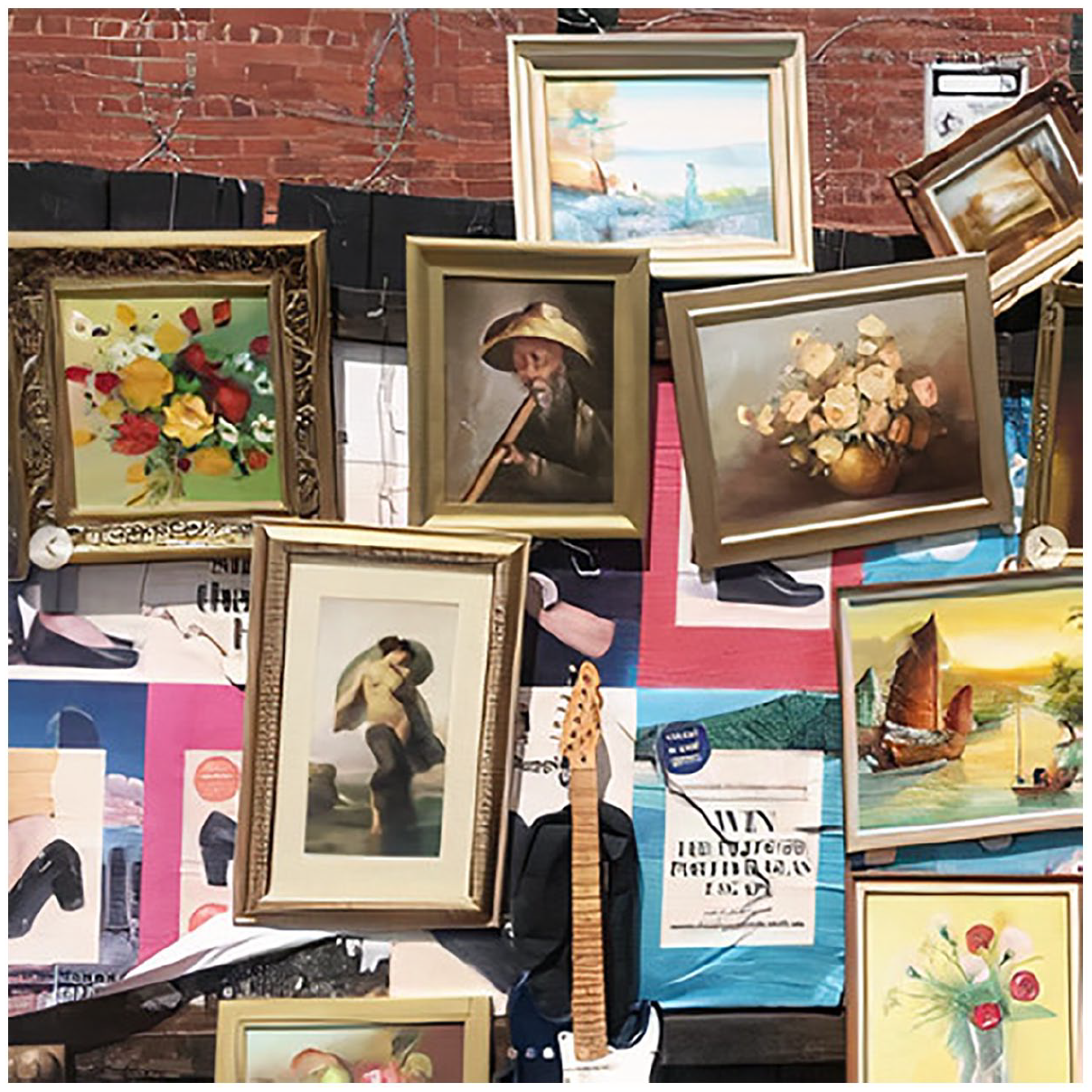
Luoxi’s post of herself visiting a Sunday market.
Luoxi’s picture captures a few pieces of art work exhibited at the market, but more importantly, emphasizes a sense of ongoing ‘fun’ and ‘leisure’ in her status maintenance via WeChat. Importantly, taste, then, was not simply about consuming luxury items. While visiting a gallery was ‘high class’, it was not extravagant; cultural capital was not straightforwardly conflated with economic capital. Posts such as these, visiting flea markets and with more ‘highbrow’ galleries, showed Luoxi’s cultural ‘omnivorousness’ (Skeggs, 2004) as part of new middle-class norms of taste.
Luoxi’s post also importantly displayed a sunny and cheerful demeanour, and the optimisation of her leisure time. Positivity is abundant in lifestyle and consumption-oriented social media as a ‘feeling rule’; it is also a highly gendered and classed disposition that is mobilized by young women to demonstrate gendered normativity for others. This public display on Moments thus articulated not simply a pretty composition of market knickknacks but the enjoyment of this activity. In this sense, enjoyment became a cognate affect with gratitude; something that testified to acknowledgement of parental support.
Shiqing also demonstrated this happy, upbeat energy in her Moments. When discussing what to post on WeChat with Shiqing, she showed us a post of a close-up of food with the caption: ‘the best way to spend the weekend everrr’.
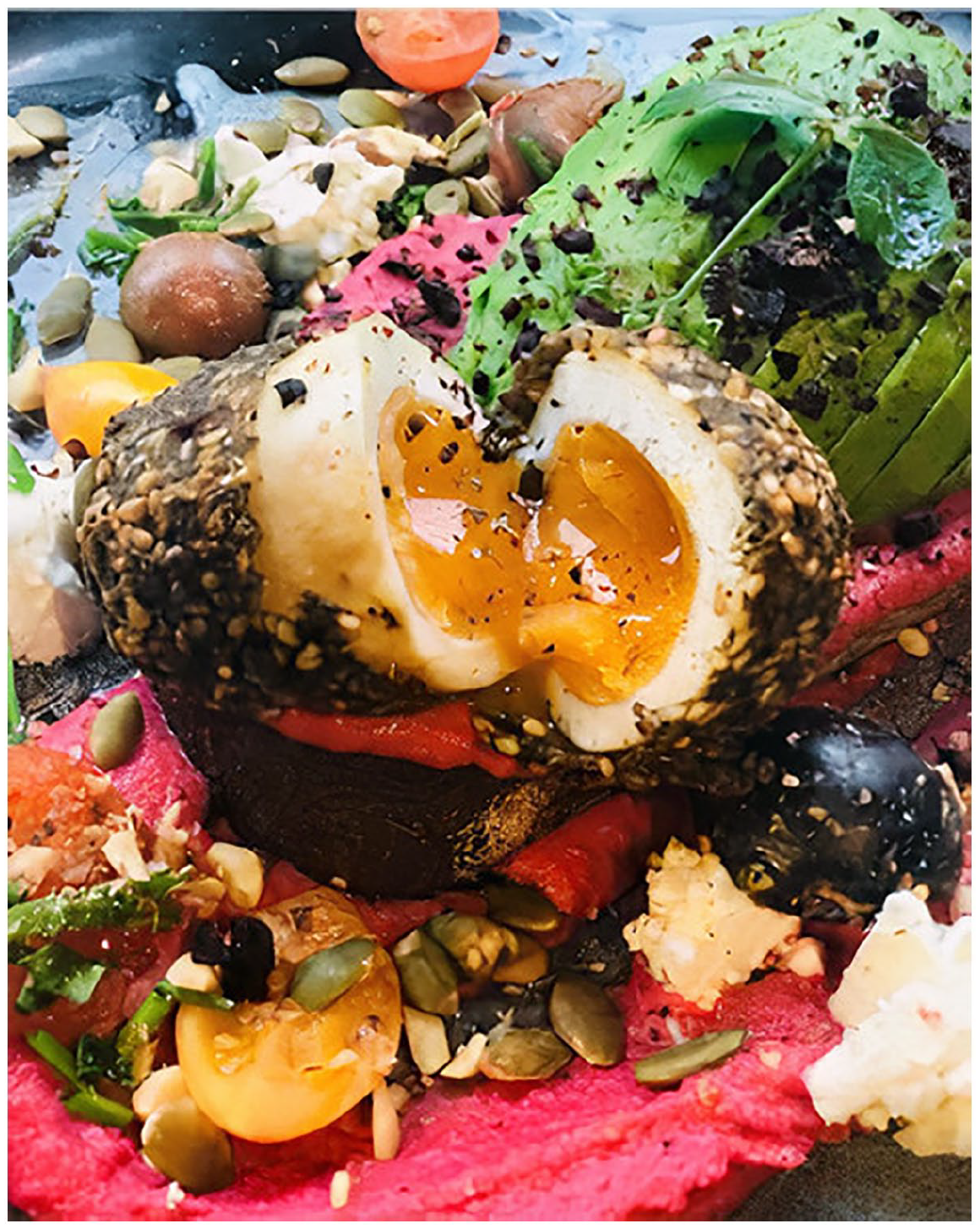
Shiqing’s post of a close-up of food.
Centred in Shiqing’s post is a perfect poached egg – running egg yolk with its vivid yellow resting in the middle of green avocado and pink puree. Food, notably, obeys symbolic codes. In the West, brunch, in particular, has long been seen as a sign of class status and respectability–it is imagined as an appropriate indulgence by the middle and upper class (Ternikar, 2014). Shiqing’s post of a bright brunch picture sends a signal suggesting she has taken advantage of Melbourne café culture; she has transformed her way of living to optimize and aestheticize her life. Both Luoxi and Shiqing recognized that embodying successful subjectivity was not only about attaining respectable employment from nine to five, but also to transform everyday life through ‘good taste’ (Gill, 2017; see also: Wood and Skeggs, 2004). Investment in the aestheticisation of the everyday fell squarely within the expectations of the post-socialist sexual contract. And crucially, this striving was required to be publicly performed in the mediated presence of family.
Notably, this kind of ‘glamour labour’ (Wissinger, 2015) could be fun. Shiqing genuinely loved food and in her 2022 interview, she had gained a job in hospitality marketing, and kept on updating her own feed with pictures of the food she ate when eating out. Similarly, in our interview with Mingxi, one of her favourite posts was a photo of herself on WeChat boxing at the gym. The caption she wrote for this post reads, aspirationally: ‘act like a lady, workout like a boss’.

Mingxi’s post of herself boxing at the gym.
This is an action shot, but a glamorous one: Mingxi’s long hair is left free, obscuring her face as she punches a large punching bag. There are no undue signs of exertion here: Mingxi’s slim body appears sweat-free, and her straight punching arm suggests energy, youth, and vitality. The ‘inspo’ of the caption marries the twin requirements of neoliberal femininity: Mingxi emphasizes her femininity but also embraces qualities and psychological traits of ‘toughness’ associated with cultural perception of a boss (Liew et al., 2011). We observe that in wellness social media culture, a boss is symbolically associated with the image of a ‘strong’, ‘fit’ but still conventionally heterosexually attractive body, which is implied to be attained through hard work and self-control (Sikka, 2019). This has been critiqued as part of restrictive discourses of ‘can-do girl power’ (Dobson and Harris, 2015); but for Mingxi, this was also about newly defining herself as an aspirational, upwardly mobile woman – within, of course, the appropriate limits set by the parental gaze.
Juggling what was appropriate for parents was different for friends. So, the ‘perfection’ that might be posted on WeChat for parents could be read as ‘being ‘zhuang’, being fake’, for friends, according to Yifang. Other activities might also cross the line for both family and China-based friends on WeChat. For example, Shiqing loved going to ‘fancy’ restaurants and trying the ‘international cuisines’ afforded by living in Melbourne, but she didn’t post images of a ‘privileged life’ on WeChat so often for fear of seeming excessive or extravagant. Instagram, by contrast, because of its lifestyle centric focus, was where she felt able to post stories of ‘eating croissants’, ‘making cocktails’ and so on. Tong also ‘retreated’ to Instagram for her private leisure life; this was where she posted inappropriate moments like ‘getting drunk on Wednesday’ that highlighted the fun she was having in her transnational student life.
For others, more direct tactics were needed to ‘jam’ the signal of parental pervasive presence. Fei noted: I blocked my parents so they can’t see my posts . . . I just don’t want them to give any comments on my things, like why are you wearing that makeup, why do you stay up late . . . I feel like I’m two different people.
For Fei, an undergraduate accounting student, blocking parents from seeing her posts on WeChat was a tactic to avoid not only direct conflicts, but to manage the boundaries of her relationship with parents. A significant consequence, as Fei described, was that blocking parents made her feel as though there were two conflicting identities inside of her body. This duality was experienced across the participant cohort. The ambient, continual presence of parents and potential for judgement and surveillance meant that blocking and the idealized branding of self were both positions on a continuum of relationship management, carving out space for the pursuit of individualized independence.
Reconsidering mobility
Transnational mobility, then, afforded some room to manoeuvre, allowing certain freedoms, individual hedonism, in line with Martin’s (2018) observations of the contingent ‘zone of suspension’ of chrononormative obligations otherwise demanded of young middle class, or aspiring middle class Chinese women. But this zone of suspension was always contingent on the continued orbiting of family-centred goals. Kaiyuan, who moved to Australia in 2014, observed the contradictory expectations imposed on her which led her to question the goals of migration itself: I’m definitely more independent after I came here, and I’m now financially independent as well . . . but for my parents, especially my dad, he is sad because I’m too independent and he thinks that’s why I am still single.
After having achieved financial independence by receiving generous merit scholarships, Kaiyuan’s dad, however, expressed his concern that she was too assertive. By disparaging her independence, which is something Kaiyuan had constantly been working on and has cherished the most, Kaiyuan was judged by her dad for being too ‘overqualified’. Exemplified in the abjection of ‘leftover women’, women’s qualifications are designed to enhance the status of male partners in heterosexual unions rather than sever women’s obligations to such marital units (Fincher, 2014). Her dad’s disappointment suggested that Kaiyuan had not quite fulfilled this post-reform sexual contract correctly– a contract where women’s empowerment and success is only acknowledged, and encouraged when it does not challenge or weaken patriarchal or state power. However, such a gendered double bind– and the imperatives of economic privatization–are arguably precisely what brought Kaiyuan abroad.
In 2022, we were able to re-interview six of the original participants, 3 years on from the original data collection. Author 1, like her participants, was also still on her own journey of transnational mobility, pursuing a PhD abroad. Four of those who granted interviews again had managed to remain in Australia, while two had returned to China. Those in Australia were all working, in some capacity; one had a job facilitated by her parents, and was still financially supported by them. Distance had been difficult over the pandemic, given Australia’s closed borders, but the mother of one participant had actually managed to stay in Melbourne to ‘look after’ her daughter, temporarily leaving her husband to carry on with his working life. With the exception of Tong’s shared cohabitation with her mother over this time, these participants were still managing and negotiating the boundaries of their parents’ presence in their lives through WeChat and videocalls. Working afforded a little more space in their lives that was not subject to parental surveillance. Mingxi, who was living with her Colombian partner, was simply able to ‘ignore’ her dad’s disapproval of him and simply managed the relationship by keeping her partner out of any direct conversations with her father.
Before discussing participants’ experience after returning, we acknowledge that we were only able to interview two participants who returned to China and others’ experiences could well differ. However, for the two who spoke to Author 1, the return home to physical proximity reinvigorated the intensity of pervasive presence. Indeed, for Ruyi, her mum was staying with her for a two week period at the time of the interview, and they texted and talked every couple of days. Ruyi explained her return home primarily in terms of fulfilling parental desires. She missed the freedom of her student life but was at peace with this decision: They wanted me to go back to China after my graduation . . . but you know I was ok with that. Both my mom and dad always help me plan my future. I know I need to follow their requirements.
Ruyi, 27, had married soon after her return; this temporarily afforded some breathing space, but now was subject to new pressures: ‘my mom always tells me that you should be pregnant now, always’.
Muxia told a sadder story. During the pandemic, it became even more difficult to stay in Australia due to tougher immigration policies. She tried to do further study to gain permanent residency (PR) but, as for many migrants, it was ultimately a futile, expensive and ‘tiring’ process. While her mother supported her desires to stay abroad, her father put his foot down and with the impossible PR scenario, she had to return. Muxia had succeeded in finding a career in Beijing at a telecommunications company. However, despite career success, parental presence in her life was now highly directive. Muxia was now well out of university and it was time to marry: They care about it so much. My mom always nags about it, now I’m approaching 30, and even my dad starts to talk about it a lot. They are super traditional. They always think with my age, I should just get married as soon as possible. I shouldn’t be too picky because many good boys are already married or not available. Oh, and . . . [my mum] thought I won’t be able to find a boyfriend in Australia. [Now] I’m back in China, she thinks she can help me find someone and I can get married soon.
What kind of boys did the parents of Muxia desire for their high-achieving daughter?, Author 1 asked. Muxia responded: In my family, we don’t have much financial pressure. So for my parents, they just want someone who is nice and definitely has to be a male. They don’t really care about other stuff.
Muxia protested that they should ‘raise their standards’. Ultimately, however, recentred in the gravitational pull towards traditional family structures, Muxia’s international education could be viewed as a marker of gendered class formation that temporarily interrupted the now urgent imperative to form a family of her own.
Conclusion
While Kaiyuan and the other young women in this project aimed to move overseas as a sideways strategy to navigate China’s gender structure, the benefits and consequences of mobility could not be straightforwardly predicted. This article has aimed to enrich understandings of young Chinese women in transnational movement and their negotiations of gendered neoliberalism structured by the post-reform context in China, and the kinds of individualisations that are made possible. Building one’s biography and independence could look different for our participants in their trajectories and our article attempts to show how intra-familial relationships shape self-presentations that might otherwise be understood as purely aspirational. The self-branding of an idealized, transnational gendered self on WeChat was not only a reflection of the encroachment of neoliberalism on norms of online self-display, but a mechanism for negotiating this pervasive presence – keeping parents and other critics at bay. Independence could look a lot like self-branding; it could also look like a closed door to avoid parental surveillance in regards to intimate relationships.
We have advanced the notion of ‘pervasive presence’ – the continuous presence of distant parents – to illustrate the bind of distance for young women. While such pervasive presence provided emotional sustenance within transnational mobility, it also was experienced as disciplinary, and sometimes, too much, an invasion of space. Our study largely being limited to young women with substantial family resources, we have not sought to argue that the Chinese parent-daughter relation is universally one of surveillance and pressure. However, in line with research on parental love and control in single child families in China (Yan, 2013; Zhang and Sun (2020), this study opens up questions of how responsibilised members of family units who mobilize significant economic capital, invest, govern, and produce value in the post-reform context, and transnationally.
Footnotes
Funding
The author(s) received no financial support for the research, authorship, and/or publication of this article.
