




Abstract
Aim:
The affective valence of surprise depends on both individual and contextual factors. This study examined the role of language and cultural background in the linguistic and affective properties of written narratives of surprise produced by adolescent heritage language (HL) speakers and first language (L1) users.
Methodology and Data Analysis:
Quantitative and qualitative methods were employed to investigate the overall emotional valence, the themes, and the valence and the emotional arousal of the affective vocabulary used in the narratives of surprise written by 148 adolescents, consisting of 60 bilingual speakers of HL Spanish who had grown up in Germany, 27 L1 Spanish speakers and 61 L1 German speakers.
Findings:
Most of the narratives of surprise had positive emotional valence. Narratives of surprise in Spanish (both L1 and HL) contained more positive, negative and high-arousal words. The heritage speakers recalled different experiences of surprise depending on the language they used and expressed this emotion following similar linguistic and cultural patterns to those of L1 speakers, but with specific attributes that were related to their bilingual/HL speaker status.
Originality:
We adopted a holistic approach to examine how adolescent heritage speakers express the emotion of surprise and to gain an in-depth understanding of this non-prototypical emotion that has varying affective properties. The methodological innovation is due to the combination of different paradigms and data analysis techniques, including a content analysis, a thematic analysis, and both a within- and a between-subjects design.
Implications:
The linguistic and cultural factors influencing the expression of surprise should be considered in language teaching and other fields of human communication. Narratives of surprise can be used as a source of second language learning, and surprising information must be transmitted considering the positive or negative effect it might have on the audience.
Introduction
‘I was happy, of course, but I was a bit sad inside because I didn’t want such a big party, although I appreciate what she did for me’. This is how one of our participants recalled the emotions she experienced when her best friend organised a large celebration for her birthday and invited many guests. An unexpected birthday party may be a pleasant experience for an extroverted person and will be stored in their memory and recalled positively in the future. However, the same event experienced by an introverted person may be associated with negative feelings, which will affect the language used to narrate the event, its intensity and other descriptive and sensory information in its subsequent recall (Bohanek et al., 2005). The situation becomes more complicated when these individuals are bilingual speakers, since the way in which they process and eventually narrate unexpected events and the resulting emotion of surprise are influenced not only by their personalities through subjective perception (Reisenzein, 2000) and previous knowledge (Whittlesea et al., 2005) but also by the language(s) they speak and their cultural background(s) (Harkins & Wierzbicka, 2010; Mesquita et al., 2016; Panicacci & Dewaele, 2017).
The valence 1 of surprise (i.e., whether it is a positive, a negative, or a neutral emotion) has been widely discussed in the field of psychology, leading to different conclusions. Some researchers have suggested that surprise has an inherently negative valence, since the event that elicits surprise triggers a disruptive process of readjustment in our knowledge schemas that is perceived as being unpleasant (Noordewier & Breugelmans, 2013). However, others have argued that surprise is initially neutral but may acquire a positive or a negative emotional meaning according to the individual’s appraisal of the surprising event (Horstmann, 2006; Meyer et al., 1997; Reisenzein, 2000; Reisenzein et al., 2017), which in turn depends on the trigger of the surprise and other contextual or individual factors (Gendolla, 1997; Roseman et al., 1996; Whittlesea et al., 2005). As emotions are also constructed in an interactional context with people who have different languages and cultural backgrounds (Mesquita et al., 2016, 2017; Pavlenko, 2005; Wierzbicka, 1999), this study explored how language and sociocultural factors influenced the linguistic and emotional dimensions of the written narratives of surprise produced by 60 Spanish-German adolescent bilinguals with Spanish as their heritage language (HL), 61 first language (L1) German and 27 L1 Spanish adolescent speakers.
Adolescence represents a period of transition between childhood and adulthood, and the emotion of surprise may be experienced differently during these years compared to how it is experienced by adult speakers who have developed specific schemas for processing surprising events (Maguire et al., 2011; Meyer et al., 1997). Previous research has mainly analysed the lexicon used to express surprise in a somewhat fragmentary fashion, such as the emotion words or grammatical structures used in a specific language (Celle et al., 2018; Celle & Lansari, 2014; Noordewier & Breugelmans, 2013; Novakova et al., 2012), while only a few studies have considered cross-linguistic differences (Goutéraux, 2015, 2018; Kaneko, 2003). To our knowledge, our study is the first to investigate how young heritage speakers of Spanish who have grown up in Germany narrate their experiences of surprise in their two languages, and how these experiences differ from those of L1 speakers of Spanish and German of a similar age. To accomplish this, we analysed both the themes and the overall emotional valence of their narratives of surprise qualitatively, and we quantified and compared the valence and the emotional arousal 2 of the affective vocabulary that these participants employed to convey the emotion of surprise.
Studying emotional expression – the expression of surprise in this case – in HL contexts has become an important issue. In Germany, more than six million people speak Spanish, including 194,630 second- and third-generation Spanish heritage speakers (Loureda Lamas et al., 2020). However, Spanish as an HL is still a minority language that has not yet received sufficient attention. Emotional expression in HL is another underrepresented – yet increasingly flourishing – area of enquiry. In fact, HL acquisition and practice are replete with both positive and negative emotions. Some studies have associated positive emotions, such as enjoyment and pride, with the use and transmission of the HL from parents to their children (Driver, 2020; Ivanova, 2019; Jean & Geva, 2012), while others have highlighted the negative emotions and experiences, such as fear, aversion, anxiety and stress due to parental pressure on children to use the HL at home, to learn the HL in after-school classes, or the lack of prestige of the HL in the country of residence (Sevinç, 2022; Wang, 2022). Moreover, the HL is mainly employed in a limited number of contexts (e.g., at home or during visits) and with a reduced number of speakers; therefore, the maintenance of the HL – and eventually of its emotional features – becomes a challenging task within the family, the education system and society (De Houwer, 2017; Montrul, 2015; Serratrice, 2020). As heritage speakers are a specific type of bilingual users because they acquire their languages in a naturalistic context and often in an unbalanced way, examining the ways in which they express their emotions in their different languages and in relation to how L1 speakers do so may provide valuable information about human communication in different languages (Polinsky & Scontras, 2020a, 2020b). Furthermore, the knowledge derived from this study has broad implications for the teaching of affective vocabulary and the use of specific narrative tasks, such as narratives of surprise or other emotions, in the (heritage) language classroom. It is also applicable to other fields, such as bilingual counselling (e.g., providing therapy that involves emotionally charged experiences for bilingual patients), international business relations, marketing and economics, in which the nuances of intercultural communication can potentially influence decision-making, procedures and partnerships.
Surprise
We are surprised when we experience an event that differs from our expectations. Our life experiences are preserved in our memories in the form of knowledge schemas; when we experience a situation that is similar to our past experiences, our knowledge schemas are activated to assist us to understand the situation and to respond or act accordingly. However, when there is a discrepancy between our mental schemas and a (new) stimulus, we often experience surprise (Meyer et al., 1997; Reisenzein et al., 2017). Depraz (2018) attributed a number of distinct components to the experience of surprise, such as disruption in the continuity of time, bodily responses that activate our consciousness, the use of expressive and descriptive language, the activation of cognitive processes, and the attribution of a particular emotional affect.
As mentioned previously, perceptions of the valence and the emotional arousal of surprise vary among individuals depending on their past personal experiences and the properties of the surprise-triggering event or stimulus (Whittlesea et al., 2005). However, time is an important factor in assigning a valence to a surprising event because people need time to cognitively process the disruption of mental schemas caused by the positive or negative evaluation of the triggering event (Desmidt et al., 2014; Noordewier et al., 2016).
Surprise across languages and cultures
Emotions and multilingualism have become a topic of extensive research. It is well established that individuals from different linguistic and cultural backgrounds conceptualise, experience and express emotions differently (Harkins & Wierzbicka, 2010; Matsumoto, 2001; Matsumoto et al., 2008; Mesquita et al., 2017; Pavlenko, 2005; Wierzbicka, 1999). This is also the case for the emotion of surprise. For example, L1 Malay speakers ascribed a negative valence to the emotional experience of surprise, whereas surprise had a positive affective meaning for L1 English speakers (Goddard, 1997). L1 German speakers were found to describe facial expressions of surprise using negative evaluations, or associated them with negative emotions such as fear, while L1 English speakers perceived the same facial expressions as being positive (Bormann-Kischkel et al., 1990). When focusing on the positive side of surprise, individuals from East Asian cultures experienced less surprise and less pleasure than did their counterparts from Western cultures because of the importance they attribute to balance and control. However, if the positive surprise was the result of good luck, members of East Asian cultures experienced more pleasure than did those from Western cultures (Valenzuela et al., 2010). Lewandowska-Tomaszczyk and Wilson (2010) further observed that whereas L1 English speakers rated the emotion of surprise both positively and negatively, L1 Polish speakers described it as a negative emotion with low emotional arousal.
With regard to emotional expression, previous studies have suggested that L1 Spanish speakers are more emotionally expressive (Aneas & Mena O’Meara, 2011; Rehbein, 2011; Scherer et al., 1986; Zlobina et al., 2004), whereas L1 German speakers tend to neutralise emotional expression as a control strategy in situations in which expressing emotions is not considered to be appropriate (Holodynski, 2006). However, collectivist cultures tend to inhibit the expression of negative emotions in order to maintain harmony within the community and are more prone to expressing negative feelings among people in their private sphere, while the expression of positive emotions is considered to be desirable because it improves community relations (Matsumoto et al., 2008; Mesquita, 2001; for HL Spanish, see Senft et al., 2020, 2023). By contrast, the expression of negative emotions is acceptable in individualistic cultures that place a high value on individual development, assertiveness, and personal achievement (Den Ouden, 2016; Hofstede, 2001). Furthermore, in cultures that have a low tolerance for uncertainty and place a high value on rules and norms, such as the German culture (Den Ouden, 2016; Hofstede, 2001; Holodynski, 2006), the experience of surprise can be perceived as something undesirable that can even become a source of fear (Wierzbicka, 1998).
Very few studies have investigated the emotional vocabulary used to express surprise from a cross-linguistic perspective. Kaneko (2003) explored the vocabulary that L1 English speakers and L1 Japanese, L1 Chinese, and L1 French learners of second language (L2) English used to express negative emotions across three corpora. The study focused on a limited number of emotional words related to surprise (‘shocked’, ‘surprised’, ‘surprising’) and three emotional expression strategies (sentence structure, word modifiers, additional words). All the participants used negative vocabulary to express the emotions of anger, surprise, anxiety and grief. Furthermore, the L1 English and L1 Japanese speakers employed minimising strategies to express negative emotions, such as negative surprise, which was attributed to cultural influences (e.g., avoiding direct confrontation in negative situations). Soriano et al. (2015) investigated the semantic profile of surprise in 23 different languages, including Spanish and German. The authors employed a questionnaire that illustrates the affective dimensions of valence, emotional arousal, power and novelty using a matrix format, with emotion words as rows and emotion features as columns, and asked their participants to rate the appraisal pleasure, bodily and linguistic expressions, or action tendencies. Soriano et al. (2015) concluded that surprise had neutral valence and neutral power but high arousal and was associated with a high degree of novelty. It was also characterised by a focus on the evaluative process and had an expressive profile (e.g., facial expressions or body-related gestures). These characteristics were shared across all the languages that were investigated. From a psycholinguistic perspective, Goutéraux (2018, 2019) analysed the cognitive and linguistic characteristics of a surprise episode narrated by L1 English and L1 French speakers, as well as by bilingual speakers of L1 French and L2 English with English as their HL and as a foreign language, respectively. The participants were exposed to images of paintings and sculptures that elicited surprise and were asked to describe what they saw. A retrospective interview that included questions about the valence and the emotional arousal they had experienced while they were observing the images, as well as personal narratives related to the images to which they had been exposed, were then conducted. The results revealed that most of the experiences of surprise were negative, followed by positive ones, while only a few were neutral.
The above studies suggest that the affective dimensions of surprise vary across languages, cultures and speakers. These studies mainly examined surprise in different L1 contexts and analysed specific emotion words, large corpora, or decontextualised concepts of surprise. However, linking surprise to personal narratives assists in the examination of both negative and positive surprise experiences (Goutéraux, 2018, 2019). To our knowledge, although Goutéraux was the first to use this approach, she focused was on specific emotionally laden stimuli; in other words, she did not examine the complete emotional vocabulary nor the full content of her participants’ personal narratives. The present study aimed to expand this line of research by analysing the written narratives of surprise produced by adolescent L1 Spanish, L1 German and HL speakers of Spanish who had grown up in Germany. To accomplish this, we adopted a holistic approach that considered (1) the overall emotional valence of personal narratives of surprise, (2) the specific theme(s) addressed in these narratives, and (3) the valence and the emotional arousal of all the affective vocabulary used in them. Recalling personal experiences of surprise in the multiple languages of bilingual/multilingual speakers will allow us to shed light on the linguistic nature and the particular type of affect that these speakers attribute to surprise in their languages (L1, L2, HL).
The current study
Previous studies of bilinguals’ personal narratives about emotional events have only considered emotion words without differentiating between positive versus negative and high- versus low-arousal words; nor did they examine the affective tone and the specific themes that emerged in bilinguals’ narratives of surprise in their L1 and L2 – at least not within the same research design. Similarly, studies of bilinguals’ personal experiences that involved a thematic analysis did not include a thorough examination of the affective vocabulary (Chamcharatsri, 2013; Koven, 2006; Luppi, 2020). Furthermore, most of the work on emotional experiences has focused on prototypical positive or negative emotions. By contrast, surprise has differing valences (positive, negative, or neutral), and the examination of narratives of surprise allows us to explore bilinguals’ affective language without the need to define this emotion’s characteristics a priori. Finally, the participants in previous studies were usually young adults. Research that investigates the emotional narratives produced by adolescent heritage speakers is scarce, although adolescence is a particularly interesting period of life because it is a time of personal and emotional maturation.
The current study aimed to address the above limitations by examining the themes, the overall affective tone (valence) and the affective vocabulary that Spanish-German adolescent bilinguals (Spanish HL) and L1 Spanish and L1 German adolescents used in their written narratives of personal experiences of surprise. We hypothesised that the language of recall (L1, L2, or HL) would influence the themes and the emotional aspects of these narratives. We also expected that the narratives of surprise written in L2 German by HL Spanish speakers would be more emotionally charged due to German being the societal language in which these speakers were more proficient. Moreover, we posited that, despite any similarities between the heritage speakers’ and the L1 speakers’ emotional narratives, the narratives of the former would present unique features that could be attributed to their bilingual/HL speaker status.
Method
Participants
One hundred and forty-eight adolescents participated in the study. Sixty of them were Spanish-German bilinguals (HL Spanish–L2 German), 39 females and 21 males aged between 13 and 18 years (M = 15.52, SD = 1.31), who had grown up in Germany and attended ALCE (Aulas de Lengua y Cultura Españolas), which is an extracurricular educational project promoted by the Ministry of Education and Vocational Training of the Government of Spain. These bilinguals attended Spanish-language courses at the C1/C2 level. Most of them were born in Germany (n = 48), and the remainder in Spain (n = 10), Guatemala (n = 1) and the UK (n = 1). Although German was the main language of communication in their immediate environment, they mainly used Spanish with their families.
Another 27 participants were L1 Spanish speakers, 11 females and 16 males aged between 13 and 16 years (M = 15.19, SD = 0.56). All of them were students at a secondary school in Southern Spain. Apart from one participant who was born in the UK, all participants were born in Spain, attended Spanish schools and reported speaking only Spanish with their parents. The remaining 61 participants were L1 German speakers, 35 females and 26 males aged between 14 and 16 years (M = 15.03, SD = 0.73), who attended high school in Northern Germany. Fifty-nine were born in Germany, one in Russia and one in Croatia. Sixty of them had attended German schools from preschool age (kindergarten), and only one had started to attend German schools slightly later (primary education). All of them reported speaking only or mainly in German with their parents.
Materials and procedure
Permission to conduct the study was obtained from the Spanish Embassy’s Education Office in Berlin. The participants’ parents were informed about the goal of the study and gave written consent for their children to participate. Participants who were 18 years of age gave written consent themselves. All participants were asked to write about personal experiences that made them feel particularly surprised. Their texts had to be approximately one page in length, and they had a total of 15 minutes to write each narrative. They were instructed to provide information about the people, places, actions and feelings involved in the experience of surprise. The instructions were given in the language in which each narrative was to be written (a translation of the prompts into English is included in the Appendix 1). Bilingual participants wrote one narrative in HL Spanish and one in L2 German and were explicitly told to write about different experiences of surprise in each language. To avoid linguistic interferences from the societal language, German, when writing in HL Spanish, the bilingual participants were required to write the Spanish narrative first. L1 Spanish and L1 German speakers only wrote one narrative in their respective L1s. Therefore, we analysed 120 narratives written by the heritage speakers and another 88 narratives by the L1 speakers (Nnarratives = 208). The study was conducted in accordance with the Declaration of Helsinki and the ethical guidelines of the American Psychological Association.
Data analysis
Thematic analysis and overall affective valence of personal narratives of surprise
A qualitative analysis was conducted to identify the main themes and to assess the overall affective valence of our participants’ narratives of surprise. We followed the methodology proposed by Ortner (2014) for the emotive-linguistic textual analysis, and we employed the Atlas.ti (2022) software to generate the annotations and comments and to establish the structure of each narrative (e.g., a description of the event, appraisal of the surprise, consequences, evaluation, etc.), as well as the internal connections (e.g., related emotions and emergent feelings). First, a top-down analysis allowed us to distinguish between the overarching and the underlying themes of the narratives and their general affective characteristics. A detailed analysis was then conducted, and each text was divided into brief thematic and affective content units. This was followed by a categorisation based on the emerging themes and the overall affective valence of the narratives of surprise.
Affective vocabulary
To analyse the valence and the emotional arousal of the vocabulary used by the participants, their written narratives of surprise were first transcribed and subjected to a dictionary-based lemmatisation using Duden (Dudenredaktion, 2023) for German and the dictionary of the Real Academia Española (2023) for Spanish. Types and tokens were calculated, and types and tokens with lexical content were assigned manually. Verbs, nouns, adverbs, personal pronouns and possessive adjectives were classified as lexical content, while articles, interrogative pronouns, prepositions, conjunctions, interjections and particles (in the case of German) were classified as grammatical items. EmoFinder (Fraga et al., 2018) and the Automatically Generated Norms (AGN) of abstractness, arousal, imageability, and valence for 350,000 German lemmas (Köper & Im Walde, 2016) were used to assess the affective vocabulary in Spanish and in German, respectively. Valence and emotional arousal were obtained from the scale values provided by these databases. As emoFinder and AGN use different rating scales (from 1 to 9 and from 0 to 10, respectively), the AGN rating scale was normalised by converting the interval 0.00–10.00 (min, max) to the interval 1.00–9.00 (a, b) using the algorithm f(x) = (b − a) (x − min) / (max − min) + a. The following cutoff points were used for valence: 1.00–3.99 for negative valence, 4.00–5.99 for neutral valence, and 6.00–9.00 for positive valence (Hinojosa et al., 2016). For emotional arousal, affective words were classified as low-arousal (1.00–4.99) or high-arousal (5.00–9.00) words (Guasch et al., 2016; Võ et al., 2009). 3
Results
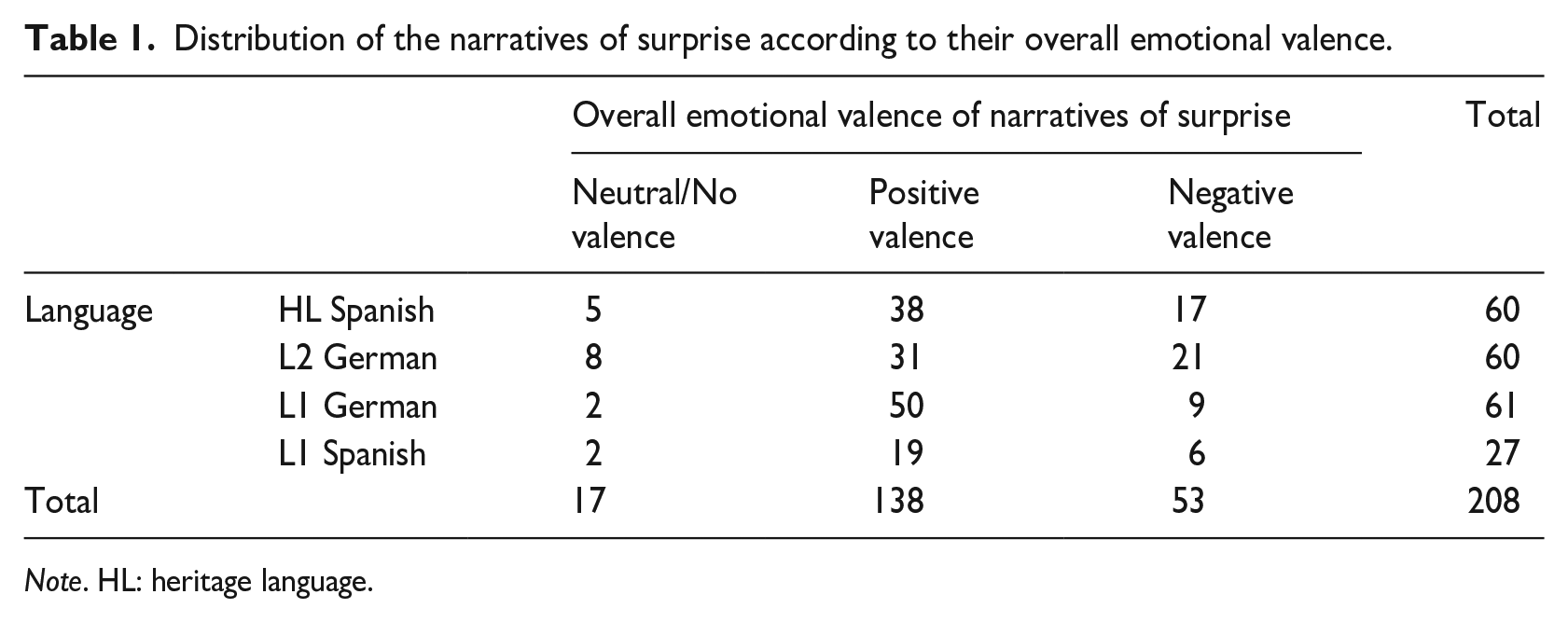
We first analysed the overall emotional valence of our participants’ written narratives of surprise; that is, whether they referred to a positive or negative event, or to a neutral/no valence event (see Table 1). The results revealed a prevalence of narratives of surprise with positive valence (n = 138), followed by those with negative valence (n = 53), while 17 narratives of surprise had neutral valence.
Distribution of the narratives of surprise according to their overall emotional valence.
Note. HL: heritage language.
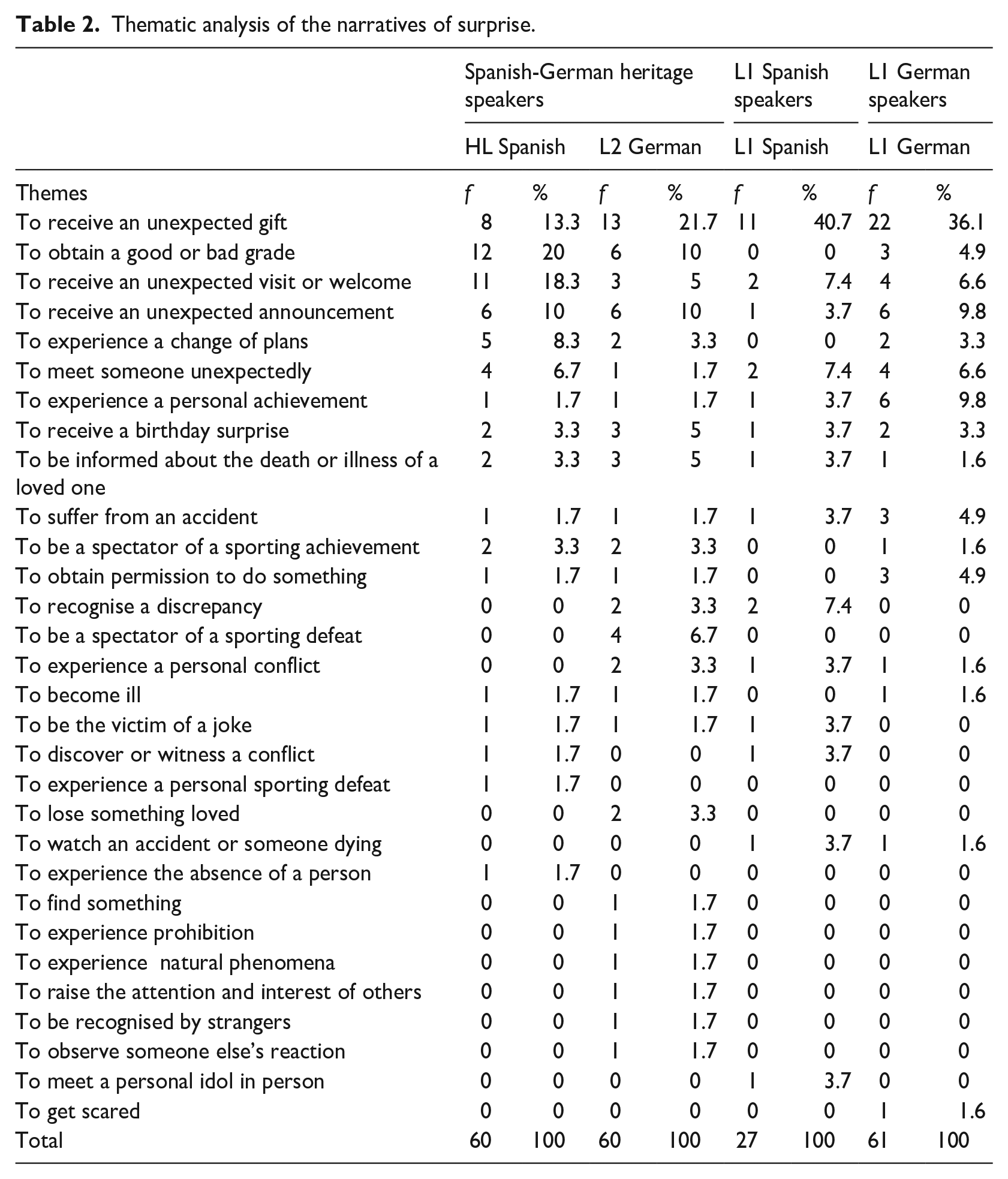
A summary of the thematic categories (30 in total) that emerged in these narratives is presented in Table 2. A greater variety of themes were observed in the narratives of surprise in L2 German produced by the bilingual speakers. Receiving an unexpected gift was the most common theme in L1 and L2 German and in L1 Spanish and was one of the most common themes in HL Spanish. Receiving either bad or good grades at school was a recurrent topic in HL Spanish and in L2 German. Receiving unexpected news or an unexpected visit was a frequent topic in bilinguals’ narratives of surprise, both in their HL Spanish and L2 German, as well as in the narratives produced in L1 German. In addition, L1 German participants in our study appeared to prioritise personal achievements in their narratives of surprise. Experiences of extremely negative events, such as death, illness, or accidents, were recalled with relatively low frequency, but these experiences were associated with loved ones in the case of bilinguals, while L1 German speakers generally referred to personal accidents.
Thematic analysis of the narratives of surprise.
Descriptive statistics for the affective vocabulary included in the narratives of surprise per language (Spanish and German) and group (L1 speakers and heritage speakers) were computed (see Table 3).
Descriptive statistics for the emotional vocabulary in the narrative of surprise.
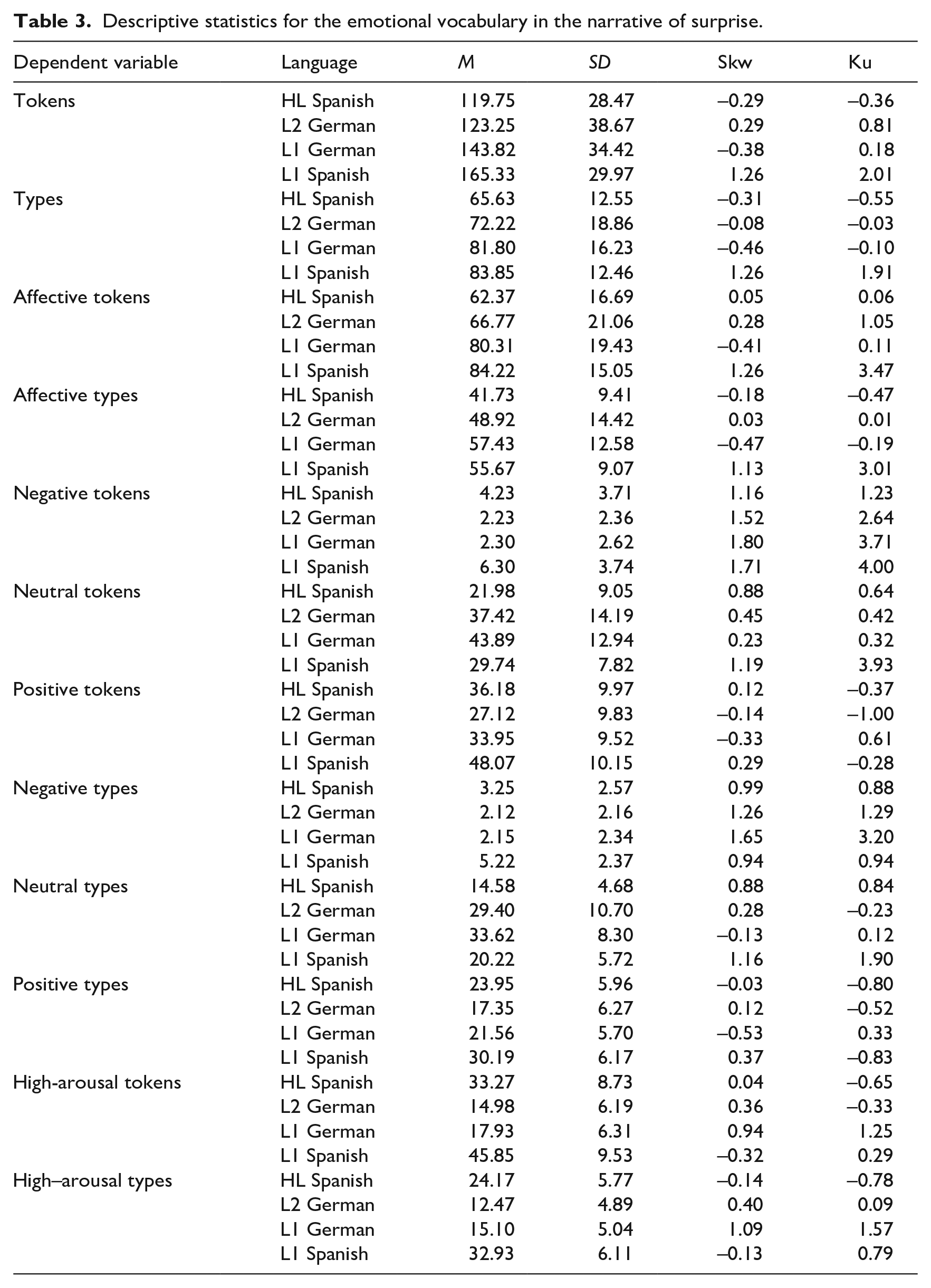
Comparison of means tests and multivariate analyses of variance were used to compare the affective vocabulary in the narratives of surprise produced by the bilingual participants and the L1 speakers. A more conservative α value (α = .01) was used due to the multiple comparisons. L1 speakers wrote longer narratives of surprise (t = −6.044, d = −0.848, for tokens; t = −6.087, d = −0.854 for types) and used a greater number of affective tokens (t = −6.457, d = −0.906) and types (t = −6.743, d = −0.946), as well as a significantly greater number of positive tokens (t = −4.218, d = −0.592) and positive types (t = −3.625, d = −0.509) than the heritage speakers (ps < .01).
In order to understand better the above results, we also compared the narratives of surprise per language of retrieval (Spanish and German) and per group (L1 speakers and heritage speakers). No statistically significant differences in the number of tokens, types, affective tokens and affective types were found between the bilinguals’ narratives of surprise in their HL Spanish and in their L2 German, nor between the narratives of surprise produced by L1 Spanish and L1 German speakers. With regard to the negative, positive and high-arousal words, the patterns in the results were similar for tokens and types. A clear U-shape pattern emerged after analysing the number of negative words and the number of high-arousal words. The narratives of surprise in HL Spanish and in L1 Spanish contained significantly more negative both and high-arousal words than did the narratives of surprise in L1 and L2 German (ps < .01). Specifically, the narratives of surprise in L1 Spanish included the highest number of both negative and high-arousal words, followed by the narratives of surprise in HL Spanish (p = .021, and p < .01, respectively), while the narratives of surprise in German had the lowest number of negative and high-arousal tokens without statistically significant differences between the narratives produced in L1 German and in L2 German being observed (see Figure 1). 4 With regard to the positive tokens, the narratives of surprise in L1 Spanish again contained the greatest number of positive words, followed by those in HL Spanish and in L1 German (the differences between these narratives were not statistically significant), while the narratives written in German by the heritage speakers contained the lowest number of positive words. A closer inspection of the distribution of positive, negative and high-arousal words showed that most of the high-arousal words that the participants used had positive valence (for an example of this distribution in the narratives of surprise in HL Spanish, see Figure 2).
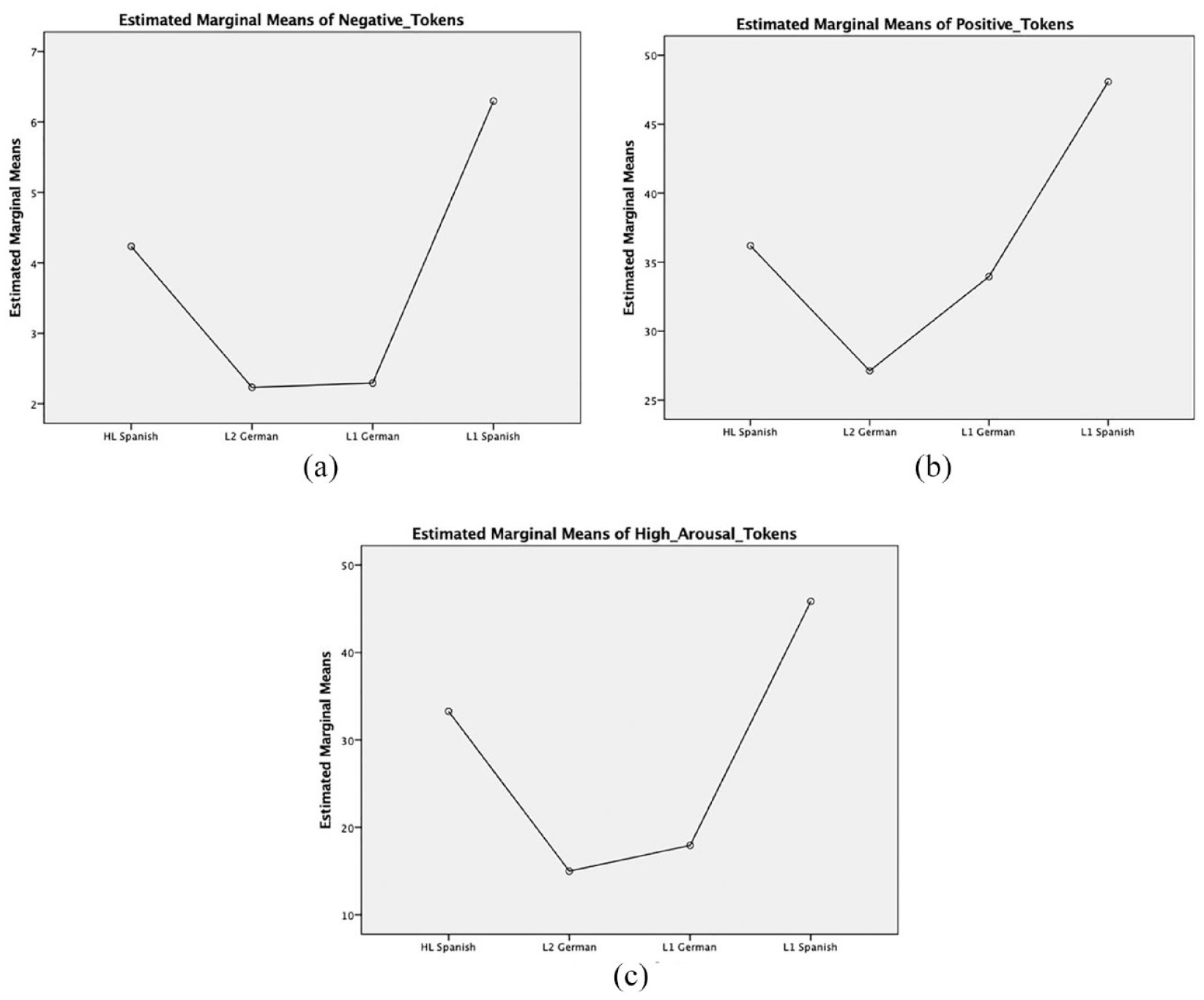
Differences in negative, positive, and high-arousal tokens per language (Spanish, German) and group (L1, bilinguals).
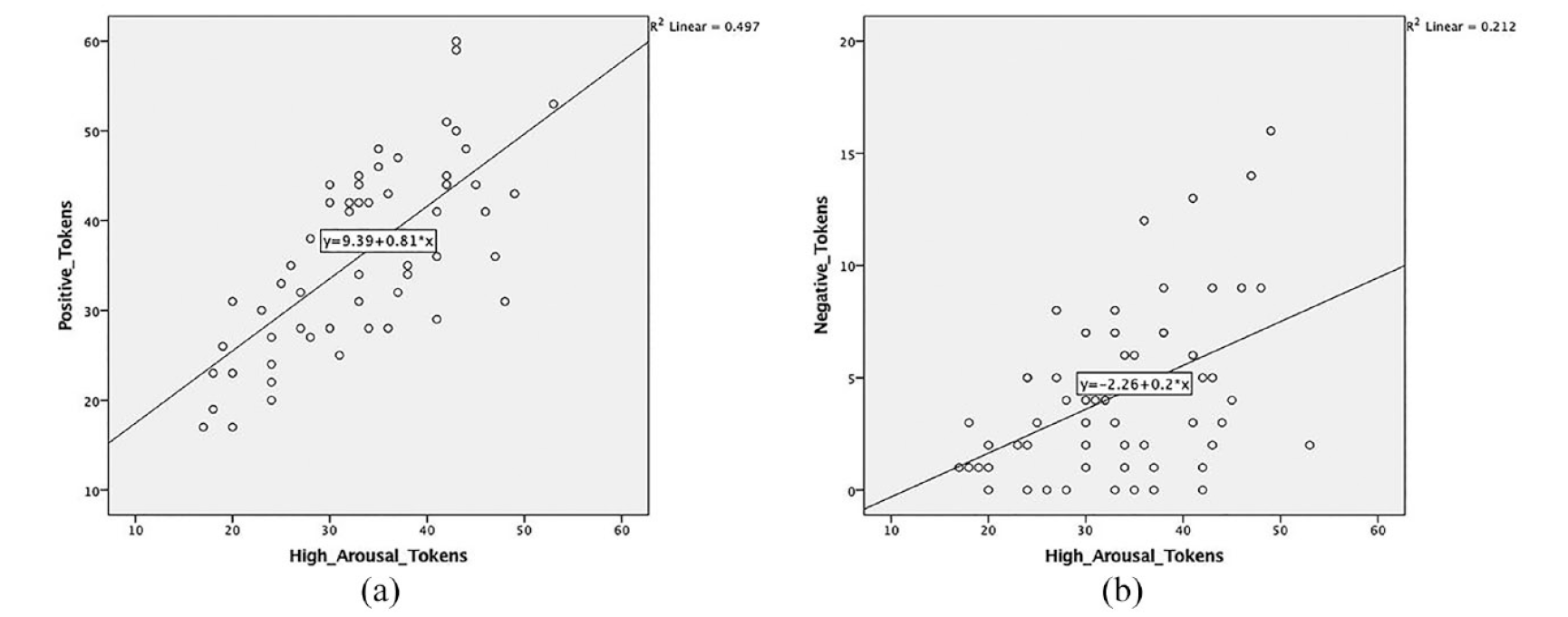
Distribution of positive/negative and high-arousal tokens in the narratives of surprise in HL Spanish.
Discussion
This study examined the affective properties of personal experiences of surprise written by adolescent HL Spanish–L2 German bilinguals and L1 Spanish and L1 German speakers. The language of recall of these narratives (L1, HL, and L2) and the participants’ cultural backgrounds (Spanish, German, and heritage background) influenced the themes and the emotional dimensions of their narratives of surprise both qualitatively and quantitatively. Overall, the participants recalled more positive narratives of surprise, although between-group differences were also observed; that is, bilingual speakers tended to narrate more negative episodes of surprise in HL Spanish and in L2 German than their L1 peers, and their narratives of surprise in L2 German included more varied themes. Furthermore, the narratives of surprise in Spanish (L1 and HL) contained more positive, negative and high-arousal words than did the narratives of surprise in German (L1 and L2), and most of the high-arousal words had positive valence.
Specifically, we found that most of the narratives of surprise were associated with positive personal experiences, while the few neutral narratives described experiences of surprise that were not personal or that were recent; thus, the person may not yet have evaluated their relevance (Noordewier et al., 2016). This is consistent with the assumption that the emotion of surprise initially has a neutral character (Horstmann, 2006; Meyer et al., 1997; Reisenzein, 2000; Reisenzein et al., 2017). However, our results partly differ from those of previous studies. For example, Soriano et al. (2015) found that surprise had neutral valence for L1 Spanish and L1 German speakers, but their study considered the generic profile of surprise, whereas our study examined surprise using narratives, and narratives of surprise that are linked to personal experiences may elicit surprise with specific affective valence; this valence was positive in our study. Moreover, most of the surprise experiences identified in Goutéraux’s (2018, 2019) studies were negative, which can be attributed to the emotional trigger, whereas the participants in our study were free to decide what type of surprising event they wanted to share through their narratives.
Our results further suggest that adolescents evaluate personal experiences subjectively in a positive or negative way depending on their cultural backgrounds (Harkins & Wierzbicka, 2010; Matsumoto et al., 2008; Mesquita et al., 2017). In our study, L1 Spanish speakers described their positive experiences of surprise in an emotionally expressive way (such as describing states of extreme happiness or euphoria), whereas the narratives written by L1 German speakers had a more restrained emotional tone and reflected the minimisation strategies for negative surprise as reported by Kaneko (2003). Similarly, L1 Spanish adolescents received the news that they were going to have a new sibling in a joyful way, while HL Spanish–L2 German speakers evaluated the same event negatively by expressing fear, uncertainty, and resignation in their narratives in HL Spanish. Of interest, the heritage speakers narrated more negative experiences of surprise in their two languages (38 narratives in total) than did the L1 speakers (15 narratives in total). This result contradicts previous studies that found that bilinguals’ emotional narratives had a negative tone in only one of their languages, which could be either the L2 (Koven, 2004, 2006) or the L1 (Tammekänd, 2013). One plausible explanation concerns the negative emotions associated with HL acquisition and maintenance (Sevinç, 2022; Wang, 2022). As the data collection for this study took place during HL courses, which were scheduled after normal school hours, it is possible that our participants were not particularly motivated or only attended these courses because their parents wanted them to do so, as some of their teachers reported. Consequently, they might have been more prone to recall negative experiences regardless of the language used to narrate them.
The thematic analysis of our bilingual participants’ narratives of surprise revealed more varied themes in the societal language (German). These adolescents may have been more familiar with sharing their experiences (including events that occurred in Spain or involved their Spanish relatives and friends) in their German-speaking environment (e.g., with their German schoolmates), thus leading to them having more topics to discuss. Receiving an unexpected gift emerged as one of the most popular themes among all the participants, possibly because the word surprise relates to both the emotion of surprise and the object or process itself that elicits this emotion; in this case, receiving a gift (Kövecses, 2015). Receiving unexpected news and visits was another common topic among all the participants, although it was particularly salient in HL Spanish. Our bilingual participants reported frequently receiving visits from relatives and Spanish friends from Spain, and the fact that they recalled and narrated these experiences in HL Spanish may be explained by the language specificity effect referring to the tendency to recall events in the language in which they occurred (Cox & Zlupko, 2017; Marian & Kaushanskaya, 2004; Marian & Neisser, 2000). Receiving good or bad grades at school was another frequent theme in our bilingual participants’ narratives both in HL and L2. This theme was also mentioned by three L1 German speakers, but none of the L1 Spanish speakers mentioned it. To understand this finding, we should consider the educational context and the participants’ ages. The German education system implements mid-term evaluations and marks them quite strictly (Ministry of Education and Cultural Affairs of Lower Saxony, 2017). This may have been an intriguing topic for parents of Spanish descent and may have often been the subject of discussion at home (Hernández Prados et al., 2015). Moreover, adolescents often overestimate or question their abilities, as adolescence is a time period of maturation and self-knowledge (Schrader & Helmke, 2010). Therefore, receiving good or bad grades at school in addition to proving their abilities in their two languages (the HL and the societal language) appeared to be an important topic for the adolescent HL pupils who attended German schools.
Another finding of this study was the greater frequency of narratives of surprise referring to personal achievements among the L1 German group, while the heritage speakers discussed themes related to personal failures or negative events. This could be attributed to the importance of the self in individualistic societies, such as Germany, whereas Spanish society is characterised by collectivistic values, and talking about personal achievements in collectivist societies may be seen as being vain (Den Ouden, 2016; Hofstede, 2001; Matsumoto et al., 2008). These differences were also observed in the narratives of surprise describing events that were related to illnesses or accidents: L1 German speakers reported individual episodes, while bilingual speakers’ narratives of these events involved other people, particularly their loved ones.
Furthermore, the narratives of surprise in L1 Spanish and HL Spanish contained more positive, negative and high-arousal affective words than those in L1/L2 German, and most of these high-arousal words had positive valence. These results were consistent with the overall emotional valence of the narratives produced by the L1/HL Spanish speakers, who were more emotionally expressive, which supports previous findings pertaining to the greater emotional expressivity of Spanish speakers (Aneas & Mena O’Meara, 2011; Rehbein, 2011; Scherer et al., 1986; Zlobina et al., 2004), as well as the positive attitudes of people from collectivist societies towards the unknown and surprising events (Hofstede, 2001). Contrary to our hypothesis, HL Spanish emerged as an emotionally charged language. This result could be attributed to the HL having been acquired in naturalistic, affective contexts during early childhood, which is a sensitive time period of emotional maturation (Montrul, 2019; Shablack & Lindquist, 2019). By contrast, the narratives of surprise in L1/L2 German contained fewer positive, negative and high-arousal words, which may reflect the use of minimising strategies (Holodynski, 2006), possibly because individualistic societies consider uncertainty and surprise to be undesirable (Den Ouden, 2016; Hofstede, 2001; Wierzbicka, 1998).
Our results differ from Kaneko’s (2003) findings suggesting surprise is expressed with more negative vocabulary regardless of the language used. However, her study only considered a small number of emotional words that were included in corpora, whereas our study examined all the emotional words related to personal experiences of surprise as manifested in our participants’ narratives. Furthermore, Kaneko’s bilingual participants were L2 learners, while the current study focused on a heritage context in which emotional expression is particularly accentuated (Montrul, 2015). Furthermore, Goutéraux (2018, 2019) found that L1 speakers used more metaphorical expressions than did their bilingual counterparts. Although metaphorical language can have a strong emotional impact, metaphorical expressions and emotional expressions are not completely identical, nor does their measurement. Moreover, L1 users are more likely to use metaphors due to their proficiency in the L1, whereas the use of emotional vocabulary depends on several variables, including linguistic variables such as the context of language acquisition or the language involved, and non-linguistic variables such as personality traits (see, e.g., Vidal Noguera & Mavrou, 2024).
Nevertheless, our study has some limitations. We analysed short texts narrating personal experiences of surprise, and we did not control for the heritage speakers’ individual differences that may have affected their writing performances in HL. More spontaneous oral narratives of surprise or individual interviews might have produced different results both in terms of the specific themes and the amount or type of the affective vocabulary used to describe the emotion of surprise. In addition, we focused solely on adolescent heritage speakers of Spanish who were living in Germany; therefore, the results cannot be generalised to heritage speakers of other languages or of different ages. Accordingly, future work should examine more pairs of languages, a wider range of cultures and other age groups. Furthermore, we did not counterbalance the order in which the heritage speakers narrated their experiences of surprise. For this reason, we cannot rule out the possibility that the first surprising event that was reported in HL Spanish might have been more emotionally arousing than the second event that was produced in L2 German. Finally, qualitative analyses, such as those conducted in this study, would benefit from the recruitment of a committee of experts with different languages and cultures who would evaluate emotional narratives using different approaches.
Conclusion
Our study supports the view that the expression of surprise is influenced by the language used to narrate experiences of surprise and the individuals’ cultural backgrounds, at least to some extent. Experiences of surprise acquire a distinct emotional meaning when they are narrated in different languages or from different cultural perspectives. Encouraging multilingual adolescents to reflect on their personal experiences in their different languages can allow them to understand their emotions better and can contribute to their emotional maturation and the development of their personalities. This knowledge can support the work of teachers, school psychologists and multilingual therapists who are responsible for assisting multilingual and multicultural adolescents to develop their emotional competence. In this context, language teachers should adopt a more holistic approach that transforms emotional narratives into important learning resources. In addition, encouraging students to share experiences of surprise in the classroom can increase curiosity and surprise and can contribute positively to the learning process. Experiences of surprise tend to be remembered in a positive way; therefore, including students’ experiences and narratives of surprise in L2/HL classrooms can assist educators to instil a positive attitude towards language learning. This can be particularly beneficial in HL classrooms in order to overcome the negative perceptions that have been observed in the maintenance of heritage languages.
The results of this study have broader implications for other fields. Surprising news or information must be transmitted considering the positive or negative effect it might have on the audience (e.g., in email communications, video conferences, press news, or in marketing and advertising). Furthermore, state institutions should be able to communicate unexpected information to their citizens by considering their linguistic and cultural backgrounds, which is important in an increasingly heterogeneous society. Creating a culture of emotionally sensitive communication can help to achieve better interpersonal relationships and personal well-being.
Footnotes
Appendix 1
Acknowledgements
The authors would like to thank the institutions involved in this study for their support and particularly the Spanish Embassy’s Education Office in Berlin for granting permission to collect the data. The authors would also like to thank the participants and their families for sharing their personal memories with us.
Declaration of conflicting interests
The author(s) declared no potential conflicts of interest with respect to the research, authorship, and/or publication of this article.
Funding
The author(s) received no financial support for the research, authorship, and/or publication of this article.
