




Abstract
Aims:
The sparse available evidence on verbal fluency in bilingual children shows them to perform lower than monolinguals on semantic fluency (taken as indicating vocabulary) but on par or better on phonemic fluency (taken as indicating executive functioning). This study takes a more detailed look at verbal fluency skills in bilingual children by examining their search strategies, the extent to which verbal fluency skills are related to bilingual exposure, and how bilinguals perform on verbal fluency across their languages.
Data and Analysis:
First-graders (n = 43) and third-graders (n = 45) included monolingual speakers of French and French bilinguals who varied in their overall exposure to French and age of acquisition (AoA) to French. Participants were tested in French or in French and English on vocabulary and semantic and phonemic fluency. Language exposure was measured through detailed parent report. Group analyses, correlations, and regressions were conducted to examine performance and the involvement of language experience and vocabulary.
Findings:
Bilinguals performed lower than monolinguals on semantic fluency, but on par on phonemic fluency. Bilingual performance was not affected significantly by AoA or bilingual exposure. For all participants, performance was predicted by vocabulary size as well as cluster size and switching. However, the groups showed different use of search strategies. In semantic fluency, bilinguals relied more on switching, whereas monolinguals relied on both.
Originality:
The current paper related the measurement of search strategies (cluster size, switching) and the effect of language experience to the examination of verbal fluency in bilingual children.
Implications:
The results suggest that verbal fluency is dependent on vocabulary size, regardless of amounts of language exposure or AoA, and highlights need for more research into the relationship with other language skills, such as phonological awareness and reading ability.
Introduction
While bilingual children typically display smaller vocabularies than monolingual peers when comparing vocabulary size in their first (L1) and second (L2) language separately (e.g., Hammer et al., 2008; Oller et al., 2007), they tend to perform better than monolingual counterparts in some aspects of executive functioning (e.g., Barac et al., 2014). These abilities meet in juxtaposition in the task of verbal fluency, which combines vocabulary knowledge and executive functioning by eliciting word generation under specific semantic or phonemic constraints (Hurks et al., 2010; Troyer, 2000). In addition to comparing monolingual and bilingual children in two age groups on the total number of words they produce in verbal fluency, this paper also examines the performance of the groups of children on search strategies, as well as examining the effect of amount of bilingual experience in the bilingual groups.
Verbal fluency
Verbal fluency measures word retrieval efficiency under specific constraints. Semantic fluency requires the participant to generate words within a semantic category, for example, animals or clothes. Phonemic fluency is constrained by words starting with a specific sound or letter. Verbal fluency involves more than knowing the meaning of words as it links semantic knowledge with executive functions such as working memory, search strategies, self-monitoring, and inhibition of responses (Hurks, 2012). Phonemic fluency has been shown to be more effortful than semantic fluency as subjects consistently generate fewer words under phonemic constraints (e.g., Kormi-Nouri et al., 2012). Searching for words based on phonemic cues is likely not a common strategy in word retrieval (see Troyer et al., 1997) and the reason for lower performance could be connected to reliance on effective search strategies rather than long-term vocabulary knowledge. Therefore, investigating search strategies is another aspect of verbal fluency performance. The particular search measures commonly included in studies are cluster size and number of switches (Filippetti & Allegri, 2011; Hurks et al., 2010). Cluster size refers to the number of consecutive words that belong to the same category, for example, farm animals or jungle animals. Switches occur when the speaker shifts from one category to another. Theoretically, both cluster size and high number of switches could lead to good overall performance—large clusters would indicate that the speaker is able to recall many words within a category, switches because once no more words are recalled in a category, switching to a new category is a viable strategy to produce more words. Clustering words within a subcategory is dependent on verbal memory and word storage while switching relies on strategic searching and the ability to switch between tasks (Troyer et al., 1997).
Research on bilingual adults (e.g., Bialystok, 2009) frequently shows lower performance for bilinguals on semantic fluency (also called category fluency) but a possible advantage on phonemic fluency (also called letter fluency): a dissociation often related to the different search strategies in the two types of verbal fluency. In adults, semantic fluency connects more strongly to vocabulary knowledge, while phonemic fluency relates more to phonological processing and executive functioning (e.g., see review in Bialystok, 2009). Studies on verbal fluency in bilingual children are fewer and have shown a somewhat similar pattern to adults in word generation (Friesen et al., 2015; Kormi-Nouri et al., 2012). The next sections look at children’s performance in more detail.
When looking at the total number of words generated on verbal fluency tasks in monolingual participants, older children perform better than younger children across languages (e.g., in Dutch: Hurks et al., 2010; French: Sauzéon et al., 2004; Hebrew: Kavé et al., 2008; Spanish: Filippetti & Allegri, 2011; Swedish: Tallberg et al., 2011), and research suggests that verbal fluency continues to develop until at least Grade 7 (Hurks et al., 2010) or even early adulthood (Kavé et al., 2008). Kavé and colleagues (2008) suggested that performance depends more on maturation of executive search strategies than lexical enrichment, but the contribution of each is not well defined (McDowd et al., 2011).
Similar age effects are seen in bilingual children, based on the few available studies (Friesen et al., 2015; Jia et al., 2014; Kormi-Nouri et al., 2012). In a large, cross-sectional study, Kormi-Nouri and colleagues (2012) compared bilingual (Turkish-Persian or Kurdish-Persian) and monolingual children (Persian) across Grades 1 to 5 on semantic and phonemic fluency. Monolinguals did better than bilingual peers on semantic fluency. An advantage was found for the Turkish-Persian bilinguals on phonemic fluency in Grade 1 (similarly to adults, see discussion in Bialystok et al., 2008). The trend for a bilingual advantage decreased systematically over the grades with no advantage for fifth graders. The difference between the two bilingual groups could be attributed to differences in socioeconomic status (SES), cross-linguistic factors, or language proficiency. Friesen et al. (2015), comparing verbal fluency in bilinguals (English and another language) and monolinguals across ages, found no differences between bilinguals or monolinguals on either semantic or phonemic fluency at the age of 7 years. At 10 years of age, monolinguals performed higher on semantic but not phonemic fluency (until adulthood, where the bilinguals performed at higher levels). Semantic fluency performance was related to age and receptive vocabulary, while phonemic fluency performance was related to bilingual status. The authors suggested that degree of literacy plays a role during school-age but also highlighted a connection to the maturation of executive functioning.
In contrast to these findings, Pino Escobar et al. (2018) found that their 7-year-old bilingual participants performed better than their monolingual controls on both semantic and phonemic fluency. They considered that an important reason for this result was that the two groups were matched on their English vocabulary skills, unlike the more typical situation of bilinguals having lower vocabularies in the language in which verbal fluency is tested. Their finding could point toward reliance on long-term vocabulary knowledge for performance since these bilinguals were in the higher range of the normal curve for receptive vocabulary size. The study also looked at the executive functioning skills response inhibition and interference suppression. Findings showed that both semantic and phonemic fluency were significantly predicted by receptive vocabulary size and that phonemic fluency was also predicted by interference suppression skills, pointing to its stronger connection to executive functioning. The study did not look at the measures in relation to language experience. The authors interpreted their findings as indicating a bilingual advantage in verbal fluency. However, to compare these findings to those of other studies, it must be kept in mind that the participants were recruited from a higher socioeconomic range (the median parental education level was a completed university degree) and that the bilingual participants’ high English vocabulary scores were related to the fact that these children were exposed primarily to English and were strongly English dominant. Furthermore, as they were schooled in English, they may not have had reading skills in their second language. This may have relevance for their performance on phonemic fluency in comparison to bilingual children who are schooled in their L2 and whose bilingual performance is more equally distributed between the two languages.
In terms of search strategies, studies on monolingual children have seen a developmental effect on number of clusters and switches generated until at least Grade 7 and on mean cluster size until at least Grade 3 (Hurks et al., 2010). When generating words based on a constraint, one strategy is to form semantic clusters of words belonging together and another is to switch between these clusters. Filippetti and Allegri (2011) argue that number of switches is more important than mean cluster size (which is more closely related to vocabulary than executive functioning). In their study on monolingual 8- to 11-year-olds, they found that 52% of the variation in semantic fluency was predicted numbers of clusters, while number of switches and cluster size were also significant predictors but to a lesser degree (18% and 16%, respectively). Phonemic fluency, on the other hand, was largely predicted by number of switches (84%), and to a lesser extent number of clusters (10%) but not cluster size (0.9%). At the writing of this paper, we found only one study looking at switching and clustering in bilingual children (Gonzalez-Barrero & Nadig, 2017); however, that study focused on bilingual children with autism (age range: 5–10 years). In the typically developing children of that study, which are of relevance for the current study, there were no differences between bilingual and monolingual children on total words, number of switches, or mean cluster size. As the first study of its kind, the groups were small (n = 13 in each) and the age range wide, and it is possible that a larger sample would reveal a different pattern.
Effect on verbal fluency of language experience and executive function
Lexical development
The effect of language exposure on bilingual lexical development was first shown in the seminal work by Pearson and colleagues (1993, 1997) where expressive vocabulary size in each language was related to amount of language exposure. Thordardottir (2011) showed a strong gradual effect of amount of exposure in preschool children by mapping exposure to each language since birth across contexts such as home and daycare (see also Hoff et al., 2012, who measured current exposure in an average week). The age at which bilingual exposure starts (age of acquisition [AoA]) is correlated with overall exposure; therefore, the effects of the two are often confounded. In school-aged bilinguals, two recent studies have directly compared the L2 performance of early and late bilinguals in vocabulary and grammar, controlling both AoA and overall amount of exposure to the two languages (Thordardottir, 2019; Unsworth, 2016). Both of these studies found early and late bilinguals to perform comparably when amount of exposure was controlled for, thus calling into question the effect of AoA at least in children with AoA of up to early school years.
Executive functioning
Executive functioning in bilingual children is well researched, but few studies include details on language experience factors. Carlson and Meltzoff (2008) looked at executive functioning in English–Spanish 6-year-olds who were either bilingual from birth or had attended bilingual education for 6 months. Results showed a bilingual advantage on executive functioning only in the early bilinguals. Luk and colleagues (2011) found that bilingual young adults with early AoAs (before 10 years) exhibited an advantage on response inhibition compared with monolinguals and bilinguals with late AoAs. It is indicated that more experience in being actively bilingual may be conducive to greater advantages in cognitive control, but results are ambiguous in that those with later AoAs also have less bilingual exposure.
Aims of the current study
Verbal fluency involves two areas which bilingualism may impact in opposite directions: vocabulary size and executive functioning. Previous studies on semantic and phonemic fluency have not been entirely consistent in their findings (Friesen et al., 2015; Kormi-Nouri et al., 2012). These studies have compared monolingual and bilingual children on number of words produced. The present study extends previous research in two ways. First, it examines the impact on verbal fluency of amount of bilingual exposure and it was hypothesized that exposure would have a stronger relationship with semantic than phonemic fluency due to a strong relationship between vocabulary and language exposure. Second, it adds an analysis of search strategies that have previously only been studied in adults as these may provide more insights into how monolingual and bilingual children vary in their performance. Moreover, this study examined verbal fluency in both languages of the bilingual children.
Specific research questions were as follows:
How does semantic and phonemic fluency performance of bilingual children compare to that of monolingual peers with respect to total words, switches, and cluster size?
To what extent is verbal fluency performance predicted by vocabulary size and language exposure in terms of overall exposure and AoA?
How do bilingual learners of French and English compare on verbal fluency in the two languages?
Method
Participants
The study took place in Montreal, a unique context offering the possibility of studying children who are bilingual with two majority languages but who vary in amount of exposure and AoA to each language. As French is the only official language of Quebec, children must attend French-language schools (except children from English homes)—for this reason, large samples of school-age children exposed only to English and French are hard to recruit. English is introduced as a second language in Grade 1 with 1 to 2 hours weekly. In the current study, 31 of the bilinguals were exposed to French and English only. The remaining 25 bilinguals were exposed to a minority language in their homes. Some of these children had some exposure to English; however, in all cases, less than 10% of their overall exposure. All the children were recruited from French-language schools in which all curriculum instruction takes place in French by law. The main analyses of the study were conducted in French, the language common to all children. Analyses of verbal fluency across languages involved only the French–English bilinguals.
Participants (N = 88) were enrolled in Grade 1 (n = 43, mean age = 82.14 months, SD = 5.59 months) or Grade 3 (n = 45, mean age = 106.97 months, SD = 5.99 months). The Grade 1 children included 17 monolinguals and 26 bilinguals; Grade 3 children included 15 monolingual and 30 bilinguals. Participants were recruited from the greater Montreal area as part of a larger study (see Thordardottir, 2019). All were typically developing as per parent report with the exception of two children with medicated attention-deficit hyperactivity disorder (ADHD) who were included as they scored within the normal range on the non-verbal brief IQ screening (a task requiring focus and attention for a larger length of time). Monolinguals needed to have only French at home and minimal exposure to another language. By design of the study, the bilinguals varied in their overall amount of exposure to French over their lifetime and the age at which they were first exposed to it (AoA), ranging from birth to the age of 7 years. In a previous version of this study, the bilingual children were divided into groups of simultaneous and sequential bilinguals (as in Thordardottir, 2019). However, as no significant group differences were found between these bilingual groups, the decision was made to abandon this dichotomous view on bilinguals for the present study and include all the bilingual children in one group instead, focusing on the examination of amounts of exposure and AoA as continuous variables.
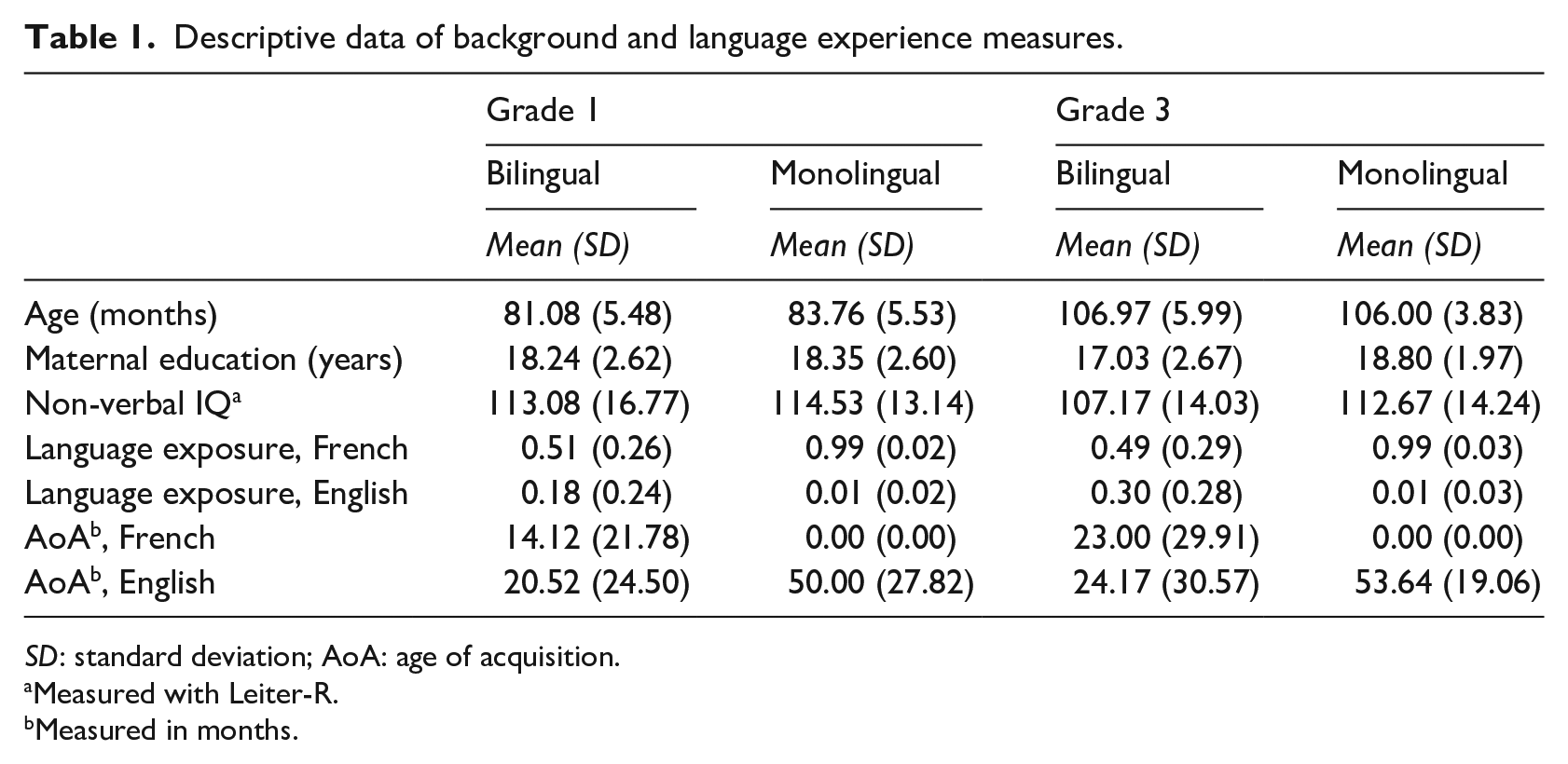
To obtain information about general and language development, parents filled in a detailed background questionnaire, including questions about first language acquisition and language exposure patterns across different environments (e.g., home, school) since birth. Parents were asked what languages were spoken at home and at school, and in what proportions. They were also asked how much time the child had spent in different contexts (home, daycare, school, other) since birth. This questionnaire has been used extensively in previous studies (see Thordardottir, 2011; Thordardottir et al., 2006). Based on the questionnaire, a detailed mapping of language exposure since birth was possible and a percentage exposure to each language was calculated. Hearing was screened with a portable audiometer in the first session (20 dB HL at 1, 2 and 4 kHz and 30 dB HL at 0.5 Hz due to background noise). Non-verbal IQ (NVIQ) was assessed with the brief scale of Leiter-R (Roid & Miller, 1997). Descriptive background variables are shown in Table 1. For each grade separately, independent samples t tests showed that the monolingual and bilingual groups did not differ significantly in age, or NVIQ for either first-graders, age: t(41) = 1.57, p = .125; NVIQ: t(41) = 0.30, p = .113, or third-graders, age: t(43) = –0.57, p = .573; NVIQ: t(42) = 1.23, p = .227. For maternal education, there was no significant difference between groups in Grade 1, maternal education: t(40) = 0.14, p = .893; however, in Grade 3, the group difference was significant, maternal education: t(42) = 2.26, p = .029, with mothers of bilingual children having, on average, a year and a half fewer years of education than mothers of monolingual children.
Descriptive data of background and language experience measures.
SD: standard deviation; AoA: age of acquisition.
Measured with Leiter-R.
Measured in months.
Procedure
Participants were recruited throughout the school year over a period of 3 years. They were compensated with 20$ per visit. All children were tested in French. Participants who spoke English also completed testing in English, in separate sessions by separate examiners. Order of language tested was counterbalanced. Time between two sessions varied for practical reasons (minimum 1 week apart). As tasks were part of a larger protocol, the sessions took 1.5 to 2 hours, with one or two breaks. All sessions were video-recorded for later analyses and transcribing.
This research project was approved and overseen by the Institutional Review Board of the Faculty of Medicine, McGill University. The parents of the participants signed an informed consent form.
Measures
Proficiency measures
Receptive vocabulary size was measured with standardized tests with Quebec French and English equivalents, the Échelle de vocabulaire en images Peabody (EVIP; Dunn & Theriault-Whalen, 1993) in French and Peabody Picture Vocabulary Test-III (PPVT; Dunn & Dunn, 1997) in English. Only raw scores were used, as a comparison with a normative group was not of interest but rather a comparison between the groups in the study.
Verbal fluency
The verbal fluency task consisted of a semantic and a phonemic subtask, always starting with semantic fluency. Participants were instructed to name as many words as possible within a minute. Both tasks began with demonstration items, which included feedback, followed by the main task. For the semantic fluency task, the practice category was clothes and the test category was animals. The specific instructions were as follows: I want you to tell me as many words as you can. But wait—they must be clothes. Let’s try to say as many clothes as we can think of. Great! Now let’s try other words. Say as many words you can, but they have to be animals. Try to say as many animals as you can.
The category animals was chosen since it is the most frequently used (Tombaugh et al., 1999), as well as being culturally neutral and likely talked about both at home and in school.
After completion of semantic fluency, the children were instructed as follows: Let’s do something different now. You know how words start with different sounds? Like, your name, it starts with a . . . And my name starts with a . . . Can you think of a word that starts with /m/? Can you think of a word that starts with /k/? Ok, great, let’s get started. We have one minute for every sound.
After the demonstration and practice items, the main task was the sounds /f/, /a/, and /s/, chosen due to their frequent use in the literature (see, for example, Tombaugh et al., 1999). Considering participants’ young age, no restrictions on derived words or proper nouns were given (cf. Kormi-Nouri et al., 2012).
Data scoring and reliability
Scoring of verbal fluency was based on Troyer et al. (1997; see also Hurks et al., 2010; Kavé et al., 2008; Tallberg et al., 2011). Each subtask had three variables: total words, number of switches, and mean cluster size. Total words referred to number of words generated within 60 seconds, excluding repetitions, words violating the semantic or phonemic constraints, code-switching (words said in another language), and other errors (e.g., neologisms). Number of switches and mean cluster size were based on semantic and phonological clustering. Semantic clustering for the semantic subtask was based on Troyer et al. (1997). Words were clustered according to (1) habitat, (2) zoological family, (3) family members, and (4) human use. Similarly, for phonemic fluency, words were clustered semantically if they were (1) super- or subordinates, (2) within the same semantic category, and (3) had a close semantic or contextual relationship. The criteria for phonological clustering were the same for both subtasks. Words were clustered if they shared any of the following characteristics: (1) same two initial phonemes, (2) differ only regarding one vowel, (3) rhyme, or (4) homonyms. Clusters included errors and repetitions, and minimum size was one word (Troyer, 2000). If clusters overlapped, the overlapping items were assigned to both clusters. If a larger cluster contained a smaller cluster, only the larger cluster was counted. Number of switches was then calculated as transitions between clusters. Cluster size was calculated starting with the second word in a cluster and included errors and repetitions. A single word had a cluster size of zero, a two-word cluster had a size of one, and so on. A mean cluster size was then calculated (for detailed examples, see Troyer et al., 1997).
It has been debated whether number of switches should be analyzed as a ratio score by dividing number of switches by the total number of words (e.g., Sauzéon et al., 2004). However, as argued by Troyer (2000), since the aim is to measure whether frequent switching increases word generation, correcting switches for total words would be equivalent to correcting a cause for its effect and would not represent the behavior under examination: the ability to switch. In the present paper, raw number of switches was therefore used as an index of switching. Furthermore, variables of the phonemic task were calculated as the average of the three phonemes. All analyses were done with this average score for phonemic fluency (as Bialystok et al., 2008; Friesen et al., 2015).
Reliability was calculated by rescoring 20% of the data. The rescoring was done by a trained research assistant. Inter-rater reliability was high for total words in French (semantic: r = .92, p < .001; phonemic: r = .98, p < .001) and English (semantic: r = 1.00, p < .001; phonemic: r = .99, p < .001), as well as switches in French (semantic: r = .73, p = .001; phonemic: r = .96, p < .001) and English (semantic: r = .67, p = .025; phonemic: r = .98, p < .001). Inter-rater reliability for mean cluster size was fair in French (semantic: r = .61, p = .016; phonemic: r = .68, p = .004) and high in English (semantic: r = .80, p = .003; phonemic: r = .75, p = .013).
Statistical analysis
The data were analyzed by a series of statistical tests looking both at the whole group of children and the bilingual children separately. Each test is described in detail in the section “Results.” Language groups were first compared on vocabulary size. A detailed examination of verbal fluency performance in French was then conducted by comparing performance across groups on the variables of total words, frequency of switches, and mean cluster size. To examine the effect on verbal fluency of vocabulary size, language exposure, and AoA, correlational and regression analyses were conducted for the bilingual children. The monolingual children were not included in these analyses since they have AoA to French uniformly at birth and have less than 10% exposure to any other language. The focus was on examining to what extent verbal fluency performance (total words produced) was predicted by these background factors in bilingual children. Analyses were then conducted on a subset of bilingual children to examine how performance compared in French and English. Finally, to assess whether findings were influenced by the fact that bilinguals had either English, another strong community language, or a minority language as their other language, group analyses were performed to compare these two types of bilinguals.
Results
Vocabulary size
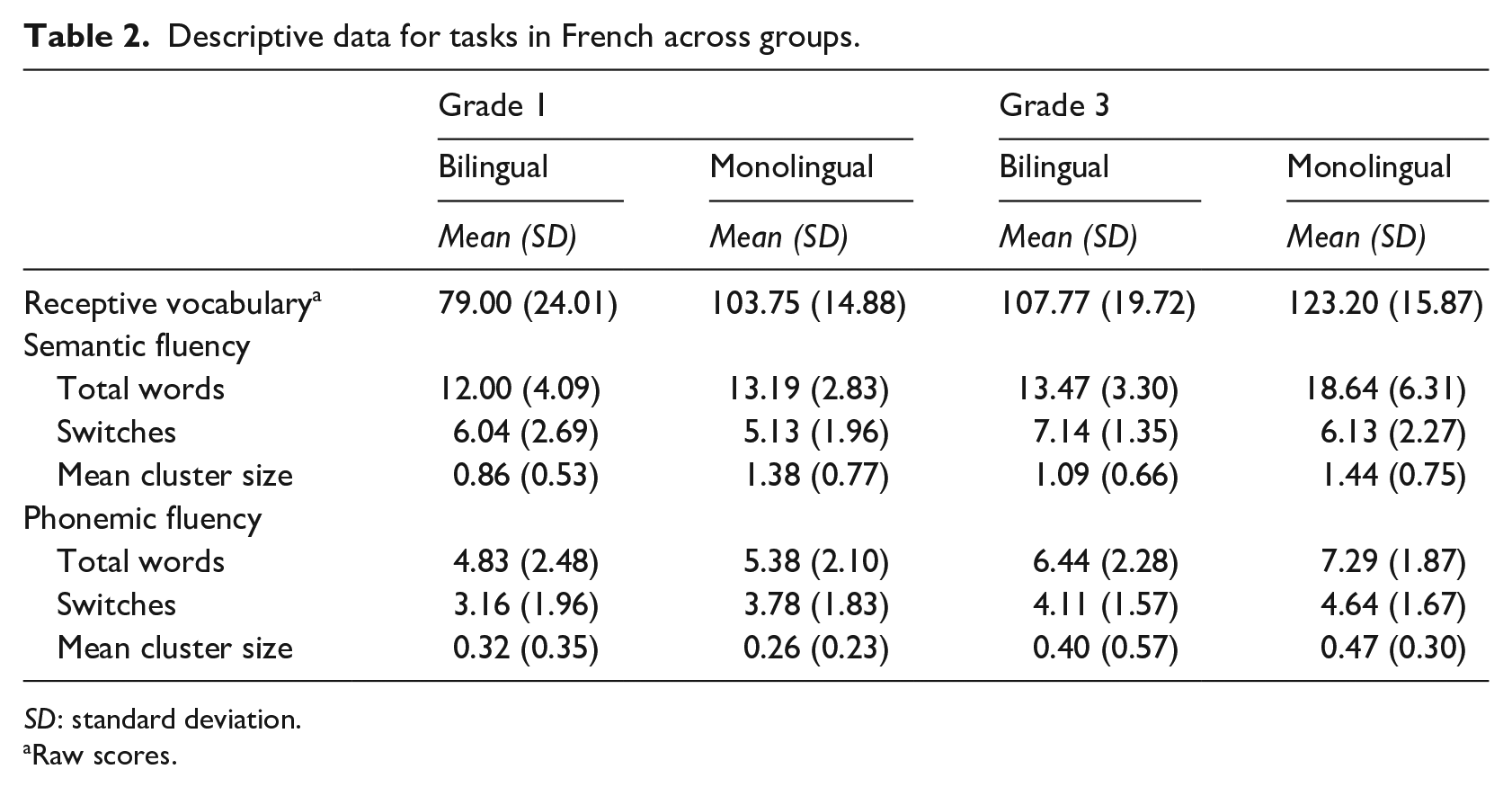
To compare groups on the background measures for receptive vocabulary size in French, a two-way analysis of variance (ANOVA) was conducted with grade level (Grade 1, Grade 3) and language group (bilingual, monolingual) as independent variables (IVs) and vocabulary scores as dependent variables (DVs; see Table 2 for descriptives). Assumptions were tested and met. A significant main effect of grade, F(1, 83) = 29.50, p < .001, partial η2 = .26, was found with a very large effect size (interpreted by benchmarks set up in Cohen, 1988, and discussed in Lakens, 2013). Third-graders performed higher than first-graders. A significant main effect of language group was also found, F(1, 83) = 20.49, p < .001, partial η2 = .20, with a large effect size. Monolinguals performed higher than bilinguals. No significant interaction effect was found, F(1, 83) = 1.10, p = .297. The results of the receptive vocabulary size tasks and their relation to exposure variables are reported in detail by Thordardottir (2019) for a larger group of children.
Descriptive data for tasks in French across groups.
SD: standard deviation.
Raw scores.
Verbal fluency performance in French across groups
Total number of words
To assess the overall effect of bilingualism and the effect of age, group analyses were used. Whereas amount of exposure to French among bilinguals is addressed in later sections as a continuous variable, age was not examined as a continuous variable given that there are two distinct age groups and age variation within each was small, as per study design. For semantic fluency, groups were compared by conducting a two-way ANOVA with total words as the DV and grade (Grade 1, Grade 3) and language group (monolingual, bilingual) as IVs. Descriptives can be seen in Table 2. Assumptions were tested and met. Results showed a main effect of both grade, F(1, 79) = 13.60, p < .001, partial η2 = .15, and language group, F(1, 79) = 11.49, p = .001, partial η2 = .13, as well as a grade by language group interaction, F(1, 79) = 4.51, p = .037, partial η2 = .05. Third-graders produced significantly more words than first-graders, and monolinguals produced more words than bilinguals. Tests of simple effects showed, however, that language groups differed significantly in Grade 3, F(1, 79) = 15.29, p < .001, but not Grade 1, F(1, 79) = 0.80, p = .375. Performance across tasks and groups is depicted in Figure 1.
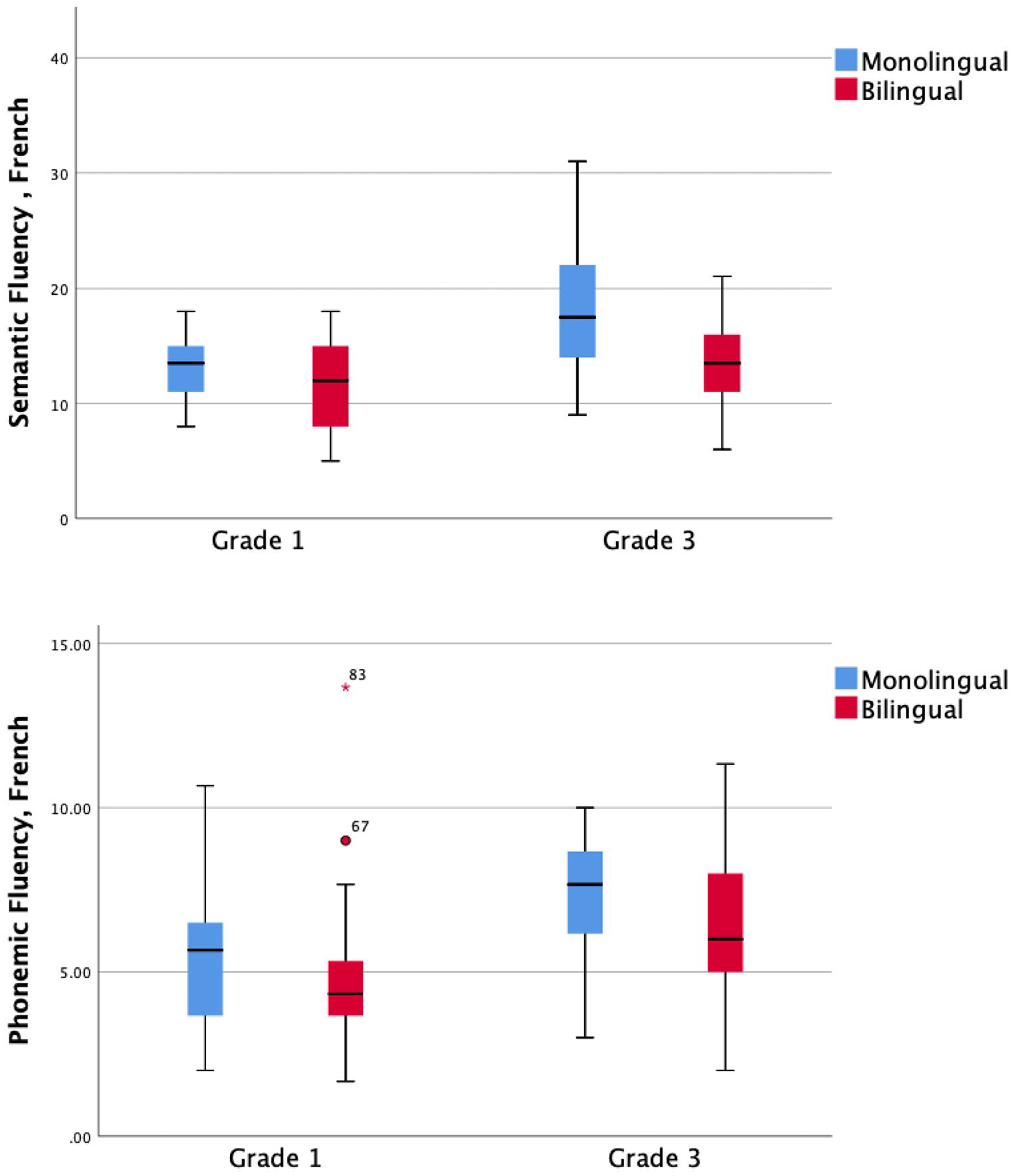
Performance on semantic (top) and phonemic fluency (bottom) in French, across grades and language groups.
For phonemic fluency, total number of words was similarly tested with a two-way ANOVA (DV: total words, IV: grade, language group). Assumptions were tested and met. Results showed a significant main effect of grade with a very large effect size, F(1, 82) = 12.24, p = .001, partial η2 = .13, indicating that third-graders performed better than first-graders. No main effect of language group, F(1, 82) = 1.90, p = .171, or any interaction effect, F(1, 82) = 0.09, p = .770, were seen.
Number of switches
To examine any differences between grades and language groups on switching, two separate two-way ANOVAs were conducted for semantic and phonemic fluency (DV: switches, IV: grade, language group). Assumptions were tested and met. Semantic fluency showed a significant main effect of grade with a small effect size, F(1, 79) = 4.27, p = .042, partial η2 = .05, with third-graders having more switches than first-graders. There was no significant main effect of language group, F(1, 79) = 0.01, p = .929, nor any significant interaction effect, F(1, 79) = 3.57, p = .062. Phonemic fluency showed a significant main effect of grade with a medium effect size, F(1, 81) = 5.19, p = .025, partial η2 = .06, where the third-graders made more switches than first-graders. However, no significant main effect of language group, F(1, 81) = 2.08, p = .153, or any interaction effect, F(1, 81) = 0.01, p = .916, were seen.
Mean cluster size
To examine any differences in mean cluster size, we conducted two separate two-way ANOVAs for semantic and phonemic fluency (DV: mean cluster size, IV: grade, language group). Assumptions were tested and met. Semantic fluency showed a significant main effect of language group, F(1, 79) = 8.02, p = .006, partial η2 = .09, with monolinguals having larger cluster sizes than bilinguals. No significant main effect of grade was found, F(1, 79) = 0.90, p = .345, nor any significant interaction effect, F(1, 79) = 0.35, p = .556. Phonemic fluency showed no main effects of either grade, F(1, 82) = 2.34, p = .130, or language group, F(1, 82) = 0.01, p = .925, as well as no significant interaction effect, F(1, 82) = 0.49, p = .487.
The effect of bilingual exposure, AoA, and vocabulary size on verbal fluency
In the group analyses, bilingual children who varied widely in the age at which they were first exposed to French and in their overall amount of exposure to French were included in one group (these children were from a larger study in which both exposure and AoA variation was of interest). To examine relationships between verbal fluency performance and these background variables, correlational and regression analyses were conducted with the bilingual children. Monolingual children were excluded from these analyses since their AoA to French is uniform at birth and does not represent onset of bilingual exposure. To include both grade level groups in the regression analysis, percent exposure to French over lifetime (see Table 1) was converted to an absolute number of hours of exposure to French, following Thordardottir (2019), using the formula age in months x % exposure to French x 300. This corrects for the fact that the same percentage represents more overall exposure for older children.
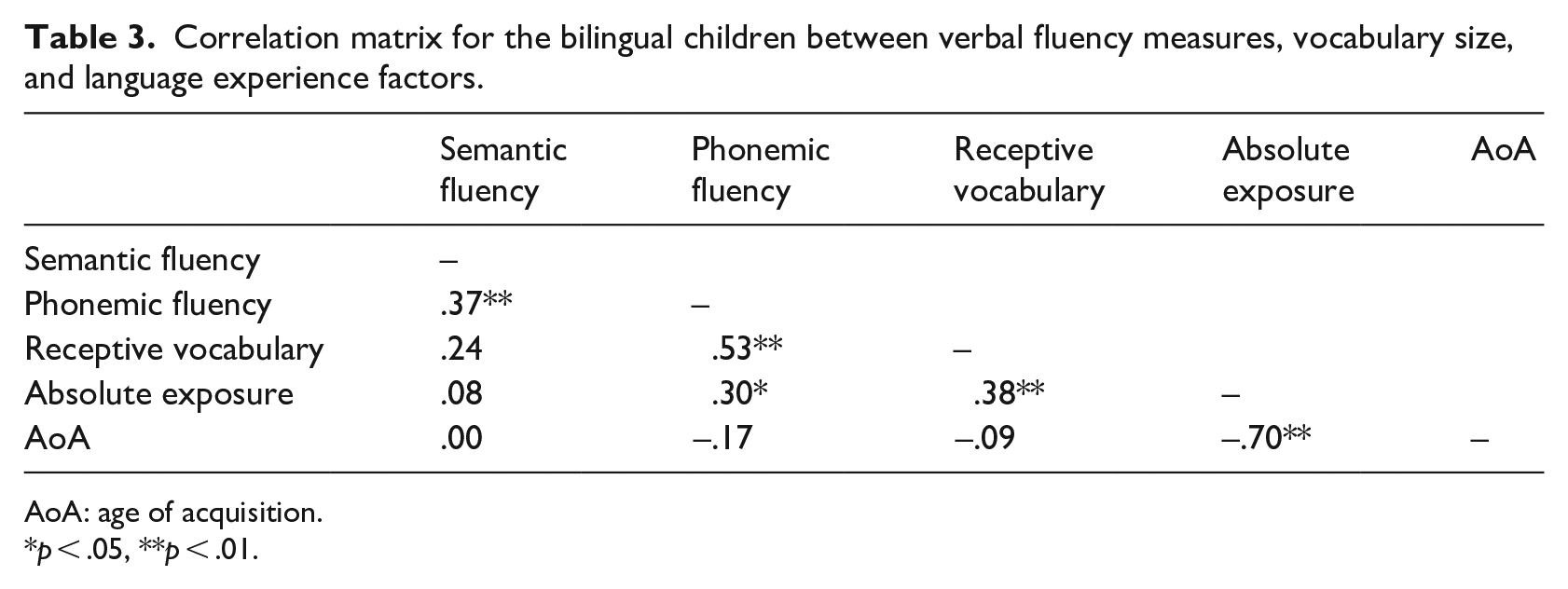
Initial correlational analyses showed that semantic fluency was not significantly correlated with vocabulary size, AoA, or absolute exposure (see Table 3). Phonemic fluency was significantly correlated with vocabulary size (r = .53, p < .001) and exposure (r = .30, p = .028). Regression analysis was then used to examine the relative contribution of the language experience factors (exposure, AoA), as evidenced by standardized beta coefficients, on bilingual children’s performance. Simultaneous multiple regression analyses were run for the bilingual group with absolute amount of exposure to French and AoA as predictor variables, and total number of words produced in semantic and phonemic fluency as the respective output variables. For semantic fluency, the result was nonsignificant, R2 = .01, F(2, 50) = 0.33, p = .724, Adjusted R2 = –.03. Standardized beta coefficients were similarly nonsignificant for both exposure, beta = .16, p = .424, and AoA, beta = .11, p = .578. Regression coefficients and standard errors can be found in Table 4. For phonemic fluency, the outcome approached significance, R2 = .09, F(2, 52) = 2.59, p = .085, Adjusted R2 = .06; however, the very low effect size indicates that even if this effect were significant with a larger sample size, its effect would be small. Standardized beta coefficients approached significance for amount of exposure, beta = .34, p = .068, but not for AoA, beta = .07, p = .719. Regression coefficients and standard errors can be found in Table 5.
Correlation matrix for the bilingual children between verbal fluency measures, vocabulary size, and language experience factors.
AoA: age of acquisition.
p < .05, **p < .01.
Multiple regression results for semantic and phonemic fluency in French for the bilingual group, predicted by age of acquisition and absolute amount of exposure.
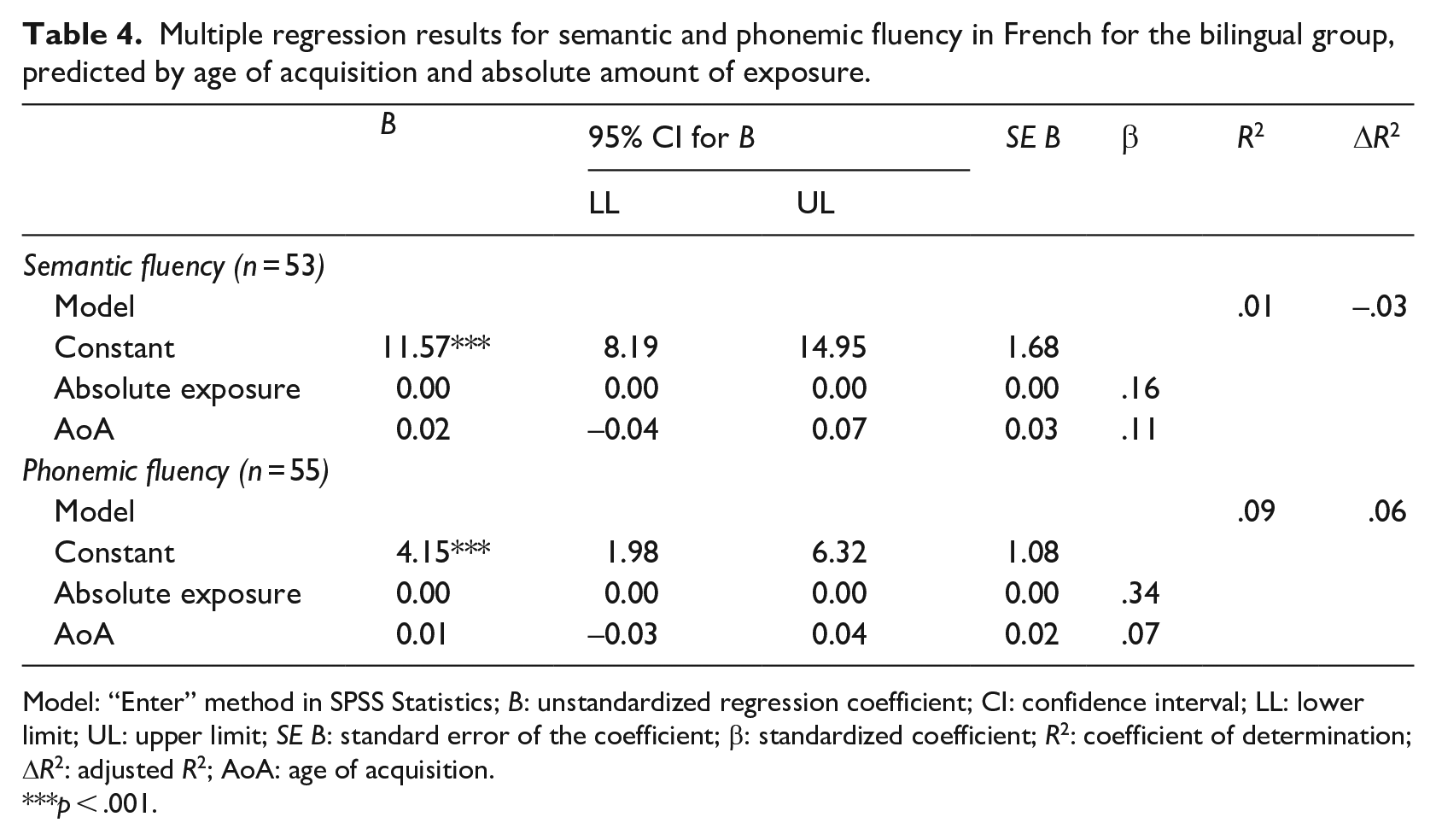
Model: “Enter” method in SPSS Statistics; B: unstandardized regression coefficient; CI: confidence interval; LL: lower limit; UL: upper limit; SE B: standard error of the coefficient; β: standardized coefficient; R2: coefficient of determination; ΔR2: adjusted R2; AoA: age of acquisition.
***p < .001.
Linear regression results for semantic and phonemic fluency in French for the whole group, predicted by mean cluster size and number of switches.
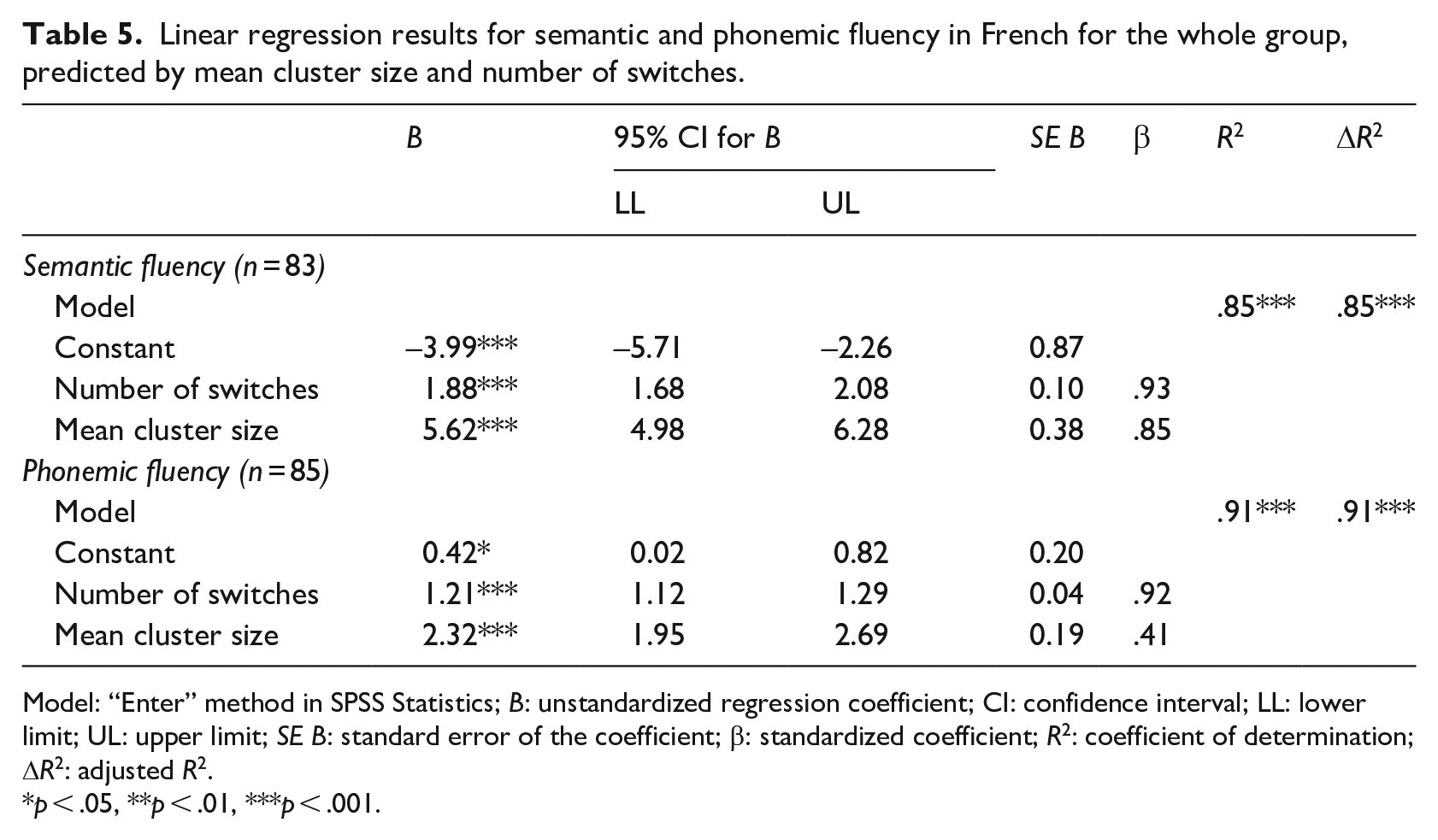
Model: “Enter” method in SPSS Statistics; B: unstandardized regression coefficient; CI: confidence interval; LL: lower limit; UL: upper limit; SE B: standard error of the coefficient; β: standardized coefficient; R2: coefficient of determination; ΔR2: adjusted R2.
p < .05, **p < .01, ***p < .001.
The effect of search strategies on verbal fluency
To examine the impact of search strategies on overall performance in school-age children, regression analyses were undertaken including the entire group of children. Simultaneous multiple regression analyses were conducted separately for semantic and phonemic fluency, with number of switches and mean cluster size as predictor variables, and total number of words produced as output variables. For semantic fluency, the result was significant, R2 = .85, F(2, 80) = 224.09, p < .001, Adjusted R2 = .85. Results indicate that 85% of the variation in semantic fluency can be attributed to the model. Standardized beta coefficients were significant for both number of switches, beta = .93, p < .001, and mean cluster size, beta = .85, p < .001. Regression coefficients and standard errors can be found in Table 5. For phonemic fluency, the result was again significant, R2 = .96, F(2, 82) = 437.34, p < .001, Adjusted R2 = .91 Results indicate that 91% of the variation in phonemic fluency can be attributed to the model. Standardized beta coefficients were significant for both number of switches, beta = .91, p < .001, and mean cluster size, beta = .41, p < .001. Regression coefficients and standard errors can be found in Table 5.
To then examine whether this would differ between monolinguals and bilinguals, we conducted similar regression analyses separately for the language groups, with semantic and phonemic fluency as separate outcome variables and number of switches and mean cluster size as predictor variables. For the monolingual group, the model was significant for semantic fluency, R2 = .94, F(2, 27) = 107.40, p < .001, Adjusted R2 = .88. Results indicated that 88% of the variation in semantic fluency can be attributed to the model. Standardized beta coefficients were significant and of equal size for number of switches, beta = .87, p < .001, and mean cluster size, beta = .87, p < .001. Regression coefficients and standard errors can be found in Table 6. The same analysis for the bilingual group showed that the model was again significant for semantic fluency, R2 = .84, F(2, 50) = 130.17, p < .001, Adjusted R2 = .83, with results indicating that 84% of the variation in semantic fluency can be attributed to the model. Standardized beta coefficients were significant for number of switches, beta = 1.06, p < .001, and mean cluster size, beta = .78, p < .001, with the contribution of switches being larger. Regression coefficients and standard errors can be found in Table 7.
Linear regression results for semantic and phonemic fluency in French for the monolingual group, predicted by mean cluster size and number of switches.
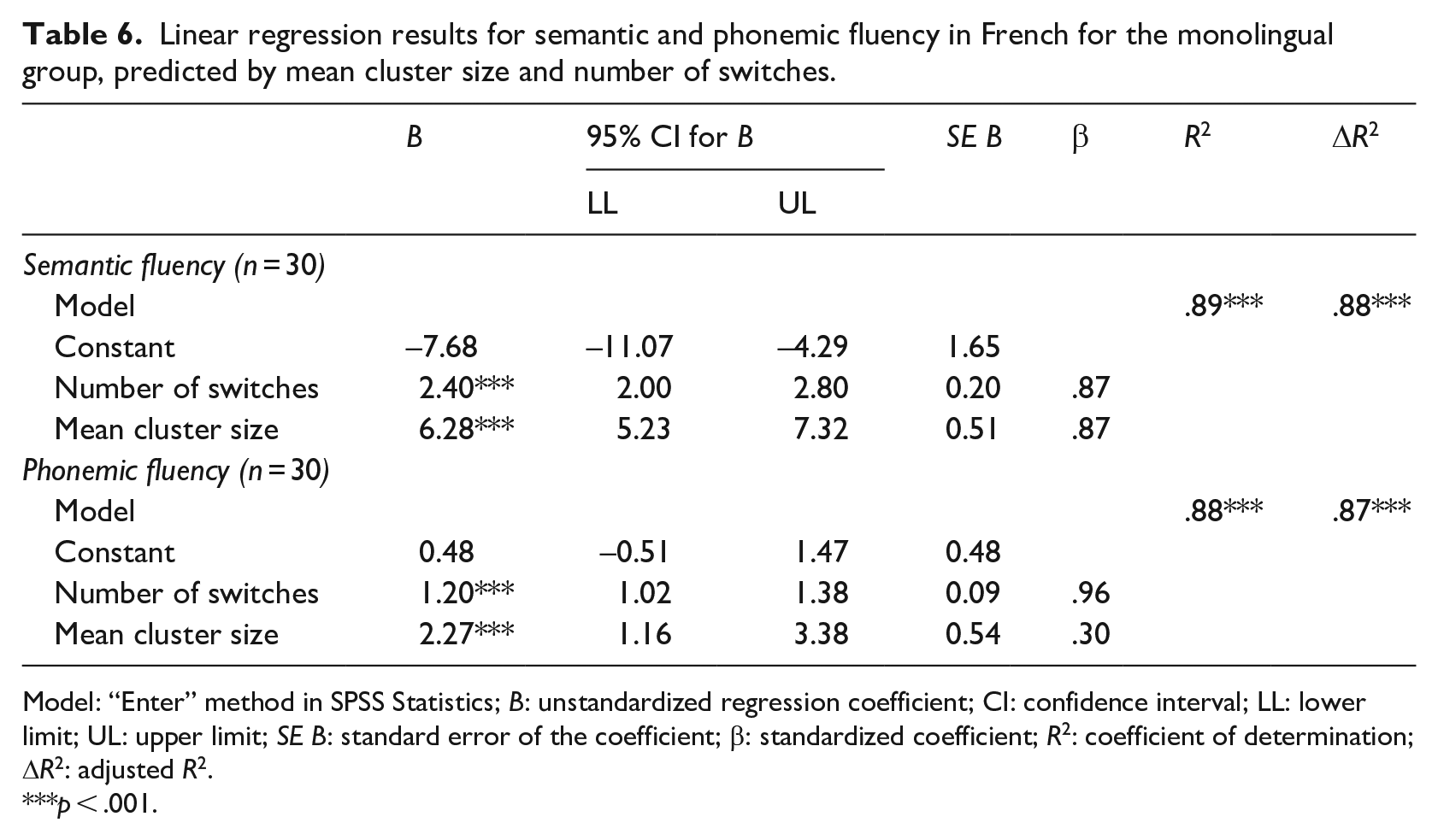
Model: “Enter” method in SPSS Statistics; B: unstandardized regression coefficient; CI: confidence interval; LL: lower limit; UL: upper limit; SE B: standard error of the coefficient; β: standardized coefficient; R2: coefficient of determination; ΔR2: adjusted R2.
***p < .001.
Linear regression results for semantic and phonemic fluency in French for the bilingual group, predicted by mean cluster size and number of switches.
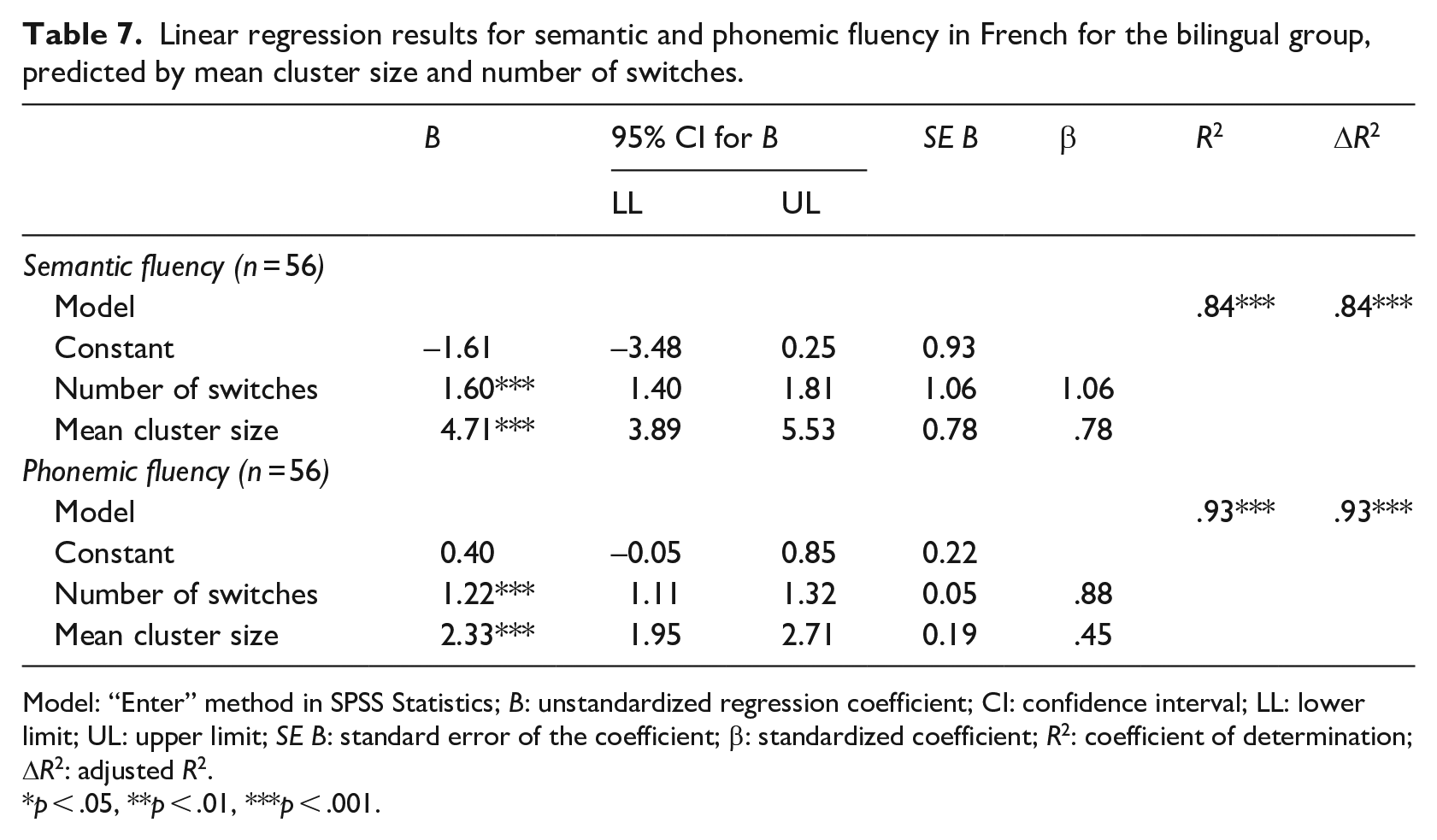
Model: “Enter” method in SPSS Statistics; B: unstandardized regression coefficient; CI: confidence interval; LL: lower limit; UL: upper limit; SE B: standard error of the coefficient; β: standardized coefficient; R2: coefficient of determination; ΔR2: adjusted R2.
p < .05, **p < .01, ***p < .001.
Multiple linear regression analyses with phonemic fluency as the outcome variable showed a significant model for monolingual children, R2 = .88, F(2, 27) = 94.29, p < .001, Adjusted R2 = .87. Results indicated that 87% of the variation in phonemic fluency can be attributed to the model. Standardized beta coefficients were significant for number of switches, beta = .96, p < .001, and mean cluster size, beta = .30, p < .001, with larger contribution for number of switches. Regression coefficients and standard errors can be found in Table 6. For the bilingual group, the model also came out significant, R2 = .93, F(2, 52) = 340.90, p < .001, Adjusted R2 = .93, with results indicating that 93% of the variation in semantic fluency can be attributed to the model. Standardized beta coefficients were significant for number of switches, beta = .88, p < .001, and mean cluster size, beta = .45, p < .001, again with the contribution of switches being larger. Regression coefficients and standard errors can be found in Table 7.
Comparing performance in French and English
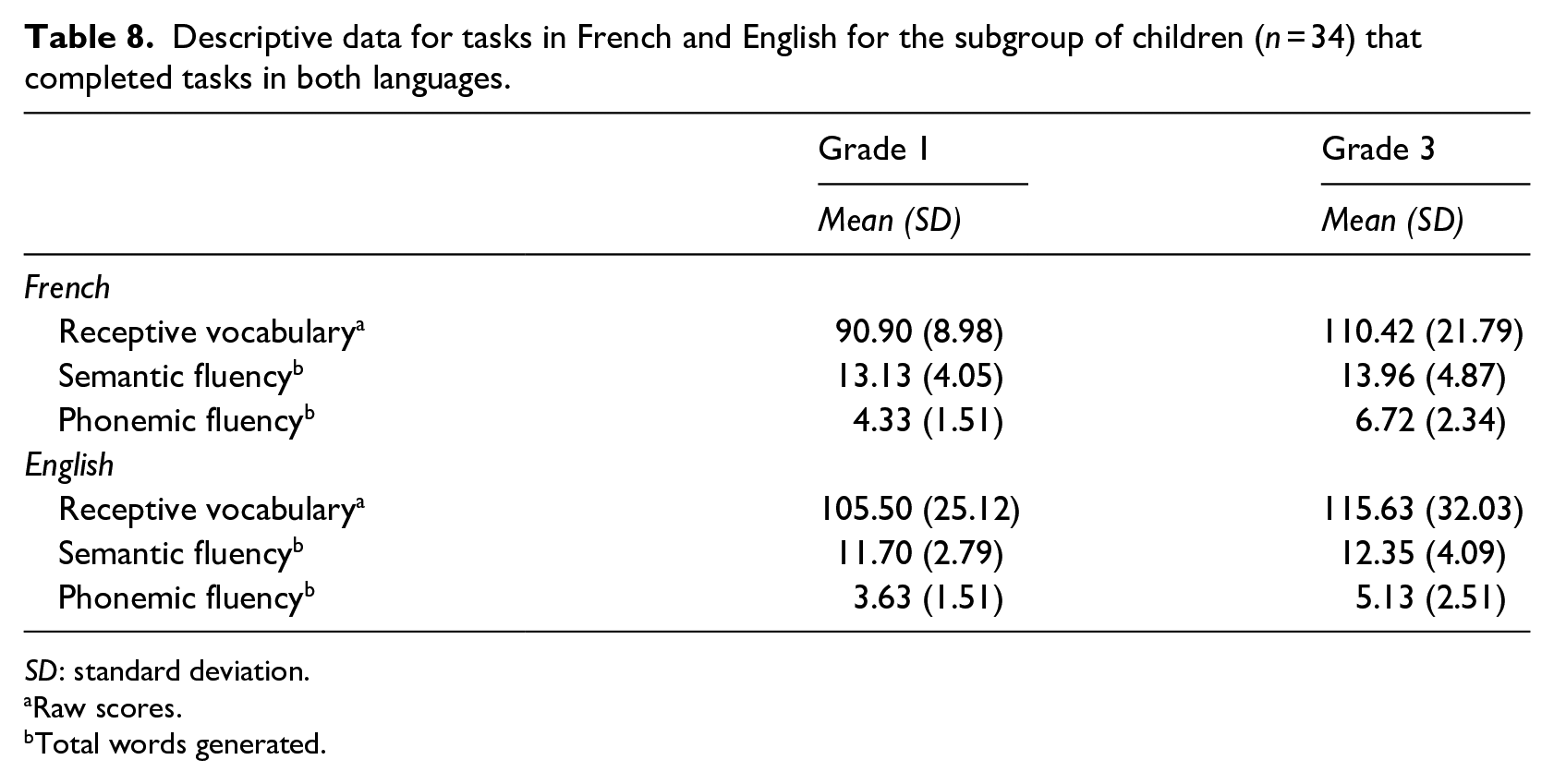
For the subgroup of bilingual children who completed testing in both French and English, performance was compared in the two languages by a series of paired-samples t tests (see Table 8 for descriptives), conducted separately for first- (n = 10) and third-graders (n = 24). Assumptions were tested and met. First-graders performed at comparable levels in French and English, both on semantic, t(7) = 0.85, p = .425, and phonemic fluency, t(9) = 1.02, p = .334. Third-graders also showed no difference on semantic fluency, t(22) = 0.52, p = .610, nor phonemic fluency, t(22) = 1.63, p = .118. To examine the relationship between vocabulary size and verbal fluency performance in each language, correlational analyses were performed for semantic and phonemic fluency separately for French and English. In French, vocabulary size correlated significantly with both semantic (r = .36, p = .046) and phonemic (r = .64, p < .001) fluency, although the relationship was stronger with phonemic fluency. In English, vocabulary size correlated again with both semantic (r = .69, p < .001) and phonemic (r = .71, p < .001) fluency; however, as opposed to French, the relationships were at similar levels.
Descriptive data for tasks in French and English for the subgroup of children (n = 34) that completed tasks in both languages.
SD: standard deviation.
Raw scores.
Total words generated.
Comparing performance in French of children speaking English versus a minority language
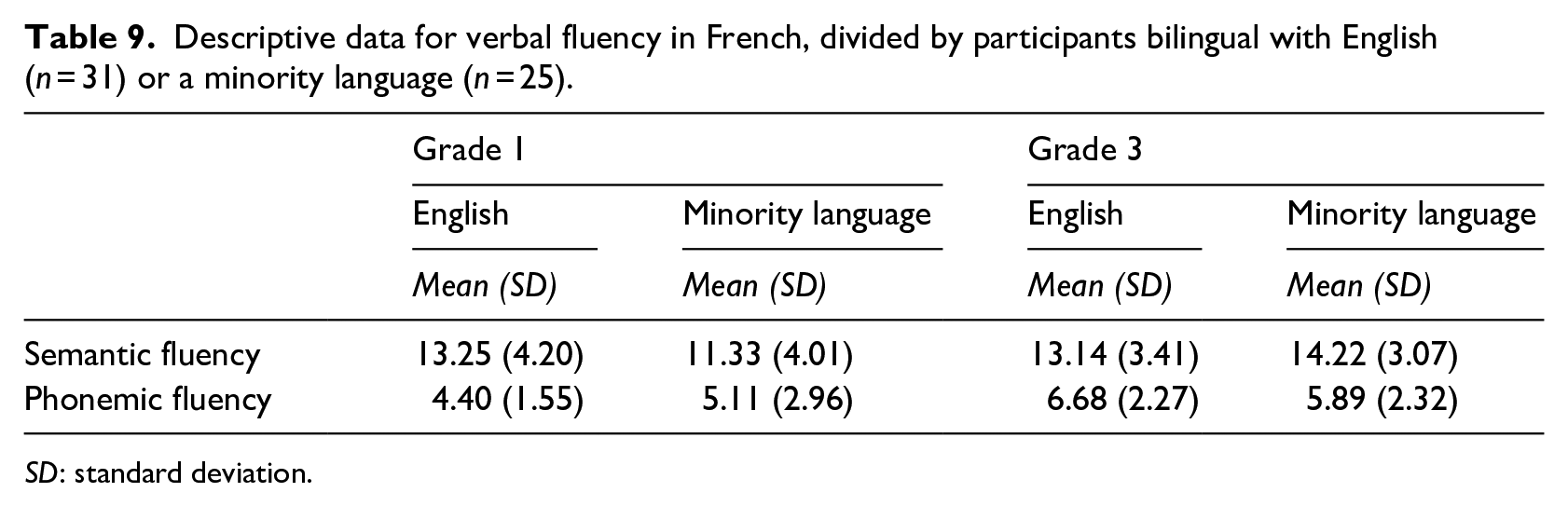
This analysis was undertaken to evaluate the possible influence on the results of this study of the fact that bilingual children included children from English homes as well as children from minority language backgrounds. For this analysis, the entire group of bilingual children was divided into children with English and French (n = 31) and children with a minority language and French (n = 25). To compare performance on semantic fluency, a two-by-two ANOVA was conducted with grade level and language group as IVs (descriptive data can be seen in Table 9). Assumptions were tested and met. Results showed no significant main effects for either grade level, F(1, 49) = 1.65, p = .205, or language group, F(1, 49) = 0.15, p = .701. The interaction effect was also nonsignificant, F(1, 49) = 1.91, p = .173. For phonemic fluency, a two-by-two ANOVA showed a significant main effect of grade level, F(1, 51) = 5.05, p = .029, partial η2 = .09, where third-graders performed higher than first-graders. No significant main effect of language group, F(1, 51) = 0.00, p = .952, or interaction effect, F(1, 51) = 1.22, p = .274, could be seen.
Descriptive data for verbal fluency in French, divided by participants bilingual with English (n = 31) or a minority language (n = 25).
SD: standard deviation.
Discussion
This study compared monolinguals and bilinguals in two age groups on verbal fluency performance, both semantic and phonemic fluency. Two components of this study are new in research on verbal fluency in children: the analysis of search strategies (cluster size and switching) and the effect on performance of amount of exposure to the language being tested. Together, these factors provide unique insights into the way in which monolingual and bilingual children approach verbal fluency in different ways. The study found that monolinguals performed better than bilinguals on semantic fluency in Grade 3, but not Grade 1, where both groups did comparably. Both language groups performed at equal levels on phonemic fluency at both grade levels, despite bilinguals having significantly smaller vocabulary sizes. Furthermore, the study showed that, among the bilinguals, neither semantic nor phonemic fluency was predicted by amount of language exposure or AoA. For the group as a whole, both search strategies, that is, cluster size and switching, predicted performance on the verbal fluency task (total number of words produced). Analysis of the groups separately revealed a group difference in use of these strategies, indicating that monolingual and bilingual children do not approach the verbal fluency task, particularly semantic fluency, in the same way.
The inclusion of two age groups allowed us to assess age effects. We found that third-graders generated significantly more words than first-graders. Furthermore, monolinguals performed overall higher than the bilingual groups. However, higher scores among monolinguals were reflected in total words as well as mean cluster size (both measures of lexical richness), but not on switching (more closely related to executive functioning). Furthermore, as illustrated in Figure 1, a significant interaction effect between grade and language group on total words indicated that while performance was at similar levels for monolingual and bilingual first-graders, the monolinguals outperformed the bilingual groups in Grade 3, similar to the pattern also found in Friesen et al. (2015). By comparing two age groups, our findings show that, unlike monolinguals, bilinguals could be at a standstill between Grade 1 and Grade 3, potentially evidencing increasing difficulty over time with quickly accessing words related to semantic mapping. This is concerning, as knowing more words and knowing how to use them are cornerstones of academic learning, and should be followed up with longitudinal data.
In contrast to semantic fluency, bilinguals were found to perform on par with monolinguals on phonemic fluency. This finding is in line with previous research on phonemic fluency in children and adults. Previous research, however, has been limited to the total number of words produced. A lack of a group difference on this measure, even when significant differences in receptive vocabulary do not exist between groups, has been interpreted as an indication of a bilingual advantage in cognitive flexibility, in adults (e.g., Luk et al., 2011) and in children (Pino Escobar et al., 2018). Similar findings have been seen in the few other available studies on bilingual children (Friesen et al., 2015; Kormi-Nouri et al., 2012) and in several studies on adult populations (see review in Bialystok, 2009) in which vocabulary size was not equal in monolingual and bilingual groups. However, contradicting such a conclusion is the lack of group differences in search strategies in phonemic fluency documented in this study, as indicated both in group comparison and in regression analyses.
The fact that bilinguals typically have lower vocabulary sizes than monolinguals in each of their languages (as was the case in this study) is expected to contribute to lower performance particularly in semantic fluency. On the other hand, it has been hypothesized that this effect might be counteracted by more efficient executive functioning abilities. The latter outcome would be supported by a finding of more efficient use of search strategies, which could be interpreted to indicate a bilingual advantage. In this study, bilinguals did not perform better than monolinguals on any comparison. They performed significantly lower than monolinguals in semantic fluency, however only in Grade 3. Is their ability to perform on par with monolinguals in phonemic fluency and in semantic fluency in Grade 1 an indication of a bilingual advantage? The groups’ use of search strategies may provide novel insights. Regression analysis involving the entire group indicated that both long clusters and switching contribute to high overall performance (i.e., high number of words produced). However, separate analysis of the language groups indicated that they differ in their use of the strategies. In semantic fluency, monolinguals rely on large cluster sizes more so than on switching, whereas bilinguals rely heavily on switching. In keeping with interpretations in previous literature focusing on factors that could support a bilingual advantage, the greater switching among bilinguals could be seen as an advantage resulting from bilingual experience. However, it could also simply have resulted from these children’s lack of ability to produce long clusters, thus necessitating more frequent starting of new clusters. In other words, both long clusters and switching contribute to good performance. Monolinguals were able to make use of both strategies, whereas bilinguals were less able to use long clusters. At any rate, the greater relative reliance on switching by the bilinguals did not allow them to perform comparably to the monolinguals in Grade 3.
Turning to phonemic fluency, as mentioned earlier, the fact that the bilingual children performed as well as the monolingual group in spite of lower language-specific vocabularies could be argued to be a sign of a bilingual advantage, as could the finding of comparable performance by the two groups in Grade 1. They were also comparable in strategy use. One reason to consider this alternative is a recent study that did report a bilingual advantage in verbal fluency in groups of monolingual and bilingual children (Pino Escobar et al., 2018). However, it must be considered that study focused on a narrow subset of bilinguals—those with equal vocabulary sizes in the target language. Even though it is possible to recruit such samples, a large number of studies have shown that bilingual children typically score below monolingual peers in each of their language at least through school-age (e.g., Hammer et al., 2008; Oller et al., 2007). Therefore, a bilingual group that has an equal vocabulary size to monolingual peers is likely to either be a group with highly unequal performance in each language, or a group of unusually highly performing children. Both of these factors were present in the study of Pino Escobar et al. (2018) given that the children were exposed primarily to English and were from high SES backgrounds. In the latter case, the better performance on both vocabulary and verbal fluency is likely to result from a generally higher ability and higher quality input rather than the higher vocabulary leading to higher verbal fluency (see Namazi & Thordardottir, 2010). Finally, a number of studies in many languages have found bilingual children to score comparably to monolingual children in non-word repetition even though their vocabularies and grammatical development are much lower than those of monolinguals (e.g., Thordardottir, 2020; Thordardottir & Brandeker, 2013; Thordardottir & Juliusdottir, 2013). This indicates that tasks that rely on phonology require far less language-specific knowledge than do other domains of language such as vocabulary. A reasonable conclusion may be that a bilingual advantage in verbal fluency may be found in some well-defined bilingual groups of children, but may be less likely in other bilingual groups. This study took a look at the influence on verbal fluency of factors along which bilingual children vary, such as amount and timing of bilingual exposure, in a group of children with varying degrees of exposure to each of their languages.
Our second research question examined to what extent verbal fluency was affected by vocabulary size. For the group as a whole, including monolinguals and bilinguals, both semantic and phonemic fluency were significantly predicted by vocabulary size, however with a larger contribution for phonemic fluency. Similarly, related to our third question, for the French–English bilinguals, French vocabulary predicted French verbal fluency, and English vocabulary predicted English verbal fluency. Somewhat surprisingly, vocabulary size contributed more to phonemic fluency than semantic fluency, as evidenced by larger effect sizes. Effect sizes were also greater for English than for French. The greater impact of vocabulary size on phonemic fluency is puzzling given that vocabulary size has been seen as a prerequisite more for semantic fluency, with executive functioning seen as more important for phonemic fluency. A possible interpretation of these findings is that measured vocabulary size may not exert its influence simply through greater vocabulary knowledge, but that vocabulary size may act as a proxy for generally more advanced language skills, including phonological awareness required for phonemic fluency, which does evolve through and alongside an advanced language level and which is also characterized by larger vocabulary size. Within this line of reasoning, the pattern of findings may suggest that both types of verbal fluency appear to require more language knowledge in English than French and more in phonemic than semantic fluency. This is consistent with the finding that phonemic fluency is generally more effortful and yields fewer words produced (e.g., Kormi-Nouri et al., 2012). Phonemic fluency may be relatively more difficult because it requires knowledge of and facility with not only words, but the sound system of words, in other words, the types of language skills that children learn in school.
Another novel aspect of this study was a focus on whether, within the bilingual group, those with more or earlier bilingual exposure were better at verbal fluency, under the assumption that a bilingual advantage in this area is conferred by the experience of actively using and switching between two languages. Regression analyses showed that for bilinguals, neither experience variable impacted semantic fluency, whereas both approached significance for phonemic fluency. The lack of an AoA effect is in line with recent research questioning the importance of AoA on bilingual acquisition, at least for AoAs up to 5 years (Thordardottir, 2019; Unsworth, 2016). While the children differ in their language experiences, including monolingual versus bilingual, as well as extent and timing of bilingual experiences, they are all comparable in their schooling experience. It is pertinent to speculate on whether this comparability of schooling plays a central role in the groups’ equal performance on total words produced in phonemic fluency. On this task, neither group does better than the other, perhaps because neither the greater French exposure and knowledge of the bilinguals nor the language-switching experiences of the bilinguals serve to increase performance on this task. Instead, both groups struggle with this task compared with semantic fluency, and both groups’ performance on this task may rely on skills learned in school—equally by both groups. Although it has been assumed that executive functioning contributes to phonemic verbal fluency, the exact types of executive functioning skills have not been well defined beyond switching strategies, which did not turn out to be different between groups in this study. Kavé et al. (2008) talked about the maturation of executive functioning skills in childhood. However, the types of specific skills required for phonemic fluency in young school-age may not involve generic executive functioning skills that mature with age, but rather specific skills that are learned in school. Hurks et al. (2010) documented an increase with age in cluster size and switching used by monolingual school-age children. Such an increase could occur through maturation or through the gradual increase in the use of such skills, learned through schooling. The present study suggests the possibility that phonemic fluency performance in school-age children depends on schooling experiences, but not on bilingualism, and, further, that children may use different strategies to complete this task than do adults. Future study on verbal fluency in children should examine its relation not only to vocabulary but also to other language skills such as phonological awareness and reading ability. Furthermore, these findings underscore the importance of focusing not only on the experiences that separate bilingual and monolingual children but also those that are similar across the groups, in this case schooling.
Footnotes
Acknowledgements
The authors thank the participating families, research assistants, and volunteers, and the schools which permitted and facilitated recruitment.
Declaration of conflicting interests
The author(s) declared no potential conflicts of interest with respect to the research, authorship, and/or publication of this article.
Funding
The author(s) disclosed receipt of the following financial support for the research, authorship, and/or publication of this article: This work was supported by a standard research grant from the Social Sciences and Humanities Research Council of Canada (SSHRC) awarded to the second author.
