




Abstract
Purpose:
The purpose of this study is to document evidence of phonological transfer in bilingual preschoolers. Specifically, we focus on the phonological development of bilingual children acquiring French and Arabic.
Method:
Nine children who spoke Arabic and French, aged three years old, participated in a picture-naming task in both languages. Three types of measurement were used to examine the interaction between the two systems: consonants accuracy; inventory of acquired consonants; and types of errors.
Data and analysis:
The accuracy of shared and unshared consonants between Arabic and French were compared with a repeated measures analysis of variance, and error patterns were analyzed.
Conclusions:
Two main results suggest that these bilingual children have two phonological systems that interacted. First, the children had an inventory of acquired consonants that differed according to language. Second, they produced shared consonants more accurately than unshared consonants, indicating positive interactions and low accuracy for unshared consonants, indicating negative interactions.
Originality:
This study contributes much-needed research relating to the development of bilingual children, particularly children who are acquiring Arabic and French.
Implications:
These findings enrich the understanding of bilingual phonological development and contribute to understanding how two phonological systems interact. This study also has clinical implications for evaluation and intervention with bilingual children.
Background
The conceptual frameworks in the field of developmental phonology come mainly from research conducted on English. It is, therefore, essential to ask to what extent this framework can be transposed to other languages. Holm and Dodd (2001) emphasized the importance of research from various languages to inform normative phonological development for bilingual children, and to better distinguish between phonological delays and disorders and differences. Over the next nearly 20 years, this call for action has led to a wide range of studies across languages (e.g., McLeod & Crowe, 2018); however, studies of bilingual phonological development are somewhat less common.
This study investigates the interaction between French and Arabic in the phonological development of children within the Algerian–Québecois community in Canada. Algeria was ranked first as the country of birth for immigrants admitted to the province of Québec from 2006 to 2015, and who are still residing in Québec in 2017 (Ministère de L’Immigration, de la Diversité et de L’Inclusion, 2017). This statistic underscores the community’s size and that it is a community with relatively recent immigration to Québec. Based on the first author’s clinical practice in this community, we have observed that many parents and educators have questions about the language development of these Arabic–French bilingual children. This study, therefore, meets two needs. First, it provides information about bilingual phonological development to support families and educators. Second, it contributes to understanding phonological acquisition from a cross-linguistic perspective, informing conceptual frameworks in developmental phonology.
Bilingual development of phonology
The remainder of this paper draws on the key proposal that children acquire two phonological systems and that these systems interact (Hambly et al., 2013). Since the end of the 20th century, research has suggested that there are two separate phonological systems, or a dual system model, in bilingual children (e.g., Keshavarz & Ingram, 2002; Toribio & Brown, 1995), but that these two systems interact (e.g., Fabiano-Smith & Goldstein, 2010; Paradis, 2001; Paradis & Genesee, 1996; Sabri & Fabiano-Smith, 2018). This interaction is demonstrated by the occurrences of transfer between languages and measures of phonological accuracy in bilingual children (Fabiano-Smith & Barlow, 2010; Fabiano-Smith & Goldstein, 2010). As we will see below, the way researchers define and describe interactions varies: some studies report positive transfer between languages while others report negative transfer.
Before turning to the studies of interaction, we will review the three types of measures often used in studies of phonological interaction in bilingual children: consonant accuracy (CA); acquisition of phonemes; and types of errors (e.g., Fabiano-Smith & Goldstein, 2010). The accuracy with which the child has produced a consonant is often calculated using the percentage of correct consonants (PCC) (Shriberg et al., 1997). Since PCC does not provide information about the phonemes mastered by the child, it is also essential to document the number of phonemes mastered and the correct percentage per phoneme (Shriberg et al., 1997). These phoneme-level measures are particularly important in the study of transfer between languages that aim to determine what classes of phonemes are mastered by the child. Finally, the third measurement is the types of errors produced by children in each of their languages (e.g., Fabiano-Smith & Goldstein, 2010). Previous studies have implemented one or several of these measures to investigate bilingual phonological development.
As noted above, researchers have observed both positive and negative transfer in phonological development. Positive transfer, or acceleration, has described phonological development that occurs at a faster rate in bilingual children than in monolingual children. For example, Lleó et al. (2003) found that for German–Spanish bilinguals, children who had acquired German and Spanish were able to acquire consonants in coda position faster in Spanish compared to monolingual Spanish-speaking peers. The hypothesis of acceleration suggests that the interaction between the two languages of bilingual children facilitates the acquisition process and thus suggests that bilinguals have stronger linguistic skills (e.g., Barlow et al., 2013; Grech & Dodd, 2008; Lleó et al., 2003).
Negative transfer, or deceleration, has also been observed in the phonological development of bilingual children when certain aspects of phonological development emerge at a slower pace in bilingual children than in monolingual children (e.g., Goldstein & Washington, 2001; Holm & Dodd, 1999). This phenomenon is thought to be related to interference or over-generalization of rules caused by the fact that languages do not share the phonemes, the phonotactic constraints (e.g., Holm & Dodd, 1999), or the phonetic rules (e.g., Goldstein & Bunta, 2012). Negative transfer has been used to refer to the use of a specific sound from one language to the other language (e.g., Fabiano-Smith & Goldstein, 2010). In their study, Holm and Dodd (1999) noted that bilingual children produced atypical processes but that these processes had little impact on overall speech intelligibility and were transient. Studies of bilingual children who spoke Arabic and another language (e.g., Khattab, 1999, 2002, 2006; Salameh et al., 2003) also highlight an interaction between these languages. Salameh et al. (2003) studied two groups of bilingual Arabic–Swedish children with and without language impairment. They described examples of transfer from Arabic to Swedish at the segmental level, while at the suprasegmental level, all transfers were from Swedish to Arabic. This research shows that negative transfer can be observed at different levels in children’s phonological system, including phonemes, error patterns, and suprasegmentals.
Research has also indicated that the same child can show signs of both acceleration and deceleration. In a key study by Fabiano-Smith and Goldstein (2010), bilingual English–Spanish children found that PCC per sound for bilingual children differed from monolingual children. Specifically, consonants present in the two languages were acquired earlier and thus showed acceleration; but when the consonants were specific to a single language, they showed later acquisition and thus deceleration (Fabiano-Smith & Goldstein, 2010). Interestingly, these bilinguals had differences in phoneme acquisition that were not influenced by the differences in the frequency of occurrence of the phonemes within each language (Fabiano-Smith & Goldstein, 2010). This result suggests that as children develop their phonology, they can build more quickly on phonemes shared across their languages than phonemes specific to a language.
When taken together, research suggests that children show signs of both acceleration and deceleration. Acceleration has been observed in the faster acquisition of specific phonemes, such as shared consonants, and greater overall accuracy comparable to monolingual children. In comparison, deceleration has been observed in slower acquisition of specific phonemes, such as unshared consonants, and in using specific phonemes from one language in the other language. Both acceleration and deceleration have been observed with different measures: accuracy such as the percentage of correct consonants (e.g., Fabiano-Smith & Goldstein, 2010); error patterns (e.g., Meziane & MacLeod, 2017; Salameh et al., 2003); and consonant acquisition (e.g., Fabiano-Smith & Goldstein, 2010).
Overview of the Algerian variety of Arabic and the Québec variety of French
As the present study focuses on children who are acquiring both French and Arabic, the following subsection provides a broad overview of the linguistic context in Algeria and the phonological systems of each of these languages. Algeria is a multilingual country where several Arabic dialects are spoken: classical Arabic is the language of instruction in schools; the language Amazigh is used in some communities; and French is often a second language (L2) (Kvernmo, 2013). Given the colonial context of the country, French continues to have a particular status: it is the language of university education in scientific fields and the language used in many professional sectors, such as administration and medicine. As a result, many Algerians speak both their dialect of Algerian–Arabic and French daily (Cortier et al., 2013). Because of the presence of the French in Algeria, when Algerian families choose Canada as their host country, they often settle in Québec, the majority French-speaking province of Canada. Many Algerian families continue to use the Algerian–Arabic in their homes, and their children are exposed to both French and Algerian–Arabic.
The phonological system of Arabic is characterized by its consonant richness and its vowel poverty (Salameh et al., 2003). The consonant inventory comprises 28 phonemes and includes consonants unique to Semitic languages, namely emphatic consonants (Salameh et al., 2003). These consonants are produced with the root of the tongue retracted towards the back of the pharynx (ex. /dˤ/) (Amayreh & Dyson, 1998). There are few publications available that describe Arabic phonological development. One of the few studies was conducted by Amayreh and Dyson (1998), who described the phonological development of children living in Jordan who spoke this variety of Arabic. They categorized the acquisition of Arabic consonants into three main groups (see Table 1): consonants acquired before the age of 4 years; those acquired between 4 and 6 years; and those acquired after the age of 6 years (Amayreh & Dyson, 1998). Emphatic consonants are developed after 4 years (Amayreh & Dyson, 1998) and are generally substituted by non-emphatic consonants before their acquisition (Ammar & Morsi, 2006). Due to the absence of a similar study in Algerian–Arabic, we will build on this research. We have also considered the specific phonology of Algerian–Arabic, such as the presence of the consonant /p/ due to the influence of French in this country.
Development of consonants in Arabic (Amayreh & Dyson, 1998).

The phonological system of Québec French is characterized by 20 consonants and 16 monophthong vowels (Walker, 1984). A study by MacLeod et al. (2011) described the development of consonants in monolingual French-speaking Québec children of preschool age using a picture-naming task (PNT). According to this study, the consonants acquired before the age of three (i.e., produced correctly by more than 75% of children in the sample) in word-initial were /p, b, d, n/, in medial position /n, s/, and in final position /n/. The consonants acquired after the age of three were /l, w, ɥ/ in word-initial position, /ɲ, ʁ/ in medial position, and /b, d/ in final position.
As part of this study, we explore the acquisition of shared and unshared consonants by children acquiring both Arabic and French. The shared consonants between French and Arabic are /p, b, t, d, k, ɡ, m, n, f, v, s, z, ʃ, ʁ, j, w, l/ and the unshared consonants are French-specific consonants /ɲ, ʒ/and Arabic-specific consonants //q, ʔ, dˤ, tˤ, r, θ, ð, ðˤ, sˤ, χ, ħ, ʕ, h, ʤ/. Following the approach of Fabiano-Smith and Goldstein (2010), we defined shared consonants as those that are similar in phonological terms even if certain phonetic (e.g., presence of aspiration in voiceless plosives) or phonotactic (e.g., limited distribution of certain phonemes) are present. Building on adult L2 learning research, we hypothesize that bilingual children perceive phonetically similar sounds as common to their two languages and classified them in the same phonemic category despite their fine phonetic distinctions (Flege, 1997). Table 2 presents the similarities and differences between the phonological system of French and that of Arabic.
Shared and unshared sounds between French and Arabic.
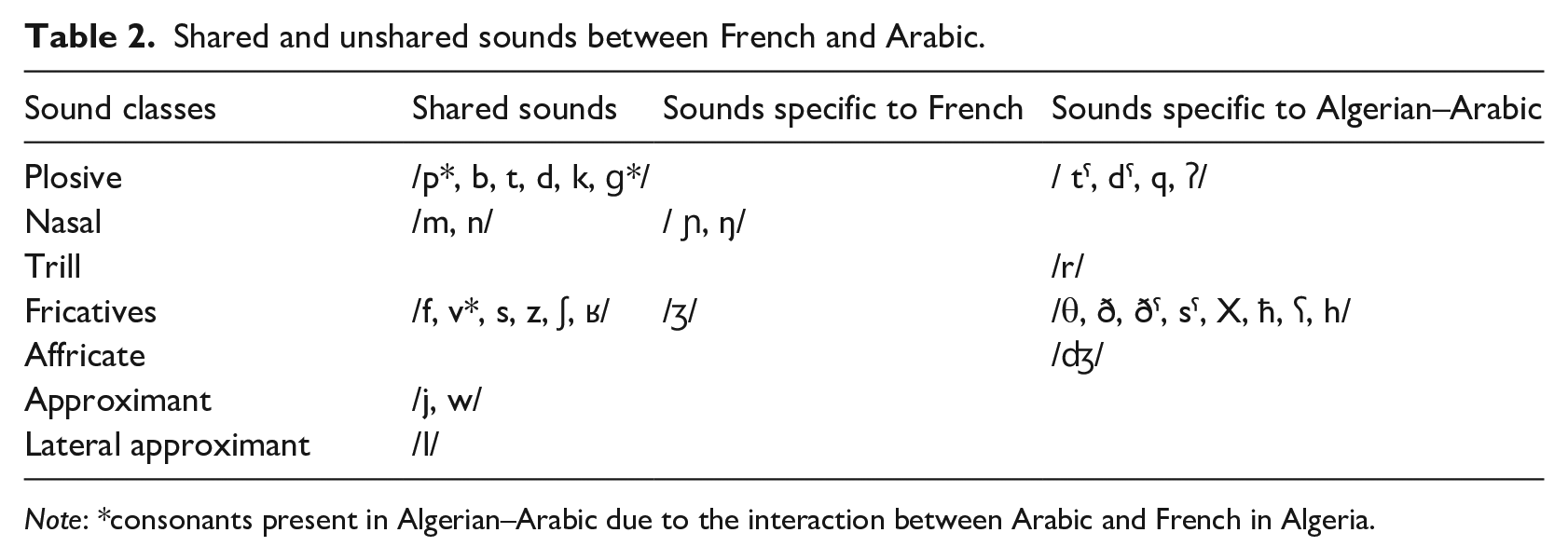
Note: *consonants present in Algerian–Arabic due to the interaction between Arabic and French in Algeria.
The current study
This study describes the relationship between the two phonological systems of bilingual Arabic–French-speaking children of Algerian origin. To this end, we used a PNT in each language to sample children’s consonant production in each language. As presented in the recent literature on the phonological development of bilingual children (Hambly et al., 2013), we hypothesize that our sample of bilingual children will produce interaction between their two phonological systems. This interaction between the two systems will be observed by children’s CA, which differs according to the type of consonants analyzed, with greater accuracy for the consonants shared by the two languages (acceleration phenomenon). CA in this study refers to the phonemic acquisition of a consonant, albeit of potential phonetic differences. The greater accuracy will also be reflected in children’s consonant inventory; more shared than unshared phonemes are expected to be produced. In addition, we will observe speech patterns that show an interaction, such as the use of a specific consonant from one language to the other language (deceleration phenomenon), as observed by Fabiano-Smith and Goldstein (2010).
Method
To investigate the research questions outlined above, a sample of bilingual children who spoke Arabic and French participated in speech production tasks in each language. The present study was approved by the institutional ethics board of Université de Montréal.
Participants
The children were recruited through advertisements on social media and networking with family and friends of the first author. All children resided in the greater Montréal area in Québec, Canada. Children who met the following inclusion criteria were recruited a few days after their 3-years birthday at the beginning of the study. Inclusion criteria included: parent report of typical language development; exposure to Arabic and French for a minimum of 20% in an average week; and first exposure to the L2 (Arabic or French) by 18 months of age. Children with atypical development related to a syndrome, intellectual, motor or hearing impairment were not eligible to participate in this study. Despite this criterion, four children were excluded after a session because of signs of delayed language development in both languages. Nine children participated in the present study, and their demographic information is presented in Table 3.
Demographics of bilingual participants.
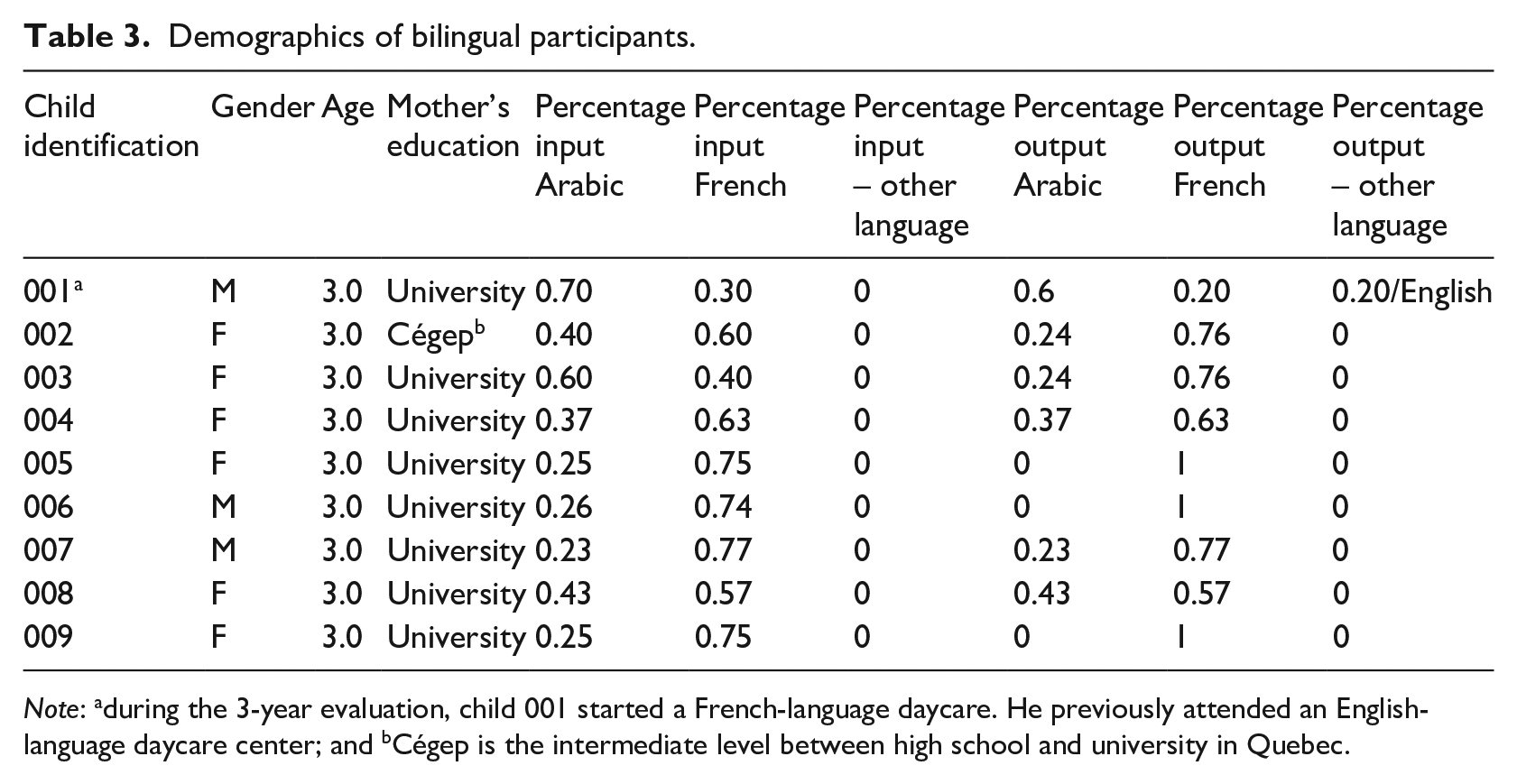
Note: aduring the 3-year evaluation, child 001 started a French-language daycare. He previously attended an English-language daycare center; and bCégep is the intermediate level between high school and university in Quebec.
Tasks
Questionnaire
We administered the Canadian Questionnaire of Use and Exposure in Bilinguals (MacLeod, in preparation) in the form of a structured interview with parents. The interview focused on the amount of time children spend with significant adults (i.e., parents, educators, and other adult family members), the language(s) spoken by these adults with the child, the language(s) the child responds in, and the child’s exposure to media and the language of this media (books, television, and electronic).
PNTs
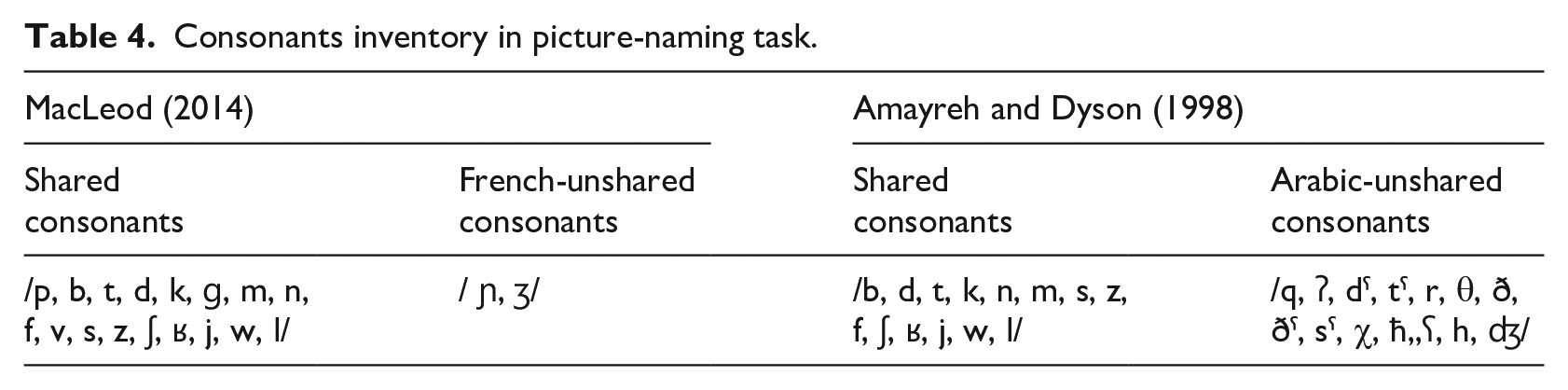
Two PNTs were chosen to analyze the CA of French and Arabic consonants that have been used with monolingual children. The French task was the ‘Évaluation sommaire de la phonologie chez les enfants d’âge préscolaire’ (MacLeod, 2014). This PNT targets 40 words that include most consonants in French in word-initial, medial and final position except the consonant /ŋ/. The Arabic task was drawn from the work of Amayreh and Dyson (1998) and targets 58 words that include the majority of consonants in Algerian–Arabic in all positions except /p, v/, because it was designed for Jordanian Arabic. Indeed, we were not able to identify a task for Algerian Arabic. Table 4 shows the shared and unshared consonants between the languages that we find in the two assessment tasks.
Consonants inventory in picture-naming task.
Procedure
Data collection
Children were evaluated in two sessions. These were carried out individually with children and the parents. The sessions were limited to one language at a time as children are very sensitive to the linguistic context to reduce opportunities for code-switching (Lleó & Kehoe, 2002). The first session was conducted in Arabic by the first author. The second session was conducted in French by a trained research assistant who was a student in speech–language pathology. All the sessions took place in a child-friendly recording room at the University of Montréal’s École d’orthophonie et d’audiologie (School of Speech Pathology and Audiology). A video recording was made for each session and used for the analysis.
Transcription and analyses
The samples collected by the video recording were phonetically transcribed in the International Phonetic Alphabet and then analyzed using Phon (Hedlund & Rose, 2019), a software designed to study phonological development. The first author and an Arabic-speaking research assistant with a bachelor’s degree in speech–language pathology transcribed all the data independently. The average inter-judge agreement was 90% for data transcribed in French and 80% for data transcribed in Arabic. When the transcripts were not identical, the first author listened to the recording again to identify the transcription. The higher accuracy rates for French transcriptions are likely due to the ease with the formal courses in French phonetics while transcribing in Arabic was based on training for this research. In addition, the Arabic PNT included 18 more items than the French task.
Based on this transcribed data, the following analyses were conducted for both French and Arabic: inventory of consonants; PCC; and speech patterns. The PCC was calculated in each language for all consonants and also for shared and unshared consonants separately. Based on these results, an analysis of variance was conducted with repeated measures comprising two intra-subject factors (languages: French/Arabic and type of consonants: shared/unshared) and a random term (child) within a linear mixed model with a significance level of 0.05. The selected model is a mixed linear model without any weighting for the frequency of phoneme occurrence. The covariance structure minimizing the Akaike information criterion (AIC) (264.65) is a heterogenous symmetrical compound. In this model, we used the Type factor (shared and unshared consonants) and the Language factor. A correlation analysis was also performed to determine if the frequency of occurrence of French or Arabic consonants influenced the accuracy of consonants’ production for that language (see Appendix). This frequency analysis used data on the frequency of consonants in adults in French from Malécot (1974) and Arabic from Nahar et al. (2012). Finally, the speech pattern analysis focused on differences children produced compared to adult targets to document whether they used language-specific sounds (e.g., Arabic) in the productions of their other language (e.g., French).
Results
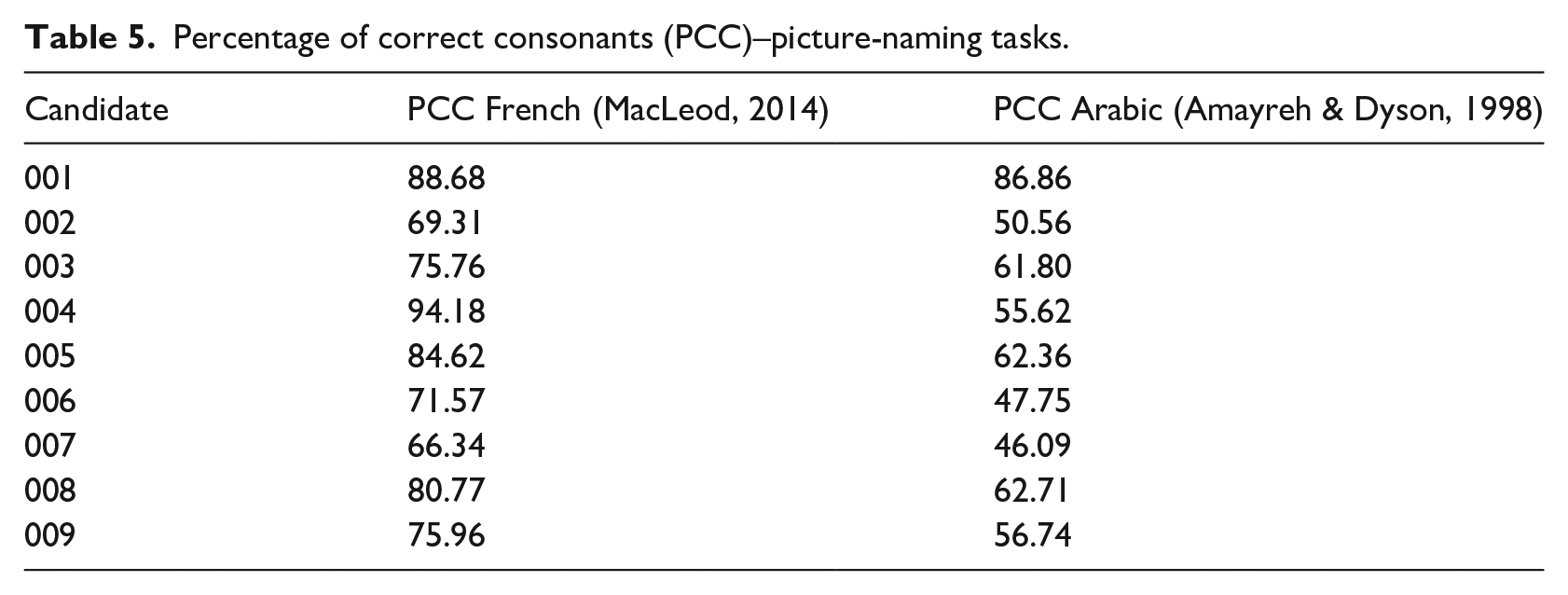
In these results, we will focus on how children’s two phonological systems interact. Before exploring these results, we will describe the group’s phonological performance in each language and their consonant inventory. First, we found that children obtained higher PCC scores in French than in Arabic (Table 5). All children produced the 40 words of the task except child 007, who did not produce the word [ʁɔb]. We note that the child who performed best in Arabic was child 001, while the child who performed best in French was child 004. The lowest performance in Arabic and French is that of child 007, and he also did not complete all the words in the Arabic PNT. He named only 36 words of 58 from the Arabic PNT and thus, he produced fewer consonants than the other children. The words that he did not produce included a total of 12 shared consonants (/b, d, m, t, f, l, j, ʁ, s, z, ʃ, w/) and 12 Arabic-specific consonants (/ʔ, θ, ð, ʤ, χ, r, ħ, h, sˤ, tˤ, q, ʕ/). Among the consonants specific to Arabic, he never produced the consonant /ð/.
Percentage of correct consonants (PCC)–picture-naming tasks.
Do these phonological systems interact?
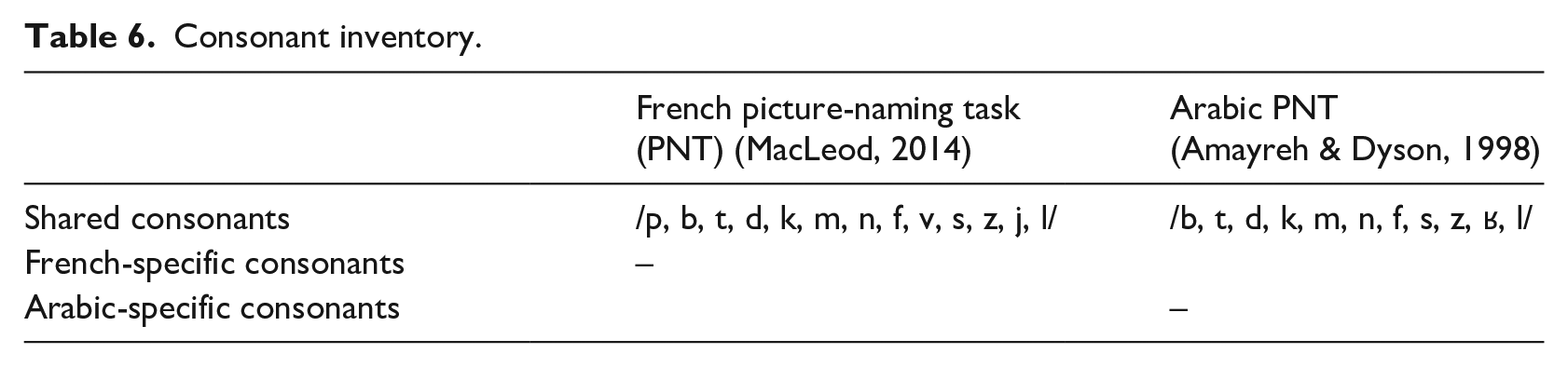
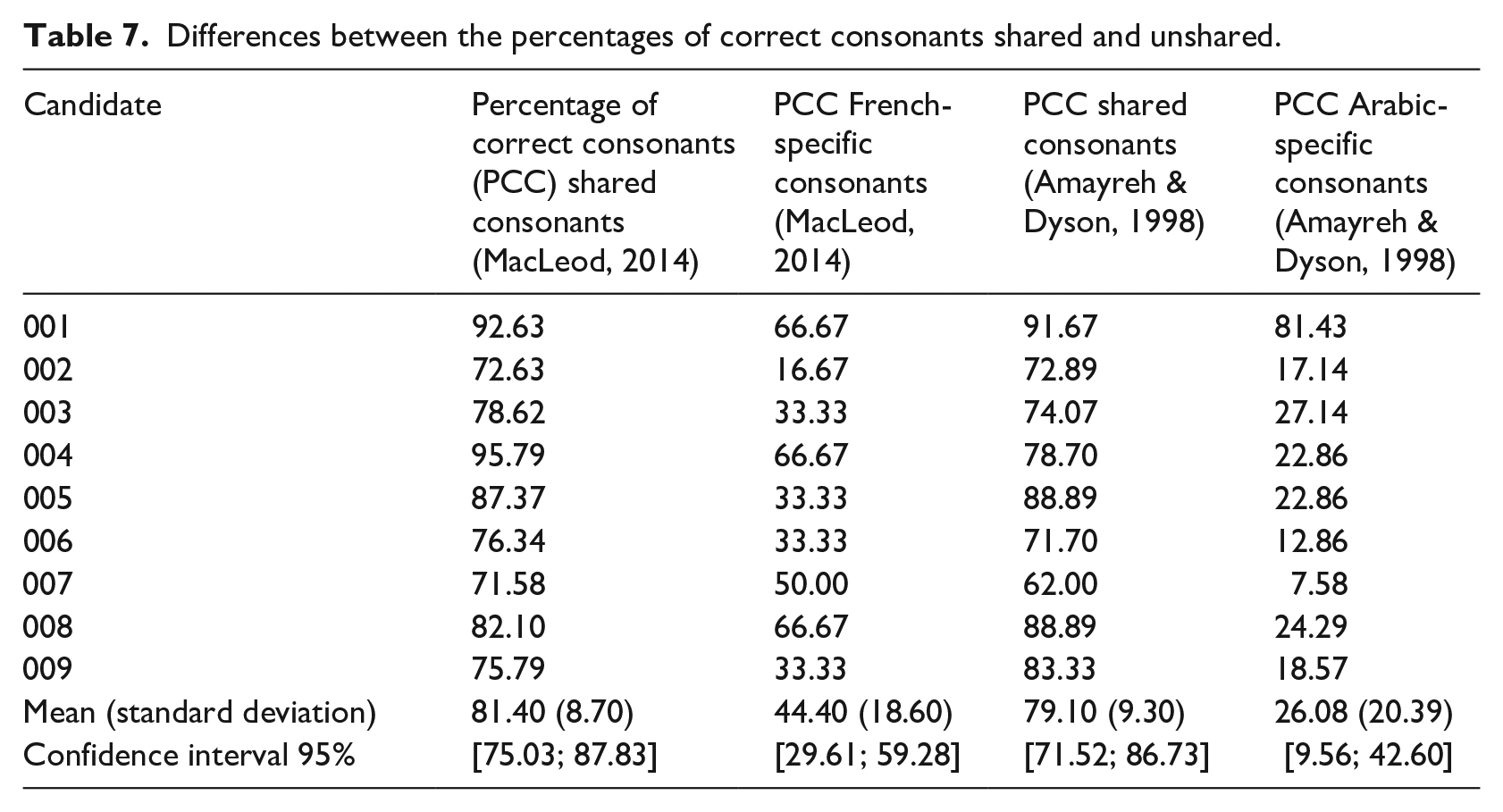
To determine how the phonological systems in our sample interact, we first described their systems in each language. Table 6 presents the inventory of consonants acquired for each of the tasks. Consonants included in the inventory are those that are “acquired” or correctly produced in the correct context by more than 75% of the children (MacLeod et al., 2011). Table 6 shows that no unshared consonant met this threshold and that the inventory of shared consonants differed according to the language. For example, the consonant /ʁ/ was not acquired in French in the PNT but was acquired in Arabic. In contrast, the consonant /j/ was acquired in French, not in Arabic. In addition, the shared consonant /ʁ/ was substituted by both the consonant /l/ and /r/ in French. Still, it was infrequently substituted in Arabic, but when it was substituted, the glottal consonant /ʔ/ was used. The differences between the PCC of shared and unshared consonants across the two languages are presented in Table 7. The results show that the PCC of shared consonants was always higher than that of unshared consonants for all children and regardless of language.
Consonant inventory.
Differences between the percentages of correct consonants shared and unshared.
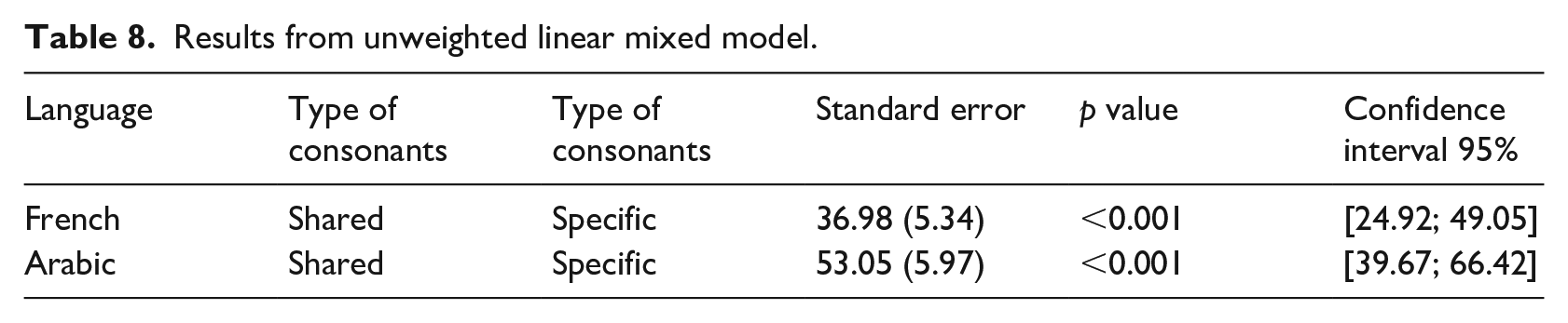
To determine whether there was a significant difference between the PCC of shared and unshared consonants, a repeated measures analysis of variance comprising two intra-subject factors (languages and categories of consonants) was performed using a linear mixed model. Since the number of consonants per category was not identical, the first analysis with an unweighted linear mixed model was performed, followed by an analysis with a weighted linear mixed model. The sensitivity analysis revealed that the results of the weighted model were not different from those of the unweighted model. Thus the results from the unweighted model are presented in Table 8. The covariance structure minimizing the AIC (264.65) is the heterogenous symmetrical compound. In this model, the interaction term between Type of consonant and language factors is statistically significant (F (1; 19.66) = 5.35; p = 0.032). These analyses confirm that a significant difference exists between PCC of shared and unshared consonants for French and Arabic.
Results from unweighted linear mixed model.
The frequency of consonants in the language was also considered to determine if it influenced children’s CA productions. Thus, we used data from French frequency described by Malécot (1974) and from Arabic described by Nahar et al. (2012). With the data from these two studies, we determined whether there was a correlation between the frequency of consonants and the percentage of correct consonants for each of the languages. The results are presented in Figures 1 and 2. The correlation coefficient for consonants in French is 0.18, which is weak, while it is moderate in Arabic at 0.48.
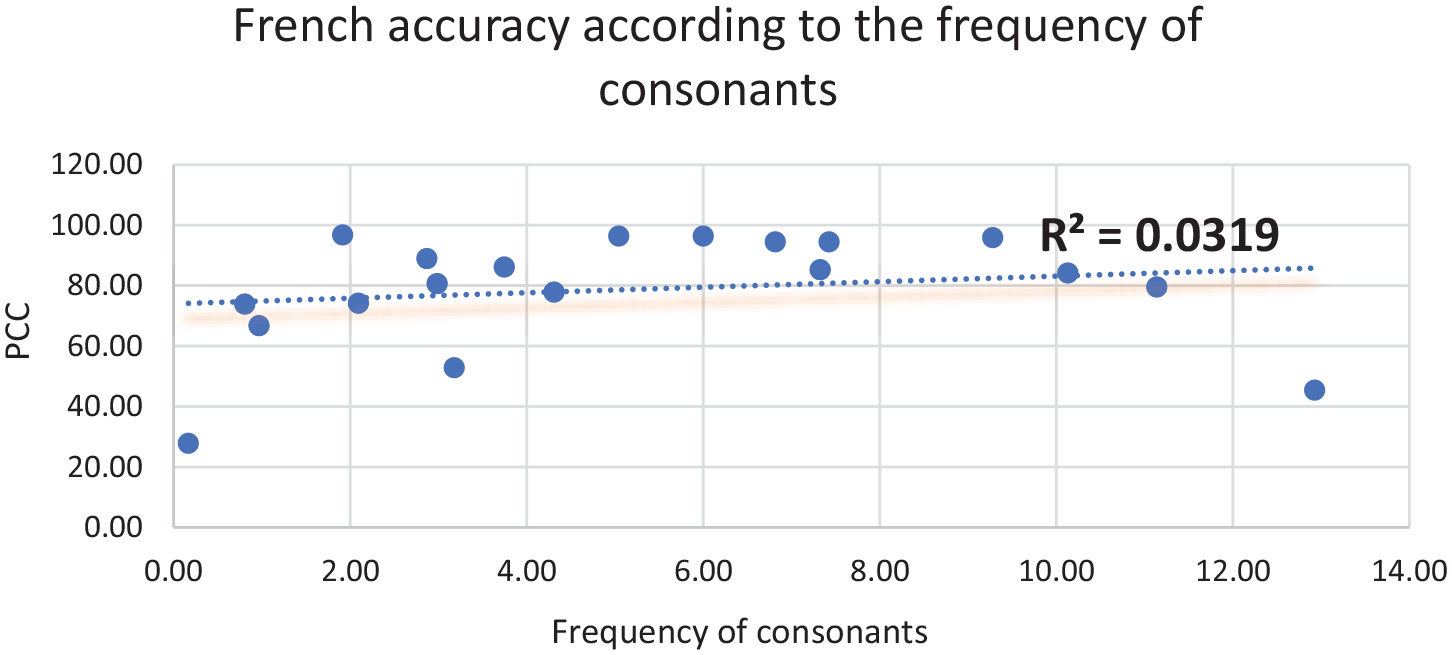
French accuracy according to the frequency of consonants.
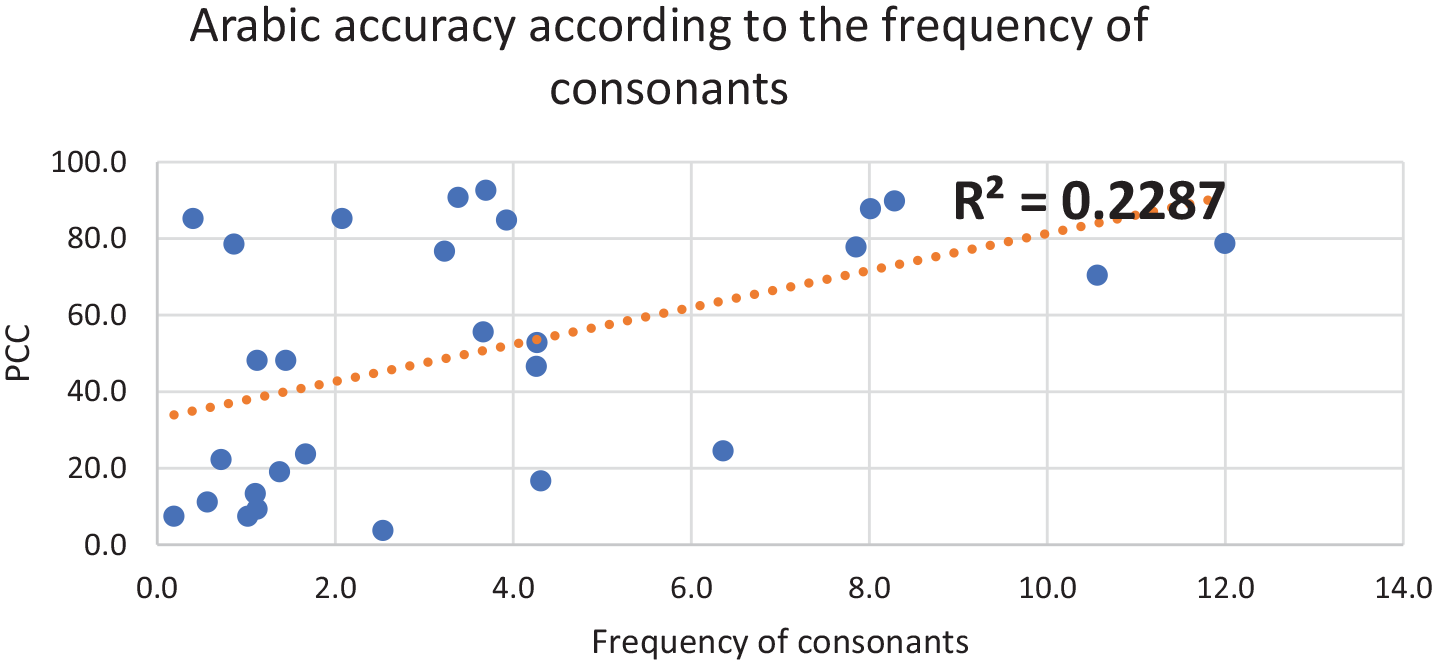
Arabic accuracy according to the frequency of consonants.
Lastly, we observed that children’s speech patterns in each of the languages revealed that consonant substitution represented 55% of speech patterns in French and 63% of speech patterns in Arabic. We analyzed this type of speech pattern to determine if there was a transfer between languages. In other words, do children substitute the sounds of one language with the different language and vice versa? Since the two languages also share consonants, we have analyzed the substitutions by category of consonants: shared; and unshared. Table 9 summarizes our observations.
Description of speech patterns and frequency of patterns in French and Arabic.
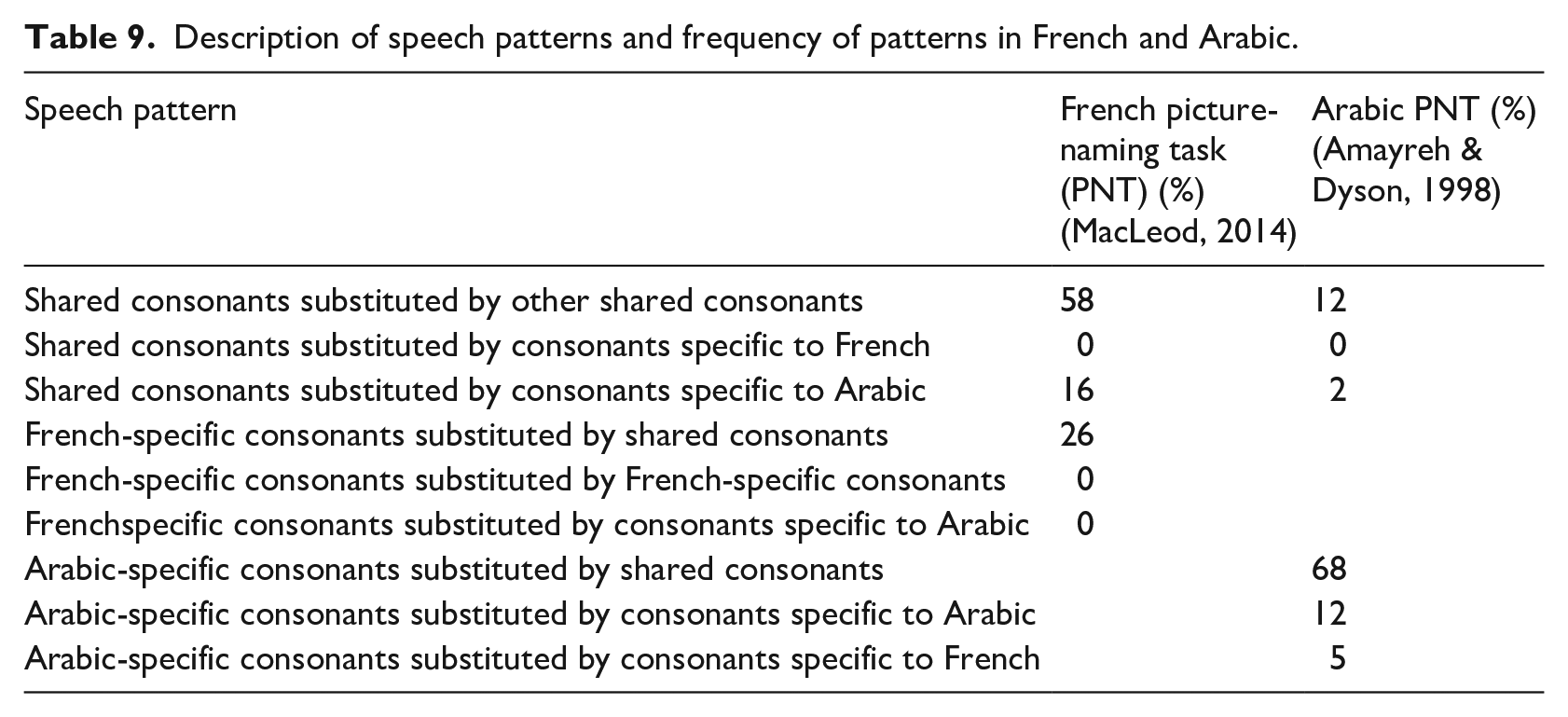
Overall, we note that shared consonants are generally substituted by other shared consonants regardless of the language. They were not substituted by consonants specific to French and are very rarely substituted by consonants specific to Arabic. French-specific consonants are only substituted by shared consonants. Arabic-specific consonants were more likely to be substituted by shared consonants than by Arabic-specific consonants and rarely French-specific consonants. In the French PNT, regarding the shared or unshared category of consonants, the most frequent speech patterns are shared consonants substituted by shared consonants. When we analyzed these speech patterns in more detail, we noticed that the fricatives were generally substituted by fricatives (e.g., /ʃ/ →/s/, /ʒ/ →/z/) and the nasal /ɲ/ always substituted by the nasal /n/. The fricative /ʁ/ was partly substituted by the approximant /l/ or trill /r/, an Arabic-specific consonant. In the Arabic PNT, the fricatives were also substituted by fricatives (e.g., /ʃ/ →/s/, /ð/→/z/, /θ/→/s/, ħ/→/h), the trill by an approximant (e.g., /r/→/l/), the plosives by plosive (e.g., /q/→/k/) and the emphatic consonants were substituted by non-emphatic consonants (e.g., /tˤ/→/t/, /dˤ/→/d/, /sˤ/→/s/, /ðˤ/→/d/). We also noted a glottalization of consonants /χ/ and /ʕ/. The affricate consonant /ʤ/ was substituted by the shared occlusive /d/ or the French-specific fricative /ʒ/.
Discussion
The children’s speech production was measured in their two languages, and their overall accuracy showed different profiles. While the PCC in French was higher than in Arabic as a group, some children had comparable CA across their two languages, while others were stronger in French. This result is not surprising because children are more exposed to French, the majority language in Québec. The children’s productions were analyzed to explore the research question: How the two phonological systems of bilingual Arabic–French-speaking children interact?
In Table 6, we see that the children have an inventory of acquired consonants that differs according to language. Although each system included only consonants shared by both languages, it was not the same shared consonants that were acquired in French and Arabic. For example, the consonant /ʁ/ was acquired in Arabic but not in French, while the consonant /j/ was acquired in French but not in Arabic. In addition, we found evidence for two phonological systems in the analysis of speech patterns. For example, the shared consonant /ʁ/ was substituted by both the consonants/l/ and /r/ in French. Still, it was infrequently substituted in Arabic, and in those cases, it was substituted by the glottal consonant /ʔ/. These differences between the two languages support the theory of two distinct phonological systems in bilingual children. Moreover, given the more frequent use of French than Arabic for all children except child 001, children have more opportunities to produce shared consonants in French than in Arabic. However, more frequent practice of a phoneme makes it possible to produce it more accurately due to the influence of motor practice (Stoel-Gammon, 2011). Finally, our results were consistent with previous studies that found the two phonetic inventories of bilingual children were similar but not identical, indicating a separation between the two phonological systems (Fabiano-Smith & Barlow, 2010; Keshavarz & Ingram, 2002).
The results indicated that the two phonological systems interacted. We found a significant difference between the CA of shared and unshared consonants, independent of the language. Children were significantly more accurate in their production of shared consonants than unshared consonants (see Table 8). This finding is consistent with the theory of positive transfer (acceleration) that predicts that the interaction between the two languages of bilingual children facilitates the acquisition process and thus gives superior linguistic skills among bilinguals (e.g., Barlow et al., 2013; Grech & Dodd, 2008; Lleó et al., 2003). Much like Fabiano-Smith and Goldstein (2010), we observed that the interaction between the two languages promoted the acquisition of consonants shared by both languages. Interestingly, the difference between shared and unshared consonants in the French PNT was greater than for the Arabic PNT, although it was significant for both tasks (see Table 8). This result may be due to task differences with longer words in the Arabic task than the French task. It may also be related to the tendency for unshared consonants in Arabic, such as emphatic consonants, to be acquired at a later age (Amayreh & Dyson, 1998). In addition, there was a greater number and variety of unshared consonants in Arabic than in French.
The interaction between the two phonological systems was also supported by the absence of unshared consonants mastered by 75% of the group (see Table 6). While children had two phonological systems, they produced speech patterns that have been reported in monolingual development. For example, emphatic consonants were substituted by non-emphatic consonants in monolingual Arabic speakers (Ammar & Morsi, 2006). On the other hand, some speech patterns reflected the transfer that exists between these two systems and have not been reported to our knowledge in monolingual speakers of French or Arabic. For example, the shared consonant /ʁ/ was substituted by the unshared Arabic consonant /r/ in French; and the unshared Arabic consonant of /ʤ/ was substituted by the unshared French consonant /ʒ/ in Arabic. These observations support previous studies that indicated that phonetic inventories contain evidence of interaction, specifically transfer, between the two languages of bilinguals (Fabiano-Smith & Goldstein, 2010; Paradis & Genesee, 1996). The low accuracy rate of unshared consonants and the above-mentioned substitution of consonants from one language to the other are also related to the negative transfer phenomenon (deceleration) observed in bilingual children. This deceleration of certain consonants may be due to interference caused by the presence of unshared phonemes and different phonotactic rules (Goldstein & Bunta, 2012). Although the CA in French is superior, we have not noted a greater influence of French on Arabic. This may be explained by the low number of specific consonants in French.
We explored whether the token frequency of a consonant in a language would impact the results. We found that difference observed between shared and unshared consonants was independently of the frequency of the consonants in languages, a finding that replicates results for Spanish and English by Fabiano-Smith and Goldstein (2010). However, it is important to note that the token frequency used in the present study was based on adult productions and that we are not aware of a study that documents the frequency of consonants produced by young monolingual French-speaking or Arabic-speaking children. As a result, the consonant frequency may not be representative of word use in preschool-aged children. Furthermore, consonant frequency will vary in a bilingual context due to the rate of exposure to each language. Shared consonants will be produced more often because they are used in both languages and unshared consonants be heard and produced only when the specific language is used. While frequency effects may be important, further research is needed to better understand their role in bilingual phonological development.
Implications
The findings of this study have theoretical and practical implications. First, as mentioned in the introduction, the analysis of the phonology of bilingual Arabic–French children is an important contribution to research on the phonological development of bilingual children. The characteristics of Arabic provide insight to phonological development. Specifically, Khattab and Al-Tamimi (2014) point to the richness of posterior fricative consonants, the presence of emphatic consonants, and the fact that all the consonants can be doubled, and consonant length is contrastive which enriches the consonantal contrast. In addition, Arabic–French bilingualism has not been well studied despite being a common language pairing globally in countries such as Algeria, Morocco, Tunisia, Lebanon, Comoros, Djibouti, and Mauritania, as well as Arabic-speaking families who settle in French-speaking countries such as France, Belgium and Canada. Indeed, it is important in research to focus on specific communities (Paradis, 2001), particularly in order to provide clinicians and parents with benchmarks of a community’s developmental expectations. The results of the study also point to practical implications. First, evidence of separate systems highlights the importance of evaluating bilinguals in both of their languages for research and clinically. The difference in accuracy between shared and unshared consonants, demonstrates the importance of analyzing these two types of consonants separately. Indeed, if a child has difficulties that are limited to the unshared consonants of a language, this may suggest a slower pace of L2 learning; in contrast, difficulties that include shared and unshared consonants may suggest an underlying speech sound disorder.
Limitations and futures directions
The present study demonstrates the presence of separate but interacting phonological systems in bilingual Arabic–French speaking children. Using larger sample sizes will be important moving forward to study of the extent of these interactions. Our sample varied in the amount of language exposure received in each language, which may impact the relative exposure to unshared consonants in particular. Finally, we aimed to use tasks that had previously been applied to the study of phonological development in monolingual French and Arabic speakers. However, the tasks were not equivalent in terms of the number of words, word length, or syllabic structures. These differences may have also impacted on the accuracy found in the results with French having higher PCC scores relative to Arabic for each child. Finally, future studies that include vowels and suprasegmental measures could inform the understanding of transfer between languages.
Conclusion
The focus of this study was to describe the interaction between French and Arabic in bilingual children. Indeed, language interaction was found, supporting previous cross-linguistic work on bilingual phonological acquisition (e.g., Fabiano-Smith & Goldstein, 2010). These findings are important to enrich our understanding of bilingual development of phonology and about the interaction between two phonological systems.
Footnotes
Appendix. Consonant frequency
Frequency of unshared-consonants – Arabic PNT (Amayreh and Dyson, 1998).

| q | ʔ | tˤ | dˤ | r | θ | ð | ðˤ | sˤ | χ | ħ | ʕ | h | ʤ |
|---|---|---|---|---|---|---|---|---|---|---|---|---|---|
| 3 | 7 | 5 | 3 | 19 | 3 | 1 | 3 | 3 | 3 | 5 | 4 | 4 | 7 |
Acknowledgements
The authors thank the parents and children for their contribution to the study.
Declaration of conflicting interests
The author(s) declared no potential conflicts of interest with respect to the research, authorship, and/or publication of this article.
Funding
The author(s) disclosed receipt of the following financial support for the research, authorship, and/or publication of this article: This work was supported by financial support from the School of Speech-Language Pathology and Audiology of the Université de Montréal, (Pilot Project Awards 2017).
