



Abstract
Research addressing beliefs about deception has been mostly conducted with North American and European participants. However, deception belief consequences are not continent-bound. In legal proceedings, when jurors are responsible for assessing witness credibility, beliefs about deception can distort the outcome of jury trials, which are integral to Australia's criminal justice system. Research on beliefs about deception in Australia are scarce. Therefore, this article aims to address this gap by replicating the second study of The Global Deception Research Team with Australian participants. Five hundred and twenty-eight Australian participants responded to the 10-question questionnaire from the second study, with 84.7% stating they could usually tell when someone is lying to them. However, 75.6% also acknowledged that it is more difficult to tell when someone from a different cultural background is lying. Most Australian participants relied on three nonverbal cues to detect lying: increased posture shifting, increased self-touching and scratching and decreased eye contact. We discuss the implications of the results for research on lie detection in Australia and for research on deception outside North America and Europe.
Introduction
For the past 20-plus years, researchers have addressed beliefs about deception. For example, in 2006, The Global Deception Research Team published the results of two studies performed in 75 countries in 43 different languages. The studies highlighted that the belief that liars avert gaze was widespread among university students worldwide, when in fact, research shows that multiple factors influence gaze direction, including cognitive and cultural differences (Doherty-Sneddon and Phelps, 2005; McCarthy et al., 2006). Research on beliefs about deception has not only been carried out with university students, but also among a variety of populations, including people in positions of power, like police officers, social workers, teachers (Bogaard et al., 2016; Colwell et al., 2006; Vrij et al., 2006), prosecutors, judges (Denault et al., 2024; Strömwall and Granhag, 2003) and migration board personnel (Granhag et al., 2005).
However, while most research on the subject has been conducted with North American and European participants, the consequences of beliefs about deception are not bound by continents. Furthermore, while student participants are inevitable, beliefs about deception among non-students should not be overlooked. When held by people in positions of power, the stakes can be high. In legal proceedings, for example, beliefs about deception can distort the outcome of trials (Denault et al., 2020).
In bench trials, research has shown that judges hold (incorrect) beliefs about deception (Denault et al., 2024). Those beliefs are used in written court decisions and influence the assessment of witness credibility (Denault and Talwar, 2024; Denault, 2015). This is no small matter, because ‘credibility is an issue that pervades most trials, and at its broadest may amount to a decision on guilt or innocence’. 1 Beliefs about deception can also distort jury trials (Heath, 2009), including in criminal trials when there is no other evidence than the testimony of the victim and the accused, and when the outcome of the trial rests solely on the assessment of witness credibility (Denault and Dunbar, 2019).
However, research on the impact of deception beliefs in the courtroom is scarce compared to research on the impact of deception beliefs in other contexts (e.g., law enforcement) (Denault et al., 2022). And compared with the USA and the UK, research performed on the subject in Australia is limited. Recently, Denault and Bozin (2024) have shown how ideas related to the myth of ‘body language’ have been used in written decisions from Australian courts, and how misconceptions about nonverbal behaviour influenced judges in concluding that witnesses were honest or dishonest. However, little is known about the deception beliefs of Australian adults who may find themselves sitting in jury trials, assessing the credibility of witnesses and, ultimately, determining who is telling the truth and what the outcome of the trials should be.
This article aims to better understand the deception beliefs of Australian adults through a replication of the second study of The Global Deception Research Team (2006) with Australian participants. First, we address the research on beliefs about deception in Australia and present an overview of The Global Deception Research Team (2006). We also address the impact of deception beliefs in Australian courtrooms. Then we present the methods and results of our survey conducted with 528 Australian participants using the 10-item questionnaire from the second study of The Global Deception Research Team (2006). To finish, we discuss the implications of the results for court proceedings and for research on deception in Australia and more generally outside North America and Europe.
Research on beliefs about deception in Australia
Among researchers who studied beliefs about deception in Australia, Hill and Moston (2011) surveyed practitioners within Australia's criminal justice system, namely 2,769 Queensland police officers. Their 52-question survey addressed the participants’ attitudes, perceptions and practices regarding investigative interviewing. Police officers were asked, among other things, whether they thought they could detect deception when interviewing a suspect, whether they were confident in their ability, and what influenced their lie detection decisions. The results showed that 88.1% of participants believed they could detect deception, 6.6% were ‘very confident’ and 34.2% were ‘confident’ in their ability, and 67.9% of police officers believed they could detect deception using nonverbal behaviour when interviewing suspects. These findings are not trivial. When considering how unreliable nonverbal behaviour is to detect deception (Luke, 2019; Vrij et al., 2019), hundreds of police officers, individuals who deal with honesty and dishonesty daily, are likely misguided about lie detection. However, these findings are hardly surprising.
The (incorrect) belief that it is possible to detect deception using nonverbal behaviour dates back thousands of years (Trovillo, 1939). However, since the 1960s, the ‘leakage hypothesis’ (Ekman and Friesen, 1969; see also O'Sullivan and Ekman, 2004; Bond and Uysal, 2007; O'Sullivan, 2007) promoted the idea that face (and body) movements can reveal honesty and dishonesty. According to this hypothesis, the face (and body) will ‘leak’ signs of emotions liars try to mask. The leakage hypothesis largely influenced modern research on lie detection (Levine, 2018), even if it was (and still is) subject to severe criticism. As summarised by Vrij et al., ‘the relationship between nonverbal cues and deception is faint and unreliable’ (2019: 302). Not to mention that the theory at the foundation of the hypothesis itself, the Basic Emotion Theory, was (and still is) subject to severe criticism: Essentially, BET has received substantial scrutiny and criticism in recent years but also from its inception given its overuse of forced-choice paradigms (i.e., presenting people with a list of emotion labels to answer questions), non-naturalistic stimuli (i.e., intense, static and pre-selected images of facial displays matching specific facial muscle activations), non-social contexts (i.e., images presented in isolation) and its overreliance on Western senders, receivers and notions of emotions (Crivelli and Fridlund, 2019; Zloteanu and Krumhuber, 2021). As argued by Fridlund (1994; see also Leys, 2017), landmark papers regularly cited in support of the universality of emotional reactions have long been shown to be quite limited, if not outright incorrect. (Denault and Zloteanu, 2022: 9)
Castillo (2011), for example, examined Australian and Colombian beliefs about stereotypical cues of deception. Among the 234 participants who answered the survey, 148 were from Australia (all were university students). The survey asked, among other things, whether each item on a list of 17 nonverbal and vocal behaviours would be displayed more, no differently or less when lying than when telling the truth. There was a significant difference between the responses of Australian and Colombian participants for six of the 17 nonverbal and vocal behaviours. For example, Australian participants believed there was no difference in gestures between liars and truth-tellers and that liars display higher vocal pitch than truth-tellers. In contrast, Columbian participants believed liars make more gestures and display lower vocal pitch than truth-tellers. The Global Deception Research Team (2006) also addressed beliefs about deception in Australia, though within a limited number of university students.
The Global Deception Research Team (2006)
Most research on beliefs about deception has been conducted with North American and European participants, and until the 2000s, it was relatively unknown whether beliefs about deception were specific to these populations. Then, in 2006, The Global Deception Research Team (hereafter ‘GDRT’), a group of 90 researchers led by Charles Bond, collaborated on two studies to find out more about their similarities and differences from one country to another. The two studies were performed in 43 languages and 75 countries, including Australia. In the first study, 20 males and 20 females from 58 countries were asked the open-ended question, ‘How can you tell when people are lying?’ Among the most reported method of lie detection, gaze aversion was first (63.66%), followed by nervousness (28.15%), incoherence (25.30%) and body movements (25.04%). In the second study, a 10-question questionnaire was developed following a preliminary analysis of the first study's answers. Another 20 male and 20 female residents from 63 countries completed the 10-question questionnaire. Like the first study, the most common stereotypical cue of deception was gaze aversion, with 71.5% of participants believing that, compared to truth-tellers, liars make less eye contact. While GDRT (2006) was conducted in several countries, the number of participants in each of them was limited to 20 females and 20 males, and most were university students.
Yeh, Chieh-Yu and Jianxin (2013) replicated the second study of GDRT (2006) to compare stereotypical cues of deception of Japanese and Chinese residents. Two hundred Japanese university students (100 female and 100 male) and 200 Chinese university students (100 female and 100 male) completed a translated version of the 10-question questionnaire. Some gender and cultural differences were found when comparing Japanese and Chinese participants’ responses to those obtained by GDRT (2006). The most common stereotypical cues of deception for Chinese participants were more hand gestures (62.1%), longer stories (61.1%) and more shift posture (59.1%). The belief that liars make less eye contact than truth-tellers was in fourth place (58.1%). For the Japanese participants, less eye contact (58.0%), more self-touch (54.5%) and more hand gestures (53.0%) were the most common stereotypical cues of deception. In other words, the beliefs of Chinese and Japanese participants had similarities and differences with participants in GDRT (2006). This raises questions on nuances about Australia that the GDRT (2006) may have missed with 40 participants. Australia is a multicultural country with 29.5% foreign-born citizens, many migrants from culturally diverse backgrounds (Australian Bureau of Statistics, 2022) and an Indigenous population representing 3.8% of Australia's population (Australian Bureau of Statistics, 2021). Because ‘juries bring the values, standards and expectations of our community into the courtroom’ (Juries Victoria, n.d.), recognising and understanding this diversity is of paramount importance for understanding the impact of deception beliefs in the Australian court system.
The impact of deception beliefs in courtrooms
Deception beliefs are far from being harmless. Within law enforcement, for example, they can distort the conduct of investigations. They can lead investigators to favour one course of action over another, and subsequently, deception beliefs can influence the prosecutors’ decision to file charges (Castelli and Goodman, 2014). Then, during trials, the consequences can be devastating. For example, in family courts, when honest witnesses are perceived as dishonest, and dishonest witness are perceived as honest, parents can (unfairly) lose custody of their child. In immigration courts, refugees can be sent back to countries where their survival is at risk. The stakes can also be life or death in criminal courts when capital punishment hangs over defendants.
To better understand the prevalence of deception beliefs, Strömwall and Granhag (2003) surveyed legal practitioners from Sweden, including judges, and concluded that ‘that police officers’, prosecutors’ and judges’ perceptions of how different factors relate to deception are remarkably inconsistent with the results stemming from studies investigating actual cues to deception’ (2003: 31). Another example comes from Canada. Denault et al. (2024) surveyed judges, and concluded that ‘many judges have beliefs inconsistent with the scientific literature, and many are silent on culture-related differences in nonverbal behaviour’ (2024: 20). Further surveys found other judges to have deception beliefs consistent with the scientific literature (Brownsell and Bull, 2011; Wessel et al., 2016).
The study of deception beliefs is not limited to surveys. For example, Denault and Talwar (2024) analysed written court judgments in sexual interference trials, where child victims testified, and concluded that if they do not behave in the way expected of them, or if they behave in a way that is not expected of them, child victims could face difficulties in court proceedings. An example comes from R v Wilson, 2 where the judge wrote that ‘There are some troubling aspects to her story. When she gave her evidence, she did not appear to angry or upset about the alleged assaults by the accused. Moreover, she was not frightened of the accused. These emotions would have been consistent with the offence occurring in the manner she said.’ 3 In other words, the 15-year-old child victim was not believed because she did not display what the judge considered to be the typical behaviour of an honest victim.
However, judges are not the only one to assess the credibility of witnesses and, ultimately, to determine who is telling the truth and what the outcome of a trial should be. Jurors do too. However, just like the deception beliefs of Australian judges (Denault and Bozin, 2024), little is known about the deception beliefs of people living in Australia who may find themselves sitting in jury trials. Yet jury trials are integral to Australia's criminal justice system (Nolan and Goodman-Delahunty, 2015; Peat and Ravindran, 2024). Hence this exploratory study aimed to better understand the deception beliefs of Australian adults who may find themselves sitting in jury trials.
Method
Participants
To better understand the deception beliefs of Australian adults, we used the GDRT (2006: 72) 10-item questionnaire and surveyed a large Australian cohort who may find themselves sitting in jury trials, with a broad age range, from differing fields of employment and education, along with non-students. Participants for our study were recruited via the Facebook pages of all CQUniversity campuses across Australia, and flyers were placed at one campus. In addition, a story about the study with a link to the online survey was included in the CQUniversity online newsletter, which was emailed to all students who were invited to share the information on their social media pages. The first author was also interviewed on the ABC North Queensland News Radio, which was played throughout Queensland. The survey link was provided to the radio station, and listeners were invited to participate. Finally, after the online survey was active for approximately six months, an online commercial panel provider that compensated participants was paid $7 each for extra participants. The total number of participants that fully completed the online survey was 528; 249 participants were volunteers recruited via flyers, social media and ABC North Queensland News Radio, and 279 were paid participants sourced via the online commercial panel provider. The commercial panel participants were limited to age 18 or over, and IP addresses needed to be from Australia. The CQUniversity Human Research Ethics Committee approved this study (Approval number: 0000022357).
Materials
The Qualtrics online survey included a replication of the GDRT (2006: 72) 10-item questionnaire (questions shown in Table 2). An initial closed-ended question was added before the 10-question questionnaire: ‘Do you think you can usually tell when someone is lying to you?’ And two additional questions about cross-cultural lie detection were added at the end of the 10-question questionnaire, that is, a final closed-ended question and a final open-ended question: ‘Do you think it is harder to tell when someone from a different cultural background is lying?’ And ‘Why do you think it would, or might, be harder for people from different cultural backgrounds to tell if someone was lying?’
Procedure
When they arrived on the online survey page, participants were presented with information about the research project and had to give consent before answering questions. After giving consent, demographic questions were asked. Then the initial closed-ended question was asked, followed by the 10-question questionnaire of the GDRT (2006: 72). Finally, at the end of the 10-question questionnaire, the final closed-ended question was asked. The possible answers were ‘Yes, No, Sometimes’. If participants answered Yes or Sometimes, they were directed to the final open-ended question. This question allowed participants to type their responses into a box. No word limit was applied. The survey took approximately 5–10 min to complete.
Results
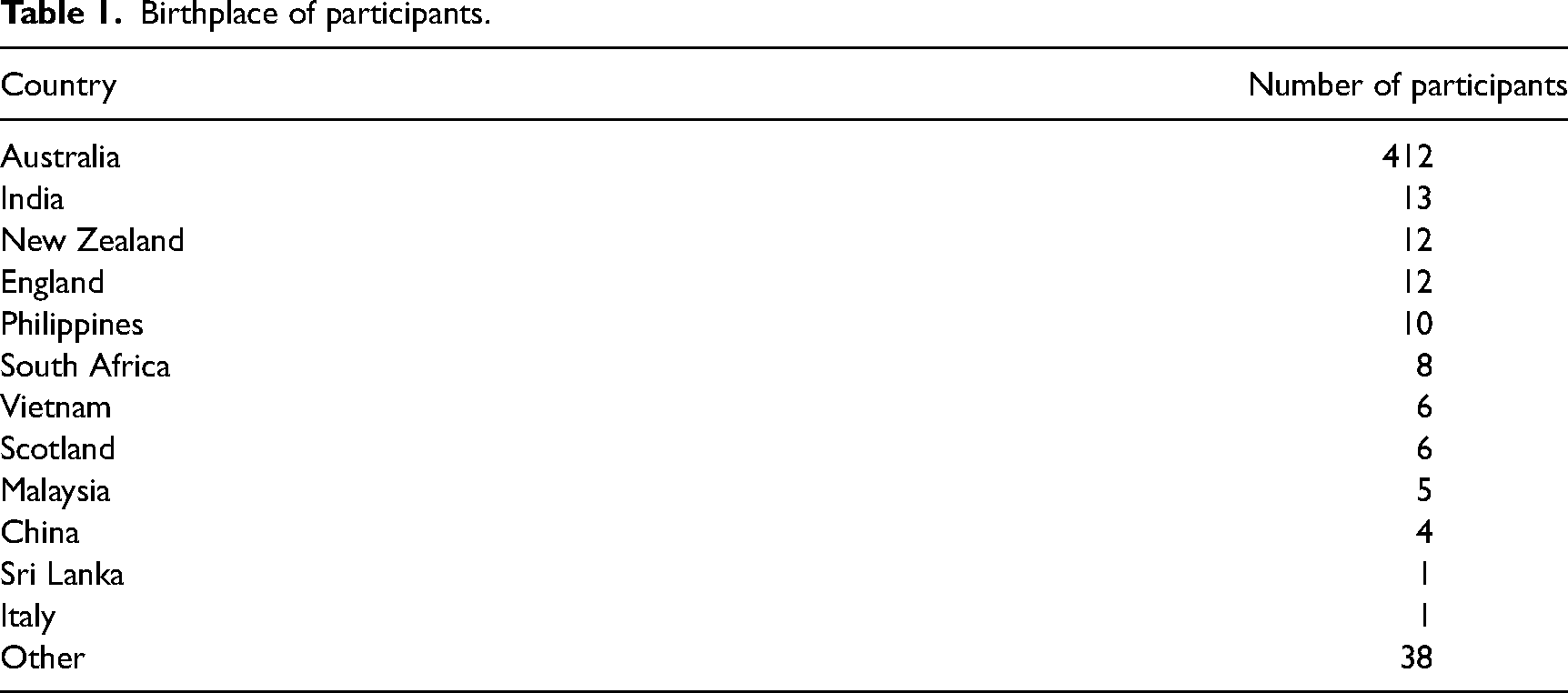
Five hundred and ninety-four people consented to take part in the survey. Many did not fully complete the survey, and their partial responses were removed. Two participants were under 18 (one was 16 and the other 17), and as parental consent was not sought for this study, the data from these participants were deleted. This left a total of 528 Australian participants who fully completed the 10-item questionnaire of the second study of The Global Deception Research Team (2006). Ages ranged from 18 to 86 (M = 36.51, SD = 15.3), 4.2% identified as Aboriginal (N = 20) or Torres Strait Islander (N = 2), 91.7% (N = 484) identified as Australian citizens, 77.1% identified as female (N = 407) and 22.7% identified as male (N = 120), and one participant responded ‘other’ (0.2%). The birthplace of participants (list derived from the top 12 countries of birth as reported by The Australian Bureau of Statistics, 2022) varied (see Table 1).
Birthplace of participants.
Student participants (N = 180) were enrolled in a broad range of bachelor or postgraduate degrees, including psychology, social work, the arts, finance, nursing, education, paramedics, law, marketing, criminology, aviation, accident forensics, marine science, occupational science, engineering and information technology. Participants who were employed (N = 376) had a variety of occupations. The participants included nurses, administrators, managers, accountants, educators, hospitality workers and military personnel.
For the first question, the closed-ended question, ‘Do you think you can usually tell when someone is lying to you?’, 84.7% of participants (N = 447) responded Yes. The participant's answers to the 10-item questionnaire of GDRT (2006: 72) are shown in Table 2.
Australian participant responses to the GDRT (2006: 72) 10-item questionnaire.
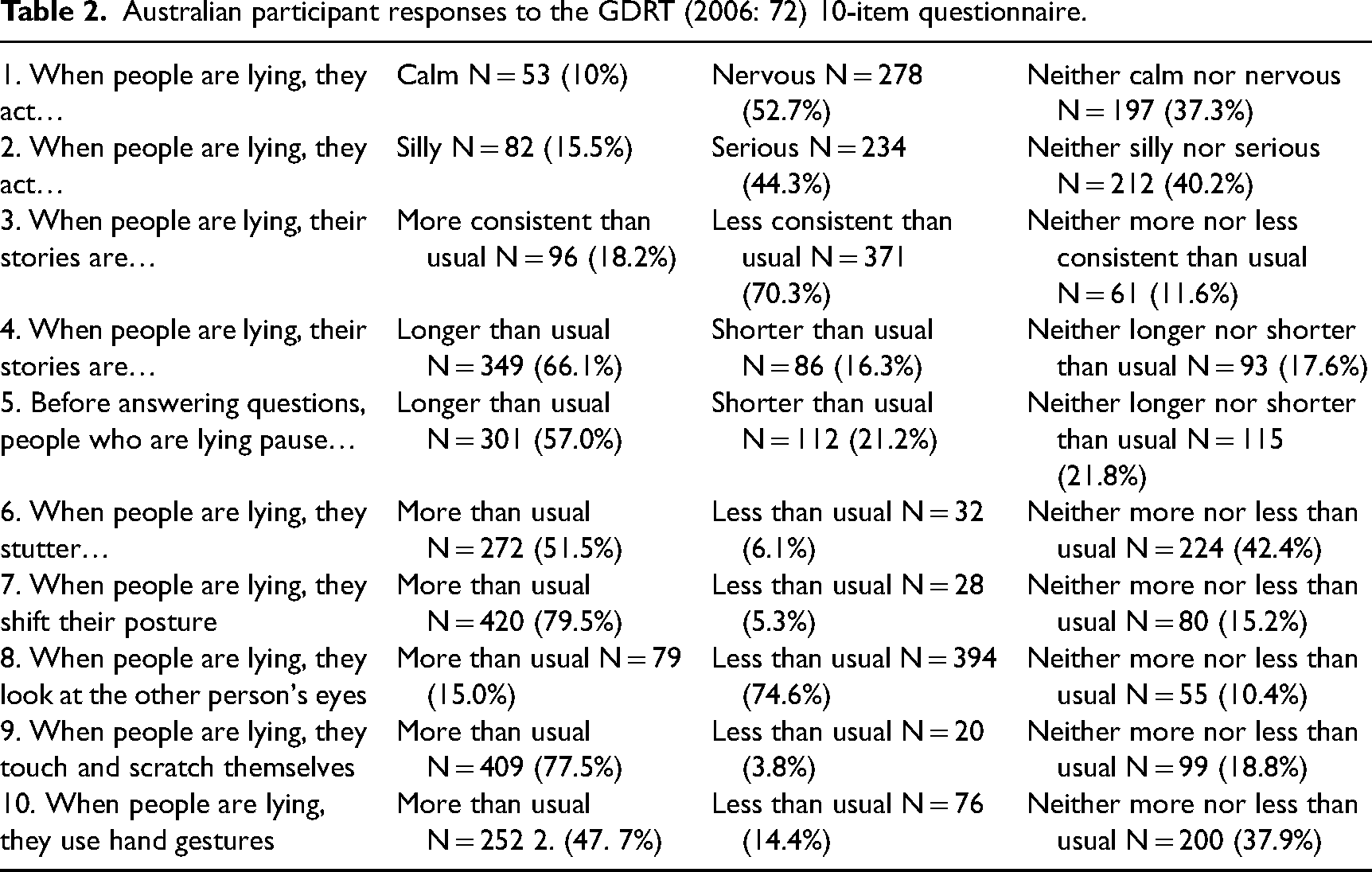
It should be noted that the GDRT (2006) did not report all the percentages as we did. The GDRT (2006) only reported that liars avert their gaze more (71.5%), shift their posture more (65.2%), touch and scratch themselves more (64.8), tell longer stories than usual (62.2) and are nervous (54.9%). These were likely the main findings.
While the GDRT (2006) did not report all the percentages as we did, the GDRT (2006) provided a graphic of the results to compare the answers of the 10-question questionnaire. The GDRT (2006) percentages were approximated to compare them with our results (Figure 1). They show, among other things, that the belief that liars shift their posture more than usual is the most popular among Australian participants, compared to the belief that liars look at the other person's eyes less than usual for the GDRT (2006).
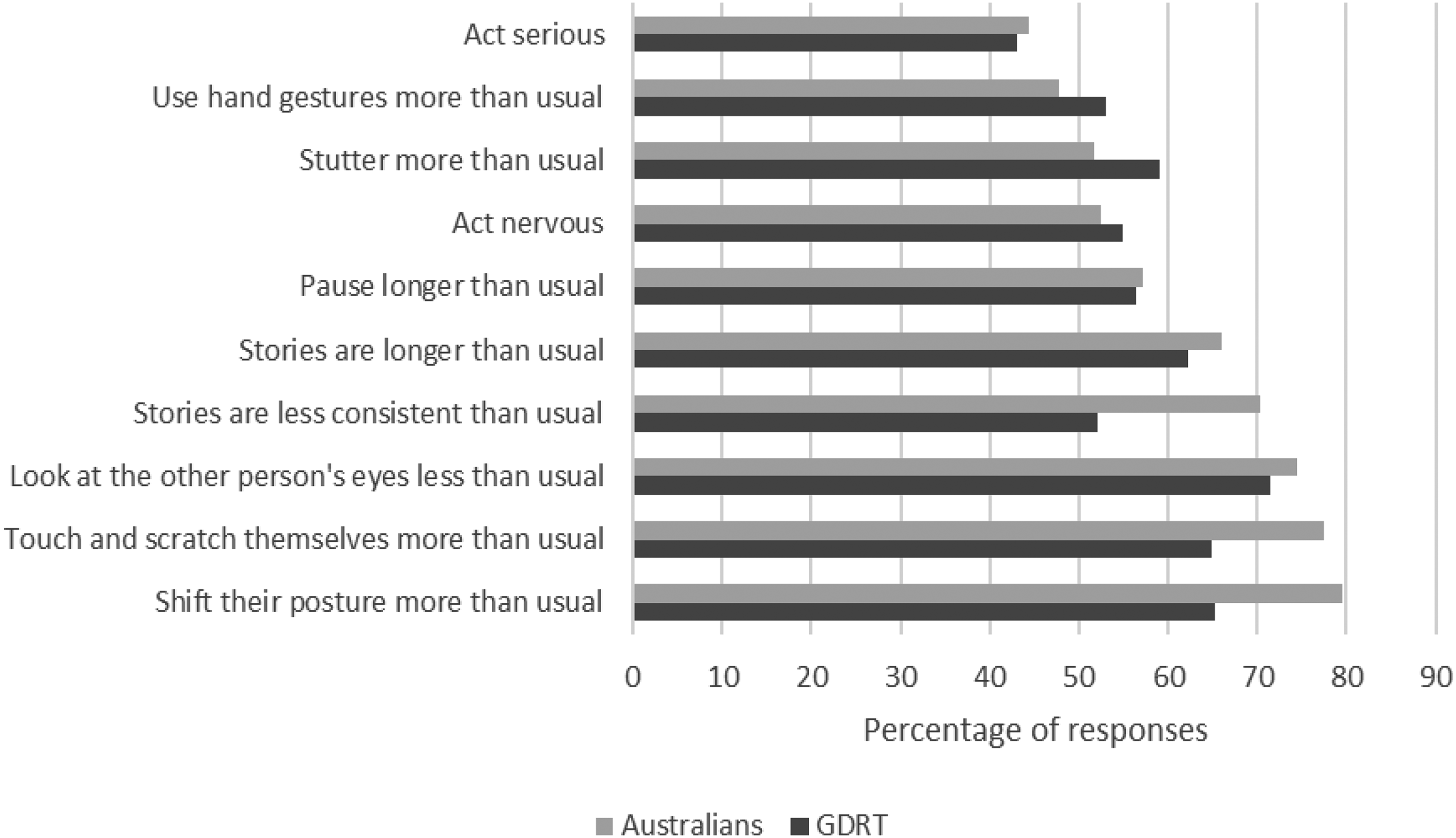
Comparison of presumed lying behaviour with GDRT (2006).
Finally, to the closed-ended question, ‘Do you think it is more difficult to tell when someone from a different cultural background is lying’, 37.3% of the participants answered ‘Yes’, 24.4% ‘No’ and 38.3% ‘Sometimes’. Four hundred and twenty-nine participants answered the open-ended question, ‘Why do you think it would, or might, be harder for people from different cultural backgrounds to tell if someone was lying?’ Most answers were short, comprising either several words or one sentence, and the responses were analysed for themes via Qualtrics Text iQ. Two major themes were identified; the main one was that cross-cultural nonverbal behaviour differences hinder lie detection (approximately 39% of responses), and the other was that language differences/difficulties hinder cross-cultural lie detection (approximately 14% of participants). Several participants noted both as an issue (approximately 4%) (see Figure 2).
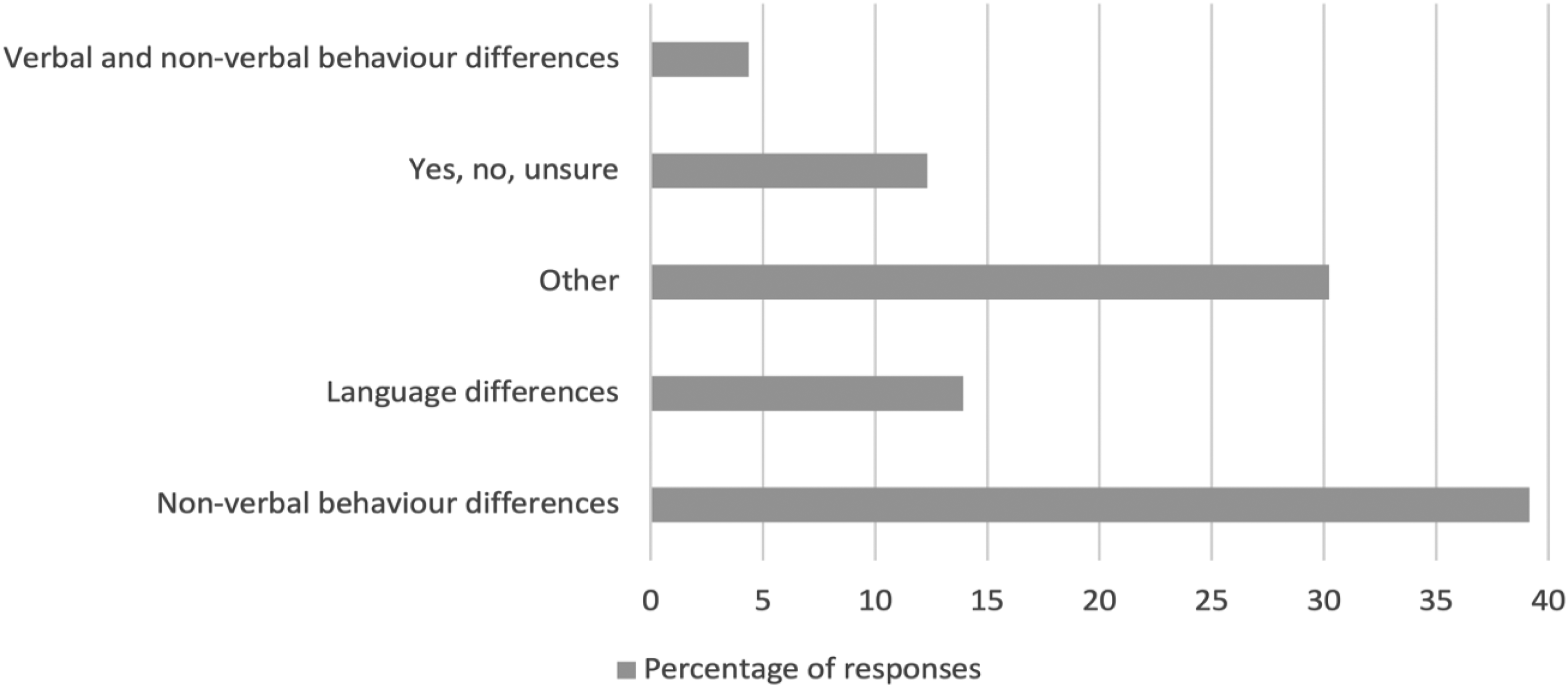
Written responses to the cross-cultural lie detection questions.
Cross-cultural nonverbal behaviour differences
Approximately 39% of the written responses suggested that nonverbal behaviour differences would hinder cross-cultural lie detection, and suggested caution when interpreting nonverbal behaviour differences as indicating deception. Most participants provided short responses, sometimes with only a few words, and responses that did not elaborate on how. Those included ‘because cultural body language varies’, ‘cultural norms’, ‘use different gestures, cues and body language’, ‘difference in common hand gestures and body language’, ‘different cultural ticks’ and ‘different social norms’.
Some responses were slightly more detailed and indicated mistakes were likely when detecting lies with someone from another culture. For example, one participant stated: ‘Because they may have mannerisms that are normal to them and their culture but seem strange or different to you’, and another wrote: ‘Different cultures have different social norms and social behaviours. So, the behaviour a person from one culture might consider to be characteristic of a liar might be a social or behavioural norm for another person in a different culture.’ Other comments included: ‘Their behaviour might not necessarily align with behaviours from your cultural background that you are used to. Some cultural backgrounds may use excessive hand gestures while others are very stoic’, and ‘Body language is an art of language. We could misinterpret someone's body language due to different cultural background.’ The most detailed response was: In my experience (particularly travelling in Indonesia, Malaysia, Taiwan, and other parts of Asia), different cultures have different gestures, manners in casual conversation, use of voice tone and inflection, etc. which means that many of the ‘tells’ we are used to will not be present when speaking with someone from a different cultural background.
Several participants (approximately 7%) specifically noted that eye contact could differ between cultures. Some of the responses about eye contact were brief, including ‘Different body language, i.e., eye contact’, ‘different cultural norms around eye contact and demeanour’, ‘some cultures don’t look you in the eyes when speaking to you’ and ‘Some cultures don’t look directly into eyes’.
Other responses about eye contact differences were more specific with statements such as ‘Because they may already have different mannerisms (i.e., like looking someone directly in the eyes may be considered rude) so it would be harder to tell their usual actions’, ‘Because different cultures have different expectations for behaviour. For example, in some cultures direct eye contact is rude’, ‘For some cultures it's rude to make eye contact, for others it's rude not to. It's these differences that make it hard’, ‘They may not look people in the eyes as part of their culture’ and ‘Some Indigenous people have poor eye contact.’ The most detailed responses about eye contact differences included: Cultural differences, i.e., Eye contact in the Middle East between sexes is inappropriate; Europeans use their hands a lot for expressions when they talk. It would be harder to distinguish if you are not aware of all of these whether they would by lying or if it's their way of life. Less interaction with them so not as used to their body language, different base standards of communication as far as use of hand gestures and eye contact, i.e., Japanese friends can typically avoid eye contact as form of politeness, Italian/Greek friends are very expressive with their body language. Facial expressions and gestures can have different meanings and be used in multiple different ways through different cultures and so it may be difficult to understand why they are acting in that way or the context of which they’re using them. In some cultures, eye contact is also considered to be rude and pauses while talking can vary through different languages and cultures also. Not familiar with their sense of humour or world views, they may hold different values that we are not familiar with, facial features and expressions can differ and make you unsure of their intentions, they may use the language barrier as an excuse to evade answering questions truthfully or telling a full story.
Cross-cultural language differences/difficulties
Approximately 14% of the written responses suggested that language differences/difficulties would hinder cross-cultural lie detection, and suggested caution when interpreting language differences/difficulties as indicating deception. As with nonverbal behaviour differences, most provided short responses. Those included ‘harder to understand English’, ‘language nuances’, ‘accents’, ‘language barriers—confusion understanding or answering your question’, ‘can’t understand them’ and ‘understanding the language’. The most detailed response was: ‘Language barriers can affect it. If someone's first language isn’t English and talking to someone that speaks it fluently, the difficulty remembering English words is going to make it seem like they are lying’ and ‘If they’re not fluent in English, typical lying traits such as stuttering etc is harder to pick up on as it may be from a language barrier.’
One participant noted language differences/difficulties but thought body language would not alter, stating: ‘Language barrier but the body language wouldn’t change.’ And one participant stated, ‘Some people with other cultures do lie easier’, though no explanation for this contention was provided.
Finally, approximately 22% of the written responses (labelled ‘Other’ in Figure 2) were impractical to classify (e.g., participants wrote ‘feeling guilty’ and ‘bad karma’) or did not specify how they related to the question. For example, several participants mentioned personality differences; others noted cultural differences or values, but the connection to lie detection was unclear. Approximately 12% of participants responded either ‘Yes’, ‘No’, ‘Do not know’, ‘Unknown’ or ‘Not sure’.
Discussion
This article aimed to better understand the deception beliefs of Australian adults who may find themselves sitting in jury trials, assessing the credibility of witnesses, and ultimately, determining who is telling the truth and what the outcome of the trials should be. We did so through a replication of the second study of The Global Deception Research Team (2006) with Australian participants. A total of 528 Australian participants fully completed the 10-item questionnaire from the second study, and most participants (N = 447) thought they could usually tell when someone is lying to them. Their beliefs about deception had similarities and differences with participants in GDRT (2006).
For example, in our study and in GDRT (2006), the three most popular stereotypical cues of deception are the same, but their rank and popularity are not. In our study, 74.6% of the Australian participants believed that liars avert their gaze, 79.5% that liars shift their posture and 77.5% that liars touch and scratch themselves. And in the GDRT (2006), 71.5% of the respondents believed that liars avert their gaze, 65.2% that liars shift their posture and 64.8% that liars touch and scratch themselves. Therefore, in our study, the number one belief was that liars shift their posture (79.8%), and in the GDRT (2006), it was that liars avert gaze (71.5%). In Yeh, Chieh-Yu and Jianxin's (2013) study with Japanese participants, it was that liars avert gaze (58%), and with Chinese participants, it was that liars use hand gestures (62.1%) (Table 3).
Most popular beliefs about lie detection cues (GDRT, 2006; Yeh, Chieh-Yu and Jianxin, 2013).
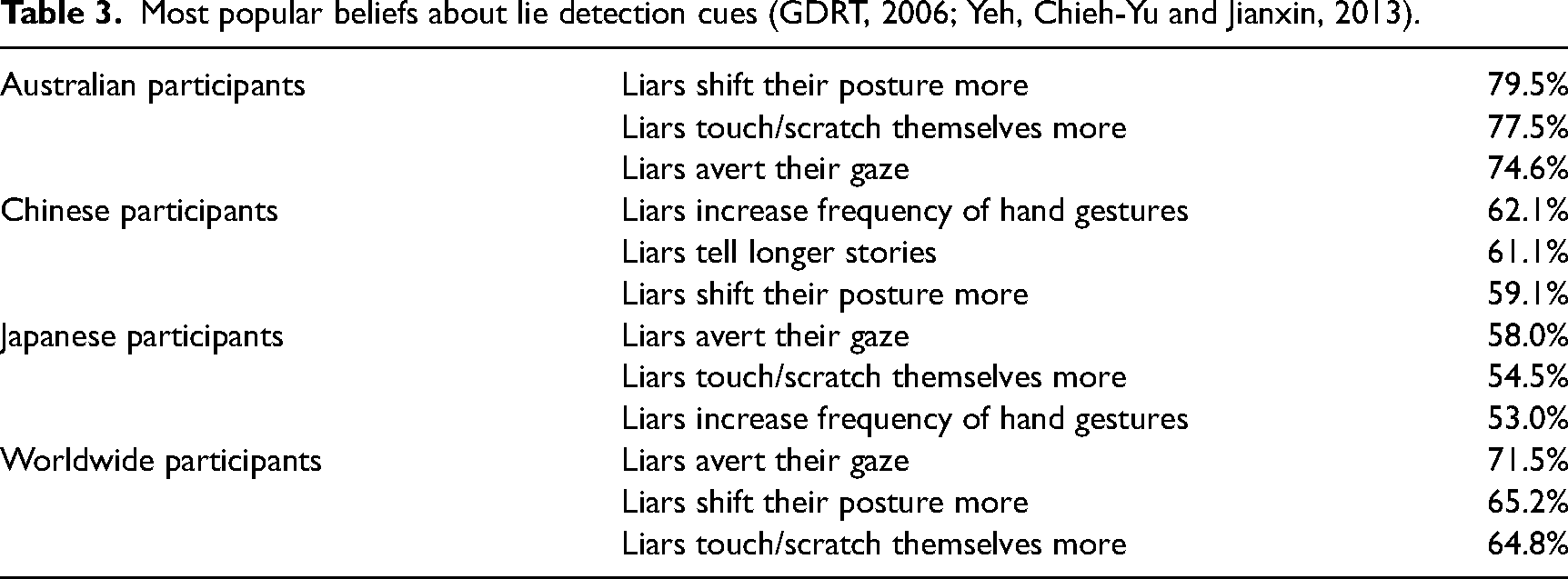
With regards to gaze aversion, in GDRT (2006) it was ranked first with 71.5% of respondents, and in our study, it was ranked third with 74.6% of the Australian participants, fourth in Yeh et al. (2013) with 58.1% of the Chinese participants and first with 58.0% of Japanese participants. This is unsurprising, considering that the meaning attributed to gaze aversion can potentially differ for people from collectivist and individualistic cultures (Akechi et al., 2013; Uono and Hietanen, 2015). In Japanese culture, for example, downward gaze is a sign of respect (McCarthy et al., 2006). However, it should be noted that the GDRT (2006) did not report age ranges. They stated participants were over 16, and participants were described as ‘mostly university students’ (2006: 3). In the Yeh et al. (2013) study, the Japanese and Chinese participants were university students who were also young. Their average age was approximately 19 and 20. The age range in our study was broad, with the youngest Australian participant being 18 and the oldest being 86. Therefore, differences between participants in GDRT (2006) and Yeh et al. (2013) may be due to age rather than cultural differences.
Overall, when comparing the GDRT (2006), Yeh et al. (2013), and our study, the most striking feature of Australian participants seems to be their stronger agreement on stereotypical cues of deception. While gaze aversion was the third most popular for Australian participants and the first in GDRT (2006), the Australian participants’ percentage (74.6%) was higher than that of the GDRT (2006) (71.5%). The top three most popular stereotypical cues of deception were mentioned by 74.6%, 77.5% and 79.5% of Australian participants. The qualitative responses further highlighted how nonverbal behaviour differences and language differences/difficulties could hinder cross-cultural lie detection.
In addition, like judges (Strömwall and Granhag, 2003; Denault et al., 2024; Denault and Talwar, 2024), Australian adults who may find themselves sitting in jury trials may hold (incorrect) beliefs about deception. The consequences could be devastating. They could (wrongly) assess the credibility of witnesses, and ultimately, (wrongly) determine who is telling the truth and what the outcome of the trial should be. While the prevalence of (incorrect) beliefs about deception among Australian judges is unknown, their prevalence among the Australian participants should not be overlooked: 74.6% of the Australian participants believed that liars avert their gaze, 79.5% that liars shift their posture and 77.5% that liars touch and scratch themselves. This should be considered when preparing witnesses, as otherwise honest witnesses showing these behaviours could be perceived as dishonest, and dishonest witnesses not showing these behaviours could be perceived as honest.
Finally, the prevalence of (incorrect) beliefs about deception should prompt the Australia court system to ponder instructions to jurors to minimise the negative impact of deception beliefs. While debates can arise when addressing instructions to jurors about nonverbal behaviour (e.g., Denault and Dunbar, 2019; Vrij and Turgeon, 2018), the prevalence of (incorrect) beliefs about deception cannot just be ignored.
The Australian court system is founded on the contention that sufficiently informed laypeople can delineate truth from lies (McMahon, 2003). However, jurors are sensitive to first impressions (Porter et al., 2009; Porter, ten Brinke and Gustaw 2010) and research findings have indicated that first impressions are formed within approximately 100 milliseconds and that once formed, they often become solidified, with contradictory information filtered out (Babiak and Hare, 2006; Bar et al. 2006; Porter et al., 2009; Willis and Todorov, 2006). Moreover, judgments pertaining to aspects such as trustworthiness, credibility and guilt have been influenced by superficial details such as facial appearance, personality, humour, social poise and material goods (e.g., trendy clothing and expensive accessories) (Bar et al., 2006; Bull and Rumsey, 1988; Bull and Vine, 2003; Porter et al., 2009; Todorov, 2008; Todorov et al., 2008). This is why addressing the deception beliefs of Australian adults who may find themselves sitting in jury trials is essential, even if only for jury trials.
Conclusion
The results of our study suggest that many Australian adults think they can tell when someone is lying to them, and compared to other countries, their agreement about stereotypical cues of deception is higher. The results of our study replicated those of GDRT (2006) and has allowed to better understand beliefs about deception from a population outside of North America and Europe, with a broad age range, from differing fields of employment and education, along with non-students. However, our study is not without limitations. One of them is the likely priming effect of asking the 10-item questionnaire of GDRT (2006: 72) before the two additional questions about cross-cultural lie detection. It would have been best to counterbalance the two additional questions about cross-cultural lie detection or separate the study into two, that is, the replication of the 10-question questionnaire, Study 2—Beliefs About Deception of GDRT (2006: 72) and the two additional questions about cross-cultural lie detection.
Furthermore, more than three quarters of respondents (77.1%) identified as female (N = 407), and although Australia is a multicultural country, few participants identified as Aboriginal (N = 20) or Torres Strait Islander (N = 2). Future studies could strive to reach the Indigenous population and, failing that, gather more culturally specific information about the respondents (i.e., collectivist or individualistic). Lastly, while the Qualtrics paid participants were recruited from different states and territories in Australia, it is unknown if they were temporary or permanent residents. The same holds for participants from Queensland (e.g., ABC North Queensland News Radio and flyers).
Finally, although our study examined a community sample, the results are likely to reflect the attitudes and beliefs of lay people who may be called on for juror duty in Australia. Focusing on stereotypical cues of deception could threaten accurate determinations of guilt or innocence (Denault et al., 2020) and result in wrongful convictions (Huff and Killias, 2013). This should not be overlooked, and results from our study show that there is still work to be done to reduce the consequences of (incorrect) beliefs about deception.
Footnotes
Declaration of conflicting interests
The authors declared no potential conflicts of interest with respect to the research, authorship, and/or publication of this article.
Funding
The authors received no financial support for the research, authorship, and/or publication of this article.
