




Abstract
This paper constitutes the first attempt to explore the act of rape in Cyprus. It delineates the nexus between victims of rape and offenders, as well as the circumstances in which the two converge. Also, it explores the legal backdrop against which rape court cases are dealt with by the local judiciary. For achieving this, 58 court cases (spanning from 2000 to 2020) are analysed. Findings underpin that female rapes in Cyprus do not markedly diverge from rapes occurring in offshore milieus. Also, although domestic statutory law on rape has long set aside the element of force, case law still carries remnants of judicial bias to that end.
Introduction
According to the European Union Agency for Fundamental Rights, based on a sample survey of 42,000 women in 28 member states of the European Union (EU), around 8% of women have experienced physical and/or sexual violence in 2012 and one in three women has experienced some form of physical and/or sexual assault since the age of 15. Also, 1 in 10 women has experienced some form of sexual violence since the age of 15, and one in 20 women has been raped since the age of 15 (FRA, 2014).
On a similar note, the commission of the offence of rape in Cyprus exhibits (from 2010 to 2021) a range of 14 to 38 (reported to the police) incidents annually with an average value of 23.6 and, although it is one of the most serious offences in the Cypriot penal code, it has never undergone substantial criminological and legal analysis. According to Eurostat (2022), in the year 2018, 1 Cyprus held the sixth lowest position among EU member states, in relation to the incidence of rape. Specifically, Cyprus recorded 3.24 rapes per 100,000 inhabitants, as opposed to Greece (1.46), which ranked the lowest, and England/Wales (99.48), which was positioned at the highest rank. However, it is worth pointing out that crime reporting (as will be explained at various points in the text) is a confounding procedure, therefore it cannot be taken at face value. Also, in the case of small states (i.e., Cyprus, Malta, Luxembourg), where the incidence of rape is relatively low, even a small variation can lead to a substantial change in relation to its aggregate (inter-state) classification (i.e., Eurostat).
There is little doubt that gendered sexual violence is a social conundrum that haunts societies worldwide and that concerted socio-political (i.e., #Me Too Movement) and legal attempts have been incrementally addressing the issue for both preventing/reducing its incidence and alleviating victims from its repercussions (sometimes forgetting the fact that male rape is not any less of a serious issue). The latest European-bound development to this effect is the proposal for a Directive of the European Parliament and of the Council on combating violence against women and domestic violence, 2 which, inter alia, intends to solidify the sanctions for crimes against women, elevating the support and protection of female victims and, overall, increasing the prevention of gender-based violence.
Yet, whether or not legislative reforms (aside their expansionistic nature enhanced by political feminist-bound landscapes) do effectively tackle gender-based violence, especially sexual violence, remains ambivalent (Dowds and Agnew, 2022). Nonetheless, such reforms have somewhat managed to shift the locus of regulation upon the individual/consensual aspect of the matter (Frank et al., 2009), to remove the onus of proof from victims (Sandoval, 2019), and to bring the offender's blameworthiness centre-stage (Cavallaro, 2019; Rumney and McPhee, 2021).
Indeed, rape legislative reforms are reported to have improved certain functions of the law, such as augmenting rape reporting rates (Clay-Warner and Burt, 2005), and amending police traditional approaches (Holleran et al., 2010); albeit claims to the contrary do not cease to exist (Campbell and Fehler-Cabral, 2022; Jordan, 2001). Still, the question of rape prevalence, frequency and tendency is, as ever, contingent to the flow and accuracy of data concerning female sexual violence.
Truly, there are many shortcomings to collecting representative data on sexual violence—such as rape incidence (Eigenberg, 1990; Krebs et al., 2022; Yung, 2013)—and establishing an accurate picture on the matter (Mannell et al., 2022). Indeed, estimating rape incidence is a hard to manage task as more than a few parameters are reported to influence such estimations; inter alia, the narrowness/broadness of legislative definitions, cultural reception of victimhood (i.e., widespread acceptance of rape myths), police efficiency, public assistance to victims, victim attrition, etc. Having said that, one can only go about describing the shape, colour and form rapes often assume, by estimates drawn from officially reported data (police records/victimisation surveys), empirical studies (surveys, interviews, observations, etc.) and analysis of secondary data such as documents, reports, court cases and the like. This study follows the latter approach; that is, the analysis of court cases.
Having said that, female rape is widely referred to as being the outcome of women refusing to submit to a sexual act (Miller and Kanazawa, 2007), demarcated by traditional sexual scripts (Byers, 1996); however, and speaking in legal terms, while it may be somewhat easier to prove the occurrence or not of a sexual act, the component of refusal—lack of, compelled or forced consent—is often more difficult to establish in practice (R v Olugboja [1982] QB 320). Keeping this in mind, this article uses the definition of rape as postulated by the domestic legislation (applied by courts in Cyprus) at the time of the study.
3
That is, Article 144 of the Criminal Code (Cap.154): Whoever enters into carnal knowledge with a woman, without the consent of the victim or with her consent if the consent for it was given under the state of violence or fear of bodily harm or in the case of a married woman, by impersonating her husband, is guilty of a felony called rape.
As deciphered by the above legal definition, rape, for our purposes at least, is conceptualised to be any vaginal/anal penetration of a woman by a man (penile) without her consent, notwithstanding whether any type and degree of force/threat was applied to the latter; decoupling, thus, consent and force.
This study aims at the criminological exploration of rape offences in Cyprus over a span of two decades. At the same time, this exploration focuses on the study of the legal and jurisprudential regulatory framework of the offence in question. That is, the sketch of Cypriot law (in contrast to laws of other nations), the examination of the penalties imposed on the perpetrators involved and the ratio decidendi of the courts (of First Instance and Appellate) during the trial of cases. That said, and simply put, the overall aim of this article is not to test the veracity of any hypothesis (i.e., the nexus between rape reporting timing and gaps in the justice system) or to construct a grand theory or to advance any specific epistemological method, but to merely delineate the circumstances and characteristics of rape (and the involved parties), across a continuum (from the crime commission to the sentencing phase), within the Cypriot milieu. Arguably, tackling the issue at hand from this vast viewpoint is rather helpful for better understanding (and improving) the ways in which rape is dealt with in practice, at the different stages of the criminal process.
The structure of this article is as follows. The first part clarifies the process by which data were collected and analysed. The second part presents the findings of the study alongside a discussion over the results. In the third part, there is a synopsis of the nub of the findings, followed by a brief note on prospective legislative amendments.
Methodology
The article draws on secondary data collected from rape court cases 4 in Cypriot courts (District, Assize and Supreme Court). These data were analysed via directed content analysis (Hsieh and Shannon, 2005). Meaning, the texts (content) of court cases were thoroughly studied and categorised (coded) based on specific themes such as frequency, time and place of rape occurrence, number and type of perpetrators, methods of crime commission, characteristics and reactions of victims, consent, evidential assumptions, etc. These parameters were sorted according to five main categories, namely the act of rape, the offender (defendant), the victim (complainant), 5 the complaint and the courts, which were then converted (where possible) to base rate statistics. Also, a literature review was carried out in relation to the description, estimation and regulation of rape in other offshore contexts, alongside an analysis of the content of relevant legislations.
Data concerning pertinent court cases were collected through local (Leginet 6 and Cylaw 7 ) and foreign (Westlaw UK 8 ) legal data bases. In total, 58 court cases (all the available cases in digital form) in Cyprus—starting from 2000 and ending in 2020—were analysed, involving 73 defendants (adult men) and 59 complainants (adult women).
Findings and discussion
As just mentioned, the data presented below concern rape cases that have ended up in court and have been tried. Therefore, in this study, the analysed data concern (unfortunately but compulsorily) only those cases which have been reported to the police and later tried by the courts in Cyprus. As indicated above, these data are divided into five subsections: the act per se (rape), the offender, the victim, the complaint and the courts.
The act of rape
The argument that is routinely made is that rape is conjoint with violence, and while there is some value to that, it does not seem to be cross-cutting. This subsection examines the aforesaid, along with the circumstantial characteristics of rape, the offender-victim relationships and the reactions of victims when put in harm's way.
As a first step, it is important to consider the relationship between physical force, violence and rape, which has long been established (Amir, 1971) as well as linked to different contexts (Baaz and Stern, 2009; Finkelson and Oswalt, 1995; Gelles, 1977), motives (Felson and Krohn, 1990; Marolla and Scully, 1986) and discourses (Estrich, 1987; Tadros, 2006; Yodanis, 2004). In line with these, our findings disclosed that the vast majority of rape cases in Cyprus involve the element of the use of physical force (87.9%); however, this was not evident in 12.1% of the cases. Interestingly, this, albeit a small percentage, belies the stereotypes of rape which support the notion that rape is always intertwined with physical force (McMahon and Farmer, 2011); a requirement that, unfortunately, is still reflected in legislations of certain EU member states—i.e., Slovenia, Malta and Finland (EIGE, 2017)—whose legal standpoints remain entangled within the binary of force presence/consent absence (Dripps, 1992; Kinports, 2001).
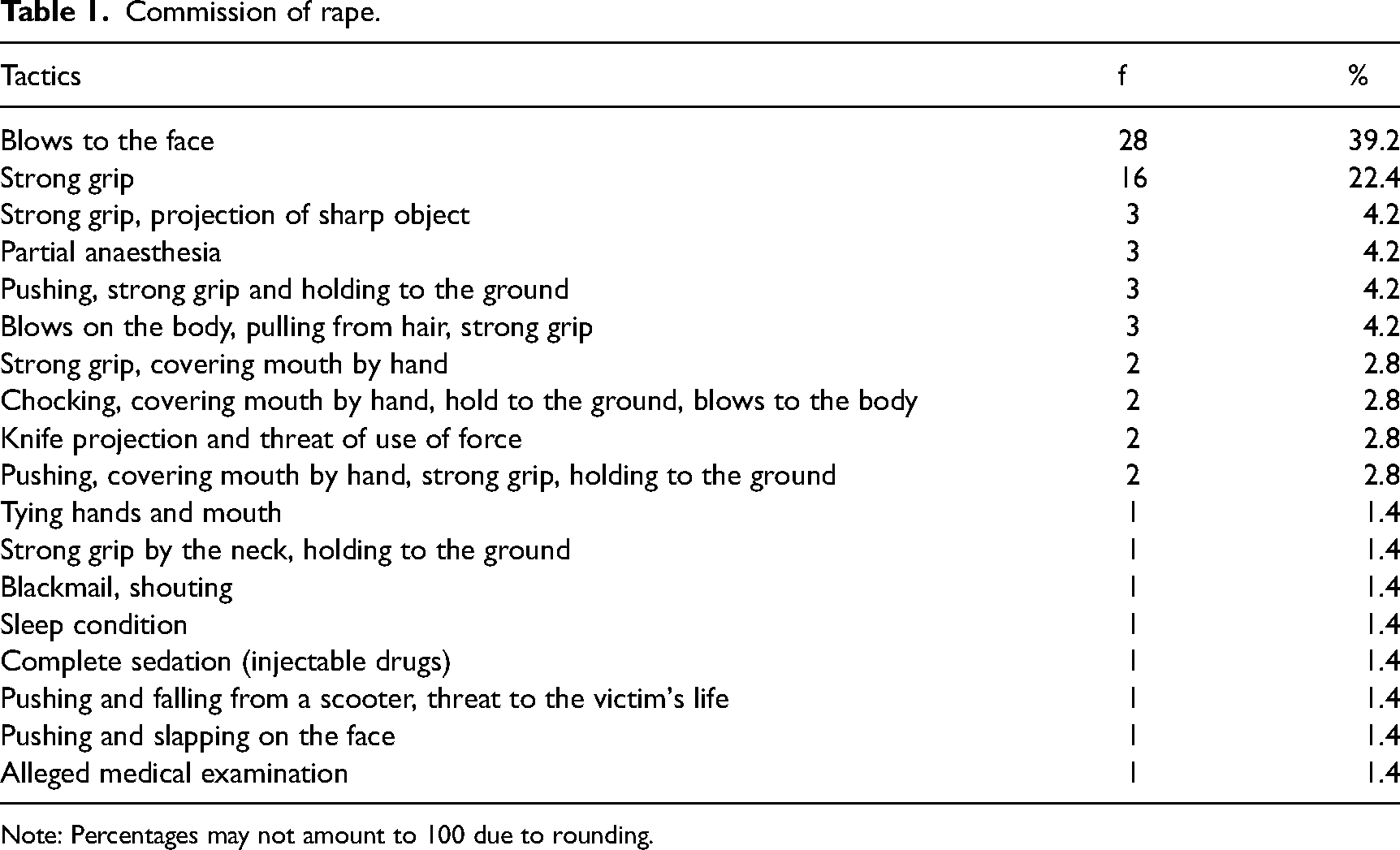
In addition to the element of force applied before or during rape, the study investigated the manifestations of violence (where it occurs) and the different ways in which offenders in Cyprus subdue rape victims. As presented in Table 1, 18 different tactics were detected. The most frequent is found to be the blows to the victim's face (39.2%), followed by the instances where the perpetrator immobilises the victim with a strong grip (22.4%). Third comes the strong grip and projection of sharp object (4.2%), partial sedation (4.2%), pushing, along with strong grip and holding to the ground (4.2%), and blows on the body, pulling from hair and strong grip (4.2%). Analogously, in the UK, violence during or prior to rape is prevalent in 90% of the cases and the most frequent tactic used by perpetrators to force penetration is found to be the use of force such as holding down, punching and kicking the victim (ONS, 2021). At this point, it is worth noting that the perpetrators (usually) exercise only as much violence as it takes to subdue the victim; however, there are cases where the perpetrators—depending on their type, such as selfish/unselfish (Hazelwood, 2016)—use escalating blunt force on victims after their submission (Hazelwood and Warren, 2016). This latter extreme type of tactic may be due to the motives of the perpetrator(s), possibly indicating that he/they is/are acting out sadistic (Holmes and Holmes, 2008; Krueger, 2010; Lovell et al., 2022), misogynistic (Koo et al., 2012) or hostile (Almond et al., 2022) sentiments.
Commission of rape.
Note: Percentages may not amount to 100 due to rounding.
Added to this, literature identifies particular factors that influence the degree to and fashion in which women respond (no resistance, physical/verbal resistance) at the time of rape, referring to the relationship between offender and victim (Atkeson et al., 1989), anticipated risk and harm induced by the offender, as well as physical and psychological ability/disability of the victim (Chopin and Beauregard, 2022), rendering offender-victim dynamics essential (Balemba and Beauregard, 2012).
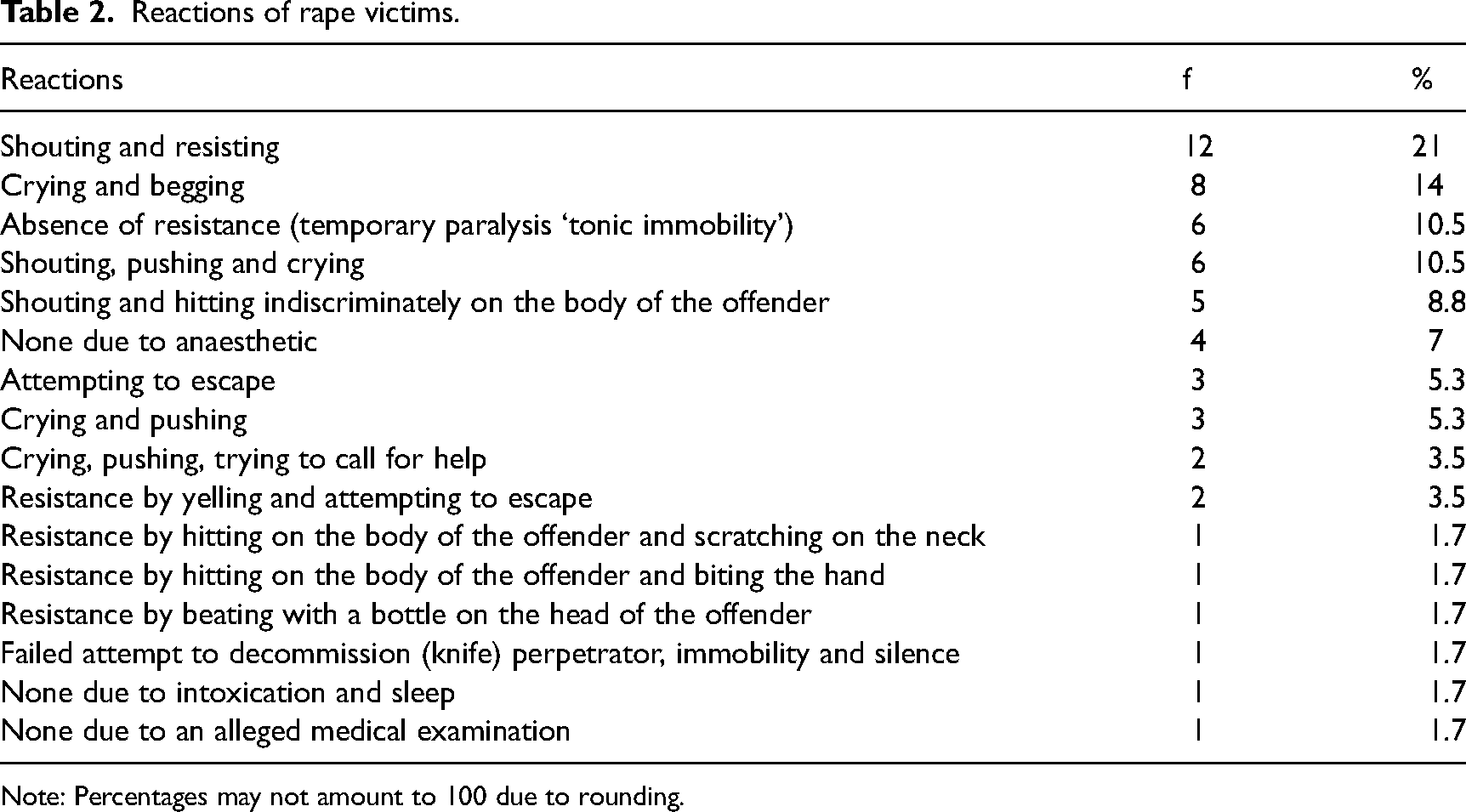
This study identified 16 different ways in which victims in Cyprus react to sexual assaults resulting to rape (Table 2). Such reactions involved, in rank of frequency: a) the screaming and resistance of victims (21%); b) crying and begging (14%); c) paralysis (10.5%); d) yelling, pushing and crying (10.5%); and e) screaming, resistance and hitting indiscriminately on the perpetrator's body, among others. The very reactions of victims, show rather vividly the asymmetry of the use of force during sexual assaults. In other words, even when victims are under attack, they rarely strike back at the perpetrators, as their primary concern is their survival expressed in various (resisting) defensive reactions, and not reciprocation (Ullman and Knight, 1992). Not to mention that, as our findings indicate, one out of 10 victims paralyse during the act of rape, ‘allowing’, therefore, the perpetrator to assault them unimpededly. To this end, literature highlights that (female) victims who had experienced child sexual abuse are more likely to exhibit tonic immobility (involuntary reflexing response) if sexually assaulted later, in their adulthood (Heidt et al., 2005). Additional research supports that tonic immobility may come to the surface in as high as 37% of the reactions of rape victims (Galliano et al., 1993) and, though it increases the possibilities of rape completion, it lessens the odds of physical injuries (de Heer and Jones, 2017), as well as curtailing the likelihood of reporting rape to the authorities (Pinciotti and Seligowski, 2021).
Reactions of rape victims.
Note: Percentages may not amount to 100 due to rounding.
Regrettably, victims’ resistance of rape is quintessential for proving the latter's rape, as (victim-blaming) stereotypes such as ‘she had it coming’ or ‘deep inside she wanted it’ (McMahon and Farmer, 2011) foster a not-real-victim discourse (Christie, 1986) and, lamentably, need to be rebutted, for they seem to influence the criminal procedure (Campbell and Fehler-Cabral, 2022; Constantinou, 2021; Hine and Murphy, 2019; Shaw et al., 2017; Wentz, 2020), as well as the outcome of court cases (Daly, 2022; Temkin et al., 2018).
Reflecting the comments above, rape victims are subjected to blatant humiliation, and this is proved by the mere fact that four (42.1%) out of 10 rapes in Cyprus involve multiple forced penetration (vaginal, anal and oral) incidents against victims. Also, at a much lower rate (6.9%) though, victims experience rape repeatedly over time. Comparatively, in the UK repeated rape incidents occur in 50.7% of the cases (ONS, 2021). This, as regards EU member states, appears to be more frequent in rape cases (≥ 6 incidents) involving partners (31%) or previous partners (40%) (FRA, 2014).
As far as the time-space of rape occurrence in Cyprus is concerned, almost seven (66.7%) out of 10 rapes seem to occur in spring (24.6%) and summer (42.1%), as opposed to fall (22.8%) and winter (10.5%). This, as other relevant research contends (McDowall et al., 2012), signifies that rape follows a seasonal pattern. Apart from high temperature, it follows that in the warm months of the year, on the one hand there is an increased influx of tourists and, on the other there is an increased social activity in more public places, during longer time periods of human coexistence throughout the day. This, alongside other pertinent research (in Brazil) which highlights the contrast between weekend and weekday (De Melo et al., 2018), is also partly witnessed by the fact that towards the end of the week—that is on Friday (21%) and Saturday (29.8%)—where the outing of the public and its intermingling (mainly for entertainment purposes) soars, the incidence of rape increases; whereas on regular weekdays rape incidence decreases (i.e., Monday 15.8%, Tuesday 14%, Wednesday 1.8% and Thursday 10.5%). Relatedly, as official statistics from the UK indicate, female victims who visit pubs/bars/nightclubs once a week or more often, fall victims of rape at a rate almost three times higher than females who do not visit such premises (ONS, 2021).
It is of little surprise that time and space do not exist in isolation from one another. Many incidents of rape are committed after the (first) contact of people in entertainment venues, and after consuming alcohol or using drugs. This is recorded by our findings to be happening in half of the rape cases under study (50%). More to the point, as our sample indicates, at a percentage of 20.7% both the offender and victim consumed alcohol/illegal substances, in 12% of the cases alcohol/illegal substances were consumed only by the offender, in 12% only by the victim and in 5.2% of the cases the victim has been secretly drugged. As Waterhouse et al. (2016: 6) contend: ‘stranger rapes are associated with solely the victim drinking and rarely involve solely the offender drinking in comparison to the rapes reported with other victim-offender relationships.’ Drug/alcohol-facilitated (or incapacitated) rape is routinely reported in relevant literature (Fitzgerald and Riley, 2000; Jaffe et al., 2022; McCauley et al., 2010; Messman-Moore et al., 2013). It is estimated that in cases of involuntary intake of substances female victims of alcohol/drug-facilitated rape amount to 29.7% and in cases of voluntary intake of substances such cases are said to happen in 84.0% of the instances (Basile et al., 2021). According to the US Department of Justice (BJS, 2016), it is projected that alcohol or drug use during rapes/sexual assaults is present at a percentage of 40%. In view of these assertions, it can be said that alcohol/drug use are prevalent in rape cases, and (especially in instances where the intake is voluntary) such being the case, victims entangled in such predicaments struggle to prove their innocence (Grubb and Turner, 2012), as police (Hohl and Stanko, 2015; O’Neal and Hayes, 2020; Venema, 2019), alongside the prosecution (Brown et al., 2007), the defence (Smith, 2018; Smith and Skinner, 2017) and jurors (Finch and Munro, 2005), tend to doubt the non-consensual facet of (alcohol/drug-induced) rapes.
As to the foregoing, rape (according to our sample) in Cyprus also appears to happen more at nocturnal time periods, mainly at and after midnight (60.4%). Interestingly, though adequately exploring the seasonal and temporal patterns of rape requires perplexed and rigorous analysis (accounting for both covariance and coexistence), viewed in a simpler form, criminological theories of victimisation—lifestyle theory—argue that as the levels of activity, socialisation and, in general, entertainment of people increase, the more likely people are to be victimised. Also, the more vulnerable persons converge with would-be perpetrators, in the absence of people capable of protecting the victims and supervising the perpetrators, the greater the chances are that vulnerable persons will become victims of crime—routine activities theory (Felson and Clarke, 1998; Schwartz and Pitts, 1995; Wilcox et al., 2003).
However, the aforesaid should be received with caution, since opportunistic rape does not necessarily equate to spontaneous, coincidental or stranger rape. In fact, the majority of reported rapes (70.7%) are committed by people known to the victim (e.g., domestic and acquaintance rapes), occurring in a dwelling, with most victims suffering no physical harms from the attack (Waterhouse et al., 2016: 5). Indeed (as recorded by a study in Spain), stranger rapes are often outnumbered by intimate rapes (Pastor-Moreno et al., 2022). This resonates with rapes in the US that are reported to be perpetuated by intimate partners (34%), by a relative or family member (6%), or by a friend or an acquaintance (38%) (BJS, 2016). Similarly, in the UK, victim-offender relationship in rape incidents involve an intimate partner in 46% of reported rapes, an acquaintance in 27.9%, and a family member or relative in 16.7% of the cases, correspondingly (ONS, 2021). As the findings of this study underpin, rape in Cyprus occurs between strangers at a percentage of 48.3% and between relatives/partners/friends/acquaintances in 51.7% of the cases. In more detail, Figure 1 illustrates the latter offender-victim relationships.
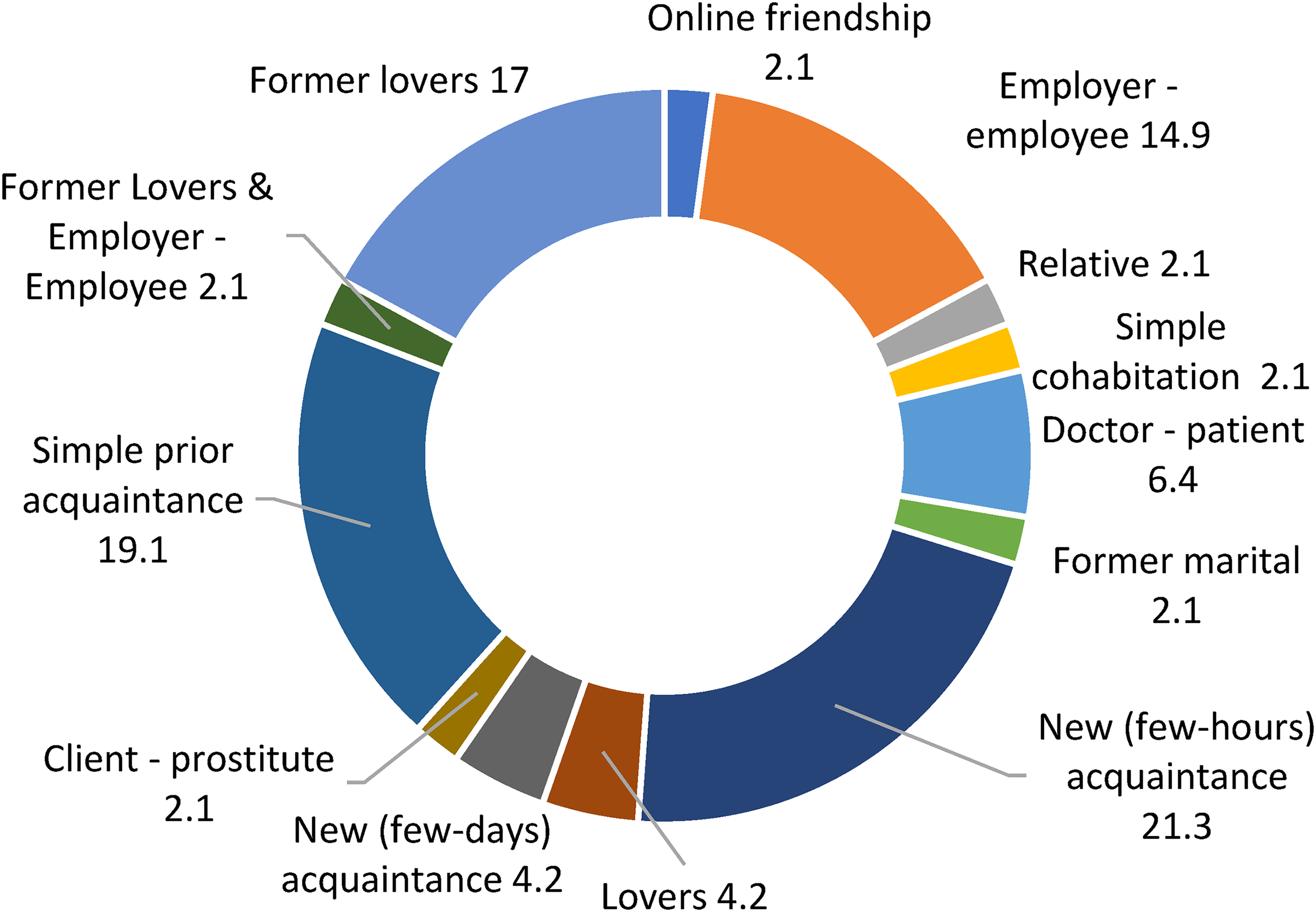
Offender-victim relationship (%). Note: Percentages may not amount to 100 due to rounding.
Illustratively, four types of offender-victim relationships stand out. That is, a new few-hour relationship (21.3%), which is listed at the highest point in terms of frequency, followed by the simple prior acquaintance (19.1%). Then come the instances where a former lover (17%) or employer of the victim (14.9%) complete a forced penetration of the victim.
In addition to the calendar/temporal aspect of the commission of rape, as well as the offender-victim relationship, the study also ventured to outline the usual places where rape is committed (Figure 2) in Cyprus. Specifically, the findings emphasised that almost in one out three cases of rape, the perpetrator comes into a forced intercourse with the victim after transferring her to an isolated area (30.5%). The second most frequent location where rape takes place is the victim's home (22%) and the third, the perpetrator's home (15.2%). By comparison, in the US the three most frequent locations of rape occurrence are at (or near) a victim's home (55%), at open areas/public transportation (15%) and at a friend/relative/acquaintance's home (12%) (BJS, 2016), while in the UK, such locations are found to be at a victim's home (37.9%), at the offender's home (26%) and somewhere else (18.9%) (ONS, 2021).
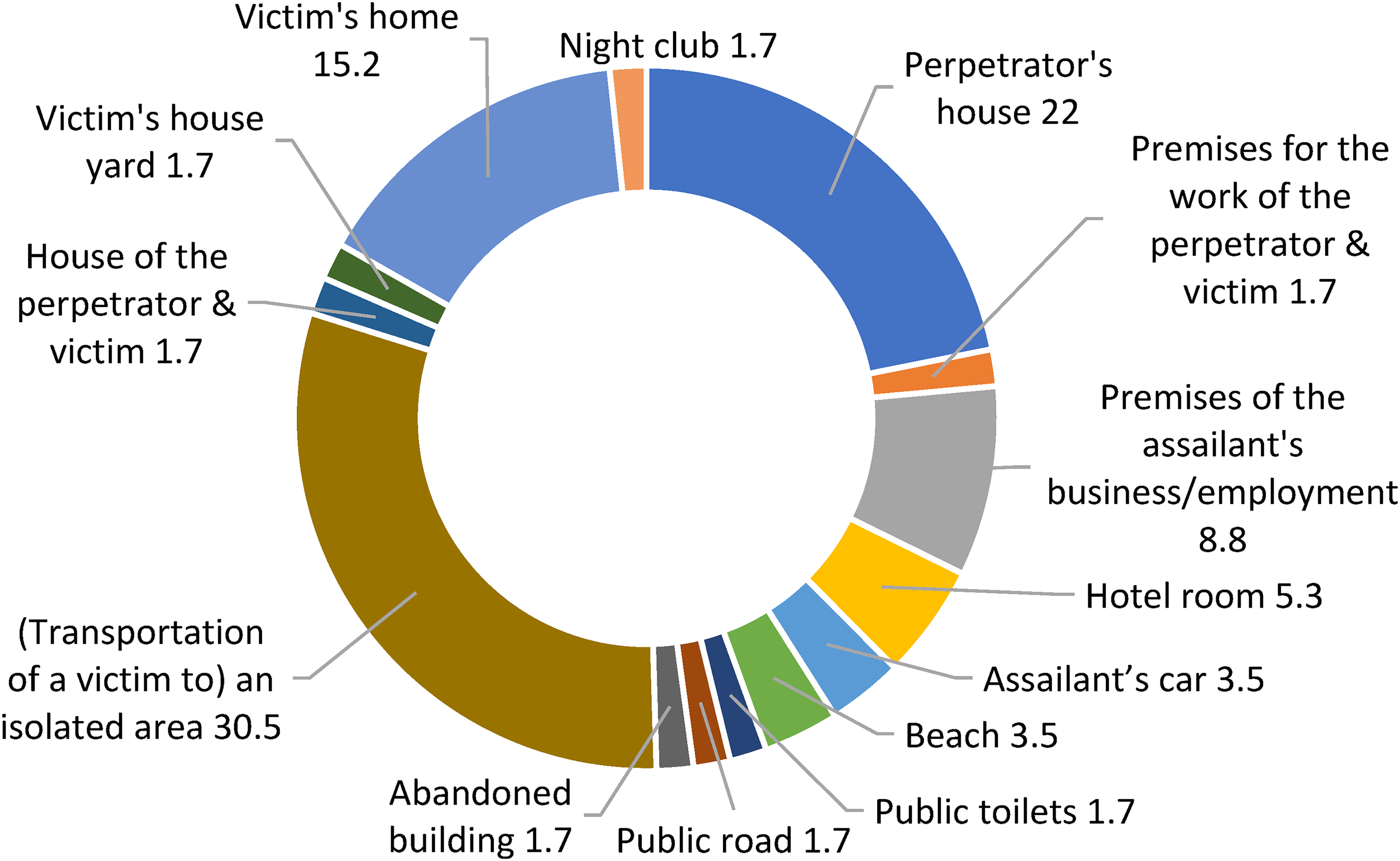
Place of rape commission (%). Note: Percentages may not amount to 100 due to rounding.
Also, the above graph (Figure 2) demonstrates the close connection between kidnapping and rape in Cyprus, since the transference of victims to remote locations occurs in almost one out of three incidents. In addition to kidnapping, the study identified a set of additional offences that occur in parallel with the offence of rape, of which the most prevalent are reported to be: a) threat of violence; b) assault causing actual bodily harm; c) assault causing grievous bodily harm; d) burglary; e) burglary during the night; f) conspiracy to commit a felony; g) robbery; h) sexual exploitation of adult persons; i) a claim on property with written threats; and j) criminal damage.
At an earlier point in the text, there was a note on the manifestations of the violence suffered by rape victims in Cyprus. Adding to these is the fact that the vast majority of rapists in Cyprus do not use a condom (94.6%), with all the corollaries that this may entail, such as sexually transmitted infectious diseases. The study also showed that in some cases perpetrators ejaculate during vaginal forced penetration (9%). Albeit this increases the chances of police detection (Chopin et al., 2019), it nonetheless crushes victims’ sexual autonomy, to say the least, and altogether exposes victims to an increased risk of unwanted pregnancy (Gottschall and Gottschall, 2003).
Having delineated the act (and circumstantial aspect) of rape, we now proceed to cast light on the offenders’ characteristics and role in rape.
The offender
Starting from the demographics, it is worth noting that 46.8% of the perpetrators are individuals born in Cyprus and the remaining percentage (53.2%) corresponds to non-Cypriots. Strikingly, this disproportion (involvement of foreign offenders) is quite high since foreign presence in the Cypriot population ranges between 20% and 25% of the entire population.
Regarding the marital status of the perpetrators in Cyprus, the findings of the study reveal that 57.5% of the perpetrators appear to be single, 27.5% divorced and 15% married. However, when interpreting the results, it must be taken into account that the mean value of the offenders’ age is only 34 years, and this may play a role in the classification of offenders on the basis of their marital status (e.g., not old enough to have entered a marital life). Correspondingly, the most prevalent age group of rape offenders in the UK falls between the ages of 20 and 39 (65.4%) (ONS, 2021), and in the US it is 30 years or older (48%) (BJS, 2016).
Having explored the demographic characteristics of the perpetrators, our attention now turns to the ways in which rapists act. According to the study's results, it was found that in 8 out of 10 rapes (79.3%) occurring in Cyprus only one perpetrator is involved. Two perpetrators are involved in 17.3% of cases, and three or four in 1.7%, respectively. This leads us to state that rape, in general, is not a co-offending sort of activity, but an individual activity involving solo offending. Likewise, though somewhat varied, results from an EU-wide survey give credence to our findings, since they contend that one perpetrator is involved in 90% of cases, two perpetrators in 4% and three or more in 5%, leaving the rest of the 1% of cases to victims who were not in a position to declare with certainty (FRA, 2014). Solo offending in rape is also established in the US (90%) (BJS, 2016) and in the UK (65.7%) (ONS, 2021). Put differently, gang rape in Cyprus is estimated to occur in two out of 10 incidents, in the EU and US in one out of 10 rapes, and in the UK in slightly over three out of 10 such offences.
Evidence also shows that the fashion by which perpetrators approach (and subdue) their victims is often used to configure the behavioural impetus behind a rapist's act; which, in general terms, involves themes of control (i.e., blunt hand force used, masturbation, etc.), hostility (i.e., surprise initial approach, anal penetration, etc.) and involvement (i.e., con initial approach, kisses to face, etc.) (Almond et al., 2022: 4826). In relation to our study, Table 3 provides a rather detailed illustration of the ways in which perpetrators in Cyprus prey upon their victims. Such approaches vary from cajoling victims (i.e., caresses and sweet-talk at the meeting point) to dragging them into cars (i.e., forced boarding of the offender's vehicle) to exploiting moments of weakness (i.e., exploitation of the victim's state of intoxication and sleep) and trust (i.e., deceiving patients on the administration of treatment). According to our findings, in rank of frequency, the first of the known approaches to rape is the sudden attack in public places (10.5%), where unsuspecting victims—especially in space-times where there is no marked social activity—are attacked by perpetrators, who intentionally seek out such opportunities to commit sexual offences. This finding coincides with results from other research (in Sweden and in the US) that study rape geography and support that finding that the elements of accessibility, opportunity and anonymity are closely connected to rape incidence (Ceccato et al., 2019; Lovell et al., 2022). Next comes the rape that occurs during a house burglary (8.8%), in which case the offender opportunistically enough ventures to also commit a home-intrusion rape (Warr, 1988), taking his victim by surprise. Equally, with the same regularity (8.8%) offenders in Cyprus adhere to the approaches of: a) exploiting an acquaintance shortly met at a nightclub in combination with offering to walk with the victim outdoors; b) offering to go by car to a destination of choice of the victim (this includes cases where the victim does not know the perpetrator); and c) engaging in foreplay with the victim without the latter consenting to a complete sexual act. At a lower frequency (5.2%) are classified actions such as: a) forced boarding of a victim in the vehicle of a perpetrator; b) deceit (doctor towards patient) on receiving a treatment; and c) offer of transportation by vehicle (usually motorcycle) to a destination of choice of the victim.
Approaches of rape offenders.
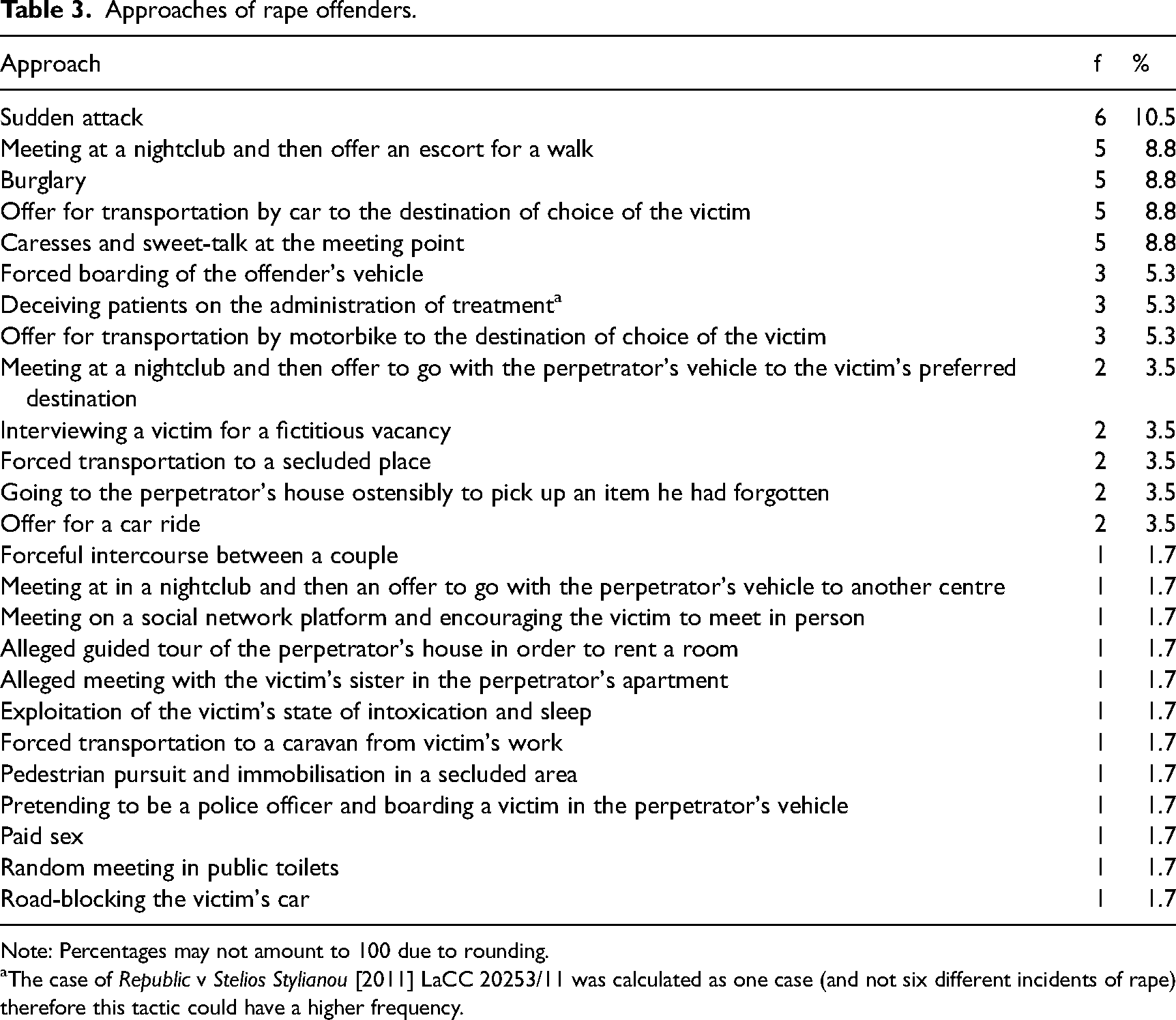
Note: Percentages may not amount to 100 due to rounding.
The case of Republic v Stelios Stylianou [2011] LaCC 20253/11 was calculated as one case (and not six different incidents of rape) therefore this tactic could have a higher frequency.
Notably, out of the entire spectrum of the said rape approaches, the deception by a physician stands out, as it involves a highly unreported sexual abuse of a doctor-patient relationship (Bagenal and Baxter, 2022), which, as noted at an earlier point in the text, in Cyprus occurs at a 6.2% rate. Also, it is emphasised that most cases where the perpetrator offers a ride to the victim end up in transporting the victim to a remote/desolated area; the location where almost one out of three rapes take place (30.5%). This is not dissimilar to relevant research which points out that the selection of known or unknown rape locations by offenders indicates their level of crime sophistication, and serial rapists (as opposed to single-victim rapists), apart from being more likely to incapacitate their victims as well as use weapons, select locations that they are familiar with (Mellink et al., 2022: 59).
Having explored the ways in which offenders force/tantalise victims into rape, we now turn our attention to the claims made to Cyprus police, once the former's actions are under investigation. Notably, as is also the case with other offences, almost 8 out of 10 men accused of rape do not admit to committing it (77.8%). Importantly, two in three suspects admit to having had consensual sexual intercourse (66.6%) but claim that it only occurred with the free and full consent of the victim. The rest of the offenders (33.3%) completely deny the existence of any sexual intercourse.
In general, as our findings show, the vast majority of perpetrators (89%) do not have a criminal record. Out of the 73 examined offenders, only one was found to be a serial rapist (i.e., two separate rape incidents with two or more victims). Two perpetrators were, in the past, accused of committing sexual assaults, and one perpetrator had previously sexually exploited a minor. Relatedly, a study examining the behaviour of UK rapists showed that ‘Involvement’ offenders are significantly less likely to have a prior conviction, while ‘Control’ or ‘Hostility’ offenders are significantly likely to have (Almond et al., 2022: 4830).
Also, it is worth noting that in contrast to the stereotype/proposition which posits that rapists suffer from mental illnesses (Hermolle et al., 2022) or personality disorders (Bushman et al., 2003), only 12.3% of the perpetrators in Cyprus were found to have been diagnosed with a mental illness by a mental health professional. Such diagnoses concerned the sexual perversion disorder, acute organic psychosis, impulse control disorder and major depressive disorder. Of course, the absence of a formal diagnosis does not mean that a mental issue is not present, or that some rapes are not fuelled by mental deficiencies and distorted cognitions (Polaschek and Gannon, 2004). Typically, but by no means exclusively, the percentage (12.3%) pointing to a mental illness barely exceeds one tenth (9) of our sample (n = 73), which reliably indicates that the preponderance of rapes are carried out by choice, agency and calculation (Beauregard and Leclerc, 2007; Bouffard and Bouffard, 2011; Malamuth et al., 1980).
The victim
Upon analysing the offender's part in rape cases, the focus is now directed to the receiving end of harm, the victim. As it turns out, in direct contrast to the case of perpetrators, the group of female foreign workers in Cyprus constitutes the larger subpopulation of rape victims (35.6%). Indigenous women occupy the second place (23.7%) and female permanent (foreign) residents come next (18.6%). As in the case of male foreign offenders, where they appear to be disproportionately linked to the crime of rape, so foreign women (conversely) are found to be disproportionately represented as victims of rape; exhibiting, to an extent, intra-racial rape characteristics (Lim et al., 2022).
As far as the marital status of victims in Cyprus is concerned, unmarried women make up the majority of victims (60.4%) and married women account for about one fourth of the total number. Divorced females occupy the third tier of the ranking with 15.1% and widows account for the 1.9% of victimisation rate. As also mentioned when explaining the percentages of the marital status of the perpetrators, due to the young of the age, the marital status of victims is obviously influenced by the fact that their mean age value is only 31. Relatedly, rape victims’ age prevalence in the UK is recorded to be: a) between 16 and 19: 40.7%; b) between 20 and 24: 26.5%; c) between 25 and 34: 20.9%; and d) the rest: 11.9% (ONS, 2021).
In addition to demographic variables and in relation to the palpable signs of violence that victims in Cyprus are likely to receive before, during and after rape (Table 1), it was found that in the majority (55.1%) of these cases victims carry visible physical traumas. 9 Here, it must be noted that whether a victim suffers physical injuries or not does not necessarily signify the degree of violence she has suffered, since many times: a) the blows she receives during the assault may be in parts of the body that do not easily leave signs of abuse (i.e., abdomen); b) the victim may carry heavy clothing or protect herself with her hands; or c) the victim reports the incident at a later time where injuries have already healed. At any rate, in the US, victims of rape are reported to sustain injuries in 54% of the cases (BJS, 2016). In the UK, physical injuries in rape cases are present at a level of 35.7%, consisting of minor bruising or black eye (23.1%), scratches (14.9%), severe bruising or bleeding (7.3%), internal injuries or broken bones (4.7%) and other physical injuries (7.8%) (ONS, 2021).
Be it as it is, although mental and emotional problems far outweigh in volume and seriousness (i.e., homicidal tendencies, unwanted pregnancies, contracted diseases) physical injuries (ONS, 2021), the latter injuries (evident as they are) to the victim's body are a powerful tool in the hands of the police and prosecutorial authorities, since, as will be mentioned at a later point in the article, the courts take into account the relevant medical reports as part of the prima facie evidence that materially incriminates the accused.
The complaint
This subsection feeds into the (already explored) initial phase of rape as regards the act, the offender and the victim in that it provides information on the timing of reporting rape, but also on the elements that may influence crime reporting.
The time, fashion and source of reporting a crime, especially in the case of sexual offences (Frohmann, 1991), play a catalytic role, as the victim's own complaint is the starting point of the investigation of the case, but also the initiation of the subsequent criminal prosecution of offenders (George et al., 2022). Admittedly, the offence of rape falls within the corpus of offences with a very low reporting rate; varying from 7.1% (Kilpatrick et al., 1987) to 20% (FRA, 2014) to 36% (BJS, 2016). This is due to a set of factors such as shame, self-accusation, doubt, fear, lack of trust in law enforcement (FRA, 2014; Thompson et al., 2007), weapons used and injuries sustained during rape (Clay-Warner and McMahon-Howard, 2009; Du Mont et al., 2003), deeming rape incident as unimportant (BJS, 2016), being prevented by family (Munala et al., 2022) or merely not wanting the offender to be punished (ONS, 2021). Nevertheless, it should be emphasised that the time (and way) of reporting/externalising—or not (Caron and Mitchell, 2022; Koss, 1985)—such a traumatic experience differs from person to person (Belknap, 2010), and this is evidenced by the reporting variance detected in the findings of this study. In addition, it is worth bearing in mind that Cypriot courts, like English courts (Daly, 2022), place particular emphasis on the time that has elapsed between the rape incident and the complaint (first complaint), but also on the way this complaint is made (i.e., the psychological state of the victim when recounting her rape); facts that, unfortunately, may be misinterpreted (i.e., discrediting the prime witness's testimony) by the discursive predisposition of the Cypriot courts (Charalambous, 2015), in case the victim does not report the incident shortly after its completion.
As our analysis reveals, 10 in Cyprus, almost one in four victims notifies the police of their victimisation immediately after (within two hours) the incident (23.2%) and another significant percentage of victims (46.4%) do so within 12 h. Taking into account the percentage of victims (9%) who submit a complaint to the police within 24 h, it is concluded that almost 8 out of 10 women (78.6%) officially report their rape within one day from crime commission. Also, there are cases where victims report their rape up to six months after the incident (7.1%) or even up to a lapse of one year (3.6%). Summing up these percentages, it is concluded that 1 in 10 female victims of rape is assuming official action outside the time frame expected (by the normative approach of the courts) from victims to contact the relevant authorities.
In a related way, the study sought to also examine some factors which contribute to reporting a rape incident to the police. As it appears to be the case in Cyprus, most victims draw courage on their own and autonomously turn to the police authorities (71.4%). However, people from victims’ friendly (17.9%) or related (9%) social surroundings also seem to play a role in rape reporting. Taken to its furthest extent, as a relevant study indicates (Puthillam et al., 2022), in direct contrast to victims’ friends who encourage victims to report rape, offenders’ friends tend to discourage the later from doing so. At any rate, there are also cases where Cyprus police (in the process of investigating another case) come into contact with the victims and, as a result, the latter report their rape (7.1%). By way of comparison, in the US rapes are reported directly by the victims at a 64% rate, via other household members at a 10%, by an official other than the police at a 14%, and by someone else at a 10% rate (BJS, 2016). On a similar note, in the UK, when rape involves a partner/ex-partner, victims report to the police in 18% of the cases, whereas when a stranger is involved, the rate is augmented to 24.2% (ONS, 2021). Most pertinently, in stranger rape incidents (as opposed to acquaintance), victims’ positions are more easily validated (Persson and Dhingra, 2022), possibly because they fit better into the socially induced sexual ascriptions (Frith, 2009) and this could, in a sense, influence such decisions.
It is also interesting to note that offenders in Cyprus, in an attempt to stop victims from filling a complaint against them, engage victims in various intimidating and other tactics. For instance, death threats extended to a victim in case she reports her rape amount to 14.9% of cases, while attempts to bribe the victim (usually for withdrawing a complaint) make up 3.8% of cases. In the most extreme cases, in order not to ‘give away’ the perpetrator, the latter kills his victim (1.9%).
The courts—rationes decidendi and obiter dicta
Having completed the exploration of the initial (rape, offender, victim) and intermediary (complaint) phases of the rape phenomenon, this subsection forms the last phase (court) and embarks on examining the rationale of the courts (that in Cyprus follow the adversarial system of justice) when adjudicating upon cases of rape.
The Republic of Cyprus has ratified the relevant international 11 and EU 12 legislation and the crime of rape is regulated, par excellence, by Articles 144 and 145 13 of the Criminal Code (Cap. 154). Specifically, as also noted at the preamble, Article 144 of the Criminal Code (Cap. 154) classified rape as a criminal offence against morals and defined it as: ‘whoever enters into carnal knowledge…is guilty of a felony called rape’. The maximum penalty for the offence of rape is determined, under Article 145, as imprisonment for life. At this point it should be re-emphasised that at the time of this study this law (which was amended in 2020) 14 was in effect, hence all studied cases (our sample) were tried according to its (pre-amendment) provisions.
As the above law has been interpreted by the (common law bound) Cypriot courts, in order to prove the offence of rape, it is not necessary that the victim (complainant) demonstrates or explicitly communicates to the offender (defendant) that she does not consent to a sexual intercourse (R v Malone [1998] 2 Cr App R 447). 15 It is also not necessary to prove that the victim has put forward any resistance (R v Olugboja [1982] QB 320). 16 However, the prosecution must prove that the victim's consent had not been given or, if it was given, was not the result of the victim's free will and that the action was illegal, as there was no consent on the part of the victim, Kailis v Republic [2004] 2 CA 251. To that end, it is clarified that the complainant is incapable of giving her consent when she is under the influence of alcohol or other substances (R v Malone [1998] 2 Cr App R 447). 17 In addition, a distinction is made between incidents where the complainant consents or simply gives in (Raheb Hatami Bejandi v Republic [2014] 2 CA 228), as a result of the fear and terror experienced by her (Gregoriou v Republic [2001] 2 CA 571). At the same time, in relation to the mental state of the defendant, an intention to have sexual intercourse with knowledge that the victim does not consent or indifference as to the existence or not of consent on the part of the victim (R v Khan [1990] 2 All ER 783) must be proved. 18
In order to prove the above components of the offence, the courts in Cyprus evaluate the facts of a case in relation to the submission of evidence/testimonies. After analysing the content of rape cases, the study recorded the evidence presented before a court by the opposing parties and how they, in turn, are evaluated by the judicial authorities. By way of illustration, Appendix 1 demonstrates the points on which the court focuses during the trial of a rape case. Of great importance to the proof of the guilt of a defendant seems to be the credibility of the testimony of the complainant (Republic v Georgios Georgios Charalambous [2006] PCC 4448/06), where the court can act solely on the basis of this testimony without seeking (corroborated evidence) a supporting testimony (Republic v Debo Supo Fowokan [2012] LaCC 18063/11). However, as a principle of practice, the courts, for the most part, seek corroborated evidence 19 (Sammy John Lee Trussler v Republic [2013] 2 CA 65). That is, among other evidence, the existence of a first complaint, based on Article 10 of the Evidence Law, Cap. 9, and Cypriot case law (Omirou v Republic [2001] 2 CA 506; Georgiou v Republic [2008] 2 CA 618), by which it strengthens the testimony of the complainant when it is given spontaneously and at the first opportunity reasonably offered.
As to the foregoing, it is made clear that the judiciary, in order to fill in the gaps created by the indeterminate domestic statutory law on rape, has established certain principles for somewhat dealing with circumstantial and evidential elements surrounding rape.
The courts—sentencing
This part of the article supplements what is just been said on courts’ rationales for their decisions by explaining the legal framework behind sentences on rape.
In the past, English case law had determined the amount of the penalty according to whether or not the factors mentioned in the Billam case 20 existed. Similarly, the Cypriot courts (to some extent) follow (still) such guidelines (Republic v Christakis Pelopidas and Others [2011] LiCC 34444/10; Republic v Savvas Omirou [2017] PCC 9957/15; Republic v Alexandru Duna and Other [2013] LiCC 16512/13). Ironically enough, English case law has been updated (R v Millberry and Others [2003] 1 WLR 546); however, this has not been found to be reflected in Cypriot case law.
In any case, on the basis of Cypriot case law (based on R v Billam and Others [1986] 3 Cr App Rep (S) 48), despite the fact that the court has discretion and may impose sentences of up to life imprisonment, the decision as to the extent of the sentence it may impose is based on whether one (or more) of the following aggravating factors are present: a) the force used is excessive; b) when a weapon is used to intimidate or harm the victim; c) when rape is repeated; d) when it is carefully planned; e) where the accused has previous convictions for rape or other sexual offences or violent offences; f) when the victim has been subjected to sexual humiliation; g) the victim is either too young or too old; and h) the effects on the victim (mental or physical) are of particular severity.
Also, as stated in the Republic v Christakis Antoniou [2017] NDC 23573/15 (with reference to the Billam case): for rape committed without any aggravating or mitigating factor, in a case after a hearing must be taken as the starting point of a sentence of five years in prison. Where the rape is committed by two or more persons jointly, or where there has been an illegal entry into the victim's place of residence, or by a person who was liable to the victim or by a person who has kidnapped the victim and is holding her captive, the starting point for a sentence shall be eight years.
In conjunction with the above aggravating factors, the study also identified a set of reasons that constitute (to some extent) mitigating factors as to the length of the sentence imposed on defendants by the courts. These are as follows: a) instant admission; b) no criminal record; c) intoxication of the accused (provided that it is not achieved for the purpose of facilitating the implementation of a decision to commit the felony); d) protector of the family; e) lack of pre-planning; f) psychological problems; g) low educational and socio-economic level; h) a serious state of health; i) young age; j) loss of career; and k) short duration of the criminal act.
Furthermore, our data analysis has shown that the minimum prison sentence is 2.5 21 years, the maximum is 20 22 and the average value is 7.5 years (as opposed to England/Wales where more than 10 years is the average sentence). 23 Although it has not been possible to identify references in relation to the extent of sentences imposed by the courts of other EU member states, it follows from the study of relevant legislation elsewhere (see EIGE, 2017) that the penalties imposed by the Cypriot courts range within the framework determined by the laws of other EU member states. However, it is worthy of note that, unlike Cypriot legislation, where no minimum penalty is set, in many EU countries the minimum/maximum penalty is predetermined by statutory law (i.e., in Bulgaria, Czech Republic, Finland, Spain, Italy, Slovenia and Slovakia).
In sum, the findings presented in the latter two subsections (courts) point to the existence of outdated statutory and case law. This lends support to the idea of pursuing legislative amendment; an issue that is discussed at the ensuing concluding part. Also, other issues linked to rape trials that surface in a court room, such as teleconferencing for ensuring the protection of vulnerable victims, vetting of translators, presentation of evidence by the prosecution and judicial guidance are of pivotal importance; however, they could not be explored in the confines of this article.
Concluding remarks
As is by now clear, the article is dedicated to delineating the frequencies, characteristics and manifestations of rape in two disparate settings, namely the crime scene and the court room. Given the adhered methodology and its inherent limitations (i.e., considering only tried cases and not accounting for the majority of cases that never reach the police or the courts) as regards the quantity and quality of the data being processed, the findings admittedly fall short of forming the basis for any watertight generalisations. Such being the case, one should only view the discussed findings as a preliminary attempt to cast some light on the phenomenon of rape in Cyprus and also to attest whether findings from other studies can be extrapolated to our case.
Once again it is mentioned that the present article attempts to explore the offence of rape by taking into account the very act of rape, the offender, the victim, the complaint and the courts, analysed against a criminological and legal backdrop.
During the criminological mapping of the discussed offence, it was found that most of the cases of rape in Cyprus contain the element of force, almost half of them involve multiple sexual acts and, to a lesser extent, exhibit repetition. In addition, there seems to be some prevalence of the offence during the warm months of the year. Pervasiveness is also found to occur during the midnight and early morning hours, as well as on Fridays and Saturdays. More to the point, new short-term relationships between potential perpetrators/victims, in conjunction with the consumption of alcohol (and/or illegal drugs) elevate the odds of women being victimised. At the same time, the transference of victims to remote areas is one of the most prevalent (pro-crime) actions of rapists. Moreover, one in two rapes includes the offence of kidnapping. Importantly, rape is found not to be a group criminal activity of co-offending; instead, it is reported to be a solo-offending type of crime. Also, unsurprisingly, 8 out of 10 perpetrators do not plead guilty. Although most rape incidents are accompanied by the use of force, almost half the number of victims (at the time of reporting) do not bear any obvious signs of violence (physical injuries) on their body. Most rape victims voluntarily proceed to report their rape, usually within the first 24 h after the incident. The fact that 3 out of 10 victims receive threats/pressures not to report (or withdraw) their official complaint is also remarkable. All in all, manifestations of rape in the Cypriot milieu somewhat echo rapes being carried out in offshore settings, such as in the US and the UK.
As the domestic statutory law on rape now stands, it would be fair to say that it includes certain elements that safeguard the sexual autonomy of rape victims. For instance, the discarding of proof of victim resistance and the explicit condition that without consent an intercourse becomes illegal bring Cypriot legislation in line with legislation of other states that are considered to have adopted victim-centred approaches (i.e., England and Wales, Belgium, Denmark, Greece, Ireland, Luxembourg and Spain).
Nevertheless, while not intending to go in detail but only briefly touching upon certain matters and, also, being based on legal realism propositions, Cypriot statutory and case law need to be uplifted, so to reflect contemporary realities. Certainly, Cypriot statutory law (despite the 2020 amendment) needs further revision, so as to criminalise the rape of either sex by either sex (male rape by a female in particular). Also, the provisions of the law can be expanded to cover a wider range of possible human interactions. For instance, cases where the perpetrator pretends to be any known person (impersonation) to the victim and the latter, being deceived, consents to an intercourse (e.g., twin brother of a boyfriend of the complainant, R v Elbekkay [1995] EWCA Crim 1). In addition, the amended legislation could—although this gives rise to issues linked to the right to a fair trial (Art. 6 of the ECHR) and to the presumption of innocence (Woolmington v DPP [1935] UKHL 1)—shift the burden of proving consent to the defendant (i.e., reasonable belief attested by subjective test and balanced with objective elements). In other words, reversing (on the balance of probabilities) the burden of evidential (not legal) burden of proof on the defendant. Additionally, the amendment must include more provisions in concern to the vitiation of (conditional) consent. In particular, where there is deception as to the purpose and quality of a sexual intercourse (R v Lawrance (Jason) [2020] EWCA Crim 971), such as secret audio-visual recording of the act (R v AE [2021] ABCA 172) or removal of a condom (Assange v Swedish Prosecution Authority [2011] EWHC 2849 (Admin)) or ejaculation within vagina (R(F) v Director of Public Prosecutions [2013] EWHC 945 (Admin)) without the knowledge and consent of the complainant. Lastly, penalties attached to the offence of rape must be framed by statutory law, leaving, thus, less discretion to domestic courts in deciding to this end. In other words (without intending to depreciate the spirit of law established by the courts while interpreting statutory law), and while acknowledging that merely legislating is not enough, Cypriot legislature must step in and reframe the context in which the offence of rape is defined, prosecuted, tried and punished, altogether.
Footnotes
Declaration of conflicting interests
The author(s) declared no potential conflicts of interest with respect to the research, authorship, and/or publication of this article.
Funding
The author(s) disclosed receipt of the following financial support for the research, authorship, and/or publication of this article: This work was supported by the Cyprus Ministry of Justice and Public Order.
