




Abstract
The standard of proof applied in civil trials is the preponderance of evidence, often said to be met when a proposition is shown to be more than 50% likely to be true. A number of theorists have argued that this 50%+ standard is too weak—there are circumstances in which a court should find that the defendant is not liable, even though the evidence presented makes it more than 50% likely that the plaintiff’s claim is true. In this paper, I will recapitulate the familiar arguments for this thesis, before defending a more radical one: The 50%+ standard is also too strong—there are circumstances in which a court should find that a defendant is liable, even though the evidence presented makes it less than 50% likely that the plaintiff’s claim is true. I will argue that the latter thesis follows naturally from the former once we accept that the parties in a civil trial are to be treated equally. I will conclude by sketching an alternative interpretation of the civil standard of proof
Keywords
The 50%+ standard is too weak
‘Fairness’ in a criminal trial is usually associated with the granting of various protections to the defendant—the presumption of innocence, the beyond reasonable doubt standard of proof etc. In a civil trial, on the other hand, ‘fairness’ is usually thought to involve treating the plaintiff and defendant equally, and ensuring that neither enjoys any special advantage over the other (see for instance Allen, 2014: section I; Brook, 1985: section II; Clermont and Sherwin, 2002: section D; Hazelhorst, 2017: ch. 4; Redmayne, 2006: section I; Winter, 1971). As a result, civil trials in common law jurisdictions are decided according to the preponderance of evidence standard—the fact finder should side with whichever party is able to produce the stronger, more persuasive body of evidence in their favour. 1 In a tort trial, the plaintiff will typically allege that they have suffered certain harms as a direct result of the defendant’s negligence. If the evidence in favour of this claim is stronger than the evidence against it, then the court should find for the plaintiff. If the evidence against this claim is stronger than the evidence in its favour, then the court should find for the defendant. The one wrinkle here is that the court should also find for the defendant in the event that the evidence for and against the plaintiff’s claim is deemed to be equally strong—a tolerated violation of the equality between plaintiff and defendant which we will return to.
This set-up is often interpreted probabilistically: If the probability of the plaintiff’s claim, given the total evidence, is greater than 50%, the court should find for the plaintiff. If the probability of the plaintiff’s claim, given the total evidence, is 50% or less, the court should find for the defendant.
2
This interpretation of the civil standard of proof is widely accepted—and is treated as standard in textbooks on evidence law (see for instance, Broun et al., 1984: §339; Dennis, 2002: ch. 11, section F; Elliott and Phipson, 1987: ch. 4, section B; Keane, 1996: ch. 3, section B ‘Establish by a preponderance of the evidence’ means evidence which, as a whole, shows that the fact sought to be proved is more probable than not. In other words, a preponderance of the evidence means such evidence as, when considered and compared to the evidence opposed to it, has more convincing force, and produces in your mind’s belief that what is sought to be proved is more likely true than not true. (O’Malley et al., 2006, §104.01)
3
Suppose there are two bus companies that operate in a town—the Blue-Bus company and the Red-Bus company—and it is known that every bus in the town belongs to one or other company. Suppose a bus one day damages property on a street, and a civil action is brought against the Blue-Bus company. While there were no witnesses to the incident or CCTV footage or anything of the kind, the action is brought against the Blue-Bus company on the grounds that 55% of the buses in the town are Blue-Bus buses, while 45% are Red-Bus buses. It is clear that this evidence does make it more than 50% likely that the bus involved was a Blue-Bus bus—given this evidence, we would sooner bet on the bus being a Blue-Bus bus than a Red-Bus bus. Although the plaintiff has succeeded in making her claim more than 50% likely, most agree that it would be unjust for the Blue-Bus company to be held liable on this basis (Allensworth, 2009; Enoch et al., 2012; Kaye, 1982; Redmayne, 2008; Stein, 2005, ch. 3; Thomson, 1986). This example is inspired by a genuine, unsuccessful, civil action. 4
What this case, and others like it, appear to show is that the 50%+ standard is too weak—there are circumstances in which a court should find for the defendant, even though the evidence presented makes the plaintiff’s claim more than 50% likely to be true. One obvious way to strengthen the standard would be to raise the probabilistic threshold to something higher than 50%—but this faces immediate problems. Not only would this proposal imperil the idea that plaintiff and defendant are being treated equally, it could be undone by a simple modification of the case—for our reluctance to find the Blue-Bus company liable appears to persist even if we imagine the proportion of Blue-Bus buses to be higher, and the plaintiff’s evidence to be, accordingly, stronger. Even if it turns out that 95% of the buses in the town are Blue-Bus buses and only 5% are Red-Bus buses, it still seems as though the Blue-Bus company should not be held liable. This evidence makes it 95% likely that the bus involved in the incident was a Blue-Bus bus—and presumably we would not want to consider a probabilistic threshold any higher than this. Our reluctance, in this case, to base a pro-plaintiff decision upon the statistical evidence seems to have something to do with its nature, and not its probabilistic strength.
Imagine now that, instead of the statistical evidence against the Blue-Bus company, the plaintiff produces evidence of a more conventional sort—suppose she finds an eyewitness who is willing to identify the bus as a Blue-Bus bus. Provided the company has no further evidence to offer, the plaintiff should win the case and the Blue-Bus company should be found liable. But such testimony obviously doesn’t guarantee that the bus involved was a Blue-Bus bus—perhaps the eyewitness suffered a colour hallucination, perhaps his memory of the incident was distorted by subsequent misinformation, perhaps he is simply lying in order to smear the company etc. Arguably, the testimony wouldn’t make it as likely as 95% that the bus involved was a Blue-Bus bus—telling against any 95%+ interpretation of the civil standard. In general, if we are prepared to find the Blue-Bus company liable on the basis of testimonial evidence, but not prepared to find the Blue-Bus company liable on the basis of statistical evidence even when it is probabilistically stronger, then no interpretation of the civil standard in terms of a probability threshold could possibly be squared with our judgments. 5
One may question, at this point, whether there is any interpretation of the civil standard of proof that can make sense of our judgments regarding statistical evidence. While there are several interpretations in the literature that attempt to accommodate such judgments (see for instance Cheng, 2013; Enoch et al., 2012; Gardiner, 2018; Smith, 2018; Stein, 2005, ch. 3; Thomson, 1986) my initial concern here is with another issue that has received somewhat less attention; are our judgments about statistical evidence compatible with the idea that the plaintiff and defendant in a civil trial are to be treated equally? That our judgments pose some threat to this idea is easy to appreciate. In the original Blue-Bus case, the plaintiff produces evidence that supports her claim that the bus involved was a Blue-Bus bus, while the defendant fails to produce any evidence against it. To find in favour of the defendant nonetheless would seem to amount to preferential treatment. In the next two sections I will argue that a pro-defendant decision in this case is in fact compatible with the equal treatment of both parties, but only on the condition that we are prepared to make a pro-plaintiff decision when the roles are reversed, and it is the defendant who relies upon ‘naked statistical evidence’. As I shall demonstrate, this obliges a more radical departure from the 50%+ standard.
Shifting the burden of proof
I have noted one significant way in which the plaintiff and defendant in a civil trial are not on an equal footing: If the evidence for and against the plaintiff’s claim is judged to be equally strong, the court should find in favour of the defendant. As it is conventionally put, it is the plaintiff who bears the burden of proof. 6 The term ‘burden of proof’ is used in a number of subtly different ways, however. Sometimes it refers to a duty, on one party, to prove their claim to the required standard in order to win the case—this is sometimes referred to as the ‘burden of persuasion’ or the ‘legal burden of proof’. In this sense, the burden of proof doesn’t change during a civil trial and is always borne by the plaintiff. Other times, to say that a party bears the burden of proof is to say that the party is at immediate risk of losing the case unless they are able to produce further evidence—this is sometimes referred to as the ‘tactical burden of proof’ (Broun et al., 1984: §336; Williams, 2003: section 2). In this sense, the plaintiff may bear the burden of proof at the beginning of a civil trial, but it is something that can change hands any number of times as the trial progresses, and evidence is presented by each of the parties. This is how I will use the term here. 7 If the plaintiff produces evidence in support of their claim, the burden may be shifted to the defendant. If the defendant produces evidence that counteracts this, the burden may shift back to the plaintiff and so on. Whichever party is left with the burden of proof, once all evidence has been exhausted, should lose the case. 8
If the plaintiff in the Blue-Bus case calls an eyewitness who testifies that the bus involved was a Blue-Bus bus, the burden of proof is shifted to the defendant. There are various kinds of evidence that the company could produce which would serve to shift the burden back. The company could, for instance, call their own eyewitness who testifies that the bus involved was a Red-Bus bus, or the company could demonstrate that, given the lighting conditions that prevailed at the time of the incident, Blue-Bus and Red-Bus buses could not be visually distinguished etc. If the company is unable to produce any burden-shifting evidence, then the court should find in favour of the plaintiff.
One might be tempted to offer a probabilistic interpretation of the exchange of the burden of proof in civil trials: At the beginning of a trial the burden lies with the plaintiff, and the plaintiff’s claim is regarded as being just as likely true as false. If the plaintiff produces evidence that increases the probability of their claim—raises its probability above 50%—the burden is shifted to the defendant. If the defendant produces evidence that lowers the probability to 50% or less, the burden is shifted back to the plaintiff and so on. At any point, if the probability of the plaintiff’s claim is greater than 50%, the burden of proof lies with the defendant, and if the probability of the plaintiff’s claim is 50% or less, the burden of proof lies with the plaintiff.
This is an obvious extension of the probabilistic interpretation of the civil standard of proof, and shares its appeal—but also its shortcomings. If the plaintiff in the Blue-Bus case offers statistical evidence to the effect that 95% of the buses in the town are Blue-Bus buses and 5% are Red-Bus buses, then this does make it more than 50% probable that the bus involved was a Blue-Bus bus. As we have seen, however, this evidence does not appear to succeed in shifting the burden of proof to the defendant. Even if the company has no evidence to offer, the court should find in their favour. While probabilistically strong, the statistical evidence is not burden-shifting for the plaintiff.
Although the plaintiff has the disadvantage of bearing the initial burden of proof, the conventional view, as noted, is that plaintiff and defendant should otherwise be treated as equally as possible. Call the following the principle of equality: The plaintiff and defendant in a civil trial are to be treated equally in all respects, other than the allocation of the initial burden of proof.
The allocation of the initial burden of proof to the plaintiff is often justified on the grounds that it is the plaintiff who initiates a civil action or seeks to change the status quo (see Broun et al., 1984: §336–337; Williams, 2003: section 3; for discussion, see Nance, 1994: section IIB). The otherwise equal treatment of plaintiff and defendant is often justified on the grounds that, once an action has been initiated, the stakes might be regarded as equivalent for the two parties. Put differently, the two kinds of error that can be made in a civil trial—an erroneous finding in favour of the plaintiff and an erroneous finding in favour of the defendant—might be regarded as being equally costly (see, for instance, Allen, 2014: 199–200: Allen and Pardo, 2019: 9–10; Ball, 1961: 815–816; Brook, 1985: 297; Kitai, 2003: section II; In re Winship 397 U.S 358 [1970] at 371; for discussion, see Nance, 2016: section 2.2.1). Suppose a plaintiff sues a defendant for £100,000. An erroneous pro-plaintiff decision will unjustly deprive the defendant of £100,000 while an erroneous pro-defendant decision will unjustly deprive the plaintiff of £100,000. On one level, the costs are exactly the same. 9 In a criminal trial, in contrast, a wrongful conviction is generally regarded as a far more serious error than a wrongful acquittal, which is one reason why the rules of criminal procedure are set up in such a way as to strongly favour defendants. 10
The principle of equality might also be justified on contractualist, rather than consequentialist, grounds. From behind a veil of ignorance, not knowing whether we are more likely to assume the role of plaintiff or defendant, it would be rational to seek rules of civil procedure that, as far as possible, ensure the equal treatment of both parties. A civil trial can be thought of as a means of adjudicating a dispute—and if one is trying to select a method of adjudication, without knowing which side of the dispute one will be on, it is rational to opt for a method that gives both parties equal opportunity to have the dispute resolved in their favour. 11
I won’t elaborate on these lines of thought here. My aim is not to offer a detailed defence of the principle of equality. At the very least, the principle should be afforded a default status, and it would be for a denier to explain just why one or other of the parties in a civil trial should be entitled to preferential treatment. 12 My aim, in the next two sections, is to explore where the principle of equality leads us, when combined with our reluctance to base a pro-plaintiff decision on evidence that is purely statistical in nature.
Statistical evidence and the principle of equality
Suppose, once again, that all of the buses in a town are either Blue-Bus buses or Red-Bus buses, and that a bus one day causes damage on a street. Suppose, in this case, that a civil action is brought against the Red-Bus company on the strength of eyewitness testimony to the effect that the bus involved was a Red-Bus bus. Suppose that the company then responds by producing evidence to the effect that 95% of the buses in the town are Blue-Bus buses and 5% are Red-Bus buses. Should the Red-Bus company be found liable for the damage?
Compare the following three cases:

If we find in favour of the defendant in
In putting forward this argument, I don’t mean to endorse the general claim that any piece of evidence which is burden-shifting for a defendant must also be burden-shifting for a plaintiff. This is clearly not true—and is not required by the principle of equality. If the plaintiff in
The statistical evidence, however, is not like this ‘neutralizing’ evidence. If the defendant in
Here is another, more general, way of putting the point: At the beginning of a civil trial, a plaintiff has only one option when it comes to shifting the burden of proof—to provide evidence that supports their claim P. If the plaintiff succeeds in this, the defendant has two options when it comes to shifting the burden back—either (i) produce evidence that supports ∼P or (ii) produce evidence that neutralizes the evidence offered by the plaintiff. The distinction between these two strategies is similar to the distinction that epistemologists have drawn between ‘overriding’ and ‘undercutting’ defeaters (see, for instance, Pollock, 1974: 42–43)—one might say that the defendant has the option of providing either an overriding or undercutting defeater. The availability of option (ii) simply reflects the fact that it is the plaintiff who bears the initial burden of proof and is required to ‘make the first move’. But if the defendant opts for (i) and produces evidence in support of ∼P that succeeds in shifting the burden of proof, then equality demands that the same evidence, if used by a plaintiff arguing for ∼P, should succeed in shifting the initial burden of proof. If not, plaintiffs are being hampered in a way that is additional to their bearing the initial burden.
If we compare a system which mandates a pro-defendant decision in
The 50%+ standard is too strong
Let R be the proposition that the bus involved was a Red-Bus bus, B be the proposition that the bus involved was a Blue-Bus bus and T be the proposition that the eyewitness testified that the bus involved was a Red-Bus bus. Let S be the statistical evidence that 95% of the buses in the town are Blue-Bus buses and 5% are Red-Bus buses. I have argued that this statistical evidence cannot be used by the defendant in
In order to calculate this figure, we need to make some estimate of how reliable the eyewitness is at identifying Blue-Bus and Red-Bus buses. Given the viewing conditions at the time of the incident, suppose that, when confronted with a Blue-Bus bus, the eyewitness has a 76% chance of correctly identifying it as a Blue-Bus bus, a 16% chance of failing to make an identification and an 8% chance of incorrectly identifying it as a Red-Bus bus—that is, suppose there is an 8% chance that the eyewitness lies or hallucinates or has a false memory etc. Suppose the situation for Red-Bus buses is symmetrical: The eyewitness has a 76% chance of correctly identifying a Red-Bus bus, a 16% chance of failing to identify a Red-Bus bus and an 8% chance of incorrectly identifying a Red-Bus bus as a Blue-Bus bus. These stipulations give us our two ‘Bayesian likelihoods’—the probabilities that the eyewitness would testify as he did, on the hypothesis that the bus was a Blue-Bus bus and on the hypothesis that it was a Red-Bus bus: Pr(T | B ∧ S) = 0.08 and Pr(T | R ∧ S) = 0.76. According to the odds form of Bayes’ Theorem, the ratio of the final probabilities of B and R is equal to the ratio of the Bayesian likelihoods multiplied by the ratio of the prior probabilities of B and R:

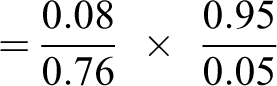
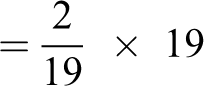

Given the testimonial and statistical evidence, it is still twice as likely that the bus involved was a Blue-Bus bus than a Red-Bus bus. That is, the final probability that the bus involved was a Red-Bus bus is only 33⅓%. If my argument in the previous section holds, then what it appears to show is that the 50%+ standard is too strong—the court should find in favour of the plaintiff, even though, given the total evidence, the plaintiff’s claim is only 33⅓% likely to be true. 13
One might immediately question my stipulations about the reliability of the eyewitness—why set Pr(T | B ∧ S) to 0.08 and Pr(T | R ∧ S) to 0.76? If the former figure were lowered and/or the latter figure were raised, the final probability of R would increase. Do these figures represent a reasonable estimate of the reliability of an eyewitness? At present, the
Alternately, instead of adjusting the example to better fit the proposed figures, we could adjust the figures (within certain limits). As the above equation makes clear, the final probability of R will remain lower than 50% provided the ratio of Pr(T | B ∧ S) to Pr(T | R ∧ S) is greater than 1 in 19. We could, for instance, stipulate that the eyewitness has only a 5% chance of incorrectly identifying a Blue-Bus bus and a 90% chance of correctly identifying a Red-Bus bus—making the eyewitness very reliable indeed—and the case would retain the required structure (with these stipulations, the probability of the plaintiff’s claim would work out to around 48.6%). The statistical evidence in this case is so heavily weighted in favour of B as to overwhelm contrary testimony even from a highly reliable source.
The base rate fallacy
I have argued that, in the

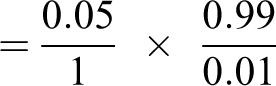

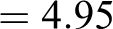
Given these figures, it turns out that it is almost five times as likely that the person does not carry the disease—the probability that the person is a carrier is only about 17%. 14 To put this reasoning more intuitively, given what we know about the prevalence of the disease and the reliability of the test, for every 100 people tested we would expect to have one true positive and about five false positives. As a result, a person with a positive test result is much more likely to be a false positive than a true positive.
The
When confronted with the evidence in
A number of psychologists and legal theorists have claimed that deliberation in a legal trial is not, in practice, treated as an exercise in probabilistic reasoning—rather, fact finders usually come to a decision by comparing the plausibility of competing narratives (Allen, 2008, 2014: section 4; Allen and Jehl, 2003; Pardo and Allen, 2008, 2019; Pennington and Hastie, 1991). On this view, the parties in a civil trial are not primarily engaged in producing evidence that impacts the probability of the plaintiff’s claim—rather, their actions are better understood in terms of the construction of broader narratives as to what occurred, with the plaintiff providing a narrative on which the claim is true, and the defendant providing a narrative on which the claim is false.
Whether or not this view is on the right track, it illustrates the possibility of an alternative perspective on the
One could imagine a pro-plaintiff decision justified along the following lines: Although the chances somewhat favour the proposition that the bus involved was not owned by the Red-Bus company, it is appropriate to find the company liable on the grounds that they could provide no adequate explanation for the eyewitness testimony against them, and were unable to offer any plausible alternative to the plaintiff’s version of events.
Gesturing towards the base rate fallacy cannot, in and of itself, provide an argument for a pro-defendant decision in
Competing narratives
I turn, finally, to the question that I set aside at the outset—how should the civil standard of proof be interpreted? If it is true that the 50%+ standard is both too weak and too strong, then what is needed is a standard that is wholly non-probabilistic—in the sense that no probability threshold is either sufficient or necessary for meeting it. What might such a standard look like? While this question lies, for the most part, beyond the scope of the present paper, I will conclude by exploring two somewhat related ideas.
Consider again the claim, canvassed in the last section, that deliberation in a civil trial is largely a matter of comparing the plausibility of competing narratives. This thought lies at the heart of the relative plausibility theory of legal proof defended in a number of papers by Ronald Allen and Michael Pardo (see, for instance, Allen, 1986, 1994, 2008; Allen and Pardo, 2019; Pardo, 2019; Pardo and Allen, 2008).
16
The way I will develop this approach here owes much to Allen and Pardo’s work—though, as will emerge, there are some significant differences. On the relative plausibility view, at a first pass, what it means for a party to ‘prove’ a proposition to the civil standard is for them to advance a narrative on which the proposition is true and which is more plausible than the competing narrative offered by the opposing party. Presumably, though, fact finders need not limit themselves to the narratives that are explicitly offered by the opposing parties, and may also consider further narratives, favouring one or other party, that they themselves are able to construct (see, for instance, Pardo and Allen, 2008: 234–235). This leads to the following: A proposition has been proved to the civil standard just in case, given the evidence, there exists a narrative on which the proposition is true and which is more plausible than any competing narrative on which the proposition is false.
If the company were to suggest that, say, the eyewitness has a false memory or is lying in order to smear them, then these would provide the needed explanation, but would also represent ad hoc additions to the story that have no basis in the evidence. Given the evidence that is available, any narrative on which the bus involved was a Blue-Bus bus will either fail to explain the eyewitness testimony or will include ad hoc elements. That is, given the evidence, any narrative on which the bus involved was a Blue-Bus bus will either be incomplete or it will be arbitrary. In contrast, the narrative offered by the plaintiff—that the bus involved was a Red-Bus bus and was observed to be so by an eyewitness who then testified to this effect—has neither of these drawbacks.
This provides the following way of ‘cashing out’ the notion of plausibility in the above interpretation of the civil standard of proof: A proposition has been proved to the civil standard just in case, given the evidence, there exists a narrative on which the proposition is true and which is more complete/non-arbitrary than any competing narrative on which the proposition is false.
Dale Nance (2016) presents a dilemma for the relative plausibility theory of standards of proof: If plausibility is to be understood in terms of probability, then the view is at risk of collapsing into the orthodox probabilistic interpretation. If, on the other hand, plausibility is independent of probability—is a matter of ‘telling a good story’ no matter how unlikely—then this is no basis for legal adjudication (Nance, 2016: section 2.3.2; see also Schwartz and Sober, 2017: section IIC2). As should be clear from the foregoing discussion, Allen and Pardo’s response to this is to reject the second horn of the dilemma and to tie plausibility and probability closer together, while attempting to resist the charge that the relative plausibility theory would then reduce to the 50%+ interpretation (Allen and Pardo, 2019: section IIA). 19
My response is different. In setting up this dilemma, Nance appears to assume that, if plausibility were independent of probability, it would have to consist in features that are entirely disconnected from the evidence—he mentions aesthetic qualities like how dramatic or engrossing a story is (Nance, 2016: 81–82). While it is obvious that these features should not serve as criteria for legal proof, the aspects of plausibility that I have highlighted here are not at all like this—and clearly do concern the way in which a narrative relates to the available evidence. The extent to which a narrative is complete/non-arbitrary is very much determined by the evidence presented—and yet, as demonstrated, these features are logically independent of probability. The above interpretation of the civil standard of proof could perfectly well be squared with the words ‘preponderance of evidence’. The phrase merely suggests that a proposition should count as proved when the evidence in its favour is stronger than the evidence against—but it says nothing as to how the relevant notion of ‘strength’ is to be measured (be it probabilistically or in some other way).
In previous work I have described a non-probabilistic support relation—termed normic support—that a body of evidence can bear to a proposition (Smith, 2010, 2016). In
Say that a body of evidence E provides normic support for a proposition P just in case the situation in which E is true and P is false is less normal, in the sense of requiring more explanation, than the situation in which E and P are both true. When the eyewitness testifies that the bus involved was a Blue-Bus bus, this provides both probabilistic support and normic support for the proposition that it was. While
In
The fact that the evidence in this case normically supports the proposition that the bus involved was a Red-Bus bus is, arguably, the very reason that the company is unable to formulate a complete and non-arbitrary narrative on which this proposition is false. The testimony generates the need for explanation in the event that the bus involved was not a Red-Bus bus. If the company fails to provide the needed explanation, their narrative will be incomplete. If, on the other hand, they do provide an explanation—the eyewitness is lying or misremembering, say—their narrative will be arbitrary. Things would be different of course if the company produced evidence to support such allegations—that the witness had motive and willingness to lie, or that Blue-Bus buses and Red-Bus buses could not have been distinguished given the lighting conditions etc. But, in this case, the proposition that the bus involved was a Red-Bus bus would no longer be normically supported by the total evidence provided at the trial. Unlike the statistical evidence, this new evidence would remove the need for explanation in the event that the bus involved was not a Red-Bus bus.
It may be that we can defend a more general thesis regarding the way in which normic support serves to constrain the completeness/arbitrariness of possible narratives. If our total evidence E normically supports a proposition P, then it will not be possible for us to tell a complete and non-arbitrary narrative on which P is false. If E normically supports P then, given E, an explanation is needed in the event that P is false. Any narrative on which P is false will either neglect to provide such an explanation—in which case it will suffer from incompleteness—or it will provide an explanation that is purely speculative—in which case it will suffer from arbitrariness. If a suitable explanation of P’s falsity were backed up by evidence included in E, then it would be wrong to describe E as normically supporting P, contrary to stipulation. If this is right, then the above interpretation of the civil standard of proof may converge with the following: A proposition has been proved to the civil standard just in case it is normically supported by the evidence.
20
Footnotes
Acknowledgements
Earlier versions of this paper were presented at the University of Aarhus in April 2018, the University of Edinburgh in June 2018 and the University of Gdansk in August 2018. Thanks to all of those who participated on these occasions. Thanks also to two anonymous referees for this journal. Research on this paper was supported by the Arts and Humanities Research Council (grant numbers AH/L009633/1 and AH/T002638/1).
Declaration of Conflicting Interests
The author(s) declared no potential conflicts of interest with respect to the research, authorship, and/or publication of this article.
Funding
The author(s) disclosed receipt of the following financial support for the research, authorship, and/or publication of this article: Research on this paper was supported by the Arts and Humanities Research Council (grant numbers AH/L009633/1 and AH/T002638/1).
