




Abstract
South African studies on rape culture have examined this issue in relation to heterosexuality. They demonstrate how toxic masculinity exercises sexual power by victimizing women and girls. However, little is known about manifestations of rape culture in contexts where both victims and perpetrators are same-sex attracted young people within intimate relationships. Thus, this article extends the scope of the scholarly discussions on rape culture by exploring how rape culture manifests itself in the social and intimate lives of sexually diverse South African youth. It will also reflect on some of the ways that could be explored to address rape culture.
Introduction
The president of South Africa, Mr Cyril Ramaphosa, has acknowledged that “we [the South African society] have among the highest rates of intimate partner violence … rape and sexual violence have become hyperendemic” (National Strategic Plan on Gender-Based Violence and Femicide, 2020: 2). Despite the progress made so far in the fight against gender and sexual violence in South Africa, combating sexual intimidation and partner rape continues to be a challenge. For instance, according to the South African Police Service (SAPS) crime statistics on domestic violence, 400 rape and 100 sexual assault offenses were reported to the police between July and September 2021 (SAPS, 2021: 56). The majority of the victims were females: 382 females were raped (compared to 18 males), and 91 females (compared to 9 males) were sexually assaulted (SAPS, 2021: 56). These figures are likely to be significantly higher than reported—considering that under-reporting of intimate partner sexual violence in South Africa remains a serious problem. There are various factors underpinning non-reporting of partner rape, and Bornman (2015: 54) has noted that many victims of sexual violence and rape are often reluctant to report their victimization to the police because they “often experience secondary trauma and victimization at the hands of the criminal justice system that is meant to protect and assist them.” Therefore, many South African women, girls, and sexually diverse individuals suffer in silence and live in fear of being raped or sexually harassed, often by people they know: such as acquaintances and intimate partners, including ex-partners (World Health Organization, 2019). Such violence threatens victims’ lives, safety, health, dignity, enjoyment of human rights, and freedoms enshrined in the South African Constitution (1996). It can also have severe impact on their mental health. Indeed, some of the negative mental health outcomes associated with rape victimization include post-traumatic stress disorder, depression, and fear (Spohn et al., 2017). However, Hatcher et al. (2014) have observed that the consequences of intimate partner sexual violence are not only experienced by the victims, as harmful behaviors such as substance abuse can be noted amongst men who have raped their partners. This suggests that interventions against rape culture must target both victims and perpetrators; I will elaborate on this later in this article.
Although SAPS crime statistics indicate that vulnerability to rape affects both men and women, South African research on sexual violence and partner rape (e.g., Gordon and Collins, 2013; Hatcher et al., 2014; Mphaphuli and Smuts, 2021; Verwoerd and Lopes, 2015) has largely focused on violence perpetrated by men against women and girls within heterosexual contexts. Such foci have resulted in a gross deprioritization of the experiences of sexual violence and rape in the context of same-sex intimate relationships, especially among young lesbian and gay people. However, such de-prioritization does not suggest that South African research on this phenomenon is non-existent. Indeed, a few scholars, including Mavhandu-Mudzusi and Ganga-Limando (2014), Morrissey (2013), Msibi (2009), and Wells and Polders (2006), have laid important foundations on the topic I explore in this article. For example, a lesbian participant in Mavhandu-Mudzusi and Ganga-Limando’s (2014: 135) study narrated her experiences of sexual violence as follows: Boys threatened to rape us to make us straight. They said if they find me alone at night, they will gang rape me. They say this will make me a real lady. Some men give comments like we are creating a shortage of females as we are taking their girlfriends.
Morrissey (2013: 72–73) described the practice of “corrective rape” as a “weapon of hate”: a form of homophobic violence in which lesbians are punished through rape because their sexual orientation is perceived as unnatural. “Corrective rapists” are men and boys who are products of heterosexist cultures and societies and who believe that heterosexuality is the only legitimate/normal/natural form of sexuality—a problematic belief that encourages the marginalization, discrimination and sexual victimization of lesbians (Morrissey, 2013; Msibi, 2009; Wells and Polders, 2006). Rape is not an issue faced only by lesbians. Gay men also experience sexual violence and rape. For instance, in their work mapping anti-gay hate crimes in South Africa, Wells and Polders (2006: 23–24) observed that: Sexual abuse and rape, often perceived to be a crime against women, is equally prevalent among gay men and lesbians. This suggests that because lesbians and gay men are perceived as posing a threat to heterosexual constructs of “male” and “female”, and in particular to masculinity, they are particularly susceptible to sexual violence.
Within the South African context underscored by the history of apartheid and the attendant structural racism, the variables of race and class are conjoined, and they continue to shape the landscape of violence against gay men and lesbians. The conjoining of race, class, and sexuality reproduces sexualized violence as an experience targeted mainly at black African lesbians and gay men (Van Heerden, 2019). By contrast, as Judge (2018) has noted, whiteness in South Africa largely resides outside the purview of homophobia and violence. Queer experiences of, and knowledge about, sexual violence are thus not homogenous, even among citizens of the same country. Rather, such experiences and knowledge are shaped by race and class differences and inequalities, which, in South Africa, have been inherited from apartheid. Black African queer individuals in historically marginalized South African communities experience and understand violence differently compared to white queer individuals in middle class and formerly white communities (Judge, 2018). Failure to acknowledge that differences exist in terms of how white and black African members of sexual minorities in South Africa relate to violence will perpetuate the normalization of violence against black African gay men and lesbians.
The previous South African research on the experiences of violence, stigmatization and marginalization among black African lesbians and gay men (e.g., Bhana, 2014; Mavhandu-Mudzusi and Ganga-Limando, 2014; Morrissey, 2013; Msibi, 2009; Reygan and Lynette, 2014; Wells and Polders, 2006) is often marked by a binarism in which heterosexual males enact acts of violence and hate crimes against same-sex identifying individuals. Such binarism restricts understandings of violence to the purview of victimizations experienced by same-sex identifying individuals, underpinned by homophobic attitudes attributed to harmful expressions of heterosexual masculinity. Because of this binarism of heterosexuality versus sexuality diversity, little is known about the South African contours and experiences of sexual assault and rape occurring between members of same-sex sexualities. Thus, with this article, I make a unique contribution to the previous research on sexual violence and rape by exploring the manifestations of rape among the sexual minority group of black African young people from South Africa. Specifically, I ask the following research question: • How does rape culture manifest itself in the social and intimate lives of sexually diverse young people participating in my study?
My aim here is not to reproduce the previous research on rape between strangers, and which involves heterosexual individuals. Thus, this study explores black African lesbian and gay youth (22–23 years old) and their encounters with rape culture in South Africa. It discusses the almost uncharted field of the lesbian and gay youth and their experiences of sexual intimidation and rape by an intimate partner, ex-partner, acquaintance, or someone known to the victim. The acquaintance or someone known to the victim may have been gay, lesbian, or heterosexual. The participants in this study were students at a South African university and all have experienced sexual intimidation from, and they were raped by, or raped, someone they knew.
Rape culture
Within this study, I conceptualize rape culture as the socially produced harmful gendered and sexual beliefs, norms, attitudes, stereotypes, and behaviors that intersect in complex ways to perpetuate rape and sexual assault within intimate relationships and other contexts. Existing feminist literature (e.g., Gray, 2021; Johnson and Johnson, 2021; Kaufman et al., 2019; Mphaphuli and Smuts, 2021) on rape culture illuminates several underlying components of rape culture, which include toxic heterosexual masculinity, sexism, adversarial sexual beliefs, and the normalization of violence. Toxic heterosexual masculinity manifests itself in different ways, such as through violent expressions of gender power relations by men in which women are subjected to sexual violence and other harmful behaviors (Gray, 2021). Toxic heterosexual masculinity intersects with sexism because, as Johnson and Johnson (2021: 73) explained, “a core component of sexism is the belief that men are superior to women. This belief encourages the notion that women are merely objects for men’s pleasure and therefore normalizes rape.” Clearly, sexism reproduces a myriad of adversarial sexual beliefs that normalize rape culture, especially in contexts of intimate relationships. For example, writing from a southern African cultural context, Mphaphuli and Smuts (2021) demonstrate that some men who uphold adversarial sexual beliefs assume that women who are raped by their intimate partners cannot claim to be victims of rape because married men are entitled to sex with their wives; this sense of entitlement is often facilitated by patriarchy and the cultural practice of lobola (payment of bride wealth). Research also shows that adversarial sexual beliefs reproduce a culture that stigmatizes and blames the victims of rape (Kaufman et al., 2019). Some of the consequences of such stigmatization and victim blaming are that victims of partner rape are discouraged from reporting the violence to the police. Non-reporting is linked to another underlying component of rape culture: the normalization (or acceptance) of violence (Johnson and Johnson, 2021). I argue that non-reporting means that partner rape remains largely hidden from authorities, and, as such, the development of appropriate initiatives toward the eradication of rape is inhibited. Therefore, when the abuse is hidden, this supports the acceptance of rape and violence as normal components of women’s experiences in their intimate relationships and, more broadly, in their communities.
Although the above literature provides us with useful theoretical tools through which to analyze rape culture by examining the underlying components of such a culture, the existing literature foregrounds the experiences of women as victims and how rape culture manifests itself in contexts of heterosexual relationships. However, in the present study, I consider the almost uncharted territory of power dynamics within same-sex relationships and the experiences of sexual violence among same-sex identifying youth in the South African context. My objective is to extend the existing heteronormative conceptualization of rape culture by placing the spotlight on the specific ways in which sexually diverse young women and men in South Africa positioned themselves during the interview study as both the victims and perpetrators within the broader context of rape culture and heteronormativity. For instance, I explore how “corrective rape” featured in the participants’ narratives about their engagements with heteronormativity. Indeed, “corrective rape” against lesbians continues to be an issue in South African communities—despite the established laws that promote gender equality and freedom of expression regarding sexual orientation (Van Heerden, 2019). South African research on sexualities suggests that “corrective rape” is a form of racialized homophobic violence often experienced by black African women and reproduced by heteronormativity (Judge, 2018). Part of the analysis in this study will examine how “corrective rape” functions as a type of a “straightening device”—a component of toxic masculinity—employed by men and boys to maintain heteronormativity by regulating young women’s bodies and sexual identities. I shall also examine how the young people whose identities are regulated through a rape culture exercise agency (Willan et al., 2019) amidst oppressive discourses of gender and sexuality.
The methodology
A qualitative research methodology (QRM) was employed in conducting this study. Qualitative research methodology is appropriate when a researcher aims to explore trajectories in human experiences as well as the subjective meanings people or groups attach to their own (and other people’s) experiences, practices, and behaviors in different social settings (Silverman, 2021: 3–5). Drawing on data gathered through in-depth interviews, I explore in this study how a group of sexually diverse young people positioned themselves in relation to their intimate partners and acquaintances during interviews concerning rape culture. Given the sensitivities around rape, ethical considerations were paramount in this study. Ethical clearance for this study was obtained from relevant scientific and research ethics committees at the university where the participants were studying. Ethical considerations included ensuring voluntary participation, obtaining participants’ informed consent before the interviews could commence, protecting their identities by assigning them pseudonyms and informing them that they could withdraw from the study at any stage and that there would be no consequences for the withdrawal of participation. Moreover, recognizing the potential risks such as emotional distress that could have resulted from participation in this study, the services of psychologists were available to all the participants (free of charge) to assist them professionally when necessary.
Participants
Participants were recruited using a snowball sampling method. I am a lecturer, and my first participant was a postgraduate student at the university where I taught sociology focusing on genders, sexualities, as well as crime and violence, but they were also a close friend of mine. They openly self-identified as a same-sex attracted individual and played a crucial role in assisting me with contacts and links to the rest of the participants in the study. Participants were South African black African, aged 19–32 years old, and sexually self-identified as lesbian, gay, bisexual, pansexual, and queer. In terms of gender, they identified as cisgender woman or cisgender man, and one participant identified as a trans woman attracted to men. There were 17 participants in total; all were students at the same university. They were enrolled in different study programs, but most of them were in the Faculty of Education, which was the largest faculty by student numbers at the university. Specifically, the analysis in this article explores the theme about rape, and this particular theme was built using data from lesbian and gay participants who were 22–23 years old. The article focuses on three participants (two lesbians and one gay man) as their stories are representative of the experiences around rape among the lesbian and gay participants in the study.
Interviews
As a lecturer, I was sensitive to the relationship of power that existed between myself and the participants who were students at the university (even though they were not my students per se). Hence, I adopted a “young person centered” approach (Pattman, 2013) to conducting the interviews, consistently working toward democratizing the researcher-researched relationship of power by engaging with the participants in an affable and respectful manner while also encouraging them to “set the agenda” as part of the interview process. Through this approach, power relations were significantly reduced, allowing the interviews to center matters considered by the participants as important.
Participants’ narratives concerning rape culture emerged during in-depth, open-ended individual interviews, which I had designed to explore how participants negotiate coming out and engaging in loving relationships amidst the South African context that has been described by Msibi (2019) as being largely heteronormative. I conducted one-to-two hour-long interviews in my office at the university between April and October 2019, and I availed myself according to the participants’ schedules. Interviews were conducted in English, which is the official language of communication at the university. Like Pattman (2013), I view interviews not just as instruments of collecting data but also as kinds of social settings in which participants and researchers negotiate relations as they perform, position, and present themselves in particular ways. I presented myself as an empathetic, friendly and above all, non-judgmental researcher interested in the participants’ narratives and points of view. Because the first participant was already a friend of mine, building rapport with them and the other participants was not challenging. I was not a stranger since I worked at the same university where participants studied—hence, they trusted me with their intimate accounts of rape culture as we were friends and acquaintances engaged in conversations.
Influenced by Pattman’s (2013: 119) notion of “learning from the learners about sexuality,” my goal in conducting the interviews was to learn from students in the study by giving them the safe space to share their narratives based on their experiences around rape culture. During interviews, participants were allowed to “set the agenda” so that interviews focused on the issues that concerned them. I did prepare an interview schedule, but this was not fixed as participants were allowed to shape the nature and direction of discussions by introducing new topics and issues. Topics that participants introduced were taken seriously and explored in-depth as I listened and probed through asking follow-up questions. One of the topics that the participants raised is their experiences of rape and sexual intimidation with people they know, such as intimate partners and acquaintances: this is the theme I examine in-depth in this article.
All interviews were audio-recorded with the permission of the participants. The audio recordings were transcribed verbatim to capture participants’ own words and descriptions of events in the narratives to strengthen the trustworthiness of the data. Each participant was given an opportunity to review the transcript of their interview to verify the accuracy of the records of data.
Analysis
Data were analyzed using inductive thematic analysis (Braun and Clarke, 2012). Themes were developed following an iterative four-step process which involved 1) examining the patterns of meanings and experiences across the data set—this helped me gain a general sense of what the data says about the issues under study and identify emerging patterns. 2) Similar patterns were identified, clustered, and labelled. 3) Data under the different labels were reviewed, and there was some shifting around of some data between different labels to ensure that all data under each label were correctly placed within the label. 4) The established labels were reviewed, and the labels that contained similar or related ideas were combined to produce a broad theme. The current article investigates dimensions within the specific theme of rape culture. Such dimensions include participants who narrated that they were victims of rapes, and one participant admitted that she once raped her girlfriend. Narratives show that victims and perpetrators are not strangers. They are intimate partners, reside in the same townships, and are students at the same university accommodated at the same student residences.
Findings
Each dimension within the theme “rape culture” draws upon aspects of data from an interview with a specific participant. Hence, I shall begin each section of the analysis by presenting a table with some demographic information about a participant associated with the particular sub-section.
Sexual intimidation: “They are forcing me to change my sexual identity”
The Participant.
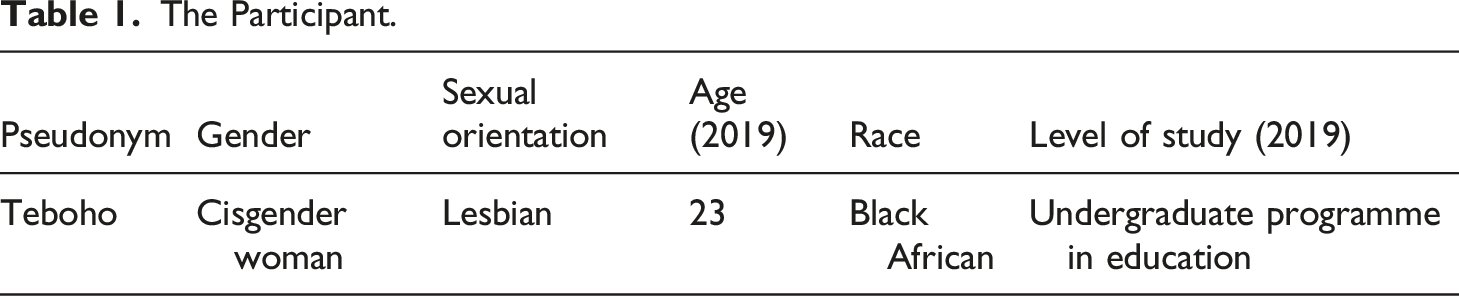
Studies have shown that forms of violence against sexually diverse individuals continue to be a problem across different countries, but in South Africa, black African lesbians are particularly vulnerable to “corrective rape.” In my study, narratives of such vulnerability were raised by several lesbians. For example, the extracts (below) from my interview with Teboho demonstrates how “corrective rape” forms part of the forms of violence that young lesbians are exposed to both on campus spaces where they are students and in the streets of the townships where they live. Researcher: Have you experienced any form of violence that you think happened to you because of your sexuality? Teboho: Life is hard for lesbians because we live our lives being mocked or bullied. Some boys in the township said to me: “if we catch you at night we will change you”, they even tell me to my face that “if we meet with you in the street at night, we will rape you”, so I’m very scared to be on the streets at night, I live my life with fear.
Teboho’s life has been made difficult by heteronormativity which normalizes heterosexuality by attempting to “correct,” erase or invisibilize sexual diversity. Expressions of sexual agency among young lesbians are restricted by toxic heteronormative masculinity: boys become experts in expressing heterosexual power through (threats of) rape. “Corrective rape” emerged in the study as a powerful heteronormative tool through which lesbians are denied their agency as they are constantly subjected to a life of fear of being changed through being raped. The boys who invest in maintaining the heterosexual regimes of identity use the streets as key sites for the making of toxic heterosexuality as expressed through “corrective rape.” For Teboho, being on the streets at night is risky, and this risk constrains her sexual agency and freedom of movement. The vulnerability to violence was not only associated with boys on the streets in her township but the campus spaces were also associated with heteronormativity in which her identity as a lesbian was trivialized and called into question by some of her male peers: Even some of the boys here on campus will just say to me, “we will come to your room [at the student residences] at night, we will force you to taste the dick, and we know you will like it! After that, you will not go for girls again because you like the dick more …”
The normalization of such sexualized comments and resulting feelings of humiliation are reflected in that these encounters happen in public spaces on campus during the daytime, such as when walking to or from lecture venues: When I pass by a group of boys on my way to a lecture I could hear them saying “let’s ask her for sex… she thinks she is lesbian, but she is just confused”. Most of the boys know that I’m lesbian but they still ask me out or ask me to have sex with them. Some would say “I want you to be my girlfriend” and I would say “you know I’m lesbian” but then they say “you can try”. If I say no, I’m not trying to be in a relationship with boys, then they will say “if you can have sex with me, you will change”. If I refuse they say, “we will force ourselves on you”. Researcher: How does it make you feel to have these boys asking you out or to have sex with you when in fact, they know that you are lesbian? Teboho: I feel disrespected all the time, they’re just mocking me. They are forcing me to change my sexual identity, and that hurts me.
One of the major problems with heteronormativity is that it seeks to force everybody to be heterosexual—here, heterosexuality is seen as that which is intended by nature. Heteronormativity makes us believe that heterosexuality is the only “correct” form of sexuality. Against this background, lesbians, such as Teboho in this study, become subjected to violence and threats of “corrective rape.” Within the heteronormative framework of thinking about sexuality, it is assumed that lesbians are somewhat confused and that this confusion is something that can be resolved or corrected through trying, or being forced to have, penile-vaginal sex with a man. This heteronormative conceptualization of sexuality is deeply problematic on many levels. For instance, it normalizes “corrective rape” against lesbians and thereby constraining their agency. It also inhibits an understanding of the plurality of genders and sexualities, as well as how these social identities are constructed in different contexts (on campuses, in townships).
Teboho’s narrative indicates the risk of “corrective rape” against lesbians in which the potential penetrators are the male acquaintances: male peers on the university campus as well as men/boys on the streets in the township. She demonstrates the operation of heteronormativity in which men/boys are potential perpetrators of rape culture. However, rape culture is a complex and multifactorial phenomenon in which women are often raped by their male acquaintances, but women, too, can be capable of raping other women. The following section is an analysis of this issue as it emerged in my research.
Complexities of rape culture in intimate relationships between women
The Participant.
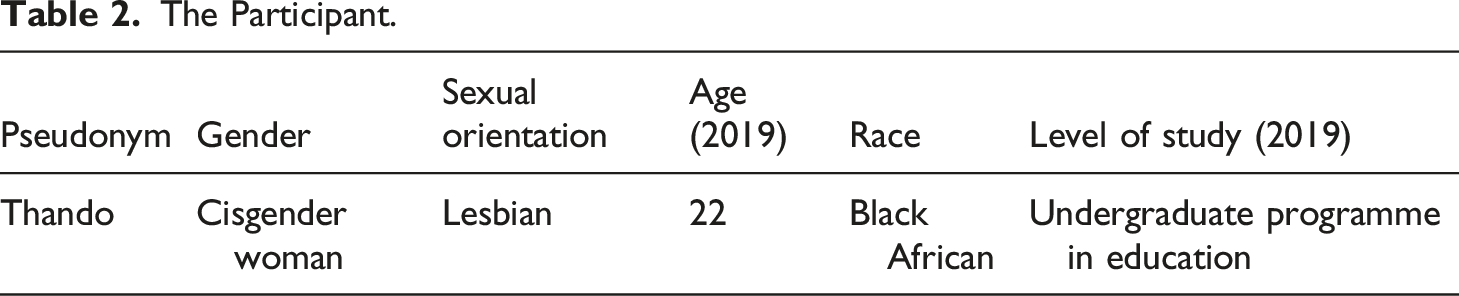
Researcher: What caused your previous relationship to end?
Thando: So we had just bought matching T-shirts, wore them the same day and took pictures together. The following morning, I saw that she had posted our pictures on her Facebook page and then here I was being happy and thought that I was the only one. I was convinced she did not have a boyfriend. But then, the following day, I saw that she had removed the photos of us together and she had posted a different picture with a boy, and the caption was “if there is only one thing that I did right was to give my heart to you”. It turned out the boy in the picture was her boyfriend. I was very angry! Then I went out to meet with my friend who stays in an off-campus student residence. My friend stays at the same residence with my girlfriend; their rooms are just opposite to each other. I called my friend and told her I am on my way, and I am going to buy some bottles [of alcohol], and we gonna “turn up” [party] today. I was super angry—I just wanted to be drunk. I bought the alcohol and went to my friend’s place, and I drank– I was drinking out of sorrow. We drank and smoked weed, and then I went to her [girlfriend’s] room. I felt like she was being disrespectful when she responded to the questions I was asking her about the picture with a boy she posted on Facebook. I got angry, then she was lying on the bed, and then I just climbed on top of her and then ripped her clothes off so hard that she did not even fight back. She just cried. I said, “don’t cry, it’s all your fault I am like this”, I blamed her. I grabbed her and forced myself into her, if you get what I mean? I don’t know what I was doing, I was angry and high and drunk. Maybe I wanted to take her back to the sex we had in the past “don’t you remember that, why you wanna end that?” Then a few days later, I apologized to her …
Researcher: How did she respond to your apology?
Thando: She said “I forgive you, but we can never get back together, never!” Oh, she also likes to use the term “you destroyed me”. She always emphasizes that I destroyed her. But whenever I ask her, “how did I destroy you?” she just discard that [she does not give me an answer]. So, I really don’t know how I destroyed her.
I view rape as a violent act in which one sexually expresses power over another regardless of gender identity, sexual orientation, and relationship statuses of the parties involved. This view acknowledges that women are often the victims of male violence, but it is also mindful that both women and men can become victims and perpetrators. Although her role (and the relational circumstances surrounding the act) as a perpetrator are evident, Thando’s narrative is laden with several contradictions. I want to focus on the two most significant ones. First, my observations of her body language during the above conversation suggest that she acknowledged the harmful act against her girlfriend and is remorseful: she has apologized. But, at the same time, she denies the damage caused by her action: “I really don’t know how I destroyed her.” The narrow understanding of rape as something that occurs between people of the oppositive sex (perpetrated by men) who are also strangers makes it difficult for Thando to comprehend how her forceful sexual act has destroyed her girlfriend. Rape between intimate partners can be difficult to conceptualize as rape, yet such rape is as damaging and can yield similar consequences as rape between strangers. Failure to recognize that rape between intimate partners, even between women, is still rape has the potential of normalizing sexual violence within relationships, thereby perpetuating rape culture as part of intimate relationships, especially between women.
The second contradiction is that, although Thando does, to some extent, see herself as having sexually victimized her girlfriend, she defends her action by invoking the problematic narrative of victim blaming. In addition to saying, “I don’t know what I was doing, I was angry and high and drunk,” she blames her girlfriend for the sexual violence she perpetrated against her. Studies highlighting victim blaming illuminate how men/boys draw on victim blaming when explaining why they perpetrate sexual violence and rape against women/girls (Gordon and Collins, 2013; Kaufman et al., 2019). For example, in their study on female students’ experiences of gender-based violence in a South African university campus, Gordon and Collins (2013) examined how young women risked being raped by men if they wear short skirts, drink alcohol with men and walk alone at night. My study contributes to the existing research on rape culture and victim blaming by demonstrating how the discourse of victim blaming manifests within unique situations of female perpetrators of rape against other women within relationships. Furthermore, existing research on South African women’s experiences of violence within heterosexual relationships often positions victimized women as lacking agency as they are forced by cultural and socio-economic circumstances to stay and learn to cope in violent and toxic relationships (Willan et al., 2019). In my study, however, the victimized woman was in a same-sex relationship, and she expressed her agency by forgiving Thando but also by dissolving the toxic relationship with her.
Rape between men within intimate relationships
The Participant.
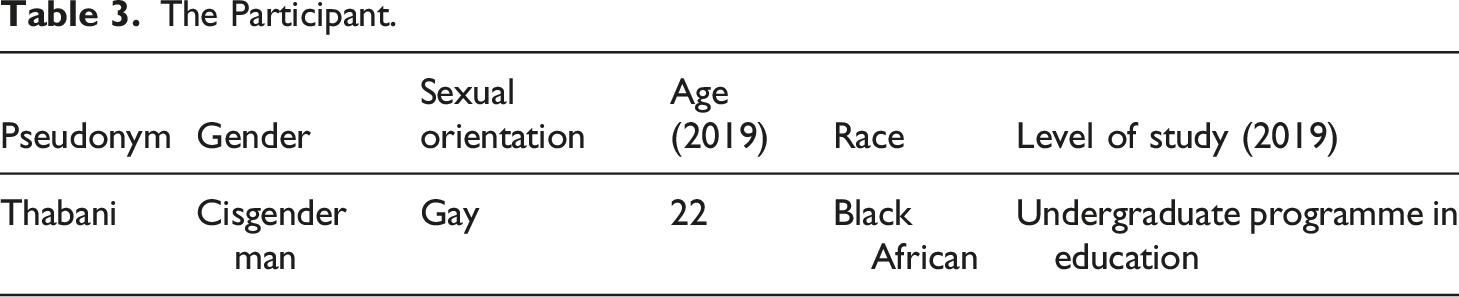
Thabani’s narrative of sexual victimization within an intimate relationship is captured in the following conversation: Thabani: Something happened the other day: so, I went off campus on a weekend to visit my friend, and we got very drunk, and I was going to sleep over at my friend’s place, which is off campus. When I went to sleep at my friend’s room, my ex-boyfriend followed me to the room, and he raped me. He got the key from my friend. My friend gave him the key because he thought he [the ex-boyfriend] and I were still dating. He gained access to the room, and he did it [raped me]. He damaged me for good. I don’t think I will ever be in a committed relationship in my life because of that encounter. Researcher: Surely, that must have been a very traumatic experience for you, but did you seek any form of assistance following this incident? Thabani: I did think about consulting with a psychologist on campus, but I did not consult because I felt nobody can help me because he is the guy I used to date; he is not a stranger. So, I was like, let me go through this alone, but some of my close friends know about this story. Researcher: How has speaking with your friends helped you in dealing with this situation? Thabani: I told my friends the whole story. They tried to talk to him, but the guy denied it. He said he didn’t do that; he said I was the one who wanted to have sex with him. Can you imagine that story? He blames me! But after some time, he contacted me and wanted to apologize. He came to my room, and he was tipsy, and he was like, “I’m sorry”, and I said, “sorry for what?” I was terrified to see him in my room because he still scares me. He was like, “I am sorry” I wanna be normal … I just couldn’t say a word; he kept on talking, saying he is sorry … He said he is always drinking and taking drugs, and he is not coping … I couldn’t say anything because I was not ready to talk to him and I don’t think I will ever be. Researcher: Did any of your friends advise you to open a case with the police against him? Thabani: They were like, “if you wanna open a case, we will support you” and I was like “no, I do not wanna open a case”. Researcher: Why not? Thabani: I don’t know. I was really scared and terrified, and I felt that maybe if I open a case, then he goes to jail, then he comes back and he would want revenge, he looks like those kinds of people who are revengeful, and he would come after me, and I was like no I do not want to do that to myself, let me not. Researcher: Do you think you will ever be ready to open a case? Thabani: No, I am just trying every day to forget about it. Even though it’s hard but I am trying.
Thabani’s experience shows us that partner rape between men within same-sex relationships is a reality but is often hidden from authorities. There are various factors that hinder victims from reporting intimate partner sexual violence to the police. Evident in Thabani’s case is the fear of experiencing further and revenge motivated violence from his victimizer. The weapon of victim blaming could also help to explain Thabani’s reluctance to take the matter of his victimization to the relevant authorities. Thabani was reluctant not only to report to the police but also to seek psychosocial assistance in order to cope with the traumatic experience of partner rape. Due to the stigma and stigmatization associated with being a rape victim (Kennedy and Prock, 2018), many victims, like Thabani, are often forced to suffer in silence as they do not seek appropriate professional support services that would assist them with processes toward healing.
The impact of partner rape on the part of the victimizer is not a topic that is widely discussed in the literature (Hatcher et al., 2014). Yet, we learn from Thabani that partner rape can impact negatively on both the victim and his victimizer. As a result of being raped, Thabani feels “damaged for life” and this severity of devastation is, in my view, precisely because the person who raped him was not a stranger but was someone he knew, loved and trusted. The victimizer was trusted not only by Thabani but also by Thabani’s friends. Thus, this high level of devastation expressed by Thabani can be seen as an outcome of both the rape and the breach of trust from his partner. However, we can also see that Thabani’s victimizer was also severely impacted by the incident he committed against Thabani: “he is always drinking and taking drugs, he is not coping.” Therefore, Thabani’s devastation and trauma, and the substance abuse of his victimizer suggest the need for interventions dealing with the effects of partner rape to focus on victims as well as their victimizers. I will reflect further on this issue in the conclusion part of this paper.
Discussion
In South Africa, due to heteronormativity and patriarchy, existing research on cultures of rape and sexual coercion in relationships has prioritized a focus on the experiences within heterosexual relationships. For example, in their study on South African women’s narratives of rape in intimate relationships with male partners, Mphaphuli and Smuts (2021) suggest that rape is a common but stigmatized and thus hidden reality for the women in their study. My study makes a unique contribution to the existing research by unpacking the patterns and manifestations of rapes between women (as seen in Thando’s narrative) and between men (Thabani and his ex-boyfriend) in intimate relationships. I argue, in this study, that intimate partner sexual violence is not confined to the victimization of women by men; rather partner rape must now be recognized as an issue faced both by female and male partners in both heterosexual and same-sex relationships.
The findings show that, generally, victims of partner rape do not report their victimization to the police. This is due to different reasons, such as the fear of revictimization and the stigma that is attached to victimhood. Thus, explanations for Thabani’s decision not to report his rape victimization to the police should pay attention to the broader social issues of victim blaming, stigmatization, and heteronormative systems as they work to encourage Thabani’s silence. When victims are silenced, the resulting challenge is that such silencing perpetuates the normalization of intimate partner sexual violence (Bornman, 2015). In the context of same-sex relationships, the normalization of partner rape through non-reporting becomes especially concerning given that sexually diverse people are already faced with many other forms of violence (e.g., “corrective rape” against lesbians), which are part of heteronormative cultures of our society.
Data in this study reveal a clear pattern of contradictory discourses regarding how perpetrators act toward their victims following incidents of partner rape. Perpetrators react with an apology to their victims while they simultaneously engage in the discourse of victim blaming. This complex situation can be interpreted in different ways. To me, apologizing is a form of secondary victimization, a strategy used by the perpetrators to silence their victims to prevent them from exercising their agency by reporting partner rape to the police. Indeed, the perpetrators’ reactions with apologies following partner rape does not guarantee that they will not again rape their partners (Gutzmer et al., 2016). As Potter (2020: 967) pointed out, “sexual assault cannot be rectified with an apology: like any other crime, it must be [reported to the police] and punished.” Apologizing can also be interpreted as a sign of empathy, and as suggesting an acceptance of responsibility for the violence and the harm associated with partner rape. However, this interpretation is also complex as apologizing is often accompanied by a counter-productive discourse of victim blaming, which serves to erase the acceptance of responsibility or the expression of remorse on the part of perpetrators.
Conclusion
Commonsense discourses on relationships associate intimate relationships with positive aspects, including care, love, trust, empathy, and support. However, sociological research illuminates these as desired aspects that are not always present: intimate relationships can be toxic because of partner violence and abuse (Mphaphuli and Smuts, 2021). Although scholars (e.g., Ranganathan, et al., 2021; Willan et al., 2019) have analyzed partner violence in the South African context, the focus has mainly been on heterosexual relationships. As a result, South African research on intimate partner sexual violence in contexts of same-sex relationships remains marginal. Through this article, I have contributed to this marginal scholarship by exploring the narratives about experiences of partner rape among sexually diverse South African youth. My research has shown us that same-sex relationships are not immune to gender power relations and other social variables (e.g., substance use) that facilitate violence experienced by individuals (often women) in heterosexual relationships. The narratives in my study further indicate that the vulnerability to sexual violence against women transcends contexts of intimate relationships: young lesbians carry a unique burden living in fear of being subjected to “corrective rape” by their male peers, acquaintances, and other people they know. These findings raise implications for ways of addressing rape culture within intimate relationships and communities. The following paragraphs conclude the study by reflecting on some of the implications.
When I asked Teboho how she deals with the threats of “corrective rape” she receives from her acquaintances/peers in the community, she responded that she talks with her friends who advise her to avoid being on the streets at night. Although this advice is important as part of efforts toward reducing risks, its limitation is that it places responsibilities on the victim; thus, it buys into the discourse of victim blaming. Sexual intimidation as manifested through the threats of “corrective rape” experienced by Teboho in public spaces is deeply rooted in heteronormativity. Therefore, efforts toward addressing “corrective rape” in South African communities must start by addressing the men/boys who are the perpetrators to challenge their heteronormative attitudes, which normalize men’s control over women’s bodies and sexuality.
In terms of addressing rape in relationships, I think access to appropriate psychological support services can be crucial to help the victims in processes of healing from the trauma and anxiety resulting from rape by someone they trusted. Professional psychological and other health services are available to students on campus, and when accessed, they can empower the victims to reclaim their dignity and become real survivors. Such services can empower the survivor to make informed decisions about whether (or not) to report the perpetrator who is the survivor’s partner to the police. Perpetrators also need professional support to help them manage issues of anger, disappointments, and conflicts in relationships as well as substance use: these are some of the factors that played a role in facilitating the rapes documented in this study. Substance use/abuse among perpetrators is indeed a serious issue: it emerged in the narratives not only as facilitating but also as a consequence of partner rape. However, it should be acknowledged that the decision to consult a psychologist (or any other relevant professional) or report partner rape to the police resides with the individual victim/perpetrator themselves. Victimized participants in this study have decided not to report to the police, instead choosing to deal with the situation by severing violent relationships, relying on support from close friends, and others are just trying every day to forget about it.
Footnotes
Declaration of conflicting interests
The author(s) declared no potential conflicts of interest with respect to the research, authorship, and/or publication of this article.
Funding
The author(s) received no financial support for the research, authorship, and/or publication of this article.
