




Abstract
This mixed-methods study examines how contact with Autistar, a Korean company providing strength-based, institutional-level support to autistic designers, is associated with stigma toward autistic people. One-hundred thirty-eight non-autistic community members completed an online survey; mixed-effects and stepwise regression analyses assessed relationships between contact with Autistar and stigma. Focus group interviews with 11 participants drawn from this full survey sample who had extensive contact with Autistar were analyzed using qualitative content analysis. Quantitative analyses indicated that greater contact breadth with Autistar was linked to lower stigma. In particular, participation in exhibitions and introduction by acquaintances predicted lower stigma. Qualitative analysis revealed that sustained and informed contact, which allowed participants to notice similarities between themselves and autistic employees and the strengths of these employees, helped them view autistic people as part of their ingroup. This study linked contact theory and ingroup bias theory to explain how high-quality contact may be associated with perceiving autistic people as part of one’s ingroup. The findings underscored the societal impact of an inclusive employment model, which extends beyond individual interactions to influence societal attitudes, and suggested the need for further research on systemic policies to expand such initiatives.
Lay abstract
Autistic people often face stigma, meaning they are treated unfairly or seen as different in a negative way. This stigma can make it difficult for them to find jobs, build relationships, and fully participate in society. This study looks at how Autistar may help change the way people think about autism. Autistar is a South Korean company that hires and supports autistic designers. We wanted to understand if seeing and interacting with Autistar and autistic designers at Autistar could help reduce stigma. To do this, we surveyed 138 non-autistic people who had some level of contact with Autistar. We asked about their experiences and attitudes toward autistic people. We also conducted group interviews with 11 participants who had more experience with the company to get deeper insights. Quantitative analysis showed that people who had more interactions with Autistar reported more positive attitudes. The results from the interviews showed that seeing autistic people’s talents helped break stereotypes. Seeing autistic people at exhibitions, learning about them, or meeting them through friends and family was linked to less stigma. Some participants said they no longer saw autistic people as “different” but as part of the same world with valuable skills. Participants were more comfortable working with or spending time with autistic people than before interacting with autistic employees of Autistar. This study shows that inclusive workplaces like this can help change how people think about autism. By creating more job opportunities with proper support for autistic people, we may be able to build a more inclusive society.
Keywords
Stigma toward autistic people is marked by labeling, stereotyping, separating “us” and “them,” and discrimination (Goffman, 1963; Link & Phelan, 2001). This stigma, often measured by people’s preferred social distance from autistic individuals, remains a significant barrier to the inclusion of autistic people (Den Houting et al., 2021). Stigma negatively impacts autistic people by diminishing their social standing and limiting access to material opportunities such as employment and education (Johnson & Joshi, 2016). Autistic people also internalize stigma, perceiving themselves as less worthy than others, which can lead to negative mental health outcomes (Botha & Frost, 2020).
Given these negative consequences, recent studies have examined factors associated with stigma toward autistic people to develop interventions aimed at reducing stigma. One promising approach is meaningful contact with autistic people. Contact theory (Allport, 1954) posits that intergroup contact can reduce prejudice and promote understanding, particularly when four key conditions are met: equal status, common goals, intergroup cooperation, and support from authorities or social norms. Supporting this, a systematic meta-analysis revealed that higher quality and quantity of contact with autistic people were associated with lower stigma (S. Y. Kim, Song, et al., 2023). However, S. Y. Kim, Song, et al. (2023) also found that quality and quantity of contact were often measured using single-item questions. This simplistic measure of contact, such as whether someone knows an autistic person or whether their contact was perceived as pleasant, may fail to capture the nuanced ways in which the nature and context of contact influence stigma. Notably, some studies have suggested that contact quantity alone may not significantly predict reduced stigma, particularly when the contact quality is also considered (Gardiner & Iarocci, 2014; Gillespie-Lynch et al., 2019). In broader stigma literature, Perry et al. (2022) also underscored the importance of examining the context of contact when assessing its impact on stigma by showing that more personal relationships were associated with reduced stigma toward individuals with mental illness, while more peripheral ties often reinforced stigma.
Furthermore, researchers have often examined contact as an individual-level variable, focusing on how a person’s own interactions are associated with stigma toward autistic people. While valuable, this view can overlook how individual experiences may be shaped by broader structural and organizational contexts that provide or structure those interactions. This aligns with the need for multi-level approaches that address both individual and systemic factors to achieve a more sustainable and widespread impact (Ayaya, 2025; Den Houting et al., 2021; S. Y. Kim, Song, et al., 2024). Our study relies on individual reports, but we examine contact around Autistar, a South Korean social enterprise that supports autistic designers and highlights their strengths. This framing distinguishes our approach from purely individual measures by considering how institutionally structured opportunities may influence stigma, offering a bridge between individual experiences and broader, systemic mechanisms of attitude change.
Autism in South Korea
Stigma toward autistic people is greater in South Korea, a relatively collectivistic and homogeneous country, compared to the United States (S. Y. Kim, Cheon, et al., 2023; S. Y. Kim, Cheon, & Kim, 2025; S. Y. Kim et al., 2022) and the United Kingdom (Mac Carthaigh & Lopez, 2020). This heightened stigma in South Korea is rooted in cultural and societal norms, including Confucian values that emphasize conformity, societal harmony, and strict adherence to established norms (Robertson, 2019). In addition, South Korea’s strong cultural tightness (i.e. a high emphasis on enforcing social norms) and the cultural importance of nunchi (i.e. the subtle ability to gauge others’ unspoken thoughts and feelings and to respond in norm-consistent ways) have been attributed to exacerbating stigma toward autistic people (S. Y. Kim, 2025; S. Y. Kim et al., 2022). Autistic behaviors, which often deviate from these social expectations, are frequently perceived as disruptions to societal harmony, leading to increased prejudice and discrimination.
This stigma not only affects how autistic people are perceived but also significantly limits their opportunities for meaningful engagement in Korean society. Research shows that Korean adults with developmental disabilities often face exclusion from socioeconomic activities, interpersonal relationships, and civic engagement due to pervasive societal stigma (H. Lim et al., 2014; Yoon, 2024). A 2023 survey by the Korea Employment Agency for Persons with Disabilities also revealed that over half of Korean adults with developmental disabilities spend most of their time at home, further underscoring the lack of inclusion and opportunities for meaningful participation in their communities (Y. Lim et al., 2023). Just as research in Western countries has shown that stigma fosters discriminatory hiring practices and limits workplace accommodations (Doyle et al., 2022; Harmuth et al., 2018; Johnson & Joshi, 2016; S. Y. Kim, 2024), the limited studies available on employment in South Korea reveal similar challenges faced by autistic people (Yoon, 2024) and those with psychiatric disabilities (Jeong & Park, 2012; J. Y. Kim, 2021). The underrepresentation of autistic people in the workplace, driven by systemic barriers such as stigma, underscores the urgent need for societal changes to foster more inclusive employment environments in South Korea.
Institution-level support in employment and its potential impact on public stigma
One potential pathway toward societal change is supporting employment models that embed institution-level supports which can broaden opportunities for autistic employees. These models focus on creating supportive environments and implementing organizational practices that accommodate neurodivergent individuals, rather than placing the burden solely on them (Volpone et al., 2023). For example, programs like Specialisterne collaborate with businesses to establish neurodiversity-friendly recruitment practices and provide tailored workplace accommodations (Austin & Pisano, 2017). Another example is supported employment programs, which involve job coaches offering individualized on-site support (Baker-Ericzén et al., 2022).
This study examines Autistar, a South Korean company that provides institution-level support for neurodivergent employees by developing and implementing strength-based initiatives within its organizational structure. Established in 2012 as part of a research project, which aimed to examine employment models and identify key support components for the successful employment of autistic adolescents and adults, Autistar has since become an independent company employing 13 autistic employees and 5 non-autistic employees (Lee et al., 2025). The company is led by two non-autistic leaders, 1 a professor and a doctorate-holder in special education, who also participated in the original research project. To address potential power imbalances, design projects are completed collaboratively, with employees contributing according to their strengths (e.g. creative design, coordination, or assembly), and final products are attributed to Autistar as a team rather than to individual designers. Employees with comparable experience receive equal pay regardless of disability. Weekly staff meetings, flexible scheduling, individualized job-matching, peer mentoring, and transparent decision-making are used to provide accommodations, gather feedback, and support inclusive workplace practices. Previous research (Lee et al., 2025) has shown that Autistar’s model is associated with positive experiences for both autistic and non-autistic employees. Non-autistic employees working at Autistar reported appreciating autistic colleagues’ strengths and described job satisfaction, while autistic employees reported a positive quality of life, marked by a sense of belonging, competence, and agency.
This study shifts the focus beyond the internal dynamics of Autistar to examine how contact with the company influences perceptions of autistic people within the broader community, particularly among individuals who are not directly employed by Autistar. Inclusive employment initiatives that provide institutional-level support may not only empower autistic employees to succeed in their roles but also foster meaningful interactions between autistic and non-autistic individuals (Lee et al., 2025), thereby increasing social participation and normalizing the presence of autistic people in society. By creating structured opportunities for contact, such initiatives may challenge stereotypes and reduce stigma by highlighting both the inherent worth of autistic people as people and their diverse strengths and meaningful contributions in professional and public settings. In South Korea’s highly competitive culture, where productivity and achievement are often prioritized (S. Y. Kim, Gillespie-Lynch, & Yoon, 2024; S. Y. Kim, Kim, et al., 2024; Yoon et al., 2024), contact that makes autistic people’s strengths and contributions visible may be particularly important for reinforcing the idea that autistic individuals are socially valued community members and for shifting public perceptions. This study therefore investigates how community members’ contact and engagement with Autistar are associated with reduced stigma, addressing underexplored dimensions of autism stigma, including personal and general social stigma.
Personal and general social dimensions of stigma toward autistic people
Stigma toward autistic people is often measured using the Bogardus Social Distance Scale, which provides a cumulative, unidimensional measure of acceptance toward various social groups without distinguishing the specific contexts or types of relationships in which stigma may manifest (Bogardus, 1933; S. Y. Kim, Song, et al., 2024; Wark & Galliher, 2007). Moving beyond this unidimensional approach, this study adopts a multidimensional framework to differentiate between personal stigma (i.e. reluctance toward close, intimate relationships such as family ties or romantic partnerships) and general social stigma (i.e. reluctance toward day-to-day, situational, and public interactions such as greeting or being neighbors). We examined general social and personal stigma separately because, while inclusive employment initiatives like those of Autistar primarily operate in public settings, where they may reduce general social stigma, their ability to influence more intimate, personal forms of stigma remains uncertain.
Prior Korean research has also distinguished between types of relationships when measuring social distance, with some studies focusing exclusively on intimate, personal ties (e.g. Han & Kim, 2019; Son, 2005) and others incorporating both intimate and broader societal relationships (e.g. Jung & Seo, 2012; M. Kim, 2002). M. Kim and Lim (2022) emphasized the importance of distinguishing between personal and general types of relationships when utilizing social distance scales. S. Y. Kim, Gillespie-Lynch, and Yoon (2024) also found that Koreans expressed significantly lower willingness to consider an autistic person as a romantic partner compared to other, less intimate relationship types, such as working with an autistic colleague.
The concept of relational mobility may offer insights into the importance of distinguishing between general social and personal stigma in South Korea. Relational mobility, or the degree to which individuals can form and dissolve new social relationships based on personal preferences, is notably low in collectivistic societies (Kito et al., 2017; Yuki & Schug, 2020) like South Korea. In such contexts, individuals are less inclined to establish new relationships outside of their existing social networks. This limited relational mobility may lead to greater hesitation or reluctance to form close, private relationships with those perceived as different (Yuki et al., 2007; Yuki & Schug, 2020) such as autistic people. This cultural context underscores the relevance of distinguishing between personal and general social stigma toward autistic people, yet no prior studies have examined whether contact with autistic people is differentially associated with these two forms of stigma.
The current study
This mixed-method study aimed to examine the associations between stigma toward autistic people and contact experiences among individuals who are not employees of a company that provides inclusive employment support for autistic people (i.e. hereafter non-autistic community members). Specifically, we addressed the following research questions:
Research Question 1: Is greater breadth of contact with a company that provides inclusive institutional support associated with lower stigma toward autistic people among non-autistic community members, and does this association differ by stigma type (general social vs personal)?
Research Question 2: What types of contact with inclusive employment initiatives are most associated with lower combined, general social, and personal stigma toward autistic people?
Research Question 3: How do non-autistic community members perceive the personal and societal impacts of contact with Autistar?
This study used quantitative analyses to address Research Questions 1 and 2, drawing on data from participants with varying levels of contact experiences with Autistar. We hypothesized that individuals who reported a greater breadth of contact, defined as the number of distinct types of interactions with Autistar, would report lower stigma, as broader exposure likely increases opportunities to see autistic people demonstrating their strengths and roles in society. We did not have specific hypotheses regarding whether the strength of these associations would differ by stigma type in Research Question 1 or for Research Question 2, due to the lack of previous research; these questions were considered exploratory. Given that much of the existing literature on autism stigma relies primarily on quantitative methods (S. Y. Kim, Gillespie-Lynch, & Yoon, 2024), Research Question 3 was examined qualitatively, focusing on participants with more extensive contact experiences to provide richer, more nuanced insights into participants’ perceptions and to complement the quantitative findings.
Methods
Participants
A total of 138 participants (45.7% male, age range = 20–50 years) completed the online survey. We used two approaches to recruitment. First, we used purposeful sampling to recruit individuals with at least some prior contact with Autistar. These individuals were identified through several avenues, including employees of partner companies collaborating with Autistar, local community members who regularly interacted with Autistar staff (such as employees of a nearby café), and sponsors, customers, and exhibition visitors who frequently engaged with Autistar and agreed to be contacted. Participants were reached through texts, emails, phone calls, and in-person outreach, and were also encouraged to refer others who had interacted with Autistar. Second, we used snowball sampling, asking participants to share the survey information with others, including individuals with little or no prior contact or knowledge of Autistar, so the final sample reflected a spectrum of familiarity with the organization. Recruitment materials stated that the study aimed to examine community perspectives about Autistar and societal attitudes toward autistic people and included a survey link. At the end of the survey, all participants were asked if they were willing to participate in a follow-up focus group interview (FGI).
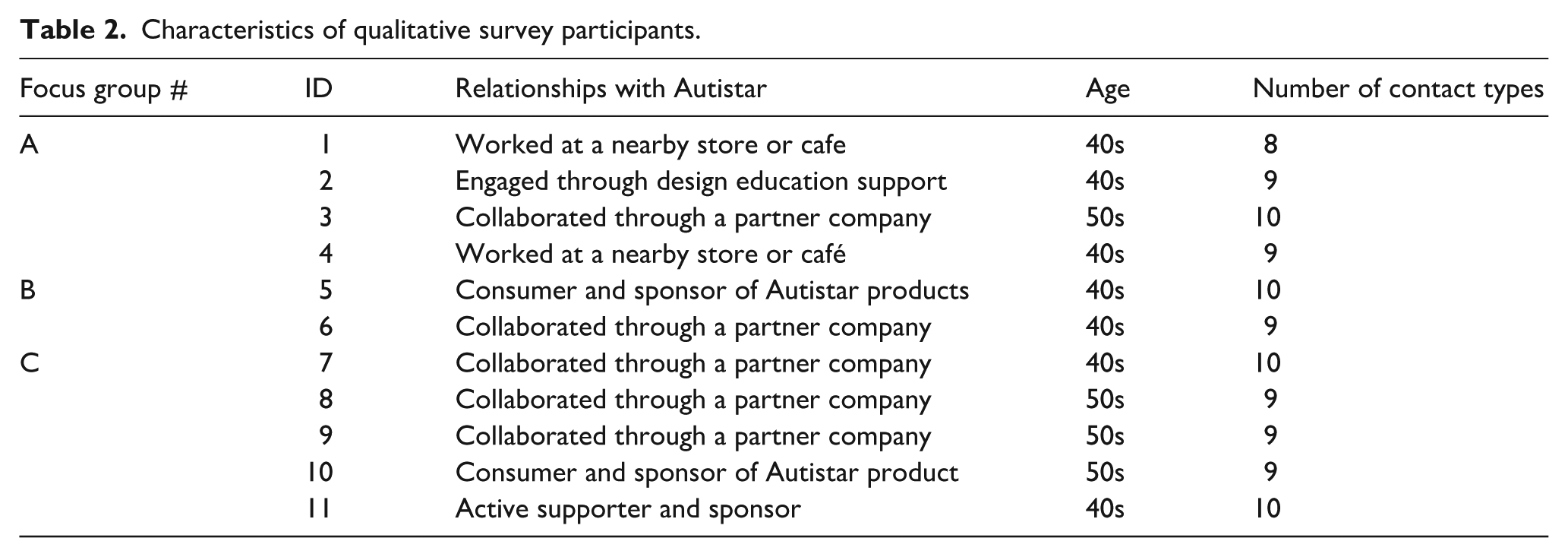
The full sample, which represented the full range of contact breadth (from no contact to extensive contact) was used for the quantitative analyses. We categorized participants with at least one contact into two groups: those with extensive contact (seven or more contact types) and those with some contact (one to six contact types). Contact types referred to specific ways participants interacted with Autistar, and a detailed explanation of these categories is provided in the Instrument section. 2 We then focused on participants with extensive contact breadth for the FGIs. However, individuals with exactly seven contact types did not volunteer for interviews, so all interviewed participants reported eight or more contact types. Detailed demographic characteristics of participants included in the quantitative and qualitative analyses are presented in Tables 1 and 2, respectively.
Characteristics of quantitative survey participants.
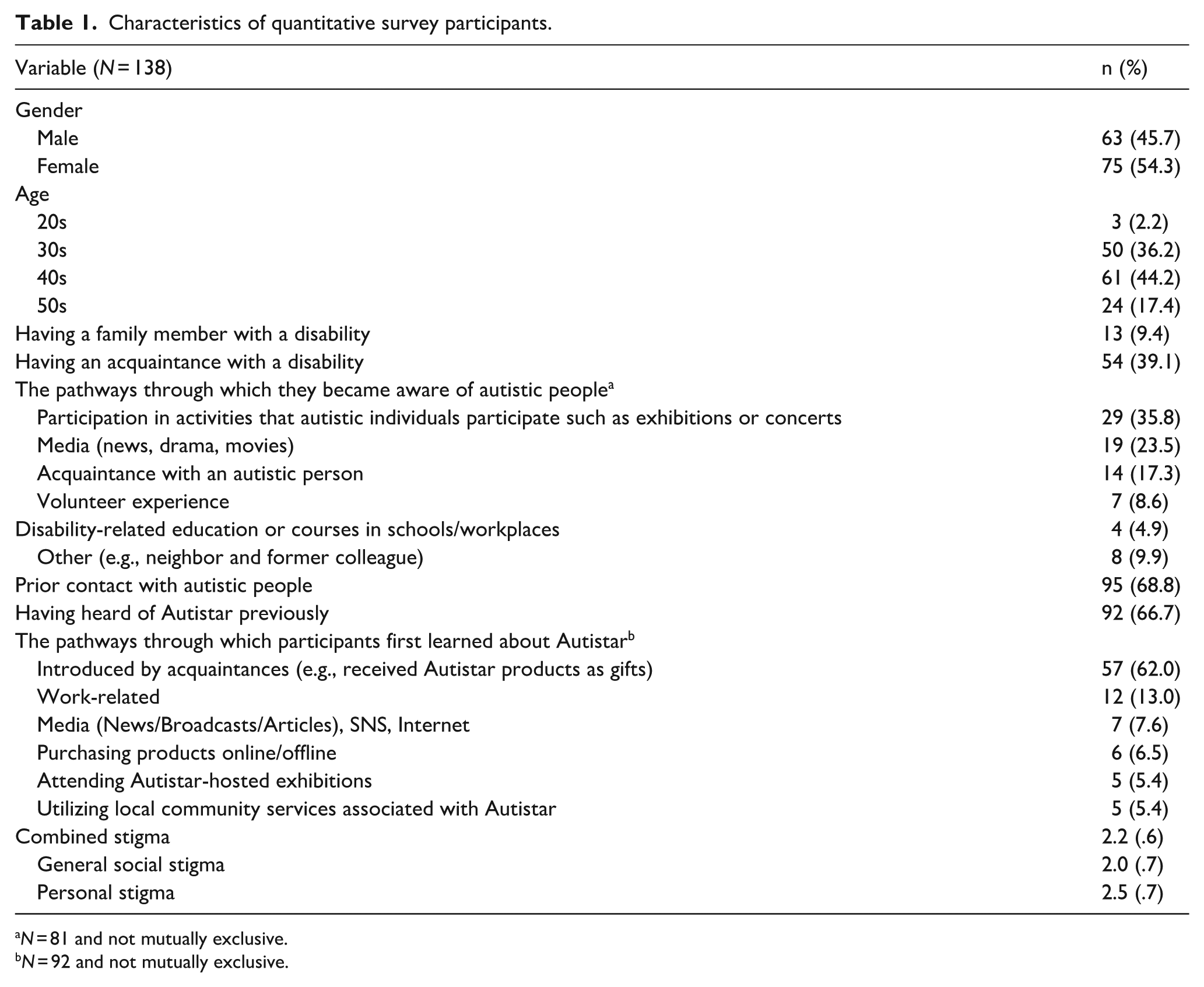
N = 81 and not mutually exclusive.
N = 92 and not mutually exclusive.
Characteristics of qualitative survey participants.
Procedures
Once participants provided informed consent by clicking “yes” on the online consent form, they completed the online survey, which included demographic questionnaires, measures of stigma toward autistic people, and questions about their contact experiences related to Autistar. The online survey was piloted with four participants (i.e. two with prior contact experience with Autistar and two without) to refine the wording and structure based on their feedback.
After completing the online survey, the first author contacted the 11 participants selected for the FGIs. We conducted the FGIs to allow participants to reflect on and build upon one another’s experiences (Kitzinger, 1995). While accommodating participants’ availability, we intentionally mixed individuals within each focus group based on their different relationships with Autistar to explore both commonalities and differences that might not surface in homogeneous, single-experience groups or during individual interviews (Kitzinger, 1995; Morgan, 1997). The FGIs were conducted across three sessions between 1 October and 5 October 2024. Group A met on 1 October with four participants (1 hour 43 minutes), Group B on October 2 with two participants (45 minutes), and Group C on 5 October with five participants (1 hour 40 minutes).
Participants received the study information sheet, consent form, and interview guide 2–4 days prior via email or text. These materials outlined the study’s purpose, procedures, roles, privacy protections, and logistical details. During the sessions, the facilitator established rapport, reviewed the consent process, and obtained verbal permission for audio recording. The FGIs were then conducted to explore participants’ perceptions of Autistar, their contact experiences, and their social distance from autistic people. All study procedures were approved by the Institutional Review Board of the authors’ institution.
Instruments
Demographic information
Participants provided information about their gender, age, the presence of a family member with a disability, the presence of an acquaintance with a disability, the pathways through which they became aware of autism, and whether they had contact with an autistic person.
Stigma
We adapted the Social Distance Scale (Gillespie-Lynch et al., 2015), a widely used measure in previous research (S. Y. Kim, Song, et al., 2023) that has also been translated and utilized in South Korea (e.g. S. Y. Kim, Cheon, et al., 2023; S. Y. Kim et al., 2022; S. Y. Kim & Gillespie-Lynch, 2023; S. Y. Kim, Kim, et al., 2024) to assess stigma toward autistic people. The adapted version measured an individual’s willingness to interact with an autistic person in formal and less intimate settings such as schools or workplaces (general social stigma) and in more close and intimate relationships (personal stigma). The final scale consisted of 14 items, with seven items each for general social and personal stigma. Internal consistency was high, with Cronbach’s alpha coefficients of 0.91, 0.86, and 0.89 for the total scale, general social subscale, and personal subscale, respectively (omega = 0.91, 0.86, and 0.89). 3 See Supplementary Table S1 for adapted Social Distance Scale items and item-level statistics.
Experience with Autistar
We assessed participants’ contact experiences with Autistar using three sets of questions. The first set asked whether participants were aware of Autistar to gauge their familiarity with the organization. The second set explored how participants first learned about Autistar, offering options such as “introduction by acquaintances” and “local community connections.” These first two sets of questions were used to gather background information about participant characteristics; no exploratory analyses were conducted using these data. The third set asked about the types of contact participants had with Autistar through 10 items designed to capture various interactions.
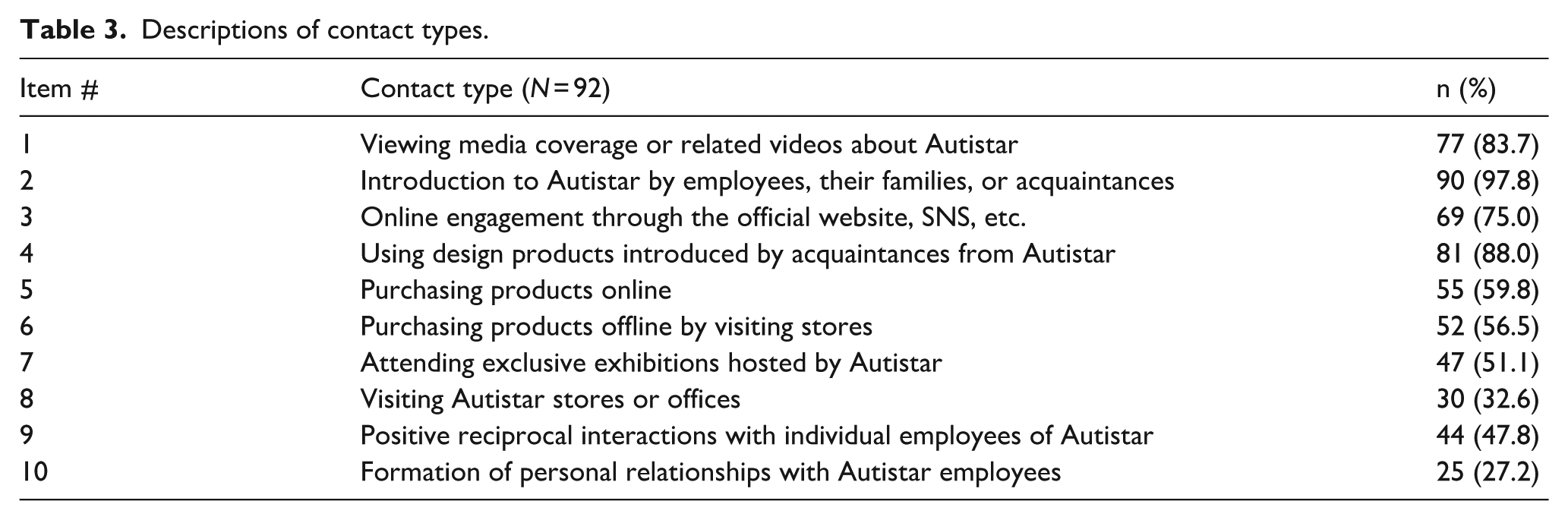
The first author categorized contact types through a systematic process informed by over 12 years of observations of Autistar’s activities, programs, and public engagement. They identified four initial subcategories: accessing information through various channels (e.g. media, introductions by others); experiences with products or designs (e.g. purchasing products, attending exhibitions); employment-related interactions with autistic employees; and personal interactions with autistic employees. Subsequently, a special education professor (SL) and a non-autistic leader of Autistar (HP) reviewed and refined these categories, drawing on their respective expertise in special education and extensive contact experience with Autistar, resulting in the final 10 items (see Table 3; Cronbach’s alpha = 0.86; McDonald’s omega = 0.86). Also, we measured contact breadth by summing the total number of distinct contact types participants reported across the 10 items, capturing the variety of contact participants had with Autistar. This measure included interactions with Autistar as an organization, such as attending exhibitions or purchasing products designed by autistic employees, as well as direct interpersonal interactions with autistic individuals employed by the company.
Descriptions of contact types.
Interview questions
The first author drafted the interview questions, which were reviewed and refined following a content validity assessment by a professor in special education. The final interview guide included open-ended, broad questions that explored participants’ relationships with Autistar, their perceptions of its societal impact, and their social distance toward autistic people.
Data analysis
Quantitative analysis
We conducted exploratory zero-order correlations to examine relationships between stigma and the breadth of contact experiences with Autistar, as well as demographic variables such as age, gender, and the presence of a family member or acquaintance with a disability. As described earlier, participants were categorized into three groups based on the breadth of contact: no contact (0 types), some contact (1–6 types), and extensive contact (7 or more types). To address the first research question, we used a mixed-effects linear regression model to evaluate the effects of stigma type (general social vs personal), group membership (no, some, and extensive contact), and their interaction on stigma, controlling for age and gender. The model included random intercepts to account for repeated measures and within-subject correlations. Mixed-effects linear regression models are considered relatively robust to moderate assumption violations (Schielzeth et al., 2020). In this study, the Shapiro–Wilk test indicated that residuals were normally distributed (p > 0.05), and robust standard errors were applied to further address potential heteroscedasticity. Post hoc analyses calculated marginal means and conducted pairwise comparisons to assess significant effects.
For the second research question, stepwise multiple linear regression identified significant predictors of combined stigma based on the ten contact type variables. Forward selection and backward elimination included variables with p < 0.35 and excluded those with p ⩾ 0.20, following Wang et al.’s (2008) recommendations. The same procedures were applied to the general social and personal stigma subscales. Multicollinearity was not a concern (VIFs = 1.34, 1.38, and 1.35 for the combined, general social, and personal stigma models, respectively). For each regression model, we examined residual normality (Shapiro–Wilk test), heteroscedasticity, skewness, and kurtosis. The combined and personal stigma models met all assumptions, whereas the general social stigma model did not pass the Shapiro–Wilk test (p < 0.05) despite meeting all other assumptions. Therefore, to maintain consistency and account for any residual deviations, we report the results from the robust stepwise multiple linear regression for all three models. We applied Bonferroni corrections for multiple testing (p < 0.01).
Qualitative analysis
Interviews were audio-recorded and transcribed verbatim. We analyzed the FGI data using qualitative content analysis, a method that systematically categorizes and codes data to identify patterns and themes (Hsieh & Shannon, 2005). We used qualitative content analysis because our focus was to complement and deepen the quantitative findings by capturing how participants made sense of their contact experiences with Autistar and autistic people, thereby providing contextual insight into patterns observed in the survey data (Hsieh & Shannon, 2005; Plano Clark & Ivankova, 2016). Following Elo and Kyngäs’s (2008) inductive approach, the analysis involved three stages: open coding, categorization, and abstraction. First, we assigned concepts to participants’ expressions through open coding while reviewing the transcribed data. Similar or related codes were grouped into categories, which were further refined into themes through iterative discussions.
Two authors (HP and JN) independently conducted open coding on the smallest transcript (Group B) and subsequently collaboratively developed an initial codebook (Codebook 1). Using this codebook, Group A’s transcript was coded independently, and any new or revised codes, categories, and themes were incorporated into an updated codebook (Codebook 2). Group C’s transcript was subsequently analyzed using the same procedures, with the updated codebook guiding the coding process. Two coders met regularly to discuss and refine the codebook. To strengthen the credibility of the qualitative findings, the corresponding author (SYK) conducted a peer debriefing process. The corresponding author independently reviewed all transcripts, coding decisions, and the emerging codebook initially developed by the research team. The corresponding author then met with the team to discuss alternative interpretations, question assumptions, and refine the codebook. The entire team collectively finalized the codes and categories underlying the six themes. This study focuses on three themes specifically related to societal stigma toward autistic people and participants’ interactions with Autistar.
Community involvement
We consulted with an autistic individual affiliated with a South Korea-based autism advocacy group. This individual reviewed the study’s objectives and procedures, including the development of interview questions. They also reviewed the final qualitative coding manual and provided input on how the qualitative findings might relate to the quantitative results. We compensated for their time and contributions. While we conducted the consultation to incorporate feedback from an autistic community member, the individual was not a co-author, and their involvement did not constitute full co-production of the research.
Results
Quantitative findings
The combined stigma score and its two subscales were not significantly correlated with age, gender, or having a family member or acquaintance with a disability (all ps > 0.05). However, greater breadth of contact with Autistar was negatively correlated with combined stigma, as well as with general social and personal stigma subscales (r = −0.52, −0.50, and −0.44, respectively; all ps < 0.0001; see Supplementary Table S2).
The mixed-effects linear regression analysis revealed significant main effects of stigma type (p < 0.001) and group membership (p = 0.09 for some contact group; p < 0.001 for the extensive contact group). A significant main effect of stigma type indicated that personal stigma was greater than general social stigma (b = 0.367, p < 0.001). The interaction terms between stigma type and contact level were not significant (ps > 0.05). Post hoc group comparisons showed that extensive contact group reported significantly lower stigma than both no contact group (contrast = −0.83, standard error (SE) = 0.11, 95% confidence interval (CI) (−0.05, −0.61)) and some contact group (b = −0.64, SE = 0.12, 95% CI (−0.88, −0.39)). The no contact group did not differ significantly from some contact group (b = −0.19, SE = 0.13, 95% CI (−0.45, 0.06)). See Tables 4 and 5 for the detailed results of the mixed-effects linear regression and post hoc pairwise comparisons.
The results of mixed-effect analysis predicting stigma with contact level group and stigma type.
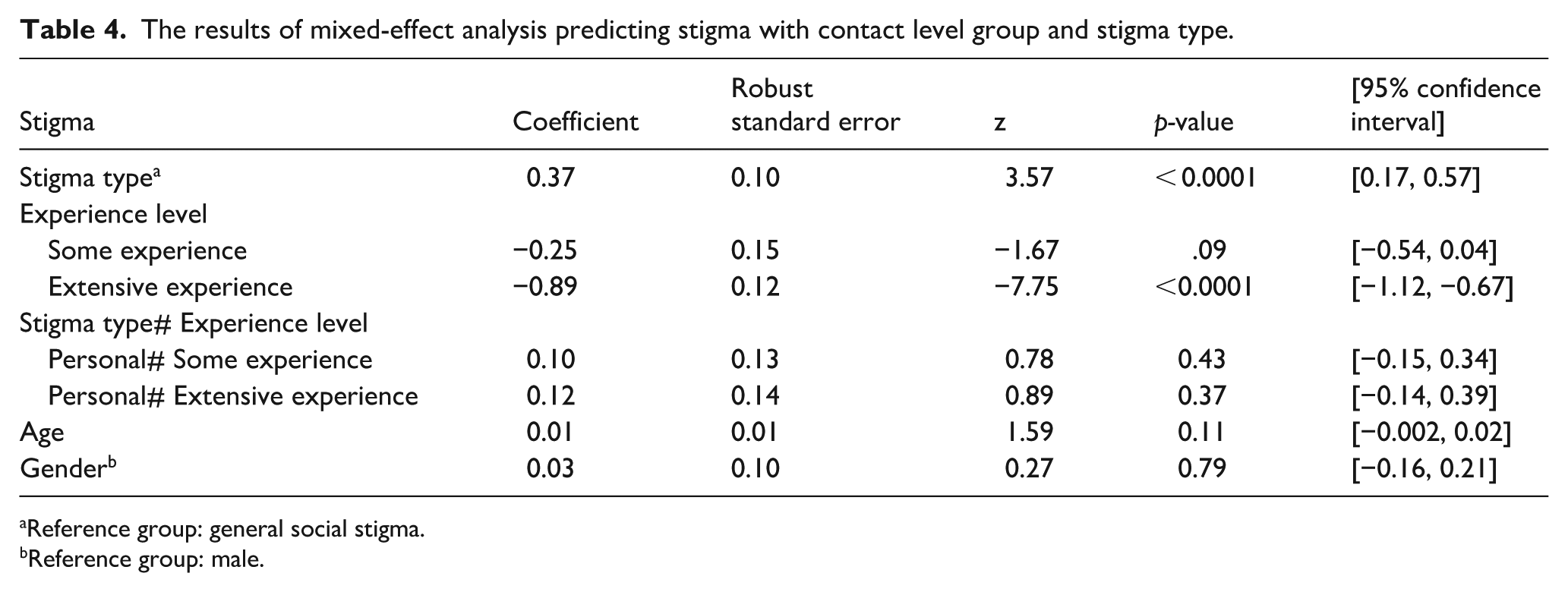
Reference group: general social stigma.
Reference group: male.
Results of pairwise comparisons of predictive margins.

Stepwise regression identified five predictors of combined stigma and its general social and personal subscales (see Table 6 for all predictors entered), explaining 32.5%, 34.7%, and 21.3% of the variance, respectively. Attending an exhibition predicted lower combined stigma (b = –0.53, p = 0.001), general social stigma (b = –0.61, p < 0.0001), and personal stigma (b = –0.46, p = 0.004). Introduction by acquaintances also predicted lower combined stigma (b = –0.92, p = 0.001) and general social stigma (b = –1.13, p < 0.0001). 4
Results of robust stepwise regression analysis.
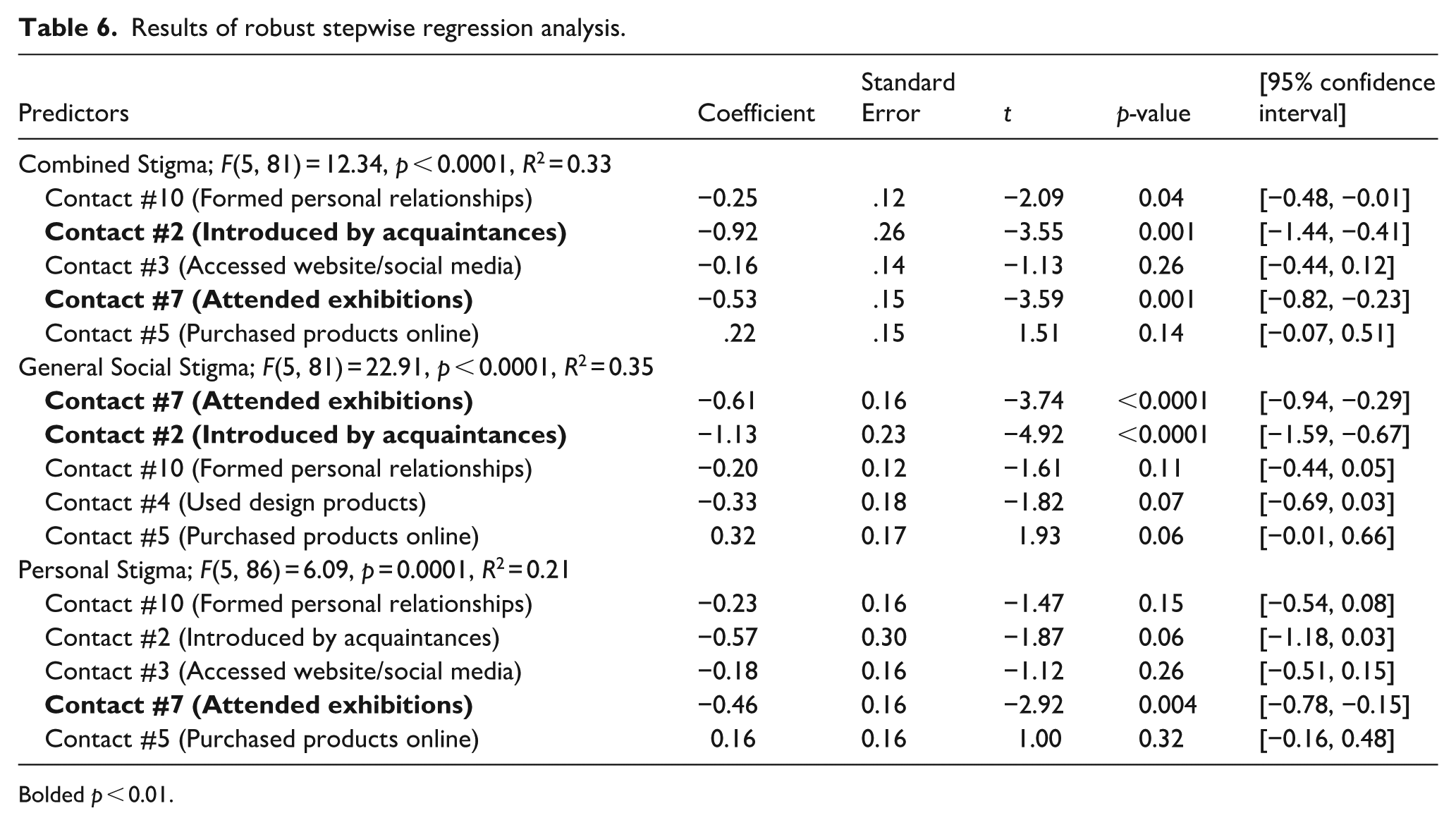
Bolded p < 0.01.
Qualitative findings
Participants described the contact types that changed their perceptions of autistic people, their perceptions of interacting with autistic people, and the broader social impact of inclusive employment. Clear differences in perspectives across the three focus groups (Groups A, B, and C) did not emerge. To maintain anonymity, we labeled participants’ quotes using a combination of their focus group interview letter and a unique participant ID (e.g. Participant A1 refers to a participant from Group A with ID number 1).
Types of contact that changed perceptions toward autistic people
Participants highlighted various types of contact with Autistar that reshaped their perceptions of autistic people. These included sustained contact, interactions that revealed similarities between autistic and non-autistic individuals, opportunities to learn about the strengths of autistic people, informed contact that provided better understanding of autistic behaviors, and, for some, their first and only meaningful interactions with autistic individuals. Participants emphasized that sustained contact was particularly impactful, as it allowed them to build meaningful and personal connections with autistic designers over time and appreciate their unique strengths. One participant explained, At first, I thought Autistar was just a company that hires autistic designers, and that was the extent of what I knew. But as I spent time with the designers, going to exhibitions, I saw how genuinely happy they were while pursuing their work. Seeing that made me realize that, even though my contribution might be small, I have a responsibility to spread awareness about places like this. It also made me want to let others know that autistic people aren’t just people who need protection or are sidelined. They are people who contribute and participate just like everyone else. (Participant C9)
Participants indicated that contact revealing similarities between autistic and non-autistic people was also transformative, as it led them to view autistic people as part of the same world. A participant noted, I used to think we had little in common, but seeing how an autistic designer works showed me how much we share in terms of creativity and work ethic. When I see autistic people enjoying themselves at concerts, smiling brightly, or interacting warmly with others, it makes me feel like they’re just like younger siblings. From observing them at exhibitions and through stories shared by others, I’ve come to think of them as part of the same daily world I’m familiar with. (Participant A2)
Participants shared that contact with autistic people and with their products and designs further reshaped their perceptions by allowing them to recognize the strengths of autistic people and their ability to contribute meaningfully into society. A participant shared, I could immediately tell that the designers’ skills are exceptional; anyone would agree. And when I gave their work as a gift, the reactions were overwhelmingly positive, with people truly admiring the craftsmanship. Seeing that, I thought, “Wow, autistic individuals can create such amazing work.” It also made me realize how seamlessly they can become part of society, contributing meaningfully. Their work in design is flawless, and they fulfill their roles excellently. It changed my perspective. (Participant A4)
Informed contact also played a critical role in shaping perceptions, as participants explained how being informed beforehand about certain behaviors helped them approach interactions with greater understanding and fewer misconceptions. One participant recalled, I was told in advance that they might suddenly make noise or act differently, but when they came, they were much quieter and ate lunch peacefully. It made me realize they weren’t as different or unusual as I had thought. (Participant A1)
Finally, for some participants, Autistar provided the only meaningful opportunity they had to interact with autistic people. One participant shared, In general society, I’ve never directly experienced interacting with autistic individuals. I don’t even know if what I’ve seen are their actual characteristics because they don’t seem to engage much in everyday social life. So, honestly, Autistar was the only way I had any meaningful interaction with autistic people. I saw them greeting others, engaging in conversations, and even having meals together. Before that, my understanding of autism came mostly from movies or dramas, which turned out to be very different from the real experience. (Participant B6)
Perceptions of interacting with autistic people
This theme captured participants’ perceptions of interacting with autistic people, including feelings of happiness and personal healing, their willingness to engage further, and reservations about forming close and sustained relationships. Participants frequently noted that interacting with autistic people “makes them happy and provides a sense of healing” (Participant C10). As one participant shared, Every time I make deliveries to Autistar and leave, I feel so happy. Even though most of them are much younger than me, they always thank me politely, saying, “Thank you.” It’s such a heartwarming experience that I often share with my family when I get home. This feeling hasn’t changed in 10 years. (Participant B7)
Participants also expressed a willingness to engage more deeply with autistic people. As one participant remarked, “I want to have conversations with them because their thoughts are so fascinating. I’d love to sit with them in a café, have coffee, and enjoy leisure time together,” demonstrating a strong desire to deepen connections and understand the unique interests of autistic individuals (Participant A2). Another participant shared, If an autistic person joined my team, I think we could work together. In the past, I would have felt distant due to my lack of understanding, but now I feel equipped to address their unique needs and collaborate. I even want to try new experiences with them, like going to a concert since I know we both enjoy music. It’s something I feel open to exploring now. (Participant C10)
However, participants also raised reservations about forming closer or family-like relationships, citing uncertainties and discomfort. For instance, one participant explained, I think it’s possible to work or spend leisure time together, but when I was previously asked if I could accept an autistic person as part of my family, I realized I wasn’t ready. I care about them and admire their abilities, but I’m not at that stage yet. (Participant C8)
Social impact of inclusive employment
Participants discussed the broader societal impact of Autistar’s inclusive employment practices, emphasizing its role in reducing stigma toward autistic people and highlighting the need for systemic support to expand such models to enable wider adoption and greater societal impact. Participants noted that inclusive employment practices, such as exhibitions and public events, help reduce stigma by providing opportunities for broader societal engagement with autistic individuals’ contributions and abilities. These practices were seen as instrumental in shifting not only individual attitudes but also societal perspectives. One participant explained, Hosting exhibitions or similar events provides an opportunity for people who had no prior interest to learn about the processes and work being done. This can serve as a wake-up call, creating a positive influence. As someone who didn’t encounter autistic individuals in my everyday life, I previously only thought of them when watching a movie or something. But now, I see how positively this can impact society. (Participant B6)
Another participant reflected on how inclusive employment demonstrates the capabilities of autistic individuals, reshaping attitudes across communities and among employers: Through companies like Autistar, people see that autistic individuals can demonstrate incredible abilities and achieve significant outcomes. This helps shift societal perceptions toward more positive attitudes. Employers, for instance, may be more inclined to hire autistic individuals when they see what they are capable of. These practices influence communities positively, fostering an environment of acceptance and inclusion. (Participant A4)
Participants emphasized the need for systemic and governmental support to encourage more companies to adopt institutional-level inclusive employment models, thereby creating greater opportunities for autistic individuals and supporting a broader societal impact in reducing stigma. A participant mentioned, I think there needs to be more support from the government and companies. Efforts like these in design and similar fields need to spread and become more common so that people see them as natural. This may sound obvious, but it’s essential. (Participant A3)
Discussion
This study examined the associations between non-autistic community members’ stigma toward autistic people and their contact experiences with Autistar. Supporting our hypothesis and consistent with prior research (S. Y. Kim, Song, et al., 2023; Someki et al., 2018), greater contact breadth with Autistar was significantly associated with lower stigma toward autistic people. Broader contact may have increased exposure to autistic people in varied settings, helping normalize their presence in professional and social contexts and thereby reducing stigma. In this study, stigma toward autistic people was not associated with demographic factors such as age or gender. This finding is consistent with previous studies on stigma toward autistic people conducted in South Korea, which likewise reported no gender differences (S. Y. Kim et al., 2022; S. Y. Kim & Gillespie-Lynch, 2023). However, a meta-analysis of predominantly Western samples identified gender-related differences in stigma toward autistic people (S. Y. Kim, Song, et al., 2023). This contrast may reflect cross-cultural variation in how gender norms and social expectations relate to the expression or reporting of stigma, underscoring the need for further research.
Among the specific types of contact, attending exhibitions emerged as a significant predictor of reduced combined, personal, and general social stigma. Participants’ qualitative accounts also supported this association, as they frequently mentioned how exhibition settings provided opportunities to meet autistic people and see them as “just people.” Broader stigma literature has also shown that exhibitions can increase public awareness and reduce stigma toward mental health conditions and psychotic disorders (Ho et al., 2024; Riches et al., 2019). Exhibitions may not only normalize the presence of autistic people in professional and social contexts but also allow non-autistic individuals to witness autistic employees’ skills and contributions firsthand, fostering what may be considered higher quality contact that highlights shared appreciation rather than differences. Introductions to Autistar through employees, families, or acquaintances were significant predictors of combined and general social stigma, but not personal stigma. Such pathways may convey indirect endorsement or trust transfer, as introductions from credible or familiar sources can enhance openness to engaging with autistic people, particularly in casual or less intimate contexts.
Qualitative accounts of contact types that changed perceptions about autistic people further contextualized the mechanism behind the association between stigma and contact with Autistar. The subthemes of contact that changed perceptions about autistic people also aligned closely with Allport’s contact theory (1954). Equal group status was suggested as participants acknowledged both the strengths and similarities between autistic and non-autistic people, viewing them as capable contributors in professional and creative settings. Authority support was indicated in informed contact, where guidance about autistic behaviors appeared to help reduce misconceptions and address uncertainties. While less prominent, some participants mentioned collaborations between companies, which may have hinted at elements of intergroup cooperation and common goals. Some participants also described collaborations between Autistar and other companies, where autistic and non-autistic employees worked together on shared projects or exhibitions, reflecting elements of intergroup cooperation and common goals. Together, these subthemes illustrated the types of high-quality contact, stemming from interactions with Autistar and its autistic employees, that can shift participants’ perspectives, leading them to view autistic people as part of their ingroup and reduce stigma.
Notably, some participants indicated that Autistar provided their first and only opportunity to engage directly with autistic people. This is unsurprising given the limited social participation of autistic people in Korea, with over 50% spending most of their time at home after school, and non-autistic adults rarely interacting with autistic individuals in workplaces or social circles (S. Y. Kim, Kim, et al., 2024; H. Lim et al., 2014). Inclusive employment practices, such as those implemented by Autistar, appeared to bridge this gap by facilitating natural, sustained contact between autistic and non-autistic people, contributing to reduced stigma.
Participants’ emphasis on the value of sustained contact, as reflected in the qualitative findings, aligns with the quantitative results, which revealed that extensive contact was most effective in reducing stigma, while limited contact showed no significant difference from no contact. This underscores the importance of sustained interactions in shaping perceptions. Furthermore, this may explain why some previous studies that found insignificant associations between contact with autistic people and stigma, when using binary measures (e.g. whether someone has had an experience with autism, as in Cage et al., 2019), failed to capture the depth and quantity of contact necessary to foster meaningful change in stigma. Relatedly, we also examined whether knowing an acquaintance or family member with a disability was related to stigma toward autistic people, but no associations emerged. This may reflect the nature of acquaintance-level contact, which is often indirect, brief, or unrelated specifically to autism. In addition, the very small number of participants who reported having a family member with a disability limited our ability to draw meaningful conclusions about this variable.
Participants with extensive contact perceived interactions with autistic designers as positive, often evoking feelings of happiness, personal healing, and a willingness to engage further. These experiences, along with the perception of autistic individuals as “just the same people,” suggest that ingroup re-categorization may play a key role in reducing stigma. This process is consistent with intergroup bias theory (Tajfel & Turner, 1986) and supported by Pettigrew and Tropp’s (2006) meta-analytic work, which suggested how contact can reduce prejudice by expanding individuals’ sense of shared group membership with outgroup members. Empirical findings from South Korea further support this mechanism; for example, a brief anti-stigma intervention led participants to perceive autistic individuals as part of their ingroup (S. Y. Kim, Gillespie-Lynch, & Yoon, 2024; S. Y. Kim, Kim, et al., 2024).
The quantitative results indicated that personal stigma was higher than general social stigma across all levels of contact, and qualitative accounts from participants with extensive contact likewise revealed persistent hesitancy toward close, intimate relationships with autistic individuals. This pattern is consistent with S. Y. Kim, Gillespie-Lynch, and Yoon (2024), who found greater resistance to autistic romantic partners than to having an autistic classmate both before and after an autism acceptance training, even though overall stigma decreased following the intervention. In collectivistic societies like South Korea, low relational mobility (Yuki et al., 2007; Yuki & Schug, 2020) may discourage forming new close relationships with autistic individuals, and cultural beliefs that autism is permanent or hereditary may further intensify reluctance toward intimate ties; for example, some Korean parents have rejected or avoided autism diagnoses to protect marriageability and family reputation (Grinker & Cho, 2013). These cultural dynamics suggest that strategies beyond repeated exposure may be needed to shift attitudes in more intimate domains.
Given the non-significant interaction between contact breadth and stigma type, our data do not clarify whether the observed difference between personal and general social stigma reflects a difference in degree (i.e. consistently higher reluctance toward intimate ties) or a difference in type (i.e. distinct underlying processes). Future studies could use scenarios that ask about different types of relationships (e.g. coworker vs romantic partner) to examine whether personal and general social stigma reflect separate constructs with distinct mechanisms. It is also possible that the distinction between the two domains is heightened in low-relational-mobility cultural contexts, and cross-cultural research is needed to determine whether the distinction between these stigma domains varies across cultural settings.
Implications
First, participants’ recognition of the value of informed contact highlights the importance of education and preparation in reducing stigma. Providing context about autism such as why and how some autistic people may communicate differently or occasionally engage in repetitive behaviors can help people know what to expect in interactions. Such preparation not only mitigates misconceptions but also reduces anxiety that can contribute to stigma toward individuals with disabilities (Hellem et al., 2018; Ogle et al., 2023). Integrating education and preparation about autism into contact-based interventions can therefore enhance their effectiveness by fostering more positive, confident interactions and reducing barriers to inclusion.
The findings revealed a theoretical connection between intergroup contact theory and ingroup bias theory, indicating that high-quality and sustained interactions can promote ingroup re-categorization and, in turn, reduce stigma. This highlights the need to explore how these mechanisms function across diverse cultural contexts, as cultural factors significantly influence ingroup bias (Fischer & Derham, 2016). For instance, Yamagishi et al. (1998) observed greater in-group favoritism in collectivistic societies compared to individualistic ones. Similarly, Fischer and Derham (2016) found that individuals from collectivistic cultures tend to exhibit ingroup bias primarily toward stable, long-term groups, whereas those from individualistic cultures display bias even toward short-term or arbitrarily defined groups. Future research should examine whether the interplay between intergroup contact, ingroup re-categorization, and stigma reduction applies consistently across cultural settings.
Finally, this study highlights that inclusive employment practices (e.g. providing institution-level support through individualized accommodations and aligning employees’ skills with appropriate job roles) enable autistic employees to showcase their abilities and generate a ripple effect that extends beyond the workplace to reduce societal stigma. This ripple effect underscores the need for system-level efforts to address structural barriers and promote authentic inclusion, as emphasized by Ayaya (2025) and Den Houting et al. (2021). To sustain and expand these impacts, greater governmental support is crucial, as participants highlighted the need for systemic resources and initiatives. Policies should prioritize providing resources and incentives for organizations to adopt inclusive, strength-based employment practices rather than simply meeting quotas, which often lead to tokenism (Beckwith et al., 2016; Mpofu & Conyers, 2002). In South Korea, while the Employment Promotion and Vocational Rehabilitation of Persons with Disabilities Act mandates hiring quotas for disabled workers, many companies bypass active inclusion by paying levies instead (Won et al., 2011). Future efforts should focus on strengthening policy enforcement through incentives, system-level training programs, and accountability measures to support the genuine inclusion of autistic individuals in the workplace.
Limitations
Several limitations should be considered when interpreting the findings of this study. First, self-selection bias may have influenced the results, as participants with more favorable attitudes toward autistic people were likely more inclined to participate. Second, social desirability bias might have led participants to overstate their acceptance and inclusivity, providing responses they believed to be more socially acceptable. Third, the relatively small sample size limited the ability to thoroughly evaluate the validity of the social distance scale, which should be further explored in future research with larger samples. Fourth, while qualitative findings provide evidence that increased contact may lead to more positive perceptions of autistic people, the cross-sectional nature of the quantitative data precludes causal inferences, leaving it unclear whether greater contact reduces stigma or if individuals with less stigma are more likely to engage in contact. Future research using longitudinal or cross-lagged panel designs would help clarify the directionality of these relationships and better identify the processes through which contact may influence stigma.
Fifth, the operationalization of contact inevitably blended organizational exposure (e.g. interacting with Autistar as an organization) and individual interactions (e.g. direct engagement with its autistic employees). For example, purchasing products in-store could involve conversations with autistic employees or simply visiting the space, and we did not differentiate these experiences. Future research should examine how contact with Autistar without direct interaction with autistic employees differs from direct interpersonal contact with autistic employees. Finally, this study focused on a single site, Autistar, which allowed for an in-depth analysis of social interactions and changes in social distance but limited the broader applicability of the findings. Future research should include a wider range of inclusive employment models and social enterprises to enhance the generalizability of these results.
Conclusion
This mixed-methods study examined the associations between community members’ stigma toward autistic people and their contact experiences with Autistar, which provides institution-level, individualized, and strength-based support for autistic individuals. Notably, the study suggests that initiatives like Autistar are associated with broader societal inclusion, potentially by normalizing interactions with autistic people in professional and community contexts. Furthermore, this is one of the first studies to explore in detail the mechanisms through which positive contact with autistic people influences stigma. Among the various types of contact, sustained and informed interactions, as well as settings that allowed participants to see the strengths and similarities of autistic people, emerged as particularly impactful in reshaping perceptions. The findings also highlighted the relevance of intergroup contact and ingroup bias theories, suggesting that high-quality contact fosters a sense of shared identity, reducing stigma by re-categorizing autistic people as part of one’s ingroup. More systemic efforts, including policy incentives to promote inclusive, strength-based employment models like Autistar, are needed to reduce societal stigma and foster societal inclusion of autistic people.
Supplemental Material
sj-docx-1-aut-10.1177_13623613251407763 – Supplemental material for A mixed-methods study examining the ripple effect of inclusive employment on reducing stigma toward autistic people in South Korea
Supplemental material, sj-docx-1-aut-10.1177_13623613251407763 for A mixed-methods study examining the ripple effect of inclusive employment on reducing stigma toward autistic people in South Korea by Hyesung Park, JiHoi Na, So Yoon Kim and SoHyun Lee in Autism
Footnotes

Author contributions
Funding
The authors disclosed receipt of the following financial support for the research, authorship, and/or publication of this article: This work, including compensation for autistic consultation, was supported by the Ministry of Education of the Republic of Korea and the National Research Foundation of Korea (NRF-2023S1A5A8078518).
Declaration of conflicting interests
The authors declared the following potential conflicts of interest with respect to the research, authorship, and/or publication of this article: S.Y.K. and J.N. declare no conflicts of interest. S.H.L. and H.S.P. serve as non-executive board member and board member, respectively, of Autistar. While S.H.L. and H.S.P. contributed to designing the quantitative instrument, drafting interview questions, and interpreting responses of autistic employees based on their professional experiences, J.N. led the focus group interviews to capture participants’ honest and authentic responses.
Data availability statement
The data supporting the findings of this study are not publicly available because IRB approval for data sharing has not been obtained. Data access may be considered upon reasonable request and pending appropriate ethical approvals.
Supplemental material
Supplemental material for this article is available online.
Notes
References
Supplementary Material
Please find the following supplemental material available below.
For Open Access articles published under a Creative Commons License, all supplemental material carries the same license as the article it is associated with.
For non-Open Access articles published, all supplemental material carries a non-exclusive license, and permission requests for re-use of supplemental material or any part of supplemental material shall be sent directly to the copyright owner as specified in the copyright notice associated with the article.
