




Abstract
This study investigated whether parental emotion-regulation difficulties are prospectively associated with increased emotion-regulation challenges in autistic children and adolescents and explored the underlying mechanisms and behavioral implications of these potential intergenerational associations. Over three time points (T1, T2, T3) spanning 2 years, 363 parents of autistic children and adolescents from Hong Kong provided questionnaire data. Path analyses revealed that parental emotion-regulation difficulties at T1 were associated with greater negative emotional expressiveness at T2, which in turn was linked to increased emotion-regulation difficulties and more internalizing and externalizing problems in autistic children and adolescents at T3. Importantly, these findings indicate that when parents have difficulty regulating their emotions and express negativity, their autistic children and adolescents are more likely to face emotion-regulation challenges and exhibit behavior problems. This underscores the need to support parents in regulating their emotions and optimizing their emotional expressiveness. Clinicians and policymakers should help parents strengthen their emotion regulation and enhance their emotional well-being by building coping strategies and fostering supportive environments. By promoting parents’ emotional wellness, we may also improve psychological adjustment and behavioral outcomes for their autistic children and adolescents.
Lay abstract
Parents of autistic children and adolescents often experience high levels of parenting stress and face challenges in managing their own negative emotions. These emotional struggles can impact their autistic children and adolescents during everyday interactions, potentially intensifying the emotional and behavioral difficulties they experience. This study examined whether parents’ emotion-regulation patterns are longitudinally linked to the development of emotion regulation in their autistic children and adolescents. The findings revealed that when parents had difficulty regulating their emotions and frequently expressed negative emotions, their autistic children and adolescents were more likely to face emotion-regulation challenges and experience personal distress and interpersonal difficulties. This underscores the importance of supporting parents in regulating their emotions and optimizing their emotional expressiveness. Clinicians and policymakers should assist parents in strengthening their emotion regulation and enhancing their emotional well-being by building coping strategies and fostering supportive environments. By promoting parents’ emotional wellness, we may also improve psychological adjustment and behavioral functioning for their autistic children and adolescents.
Keywords
Introduction
The global prevalence of autism is increasing. It is estimated that approximately 1% of children and adolescents worldwide are diagnosed with this condition (Zeidan et al., 2022). As a neurodevelopmental condition with early onset, autism affects behavior and functioning across all stages of life. According to the American Psychiatric Association (2022), autism is characterized by differences in social communication and interaction, as well as restricted and repetitive behaviors or interests. Autistic individuals may demonstrate differences in nonverbal communication and social-emotional interactions. They may also exhibit repetitive movements, a strong adherence to routines, and an intense focus on specific objects. These characteristics can pose challenges for them in expressing themselves, developing social relationships, and interacting with their environment.
Research indicates that about 70% of autistic individuals have at least one co-occurring psychiatric condition (Lai et al., 2014). A meta-analysis on psychiatric co-occurrences in autism revealed pooled prevalence rates of 20% for anxiety disorders, 11% for depressive disorders, 28% for attention-deficit/hyperactivity disorder, and 12% for disruptive, impulse-control, or conduct disorders (Lai et al., 2019). In addition, many autistic children and adolescents exhibit clinically significant symptoms that do not meet the full diagnostic criteria for any specific disorder (Guerrera et al., 2019). In particular, these individuals may experience internalizing symptoms—such as depression and anxiety—which are directed inward and contribute to personal distress (Lever & Geurts, 2016). They may also display externalizing symptoms—such as hyperactivity and aggression—which are directed outward and lead to interpersonal difficulties (Hossain et al., 2020). Both internalizing and externalizing symptoms can significantly impact daily functioning and quality of life in autistic children and adolescents (Lai et al., 2019).
Emotion regulation in autistic children and adolescents
A key factor contributing to both internalizing and externalizing symptoms in autistic individuals is difficulties with emotion regulation (Cibralic et al., 2019). Emotion regulation involves cognitive, behavioral, and physiological processes that enable individuals to monitor and adjust their emotional experiences, expressions, and responses (Mazefsky & White, 2014). Effective emotion regulation requires the ability to recognize one’s emotional state, use adaptive strategies to manage negative emotions or heightened arousal, and maintain present-moment focus despite emotional distractions (Southam-Gerow & Kendall, 2002; Thompson, 1994). When successful, it allows individuals to control the type, intensity, duration, and expression of their emotions (Gross, 1998). Conversely, difficulties with emotion regulation hinder individuals from managing their emotional experiences adaptively, often resulting in contextually unexpected responses that interfere with goal-directed behavior and interpersonal relationships (Berkovits et al., 2017).
Research indicates that autistic children and adolescents often experience challenges in emotion regulation, which can involve difficulties in managing and modulating their emotional and behavioral responses to situational or interpersonal demands (Samson et al., 2015). Individuals with these difficulties may exhibit rapidly escalating, intense, and labile negative emotions (Mazefsky et al., 2018). Moreover, they may utilize less adaptive coping strategies, such as avoidance, which can exacerbate emotional intensity, slow emotional recovery, and prolong negative affective states (Mazefsky et al., 2014). Importantly, emotion-regulation difficulties can act as a transdiagnostic risk factor for both internalizing and externalizing behavior problems in autistic children and adolescents (Chan & Tsui, 2025). The presence of these difficulties and their associated behavior problems can substantially impact the psychological well-being and daily functioning of these children and adolescents (Bennett et al., 2025).
To effectively address emotion-regulation difficulties in autistic children and adolescents, it is essential to identify the contributing factors (Restoy et al., 2024). To date, research has identified a range of biological and cognitive factors that may lead to these difficulties in autistic individuals, including differences in brain regions (e.g. amygdala and prefrontal cortex), baseline elevated arousal, information-processing challenges, limited abstract thinking, reduced cognitive flexibility, and diminished inhibitory control (Beck et al., 2020). However, few studies have explored how environmental or psychosocial factors may also contribute to emotion-regulation difficulties in this population. Importantly, from a developmental psychopathology perspective (Morris et al., 2007), the family environment plays a critical role in shaping children’s and adolescents’ emotion-regulation patterns, particularly through parental emotional characteristics and emotion socialization practices (Bennett et al., 2025; Greenlee et al., 2021; Ting & Weiss, 2017). Therefore, it is crucial to examine how parental emotionality affects the development of emotion regulation in autistic children and adolescents (Mills et al., 2022).
Parental impact on autistic children’s and adolescents’ emotion regulation
Among parental emotional characteristics, the ability to regulate emotions plays a particularly significant role in the family’s emotion socialization processes, substantially influencing the development of emotion regulation in children and adolescents (Buckholdt et al., 2014; Mills et al., 2022). However, parents of autistic children and adolescents may experience difficulties with emotion regulation due to chronic parenting stress (Hu et al., 2018). These parents may experience elevated stress levels stemming from multiple caregiving challenges, including addressing behavior problems, as well as coping with societal stigma and discrimination against their families (Chan et al., 2018; Chan & Leung, 2021). When faced with such persistent stressors, the parents’ psychological resources may become depleted, leading to challenges with emotional awareness, lower emotional clarity, and a less-consistent ability to access effective regulation strategies (Hu et al., 2019). This can ultimately result in emotion-regulation difficulties for the parents (Hu et al., 2019).
According to Morris et al.’s (2007) model of family influence on emotion-regulation development, parents play a pivotal role in shaping emotion-regulation capacities in children and adolescents through emotion socialization processes. Emotion socialization involves the transmission of emotional competencies, including how to recognize, experience, express, and manage emotions (Eisenberg et al., 1998). A central mechanism in this socialization is parental emotional expressiveness, defined as parents’ verbal and nonverbal communication of feelings during parent-child interactions (Gao & Han, 2016). Specifically, when parents frequently display emotional responses during interactions, children and adolescents may gradually internalize and incorporate these emotional response patterns into their behavioral repertoire, eventually applying them in similar emotional contexts (Eisenberg et al., 2001; Haskett et al., 2012).
For parents of autistic children and adolescents, emotion-regulation difficulties may manifest as increased negative emotional expressiveness (Hu et al., 2018, 2019). Parents experiencing these difficulties may display frequent and intense negative emotions across various contexts (Are & Shaffer, 2016). When autistic children and adolescents are repeatedly exposed to their parents’ negative expressivity, they may begin to model these negative emotional patterns (Halberstadt & Eaton, 2002). Furthermore, as they consistently witness their parents’ strong reactions to negative emotions, they may learn to adopt similarly intense responses when they are distressed (Halberstadt & Eaton, 2002). Over time, this can affect their ability to develop adaptive emotion-regulation strategies, potentially contributing to their own emotion-regulation challenges (Eisenberg et al., 2001; Haskett et al., 2012).
Eisenberg and colleagues’ (1998) heuristic model of emotion socialization posits that parental emotional expressiveness significantly influences children’s and adolescents’ psychological adjustment through its impact on emotion-regulation development. When parents effectively regulate their emotions and consistently demonstrate low levels of negative emotional expressiveness, they model adaptive self-regulation strategies (Haskett et al., 2012). This positive modeling enhances the emotion-regulation capacities of children and adolescents, thereby promoting their psychological well-being and adaptive functioning (Haskett et al., 2012). Conversely, when parents experience emotion-regulation difficulties and exhibit increased negative emotional expressiveness, they model less-adaptive regulatory patterns (Eisenberg et al., 2001). Such negative modeling can affect the emotion-regulation skills of children and adolescents, potentially increasing their vulnerability to both internalizing and externalizing symptoms (Eisenberg et al., 2001). In this way, parental emotion-regulation difficulties may significantly impact the psychological adjustment of autistic children and adolescents (Hu et al., 2018).
Research gaps
Emotion regulation represents a critical area of study due to its profound impact on mental health, social functioning, and life satisfaction (McDonald et al., 2024). It is particularly important to examine emotion regulation during childhood and adolescence, as this developmental period is marked by rapid neurocognitive maturation, shifting social expectations, and growing autonomy needs, all of which increase difficulties with emotion regulation (Restoy et al., 2024). For autistic children and adolescents, these typical developmental characteristics often intersect with autism-specific features, such as sensory sensitivities and communication challenges, further amplifying the risks of emotion-regulation difficulties (Cibralic et al., 2019). However, despite this heightened vulnerability, research on emotion regulation in autistic children and adolescents remains scarce (McDonald et al., 2024; Restoy et al., 2024).
From a developmental psychopathology perspective (Morris et al., 2007), the family environment plays a critical role in shaping emotion-regulation patterns among autistic children and adolescents. However, few studies to date have examined parental influences on emotion regulation in these children and adolescents (Mills et al., 2022). This gap is especially concerning, as parents of autistic children and adolescents often experience heightened parenting stress and increased difficulties with emotion regulation themselves, and these difficulties may influence their autistic children and adolescents through emotion socialization processes, ultimately exacerbating the emotional challenges faced by this already vulnerable group (Chan et al., 2022). As the precise mechanisms underlying this parent-to-child impact remain unclear, further research is urgently needed to understand this phenomenon and inform interventions (Chan & Neece, 2018; Mills et al., 2022). Specifically, it is important to study these mechanisms using longitudinal research designs rather than the cross-sectional designs typically used in existing studies (Restoy et al., 2024).
The issue of emotion regulation is relevant to families of autistic children and adolescents around the globe (Cibralic et al., 2019). While there has been growing interest in examining emotion regulation among families of autistic children and adolescents in Western communities, significantly fewer studies have explored this issue in Chinese contexts (McDonald et al., 2024). Indeed, it is particularly important to conduct family studies on emotion regulation within Chinese societies, where family relationships are highly valued, and the parental impact on individual adjustment is heightened due to the cultural value of filial piety (Chan et al., 2022). Within this cultural context, parental negative emotions may significantly affect the mental and behavioral health of children and adolescents (Chan et al., 2023). Studying these dynamics in Chinese families is crucial for informing the development of effective emotion-regulation training programs tailored to their specific needs.
Objectives of the present study
Grounded in Morris et al.’s (2007) model of family influence on emotion-regulation development, this study aims to examine how parental emotional characteristics influence emotional functioning in autistic children and adolescents—a relationship that remains understudied. Specifically, we address this research gap by developing and testing a conceptual model that investigates whether parental emotion-regulation difficulties are prospectively associated with increased emotion-regulation challenges among autistic children and adolescents and explores the underlying mechanisms and behavioral implications of these potential intergenerational associations. To establish temporal relations among the variables in the model, we conducted a 2-year, 3-wave longitudinal study examining whether parental emotion-regulation difficulties at Time 1 (T1) predicted parental negative emotional expressiveness at Time 2 (T2), and subsequently emotion-regulation difficulties and internalizing and externalizing behavior problems in autistic children and adolescents at Time 3 (T3). This model controlled for autoregressive effects (i.e. the mediator’s and outcomes’ baseline levels at T1) and demographic variables (i.e. child/adolescent and parental gender, age, and intellectual disability status at T1) to enhance analytical rigor and result robustness. We hypothesized that parental emotion-regulation difficulties at T1 would be associated with greater parental negative emotional expressiveness at T2, which would in turn be related to increased emotion-regulation difficulties and, consequently, more internalizing and externalizing symptoms among autistic children and adolescents at T3.
Methods
Research design
This study is part of a large-scale longitudinal research project investigating how family dynamics influence well-being and functioning in autistic children and adolescents. The project evaluated a series of theoretically derived, a priori mediation models, including the one analyzed in the present study. To establish temporal precedence in mediation analyses, we employed strategic temporal sequencing for data collection, assessing predictors at T1, mediators at T2, and outcomes at T3, with additional measurements of mediators and outcomes at T1 to account for baseline effects. This design ensures methodological rigor when testing hypothesized mediation pathways.
Procedures
This study recruited parents of autistic children and adolescents through referrals from 14 special schools and 4 autism service centers in Hong Kong, China. Information about the study was disseminated via posters, brochures, and announcements at these institutions. Our research assistants screened interested parents using the following inclusion criteria: (1) being a parent of a child or adolescent (aged ⩽21 years) with a clinician-confirmed Diagnostic and Statistical Manual of Mental Disorders, Fifth Edition (DSM-5) diagnosis of autism, and (2) being able to read and write in Chinese. Eligible parents were requested to sign consent forms and fill out self-administered questionnaires at three time points: baseline (T1), 1 year later (T2), and 2 years later (T3). Participants received HK$200 (equivalent to US$26) remuneration per completed time point. The study received ethical approval from the authors’ institution.
Participants
At T1, a total of 363 parents of autistic children and adolescents participated in the study. Their average age was 48.85 years (SD = 7.04). The majority were mothers (81.3%), married (86.5%), and not employed (55.9%). A significant portion had at least a high-school education (96.4%). The median monthly family income was HK$20,001–HK$25,000 (equivalent to US$2568–US$3210). On average, participants devoted 98.95 hours (SD = 56.79) per week to caregiving, with 34.4% of them caring for autistic children aged 12 or below and 65.6% of them caring for autistic adolescents aged between 12 and 21. The care recipients had a mean age of 14.56 years (SD = 3.95 years). Most were male (83.7%) and had intellectual disabilities (78.8%). The retention rates were 93.1% (n = 338) at T2 and 87.1% (n = 316) at T3. There were no significant differences between participants who remained in the study and those who dropped out in any variable at T1.
Measures
Parental emotion-regulation difficulties
The Difficulties in Emotion Regulation Scale Short Form (Kaufman et al., 2016) was used to measure parental emotion-regulation difficulties at T1. This scale contained 18 items (e.g. “When I’m upset, I become out of control”) that assess the extent to which parents have difficulties with emotional awareness, emotional clarity, access to emotion-regulation strategies, impulse control, acceptance of emotional responses, and engagement in goal-directed behavior. Participants rated the items on a 5-point scale, where 1 = “almost never” and 5 = “almost always.” The average of these ratings was computed, with higher scores indicating greater levels of emotion-regulation difficulties. The Cronbach’s alpha was 0.91 at T1.
Parental negative emotional expressiveness
The negative expressiveness subscale from the Self-Expressiveness in the Family Questionnaire–Short Form (Carona et al., 2021) was used to measure parental negative emotional expressiveness in the family at T1 and T2. This subscale contained 12 items (e.g. “Expressing dissatisfaction with someone else’s behavior”). Participants rated the items on a 9-point scale, where 1 = “not at all frequently” and 9 = “very frequently.” The average of these ratings was computed, with higher scores indicating greater levels of negative emotional expressiveness. The Cronbach’s alphas were 0.91 at T1 and 0.90 at T2.
Child and adolescent emotion-regulation difficulties
The Emotion Regulation Checklist (Shields & Cicchetti, 1997) was used to measure emotion-regulation difficulties in autistic children and adolescents at T1 and T3. This scale contained 24 items (e.g. “My child exhibits wide mood swings”) that assess the extent to which children and adolescents have difficulties regulating emotional intensity, valence, and lability, as well as exhibiting flexibility and situational appropriateness in their emotional responses. Participants rated the items on a 4-point scale, where 1 = “rarely or never” and 4 = “almost always.” The average of these ratings was computed, with higher scores indicating greater levels of emotion-regulation difficulties. The Cronbach’s alphas were 0.76 at T1 and 0.77 at T3.
Child and adolescent internalizing symptoms
The internalizing symptoms scale from the Child Behavior Checklist–Abbreviated Form (Achenbach et al., 2011; Piper et al., 2014) was used to measure internalizing symptoms in autistic children and adolescents at T1 and T3. This scale contained six items (e.g. “My child is unhappy, sad, or depressed”). Participants rated the items on a 3-point scale, where 0 = “not true” and 2 = “very true or often true.” The average of these ratings was computed, with higher scores indicating more severe internalizing symptoms. The Cronbach’s alphas were 0.82 at T1 and 0.81 at T3.
Child and adolescent externalizing symptoms
The externalizing symptoms scale from the Child Behavior Checklist–Abbreviated Form (Achenbach et al., 2011; Piper et al., 2014) was used to measure externalizing symptoms in autistic children and adolescents at T1 and T3. This scale contained seven items (e.g. “My child destroys things belonging to his or her family or others”). Participants rated the items on a 3-point scale, where 0 = “not true” and 2 = “very true or often true.” The average of these ratings was computed, with higher scores indicating more severe externalizing symptoms. The Cronbach’s alphas were 0.81 at T1 and 0.85 at T3.
Data analysis
Descriptive and correlation analyses were first conducted for all variables. Then, path analyses were performed to test whether parental emotion-regulation difficulties at T1 predicted parental negative emotional expressiveness at T2, and subsequently emotion-regulation difficulties and internalizing and externalizing symptoms in autistic children and adolescents at T3. These analyses controlled for autoregressive effects (i.e. the mediator’s and outcomes’ baseline levels at T1) and demographic variables (i.e. child/adolescent and parental gender, age, and intellectual disability status at T1). Missing data were addressed using full information maximum likelihood estimation. Model fit was assessed by analyzing multiple indices, including the Root Mean Square Error of Approximation (RMSEA), Standardized Root Mean Square Residual (SRMR), Comparative Fit Index (CFI), and Tucker–Lewis Index (TLI). A good model fit was indicated by RMSEA and SRMR values below 0.08 and CFI and TLI values above 0.90. Finally, bootstrap analyses were conducted to determine the statistical significance of indirect effects, with bias-corrected confidence intervals derived from 1000 bootstrapped samples. An indirect effect was considered significant if the 95% confidence interval did not include zero. These analyses were performed using SPSS Version 30.0 and Mplus Version 8.10.
Results
Table 1 displays the findings from the descriptive and correlation analyses. Parental emotion-regulation difficulties at T1 were positively correlated with parental negative emotional expressiveness at T1 and T2 (p-values < 0.001). All these variables were positively correlated with emotion-regulation difficulties and internalizing and externalizing symptoms in autistic children and adolescents at T1 and T3 (p-values < 0.001). According to Cohen’s (1988) guidelines for interpreting effect sizes, the strength of these correlations ranged from modest to large.
Descriptive statistics of and correlations among variables.
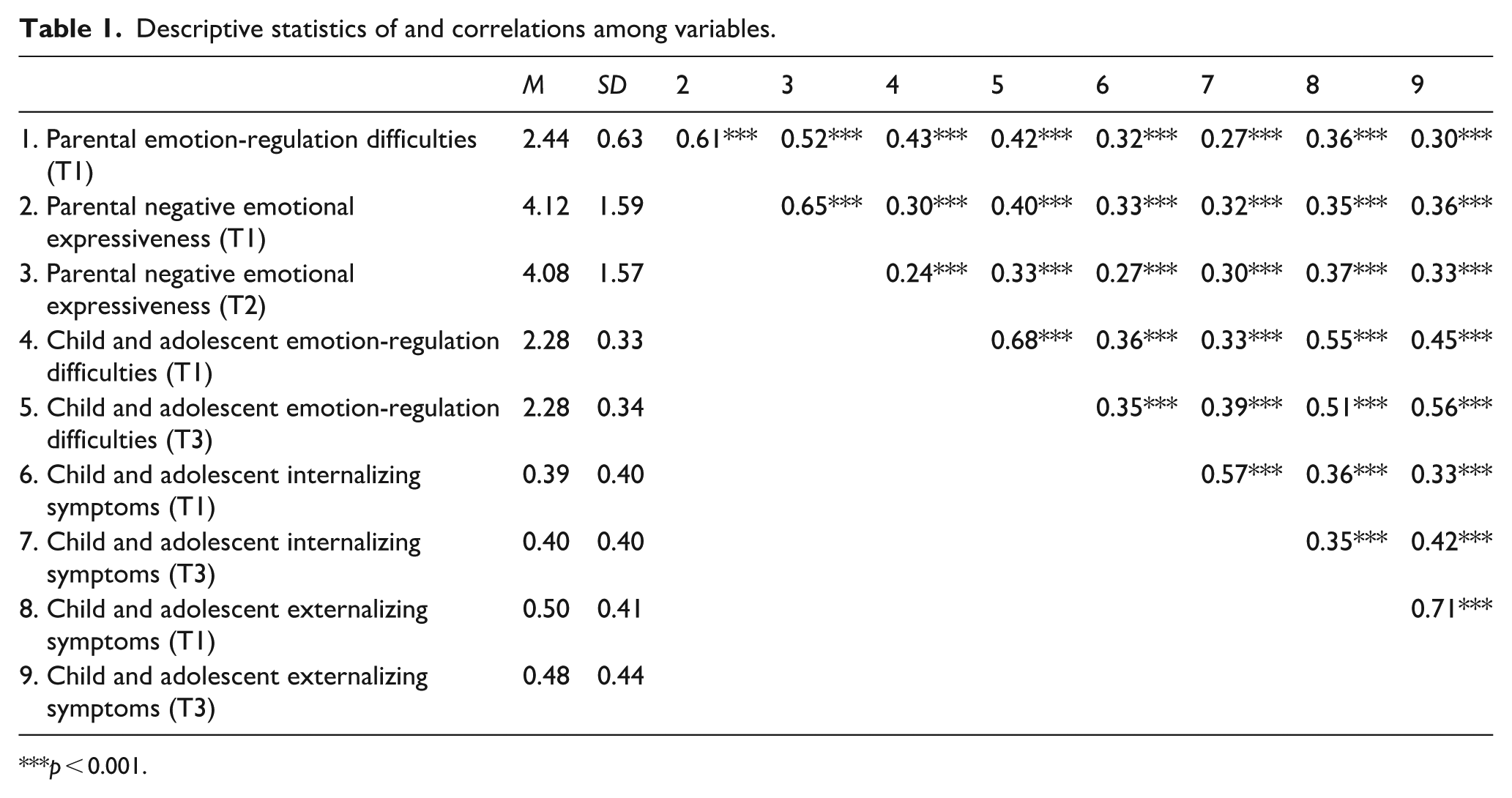
p < 0.001.
Table 2 displays the findings from the path analyses. After controlling for autoregressive effects (i.e. the mediator’s and outcomes’ baseline levels at T1; p-values > 0.05) and demographic variables (i.e. child/adolescent and parental gender, age, and intellectual disability status at T1; p-values > 0.05), parental emotion-regulation difficulties at T1 were significantly associated with parental negative emotional expressiveness at T2 (p = 0.002), which in turn was significantly related to emotion-regulation difficulties (p = 0.003) and subsequently internalizing and externalizing symptoms (p-values < 0.001) in autistic children and adolescents at T3. When controlling for parental negative emotional expressiveness at T2, parental emotion-regulation difficulties at T1 had significant direct effects on emotion-regulation difficulties in autistic children and adolescents at T3 (p = 0.03). On the other hand, when controlling for parental negative emotional expressiveness at T2 and emotion-regulation difficulties in autistic children and adolescents at T3, parental emotion-regulation difficulties at T1 had nonsignificant direct effects on the children’s and adolescents’ internalizing and externalizing symptoms at T3 (p-values > 0.05).
Standardized parameter estimates for the path model.
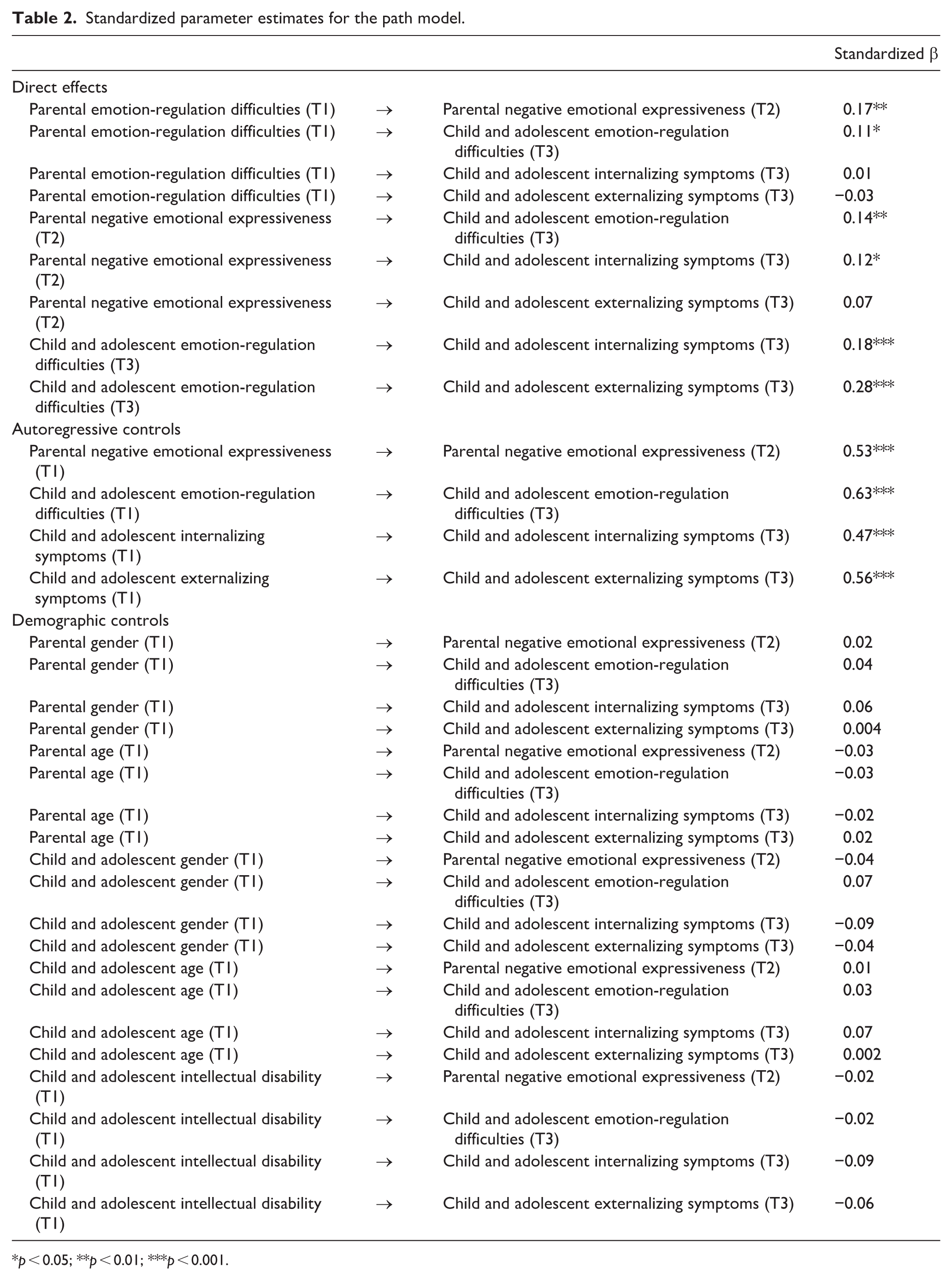
p < 0.05; **p < 0.01; ***p < 0.001.
Figure 1 illustrates the path model. The path model demonstrated a good fit, with RMSEA = 0.06, SRMR = 0.02, CFI = 0.98, and TLI = 0.92. The model explained 44.0% of the variance in parental negative emotional expressiveness at T2. It also explained 53.0%, 38.3%, and 53.9% of the variance in emotion-regulation difficulties and internalizing and externalizing symptoms in autistic children and adolescents at T3.
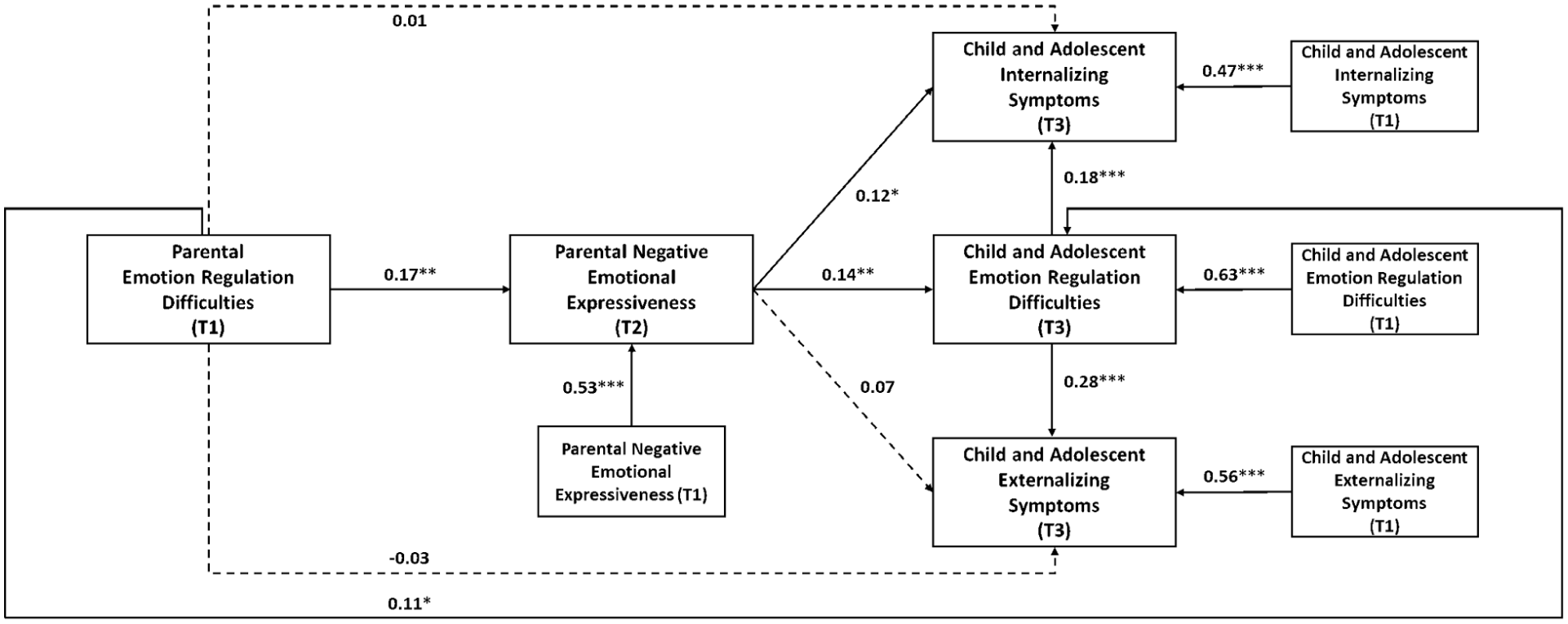
Emotion-regulation model for families of autistic children and adolescents. Demographic variables were included as control variables. Significant beta coefficients are shown. Solid lines indicate significant paths, whereas dashed lines indicate nonsignificant paths.
Table 3 displays the findings from the bootstrap analyses. Parental emotion-regulation difficulties at T1 had significant indirect effects on emotion-regulation difficulties in autistic children and adolescents at T3 through parental negative emotional expressiveness at T2 (p = 0.04). In addition, parental emotion-regulation difficulties at T1 had significant indirect effects on internalizing (p = 0.01) and externalizing (p = 0.01) symptoms in autistic children and adolescents at T3 through parental negative emotional expressiveness at T2 and the children’s and adolescents’ emotion-regulation difficulties at T3. According to Kenny’s (2021) guidelines for interpreting effect sizes, the strength of these indirect effects ranged from modest to medium.
Bootstrap analyses for the path model.
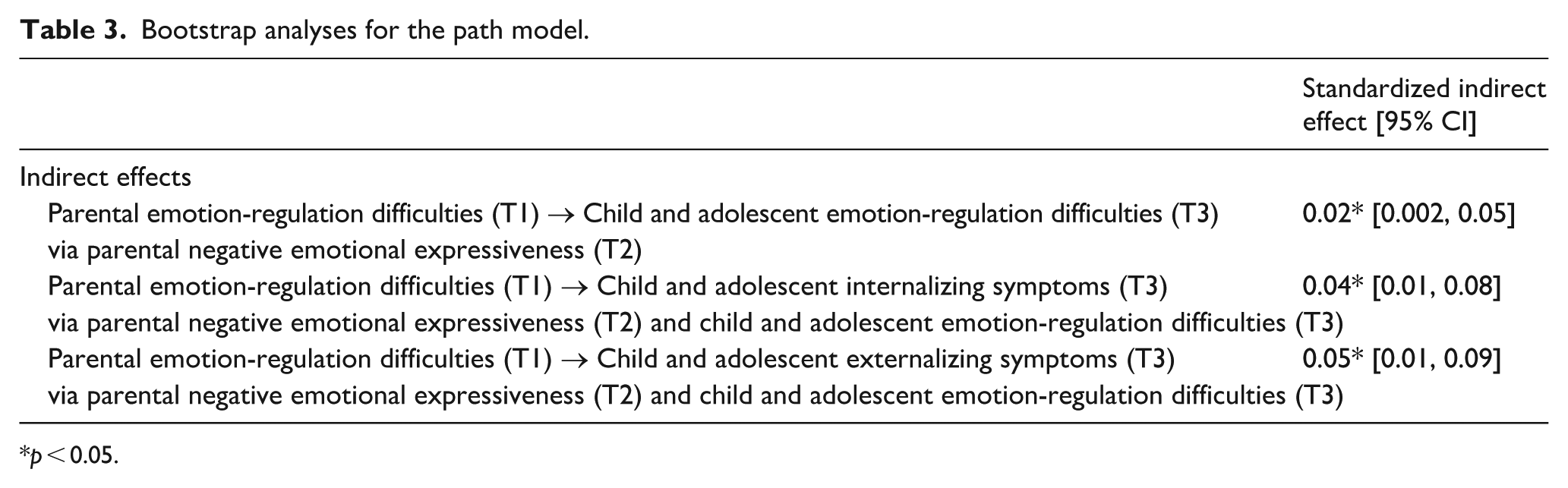
p < 0.05.
Discussion
Consistent with our hypotheses, parental emotion-regulation difficulties at T1 were associated with greater negative emotional expressiveness at T2, which in turn was linked to increased emotion-regulation difficulties and more internalizing and externalizing symptoms in autistic children and adolescents at T3. These results suggest that parents who find it challenging to regulate their negative emotions may express them more frequently during family interactions. Such emotional climates within families may impact the development of emotion-regulation skills in autistic children and adolescents, potentially influencing the occurrence of internalizing and externalizing behavior problems. Notably, our findings reveal intergenerational associations in emotion-regulation difficulties within the families of autistic children and adolescents and highlight the potential implications for their well-being and functioning.
Emotion-regulation difficulties and behavior problems in autistic children and adolescents
The associations between emotion-regulation difficulties and internalizing and externalizing symptoms in autistic children and adolescents suggest that challenges in managing emotions are linked to adverse mental health outcomes (Cibralic et al., 2019). Specifically, autistic children and adolescents with emotion-regulation difficulties may direct their negative emotions both inward and outward, which could contribute to psychological distress (e.g. depression and anxiety) and interpersonal difficulties (e.g. hyperactivity and aggression). Overall, these findings indicate that emotion-regulation difficulties are associated with increased psychopathology and could serve as a transdiagnostic risk factor for various mental health problems (Chan & Tsui, 2025). Given the observed links between emotion regulation and the well-being and functioning of autistic children and adolescents, providing effective training programs to help them learn to manage and respond to emotional experiences may be beneficial (Mazefsky & White, 2014; Reyes et al., 2019).
Role of parental emotion-regulation difficulties
Previous research has focused on biological and cognitive factors associated with emotion regulation in autistic children and adolescents (Beck et al., 2020). This study shifts the focus to psychosocial and family influences, particularly the potential impact of parental factors. Specifically, our findings reveal associations between parental emotion-regulation difficulties and the emotion-regulation challenges and behavior problems of autistic children and adolescents. This suggests that when parents struggle to regulate their emotions, their autistic children and adolescents are more likely to experience similar challenges, which could affect their well-being and functioning. These findings align with the family model of emotion-regulation development (Morris et al., 2007), which proposes that parents play a critical role in influencing the development of emotion regulation in their children and adolescents.
Given the significant implications of parental emotional characteristics, practitioners should support parents in strengthening their emotion regulation and emotional well-being (Hu et al., 2018, 2019). Specifically, practitioners should consider helping parents build emotional coping strategies through evidence-based interventions, such as mindfulness and self-compassion training (Featherston et al., 2024; Finlay-Jones, 2017). In addition, practitioners should advocate for societal efforts to create more supportive environments that help parents alleviate parenting stress and emotional distress by increasing family support services (e.g. respite care and peer networks) and addressing caregiving barriers (e.g. stigma and discrimination) (Chan et al., 2018, 2023). A dual focus on both individual skill-building and systemic support ensures that parents are supported not only through personal interventions but also by enabling environments that enhance their emotional well-being.
Role of parental negative emotional expressiveness
Our study found that the impact of parental emotion-regulation difficulties on the emotion-regulation challenges and internalizing and externalizing symptoms of autistic children and adolescents are mediated by parental negative emotional expressiveness. These findings suggest that parents who face challenges in emotion regulation may express negative emotions more frequently in family contexts, potentially modeling less-adaptive emotion-regulation strategies for their autistic children and adolescents, which may contribute to their behavior problems. This observed role of parental emotional expressiveness in child and adolescent adjustment aligns with the heuristic model of emotion socialization (Eisenberg et al., 1998), which posits that parents’ emotional socialization behaviors, including emotional expressiveness, can influence the development of emotion regulation and psychological adjustment in children and adolescents.
Given the potential impact of parental negative emotional expressiveness on autistic children and adolescents, practitioners should consider helping parents understand how their negative emotional expressions within family settings may influence the internalizing and externalizing behavior problems of their children and adolescents (Hu et al., 2018). Practitioners might also guide parents in recognizing how modifying these expression patterns could potentially support their children’s and adolescents’ psychological adjustment (Halberstadt & Eaton, 2002). In addition, practitioners might provide parents with interventions aimed at improving emotional communication within the family, with an emphasis on reducing negative expressivity and increasing positive expressivity (Kaminski et al., 2008).
Emotion-regulation model for families of autistic children and adolescents
The present study developed and validated a conceptual model to reveal how parental emotion-regulation difficulties and negative emotional expressiveness are longitudinally associated with increased emotion-regulation challenges and behavior problems in autistic children and adolescents. Specifically, the longitudinal nature of these associations suggest that parents’ early emotion-regulation difficulties may relate to longer-term challenges for their children and adolescents. Importantly, this model highlights the value of considering parental emotional health and emotion socialization practices in understanding the emotional competence and mental wellness of autistic children and adolescents (Eisenberg et al., 1998). Furthermore, the model points to the potential benefits of supporting parents’ emotion regulation and optimizing their emotional expressiveness to enhance the emotional well-being and behavioral functioning of these children and adolescents (Hu et al., 2018).
Building on Morris et al.’s (2007) model of family influence on emotion-regulation development, our model shows that parents play a pivotal role in shaping emotion-regulation capacities in autistic children and adolescents. Specifically, the model elucidates how parental emotion-regulation difficulties may exacerbate the emotion-regulation challenges of these children and adolescents. That said, it is indeed possible that the children’s and adolescents’ emotion-regulation challenges and associated behavioral issues may create increasing caregiving demands and parenting stress, heightening the parents’ emotion-regulation difficulties and negative expressivity, thus creating a reciprocal cycle (Chan et al., 2018; Chan & Leung, 2021). Given these potential reciprocal dynamics, future research should test bidirectional pathways of variables using cross-lagged panel models to better understand the intergenerational patterns of emotion regulation in families of autistic children and adolescents.
While our model points to the significance of parental emotion-regulation patterns in influencing family emotion socialization processes and child and adolescent emotion-regulation development, it is important to note that the model accounted for only a moderate portion of the variance in the outcome variables. This is not unexpected, as family emotion socialization processes may be affected not only by parental emotion-regulation patterns but also by other parental emotional characteristics, such as affective symptoms (e.g. depression) (Morris et al., 2007). Moreover, the mechanisms of these processes my involve not only parental emotional expressiveness but also other behaviors during parenting, such as parental warmth and hostility (Cui et al., 2021; Shaffer & Obradović, 2017). Building on our work, future research should examine more comprehensive models that include various predictors and mechanisms of family emotion socialization in influencing the emotion-regulation development of autistic children and adolescents.
In evaluating our model, we shifted our research focus from the traditional emphasis on Western families of autistic children and adolescents to explore emotion regulation within Chinese families. Indeed, it is particularly important to study the impact of parental emotionality on autistic children and adolescents in Chinese families, as the cultural value of filial piety may lead these children and adolescents to be more receptive to their parents’ emotion-regulation patterns and to internalize them (Chan et al., 2022). Given the limited research on this topic in the context of Chinese families, further studies are needed to understand their emotion-regulation profiles. Specifically, investigating emotion regulation among Chinese families could provide a foundation for developing culturally relevant psychological interventions. Following this, future research could examine the effectiveness of parent-focused, child/adolescent-centered, and family-based emotion-regulation support programs in improving the psychological adjustment of autistic children and adolescents within Chinese families. The development and implementation of such programs could enhance the well-being and functioning of autistic children and adolescents and their families in these contexts.
Limitations and future research directions
The present study has several limitations. First, while this study deliberately focused on the under-researched unidirectional pathway of parental influences to establish a foundational understanding of how parental factors predict child and adolescent emotion regulation, it is also plausible that child and adolescent emotion-regulation patterns reciprocally affect parental emotion-regulation capacities and emotional expressiveness, creating complex, transactional family dynamics over time (Wang et al., 2025). Future research should test these bidirectional pathways using cross-lagged panel models across multiple time points to disentangle the temporal precedence and strength of parent-to-child versus child-to-parent influences, clarifying the directionality of effects within these family systems. Second, while our analytic model focuses on the role of parental emotion-regulation difficulties, other emotional characteristics, such as affective symptoms (e.g. depression), may also influence family emotion socialization processes and, consequently, emotion-regulation patterns in autistic children and adolescents (Bennett et al., 2025; Greenlee et al., 2021). Future research should account for these factors when further testing our model. Third, our sample predominantly included male autistic individuals and mothers, limiting the generalizability of the findings to autistic individuals of other genders and to fathers. In addition, it comprised more adolescents than children. Future research should recruit more balanced samples to better evaluate our hypotheses. Fourth, our measures relied entirely on parent self-reports, which may introduce mono-reporter bias and common method variance, potentially leading to spurious conclusions about associations between variables. Future research should collect data from multiple informants (e.g. fathers, mothers, children/adolescents, clinicians) using various methods (e.g. questionnaires, interviews, observations) and analyze the associations among variables using structural equation modeling.
Conclusions
Despite these limitations, the present study offers both theoretical contributions and practical implications. Theoretically, our results suggest that parental emotion-regulation difficulties and negative emotional expressiveness are longitudinally associated with increases in emotion-regulation challenges, as well as internalizing and externalizing symptoms, in autistic children and adolescents. These findings highlight potential pathways for intergenerational associations in emotion-regulation difficulties and their implications for the well-being and functioning of autistic children and adolescents. Practically, the results suggest that supporting parents’ emotion regulation and optimizing their emotional expressiveness may be beneficial for promoting mental health in autistic children and adolescents. Practitioners should support parents in developing their emotion-regulation capacities and improving their emotion socialization practices, which may contribute to better psychological adjustment and behavioral outcomes in their autistic children and adolescents.
Footnotes
Acknowledgements
We would like to express our sincere gratitude to the following special schools and autism service centers (in alphabetical order) for facilitating recruitment of eligible participants from their service users: Buddhist To Chi Fat She Yeung Yat Lam Memorial School; Caritas Lok Jun School; Caritas Lok Kan School; Caritas Resurrection School; Choi Jun School; Church of Christ in China Kei Shun Special School; Haven of Hope Sunnyside School; Heung Hoi Ching Kok Lin Association Buddhist Po Kwong School; Hong Chi Lions Morninghill School; Hong Chi Morninglight School, Yuen Long; Hong Chi Pinehill No.2 School; Rotary Club of HK Island West Hong Chi Morninghope School; The Boys’ & Girls’ Clubs Association of Hong Kong; The Mental Health Association of Hong Kong Cornwall School; The Parents Association of Autistic Children in Mainstream Education; The Parents’ Association of Pre-School Handicapped Children; Tung Wah Group of Hospitals Tsui Tsin Tong School; and Yuk Chi Resource Center.

Ethical considerations
This study was approved by the Human Research Ethics Committee of The Education University of Hong Kong.
Author contributions
Funding
The authors disclosed receipt of the following financial support for the research, authorship, and/or publication of this article: This study was funded by the General Research Fund of the Research Grants Council of Hong Kong (project number: 18611621).
Declaration of conflicting interests
The authors declared no potential conflicts of interest with respect to the research, authorship, and/or publication of this article.