




Abstract
Ableist microaggressions—subtle forms of disability-based discrimination—constitute a key minority stressor. Amplified by autistic identity contingencies that shape how autistic identity is judged and treated in social contexts, these factors drive social camouflage in autistic adults, compelling them to conceal autistic characteristics for adapting to non-autistic groups, often resulting in negative mental health outcomes. This study proposes a novel autistic identity contingencies model to explore how autism acceptance and loneliness mediate the relationship between ableist microaggressions and social camouflage. An online survey of 330 autistic adults was conducted, followed by hierarchical multiple regression and chain mediation analyses. Results revealed that, ableist microaggressions positively predicted three social camouflage phenotypes: compensation, masking, and assimilation, with loneliness also positively predicting assimilation. Furthermore, after controlling for personal attributes, general stress and mental health conditions, lower external autism acceptance and higher loneliness mediated the positive relationship between ableist microaggressions and assimilation, whereas internal autism acceptance showed no significant effect. Assimilation is uniquely shaped by social autistic identity threats and loneliness, distinguishing it from compensation and masking. These findings highlight social camouflage as responses to minority stressors driven by social autistic identity contingencies, rooted in stigmatised behaviours rather than in stigmatised personal autistic identity.
Lay Abstract
Society’s perceptions of autism, reflected in subtle discrimination against autistic people, cause autistic adults to hide their true selves. They may hide their autistic traits to fit in with others, especially in groups that do not understand autism. Although this can help autistic people be accepted, it often leads to exhaustion and problems with mental health. However, the invisible ways in which autistic adults are judged and treated in daily social activities and how this impacts their strategies for camouflaging their autistic traits is poorly understood. This study examined the effects of feeling accepted as an autistic person, either by oneself or by others, and experiencing loneliness on how autistic adults camouflage being autistic when facing subtle discrimination related to their disability status. We surveyed 330 autistic adults using online questionnaires. After accounting for personal differences, subtle discrimination was positively associated with three camouflaging strategies: compensating for social challenges, covering up differences, and blending in with others. Feeling lonely was also positively associated with blending in with others. Additionally, after accounting for personal differences, stress levels, and mental health, feeling accepted by others as an autistic person and feeling lonely affected how subtle discrimination led to blending in with others. However, self-acceptance of being autistic was not associated with this relationship.This suggests that treatment by others shapes autistic adults’ need to hide their identity more than their self-acceptance of being autistic. Therefore, addressing how autistic adults are judged and treated in daily social activities is more critical than focusing on personal change.
Keywords
Introduction
Autism is a complex neurodevelopmental condition characterised by unique strengths and challenges in social communication and interaction; autistic individuals often display intensely focused interests and heightened sensitivity to sensory stimulation throughout their lifespans (Gillespie-Lynch et al., 2017; Robertson, 2010). Autistic adults face mental health inequities, including higher rates of loneliness, depression, anxiety, and suicide compared with the non-autistic population (Hymas et al., 2024; Lai, 2023; Lai et al., 2019), partly driven by minority stress stemming from their neurominoritised position. Minority stress in autism, driven by stigma around autistic identity, increases physical and mental strain over time, worsening mental health (Botha & Frost, 2020). Autistic identity, encompassing a social identity as a member of the autistic community and personal identity that integrates autism as a core part of oneself, is closely linked to mental health (Cooper et al., 2023; Cooper et al., 2021; Davies et al., 2024). Although associations between individual factors and autistic identity are largely non-significant or unclear, research suggests that positive autistic identities—particularly when supported by external acceptance—are associated with high collective and personal self-esteem, which improves mental health outcomes (Davies et al., 2024). However, interpersonal environmental factors that threaten autistic identity and activate minority stress, and their impact on coping strategies in autism, remain poorly understood.
Understanding how autistic identity contingencies shape the expectations and conditions imposed by non-autistic groups, while influencing coping strategies through minority stress activation, is crucial. Social identity contingencies, encompassing stereotypes, judgments, opportunities, restrictions, and treatments tied to one’s social identity, determine whether minority groups perceive their interpersonal environments as threatening or safe (Steele et al., 2002; Purdie-Vaughns et al., 2008).This study defines autistic identity contingencies as the situational expectations, stereotypes, and conditions imposed on autistisc individuals in neurominoritised positions that shape how they anticipate, interpret, and respond to social environments, thereby activating minority stress and influencing coping strategies. In various minority groups (e.g. racial, ethnic, and gender minorities), such contingencies affect coping strategies through activated minority stress, contributing to mental health inequities (Geronimus et al., 2016; Hatzenbuehler et al., 2009; Purdie-Vaughns et al., 2008). However, the coping pressures stemming from autistic identity contingencies remain unexplored (Botha & Frost, 2020; Rivera & Bennetto, 2023). The justice, equity, diversity, and inclusion (JEDI) framework in public health practice recommends addressing identity-threatening environments rather than focusing on personal factors, suggesting that preventing repeated activation of minority stressors could mitigate mental health inequities (Geronimus et al., 2016). To reduce mental health inequities among those with in autism, efforts should address identity-threatening environments that activate minority stress, rather than seeking to change autistic individuals.
Social camouflage as a coping strategy for autism-related stigma
Autistic individuals often engage in social camouflage to conceal their characteristics and adapt to surrounding non-autistic groups, enabling them to secure employment and education and avoid harassment or victimisation (Cage & Troxell-Whitman, 2019; Cook et al., 2022; Hull et al., 2017). Social camouflage contributes to mental health inequities in autism and is associated with increased burnout, anxiety, depression, stress, and suicidality (Cassidy et al., 2020; Hull et al., 2021; Zhuang et al., 2023). Social camouflage encompasses three interrelated processes: masking autistic traits in social situations, compensating for social challenges, and assimilating into the non-autistic group (Hull et al., 2017, 2019). These processes distinctly affect mental health. Masking is associated with fatigue and negative affect; compensation is associated with cognitive exhaustion and stress; and assimilation is associated with identity loss, loneliness, and heightened depression and anxiety (Cassidy et al., 2020; Corbett et al., 2021; Moore et al., 2024). Motivations for camouflaging include a desire to belong, avoid stigma, and alleviate loneliness, with loneliness being a particularly strong predictor of camouflaging in diagnosed autistic adults (Grace et al., 2022; Milner et al., 2023). However, the underlying mechanisms linking minority stress and social camouflage remain poorly understood.
Understanding how minority stress influences social camouflage, autism acceptance, and loneliness in autistic adults is essential for addressing these challenges effectively. Previous studies have explored autism acceptance as a protective factor against social camouflage (Cage et al., 2018; Perry et al., 2022). Autism acceptance, encompassing both external and internal acceptance, refers to the feeling of being valued or appreciated as an autistic individual, recognizing autism as an integral part of one’s identity (Cage et al., 2018). Although some studies have found associations between low levels of external and internal acceptance and social camouflage (Zhuang et al., 2023), others reported no such relationship (Keating et al., 2024). This suggests that an additional variable, such as loneliness, may mediate the relationship between autism acceptance and social camouflage. Loneliness, a painful emotional response to the gap between actual and desired relationships (Peplau & Perlman, 1982), is linked to low autism acceptance and increased social camouflage in autistic adults (Elmose, 2020; Hwang et al., 2017; Milner et al., 2023). The focus on loneliness captures the proximal, affective experience of social disconnection that is expected to follow low autism acceptance and motivate camouflaging. Specifically, loneliness as a proximal affective signal that increases when autism acceptance is low and that drives prevention-focused coping (e.g. assimilation). Sexual minority research shows that loneliness is a proximal affective signal correlated with minority stress and increased identity concealment (Elmer et al., 2022, 2025). Therefore, clarifying the roles of autism acceptance and loneliness in how minority stress influences social camouflage is essential.
Determining whether social camouflaging in autism is driven by stigmatised personal identity or stigmatised behaviors is crucial for understanding autistic identity contingencies. Prior research grounded in social identity theory suggests that social camouflaging among autistic adults often emerges in response to autism-related stigma (Pearson & Rose, 2023; Perry et al., 2022; Tamura et al., 2024). Pearson and Rose (2023) conceptualise social camouflaging as identity management shaped by stigma and traumatic experiences associated with being autistic. They emphasise that social camouflaging is not merely a strategic attempt to “blend in” with neurotypical norms but a survival-oriented response to marginalization, social rejection, and the internalization of negative societal attitudes toward autistic identity. Stigmatised personal identity refers to the internalization of prejudice, which places the burden of change on marginalised autistic adults, whereas stigmatized behaviors highlight the harmful effects of minority stress—generated by oppressive institutions, beliefs, and practices—on their mental health (Rivera & Bennetto, 2023). Therefore, it is crucial to distinguish between stigmatised personal identity — how autistic individuals internalise prejudice within their own community — and stigmatised behaviours — the minority stress imposed by broader society and non-autistic people — that can harm mental health. Such differentiation provides a conceptual foundation for interventions targeting environmental and interpersonal change, aiming to reduce mental health disparities among autistic individuals.
Minority stressors of ableist microaggressions and social camouflage
The minority stress model emphasizes that stress processes are deeply rooted in the environmental contexts of minority group members, explaining the unique stressors contributing to mental health inequities between minority and majority groups (Meyer, 2003). This model has been used to explore the link between minority stress and mental health outcomes in autistic adults. For instance, Botha and Frost (2020) found that minority stressors reduced well-being and increased psychological distress in autistic adults. However, they did not specifically examine the impact of minority stress on social camouflage in autism.
Recent research has explored ableist microaggressions on individuals with disabilities, including autistic adults (Aydemir-Döke & Herbert, 2022). Ableism—the belief in the superiority of neurotypical abilities—encompasses discrimination and prejudice against people with disabilities, and is often overlooked or marginalised in public discourse, even within broader equity frameworks (Hartman et al., 2023). Ableist microaggressions refer to subtle, everyday slights or comments directed at minority individuals, such as people with disabilities, that convey messages of exclusion, inferiority, and abnormality (Aydemir-Döke & Herbert, 2022; Conover et al., 2017). Comments such as ‘You don’t belong here’ (exclusion), ‘You’re so inspiring for doing ordinary things’ (inferiority), or ‘You don’t seem autistic’ (abnormality) may appear harmless; however, these remarks accumulate over time, creating ‘death by a thousand paper cuts’ and contributing to minority stressors (Kattari, 2019).
These ableist microaggressions subtly reinforce ableism through brief insults based on disability status, contributing to minority stressors (Aydemir-Döke & Herbert, 2022; Sue et al., 2007). Although autistic adults experience ableist microaggressions and loneliness, their roles in social camouflage remain insufficiently explored. The minority stress model distinguishes between distal stressors, such as discrimination and harassment, and proximal stressors, which are internal, subjective responses to these stressors (Elmer et al., 2022). Ableist microaggressions act as distal stressors, negatively impacting mental health and intensifying negative emotions (Aydemir-Döke & Herbert, 2022; Kattari, 2019). Furthermore, research on sexual minorities reveals that loneliness, as a proximal minority stressor, can lead individuals to camouflage their minority characteristics. Although this may reduce experiences of social exclusion, it hinders the development of fulfilling relationships (Elmer et al., 2022). Thus, loneliness reflects a proximal affective response to social disconnection resulting from low autism acceptance, which is hypothesised to motivate camouflaging. However, the specific role of loneliness in relation to ableist microaggressions and social camouflage in autistic adults remain unclear. Understanding these stressors is key to uncovering autistic identity contingencies, addressing identity-threatening environments, and reducing mental health inequities without placing the burden on individuals.
Autistic Identity Contingencies Model
The Autistic Identity Contingencies Model proposed in this study aims to elucidate the functional heterogeneity of social camouflage. Grounded in social identity theory (Tajfel & Turner, 1979,2001), this model uniquely combines minority stress theory (Meyer, 2003) and regulatory focus theory (Higgins, 1997) to provide a comprehensive framework for understanding the identity threats faced by autistic individuals and their coping strategies. Rivera and Bennetto’s (2023) identity-based theoretical framework enriches this understanding by highlighting how minority stressors contribute to social camouflage in autism. The minority stress model explains how disparities between stigmatised minority groups and the majority contribute to mental health disparities (Meyer, 2003). Traditional autism research based on social identity theory has primarily focused on intragroup belonging and mental health, overlooking the social identity threats encountered during interactions with non-autistic groups (Maitland et al., 2021; Rivera and Bennetto, 2023). Social identity threats occur when an inner group’s positive image is undermined by negative stereotypes, devaluation, or external stigmatization (Steele et al., 2002). Research has highlighted the role of social identity threats in perpetuating mental health inequities in autism; however, the specific social identity threats faced by autistic individuals remain underexplored.
Despite the distinct mental health associations of the three social camouflage phenotypes—compensation, masking, and assimilation—their functional heterogeneity remains underexplored in the context of minority stress. Functional heterogeneity refers to the idea that each strategy may serve a different role: masking may reduce stigma, compensation may facilitate meeting social expectations, and assimilation may involve suppressing identity. Assimilation involves the systematic suppression of autistic traits in favor of active expression of non-autistic traits to fit into social environments, and it is associated with loneliness (Cassidy et al., 2020; Klein & Macoun, 2025). Regulatory focus theory, when applied to intergroup discrimination, identifies two self-regulatory systems: promotion focus, which emphasises nurturance to address challenges, and prevention focus, which emphasises security to avoid threats (Higgins, 1997; Shah et al., 2004). Compensation and masking may reflect promotion-focused strategies aimed at overcoming social challenges, whereas assimilation may reflect a prevention-focused strategy aimed at defending against social identity threats and loneliness. Although empirical research is limited, the Autistic Identity Contingencies Model provides a comprehensive framework for understanding how minority stressors of ableist microaggressions contribute to the functional heterogeneity of social camouflage phenotypes in autism (Figure 1).
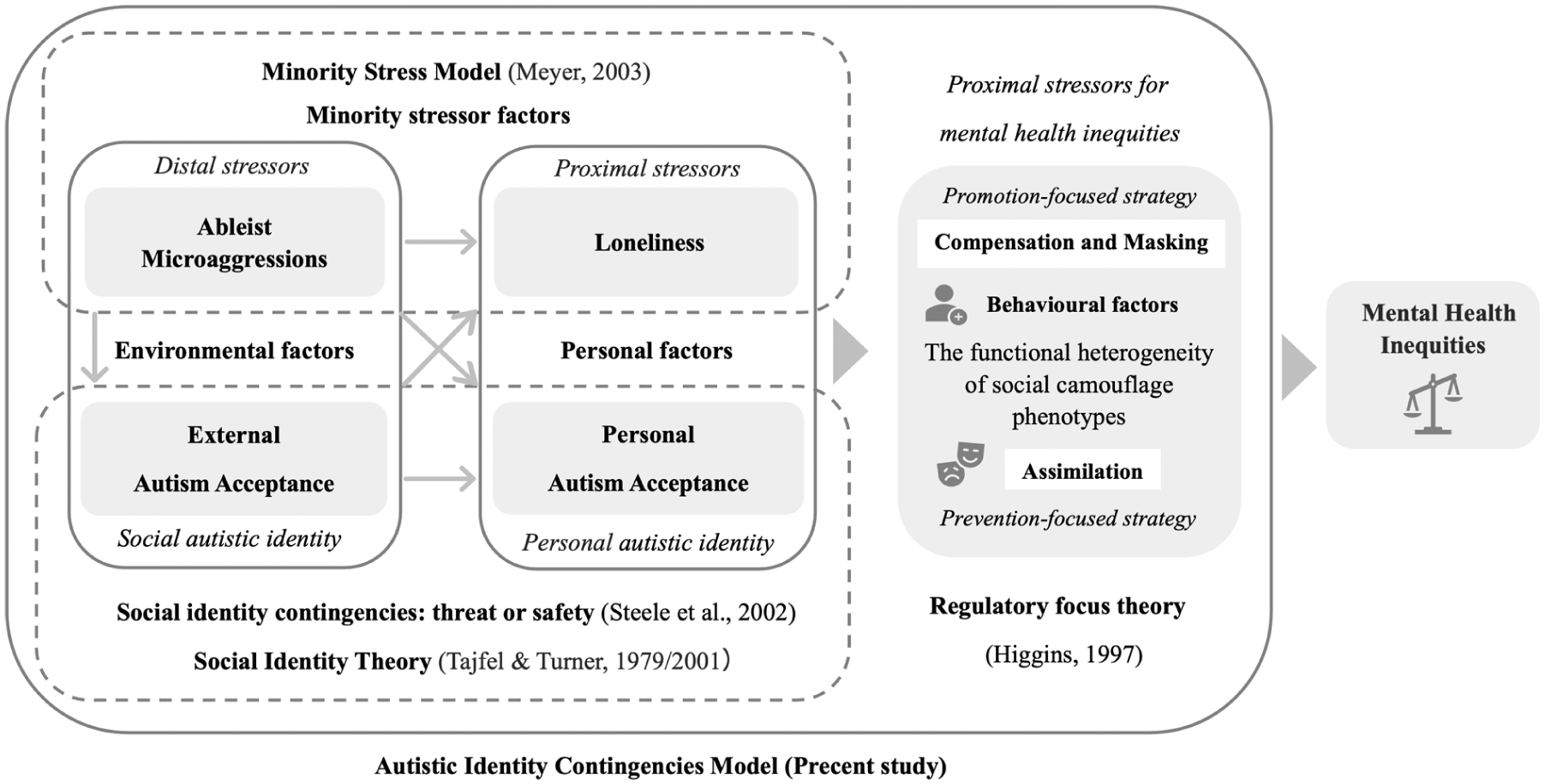
Conceptual framework of the Autistic Identity Contingencies Model.
Aim and hypotheses
This study examined autistic identity contingencies by investigating how external and internal autism acceptance, along with loneliness, shape coping responses to ableist microaggressions among autistic adults. Social camouflage phenotypes, particularly their functional heterogeneity, coping mechanisms for minority stressors linked to stigmatised behaviours or personal identities, remain underexplored in this context. Compensation and masking may predominantly reflect promotion-focused strategies that seek to overcome social challenges, whereas assimilation may reflect a prevention-focused strategy that defends against social-identity threats and loneliness. Understanding these dynamics is critical to determine whether interventions should directly target autistic individuals or modify external factors to align with their interpersonal environments. Furthermore, Japan’s low external and internal autism acceptance compared to Western countries and the unique social challenges of early adulthood underscore the importance of addressing Western-sample bias by including Japanese individuals with diverse educational levels and employment backgrounds (Cooper et al., 2024; Hirota et al., 2024; Keating et al., 2024; Rydzewska et al., 2019). The findings will indicate whether changes to interpersonal environments and interactional norms, rather than individual adaptation, should be prioritised to reduce minority-stress–driven camouflaging, particularly assimilation:
Methods
Participants
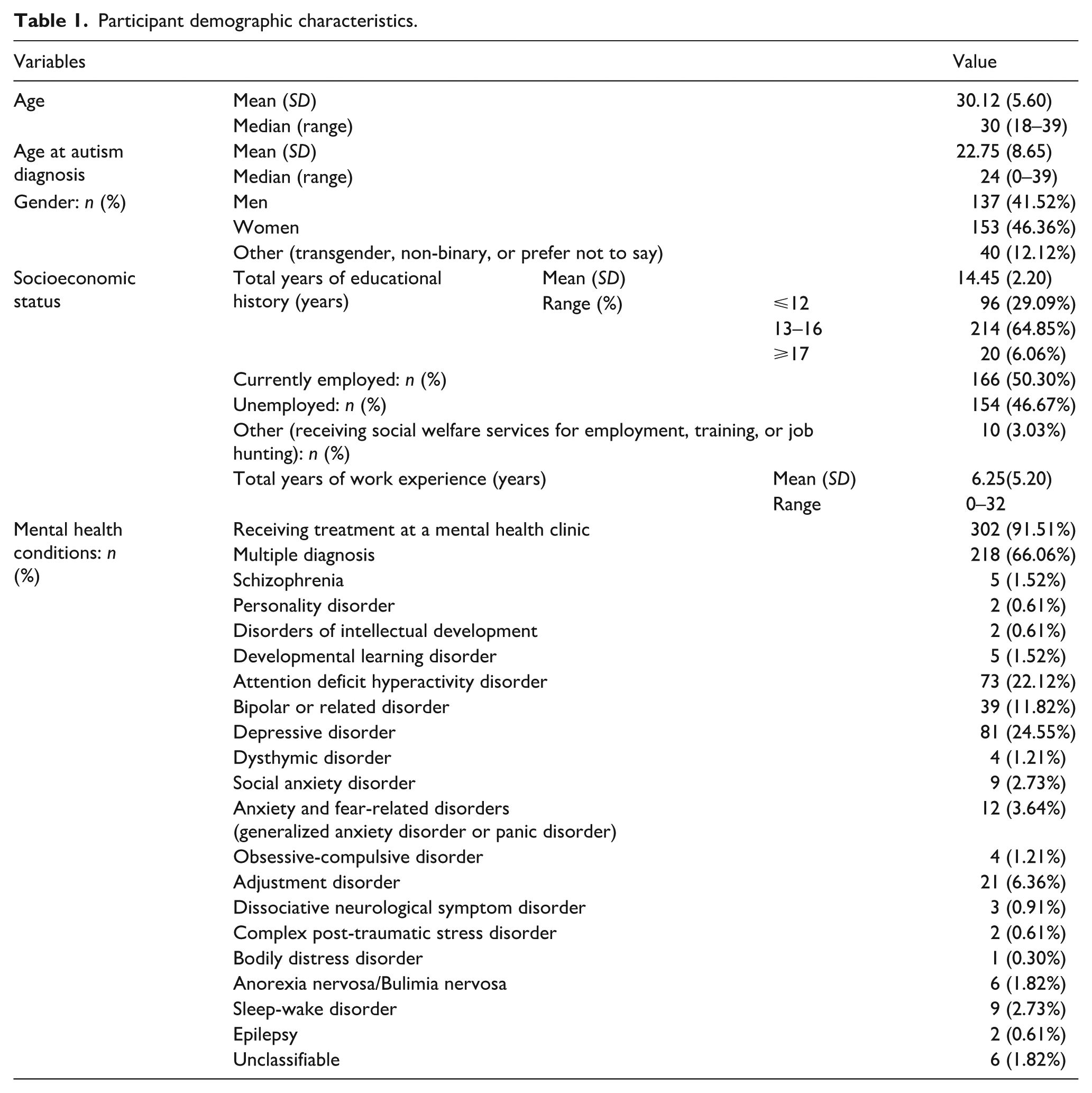
This study included 330 autistic adults, who were recruited via the LITALICO Job Navi online bulletin board, one of Japan’s largest online job platforms for individuals with neurodevelopmental disabilities. The inclusion criteria were being 18–39 years old Japanese adults, self-identifying as autistic and diagnosed with autism spectrum condition (ASC, sometimes termed autism spectrum disorder in DSM-5) by psychiatrists or pediatricians. The participants self-reported their autism spectrum condition diagnosis. The required sample size was determined using G*Power 3.1 with an alpha level of 0.05% and 80% power for multiple linear regression, assuming that 10 predictors would explain at least a 2%–3% increase in the variance of the dependent variable (f² = 0.025). The power analysis indicated that a minimum of 316 participants was necessary. This study was part of a larger project that originally aimed to recruit 550 participants. However, owing to practical limitations at the recruitment sites, only 330 participants were recruited. The online survey system was configured so that only individuals who met the inclusion criteria could proceed to the questionnaire, and all questions were mandatory. Responses could be submitted only after completing all items. Consequently, there were no missing data, and no participants were excluded for incomplete responses. The Research Ethics Committee of a local university in Japan approved this study. Table 1 presents the demographic characteristics.
Participant demographic characteristics.
Materials and procedure
Participation was voluntary, and informed consent was obtained prior to participation. Participants completed an online questionnaire via the Qualtrics platform.
Ableist microaggressions (independent variable)
The Japanese version of the Ableist Microaggressions Impact Questionnaire (AMIQ) was used to measure ableist microaggression impact (Aydemir-Döke & Herbert, 2022). This 25-item measure evaluates participants’ experiences with ableist microaggressions in daily life, with total scores ranging from 0 to 100. Higher scores indicate greater perceived impact. An example item is, ‘I receive praise for doing simple daily things’. Internal consistency in the present study was excellent (α = 0.94).
Autism acceptance (independent variable in H1; mediator in H2)
The Japanese version of the Autism Acceptance Questions (AAQ) was used to measure external and internal autism acceptance (Cage et al., 2018). External acceptance was calculated as the average of two items: acceptance from family and friends, and acceptance from society. Scores for both external and internal acceptance range from 0 to 10, with higher scores indicating greater autism acceptance. Internal consistency in this study was acceptable (α = 0.61).
Social camouflaging (dependent variable)
The Japanese version of the Camouflaging Autistic Traits Questionnaire (CAT-Q) was used to measure autistic adults’ social camouflaging experiences (Hongo et al., 2024; Hull et al., 2019). The CAT-Q comprises 25 items across three subscales: compensation (nine items; α = 0.84), masking (eight items; α = 0.80), and assimilation (eight items; α = 0.77). The internal consistency in this study was good. Higher subscale scores indicate more frequent use of that camouflaging strategy. Subscale scores range from 9 to 63 for compensation and from 8 to 56 for masking and assimilation.
Loneliness (independent variable in H1; mediator in H2)
The Japanese version of the UCLA Loneliness Scale short version was used to measure loneliness (Arimoto & Tadaka, 2019). Participants rated how often they experienced the 10 items on a four-point Likert-type scale. Scores range from 10 to 40, with higher scores indicating greater loneliness. The internal consistency in this study was good (α = 0.82).
Perceived general stress (covariate in H2)
The Japanese version of the Perceived Stress Scale (PSS) was used to measure perceived general stress (Cohen et al., 1983). Participants were asked to indicate the frequency of the condition they had experienced in the past month for 14 items. Scores range from 0 to 56, with higher scores indicating greater perceived stress. The internal consistency in this study was good (α = 0.83).
Depression (covariate in H2)
The Japanese version of the Patient Health Questionnaire-9 was used to measure depressive symptoms (Kroenke et al., 2001). Scores range from 0 to 27, with higher scores indicating more severe symptoms. The internal consistency in this study was good (α = 0.89).
Anxiety (covariate in H2)
The Japanese version of the Generalized Anxiety Disorder 7 scale was used to measure anxiety symptoms (Spitzer et al., 2006). Scores range from 0 to 21, with higher scores indicating greater anxiety. The internal consistency in this study was excellent (α = 0.90).
Autistic traits (covariate in H1 and H2)
The Japanese version of the Autism Spectrum Quotient short form was used to measure autistic traits (Kurita et al., 2005). Scores range from 0 to 10, with higher scores indicating more pronounced autistic traits. The internal consistency in this study was acceptable (α = 0.62).
Design and data analysis
This cross-sectional study employed a correlational design. Data from cross-sectional time points were extracted from a large-scale longitudinal survey and included in the analysis.
Preliminary analyses
Pearson correlation analysis was conducted on all quantitative variables to examine bivariate associations, and the results were visualised in a heatmap of the correlation matrix. The distribution of the three social camouflaging phenotypes across demographic groups (gender, educational history, employment status) was illustrated using Raincloud plots. Previous studies have reported significant gender differences in camouflaging behaviour among autistic individuals in the United Kingdom (Hull et al., 2019; Perry et al., 2022). However, similar findings have not been observed in Japanese samples (Hongo et al., 2024; Oshima et al., 2024; Tamura et al., 2024). Therefore, cultural context may influence gender-related patterns of social camouflaging. To test for demographic differences in the three social camouflaging phenotypes, normality was assessed using the Shapiro–Wilk test. Group differences were then analysed using either a one-way analysis of variance (ANOVA) or a non-parametric Kruskal–Wallis test, depending on the normality results.
Hypothesis 1
Hierarchical regression models were used to predict social camouflaging subscales (compensation, masking, assimilation). Covariates (age, age at diagnosis, autistic traits) were entered in the first step, followed by the main predictors (ableist microaggressions, autism acceptance, loneliness). Partial regression plots were examined for each model.
Hypothesis 2
In line with minority stress theory and Autistic Identity Contingencies Model, we specified a serial chain mediation in which the distal external stressor—ableist microaggressions—influences proximal contextual appraisal, external autism acceptance (M1). This contributes to a proximal internal stress response, loneliness (M2), which ultimately culminates in assimilation. We tested the M1→M2 indirect pathway using PROCESS Model 6 (Hayes, 2017) with 10,000 bias-corrected bootstrap resamples and 95% confidence intervals; effects were deemed significant when the interval excluded zero (Hayes & Scharkow, 2013). A parallel mediation was not estimated because the mediators were theorized to be sequentially ordered rather than independent. Furthermore, to examine the generalizability of the minority stress model (Botha & Frost, 2020), an additional model was tested with individual attributes, mental health conditions (depression and anxiety), and perceived general stress as covariates. Owing to the cross-sectional design, temporal ordering could not be established. Accordingly, the proposed sequence should be interpreted as theory-driven rather than temporally verified, and no causal claims are advanced.
All analyses were conducted in IBM SPSS Statistics (version 29) with PROCESS macro (version 4.3; Hayes, 2017). Data visualizations were created using Prism 10 (GraphPad Software).
Results
Descriptive statistics for key variables are presented in Table 2.
Descriptive statistics for key variables (N = 330).
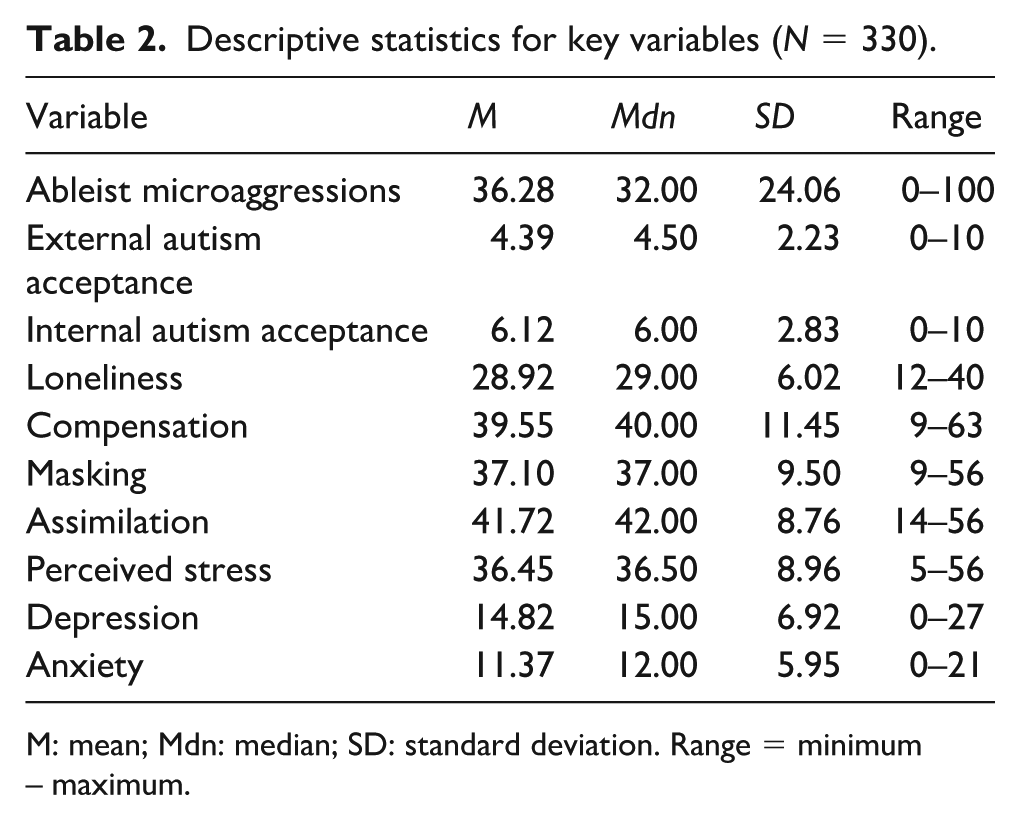
M: mean; Mdn: median; SD: standard deviation. Range = minimum – maximum.
We utilized a heatmap of the correlation matrix to visualise the relationships between variables (Figure 2).
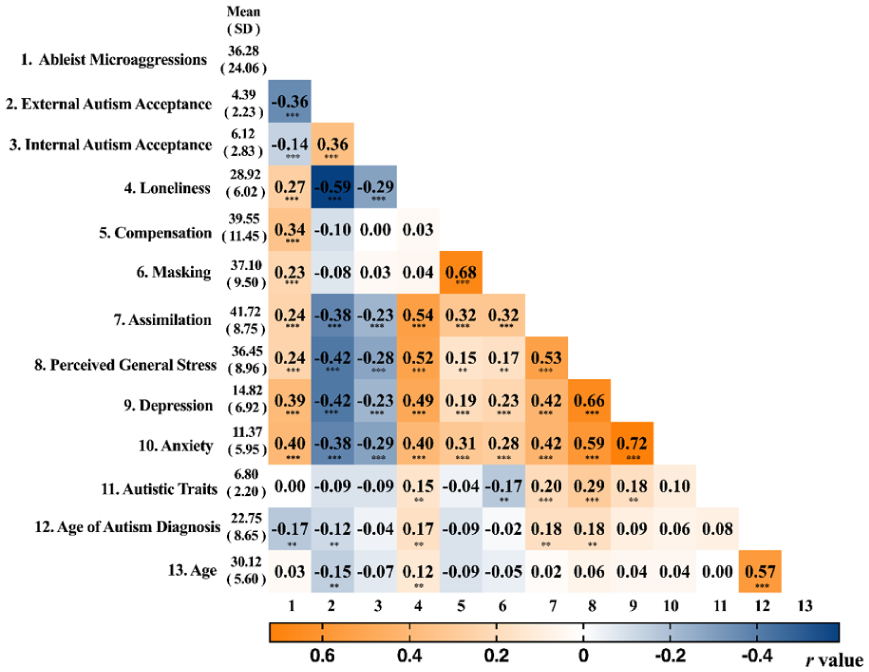
Heatmap representation of correlation analysis.
Data distribution for the three social camouflage phenotypes across groups with varying demographic variables (gender, educational history, and employment status) is presented using multiple Raincloud plots (Figure 3). As the Shapiro–Wilk test indicated non-normality for several variables, group differences involving more than three categories were assessed using the non-parametric Kruskal–Wallis test. Additional pairwise comparisons were conducted using Mann–Whitney U tests to account for potential heterogeneity introduced by the ‘Other’ gender category. No significant group differences were observed for any of the social camouflaging phenotypes.
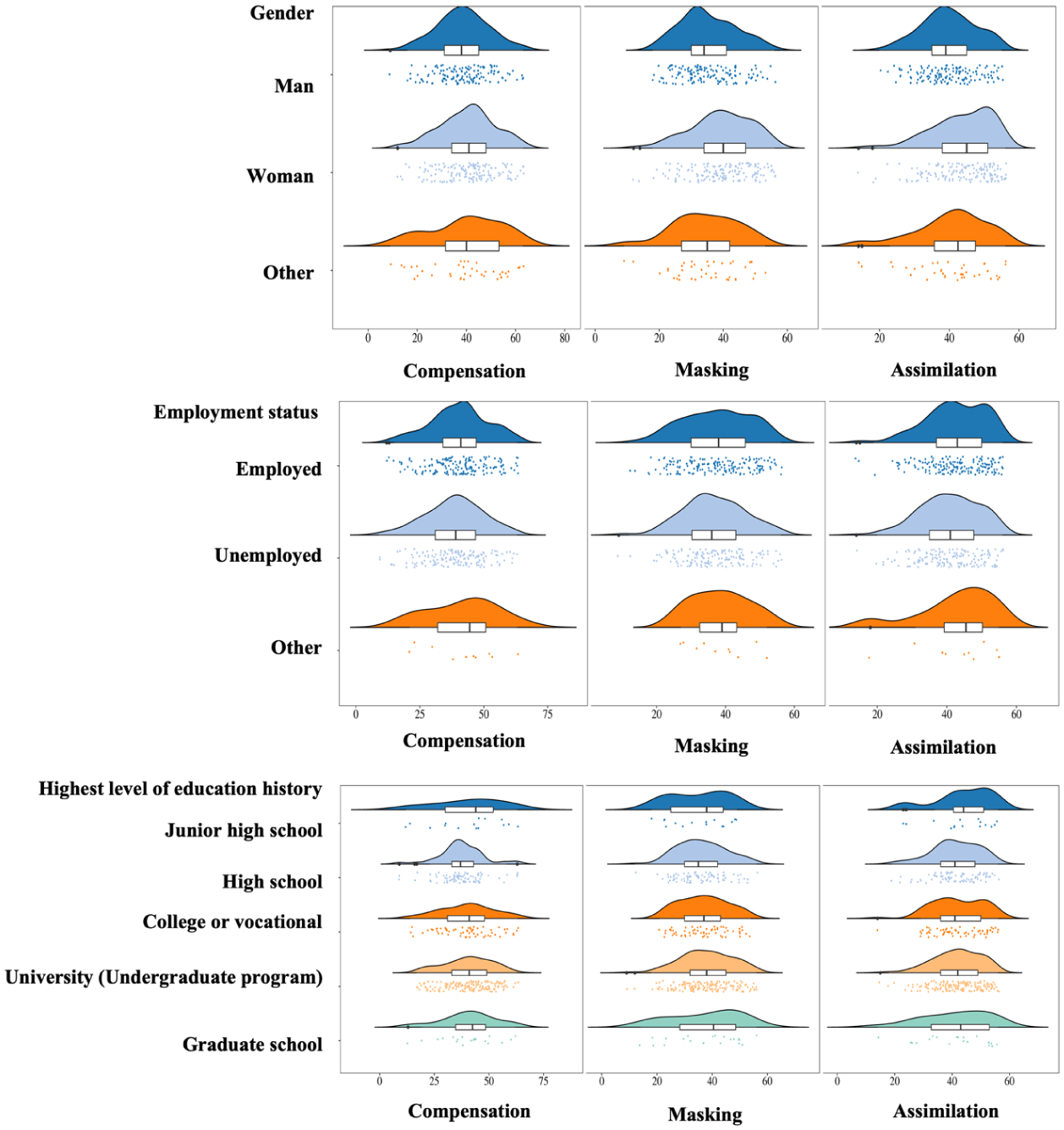
Raincloud plots of social camouflage phenotypes across demographic groups.
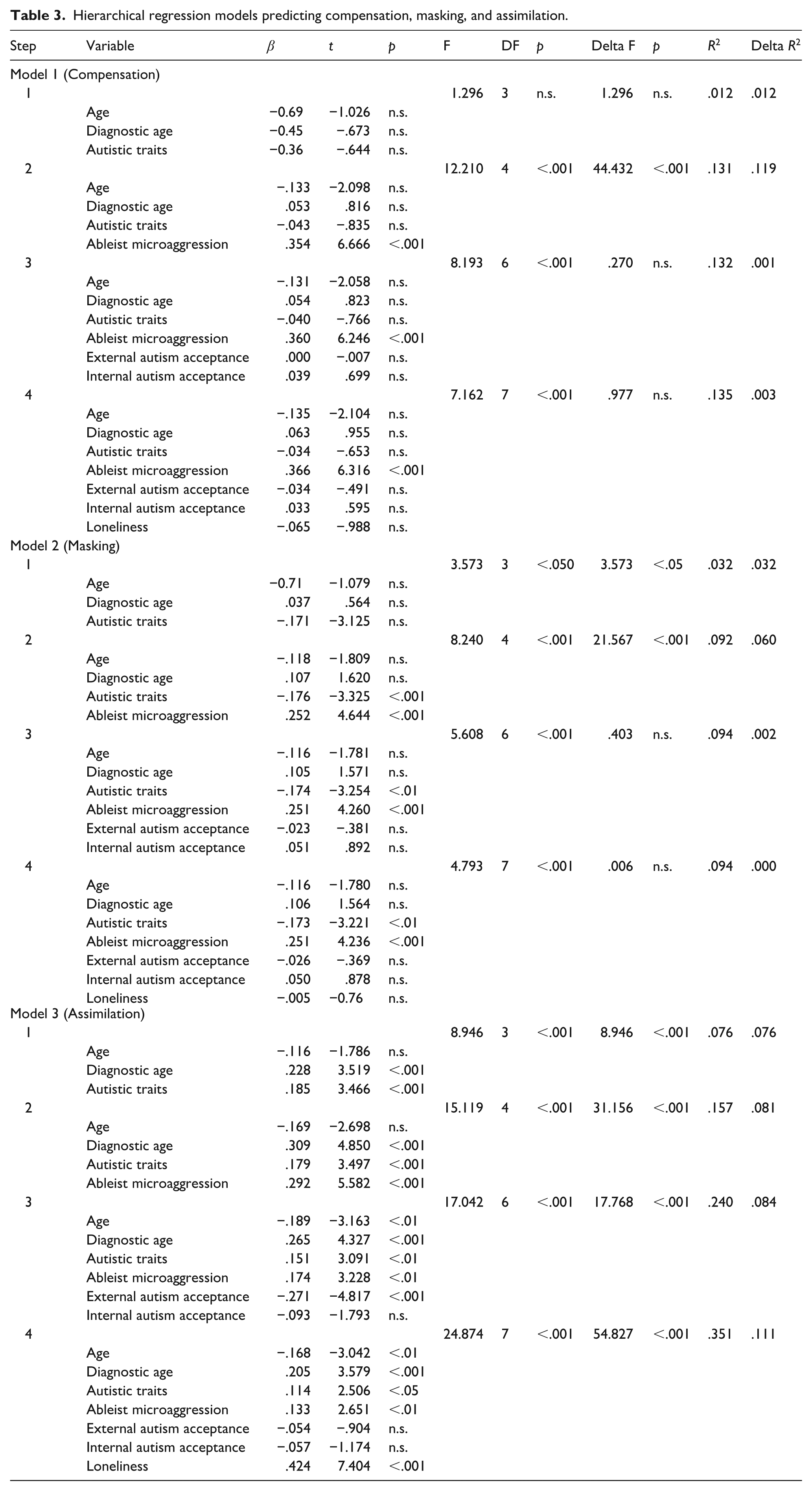
Hierarchical regression results with compensation (Model 1)
Compensation was considered as the outcome variable. The first step explained 1.2% of the variance in personal attribute variables and adding ableist microaggression impact as predictors in step 2 explained 13.1% of the variance, which was significant (p < 0.001). Adding external and internal autism acceptance as predictors in step 3 explained 13.2% of the variance, which was not significant. Adding loneliness as a predictor in step 4 explained 13.5% of the variance, which was not significant. The final model showed a significant fit with the data, F(7, 322) = 7.162, p < 0.001. The final model of compensation (Model 1) indicated that the ableist microaggression impact significantly predicted compensation scores (Table 3). Partial regression plots revealed that after controlling for personal attribute variables, compensation scores increased with increasing ableist microaggressions (Figure 4(a)).
Hierarchical regression models predicting compensation, masking, and assimilation.
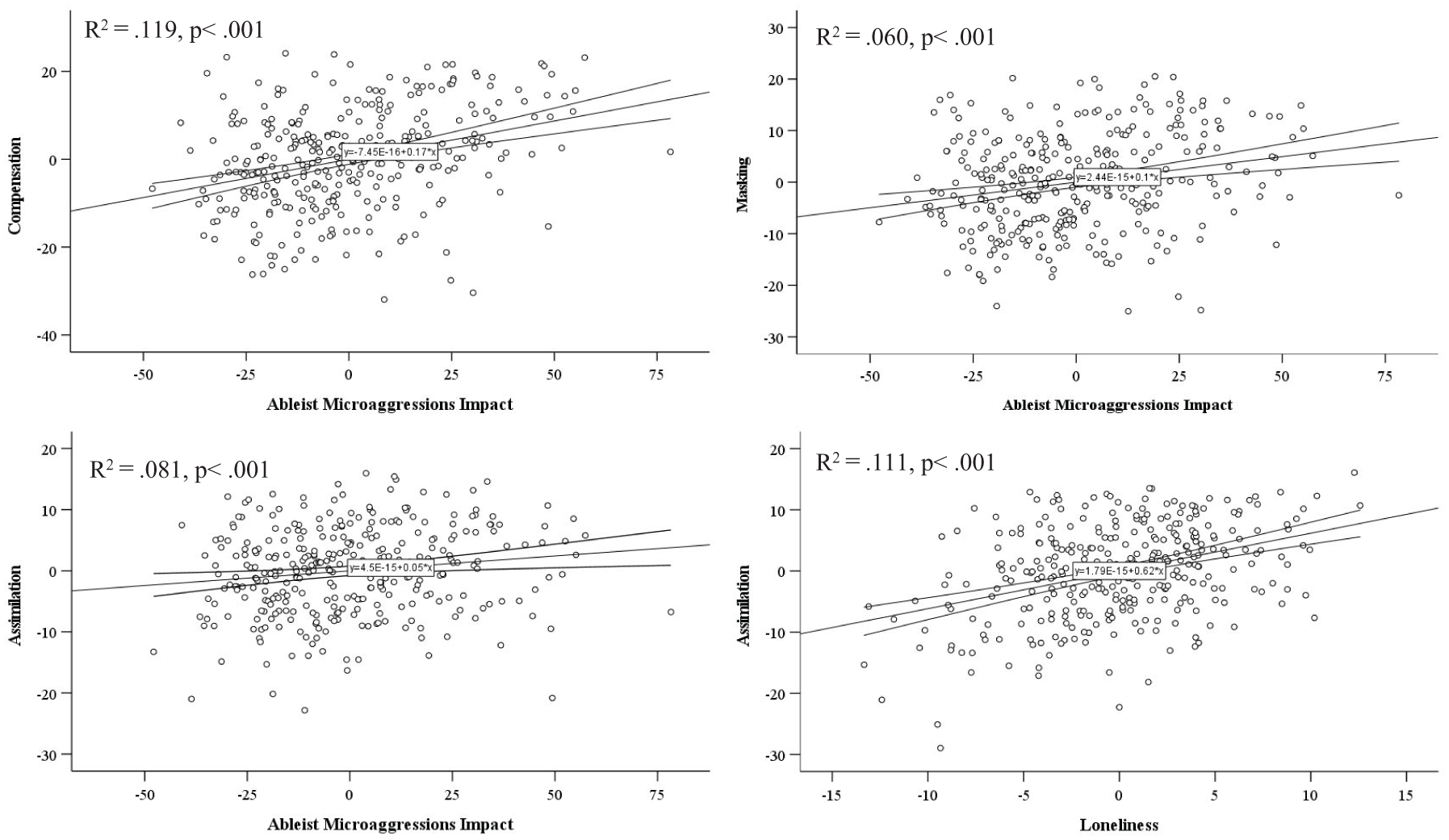
Partial regression plots.
Hierarchical regression results with masking (Model 2)
Masking was considered as the outcome variable. The first step explained 3.2% of the variance in personal attribute variables and adding ableist microaggressions as a predictor in step 2 explained 9.2% of the variance, which was significant (p < 0.001). Adding the external and internal autism acceptance as predictors in step 3 explained 9.4% of the variance, which was not significant. Adding loneliness as a predictor in step 4 explained 9.4% of the variance, which was not significant. The final model was a significant fit to the data, F(7, 322) = 4.793, p < 0.001. This final model of masking (Model 2) showed that autistic traits and ableist microaggressions significantly predicted masking scores (Table 3). Partial regression plots revealed that after controlling for personal attribute variables, masking scores increased with increasing ableist microaggressions (Figure 4(b)).
Hierarchical regression results with assimilation as the outcome variable (Model 3)
Assimilation was considered as the outcome variable. The first step explained 7.6% of the variance in personal attribute variables, diagnostic age of autism and autistic traits which was significant (p < 0.001). Adding the ableist microaggressions as the predictor in step 2 explained 15.7% of the variance, which was significant (p < 0.001). Adding external and internal autism acceptance as predictors in step 3 explained 24.0% of the variance, which was significant (p < 0.001). Adding loneliness as a predictor in step 4 explained 35.1% of the variance, which was significant (p < 0.001). The final model showed a significant fit with the data, F(7, 322) = 24.874, p < 0.001. This final model of assimilation (Model 3) indicated that age, diagnostic age of autism, autistic traits, ableist microaggression, and loneliness significantly predicted assimilation scores (Table 3). Partial regression plots showed that after controlling for personal attribute variables, assimilation scores increased with increasing ableist microaggression and loneliness scores (Figure 4(c) and (d)).
Chain mediation model
External autism acceptance and loneliness had a chain mediating effect on the relationship between ableist microaggression and social camouflage (assimilation), supporting Hypothesis 2.
This study computed the model for external autism acceptance as the first mediator (M1), internal acceptance of autism as the second mediator (M2), and loneliness as the third mediator (M3) in the mediation chain. The regression analysis demonstrated that ableist microaggressions was significantly correlated with (M1) external acceptance autism, β = −0.360, t(329) = −6.997, p < 0.0001, R2 = 0.130. Next, we computed the analyses for (M2) internal autism acceptance as the second mediator. Ableist microaggressions was not significantly correlated with (M2) internal autism acceptance, and (M1) external autism acceptance was significantly correlated with (M2) internal autism acceptance, β = 0.351, t(329) = 6.333, p < 0.0001, R2 = 0.128. We then computed the analyses for (M3) loneliness as the third mediator. Ableist microaggressions was not significantly correlated with (M3) loneliness; (M1) external autism acceptance was significantly correlated with (M3) loneliness, β = −0.540, t(329) = −10.764, p < 0.0001, R2 = 0.363; and (M2) internal autism acceptance was not significantly correlated with (M3) loneliness. Finally, we computed the analyses for assimilation as the outcome variable and third mediator. Ableist microaggressions and external and internal autism acceptance were not significantly associated with assimilation, whereas loneliness was significantly associated with assimilation, β = 0.469, t(329) = 8.108, p < 0.0001, R2 = 0.307. The effects of ableist microaggression on (M1) external autism acceptance, (M2) internal autism acceptance, and (M3) loneliness were not significant.
The results of the mediation effect analysis showed that ableist microaggression did not directly affect assimilation; however, external autism acceptance and loneliness indirectly mediated this relationship (effect = 0.033, 95% CI (0.020, 0.050)). The indirect effects on the other pathways were not significant. Thus, the results revealed a chain mediation of external autism acceptance and loneliness on the relationship between ableist microaggressions and assimilation (Figure 5).
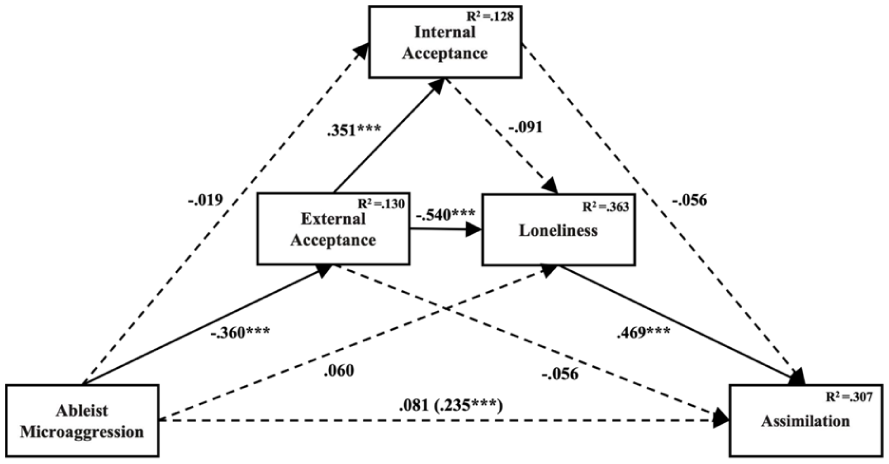
Chain mediation model of autism acceptance and loneliness in ableist microaggressions and assimilation.
After controlling for the general environmental factor (perceived general stress), mental health conditions (depressive and anxiety symptoms), and personal attribute variables (age, age of autism diagnosis, and autistic traits), the results of the regression analysis showed that ableist microaggressions, β = 0.127, t(319) = 2.410, p < 0.05; perceived general stress, β = 0.376, t(329) = 5.793, p < 0.0001; age, β = −0.122, t(319) = −2.162, p < 0.05; and diagnostic age of autism, β = 0.187, t(319) = 3.187, p < 0.01, were significantly associated with assimilation, F(7,322) = 22.770, p < 0.0001, R2 = 0.331. However, autistic traits and depressive and anxiety symptoms were not associated with assimilation. After controlling for general environmental factors, mental health conditions, and personal attributes, the mediation analysis results showed that ableist microaggressions did not directly affect assimilation; however, external acceptance autism and loneliness indirectly mediated this relationship (effect = 0.012, 95% CI (0.005, 0.021)). The indirect effects on the other pathways were not significant.
Discussion
This study, guided by the Autistic Identity Contingencies Model, examined the mediating effects of loneliness and external and internal autism acceptance on the relationship between ableist microaggressions and social camouflage among autistic adults. After controlling for personal attributes, ableist microaggressions were positively associated with social camouflage phenotypes—compensation, masking, and assimilation—and functioned as distal minority stressors. Loneliness, a proximity minority stressor, was positively correlated only with assimilation. After controlling for personal attributes, general stress, and mental health conditions, external autism acceptance and loneliness significantly mediated the relationship between ableist microaggressions and assimilation, whereas internal acceptance showed no significant effect.
Social camouflage due to ableism microaggressions
This study explored how ableist microaggressions, functioning as minority stressors, affect coping responses to autistic identity contingencies, focusing on stigmatised behaviours rather than an autistic personal identity. Grounded in the double empathy problem (Milton, 2012), the findings revealed that ableism encountered in interactions with non-autistic groups perpetuated social camouflage. Drawing from the social model of disability (Oliver, 2013), this study connected mental health disparities in autism to systemic ableism, emphasizing the need to address external social barriers to reduce minority stress. Expanding on the minority stress model in autism (Botha & Frost, 2020), this study identified ableist microaggressions as significant external factors associated with social camouflaging. These stressors appear to arise not solely from autism-specific stigma but broadly in response to social perceptions of difference. This is consistent with previous qualitative findings on interpersonal victimization in autism (Pearson et al., 2022). Our results extend this literature by demonstrating that even covert forms of interpersonal violence, such as ableist microaggressions, contribute to stigma-induced camouflaging alongside overt forms of discrimination. Consequently, autistic adults may adopt camouflaging strategies to align with societal expectations and mitigate the social consequences of being perceived as different.
Future research should investigate these causal mechanisms and prioritise improving the person–environment fit rather than focusing on transforming autistic identity (Klein & Macoun, 2025). In addition, as autistic individuals often experience both ableism and intersectional oppression, future studies should examine the “double discrimination” effect on social camouflage through the lens of autism intersectionality (Davis et al., 2022; Mallipeddi & VanDaalen, 2022).
Assimilation differs from compensation and masking
Assimilation, characterised by the active expression of non-autistic characteristics, is uniquely associated with threats to social autistic identity and loneliness, distinguishing it from compensation and masking. Compensation involves adapting behavioursto align with societal expectations, whereas masking conceals autistic characteristics to evade stigma (Cook et al., 2022; Hull et al., 2019). Both strategies underscore the pervasive stigma surrounding autism and highlight the urgent need for environments free from systemic ableism. Drawing on regulatory focus theory (Higgins, 1997; Shah et al., 2004), this finding suggests that the functional heterogeneities of social camouflage can be conceptualised as compensation and masking reflecting promotion-focused strategies aimed at overcoming social challenges. Conversely, assimilation represents a prevention-focused strategy to mitigate social identity threats and loneliness. Consistent with systematic reviews of autistic identity, this finding supports the notion that a positive autistic identity is not solely shaped by individual factors but is profoundly influenced by external factors (Davies et al., 2024).
Future research should explore the functional heterogeneities of compensation, masking, and assimilation and their impacts on the mental health of autistic individuals. Comparative studies have revealed cross-cultural differences in social camouflage and mental health. A negative correlation between social camouflage and mental health was reported in the UK, whereas evidence from Japan suggests that moderate levels of camouflage could support mental health, with excessive camouflage exacerbating mental health challenges (Hull et al., 2021; Oshima et al., 2024). Japan’s lower external and internal autism acceptance compared to many Western contexts (Atherton et al., 2023; Keating et al., 2024), reinforced by strong social conformity pressures (normative tightness and expectations to “read the air”) and vertical collectivism, may render masking and compensation conditionally and temporarily adaptive for maintaining mental health under prevailing social demands. These findings underscore the importance of understanding how cultural and contextual factors are associated with the three camouflage phenotypes and their impact on mental health in autism (Golson et al., 2022; de Leeuw et al., 2020).
Moreover, future research should focus on minority stress and other environmental drivers of camouflaging and test a serial process in which microaggressions decrease perceived acceptance and increase loneliness, with macro-level autism acceptance and policy environments moderating its strength. System-level levers, such as anti-stigma initiatives, inclusive education and workplace policies, and clinician guidance emphasizing person–environment fit, may attenuate upstream stressors and reduce reliance on camouflaging. Cross-societal tests of this moderated serial model, contrasting settings with higher versus lower autism acceptance, could identify context-specific intervention points.
Theoretical contributions
This study proposes the Autistic Identity Contingencies model to address the theoretical gap in understanding the functional heterogeneities of social camouflage phenotypes arising from ableist microaggressions, functioning as minority stressors. This model integrates the minority stress model with social identity and regulatory focus theories. This model reveals how social dynamics shape perceptions and treatment of autistic individuals and how, given their functional heterogeneity, they navigate these dynamics. Although traditional theories often attribute social camouflage to internal conflicts stemming from autism-related stigma, they overlook the interplay of individualistic and collectivistic strategies in shaping these behaviours (Perry et al., 2022; Rivera & Bennetto, 2023). This study posits that social camouflage primarily originates from stigmatised behaviours, such as responses to ableist microaggressions, rather than from stigmatised personal identity. Autistic adults may adapt the functional heterogeneities of social camouflaging to align with social expectations and constraints driven by stigmatised behaviours, employing both individualistic and collectivistic strategies (Perry et al., 2022). This dynamic reflects what Beardon (2017) refers to as the “golden equation”: autism + environment = outcome, emphasizing that outcomes for autistic individuals are co-constructed through interactions between personal autistic characteristics and contextual demands. Accordingly, future research should examine these causal mechanisms and prioritise the enhancement of person–environment fit over interventions that aim primarily at internal change (Beardon, 2017; Cook et al., 2023; Klein & Macoun, 2025).
This study advocates reconceptualizing autism-related challenges as socially driven outcomes of person–environment interactions rather than inherent individual impairments (Klein & Macoun, 2025). By identifying assimilation as a coping strategy for autistic social identity threats, the findings challenge prevailing assumptions, such as deficits in social motivation (Chevallier et al., 2012) and theory of mind (Baron-Cohen, 2000). This study suggests that autistic adults engage in assimilation to cope with low external autism acceptance and loneliness driven by ableist microaggressions, thereby contradicting the notion that autistic individuals inherently lack theory of mind (Gernsbacher & Yergeau, 2019). Furthermore, social motivation theory, which claims that autistic children display reduced interest in social engagement, fails to account for the sophisticated social cognitive processes observed in autistic individuals, such as monitoring social environments and regulating behaviour (Cook et al., 2021; Livingston et al., 2020). This assertion is supported by findings of non-significant group differences in objective deliberation performance in social reasoning tasks (Bastan et al., 2024), suggesting that these complex social reasoning processes play a significant role in developing coping strategies for autistic social identity threats. This study calls for future research to focus on the social inequities faced by neurominorities in interactions with non-autistic individuals.
Clinical implications
Our findings bridge the gap between theory and practice by suggesting that future interventions should focus on modifying interpersonal environmental factors that threaten autistic social identity and contribute to minority stress, rather than emphasizing changes to personal identity. Shifting the context to promote healthier decisions, as outlined in the health impact pyramid (Frieden, 2010), is more effective in reaching broader society with less individual effort. This can be achieved by embracing diverse communication styles, fostering inclusive, mixed-neurotype environments, and minimizing misunderstandings between non-autistic groups (Cook et al., 2023).
Clinically, interventions aligned with non-autistic norms may inadvertently reinforce social camouflage. Adopting JEDI approaches—affirming neurodiversity, promoting self-advocacy, and integrating cultural humility—is vital for addressing mental health inequities and supporting neurodiverse communities (Allen et al., 2024; Hotez et al., 2024; Leadbitter et al., 2021). Clinicians should recognise the harm caused by social camouflage and reframe dysfunction as interpersonal trauma from minority stressors, such as ableist microaggressions, not as an internal issue (Rivera & Bennetto, 2023; Sweeney et al., 2016). To address mental health inequities, the focus must shift from internal autism acceptance to transforming the person–environment fit. This approach acknowledges that mental health challenges stem from external pressures rather than individual deficits.
Study limitations
First, given this study’s cross-sectional design, future studies should conduct longitudinal studies to show the temporal relationships between variables. Second, as this study was examined Japanese autistic adults, findings may be restricted to the Japanese socio-cultural context. Third, although this study focused on diagnosed and self-identified autistic adults, no significant gender differences were found in CAT-Q subscales among diagnosed participants. However, gender minorities may engage in more camouflaging yet are often mis- or under-diagnosed. Future studies should include undiagnosed and self-identified individuals to reflect gender-related diversity in camouflaging. Fourth, as this study focused on early adulthood, future research should examine children, adolescents, and older adults. Fifth, as this study focused on autistic identities, future studies should be extended to individuals with intersectional minorities. Sixth, online recruitment may have led to a biased sample, with access to online employment information networks targeting neurodevelopmental conditions. Future research should utilise various recruitment strategies to test the generalizability of our findings to individuals with diverse demographics. Finally, our use of the CAT-Q emphasised self-reported, consciously accessible camouflaging. Multimethod operationalizations (discrepancy-based approaches, informant ratings, and behavioural/linguistic markers) are needed to determine whether the observed associations extend to implicit forms of camouflaging.
Conclusion
Autistic identity contingencies contribute to social camouflage as a coping strategy for minority stressors, which are associated with exposure to ableist microaggressions among autistic adults. Among the three social camouflaging phenotypes, unlike compensation and masking, assimilation exhibited stronger associations with perceived social autistic identity threats and loneliness. This highlights that social camouflage responds more to stigmatised behaviors than personal autistic identity. To alleviate minority stress, interventions should focus on external factors threatening social autistic identity, fostering inclusive interpersonal environments, and combating ableism. Examining this model across societies with varied autism acceptance may reveal divergent patterns and context-specific system-level levers. Understanding these social dynamics is essential for reducing mental health inequities in autism by addressing the interpersonal environmental factors that contribute to minority stress and threaten social autistic identity.
Footnotes
Acknowledgements
Thank you to our participants for sharing their experience and insights with us.

Ethical considerations
Ethical approval for this study was obtained from the Chiba University Research Ethics Committee (M10538).
Author contributions
Declaration of conflicting interests
The authors declared no potential conflicts of interest with respect to the research, authorship, and/or publication of this article.
Funding
The author received no financial support for the research, authorship, and/or publication of this article. This study was funded by JST RISTEX Japan Grant Number JPMJRS22 K4. The funders had no role in study design, data collection and analysis, decision to publish, or preparation of the manuscript.
Informed consent statement
All participants provided consent to participate online before they took part in the study.
Consent for publication
Not applicable.
Data availability statement
The data that support the findings of this study are available from the corresponding author upon reasonable request.