




Abstract
The present study explored the relationship between camouflaging, autistic burnout, and cultural factors in Latino young adults with autism spectrum disorder (ASD). While autistic burnout and camouflaging have been widely studied in general ASD populations, limited research has focused on Latino individuals, who may experience unique pressures due to cultural values such as collectivism, familism, and traditional gender roles. Participants (N = 56) from the ¡Iniciando! la Adultez therapy program completed measures assessing burnout, camouflaging, acculturation, and cultural values. Results indicate that participants reported moderate to high levels of autistic burnout, with the highest levels observed in heightened self-awareness and cognitive disruption. Camouflaging behaviors were prevalent, with compensation being the most frequently used strategy. Cultural values, especially Mexican American values related to independence and familism, were positively correlated with burnout severity. In addition, camouflaging behaviors were significantly associated with higher adaptive functioning, particularly in conceptual, social, and practical domains, and were predictive of increased anxiety and depression. Acculturation stress and traditional gender role values were found to influence camouflaging strategies. These findings highlight the complex interplay between cultural expectations, camouflaging, and burnout in Latino autistic young adults, underscoring the need for culturally responsive interventions to better support their well-being and autonomy.
Lay Abstract
Autism spectrum disorder (ASD) affects individuals in unique ways, and many people with ASD feel pressured to “mask” or hide certain aspects of themselves to fit societal expectations. This study explored the relationship between camouflaging, burnout, and cultural factors in Latino young adults with ASD. While burnout and camouflaging have been studied in general ASD populations, there is limited research on how Latino cultural values, such as family importance and traditional gender roles, influence these experiences. In this study, 56 participants from the ¡Iniciando! la Adultez therapy program completed surveys about their burnout, camouflaging, cultural values, and stress related to adapting to a new culture. The results showed that many participants experienced significant burnout, particularly in areas like self-awareness and cognitive challenges. Camouflaging, such as pretending to act “neurotypical,” was common and linked to difficulties in social interactions and daily tasks, as well as higher levels of anxiety and depression. Cultural values, such as a strong focus on family, were related to higher burnout, and traditional gender roles influenced how participants camouflaged their autism. These findings highlight the need for societal change and culturally sensitive interventions that support Latino young adults with autism, helping them manage burnout and camouflaging while embracing their true identities.
Autism spectrum disorder (ASD) is a neurodevelopmental condition characterized by differences in social communication, sensory processing, and focused interests and repetitive behaviors (American Psychiatric Association, 2022). While much research on autism focuses on childhood, increasing attention is being given to the experiences of autistic 1 adults, who often face unique challenges in employment, relationships, healthcare access, and mental health (Lord et al., 2018). Unlike childhood, where structured support systems may be available, autistic adults frequently encounter a lack of accommodations and understanding in workplaces and social settings, leading to increased stress and social isolation (Howlin & Magiati, 2017; Howlin & Moss, 2012). Outcomes in adulthood vary widely, with some autistic individuals thriving in supportive environments while others experience unemployment, mental health struggles, and difficulties with independent living (Ayres et al., 2018). Given these disparities, there is a growing need to better understand the factors influencing autistic adult outcomes in order to promote well-being across the lifespan.
The practice of camouflaging, or social camouflaging, is a multifaceted process distinct from related concepts such as masking and impression management. While often used interchangeably in everyday language, these terms carry specific conceptual distinctions within the literature. Camouflaging, as central to this study, refers specifically to the conscious or unconscious efforts by autistic individuals to conceal their autistic traits and mimic neurotypical behaviors to blend into social environments (Cook et al., 2021). This goes beyond simple “masking,” which can broadly refer to any suppression of one’s true self, or “impression management,” which is a more general term for strategic self-presentation to influence perceptions. Camouflaging, in the context of autism, is a sustained and often pervasive effort to present as neurotypical, driven by a need to navigate a world not designed for neurodivergent individuals.
Camouflaging is often employed by autistic individuals to avoid social stigma, improve interpersonal interactions, and meet societal norms (Cook et al., 2021). This process, however, requires significant cognitive and emotional effort, leading to long-term psychological distress (Zhuang et al., 2023). The mental health implications of camouflaging are substantial, contributing to heightened anxiety, depression, burnout, and a diminished sense of self (Cook et al., 2021; Zhuang et al., 2023). While much of the existing research on camouflaging has originated in Western contexts, its impact is increasingly recognized across diverse cultures. In Latino communities, where strong family bonds and collectivist values shape social interactions (Cahill et al., 2021), autistic individuals may experience increased pressure to conform to family expectations and traditional social roles (Burke et al., 2019). This added layer of pressure may intensify burnout symptoms, as individuals struggle to balance familial obligations with their intrinsic neurodivergent needs, potentially exacerbating the mental health burdens associated with camouflaging within these cultural frameworks.
Autistic burnout is a chronic state of exhaustion, reduced functioning, and increased sensory and social difficulties experienced by autistic individuals due to prolonged stress and the effort required to navigate a neurotypical world (Raymaker et al., 2020). Preliminary research and anecdotal accounts suggest that this profound exhaustion may be particularly exacerbated by the pervasive practice of camouflaging, where autistic individuals suppress their natural behaviors to conform to social expectations (Cook et al., 2021). The constant cognitive and emotional labor associated with camouflaging is considered a potential significant contributor to autistic burnout, making it a critical outcome for further investigation when studying the experiences of autistic individuals.
While extensive research has explored camouflaging and autistic burnout in general autistic populations (Benatov et al., 2025), there is limited investigation into these phenomena within specific cultural groups, particularly Latino young adults. Given the unique sociocultural expectations and familial structures in Latino communities (Smokowski et al., 2008), interplay between camouflaging and autistic burnout may manifest differently compared to other populations. Latino young adults may face additional stressors, including disparities in healthcare access, language barriers, and cultural stigma surrounding autism (Zuckerman et al., 2014). These barriers can lead to delayed diagnosis and inadequate support, forcing individuals to mask their autistic traits for extended periods. In addition, we found that acculturation, cultural values, and acculturative stress can often differ between Latino autistic young adults and their parents (Pagán et al., 2025). As a result, Latino youth with ASD may be at a heightened risk for burnout, negatively impacting mental health, academic achievement, and employment opportunities.
Since camouflaging (masking) and autistic burnout are influenced by social norms and expectations (Hull et al., 2017), which are in turn shaped by culture, the experiences of these phenomena may differ among Latino autistic individuals compared to those from predominantly White, Western backgrounds. Despite the growing awareness of autistic burnout, research focusing on Latino autistic individuals remains scarce. Existing research has primarily examined camouflaging and burnout in homogeneous White samples, limiting the generalizability of findings to culturally diverse populations (Hull et al., 2017; Pearson & Rose, 2021). Given that social norms surrounding communication, independence, and social interaction vary across cultural groups, Latino autistic individuals may face distinct pressures to conform (Pagán, Vanderburg, et al., 2024; Zuckerman et al., 2014), which could impact both the extent of camouflaging and the risk of burnout. Investigating these differences is essential to developing a more inclusive understanding of autism and ensuring that interventions are culturally responsive and tailored to the diverse lived experiences of autistic individuals from underrepresented communities.
Latino culture tends to emphasize collectivism, strong family ties, and interdependence (Pagán et al., 2025), which may create unique pressures for autistic individuals to conform and mask their traits differently than their White counterparts. In addition, Latino communities may have distinct attitudes toward neurodiversity, mental health, and disability, which could impact both the motivation to camouflage and the risk of burnout (Zuckerman et al., 2014). Investigating these differences is essential for developing more inclusive and culturally sensitive understandings of autism, as well as for designing interventions that account for the specific needs of Latino autistic individuals.
Latino culture tends to emphasize collectivism, strong family ties, and interdependence (Pagán et al., 2025). Research on neurotypical Latino adolescents and young adults extensively demonstrates that acculturation and cultural values significantly influence development, social behaviors, and mental health outcomes. For instance, studies highlight the central role of familial ethnic socialization in fostering prosocial behaviors, with ethnic identity and cultural values like familismo and respeto acting as key mechanisms (Streit et al., 2020). Familismo, emphasizing collectivism and strong family identification, and respeto, dictating courtesy and appropriate behavior, are prominent values transmitted within Latino families (Gonzalez et al., 2023). These values can also serve as protective factors against various risks, promoting positive outcomes like sexual self-efficacy and lower intentions for risky behaviors among Latino youth (Ma et al., 2014). However, the interplay between cultural stressors (like acculturative stress and discrimination) and cultural values can also impact mental health, with values like familismo and respeto sometimes buffering negative effects (Corona et al., 2017). These established cultural dynamics provide a crucial backdrop for understanding the unique experiences of autistic individuals within these communities. While these cultural values often foster robust social support networks and a sense of belonging that can be protective for individuals, they may also create unique pressures for autistic individuals within these communities. The strong emphasis on familial harmony and conformity to group norms can lead to heightened expectations for autistic individuals to suppress their natural behaviors and “fit in,” potentially intensifying camouflaging efforts and the associated risk of burnout (Burke et al., 2019).
In addition, Latino communities may have distinct attitudes toward neurodiversity, mental health, and disability (Zuckerman et al., 2014). Perceptions of “autism” within Latino communities can vary, often influenced by factors such as acculturation, education, and socioeconomic status. Although direct studies on how Latino caregivers discuss the intersection of culture and raising an autistic child are still emerging, the broader literature on cultural socialization and family dynamics in Latino families (e.g., Gonzalez et al., 2023; Streit et al., 2020) suggests that caregiver beliefs and practices regarding cultural values like familismo, respeto, and “bien educado” (well-mannered) likely shape the early social environment and familial expectations for their autistic children. While caregiver perspectives differ from those of autistic adults, their insights are highly relevant as they often influence opportunities for diagnosis and support, and can inadvertently encourage camouflaging behaviors to align with family and community norms. In some instances, autism may be misunderstood or attributed to other causes, leading to stigma, delayed diagnoses, and a reluctance to seek formal support due to fear of judgment or cultural beliefs that prioritize family privacy over external intervention. This can further drive camouflaging behaviors as individuals attempt to avoid drawing negative attention or “shaming” the family.
Investigating these differences is essential for developing more inclusive and culturally sensitive understandings of autism, as well as for designing interventions that account for the specific needs of Latino autistic individuals. This study specifically focuses on Latino young adults because this population is the fastest-growing minority group in the United States, yet they remain significantly underserved and understudied in autism research. For example, while the Latino population constituted 19.1% of the US population in 2022, research on autism in this demographic is disproportionately low (Burkett et al., 2022). Studies consistently show disparities in diagnosis rates, access to early intervention services, and culturally competent support for Latino autistic individuals (Burke et al., 2019; Magaña et al., 2016). Understanding the nuanced interplay of cultural values, perceptions of autism, and systemic barriers within Latino communities is crucial for addressing these inequities and providing equitable and effective support.
Focusing solely on systemic barriers overlooks the significant strengths and sources of resilience within Latino communities that are crucial for supporting autistic youth. Frameworks of resilience often highlight cultural values such as familismo—the centrality of family—and the importance of robust kinship networks, which can be leveraged in culturally-attuned interventions (Adames & Chavez-Dueñas, 2016; Cardoso & Thompson, 2010). Exemplifying this resilience, research by Magaña and colleagues has shown that Latina mothers of autistic children report fewer perceived family problems and less pessimism about their child’s future compared to non-Latina White mothers, with family cohesion emerging as a key protective factor (Lopez & Magaña, 2020). Furthermore, a growing body of work challenges outdated advice against bilingualism for autistic children. Instead, research indicates that bilingualism may confer distinct advantages, including potential boosts in executive function, adaptive functioning, and nonverbal intelligence (Romero & Uddin, 2021). Some studies have found a clear benefit for bilingual autistic children in social-cognitive skills, such as Theory of Mind, suggesting the bilingual experience itself can enhance this crucial aspect of social understanding (Peristeri et al., 2021). These findings underscore the importance of adopting a culturally-informed, strengths-based perspective that recognizes and builds upon the unique assets of Latino families.
Young adulthood (18–25 years old) is a particularly relevant and critical stage of life to examine the role of camouflaging, burnout, and culture. This developmental period, often termed “emerging adulthood” (Arnett, 2015), marks a significant transition into greater independence, including pursuing higher education, entering the workforce, establishing new social relationships, and navigating adult responsibilities. For autistic individuals, this transition often presents unique and heightened challenges, as the structured supports available in K-12 education diminish, and the demands for independent functioning and social navigation increase significantly (Shattuck et al., 2012). During emerging adulthood, the pressure to camouflage may intensify as individuals strive to integrate into neurotypical environments like college campuses or workplaces, where social expectations can be less explicit and accommodations less readily available. This increased camouflaging effort can directly contribute to the onset or exacerbation of autistic burnout, impacting crucial long-term outcomes such as employment, independent living, and overall mental health. Furthermore, emerging adulthood is a formative period for identity development. Understanding the interplay of autism, camouflaging, and cultural factors during this stage can provide vital insights into promoting self-acceptance and well-being as autistic individuals establish their adult identities.
Thus, the present study examines the relationship between camouflaging and autistic burnout in Latino young adults with ASD, with a particular focus on the influence of cultural values, acculturative stress, and sociocultural expectations. Given the limited research on autistic burnout and camouflaging in culturally diverse populations, this study aims to address gaps in the literature by exploring how Latino cultural norms, including collectivism, familism, and traditional gender roles, shape the experiences of autistic individuals. Using results from Latino young adults participating in the ¡Iniciando! la Adultez therapy program (Pagán et al., 2024a, 2024b), this study aims to achieve the following objectives:
Examine the correlations between cultural factors (e.g. collectivism, familism, acculturative stress) and autistic burnout severity in Latino young adults.
Investigate the predictive role of camouflaging on autistic burnout severity, adaptive functioning, and mental health outcomes within this population.
Provide insights into the unique challenges faced by Latino autistic young adults to inform the development of culturally responsive interventions that support their well-being and autonomy.
Based on these objectives, we propose the following exploratory hypotheses:
Higher levels of acculturative stress and stronger adherence to traditional cultural values will be positively correlated with increased camouflaging behaviors and higher autistic burnout severity.
Camouflaging behaviors will significantly predict higher levels of autistic burnout and poorer mental health outcomes (e.g., increased anxiety, depression), while negatively predicting adaptive functioning in Latino autistic young adults.
Cultural factors will moderate the relationship between camouflaging and autistic burnout, such that the impact of camouflaging on burnout will be intensified in individuals experiencing greater cultural conflict or pressure to conform.
Method
Participants
The protocol was approved by the author’s Institutional Review Board. In order to participate in the program, transition-aged (18–25 years old) young adults were required to (1) have a confirmed diagnosis of ASD using the Diagnostic and Statistical Manual of Mental Disorders, 5th Text Revision (DSM-5-TR; F84.0, F84.1, F84.5, or F84.9) (American Psychiatric Association, 2022) according to clinical records and/or clinical evaluation from either a licensed mental health or medical professional at the first author’s clinic or an outside clinic, (2) a score of >14 on the Social Communication Questionnaire Lifetime (SCQ-L; Rutter et al., 2003) completed with the mother or father, (3) meet DSM-5 criteria for ASD based on a DSM-5 ASD symptom checklist (First et al., 2016) OR (4) have a previous diagnosis of ASD from a licensed mental health or medical professional, and (5) have a Spanish-speaking parent willing to participate, (6) a score >80 on verbal IQ Kaufman Brief Intelligence Test (KBIT-2; Kaufman, 2004), and (7) self-identify as Latino or Hispanic and be bilingual (Spanish/English). Exclusion criteria included (1) a history of a psychotic disorder or current psychotic symptoms; (2) suicidal ideation with intent or plan; (3) current alcohol or other substance use disorder rated severe (First et al., 2016); (4) concurrent enrollment in another clinical trial for ASD; or (5) expression of unwillingness to complete study procedures.
Participant characteristics
One hundred eighteen participants were screened for eligibility. Reasons for non-inclusion in the program included not responding to calls (n = 14), not being interested in the program (n = 6), not meeting the age requirements (18–25 years old; n = 15), not having a parent who spoke Spanish (n = 1), young adult not speaking English (n = 4), parent reported young adult was nonverbal (n = 12), verbal IQ below the 80-point cutoff (n = 7), not residing in the state of the program (n = 1), or symptoms of schizophrenia (n = 2). A total of 56 young adults and 68 parents were included in the present study. Origin of parents included Mexico (41%), Venezuela (13%), El Salvador (8%), Brazil (3%), Argentina (5%), Puerto Rico (5%), Colombia (2%), Ecuador (2%), Honduras (2%), Chile (2%), and Cuba (2%). Parents who were born outside of the United States lived in the United States for on average 21.05 years (SD = 9.51). Informed consent was obtained from all the participants involved in the study. No participant dropped out of the study. Recruitment strategies leveraged multiple community partnerships and outreach mechanisms to ensure inclusivity and cultural relevance for underrepresented Spanish-speaking Latino families. Strategies included community-based recruitment events, collaboration with local organizations such as the Arc of Houston and Familias Hispanas, internal recruitment at our clinical center, and consultations with our Community Advisory Board (CAB) and our NIH-supported Center for Clinical and Translational Sciences Community Scientist Program to refine culturally sensitive approaches. Informational meetings were held at community venues (e.g., schools), and social media advertisements were used to expand reach. We implemented several retention strategies, including culturally tailored outreach efforts, bilingual research staff, flexible scheduling, regular check-ins via phone or text, and providing participants with reminders as needed.
Intervention
¡Iniciando! la Adultez is a 12-week behavioral health program using the Pediatric Self-Management model (Modi et al., 2012), which focuses on increasing self-management behaviors in three core areas (Oswald et al., 2018; i.e., co-occurring mental health problems, executive functioning, and social cognition; Pagán et al., 2024a). The program has three components: (a) nine virtual group therapy sessions for parents in Spanish; (b) nine virtual group therapy sessions for young adults with ASD in English; and (c) ten virtual individual therapy sessions for young adults in their preferred language. Parents are provided with group therapy in Spanish focusing on psychoeducation regarding ASD during the transition to adulthood, while also providing family relationship skills (e.g., emotion regulation, family communication, cognitive restructuring, and behavioral activation) and skills to help manage their own stress. Group therapy for young adults focus on executive functioning, managing mental health, and social cognition. Individual therapy for young adults allows them to develop and make progress toward individualized goals associated with their values and practice skills learned in group therapy. Young adults and parents are also provided with three family therapy sessions, three combined in-person sessions (during weeks 1, 6, and 12), a weekend webinar series (i.e., on topics of importance like finances and employment), and social events (directed by the young adults). For more information on the behavioral health intervention, see our previous work (Pagán et al., 2024a, 2024b). The program is guided by our CAB, comprised of Latino autistic young adults, Latino parents of an autistic young adult, and Latino community providers who helped culturally and linguistically adapt the ¡Iniciando! La Adultez and provides continual feedback on the implementation of the program (Pagán, Vanderburg, et al., 2024). Therapists underwent a structured training process to ensure fidelity to the intervention protocol. Training included a 1-hour, weekly training session for 10 weeks led by the principal investigator in addition to weekly supervision meetings throughout the program. Facilitators, including graduate students, autistic self-advocates, and community health workers, were supported in tailoring and delivering the program to meet the cultural and linguistic needs of participants. Regular feedback from facilitators was integrated into the intervention delivery to ensure responsiveness to participant needs and program goals.
Measures
The demographics questionnaire collected background information on the young adult participants, focusing on ASD diagnostic history, co-occurring diagnoses, medication use (self-report), and cultural background. Participants were asked to provide the age at which they were first diagnosed with ASD, and any additional co-occurring diagnoses such as attention-deficit/hyperactivity disorder (ADHD), generalized anxiety disorder, major depressive disorder (MDD), or learning disabilities. Medication use was also recorded. The questionnaire also gathered details on participants’ cultural and family origins, including the country of origin. Co-occurring diagnoses were reported by participants or their families at intake. All measures were completed by both parents in Spanish and emerging adults in English or Spanish, depending on their preferences. Participants completed the measures online, and they were provided with assistance as needed to ensure accurate completion. Support was offered via phone or Zoom, with bilingual (Spanish and English) assistance available to accommodate participants’ language preferences. This approach helped ensure that both young adults and their families could complete the measures effectively, regardless of their language proficiency or any technical difficulties they may have encountered.
Camouflaging Autistic Traits Questionnaire
The Camouflaging Autistic Traits Questionnaire (CATQ) is a 25-item self-report measure designed to assess the extent to which individuals engage in camouflaging behaviors to navigate social interactions (Hull et al., 2019). It evaluates three primary domains: compensation, masking, and assimilation, which collectively contribute to a total score ranging from 25 to 175 (Hull et al., 2019). The CATQ consists of three subscales: Compensation, which captures strategies used to actively compensate for social difficulties by learning and applying social rules; Masking, which reflects efforts to hide or suppress autistic traits to appear more socially typical; and Assimilation, which measures attempts to fit in and avoid standing out by imitating social behaviors or agreeing with others. Higher scores indicate greater use of strategies aimed at concealing autistic traits, actively compensating for social difficulties, and attempting to blend in with others. Normative data suggest that autistic women and men score an average of 124 and 109, respectively, with scores exceeding these thresholds reflecting a significant reliance on camouflaging behaviors in daily life (Hull et al., 2019).
Autistic Burnout Severity Items (baseline)
The Autistic Burnout Severity Items (ABSI) is a 20-item instrument developed to measure the severity of autistic burnout, a persistent state of physical, mental, and emotional exhaustion that is distinct to autistic individuals (Raymaker et al., 2020). The measure captures three core aspects of burnout: profound fatigue, diminished social and occupational functioning, and challenges in maintaining self-care routines (Raymaker et al., 2020). Participants rate their experiences using a seven-point Likert-type scale, indicating the intensity or frequency of burnout-related symptoms. The ABSI includes four subscales: Exhaustion, Overwhelm and Withdrawal, Heightened Self-Awareness, and Cognitive Disruption. The ABSI has been validated within autistic populations and demonstrates high internal reliability and strong construct validity. This tool is particularly useful in research focusing on stress, mental health, and the long-term impact of camouflaging among autistic individuals (Raymaker et al., 2020).
Riverside Acculturation Stress Inventory
The Riverside Acculturation Stress Inventory (RASI) is a 15-item scale that measures five domains of acculturative stress, including intercultural relations, language skills, discrimination, work challenges, and cultural/ethnic makeup of the community (Benet-Martinez, 2003). Parents and emerging adults responded to items on a 5-point scale from 1 (strongly disagree) to 5 (strongly agree). In the RASI, higher scores reflect higher levels of acculturative stress, ranging from 15 to 75 points. The Spanish translation was used for parents (Merced et al., 2022).
Mexican American Cultural Values Scale
The Mexican American Cultural Values Scale (MACVS) was used to assess participants cultural values in English and Spanish. The Spanish translation was used for parents (Knight et al., 2010). The MACVS includes two subscales, each with its own subscales: Mexican American Values and Mainstream Values. The Mexican American Values subscale has six subscales: Familism Support, Familism Obligation, Familism Referents, Respect, Religiosity, and Traditional Gender Roles. The Familism subscales can be combined to form one overall Familism score. The Mainstream Values subscale has three subscales: Material Success, Independent and self-reliance, and competition and personal achievement. Parents and emerging adults were asked to rate how much they believed in each item using a 5-point scale ranging from 1 “Not at all” to 5 “Completely.” Items were summed and averaged to obtain a total score for the subscales, with higher scores indicating greater belief in each cultural value. The MACVS was selected because it is a widely used and psychometrically validated instrument (cited nearly 900 times; Knight et al., 2010) for assessing core Latino cultural values, such as familismo and respeto, which are broadly relevant across various Latino national-origin groups represented in our sample.
Short Acculturation Scale for Hispanics
The Short Acculturation Scale for Hispanics (BASH) was used to evaluate acculturation in parents and emerging adults in English and Spanish. The 12-item scale has three subscales (language use, media, and ethnic social relations) (Marin et al., 1987). Emerging adults and parents rate the degree to which they agreed with various situations on a 5-point scale. A scale score was calculated by averaging all responses, with scores ranging from 1 to 5 with higher scores denoting higher acculturation. Respondents with scores higher than 3.25 were considered to have high acculturation. The Spanish translation was used for parents.
Adaptive Functioning Adaptive Behavior Assessment System—Third Edition
The Adaptive Functioning Adaptive Behavior Assessment System—Third Edition (ABAS-3; Harrison & Oakland, 2015) is a measure of adaptive behavior with national standardization samples representative of the English-speaking US population and provided information in the areas of Conceptual (including Communication, Functional Academics, Self-Direction), Social (including not only Social but also Leisure), and Practical (including Community Use, Home Living, Health and Safety, Self-Care) skills, all of which are presented as norm-referenced standard scores with a final Global Adaptive Composite (GAC) score (M = 100; SD = 15).
The Difficulties in Emotion Regulation Scale–Short Form
The Difficulties in Emotion Regulation Scale–Short Form (DERS-SF; Kaufman et al., 2016) includes a list of 18 statements that young adults indicated how often that statement applied to them from 1 = almost never (0% to 10% of the time) to 5 = almost always (91%–100% of the time). Item responses were averaged to create a total score such that higher scores indicated greater emotion dysregulation. The DERS-SF has demonstrated strong psychometric properties in studies with similar neurodevelopmental populations (Kaufman et al., 2016; McVey et al., 2022).
Patient Health Questionnaire-9
The Patient Health Questionnaire-9 (PHQ-9) measures current symptoms of depression in an individual and predicts future symptoms of depression as well (Kroenke et al., 2001). The scores in PHQ-9 range from “0 = not at all” to “3 = nearly every day.” The PHQ-9 has demonstrated strong psychometrics (α = 0.87) (Villarreal-Zegarra et al., 2019) and has been translated into Spanish in previous studies (Martinez et al., 2023).
Generalized Anxiety Disorder-7
The Generalized Anxiety Disorder-7 (GAD-7) is a questionnaire used to measure symptoms of anxiety (Spitzer et al., 2006). The scores on the GAD-7 are measured on a scale ranging from “0 = not at all sure” to “3 = nearly every day.” The GAD-7 has demonstrated strong psychometrics (α = 0.89) (Löwe et al., 2008) and has been translated into Spanish in previous studies (Garcia-Campayo et al., 2010).
Data analysis
The data were analyzed using IBM SPSS Statistics Software, Version 29 (IBM Corp, 2024). Participants’ data were inspected for the presence of outliers and normality to check whether the assumptions for parametric testing were fulfilled. No outliers were found in study variables, and the skew and kurtosis were at acceptable levels. Equality of variance was checked, and the appropriate statistics were utilized. All reported p-values were two-tailed. Descriptive information for variables of interest included outcome measures and demographic variables. The data analysis focused on examining relationships between baseline measures of acculturation, acculturative stress, Latino and American cultural values, and the severity of autistic burnout (ABSI) and camouflaging behaviors (CATQ) in young adults with ASD from the ¡Iniciando! la Adultez program. Correlations were examined to explore relationships between ABSI subscales and various cultural values, as well as acculturation and acculturative stress. To examine the predictive relationships among our variables, we will employ a series of multiple linear regression analyses. This statistical approach is chosen to assess how well one or more predictor variables explain the variance in a continuous outcome variable. Specifically, these analyses will assess whether total scores for the ABSI and the CATQ collectively predict key outcome measures. The outcome measures include:
Cognitive, social, and practical functioning, as measured by the ABAS-3 subscales.
General adaptive functioning, as measured by the General Adaptive Composite (GAC) from the ABAS-3.
Mental health outcomes, specifically symptoms of depression (PHQ-9) and anxiety (GAD 7-item scale; GAD-7).
Our hypothesis regarding these variable relationships is that higher levels of camouflaging (CATQ scores) and autistic burnout (ABSI scores) will significantly predict poorer outcomes across all measures of adaptive functioning (ABAS-3 subscales and GAC) and worse mental health outcomes (higher PHQ-9 and GAD-7 scores). We anticipate that both camouflaging and burnout will independently contribute to these negative outcomes, with potential synergistic effects. Post hoc corrections for multiple comparisons were not applied in this pilot study, which is consistent with published guidelines for exploratory analyses in early-phase research, where the focus is on identifying patterns and generating hypotheses (Lee et al., 2014).
Power analysis
A priori power analysis was conducted to determine the adequacy of the sample size for the planned regression analyses. Using G*Power (Faul et al., 2007), the required sample size was estimated based on a medium effect size (Cohen’s f² = 0.15), a significance level of α = 0.05, and power (1 − β) = 0.80. For a simple regression with one predictor, the estimated sample size is 55 participants. Given that the current study includes 56 young adults, the sample size meets the requirement for detecting medium effects in a regression model. This suggests that the study is adequately powered to detect meaningful associations between predictor variables and the dependent variable while minimizing the risk of type II errors.
Community involvement statement
This study was conducted using a community-based participatory research approach, where Latino young adults with ASD, Latino Spanish-speaking parents of young adults with ASD, and community providers actively contributed to all aspects of the research. Our CAB and NIH-supported Center for Clinical and Translational Sciences Community Scientist Program were involved in shaping the research questions, study design, measures, and implementation, ensuring that the study was relevant to the community it aims to serve. In addition, a Spanish-speaking community health worker, who is a parent of an autistic youth, and an autistic self-advocate participated in all group meetings and supervision, providing ongoing feedback and perspective. Their contributions were essential in ensuring that the research accurately reflected the lived experiences and needs of the community. These community members are acknowledged for their meaningful involvement in the interpretation and dissemination of the study’s findings.
Results
Table 1 presents the demographic and clinical characteristics of the young adult participants with ASD (N = 56). The majority of participants identified as male (75%), while 23% identified as female, and 2% identified as another gender. All but one participant were cisgender. All participants were Latino, with 100% identifying as White. It should be noted that the Latino participants in this study preferred the term “Latino” instead of “Latinx.” Thus, we have used their preferred terminology throughout the ¡Iniciando! program. The mean age of participants was 20.53 years (SD = 2.15; range: 18–25 years old). Most participants had never been married (91%), with a small percentage reporting being in a relationship (6%) or currently married/committed (3%). Regarding employment status, 42% of participants were unemployed, 31% were still students, 18% were part-time or underemployed, and only 9% were employed full-time. In terms of living situation, 89% had never lived independently, 7% were in transitional living arrangements, and only 4% were living independently. The majority (82%) had completed high school, while 13% had some high school education, and 5% had earned an undergraduate degree. The average age of ASD diagnosis was 9.09 years (SD = 6.90). Co-occurring diagnoses were common among participants. Of the 56 young adults with ASD, 27% had a diagnosis of GAD, 11% had social anxiety disorder (SAD), 16% had MDD, and 43% had ADHD. Overall, 54% of the participants (n = 30) had at least one co-occurring diagnosis, highlighting the prevalence of additional mental health conditions within this population.
Participant demographics (N = 56).
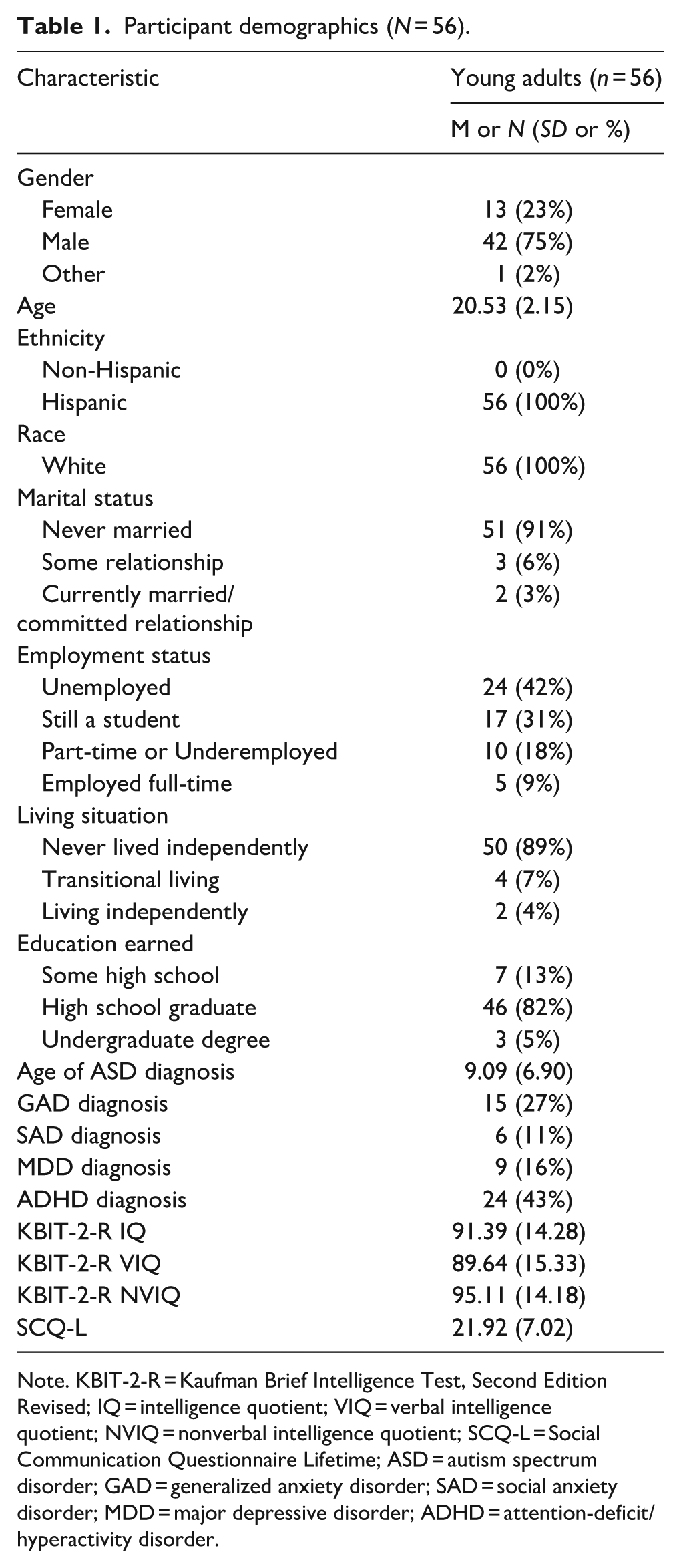
Note. KBIT-2-R = Kaufman Brief Intelligence Test, Second Edition Revised; IQ = intelligence quotient; VIQ = verbal intelligence quotient; NVIQ = nonverbal intelligence quotient; SCQ-L = Social Communication Questionnaire Lifetime; ASD = autism spectrum disorder; GAD = generalized anxiety disorder; SAD = social anxiety disorder; MDD = major depressive disorder; ADHD = attention-deficit/hyperactivity disorder.
Descriptive statistics for the 56 Latino young adult participants from the ¡Iniciando! la Adultez program is presented in Table 2. The mean total baseline score for autistic burnout severity (ABSI) was M = 85.13 (SD = 33.65). Within the ABSI, the highest mean subscale score was observed for Heightened Self-Awareness (M = 28.31, SD = 12.97), followed by cognitive disruption (M = 20.74, SD = 9.07). Camouflaging behaviors (CATQ) had a total mean score of M = 112.09 (SD = 20.53), with Compensation (M = 38.52, SD = 9.78) being the most frequently reported strategy. Other baseline measures included the RASI total score (M = 25.01, SD = 10.85) and acculturation (BASH) with a mean score of M = 4.18 (SD = 0.89). Cultural values, assessed by the MACVS, indicated that Mexican American Values (M = 121.27, SD = 32.06) scored significantly higher than Mainstream Values (M = 41.57, SD = 10.21). Familism Support (M = 23.03, SD = 5.56) was the highest-scoring familism subscale, underscoring the importance of family.
Descriptive statistics for measures for Latino young adults (n = 56) in the ¡Iniciando! la Adultez program .
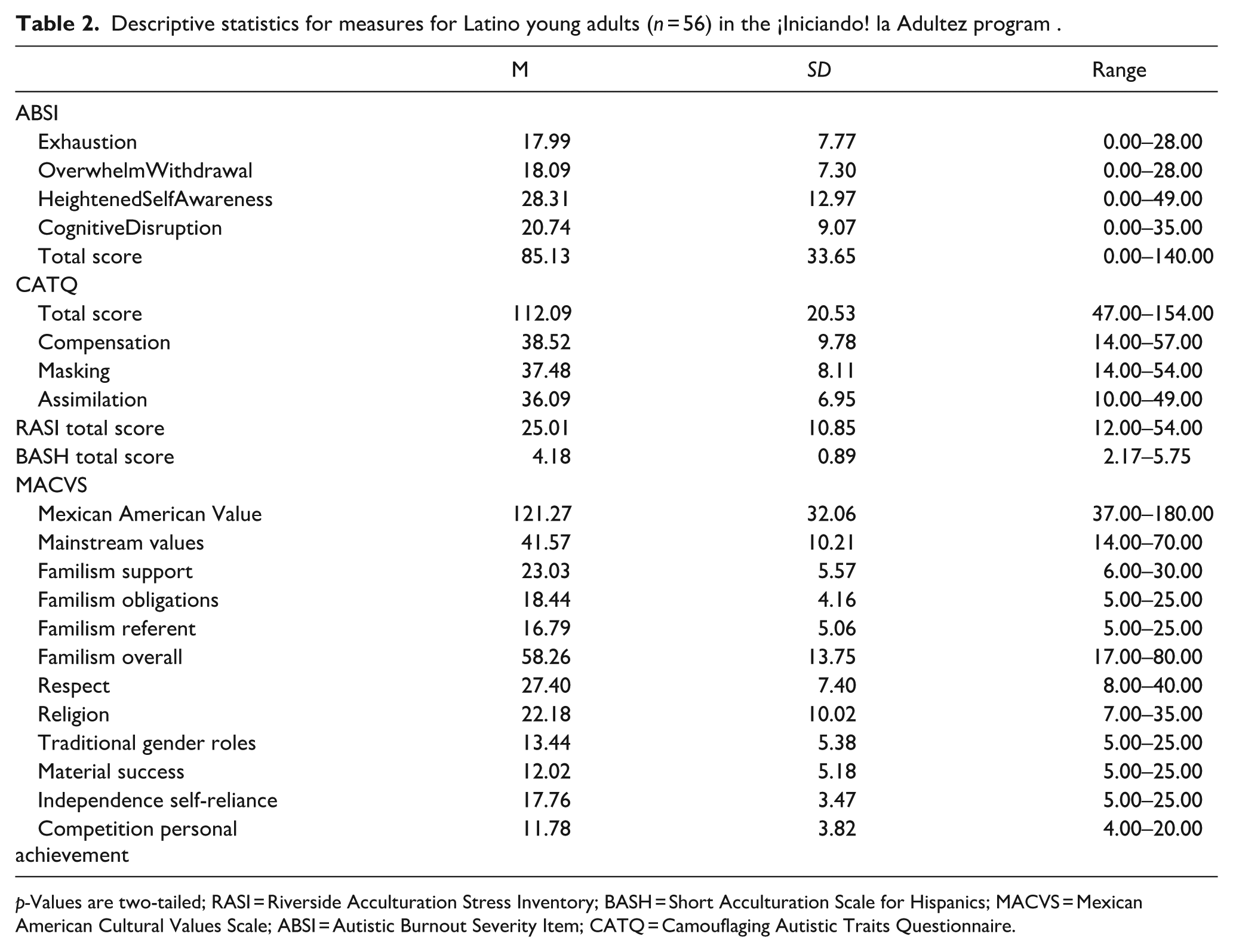
p-Values are two-tailed; RASI = Riverside Acculturation Stress Inventory; BASH = Short Acculturation Scale for Hispanics; MACVS = Mexican American Cultural Values Scale; ABSI = Autistic Burnout Severity Item; CATQ = Camouflaging Autistic Traits Questionnaire.
Correlations between baseline measures of acculturation, acculturative stress, Latino and American values, and the ABSI subscales are detailed in Table 3. Significant positive correlations were found between several ABSI subscales and dimensions of the MACVS. Specifically, the ABSI Exhaustion subscale and the ABSI Overwhelm/Withdrawal subscale both showed significant positive correlations with the MACVS Independence/Self-Reliance subscale (r = .31, p < .05 and r = .29, p < .05, respectively). In addition, the ABSI Cognitive Disruption subscale was significantly associated with the MACVS Mainstream Values subscale (r = .29).
Correlations between baseline acculturation, acculturative stress, Latino and American values, and the ABSI for young adults (n = 56) in the ¡Iniciando! la Adultez program.
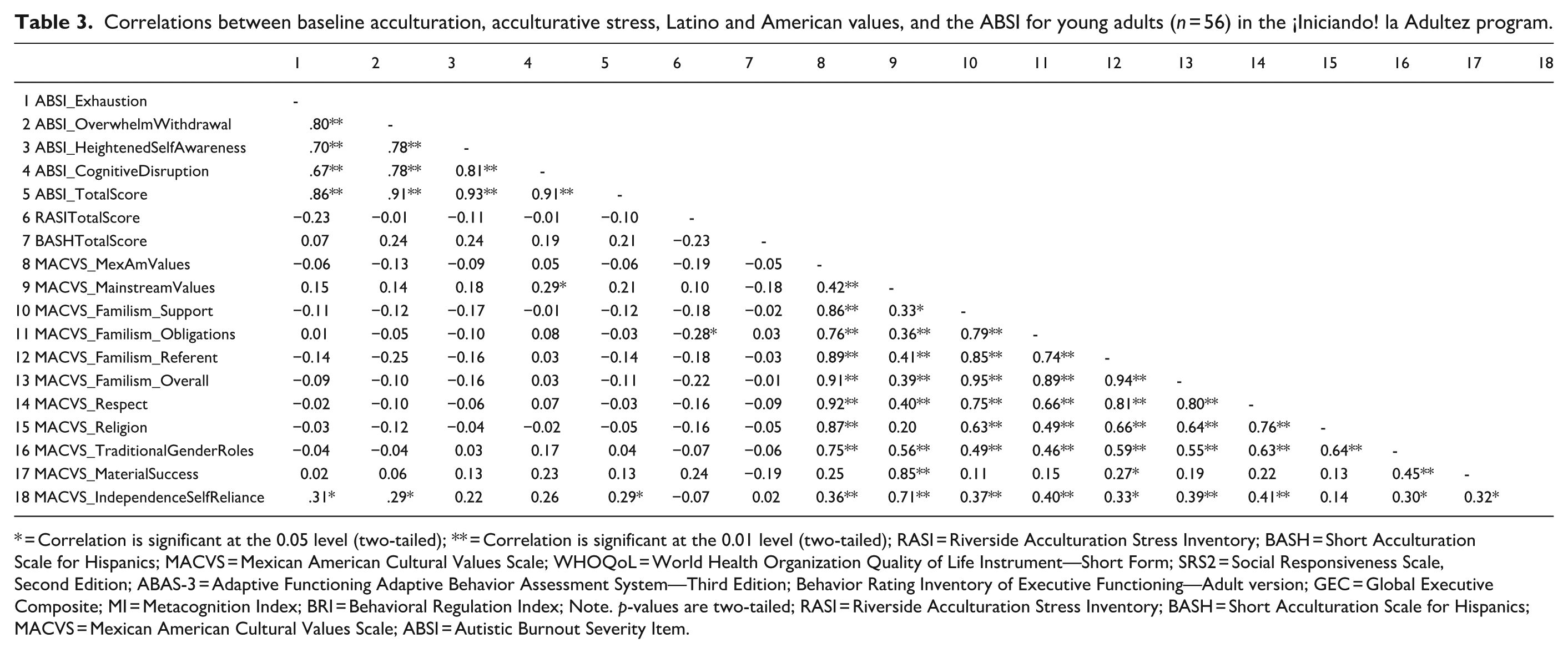
= Correlation is significant at the 0.05 level (two-tailed); ** = Correlation is significant at the 0.01 level (two-tailed); RASI = Riverside Acculturation Stress Inventory; BASH = Short Acculturation Scale for Hispanics; MACVS = Mexican American Cultural Values Scale; WHOQoL = World Health Organization Quality of Life Instrument—Short Form; SRS2 = Social Responsiveness Scale, Second Edition; ABAS-3 = Adaptive Functioning Adaptive Behavior Assessment System—Third Edition; Behavior Rating Inventory of Executive Functioning—Adult version; GEC = Global Executive Composite; MI = Metacognition Index; BRI = Behavioral Regulation Index; Note. p-values are two-tailed; RASI = Riverside Acculturation Stress Inventory; BASH = Short Acculturation Scale for Hispanics; MACVS = Mexican American Cultural Values Scale; ABSI = Autistic Burnout Severity Item.
Table 4 presents the correlations between baseline acculturation, acculturative stress, Latino and American values, and the CATQ subscales. A significant negative correlation was observed between the MACVS Traditional Gender Roles subscale and the CATQ Assimilation subscale (r = −0.34, p < 0.05).
Correlations between baseline acculturation, acculturative stress, Latino and American values, and the CATQ for young adults (n = 56) in the ¡Iniciando! la Adultez program.
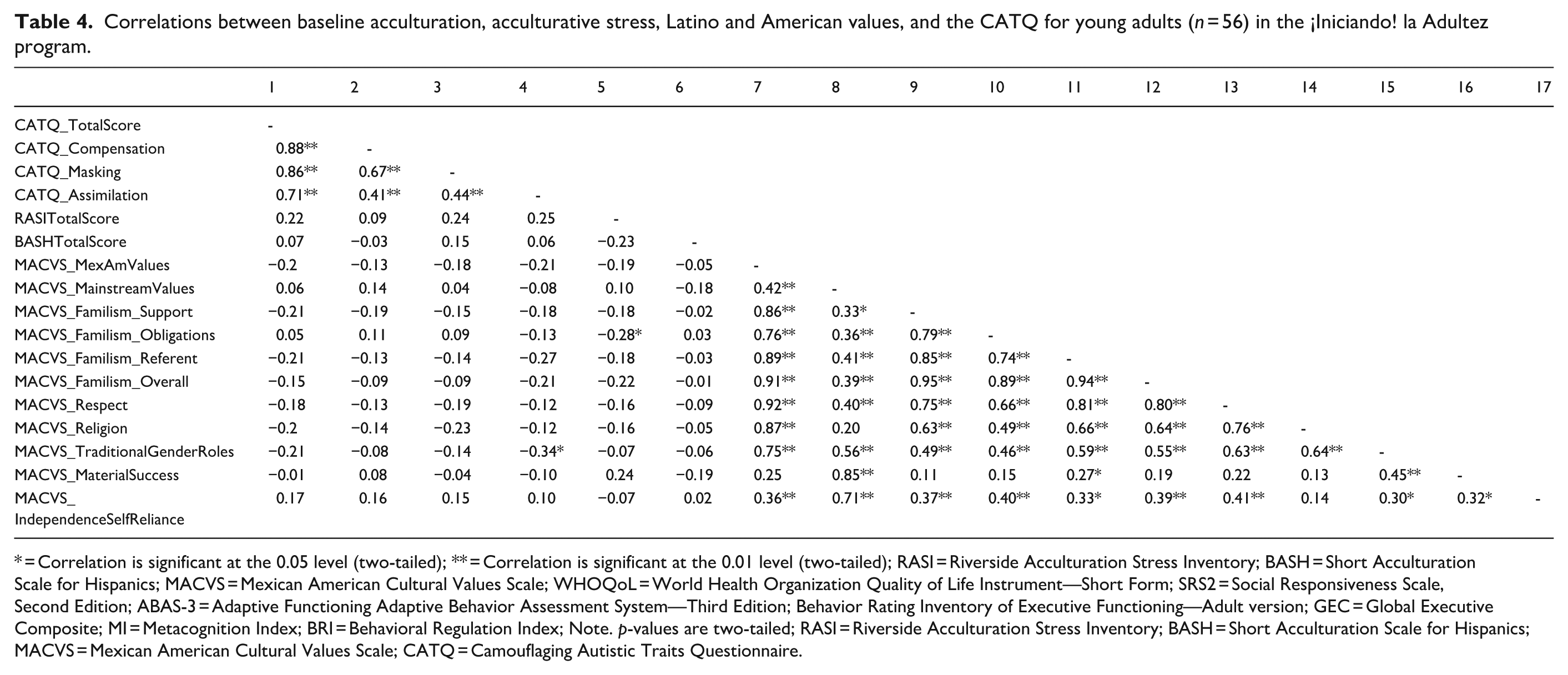
= Correlation is significant at the 0.05 level (two-tailed); ** = Correlation is significant at the 0.01 level (two-tailed); RASI = Riverside Acculturation Stress Inventory; BASH = Short Acculturation Scale for Hispanics; MACVS = Mexican American Cultural Values Scale; WHOQoL = World Health Organization Quality of Life Instrument—Short Form; SRS2 = Social Responsiveness Scale, Second Edition; ABAS-3 = Adaptive Functioning Adaptive Behavior Assessment System—Third Edition; Behavior Rating Inventory of Executive Functioning—Adult version; GEC = Global Executive Composite; MI = Metacognition Index; BRI = Behavioral Regulation Index; Note. p-values are two-tailed; RASI = Riverside Acculturation Stress Inventory; BASH = Short Acculturation Scale for Hispanics; MACVS = Mexican American Cultural Values Scale; CATQ = Camouflaging Autistic Traits Questionnaire.
Regression results predicting outcomes based on CATQ and ABSI total scores are presented in Table 5. The CATQ total score was a significant positive predictor for all ABAS-3 subscales: Conceptual (B = 0.41, p = 0.004), Social (B = 0.37, p = 0.01), and Practical (B = 0.39, p = 0.006). It also significantly predicted the ABAS-3 GAC (B = 0.40, p = 0.005). Furthermore, the CATQ total score significantly predicted mental health outcomes, including the PHQ-9 Total Score (B = 0.333, p = 0.013) and the GAD-7 Total Score (B = 0.37, p = 0.005). In contrast, the ABSI total score was not a significant predictor for most of the examined outcomes.
ABSI and CATQ total scores predicting outcomes.
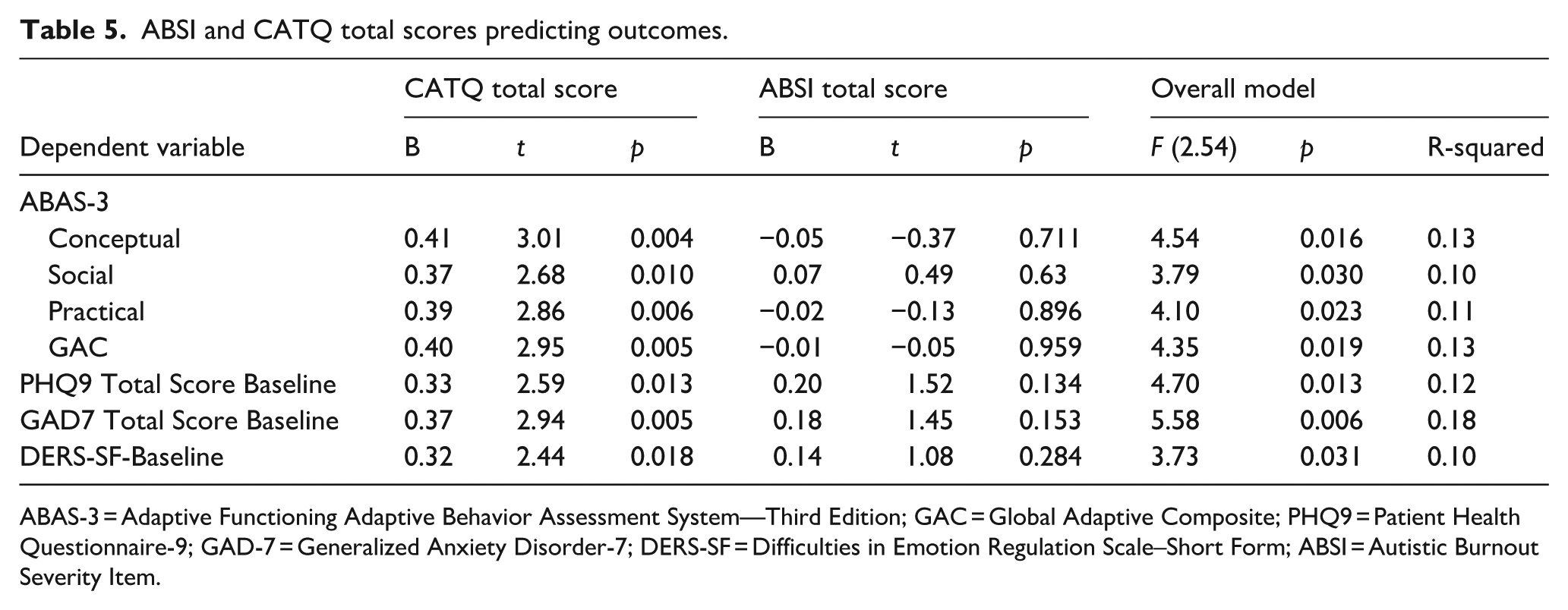
ABAS-3 = Adaptive Functioning Adaptive Behavior Assessment System—Third Edition; GAC = Global Adaptive Composite; PHQ9 = Patient Health Questionnaire-9; GAD-7 = Generalized Anxiety Disorder-7; DERS-SF = Difficulties in Emotion Regulation Scale–Short Form; ABSI = Autistic Burnout Severity Item.
Discussion
The current study contributes to the nascent literature on the experiences of autistic Latino young adults, specifically concerning camouflaging and autistic burnout. Our findings indicate the relevance of cultural values and acculturation in understanding these phenomena within this population. For instance, the significant correlations observed between certain ABSI subscales and dimensions of the MACVS suggest that among Latino autistic young adults, a stronger endorsement of independence and self-reliance within a cultural context that also values interdependence may be associated with increased autistic burnout severity. This finding is consistent with broader research indicating that the sustained effort to conform to societal expectations, especially when these conflict with neurodivergent needs, can contribute to significant strain and burnout (Raymaker et al., 2020). Furthermore, the positive correlation between cognitive disruption (an ABSI subscale) and mainstream cultural values (from the MACVS) suggests that exposure to or internalization of dominant societal norms may be linked to increased cognitive load, potentially contributing to symptoms characteristic of autistic burnout. It is important to acknowledge that, given the exploratory nature of this pilot study and the absence of corrections for multiple comparisons, some observed correlations could be spurious, necessitating replication in larger, confirmatory studies. However, these patterns offer compelling avenues for future research.
The results regarding camouflaging also offer insights into the interplay of cultural factors. The significant negative correlation between adherence to traditional gender roles (MACVS) and assimilation camouflaging (CATQ) warrants further investigation. This finding could suggest that within contexts where traditional gender roles provide more defined social scripts or expectations, individuals may perceive less necessity for extensive assimilation behaviors in other social domains. Alternatively, it might reflect a complex interaction where certain cultural frameworks either implicitly or explicitly create less pressure for outward conformity of autistic traits in specific areas. Another possible interpretation is that individuals who more strongly endorse traditional gender roles may simply report less assimilation due to cultural influences on self-presentation, or that these findings are exploratory and require further validation. Further qualitative research is needed to explore the lived experiences that underlie these observed correlations.
Our findings also provide insights into the relationship between traditional Latino gender roles and camouflaging behaviors. The significant negative correlation between traditional gender roles and assimilation camouflaging suggests that adherence to culturally defined gender expectations may reduce the extent to which individuals feel the need to mask their autistic traits. This may be due to the more structured and clearly defined social roles present in traditional Latino communities, which could provide a framework for social interactions, potentially mitigating the need for excessive assimilation-based masking. However, this does not necessarily indicate reduced social stress, as prior studies show that gender expectations can introduce additional challenges for autistic individuals (Pearson & Rose, 2021). Further research is needed to explore the nuances of how gender norms shape camouflaging behaviors across diverse cultural contexts.
The regression analyses further emphasize the distinct impacts of camouflaging and burnout on functional and mental health outcomes. The CATQ total score significantly predicted adaptive functioning (ABAS-3) and mental health symptoms (PHQ-9 and GAD-7), reinforcing previous research indicating that camouflaging is associated with increased psychological distress (Cook et al., 2021; Zhuang et al., 2023). These findings underscore the long-term consequences of masking autistic traits, particularly in a cultural context where familial and social expectations may amplify the need to camouflage. In contrast, the ABSI total score was not a significant predictor for most outcomes, suggesting that while autistic burnout is an important phenomenon, its effects may be more indirect or mediated by other factors such as social support and access to accommodations.
These findings have important implications for clinical and community-based interventions. Given the role of cultural values in shaping burnout and camouflaging behaviors, interventions designed to support autistic Latino young adults should integrate culturally responsive approaches that acknowledge the sociocultural pressures they face. For example, programs that emphasize interdependence rather than independence may better align with Latino cultural values and provide autistic individuals with support structures that reduce the need for excessive camouflaging (Burke et al., 2019; Smokowski et al., 2008). In addition, increasing awareness of autistic burnout among families and professionals within Latino communities could help foster greater acceptance of neurodivergent identities and reduce the stigma associated with seeking accommodations. As previously noted, the full regression models explained a relatively small proportion of the total variance in the outcomes, suggesting that camouflaging and burnout are important but not exhaustive predictors, and that other unmeasured factors also play significant roles.
Overall, this study highlights the complex interplay between cultural values, camouflaging, and autistic burnout in Latino young adults with ASD. While prior research has largely focused on predominantly White, Western samples (Hull et al., 2017; Pearson & Rose, 2021), our findings demonstrate the importance of examining these phenomena within diverse cultural contexts. Future research should continue exploring these relationships using longitudinal designs to better understand the long-term impacts of camouflaging and burnout, as well as potential protective factors that may mitigate their negative effects. By addressing these gaps, we can work toward more inclusive and culturally responsive approaches to supporting autistic individuals across the lifespan.
Limitations
While this study provides important insights into the relationship between camouflaging, autistic burnout, and cultural factors in Latino young adults, several limitations must be acknowledged. First, the cross-sectional design limits our ability to establish causality. Although we identified significant associations between cultural values, camouflaging, and burnout, we cannot determine whether cultural factors directly influence these experiences over time or if other unmeasured variables contribute to these relationships. Future research should employ longitudinal designs to assess how these dynamics evolve across different life stages. Second, our sample consisted of Latino young adults participating in the ¡Iniciando! la Adultez program, which may not be fully representative of the broader Latino autistic population. Participants who engage in support programs may have different levels of self-awareness, access to resources, or social support compared to those who do not seek such services. In addition, the study relied on self-report measures, which are subject to biases such as social desirability and differences in self-perception. Given that camouflaging often involves unconscious or habitual behaviors (Hull et al., 2017), self-reported masking levels may not fully capture the extent of these behaviors. This self-report limitation is further compounded by the common occurrence of alexithymia in autistic populations, which can impact an individual’s ability to accurately perceive and report their internal emotional and physical states. The absence of informant report data from caregivers or other close individuals is a limitation here, as such data could have provided a valuable supplementary perspective on distress and symptoms. Future studies should consider incorporating behavioral observations or informant reports to complement self-reported data. Another limitation is the heterogeneity within the Latino population. While we examined cultural values and acculturation, the experiences of Latino autistic young adults may vary significantly based on factors such as country of origin, immigration status, socioeconomic background, and language proficiency. The use of the MACVS for a population that is not exclusively Mexican American may not fully capture the nuanced cultural values and acculturation experiences of all Latino subgroups, potentially limiting the generalizability of these specific cultural findings. The Latino community is not monolithic, and cultural expectations may differ between subgroups, influencing the extent and impact of camouflaging and burnout. Future research should examine these within-group differences to provide a more nuanced understanding of cultural influences on autistic experiences. As a future direction, we encourage the use of more behaviorally based scales of acculturation (e.g. the Bidimensional Acculturation Scale) as these might offer a more comprehensive understanding, especially given that intense messaging caregivers often receive may lead autistic individuals to be less connected to their heritage language and associated cultural traditions than their neurotypical counterparts.
Future Directions
Future research should build on these findings by exploring the longitudinal impact of camouflaging and autistic burnout in Latino young adults. Examining how these experiences change over time, particularly during key life transitions such as entering the workforce or pursuing higher education, would provide valuable insights into long-term outcomes. In addition, studies should investigate the effectiveness of culturally responsive interventions aimed at reducing burnout and supporting autistic individuals in navigating social and occupational demands. Given the influence of cultural values and acculturation on camouflaging behaviors, future research should also explore within-group differences among Latino autistic individuals, including variations by country of origin, language proficiency, and generational status. Moreover, integrating qualitative methods, such as interviews and focus groups, could provide a deeper understanding of how Latino autistic individuals perceive and experience camouflaging and burnout in their daily lives. Community-based participatory research approaches that involve autistic individuals in study design and implementation would also enhance the relevance and applicability of findings. Finally, future studies should consider the role of systemic factors, such as access to diagnostic and support services, educational policies, and workplace accommodations, in shaping the experiences of Latino autistic young adults. Addressing these broader structural influences will be critical for developing policies and interventions that promote long-term well-being and inclusion.
Footnotes
Acknowledgements
The authors wish to thank their CAB and all of the Latino young adults with ASD and their families for their helpful participation and for their feedback. The authors also would like to thank several individuals for their contributions: their lead community health worker, Ana Esparza, their interns, their practicum students past and present, their research assistants and visiting students, their community health workers, their youth advisory board, and their community partners. This work was also supported by the Center for Clinical and Translational Sciences, which is funded by National Institutes of Health Clinical and Translational Award UL1 TR003167 from the National Center for Advancing Translational Sciences. The content is solely the responsibility of the authors and does not necessarily represent the official views of the National Center for Advancing Translational Sciences or the National Institutes of Health.

Author contributions
Funding
The authors disclosed receipt of the following financial support for the research, authorship, and/or publication of this article: This research was funded by the University of Texas Health Science Center Houston, Department of Psychiatry and Behavioral Sciences Seed grant, an Autism Speaks Postdoctoral Fellowship Grant [#13904], and the National Center for Advancing Translational Sciences (NCATS) of the National Institutes of Health, through UTHealth-CCTS grant number (5TL1TR003169-05 and T32TR004904). Its contents are solely the responsibility of the authors and do not necessarily represent the official views of the Center for Clinical and Translational Sciences or the National Institutes of Health.
Declaration of conflicting interests
The authors declared no potential conflicts of interest with respect to the research, authorship, and/or publication of this article.
Ethical considerations
All procedures performed were in accordance with the ethical standards of the institutional review boards of the University of Texas Health Science Center, Houston, and with the 1964 Helsinki declaration and its later amendments.
Transparentness and openness
The raw data, analysis code, and materials used in this study are not openly available but are available upon request to the corresponding author. The data collection and analysis were not pre-registered.